Sustain This

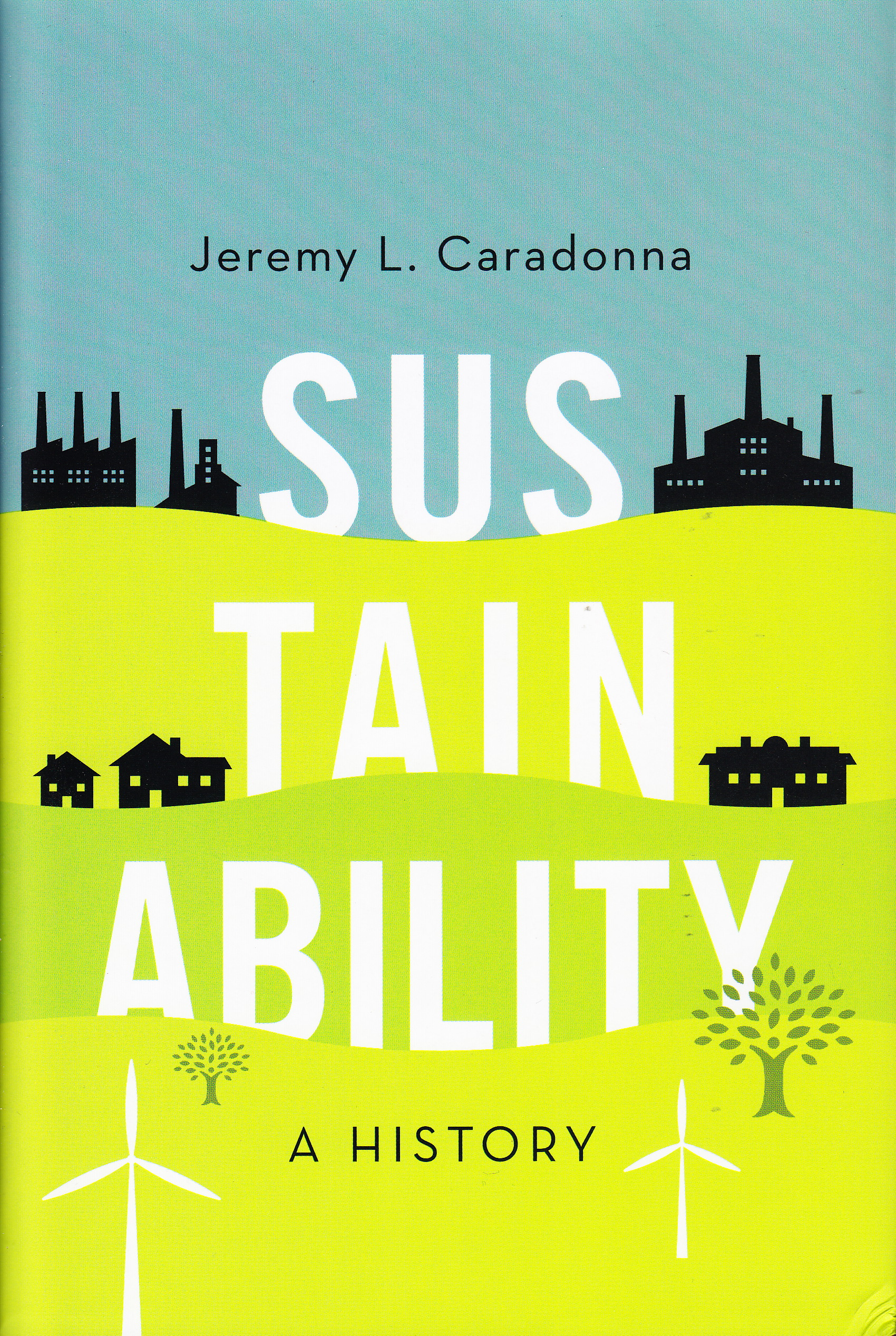
Sustainability“Grant me chastity and continence,” Augustine famously prayed, “but not yet.” That tragicomic scene kept coming to me as I read Jeremy L. Caradonna’s Sustainability: A History. Few ideas can bear the sheer weight of irony than that of a human population destroying their own and only planet. We know we’re doing it, and yet for a few more greenbacks to flash before our fabulously wealthy peers, we don’t mind warming the place up by a few degrees. There’ll be time to throw on the brakes right before the crash. I once took a ride, perhaps unwisely, with a friend who believed nothing could go wrong. Although the car didn’t actually roll, it came awfully close, and I am haunted by what might have happened. The difference between that incident and destruction of the environment is that the latter has already happened.

I’m cynical enough not to believe in simple solutions to complex problems, and reading Caradonna was a sobering finish to a day that had started out optimistically. Such books are not easy to read. Science does not come charging over the hill like the cavalry to save us at the end of the picture. You can’t take your marbles and go home when the marble is home. Sustainability does not set out to be a bleak book. There is a guarded optimism to it, and I was particularly pleased to see that sustainists readily recognize that without some kind of just distribution of goods, no system will ever be sustainable. I had no idea, until I read this book, that some economists advocate for a steady state economic existence instead of the ridiculously illogical constant growth. Constant growth in a world of limited resources is the worst kind of delusion.

We’ve gone pretty far down the road to destroying our planet. Already it will take many decades to repair the damage done. If we can muster the will to address corporate greed with a good old dose of primate ethics. Society, in all honesty, may have to collapse before that happens. If it does, of course, the strong will survive. I have a prediction to make, and it’s one that rationalists won’t like. If we can’t avoid the wall that is right before us, and if society as we know it buckles under its own greed, the survivors will, as sure as gray matter, devise a religion to explain it. As a species we are all about myths. Like fabled saints we believe we can have our fossil fuels and consume them too. Before rising sea levels wash us all away, do yourself a favor and read Sustainability. And when you’re awake for nights afterward, tell everyone else you know to read it too.
Waking Up in Galilee

One voice can’t be heard. Unless, of course, it has a publicist. For years, it seems, I have been suggesting in my obscure corner of the internet that we’re not quite ready for the death of religion yet. I’ve never really doubted science, but I have noticed that science frequently draws the same conclusions as religion. Evolutionary biologists and neuroscientists exclaim, with some surprise, that religion has a survival advantage. Of course, big men with white beards sitting on thrones in the sky just won’t do, but the underlying concept has utility. So we’re told. Now Sam Harris, author of The End of Faith, one of the four horsemen of the new atheists, tells us that it’s okay to experience what has been known as, conventionally, a religious experience. Call it transcendent (I always do), but no matter what the chemical mix you concoct in the brain, it will feel good. Perhaps better than anything merely biological ever will. You’ll sell a million books. If you’ve got a publicist.

To me it seems that the religion question is a no-brainer. It wouldn’t persist if we had no need of it. Unlike the appendix, which seems not to have taken the hint that it is entirely vestigial, religion helps people (and perhaps some animals) survive. It doesn’t have to be sitting on an uncomfortable pew on a Sunday morning. It might be in the giddy heights of the Rocky Mountains where you can see to eternity and beyond and the rarity of the oxygen makes you lightheaded with a hologram of immortality. It might be the piercing peace that comes with light refracted through a glass so blue that superlatives fail you. It might be in imaginary vistas of an ice-bound Arctic where, you’re just certain, Nordic gods linger just out of sight. Transcendence can even come from traditional religious experiences, or so the stories of the saints proclaim. Anyone can participate. Those who have never forget.

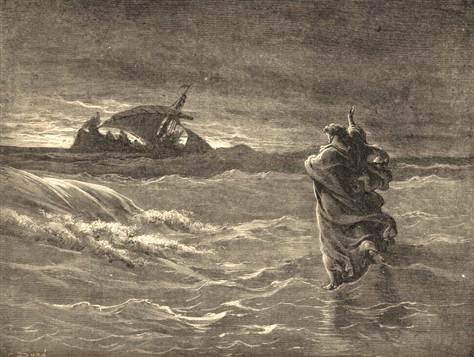
The New York Times, in the Sunday Review piece by Frank Brunl (Between Godliness and Godlessness) introduces Sam Harris’s new book, Waking Up. I know I’ll read it. According to the article, Harris discusses his own experience of transcendence. When Harris has such a revelation, it is a best seller. Or it will be. For those of us who quietly suggest moderation between bombastic religion and bombastic science, it is merely another day in the life of the quiet ones who observe without being heard. True, it takes courage in this culture to dole religion a knock on the head. It is not, however, going to send faith to a premature grave. We still need our religion. We might not call it that any more. Name it spirituality, or transcendence, or mystic mumbo-jumbo, but when it hits you it’s like an atheist in Galilee. Some call it a electrochemical reaction in the brain. Others call it walking on water.

Dore Walk on Water


Quantum Uncertainty

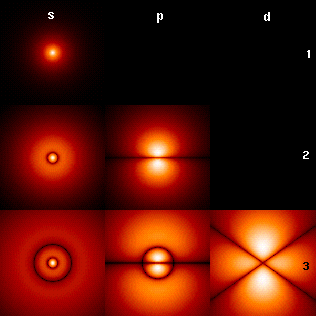
Physics has moved beyond the point of comprehension for the average citizen, if I might be permitted to class myself as that. I got the concept of the atom, although I always wondered about the spaces in-between. No god-of-the-gaps there, but it didn’t fit with experience that everything was full of holes. An article my wife sent me now has me wondering if I’m a hologram. Physicists began to lose me with quarks—I can understand atoms being made of something, but what of ups and downs and leptons every way to Sunday? Then string theory. Then those particles that can be two places at once, until you look. And now I’m being told that The Matrix may be more fact than fiction and quantum uncertainty rules the day. Indeed. Physics tells us what we’re really made of. Religion used to tell us what it all means. That precarious balance seems to have tipped and religion has no other role than to motivate violence and science will save us. Help me, Neo!

I can’t even figure out my taxes any more, let alone what the universe is made of. How we could all be jittery two-dimensional particles is unclear to me. Well, the jittery part I get. I was never really satisfied being limited to three dimensions of motion. Is it ever clear which way is really forward? Height and depth seem terribly geocentric, and even a circle could be divided into more than 360 degrees, a legacy of our Mesopotamian forebears. Spheres—my primitive view of atoms—only touch at the edges. I think there must be something more. Then comes the math. The truth is in the numbers, it seems. Glad I have a calculator.

Although I don’t have the weak nuclear force at my disposal, I have tried to build with marbles many times. You can’t build upward without the bottom row rolling away. Perhaps in our world spheres just don’t balance that way. They don’t hold together. Pixels, however, have edges. They seem to fit together more fully, but leave the universe full of jagged edges. That fits much better with my experience, I guess. Shards of reality lie all around me. Religion used to be the way of putting the pieces together, but, I’m told, that’s all a myth. Instead we have a universe that the average person is incapable of understanding, and that seems to be held together by forces that are fully explainable only by math. Once upon a time, Hell was a mythical, fiery place underfoot. Now it is a universe of formulas and equations that are held together only by quantum uncertainty.

"HAtomOrbitals". Licensed under Creative Commons Attribution-Share Alike 3.0 via Wikimedia Commons - http://commons.wikimedia.org/wiki/File:HAtomOrbitals.png#mediaviewer/File:HAtomOrbitals.png

“HAtomOrbitals”. Licensed under Creative Commons Attribution-Share Alike 3.0 via Wikimedia Commons – http://commons.wikimedia.org/wiki/File:HAtomOrbitals.png#mediaviewer/File:HAtomOrbitals.png


Religion, Technically

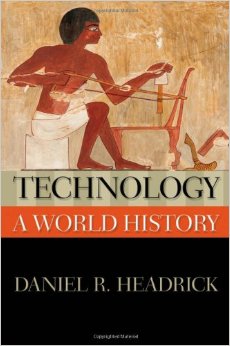
Technology World HistoryOne of the truths of history is that technology has always been with us. Reading Steampunk stories always boosts my historical sense of the interaction of technology and civilization. Civilization, to the best of our knowledge, coalesced around the idea of religion. Kings rule at the behest of gods because, if it came down to just a matter of swords and games of thrones, there’s always somebody who’s willing to die for the sake of challenging authority, or taking it over. Unless the gods give it to someone. With this in mind I read Daniel R. Headrick’s Technology: A World History, a brief exploration into how we progressed to a hive mind (not his word) through smartphones from an initial band of scared apes two-footing it across the savanna with pointy rocks. The whole trip may have taken millennia, but once we reached a couple of flash points (the “Big Bang” of about 70,000 years ago when abstract artifacts began to appear, and then the birth of civilization about the time Sumer was organized) things sped up at a dizzying pace. Despite the anti-science rhetoric of the Religious Right, there’s no denying that we’re not in Eden any more.

We are accustomed to think of technological development as being cold and rational. Trial and error, based on brute mental power willing to bully through the dark forest of superstition, leading us to new heights. But from the early technology that led to Stonehenge and the pyramids to the coded message “What hath God wrought?” religious wonder has stood behind technological development. Indeed, in reading Technology it became clear that up until very recent times scientists got along with god, and sometimes even shared the credit for the devices they created. Reading about the Antikythera mechanism had me thinking along these lines: if someone had invented a kind of computer millennia ago, why didn’t it transform society in the first century before the Common Era? The answer can’t be that it sank beneath the Mediterranean, because other such devices likely existed. Why no Roman Empire Industrial Revolution?

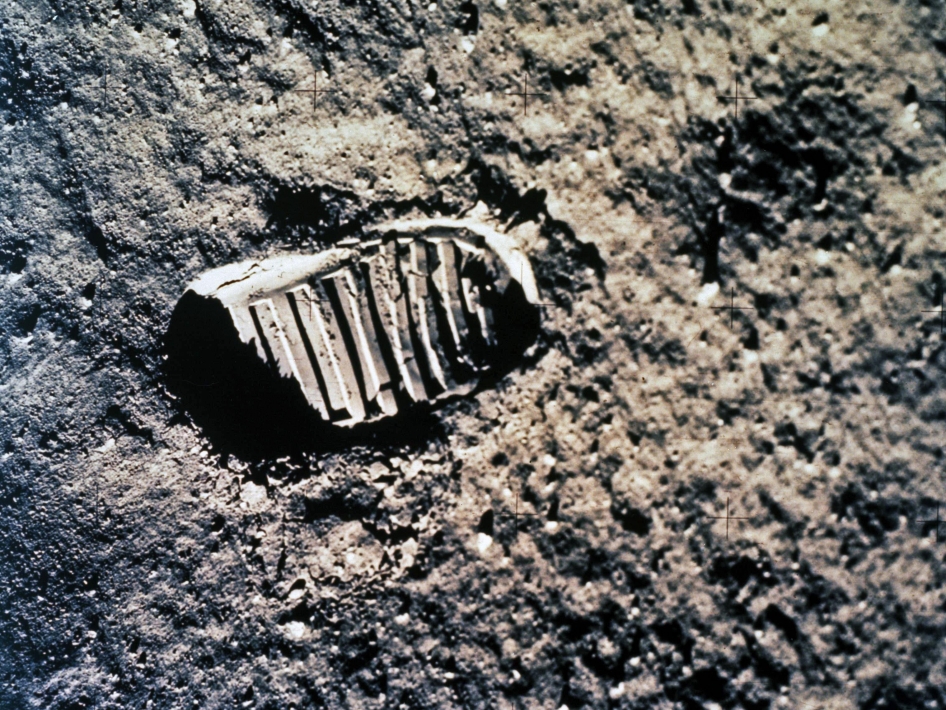
Headrick makes it clear that early societies sometimes did not promote technologies. Technology was not just a matter of what we could do, but it was a means of social control. Those who charted the flow of wealth and power would have interest only in technologies that enabled the continued growth of that system. All the rest was just icing. People knew the basics of electricity long before a practical use was found for it. Petroleum products were known even to the Sumerians. The wheels of industry, however, are greased by more than just oil. We construct worlds, and gods used to direct our efforts. Now we let our technocrats call the shots. We write blogs wondering how religion fits into a nano-tech world. There may be some logic in it, but once we’ve left our footprints on the moon—who used to be a god—we’ve replaced the deities in the celestial sphere with those in our own heads. And there’s no going back.


Clockwork Heavens

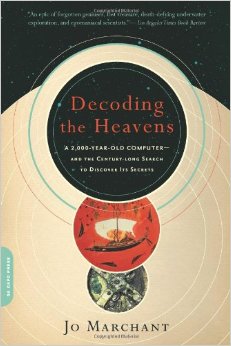
DecodingTheHeavensIn a museum in Athens sits a device chock-full of gears and cogs and dials. Indeed, it looks quite a bit like the movement of a pre-digital clock. This particular object, known as the Antikythera Device, is what would sometimes be labeled an “out of place artifact” were its provenance not so well attested. History doesn’t always play fair. Jo Marchant’s Decoding the Heavens: A 2,000 Year Old Computer—And the Century-Long Search to Discover Its Secrets tells the fascinating story. Discovered by sponge-divers blown off course by a storm in 1900, a sunken ship at Antikythera became the first ever site of a ship-wreck excavation attempt. Even today underwater archaeology presents numerous challenges, but in the turn of the previous century, even land-based archaeology was a kind of glorified treasure hunt rather than an attempt to reconstruct ancient history. As the divers visited and revisited the site into 1901, they discovered ancient Greek statues that are among the best preserved from the ancient world. They also found the corroded box of gears that nobody really noticed for several months.

Marchant carefully unravels the slow process of discovery, acclaim, and forgetfulness that accompanied learning about this highly advanced computer. As with many other important finds, World Wars I and II led to distractions that made history somewhat less appealing than killing millions and then trying to recover from the damage. (The Ugaritic tablets, as I’ve often suggested, suffered a similar forgetfulness for being found at the wrong time.) As scholars, usually only one or two in a decade, began to notice the Antikythera mechanism, it became very much an object out of time. A sophisticated computer for calculating the movement of the sun, moon, and planets, the device could also show the phases of the moon, predict eclipses, and keep track of the Saros, Metonic, Exeligmos, and Callippic Cycles (18, 19, 54, and 76 years in duration, respectively). These cycles accounted for the adjustments needed by leap years and other fixes in the modern calendar. I can’t even keep track of Daylight Savings Time.

Adding to the mystery and drama, the Antikythera Device dates from the first century BCE, a time confirmed by radiocarbon dating and the presence of coins found on the ship. It is unknown who made it, but the influence of Archimedes is implicated. A similar device would not be known for another 1500 years with the beginnings of the Early Modern Period. The Roman Empire, which held power in the Mediterranean world at the time, was on its way toward the legendary decadence that would lead to its inevitable fall. It seems that a culture based on military might had little use for academic devices that were literally centuries ahead of their time. History does not repeat itself precisely, but broad strokes may often reveal more than passing similarities. And for those who want to discover a computer than shouldn’t have been, Marchant’s book is an excellent introduction to how the wisdom of the ancients still keeps us guessing.


Religion Fiction

Children brought up in a religious environment, according to a recent BBC story, are more prone to believe in fictional characters. The story, based on research from my alma mater, Boston University, suggests that if children are taught to believe miraculous stories at a young age, they will more likely believe that fictional figures are based in reality too. Undoubtedly this will be seen as yet another brick in Montresor’s wall by those who can find no good in religion. The reasoning will go something like this: believing in no religion is the “neutral” position. If we raise children in a religious context, we are inclining them toward a fictional belief system and making them less likely to reason their way out of it. Therefore, we should raise children secular.

Even in the BBC story there are dissenting voices. Perhaps children who learn about Jesus find Thor a more compelling character. Perhaps they are open to possibilities that logic shuts out. Our brains have two hemispheres for a reason. I often wonder whether it is possible to be fully human while ignoring about half of what evolution gave us to work with. Logic tells me that religious belief serves a survival function. And my creative side still appreciates the possibilities that my Manhattan brain is forced to shut down every day when I punch the clock. If there’s nothing more than work, perhaps believing in fiction serves a valuable function after all. But I suspect this is playing right into the rationalists’ hand. Pass me another brick, will you, Fortunato?

The jury, however, is still out on the nature of reality. Even for materialists. Gods of the gaps tend not to survive very well. The question is actually much larger than that. We don’t know the nature of ultimate reality. We’re not even sure what reality is yet. Can a parent who believes in God, after the experience of growing to maturity in a heartless universe, be blamed for teaching their children the same? No humane parent raises their child purposefully teaching them falsehoods. Yes, some children are damaged by religious upbringings. Some are damaged by materialist upbringings as well. What seems to have shifted, in my humble opinion, is the popular perceptions of religion. What used to be understood as the foundation of a civil society is now challenged as a harmful fantasy that encourages children to grow up into terrorists or non-functioning adults. The belief that we can raise children with no biases, however, is clearly fiction. Until we have the full truth, there should be room for both Gilligan and the Professor on this island. But then again, I was raised to believe in the divine world, so what do I know?

Fact or fiction?

Fact or fiction?


Just Passing Through

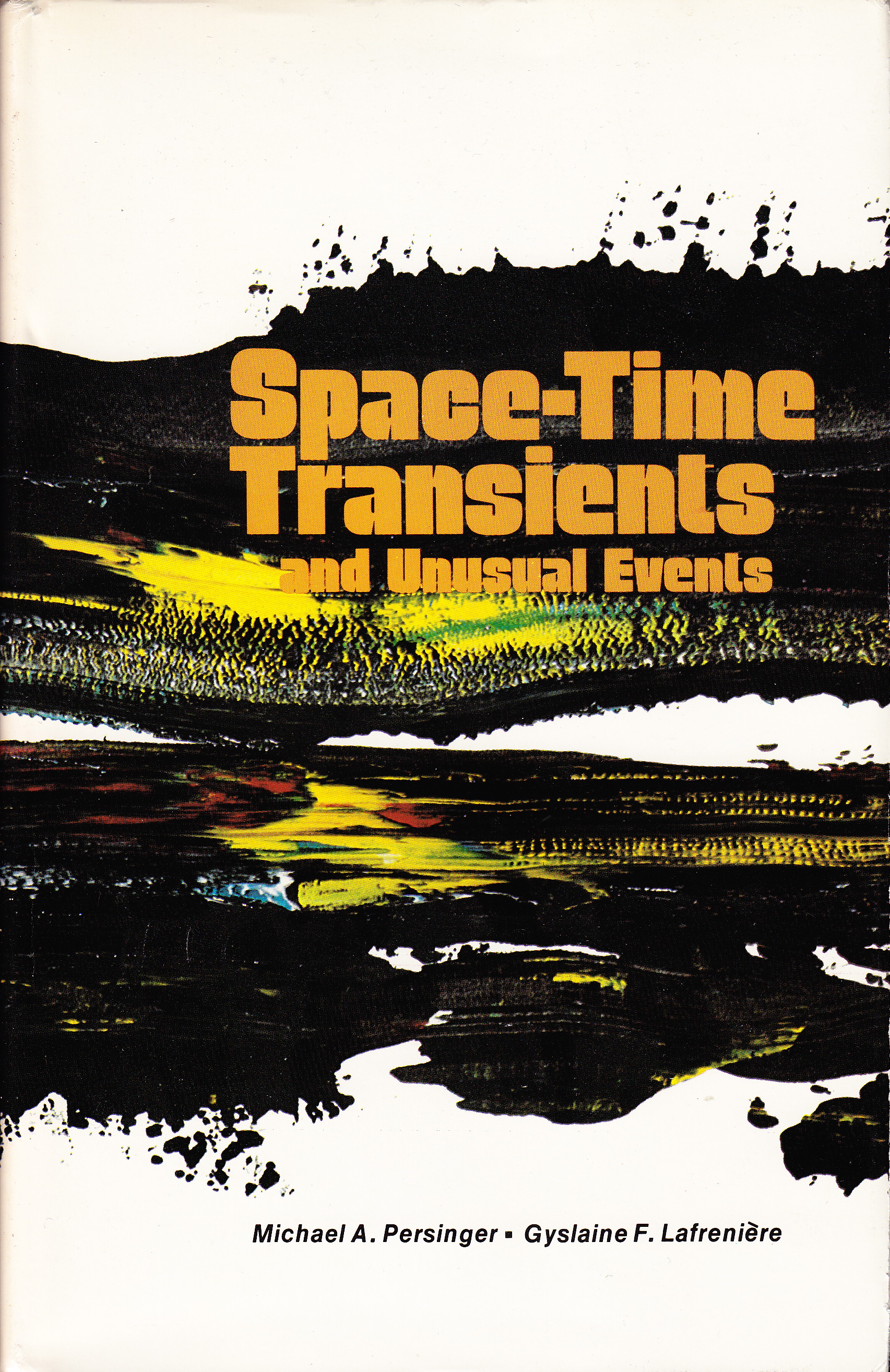
SpaceTimeTransientsMichael Persinger is a curious and rare scientist. Apart from occasionally making it onto Through the Wormhole episodes, he is also known for his somewhat unorthodox willingness to ask unfashionable questions. I just read his book, co-authored with Gyslanine Lafrenière, Space-Time Transients and Unusual Events. What makes Persinger (the lead author here) so unusual is that he is willing to admit that unusual events happen. Most scientific studies begin with the assumption that the uncanny is unreal, and that people who witness the unusual are unbalanced. Most of us, I would venture to say, have noticed that strange things do happen from time to time. Those who read all the way through Space-Time Transients may be surprised to discover that Persinger and Lafrenière offer an empirically-based hypothesis that places many unusual events squarely in the realm of scientific explanation. The acceptance of woo this is not.

For an old religious studies student, such as me, it is refreshing to see scientists at least asking the question rather than sweeping all the unorthodox evidence off the table. Not everyone who has experienced a fall of fish from the sky or a poltergeist in the bedroom is a deluded liar. Strange things do happen. Space-Time Transients, however, asks what seems to me the perfectly logical question: what’s going on here? Yes, some accounts are exaggerated. Others are fabricated. Still others clearly remain. Should we call names or should we try to figure out what is behind all this? One of my favorite unusual events is the coincidence. There may be nothing supernatural at work, but the oddity of the situation leaves us wondering. Shortly after being hired by Routledge, on my way home through a very crowded Times Square, I saw someone crossing Seventh Avenue drop a five-dollar bill. This person was hurrying in the opposite direction from me in the midst of a crowd, and was far enough away that calling out “you’ve dropped some money” would have only caused a feeding frenzy. It was only a fin. The next morning, coming to work over on Third Avenue, I found a five-dollar bill on the pavement. With the exception of pennies, just about all the dropped money in Manhattan is quickly scooped up by the needy. Could this have been the same dropped bill from over twelve hours before, on the other side of the island? Perhaps not. But why a fiver in both cases? Money does not grow on skyscrapers. The story gets even weirder, but you’re not here to read about that.

Scientists who are willing to admit that strange things happen (the names of Rupert Sheldrake and Dean Radin come immediately to mind) often face difficult times being taken seriously. They are, however, asking the big questions. Ironically, it is often the notice of strangeness that leads to advances in science. As one quip has it, science grows not because an observer says “Eureka!” but rather, “that’s strange.” In a world where strangeness is associated with religion, and religion is for the deluded, we have perhaps cut off an obvious avenue for learning about our strange universe. As Persinger and Lafrenière point out, we live in a very small habitation, viewed as a cross section of a planet that is itself not terribly massive, in an infinite yet expanding universe. To think that we’ve figured it all out by now is perhaps the strangest idea of all.


Evolution’s Snapshots

DarwinsCameraIn America’s political climate any book about Darwin takes on a religious cast. As strange as it may seem, an odd equation exists between Darwin, evolution, creation, and the Bible. We forget that Darwin was a retiring man with many interests and a very keen intellect. Erstwhile groomed for the clergy, he lived at a time when much of the world was known really only to the local inhabitants, and observations were still mostly made by the human eye in person. So it was that as photography developed, a new avenue into science opened up. Darwin’s Camera, by Phillip Prodger, is a rare look into, as the subtitle says, Art and Photography in the Theory of Evolution. Darwin wrote several books. Among them was The Expression of the Emotions in Man and Animals. This book was among the first scientific tomes published with photographic evidence to illustrate, if not prove, the points being made. Prodger takes us through the process by which Darwin procured and commissioned his photographs for the book and reveals some deeper truths about his life.

Interestingly, one of the sources of early photos was asylums. There was a belief, apparently, that photographs might be used diagnostically. One of the emotions that was presented to Darwin for his consideration was religious rapture. (Not that I can make any great claims here, but having experienced at least mild versions of such states—whatever their physiological cause—I know that they are powerful.) The observation comes through that religious rapture is difficult to distinguish from insanity, on the face of it. This may sound like an anti-religious slur, but it’s not. Ask around the mystics and you’ll see what I mean. Sanity has its uses, to be sure, but mysticism is all about letting go.

The only real religion in this book comes in the confrontations to Darwin’s evolutionary theory. Prodger does, however, briefly delve into Darwin’s late (and brief) concern about spirit photography. Shortly after cameras were developed, photographic tricks evolved. The Victorians, as we all know, had a very palpable sense of death’s nearness. It is no accident that Spiritualism developed during this time period when a reasonable lifespan was anything but assured. Spirit photographers claimed to capture ghosts of the dead revisiting the living. Darwin, who’d lost a beloved daughter prematurely, knew what grief was. He did not, however, allow it to interfere with his critical thinking. Photographs could be used to prove a point, but they could also be used to make a false claim. Darwin’s success in his book on emotions falls somewhere in the middle. He did have to have some staged shots to illustrate his point. Ever the gentleman, however, Darwin’s decisions were made to enlighten, not to deceive. One wonders whether creationism can even remotely make that same claim.


Flying Sorcery

In a post on the Huffington Post recently Michael Zimmerman, founder of the Clergy Letter Project, wrote about the strange antipathy of Ken Ham to the search for extraterrestrial life. Ham, founder of a creationist museum and self-appointed spokesman against evolution, has gone on the record saying that aliens cause problems for a creationist worldview. Therefore they can’t exist. Indeed, creationists should reject aliens because of the flat earth the Bible presents. Zimmerman, with his usual unfailing reason and wry humor, demonstrates the multiple difficulties both with Ham’s understanding of science and of the whole alien agenda. The Bible doesn’t address the modern world on many fronts, which is why literalists so often find themselves out of step with the issues of the day. When the final period (an anachronism, I know) was placed at the end of Revelation, it was expected that the world wouldn’t be around much longer, tottering as it was on the underground pillars that held it up. Somehow the Roman Empire came and went without any kind of cataclysm ending it all, and literalists have been backing and filling ever since.

Ham’s angst about extraterrestrials, however, is not shared by all Fundamentalists. I recall going to a session way out at a country church as a child where the guest speaker, a firm believer in aliens, talked about the “sheep in other folds” referred to by Jesus as aliens. I recall the eerie feeling as we drove home under a dark sky with fliers depicting flying saucers and assurances that we were not alone. In college, when I discovered Larry Norman’s music, I was struck by his lyric “If there’s life on other planets, then I’m sure He must know, and He’s been there once already, and has died to save their souls.” Literalists, like Catholics, take multiple views on the question. It seems a terrible waste of space if, in this infinite universe we’re the only sparks of consciousness around. I’ll leave “intelligence” for time to decide.

What would Genesis do?

What would Genesis do?

Ironically, Ken Ham doesn’t seem to have considered the up side of aliens, at least for his point of view. If the extraterrestrials end up looking like us, that does raise some serious questions about evolution. How did it work identically on two different planets to produce such similar results? You’d think maybe Fundamentalists might welcome aliens with open appendages. Of course, some have gone far off the other end and declared that angels and aliens are the same thing. The problem of the literalist world view is that it is severely limited. The Bible never foresaw the internet or the airplane or even the true nature of our own solar system, let alone the infinite sea of space beyond. In charting a course for belief, accurate maps are necessary. As Zimmerman points out, those maps, of necessity must contain the stars. And as we continue to evolve infinite worlds of possibilities await.


As a Child

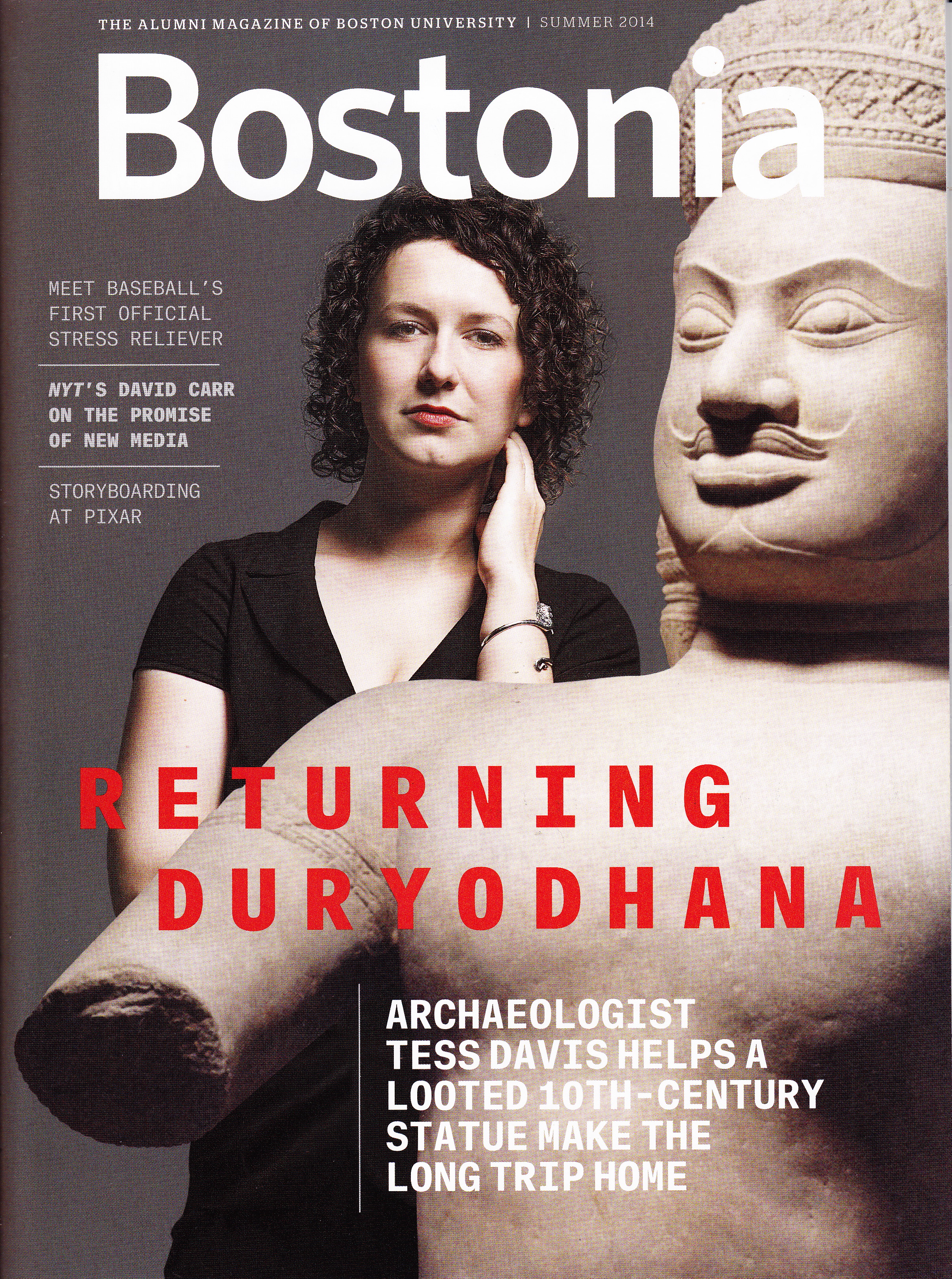
At a certain age, when alumni magazines arrive (and they will), one starts first by opening to the necrology. Who didn’t make it as far as me, after all? There’s a poignancy to it—knowing that at any age we’re vulnerable—but many of us felt a kind of immortality in our younger years that is only belied and effaced with the passing of time. The articles in the alumni magazines feature those who made it better than you, fellow students and faculty who made a genuine breakthrough. You should be proud of having the privilege, they seem to say, of having attended in her or his shadow. But once in a while, those self-serving articles do touch on the issues of the necrology where I always start. Boston University’s most recent edition boasts an article “You Are What You Feel” by Barbara Moran.

Bost

Intellectuals, in what I like to call the Spock Fallacy, frequently suggest that rationality is the whole story. Or at least the better part of it. If the left brain could only just subdue the right, and all decisions could be logical, wouldn’t this world be a better place? Better, maybe perhaps, but not human. We require our emotions for more than just feeling good. Studies suggest that thinking would be difficult, if not impossible, without them. So Bostonia profiles the work of Natalie Emmons, suggesting that ideas of immortality are more than just cultural relics. Perhaps our brains reason eternity for ourselves from some deep well we’ve not yet discovered. Emmons, and co-author Deborah Kelemen, are psychologists who study children’s idea of prelife—where we were before this. It is pretty difficult to imagine the world getting along without us. But the research suggests that intuition, rather than culture, gives us religious concepts such as immortality.

Substituting intuition for an actual essence, however, puts us in that odd place of using a word we can’t define. Scientists frequently fall back on intuition as an explanation for animal behavior that, in most instances, seems to suggest thinking that couldn’t have been acquired the usual way. How do salmon, fish that hardly seem like doctoral material, know to return home and swim upstream? How do newly hatched sea turtles know to crawl toward the water? Birds and butterflies to migrate? Instinct is a handy fallback, for sure. The research of Emmons and Kelemen suggest that children reason (note) prelife based on observations of actual life. The mind is the product of the brain. In my department at Boston University, another set of variables applied, focused mainly on surviving through the other end of the journey. It is with those in mind that I thumb through the necrology and hope, irrational as it may be to do so, that maybe the children are right.


Candle, Book, and Bell

AmericaBewitchedHaving married into a family descended from the surviving relatives of women executed as witches at Salem, I have long been saddened and fascinated by the story. Not just the story, but also by the cultural milieu. We all know about the witch trials and the tragic massacre of innocents (mostly women) that took place in late Medieval and early modern Europe; the Salem miscarriage of justice came at the very end of that, after the start of the Enlightenment. Owen Davies is also fascinated by witchcraft, and his America Bewitched: The story of witchcraft after Salem is an exploration—mostly via newspapers and court trial records—of witchcraft accusations in America that continued up until about the 1950s. The coincidence of the 1950s with the “witch hunts” of McCarthyism will not escape some readers, and indeed, from the time of Arthur Miller’s nemesis on, those who vociferate against witches have kept rather quiet. Unless, of course, you count those who subsequently feared “terrorists” or any other group that might be profiled. We could learn from history, if we’d let ourselves.

Davies’s book brings together largely overlooked, nearly forgotten instances of how many cultures, including that cultural mix of Europeans who were to become “whites,” feared and sometimes killed witches. The difference from Salem was that almost all of these cases took place at the hands of self-appointed accusers (vigilantes) who hounded, punished, or killed someone suspected of being a witch. Surveys still show that a large percentage of people in the United States, although not a majority, believe in witches. It is an idea that has a primal hold on human psyches, and, as Davies points out, it is often used to explain misfortune. As I read this book I reflected how Americans come across as pretty gullible and not exactly sensible in this matter. The germanic strains of immigrants, it seems, were particularly susceptible to such beliefs. We also find witches, however, among Native Americans and African Americans as well. Misfortunate plays no favorites.

There are those who claim technology will save our culture. The other day a friend reminded me of the third of Arthur C. Clarke’s laws: “Any sufficiently advanced technology is indistinguishable from magic.” Even the most scientific of us knows, whether or not s/he will admit it, that “spooky action at a distance” does occur. It is perhaps only a matter of time before we find the hidden laws that operate the mechanism, but I can’t help but feel a little bit uncanny when I see more and more lifelike robots operating with what seem like human intentions. Of course, those intentions are programmed by humans. And it is often otherwise rational adults who with gun in hand, up until fairly recent times, accused flesh-and-blood neighbors as witches. America Bewitched can be a scary book, especially since unlike vampires, witches do cast their reflections in a mirror.


Truth Fully

An article on science reporting on the BBC has me thinking about truth. Again. Truth is, of course, a philosophical concept. What it means is a matter of debate, and always has been. The way that it’s used, however, is reflected in the debate-oriented situation in the story. According to IFL Science’s Lisa Winter, the BBC has been tasked with tightening up its science programs to avoid the dilemma posed by the “two sides to every story approach.” While not denying that debate is the lifeblood of science, assessing the strength of the debate is essential. For example, there is a true scientific consensus about global warming. Those who deny it are generally backed by either corporate or religious causes that motivate them to claim the truth lies elsewhere. Truth is a very slippery term. And anybody can use it and claim it. In philosophy there’s no answer key in the back of the book.

Photo credit: Marretao22, Wikimedia Commons

Photo credit: Marretao22, Wikimedia Commons

Science, which I’ve admired from my earliest years, has a really, really strong track record of describing the physical universe accurately. Truly enormous paradigm shifts are rare in science and must be accompanied by stringent evidence. Sometimes critics grow frustrated at the slowness of science to accept something that seems obvious, but scientific thinking is nothing if not careful. Enter religion. The claims of most religions lay far beyond the reach of science. And yet, religion too has a really, really good track record—not of describing the physical universe (at which it often does abysmally poorly), but of providing meaning to human lives. Scientists have actually studied this. Religion, like it or not, does help. When it makes a claim on truth, however, a religion often comes into conflict with science. And the problem is that policies based on faulty scientific outlooks can have catastrophic consequences.

So what is truth? If we define it as what really, physically describes the material universe, science is onto it. In fact, science has the best chance of giving us an intellectually honest answer. If we define truth as what a certain deity declared law about a particular aspect of human life, science can’t help. Science doesn’t concern itself with gods or their putative decrees. Religion, however, does. And a vast part of the population votes for leadership based on religious beliefs rather than on scientific principles. And most have not taken too many classes in philosophy. In a democracy we both benefit and suffer under the weight of public opinion. And right now, it seems, public opinion considers philosophy as waste of time and would prefer the truth shrink-wrapped and ready for easy consumption.


War in Heaven

Van_Helsing_poster

Van Helsing, about which I’ve posted before, is not a great film, but it is perhaps the closest that modern cinema has to offer for my childhood Saturday afternoon viewing. Vampires, werewolves, and Frankenstein’s monster all appear together in a ménage à trois that Universal would’ve been proud to own in the 1960s. With lines cribbed from some of the Universal originals, plus some less believable chatter from Steven Sommers, the campy film is unrelentingly in dialogue with religion and its monsters. Indeed, the plot revolves around the church’s plan to save humanity from monsters by the employment of the eponymous van Helsing. I’ve probably seen the movie half a dozen times, and I’m a bit embarrassed to admit the this is the first time I’ve stopped to wonder at why, unlike Bram Stoker’s van Helsing, the one in the movie is named “Gabriel.”

It should’ve been obvious at the first viewing, but this time I was watching the movie with the intention of parsing its theology. In medieval Roman Catholic angelology, there are seven archangels. Two of them (or three, depending on whose Bible you are reading) are named in Holy Writ. Gabriel is, of course, one of them. The movie also shifts Dracula from being son of a Wallachian nobleman to being the “son of the Devil” (clearly by adoption). The Devil’s gift of resurrection (with which the movie is rife) comes with the vampiristic curse. And the climax of the film has the leader of God’s army (“the left hand of God”), Gabriel, battling the son of Satan. This is none other than the war in Heaven of which the Bible speaks. The leader of the archangelic army is actually Michael, but having “Mike van Helsing” as your lead just doesn’t carry the gravitas of Gabriel.

The movie opens with Dracula claiming that science has triumphed over God, and yet the mythology of monsters prevails. Frankenstein’s creation is morally pure, being a loving child of science, and the church declares him anathema. Throughout the movie all the monsters claim to want is to live, to survive. In fact, they are already resurrected. The werewolves get the dog’s share of the theology, however. They are infected or cursed rather than reborn. The war in Heaven has come to earth as angels and demons battle for supremacy. In the end, it is the human family chosen by God that goes extinct. I’m not sure all the theology adds up at the end of the film, but again, that is the very nature of mythology. And a film that can bring back a careless Saturday afternoon really doesn’t need to make sense at all.


Born Identity

Richard Dawkins, most famously in The God Delusion, made the claim that children are born without religion. Faith is something we’re taught in the growing up process, and we generally learn it from our parents or guardians. A recent piece in The Guardian (the newspaper, not ersatz parent) by Andrew Brown, stakes a bold, and surely correct, counterclaim: children are not born atheists. This isn’t just wishful thinking. As Brown points out, study after study has shown that people, especially children, are prone to belief. Where Dawkins does have a claim to verisimilitude, however, is that religious branding is not a product of nature. We have to learn what flavor of religion tastes good. As Brown points out in his opinion piece, we also have to learn to be the nationality that everything from our passports to our job applications requires of us. I can’t decide to be Scottish or Canadian. I’ve tried both, and here I am, an American mutt, just as I was assigned at birth.

What should  I believe?

What should I believe?

Like nationality, religion is frequently a matter of where you are born. Take a look at a world map of religions and see. India is the most statistically likely country to be born Hindu. It can happen elsewhere, but it would be unlikely where no Indians live. Life sometimes offers the opportunity to change belief, generally through education or through proselytization, but it is fairly uncommon. Most people don’t think too deeply about their religion. You accept what your parents tell you about what’s poisonous and what’s not, and how to drive a car. Would they steer you wrong on religion? Not willfully, surely.

The tabula rasa myth has been one of the most difficult to eradicate. We’re born with all kinds of things going on inside already. Specific religious belief is not one of them, but the tendency to believe is. We believe because it is human nature to do so. We can learn not to believe, and we can even become wealthy by sharing that outlook vociferously. You can also get a good deal of money by being religious and selling alternatives to science. The Institute for Creation Research is well funded, from what I hear. The one place where there is no money, and where you’re not likely to be noticed, is in the middle. Some of us are born as middle children. We had no choice in the situation, and no matter what we decide to believe, we’re no less Episcopalian than we are atheist, or vice versa.


Trans-Human

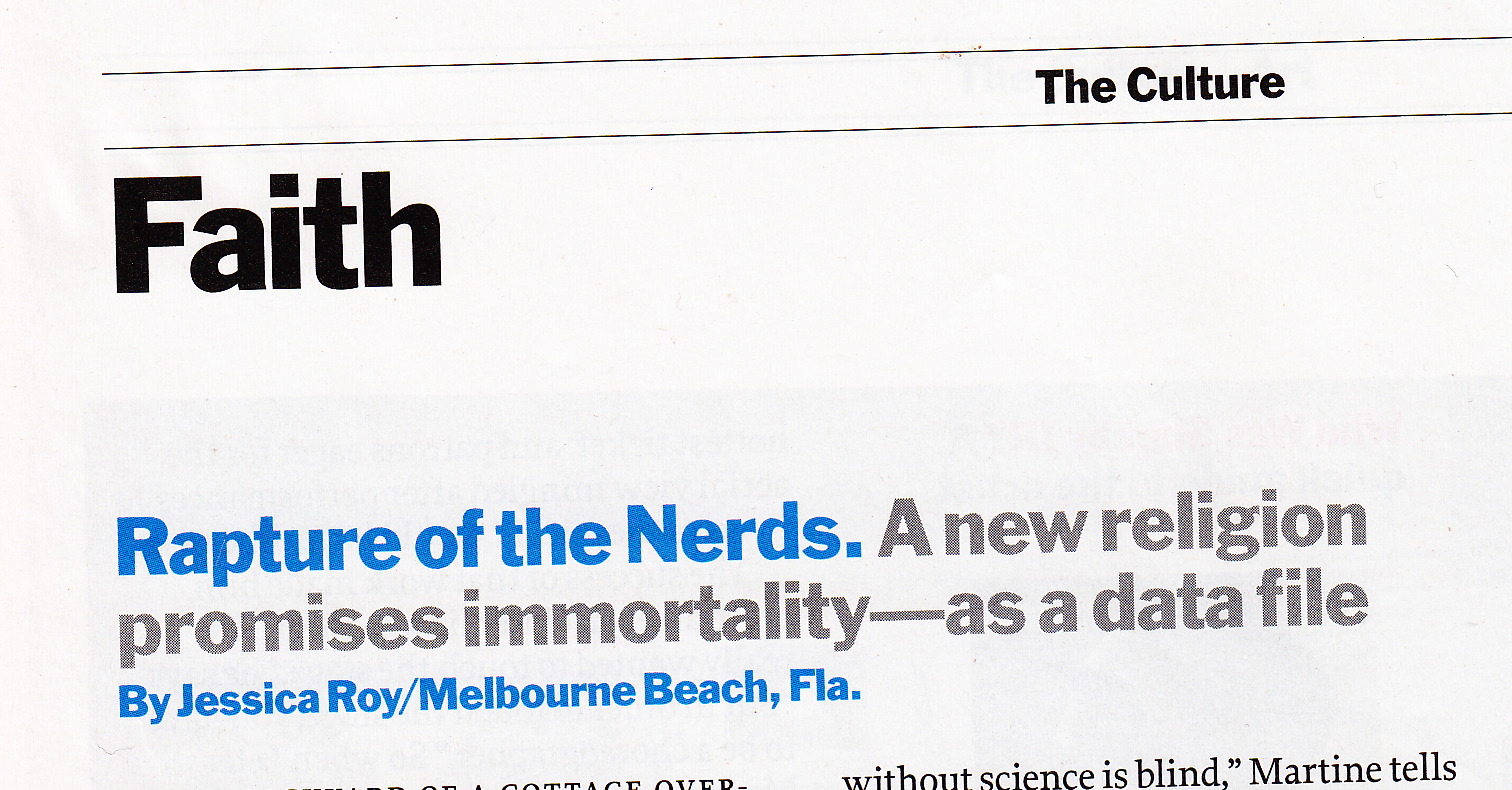
“Rapture of the Nerds,” an article in this week’s Time magazine by Jessica Roy, has me scratching my head. Or it would if I had a head. That is, if I were an uploaded consciousness in a machine. A transhuman. The idea that consciousness is transferable to hardware has been gaining momentum over the last several years during which humans have evolved into illogical machines. Roy’s article about Terasem, which is being called a new religion, explores what the leaders of the movement teach about human consciousness. You write down your thoughts in most intimate detail, download, and viola, send them out to the cosmos. Your soul has been saved. If only we knew what a soul was. Transhumanism has been promising an attenuated kind of immortality for its adherents, but as I sit down to write out my thoughts, I’m aware that there’s always a lot more going on in my brain than the simple ideas I can scrawl down before they evaporate. There’s quick wisps of thoughts about my loved ones, my schedule (what do I have to do today?), what I ate for supper last night, how I feel—all of this while I’m putatively thinking about writing a blog post. Schizophrenia of the soul?

Faith

So much of thought is having a biological body. From early days I have been aware that this body will die. I was taught that the soul would live on, but this thing I call consciousness seems pretty closely tied with this thing I call life. And once the biological input ends, that part will be over. I think. In other words, my thoughts are tied to my biological existence. How can I even begin to write a minute fraction of them down accurately? I used to toy with an idea called meta-thinking. It was something I came up with as a plot element in a science fiction story. The idea was that those who can think two thoughts at once would eventually take over from those of us with lesser mentalities. Those who have two minds in one brain are, it seems, a step closer to the divine.

I use technology on a daily basis, but I am a disingenuous advocate. Some of the most transcendent moments I’ve experienced have been outdoors with technology left behind, under a sunny sky with an ocean breeze blowing in my face and those I love walking beside me. I think I’ve already broadcast that out into the universe by simply being a part of it. I don’t need circuits and motherboards to make me more of what I am. Technology is the follower. It is consciousness that will always remain in the lead. And we still really don’t even have an idea of what consciousness actually is. It’s certainly not this computer that’s sitting on my lap. And I do have to wonder, once my consciousness becomes a robot, what it will do with this strange, primate urge I have, when I’m puzzled, to scratch my head.