The Truth about Elves

We are nothing if not certain. We know that there are no such things as intelligent non-human entities anywhere in the natural realm. We may reluctantly nod toward some animal intelligence, but that’s as far as the head inclines. Humans are the acknowledged and absolute top of the chain of command. Until you try to build a road in Iceland.

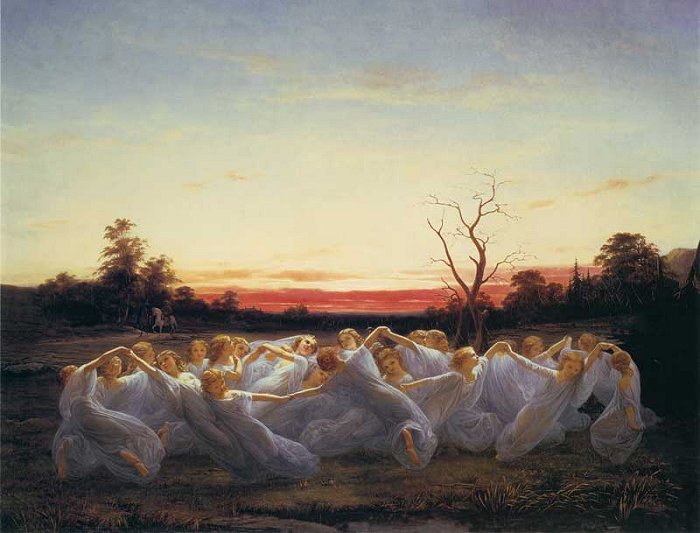
The story of how the road crews were called to a halt because of fear of infringing on elf territory hit the internet months ago. An article in the BBC News recently revised the scene. Emma Jane Kirby traveled to Iceland to see just how seriously this was being taken. I, for one, am glad that mythology survives on the surface in at least a few small places in the world. According to Kirby, surveys suggest about half of all rational adults in Iceland at least hold open the possibility that Huldufolk exist. The Huldufolk, or “hidden folk” are not diminutive, but human-sized and invisible. Who’s to say that invisible people don’t exist? Show me.
Ängsälvor_-_Nils_Blommér_1850

Rationalists are quick to jump out with the accusation that witch trials and other superstition will soon follow should we allow that perhaps the angelic, demonic, or folkloristic beings exist. Of course, it was the rational authorities of the day—often the church—that made those trials possible. Without religion, though, we never would have had science. I don’t think the invisible beings had anything to do with it. Human, all too human, hatred was the real culprit. Fear can lead even the most well-adjusted to the precipice on a dark and stormy night (with apologies to Edward Bulwer-Lytton). People are inclined to mythology to give meaning to a world that, no matter whether scientifically described or not, must make sense to us. Sometimes the elves seem to be the most likely explanation.

The only thing really lost by catering to the belief in elves is money. It might take a little more time and a bit more effort, and empty the coffers just a bit more, but in the end both elves and humans are happier. This worldview has a sense of wonder that a money-padded saunter through Manhattan simply lacks. When faced with the choice between mean money or disgruntled elves, I know the path I would rather take.
The Call of Madness

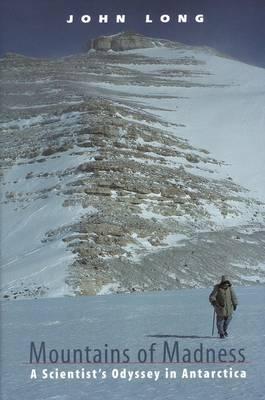
mountainsofmadnessPicture this: the wind is howling outside your tent, violently snapping the fabric. The temperature outside is well below freezing, and you are camping at the base of a mountain nobody has ever explored. You are hundreds of miles from any possible help, in the midst of Antarctica. What do you do? Read H. P. Lovecraft’s “At the Mountains of Madness.” At least that was the decision John Long made on his journey to collect fossil fish in the most inhospitable continent on the planet. Mountains of Madness: A Scientist’s Odyssey in Antarctica is one of those rare books where a rational, educated man of empirical approaches allows the creative, emotional aspect of life speak. I picked the book up at a library sale, based solely on the title. I recognized the Lovecraft in it, and wondered whether it was accidental or not. Besides, reading about polar regions has always fascinated me. Indeed, according to the records of those who’ve trespassed into those regions, madness is not a rare consequence.

Long’s book is not religious, but it is filled with wonder. The mechanistic science that’s often fed to the public is frequently technical and lacks those mysteries we’ve evolved to love. Nowhere in this book is the compelling aspect more relevant than in Long’s accounts of Christmas. The population of Antarctica—a select group by anyone’s standards—is mostly scientists and technicians. Deep field expeditions, it stands to reason, take place in December, which is the summer of Antarctica. In the case of those in the field, they are far removed from their home base, and even the earliest explorers noted in their diaries that Christmas was celebrated, in however minuscule a manner rations and perilous conditions allow. Nobody bulking here that it’s all just a myth.

Lovecraft’s story places explorers far from help in the mountains of Antarctica where they discover they’re not alone. The story inspired such movies as The Thing from Another World, and therefore John Carpenter’s The Thing. Lovecraft, like Long, was a disciple of science and yet, even in his atheistic world deities break in. It’s like Lewis’s Narnia where endless winter with no Christmas is unbearable. Long makes it clear in his account that Antarctica changes a person. Transcendence, those of us who linger over religions know, can express itself in many different ways. For some it is the grandeur of barrenness and inhospitable weather of an unfeeling environment where both macro and micro-predators have trouble surviving and penguins gather to struggle through weather humans can barely tolerate. For others it is camping below the very mountains of madness. Without some wonder, we just don’t survive.


Medjugorje Matrix

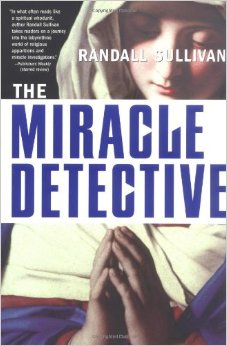
Miracle Detective“Expect a miracle,” Oral Roberts used to sign off, “and a miracle is yours today.” Physicists tend to be a bit more hard-nosed about the issue. In a mechanistic universe miracles are disallowed. How can you predict the outcome of any experiment or scenario when the whim of the divine could change the results? Nevertheless, most churches at least hold out the possibility of the rare miracle either set in centuries far past, or even occurring today. Randall Sullivan’s The Miracle Detective is, therefore, an almost unbelievable book. A reporter for Rolling Stone, Sullivan began investigating Marian apparitions. Although in the popular mindset, even among skeptics, such things are seen as promotions by the church to shore up the faithful, as Sullivan points out, the Catholic church is extremely cagey regarding miracles. It might be easier to convince a physicist than it is the Vatican, that a miracle is occurring.

Spending part of the tragic war in Bosnia-Herzegovina, Sullivan interviewed most of the six children who claimed to have visions of Mary at Medjugorje. While he remained skeptical of what he found, it is at times a decided head-rush to read his book. We tend to dismiss non-academic reporting of events by hoi polloi as unsophisticated, or superstitious. The events at Medjugorje, however, have been thoroughly tested by physicians and communist-appointed scientists and have left them scratching their heads. In some cases, getting them to convert to Catholicism. Rome, however, did not give its seal of approval to what was happening there. Sullivan, not religious himself, but open-minded, found the investigation compelling, if not life-changing. In this lengthy account, the reader is drawn into a rational world where something mysterious is clearly happening. A world that both the church and the academy deny might exist. And yet, something incredible stands on record nevertheless.

Lourdes, Fatima, and numerous lesser-known locations boast erstwhile visions of Mary that include miracles in their wake. Although the events in Medjugorje were unfolding the year I started college, majoring in religion, I had never heard of them until I read The Miracle Detective. As Sullivan notes, at times it seems better not to know about such events because they disturb a comfortable worldview where intrusions from the outside just don’t happen. Life, however, includes many incidents which we simply take off the table because they don’t fit into our scientific paradigm. The implications are just too discomfiting. Climbing off the bus after having read several chapters of the book was like stepping back into a world somehow so effaced that I felt there must be something on the other side. Many of those experiencing these miracles were barely Catholic, or were not religious at all. And yet something happened to them, causing them to wonder. And that wonder is catching for those who read the strangely compelling account of an open-minded, if accidental, miracle detective.


Global Warning

“Sticks and stones,” the childhood wisdom goes, “may break my bones, but words will never harm me.” We were taught that little mantra as a response to being teased by bullies. But words can and do hurt. They can even be lethal. Although I’ve come to realize that specific words are inherently neither good nor bad, I’m still a little shy around some of them. The website known, euphemistically, as “IFL Science!” contains an f-bomb that sometimes makes me wary—what’s wrong with just regularly loving science? In any case, perhaps this adverbial use of the most versatile swear word is intended to make the website a bit of racy fun. The posts are often very good. So it was that I recently read a story about “Friends of Science.” This group, it seems, is paying good money to convince the scientifically illiterate that global warming is natural, caused by the sun and not emissions, and so we should just chill. IFL Science! points out that the group, however, receives money from petroleum companies. Sticks and stones.

450x436_q75

On my way to work this week, I noticed how many of the ads in ebullient, affluent Midtown Manhattan reflect dark shows and movies. It’s summertime, when we expect bright colors and sunny weather. Has it, perhaps, been too sunny? The best selling non-fiction book over the past few weeks has been on economic inequality and how it will lead to a good, old-fashioned primate crash. Going ape-crap on the bullies. Our species doesn’t tolerate radical unfairness for long. Those who suck money from under the ground may not fracking care about the rest of us, but they sure pull in the big money. Big enough to buy the truth. Our emissions, they seem to say, don’t stink. And that weird weather you’ve been noticing for the past decade or so? That’s normal. Words will never harm me.

Global warming is a reality.

Oligarchy comes in many forms, the most insidious of which is the benign overlord. The implied subtext is “if I am smart enough to make all this money, I must surely be smart enough to decide what’s best for everyone.” Call it the gold standard of hypocrisy. In an increasingly secular society where the rewards of heaven devolve to what we can grab on earth, this might even be called a kind of theology. We all know that public policy and federal laws can be purchased, if we call it lobbying. Or election fund donations. The truth it seems, is up for sale. Call it Friends of Science—the name says it all. And if we’re tempted to add our own epithets, it might pay to ask what harm can words really do?


Programming God

Robots have been part of my world far longer than I ever recognized. Still, growing up in a small town in the 1960s, their impact was fairly minimal—they may have had a part in the manufacture of the car we drove, and perhaps helped prepare some of the products we bought—but those robots were far away. Far more present were those on television who, for the most part, were funny and helpful. This month’s Wired magazine runs a story entitled “Trusting Our Robots,” by Emily Anthes. The point of her short article is that people feel more comfortable with robots that are programmed to appear uncertain. We don’t trust robots to drive our cars, as she points out, but we give them more, old-fashioned primate sympathy when we make them look like they’re having a hard time. Just a couple weeks back Time magazine had a blurb on how we’re now at the point of programming drones to kill without human input. Add a dose of uncertainty and we get a glimpse of what it must be like to be gods.

Underneath our exteriors, we all know that robots do what they are programmed to do. In many respects—physically, especially—they are superior to us. Nevertheless, human knowledge is not perfect. We, too, are prone to uncertainty. Our robots aren’t better than we are, only more efficient. Doubt is a human quality. Perhaps our most endearing. As Ms. Anthes notes, “even when confronted with evidence of our own inferiority, we resist a robot’s help.” We have evolved over millions of years to interact with other creatures. Those non-biological entities we’ve created and endowed with artificial intelligence (sound familiar?) somehow can’t equal the right we’ve earned from struggling against, and along with, nature for these many eons. Would God really trust us with the keys to the universe?

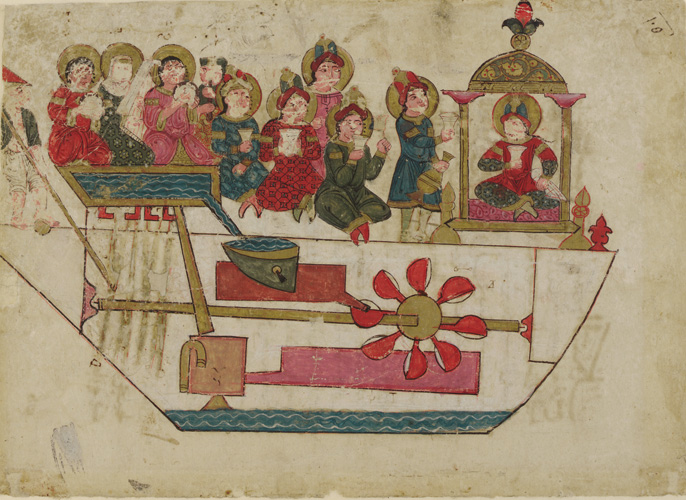
An early plan for a robot.

An early plan for a robot.

Robots, we are told, are our inevitable future. Some visionaries look forward to uploading human consciousness (even though we have no idea what it is) into a machine and, with replaceable parts, living forever. Before the dead and resurrected Jesus, according to the gospel of John, stood Thomas—the man some traditions said was Jesus’ very twin—and yet he doubted. As much as we claim otherwise, we adore Thomas for it. Evolving even in a world full of religion—itself a product of our evolution—we are so unsure. Our robots, however, programmed by us, have no doubts. Even when they act confused, it’s only because we tell them too. Our minds, as Wired tells us, resist letting robots drive the car for us. We let them pull the trigger, however, and pray our programmers got it right.


Clockwork Universe

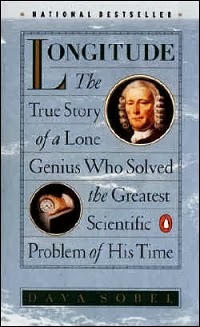
longitudeIn a clockwork universe, time is an essential interpretive factor. Those of us constantly crushed for time hardly realize just how recent of an invention it is. Time has, of course, been around forever. Human interaction with it, in the daily sense of what defines work and what defines leisure, dates only to modernity. Train schedules, in the Victorian Era, led to the need for standardized time across large land masses such as North America. Prior to that, with an uncanny precision to those of us who infrequently take the time even to look at the sky, clocks across the nation were set at noon by observing the sun at its zenith. Even though the concept of longitude existed, its measurement at sea was maddeningly difficult. The Phoenicians, the ancient mariners who circumnavigated Africa, did so by staying in sight of land as much as possible. The open ocean gives few clues as to those imaginary lines we assign to keep our location certain.

Dava Sobel’s Longitude: The True Story of a Lone Genius Who Solved the Greatest Scientific Problem of His Time, is, despite the lengthy title, a brief book laying out the story of John Harrison. Harrison, a clock-maker whose precision clocks made the calculation of longitude a much more precise science, was in a race for a royal grant to reward the discoverer of a method for giving precision to ships at sea. Harrison represented those who believed accurate clocks could solve the problem, while others argued that mapping the heavens would give sailors the best chance. Often we forget that loss of life greater than that on the Titanic could occur when ships ran aground, due to lack of knowledge concerning their longitude. Navigating the seas before GPS and before accurate watches, was often a matter of informed guessing with very high stakes. Harrison never did get to claim fully what he’d earned and we’ve all but forgotten how difficult finding the correct time was when our computers remind us, to the second, of precisely when we are.

Prior to science, the keeping of time was a religious function. Sacred calendars marked holidays—often with the ulterior motive of keeping farmers on track for when planting time for various crops, and their harvests, should commence. Telling the change of seasons by when to add or discard a layer of clothing seems eminently practical, but it doesn’t help an agricultural society to plan ahead adequately. The gods would give the time, and all they would require was a cut of the profits. It was, all things considered, a reasonable trade-off. And now holidays have mostly slipped their religious moorings to become times when we simply don’t have to go to work. Speaking of which—look at the time…


Back to School

“We want to make certain that we view culture through the eyes of faith, that we don’t view our faith through the eyes of culture.” The words are those of Stephen Livesay, president of Bryan College, according to a recent New York Times article. Bryan College in Dayton, Tennessee, already famous as the school that evolved out of the Scopes Monkey Trial, has been toying with adding a more specifically fundamentalist statement to its panoply of faith. Instead of stating simply that humans (more precisely, “man”) were (was) created by God, Livesay wants to clarify that this means by special creation, no evolution involved. Hey, we’re all thinking it. Why not just say it?

800px-Ape_skeletons

With the characteristic, journalistic eye-rolling that inevitably accompanies stories about creationism, I frequently wonder why there aren’t more calls to try to understand this viewpoint. It’s easier to condemn and say that narrow minds can’t widen out, but some of us who had believed in Bryan’s hypothesis at one time have managed by dint of reading and reason to climb our way out of the slime. If we understood what made literalism so appealing, we might be able to figure out why only America lags behind the developed world in accepting what is otherwise universally regarded as a fact. Instead, faculty members nationwide willing to call this into question are summarily fired and nobody bothers to do a thing to support them. Collateral damage of the culture wars. Perhaps we should add a statement about not letting the door hit you on your way out.

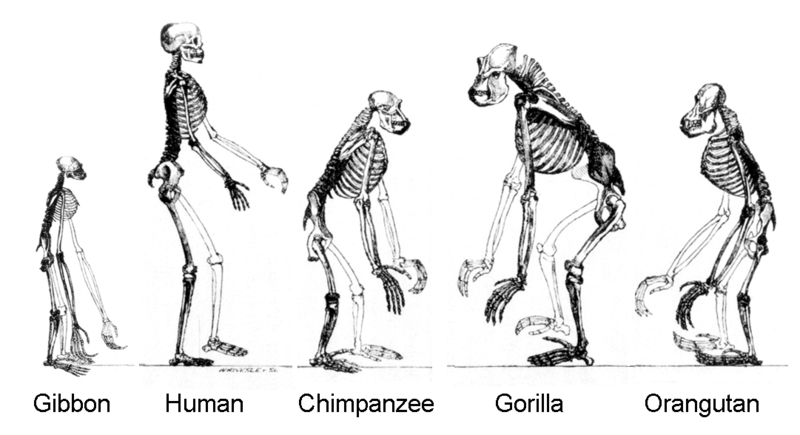
Evolution through natural selection stabs very deeply into the heart of human self-worth. We still refer to other animals as “lower” than us, and we exploit them in any way we see fit. Then we don’t wonder why being told you’re just like them isn’t disturbing. This is trench warfare. Lines in the sand dug deeper and deeper. Those who believe in creationism aren’t simple. Even with all our space telescopes and Mars rovers, we’re told the most complex thing known to humanity is still its own brain. And that brain makes people with Ph.D.s think that they’re special—either a separate creation by an invisible god, or because they can recognize how irrational our own brains make us. No intelligent being would want to understand why this is so by studying it rationally. That would make far too much sense.


Double Blind

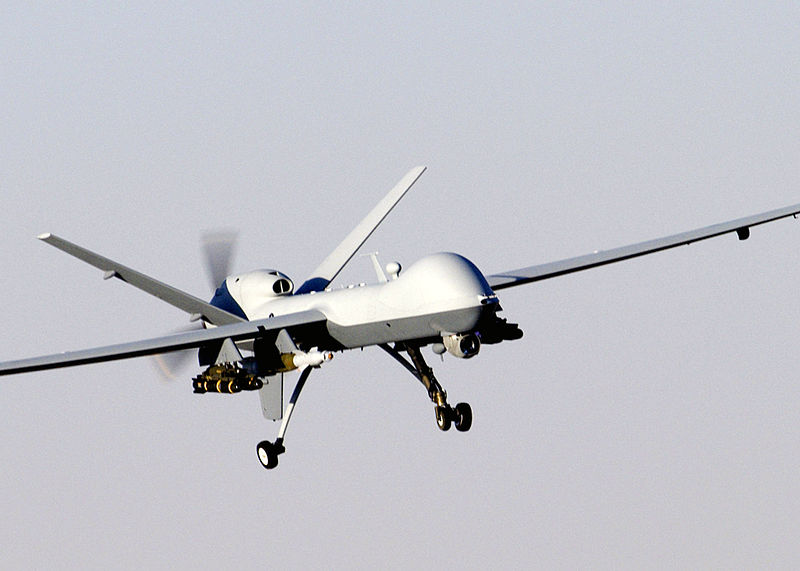
When I read Isaac Asimov’s three laws of robotics as a child, I assumed that I’d not live to worry about them in real life. What we don’t know can indeed hurt us. Time magazine frightens me sometimes. This week’s offerings include a small blurb about drones. When I was a kid, a drone was a bee—dangerous in its own right—or it was a verb used to describe an uninspired teacher or preacher’s monotoned wisdom. Now drones are robotic planes that can operate themselves without human input. Time reveals that technology has been developed that would allow drones to kill without human input. Asimov’s laws have become truly science fiction. Proponents argue that “collateral damage” might be minimized if we allow robots to kill with precision, and some have argued that the research should be prohibited. The fact that it has been developed, however, means the line in the sand has been crossed. If it has been done once, it will be done again.

800px-MQ-9_Reaper_in_flight_(2007)

Even as a daily user of technology, a deep ambivalence besets me. Maybe if it weren’t for the fact that every once in a while my computer (most often at work) freezes up and issues a command I can’t understand, I might feel a little more secure. Instead I issue a ticket for IT and when they call on me sometimes even a specialist can’t figure out what went wrong. Once the bullets are flying it’s a little too late to reboot. Maybe I’m just not yet ready to crawl into bed with a technology that might kill me, without feeling.

Just five pages earlier Time notes that 1 in 5 is the “Ratio of people who would have sex with a robot, according to a U.K. study.” All things are fair, it seems, in love and war. The part of the equation that we haven’t accounted for in our artificial intelligence is that thought requires emotion—which we don’t understand—as much as it requires reason, upon which we have only a toddler’s grasp. And yet we continue to build more and more powerful devices that might kill us with ease. Isaac Asimov was a prescient writer and a forward thinker. He was from the generation that aspired to ethics being in place before technology was implemented. At least as an ideal. We’ve reversed the order in our world, where ethics is continually playing catch-up to the new technologies we’ve invented. Now it’s time to decide whether to make love to it or to say our final prayers.


Real Life

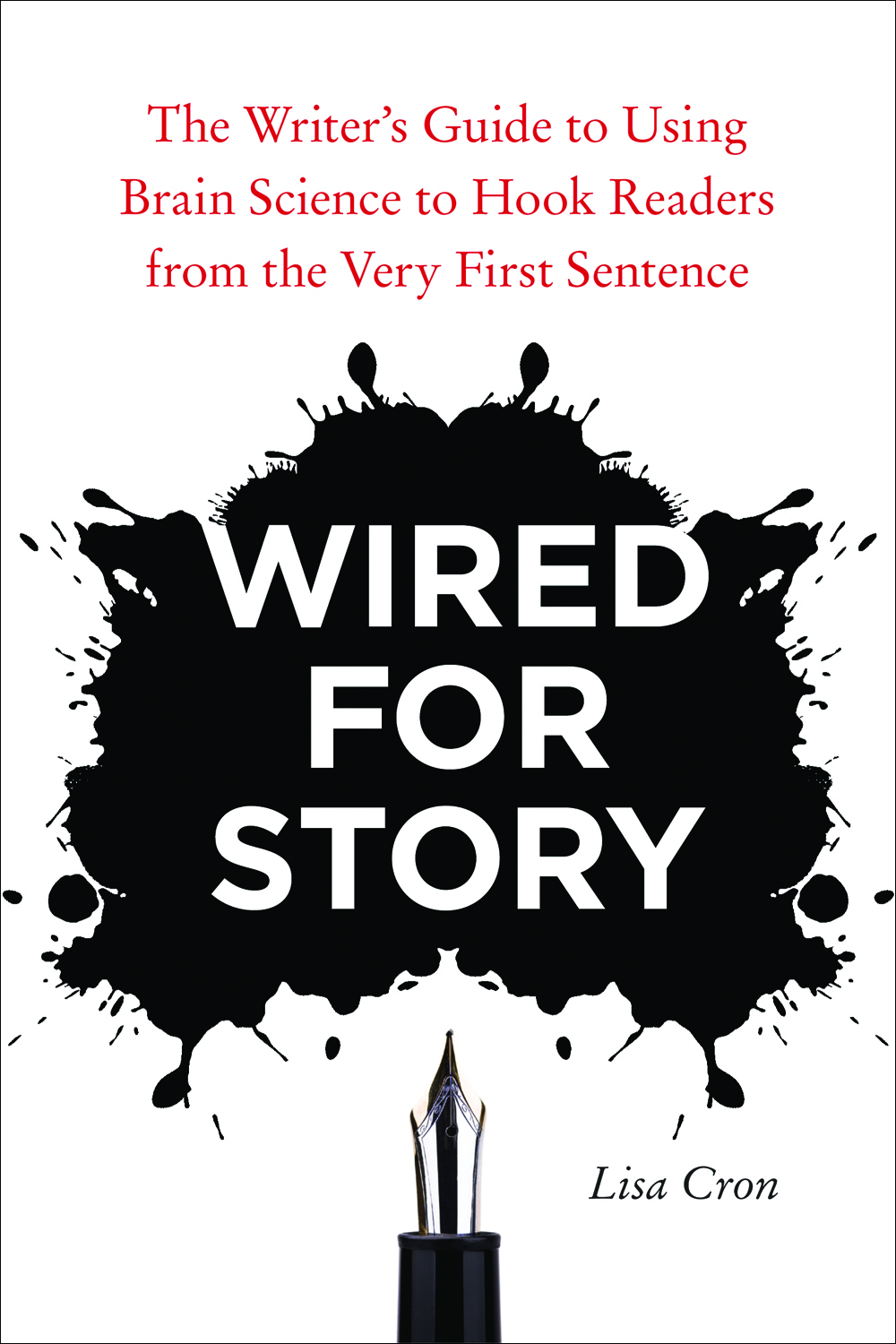
WiredForStoryThe brain, it seems to me, holds all of the cards. After all, what we call “reality” is actually a perception of what’s “really” there mediated by our brains. Philosophers and scientists have long warned us that direct participation with the universe is a figment of the, um, brain. This kind of thinking may have led me to trouble in certain jobs I’ve held, but there is no escaping it, unless we posit that there is another thinking center in the body. If there is, it must be invisible. As a dabbler in the literary arts, I couldn’t therefore pass up Lisa Cron’s Wired for Story. The premise spawns one of those “aha” moments so large that you wonder why nobody had tripped upon it before: brain science can reveal what makes a good story. For example, were I smarter, I would’ve begun with that wonderfully witty story told by Uncle Frank that kept us engrossed as kids, and left us roaring with leonine laughter. Only I don’t have an Uncle Frank, and the stories I grew up with were of the written species.

Cron, however, reminds us of a very important point: if it weren’t for feeling, thought would not be possible. This isn’t telling tales out of school. Even the most Spock-like rationalists know it’s true: emotions are essential to the thought process. Even the most proficient of thinkers can be stopped by the vague, “I don’t feel like—” (fill in the blank). To think well, we must feel that we can. When we greet someone we don’t lead with “how are you thinking?” but with “how are you feeling?” (often apocopated to “how are you?”). We interpret our world through a combination of reason and emotion. Both are necessary for survival. Think about it: does the world really make sense?

In writing, emotion plays an essential role. We lay aside the story that makes us feel nothing. Reductionistic materialists often espouse that getting down to the smallest piece of the smallest particle will eventually explain it all. The more spiritually inclined will ask them how it makes them feel. Emotion is the under-appreciated of these twins. While great ideas may come through in a novel (I can’t help but mention Moby Dick again), it is the feeling of the protagonist—the spiritual (call it what you will) struggle—that draws us in and keeps us reading. It may be secular or religious, but the realm of emotion reminds us that to be human is to feel. And if by chance you’re still reading this, I have a feeling that you might agree.


Fire Bearer

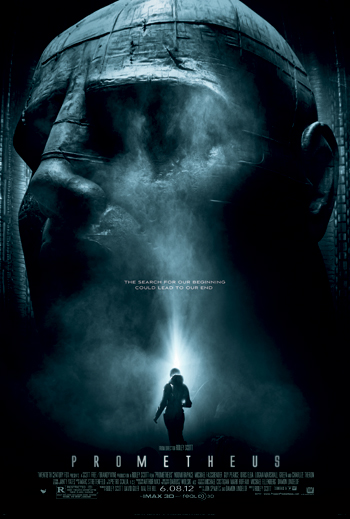
Prometheusposterfixed

Part prequel and part religious odyssey, Prometheus both treads familiar ground and explores new territory. In keeping with my invariable sense of timing (I saw none of the Alien trilogy in theaters), I waited until well after the fact to see the movie. I had heard Prometheus called a prequel, but even if I hadn’t some of the Ridley Scottish touches might’ve given it away: a large ship bound for a distant planet, evidence of unexpected inhabitants—yes, they knew about the “engineers” (we could call them “watchers”) but not the proto-Aliens they were breeding. We even have the android that understands science’s need to be greater than that of human need. Déjà vu. Still, there’s something very different here—direct discussion of religion and how faith plays into the work of scientists. Elizabeth Shaw, the sole survivor, wears a cross as she tries to work out what her father’s teaching about religion might mean. The cross isn’t hidden in the background—it is brought out into the open and discussed.

If you haven’t seen the movie, the premise is that ancient artifacts (including the ubiquitous Sumerian, Egyptian, and Mayan templates) added to a new discovery in Scotland, demonstrate that a race of giants have been inviting us to their planet for thousands of years. In fact, they had engineered us. (Ironically, the biologist who espouses Darwin is among the first to die.) Peter Wayland, industrialist billionaire who doesn’t want to die, funds a trip to meet these engineers. The engineers, save one, died long ago. Apparently of some plague (cue the aliens!) that were created to destroy humans. They were about ready to send the nasty beasties to earth when they were overcome, with only a single survivor. No coincidence that this planet was reached on Christmas day. It becomes clear to Dr. Shaw that these engineers were intent on destroying the human race they created. And still, she slips her cross back on before facing the engineers of life and death. This was Noah without all the water (and much better writers).

Of course we think we know the rest of the story. Sigourney Weaver bravely led us through three alien attacks before sacrificing herself in a New Testament kind of ending. But what about Elizabeth Shaw? She who bore and aborted the mother of aliens in a very maculate conception? She is off to a prequel’s prequel to find out why these engineers wanted to destroy us. Rumor tells of Prometheus 2, and I wonder if we will get to meet our maker’s makers. Although Scott is an atheist, he brings us Moses later this year, and has already given us Mary and Jesus wrapped up into one with Ripley and her spiritual mother, a sci-fi St Anne, in Elizabeth Shaw. After all Elizabeth was cousin to Mary, and now that the question of faith has been openly discussed, it will have to be more fully addressed. Among the unanswered questions is whether I be able to make it to the theater on time to see this one, or will two years vanish before I find the time to address the eternal questions that Ridley Scott always seems to pose.


Science Fiction Double Feature

Two news stories last week—one from the Associated Press and one from the Chronicle of Higher Education—hit upon a common theme: scientific illiteracy. Both articles presented scientists who felt that if they could just reach the (mostly) American public with easily digested facts, then belief in the Big Bang, evolution, and global warming would suddenly make sense to everyone. It may not be my place to say, as I’m not a scientist, but I believe they’re wrong. Don’t misunderstand. I do believe in the Big Bang, evolution, and global warming. In fact, I spent part of last week flagellating myself (metaphorically) for not posting something appropriate on Earth Day. I worry a lot about global warming and what we do to our only planet. What I mean is, these scientists don’t understand religion. People don’t willfully reject the facts. That takes religion.

One of the reasons that I continue my daily efforts on this blog is that our educated elite constantly refuse to acknowledge the blue whale in the room. People are naturally religious. Some grow out of it, some are educated out of it. For most, however, the price to do so is far too high. Science offers little to take the place of faith. For all of its innuendo, the Big Bang tends to leave most of us cold. I don’t support religions spreading ignorance, but even the Bible recognized that it is useless to say to a poor person, “stay warm and well fed” if you don’t offer a blanket and some food as well. It’s chilly in an infinite, yet expanding universe. Why don’t scientist understand that if you give a jacket, maybe people might actually warm up and listen?

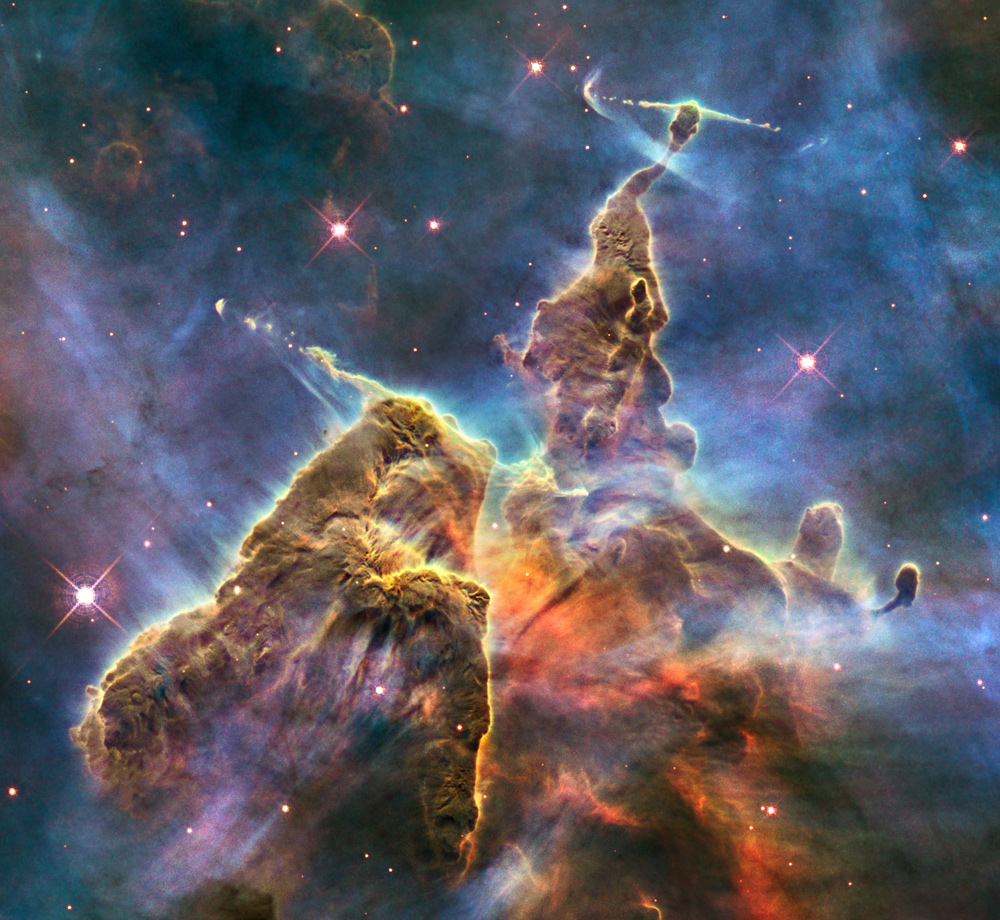
hs-2010-13-a-large_web

Religion, however we define it, is a coping mechanism. Even many atheist biologists admit that it has an evolutionary utility, embarrassing as that may be. Evolutionary scientists also tell us that we don’t evolve according to plan. Nature (de-personified, of course) opportunistically uses what’s at hand to help creatures survive. Instead of trying to understand religion, many in the hard sciences think that speaking loudly in single-syllable words will convince those who’ve found meaning in evolution’s solution of religion that somehow evolution was wrong. The worst thing we can do is to waste more money trying to understand religion! I hear it’s very cold in outer space. Still, things seem to be warming up down here. For those who can’t evolve gills, it’s time to learn to swim.


To Thine Own Self

sexatdawnAmong the books that I would rate very important, Christopher Ryan and Cacilda Jethá’s Sex at Dawn would need to be on top, or nearly so. As I’ve often stated on this blog, religion and sex are very closely related. Every religion, in some way or another, intimates itself into sexuality. Like religious belief, however, it is something about which we blush, look at our feet, and politely change the subject. Perhaps it would be helpful to shift focus, then, to the subtitle: How We Mate, Why We Stray, and What It Means for Modern Relationships. Well, not even that reaches the depths to which this book plumbs. Ryan and Jethá actually peer back deep into prehistory and look at the changes that agricultural life brought onto humanity. Comparing that information to conclusions drawn from evolutionary theory and serious biological study, they derive a picture of a much more equitable culture for which humans clearly evolved. Agriculture, and just plain culture, changed all that.

With culture, you see, comes the materialist idea of possession. Hunter-gatherers, even today, are the best sharers in the world. Their generosity isn’t noble, as Ryan and Jethá point out, but entirely practical. In addition, their lives are longer, healthier, and happier than those of the modern, stressed-out, perpetually frustrated, “cultured” individual. We are constantly trying to get ahead, and own more. Of course, we don’t want to mention or think about the fact that when we die, all that ownership will mean nothing. We invent complex laws that so only our biological (we think) offspring will carry on that legacy until the last bit is parceled out so fine that all that remains is a name that few will remember millennia down the road. For that we suffer nearly constant frustration. I’ve not read a book in decades that made me want to throw all of this off and head out to the woods, sharpened stick in hand. (Problematic, since I’m pretty solidly vegetarian.)

Some of the larger implications, however, that Sex at Dawn doesn’t address, are the roles that religion plays in problematizing what we’ve evolved to be. Of course, sex scandals in churches are referenced, since they are such crucial evidence. What is overlooked, for the purposes of the book, is that religions have always tried to define and control sexuality, at least since the dawn of agriculture. We don’t often consider that agriculture, in addition to making us fat, and lazy, also gave us organized religion. It may be that religion came first, but it only grew into a coercive social force with the temple culture of ancient Sumer, and it has been with us ever since, dictating who may love whom, when, and for what purpose. Sex at Dawn is not for those who are set in their ways, nor for those who take a one-size-fits-all attitude toward life. For the rest of humanity, however, there is hope that perhaps we can learn to be a little more true to what nature intended us to be, and to understand that nature may be many things, but it is seldom evil.


Floaters and Swimmers

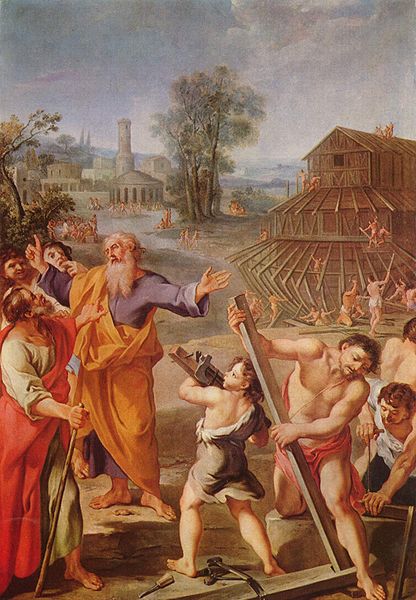
Noah seems to have found a renewed audience these days. Nothing like a major motion picture to make even one of the most famous biblical characters even more notable. And the spin-off stories are now considered news as well. One of the many impossible stories of the Bible, the ark, as scholars have long known, would not have been a physical possibility. Quite apart from the building in days before metal smelting was invented, there was the problem of volume. Since evolution is ruled out de rigueur, each separate species had to have been represented, since no changes are allowed from that time to this. The sheer number of them, especially since new ones are being discovered even now, was deemed impossible to fit on an ark of even biblical dimensions. Add in the food necessary for 150 days, especially considering the carnivores, and the human-power required to care for all those beasts (only eight are permitted by Genesis, and Noah was 600 years old at the time) and you get the picture. Then Mesopotamian flood stories even older were discovered. It was quickly recognized that this was a myth with a larger message to tell.

Now, according to geobeats, and to the relief, I’m sure, of Russell Crowe, physics students at the University of Leicester have calculated that the ark could have floated. The story, in a one-minute sound bite, is a little shy on details. The students used the biblical cubit, and figured there were 35,000 distinct species at the time. I’m not sure where that number originates, but it doesn’t take into account how Noah got the koala’s to swim from Australia. According to present evidence, the earth is home to about eight-million-seven-hundred-thousand different species. And since they can’t evolve, that’s an awful lot of swimmers.

According to the university website, this was not intended as an exercise in biblical literalism. “The aim of the module is for the students to learn about peer review and scientific publishing. The students are encouraged to be imaginative with their topics, and find ways to apply basic physics to the weird, the wonderful and the everyday,” according to Dr. Mervyn Roy, the instructor. The students, working the math angle, didn’t expect the results to work. That they did surprised everyone. Except Noah, one presumes. The story makes clear that the number of animals was used to calculate mass, not dimensions, so squeezing all the beasts in might have been quite another chore altogether. Miraculous, one might say. As for me, I am waiting to see that pair of koalas swim from Darwin to the Persian Gulf, and then back again once the waters finally recede.

Don't forget to see the movie!

Don’t forget to see the movie!


Heaven Can Wait

“Like a good neighbor, State Farm is there.” So the jingle goes. Or went. I’ve only met my upstairs neighbors once. Twice now. Apparently last weekend I slept through the fire alarm—one of the dangers of awaking ridiculously early on a daily basis. The neighbors found the source of the smoke and turned off the furnace in the basement, but told me first thing in the morning before the coffee really kicked in. I avoided a close call, perhaps. What if they’d not been home?

I have no delusions about understanding how the Internet works. I’m still trying to figure out the telegraph. Perhaps having this inconsequential blog has put me on somebody’s radar, or maybe it’s just some bored robot that searches for strange combinations of words in the wee hours of the night. In any case, I ended up with an email with the trailer for Heaven Is For Real embedded in it. I recall when the book was on the New York Times bestseller list, and I suppose the Easter weekend release date is no coincidence, but the trailer still bothered me a bit. It’s not the resurrection part—the film industry wouldn’t get very far without that trope—but it is the implications of what heaven would be like. I haven’t read the book, but apparently Colton Burpo had a near-death experience and then for a considerable time afterward began describing things that were impossible for him to know. A miscarriage where his sister died, what his grandfather looked like as a young man, what his parents were doing when he was dead in the hospital. Talk about your spooky effects at a distance!

Despite my penchant for watching scary movies, I don’t think I’ll see Heaven Is For Real. There’s just too much emotional build-up here, and Life After Life traumatized me for weeks a couple decades back. Still, I am very interested in the possible explanations for what might have been going on. Near-death experiences have never been adequately explained. Scientists suggest that a lot can happen in a complex brain in a matter of nano-seconds, and we have no chronograph precise enough to know whether the thoughts and images happened before death, during death, or during resuscitation. Still, how people frequently know precisely where others were, who were not in the room at the time, and how they heard things that, medically speaking, they couldn’t have heard, remains eerie and hopeful at the same time. What does appear to be without question is that consciousness is far from being explained.

Botticini's vision

Botticini’s vision

Heaven is always described as pleasant. That concept differs radically for people, and you have to wonder how it can be one-size-fits-all. Some people prefer to be in crowds, while others like to be alone. Some like it hot. Some like it cold. And those who experience near-death phenomena often report having a body of some sort “up there.” Some people would prefer a different body. According to the trailer, Colton says we’re all young over yonder. For me, such things are far more about questions than answers. We don’t know what goes on after death. Nearly every religion ever invented says that clearly there’s more to the story. Some say we come back, others say we stay away. Maybe it is different for each. Maybe it is just a matter of having good neighbors after all.


Sowing the Wind

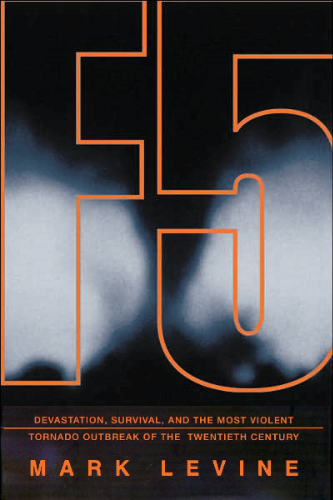
F5On May 31 in 1985, I was working at a church camp outside Uniontown, Pennsylvania when some severe storms rolled through the area. I had trouble sleeping through the thunder and lightning. I awoke the next morning to hear the news, in groggy disbelief, that tornadoes had invaded the county where my family lived. Frantic for their safety I tried to phone, but lines were down. It turned out all right—the nearest twister had been about five miles away from my home. This event was a shock because I grew up believing we never had tornadoes in Pennsylvania. I have always been terrified of them. I suppose that’s why I wrote my little book on weather in the Psalms. I just finished reading Mark Levine’s F5: Devastation, Survival, and the Most Violent Tornado Outbreak of the Twentieth Century. I’m not sure why I’m compelled to read about what scares me so much, but I suspect it’s because tornadoes have a whiff of the divine about them. Indeed, Levine’s book makes several reference to religious imagery when describing the utter destruction of Limestone, Alabama during the Super Outbreak of April 1974. It gives me little comfort that the storms that raked Ohio, Pennsylvania and Ontario eleven years later were the second deadliest outbreak following that of the book’s exploration, up to that time. There’s so much left to chance, with tornadoes.

Despite the complete lack of any intentionality behind the raw forces of nature, the phrase “finger of God” has become a fixture in the tornadic lexicon. Perhaps it is because the human perception of divine intervention has always been sporadically applied. One person’s miracle is another’s nightmare. Obeying only the complex rules of meteorology, the weather has ways of its own that even computer models cannot yet fathom. We still stand helpless in the face of the tornado. I have often thought, without a whole lot of data to back me up, that weather has played a major role in the human understanding of the divine. Quite apart from the obvious celestial orientation, the weather is easily forgotten until it turns bad, and when it does there is nothing humanly possible to do about it.

In April of 2011 a super outbreak of 358 tornadoes swept through the eastern United States and Canada, killing 348 people. In terms of damage, it was one of the costliest natural disasters in US history. And the capriciousness of the tornado stands at the center of it all. F5 is a hard book to read. The story practically turns its own pages, but the loss in human terms in the cold face of a planet that doesn’t exist for us is sobering indeed. Many religious people in the south were asking how God could allow children to be killed and hundreds of people maimed both physically and mentally for the rest of their lives. They prayed for answers that never came. And this may be the cruelest aspect of the apparently random nature of the weather. It maintains the right to kill, and prayers seem to bounce back from that brazen sky that comes just before a tornado strikes, and especially afterwards. Skies are silent. When they are not, it is time to duck and cover.