Tea Party Science

I sometimes jog in the morning before the sun begins his course across the sky. Funny thing is, sometimes I beat him. I know the sun is a guy because the Bible says so. When I startle a bunny from its hiding place along my path, I am amazed that those little creatures chew the cud just like bovines. It is the word of God. Occasionally a suicidal insect tries to fly into my mouth, and unless they go about on all fours, with legs above their feet, I spit them back out. If they do meet Leviticus 11’s strict standards and I accidentally swallow, I try not to think of Deuteronomy 14.19. I am surprised that the Tea Partiers haven’t tried to correct science on this point: the Bible is clear that insects (technically “flying creeping things”) have four legs, not six. Open your eyes people! Six legs? All those sixes seem to be from the antichrist. That’s why I feel comfortable with the potential of handing our nation over to the Tea Party. Certainty is better than scientific orthodoxy, hands down.

“I don’t know how much God has to do to get the attention of the politicians. We’ve had an earthquake; we’ve had a hurricane. He said, ‘Are you going to start listening to me here?’” The words are those of Michele Bachmann. Those of us who were taught that hurricanes result from the heating of Atlantic waters, swirled by the rotation of the earth (it does not move, according to the only proven source of science, the Bible) have egg on our faces. Do I ever feel silly! Empirical evidence suggests that the earth’s crust consists of tectonic plates that sometimes bump and rub and pull apart. Earthquakes result. Last week’s earthquake creates a problem for me, however, since North America is not mentioned in the Bible. I now live in a country that can’t possibly exist. We had better elect leaders who know how all this really works.

According to a Religion News Service poll this year, 40 percent (that’s more than half, in Tea Party mathematics) of Americans believe natural disasters are signs from God. I am relieved that this clearly shows science to be wrong—surely that many individuals must be correct. That’s the way math works. I sometimes imagine the United States as the Titanic (movies are another good source of science). Ismay, the Tea Party, declares, “But this ship can’t sink!” Thomas Andrews, the engineer (representing science) replies, “She’s made of iron, sir! I assure you, she can… and she will. It is a mathematical certainty.” Ismay, believing the rich are too wealthy to die tragically, refutes the findings of science. When the colossal ship slips into the icy Atlantic, however, he’s nowhere on board. Like the rest of his party, he’s already secured himself one of the rare seats on the lifeboats inadequate to save those of us in steerage. Since the ship can’t sink anyway, why are we even worried about this?

Full speed ahead and damn the icebergs...


Calm Before the Storm

All the build-up for Hurricane Irene masks a deep-seated fear of the uncontrolled. If the storm devastates anyone, there will be Biblicists who say, like Job’s friends, that they must have sinned. Such pronouncements accompany nearly every natural disaster, as if God is huddled over the globe attempting to concoct more horrid and sinister ways to punish sinners. Natural disasters, however, have a way of effecting good and bad alike, just as the benevolent sunrise and the soft kiss of the rain (both according to someone mentioned in the Bible as being the son of someone important). But when danger looks down its barrel at human communities, they don’t neatly divide into sheep and goats. All people are a mix of virtuous and vice-ridden in varying ratios, and only the God of the Marquis de Sade would slam the iron maiden shut on all alike. The East Coast saw this earlier in the week when a benign earthquake shook our world. Barely had the ground stopped trembling before we were informed it was divine punishment. For what, no one could really say.

Interpreting nature according to the Bible is so misguided that it is difficult to know where to begin the critique. Yes, some biblical writers with a flare for the dramatic will claim that Yahweh was behind some disaster. Of course, they had no concept of science, in this case, meteorology, upon which to draw. Nature acts in unexpected ways because God has his fingers in the bowl. Even the early church gave up on that way of interpreting things as soon as natural processes could substitute for God. When religion because politicized, however, we started to see a backlash of backward thinking. It is a simple enough deception to utilize. People fear natural disasters, and the politically savvy know that few have any theological training. You can very easily encourage panicked masses to follow you if you claim to have read the Bible. From years of teaching it, I can certainly affirm that many clergy have not read the whole thing. Yet we use it as the barometer of divine wrath.

I, for one, am not worried about Hurricane Irene. As New Jersey has zigzagged in and out of the predicted track of the storm, it seems as though God may be wavering. If it misses the politically astute will say it is Chris Christies’ righteous policies of helping the wealthy at the expense of the poor. If it hits they will claim it is the sinfulness of the liberal camp that led the winds this way. It is all wind. Having written a book-length manuscript on weather in the Psalms, I know a fair bit about biblical perceptions of weather in the world of ancient Israel. Although over-zealous translators ill-informed about meteorology used to translate a word or two as “hurricane” the fact is that biblical Hebrew has no such word. Due to the rotational direction of the planet (about which they also did not know) hurricanes never hit Israel. Herein lies the basis of my confidence in the face of Irene. If the Bible doesn’t mention hurricanes, they can’t possibly exist. Literalists up and down the coast should heave a sigh of relief. But just in case, I have stockpiled several gallons of water, right next to my Bible.

Good morning, Irene -- if that is your real name.


Elephants and Earthquakes

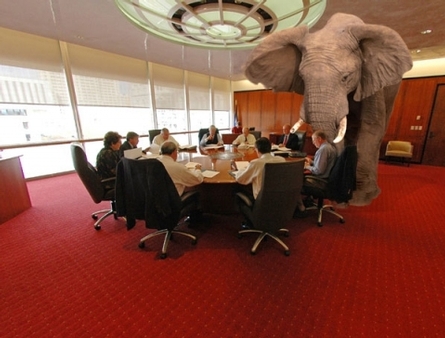
Two things happened yesterday that underscore the danger zone in which we currently live. The more dramatic event, an earthquake in central Virginia felt by many of us along the East Coast, had the social media tweeting for some time. The second event took the form of an editorial in the New Jersey Star-Ledger concerning GOP hopeful Jon Huntsman. Huntsman is quoted as saying, “The minute the Republican Party becomes the anti-science party, we have a huge problem.” An even larger problem is that the clock has moved well beyond the future tense. The editorial cites GOP candidates who routinely dismiss the science of global warming, evolution and other certainties as mere “data-fixing.” Perry and Bachmann have both decided they “don’t believe” in global warming. The elephant in the room, however, goes without mention.

The elephant in the room is religion, and it is a killer elephant, one that has a history of stomping those who attempt to control it. Politicians attack religion—whether or not it is bad juju makes no difference—at their eternal peril. In this “nation under God” (really under God) even a finger pointed towards conservative Christianity becomes a dagger plunged into a candidate’s chest. The Religious Right has been doing its homework for decades: no voice of reason can speak loudly enough to be heard over the songs of praise of the self-righteous. Reason, as scientists have discerned, cannot impact religious fervor. Belief can withstand a full-frontal attack from logic, reason—all that is sacred to rationality—and emerge without a scratch or dent. It is time that those in the middle and left took religious studies seriously.

Then I felt the earth move under my feet. As our house swayed and I checked on my daughter, I couldn’t believe I was feeling my third earthquake. I checked the web to see what in the world was going on. Interestingly, no witch doctors or Fundamentalist soothsayers were being consulted, but the scientists were. The news stories emerging minutes after the ground shook from Pittsburgh to Concord to Chapel Hill rang with the refrain, “scientists say.” Where was Rick Perry and his dowsing rods? Where was Michele Bachmann and her chicken bones? No, the religious war on science was switched off for a moment and those who felt afraid listened to those who actually knew what they were talking about. It was the elephant moving around the room, I say. It will only be a matter of time, however, before it is claimed that the people of Mineral, Virginia did something evil to prod an angry god into action.

Nobody felt anything, right?


Parsing an Exorcism

The latest in my spate of scary movie viewings is The Last Exorcism. The press when it was released last year made claims of extreme fright, but my impression was that I’d seen it all before. The “found footage” fantasy is difficult to maintain—although the camera work in the film is good—and the premise of demonic possession is frightening if the viewer is a believer. The hook for this movie, however, is that the exorcist himself doesn’t believe and becomes a victim of his own unbelief. The pattern overall follows The Exorcist, but without the creepy soundtrack and staged lighting effects, The Last Exorcism relies heavily on the viewer’s willingness to believe. The demonic possession is presented as extreme contortionism and self-destructive behavior, as well as the uncharacteristic violence by the victim. When Nell Sweetzer gives birth to a demonic child, a la Rosemary’s Baby, the role of good Christian gone occult feels a little hackneyed.

I’ve tried to analyze what scares so many people with movies of demonic possession. The core fears seem to come down to two: belief in the reality of demonic possession and the fear of being out of control. Historically the concept of possession was originally relegated to the gods with demon possession apparently arising as a pre-scientific attempt to explain epilepsy. The fact that most Christian denominations no longer recognize physical demon possession (a fact exploited by The Last Exorcism) makes it more frightening still. For a generation of media-saturated viewers convinced that cover-ups are common the credibility of the church, struggling with its own metaphorical demons, is suspect. Perhaps demons are out there—a common enough assertion on the reality show Ghost Hunters—and the church has lost control over them. When Jason and Grant explain what demons are, however, they are pretty far afield from Legion being cast into a herd of swine.

If the Internet is any kind of reliable measure of people’s fears, zombies and demons appear to be nearly on a level when it comes to belief. Both are supernatural and neither stretches credulity to the point of humans growing fangs or matted fur. Both participate in the idea that there is more to be feared beyond death. Both fail in the court of science. The Exorcism of Emily Rose raised the ambivalence of demonic possession to the level of the courtroom. One thing I learned on jury duty last week is that the truth is measured on the basis of the judgment of a quorum of rational individuals. The implications of this are frightening indeed: those who accept the reality of non-physical monsters (the jury is still out on ghosts) are fully capable, in a legal setting, of deciding the truth of the matter. The only corrective to witch-hunts and state-sponsored exorcisms would seem to be education. Today education comes via the media where zombies and demons freely roam.


Biblical Sex

Legislation covering female reproductive health maintenance has finally passed. Even in a nation where equality is highly touted, women will have, until 2013, been treated as more expendable than men. A few years back I read Mary Roach’s Bonk: The Curious Coupling of Science and Sex. There I learned that even as of the publication date of her book, many aspects of the female reproductive system were still poorly understood. The reason: lack of interest by (mostly) male scientists. Of all the great equalizers of humanity, it might be expected that religions would step in to champion the cause of citizens routinely treated as objects and chattels. Instead, the opposite has been the case. Most religions, and even until the last century Christianity in the forefront of them, relegate women a secondary status to men. Religion is all about power. Now that legislation will allow women basic reproductive rights without extra fees, Catholic hospitals are concerned about the implications. “They defied the bishops to support President Obama’s health care overhaul. Now Catholic hospitals are dismayed the law may force them to cover birth control free of charge to their employees.” Thus begins an article in today’s paper by Ricardo Alonso-Zaldivar of the Associated Press.

Instead of cheering equality, the church is muttering about medieval conceptions of conception. The entire idea that life begins at conception was not even possible in the biblical world where sex did not involve sperm and ova—such things were unknown in those days. The Bible has a few clues to when human life begins, and generally it is thought to be at first breath. Semen should not be wasted, however, since it was thought to be the full set of ingredients to grow new people. The uterus was simply a waiting area, a comfy place to grow with regular womb service. Men were the creators, women were the deliverers. That idea of reproduction formed the basis for all biblical and other ancient legislation on the subject. Comprehending “conception” as now scientifically understood, was only possible with the invention of the microscope. In response, a sexually underdeveloped church decided that the new data strengthened the male hold on ecclesiastical authority. Once the seed is planted, there’s no uprooting allowed. What male, after all, has ever had to carry an unwanted pregnancy to term?

Female religious leadership was recognized in many early societies, and even in some branches of early Christianity. No legitimate rationale exists for saying half the human race is disqualified on the grounds of basic hardware. After all “male and female created he them.” Concerns of “purity” for an age when menstruation was not understood could be marshaled to the cause of male supremacy. That mystery was solved when conception became clear. An unequal result emerged nevertheless. Since women couldn’t be discounted on genetic grounds, they could on the basis of “impurity.” And here we are two thousand years after pre-scientific Christianity was conceived, still waiting while a coterie of all-male bishops castigates normal health care for females. Believers like to suppose that their leaders receive special word from the mouth of God. Those leaders tremble in the face of true equality for the very first word the Bible has to say on the subject is “So God created man in his own image, in the image of God created he him; male and female created he them.”

Who's superfluous here?


Capricorn Too

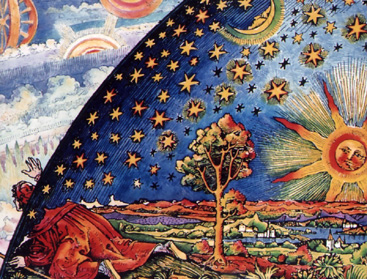
While seeking the official Flat Earth Society website (don’t ask) I became aware of the fact that several such societies exist. Frequently used as a slur against Luddites and troglodytes alike, the Flat Earth Society would best be classified as a modern religion based on ancient paradigms. This is clear when considering the motivation of Samuel Birley Rowbotham, the erstwhile founder of the movement and author of Zetetic Astronomy. Rowbotham also published a broadside entitled “The Inconsistency of Modern Astronomy and its Opposition to the Scriptures!!” (c. 1850, exclamation points in the original). Those who still doubt the religious nature of the movement should consider that the full-text of Zetetic Astronomy is available on Sacred-Texts.com. The objection to non-geocentric astronomy, although now based on several factors, is religious in origin.

The clashing of worldviews is inevitable when empirical evidence comes into play. As early as the days of Pythagoras and Aristotle thinkers were questioning how physical reality fared against apparent reality. As animals who evolved to cope with apparent reality, the fact that the earth bolts around the sun at a dizzying speed is of little practical value to humans. Making that successful hunt, however, depends on the beneficence of the gods—incredibly important. In such scenarios religion wins out against science every time. The truth of actual existence is more fascinating but indescribably less rich than a mythological worldview. Instead of Dagan, Baal, Zeus, or Thor, we have static electricity. Sure, lightning still behaves in unpredictable ways, but there’s not a god out their hurling it towards sinners. Abstruse laws of fluid dynamics and the flow of electrons determine what is actually happening. Yet we flock to theaters to watch Thor.

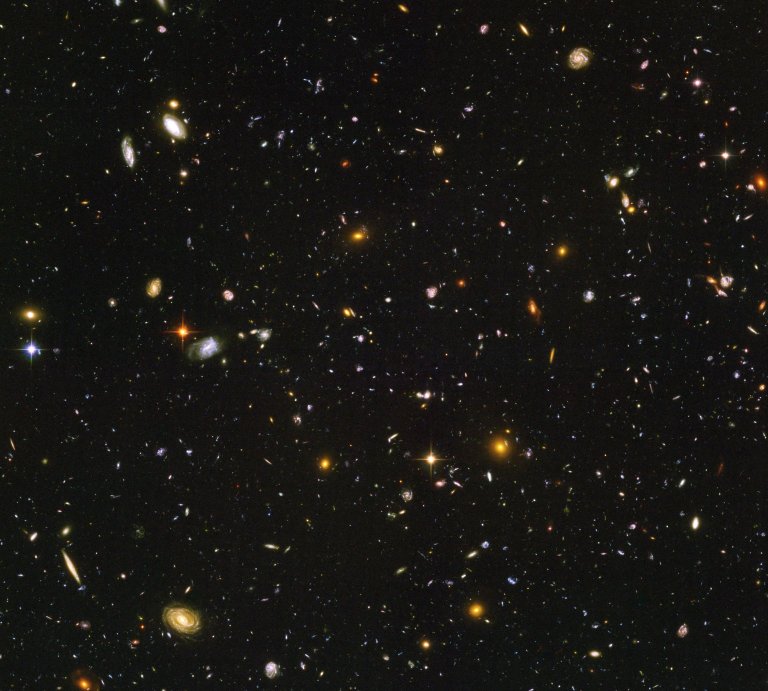
While most educated religious believers seldom put too much credibility toward the biblical worldview, they often sense relief at having “flat earthers” to ridicule. Ironically, the stated goal of websites such as Sacred-Texts.com is to promote religious tolerance. For most modern believers, already under the gun of science, tolerance is understood to extend to religions like ours. Those that are outside: modern paganism, flat earth beliefs, ufo religions—such belief-structures deserve ridicule. Is such a mentality not indicative of a certain level of discomfort with “mainstream religions” as well? No matter how far Hubble peers, even to the ends of the universe, it spies no God. No matter how deeply geologists sound, no Hell is beneath our feet. We cannot easily let go of such concepts, no matter how pre-Enlightenment they may be. It may be a good exercise for modern-day people to occasionally read Zetetic Astronomy to remind ourselves that religion comes in all shapes and sizes.


Honest to God

“A lot of traditional beliefs are outside people and have grown into rigid things that you can’t touch any more”–these words come from a minister of the Protestant Church of the Netherlands, according to a report yesterday on the BBC. The title of the article, “Dutch rethink Christianity for a doubtful world,” touches on a theme mentioned earlier on this blog about the church in Sweden: clergy often live with their own doubts about God. Showing similar results to the Swedish study, the Protestant Church of the Netherlands hosts one in six clergy who are agnostic or atheist. I would suggest that the specialization of labor–as well as the persuasiveness of science–stand behind this phenomenon. In modern societies far removed from human roots, we really don’t pay much attention to the training others receive to take on their professions. We assume that higher education is doing its task and that professional bodies like the American Bar Association put up tests to deter those who make false claims. Seldom do we reflect that our off-the-farm lifestyle is a very recent human development and that we haven’t really had time to sort out whether all this complicated training ever really works.

Don't rock the boat...

When I was a seminary professor, I saw the dilemma this way: seminaries crave, indeed require academic respectability. Accrediting bodies insist that a substantial portion of faculty hold terminal degrees. Seminaries, however, are run by confessional groups that insist on certain unscientific worldviews and premises. Doctoral students, unless indoctrinated at faux institutions that block scientific evidence, are educated in a worldview that contradicts their religious training on several levels. Seminaries require educated faculty, but education itself undermines traditional beliefs. Some conservative groups have been aware of this dynamic for years and have begun establishing “universities” that intentionally bar subjects that challenge their worldview. In other words, they want clergy with false credentials who are willing to fight for the cause, while still receiving academic accreditation. Few insiders will blow the whistle since the modern church is built on this shaky foundation.

What is being discovered in northern Europe likely pulses beneath the surface of many developed nations (again, with their specialization of labor). After a person spends three years of training beyond college to receive a “Master of Divinity” degree there is high financial motivation to see the process through to the end. The faithful in the pews, far removed from the realities of theological education, expect the same old show. With employment options nearly nil outside the church, smart clergy know the score. It is better to live a life of quiet desperation, mouthing the party line, than to be thrown into that swirling maelstrom of survival called the job market. Organized religions began when people lived on the land, very few people were educated, and priests were left alone to do their job. Education is costly in far more than college tuition bills. As they are learning in the Netherlands, growing up is never easy.


Red Eye Religion

It is a slow news day when Bigfoot makes the front page of the New Jersey Star-Ledger (without a body being found, of course). Not even halfway through the article the word “supernatural” shows up. This illustrates once again my contention that paranormal and religion often share mental space. A few months back I posted on the recent book Paranormal America by Christopher D. Bader, 
F. Carson Mencken and 
Joseph O. Baker. The authors, sociologists by trade, expressed a revealing connection between religious belief and willingness to accept the paranormal. One exception stood out, however; professionals who engage the hunt for sasquatch often toe the line of science and disparage the popularizing notion that their quarry is supernatural. There’s no doubt that Bigfoot has a growing clientele. Whether mythic or biological, there can be little doubt that the big guy’s here to stay.

Appearing in the newspaper as a bit of New Jerseyana, the local tradition about Big Red Eye—the north Jersey version of Bigfoot—suggests instant comparison with the Jersey Devil, a tactic the paper takes. Similar to responses presented when religious behavior turns criminal, adding a light touch helps to ease the tensions. Both religion and the paranormal thrive in the realm of belief. As I waited all morning in the garage for car repairs yesterday, the incessantly chatty morning talk-show hosts were going on about some quote that the Tea Party had been compared to terrorists. One of the gambolers stated, in rather self-righteous tones, “they are entitled to their beliefs-the constitution protects our right to believe what we want,” or something to that affect. Belief is a very powerful motivator. Even those who thrive on science alone secretly imbibe.

The physical reality of a phenomenon is not the sole indication of its significance. People are meaning-seeking creatures. Our concepts of what life means range from nihilistic, to simple, to complex. Even those who claim life has no meaning arrived at that place after the search. The significance of the unseen, the unknown, is that it provides an Ebenezer for meaning. Does Bigfoot exist in New Jersey? I can’t say. If so, it would still not rank as the strangest thing I’ve seen here. Nevertheless, among the fervent critics and uncritical adherents a common bond exists. Belief can’t be measured in any laboratory (yet) but only the most naïve would assert that it doesn’t exist.

Do you want to believe?


Who Made Whom, Now?

John Lennon has great currency, in part, because he is a martyr. Music has moved on since the ‘60s and ‘70s, but aging Boomers still like to quote him, especially his song “Imagine.” In an article written for the Los Angeles Times, reprinted in the local Sunday newspaper, J. Anderson Thomson and Clare Aukofer cite “Imagine” as the statement of what a world “that makes sense” looks like. I applaud their idealism. Citing psychological and sociological work that has been done over the past decade in the attempt to unravel “homo religiosus” they entitle their article “God didn’t make man: man made gods.” Much of the evidence they cite has been discussed elsewhere on this blog, but the overarching issue—whether this explains human religious behavior or not—remains open. In other words, if evolution provided us with religion, it must have some survival benefit and humans are not easily going to dismiss it.

Admittedly, the evidence for human conceptions of God arising from the need for close connections in community is pretty convincing. Nevertheless, the issue of whether there is a God or not will never be answered by empirical observation. As I tell my students, belief is not based on empirical observation. We do not yet know why people believe, and even if we find the right node, neuron cluster, or sensory stimuli, there will always be those who insist that the hardware is sparked into action by the unseen Other outside the system. It is the classic chicken or egg debate, taking place in that henhouse in the sky. The problem is that God is more like the rooster in that scenario.

The human brain is an endless source of fascination. Science has given us a sense of wonder about our own on-board computer, but it has not managed to capture the sine qua non of the totality of the experience of owning one. Scientists also read, go to shows, make love and eat fine meals for the enjoyment of it all. But as Cipher says in The Matrix, “I know this steak doesn’t exist. I know that when I put it in my mouth, the matrix is telling my brain that it is juicy and delicious. After nine years, you know what I realize? Ignorance is bliss.” Our perception of the world as a stable, unmoving center of existence is an illusion. Science has revealed an even stranger reality involving equations that used to haunt my nightmares. Should God ultimately be reduced to formulae, true believers will find another entity to name as the divine. “Imagine… no religion too”? As long as humans are humans such a world remains pure imagination.

Imagine


Friend of Jonah

Last year a gray whale was spotted off the coast of Herzliya in Israel. As in the days of Jonah. Actually, we need to turn the clock back a little further. According to Arthur Max of the Associated Press, the gray whale was hunted to extinction in the Atlantic already in the eighteenth century. This whale, therefore, had to travel north of Canada from the Pacific Ocean through channels that are normally frozen. Global warming has opened these passageways and plankton last seen in the north Atlantic 800,000 years ago have begun to reappear. If Jonah was smart, he’d have stayed in that whale and would’ve just kept going.

Big business stands to lose the most from cleaning up the environment. It cuts into the bottom line. Happily, if brainlessly, joining the laissez-faire coven are many of the “Religious Right” who see destruction of the environment as part of God’s plan. So much for “and behold, it was very good.” When free market economists first met the conservative evangelicals it seemed that they had little in common beyond similar haircuts and a desire to turn time back to the 1950s. Since then they’ve joined to become a very powerful force in American politics, preventing any headway to improving the globe for others, even if it isn’t a personal concern of theirs. So much for “do unto others as you would have them do unto you.”

Each year in my Prophets class I have students that are far more concerned that a literal Jonah was swallowed by a literal whale rather than hearing the message Jonah proclaimed: repent or face destruction. If we turn the thermostat up a few degrees more each year maybe Jesus will finally jump on that white stallion and split the Mount of Olives. You can’t quite see the Mediterranean from there, but if you could you might spot a lonely gray whale. You don’t need to look for the little man inside. That whale is the sign of Jonah.

Wave to Jonah for me!


Ouch!

Now in a dentist office near you!

Sitting in the dentist’s office may not be the best place to be reading about pain. Nevertheless, as I was anticipating my fillings (worn enamel at this stage, not cavities) I picked up the June edition of Discover magazine and noticed a story on the brain. Since pain and brain rhyme, I took it as a kind of omen. I actually subscribed to Discover for many years as a teenager, but with the vicissitudes of the job market as an adult, and the perpetual lack of storage space in apartments, I have let my magazine subscriptions lapse. The article, which I did not have time to finish, suggested that neurologists are on the cusp of being able to pin down whence chronic pain is experienced in the brain. If a chemical inhibitor can be found for this specific region it will be like turning off a light switch. There will be no more pain (rather like John’s vision of the New Jerusalem).

As I was called back to the dentist’s chair to the accompaniment of the whine of a dental drill, I reflected on the loss of pain. Being the sensitive sort, and probably more empathetic to others than may be healthy, I never wish pain on anyone. Life is difficult as it is, and even those who wish me harm do not deserve suffering. Nevertheless, I wonder if we could thrive in a world without pain. This is all the more relevant with the growing whispers among the AI community that brains can be simulated by computers. If they are programmed not to experience pain (as seems only sensible) then what becomes of humanity when pain is abolished? Some of us identify with the pains of mental agony even if the physical does not directly impinge on our lives. It is what makes us human. When I see another person in pain, my immediate reaction is to want to help. Being a religionist, however, my options are often limited in this regard.

After a very painful termination a few years ago, I had to give in to anti-depressants for a while. The very idea depressed me. My life, including its full array of mental anguish, defined who I was. Take that away, and what was left? Funny thing was, those in the church who initiated this particular pain showed no empathy whatsoever in the face of it. I weaned myself of the medication after a few years and occasionally the pain returns—particularly acutely when yet another religious employer let me go—but it is part, a very deep part, of the human experience. Could we thrive in a world without adversity? We are often at our best when we are helping each other. That to me seems to be what true religion is all about.


First Byte

The scientific study of religion poses dangers to the native environment. It doesn’t take a specialist to realize that different people respond to different religious stimuli; some like smells and bells and others prefer the stripped-down Puritanical style. Even beyond that some people get their religious thrills from nature, others from meditation, and some from controlled substances. In a story on CNN late last week, it was revealed that some Apple users find worshipping their favored brand a religious experience. A study by British neurologists discovered that the same areas of the brain are stimulated by both thoughts of the deity and Apple gadgets. MRIs have been utilized for many years now to study where the brain “lights up” during intense spiritual states. It seems we now have proof that God is a Mac user.

While some would cite this story as an example of idolatry, others would interpret the results in a more technological way. Our brains resemble motherboards, in some sense. Even Stephen Hawking’s famous interview of last week had the genius saying that human brains are just like computers. (I must confess to siding with Stuart Kauffman (Reinventing the Sacred) on this one—the brain does seem to be more than the sum of its parts.) If our brains are computers, then the Mac question is a literal no-brainer. Having worked in offices where every PC tries to be a Mac knock-off (wake up, folks! Windows is a Mac emulation environment) I too can sense a superior being behind that Apple with Eve’s first byte removed.

Should we attempt to explore where religious impulses originate? As intimated by Newberg, D’Aquili, and Rause (Why God Won’t Go Away), if we are able to find the God centers in our gray-matter and stimulate them electronically, we may trigger religious rapture on demand. How does this artificial stimulation differ from the religious experience brought on by years of meditating, praying, or fasting? Or Apple products? Our brains are complex and only imperfectly understood. Religions have been around long enough for us to get a grip on their origins. Billions of believers worldwide, however, would prefer that other people keep their hands off their Apples.

Original thin?


Stephen Hawking’s Heaven

CNN’s Belief Blog, apparently open to contributions only by “successful” (i.e., university employed) religion scholars, nevertheless occasionally comes up with a thoughtful story. One of yesterday’s posts focuses on the fact that Stephen Hawking says Heaven is a “fairy story.” First of all, I have admit being surprised to see that Hawking is still in Cambridge—I could have sworn he was working in the Princeton public parking garage because it is his voice that comes out of the ticket machine. (Times being what they are for academics, I figured he might have needed a second job.) Ah, but appearances can be deceiving! I have had great respect for Stephen Hawking for many years. My own scientific interests must be relegated to a decidedly lay position among the collegiums of scientists, but Hawking writes books that people like me can (mostly) comprehend. Echoing an idea I stressed earlier—we came to the same conclusion independently—Hawking noted in a recent interview that Heaven is an idea devised to cope with fear.

Cosmologists, such as Hawking, speak with authority on the literal heavens. Ironically, the word “heavens” continues to retain its usefulness, even among scientists, for describing everything that is out there. Humans are assuredly small and our place in the universe is miniscule. In our heads, however, we conceive lofty ideas that seem to place our own consciousness outside the unlimited bounds of this universe. Is it any wonder that we can concoct gods? As deeply as they peer into the cold, dark recesses of outer space, astronomers and cosmologists find no room for Heaven. This cosmic inn, no matter how many aliens there may be, is largely empty.

What I find interesting is that journalists of religion find skepticism among scientists newsworthy. While being a rational thinker, as science demands, does not necessarily forego divine entities, using gods as explanations and having trans-dimensional heavens tucked away behind some far asteroid does somehow devalue the power and majesty of our eternal home. We expect our scientists to be skeptical—we wouldn’t often visit a doctor who sacrificed a goat on every office visit to consult its entrails concerning our health. And yet it is newsworthy when a scientist says in a forthright statement that Heaven does not exist. It would be like an evangelical preacher saying evolution never happened. The biggest miracle of all may be that whether it is Dr. Hawking’s doing or not, I actually manage to find parking in Princeton.

Billions and billions, but no angels with harps...


Fear Itself

Who you gonna call?

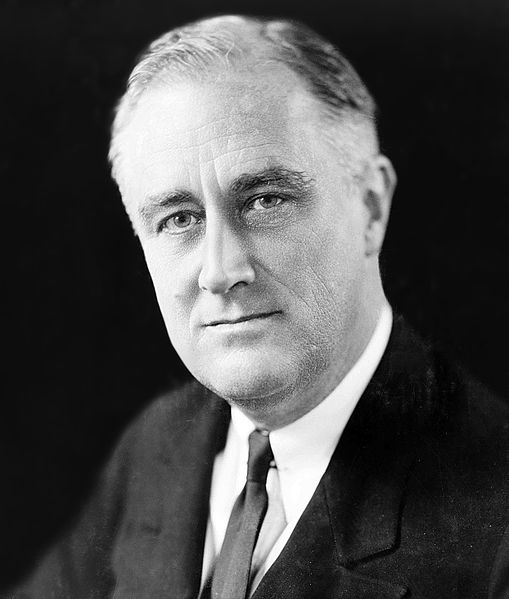
“The only thing we have to fear is fear itself—nameless, unreasoning, unjustified terror which paralyzes needed efforts to convert retreat into advance.” These bold words from Franklin D. Roosevelt’s first inaugural address could just as readily be applied to religion. Frequent readers of this blog will have no doubt noticed the recurring references to horror films and the occasional scary novel. Aside from everyday fears, (such as yesterday’s when I learned that my summer course, my only source of income for next month, had been cancelled) there are more deeply seated phobias that lurk in our subconscious minds. A reasonable conclusion might suggest that this undercurrent of fear is what buoys up the horror movie industry—people really are afraid. Fear is, in the final analysis, the original basis for religion.

Along with the evolution of consciousness, humanity has also acquired the knowledge of uncertainties and troubles ahead. We project to the next day and realize tomorrow is never secure. In desperate hope we beg the higher power for protection. If we were in control of our own destinies, we would not need the gods. Over the course of civilization, there have been luminaries who’ve tried to wrestle religion from the realm of fear into a more pleasing sphere. Jesus, for example, tried to stand religion on the basis of love. Within a couple of decades, however, Paul came along and managed to twist it back into the domain of fear once again. Fear of Roman persecution, fear of Hell, fear of life itself.

Religion is an embodiment of our fears. Many today choose to place their trust in reason and technological development. No doubt these arenas of human endeavor have improved life for many people. Yet, even with our growing global awareness, fear creeps in and we use our technology for weapons to keep us safe. We don’t call it religion any more, but national security, or the defense industry. Or, God help us, the TSA. The end result is the same: we fear more than fear itself. We place our trust in something we can’t fully comprehend. No matter how rational (or unemployed) we become, religion will never go away.


Inventing God

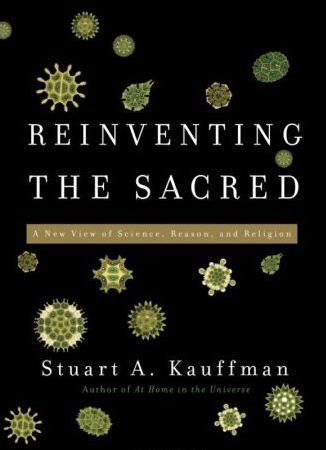
Reductionism has been a hallmark of science for many years with the most extreme forms suggesting a kind of cold determinism in the universe. Having known since my undergraduate days that science is the key to knowing, yet having the experience of believing as well, I wondered how they fit together. If they fit. I have just finished reading a very important book on the topic – Stuart A. Kauffman’s Reinventing the Sacred. A theoretical biologist, Kauffman has come to the conclusion that reductionism cannot account for many aspects of the world we actually experience. Evolution, biologically as well as culturally, demonstrates again and again a creativity that cannot be predicted, no matter how much data is acquired. Kauffman suggests that this non-reducible creativity is what might properly be called “God.” Not a believer in a transcendent creator God, Kauffman does not wish to remove the God meme from our psychological vocabulary, but to reinvent it.

In many ways, I found Kauffman’s work to be some of the most affirming science writing I’ve ever read. He believes there is a place for creativity in the overall human experience of knowing and being. Values are not simply arbitrary points selected by people, nor are they imposed on us from a personified God. Values and beauty are emergent phenomena. As Kauffman argues, they are clearly and blatantly real, but not reducible to physics. He also demonstrates that economics falls into the same category of real but non-reducible. As a researcher in complex systems, Kauffman quickly left me in the dust when he reached the more theoretical material. I am not equipped to assess his scientific conclusions. Overall, however, his book possesses a rare sort of urgency for a scientific exploration, and it values the whole of the human experience.

Demonstrating that ethics emerge not from “on high” but from a human sense of value and “right,” Kauffman suggests that we desperately need a global ethic to realize our full potential. In the ongoing debate between science and religion, Kauffman is a voice of both reason and compassion. Science is the way we know – there is no point in debating that. If you are reading this on a computer, Q.E.D. If you are a human being, then you have also experienced the phenomenon of believing, whether or not it is religious. Kauffman has addressed the question directly and has given both specialists in science and in religion a trenchant analysis of an intractable issue. His irenic approach is to be applauded, and hopefully, widely read.