Mining for History

An article by Matti Friedman in this month’s Smithsonian got me to thinking about the Bible’s iconic status again.  Titled “An Archaeological Dig Reignites the Debate Over the Old Testament’s Historical Accuracy,” the story’s about a decidedly non-biblical trope—King Solomon’s mines.  That phrase, as the article makes clear, comes from the title of H. Rider Haggard’s nineteenth-century novel, not the Bible.  As the piece demonstrates, however, many people suppose it to be biblical.  Our society isn’t as biblically literate as it is biblically motivated, so the question of proof keeps coming up.  It’s almost as if historical veracity is far more important than any spiritual truths the Good Book may be attempting to establish.  Those who need the assurance of history (those we tend to think of as literalists) often miss the message in the quest for certainty.

Reading the article makes it clear that archaeologists have discovered good evidence for copper mining in the Arabah.  This is in no way surprising.  Ancient people of biblical times smelted copper and used it to make bronze.  At issue here is the historicity of Solomon’s opulent kingdom, evidence for which we lack.  Archaeologists have been digging for well over a century now, and the magnificence of David and Solomon doesn’t really show up in the archaeological record.  Of course the issue is politicized because land claims are involved.  American literalists tend to support Israel because of its role in “end times prophecy.”  Eager to be done with this wicked old world, they require the assurance of history.  Interestingly enough, that doesn’t seem to have bothered Jesus of Nazareth very much.

Long ago biblical scholars realized that the biblical view of history isn’t the same as what we might term scientific history.  Any history, as those who specialize in it know, isn’t “what really happened.”  Objectivity is impossible.  Histories are versions of what likely might’ve happened, based on the sources consulted.  At the very least there will be the perspective of the other side.  There are facts, of course.  The Holocaust, for example, did happen.  The fascist government of Germany orchestrated and implemented it.  When trying to reconstruct that history, however, differences of opinion often arise.  That’s the nature of history.  Unfortunately we’ve seen the rise of these self-same biblicists denying the known facts of more recent history in order to make themselves appear more righteous.  They want to shield themselves from the genocide of American Indians and the evils of slavery.  Yet they are inspired by such headlines that hint that the Bible might have a tint of historical accuracy after all.  It’s all there in the passage about King Solomon’s mines.


Old and New

Annual holiday traditions show just how deeply ritual is established in our behavior.  As the holiday season rolls around we find our familiar customs to be fun and comforting.  I’m not much of a commercialist; for me the end-of-year celebrations are mostly about rest and peace, still a family tradition since settling in the Lehigh Valley is the Christkindlmarkt.  Bethlehem, founded on Christmas Eve by Moravians, has attempted to live up to its namesake and celebrate the season well.  It’s become an established family tradition to visit the Christkindlmarkt and we wander the tents with artisanal goods, some Christmas-themed, and others more just gift-ideas.  We seldom buy much.  It’s the spirit of the holidays that seems to come through and we need something to help us get through winter.

Each year things are a little different.  Many of the mainstays are similar, however, with the same vendors with the same merchandise.  What has changed in the past year is really us.  We’re not the only ones who make an annual tradition of this and we’re not the only ones who see the same scarves, sweaters, pillows, and pottery.  And ornaments—lots of ornaments.  We see new things because we’re different from our selves who’ve wandered through here before.  Hopefully we’re better selves.  Each time I do this I find myself growing more and more reflective.  A celebration of peace and love to all seems to hold, for the most part.  There are lots of people—too many for my comfort at this stage of the pandemic, but we’re wearing masks and hopefully most of these people are vaccinated—peace and love for all.

The end of the year has long been a season of festivities.  Even ancient peoples, especially in temperate regions, longed for the return of warmth and light.  In response to the long hours of darkness around the solstice they instituted holidays.  Times for us to get together and work a little less and relax a little more, recharging our spiritual batteries.  Yule with its Christmas trees and logs, served to bring the message of light into the darkness.  The twinkling of holiday lights is a festive sight, bringing back childhood memories of gifts, special foods, and time off from school.  I’m a different person than the one who’s written a blog post about Christkindlmarkt in the past.  If you’ve read such posts you’re a different person now too.  We all hope that the present person is a better one than the previous as we enter this season of joy and kindness.


Religious Dinosaurs

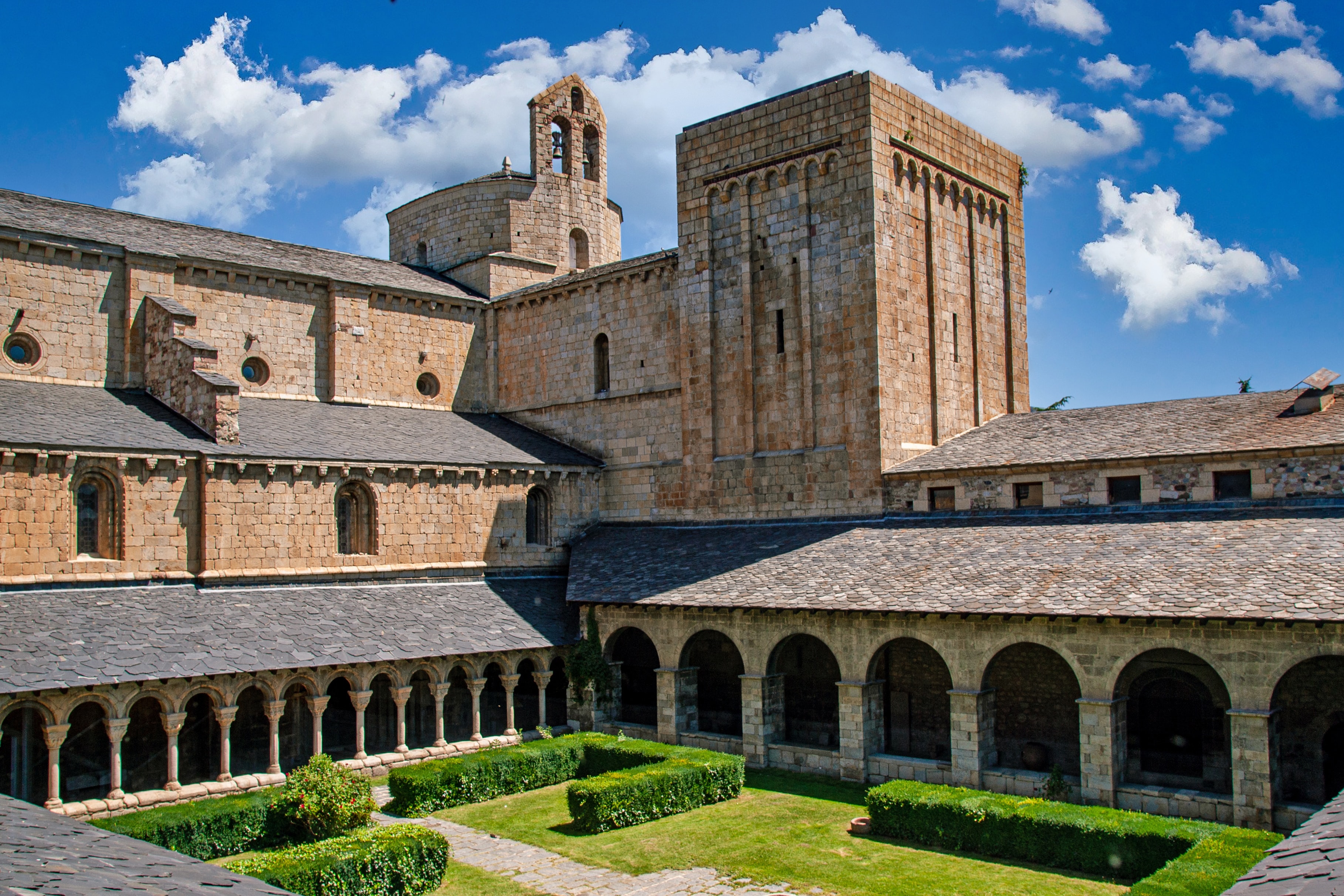
Dippy is, apparently, a common name for pet diplodocuses.  The statue of a diplodocus outside the Carnegie Museum in Pittsburgh is fondly known as “Dippy,” as is the fossilized remains of one such dinosaur from London’s Natural History Museum.  The London Dippy is on tour, or at least has been.  I learned about the fact that Dippy was in Norwich Cathedral just a day or so after the exhibit closed (I wouldn’t have been able to make it in any case; I mean I haven’t been able to get to the Pittsburgh Dippy and I live in the same state).  There are still plenty of photos on the cathedral’s website.  It’s a striking juxtaposition.  A massive stone building constructed to a medieval conception of God and one of the best examples of evolution, far older than the church on several orders of magnitude, peacefully coexisting.

John Bell Hatcher, public domain, via Wikimedia Commons

American evangelicalism has a much harder time accepting science.  I’ve been writing about change recently.  One of the changes in western thinking has been to move from the “I told you so” of clerics to the “I can show you evidence” of scientists.  Those who like others to tell them what to think have a difficult time letting go of medieval notions of the world—that it’s flat, and young, and about to end, as if God has a very limited imagination.  We now know that the world has been here far longer than one interpretation of the Bible posits, but that doesn’t make it any easier to have a conversation about it.  Many religions want to claim knowledge that can’t be questioned.  And yet, dinosaurs and cathedrals seem to mix well.

The assumption that those who think differently are evil, or are inspired by evil, is one of the most insidious children of monotheism.  With one God comes the idea of only one way to understand that deity and all other interpretations come from that divinity’s arch-enemy.  It’s a view of the world that struggles with change.  Historians, even those of us who focus on the history of religions, tend to take a long view. It’s possible to trace the development of ideas that have lead to the strange juxtapositions of our modern world.  Apologists so convinced of their interpretation of Genesis that they think the Bible wouldn’t have found dinosaurs worth remarking about, for example, and then cramming them on the ark.  Others, it seems, welcome dinosaurs into cathedrals.  Which is a better way to be humble before God?


Sky Dwellers

If the atmosphere’s an ocean, we’re all bottom-dwellers.  Ancient peoples populated the sky above with incorporeal beings, starting with a god, or gods, at the top.  Beneath that great being were other, for lack of a better term, spiritual beings.  Angels, etc.  Eventually, the lower you got in the sky, the heavier bodies became until those of us bound to our planet by gravity (for which they had no concept) were pretty much stuck on earth.  Although this may not seem like it, it was an early form of scientific thinking.  Birds fly.  The first thing you notice upon lifting a bird, is how light it is.  (Bird lifting may be rare to those of us in modern times, keeping the wonder intact when we actually encounter it.  I was once handed an owl-hawk or some such raptor, at a street vendor stand at Stratford-upon-Avon.  As the handler slipped the glove on and asked me to hold my hand out, I prepared for like a five-pound bag of flour.  Instead I could barely tell that the bird, larger than a bag of flour, was even there.  “Light, isn’t he?” the vendor asked.)

Back to science.  If birds, which are light, can fly in the air—some at great heights—it must be that sky-dwelling beings are lighter.  Lighter than birds.  In the Middle Ages, in Europe, this proto-scientific thinking was applied to theology.   Monastics and scholastics tried to determine what exactly spiritual bodies were made of.  Keep in mind that their world consisted of a basically flat earth with a very large dome over it.  That dome had layers—the sun and moon lived in one, the stars lived in one, and then spiritual beings all the way up to God (since monotheism reigned by then).  Stories of angels and demons mating with humans circulated.  How was that possible if they were pure spirit?

It stands to reason that clouds also inhabit the skies.  It doesn’t take much of a scientist to associate heavy clouds with rain.  Logic suggests clouds are made of water.  Perhaps then spiritual bodies were some kind of vapor.  Lighter than air they inhabited realms far above the clouds.  They descend by gaining weight, perhaps like clouds.  These otherwise ethereal beings would be unknown to us, they dwell so high.  They have to come down to deal with us.  There may be realms even lower, but if the atmosphere’s an ocean, early science suggests, we are indeed bottom dwellers.


Angel of Harvest

It’s been a few weeks ago now, but one October Saturday we attended the Lehigh Valley Vegstock.  Autumn is the season for harvest festivals and a surprising number of them are now catering to vegetarians, or even vegans.  When I say that, it probably calls to mind a certain kind of individual—perhaps an aging hippie who’s probably into New Age and alternative spiritualities?  If so, you’re not the only one whose thinking goes along those lines.  Among the recycled, reused, and other earth-friendly tents was one that offered contemporary spirituality.  A lot was going on behind my mask so I forgot to take the name of the actual vendor, but I did find the use of angels interesting.

No, I haven’t been living under a rock.  Well, maybe I have.  Even so, I know that angels are popular and have been for several years.  Some people who find themselves uncertain about God are still down with angels.  Back in college—who knows anything at that age?—I did an independent study on angels.  The professor (who’s still at Grove City) didn’t provide much direction, and I soon found there wasn’t too much in our library about the subject.  Like demons and other monsters, scholars tend to shy away from the topic.  That, and I hadn’t yet learned how to use Religion Index One.  Now, of course, there’s the internet.  In any case, the idea of angels stayed with me through my teaching career.  After all, studying ancient gods does bring you into close proximity with other spiritual beings.  Even so, I was interested to see Archangel Metatron on the Vegstock vendor table.

Metatron isn’t biblical.  He makes his first appearance in Jewish literature, including the Talmud and Kabbalah.  Although my research interest was always toward the earlier era of the spectrum, it seems that much of our angelology was percolating during the period after the Hebrew Bible was written.  Jewish scholars were working out the complex spiritual world and later Christian writers would attempt to systematize it.  It is possible, and it appears in some traditions, that Metatron was actually Enoch, translated.  Enoch, who is biblical, receives just a few words in Holy Writ, but he eventually grew in importance.  Genesis indicates that he walked with God and was no more.  What happened to him?  Metatron was one possible answer.  There are other Metatron origin stories, I’m sure.  And one of them was right there in Tatamy in the midst of a harvest festival.


B Film

October brings horror films to mind.  As soon as the calendar clicks over, discussions of favorite scary movies begins.  As I’ve mentioned many times before, it is the one time of year when those of us who watch horror don’t feel so odd.  It is a little strange, however, to be watching movies related to The Wicker Man at this time of year.  As holiday horror that particular movie is set at the other end of the year, in May.  So I had to see The Wicker Tree, something I’ve avoided doing all these years.  Neither properly a sequel nor a remake, The Wicker Tree is Robin Hardy’s re-envisioning of the story with a larger budget.  There’s no way to prove it, but it seems likely that it was released in response to the unfortunate remake of The Wicker Man in 2006.

There are any number of things that could be said about The Wicker Tree, not least of which is that it’s clear Anthony Shaffer was a far better screenwriter than Robin Hardy.  (Shaffer had written a sequel, more properly conceived, which has not been filmed.)  Robin Hardy was, of course, the director of the original movie.  Plagued by low budget, rushed filming, and lack of production company support, The Wicker Man nevertheless soared.  The Wicker Tree is what is termed a “spiritual successor”—it doesn’t directly carry on the story of the original, but draws its inspiration from it.  It was based on a novel written by Hardy titled Cowboys for Christ.  Two evangelical missionaries are sent to Scotland to convert as many lapsed Christians as they can.  Of course, their invitation to Tressock is a trap so they can be sacrificed on May Day.

Despite the many unanswered questions the film leaves, to someone raised evangelical it seems that Robin Hardy really doesn’t understand what evangelicals are.  Beth and Steve, on their tour through the lowlands, do things evangelicals just wouldn’t do.  They drink, they dance, they swear, they play cards.  The only thing he seemed to get about evangelicals is they like to sing and talk about Jesus and hand out pamphlets.  This is something I often see is movies—those who try to portray evangelicals haven’t actually been evangelical themselves and don’t understand them.  I also find this in my interactions with British colleagues all the time—they don’t really comprehend what evangelicalism is.  That could be a topic for its own post.  In any case, The Wicker Tree has its moments, but it’s convoluted, cynical, and off-the-mark.  It may’ve been intended as a spiritual successor, but its prototype required no re-envisioning.


Druid Redux

I know I’ve talked about this book before.  I had cause to learn about the Druids again, and Peter Berresford Ellis’ book was handy.  I’m pretty sure I have Stuart Piggot’s book somewhere, but I haven’t seen it since the move, so I turned to Ellis again.  The first time I read him I was commuting and couldn’t take notes.  (My specialized form of research has its limitations.)  This time it took several days’ more reading, and doing so with more active engagement.  One thing that really stood out to me this time was the Indo-European connection.  Druids, according to Ellis, were essentially Brahmins—the intellectual class in a stratified society.  Having derived from a common ancestor, the two societies diverged with Brahmins surviving in India and Druids going extinct with the somewhat genocidal treatment of various other groups against the Celts.

Druids were egalitarian as far as the sexes went.  This is one of those examples where Christianity’s masculinist orientation furthered a trend that led to women being treated as inferior.  Evidence points to early female Druids, and even female political leadership among the Celts.  As the male godhead took over the remaining influence of women eventually evaporated.  The Druids, you see, were extremely focused on learning the truth.  Their pre-Christian judicial system was oriented toward fairness and finding out what really happened.  In other words, ethically they required no conversion.  That was a matter of theology, and theology often brings its own set of issues.  

The Romans, who’d had a long and protracted war against the Celts, drove them to the fringes of their empire.  Britain (and Brittany in France) were far enough removed from the base of power in Rome that the Celts survived in the edges of the islands: Cornwall, Wales, Scotland, the Isle of Man, and Ireland.  As a distinctive culture, Celts have been in fashion for some time now, but that’s a new development, historically speaking.  Ellis’ book explores this angle quite a bit since understanding the Celts is essential to comprehending who the Druids were.  The lack of native written accounts (Druids forbade writing their wisdom, passing it on by memorization over the centuries) hampers our ability to have a coherent history.  Ellis, however, seems to have reconstructed well.  Modern Druid revivals necessarily contain speculative elements, and historically the Druids wouldn’t have been perfect either—nobody is.  They do seem to have had a reasonable and just society for the most part, something we’ve managed to lose, along with much of their wisdom.


Mabon

Given the immense popularity of Halloween, and the attention lavished on the solstices, it’s a little odd that Mabon is so infrequently observed.  Unlike its twin, the Vernal Equinox, the Autumnal Equinox has really only recently been added to the natural calendar observed by Wicca.  The ancient Celts, from whom many Wiccan traditions are drawn, celebrated Samhain, which became our Halloween.  Their other holidays divided the year into seasons, but perhaps the Autumnal Equinox was a little too subtle to merit much attention.  Or it simply fell between their own four-fold divisions of the year.  Starting today, however night will be longer than day, a situation that will last until the Vernal Equinox.  In other words, we’ve entered the dark half of the year.

As someone who enjoys horror, I often ponder the benefits of living in the dark.  Theologically the dark is often cast as evil compared to the light.  We have taken that metaphor and made it literal.  This makes sense, I suppose, given our natural fear of the dark.  The only real predators in the night, however, are now of our own kind.  The dark can also be peaceful, a time for contemplation.  One of the things adulthood has on offer is disrupted sleep.  Many of us find ourselves awake at some point in the night.  We need to become comfortable with it.  I’m not a Wiccan, but I appreciate the naturalness with which Mabon acknowledges the fact that half the year is darker than the other half.  It’s also a harvest-themed holiday, one of the many that stretch to Thanksgiving and on to living off the stored supplies through the winter.

No doubt there is some melancholy associated with Mabon.  The lessening of the light brings a chill with it.  Summer’s ease is at an end and we will need to start layering our clothes and adding blankets back on our beds.  Already it is dark when I begin work, which means the brightest part of the balanced day and night is spent indoors at the computer.  I will need to leave the harvest, so obvious in the fast-approaching October, to others.  Mabon and Halloween aren’t company holidays, but that fact won’t stop the encroaching dark.  There’s a wisdom associated with acceptance and even melancholy can been sweet.  The leaves, while still mostly green, have begun to turn.  The bright songbirds of summer have given away to ravens and crows.  We need to learn to walk in the dark again.  Perhaps it’s time to consider what Mabon can mean.


Psychology of Religion

It’s so human.  Mistaking form for substance, I mean.  A recent piece in Wired that my wife pointed out to me is titled “Psychologists Are Learning What Religion Has Known for Years,” by David DeSteno.  As the title intimates, religion benefits individuals in many ways.  Church attendance, however, has been declining for a long time.  While not the point of the article, I do wonder how much of it is because mainstream churches are stuck in a form that no longer works and people aren’t finding the substance there.  The basic church service is premised on a specific religious outlook that no longer seems to fit how the world works.  Potential ministers go to seminary where age-old ideas are tiredly replicated, based on an incipient literalism that simply doesn’t match what people see in the world.

Wired?

I’ve experienced this myself.  Depending on who the minister is, a church can go from dynamic to dull several times in the course of a member’s life.  People still crave the substance, even if the form stops working.  The form, however, is seminary approved and seminaries are accredited by the Association of Theological Schools.  The folks are academics and academics are well aware of the developments that suggest the form doesn’t work.  Speaking as a former seminary professor, sermons just don’t do the trick when you’ve done your own homework.  As DeSteno points out, once you remove the theology science and religion tend to find themselves in agreement with one another.  For years I’ve been suggesting that secular seminaries are needed.  Churches that aren’t bound by form or doctrine.  Instead we swim in a sea of retrenched evangelicalism.

Religion is an effective survival technique.  It evolved, even while denying it did so.  Some time after the Reformation a resurgent literalism led Catholicism to modernize, removing the mystery that was perhaps the last tenuous grasp that form had to provide substance.  Religion, beleaguered as it is, still has substance to offer.  DeSteno’s article is adapted from his new book How God Works.  I haven’t read it yet, but from the summary I can see that I should.  There are religious groups that attempt what this article suggests.  From my experience, however, I see they easily get sucked into mistaking the form they settle on for the substance of what they do.  I had recently been toying with the idea of attending seminary again.  I found, however, form after form.  What I need is substance.


Before Current Parameters

I recently had cause, for a work project, to survey which Episcopal seminaries are still around.  You see, I began my teaching career at Nashotah House.  (There were few teaching jobs in the early nineties, although we’d been promised a glut in the late eighties when I set out on that career track.)  In any case, I remembered marveling that the Episcopal Church had eleven seminaries.  For perspective, one of the largest Protestant denominations, the Methodists, only had thirteen.  Enrollments were high in those days.  Before the rise of the Nones, seminary teaching was a viable, if perhaps staid, option for a career.  Or in the case of some of us, it would be a holding pattern until something more suitable came along.  (I’ve always thought of myself as a small college professor.)

So the list of Episcopal seminaries is now down to ten, but those ten are much diminished from what they were back in the nineties.  Seabury, the nearest competitor to the south of Nashotah, has merged with Bexley Hall to make a very small federation.  Berkeley at Yale is a Jonah in the whale.  Episcopal Divinity School had to vacate campus and merge with Union in New York, leaving the tradition Episcopal stronghold of Boston.  The others seem to be clinging on.  In the midst of all this I learned that the Anglican Church in North America, a conservative break-away denomination, has reissued the Book of Common Prayer.  The BCP, as it’s fondly known, has a long and venerable history.  The 1979 edition has both a more conservative and a more modern liturgy, but even that doesn’t seem to be enough to prevent fracturing.

Photo credit: Church of England, via Wikimedia Commons

Fracturing.  Estimates for the number of denominations in North America set the figure at about 40,000.  No wonder Nones are among the fastest growing category!  If you’re going to place your eternal salvation on a bet, and there are that many options to choose from, the odds seem awfully long.  In some cases it’s a matter of being in the right state, or city, where the “one true church” exists.  If you miss it by thirty miles you could end up in Hell.  And all this with shrinking numbers.  The landscape has changed since I entered the seminary world.  Even as the numbers go down the fragmentation increases.  From a bird’s eye view this looks pretty odd.  Even if you look to the Prayer Book for solace you have to ask which one.  I just make the sign of the cross and move on.


Afghanistan

As much of the world watches in dismay, the Taliban have taken over Afghanistan.  Most religious rule ends up being harmful to women, it seems.  We have centuries of male-run Catholicism showing how both witch hunts and heretic murder became common in Europe.  Do we expect any better now that religious extremists have taken over a nation next door to Iran?  The mix of politics and religion has generally not been favorable and unfortunately if the Republican Party could have its way we would see a similar thing here in the United States.  An ill-executed coup d’état on January 6 of just this year led to the epiphany that the Republican jurists would protect those who tried to overthrow the US constitution in the name of religion.  And we know how they feel about women’s rights.  We should look at Afghanistan and tremble.

It seems difficult to believe that less than a century ago we went to war to defend democracy.  Senators alive to witnesses the privations of war are now recklessly trying to remake America in the image of a fascist state.  Instead of looking at Afghanistan as a mirror, the only thing they can see is this is a Muslim nation.  Christians would surely never try to take over a capital by force.  They turn a blind eye to our own insurrection, not yet nearly a year old.  Ironically the book they claim to follow contains a often quoted but more often ignored statement: “He that is without sin among you, let him first cast a stone…”   It’s no accident that their intended victim was a woman.

Religious politics can be maintained by force of arms or legal maneuvering. Both are evil.  The result is the same either way: women and thinking people suffer while the self-righteous rule.  Even such basic assumptions as protecting their own people from a horrible disease by the simple expedient of a free vaccine has been politicized for purposes of keeping in power.  When the moderates in their own party speak up they are shouted down.  How different is this than the shouts of triumph heard in Kabul?  The alternative—government that allows the freedom to believe what you will as long as all people are treated fairly—has been made out to be a sin.  The god worshipped both by Republicans and the Taliban has little sympathy for humanity.  He, and most certainly he is male, is all about power.  We watch in dismay.

Photo by Joel Heard on Unsplash

Belated Lughnasadh

We’re accustomed to think of summer as a “non-holiday” season beyond the bookends of Memorial and Labor Days, and the midsummer Independence Day.  Still, ancient people felt the turning of the year at the start of August with the festival of Lughnasadh.  I often forget it myself, although I’ve been feeling a tinge of autumn in the air this past week.  You can smell it at the very tip of your nose if you’re sensitive enough.  The cool of the pre-dawn air presages changes to come.  The wheel turns constantly.  Lughnasadh was actually Sunday (August 1).  Along with Samhain (Halloween), Imbolc, and Beltane (May Day), it divides the year into quarters (now called cross-quarter days since they fall roughly midway between the solstices and equinoxes).  It reminds us that summer is getting on; Lughnasadh was the festival of early harvest.

Lughnasadh was originally said to have been initiated by Lugh, one of the most prominent of Celtic deities.  Several European cities, such as Lyon, have names that likely derive from Lugh.  A warrior god renowned for his ability with crafts, he was also a savior god.  Although I’m no expert in Celtic mythology, it’s difficult to live in a Gaelic country for three years and not absorb some of the fascination for it.  Unlike Greek mythology, there aren’t large numbers of ancient literary pieces that tell the full story.  There are tales enough to know that Lugh was a major god of pre-Christian Europe and that as Christianity spread he was challenged by another savior god.

Although now rather obscure in much of the world, the Christian holiday of Lammas, or “Loaf Mass” was settled on August 1, likely to draw attention from Lughnasadh.  It too was a celebration of first fruits, for as reluctant as we are to let the light and warmth of summer go, plants are beginning to feel the onset of fall.  Lammas is a festival of communion—thus the loaf—and continues to be celebrated with local customs.  It includes the blessing of bakeries or of bringing bread to church to be blessed.  Lost in the modern rendition of summer, Lughnasadh or Lammas is barely recognized by most of us.  I’d never heard of it until I began researching holidays for a book I wrote that was never published.  Festivals that celebrate the changing seasons have an appeal to those of us isolated indoors behind screens all the time.  Perhaps it’s time to bring some summer holidays back. Lugh says yes.

Perhaps Lugh, via Wikimedia Commons

Freedom of Religion

One of the highly touted liberties in the United States is freedom of religion.  It’s easy to believe this is true when you can walk down any “Church Street” in many mid-size towns and go shopping for a theology that fits your outlook.  What remains hidden here, however, is that the freedom is largely restricted to the “Judeo-Christian” tradition.  (Yes, I know “Judeo-Christian is a disputed category, but it classifies several belief systems that share a basis in the Bible.)  For religions that don’t necessarily agree with the premises of the biblical religions the story is quite different.  That’s because, at least in part, our culture is based on the Bible and its limited worldview.  Colonists, convinced by centuries of Christian hegemony, had assumed the rightness of the Christian outlook.  The indigenous religions they encountered were, from their point of view, heathen.

The word “heathen” covers basically the same territory as “pagan.”  Both mean a religion outside Christianity (and, grudgingly, Judaism).  I’ve recently read that the etymology of heathen goes back to those who live in the heath, or country dwellers.  Although this etymology is uncertain, it does make a great deal of sense.  Christianity became an urban religion fairly early on.  Not only that, it shook hands with empire and became the basis for capitalism.  So much so that the two are now teased apart only with great difficulty.  This also means that indigenous religions have never really had a place at the table.  Especially when they challenged the dictates of the capitalistic outlook.

American Indian religion is closely tied to the land.  As Vine Deloria made abundantly clear in God Is Red, any religion committed to ideas outside those of Christianity will lose when the two come into contact.  One of the reasons is that secular science is based on a Christian worldview.  Indians believe in sacred land.  Since “objective” science is based on the Christian doctrines of creation, there can be no holy land apart from “the holy land.”  At its very root the basic ideas of other religions are dismissed and therefore treated as if they aren’t religions at all.  The Supreme Court continues to make decisions that violate the free practice of Indian religion.  The recent fiasco with the Trump administration should show just how dangerous such thinking is.  Like it or not, religious liberty means you have (for the time being) the right to be the brand of Christian you wish.  Beyond that freedom has a very different meaning.


Mapping the Apocalypse

“Is this the end of the world?”  The question came up often early in the pandemic.  The end.  It’s so logical that just about every religion addresses it.  It bookends “the beginning” with the symmetry that we so covet that it’s almost impossible to think the world won’t end.  Even astronomers tell us the sun will betray us, eventually becoming a red giant and consuming our home planet.  Apart from being the greatest equalizer, however, religious speculation places the end way, way before then.  A friend sent me an article in National Geographic by Greg Miller titled “These 15th-Century Maps Show How the Apocalypse Will Go Down.”  It describes literal maps of the eschaton, and guess what?  It was right around the corner back then too.

Maps to the end of the world have been around for a long time.  With a bizarre Schadenfreude, many Christian groups eagerly anticipate the end of all this.  I grew up with charts and maps telling just how it was going to happen.  Like all of you, I’ve lived through many ends of the world.  These folks must be the strangestly optimistic bunch on the planet—when it fails to come on schedule they pencil in another date, preferably in their own lifetime.  They want to see it.  It will, after all, prove that they were right and the rest of the world was wrong.  Who wouldn’t want that kind of validation?  The apocalypse has been around since long before the fifteenth century.  It started in the New Testament, if not before.

This eagerness to end the world would be considered pathological were it not religious.  We’ve been about the closest we’ve been to a human-made apocalypse under Trump.  Make no mistake, some Christians were banking on it when they cast their ballots.  We tend to overlook this destructive way of thinking because some biblical literalists (and they don’t all agree, just put a premillennialist together in a room with a postmillennialist and watch what happens) claim that it’s what the Good Book says.  The rest of society, disinclined to look it up for themselves, accept that roadmaps to the end of the world exist in the Bible.  They don’t, but that doesn’t prevent everyone from fifteenth-century monks to present-day televangelists declaring when it will be.  That there is an end is taken for granted.  The astronomers look at their watches and sigh that we’ve got a couple billion years left, at least.  No, the pandemic wasn’t the end of the world although many Christians were hoping it just might be.


Shifting the Narrative

Wide ranging.  That’s a phrase that comes to mind to describe Vine Deloria Jr.’s book God Is Red: A Native View of Religion.  Another phrase is very important.  I know this book has been available for several years and it’s been on my reading list for many of those.  What is it about?  Some books are just difficult to summarize, but the basic answer is that it’s an American Indian view of how Christianity has distorted the world.  An accomplished academic, student of law, and activist, Deloria knew of what he wrote.  His book explains articulately the view of Christianity from the outside and what a religion that reverences the earth really looks like.  What makes the book so fascinating is that Deloria had theological training and could engage with the Christian worldview over a considerable range of topics.

Controlling the narrative is of primary importance and the fact is white men have controlled the narrative and normalized one view of history, science, and our place in the universe.  First nations peoples had, and some still have, a radically different outlook.  Deloria makes the crucial point that even our science developed out of our religion.  That science, in turn, supports the worldview that created it.  It is possible to look at things differently.  In fact, for much of human history those alternate views were predominant.  The triumphalist view of Christianity claims it’s successful because it’s right.  A native view takes a longer view, saying “we’ll see.”

Very concerned about the state of the planet brought on by the Christian/capitalist partnership, Deloria advocated for not only Indian rights, but environmental protection s well.  Not only is the environment central to Indian spirituality, the concept of sacred spaces is very real.  Many of us not raised with indigenous points of view have experienced this as well.  Some places are special to us.  We hesitate, because of that very science created by the Christian worldview and its view of God, to call such spaces objectively sacred.  Even the “objectively” part is determined by a Christian perspective.  Deloria ends up by asking whether this form of religion has improved the state of the world.  There’s no doubt that some of Christianity’s achievements have lessened human suffering.  It is also true that science has achieved great things.  If I understand correctly, Deloria isn’t disputing this.  His point of view is much more essential.  Is this the only way to live on this planet?  From the indigenous point of view, which is far more important that we want to admit, the question is—is this the only way to see it?