Electronic Ritual

Religion and horror go naturally together.  Perhaps that’s something I instinctively knew as a child, or perhaps it’s something only mature eyes see.  It’s clearly true, however.  While reading about The Wicker Man lately I felt compelled to read David Pinner’s 1967 novel Ritual, upon which the movie is loosely based.  In many cases it is better to read the book before seeing the film.  In other cases the movie ends up being the superior project.  I had to keep on reminding myself as I read the novel that it couldn’t be measured against a superior vision of what it could have been.  Having written seven novels myself (all unpublished) I hope that I have a sense of the process.  Unless you’re into the commercial side of things you don’t write for the movie potential—you have a story to share and this is your way of telling it.

The novel isn’t bad.  It’s written in a punchy style that I don’t really enjoy, but the story drew me in.  It almost wasn’t to be.  Like many novels of this era, print copies are difficult to find.  Those available on used book websites, or even on Amazon, probably because of rights agreements, sell for over $200.  That’s a bit much, considering that over two dollars per page is excessive for a novel.  I finally had to cave and get a Kindle version.  I don’t have a Kindle, but I have the software on my computer.  Reading it again reminded me of how superior a print book is to an electronic one.  Reading ebooks tends to be faster but like eating snack food, doesn’t really satisfy you.  

At one point the navigation function stopped.  Confused, I couldn’t go any further in the story and wondered if I’d reached a sudden but unexpected end.  With a physical book I could’ve paged ahead to find out.  In this case, with the controls frozen with that obdurate computer attitude, I had to find another way to make the illusion of reading continue.  I eventually got it going again after clicking here and there, but reminded myself again that ebooks should only be the last resort.  As for the story itself, it was okay.  I read it as a parable about intolerant religion.  I’m not sure it was intended that way, but it certainly seems like a reasonable interpretation.  It ends differently than the movie does, so I won’t put any spoilers here in case you decide to spring $200 to get a used copy.


Pagan Perspective

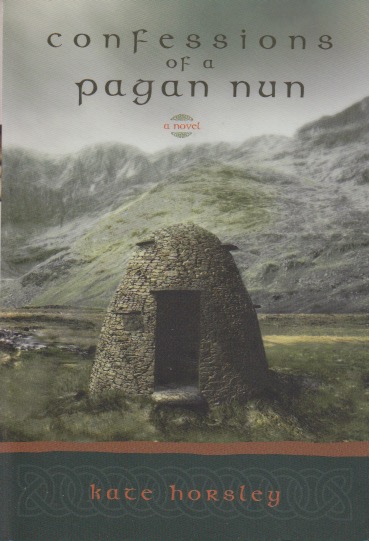
“I would live in a world of Christ-like humans, but not one full of Christians.”  So Kate Horsley’s protagonist Gwynneve writes in Confessions of a Pagan Nun.  This novel is an attempt to envision what life would’ve been like for a woman in medieval Ireland when Christianity came to the land.  Gwynneve is a spiritual seeker who comes to be a nun when it’s clear that this new religion has taken over the old ways.  Learning to write, she transcribes her story after hours in her clochan, or cell.  She recognizes that Christianity has brought good things to Ireland, but at a high cost.  The disparity between rich and poor increases, women are denigrated so that men can run things, and the land is ravaged for the benefit of their new way of living.

The novelty of the idea caught my attention when a friend pointed the book out to me.  I was a bit surprised to see that Shambhala, generally a nonfiction Buddhist press, had published the novel.  Since this is a story designed to make the reader think—it is contemplative, as a story from the point of view of a nun would likely be—the choice of publisher makes sense.  While it’s not likely that a book published there would make the New York Times bestseller list, as an erstwhile writer myself I can attest that novels outside the usual pale have great difficulty in getting mainstream publishers interested.  This too is a matter for contemplation.

One of the main themes of the story seems to be how a worshipper of the goddess Brigit has to become a devotee of St. Brigit when the church made the gods into saints.  This is something that happened historically as well as in novels.  Aware that it was easier to persuade individuals to convert to a new religion if they didn’t have to give up their gods, this seemed a small accommodation to make.  Horsley is not wrong, however, in pointing out that Christianity was not a free ride.  More than a religion, it was (and is) a powerful means for social control.  The vision it offers tends to benefit men over women, the wealthy over the poor, the powerful over the weak.  Despite what the Bible emphasizes, religion has its own conversion experience when it tastes power.  Confessions of a Pagan Nun is a story intended to shift perspectives.  The open reader will learn from contemplating its message.


Watching The Witch

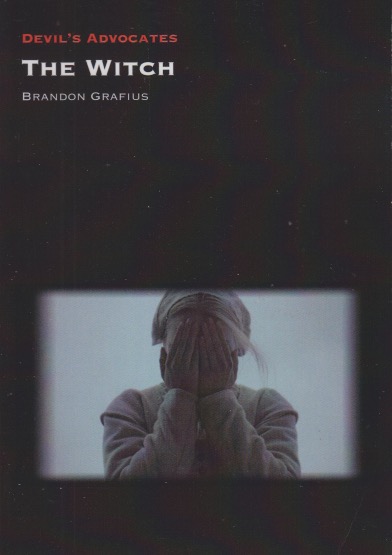
Good things often come in small packages.  I’ve read a couple of Brandon Grafius’ books before, and I’ve had The Witch on my reading list since I found out about it.  This is one of those books that benefits from knowing the raison d’être of the series of which it’s a part.  Devil’s Advocates is published by Auteur Publishing as a set of brief books on specific horror films.  If I didn’t have other financial obligations I could see myself purchasing the entire series.  Fortunately this volume was on a film I’ve seen (horror films have become so prolific that I can’t afford to see all of those I’d like either).  The Witch is a provocative movie, having gained critical acclaim as well as box office success.  It’s also a complex film.

Grafius ably takes us through the Puritan background that’s necessary to understand the social, and familial tensions that make this movie work.  Robert Eggers is a director known for his meticulous attention to period detail.  Even while weaving the fantastic into his stories, the plots are entirely believable.  Grafius has a solid grasp on how religion and horror interact.  That’s on full display here.  Looking at The Witch as an exploration of folk horror, he illustrates the importance of the landscape to the tale as well as how isolation sets a family off against one another.  The Puritan religion creates a monster, as it were.  Grafius doesn’t shy away from the misogyny behind the developing idea of the witch, either.  His explanations of—not excuses for—it are insightful.

Granted, horror films aren’t everyone’s cup of tea.  Or coffee.  As I sensed when writing Holy Horror, fans of the genre enjoy reading about it.  I often wonder why those of us who watch it do so.  In my case, in any way, it feels like a compulsion.  It’s a coping technique and perhaps an antidote to the headlines.  Horror can be an intensely creative and socially aware genre.  The best of it critiques the flaws of society.  As Grafius points out, Thomasin only wants to be a good girl.  The Puritan society into which she was born projects the image of the witch upon her.  Eggers gives us a real witch in the woods, of course.  Grafius explains how this becomes the aspiration of a young woman who’s only trying to do what’s right.  I have a feeling I’ll be going back to the Devil’s Advocates series again.


Buried Truths

I owe a lot to fossils.  Growing up just a block from a fossil-laden river in western Pennsylvania, as a kid I’d go fossil hunting with my brothers.  They weren’t difficult to find.  Maybe not museum-quality, but not bad considering that they were free for the taking.  I’d pour over some rock with many shells perfectly impressed in it and wonder.  Of course, my childhood religion taught that the earth was quite a young place because that’s what the Bible seemed to indicate.  Other than Chick tracts and related comic books we didn’t have many books around the house to explain this discrepancy.  One thing was pretty clear—the fossils were quite real.  We had no doubt that there had been dinosaurs.  How they fit into the Bible’s chronology (since the Good Book was written long before dinosaurs had been discovered) was unclear.

Mine was not an educated family.  We simply believed what the preacher told us.  Since Fundamentalist preachers don’t attend seminary, their response was probably something along the lines of, “the Bible says…”  Thinking about how to apply the Bible in a complex world was not their strong suit.  So we’d be taught that evolution was evil, but just literally a stone’s throw from the church hundreds of fossils could be found.  I suppose the evidence of those fossils kept me grounded.  I never could buy the “theory” that God created the world with apparent evidence of great age to test our faith.  A deity like that isn’t worthy of the name.

I still pick up fossils when I find them.  Apart from a brain coral and some crinoids, mostly I just find shells.  Knowing that this particular rock is evidence of the sea floor millions of years ago is thrilling.  It puts me in touch with the great antiquity of our planet, the times when people had not yet evolved to complicate everything.  Just a few days ago I found a rock with a vignette of life under the sea.  Looking at it closely there are crinoids among the shells, and what appear to be a drag mark where some unknown creature disturbed the silty Paleozoic sea bottom on its way someplace long before humans showed up.  Fossils always remind me of the responsibility of reading the Bible with an eye toward rationality and a recognition that a guide isn’t the same thing as a taskmaster asking you to believe the ridiculous.  That, I suppose, is why I can’t pass up a fossil on the ground. 


Nihil Obstat

Intolerance within religions has been on my mind lately.  Every religion has a history and the study of that history demonstrates that religious leadership reflects the rise of dominant personalities to the top.  Once that dominant personality reaches the zenith of leadership, he (and it usually is a he) decides what it is proper, or orthodox, for others to believe.  I was thinking about this while seeing a book with an imprimatur.  There is a wide range of belief within Catholicism.  Books which teach official doctrine, or which are used for educational purposes, require an imprimatur for widespread use.  An imprimatur requires a review process and includes a designated bishop to declare the work “without error.”  In the context of scholarship, this practice makes certain assumptions—that humans of a certain rank can declare a statement an error or fact.  A theological fact.

Theological facts don’t really exist.  If a fact is something that has empirical measures to determine its truth or falsity, theology falls outside the pale.  Ultimately it will come down to the word of one person outweighing that of another.  And as doctrine changes over time it would seem that old imprimaturs might expire.  The idea is that when something is declared without error, it is without error at that time.  As centuries progress, new empirical facts are discovered that impinge on theological “facts.”  The idea that any one word is final seems hopelessly time-bound.  I’m not picking on Catholicism here, because many religions have official teachings that rank as non-Catholic nihil obstats. It’s merely a convenient example.

The fact hidden in plain sight in cases of religions not permitting diverse views is that censorship stands behind it.  It’s no wonder that in a world increasingly supportive of diversity that “one size fits all” theology has come to be questioned.  Religions, however, lose their authority if they can’t declare the truth or falsity behind a proposition.  Bishops come from priests.  And priests come from seminarians.  I used to teach seminarians—I don’t know if any of my former students have become Episcopalian bishops or not—opportunities are about as rare as teaching posts.  The point is, those who make such doctrinal decisions had to learn them partially from the academic community that grants degrees.  As the academy opens up to new ways of looking at things, future imprimaturs will reflect the realities of their times.  Religions—all religions—evolve and change.  What may be an error today might look quite different in a future light.  Perhaps tolerance now will anticipate where we’ll eventually be, in the truth of the time.

Photo by Sarah Ardin on Unsplash

The Unholy Trio

Culture has a powerful prophylactic component.  People don’t want to be seen questioning authority and accepted “truths.”  This is especially the case as they grow out of their teenage years and learn to fit in as part of the herd.  Some subjects make this particularly clear because cultural biases deride them, never giving them a fair chance at consideration.  I’ve run into a number of these over the years, but an example will bring these abstractions to clarity.  Recently a commentor sent me to the video “Kaneh Bosm: The Hidden Story of Cannabis in the Old Testament.”  The idea is one I’ve addressed before—that cannabis was used in incense combinations in the biblical world.  Now, I haven’t done research on this, but what becomes clear is that many scholars over the years have dismissed the idea out of hand because, well, it invokes pot.

The reason marijuana—something I’ve never used and have no desire to try personally—has been demonized is one of considerable interest.  This is especially the case since it appears to have been widely used in antiquity.  No respectable biblical scholar, however, would be caught suggesting that it might have been incorporated in the rites of ancient Israel.  The modern stigma of cannabis, in other words, discounts the possibilities that in ancient times it was used in sacred contexts.  The “war on drugs” in the United States was largely led by religious conviction.  The heirs of Christian prohibition.  Sure, some drugs can lead to real problems.  The deeper issue, however, is that society’s structure leads people to the place where drugs seem to be the only answer.  The civilized response?  Make them illegal.

That mark against controlled substances colors our view of history.  If such things are illegal now then they must never have been used.  Chemical analysis of various utensils (what might be called “paraphernalia” today, indicates that ancients knew of and used cannabis.  Our ordered view of ancient Israel as receiving the one true and utterly sacred faith preclude the possibility that our demonized substance could’ve been used in ancient times.  I’ve noticed this with the other topic of the documentary—Asherah.  Conservative scholarship still denies that ancients might’ve thought Yahweh had a spouse.  (My own work does not deny this, but simply questions the nature of the evidence; I think it is likely people believed Yahweh had a consort.)  So we once again collide with a “no go” topic.  So, after we admit the possibility of drugs and sex, so the thinking goes, what we we find next—ancient rock-n-roll? 


Shunned

Belonging is important for our species.  As much as some of us may be introverts, we still need other people.  Given the wide divisions of human interests and activities, one way people have traditionally come to know one another is through religious organizations.  Let’s face it, getting to know your neighbors can be dicey.  People from work may not be those you want to spend off-hours with.  Joining an organization is a great way to get to know people and, if you’re seeking like-minded friends a religion has been a time-honored way to find them.  Of course, many religions are now becoming as polarized as our society, but even despite that one religious practice seems especially insidious—shunning.

Shunning has been used in Christianity from the beginning.  One of the real issues, verging on torture, is when someone is raised in a tradition and has made all their friends in it.  Many sects encourage this, some overtly, other less so.  Those within the fold will not, it is emphasized, lead you astray.  If you are shunned, then, you lose not only your welcome at social gatherings or worship, you also lose your friends.  For separatist sects—consider the Amish, for one example—integrating into another society is extremely difficult.  You were raised to live one way and how would the shunned even begin to know how to live like other people?  This applies not only to small sects; being part of the group is a major draw for everyone from Catholics to members of an evangelical mega-church.  It’s a means of having a community.

Moving accounts exist of Mormons or other believers being excommunicated or disfellowshiped.  The world they knew is gone.  Religions create community and the lost of that community is a cruel punishment to invoke.  Particularly since the offenses that lead to such exclusion are often doctrinal—matters of personal belief.  People are naturally curious, and the desire to learn more frequently leads into uncharted territory.  Some traditions will then invoke sacred texts—more specifically a certain interpretation of sacred texts—to justify the exclusion of the curious.  Those texts, however, are interpreted by other fallible human beings.  Still, the fact that religions continue to use shunning (call it excommunication or any other name) is an indication of the inherent cruelty that religions can express.  What could be more hurtful, especially among those who separate themselves from the world, than to throw them out of the only enclave that they know?


Looking In

There’s a real danger to the lifelong study of religion.  Learning to look at any tradition from the point of view of an observer will create a sense of being on the outside looking in.  I’m a member of a religious organization.  I occasionally consider pursuing ordination within it—this was my original sense of my calling in life—but I’m compelled to consider the phenomenon of being outside looking in.  When I was an Episcopalian (before the church showed its true colors in my particular case), I wrote a letter to my rector asking how I could get off of the church steps and be invited inside.  My rector wrote back with some insipid advice and was among those who voted, as a trustee, to oust me from my fourteen-year career at Nashotah House.  Outside again.

Studying the history of religions provides dangerous levels of insight.  Simple, mindless acceptance of teachings becomes impossible.  This isn’t arrogance, as any who know me can attest, but rather a form of hyper-awareness.  You can’t emerge from forty-plus years of reading about, and deeply pondering, religion unscathed.  Many, of course, dismiss any observations by those lacking the denominational seal of approval.  “If you knew what you were talking about,” so the reasoning goes, “you’d be a minister or a professor.”  So you speak from the sidelines at best.  Outside.  Even within my own group I have merely the role of “member,” lacking the official piece of paper from the seminary or other accrediting body that states I might know some things.

Of course, I have much yet to learn.  This religion thing is a tough nut to crack.  Were I younger and better paid I might consider undergoing college again to take a different path.  As it is, I’ve invested more than a half-century trying to get where I am, wherever that is.  I sit outside watching the birds.  They’re back pretty much in full force now.  They seem so certain about where they’re going.  How can you fly without a full level of commitment?  Earthbound, I muddle about with my head somewhere above the clouds I cannot reach.  I read about religious traditions unknown to me.  Often I find nuggets of great value in them.  Of course, I’m not clergy so you need not take my word for it.  I, after all, draw inspiration simply by sitting outside, always outside, and watching the birds. 


Women and Mothers

This is our first Mother’s Day with a female Vice President.  After four years of a female-groping administration, it feels like we’ve made a turn in the right direction.  Ironically, it’s often religions that keep women oppressed, even while women are often more faithful to them.  Religions like to claim to have the answers, and for the monotheistic traditions an origin myth with Eve—the first mother—as the first picker of forbidden fruit, has suggested one answer that has held women down for centuries.  Taking origin stories too literally can cause so much suffering in the world that we’re confronted with the question of their morality.  Religions are for people.  If they exclude half the human race we need to pause to ask if we got something wrong.  It’s Mother’s Day, always on a Sunday.  It’s a chance to think about such things.

Many churches will have sermons honoring mothers today.  Will they work for the wellbeing of women for the remaining 364 days of the year?  Our society, purely on the basis of biology, routinely puts women at risk and underplays the need to help them when that happens.  I’ve seen this firsthand.  We’re finally starting to get some female representation in Congress, yet less than a quarter of the seats are held by women.  Isn’t government supposed to represent its constituents?  Why has half of humanity had to struggle for so long to be treated as equal?  Mother’s Day cannot be a salve to ease our consciences about mistreating women for the rest of the year.  Equity should not be a goal, it should be reality.

We’ll be thinking about our mothers today.  Still under a pandemic, we’ll be Zooming them or calling them.  Those fortunate enough to live close may even get to see them in person.  These mothers sacrificed a lot to take on that role.  Our society could not continue without them.  We’re starting to come to the realization, I hope, that it is male-devised forms of government and business that are the problem.  They protect the wealth and power of a few.  They jealously guard against letting men offer the true justice of equity.  Some religions have begun to address the obvious injustice they have largely originated.  The story of the Garden of Eden was meant to teach a lesson.  That lesson has been abused for centuries as a way of making women seem somehow less than men.  It’s Mother’s Day.  Let’s see if we can’t learn to read more deeply and apply what we have learned.


Joyous Beltane

Every year around Beltane, I think of The Wicker Man.  Of course, the holiday itself, aka May Day, is no cause for alarm.  What makes the movie so effective—and I mean the original film, of course—is the fear of others’ religions.  My last two books have explored the nexus of horror and religion and The Wicker Man always stands out as an example of how naturally the two go together.  May Day, or Beltane, represents one of the cross-quarter days.  It falls roughly halfway between the vernal equinox and the summer solstice.  Days are noticeable longer now than they were back before the equinox, and Beltane, like many cross-quarter days, uses the symbolism of light to remind us of the seasonality of life.  While the light is here we should make use of it.

Photo by Ameen Fahmy on Unsplash

Agricultural festivals—and many ancient holidays began as such—acknowledge the importance of the lives of animals pastoralists depended upon.  Imbolc, the start of spring, was marked by sheep beginning their lambing.  Beltane was the point at which cattle could be driven to pasture.  It stands opposite Samhain, the origin of our Halloween, with Lughnasadh falling between.  These holidays were often celebrated with bonfires (thus The Wicker Man), but fire was understood as protective rather than destructive.  Although the Celts seem to have originated in east-central Europe, they were pushed to the northern fringes of the British Isles by other invading peoples.  Their location in chillier climes suggests that fire may have also held a practical purpose.

May Day is celebrated throughout much of Europe as a day associated with fertility.  This, it seems, was a major cause of concern among Christian missionaries.  Fertility is, of course, a natural hope.  Agrarian peoples rely on it to survive.  Fire served to bless the animals and to keep away the mischief of the little people, or nature spirits.  Much of what we know of Beltane, as with other Celtic holidays, has to be reconstructed since the Celts didn’t leave a scholarly archive that could be farmed for information.  Indeed, prior to widespread literacy what would’ve been the point of writing down what the folk already knew?  It was obvious that summer was on the way.  Even in years when the temperatures struggle to warm consistently, there are hints that “the light-soaked days are coming.”  The bonfires of Beltane represent the warmth and light that are on their way.  And what religion could object to that?


Post-1984

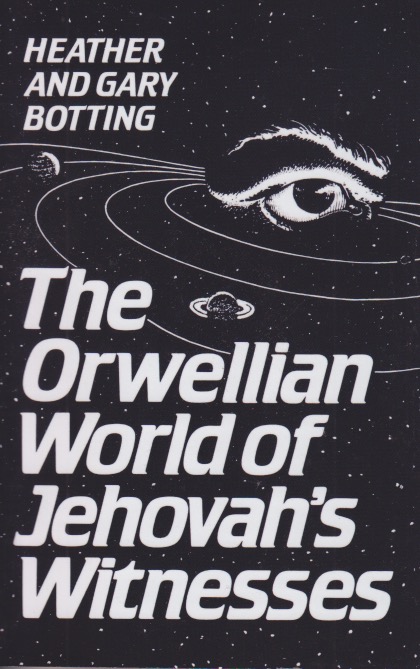
To truly understand a religion, you must be part of it.  This is the dilemma that underlies the entire discipline of religious studies.  And it all comes down to that slippery concept of “belief.”  One of the books that has been on my reading list for years now is Heather and Gary Botting’s The Orwellian World of Jehovah’s Witnesses.  What finally prompted me to read it was the (relatively) recent receipt of an invitation to spend what many call Good Friday (for it is today for the Orthodox) with the local Kingdom Hall crowd.  As I mentioned in an earlier post, the last people to come to my door before the pandemic began were the Jehovah’s Witnesses.  I’ve read about them before, but scholarly literature on the sect is rare, despite their obvious influence.  One reason for this, I suspect, is that to understand you have to partake.

This is where the book by the Bottings comes in.  They were raised as Witnesses and eventually left.  They have been on the inside.  This book takes the interesting hook of comparing that inside world to the vision of the Party in George Orwell’s 1984.  Not only that, but the math regarding the end of the world, or Armageddon, more properly speaking, showed that 1984 was the terminus for the next phase of Witnesses’ history inaugurated by the spiritual return of Jesus in 1914.  It is no accident that this book itself was published in 1984.  The world of the Watchtower is explored creatively and somewhat thoroughly here.  The only problem with reading it nearly forty years later is that I’m left curious for updates.  The Witnesses are, after all, still out there.

The thing about beliefs is that we all have them and we can’t always explain them.  They are part of our rational faculties, but also part of our emotional thinking as well.  No one is totally objective and even Mr. Spock gives in to feelings once in a while.  No system of belief is entirely rational.  Since we don’t have all the data it necessarily can’t be.  We tend to believe what we feel is right.  Those raised in traditions of NRM (New Religious Movements) absorb the beliefs their parents and guardians teach them just as much as Catholic school kids do.  They are often warned about those outside the tradition and what they will inevitably say about it.  This makes them look prophetic.  Once a child has been raised in an exclusionary system, getting her or him out of it is not only difficult, but often damaging to them.  So it is with belief.  This book really made me think.


Who’s Upstairs?

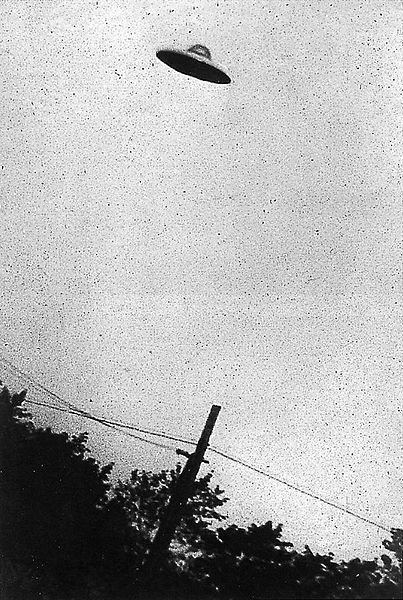
The other day the New York Times ran yet another article on UFOs.  This topic, which has been maligned since the 1940s, is now being discussed without mockery in the mainstream media.  Perhaps following the Trump presidency nothing’s impossible to believe.  There are, interestingly enough, many writers who connect UFOs with religion.  And these aren’t all writing about UFO religions, of which there are many.  Exploring the Outer Edges of Society and Mind ran a piece on biblical UFOs earlier this month.  The topic was taboo, of course, when I was teaching (I remember a colleague laughing when I told him I covered it in a course called Myth and Mystery) but it too is now becoming mainstream.  I don’t need to summarize the Outer Edges piece here since it’s easy enough to follow the link and read, but I would point out that a longstanding connection exists between UFOs and religion.

A spate of books on UFOs came out in the seventies and eighties.  Some of those more or less overlooked by the media focused on religion—often the Bible—and how UFOs play into it.  Quite often the biblicist writers identified these unknown objects in the skies as either angels or demons.  This continues to this day with some congressional leaders (many of whom are too religious for the good of the nation) averring that UFOs are “demonic.”  Frankly, if demons are incorporeal, I wonder why they need to fly around in saucers.  Perhaps they too grew up eating too much Quisp for breakfast.  In any case, the connection was made early and it remains.  When we see something in the sky we used to give it a religious explanation.  Now we chant “drones.”

In his article David Metcalfe begins by noting the forthcoming publication of Alan Steinfeld’s Making Contact: Preparing for the New Realities of Extraterrestrial Contact with the mainstream publisher St. Martin’s Press.  The difference between yesteryear with its Quisp and its flying saucer houses, and today is that people are starting to be serious about the topic.  This, I expect, is one of the benefits of increasing technology.  People are seldom without a camera in their pocket these days and although there are plenty of drones and other strange things flying around, the classic UFO hasn’t gone away.  A generation of people endured ridicule and scorn for being gullible.  Now the gray lady herself is asking questions with nary a smile.  Perhaps we’re becoming more tolerant and perhaps we’re more willing to believe we’re not alone in the universe.  Some would claim that even the Bible got in on the act millennia ago.

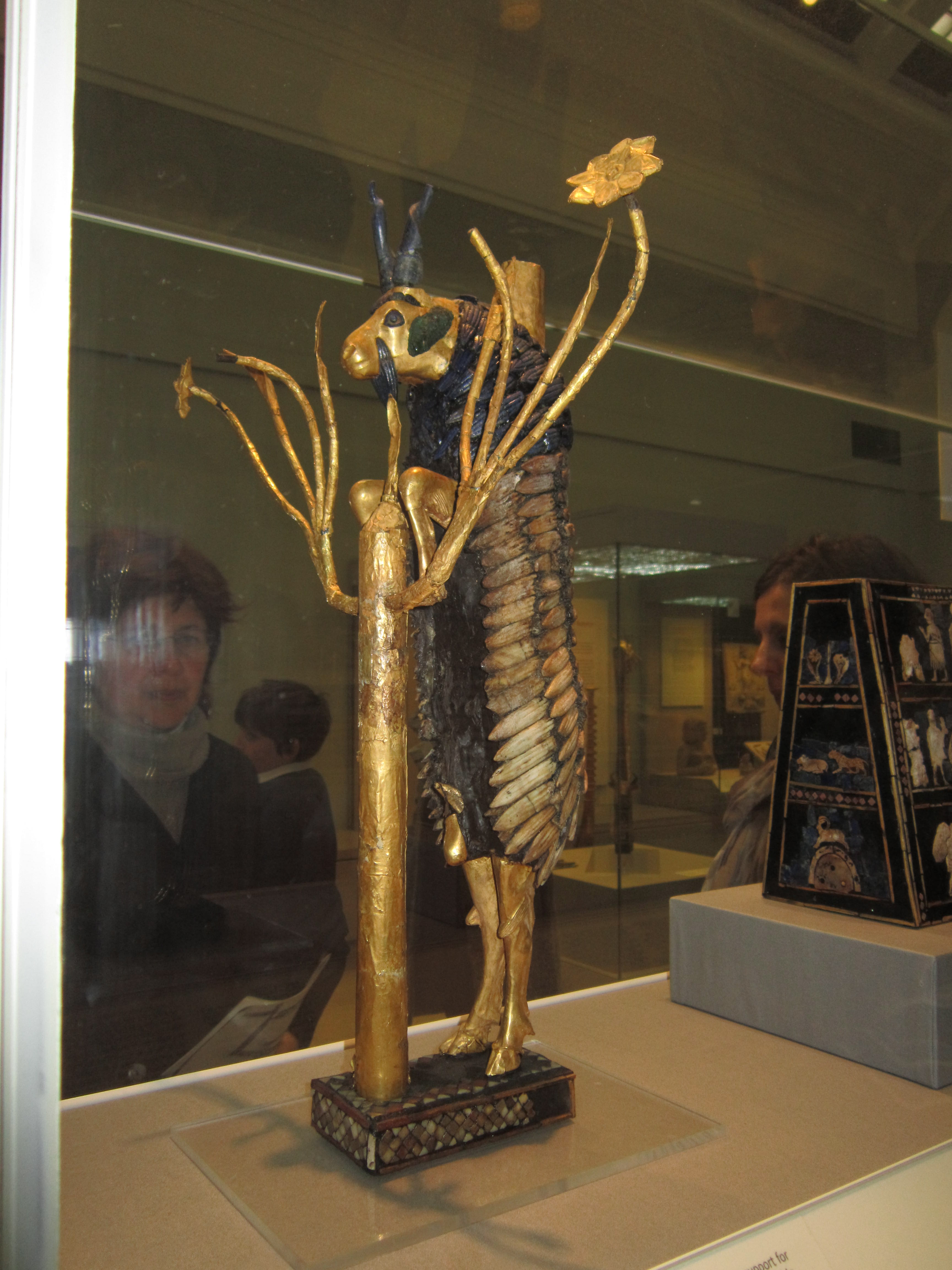
Image credit: George Stock, via Wikimedia Commons

Naming Easter

Today, for some, it’s Easter.  Others call the day Pascha, after the Hebrew word pasach, or “Passover.”  At its deepest roots it is a spring celebration timed around the vernal equinox.  The name “Easter,” however, has an interesting story.  All the more so for having missing parts.  There was apparently an Anglo-Saxon goddess named Eostre.  Since these Teutonic peoples didn’t have their own archives we only learn about the April festival dedicated to this dawn goddess from the Venerable Bede.  Being venerable, we tend to trust him.  He tells us that what is called Pascha used to be called Easter because of the goddess and her celebrations.  We’re often left, however, with not enough information about the deities of old Europe because, ironically, literacy had not come to them.

As we move into what publishers are calling post-literary culture, I have to wonder at the losses that will mean for the future.  We all know, deep down, that electronic media are ephemeral.  We just hope our bank accounts stay viable until we die so we don’t run out of money.  In any case, Easter is a good illustration of what historians and those interested in the development of ideas have to do when few written records exist.  We look at artifacts and images and make our best guess.  This is clearly evident in the field of studies of another goddess—Asherah—upon whom I lavished my dissertation.  We do have some written records, but for many scholars they aren’t enough.  We guess that this or that image might be of her, although they’re not labelled.  A similar problem applies to Eostre.

There is little doubt that a goddess named Eostre existed.  It makes perfect sense that she would be celebrated in April.  Before Daylight Saving Time was invented, it was light around 5 a.m. this time of year.  For early birds (historically we were in the majority) it would’ve been obvious.  The goddess of the dawn is coming back to us.  Shining in our eyes as we try to pry a little more slumber from a shortening night.  Early Christians tended to adapt rather than to reject  non-Christian celebrations.  The name of Easter is yet another of those conveniences.  Although it snowed a little around here on what some call Maundy Thursday, today Easter is here to remind us of resurrection.  Life does return and our daffodils, although they may be shivering, have bravely broken through the sod to greet the dawn.


Whose Holiday?

I write a lot about holidays.  One of the reasons is that even long before capitalism, societies took breaks right in the middle of things.  One of the major seasons of celebration was the vernal equinox.  Easter is tied to Passover, of course, but since nobody knows the year of Jesus’ crucifixion the actual date can’t be determined.  Passover is a moveable feast and since the lunar calendar is essential in setting Passover’s date, Easter is calculated as being the first Sunday after the first full moon after the vernal equinox.  There has been talk of the three major branches of Christianity—Catholic, Orthodox, and Protestant—agreeing on a set date for Easter but even if that happened there would be splinter groups who liked it the old way and the confusion would only grow.

Since astronomical observation has grown so mathematical, the date of Easter can be calculated far into the future.  We know just when the vernal equinox will occur, and we know when the full moon will come around.  All that’s needed is some calendars and a whole lot of patience (and maybe a calculator).  Despite society’s obvious preference for Christmas, Easter has its own array of attendant holidays for some Christians.  (Not all Christians celebrate Easter.)  For instance, for some today is Maundy Thursday.  Tomorrow most will recognize as Good Friday.  Nobody’s quite sure what to call Saturday, and many Christians will begin to celebrate Easter at midnight even before Sunday wakes up.  Easter does last more than a single day, in some traditions, but it’s not quite as developed as the twelve days of Christmas.

Lately I’ve been considering that how these holy days are sacred for some and secular for others.  One of the realizations that globalization has wrought is that not everybody shares the same concepts of how universal events—such as the vernal equinox—should be commemorated.  Although on the equator every day’s not quite an equinox due to the earth’s tilt, it isn’t as dramatic as the changes that occur in temperate zones.  Christianity was custom-built for European holidays, which is what it tends to keep.  The history of the holidays is more complex than it might seem at first.  Add to that widespread disagreement around the world as to both religion and to when certain events should be calculated and you’ll need more than a slide-rule to figure it out.  So as we begin the Catholic and Protestant Easter season (Orthodox Easter is about a month away yet), it may be helpful to remind ourselves that what day it is might just be a matter of perspective.

Stiftung Gertrud Schnürle 1975, Fritz von Uhde, The Last Supper, via Wikimedia Commons


one of many

It’s been some time since I’ve read about the Jehovah’s Witnesses.  There are so many religions that I need to refresh my study on them periodically.  So it was that I received a mailing from the local Kingdom Hall.  You see, the very last people at my front door before the pandemic was declared were bearing the Watchtower and telling me the end is nigh.  We knew about Covid-19 at that point and were being urged to keep social distance, although the authorities were still dithering about masks.  They knocked nevertheless and we stood several feet apart on the porch as they tried in vain to convince me of their truth.  So now, a year later, they’ve reached out by mail.

You’ve got to have a soft spot for a religion that has its origins in Pittsburgh.  Well, maybe that’s the case for those who grew up where it was the nearest big city.  And I do admire that pioneering spirit that says “established religions just aren’t doing it for me.”  The great swath of NRM—New Religious Movements—shows that you shouldn’t feel lonely if this applies to you.  Even today’s Christianities bear little resemblance to the teachings of the carpenter of Nazareth.  He who said even to look upon a woman lustfully was to commit adultery, but whose followers support a president who recommends grabbing them by the, well, where the originator said not to look….  Religions evolve.  The literalism many associate with Christian belief is really only about a century old.  We have no business castigating religions just because they’re recent.

My mailing from the Witnesses included a personalized (somewhat) letter inviting me to a virtual commemoration of Jesus’ death.  Due to the pandemic it’ll be held on Zoom, of course.  The expected flyer with its Anglo-Jesus contains the details.  I did attend a Witness service back when I was in college.  Those days of heady explorations never really ended for me.  You have to settle into a tradition to get to know people, of course, but there’s a world full of ways of looking at our spiritual side and there’s more being propagated just about every year—even Jehovah’s Witnesses have splinter groups.  I suppose missionaries are something we’ll always have to put up with as long as people are convinced that their way is The Only Way.  Trust that others have perhaps quietly, perhaps deliberately, perhaps with a great deal of thought and reflection, have found their own way seems never to be good enough.  Still, an invitation is an invitation and those have been rare during a pandemic.