Magic Faith

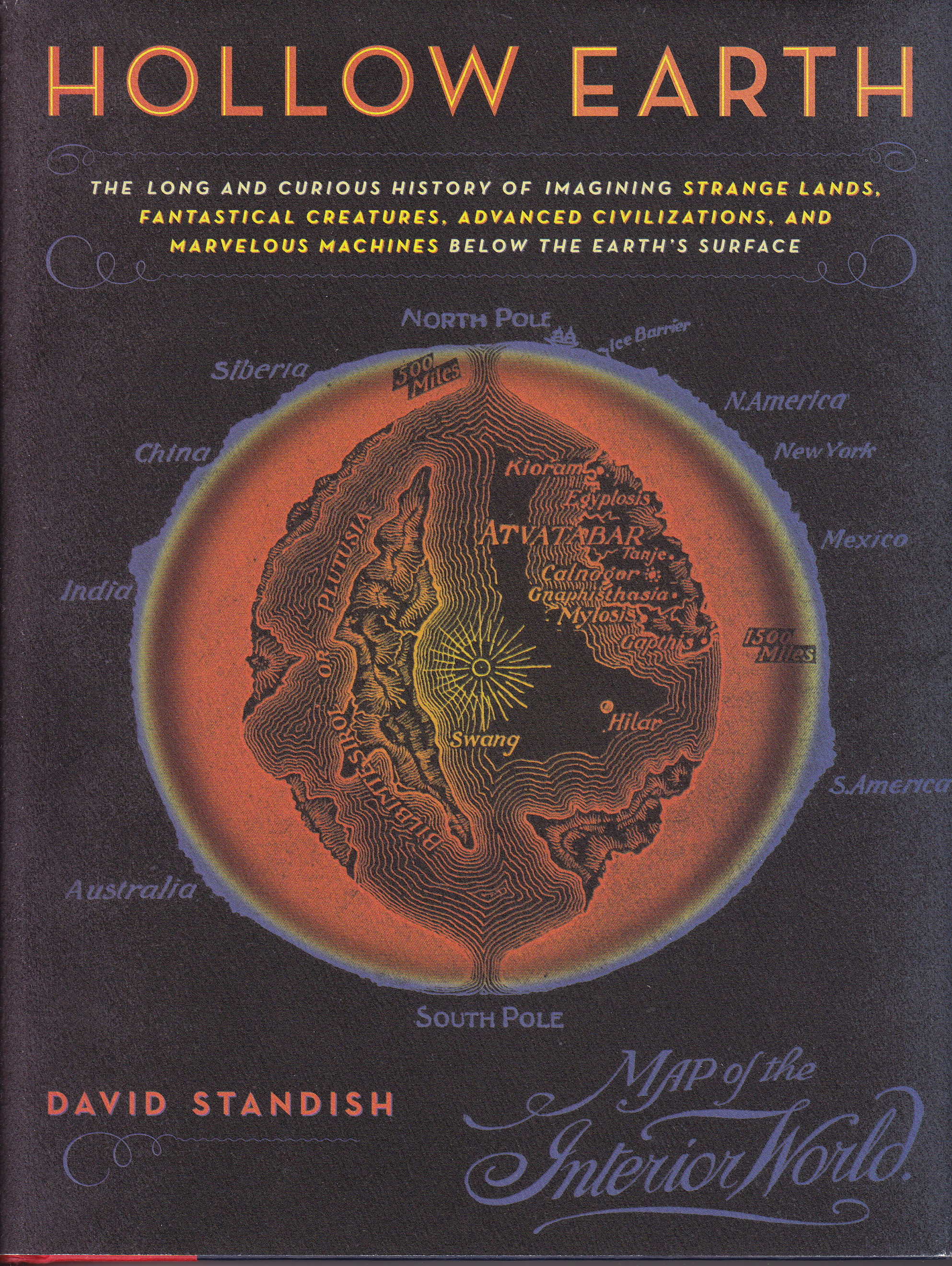
MakingWe all like to believe we don’t believe in magic. In this day of sophisticated materialism, the idea that unseen forces might work upon the world seems terribly naive and not a little embarrassing. Randall Styers’s Making Magic: Religion, Magic, and Science in the Modern World has been on my reading list for a few years now. Not so much a history of magical thought, Styers offers a history of thought about thought on magic. There are several takeaways from a study like this. One is that magic and science share common ancestors. In fact, some theorists trace the origins of science to magical thought. The height of alchemy was also the period when experimental analysis of the natural world was blossoming. There was a mysterious sense to what we now think of as impassive particles whirling around for no particular reason. Making Magic makes clear that we can’t divorce developed thinking from magical outlooks. In many ways it is difficult to distinguish religion from magic.

Not that Styers advocates magical thought. He does, however, invite us to think about it. Another takeaway from this study is that magic, when described by religious writers, is a foil. Magic is used to show how the unenlightened think about things. Those of us here in the true light would never think such backward thoughts. Indeed, magic, as Styers makes clear, often served as a kind of social control. Lower classes think magic works wonders. The upper classes know that power lies in exploitation. Magic, in other words, can’t be divorced from politics. Those in the know would only encourage magical belief to continue. Invisible forces indeed.

Magic as a regulatory force is indeed the thesis with which Styers is working. The difference between prayer and magic is somewhat effaced when closely examined. Religious belief is seen as benefiting society while magic is for selfish benefits. I do wonder, however, where the modern magical religions, such as some branches of Wicca, would fit into this scheme. They also seek the good of society. Magic need not be selfish. Making Magic is concerned with the analysis of magic by scholars who’ve shown a surprising interest in the topic. It doesn’t really address those of today who, after finding the atomic world strangely vacuous, have turned to magic to re-enchant a world grown dull and dry. Whatever one may say about magic, it still exists, and its believers are among us. Our world with its solemn, feelingless answers could, at times, use a little such conjuring.


Burning Times

One of the most disturbing images from my childhood years is the self-immolation of Thích Quảng Đức in Saigon. Of course, I didn’t see this image as a child. It was high school before I was deemed mature enough (and the internet didn’t exist) to see such a troubling image. Now we are being told in a kind of gleeful grotesque tongue-in-cheek that those who seemed to claim similar conviction over gay marriage now have a chance to show their faith. Pastor Rick Scarborough, according to The Advocate, made such a statement. As of last Friday, he’s had to find a way to explain his remarks. I’m not sure what he said, but I find the implications distressing. Those who’ve supported gay rights all along haven’t been wishing evil on anyone. Schadenfreude can be quite troubling.

Maybe it’s just that we get so tired of self-righteousness. Those who claim to be the torchbearers of the truth seem to delight in pointing out the weaknesses that we all have. Who has never misspoke? Let he who is without sin cast the first syllable. Rhetoric can be our master at times. Beneath the unfortunate speeches, however, lies a terrible fear. Some who believe the Bible literally true can’t see this any other way. Poking fun at them, however, isn’t likely to make the situation any better. Quiet victory celebrations aren’t in fashion. We live in an “in your face” world where we like to see the stains appear on the immaculate suit. Banana cream pie in the face all made up for the television crowd. I’d rather see a world with no more need for self-immolations. Religions sometimes make this difficult.

Although I have reflected on religion deeply for many years and have come to take a very broad view of things, I still have very conservative friends. If I poke fun at their views from time to time I hope it is good-natured fun. I respect their rights to their views. I grew out of that culture myself and I’d be a hypocrite if I looked at it any other way. I am extremely pleased about the supreme court decision recognizing gay marriage. This, however, is a political issue. Religion has always informed political views, and has not infrequently stood in the way of fair treatment. These walls must come down. Before we begin the demolition work we need to make sure the way is cleared of any potential victims. One thing religions frequently do right is offer consolation to those who are suffering. It is the humane thing to do. Victory without humiliation is far better than the flames of Waco.

800px-Mountcarmelfire04-19-93-n


Theological Cemeteries

There is a plague upon this nation.  When in one week, let alone one day, I hear about two colleagues being let go from their academic posts for not meeting conservative theological standards, I believe it is time for higher education to take a good solid look at what it claims to do.  Thomas Jay Oord, one of whose books I supported and saw through publication at Routledge, was dismissed from Northwest Nazarene University after, according to early reports, being considered for a heresy trial.  Almost simultaneously Daniel Kirk, whom I don’t know, was let go from Fuller Seminary, apparently following questions of his belief in traditional marriage.  Having been dismissed myself into an academic morass that has never passed for a satisfying career, I feel a sense of moral outrage here.  No doubt, I am more liberal than either Oord or Kirk, but this is not the way educated adults treat one another.  In fact, it is heinous.
 
While still teaching at Nashotah House, before I crossed some invisible line in the doctrinal sand, I often wondered about this.  Conservative schools want the credibility of professors with bona fide doctorates, and then wonder why they can’t get educated people just to nod their heads at all the right places.  Education should make people think.  It should make us all question our assumptions.  Any faith that can’t examine itself seriously and come back to thrive is no faith at all.  I know all too well how difficult it is to get along with a doctorate in a socially unacceptable field where the higher education economy is far worse than that of our own national economy that keeps limping along.  It is a crime to fire our brightest and best.
 
The unholy roll call could go on and on.  A few years ago it was my colleague Christopher Rollston who fell under the axe.  Although I’ve not met him, I understand the same thing happened to Peter Enns.  These two recovered, at least as far as finding a position goes.  Those of us who were successfully cast into the outer darkness—and I know I’m not the only one—have watched ourselves disappear from relevance as the academic world chugs blithely along.  We are a nation that elects public officials on the basis of their supposed religious outlook while at the same time hamstringing efforts to educate ourselves about religion. I have a question for the administrators who feel they are defending the faith by taking someone’s livelihood: when is the last time you thought about your faith? Really thought? If your God can’t think then it’s not just those of us who are liberal that are destined for Hell.

ScottishSemetery


Magic Tricks

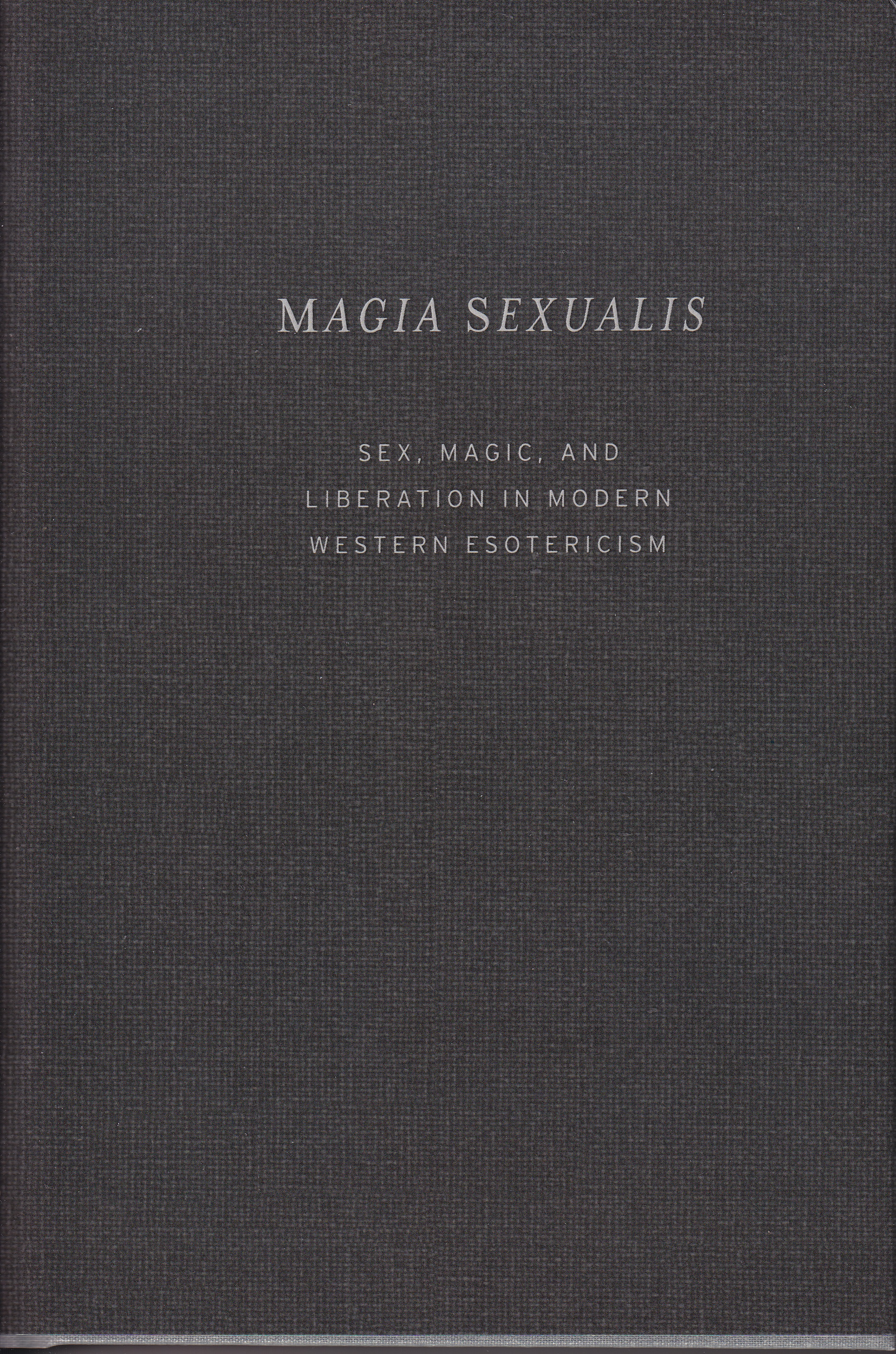
Magia SexualisTo a scholar who has spent many years studying ancient religions, new religions hold a strange appeal.  After all, we are trained to look at obscure texts from forgotten cultures and to decipher the mute clues they have left behind.  New religions have the benefit of being (generally) documented in ways that ancient religions aren’t, and often exist in societies more literate than those of the remote past.  Finding out about them may be easier, but understanding them may be just as difficult.  In my research on magic, I was led to Hugh B. Urban’s Magia Sexualis: Sex, Magic, and Liberation in Modern Western Esotericism.  I’ve always found Urban’s work engaging, and since this book is one of the few academic studies to investigate magic seriously, I was eager to see what he had to say.  As usual, I wasn’t disappointed.
 
Sex magic is frequently at the heart of magical beliefs.  Urban shows that this has been the case from ancient times.  Those of us who’ve studied ancient Syrian, Egyptian, Mesopotamian, or Aramaean religions aren’t surprised by this.  Those cultures inhabited a world pummeled by magic, and it doesn’t take a genius to figure out that sex might have had something to do with it.  The majority of Urban’s book, however, concerns figures starting in the nineteenth century who introduced new religious forms of sexual magic into the occult circles of their times.  Focusing on a specific practitioner in each chapter, he brings us up to the present with some familiar, or often less familiar, names.  Magic, by its very conception, is a religious idea.  Even if some of the more notorious modern magicians such as Aleister Crowley and Anton LaVey took religion in a darker direction, it was still religion.  The founding of Wicca by Gerald Gardner naturally receives some attention.
 
As Urban notes from the beginning, sex magic is not a topic for titillation.  It involves some transgressive, but also original thought about something that is so basically human that we all know about it even if we won’t discuss it.  And the dark practitioners have seemingly exhausted the vaults of extremism regarding sexuality that even a straight-laced, nay even Presbyterian, culture may find itself with no further options.  Where does one go when the foulest of profanities has been executed?  Certainly not back to the beginning, for we’ve come too far for that.  The postmodern world deconstructs itself leaving us to wonder if there can be any magic left at all.  It is no wonder, I should venture, that Harry Potter was gathering steam even as Urban wrote his book.  Magic will, by its nature, always find a way.


Christian Horrorshow

Books & Culture is the review organ of Christianity Today. Christianity Today is the evangelical answer to the more liberal Christian Century. Working in publishing, particularly in the field of religion, it is important to keep an eye on what the popular magazines are saying about our books. Well, neither is as popular as it used to be, but still. I’ll grown used to Books & Culture taking a rather wholesome reaction to books that challenge worldviews. In fact, it’s not unusual to find a fairly mild tome castigated as somewhat insidious. Negative reviews tend to sell books as well as positive reviews. Sometimes better.

I was a bit surprised to see a two-page spread in a recent edition of Books & Culture focusing on horror stories. Horror and evangelical generally don’t play well together. Well, maybe I should temper that a little bit. The first article was actually on Shirley Jackson, best known for her excellently moody The Haunting of Hill House. That particular book has spawned or inspired at least five scary movies, two of them versions of the book itself. I have to confess that this is the only Shirley Jackson novel I’ve read. The article, somewhat strangely for an evangelical magazine, had made me want to explore some of her other offerings. Horror doesn’t have to be splatter to be effective.

DSCN0216

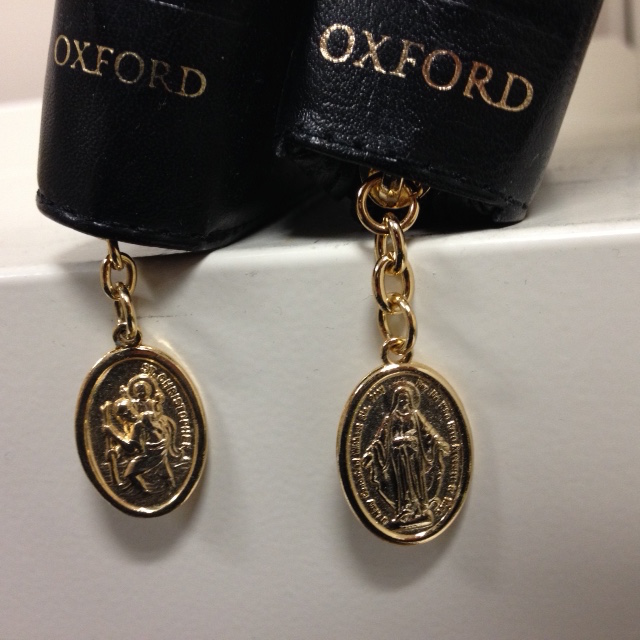
The second review in this issue was for an Oxford anthology called Horror Stories. The reviewer, Victor LeValle, also comes out with a positive review of the collection. All of this makes me wonder if I missed something growing up as a conservative Christian who felt distinctively unsavory because his love of monsters and the macabre. I can’t remember ever not liking mild horror stories. They manage to evoke parts of my psyche that most other literature bypasses. I discovered Poe at an early age. That’s not to say that I like being afraid. Fear is not what I’m seeking here. It is a kind of strange redemption. In college many of my evangelical friends couldn’t understand my fascination. “Why don’t you watch something more uplifting?” I’d be asked. I was as surprised as anyone when one of my very few Grove City dates agreed to see Nightmare on Elm Street with me. Not even Shirley Jackson could’ve seen that one coming. I wonder how she’d respond to being written up as an evangelical inspiration?


UCB

The Flying Spaghetti Monster came onto my radar while teaching at the University of Wisconsin, Oshkosh. I was teaching a course entitled The Bible and Current Events and the controversy over teaching Intelligent Design had been gaining steam. As I addressed the evolution section of the course, I became aware of the Flying Spaghetti Monster and his noodly appendages. The Jesus fish had recently evolved to a Darwin fish, and the Darwin fish was being eaten by a Jesus shark, then I finally saw the Flying Spaghetti Monster on somebody’s bumper. I looked it up online and discovered a whole mythology had been developed to go with this parody of a religion. It was lighthearted and funny and had an obvious purpose—to challenge the equally bogus claims that creationism is science. Now, I don’t try to change anyone’s religion. If someone finds creationism comforting, well, the United States is based on freedom of religion and who am I to dictate what someone else believes? The problem is creationists often don’t share that courtesy and try to get their religion taught in public schools as science, which it isn’t. The Flying Spaghetti Monster was their nemesis.

Over the weekend, when I actually have time to do a little surfing, I came across the United Church of Bacon. Noticing the similar food-based theme as the Flying Spaghetti Monster, I decided to check it out. It seems to have become a cottage (cheese?) industry to start your own anti-religion. A look at the United Church of Bacon’s website reveals it to be the brainchild of Penn Jillette of Penn and Teller, and friends. As usual, the voice of Teller is not heard. This is a legal church which performs many of the services of traditional religions, but without the belief. Bacon, it seems, is the ultimate reality here—to quote the church on a billboard: “Because bacon is real.” They have nine bacon commandments and an impressive list of charitable works.

Looking over all of this material, I wonder what the mainstream churches might take away from all of it. For one thing, the obsession that Christian denominations have had for centuries with correct belief has become a kind of albatross. Petty differences in theology tend to lead to hatred in the name of the prince of peace. Another is the repeated emphasis on giving has taken its toll. The United Church of Bacon openly advertises that they give money, they don’t take it. While few clergy become fantastically wealthy, it is no surprise that most bishops or those of equal rank never seem to go hungry or drive cheap cars. If entertainers are rich, it is because they offer something worth paying for. And for those of us who are vegetarians, the UCB offers the alternative of praising vegetarian bacon. You are, after all, what you believe.

Heretic?

Heretic?


Remember the Alamo

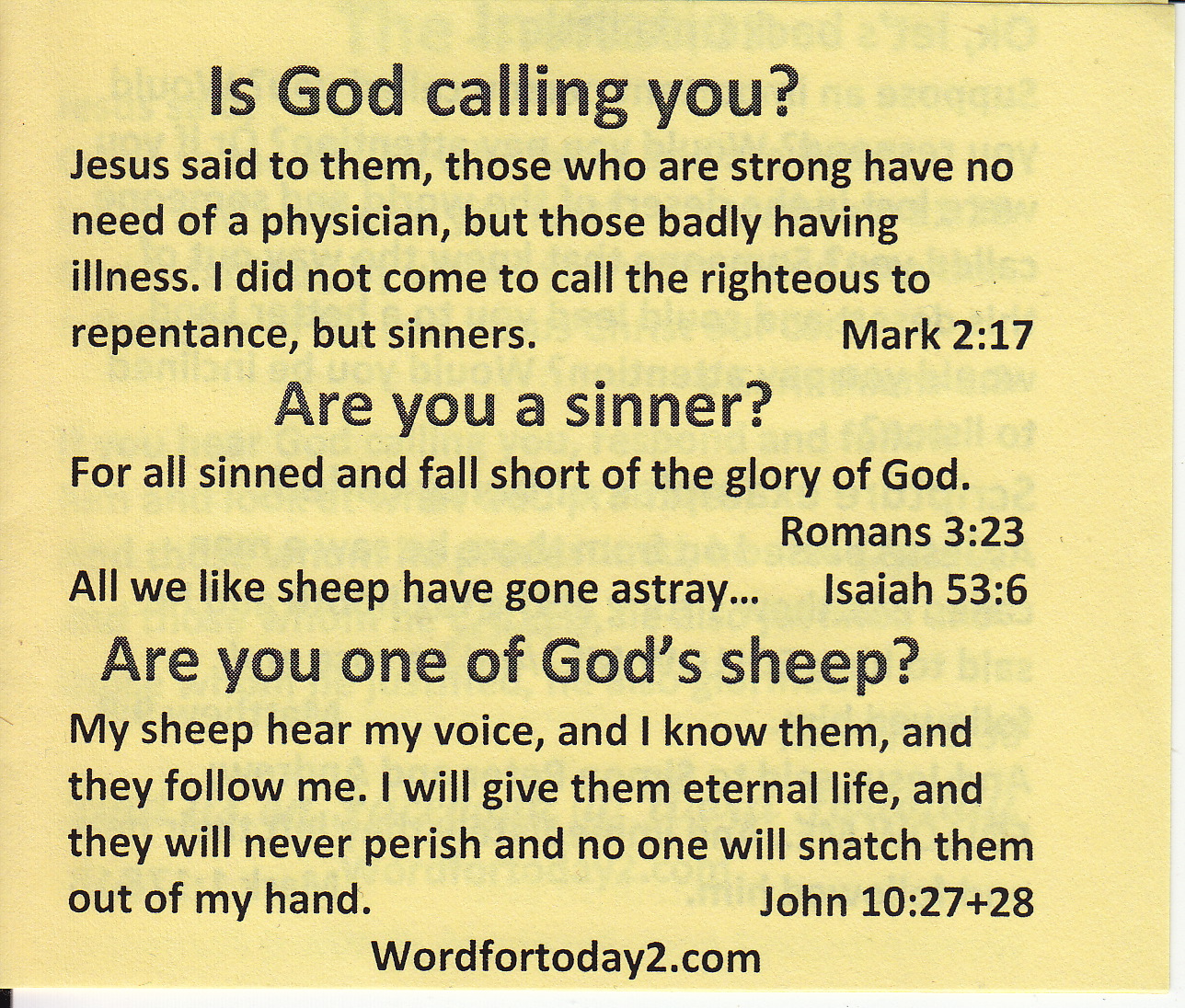
Midtown Manhattan is awash in litter, particularly on a Monday morning, or first thing after a holiday. I generally arrive in the city shortly after 7 a.m., before the detritus is swept away. Frequently I see, among the discarded food wrappers and cigarette butts, copies of Tony Alamo’s World Newsletter. You can get a pristine copy if you take the subway. An abstemious young man will gladly hand one to you with a smile. The articles are accusatory and unsophisticated examples of prooftexting of the worst kind. Even I know better than to use “you” all the time, implying that “I” am better. The following is typical: “It may seem fun to you to run wild, to do whatever you please, but remember…” Not that Tony Alamo would ever run wild, doing whatever he pleased.

I was curious about the movement. Ironically, Tony Alamo, according to Wikipedia, was convicted as a child sex offender in 2009. It is a pattern as familiar as it is unfortunate. Those who rail loudly against certain behaviors often find themselves practitioners of the same. Perhaps the most surprising aspect of this phenomenon is that it never seems to change, as if the learning curve is just too steep to climb. In the case of evangelists, it may be that treating the Bible as a magical book—mashing all verses together out of context, cherry-picking the one that best seems to fit the sin of the day, creates an impossible standard to follow. The Bible both indicates that you should love your parents and hate them. What it might mean depends on context. Those who snatch a verse from here and a verse from there are practicing the old form of treating the Bible like a book of spells. It can be done, of course, since it has one author (God) and mix-and-match is as good a method as any. What if God was having a bad day?

WorldNewletter

The lead article I was handed last time on the subway confirms this: “Why Does God Bless and Why Does He Curse?” the pastor wonders. The answer to the latter question, which I have eagerly sought all my life, is finally made plain. What seems to be God’s curse is your own darn fault. You deserve worse, since you are such awful sinners. Pardon me, I seem to have slipped into the second person, based on the vernacular I have been reading. Classic blaming the victim. One can hardly be surprised when evangelists resort to this inexpensive explanation—theodicy has historically been one of the most difficult problems faced by those who declare God all-powerful and all-good. The 6 train squeals into the station. As the doors clinch shut behind me, I see passengers eagerly reading the newsletter. There are those who might give more reasoned answers to life’s pressing questions, but they can’t afford to hire young proteges to stand in a dank subway station to hand out their wisdom. It has to be found by chance, like litter on the streets of the city.


Life as we Know it

Dying2BMeA friend asked me for a book. Since my life has mostly been about books, I’m generally happy to supply what I can. This friend is a cancer survivor and wanted to read Anita Moorjani’s Dying To Be Me. The last time I saw this friend, she handed me the book, saying she didn’t care for it. Although the author tells of her dramatic Near Death Experience, and is very optimistic about all that we can improve by loving ourselves and others, she isn’t a Christian. Raised as an Indian living in Hong Kong and sometimes attending a Catholic school, Moorjani is conversant with several religions but doesn’t favor one above the others. Her experience of being in a coma with very advanced cancer and having a prognosis of days, at most, to live, yet coming out of the coma and being completely healed of disease within weeks could be overlooked on the basis of a belief system. I decided to read her account myself.

Ironically, Moorjani directly describes why she can’t accept any single religion in her book. Her reason is because religions tend to block being open to possibilities that fall outside of doctrine. Her Near Death Experience, described in great detail, doesn’t fit any particular religion very well, including her native Hinduism. It led her to believe in a kind of universalism with everyone ending up realizing their own divinity and loving all others unconditionally. Even though many of her interpretations of her experience are a bit too New Agey for me, I have a deep appreciation for her advocacy of trying to understand others and loving everyone. I saw nothing incompatible with Christianity there. Or any other ethical religion.

Religion can divide as much as, if not more than, plain common sense. Those who think deeply about it realize that religion should make life better for all. That seems to be its evolutionary purpose, apart from personal survival. Of course, some religions also reject evolution as well. When missionaries reached far shores and found good people living ethical lives, they feared for their souls, thinking only one religion could fit all. Many of us are heirs of such missionaries, being taught from our youngest days that living in fear and self-abasement is the loving, Christian way. It may be that a Hindu who learned to trust herself by nearly crossing the brink of death has something to teach the missionaries as well. If only they could listen.


Secular Seminary

The Nones have it. A recent article by Alana Massey from the Washington Post puts it well. We are cultural Christians living in a secular world. My mind often goes back to the fate of those trained by a system that proves itself to be false. We are seduced by religion at a young age, and we readily accept what our culture and our clergy tell us is true. Some, like yours truly, can’t rest without knowing the truth. We press on to seminary, then to graduate school, only to find that the answer is more questions. No church will hire you. No college will either. You’ve invested your youth in finding the truth and you’ve come up empty. There’s a comfort in the old liturgies, but they ring hollow nonetheless. I know many clergy feel this way but can’t admit it. What you sign on the line declares that you “believe” and if you’re honest you could lose a livelihood into which you’ve invested everything.

So I’m thinking, why not found a secular seminary? There are atheist churches beginning to appear. Those who would lead congregations of the unfaithful must have some training, mustn’t they? A secular seminary curriculum wouldn’t need to differ much from that of the standard churches. The secular should understand the Bible. You need not believe, but you’re naive if you don’t understand it. They should also know the history, the non-theology, and the way to lead a service. Pastoral care could be taught, even as it is for those who attend seminary. You need not be a believer to care for other people. In a secular society that requires some spiritual nurture, this is the obvious solution.

IMG_0481

There must be plenty of wealthy people out there willing to buy their way into peace of mind. If there’s no Heaven to own, perhaps purchasing tranquility here on earth would suffice. The numbers of those attending church is falling. The number of those desperately unhappy is rising. We have trouble believing the myths any more and science leaves us feeling cold. Maybe it is time to take seriously the concept of secular seminaries. There are seminaries for all denominations except the most conservative. Perhaps it is time for the most liberal to pony up as well. The Episcopalians have always said they wanted an educated clergy. When clergy are educated the crisis only deepens. It seems to me that this may be the cusp of a worthy idea. If so, perhaps there is hope for a sacred secular society yet.


Finding a Vein

Travel broadens the mind. I always find that it’s a form of education. Sometimes what I learn is disturbing. While driving across Pennsylvania on I-80 recently, I had a chance to study some contrasts. I’ve made this trip many times, but this particular journey revealed two Amish farmers out plowing their fields behind teams of horses. It’s easy to romanticize this view—there is a majesty about it. Once, while driving back to Wisconsin from an interview at Luther College, I saw an Amish farmer and his team in the rain, the horses’ breath could be seen billowing out, but the farmer, implacable in his conviction of what had to be done, stood rigidly behind them, keeping the animals at their task. When you don’t eat if the crops don’t grow, a new kind of urgency is added to this picture. All around us on the highway hi-tech vehicles whizzed, and, gathering from the behavior of the drivers, I couldn’t help but wonder if any of them were very happy.

Then we sped past a billboard. It was facing the opposite direction from our travel, but the words went something like this: “The wind dies, the sun sets, but coal lasts forever.” In much of Pennsylvania, with its spine of Appalachian Mountains, coal is abundant. Growing up some of the highways we drove had exposed coal seams in the road cuts. It’s pretty much everywhere. Coal, however, is a dirty, non-renewable, polluting source of energy that exacts a severe cost on the planet through mining. No doubt it is abundant, but the amount is certainly finite and it makes the world less inhabitable when we use it. The wind blows where it wills. The sun rises on the righteous and wicked alike. Coal is decay left from the life forms that helped ensure that we’d show up here. One of those circle of death kinds of things.

IMG_2176

Then a car went by with a communique in paint on its back window. “Pray to end hatred” it read. This is a sentiment with which I could surely live. I recalled driving this same interstate many years ago when I was old enough to read but not enough to comprehend. The pylons of the overpasses on 80 frequently have spray-painted messages reading “Trust Jesus.” Some of them are still visible at highway speeds, faded though they are. The elements seem to have left a negative of the original work of what is technically vandalism. I think back to the Amish farmer. He’s watching, I’m sure, the never-ending flow of sinful vehicles on a highway as he plows. He’s been raised to trust Jesus and to believe in the old way of doing things. I’m behind the wheel praying that the hatred I see played out in these metal coffins will stay far from me until I can exit to some quieter backroads where the pace of life is more to my liking. And I wonder if that sunset I see is influenced by the coal that we’re burning and hoping the wind will simply blow it away.


Truly Educated

Binghamton University looms large in my consciousness, for rather obvious reasons. Although it sits in a small corner of upstate New York not particularly near anything famous, it has its own culture. Having taught at several schools, and having studied at many along the way, I’ve always been particularly struck by the genuine nature of Binghamton. For example, it is the only school—apart from a hazily recalled “Bible Study” led by the then president of Grove City College—at which the president has made himself available to be met and chatted with by hoi polloi. I’ve met and talked with him twice, and although I taught a phenomenal number of courses at Rutgers, and conveniently solved a crisis in the religion department for a year at the University of Wisconsin Oshkosh, I never found a time or place when the president was available to the likes of mere mortals. Not only that, but at a time when other universities are cutting whatever faculty they can to make more administrative posts, Binghamton is actually hiring faculty and expanding. I feel renewed when I visit the campus. You can tell they care about people.

A story in the Washington Post underscores this. One of the graduation speakers at the Watson School of Engineering is an Orthodox Jew. His commencement ceremony fell on Saturday—the sabbath. According to the dictates of his faith, speaking through a microphone system that passes through a soundboard is considered work, and could not be done on the sabbath. In today’s climate, I would expect most universities to say, “too bad.” Religion is not to be taken seriously, right? So just get over it. Here’s where Binghamton, however, shines. They taped the address beforehand, allowing the speaker to take the stage and have someone else broadcast his speech. This isn’t about picking apart the logicality of anyone’s personal Torah, it’s about recognizing the human.

DSCN4915

Our very religious society has a way of compartmentalizing religion so that we can still get away with what we want to do. We can be religious when our clergy so dictate, but otherwise we’re pretty much free to look out for number one. This story is one that makes me proud to have once been a part of a system that includes a school that can truly lay claim to the designation “higher education.” We learn about the world to become, ideally, better citizens of it. Any university that is able to take what might seem to be a petty problem and recognize its human dimension deserves to have our admiration. It restores my faith in the future. At least in a small corner of upstate New York.


Driving the Point

“I drive my car, it is a witness. My license plate, it states my business.” The words are from a song by one of the most creative Christian Rock groups ever, Daniel Amos. While I don’t listen to Christian Rock much anymore, I’ve always appreciated the fresh outlook of this particular band, which was, at least in the ‘80s, ahead of the curve. The lyrics came back to me when reading about a legal suit in New Jersey concerning vanity plates. Like many states, New Jersey has rules against offensive words being spelled out on license plates. When a woman applied for a license reading “8THEIST” it was rejected as “offensive to good taste and decency,” according to a story in NJ.com by Thomas Zambito. Trying the application with “BAPTIST” led to no objections. Others have tried other variations on the word “atheist” and have come up with rejections as well. In a country that prides itself on religious freedom, this is ironic, to say the least.

I’m a bit too pragmatic for vanity plates, or even bumper stickers. Having had to commute long distances after being dismissed from my post at Nashotah House, I often thought that I didn’t want people to know too much about me by the decoration of my car. The culture wars, played out a few years ago by Jesus fish, Darwin fish, Jesus sharks eating Darwin fish, and so on, seemed an opportunity for aggression to me. Already when I’m driving and someone cuts me off or does some dangerous maneuver in traffic, they frequently bear some paraphernalia advertising Jesus on their bumper. Maybe it’s a prayer for protection that allows for stupid driving. It certainly isn’t a witness to the “others first” theology that characterized Jesus’ teaching.

IMG_1216

Is it an affront to decency to be an atheist, or only to advertise being one? The culture wars that plague the United States are based on instant prejudices that make decisions about a person without bothering to witness their behavior. Behavior, after all, is the true measure of goodness. Even higher education is not immune to this system, especially in religion departments. We only want to be surrounded by those who believe like us. Somewhere in this unholy mix is the neglected idea of doing the right thing. Ours is a culture in love with appearances. We object when Muslims want to build a mosque. We object when Roman Catholics run for President. Weren’t not even sure that we really trust the Presbyterian next door. Our differences, one of the historic strengths of this country, have become a liability. Especially when behind the wheel. How different driving would be if we’d just assume that no what the vehicle says, it is piloted by a human being just like us, no matter who they believe the co-pilot might be.


Different Bites

SharkGodThe South Pacific brings to mind light-hearted musicals, uncomplicated lifestyles, and Gilligan’s Island. For those of us born in the eastern parts of North America it can seem pretty exotic. Especially since we can seldom afford to go there. Since my income has wavered around the subsistence level of a reluctant urbanite, I instead travel there in my mind. I came across Charles Montgomery’s The Shark God at a recent book sale. I generally scour the anthropology tables since I find the belief systems of others so fascinating. Montgomery, a journalist, traveled to Melanesia to trace the route his great-grandfather took as a missionary. A non-believer himself, Montgomery wanted to see the magic that a former generation believed in firsthand. Noting that missionaries often despoil the cultures they are trying to “convert,” his tale is full of insights and observations and disappointments. My kind of book.

Montgomery is remarkably open minded. Like many of our generation, he outgrew the religious fervor that seemed so strong just a few decades ago. Still, he is open to the possibilities in the lesser understood cultures of the South Pacific. He notes that E. E. Evans-Pritchard, the famous anthropologist, opined that non-believers made poor anthropologists. Even missionaries might make better, he suggested, since at least they know what it is to believe. And here is the driving tension of Montgomery’s narrative. Sometimes you simply have to be open in order to see. Not all evidence is empirical. He recounts little “miracles” that he later reflects may have been mere diversions. Nevertheless, the world opens up when it is seen through native eyes.

Missionaries, although they may be better equipped to understand foreign (or native) believers, nevertheless try to change them. What I found most fascinating is how even those who fully identify as Christians in the south seas have combined that belief with their indigenous religions. Christianity, even among the clergy, is an overlay for culture. In ways that shock and frustrate missionaries, those converted maintain elements of their culture that fit uncomfortably with doctrine. How do you convert the converted? Or maybe the word is more properly “pervert.” Belief systems grow in cultures and tend to introduce high moral standards, no matter the deities (or non-deities) known. The Shark God is a wonderful window open on the South Pacific, a place to which some of us will only ever be able to travel in our limited minds. We are, after all, products of our culture.


Biblical Art

Although the United States is a religious nation, according to all polls, not many Americans know about the American Bible Society. This organization, based in New York City, has been vastly influential in the history of the nation. Even more influential, however, has been the Bible itself. It pervades every aspect of life in America, whether acknowledged or not. It is an integral part of the fabric out of which the nation is cut. I used to ask my Rutgers students: if there were some unseen force that impacted your life every day in ways that you couldn’t imagine, wouldn’t you like to know about it? Of course they would! But our society has very little tolerance for actually learning about the Bible. As a story in the New York Times states, the American Bible Society had to sell its historical Manhattan property recently. I visited the site on my first trip to New York as a seminary student. Here amid the towering secular concerns of money and greed, was a building dedicated to Sacred Writ.

IMG_1272

The New York Times piece, however, is pointing to the fact that the selling of the building has led to the closing of the Museum of Biblical Art. As Randy Kennedy makes clear in his piece, the Museum was (technically will have been) dedicated to showing the impact of the Bible in secular contexts. The American Bible Society is an evangelistic organization. They arrange for the distribution of Bibles not for secular reasons, but for good, old fashioned conversion of the heathen. This set the Museum a little bit at odds with its host. The Museum, critically acclaimed according to Kennedy, is (was) generally secular in outlook. It recognized that the Bible has influenced us in ways far less than obvious, pervading into our artistic sensibilities.

Although I’ve worked in Manhattan for about four years now, I never had occasion to nip into the Museum of Biblical Art on a lunch break. (Lunch break? What’s that? Money takes no breaks.) This is unfortunate. It seems that the message I had been trying to pass along to my temporary charges was being openly displayed here for New York society to see. Little do people realize, I suspect, that the principles of capitalism—the very system that transfuses the lifeblood into the city—developed out of biblical outlooks on private property. Not that the Bible itself is capitalistic, but it gave a society the basis to develop a form of thought that is, honestly, quite foreign to the biblical outlooks themselves. And ironically, the American Bible Society will continue, even though its intent may be less in keeping the spirit of the very book whose impact the Museum attempted to display.


Who’s Wright?

BirdmenUpstate New York used to be known as the “Burnt Over District.” In the days of the “Second Great Awakening,” many new religions cropped up in this region—some to die out shortly, and others eventually to produce presidential contenders. It was also the region that would be the home base of Glenn Curtiss, one of the true innovators in aviation. My wife and I just finished reading Birdmen by Lawrence Goldstone. The Wright Brothers, Glenn Curtiss, and the Battle to Control the Skies accurately sums up the contents. This is the story of how we learned to fly. From as long ago as people could abstract from the fact that birds fly, and we can’t, people have yearned for the skies. We are heavy, earth-bound creatures with the wrong musculature to support wings. Goldstone takes us through the early days—just last century—when heavier than air flight began to look promising. We all know that the Wright brothers, Wilbur and Orville, invented the first workable airplane. The story, however, is much more complex than that.

No doubt the Wrights hit upon the keys to flight first. They knew and met with Glenn Curtiss, who quickly took off ahead of them in innovation. What Birdmen reveals is that the Wrights were PKs. You know, preacher’s kids. Their father was a strict and dour clergyman of the ironically named United Brethren in Christ. Feeling his outlook had been wronged, Milton Wright employed his sons in a lengthy legal battle to gain control of his church. Indeed, Wilbur Wright would sometimes put his experimentations or business pursuits on hold to go and help his father wrangle with the righteous. Theirs was a religion that took no prisoners.

My ancestors grew up around the Hammondsport area and some of them knew Glenn Curtiss (according to family lore). I had always wondered why there was so much fighting among fliers when the real enemy was the steadfast grip the earth has on us all. We were Curtiss people. Sensing that Curtiss had infringed their copyright, the Wright brothers, after making history, spent the rest of their professional lives dogging Curtiss with legal battles that, Goldstone makes clear, were personal vendettas. Their religion convincing them that they were the righteous being beset by the wicked gave them the fuel to snap at Curtiss’s heels as he went on to innovate many of the technologies still used in flight today. At the epilogue, Goldstone states what had become clear to me from chapter one: the unforgiving religion of the Wrights’ upbringing led to their disappearance from the world of flight innovation. Its is a lesson that all who would soar today should read, mark, and inwardly digest.