The Idea of Scripture

Although the academic field of biblical studies is slowly dying—this is something I wrote about a long while back on this blog—the Bible and its kin nevertheless continue to shape and control society.  I was recently reading that Islam takes quite a different view of the Qur’an than Christianity does of the Bible.  It’s also clear that Judaism has yet another way of looking at Scripture.  What underlies these Abrahamic faiths is, however, the idea of sacred texts.  They don’t have to be understood, let alone read, in order to alter perceptions of reality.  The idea that God wrote a book, combined with the idea that God doesn’t show Godself or intervene in the world for good in any obvious way, has transferred a kind of godhood onto sacred scripture.

People desire the second coming because of a deep-seated need for God to part the clouds and demonstrate that their way of looking at things is the correct way.  It may be influenced by Scripture or politics or a favorite news channel, but the result is the same—they want divine intervention and since it’s not forthcoming, their sacred texts become the rallying point around which they gather.  Like many people I’m puzzled how a man like Trump, known for his proud womanizing and lack of care for anyone other than himself, came to be seen as a messiah.  Perhaps the key is that moment he gassed American citizens for a photo op holding up a Bible he never reads.  How this comes to be interpreted as a kind of divine moment only makes sense when we realize it’s the idea of Scripture that becomes the reality of many.

I’ve read through the Bible many times.  I have to confess that trying to get through the Qur’an is a struggle for me, but I suspect quite a lot of that is cultural.  I’ve read a few other sacred texts over the years, and have found some wisdom in all of them.  It’s when they become divinities in their own rights that society begins to pay the price.  If a non-interventionist God remains invisible, that identity will be transferred to the divine surrogate—Scripture.  People will coalesce around the idol they can see rather than the invisible one they can’t, right Elijah?  These sacred books have survived partially because they contain old wisdom, and old wisdom is often better than new knowledge.  But they also survive because they have become, in some sense, gods.


Der Golem

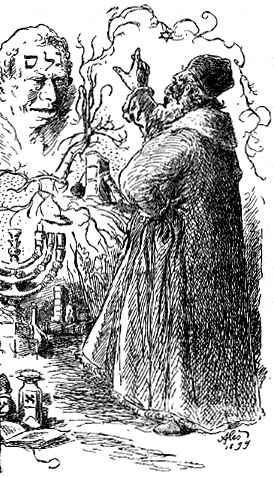
The golem is a monster of fascination.  It has been the subject of movies from quite an early period.  The earliest, now mostly lost, seems to have been Paul Wegener’s Der Golem (1915).  This film became the first of a trilogy, with the second (also lost) being, The Golem and the Dancing Girl (also originally titled in German, 1917).  The third film mostly survives and is therefore often called The Golem, based on the fact that it is the one we can still see.  Der Golem: wie er in die Welt kam (The Golem: How He Came into the World, 1920) is considered a must-see early horror film, although that designation comes from the fact of there being a monster.  It’s not scary.  It is, after all, a silent film.

Having watched some recent examples of Jewish horror I realized that I’d missed this one and set out to rectify the situation.  This film is actually the prequel to the other two, with Wegener’s golem having already established a cinematic presence.  I wasn’t sure what to expect from the story, but I supposed that it would be the oppressed Jews creating a golem to protect them and that it would eventually go berserk, as soulless people generally do.  It may have helped to have seen the two missing films, I suspect.  This golem is made to protect the Jews, but the edict against them is cancelled by the fact that the golem exists.  The emperor is impressed with the Jewish magic and allows the Jews to remain in their ghetto.  The golem, however, develops feelings for Rabbi Loew’s daughter, which is an interesting twist.

The rabbi does lose control of his creation, and it refused to allow him to deactivate him by removing the secret word revealed by Astaroth, under a star on his chest.  A little girl outside the ghetto, picked up by the golem, playfully pulls off the star and saves the day.  This really isn’t Jewish horror, at least not in the sense of more recent films.  It’s not very close to the Jewish golem legend and saving the Jewish community is left up to a gentile girl.  The ending clearly inspired James Whale’s Frankenstein some eleven years later, but the messaging of the film is pretty much what you might expect for a non-Jew trying to tell a Jewish story.  The fact that a demon is involved in bringing the golem to life puts us into a more Christianized view of things.  Still, this historic film, which is just over an hour in length, started something that has grown more sophisticated as Jewish horror started to come into its own.


Kenyan Mourning

We ignore religion at our peril.  I may be a voice crying in the wilderness here, but just because church numbers are declining it doesn’t mean religion still can’t motivate.  And in large numbers.  A New York Times story tells how 179 Kenyans starved themselves to death because their preacher told them they’d meet Jesus that way.  It’s amazing how many demons pose as angels of light, even if well-meaning.  All it takes is to hold up a Bible.  People are religious by nature and they tend to believe what they’re told.  Jonestown and Waco taught us nothing about religion.  Universities continue to hack away at its study, declaring it no longer of importance.  Meanwhile useless deaths still occur because of something that “doesn’t matter.”  Religion is so easily weaponized you’d think the Pentagon might want to get in on the action.

How am I to read without an interpreter?

Our world is increasingly secular but that may not mean what it seems to.  Belief, whether in traditional religions or not, is still belief.  We may believe we know certain things, but knowledge is a lot rarer than we often suppose.  Religion evolved—co-evolved, more accurately—with our species.  We need it, even if its gods have lost their divine luster.  And if we don’t have people who can teach us about it without resorting to mere metrics we may be on our way to perdition.  You see, here in America we tend to be a pretty literalist bunch.  I don’t know what it is about our culture, but we’re uncomfortable with metaphor.  Even so we believe in all kinds of things and then deny that we do.

My mind keeps going back to those Kenyans who, trustfully believing, starved themselves to death.  No doubt the introduction of the Bible, without proper instruction, into their culture, meant that such interpretations would eventually arise.  Perhaps inevitably.  Religious thinking isn’t a bad thing, but taking sacred texts from thousands of years ago as roadmaps for today is.  We so want answers in black and white—we want someone to tell us that life isn’t this complex and that “it’s all really quite simple.”  But it’s not.  Religion does help us get through this complex world.  Even though he was a Transcendentalist, Henry David Thoreau tried the monastic approach.  It works for a while, but if we all did it there’d be untold suffering in the world.  In other words, there’s no easy answer.  There never likely will be.  Until such a time as that, we should be studying religion more, not less.  And trying to make lives better, not worse.


Lilith Be Gone?

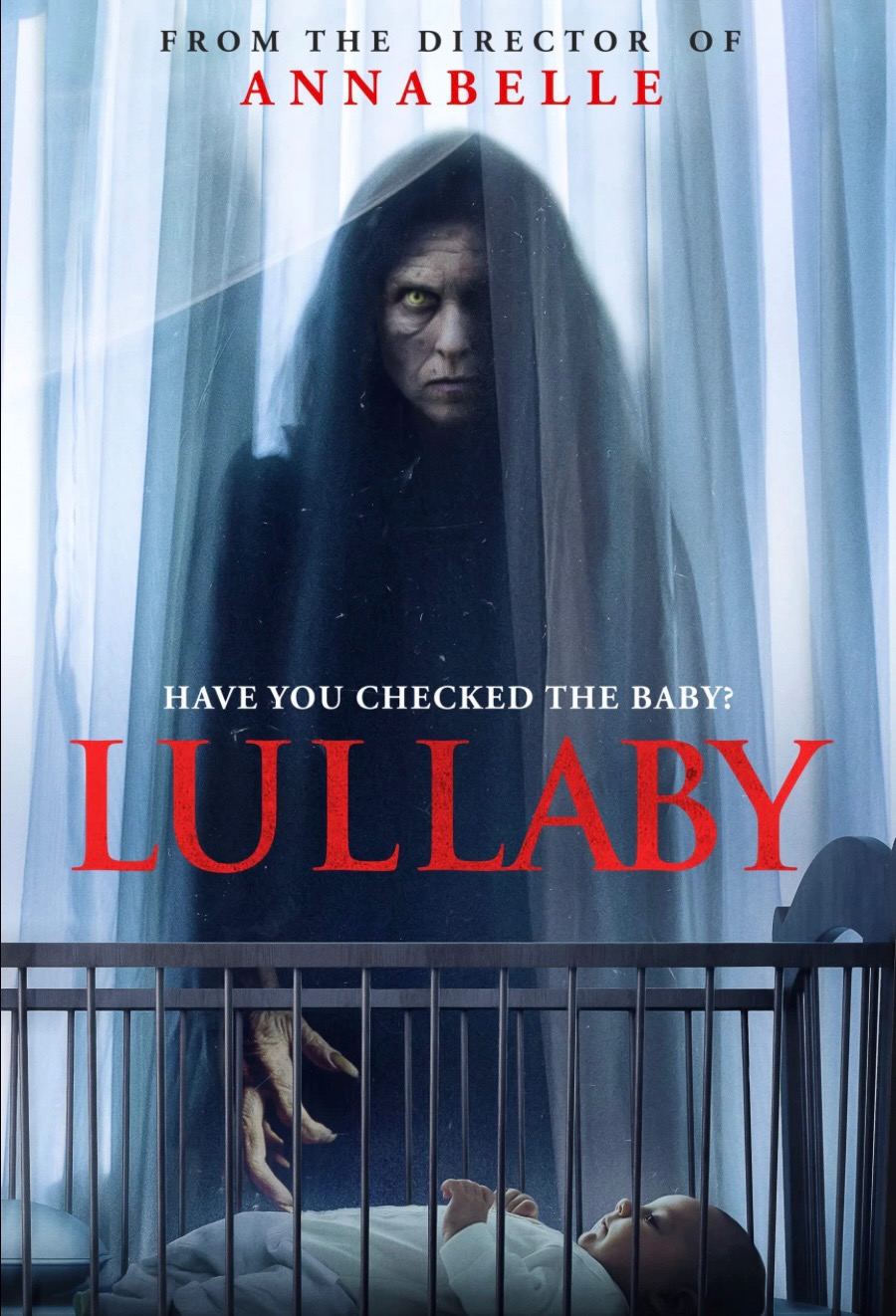
One of those questions it isn’t politic to ask is “Are you Jewish?”  I get asked that once in a while but mainly by Jews.  I’m not Jewish but some people tell me I look like I am.  In any case, as a Bible editor at an academic press, the question of someone’s ethnic affiliation sometimes comes up.  The dilemma is that we can’t ask that.  And it is very difficult to know the answer if someone doesn’t tell you.  The reason that this is on my mind is that I recently watched John R. Leonetti’s horror film Lullaby.  The film was one of at least two that came out with that title in 2022.  And since it deals with Jewish themes, that question naturally comes to mind: is the director, or are the writers, Jewish?  I suspect, from the way all of this plays out that the answer is “No.” Or, if they are, they didn’t do their homework.

Lullaby is a Lilith story.  A young couple—she’s Jewish, he’s a convert for her—have a newborn.  The woman’s sister has sent to them, among other things, a book in Hebrew that contains a Lilith-summoning lullaby.  Lilith shows up and steals the baby but a tattooed rabbi gives the husband some Jewish rituals to combat Lilith.  Apart from the spurious etymology of “lullaby” as “Lilith be gone,” this rabbi doesn’t seem convincing.  His Hebrew handwriting looks as if he might be a first-year student.  And keeping a menorah lit all night is supposed to keep a demon at bay?  Not only that, his assistant can be bribed to regain the cursed book.  All of this begins to look like a gentile trying to direct a horror film in a religion he doesn’t understand.

Religion and horror go naturally together.  I’ve written several posts about Jewish horror that really works.  In those instances, it’s clear that the writers and directors understand what Judaism is.  The solution here is that the convert husband must “really believe” in order to conquer Lilith.  The rabbi tells him to have faith.  The thing is, Judaism isn’t a religion based on having faith—Christianity is.  And taking that aspect of Christianity and using it to try to make other religions faith-based is one of the most common mistakes of those who don’t study religions professionally.  Horror works well with religion when those doing it actually understand the religion they’re trying to portray.  When they don’t, it can end up looking like appropriation of the worst kind.  I watched the movie because it was about Lilith.  What I found was a basic misunderstanding of how religions work.


Golem Events

Public domain, via Wikimedia Commons

It doesn’t have a title yet.  At least not one that’s announced.  Still, when a friend pointed out this article that Daniel Handler, better known as Lemony Snicket, is writing a horror film about a golem, I sat up straight in my chair.  Since I don’t tend to dwell on children’s topics here, it may not be obvious that I was a real fan of A Series of Unfortunate Events, by Lemony Snicket, back when they came out.  Alerted to this series by a cousin who was my daughter’s age, we made this bed-time reading for a few years.  Handler, in the early days, did a pretty good job of keeping his identity secret.  He’s written some adult fiction, and those of us who write know that readers want more of the same thing from a writer—if you want to survive you do what they ask.

I’m a very eclectic reader—that may be one reason I don’t have many followers on this blog.  People like the same thing time and again.  (I’ve always been suspicious of genres.  One of the reasons, I suspect, that my students found my lectures interesting is that I drew from my eclectic reading, but that’s ancient history now.)  In any case, A Series of Unfortunate Events was formative in my own writing.  The movie remains one of the most gothic available, but it pales next to the novels.  Yes, they’re written for young readers, but they’re also very well written for young readers.  I discovered Snicket, or Handler, was Jewish when he wrote The Latke Who Couldn’t Stop Screaming.  And now he’s turned his attention to one of my favorite monsters.  The golem has been part of horror from the earliest days of the genre (that word!).

Paul Wegener and Henrik Galeen’s The Golem, part of a trilogy, came out in 1915.  Before the Universal monsters.  Even before Nosferatu.  The legend of the golem—which may have inspired Frankenstein—has a long history.  While not biblical, the golem does go back many centuries.  Unfortunately these early horror films are lost, or mostly lost.  The Golem and the Dancing Girl, from 1917, is a lost comedy horror.  The third film, The Golem, How He Came into the World, from 1920, survives and is sometimes called “The Golem.”  I wrote earlier about the excellent 2018 film The Golem by Doron and Yoav Paz, sensitive to Jewish issues in the seventeenth century.  This sub-genre of golem movies may be starting to come into its own.  It remains to be seen what Handler will do with it, but if his previous work is anything to go by, we may be in for a real treat.


Miracles

“Expect a miracle,” Oral Roberts used to say, “and a miracle is yours today.”  The famed Evangelical probably didn’t have Catholic-variety miracles in mind, although a story on the Catholic News Agency does.  Miracles come in big and small varieties.  In case you’re feeling encrusted in materialism, there are plenty of things science hasn’t yet explained.  It helps to have a little wonder in your quotidian routine.  So what was this miracle?  It took place in Hartford, Connecticut.  Specifically, at St. Thomas in Thomaston.  In case you’re not Catholic, or high church Episcopalian, a brief explanation: after the consecration of the host (communion bread), ordained clergy pass communion wafers to those who come forward to receive them.  Believing in transubstantiation, this is done with a great deal of attention to detail.

Photo by Josh Applegate on Unsplash

The vessel that holds communion wafers is called a ciborium.  (My years at Nashotah House were good training for this.)   Since consecrated wafers should never be defiled, only a certain amount are consecrated at a time—enough to cover those present for the Eucharist, usually.  Any extras are locked in a tabernacle for future use.  In this miracle, a minister handing out the wafers noticed he was running out.  Believe me, this is something to which clergy pay close attention.  Then suddenly there were more wafers in the ciborium.  A multiplication of loaves, but in much smaller and pre-ordered form.  One child called them, I once heard, “tiny little quesadillas.”  Perhaps a small miracle, but we take what we can get.

A miracle is defined as “an extraordinary and welcome event that is not explicable by natural or scientific laws and is therefore attributed to a divine agency.”  Since we can’t observe all phenomena all the time, they do occur now and again.  What happened in Connecticut?  I don’t know.  No scientist was observing, and no vestment cams were in use.  We have the word of a clergyman with no cause to lie.  Maybe something unusual did happen.  Yet I can hear the evangelicals protesting that if God were to perform a miracle it would have something to do with Donald Trump rather than some popish fetish.  That’s the problem once religions get involved around miracles.  Too much is left to interpretation.  Sometimes I think of the miracle of the sun at Fatima, Portugal.  Or of people miraculously healed from late-stage fatal diseases without medical intervention.  These things happen and when people are pressed for an explanation they tend to turn to the divine.  Perhaps, however, things just aren’t what they appear to be.


Addenda

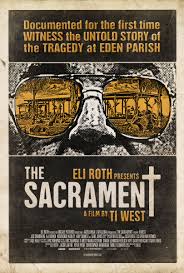
In retrospect, I suppose I wrote Holy Horror a bit prematurely.  Back when I started writing it, I had thought that the Bible in horror wasn’t as common as I’ve since found it to be.  I still stand by what I wrote, but I could’ve included a lot more movies that I’ve watched over the years since.  The Sacrament is one of them.  Based on the Jonestown massacre, the film sets the movie in the early twenty-tens.  A reporter for VICE is going to find his sister who’s joined a religious commune in some unspecified country.  In an effort to get him to join, she invited him to visit.  She was unaware, however, that he brought another journalist and cameraman with him.  The movie gives creepy vibes right away since they’re greeted at the helicopter landing site by men with guns.  Eventually they’re allowed to enter.

“Father,” the leader of the commune bears a resemblance to Jim Jones and soon it’s clear where this is going.  Along the way, however, Scripture gets quoted to justify their communal lifestyle.  There are many fictional aspects thrown in—the young women seduce the journalist whose sister invited him.  She makes no bones about saying they do it to convince him to stay.  The camera crew is almost convinced that this is the paradise it claims to be, but they start getting requests for help.  The writers clearly did their research on Jonestown since several details of the final weeks of the Peoples Temple are fictionalized here.  The mass suicide is shown in graphic detail.  The number of the dead, however, is only about a fifth of those who actually died in Guyana in 1978.

The movie clearly shows that the commune is problematic, but it also raises uneasy questions.  If it weren’t for the murder of Leo Ryan, would Jonestown ever have happened?  Probably, but the film shows “Father” making the point that nobody was being harmed.  That’s belied by the introduction of an abused girl and the number of people who want to leave.  It’s true of Jonestown that mind-control tactics were used and people weren’t permitted to leave, especially as Jones’ paranoia grew.  The movie leaves the viewer wondering whether utopian communes can ever work, people being what they are.  We crave our freedom, even when things look great.  The movie condemns the exercise, but not so much that it leaves lingering doubts about whether, had things been different, it might’ve worked.  And it would’ve worked, had I seen it earlier, for Holy Horror.


Wicker Man Comes

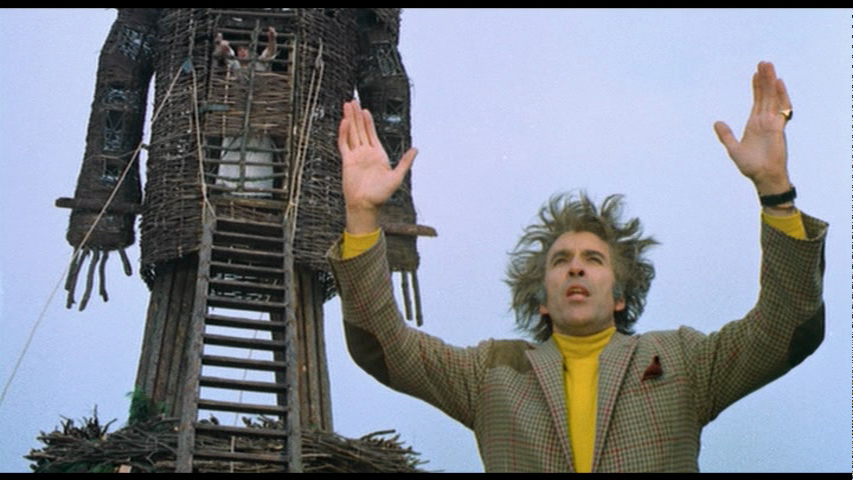
Not that I would know bodily, but it seems like a book being published is something like giving birth.  It takes several months (perhaps years, in the case of books) from conception to delivery and there are certain milestones along the way.  And you worry like Rosemary.  Has something gone wrong?  Is this still going to happen?  The book production process is a long and complicated one.  Just this week, however, the next recognizable stage occurred for The Wicker Man.  An ISBN has been assigned and a new book announcement has fed out through various channels.  It’s not on Amazon just yet but a Google search of 9781837643882 will bring it up.  I’d been worried about this because I saw a new book announced on The Wicker Man due out in October.  This is the fiftieth anniversary of the film, and I suspected I wasn’t the only one who’d noticed that.

Ironically, another film turns 50 this year.  The Exorcist released in December of 1973 to far greater acclaim than The Wicker Man.  Both films became classics in their own right, but The Exorcist would become a household name.  Even if they’d never seen it, most people had heard of it.  The Wicker Man is more of a cult classic.  It’s known among horror fans and a certain kind of Anglophile.  And those interested in paganism, particularly of the Celtic variety.  Although the cover isn’t available yet, I was glad to see the feed for my book going out.  It looks like I might scoop the other book by a month or so.  If that happens it will be the first time that I’ve actually had a book on horror release before Halloween.  The last two missed the deadline by a couple of months.

Having said that, if you’ve had your appointment with The Wicker Man you already know, it takes place on May Day.  And you likely know that a large number of people claim it isn’t a horror film at all.  Indeed, the horror element only becomes clear in the last ten minutes or so.  It’s the build-up that makes the movie.  And it was really a one-film wonder for the director, Robin Hardy.  He did other movies, but this was the one that lasted, and spawned imitations and parodies.  It’s exciting to see that the discriminating, or very persistent, searcher can now find the book announcement online.  I haven’t seen much to-do about the 50th anniversary just yet, but now when I do I’ll have something to point to.  More on this to come!


Pentagrams

Not to dwell on Satanism, but the morning after my last post on the topic, while out on my morning jog, I came across a pentagram incised in the pea gravel of the bike path.  Then another.  Lest there was any lingering doubt that this had to do with the local school’s Satan club, a few feet further along a 666 appeared.  None of this was there the day before and, given that folks my age are too busy to be out scraping sigels in the sand, I suspect that it might’ve been someone younger.   Dare I say, school-aged.  Protesting or promoting I couldn’t tell.  As I jogged, I fell to thinking about pentagrams.  They’re not inherently evil and actually have an interesting history.  For most of that history it was morally neutral, if not a positive sign.

In the 1800s, during Romanticism’s heyday, it was supposed that an inverted pentagram—one with two points up instead of one at the top—was a sign of evil.  It was also in the 1800s that the contemporary king of outrage, Aleister Crowley, began what would eventually morph into modern Wicca.  Crowley liked to refer to himself as “the wickedest man on earth,” at least among his friends.  The upside-down pentagram was seen to represent a goat’s head, and if you’ve read my book you’ll know that some groups have long associated goats with demons.  Ironically, during the Nixon Administration the Grand Old Party began to use inverted pentagrams on their elephant logo.  Evangelicals who otherwise object to this “Satanic” symbol seem quite okay with it branding their political party.  Truth in advertising, I guess.

The thing about symbols is that they only have the power we give them.  The five points of a star symbol match well the pentagonal symmetry that we often see in nature: sea stars, sand dollars, strawberry flowers, and eucalyptus seed pods.  It’s pleasing to the eye for creatures with five fingers and five toes.  There’s a rightness about it, even if it doesn’t look a thing like the stars in the sky.  Is it Satanic?  No, only to those who believe it to be so.  Are there Satanists trying to take over public schools?  No.  That doesn’t mean people don’t think they aren’t.  (That last sentence is all tied up in nots, I guess.)  Symbols, by their nature, contain the meaning we assign to them.  They say to me that kids pay attention to what adults do,  so if we act grown-up perhaps—just perhaps—they will aspire to do the same.


Satanic Struggle

Around these parts folks are in an uproar about an after-school Satan Club.  The idea is an action to get Evangelical undies in a bunch, and it’s only proposed when a school system supports an overtly Christian club.  Reaction more than action, really.  Right now Nextdoor.com is bursting at the seams with indignation about something most people don’t understand.  I can’t claim to be an expert, but I’ve read plenty of books about Satan and many of them deal with Anton LaVey’s Church of Satan.  The Church of Satan believes in no literal Devil or Hell.  It was established to draw attention but also to make a statement when Christian Nationalists start to get too pushy.  Still, people are afraid of Satanism as the numerous international panics about it have shown.  And conspiracy theories don’t help.

It seems to me that the solution to all of this is education.  People, naturally enough, react to things emotionally.  I do it all the time.  (This is one reason that Artificial Intelligence will never be truly that—humans think with their emotions as well as with reason.)  The sad thing is, there are many easy ways to correct mistaken assumptions.  The information is out there and it’s easily found.  It’s easier, however, to spout off on social media like you’re an expert on something you know nothing about.  Trump introduced a culture of outrage—did his supporters suppose nobody else was capable of doing the same?  The Church of Satan was established as such an outrage.  In a nation of literalists, they hit a nerve.

The Church of Satan does not worship the Devil.  It supports social causes and it cooperates with law enforcement when some unbalanced individuals think it means something that it doesn’t.  To my way of thinking, this creative endeavor, despite getting the attention it sought, might’ve been better thought through.  Although extremism appeals to those who, like Herostratus, crave fame at any cost, does it really move us any closer to where we want to be?  Part of the problem is that many outspoken political figures want us all to be the same as them.  White, Christian, male, heterosexual.  I really can’t imagine a worse kind of nightmare.  Humans crave variety and new ideas.  As I sit here watching a new, uninformed Satanic Panic developing in my own backyard, I wonder if we all wouldn’t do our blood pressure a favor by sitting down with a book.  And maybe learning what this really is about.  Shoving matches seldom end well.


No Doubt

The mind inclined toward doubt is in for a rough ride in an evangelical childhood.  I recall vividly my many, many hours struggling against doubt, trying, crying, praying for certainty and faith.  Many, many dark nights of the soul.  Attending college and seminary I learned of the others in history who struggled the same way, or at least similarly.  I also learned that doubt is natural and healthy, it protects us from falling headlong into the many snares and traps the world continually sets for us.  Blind faith, as I recently quoted from Kurt Vonnegut, is dangerous to everyone.  I was thinking about this again the other day as there was something I fervently wanted to happen but I just couldn’t bring myself to believe would actually come to pass.  My mind isn’t built for blind faith.

Given that, it probably isn’t any surprise that I went into religious studies as a field, even though it’s a dead end.  I still believe it’s vitally important, but that’s a belief much of the world doesn’t share.  It’s one of the few fields of study where a doctorate leaves you without job prospects if you don’t get a teaching post, if you’re not ordained.  And should doubters be wearing clerical collars and preaching to those who want to believe?  Belief is malleable.  It changes over time and it does so via its constant interaction with doubt.  It leads to a life of second-guessing and constant reassessment.  I suppose that’s why I’m baffled to see politicians with less education being so cock-sure that they’re right about things.  I doubt they know what they’re talking about.

Institutions take on lives, like people do.  Although I disagree with the treatment of corporations as individuals by law, still, I understand the thinking behind it.  The church, for example, grew to be a very powerful force in the fourth-century Roman empire.  These collective individuals had vested interest in keeping that power as the church grew more and more influential.  That dynamic still exists where even a small, non-denominational group gathers and asserts that it alone is right.  All you have to do, it tells its members, is believe.  Don’t doubt.  And if you do doubt you’ll be excluded.  Exclusion is difficult to bear.  But even doubting Thomas has hundreds of churches named after him.  Each, no doubt, has many true believers as members.  And on the outside mingle the doubters.


Keys

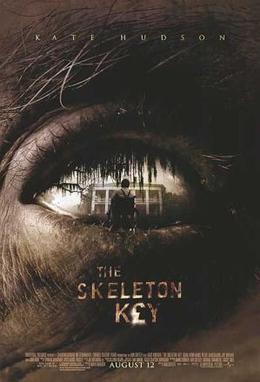
Do you know the difference between “Voodoo” and “hoodoo”?  Well, The Skeleton Key does.  This is a movie I watched at the recommendation of a friend.  I get a sense—perhaps based on stats, or maybe lack of engagement—that you folks that kindly read this blog generally don’t watch the same movies that I do.  Nevertheless, I hesitate to give away spoilers for films I think more people should see.  So we’ll explore hoodoo instead.  But first, I can give you the basic idea of the film, in case you’re one of the few who takes recommendations from this blog.  Caroline is a young hospice nurse who feels guilty about not being present when her father died.  She gets a job with a couple in a decrepit southern Louisiana mansion where he’s dying and she’s doing fine.  

Caroline isn’t from the south, however, and she senses that something’s not right.  A modern girl, she doesn’t believe in the supernatural, but she slowly becomes convinced that something strange is happening in the house.  That something turns out to be hoodoo.  Critics weren’t particularly kind to the film when it came out in 2005, but I found it moody and engaging.  There were some exciting scenes and I enjoy haunted house movies generally.  And this one uses a lot of religious imagery, even though hoodoo is better thought of a form of spirituality than a formal religion, like Vodou is.  The movie defines the difference as one between religion (Vodou) and magic (hoodoo).  There’s some truth in that, but scholars are inclined to class magic and religion together.

Hoodoo consists mainly of folk spirituality that involves some magical beliefs.  Like Vodou it’s of African origin, mixed with the cultures experienced by slaves in the new world.  Unlike Vodou, it doesn’t have any kind of formal structure.  The reason it’s treated with suspicion, in general, is because it’s of African origin and doesn’t fit well with northern European ideas of the way the world works.  Skeleton Key makes pretty heavy use of hoodoo as a plot point and it isn’t alone in using African traditions to inculcate horror.  The Believers, many years back, did a similar thing with brujería.  Although these folk traditions are generally kept separate from “religion,” they tread similar ground with similar aims.  And since they’re “foreign”—at least to button-down white Christianity—they’re treated with utmost suspicion.  I think Skeleton Key handles this well, and if you’re one of the few who takes recommendations on movies, I’d suggest it’s worth seeing.


Othering Offering

I get to feeling a bit anxious when nobody else publishes me for a while.  It’s a strange kind of validation, I suppose.  No matter my motivation, I knew as soon as I saw The Offering that I would have to write something about it for Horror Homeroom.  The article is now available here.  Horror, as one of the more intelligent genres, often has much to say about things such as religion and esoteric beliefs.  In the article I compare it to other recent Jewish horror such as The Possession, The Golem, and The Vigil.  All of them are worth watching.  Religion often addresses those things that scare us, whether secular or sacred.  Movies like these often make me ponder the sense of belonging that religious communities offer.  At least in the best of times.

These three movies each have their own posts on this blog, but the point of the Horror Homeroom article is to try to look at them together.  Judaism can be a particularly delicate topic.  Not only the Holocaust, but also subsequent political developments have led to dangerous situations for Jews in the real world.  Theirs is an old and rich culture, persecuted largely by Christians who ironically blame Jews for their own salvation.  And hate them for it.  Nevertheless Jewish culture and belief persist.  It’s telling that even when they invent a protector, such as the golem, they come to realize that it too will turn on them in the end.  Most horror movies, if they participate in religious worldviews, do so from a Christian point of view.

Some colleagues recently asked me to name some Protestant horror movies.  That’s a tricky question to answer because the American context is still largely Protestant as a whole.  And when you want to take on monsters and demons you generally call a priest.  Even movies like The Last Exorcism have Protestant clergy using Catholic crucifixes.  As I’ve stated elsewhere, Asian horror movies have also come into their own, often reflecting Buddhist or Hindu outlooks.  So we find religion and horror intermingling worldwide.  Movies are more than just entertainment.  They can be, and are, teaching tools.  We should pay attention to what goes on in their classrooms.  Not only can we learn about ourselves, we can also learn about those that we, or society, tend to “other.”  Like high school, there are a variety of classes you might take.  The day always starts, however, with homeroom.


Melvillian Thoughts

I’ve posted about Moby-Dick a number of times on this blog.  I make no bones about the fact that it’s my favorite novel.  Still, I don’t know much about Herman Melville as I’d like.  Only what you can learn from reading his novel and a few other books.  The thing is, I’m really growing an interest in the literature of the American Renaissance.  While Washington Irving isn’t my favorite writer, he was perhaps the earliest of the Renaissance crowd.  Consider this, these writers all lived during Irving’s lifetime: James Fennimore Cooper, Edgar Allan Poe, Emily Dickinson, Nathaniel Hawthorne, Melville, William Wadsworth Longfellow, Walt Whitman, Ralph Waldo Emerson, Henry David Thoreau, and Louisa May Alcott.  Many others as well, but what heady times!  Can you imagine walking into a bookstore and seeing all the wonders on offer for the first time?

But back to Melville.  I was recently doing some further reading about him—I need a good biography, actually—and learned some things I didn’t know.  I knew he’d gone to sea, but I wasn’t aware that his mother raised him with a strict Calvinism (which explains much in Moby-Dick), but that he eventually returned to his father’s Unitarianism.  Indeed, Melville’s work displays many of the values of the Unitarian tradition.  Moby-Dick is largely his struggle with religion, laid out in terms of Ahab and the great white whale.  Melville spent a period of his life, before Moby-Dick, as a successful writer.  In a way that seems unimaginable to us today, that novel was a flop and he eventually had to take on a pedestrian job, although he kept on writing.  I have to admit that I’ve read none of his other novels.  I’m just blown away with his most famous work that I’m a little afraid of being disappointed in his other efforts.

I know a few novelists.  Of only one of them have I managed to read all their works, and that’s because this particular author only wrote one novel (which made a big enough splash to get reviewed in Time).  My dilettantism has been a characteristic of my life.  I’m too curious, perhaps, and there’s not enough time to read every work of every author I admire, even those I personally know.  I haven’t given up joining their ranks someday.  One of my novels is currently out for consideration, but I have no real expectation of success.  The best I can do in these circumstances is to read the work of those who managed to succeed, even if they didn’t live to see it.  And to wonder what it must’ve been like when so much talent appeared at the same time in a very young country.


Columbo

I liked Columbo.  Peter Falk was an award-winning actor, and his working-class detective character was always entertaining to watch.  Unlike other TV cops, he didn’t carry a gun.  Hearing the tragic news from California where yet another shooter killed multiple people before himself, I think about the proliferation of guns.  The New York Times runs story after story showing that nowhere else in the developed world are gun deaths remotely anywhere near what they are in the United States.  Not only do we have a super-abundance of firearms, we have politicians on the dole from the NRA who simply won’t take action because they personally stand to lose money if they do.  And apparently they can sleep at night.  As a nation, our guns outnumber people.

Estimates for the number of guns in America stand at around 466 million.  98% of them are in civilian hands, as opposed to the military.  And we have multiple mass shootings per year.  Is there any chance that these facts might be related?  Ironically, many firearms are owned by those who loudly proclaim they hate the “culture of death”promoted by those who try to make gun ownership more difficult.  I’ve written on this topic so many times before that I really don’t know what else there is to say.  Perhaps it’s time to just give up and weep.  Last year, excluding suicides, there were over 20,000 gun deaths in this country.  There have been 15,000 or more per year since 2016.  Approximately 120,000 gun deaths in just six years.  And yet nothing is done.

The public strongly favors stricter gun laws.  Government officials do not.  In fact, some Republicans are now attempting drive-by shootings of suspected Democrats.  I’m not anti-gun.  I am anti-insanity.  You see, that was the thing about Columbo.  He never pulled a gun, but he doggedly pursued those who did.  The culture of hate that has swept this country since 2016 needs to be reminded of Columbo’s message.  Guns aren’t the answer.  Pursuit of the truth is.  How a purportedly Christian movement does nothing but support the gun lobby is a mystery requiring investigation.  It has to be asked where in the Bible does this idea of arming yourself come from.  It has to be asked which commandment declares obtaining deadly force and making guns easily obtained by the mentally unstable is God’s will.  I guess that about wraps it up.  Just one more thing—what would Jesus do, really?