Othering Offering

I get to feeling a bit anxious when nobody else publishes me for a while.  It’s a strange kind of validation, I suppose.  No matter my motivation, I knew as soon as I saw The Offering that I would have to write something about it for Horror Homeroom.  The article is now available here.  Horror, as one of the more intelligent genres, often has much to say about things such as religion and esoteric beliefs.  In the article I compare it to other recent Jewish horror such as The Possession, The Golem, and The Vigil.  All of them are worth watching.  Religion often addresses those things that scare us, whether secular or sacred.  Movies like these often make me ponder the sense of belonging that religious communities offer.  At least in the best of times.
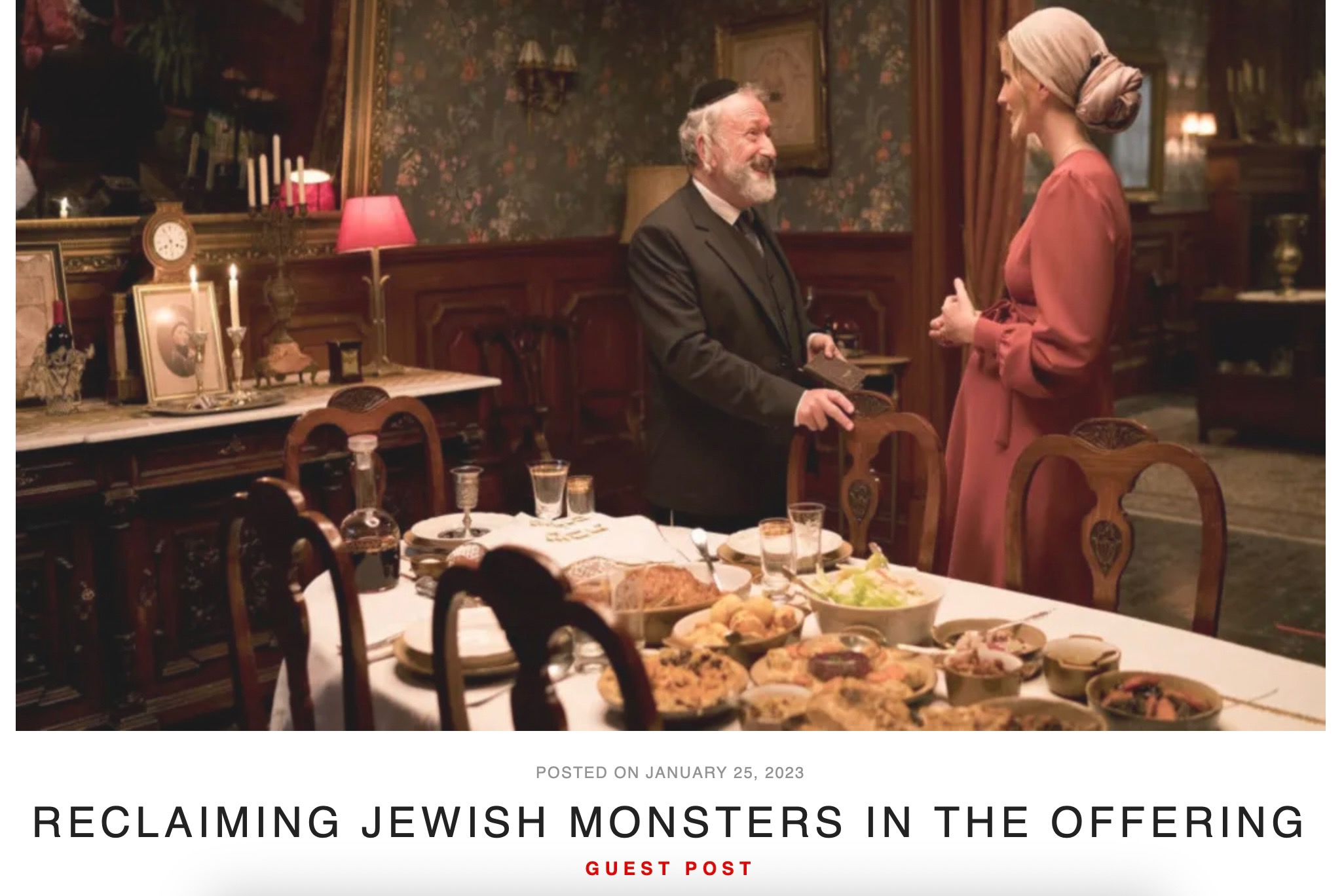
These three movies each have their own posts on this blog, but the point of the Horror Homeroom article is to try to look at them together.  Judaism can be a particularly delicate topic.  Not only the Holocaust, but also subsequent political developments have led to dangerous situations for Jews in the real world.  Theirs is an old and rich culture, persecuted largely by Christians who ironically blame Jews for their own salvation.  And hate them for it.  Nevertheless Jewish culture and belief persist.  It’s telling that even when they invent a protector, such as the golem, they come to realize that it too will turn on them in the end.  Most horror movies, if they participate in religious worldviews, do so from a Christian point of view.

Some colleagues recently asked me to name some Protestant horror movies.  That’s a tricky question to answer because the American context is still largely Protestant as a whole.  And when you want to take on monsters and demons you generally call a priest.  Even movies like The Last Exorcism have Protestant clergy using Catholic crucifixes.  As I’ve stated elsewhere, Asian horror movies have also come into their own, often reflecting Buddhist or Hindu outlooks.  So we find religion and horror intermingling worldwide.  Movies are more than just entertainment.  They can be, and are, teaching tools.  We should pay attention to what goes on in their classrooms.  Not only can we learn about ourselves, we can also learn about those that we, or society, tend to “other.”  Like high school, there are a variety of classes you might take.  The day always starts, however, with homeroom.

Melvillian Thoughts

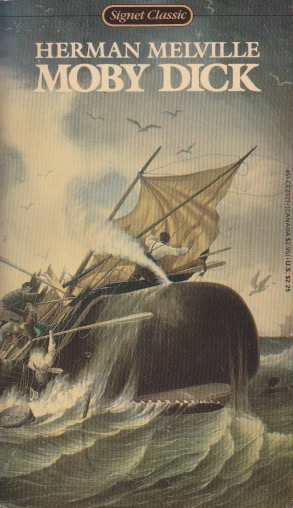
I’ve posted about Moby-Dick a number of times on this blog.  I make no bones about the fact that it’s my favorite novel.  Still, I don’t know much about Herman Melville as I’d like.  Only what you can learn from reading his novel and a few other books.  The thing is, I’m really growing an interest in the literature of the American Renaissance.  While Washington Irving isn’t my favorite writer, he was perhaps the earliest of the Renaissance crowd.  Consider this, these writers all lived during Irving’s lifetime: James Fennimore Cooper, Edgar Allan Poe, Emily Dickinson, Nathaniel Hawthorne, Melville, William Wadsworth Longfellow, Walt Whitman, Ralph Waldo Emerson, Henry David Thoreau, and Louisa May Alcott.  Many others as well, but what heady times!  Can you imagine walking into a bookstore and seeing all the wonders on offer for the first time?

But back to Melville.  I was recently doing some further reading about him—I need a good biography, actually—and learned some things I didn’t know.  I knew he’d gone to sea, but I wasn’t aware that his mother raised him with a strict Calvinism (which explains much in Moby-Dick), but that he eventually returned to his father’s Unitarianism.  Indeed, Melville’s work displays many of the values of the Unitarian tradition.  Moby-Dick is largely his struggle with religion, laid out in terms of Ahab and the great white whale.  Melville spent a period of his life, before Moby-Dick, as a successful writer.  In a way that seems unimaginable to us today, that novel was a flop and he eventually had to take on a pedestrian job, although he kept on writing.  I have to admit that I’ve read none of his other novels.  I’m just blown away with his most famous work that I’m a little afraid of being disappointed in his other efforts.

I know a few novelists.  Of only one of them have I managed to read all their works, and that’s because this particular author only wrote one novel (which made a big enough splash to get reviewed in Time).  My dilettantism has been a characteristic of my life.  I’m too curious, perhaps, and there’s not enough time to read every work of every author I admire, even those I personally know.  I haven’t given up joining their ranks someday.  One of my novels is currently out for consideration, but I have no real expectation of success.  The best I can do in these circumstances is to read the work of those who managed to succeed, even if they didn’t live to see it.  And to wonder what it must’ve been like when so much talent appeared at the same time in a very young country.


Columbo

I liked Columbo.  Peter Falk was an award-winning actor, and his working-class detective character was always entertaining to watch.  Unlike other TV cops, he didn’t carry a gun.  Hearing the tragic news from California where yet another shooter killed multiple people before himself, I think about the proliferation of guns.  The New York Times runs story after story showing that nowhere else in the developed world are gun deaths remotely anywhere near what they are in the United States.  Not only do we have a super-abundance of firearms, we have politicians on the dole from the NRA who simply won’t take action because they personally stand to lose money if they do.  And apparently they can sleep at night.  As a nation, our guns outnumber people.

Estimates for the number of guns in America stand at around 466 million.  98% of them are in civilian hands, as opposed to the military.  And we have multiple mass shootings per year.  Is there any chance that these facts might be related?  Ironically, many firearms are owned by those who loudly proclaim they hate the “culture of death”promoted by those who try to make gun ownership more difficult.  I’ve written on this topic so many times before that I really don’t know what else there is to say.  Perhaps it’s time to just give up and weep.  Last year, excluding suicides, there were over 20,000 gun deaths in this country.  There have been 15,000 or more per year since 2016.  Approximately 120,000 gun deaths in just six years.  And yet nothing is done.

The public strongly favors stricter gun laws.  Government officials do not.  In fact, some Republicans are now attempting drive-by shootings of suspected Democrats.  I’m not anti-gun.  I am anti-insanity.  You see, that was the thing about Columbo.  He never pulled a gun, but he doggedly pursued those who did.  The culture of hate that has swept this country since 2016 needs to be reminded of Columbo’s message.  Guns aren’t the answer.  Pursuit of the truth is.  How a purportedly Christian movement does nothing but support the gun lobby is a mystery requiring investigation.  It has to be asked where in the Bible does this idea of arming yourself come from.  It has to be asked which commandment declares obtaining deadly force and making guns easily obtained by the mentally unstable is God’s will.  I guess that about wraps it up.  Just one more thing—what would Jesus do, really?


On Offer

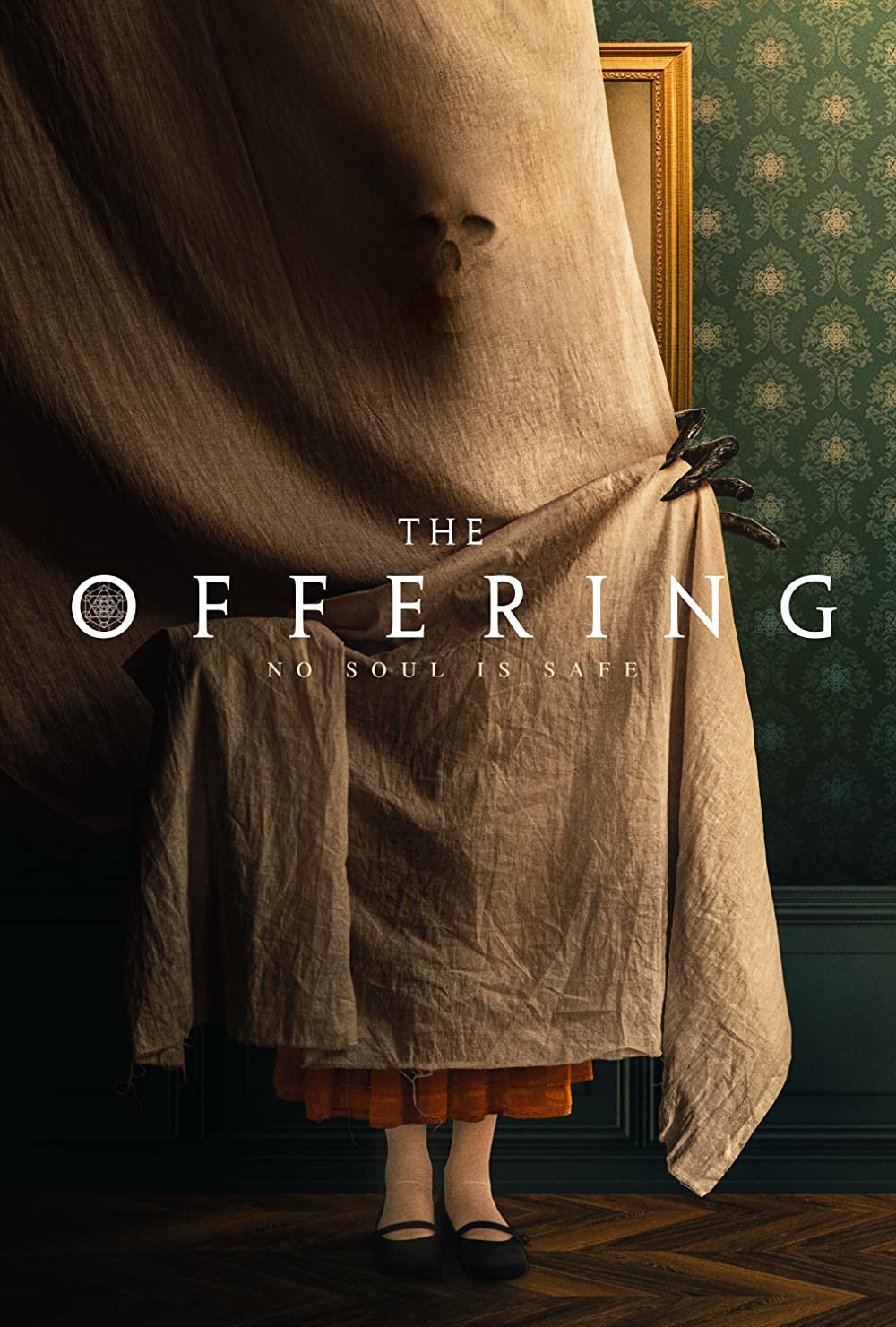
Feeling a bit overwhelmed by various January blues, I took me to my homegrown therapy of watching horror.  The newly released The Offering raises many questions regarding religion and horror, focusing again on Hasidic Judaism.  I say “again” because several movies from the past decade have begun to reflect Jewish monsters, often in Orthodox settings.  This is fascinating because Judaism tends not to emphasize spiritual entities, and perhaps that’s why they’re so surprising in such a framework.  I’m not a specialist in Judaism, and I worry about cultural appropriation, but horror is open to all people.  Religion often plays a central role.  A former author of mine, with Routledge, wrote a fascinating chapter in his book that dealt with Buddhist horror films.  So, The Offering. (I have an article on the movie coming out soon on Horror Homeroom, so be sure to check there for more.)

Like most Jewish-themed horror, The Offering is intelligent.  A Hasidic Jewish scholar, wishing to see his recently deceased wife again, accidentally raises a demon.  While demons aren’t especially plentiful in Judaism, this one happens to be Abyzou, a character familiar to anyone who’s seen The Possession, or, perchance, read Nightmares with the Bible or Holy Horror.  Abyzou targets children and so when Art, a non-practicing Jew, takes his pregnant wife to visit his religious father in Brooklyn, the tension is lined up.  Also, did I mention that Art’s father runs a funeral home out of his house?  The scholar’s encounter with Abyzou lands him in the morgue in the basement where, as demons are wont to do, it escapes.  And it wants that unborn baby.  There are also other family tensions which add to the complexity of the story.

I’m not in a position, without committing a lot of research time that I don’t currently have, to gauge the authenticity of Jewish lore associated with the demonic attack in this particular movie.  It is a film, however, that uses many familiar tropes in the service of horror that’s fueled by religion.  Demons are, after all, religious monsters.  Unlike The Exorcist, the goal here isn’t to exorcise but rather to trap the demon.  Exorcism always raises the troubling question of where a demon might go once it’s expelled.  The famous gospel story of Legion entering a herd of swine makes that abundantly clear.  The Offering also makes the threat to a pregnant woman a key element in the tale, and since we know that Abyzou wants the young, we’ve got built-in suspense.  There may not be a ton new here, but the movie addresses some important issues.  The dialogue about religion deserves some in-depth consideration—perhaps after I finish the book I’m currently writing.


The Point of It

It’s not difficult to feel overwhelmed by the scope of the problem.  Race was a construct developed to oppress.  The intention was to keep those of non-European, especially non-northern European, ancestry in servitude.  The rationale for doing so was part capitalistic, but also largely religious.  Convinced that Jesus was white, and that the “New Israel” had passed to Christianized Europe, it didn’t take much theological maneuvering to get to the point that others can be—in that mindset, should be—brought into line.  And since this religion comes with a built-in body-soul dualism, it’s not difficult to claim you’re trying to save a soul by destroying a body.  That way you can still sleep at night while doing something everyone knows is wrong.

Martin Luther King, Jr. stood up to such ideas.  His understanding of Christianity was more in alignment with what Jesus said and that threatened those in the establishment who found any challenge to profit heresy.  There can be no denying that racism is one more attempt to keep wealth centralized.  It’s something not to share, which, strangely enough, is presented as gospel.  There are many people still trying to correct this wrong.  It is wrong when a religion distorts its central message in order to exploit marginalized people.  The key word here is “people.”  Black people are people.  Their lives matter and every time this is said others try to counter with “all lives matter, ” a platitude that misses the point.  We need Martin Luther King Day.  We need to be reminded that we’re still not where we should be.  We’re still held in thrall to a capitalism that rewards those who use oppression to enrich themselves.

I was born in the civil rights era.  I suppose I mistakenly reasoned that others had learned the message as well.  All people deserve fair treatment.  Today we remember a Black leader, but we still have the blood of many oppressed peoples on our hands.  Those who first came to live in this country, whose land was stolen in the name of religion.  Those whose gender and sex put them at threat by those who believe control of resources is more important that care of fellow human beings.  It’s easy to feel overwhelmed, but in King’s words, “the arc of the moral universe is long, but it bends toward justice.”   If we believe that, and if we can act on it, there remains the possibility that we might actually achieve the reason we set this day aside to reflect.

Photo by Katt Yukawa on Unsplash

The Eve before Christmas

Even as we sit here on Christmas Eve, the work week finally over, my thoughts go to those who celebrate different holidays.  Or none at all.  Cultural Christians may find it difficult to believe that some sects—thinking themselves strictly biblical—observe no holidays.  Not even birthdays, some of them.  You may be doubting the accuracy of that statement, but my second college roommate was one of them.  He believed any holiday was idolatrous, and celebrating birthdays self aggrandizing.  Perhaps it’s not surprising that he can’t be found online.  Many of us, some without reflecting much on it, have been preparing for tomorrow for many weeks.  The older I get, for me it’s really the time off work I treasure.  It’s so rare, and more precious than gold, frankincense, and myrrh.

Like many people, I associate Christmas with music.  One of the songs—not really a Christmas carol—that has become seasonal by its inclusion on Pentatonix’s album That’s Christmas to Me, is “White Winter Hymnal.”  The song is a cover of a haunting song by Fleet Foxes, a folk band, who included it on their debut album, the eponymous Fleet Foxes.  If you’re not familiar with it you can find it here, along with the official video.  The claymation short portrays a group of old men outdoors watching time pass.  One of them begins to crank a drive that makes them younger as time reverses.  When he reaches that point (please forgive the sexist language) “when a man becomes a boy once again” (from another winter song), he releases the handle and the men rapidly reach the age they were when the song began.  Time is the greatest gift.

As the decades press on, their weight increases.  Dreams of what, as a young man, I hoped to accomplish slip away facing the grinding reality of capitalism.  The need to have money to spend for Christmas presents.  And food and shelter.  But mostly books.  Writing takes time.  Writing well takes a tremendous amount of time.  Time for reading, reflecting, and even listening to music.  Christmas Eve is all about waiting.  We hope for a quiet, if cold, tomorrow when maybe the phone and email will cease to solicit money and time, if only for a day.  I have to remind myself that not everyone recognizes Christmas.  For some it’s simply the season to make money.  I, weak as I am, cannot imagine life without it.  And so I watch the skies, eagerly straining my eyes for the light.


Religion in Its Place

The other day at work I virtually “met” someone else from western Pennsylvania.  It came about in an odd way.  We were both in an online author talk and my colleague put something in the chat about a particular social issue being purely religious for some parts of the country, like his native western Pennsylvania.  I immediately knew what he meant.  For those who think religion is irrelevant, look at the make-up of our government.  Those preachers in rural places wield incredible power.  Their word is law and because of the shortsightedness of our founders, the rural few have amazing sway over the vast majority of the urbanites.  We need each other, of course, but not all have educated themselves on the issues.  When they want to vote they turn to their preachers for the answers.

Interestingly enough, churches lose their tax-exempt status (and thus many can’t afford to survive) if they openly back a political party.  They are required by the law they game to remain party neutral.  Of course, depending on who appointed a federal judge, they are often willing to overlook that particular law.  You get the sense that God favors some commandments over the others anyway.  But back to the homeland—western Pennsylvania is a preacher-dominated part of the country.  That may well have been what set me off on this strange track I follow instead of a career.  We were a church-going family in a church-dominated part of the state.  If you took what you heard on Sunday seriously, we should all be studying religion, down on our knees.

My colleague brought something into focus for me.  The religiously convinced will accept no other evidence.  They’ll refuse vaccines that could save their lives.  They’ll say women and blacks are lesser humans.  They’ll even—since I pay taxes this is okay—vote Republican.  Clergy have been sidelined by much of what’s going on in society.  They are hardly irrelevant, however.  I recently had a minister tell me that if I were to make a formal “questing” status with a denomination I could pick up some preaching cash on weekends.  Without that status, this clergy asked me, “why should anyone listen to you?”  Ah, there’s the rub, you see.  Although I’ve studied religion more than many clergy, and taught those who are now clergy,  I’m not qualified to make it official.  Perhaps it would be different if I were from somewhere else.  


Kids’ Stuff?

Do you want to be popular with the kids this Christmas?  Do you want to hear the squeals of pure delight that every mom, dad, aunt, or uncle wants when that special present is unwrapped?  Might I suggest a book of theology?  Yes, one of the publishers here at AAR/SBL has a table of Theology for Kids.  Staring at that sign during the long hours on the conference floor, my mind kept wandering back to Richard Dawkins’ comparison of teaching children religion to child abuse.  Indeed, my wife had sent me an article in Rolling Stone a few weeks back that declared an Evangelical childhood was a, to put it politely, a total mind-fornication.  It is something from which those of us raised religious spend all our lives recovering.  Some never escape, while others try to make sense of the world without it.

Publishers of religious bodies make up a substantial part of those present at the annual meeting.  The ones with the biggest, flashiest displays are often buoyed up by evangelical dollars.  Teaching kids to think this way is a core part of keeping the meme alive and those of us who dared question it with our God-given brains are the modern heretics and heathens.  Some years here, various publishers are piously closed on Sunday morning (this is only a three-and-a-half day conference) with signs telling the rest of us that they’re observing the Lord’s day.  America is a strange mix of evangelical and secular, the kind of place where you can purchase theology for kids.  I know I grew up with such things, even though we really couldn’t afford the other children’s classics that I only learned about from having a child of my own.

The canon is important to this self image.  For me, I’ve come to expand mine a bit over the years.  That expanded canon includes unconventional sources of spiritual inspiration, or so my conversations with others leads me to believe.  Theology can, and often does, lead to death sentences for adults.  And sadly, occasionally for children.  It’s difficult to blame adults for trying to ensure their children’s eternal salvation, especially when religion is so terribly difficult to escape even as an adult.  I suppose that’s why I still advocate for learning about religion although it has damaged me personally as well as determined what would pass for my career.  So I stand here awaiting my next appointment and find myself again taken into my past which was full of theology for children.


James and John

One of the first questions expectant parents are asked is if they have yet come up with a name for their child.  Quite often, and probably without realizing it, some of the most popular names are biblical.  Jacob is one of the most common boys’ names in English.  It derives from the story of Isaac’s younger son in Genesis.  Its popularity increases exponentially when its variant James is added to the total.  The name James comes into English from Old French where it was derived from the Latin Iacomus.  B and m are, phonetically speaking, bilabials (the former voiced, the latter not).  This Latin form also led to the Spanish name Iago, which many know from the apostolic name Santiago (“Saint James”).  Or Saint Jacob, only nobody calls him by that name anymore.  Biblical names are exceptionally common in the western world.  Even so, it often seems implausible that names like Jimmi could be alternatives to Jacob, but small steps make evolution possible.

It has been popular among evangelicals for years to know that Jesus is the Greek form of the name Joshua.  Having a savior named Josh just doesn’t have the gravitas we’re looking for, however.  Greek is an Indo-European language while Hebrew is a Semitic one.  While these two family trees have points of contact, their vocabulary and syntax developed quite independently.  Names change when they’re translated.  Many of our familiar New Testament names are translations from their Hebrew (or Aramaic) counterparts.  The New Testament was written in Greek and we receive Greek versions of such names.  John, for example, is another name that comes to us in many forms.

The apostle we call John was called Ioannes in Greek.  This was derived from the Hebrew name Yochanan.  John comes into English via the Germanic form Johannes, where the connection to the Greek becomes obvious.  From there it shortens to John.  It comes in many varieties too: Juan, Jan, Ivan, Han, Evan, Sean, Jonas, Giovanni, and even Jack.  The latter sounds more like Jacob, but in their original forms the names are quite different.  Apart from names, Indo-European borrowing from Semitic languages isn’t terribly common.  Throughout the Christianized world, names based on these two apostles, however, have become extremely popular.  In recent times parents have been branching out into more creative names for their children, but many of them still derive from their biblical antecedents.  This is just one more way that the Bible continues its influence in an increasingly secular world.  


Seasonal Viewing

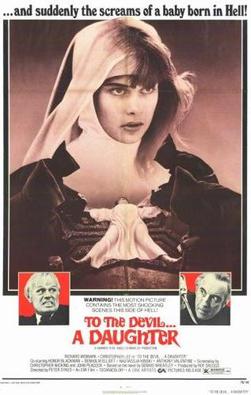
Any movie that begins with an excommunication ought to be good.  Especially with its list of stars you’d think To the Devil a Daughter might’ve turned out better.  Still, it is a good example of religion and horror mingling together.  I’ve never read any Dennis Wheatley novels, but reputedly he didn’t like this film adaptation of his book.  It certainly has a convoluted plot.  So an excommunicated priest has started a new religion that worships Ashtaroth.  He has to baptize a child, now 18 (three-times-six, don’t you see), with the blood of the demon so that she can become his (Ashtaroth’s) avatar.  This is apparently the eponymous daughter to the Devil.  She was baptized initially by her mother’s blood at her birth.

The girl’s father, who survived her birth—unlike his wife—has decided at the last moment to save his daughter.  He appears to be independently wealthy yet he talks an author of occult books into doing the saving for him.  The girl, it turns out, is a nun in this satanic religious order and is only too willing to do what she can to serve “our Lord.”  The way that all of this plays out is confusing and Byzantine, but it does raise a serious question: what if a child is reared in a bad religion?  (And there are some.)  Who has the right to decide if a religion is good or bad?  Children are easily indoctrinated and not too many question the faith in which they were raised.  Yes, we all think the religion we believe is the right one.  The problem is everyone else thinks the same thing.

One of the things this movie got right is that the “heretics” are portrayed as sincerely believing that their religion is for the improvement of the world.  Calling themselves Children of the Lord, they believe Ashtaroth is good.  And a good lord wants what is best for the world, right?  This is the dilemma of exclusive religions that teach only their own outlook can possibly be the correct one.  Otherwise you have to give adherents a choice and another religion may be more appealing.  Or worse, they may reason out that if you’re given a choice that means your own religion is also merely one of many.  Historically religions have gotten around this by valorizing true believers who never question anything.  To the Devil a Daughter isn’t a great movie.  It’s not even a very good one.  Nevertheless, it raises some questions that lie, of course, in the details.


Former Education

Like most people I don’t have time to sit around thinking much about college.  Once in a while you’re forced into it, however.  This time it was by an NPR article.  I attended Grove City College for a few reasons: it was a Christian school close to home, it wasn’t expensive, and, perhaps most of all, I knew campus because the Western Pennsylvania Conference of the United Methodist Church held its annual conference there.  I’d been several times during high school.  It didn’t hurt that I was a Fundamentalist at the time.  Grove City was a college of the Presbyterian Church and I loved having debates about predestination with professors who actually believed in it.  At the same time, I was encouraged to think things through, which liberal arts colleges are known for promoting. Is it now “conservative arts?”

Photo credit: The enlightenment at English Wikipedia

The NPR story my wife sent me was about how Critical Race Theory is disputed at my alma mater (sic).  I noticed in the article that Grove City is no longer affiliated with the Presbyterian Church.  It’s become much more right wing than that.  At the same time they ask me for money on a regular basis.  What made them think they had to go hard right?  Are they still educating students or are they indoctrinating them?  It reminded me of a sermon I heard at yet another conservative school I was associated with: Nashotah House Episcopal Seminary (or at least it was then).  The priest made an entire sermon about how it was right to be conservative, as if no matter what the issues there was some creed to get behind in staying behind.  As if virtue exists in never admitting you were wrong.

I suspect that my failure to attain a full-time academic position at a reputable school was because of what looks like a conservative outlook, despite the evidence of this blog.  Yes, I grew up Fundamentalist—you grow up the way you were raised.  Hopefully, however, you start thinking after that.  And experiencing.  And yes, using critical thought.  There comes a time when “because I told you so” just doesn’t cut it anymore.  For many of us that’s when we go to college.  If it’s a good one you’ll be encouraged to debate with your professors.  Not one of them has all the answers, I can assure you.  Education is, by its very nature, progressive.  We learn and we continue to learn.  We don’t stand still and say the 1950s was when God reigned on earth.  It wasn’t.  And it wasn’t any time before that either.  Now we know that Critical Race Theory should be taught.  We know Black Lives Matter.  What I personally don’t know is what became of a college that was once conservative, but at the same time, believed in education.


O Viy

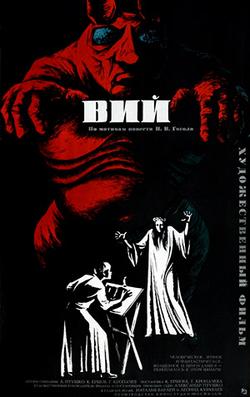
Viy is a most unusual movie.  I’m talking about the 1967 version, of course.  Filmed and produced in the USSR, it was, by many counts, the first Soviet horror film.  There’s been a resurgence of interest in it because of the study of folk horror—and it’s certainly an example of that.  Not really known for its plot, it’s noteworthy in its early special effects.  Since it’s a story that revolves around a monk, however, it participates in religion and horror as well.  Unusual for a Soviet-Era film.  Set in an undefined period in the past—before electricity, in any case, and perhaps the Middle Ages—a class of seminarians is released for vacation.  They’re a rowdy, unruly bunch, hardly the pious priests you see associated with orthodoxy.  When three of them get lost on their way home they end up spending the night at the farm of an old woman.

The woman comes after Khoma (one of the three) that night and bewitches him.  Riding him like a horse—and this is common witch lore—when she finally releases him, he beats the old woman severely.  But she has turned into a beautiful young woman.  Khoma returns to the seminary but is sent to say prayers over a dying young woman—one guess who it is.  Between getting drunk and trying to escape, Khoma seems to guess his fate.  At the compound of a wealthy merchant, the girl’s father, he learns she has died.  The father insists he keep vigil for three nights, praying over her corpse.  In the church scary things happen, not least her return to life.

On the third night all kinds of monsters appear after she calls on the god Viy.  Viy means something like “spirit of evil.”  Each night Khoma has drawn an effective magic circle around himself, which keeps the dead witch at bay.  The last night the monsters make it through, with predictable results.  There’s so much folklore at play here that it’s easy to see why the story by Nikolai Gogol suggested itself for a film.  It was poignant to watch because it’s set in Ukraine (Gogol was a Ukrainian writer).  Gogol had a tremendous influence on other writers, but isn’t as widely cited among western authors in contemporary times.  The film is fairly easily found online, and an updated version was released in 2014.  Even in the USSR, when horror emerged in the late sixties, it was doing so with religion, even before Rosemary’s Baby.


Saints and Freedom

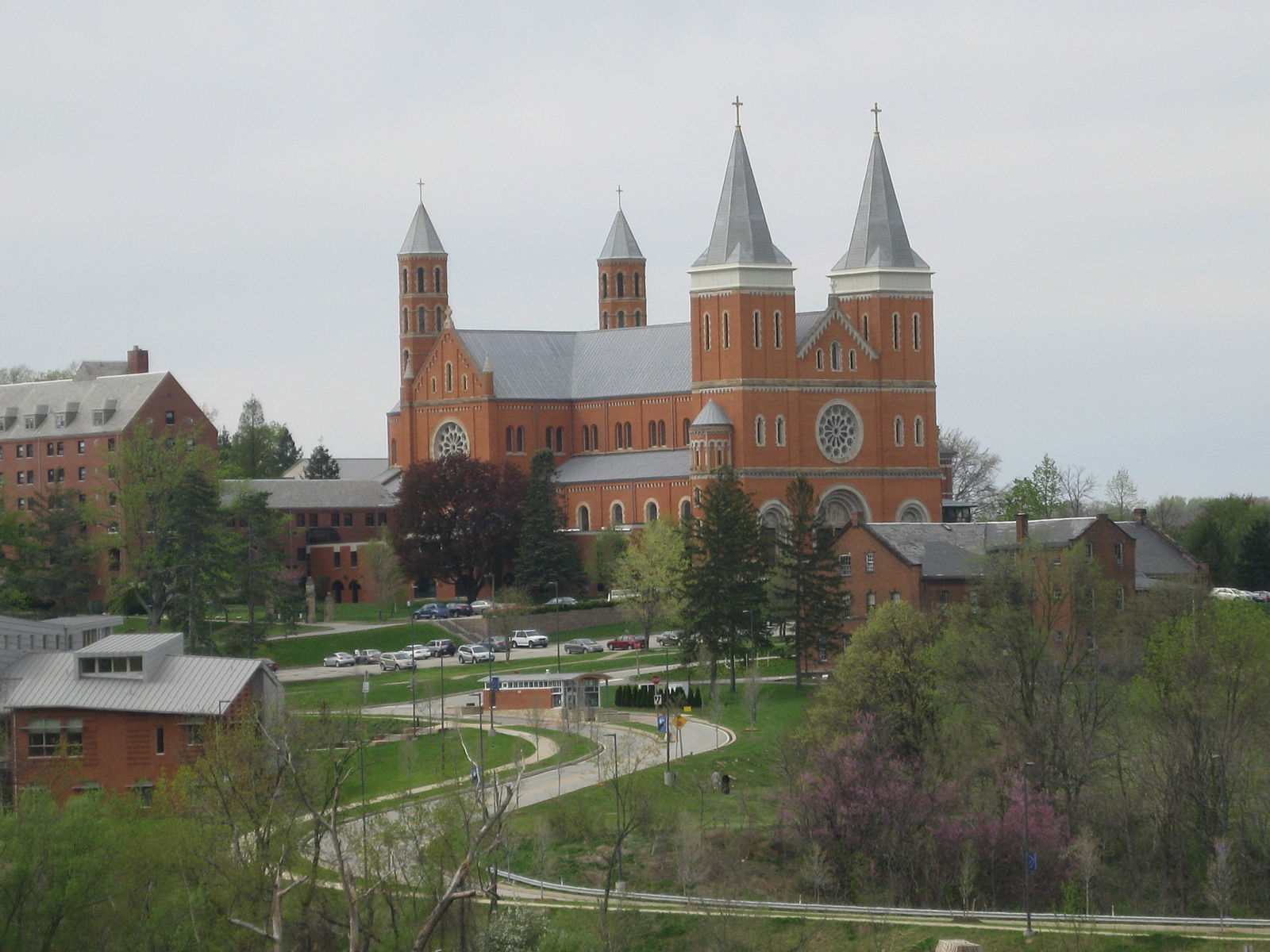
There’s a saying that all elections are local.  I suspect that’s true.  Location is important.  There are famous Americans not recognized in other parts of the world.  And there are, of course, local celebrities.  Having settled once again in Pennsylvania, I’ve taken an interest in local religions.  Although not part of the “Burnt-over District” of upstate New York, Pennsylvania, because of its early laws of religious liberty, has produced some noteworthy figures over the centuries.  And institutions.  When someone mentioned St. Vincent Archabbey, in Latrobe, Pennsylvania, I was curious.  I’m not Catholic and even though I’d considered a monastic life, I really knew little about it.  St. Vincent is the largest Benedictine monastery in the western hemisphere, as well as the oldest in the United States.  

Image credit: Guerillero, via Wikimedia Commons (Copyleft Free Art License)

Latrobe isn’t far from Pittsburgh.  There is a strong Catholic presence in the area.  Like many Catholic institutions, it has a cluster.  St. Vincent College, also in Latrobe, must’ve sent me—in those days, print—a prospectus back when I was looking at schools.  I’ve known about it for a long time.  There’s also a seminary, also called St. Vincent.  Probably it’s largest claim to fame is that the Pittsburgh Steelers use the College (I suspect the seminary has no athletic program) for their training camp.  Monks and football players—they must have some interesting conversations.  I grew up thinking Catholicism was basically some other religion.  Fundamentalists, misunderstanding the basics of history, tend to claim that Catholics aren’t Christians.  Indeed, until the recent politicization of conservative Christianity, they wouldn’t have had much to say to each other.

Catholicism was frowned upon by the early colonists.  While seeking freedom of religion, what they really wanted was freedom of religion for themselves.  In good, charitable Christian fashion, many colonies tried to exclude those that believed differently.  Especially Papists.   Rhode Island and Pennsylvania, however, notably allowed freedom.  I’ve lived in Pennsylvania long enough to know that even legal freedom isn’t protection from those locals who’d rather not have Muslims or Hindus for neighbors.  And in all likelihood William Penn, a good Quaker, probably couldn’t imagine people of “exotic” religions wanting in.  Indeed, the majority of people in this hemisphere weren’t really even aware of “eastern religions” until the 1890s.  The religions here were forms mostly of Christianity and Judaism.  By 1846 the Benedictines could establish a college, monastery, seminary complex in western Pennsylvania.  And it would become the largest and oldest such establishment in a country that still doesn’t grasp true religious freedom.


Like Sheep

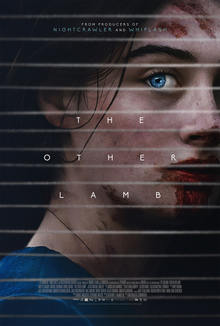
Since horror grew up in the late 1960s, religion has become a favorite theme in the genre.  Although religion had been in horror from the beginning, Rosemary’s Baby marked a definite sea change.  More and more religion has been moving from a subsidiary theme to the main vehicle of horror.  Małgorzata Szumowska’s The Other Lamb is a case in point.  “Shepherd” is the leader of a separatist religion that consists only of women.  The premise itself is creepy enough, but it becomes clear that Shepherd—the group literally has a flock of sheep—physically abuses the women.  They are divided into two groups: sisters and wives.  When unexplained things happen, Shepherd gives prophetic pronouncements.  His followers are expected to accept everything he says on blind faith.  Many religions do this by proclaiming faith against evidence a virtue.

One thing that I’ve emphasized in various presentations I’ve done is that Christianity, and perhaps all religions, work because believers are great followers.  While Shepherd uses biblical-sounding language, there are no Bibles in the film.  There are recognizably Christian themes, but the doctrine isn’t familiar.  Part of the reason, obviously, is that Christianity has a negative view of sex and Shepherd treats his flock as his harem.  The women follow because he “rescued” them from worse situations and their communal life is better.  Only it’s not.  When a woman director stands behind such a film, there’s clearly a message being sent about male privilege.  Any system set up with male superiority will lead to abuse.  When Shepherd’s enclave in the woods is discovered, they must move.  He instructs the women that they are going to find Eden.

Throughout, the movie is more creepy than scary in the traditional sense.  There are no jump-startles, but the situation makes you sense that something’s not right.  The women, acclimated to this lifestyle, many of them for years, know no other way of being or even where to go.  They have no vehicles.  Forced to move, they walk—Shepherd carries nothing while the women backpack out supplies.  Once Eden, on the shore of a lake, is reached, Shepherd baptizes the sisters and drowns the wives so the younger women can take their place.  You get the sense throughout that this movie is a parable.  Men like to take the privilege of determining women’s fates without understanding women’s needs.  This new kind of horror is insightful and symbolic.  There is no final girl when women band together.  The Other Lamb deserves wider exposure than it’s had.  It’s a good example of what religion can do to those who simply follow.


The Roll of Churches

I really don’t have time to follow any social media religiously, generally glancing at a page and perhaps scrolling down an inch or two when I have a moment.  I tend to glance at headlines, often pre-selected for me by a non-human intelligence, I expect.  Nextdoor dot com occasionally has a story that looks important to read, because it’s local.  Recently a poster from Bethlehem noted meeting a homeless person and was asking virtual neighbors where to turn for help (for the homeless person).  The answers weren’t surprising but reminded me of something I recently heard elsewhere—this is where churches still have a chance to shine.  While I’m tired of all the doctrinal and theological nonsense that arises from those who didn’t pay close enough attention in seminary, I do lament the plight of our churches.

Society has been too Republican for too long to care for those who can’t make it in an uber-capitalist environment.  Those with mental illnesses turned out when Reagan-era “reforms” “improved” our system for handling them.  Those who, through no fault of their own, can’t hold down a job.  Those who just happened to end up on the wrong side of a wave and find that a new wave breaks over them before they can properly take a fresh breath.  As the most affluent nation in the world, each homeless person is a reminder of the terrible price we pay for living within a system that rewards greed far above anything else.  Churches do have their problems—I’ve experienced many of them firsthand—but they often feel an obligation to take care of the sick, the homeless, the elderly.  Those not of value to a capitalist system because they don’t “contribute.”

When I commuted to Manhattan my bus arrived early.  I often saw the many homeless sleeping on the street as I made my way across Midtown.  Many days I wished I had an extra peanut butter sandwich with me so that I could give them something.  Anything.  Churches that aren’t caught up bickering about whose genitals belong where, or whether females are equal to males, often turn their sights to those who need help.  These churches are supported by the donations of members (for which said members can claim a tax break).  These are members who care for those they’ve never met, simply because they are human and in need.  Churches themselves are now facing difficult times and, unless they support Republican causes, can be assured they won’t receive a government bail out.  Compassion may be a dying species.