Lost Civilizations

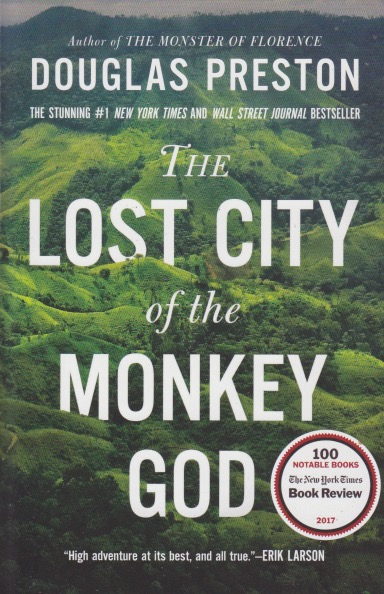
At the rate rain forests are being decimated for our lust for beef, it seems amazing that there are any unexplored regions left at all.  That’s what makes Douglas Preston’s account of visiting the fabled Ciudad Blanco, a lost Honduran city, so compelling.  Like most intelligent people, Preston is ambivalent about the discovery he chronicled.  The pristine jungle he encountered had to be cleared, at least in part, to allow for exploration of a lost civilization.  But what an adventure it was!  The danger of drug lords, a volatile government, large poisonous snakes, and ruins discovered by lidar combine in a true tale of danger and fascination.  As with Rudolf Otto’s description of the holy, this is something that fascinates and terrifies simultaneously.  And it’s controversial.

The Lost City of the Monkey God crosses several boundaries.  It discusses not only “Indiana Jones”-style archaeology, it involves one of the last unexplored places on earth.  It doesn’t sugar-coat the genocide initiated by Europeans—in fact, Preston describes some of the diseases in graphic detail—and he doesn’t excuse the guilt.  The book also addresses global warming and the possibilities of a global pandemic (the book was published in 2017).  Preston contracted Leishmaniasis while in the jungle and notes that as the globe warms up, it is making its way north.  The descriptions aren’t for the faint of heart, nor are his descriptions of the politics of treatment.  The first part of the book, describing the people and the set up of the base-camp show Preston’s chops as a thriller writer.  His encounter with a fer-de-lance had me checking the floor in the dark when I got up in the morning.

The civilization of the city, now known by the more respectable title City of the Jaguar, was unknown.  It was not Mayan.  The city was likely abandoned because of disease brought to the Americas by Europeans.  Even so, his description of the society in which the ruling classes keep their power by displaying their own sanctity that the average person doesn’t question rang true.  Societies from the beginning have used that playbook.  Convince people that the gods (or God) has revealed certain things that they (the ruling class) understand, and everyone else falls in line.  We see it even now as the messianic Trump following falls for it yet again.  This is a quick read, written much alike a thriller.  A few years ago I read Preston’s engaging Dinosaurs in the Attic.  I’m thinking now that some of his thrillers should also be on my list.


Redacted

A friend recently introduced me to Redactle.  Yet another of those daily internet games that have become trendy in these pandemic years, Redactle gives you a page that looks like a Freedom of Information Act piece from the government.  Most of the words are blanked out and all you really know it that it is taken from one of the significant pages on Wikipedia.  You get some clues from the format, the way the prepositions and articles they give you are arranged, and occasionally, the punctuation.  You just start guessing words and it fills in the blanks as you get hits.  Like most things of this sort, there’s one puzzle per day, otherwise none of us would ever get anything done.  I’m a sucker for learning games, so we’ve been playing it as a family for a few days now.

A redacted file from the CIA, via Wikimedia Commons

The thing that has surprised me the most in our early on is that the trickiest ones to get right were on religions.  In our first week of play, two of the puzzles were religions: Lutheranism and Shaktism.  We’d been able to guess famous people in two dozen guesses, and countries in about the same.  Religions are trickier.  Despite having studied religion my entire life, my thought process doesn’t include guessing words like “theology” and “worship” for important articles on Wikipedia.  (In the case of Shaktism it took well over 100 guesses.  I taught world religion maybe fifteen years ago, but I haven’t kept up with my Hinduism.)  In the case of both of these religions what eventually gave them away was the place names: Germany and India.

India, of course, has been the birthplace of many religions.  The majority of Indians today are Hindu, but Buddhism, Jainism, and Sikhism were also children of India.  Even in this increasingly secular world, religions remain the driving forces behind lives.  So much so that some religionists consider Secularism a religion.  The fact is we all believe something.  It may not be supernatural, but then not all religions are.  They often brush up against philosophy at their most sophisticated end, and literalism is the least developed form of any belief system.  With some exceptions it doesn’t pay well to be a religionist.  Perhaps that’s because thinking hard about religion reveals uncomfortable truths.  Not only that, studying religion is no guarantee that when you have to fill in the blanks you’ll be able to guess one when it’s right in front of you.  That’s why I appreciate learning games.  


Souls, All

What is a soul?  Can you lose your job for believing in one?  Well, maybe not lose your job, but be placed on paid leave.  Yesterday’s New York Times ran a story about Google engineer Blake Lemoine being put on leave after claiming a soul for the company’s artificial intelligence language model.  Isn’t that what artificial intelligence is all about?  We’ve become so materialistic that we no longer believe in souls, and when we create life we don’t expect it to have one, right Dr. Frankenstein?  One of the sure signs that we are alive is our sensing of the many qualia of biological existence.  We understand that we’re born, we’re biological, and that we will die.  We also sense that there’s something beyond all this, our self, or mind, or psyche, call it what you will.

In our minds the soul has become entrenched with the Christianity that provides the backdrop to our somewhat embarrassing history of repression of those who are different.  How do we redeem one without having to be shackled to the other?  And once we do, can we declare why AI doesn’t have a soul while biological beings do?  Or will we insist that it is solely human?  In this odd world that’s evolved, we view animals as innocent because they can’t know what they’re doing.  Historically there have been animals put to trial.  That’s an aberration, however, from our usual ways of thinking.  We don’t know what a soul is.  We’re not even sure there is such a thing.  To suggest a machine might have one, however, is taboo.  Would we trust a soul made by humans?

Skepticism is good and healthy.  So is having an open mind.  We’ve been a polarized people for a long time.  If it’s not politics it’s elites versus uneducated, materialists versus those who think there might be something more, self-assured versus those who question everything.  The path of learning should keep us humble.  We should be open to the possibilities.  There’s no way to measure the immaterial since all our tools are material.  Even psychology, which utilizes categories to help us understand neurodiversity, often finds chemical solutions to the most cerebral of problems.  Perhaps overthinking is an issue—it can certainly get you into trouble.  Believing in souls can put you in a place of ridicule or suspicion.  Does AI have a soul?  Does a soul emerge from biological existence, whenever a sufficient number of neurons gathers in one place?  Is it the fabric of the universe from which we borrow a little?  We have some soul-searching to do.

Carlos Schwabe, Death of the Undertaker; Wikimedia Commons

State and Church

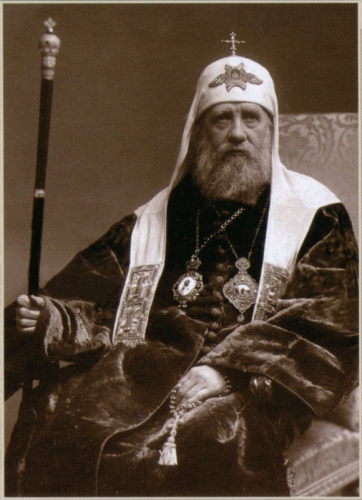
An interesting article by Grace Davie notes how Patriarch Kirill,  the Patriarch of Moscow and all Rus´, has been backing Vladimir Putin in his war of human atrocities against Ukraine.  Why? Both men fear “godless” influence from the west.  Think of it as a “Russia first” policy.  Both believe Russian Orthodoxy preserves the “one true faith,” and so an ecclesiastical leader yet again believes he (aren’t they always he’s?) understands politics even as women and children are killed in the bringing of God’s kingdom on earth.  The distorted theology of imperialistic Christianity has caused untold suffering in the world.  God backed by nukes is an apocalyptic situation, but then the Orthodox don’t really take too much stock in the book of Revelation.

Photo credit: Michael Goltz, via Wikimedia Commons

In the midst of all of this, as well as our own versions of it in America, I wonder where the teachings of a prophet who advocated care for the stranger went.  Too bad he never stated directly, “Love thine enemies.”  That sounds radically leftist, doesn’t it?  No, those who think like this ignore the constant refrain of love in the New Testament to focus on a verse or two that say a man shouldn’t lie with a man.  Where’s Socrates when we need him?  Or even Tchaikovsky?  Religion becomes doubly dangerous when it has political backing.  “Love thy neighbor” becomes “kill thy enemy.”  And you must say your country is the greatest in the world and all others are inferior.  Sounds like something a carpenter from Nazareth would’ve agreed on.

Too much gold in the eye, it seems, can lead to spiritual blindness.  Established churches grow quite comfortable when governments hold them close.  The problem is an ancient one.  Even in the biblical world temple and palace mutually supported one another.  The idea of a country where no church ruled the state was a new one a few centuries back.  If different churches ruled neighboring nations the result was, of course, war.  Davie makes the point in her article that the Ukrainian Orthodox wanted some autonomy, which is the Orthodox way generally.  But the coffers in Russia swell more when you get cuts from all the others.  Churches and other businesses worldwide seem to know that by instinct.  But to back a ruler who has civilians, women, and children murdered to keep the godless out?  If that’s godly behavior then we’d better all get down on our knees.  


Pure Fear

At work we have the opportunity to say a little about ourselves on a shared document for our teams.  This is a fairly new thing, so people I’ve worked with for years have no reason to look at it.  A couple of new hires, however, have noted that I watch horror movies and this has led to some budding friendships.  Since we’re all remote workers it’s mostly a matter of a line or two in an email about whether I’ve seen this or that film.  One of those recommended was the Hulu original Pure.  It’s actually pretty good.  The idea is a bunch of teenage girls are brought to a retreat center for a purity ball with their fathers.  This kind of thing can get very creepy very fast, given the incestuous overtones for such a thing.  Not only is it a religious event, it’s based on the story of Lilith.

Collier’s Lilith

The pastor preaches his first sermon about Lilith, but the girls from cabin 4 sneak out at night to meet some guys.  (Their presence is explained at the end of the movie.)  That night the girls summon Lilith, whom the minister’s daughter says is a demon.  The summoning works.  Lilith begins to interfere with services as the girls are tempted by the guys who are hanging around.  At the end, Lilith “possesses” Shay (the lead girl) and frees them from being controlled by the men in their lives.  The message is a refreshing one, and Lilith ends of being, well, somewhat as Shay puts it, “One man’s demon is another’s angel.”  

Religion and horror make a good couple.  I’ve never seen a movie that features the story of Lilith before.  The thing is, she’s not the scary part of the movie.  The religious believers, the fathers who try to control their daughters rather than giving them support after listening to them, are.  Parenting is tough, no doubt about that.  None of us are born into life with all the answers.  We quite often find ourselves not knowing for sure what we should do.  I couldn’t imagine being a parent claiming to have the solutions for all problems.  I’m a guy who watches horror for a form of therapy!  What I do think, however, is that we can try to be reasonable, loyal, and supportive.  I learn as much from being a parent as I teach.  The same was true of being a professor.  Humility, along with a willingness to continue learning your entire life is the only way that makes sense to me.  Although not a major studio production, this was one of the scariest movies I’d seen in a long time.


Foreign Christianity

I’ve been reading about missionaries in Southeast Asia.  One of the things that has become clear to me is that as Christians moved into different cultures they perhaps didn’t realize just how their religion was being blended with a completely foreign worldview.  Catholic missionaries were particularly savvy about accommodating local outlooks.  Add the mass on top of them and you’ve got your converts.  What they were, perhaps unknowingly, doing was changing Christianity.  Yet again.  Monotheism has a myth of the pure religion.  The fact is that as soon as Paul disagreed with Peter Christianity had begun to splinter with each faction believing it had the pure form.  When this protean religion moves into other cultures with other ways of thinking, interesting new forms emerge.

Photo by Sandy Millar on Unsplash

Today there’s a lot of interest in Celtic Catholicism.  This is another example of “if you can’t beat ‘em, join ‘em.”  Christianity, particularly in Ireland, took on a pronounced Celtic flavor.  It doesn’t always play by the rules, but as long as Rome’s okay with that, well, who’s to complain?  What is Catholicism?  What is Methodism?  What is Anglicanism?  It depends on where you join it.  Doesn’t that problematize those absolute truth claims?  Churches are savvy political players.  The rank and file believer has little idea what goes on behind closed doors.  They might be distressed to find out just how much bishops talk about budgets.  Theology is left to the public view.  No organization can survive without money and church leaders understand this.  Missionaries go to under-developed countries and make them capitalists.

People living in different parts of the world view life from varying perspectives.  Many see change as the nature of life where western religions see fixity.  Many religions know we’re reincarnated.  Western religions see one ride per ticket with souls ending up in a final holding place.  When it comes to eternity, people obviously want some security.  Even with reincarnation a badly lived human life can lead to a worse next life.  The question of what happens when such ideas come into contact with Christianity, or Islam, is a fascinating one.  Judaism, the root of monotheistic traditions, never really embraced missionary activity.  When missionaries encounter those whose very ways of thinking about life approach the question from a different direction, creative mixes are bound to occur.  It’s safe to say that when early Christians were sent out to “the whole world” they had no idea how big that world actually was, under the dome in which lived the sun, moon, and stars.  Nor had they any idea what interesting hybrid religions would emerge after their fertile preaching.


Old Churches

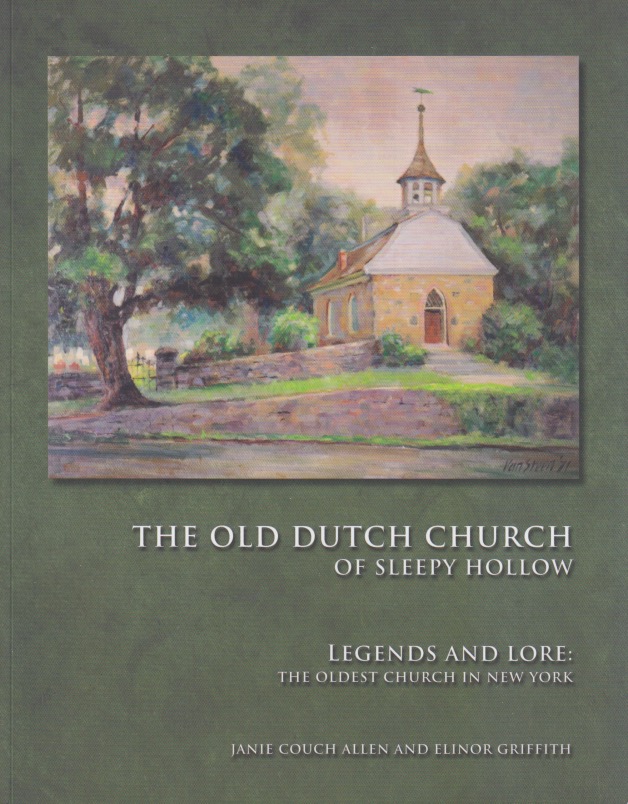
I doubled its authenticity, but it was revered in a way similar to the Shroud of Turin.  The old guide, a priest if I recall, showed us an actual lantern hung for Paul Revere’s ride.  This was the Old North Church in Boston, of course.  Its history is so storied that children across the country learned about it in school.  A similar feeling comes from reading The Old Dutch Church of Sleepy Hollow by Janie Couch Allen and Elinor Griffith.  Subtitled Legends and Lore: The Oldest Church in New York, it is clearly a celebratory work, printed in full color and with pictures on every page.  This church’s claim to fame isn’t as much historical as it’s the result of the imagination of Washington Irving.  It features in his short story “The Legend of Sleep Hollow.”

Built in 1685, it was already an old building by the time Irving had settled in North Tarrytown.  Being early enough, Irving had immense influence on the culture of a young country.  Although born in New York City, and although he lived for many years overseas, he came to represent the voice of the emerging American literary tradition.  America has been home to many writers since then, some successful, many not.  But this book is about the church, not Irving.  Irving does play a big part in its story, although he was never a member.  I kept thinking as I read how influential a single story can become.  And even a small Dutch Reformed Church can benefit from it.  This book gives a high-level overview of the history of the area and some of its colorful characters.  It turns a few times to the Headless Horseman, but it also explains the trials and triumphs of a small church.

Although most towns can’t claim such a storied structure, American churches have had an outsized influence on who we are as a people.  I’ve sat through meetings lamenting the lack of funds for the operating budget as money grows tighter even as the worldview of ancient Palestine effaces.  As an historian of religion I tend to look back.  I don’t believe our future will be entirely electronic or virtual.  If it is, I think I’d rather find myself on a chill, uncomfortable pew in the Old Dutch Church lit by candles on a Christmas Eve, shivering but still alive.  No matter what a person believes—and with the varieties of churches we can’t all be right—we know that it’s part of what makes us human.


Empty Chair

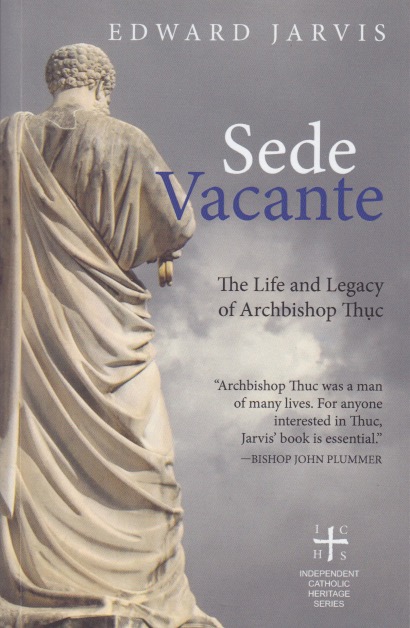
I’m not a Roman Catholic.  Nevertheless, I admire much about the tradition.  Its perceived unchanged continuity with the past is a big draw.  Still, one of the largest issues most religions face as they evolve is that things change.  No religion can stop it.  Edward Jarvis’ brilliant Sede Vacante: The Life and Legacy of Archbishop Thục explores the life and possible theological motivations for one of the most fascinating people in recent church history.  Ngô-dinh-Thục became a Roman Catholic Archbishop in his native Vietnam.  He was the brother of Ngô-dình-Diệm, the first president of South Vietnam, and likely one of the reasons behind the Vietnam War.  In fact, Thục had two other extremely prominent brothers and the four of them formed a junta that ruled the country with authoritarian vigor and utilized all the corruption for which authoritarianism is famed.  They became enormously wealthy, they used torture and extortion to get what they wanted, and Thục supported all of this.

Eventually excommunicated (twice), Thục had to leave Vietnam.  Two of his brothers were arrested and assassinated.  After his self-imposed exile Thục attended Vatican II, the papers of which he signed, but his prominence faded.  Without his holdings in Vietnam he was poor, and in fact lived in poverty.  Then he started consecrating bishops for breakaway Catholic groups, including the strange sect of the Palmarians.  This led to his first excommunication.  Later in life, after restored to the graces of the church, he again started consecrating bishops for the Sedevanctantists.  These were Catholics who believed the Pope was invalid and his chair (sede) was vacant (vacante).  He was excommunicated again and, after moving to the United States, died in poverty.

I keep these posts brief enough that I don’t have space to spell out all the amazing angles from which this life could be viewed (read the book for that).  In our authoritarian-loving times, however, the nature of those who reject “modernization” stood out.  Many Sedevanctantists insist on the restoration of the Latin mass.  They somehow believe the Popes since about Pius X have been liberals(!).  Like Trumpists, they believe it is possible to halt the movement of culture and go back to the way things were in the 1950s when outward conformity was all the rage.  Even Fonzie, after all, was really a nice guy instead of a dangerous biker.  Although there is some theological minutiae here, I recommend this book for anyone who has even the slightest interest in the history of Vietnam, the Roman Catholic Church, or the mindset of those who reject the modern world.


For Sale for Free

It’s one of the signs of spring.  Although it may be more appropriate for winter when we’re holed up inside for much of the time, the library book sale often takes place when it’s a bit more conducive to being outdoors.  When we travel, which isn’t frequently these days, we often spontaneously stop into an advertised library book sale.  Most of the fare is fairly pedestrian, but sometimes you find something you simply didn’t expect.  On one such recent outing, that’s just exactly what happened.  Back when we lived in New Jersey the Friends of the Hunterdon County Library book sale was a much-anticipated event.  It remains, in my experience, one of the largest of such sales.  (Believe it or not, there are websites dedicated to pointing inveterate readers to book sales and that’s how I found this one.)  That’s not the surprising part, however.

One year when I went, one of the library friends was working the pre-entry crowd, proclaiming some of the treasures inside.  One of them, he announced, was a Bible from the nineteenth century.  They were asking more than the usual one or two dollars for that one.  If I recall, it was $100.  No, I didn’t buy it.  I have dozens of Bibles right behind me at this moment and if I had a Franklin to spend I’d load up on books I don’t already own.  Many of the books mentioned on this blog came from just such sales as these.  That big Bible’s not the surprising thing either.  Here it is: on a recent library book sale day, I saw a shelf with Bibles.  They were free.  Library book sales are intended to raise money, but Bibles for free?  Unexpected, no?

America is the land of free Bibles.  They are printed in vast quantities and sold cheaply, without a thought to what this says in a capitalist world.  Some Christian rock groups were famous for throwing free Bibles from the stage—you’ve got to think those in attendance already had one—and any county fair will usually have at least free New Testaments for the taking.  Ironically, most of those who distribute free Good Books are also the staunchest supporters of capitalism, one of the most exploitative economies ever invented.  Attending library book sales entails more than just finding books that you perhaps didn’t know about.  It’s more than being tempted by something for which you’d rather not pay full-price.  It is, perhaps surprisingly, a learning experience in and of itself.


Highest Education

The average church-goer is often impressed with the idea of seminary.  The thought that someone could devote three years of their lives to theological minutiae in order to take a job with long hours and substandard pay, is mind-boggling.  Having been a seminary creature for so many years, however, makes me wonder if many church folk realize that seminaries are businesses.  Non-profits, yes, but businesses nonetheless.  This is a trait that they share with other institutions of higher learning.  Customers pay money for a good or a service (I’m not sure which) in the form of a degree.  If a student can’t cope academically, they’re often “grandfathered”through because, well, it costs a lot of money and you deserve to get what you paid for, right?

This business concept of higher education is dangerous and is primarily prevalent where governments do not support education.  Schools have to raise money and if alumni don’t give, well you have to raise tuition.  And the more somebody pays the better case they have for getting their degree.  Seminaries, however, also suffer from generally low-income alumni and sponsoring churches needing clergy.  (It’s not difficult to get accepted into most seminary programs.)  Only when a candidate is a serious problem will they tend to be weeded out.  And congregations get the results of such a system.  My level of cynicism probably results from having gone through seminary and then having taught at one for many years.  At no point have I been ordained.  In fact, even churches facing clergy shortages have shown no interest.  Call it sour grapes.

To me, however, the crisis in higher education is the result of business practices being applied to education.  The two don’t mix.  In a world where job options are limited for those too weak to dig and too proud to beg, ministry has some appeal.  You can be considered a community leader and an expert in the relatively innocuous arcane area of “theology.” And most of the people you serve will have no idea what seminary delivers, or doesn’t.  I attended events for seminary administrators offered by the Association of Theological Schools—the seminary accrediting body.  I learned that they too are under pressure to approve unless there’s a serious problem.  Even heads of accrediting bodies have to eat.  So we let the system churn on as it has since the earliest universities turned out educated clergy.  And we don’t stop to think what all of this means.

Tradition

Teaching Tradition

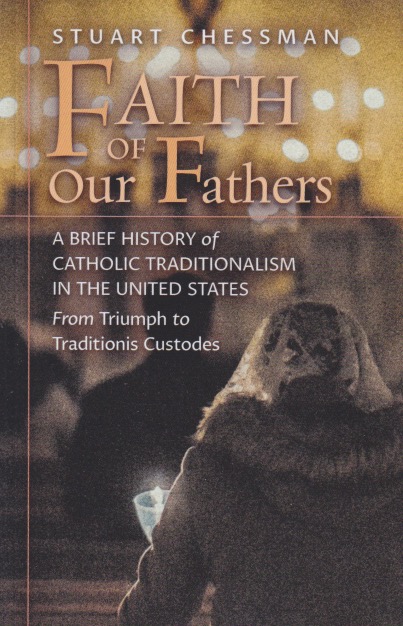
There’s a dilemma.  Many thinking religious conservatives end up arguing against “secular” education and yet wish to make themselves out as rational, and reasonable.  The truth is that underlying their position is the belief that the truth was revealed long ago and nothing has changed since then.  They want educated individuals to agree with this so quite often they establish their own institutions to turn out “experts” who haven’t been challenged in their positions.  This became clear to me yet again when reading Faith of Our Fathers by Stuart Chessman.  Subtitled A Brief History of Catholic Traditionalism in the United States from Triumph to Traditionis Custodes, I was expecting a history.  Instead it is more of a screed, or jeremiad, arguing that the Catholic Church is trying to destroy traditionalism.  What I was looking for, I guess, was a “secular” history.

I’m interested in traditionalism.  I taught, after all, for well over a decade at Nashotah House.  What I learned there I also sensed in this book.  There’s a certain naiveté associated with such theological thinking.  (Political conservatism is much more insidious.)  Small groups tend to think the larger organization has it in for them.  In reality, the larger church (in both these cases) has much more pragmatic things on its collective mind.  The narrow focus of traditionalists, however, interprets everything in the light of—in this case—rejecting the liturgical reforms of Vatican II.  Having the mass in Latin is more important (as is clear here) than coming up with an effective way of dealing with Covid-19.  Traditionalists are proud that they met more frequently during the height of the epidemic.

This kind of thinking is important to understand.  For Roman Catholicism, as a hierarchical organization, the projection of unity is very important.  Anyone involved in the upper levels of any administration knows that money—even for churches, especially for churches—is a major concern.  Reputation influences cash flow, so reputation has to be guarded at all costs.  No organization can appear to be caught up in medievalism in a capitalistic twenty-first century.  I had hoped this little book would contain an actual history of the movement, looking at socio-economic, political, and religious causes and their ramifications.  In other words, why people do things.  Believe me, I understand the draw of traditionalism.  Although it was in English my first Episcopal high mass threw me into a multi-year odyssey to a place (Nashotah House) where I learned what was really going on.  It’s not all about smells and bells.  Not by a long shot. 


Words and Belief

Why do we care so little for the poor?   Part of the answer is surely the misguided idea of meritocracy—if you merit good you will be successful.  This kind of thinking emerges from the wrong end of a bull.  There may be poor people who are lazy but the vast majority of the poor are those for whom our systems make it impossible to thrive.  It’s very easy to put them out of mind as long as we can keep them out of sight and just let our prejudices do the thinking for us.  The poor are the victims of capitalism.  Loud voices proclaim them to be a drain on the system, despite the fact that many of them work—some multiple jobs—and remain unable to keep up.  Capitalism is kind only to the wealthy.

The Rev. Dr. William Barber is one of the organizers of the Poor People’s Campaign.  The full name is the Poor People’s Campaign: A National Call for Moral Revival.  The initial part is taken from an initiative that Martin Luther King, Jr. started before his assassination.  He was shifting towards a movement meant to address the entrenched unfairness deep in American society.  These nearly six decades on, we are just as deeply entrenched.  Barber is doing amazing work, organizing, speaking, and advocating.  He’s trying to give a voice to the people.  I do wonder, however, if using the word “Revival” doesn’t work against the goals of the movement.

Certain words have been poisoned by their abuse among various religious groups.  Especially among the young.  The word “revival” may fall into that category, calling to mind, as it may, repressed people working up to an emotional fever under the banner of Hellfire and brimstone.  Believing a bit too literally a message that was contained in a book viewed magically.  Names can be important.  Many of the younger generation are put off even by the word “church” since so much hypocrisy (something the Republican party has openly embraced) has come to light over recent decades.  I fully agree that we need a moral revival, we need people to wake up and demand that our government promote the justice it claims to seek.  I do wonder if religion, as previously packaged, has the credibility to do it.  No matter how we take on the task, it’s clear that the poor have been abandoned by the system, through no fault of their own.  And some in the church have begun to find their voice in the Poor People’s Campaign.

Photo by Katt Yukawa on Unsplash

Love Your Mother

It’s not exactly a birthday, for we don’t know when exactly she was born.  We choose April 22 to think of our mother—the mother of us all.  For many of us concerned about the environment, not only is today Earth Day, but April has become Earth Month.  To me one of the saddest aspects of our environmental crisis is that certain sects of Christianity are largely responsible for it.  Religion working against the betterment of humankind.  So it was in the beginning, is now, and hopefully we won’t have to finish the triad.  Granted, religions help us to keep our mind on spiritual matters.  The problem is when such things become dogma and the real needs of real people are ignored so that a fervently desired fantasy can be lived out by destroying our planet.

In response there are what have been called “deep green” religions.  It’s difficult to gain a critical mass, however, when many of those who think deeply about the environment have left religion out of the equation.  It seems to me that we’ve got to make peace with our evolved tendencies toward religion in order to have any meaningful discussion about this.  Meanwhile global warming continues.  It does so with the blessing of a kind of Christianity that sees this world as expendable and exploitable based on an idiosyncratic reading of Genesis.  Even though all the evidence points in the opposite direction, we have networks (here’s looking at you, Fox), owned by billionaires who know you can sway Christianity simply by kissing your hand to the moon.

It’s my hope that this Earth Day we might start to think about how to integrate some deep green theology into the kind that sees no room for green in the red, white, and blue.  The self-convinced have no desire for conversation about this and those already certain that religion is nothing but superstition tend to agree.  Since antiquity, however, the wise have realized that progress comes from the middle ground.  Politicians, in their own self-interest, have stoked the fires of division and hatred, knowing that they get reelected that way.  Mother Earth, I suspect, is rolling her eyes.  She will survive even if we succumb to our own mythologies.  We need to learn to talk to one another.  We need to accept that we evolved to be religious.  We need to look for middle ground while there’s still dry ground on which to stand.  It’s not exactly a birthday, but it is a holiday that should be taken seriously. It’s only right to love your mother.

From NASA’s photo library

Easter Weather

The weather doesn’t always cooperate for holidays.  Easter is, at heart, a celebration of spring—life after death.  Around here this holiday has been accompanied by fits and starts in warmer weather and instead of warmer it’s actually colder again.  Just a week ago there was snow in the air.  Life’s that way; you don’t always know what to expect.  I guess I’m still in hibernation mode.  No matter the season, there never seems to be enough time to sleep.  As a youth I always attended sunrise services on Easter.  These days I regularly rise before the sun, so as long as I’m capable it’s like every day is Easter.  But with work.  Even on what many recognize as Easter—which overlaps with Passover this year—the Orthodox feel we have it too early, what with the Julian calendar still being in effect.  It’s all a matter of how we look at time.

As much as I hate mowing, I admire the exuberance of grass.  It’s ready to welcome the longer days by stretching toward the sun.  Drinking in the plenteous rain.  The dandelions have already begun to spread, opening their yellow eyes to all and sundry passing insects.  Easter is a time to reflect on life returning after winter.  And I can’t help but think of those in the southern hemisphere for which Easter falls in the autumn.  The theology fails to match the seasons as life springs up just as winter is about to set in.  The Christian viewpoint is a northern one, keyed to our seasons.  The weather doesn’t always observe the prevailing theology.

Around here Good Friday was a fine, sunny day.  Like most of the fine, sunny days it was a work day.  Now it’s a chillier Easter, the Saturday between being a mix with some rain.  When I was young—eagerly awaking for sunrise services, which I often had a hand in designing—I marveled at how the weather often seemed to cooperate.  Now as I think back, I remember coming out of Good Friday services into the incongruous sunshine and finding many an Easter still bearing an unseasonal chill.  Weather is, of course, a local and global phenomenon.  One person’s chilly Easter is too hot for someone further away.  And for yet others the onset of autumn.  Globalism has taught us to look further, to think in terms of how others might be experiencing this world.  Easter seems an appropriate time to do just that.


Ecclesiastical Splinters

Religion is a massive, sprawling thing without a fixed definition.  Historians of religion have specializations.  Mine has been ancient religions of the Levant, but we’ve all seen how far that got me.  After taking a few years to recover, my research has shifted toward religions of the modern period.  There are plenty of them and many of them are under-studied.  That latter point makes things a bit easier.  Believe it or not, ancient religions is a pretty crowded field.  After I’d begun to write on Asherah, for example, I learned at least two other scholars were doing the same.  Not that there aren’t challenges with modern religions, particularly if they’re still practiced.  Take Roman Catholicism, for example.  I’ve never been a member of the Catholic Church.  There are Anglicans who would claim part of that title, but it has its own distinctions.

Catholicism is the largest Christian denomination by a long stretch.  It makes claims at being the oldest as well, but that’s a little more difficult to verify from an historian’s point of view.  In any case, Catholicism also likes to show a unified front to the world.  This is a little tricky because any time you get more than a billion people together you’re going to have differences.  Being a hierarchical organization, there is someone at the top to make official pronouncements, but in fact, those below will believe what they believe.  Many Catholics, for instance, use birth control.  I’ve been researching a sect within Catholicism and am finding it difficult to find resources.  It seems the Catholic Church (a billion is power) prefers not to have books out there on how divided it is.

Most Christian denominations are quite divided.  That’s why there are so many sects in the world.  If one is powerful enough to prevent those who dissent from making a big deal of it, good luck in finding useful resources about it!  The sect I’ve been exploring has, as far as I can determine, one footnote hidden away in a university press book devoted to it.  Other sources are, apparently, carefully kept quiet.  Yes, there are power struggles within the Vatican.  There’s a lot at stake here.  On Easter everyone in Christianity (except the Orthodox) will appear united for a day.  Well, not those sects that don’t celebrate holidays.  I don’t know how anyone can not find all of this fascinating.  There’s power involved in religion.  It may not vie with mammon, but it deals in it as well.  And we’ve all got so much to learn.

Photo by Callum Parker on Unsplash