Monasticism

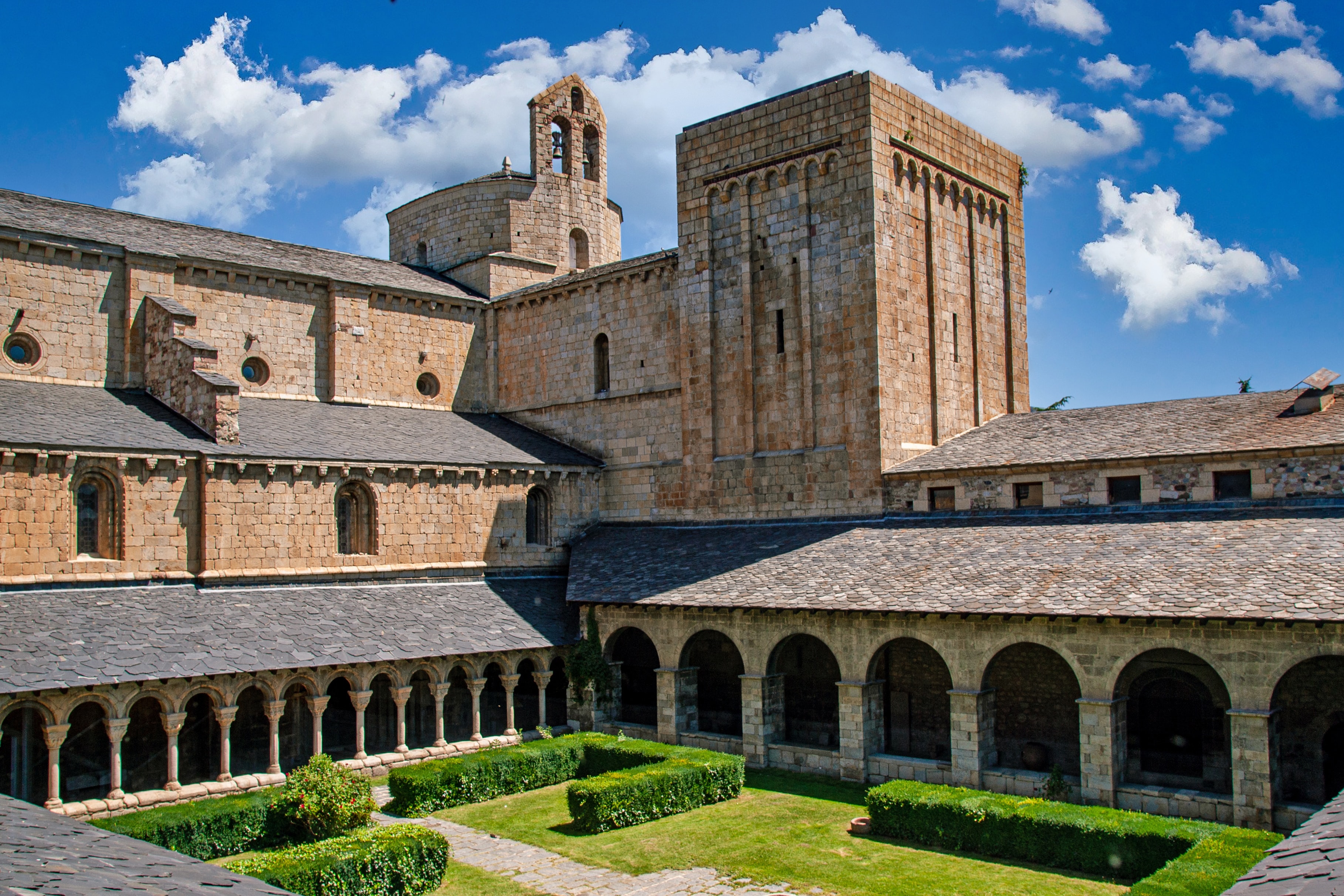
The other day I was reading about monasticism (as one does), and something curious occurred.  The article, which was describing a famous monastery, mentioned that monks lived in the convent.  Now, lest you think anything about religion is simple, I must clarify that in English it is common usage to refer to “monasteries”as places where monks (male) live.  Again, in English usage “convents”are for nuns (female).  The words, however, have a more interesting history than that.  Not exactly interchangeable (can you imagine the confusion?), they do originally refer to different kinds of institution.  

Often monasticism is traced back to Anthony of Egypt.  Anthony famously kept himself away from other people to devote his life to God.  This, of course, led other people to seek him out, wanting what he’d found.  Eventually, the narrative goes, the idea occurred that lots of guys could live together in common, but shut away from the rest of the world.  Thus monasteries were born.  The story’s actually more complicated and I can’t give you the full picture here.  We do know that even in Judaism, before Christianity came along, there were separatist sects.  One of them, known for convenience as “the Essenes,” set up a commune not far from where the Dead Sea Scrolls were discovered.  They lived lives of purity and prayer and women were strictly forbidden.  They seem even to have had a monastic rule.  They lived on the edge of the desert and perhaps were responsible for the famous scrolls.  Monasticism thus had early roots.

The European Middle Ages were the high-water mark for monasticism.  Like our own day, people were dealing with plagues and strong-arm kings and lack of adequate infrastructure.  Many powerful monasteries had been founded, and they could be for monks or nuns, generally not in mixed company.  There were also solitary monks (it was more difficult for women to wander about alone), called mendicants.  Such people needed places to stay now and again, and that was what was called a convent.  A monastery could be for either sex, and the word “nunnery”eventually helped to make this clear.  The English use of the words, while convenient, can lead to confusion because established monasteries could have convents as part of their design.  I suppose not many people are really interested in monasticism these days.  Looking at what’s happening in the world, however, I wonder if we might not be on the cusp of a modern replacement for them.  It would be something curious indeed.


D Evil

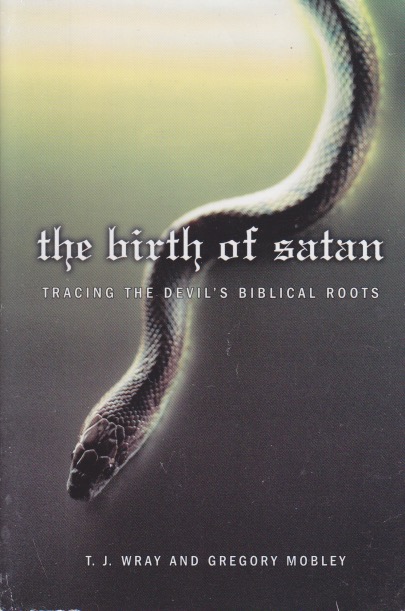
The Devil, they say, is in the details.  T. J. Wray and Gregory Mobley look into those details in The Birth of Satan: Tracing the Devil’s Biblical Roots.  It’s often a surprise to Christian readers that the Devil clearly evolves in the Bible.  From being virtually absent in the Hebrew section, he appears, almost full blown, in the New Testament.  This, of course, flies in the face of the idea that the truth was pretty much revealed from the beginning and that it’s consistent throughout.  The Devil in the details proves that it’s not.  The Bible has multiple suggestions of whence evil arises, God among them.  The Devil came to be one explanation of the origin of evil, but he’s not the only biblical one.

One of the things I found fascinating here, however, was that the authors often refer to popular culture to illustrate their point.  They particularly favor movies.  The authors are biblical scholars and it’s not at all unusual to find movie fans among them.  I suspect that since biblical scholars (apart from the linguists) specialize in stories it’s only natural that movies appeal.  They aren’t given extended discussion here, and indeed, a book about the Devil in the movies would be very thick if it attempted to be comprehensive.  Satan is a movie star.  Since he evolves into the embodiment of evil this is probably not surprising.  A good plot needs some evil in it, and one character in the western canon is the granddaddy of all evil.

Those looking for a fuller biography of the Prince of Evil may be disappointed that this book keeps to its remit—the biblical Satan.  There are, however, many more books about the Devil.  Maybe even more than movies in which he appears.  Scholars and laity both seem interested in this character.  He appears late on the scene, only within the last century or so of the biblical writing period.  His fullest portrait there is the highly symbolic book of Revelation.  And no matter what else you say about it, we can all admit Revelation is tricky to understand.  Since we take the Bible so seriously, one aspect of Satan that isn’t addressed here is his role as trickster.  Folkloric characters who cause chaos (which the Devil does) are often tricksters doing it for no particular reason.  We don’t know why the Devil is bad.  The Bible has no clear origin story for him, since he’s built up from several other cultures’ ideas of bad deities.  To sort it all out requires, well, the details.


Reconstructing Celts

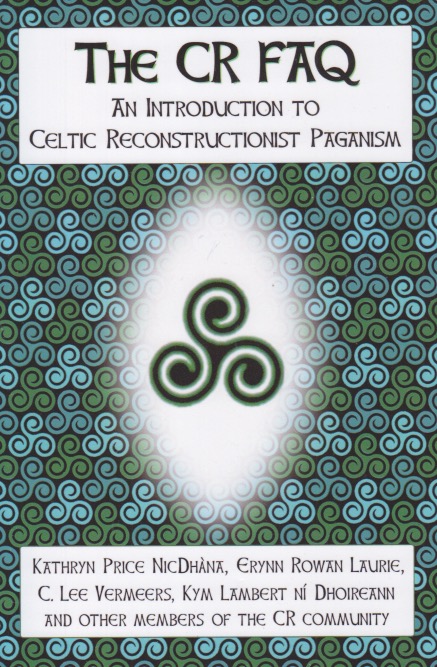
There are myriads of them.  They come in all shapes, sizes, and colors.  They are believed seriously by the faithful.  Of course I’m talking about religions.  Scholars have been inclined to focus on the “big five” or “six” or “seven,” depending on how you count them, but each of those has sects—some with unbelievable numbers of them.  Christianity alone has somewhere in the region of 40,000 denominations.  I tend to think of them as different religions.  A snake handler has very little in common with the Pope, for instance.  Celtic Reconstuctionism is a smaller religion, but it has a very clear idea of what it is.  The group-written CR FAQ, originally a web document, is a question-and-answer format explanation of this particular set of believers.  It’s fascinating to read.

One thing that immediately stands out is that these are very intelligent and deliberate folks.  They are scholarly, sincere, and clear about what they’re trying to do.  Believing that ancient Celtic religions (for again, there are many) can be reconstructed and refitted for modern use, they learn the languages, read the books, look at the archaeological evidence, and critically engage with other modern religions that borrow from Celtic culture.  Indeed, the inauthenticity of some recent religions’ use of Celtic elements led to Celtic Reconstructionist Paganism.  The CR community is well aware that there are other Celtic revival religions.  This particular sect strikes me as among the better informed regarding the origins of their religion.  Most modern Christians have some vague idea how their empire got started, but they tend to be weak on the details.

Religions have sometimes been deliberately crafted, going back to antiquity.  Zoroastrianism, as far as we can tell, was an attempt by Zarathustra to avoid the pitfalls of indigenous Persian religions.  He wanted an ordered, systematic belief system.  As measured in years it was certainly successful.  It is the world’s oldest continually practiced formal religion.  Both eastern and western religious traditions were influenced by it.  CR is an attempt to live a Celtic religion as if its development hadn’t been interrupted.  Obviously, Christianization of the Celts was a major disruption, but it wasn’t an obliteration.  Most religions manage to survive in the colonizing faith.    Groups worshipping ancient Greek, Norse, Canaanite, and Celtic gods are thriving.  Aware that things have changed, they find value in the pre-Christian religions of their heritage.  If CR is anything to go by, they do so inclusively and thoughtfully.  And for those who wish to learn more, they leave written records.


Being Vigilant

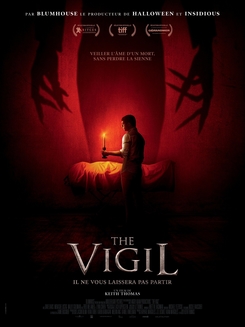
While keeping to a budget, I’ve been tying to sample some new movies as therapy.  Interestingly, Hulu has had three on my long-time “to see” list, including The Vigil.  I heard about this one as soon as it came out.  Religion and horror have been a recent area of fascination, so how could I not?  A horror film partly in Yiddish is a novelty for me, and the haunting, endlessly haunting holocaust is never far from the surface.  Jacov, a young man with psychological issues caused by the death of his much younger brother, has left Orthodox Judaism.  He’s hard up for money, however, and agrees to sit as a shomer, a watcher who keeps vigil with a corpse of a person who has no family to do it, for pay.  The rabbi informs him the shomer he hired left because he was afraid, but since Jacov has done this before, he’s sure he can handle it.

Sitting in a creepy Brooklyn house with a corpse is made even more difficult by the widow’s Alzheimer’s disease and Jacov’s seeing things.  Unsettling events take place.  The problem is revealed to be a mazzik, a kind of Jewish demon.  As I explore in Nightmares with the Bible, and Holy Horror, the Jewish idea of demons took quite a different track from the Greek-inspired Christian concept.  Jesus was Jewish, but living in a Roman context.  What we in the west understand as demons is largely based on The Exorcist.  In Judaism demons weren’t the same obsession they were for Christians.  The dybbuk tends to be the soul of an evil person that can’t rest after death.  A mazzik is more a demon sent to harm, as a form of divine punishment.

The Vigil presents Jacov in that pincer of having left a religion only to find himself needing it in a time of crisis.  His Orthodox upbringing hasn’t prepared him for the world of having to interact with women, or even gentiles (as wicked as they can be).  The mazzik has haunted the man who’s just died—a holocaust survivor—and is now looking for another broken person.  Ever since the death of his brother, Jacov has been broken.  The film make effective use of several horror tropes, and is quite claustrophobic in the small house.  Even though set in New York City, isolation is the real threat.  More than that, the movie eloquently articulates how religion and horror rely on one another.  And how they might learn from each other.


Zones of Twilight

The other day I saw a beautiful twilight moon.  This was in the morning twilight.  I suspect many people don’t realize that twilight comes twice a day.  Twilight is when dayglow either begins or ends but either before or after the sun itself is visible.  Most people are familiar with evening twilight since they stay awake until after dark.  Morning twilight, so full of hope, is beautiful to the point of being painful.  The other day it was twilight as work was starting—the days are beginning to lengthen since I’ve been starting work in the dark for months now.  A waning gibbous moon shown through a gauzy cloud cover in an indigo sky.  It was very cold outside, so I went to the window to take a picture with my phone.

The modern phone camera often misses the point.  I zoomed in on the moon—phone cameras are wide-angle, by default—and it kept sliding in and out of focus.  The sky was getting lighter by the second, and I was losing the opportune moment.  I tried moving the phone closer to the glass, then back a little.  Still out of focus.  Then I realized what was happening.  My phone was focusing on the dirt specks on the window.  (Hey, it’s winter, hardly the time to be out with the squeegee.)  It occurred to me that a life lesson was being offered.

Thich Nhat Hanh recently died.  He was a Zen Buddhist master, and his passing reminded me of the old Buddhist saying that the Buddha is not the moon but rather the hand pointing at the moon.  Religions often confuse the hand pointing for the truly sublime realm to which it points.  Worshipping the person instead of following her or his teachings is a standard feature of religions worldwide.  It is the reason for much of religious conflict.  Those who worship the figure soon come up with their own teachings that are unrecognizable when held up next to those of the departed leader.  They focus on the window, not the glowing moon beyond.  The sky was growing too light to capture the image that had struck me.  The moon was blurry in a way that my eye hadn’t experienced it.  The moment of teaching was past.  The lesson was over.  The best that I could do was spend  a long day working then try to recapture a moment that had occurred in twilight.


The Nature of Epiphany

Last year on January 6 we had an epiphany.  Many of us thought, I suspect, that since the angry mob wanted to kill Republicans and Democrats both that their actions would be condemned unilaterally.  Instead we learned that the Republican Party said, “Boys will be boys.”  And of course boys like to kill things.  A year later the GOP has stalwartly refused to condemn the attempt of a violent takeover of the government by a legitimately defeated candidate.  If the other party tried this they’d be calling “treason.”  We had an epiphany of a double-standard masquerading as evangelical Christianity.  Now, instead of thinking of today as the Christian epiphany, well, wait a minute.  Maybe that’s the epiphany we had—understanding what Christianity can become.

One of the tenets of democracy includes the freedom of religion.  Studying ancient religion can be quite revealing.  For one thing, we get a better idea of what religion was.  Few ancient authorities were concerned about what individuals actually believed.  Religion was largely what the powerful and influential did to placate gods who were easily bribed by sacrifice and praise.  The role of the average person was to be taxed to support this, and the monarchy.  I’ve been watching how, since the 1970s, the United States has been going that route.  We’ve always been a religious nation (“Christian” is much more debatable), but Richard Nixon’s ploy to swing evangelicals to the Republican Party worked.  Those not blinded by ideology will know that evangelicals tended to be staunchly Democrat.  Through the ensuing decades we watched Republican presidents giving our tax money to religious organizations they supported.  Why not throw another lamb on the altar while you’re at it?

The sacrificial system, you see, supported the temple staff.  Somebody had to eat all that meat!  Even in the Bible it was recognized that God didn’t exactly consume it the way a human being would.  Then last year on Epiphany, the party that’s supported just this kind of thing tried to throw all but Trump—yes, even Pence—onto their sacrificial pyre.  A year later we see those very senators saying, “well, it might be useful to have such people in reserve, just in case.”  Early Christians believed that you could tell another believer by their actions.  In that they weren’t wrong.  And those who are able and eager to kill in order to get their way have revealed, by their actions, their true beliefs.  It was, and still is, an epiphany indeed.


Love Letter

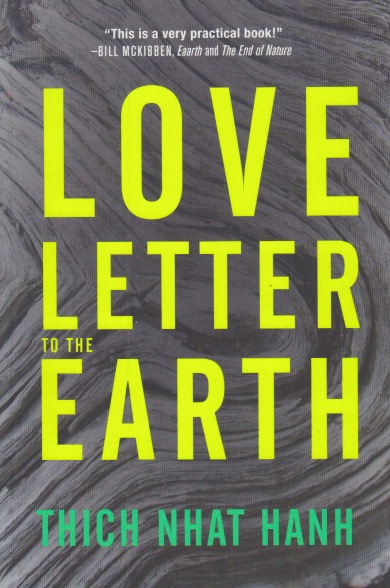
One of the more insidious things about religions is their claim to exclusivity.  The belief than any religion is the “only true religion” is bound to run up against the fact that there are many religions in the world, most of them sincerely believed.  We have much to learn from religions outside the one (if any) we were raised in.  I’ve known about Thich Nhat Hanh for quite a few years now.  One of his books was published (perhaps republished) by Routledge.  As their religion editor I was familiar with it, but as he was not “my author” (that’s the way publishing works), I didn’t contact him.  One of the most famous Buddhist religious teachers, Thich Nhat Hahn strives to transcend religion, which seems like a noble goal.  His Zen approach is simple and important.

This book’s title, Love Letter to the Earth, indicates what it is.  A reflection on environmental sensibility, it includes literal love letters to the planet.  Arguably it is probably a book best read in small batches with time to contemplate between each reading.  Although some aspects are clearly Buddhist, there are also noticeably Christian elements as well.  Christian spiritual leaders, such as Thomas Merton, knew there was no inherent conflict between Christianity and Buddhism.  Thich Nhat Hanh is also remarkably prolific, having written over 150 books.  World religious leaders need to take a lesson here concerning speaking out about environmental justice.  Certainly there are those who will disagree with aspects of his theology, as reasonable and important as it is.  The message is larger than that.

This book is based on the truth that we are all made of this universe and we contain within ourselves that universe.  The earth is our mother, understood by Nhat Hahn in an almost, if not literally, literal way.  While this isn’t news it is nevertheless profound.  When religions are used as excuses to attack the earth they cease to be true in any sense.  Those who don’t buy that perverted outlook are being condemned by those who do.  The earth is our home and it is our responsibility to preserve it not only for our own sake, but that of all creatures.  Thich Nhat Hanh does without being judgmental.  He instead calls for a religion that takes other religions as part of a non-conflictual belief system.  Religion starts wars.  Wars, of course, come at great cost to the planet, quite apart from the human suffering.  There is much wisdom in this slim book which would benefit many to read.


Ghosts and Puritans

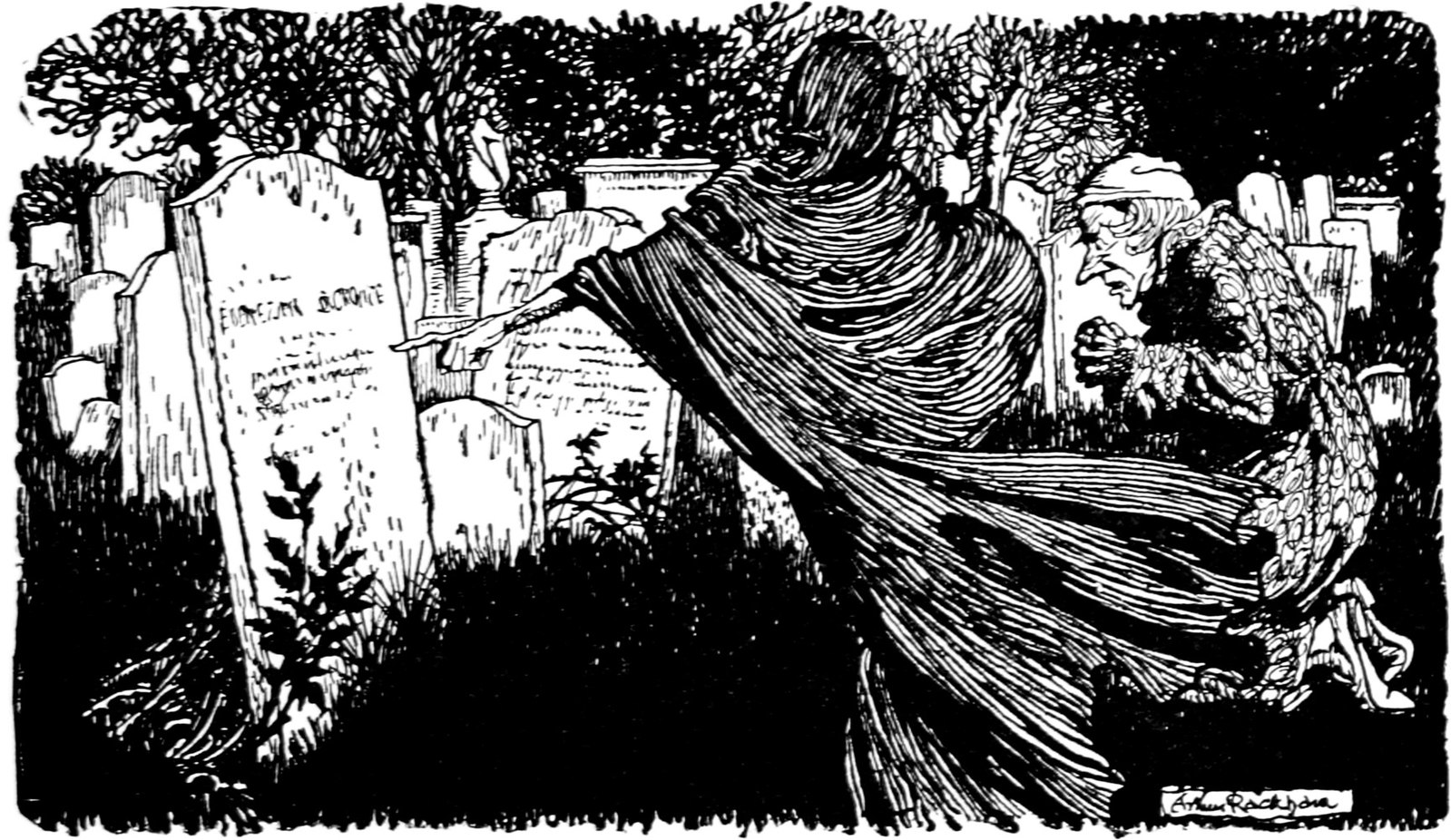
One of the victims of capitalism is the tradition of telling ghost stories at Christmas time.  We tend to relegate such downers to Halloween.  Christmas is a cozy time of getting new things, right?  Who wants to think of ghosts?  I recently read Charles Dickens’ A Christmas Carol.  An article in the Smithsonian  a few years back makes the point that Dickens was cashing in on a venerable tradition.  Instead of sending children to bed expecting Santa Claus, it used to be the custom to tell ghost stories on Christmas Eve.  That makes sense in context.  Christmas was established near the date of the Roman festival Saturnalia and the germanic Yule.  These festivities celebrated the passing of the equinox and the slow, but steady increase in light.  A liminal period.  It seems a natural time to tell ghost tales, no?

Image credit: Arthur Rackham, public domain via Wikimedia Commons

The article by Colin Dickey (who has a history of writing about ghosts), calls for bringing back the tradition.  Do we want our cozy capitalism interrupted by revenants?  Why not?  For me the Christmas season is largely about time off of work.  I spend the time working on fiction writing that I tend to put off when I have a book under contract.  Most of those stories I write are some species of horror, often ghosts.  The real haunting factor is I don’t have time during the rest of the year to do the amount of writing that recharges my batteries.  Work seems to take more and more time and the Scrooge-like results are, I think, pretty obvious.  It’s time to bring back the Christmas ghosts.

Dickey points out that one reason Christmas ghost stories never caught on in America was that Puritans had little taste for them.  The more I look at society the more amazed I am at how Puritan we still are, but without their religious ideals (apart from various prohibitions of human behavior).  The fact that this article appeared in the respectable Smithsonian makes me feel a little more accepted for my disposition.  I know there are many horror fans out there.  Poll after poll indicates that people like horror, but, it seems, most don’t like to admit it.  At least among those I know in the neighborhood.  There are a slew of Christmas monsters.  For those who keep track of holiday horror as a sub-genre the most common holiday represented is Christmas.  In fact, I just had a Christmas horror story published (under a pseudonym, of course).  Maybe ghosts will be able to frighten off the specter of capitalism and bring us back the holiday spirit.


Great Resignation

Although many people my age are retired, I’m looking at a couple more decades of work at least.  A large part of this is because I specialized in a field I didn’t realize was dying.  I suspect clergy in the eighties, when I had to decide on majors and education choices, thought the declines in church attendance were a blip—a statistical anomaly until things went back to the way they “usually were.”  I majored in religion as an undergrad and then went on to seminary and finally to a doctoral program, all along that trajectory.  At every step of the way I was assured there would be jobs.  I’m seeing now that religionists don’t always look ahead.  It’s important to look back, but society begs to differ.

The reason this comes to mind, apart from being part of my daily reality, is an article a minister sent me.  The piece by Melissa Florer-Bixler  in Sojourners is titled “Why Pastors Are Joining the Great Resignation.”  It explores a number of reasons around pay and working conditions that ministers are quitting.  My thought, unscientific but logical, is that many of them are realizing society has moved away from the standard church model.  They recognize that the insistent biblicism that led to a past of Americans being in church under threat of Hell has diminished.  “Worship,” as it is generally done, no longer speaks to people.  I’ve experienced a great many worship styles and venues.  (I still attend them, but I’m a creature of habit as well as obligated by profession.)  When the realities of the world sink in you start to see the old model of praising an angry God because he demands it just doesn’t make sense.  People like Trump get elected anyway, so what’s the point?

Many pastors are underpaid.  Unless you run a mega-church budgets are tight and the need of people is great.  Much of the effort of the congregation I attend is directed to social justice causes.  There are so many.  So very many.  People are in need and the pat answers of call to worship, opening hymn, and sermon just aren’t doing it for them.  Congregants need pastoral care, as do people unchurched.  I’ve been through seminary and a professor in one long enough to know that few really get the idea of how to inspire by their words.  These are folks looking for a living who don’t fit into the capitalist model.  So there’s a decline.  As I read the piece I wondered what jobs they were switching to.  If my experience is anything to go by, the options are limited.


Mining for History

An article by Matti Friedman in this month’s Smithsonian got me to thinking about the Bible’s iconic status again.  Titled “An Archaeological Dig Reignites the Debate Over the Old Testament’s Historical Accuracy,” the story’s about a decidedly non-biblical trope—King Solomon’s mines.  That phrase, as the article makes clear, comes from the title of H. Rider Haggard’s nineteenth-century novel, not the Bible.  As the piece demonstrates, however, many people suppose it to be biblical.  Our society isn’t as biblically literate as it is biblically motivated, so the question of proof keeps coming up.  It’s almost as if historical veracity is far more important than any spiritual truths the Good Book may be attempting to establish.  Those who need the assurance of history (those we tend to think of as literalists) often miss the message in the quest for certainty.

Reading the article makes it clear that archaeologists have discovered good evidence for copper mining in the Arabah.  This is in no way surprising.  Ancient people of biblical times smelted copper and used it to make bronze.  At issue here is the historicity of Solomon’s opulent kingdom, evidence for which we lack.  Archaeologists have been digging for well over a century now, and the magnificence of David and Solomon doesn’t really show up in the archaeological record.  Of course the issue is politicized because land claims are involved.  American literalists tend to support Israel because of its role in “end times prophecy.”  Eager to be done with this wicked old world, they require the assurance of history.  Interestingly enough, that doesn’t seem to have bothered Jesus of Nazareth very much.

Long ago biblical scholars realized that the biblical view of history isn’t the same as what we might term scientific history.  Any history, as those who specialize in it know, isn’t “what really happened.”  Objectivity is impossible.  Histories are versions of what likely might’ve happened, based on the sources consulted.  At the very least there will be the perspective of the other side.  There are facts, of course.  The Holocaust, for example, did happen.  The fascist government of Germany orchestrated and implemented it.  When trying to reconstruct that history, however, differences of opinion often arise.  That’s the nature of history.  Unfortunately we’ve seen the rise of these self-same biblicists denying the known facts of more recent history in order to make themselves appear more righteous.  They want to shield themselves from the genocide of American Indians and the evils of slavery.  Yet they are inspired by such headlines that hint that the Bible might have a tint of historical accuracy after all.  It’s all there in the passage about King Solomon’s mines.


Old and New

Annual holiday traditions show just how deeply ritual is established in our behavior.  As the holiday season rolls around we find our familiar customs to be fun and comforting.  I’m not much of a commercialist; for me the end-of-year celebrations are mostly about rest and peace, still a family tradition since settling in the Lehigh Valley is the Christkindlmarkt.  Bethlehem, founded on Christmas Eve by Moravians, has attempted to live up to its namesake and celebrate the season well.  It’s become an established family tradition to visit the Christkindlmarkt and we wander the tents with artisanal goods, some Christmas-themed, and others more just gift-ideas.  We seldom buy much.  It’s the spirit of the holidays that seems to come through and we need something to help us get through winter.

Each year things are a little different.  Many of the mainstays are similar, however, with the same vendors with the same merchandise.  What has changed in the past year is really us.  We’re not the only ones who make an annual tradition of this and we’re not the only ones who see the same scarves, sweaters, pillows, and pottery.  And ornaments—lots of ornaments.  We see new things because we’re different from our selves who’ve wandered through here before.  Hopefully we’re better selves.  Each time I do this I find myself growing more and more reflective.  A celebration of peace and love to all seems to hold, for the most part.  There are lots of people—too many for my comfort at this stage of the pandemic, but we’re wearing masks and hopefully most of these people are vaccinated—peace and love for all.

The end of the year has long been a season of festivities.  Even ancient peoples, especially in temperate regions, longed for the return of warmth and light.  In response to the long hours of darkness around the solstice they instituted holidays.  Times for us to get together and work a little less and relax a little more, recharging our spiritual batteries.  Yule with its Christmas trees and logs, served to bring the message of light into the darkness.  The twinkling of holiday lights is a festive sight, bringing back childhood memories of gifts, special foods, and time off from school.  I’m a different person than the one who’s written a blog post about Christkindlmarkt in the past.  If you’ve read such posts you’re a different person now too.  We all hope that the present person is a better one than the previous as we enter this season of joy and kindness.


Religious Dinosaurs

Dippy is, apparently, a common name for pet diplodocuses.  The statue of a diplodocus outside the Carnegie Museum in Pittsburgh is fondly known as “Dippy,” as is the fossilized remains of one such dinosaur from London’s Natural History Museum.  The London Dippy is on tour, or at least has been.  I learned about the fact that Dippy was in Norwich Cathedral just a day or so after the exhibit closed (I wouldn’t have been able to make it in any case; I mean I haven’t been able to get to the Pittsburgh Dippy and I live in the same state).  There are still plenty of photos on the cathedral’s website.  It’s a striking juxtaposition.  A massive stone building constructed to a medieval conception of God and one of the best examples of evolution, far older than the church on several orders of magnitude, peacefully coexisting.

John Bell Hatcher, public domain, via Wikimedia Commons

American evangelicalism has a much harder time accepting science.  I’ve been writing about change recently.  One of the changes in western thinking has been to move from the “I told you so” of clerics to the “I can show you evidence” of scientists.  Those who like others to tell them what to think have a difficult time letting go of medieval notions of the world—that it’s flat, and young, and about to end, as if God has a very limited imagination.  We now know that the world has been here far longer than one interpretation of the Bible posits, but that doesn’t make it any easier to have a conversation about it.  Many religions want to claim knowledge that can’t be questioned.  And yet, dinosaurs and cathedrals seem to mix well.

The assumption that those who think differently are evil, or are inspired by evil, is one of the most insidious children of monotheism.  With one God comes the idea of only one way to understand that deity and all other interpretations come from that divinity’s arch-enemy.  It’s a view of the world that struggles with change.  Historians, even those of us who focus on the history of religions, tend to take a long view. It’s possible to trace the development of ideas that have lead to the strange juxtapositions of our modern world.  Apologists so convinced of their interpretation of Genesis that they think the Bible wouldn’t have found dinosaurs worth remarking about, for example, and then cramming them on the ark.  Others, it seems, welcome dinosaurs into cathedrals.  Which is a better way to be humble before God?


Sky Dwellers

If the atmosphere’s an ocean, we’re all bottom-dwellers.  Ancient peoples populated the sky above with incorporeal beings, starting with a god, or gods, at the top.  Beneath that great being were other, for lack of a better term, spiritual beings.  Angels, etc.  Eventually, the lower you got in the sky, the heavier bodies became until those of us bound to our planet by gravity (for which they had no concept) were pretty much stuck on earth.  Although this may not seem like it, it was an early form of scientific thinking.  Birds fly.  The first thing you notice upon lifting a bird, is how light it is.  (Bird lifting may be rare to those of us in modern times, keeping the wonder intact when we actually encounter it.  I was once handed an owl-hawk or some such raptor, at a street vendor stand at Stratford-upon-Avon.  As the handler slipped the glove on and asked me to hold my hand out, I prepared for like a five-pound bag of flour.  Instead I could barely tell that the bird, larger than a bag of flour, was even there.  “Light, isn’t he?” the vendor asked.)

Back to science.  If birds, which are light, can fly in the air—some at great heights—it must be that sky-dwelling beings are lighter.  Lighter than birds.  In the Middle Ages, in Europe, this proto-scientific thinking was applied to theology.   Monastics and scholastics tried to determine what exactly spiritual bodies were made of.  Keep in mind that their world consisted of a basically flat earth with a very large dome over it.  That dome had layers—the sun and moon lived in one, the stars lived in one, and then spiritual beings all the way up to God (since monotheism reigned by then).  Stories of angels and demons mating with humans circulated.  How was that possible if they were pure spirit?

It stands to reason that clouds also inhabit the skies.  It doesn’t take much of a scientist to associate heavy clouds with rain.  Logic suggests clouds are made of water.  Perhaps then spiritual bodies were some kind of vapor.  Lighter than air they inhabited realms far above the clouds.  They descend by gaining weight, perhaps like clouds.  These otherwise ethereal beings would be unknown to us, they dwell so high.  They have to come down to deal with us.  There may be realms even lower, but if the atmosphere’s an ocean, early science suggests, we are indeed bottom dwellers.


Angel of Harvest

It’s been a few weeks ago now, but one October Saturday we attended the Lehigh Valley Vegstock.  Autumn is the season for harvest festivals and a surprising number of them are now catering to vegetarians, or even vegans.  When I say that, it probably calls to mind a certain kind of individual—perhaps an aging hippie who’s probably into New Age and alternative spiritualities?  If so, you’re not the only one whose thinking goes along those lines.  Among the recycled, reused, and other earth-friendly tents was one that offered contemporary spirituality.  A lot was going on behind my mask so I forgot to take the name of the actual vendor, but I did find the use of angels interesting.

No, I haven’t been living under a rock.  Well, maybe I have.  Even so, I know that angels are popular and have been for several years.  Some people who find themselves uncertain about God are still down with angels.  Back in college—who knows anything at that age?—I did an independent study on angels.  The professor (who’s still at Grove City) didn’t provide much direction, and I soon found there wasn’t too much in our library about the subject.  Like demons and other monsters, scholars tend to shy away from the topic.  That, and I hadn’t yet learned how to use Religion Index One.  Now, of course, there’s the internet.  In any case, the idea of angels stayed with me through my teaching career.  After all, studying ancient gods does bring you into close proximity with other spiritual beings.  Even so, I was interested to see Archangel Metatron on the Vegstock vendor table.

Metatron isn’t biblical.  He makes his first appearance in Jewish literature, including the Talmud and Kabbalah.  Although my research interest was always toward the earlier era of the spectrum, it seems that much of our angelology was percolating during the period after the Hebrew Bible was written.  Jewish scholars were working out the complex spiritual world and later Christian writers would attempt to systematize it.  It is possible, and it appears in some traditions, that Metatron was actually Enoch, translated.  Enoch, who is biblical, receives just a few words in Holy Writ, but he eventually grew in importance.  Genesis indicates that he walked with God and was no more.  What happened to him?  Metatron was one possible answer.  There are other Metatron origin stories, I’m sure.  And one of them was right there in Tatamy in the midst of a harvest festival.


B Film

October brings horror films to mind.  As soon as the calendar clicks over, discussions of favorite scary movies begins.  As I’ve mentioned many times before, it is the one time of year when those of us who watch horror don’t feel so odd.  It is a little strange, however, to be watching movies related to The Wicker Man at this time of year.  As holiday horror that particular movie is set at the other end of the year, in May.  So I had to see The Wicker Tree, something I’ve avoided doing all these years.  Neither properly a sequel nor a remake, The Wicker Tree is Robin Hardy’s re-envisioning of the story with a larger budget.  There’s no way to prove it, but it seems likely that it was released in response to the unfortunate remake of The Wicker Man in 2006.

There are any number of things that could be said about The Wicker Tree, not least of which is that it’s clear Anthony Shaffer was a far better screenwriter than Robin Hardy.  (Shaffer had written a sequel, more properly conceived, which has not been filmed.)  Robin Hardy was, of course, the director of the original movie.  Plagued by low budget, rushed filming, and lack of production company support, The Wicker Man nevertheless soared.  The Wicker Tree is what is termed a “spiritual successor”—it doesn’t directly carry on the story of the original, but draws its inspiration from it.  It was based on a novel written by Hardy titled Cowboys for Christ.  Two evangelical missionaries are sent to Scotland to convert as many lapsed Christians as they can.  Of course, their invitation to Tressock is a trap so they can be sacrificed on May Day.

Despite the many unanswered questions the film leaves, to someone raised evangelical it seems that Robin Hardy really doesn’t understand what evangelicals are.  Beth and Steve, on their tour through the lowlands, do things evangelicals just wouldn’t do.  They drink, they dance, they swear, they play cards.  The only thing he seemed to get about evangelicals is they like to sing and talk about Jesus and hand out pamphlets.  This is something I often see is movies—those who try to portray evangelicals haven’t actually been evangelical themselves and don’t understand them.  I also find this in my interactions with British colleagues all the time—they don’t really comprehend what evangelicalism is.  That could be a topic for its own post.  In any case, The Wicker Tree has its moments, but it’s convoluted, cynical, and off-the-mark.  It may’ve been intended as a spiritual successor, but its prototype required no re-envisioning.