At the Same Time

The philosophically adept movies by Justin Benson and Aaron Moorhead can be addicting.  At least for a certain kind of viewer.  These are independent films and they’re smart and worth the effort of tracking down.  Often they fall into both sci-fi and horror, but generally horror of the existential variety.  And they have social commentary.  Synchronic is gritty, delving into drug culture (as some of their other movies do as well) and taking its title from a fictional drug.  Synchronic, the drug, distorts the taker’s sensation of time.  If the user is young—their pineal gland hasn’t calcified—the drug physically transports them to the past.  Adults only experience it as ghostly images rather than physical displacement.  Two EMTs, Steve and Dennis, keep finding victims of the drug.  Steve is a black man with brain cancer that keeps his pineal gland from calcifying.  Dennis, a family man, loses a daughter to synchronic—she gets lost in time.  Steve decides to save her.
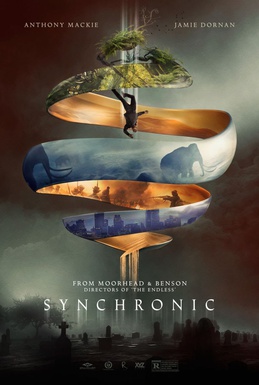
Here’s where the social commentary really kicks in (although it’s been there from the beginning).  A black man traveling back in time in Louisiana is at a distinct disadvantage.  Dennis is white but his brain won’t allow him to travel back physically.  Not only that, but it was Steve who took the initiative to find out how the drug works.  You spend only seven minutes in the past, unless you miss being in the right place when the drug wears off.  If you miss the return, you’re stuck forever in the past.  That’s where Dennis’ daughter is.  She’s caught in New Orleans in 1812.  Louisiana was, of course, a slave state.  Steve faces enslavement if he doesn’t make it back in time.  I won’t say how it ends, but it leaves you thoughtful.

Many “white” Americans feel that Black Lives Matter is too “woke” for them.  They seem to think everything is now free and equal.  It isn’t, of course, and those who are willing to look see that African Americans have an extra layer of struggles that they constantly face.  The movie addresses this as well.  When assisting an overdose victim after he misplaced his uniform, Steve is mistaken for a criminal by the police at the crime scene.  This despite the fact that the white officer who initially detains him, knows him.  A black man out of uniform must be up to no good.  I can’t believe that I went so many years without knowing about Moorhead and Benson movies.  Be careful if you start watching them—they can be addicting.


Not for Profit

Non-profits are the backbone of our society.  In a world measured by “net worth” some of us are aware that people are more than figures, ciphers on a ledger.  Honestly, I’m impressed by plans for a universal basic income, which seems more humane to me than brutal capitalism with its new first estate.  Since that’s not likely to happen here, however, I look to non-profits and I’m impressed.  Despite the distorted narrative that states those who struggle to get by are lazy (hey, I don’t know many rich people up as early as I am daily!), our economy favors the greedy and the graspy.  That’s why non-profits are so important.  These are corporations or companies that work for something other than making money for themselves.  They have a more civil goal in mind.  They are, in a word, civilization.

I recently attended a cancer research support organization Oktoberfest.  It’s for a small non-profit foundation, local to the Lehigh Valley, but it was amazing how much money it has been able to raise for research.  Like many such foundations, it was born of personal loss and the desire to prevent others from experiencing such loss.  Compare that, if you will, to a company whose business is, well, making money for itself.  See the difference?  One you can feel good about.  The other makes you feel like you should take a shower after work to wash the grime of selfishness from you.  I have worked for profit-making companies and non-profits and there’s no comparison.  Those with money as the only goal tend to be heartless.  If you ever want to feel like chattels, apply here.

Non-profits have to think quite a bit about money, of course, but there’s always more to the picture.  There are discussions of the larger goal, which is generally something for the good of society.  To help people.  I’m not naive enough to think that non-profits can’t get corrupt (lucre corrupts everything), particularly when they get large, but without them there would be so much more suffering in the world.  Becoming “civilized” has been a fraught exercise from the beginning, but it was an effort for individuals who are very different from one another to learn how to live together and cooperate for the good of all.  Capitalism is a means whereby some game the system for personal gain and the rest envy them and want to try too.  Thankfully into this moral morass non-profits have arisen, like oases in the desert.  They are the hope for our society.  Indeed, for civilization itself.


End the Stigma

I’ve been a lifelong fan of Edgar Allan Poe.  I bought books about him (and by him) from a young age, fascinated by a person who expressed himself so beautifully in the face of trauma.  Of  a different era, and mindset, was Rod Serling, creator of The Twilight Zone.  Another childhood hero of whom I made the assumption of some trauma.  One thing interesting about both of these influential writers is that relatives have written about them claiming that they weren’t as haunted as they seemed.  I wonder, however, if they write such things because we still, we are still stigmatizing trauma.  We’re great victim-blamers.  Perhaps it’s because we want to distance ourselves from the scary forces at play.  We fear that unhappy master, whom, in Poe’s words, “Unmerciful disaster followed fast and followed faster.”  We don’t want to attract such things to ourselves.

Reflecting on my father recently—I didn’t know him well at all—I was thinking about his experience in the Korean War.  I don’t know what happened to him there and I never had the opportunity to ask him about it.  But I do believe that, like Rod Serling, he may have been traumatized by combat.  War leaves trauma in its wake.  Few, I suspect, come out of such situations without deep scars that haunt them the remainder of their lives.  And still we fight.  I knew, already at a young age, that I could never be a soldier.  This despite growing up with G. I. Joe.  Some of us spend our lives trying not to harm others.  Trauma follows on from that since the world has its share of unmerciful disasters.

There are those who claim Poe wasn’t the experiencer of doom and gloom about which he wrote so eloquently.  He lost those close to him to disease.  Even now there are many stigmatized diseases.  That’s one of the reasons employers are insistent that conditions suffered by employees not be revealed.  Our whole medical privacy mindset plays into the stigmatizing those who face illness.  Tuberculosis was only one of many widespread diseases during Poe’s life, and it’s still widespread in parts of the world because companies like Johnson & Johnson and Danaher price gouge the well-understood cures to maximize profits.  And we blame the victims.  I return to Poe at intervals in my life.  I also watch episodes of The Twilight Zone.  And I think of my father.  There is trauma in the world, and some of it, at least, is preventable.  We must stop blaming the victims.


When Will We?

She Will is a creepy art house film from a couple years back.  Sometimes cited as a #MeToo film, it was directed and co-written by Charlotte Colbert and it follows an aging child actress recovering from traumatic surgery.  Veronica Ghent has decided to go to Scotland, to a remote retreat, to heal.  She takes her nurse with her and is chagrined to find that the retreat she booked is being shared by an art therapy retreat.  She insists on private accommodations and is put up in an even more remote cabin.  While there, it’s made abundantly clear that this was a place where witches were burnt and their ashes mingled with the soil and the very earth therefore has healing properties.  Veronica gains an ability to exact revenge from her dreams.

The target for Veronica’s revenge is a famous director who seduced her as a child while working on her first starring role.  Famous and powerful, nobody was able to touch him.  With her new-found abilities Veronica is able to exact justice through supernatural means.  Not only that, but when a local man—the retreat’s handyman—tries to rape her nurse, Veronica is able to prevent that too.  This is a moody, sad film that addresses issues that are all too real for many women in a system designed by and intended to profit men.  Either unaware of, or uncaring about women’s experiences as participants in the system, they dismiss their trauma in a way they wouldn’t for other men.  

Although the film doesn’t have tons of action and doesn’t rely on jump startles, it is an effective gothic horror movie.  The Scottish scenery is bleak and evocative and the message is important.  Horror films directed by women are starting to gain some notice.  Those familiar with Suspiria, however, will note the influence of executive producer Dario Argento.  That film also featured the difficulties women can face, and it also concerns witchcraft.  She Will is more mature in these areas, however.  Female directors—and writers—know the unique struggles women have in a society that refuses to give female leadership a chance.  It’s a simplistic world where men are in charge (because the church says so, or, more brutally, because physical strength can be used to get one’s way) and aren’t willing to consider that half the world sees things in a different way.  Movies like this force us to take the perspective of another.  And for that the world is better.


Driving Complexity

It should be a pretty straightforward thing, buying a car.  Unless you live in a city like New York you need one, so the process should be simple since it affects many.  But no.  Nothing is simple any more.  We had a two-decades old car that had quite a few health issues in its long life.  Besides, we wanted a hybrid to help with the environment and to cut down on gas costs.  A Toyota Prius seems a good choice so we tried to buy one in February.  We had to wait, however, since dealers can’t keep them in stock.  Initially they estimated three or four months, which turned into eight.  When it arrived unexpectedly we had to drop everything to go get it because they don’t want them sitting around on the lot.  Fortunately the day was Saturday, when schedules are a bit more flexible.

Unlike other stores, where you walk in, hand over your money, and walk out, the car dealership involves immense complications, too great to comprehend.  Insurance is a big part of that.  It turns out that now they want you to go with their insurance.  And since car insurance is bundled with homeowners’ insurance you have to answer questions about when your house was last roofed when you buy a car.  Facts and figures that I don’t keep at my fingertips were necessary.  And you have to download apps because they want you to do everything by phone.  If you’re buying a Prius they want to tether your phone to the car, like a Navi to its beast, and you have to let it monitor where you are at all times and how you’re driving, otherwise your rates will go up.  Driving a Prius is like steering a computer on wheels.

You see, I get overwhelmed.  My mind evolved for a simpler world.  Finally arriving home after several hours in a bustling showroom, I had a dozen emails about this and that related to changing insurance and registering for new systems so the car can take to me, and all I want to do is run to the store to pick up some groceries.  There are no entanglements there.  Pay for your goods and walk out of the store.  No insurance, no requirements to change anything.  Not to mention that Saturday’s the day for mowing the lawn and the hundreds of other chores you can’t get done during the work week.  I’m sure I’ll enjoy my new wheeled computer.  It is much better for the environment.  It may take a few years, however, before I find the time to learn how to drive it.  And to disentangle myself from all the other complications involved.  Pardon me, but I’ve got more car-related emails to read.


Modern Work

The entertainment industry has proven itself, time and again, resistant to recessions.  It says something about our lives that we need that outlet no matter what.  The New York Times has been looking at the writers’ and actors’ strike in Hollywood as a piece of what they are calling the “fractured work” puzzle.  Noting how inequality inevitably increases in a capitalistic system, they put the screenwriters into a situation with which I am unfortunately familiar—that of the adjunct professor.  Adjunct professors now make up some three-quarters of the teaching force in higher education.  In case you haven’t had the misfortune yourself, an adjunct gets paid by the course (not very well, by the way) and has no benefits—medical or, often, retirement (some state schools are required to offer the latter, but you’ll never be able to retire on the pittance you receive).  The idea is that work is being broken into smaller chunks so that entrepreneurs can pay less for work done.

Everyone knows such a system isn’t sustainable.  It will crash.  Unless it’s reformed.  Some people have asked me about becoming a copyeditor for a job.  The thing about copyediting is that it’s freelance work.  Publishers generally don’t hire copyeditors full-time.  You can make a living at it, but it’s self-employment.  You need to set aside the money for retirement and health insurance.  As well as taxes.  And you have to work long hours to make it pay off.  I tried it for a year, but I’m a slow reader.  It was clear that I didn’t have the right literary stuff to make such a living, so I had to move into acquisitions instead.  If you know me personally you may find that ironic.

Those of us who’ve always sought a spiritual existence, however defined, often don’t fit into a capitalistic system.  Especially if you question doctrine.  That’s why I became an academic—or at least tried to.  It’s one of the few places where people with my skill set can thrive.  Work often defines who we are.  Usually one of the first questions to arise when you meet someone is “what do you do?”  Specialists often suggest dissociating our selves from our jobs—I suspect that’s more necessary in positions in which a person is unwillingly being taken over by a position that’s not fulfilling on some level.  Wouldn’t it be better, since we’ve opted for fractured work, if we made it something you could do for a career?  The New York Times suggests specializing, but be careful, dear reader, in what you decide to specialize.  The “market” may well dry up on you and striking may not even be an option.


Life Semesters

Some people have a school calendar in their blood.  For me, that was one of the great appeals of the teaching profession.  I worked a lot during summers—class prep and research take a lot of time and the two go naturally together.  I didn’t mind the ten hour days, and more, during the semester either.  When you’re doing something you love, you become your job.  It was quite a shock when the job counselor at the University of Wisconsin Oshkosh told me that I had to separate myself from my job.  The two were one.  I would sit in that Oshkosh office researching for classes I’d never taught before.  My first year at Nashotah House I was writing 90 pages of class notes per week.  Anxious, but loving it.  There was so much to learn!  But that calendar has some natural breaks.

Academic careers involve sprinting that goes on for about four months straight.  Then you get a break of a month or two before sprinting again.  For those of us with my mental condition, that way of living just fits.  The 9-2-5 job is parsimonious second-pinching.  I’ve talked to other professionals in the field and they say the same thing—when your job involves thinking, there are no such things as fixed hours.  When I’m out on my jog before work and my mind comes up with a solution for that intractable problem that awaits me once I fire up the laptop, I’m working.  It’s just not “on the clock.”  It’s gratis.  Part of the problem is I don’t cotton onto sitting in front of a computer all day. Being “in the office” ironically hurts productivity.  In the teaching world you walk around and talk to people.  Summer days are spent with your nose in a book.  What’s not to like?

Not everyone, I know, is stimulated by that kind of lifestyle.  For me, it just works.  Some years I’m able to carve out a week’s vacation in the summer.  I try to save up enough vacation days, however, to get the week between Christmas and New Year’s off—a mini semester break.  When a person’s mind works in a certain way, finding employment that coincides with it is important.  Many people like the structure of a work day.  It tells you when to sign in and when to knock off.  It tells you when to eat lunch and when to take breaks.  Others prefer alternative work arrangements.  The 9-2-5 has never sat well with me.  It’s because the school calendar is in my blood.


Good Horror

As strange as it may seem, my goal in life has always been to bring more good into the world.  As they phrase it in Nerdfighteria, helping “to decrease world suck.”  There are many ways to do this—give encouraging words to others in a cancer support community, volunteer time (structured or otherwise) to civic organizations, even trying to help make sense of it all through an obscure blog.  My motivation in entering teaching as a profession was to help make the world a better place.  (Also, I’m pretty good at it.)  When that fell through as a profession, I began yet another odd way to try to bring good into the world.  Writing books about religion and horror.  Please hear me out—this is part of a larger plan which, in the nature of plans, may or may not work out.  It involves getting people’s attention for a moment (kind of like teaching).

There are a significant number of people who enjoy horror.  The vast majority of them are not bad people.  They find something enjoyable, or cathartic, or perhaps even spiritual in consuming horror.  I’m one of them.  My piece “Exorcising The Pope’s Exorcist” appeared yesterday on Horror Homeroom.  (Hey, it’s free—check it out!)  Exorcism, as a social/religious phenomenon, owes its popularity to a horror movie.  And if the rite brings some measure of relief to someone suffering mentally, spiritually, or physically, it has decreased—you guessed it—world suck.  It makes this planet just a little bit better for a little while.  Movies that promote exorcism can, believe it or not, help people.

Some time back I was invited to offer a course at the Miskatonic Institute of Horror Studies.  I am deeply honored because if you look at the list of names of past (and present) teachers there are some superstars in there.  By the way, my course is titled “Believing in Sleepy Hollow.”  (Maybe those of you who read daily may now understand why I’ve been posting so much on Sleepy Hollow of late.)  Teaching a course that will bring enjoyment to others is a way of bringing a small measure of good into the world.  Once you leave secondary education, you’re never obligated to take a course.  It’s something we want to do. That means if someone gets something out of my course I’ve brought just a little bit of good into the world.  It counts, I hope, toward my life’s amorphous goal.


Used, Again

It may be impolitic to admit it, but I have positive associations with Amazon.  This goes back to before they started using smily boxes.  Before Amazon, getting books often involved mail orders and checks and several weeks before delivery.  Now Bookshop.org does a similar service, and with more of a conscience, but Amazon showed everybody how.  I do have a complaint, however, with the internet giant.  They allow used book sellers to be the top place when ordering a book, since they sometimes have a lower-than-retail price.  I used to sell used books on Amazon, back when I had no full-time job.  I took great care to list books according to the accepted standards of book conditions.  I know I’ve written about this before, but two recent used book orders simply didn’t measure up.  So, herewith, a tutorial:

“Like new” means in mint condition.  You should not be able to tell the book was read.  Look for soft rather than sharp edges on the pages, slight curling of the cover (especially paperbacks) from repeated opening.  Hey sellers, if you have any of this, the proper category is either “fine” or “very good”—not “like new.”  I’m not really a collector (in that way), but if I order a book “like new” I expect that I won’t be able to tell it’s ever been read.  Normally I opt for “very good.”  This brings it down to a less expensive bracket and it implies things are in pretty good shape.  If your book has extensive writing or highlighting in it, it is not “very good,” but “good.”  If it does have minor markings you are required to list them.  I recently bought a “very good” book in which practically the whole first chapter was highlighted.  This isn’t easily missed, and it’s certainly not “very good.”

I get it, classifying books takes some discrimination.  The categories are there, however, to protect the buyer.  People do all sorts of weird stuff to their books.  The used book seller, on Amazon, is morally obligated to tell us about what’s going on.  And Amazon, please make clear when a book is “new” or not!  I recently bought a book that was listed as new but it had clearly been read at least once.  Be honest, people.  Book folk, in general, are good folk.  Reading is so important for a civil society.  Books are collectible items.  If you’re thinking of going into the biz, please remember that I’ve found books for a buck at library book sales in better condition than many “very good” books I found used online.  Just be honest—you’ll still sell the book, even if for a few pennies less.


Review, Please

I realize few academics read my musings.  (Heck, few non-academics read them either!)  Nevertheless, I have a plea: please be a peer reviewer when asked!  I get hit with this particular conundrum from both sides—as an editor potential reviewers simply don’t want to do the work (hint: we’re all “too busy”!) and as an erstwhile member of the academy, I also get asked to do reviews.  Out of a sense of obligation, I always accept the invitations, if at all possible.  You see, I know how hard it is to secure reviewers.  In the past two-and-a-half years, I’ve been tapped as a reviewer five times.  Ironically, when I had my full-time teaching position (for fourteen years!), I was never asked.  How times have changed!  Editors are now beating the academic bushes for those of us in the hinterland who have credentials and good will, even as we’re out gathering twigs.

You see, academic publication simply cannot go forward without peer review.  If you publish, someone was willing to review your work.  Don’t you think it’s only fair to offer the same courtesy?  Academia used to be, and still should be, a community.  Yes, those who break into those coveted teaching positions are often Lone Ranger types, shooting from the scholastic hip.  Still, the system only works if we help one another.  One of the long-term accusations against the academy is that those within have tunnel vision.  (I suspect there may be some neurodiversity going on here.)  That may be true, but try to consider the wider picture.  Teaching jobs are tough, yes, but the rewards are enormous.  Believe me, if you haven’t had to work a 9-2-5, you may not realize just how privileged you are!

Many editors dread the prospect of having to find new reviewers.  They spend time on university websites that are designed for recruitment, inviting them back to school (believe me, it’s tempting!), not to help editors find experts.  And we don’t like to use the same person over and over.  Reviewing also has some benefits—there are carrots as well as sticks!  I encounter new and untested ideas as a peer reviewer.  Who doesn’t like to be the first to get a crack at new knowledge being born?  My own portfolio of review requests stretches from semitic goddesses to the weather to monsters.  I’ve published in those areas and colleagues had to read my materials to make that possible.  So if you’re an academic and someone asks you to be a peer reviewer, please say yes.  Pretty please, with sugar on top.


Middle Ground

It’s the real poison Trump baptized.  Polarization.  The idea that there is no middle ground.  It’s a shame since the middle ground has been what’s kept America stable over the years.  Now it seems to be eroding rapidly.  While my sympathies have always been on the left, I realize that radical change tends to dirempt societies.  As much as I deeply desire justice and fairness for all, I know it will take time.  In my way of thinking that “all” includes animals.  That’s why I’m vegan.  Now, I know being completely vegan is likely not possible since who knows what everything is made of, and who has the time to find out?  I do the best I can and I don’t eat animal products and I try not to wear them either.  I know there are those who don’t share my outlook and they’re entitled to their point of view.

For nostalgia’s sake, and to get out of the house, we attended a 4-H county fair.  An annual event when we lived in New Jersey, it’s now a rarer treat.  So I put on that scarce recording of Bruce Springsteen’s song “County Fair,” not on any of his studio albums, and headed for New Jersey.  This county fair is the kind with animals rather than rides, and we stopped in to see the sheep, goats, cows, and alpacas.  It was in the cattle tent that I saw the following poster, claiming “There’s no such thing as vegan.”  Well, I don’t go around saying there’s no such thing as omnivores (thus the polarization) but this poster convinced me that we need to try even harder to stop raising animals to exploit. I understand, I think, the intent of the poster—cattle aren’t just meat.  The thing is, I think of them as conscious beings.

I miss the middle ground.  People no longer want to compromise or negotiate.  Since Trump it’s become “my way or the highway.”  I think I prefer the highway.  That highway takes me far from industrial feedlots where it’s illegal to document the cruelty that these animals undergo daily.  It’s quite a different thing for Bessie to lay down with a fan blowing on her under a tent with a small farmer caring for her, but that won’t feed a nation.  Small farms aren’t the problem. I don’t insist everyone be vegan.  I would like it if we could sit down and talk about it, however.  Cattle raising is the industry that generates the greatest amount of greenhouse gases that are causing global warming.  If we keep dividing ourselves and refusing to change we’ll be having this polarizing argument under water before too many years have gone by.  My highway is middle of the road.  Even slow change can benefit many.  The goal is to get “many” to “all.”


Geography Quiz

With my daughter’s encouragement, I’ve taken an interest in geography.  While not exactly an isolationist, I’ve often thought that America trying to impose its will on foreign nations is generally wrong-headed.  Still, when I read histories of the early United States, it appears that the desire to own and organize everything from Atlantic to Pacific makes sense to a particular outlook.  Taking the land from its rightful owners was clearly wrong.  It seems that wherever there are borders people fight.  I’ve been quizzing myself on geography and I’m getting fairly decent at identifying countries (not all of them, and not always correctly).  Doing so has led to some learning opportunities.  Africa was, of course, heavily colonized even into my own lifetime.  Only recently have we begun to realize that people should have the right to independence—sounds familiar, right America?

There are lots of quiz games available on the internet that help making these identifications fun.  I’ve learned that the newest country recognized is South Sudan, in Africa.  It became independent just twelve years ago, breaking away from Sudan.  South Sudan is one of the least developed nations in the world—I suspect that some of these conditions contributed to the desire for independence.  Another thing that becomes evident in learning geography is just how much disputed territory there is.  Thousands, probably millions, of lives are lost over border disputes.  This seems like such a testosterone-driven form of politics that patriarchy ought to be thoroughly ashamed of itself.  The United States still plays these games as well, backing our favorites, despite the will of the people.

One nation that consistently shows up in these quizzes is Western Sahara.  Apparently this is still a disputed territory, colonized by Spain but released from its control in 1975.  Immediately fighting broke out between Morocco and Mauritania, its neighbors.  Both wanted control of the region.  The territory is one of the most sparsely populated in the world, being mostly Sahara, but even so it’s worth fighting over, in the strange geography of the human psyche.  I often ponder our apparently insatiable urge to fight and control.  As if we can really control anything.  All it takes is a thunderstorm to park over an area for four hours and any house will begin to feel the damage.  Nobody’s really in control, as you’d think events in Russia might underscore.  It seems unbelievable to me that a world so connected—entangled even—with the internet would still insist on disputing who owns this rock or that.  Just think how much we could accomplish if we’d even allow for a little leeway in our geography.

Remember this?

Seminary Daze

It’s surprisingly easy to throw away an expensive career that once held much promise.  It really involves just a two steps: spend thousands of dollars earning a Ph.D. in religious studies, and take a job in a seminary.  It’s disheartening to watch colleagues going through this as seminaries contract, then close.  I know how it feels personally.  You’re suddenly aware that your years and years of training have made you practically unemployable.  If you do find a job it won’t pay as well.  Chances are you won’t enjoy it either.  Having taught in a seminary will mark you in academia as one of those “uncritical believers,” and, well, nobody wants to touch one of those.  While I would’ve taken a regular seminary job after my doctorate, my wife remembers me lying awake at night asking “Am I cutting off my career if I take a job at Nashotah House?”  The answer: yes.

I’ve been watching colleagues have their worlds torn apart as seminaries try to figure out how to stay open when institutional churches are dying.  Megachurches don’t require a seminary degree to run—natural grifters do it quite well with no advanced education, thank you.  But mainstream churches have been losing members, and therefore financial support, for years now.  And seminaries supply a commodity no longer in demand.  This may have been a trend when I started out back in the eighties.  If so, nobody told me about it.  I walked into this career naive and came out jaded and cynical.  My motives were to help other people.  It’s getting harder and harder to find jobs where you do that any more.  At least while being able to keep body and soul together.

Thing is, it takes years to earn the degrees you need to teach in a seminary. You have to think ahead.  When I started out, trends suggested a huge glut of jobs in the teaching market.  That never panned out, of course, as human predictions seldom do, and the decline in jobs has been pretty steady over the past thirty years.  Back in the eighties seminaries were doing okay.  Growing, even.  I do hope it didn’t have anything to do with me, but I hit this surprisingly fragile market at just the wrong time.  After having been overboard without a life preserver myself, it pains me to watch colleagues facing the same fate themselves.  Religion hasn’t disappeared—it’s simply taken on new forms.  Those forms don’t require seminary. Those of us who followed the rules on how to teach religious studies, however, somehow find ourselves in disposable careers.


Good Book Selling

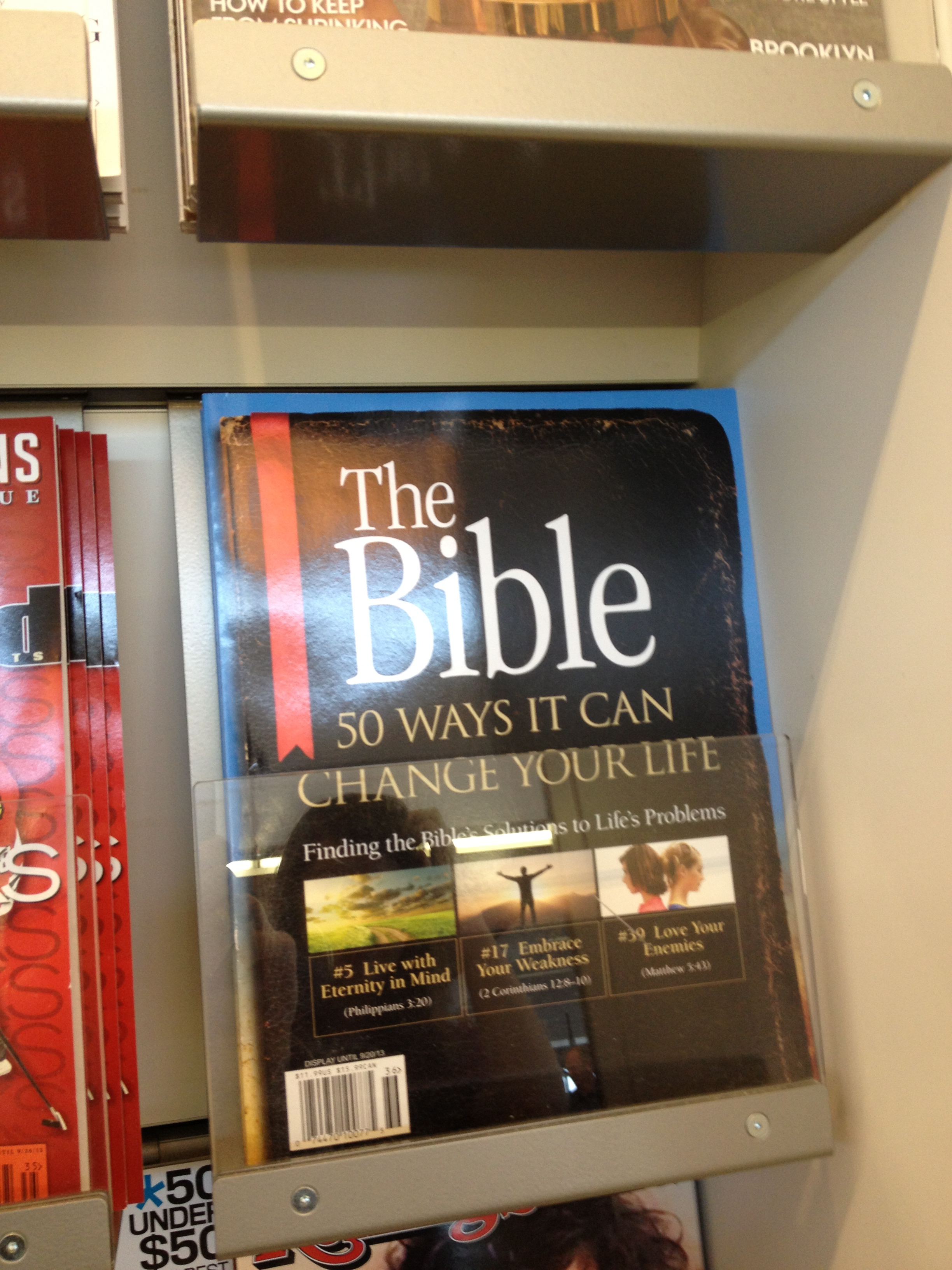
A few weeks back, probably several now actually, the New York Times ran a story about the Bible.  In this age of declining interest in the Good Book such things catch my attention.  Of course, the reason that the story ran was because of the money involved.  Let me explain.  Or at least give the headline: “Oldest Nearly Complete Hebrew Bible Sells for $38.1 Million.”  Money talks, even when it comes to Scripture.  The story was about the auction of the Codex Sassoon, which went to a museum.  Most regular Bible readers aren’t aware of the textual criticism behind their favorite translations—yes, even the good ol’ King James.  You see, no original biblical manuscripts survive.  Not by a long shot.  Every biblical manuscript in the world is a copy of a copy of a copy, etc.  And these copies differ from one another.  Often quite a bit.

Textual criticism is the job of comparing manuscripts and using scientific—yes, scientific—principles to determine which one better reflects what was likely original.  Since we don’t actually have the original we can’t say.  Those who hold views of extreme reverence for one translation or another have to resort to divine guidance of the textual critics to make the case.  For example, they might argue that God inspired the translators of the King James to follow one manuscript rather than another.  The King James was based on manuscripts known at the time (only about six of them) and far older manuscripts—inherently more likely to reflect earlier views and potentially closer to the original—have been discovered since then.  And are still discovered.  That was one of the reasons behind all the fuss over the Dead Sea Scrolls.  They represent some of the earliest biblical manuscripts ever found.

The Bible is an identity-generating book.  In this secular age, the failure of “the educated” to realize this simple fact often leads to underestimation of the importance of religion.  It motivates the largest majority of people in the world.  We should pay attention to it.  It doesn’t make headlines too often, though.  Instead, politicians who pretend they respect the Bible but live lives about as far from its precepts as possible, gather the limelight.  When money gets involved the Bible becomes interesting again.  We think about that thirty-eight-million.  What we might do with that kind of money.  How we might be able to pay somebody to paint that fence that desperately needs it, or better, to help those in desperate need.  The many victims of capitalism.  Where their heart is, there their treasure will be also.


Perhaps Unexpected

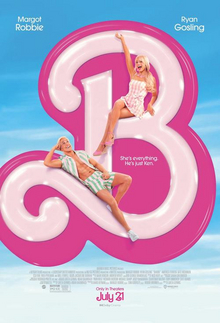
Of course I’d heard about it, but I hadn’t envisioned myself seeing it.  My family, however, wanted to get in on the Barbie conversation and, I justified to myself, at least we’d be in air conditioning for a couple of hours.  Besides, I now get “senior” rates at matinees!  I knew very little of what to expect, and I was pleasantly surprised by what I found.  In fact, I can’t remember the last time I saw a movie that was so full of social commentary.  And I actually learned quite a bit.  If you’re one of the maybe a dozen people who hasn’t seen it, the plot is more complex than you might think.  And the writing is smart.  And it’s funny.  I was hooked from the opening parody of 2001: A Space Odyssey.  The scene based on The Matrix made me realize that I was watching something unusual and important.

I’ll try to be careful with spoilers here, but basically, stereotypical Barbie experiences an existential crisis that leads her to the real world to find out what’s going on.  Ken tags along, uninvited, and Barbie is distressed to find that the real world hasn’t been equalized between the genders the way that she was intended to help it become.  While in the real world Ken gets a taste of patriarchy and decides to take it back to Barbie Land.  When Barbie returns she finds her once perfect world upside down.  But that’s not quite right.  She comes to realize that the world run by women wasn’t exactly perfect because men and women need to cooperate and share some responsibility.

There’s a lot more to it than that, of course.  How we’ve gone for centuries maintaining male dominance (might makes right philosophy), even while claiming to be “enlightened” is a mystery. Gender inequality is one of the biggest social concerns we experience.  Almost nowhere in the world are societies truly equal and Barbie offers a funny, yet poignant way of thinking about that.  I wouldn’t bother writing about it if the message wasn’t important.  The movie isn’t a feminist screed.  Nor is it simplistic drivel.  It’s a surprisingly sophisticated consideration of a society out of balance.  I’ve been in favor of equal treatment of women for as long as I’ve been conscious of the difference.  Raised by a capable single mother, I noticed in my formative years that she was doing what two-parent families did, with less than half the resources.  While Barbie won’t solve all our social ills, it is getting the conversation going.  From my point of view, it’s about time.