Where’s Waldo?

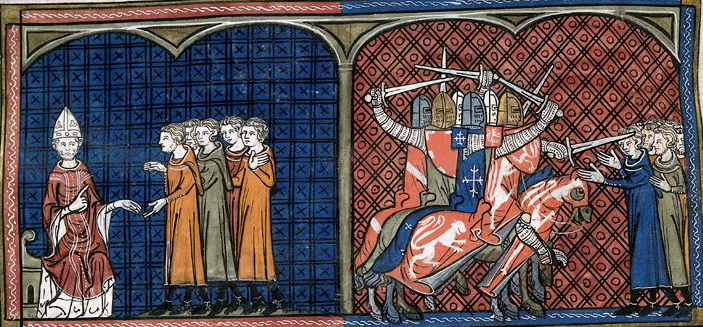
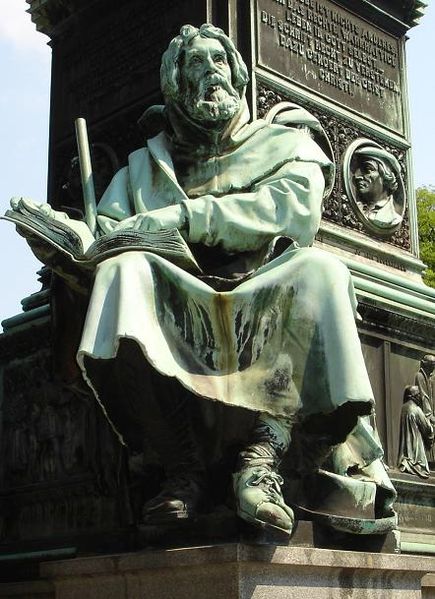
I first learned about Waldensians in a class on the Middle Ages. In the centuries before the Reformation took place, some Christians in Europe resented the wealth and ostentation of the Catholic Church—the only show in town. In response the Waldensians preached a radical simplicity, including poverty. The established church, enamored of plutocracy and power, didn’t appreciate this challenge. To the average peasant, I suspect, the sincerity of the Waldensians was a bit more obvious than those who represented an institution enamored of its stature. When Catholicism learned about Waldensians and their imitation of Jesus’ lifestyle they did what came naturally. They killed them. Accusing those who insisted on helping the poor and needy of heresy gave the justification to the church’s decision to eliminate them.

What occasioned the most surprise, as I was recently reading about them again, was the discovery that the Waldensians still exist. The church has often been thorough in its elimination of those who cross it (note the antics of Rick Santorum), but somehow some Waldensians managed to live on through the persecutions of the trials of heresy. Yet the church still likes to bluster and condemn many to Hell, even if just metaphorically. I must admit that such posturing worries me. It is not in vain that the church has frequently insinuated itself into politics. Anyone who has been awake in America since the 1980’s can’t have helped but to have noticed.

Ironically, the three major monotheistic traditions began as counter-cultural movements. Once the religions gained political power the oppression of others began, thus starting the cycle all over again. The Waldensians are an excellent paradigm of what occurs when a religious body attains too much power. Heresy is so dangerous because it highlights hypocrisy. Claiming divine sanction for human weakness is a charade easily understood by those who take the time to watch closely. The revisionist history of America that we hear presidential hopefuls espousing are warning signs. The church may not have reached all the Waldensians in the Dark Ages, but it still keeps on trying. Fortunately the followers of Peter Waldo are sometimes hard to find.


Renters, All

Ownership is an odd concept for mortal creatures. With limited time to spend on a finite planet, we devise rules that give exclusive rights to some while denying access to others. I have never owned property (tellingly called “real estate”)—the life of those who stumble into higher education doesn’t really lend lenders any confidence of one’s ability to repay debts. I spent too much income, I guess, on my education. In any case, the concept of ownership seems to be endemically human. In most societies we want that thing that we found, that we picked up and moved with us, to remain where we put it so that we can access it again. That particular stick or stone that caught our eye for utility or beauty—it is that we wish to own. Soon humans are building vacation homes in the regions of stunning natural beauty that dot an industrialized landscape, vacation homes where they can get away from it all. Humans owning nature.

Recently I read a story in the New Jersey Star-Ledger about beachfront property “owners” in New Jersey suing over beach reclamation. Now before bursting out into peals of laughter, please be aware that those who claim New Jersey lacks natural beauty have never visited the state in the spring. Once outside the urban sprawl surrounding New York City, Jersey is, for the most part, very pleasant. Many of the beaches are pristine. Of course, pristinity invites affluence. The wealthy like to settle where the views are nice. And so when the state tried to prevent beach erosion by building dunes the rich cried foul and began to sue. It looks like the state will have to pay out. The very state that I, along with countless others who can’t afford a single house, support by our taxes. That money is now being piped into the pockets of those whose summer homes now have a slightly diminished view. My heart bleeds.

One of the facts of life on the Atlantic coast is hurricanes. Another is nor’easters. Both of these storms erode beaches at a terrifying rate. And when the beach is gone, whose house will be in the ocean? Those who wanted the dunes removed. Money is just distilled ownership. Those flimsy pieces of paper have no inherent value. It is difficult even to believe in money when you never see it. Electrons zipping through the Internet are the only sign that I’ve been paid. Yet we value it above all else. I’m not sure how this fits in with a gospel that condemns money and a Jesus who suggests the only way to heaven is to give it all away. Well, maybe it all fits, as long as you don’t block my view of the ocean. After all, owning part of a planet entitles you to some feeling of self-importance. Or so I suppose.

Who's really in charge here?


Brother, Can You Spare a Term?

Last Friday the Chronicle of Higher Education had a blog post asking how NTT (Non-Tenure Track) faculty pay the rent. In the light of recent news stories about the nascent gathering of data on the forgotten generation of scholars, universities are finally starting to scratch their heads and wonder, like Frankenstein, what they’ve created. Well, the article asked a question and invited responses. I couldn’t help myself—six scary years of my life were spent in that dark chasm of no security—and since I offered a few sentences about my experience, email reminders popped up for the next several hours when other comments were added. It made for a depressing day. All day long stories appeared of women and men with PhDs who live on food stamps, fall behind in their rent, and even cancel the classes the unsuspecting parents pay so much for because they can’t afford gas for their cars. Meanwhile, let’s build a new stadium.

Education is the most important invention of all time. Without it we’d still be warming our toes around the fire in our cave, wearing smelly animal skins. The natural enemy of education is sometimes the institution. Institutions, especially those that continually turn an envious eye towards corporations (often among the least enlightened of human ventures) as a model for emulation, are steering a sinking ark. Both church and university have become poster children for the corruption that creeps so insidiously into organized structures that have lost the way of pure intentions. The call of the wealth is far more savage than the call of the wild. The wolf pack does not devour its own.

Well-paid industrial analysts, I’m sure, are being offered handsome sums to figure out how to make universities more efficient. University presidents and sports coaches drawing down six-or-seven figure salaries shrug their flummoxed shoulders—what could possibly be the problem? Perhaps we need even more upper-level administration to sit and think this out. Meanwhile parents stressed to their financial wit’s end are slowly beginning to learn that the ones teaching their daughters and sons are the adjuncts who now make up well over half the teaching force in higher education. I would not presume to guess which direction higher education is going. It does seem entirely probable, however, that when the wolves are done with this meal, a scattering of bare bones will be all that’s left. After all, in the wild a lone wolf is a dead wolf.

The corporate emblem.


Alternate Reality

Recall a time when you did something bad. We have all done it now and again. Even the memory possesses the power to churn the stomach and lower the brow. I just finished reading Native Voices: American Indian Identity and Resistance, edited by Richard A. Grounds, George E. Tinker, and David E. Wilkins. The essays in this volume are about Native Americans by Native Americans. Many of us are taught to believe that the United States government had found some way to deal peacefully, after some bloody battles, with those hostile to the arrival of Europeans, but the truth is much sadder and more sordid. While some may say the essays in this book dismiss academic standards, I have been on the receiving end of academic standards enough to know that even highly educated people can sometimes only cower and the reality is how you feel. That is what comes through every page of this book: what it feels like to be misrepresented, demonized, caricatured, forgotten. European colonizers stole what they could in the name of Christianity and left a legacy of tears.

I nevertheless learned a great deal from this book. Here, I came to understand, not everyone agrees with the standards that Euro-Americans use to measure the world. Nowhere is this clearer than in the Native American critique of science. Those of us trained in this method feel a knee-jerk reaction when it is questioned, but those willing to consider, to ponder, will realize that a scientific worldview is a culturally conditioned form of interpretation. Other forms exist, although they have frequently been silenced. There is more than one way of knowing. In many Native American religious traditions the land itself is sacred. Being removed from tribal lands was tantamount to being separated from tribal divinity. We might be better able to dismiss it all as ancient history were it not for the fact that the oppression continues to this day.

Comparison with another oppressed religion came to mind. Ancient Israel is understood only imperfectly, but we know that the land was crucial to Israel’s sense of identity. We should, as heirs of the Judeo-Christian tradition, be sympathetic to Indigenous American sensitivity to the bond between land and religion. In the former case, the United States supported the re-formation of Israel in the 1940s. We still keep our own indigenous people out of sight and use their land with impunity. Reading Native Voices raises some very troubling specters indeed. The colonizing religion here was Christianity, a religion that says it is more blessed to give, but is more than willing to take. And to invent a tortured theological justification for the action; it’s manifest destiny—whatcha gonna do? It is time we confront what was done to the people who were here first. I have no solution, but reading Native Voices is an appropriate way to start the discussion.


Spare Change

The vernal equinox snuck up on me this year, and I learned that it can also be what those in medieval Europe used to call a “dismal day.” The sun was out and the temperature was unseasonably warm, but beginning with breakfast and all the way until bed-time, things just didn’t go according to plan. My mother had been admitted to the hospital, and I live some 600 miles away. When I called to see how she was doing, I spoke with a bureaucratic nurse who could neither “confirm or deny” that she was even there. I wasn’t aware that my mother had connections with the military, government, or covert operations. When I said I was just looking for my mother I got read the riot act including—this is the truth—having the Hippocratic Oath cited at me. I think, in all honesty, it might be spelled Hypocritic. Don’t get me wrong—I think it is important to protect people’s rights, and I sure the duty sergeant—excuse me, nurse, was only worried about lawyers and lawsuits. We have constructed a country so insidious that a boy can’t talk to his own mother. Eventually she put my call through to the patient’s ward where one of the patients answered the phone and went to find my mother for me. We call it civilization.

I’m not the most technical of guys. Think about it—I majored in very dead languages. When my wife surprised me with an iPhone for Christmas, my brother-in-law kindly agreed to get in on the surprise and took care of the details. We went into the Verizon store after the holiday and switched the phone (with the phone number I’ve had for years) into my name. Nearly four months later, when I tried to change some plan details, both he and I had to call Verizon several times to get the mess straightened out. One of the communications giants seems to have made itself so technical that it can no longer understand a simple request. When the Verizon representative asked if I understood the user agreement I said yes. Have you ever read one? No one without a law degree could possibly understand. Even Moses didn’t have a cell phone. I had to spend an entire evening getting my own phone back under my own name. Our society has taken what should have been a two-minute phone-call and made a mini-series of it.

So, is it because the vernal equinox is so early this year that my world went haywire for a day? We live in a society where it is nearly impossible to prove you are who you say you are. And children are not allowed to speak to their own mother. Lawyers have taken the law meant to shield us and made a bludgeon of it. Communications experts obfuscate. It may seem random, but these two phenomena have the very same evil as their root. They are twin trunks springing from greed. The nurse can’t put me through because a lawyer may sue. My phone number can be reassigned to my name, with added costs, approved by lawyers that only corporate giants can afford. Human need has been reduced to terms of cash. The trees are budding. The air is warmer. Flowers are in bloom. But it certainly doesn’t feel like spring to me. That chill you feel is cold, hard cash. We are all just spare change.

The weight of a human soul, legally.


Fun with Dick and Jane

Occasionally somebody will ask me what the purpose of this blog is. I’ve read enough blogs myself to admit the question itself puzzles me. Those of us who are driven to write (and I know some of my readers can verify this—I’ve been a writer all my life, no matter what my job) are all Pontius Pilate. The reference is in the Bible, if you are unfamiliar with the allusion. Anyone uncomfortable with ambiguity will not find much satisfaction here. Our society likes to believe the truth comes in two shades only—black and white. Our society really should get out more. Even “black-and-white” pictures are actually shades of gray. Some people believe we should stick to our assigned roles, but a person is larger than the job society will allow her or him. Religions have often called this embiggening a “soul,” others have recognized it as “personhood.” No matter what you call it, an individual defined only by their job is mere shadow-play.

Back when I was teaching I always told my students that we are taught to read so early that we soon do it unconsciously. Yet, somewhere below the surface we know different materials hold different reading requirements. It is my sincere hope that the Constitution is not read with the same expectation as the sports page. For those who are willing, however, profundity can even be read in road signs. Reading is a two-way street: we bring to it nearly as much, if not more than, we take away. Truths may be out there, but no one down here can lay claim to their totality. If such were the case, there would be no need of elections, or more than one publisher. Bibles, properly speaking, have no covers.

Writing is an end in and of itself. Those few untrammeled moments of each day when the demands of work or responsibility lessen their grip just a bit, and the universe seems to welcome your thoughts. My experience of life from rather humble family circumstances has been that those better off like to tell you what to do. I have never been a boss, nor do I ever really want to be. My dreams are more vapid, vacuous, and vivacious. In my writing I can actually have fun. After I lost my long-term teaching post a career counselor told me that I had to separate myself from my job. Every day there are those who try to undo that sage advice. A blog is nothing more than a tall ship and a star to steer her by. If you can figure out what that means, please let me know.


Tattered Dreams

If I sometimes wax rhapsodic about Bruce Springsteen, it is partially because the world is sorely in need of believable prophets. I’m not the only one to notice this phenomenon. Writers on American culture and religion frequently cite Bruce, and his message has been called everything from a prayer to a gospel. The fact is he, like the best of prophets, is one of us. To those of us who grew up in working class families, Bruce seems like the torchbearer who encourages us to keep going. We may end up still in the darkness, but we’ll be a little closer to the light. Sunday’s paper has a review of Bruce’s latest concert tour kickoff, and there is some sadness there at those who’ve been lost. Although I haven’t yet had time to listen to Wrecking Ball, I did read the tribute to Clarence Clemons in the liner notes. It reads like a secular liturgy.

The word “liturgy” means “the work of the people,” or some such concept. And that is what Springsteen has always projected, the honor, the angst of the working class. There is trouble in paradise, from Cadillac Ranch down Thunder Road to My Hometown. Through it all, despair is always tinged with hope in, for lack of a better word, resurrection. In times when many artists focus on the escape, Bruce reminds us that hardship is real. Escape may be a possibility but even Born to Run still ends in New Jersey. Unlike many, the Boss is not willing to give up on this humble state. Perhaps the most diverse mix of people in the country, New Jersey is the American dream, scars and all.

Although his music has brought him fame and wealth, Bruce has not forgotten whence he came. Social inequality has been highlighted throughout his oeuvre, from the late 70’s on, and guess what? We’re still there. Like children of alcoholic parents we’ve grown used to promises being made that will never be kept. After reading what contenders for the presidency are saying, I cower, shivering with fear. I’ve never been one to believe a good beating is the way to solve anything. How is it possible that we’ve come so far only to have left so many behind? The American dream is indeed tattered, a mirage thrown to those slowly dying of thirst. If we’re going to make it through difficult times, we’re going to have to do it together. I guess that’s why I keep coming back to Bruce. In a world where lies are the coin of the realm, the words of true value can still be found, even in New Jersey.


Sheep, Goats, and Preferred Customers

The American dream, at least for many idealists, includes a classless society. Class has less to do with individual wealth than it does with a sense of entitlement or importance. During an election year we hear politicians advocating such utopian ideals, at least until they get into office. When is the last time you’ve seen a politician flying coach? I have had to fly quite a lot lately, and nothing underscores the rampant sense of self-importance as flying. First class passengers are pampered and fussed over while those of us of more humble means—or who work for more frugal companies—are treated with such condescension that Amtrak actually starts to look pretty good. Nowhere is this more evident than the mythical construct of “boarding lanes.” Anyone who has flown knows that, like in death, we all have to pass through that same narrow jet-way to get to our destination. There is one door and we all walk through it—even the flight crew. I’ve flown several airlines that now offer preferred customers the dubious advantage of boarding the plane through some kind of special “lane” that is in reality a ratty looking carpet that reinforces that some passengers are more equal than others.

Even religions that began as egalitarian enterprises soon constructed their own stratified societies. When’s the last time a bishop came calling, or even deigned to look your way? It’s not leadership that is at issue here, but the sense of superiority that comes with it. Can someone lead without the need of putting others in their place first? I have known some wealthy people, and occasionally met some very wealthy people, who have laid aside pretension and confessed that they were lucky enough to get a good deal. Such people, it seems, are rare. The fact is that hard work sometimes only leads to backaches and headaches, not personal advancement. And yet we literally roll out the red carpet for those who want to board first. If the plane goes down, we all go down together.

I realize that airline gimmicks are merely strategies to get some people to pay more for basically the same services as those in economy class. Oh, maybe your first class meal is complimentary, but it is still airline food. The pressurized cabin air we breathe we breathe in common, even with a thin curtain between us. Some of us have thinner wallets than others, and perhaps even thinner skin. But still we can dream. Looking down on the towns and cities of this great egalitarian experiment from 40,000 feet, everyone looks pretty small. Rich and poor alike are so tiny that you can’t even see one single individual even if you tried. That is the metaphor that perhaps sums up best the experience of flying. My sole has never touched the special carpet of privilege, I am frisked and prodded by strangers while first class customers are above suspicion, and I hear very wealthy men braying why I should elect them to lead this classless society. Time for a reality check. Step this way, sir, and spread your feet a little further. This will only take a minute.

Who's who?


California State of Mind

California, it is sometimes said, is a state of mind. I leave today after a few days in Santa Barbara with a bag of mixed impressions of one of our nations great schools. My first impression on the University of California Santa Barbara campus was almost a physical one. Literally. I had no idea of the bicycle culture and nearly stepped into a bike lane with the flow of a New Jersey storm drain during a Nor’easter. California is a culture of wheels. I’d never been to a campus before that has four traffic lanes for non-motorized travel: two bike lanes going opposite directions, a skateboard lane, and the humble pedestrian walkway. There are so many skateboards here that the counter-culture has become conformist. Sorry, Bart, it’s true. And concern for the environment is palpable. Reclaimed rainwater feeds the lush plant life, every possible recycled item is sorted and sent to the correct facility, students bicycle instead of drive, smart cars are very evident for the two-wheel impaired, and almost nobody smokes. And as I ate my supper alone in the student union two separate groups of Christian students were having very vocal conversations about their faith. Free spirits not realizing that they’re trapped.

One conversation with a Native American specialist stayed with me. She spoke of how missionary work has damaged indigenous cultures irreparably. I listened in fascination as she told me about the local history. How an historic Spanish mission was publicly adorned with the skull of a murdered Native American and how it took years of persuading to get them to take it down, even in the late twentieth century. Across campus students are praying to Jesus for the courage to continue witnessing. In Newark, I suspect, a couple of guys are still laughing.

On a brief respite from my busy day of meetings, I walked the Lagoon (sorry, I can never see or say that word without thinking of Gilligan’s Island) Trail. Emphasizing the environmental features of this wetland habitat, the trail leads down to the ocean where flocks of pelicans and egrets fly overhead, unperturbed on the shores of the vast Pacific. In 1969 what had been to date the worst US waters oil spill took place from Platform A, still visible in the distance from the beach. My thoughts turn from Gilligan’s Island to Deepwater Horizon. My laughter to tears. The Lagoon Trail winds through the headland to a labyrinth. In today’s resurgence of interest in the labyrinth, it is viewed as a spiritual journey. Labyrinths appear in churches as early as the Roman Empire, but nobody knows what they mean. I silently stand beside the maze. What does it mean? Platform A leers from the ocean. Christian undergrads look to convert the world. And under the cross is not the skull of Adam, but that of an anonymous Native American. What does it mean?


Tortured Gospel

Tornadoes? I don't see any tornadoes.

It is a little difficult to force yourself to think of tornadoes when you’re in sunny California. On my flight into Santa Barbara I could see the tail end of the gray whale migration from a few thousand feet in the air. Outside the tiny municipal airport (with its full-body scanner) I see palm trees swaying in the wind. The air smells like flowers. Life is too easy in California for me ever to live here. I need more angst in my diet. I can’t come to the sunny coast, however, without the Eagle’s “Hotel California” replaying endlessly in my head. It was the running joke at Nashotah House that the real Hotel California was located in the woods just outside Delafield, Wisconsin. The haunting lyrics by Don Felder, Don Henley, and Glenn Frey managed to capture the witch’s brew of mind control, humiliation, and desire that laced that little, gothic seminary in the woods. Yet even sitting in California with its full greenery in March, I see that Pat Robertson is blaming the devastation of the recent tornadoes on lack of prayer.

Blaming the victim is a classic fascist technique, and it is very easy to proclaim one’s own righteousness when not in harm’s way. Herein lies the darkest sin of the self-justified; they think themselves specially blessed and therefore not responsible to help the victims. While flying over the Santa Ynez Mountains, seeing the smoke from California wildfires climbing like the terminal flames of Babylon, I could hear a voice like a choir of fascists singing, “Alleluia And her smoke rose up for ever and ever.” Schadenfreude fuels too much of the evangelical worldview. According the Gospel writers, when Jesus foresaw the destruction of Jerusalem, he wept. WWJD, Rev. Robertson?

Tornadoes look so much like divine judgment that it is almost understandable how a naïve believer might see them as coming from God. We, however, are the gods destroying our own planet with the accompanying degradation of the weather. Neo-cons deny the fact of global warming. It is not a myth or a theory, there is inconvertible proof that it is happening. Still, it is more convenient to blame God. After all, chances of him showing up to deny false charges, as history repeatedly shows, are very slim. Ask any innocent woman tied to a stake in Medieval Europe accused of being a witch. Apparently the divine calendar is too full to worry about the troubles of hundreds of thousands, or even a few millions who are falsely accused. Why not send some terror from the sky? It is hard to think of such things in sunny California. Yet as the “good news” of the televangelists spreads to the ends of the earth, even those forever in the sun will need to stand in judgment before a very capricious deity.


Religion Undisclosed

I’m getting to be a pat-down connoisseur. In Raleigh-Durham it was a more intimate affair with Mr. TSA—I don’t even have his name or number—narrating the intimate details. “I will move my hands up your thigh until I encounter ‘resistance,’” he said. At Newark the pat-down was quicker, more business-like, almost as if Mr. TSA were embarrassed. In Raleigh-Durham, nobody batted a lash when I said full-body scanners were against my religion. At Newark, they laughed. The gate attendants began asking me what my religion is. Private. My religion is as private as my “resistance.” And I was being ridiculed for it. This is the Patriot Act vision of America. Regular readers of this blog know that I have never revealed my religious convictions. They are a very private matter with me, and I had supposed that I’d been born in a nation where that was respected. Instead, I am laughed at.

We extend religious liberty to those who wish to handle rattlesnakes. To men who wear black dresses and have an historic penchant for young boys. To people who believe the world was created in six days. To people who believe golden tablets only seen by one man through rose-colored glasses are the basis for sacred scriptures. To the traveler who believes in the integrity of the human body and cannot divorce it from the respect and dignity of human modesty, this does not apply. Religions arm military forces. Religions rape women. Religions murder children as well as adults. Who’s laughing at them?

I wonder if I might have a legal case here. When has the free practice of my religion—which decrees that full-body scanners are immoral—been opened to public scorn? And don’t tell me it’s the price of security. I walked through “security” with my eyes open; first class passengers do not get scanned like hoi polloi. It’s not a matter of security—it’s about control and money. When will the people take back control of their own country from officials inebriated with power? I feel no safer with a stranger’s latex-gloved hand on my resistance. I feel no safer when people who couldn’t cut college get jobs in the US government and look at their fellow citizens naked. You’ll blank out my face? That makes it even worse. If someone’s going to violate my dignity I want him to look me in the eye and realize that it’s a human being he’s humiliating, not just a hunk of meat. Or in the language of the TSA, mere resistance.

First, show me yours


Attack of the 50-Foot Women

A society will be remembered by its lowest common denominator. At the mention of the Roman Empire many people immediately think of the decadence of that once mighty power in decline. Rome ruled the world at one time—or so it seemed—but Nero had his fiddle and Caligula favored his horse Incitatus as a senator (today we’re more accustomed to seeing asses in government than horses). The madness of Napoleon. The insanity of Hitler. Mighty powers crumbling under their own weight. Walking through Times Square is an education. Recently a fifty-foot woman appeared, looming over the heads of commuters, tourists, and the homeless. Unlike the classic 1958 sci-fi flick, this woman is apparently happy, smiling broadly, and nearly naked. She is an advertisement for Sports Illustrated’s soft porn swimsuit edition. Stories above us all, she pulls back her hair and, if she weren’t a fantasy, I’m sure she’d be chilly dressed like that in a New York winter.

We’re talking lowest common denominator here. As I man I can’t help but to understand the appeal. Advertisers know it too. At the corner of 42nd and 7th, there is another fifty-foot woman, apparently nude, sitting in an office chair for Go Daddy with a QR card across her torso offering to those who would scan her, “See More Now!” It is difficult to be judgmental when advertisers are using basic psychology to sell their products, and studies have shown that men are very easily aroused by visual images—our juvenile imaginations never do grow up. But women this large? In 1958 Nancy Fowler Archer was salaciously considered a monster, but the producers knew teenage boys would watch in fascination. Such simple creatures.

There is a disturbing subtext here. Men are weaker than they pretend to be, but that doesn’t bother me much. Vulnerability is where humanity is most authentic. The problem with the fifty-foot women in Times Square is the message to American society that women are a commodity. They, like everything else in Times Square, can be purchased and owned. They exist solely for the pleasure of men. I am not a prude, but I do believe that such blatant shows of the female body for sale bear as a subtext “mene mene tekel upharsin.” A society that cheapens its women in such a forum is creating the standards by which a hopefully more advanced future will remember it. Standing beneath the open thighs of the fifty-foot woman on my way to work, I am profoundly sad. This is Rush Limbaugh’s American Dream writ large.


Academic Omelets

As an erstwhile accidental adjunct, I came to see a side of the academy increasingly rare these days: the professional who must earn his or her keep. That life is less than half-a-year away and I still look to see what is happening as higher education crumbles under its own excessively disproportionately top-heavy infrastructure. An article in a recent Chronicle of Higher Education outlined how an adjunct, on his own initiative, began a survey of working conditions for those in similar academic situations. The results went viral and universities felt the need (only occasionally) to justify their actions. Expediency at the cost of a few eggheads nobody worries about, but when the news starts to leak like so many yolks, it is about time to at least act concerned. The phrase that stuck in my shell as I read the piece was this: “many adjuncts nevertheless feel they embody a lower class in academe.”

I felt like a bulls-eye had just been struck, and that bulls-eye had been painted on my forehead. Higher education has always been subject to claims of elitism and exclusivity. I entered the industry because at every stage along the way my instructors encouraged me to continue since I thrived in that atmosphere. I had entered higher education, however, from a humble, working class family. No dreams of power drove me—it was the sheer joy of learning. When I tried to situate myself among those who had had a leg-up in life, it was an uneasy fit. It’s like that uncomfortable feeling when a homeless person sits next to you on the subway. You know you could help, but you know there is an invisible wall that separates your world from his or hers. And hopefully, somewhere deep inside, you also realize that that homeless person could have been you.

The adjuncts are the working class among higher education. At some schools the full-time faculty teach very little and get to earn their lights as the brilliant minds who write books. I’ve written a couple myself. The difference is, they are bona fide. Privileged. Education used to be considered a great leveler. As in most myths, the truths in that sentiment are heavily metaphorical. Education could level the playing field if people weren’t prone to accept privilege when it is offered to them. What adjunct would not just as soon become the full professor with a light load and the fame of being featured on television and interviewed in Time? I don’t mean to single out universities—people in all situations tend to behave that way. No, I don’t single out universities. It was just that I hoped they might have been above this kind of thing.

This is your life, on adjuncts.


Walking Monsters

It was a moment of weakness, or at least tawdry cheapness, that made me watch The Monster Walks. Just the day before the Cable Vision guy had stopped by, detailing how much money we could save by switching. We haven’t had television service since 2004, and even then it was only with a cheap aerial. Back in the days of Borders, I sometimes caved in and purchased the “Classic Features” movie boxes with 50 B, C, or D movies for what seemed a steal at less then 25 dollars. Maybe five or six of the movies from each set were actually worth the time spent watching them, but many of them proved an education. So it was with The Monster Walks.

Now, I readily confess to having a weakness for B movies. Made by people who were really trying, but who seemed to lack talent, I often identify with their efforts. So when I popped The Monster Walks into my DVD player, I had no idea what I might learn. The first revelation occurred in the opening credits where a character named “Exodus” was introduced. Since this was 1932, the character had to be African American. And comic relief. To spare you the pain of watching the movie, the plot is rather simple: rich man dies, helpless daughter inherits all to the chagrin of surviving brother and domestics, who plot to kill her by pretending to be a murderous ape. There also happens to be a murderous ape locked in the cellar. You get the picture. Aptly named Exodus is purely there as a foil for the educated, privileged white family. He was played by the talented but underappreciated Willie Best. As might (nay, should) be predicted, the scheme of killing the girl backfires and the ape kills the killer. Okay, so I can confess an hour wasted and get on with my reading. But the final scene arrested me.

Exodus wonders to the lawyer (who is there to read the will) why the rich man even had an ape. The lawyer, metaphorically transformed into a judgmental William Jennings Bryan, states that it was because he believed in Darwin’s theory of evolution. Exodus responds by noting some family resemblance to the ape. The blatant racism was hard to take, but in Black History Month the painfully obvious collective sins of our society should be laid bare. In 1932 Fundamentalism, often implicitly allied with racist causes, castigated Darwin’s theory for bringing all of humanity down to the same level. As long as a white god is creating the universe, the Anglo-Saxon can claim superiority. Never mind that Genesis was written by a Jewish writer living in Asia. Self-righteousness comes in many forms, but it always involves bringing others down to a rung below where the blessed stand. Has not the great Rick Santorum told us that even the Crusades were merely misunderstood?


Theomockracy

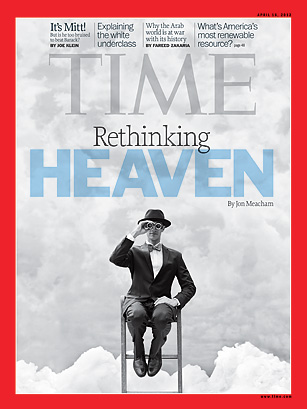
“From Santorum to Graham, the ferociously religious are doing religion no favors at the moment, and it’s beginning to feel as though we may need to save faith from the extreme pronouncements of the faithful,” so writes Jon Meacham in this week’s issue of Time. Theocracy is a scary word. It didn’t work in ancient Israel, and it is difficult to believe that our society is morally more advanced than things were back then. I mean, they had Moses looking over their shoulders, and Amos, Isaiah, Micah, and Jeremiah to point out each misstep. We have Santorum, Bachmann, Palin, and Gingrich. This playing field would be an abattoir, and I have no doubts that the true prophets would be the only ones left standing should it come to blows. The odd thing is, the ancient Israelites, evolving into the Jewish faith, came to recognize that maybe they misunderstood some of what their stellar, if mythic, founders were saying. Rule by God is great in theory, but in practice it leaves a nation hungry.

It is difficult to assess the sincerity of modern day theocrats. We know that politicians are seldom literate or coherent enough to write their own speeches, and we know that they tell their would-be constituents what they want to hear. It shouldn’t surprise us that they belch forth juvenile pietism and call it God’s will, for we have taught them that elections are won that way. My real fear is that one of them might mean what they say. Could our nation actually survive even half a term with a true theocrat at the helm? W may have played that role, but there was a Cheney pulling the strings behind the curtain. Some guys like the God-talk, others prefer to shoot their friends in the faces. Either way it’s politics.

I take Meacham’s point. In all this posturing and pretending, the would-be theocrats are making a mockery of what the honestly religious take very seriously. If they want to get right with God there are conventional channels to do so. The White House is not one of them. They swear to uphold the ideals of the Constitution that, with considerable foresight, protects us from theocracy. The history they prefer, however, is revisionist and their constitution begins with “In the beginning God created the heavens and the earth.” Their use of the Bible offends those who take the document seriously. Theocracies have never worked in the entire history of the world. Those who ascribe to mythology as the basis for sound government should add Thor, Quetalcoatl, and Baal to their cabinet and pray for a miracle.

The implacable face of politics