Bookless in Manhattan

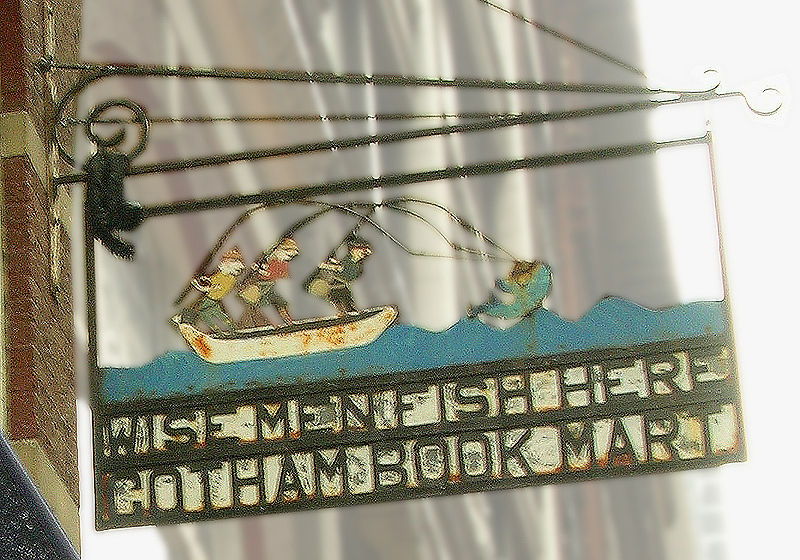
I suppose the fact that I still harbor an inordinate love of dinosaurs, geology, ancient civilizations, and liberal politics should prepare me for the demise of books. The short road to extinction lies along the path of my interests. Except, of course, Bible. There must be a portrait of a very old, decrepit scroll somewhere in someone’s attic. The culture of books, apart from the library, is a fairly recent one in human history. Even the concept of stores dedicated to books is one that has had a very tenuous lifespan. Now that Borders is gone, I’m sometimes reduced to skulking about Barnes and Noble to find my quarry. So on my lunchtime yesterday I decided to visit the Barnes and Noble on Fifth Avenue and then swing by the Gotham Book Mart. I had heard of the Book Mart before—the store that hosted visits by Truman Capote, James Joyce, Arthur Miller and many, many more luminaries. I thought it would be a good antidote to B&N, and besides, the address is just blocks from my office.

Barnes and Noble is the last resort of a reading man. I don’t have much time for holiday shopping these days, so I figured I’d nip in with my list (nothing too obscure; in fact, I’d seen the titles in an indie bookstore over the weekend, but my family was with me) and be back out in a jiff. Fifth Avenue. Midtown Manhattan. The choice of books was atrocious. Purely lowest common denominator selection. It is symptomatic of America’s love affair with the ordinary, the lower-quality-if-higher-quantity mentality. Cosco of the intellect. Barnes and Noble is the only show in town and they don’t have the selection or panache of many a much smaller Borders. I had to walk out empty handed. Well, at least there was the Gotham Book Mart to look forward to!

I suppose my first clue should’ve been the fact that the photo on Google maps showed a storefront reading “Food World” at the address which still maintained the bookstore name. I thought maybe the Book Mart was behind it or something. No Gotham Book Mart. Back at the office, chewing a dry peanut butter sandwich, I stared crestfallen at the computer screen. Wikipedia informed me that the famed Gotham Book Mart closed four years ago. Rising rents in Manhattan and the very Barnes and Noble I’d just visited drove it out of business. e e cummings, George Gerschwin, Jacqueline Kennedy Onassis, and J. D. Salinger passed their hours here. Katharine Hepburn, Woody Allen, and Charlie Chaplin were no strangers here. When the remaining stock—valued at 3 million dollars—came up for auction, it was purchased for $400,000. By the landlords. So ended an era.

From monks hunched over their vellum by the sallow light of candles to the modern dreamer in the glow of her or his laptop screen, we have brought writing an unimaginable distance. Unfortunately, many of the landmarks along the way have vanished without the blink of an entrepreneurial eye.
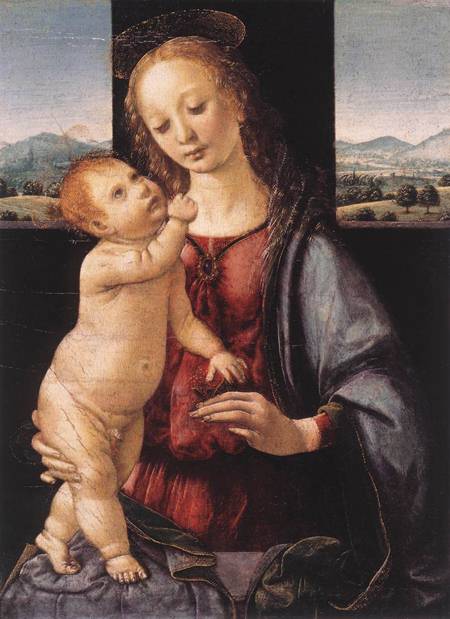
Fecit potentiam

Yesterday at Princeton’s annual seasonal choral concert, the program consisted of Bach. The first piece was a Magnificat, a piece that, in prose form, I quickly memorized at Nashotah House. With our daily double dose of chapel services, liturgical standbys such as the Magnificat quickly became reflex recitations, made with little thought beyond getting on to the next piece. It occurred to me as I listened to it at leisure, the hopes of poor Mary haven’t really materialized after these 2000 plus years. After a couple of millennia, perhaps it is time for a state of the theology assessment.

Despite the veneration of Mary in the liturgical branches of Christianity, the collective handmaids of the Lord have made slow progress in being integrated fully into church leadership. Only with the last century, and fairly late therein, did many Protestant denominations finally recognize that Mary’s gender might have something to teach the men. Paul, for one, would have had none of it. Even today the Roman Catholic Church stalwartly refuses to consider female priesthood. Perhaps Mary’s prayer should be uttered yet again within its walls?

At the section labeled “fecit potentiam,” however, I noticed further lack of fulfillment. “God has shown strength with God’s arm,” the program translates, “God has scattered the proud.” The hopes expressed in the next several verses have been silenced beneath the greed of an economic system with no responsibility. “God has deposed the mighty from their seats.” When did that happen? Those of the Occupy movement who’ve received a face of pepper spray might beg to differ. “God has filled the hungry with good things, and the rich God has sent away empty.” Sent away to their summerhouses, their mansions, and their penthouse apartments? Away from the working class who oil the gears of their massive machines. No, it seems that the Magnificat has not fared so well at predicting the new era to be brought in by a special child.

Of course, Luke’s song of Mary is based on Hannah’s song at becoming the mother of Samuel from the Hebrew Bible. Samuel was the great judge and prophet who saw to the law and order in the land. Strangely, however, the Bible manages to confuse Samuel with his erstwhile enemy Saul, conflating their birth accounts. Isn’t it just like the Bible to confuse the oppressed with the oppressor? The strength shown with the divine arm, the wealthy inform us, is the strength they wield. After all, god and gold differ by only one letter.


Soccer Moms and Robot Dads

Long past Halloween, the air is taking on its terminal, winter chill. High school football teams have moved off the fields (although the “pros” will keep at it until the Super Bowl in sunnier climes). What are sports parents with an excess of aggression and competitiveness to do? It is the time of year when some parents start thinking about the FIRST (For Inspiration and Recognition of Science and Technology) robotics competition. It is a good sport for the hibernation season.

My daughter is on the FIRST Robotics teams in her high school. FIRST was invented by Dean Kamen (along with many physical inventions) as a way of stirring up interest in STEM careers. Interest in science and technology careers, inexplicably, is faltering in the US, while many of us who grew up enamored of science but without any natural ability sit by and scratch our heads. Careers in robotics are very hot—especially since machines can do things we mere biological units can’t. We are that squishy, organic chemistry with a mysterious plan that serve as gods to the mechanical beings we create. Woe to humanity when the robots become atheists! But that’s a point for another post. Sports—and FIRST clearly is a sport, as much as racecar driving or horse jockeying—take on a religious devotion among people of leisure that rivals the commitment oppressed peoples have to their more tradition forms of faith. The easiest means of seeing this is in the fans.

“Fan,” of course, is an apocopated form of “fanatic,” a word wielded with derision against those who take religious belief too seriously. In sports it is a venial sin, if not a downright virtue. Consider the continuing news stories still swirling around a non-necessary sports figure at Penn State. Even the name of the school evokes football rather than academic performance. The same thing applies to FIRST. FIRST robotics is a sport for the mind, and it has its share of analogues to the soccer mom, what I might call the robot dads. These are parents who are particularly driven to win. In a sport involving band saws, hydraulic lifts, and multiple motors, parents are actively involved in building robots suitable for competition. And the competition can be intense. It becomes a kind of robot religion. Dean Kamen, the Susan Calvin of FIRST, has tried to instill commandments of sportsmanship and gracious professionalism into the competitions. That is something the kids understand. As I attend the competitions, however, it is the religious parents that I worry about.

My worry includes the kind of gender disparity that characterizes the work place. Why should not the scientists and engineers include more women? The field strives to do so, but our society still discourages the participation of women in the men’s room of heavy equipment and intense mathematics. Isaac Asimov, frequently a writer with distance vision, made a woman the head robopsychologist of U.S. Robots and Mechanical Men, Inc. If Dr. Calvin were to look back from her fictional 21st century to the actual 21st century she would see women still struggling for equal voice in both science and religion.

Let's hear it for the boy


Retrograde Hollow-days

Surrounded by the intoxicatingly ebullient aroma of balsam, it is difficult to believe that it is not yet Christmas. As 4-Hers decorate their wreathes, in November, I recall that the first signs of Christmas appeared in the stores before its unexpected cousin Halloween this year. In fact, stores hawking Christmas remain open year round. This retrograde motion of the holidays in time belies the very concept of the “holy day.” Ancients, and not-so-ancients, believed that there actually was something different about particular days. The trimmings and the trappings were secondary to the point of the day; something momentous had transpired on this very day, making it unlike any other. With the advent of industrialization and its unrelenting work ethic, holidays came to represent a kind of mini-exodus, a release from labor that falls outside the insufficient weekend. Leisure time encourages shopping. A modern holiday is born.

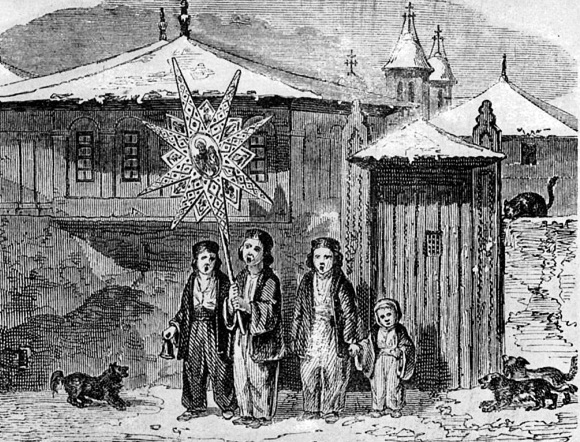
A child's Christmas in Bucharest

The increase in labor-saving devices has placed us in a twilight of leisure. Holidays can be anticipated many months in advance—gifts purchased earlier and earlier, until the holiday itself seems to pale by comparison. Moving retrograde into other seasons. The joys of the consumer holiday are hollow. It is too easily forgotten that money is a symbol, a mere medium of exchange. It has become an end in itself. Just two centuries ago nobody would have dreamed of collecting the symbolic patina of a capitalist system for a profession. Now accounting may lead to great wealth. The wealth, however, is transparent. Millionaires, like emperors, are disinclined to have the fact that their clothes are immaterial pointed out. They are, after all, where we want to be. Let the one with no dreams pop the first seam.

Holidays have the capacity to give symbolic meaning to life. They emphasize the cycles of nature and of life itself: birth, procreation, death. Removed from context, however, they lose their meaning and become just another excuse to spend too much, eat too much, drink too much. We call it celebrating. Those on the receiving end of the cash flow have the most to gain by promoting such hollow-days. Nothing is so easily exploited as child-like anticipation. The scent of balsam takes me back to a far-distant childhood this November night. The memories, no matter how dysfunctional the setting, are serene and full of anticipation. The symbolism suggests this may not be vanity after all. Until the bank statement comes, and the hollow-days begin all over again.


The Self-Importance of Nothingness

Not that I’m aspiring to Sartre, but being in the presence of so many academics brings out the natural existentialist in me. Religion is a funny field to engage in higher education. We are studying an intangible. Many would say an illusion. If we are too bold about what we find, no shaking hand will deign to sign the paycheck, and so we carry on, innocuous, unperturbed, self-assured. At conferences like this I sometimes sit back and watch others walk by. Having entered the academic world from humble, uneducated beginnings, I have no pretensions about what I do. Or where I might go. Yet I hear idolatrous whispers following those who’ve made a name for themselves. God-struck grad students with that theophanic gaze leveled at the man (sometimes woman) whose name graces the cover of so many books. God’s very representative here on earth. Incarnate in this very room.

I entered religious studies because I arrived at college knowing nothing. An exasperated freshman advisor finally insisted I chose a major. I said I didn’t know. “But what are you interested in?” To me religion wasn’t as much an interest as an imperative. Some churches raise their young to believe that all else is vanity. Every moment should be spent seeking that elusive deity, the one whose very words the clergy speak. I fell into religious studies. I fell far. Reading the Bible multiple times as a teen, classes weren’t that challenging. Ideas were. There comes a time, undefined so as not to be pinpointed, when an invisible line is crossed. Then, when you look back, everything has changed. A dark secret has been planted deep in your psyche and you realize that you are a religion scholar. There is no turning back.

No Einsteins exist in the world of the academic study of religion, but gods abound. Watching colleagues who’ve achieved the dream, who’ve been tenured and pampered and paid well to deign to share their lofty thoughts with the rest of us, I feel like I’m watching shadow puppets against a blank wall. When will they get God into the laboratory and switch on their fancy, humming machines, and the one that goes “ping,” to uncover the truth of the universe? How much lower can we mere mortals stoop? It often feels like I missed that crucial first day of school. Having peered long over the ledge, however, I realize that we are all in this together. Has anyone ever bothered to count the homeless in San Francisco? Has anyone ever bothered to look into their eyes? And that guy with high name recognition? I’ll ask him to write a book. And I will fawn and coo. Why? Because I know the hand that signs the check, and I know the price of idolatry.


Inauguration

Religion is an all-consuming beast. I suppose that goes with the territory of making universal claims. In the light of the already ponderous influence religion has had on the selection of presidential candidates this year, I recently re-read Abraham Lincoln’s second inaugural address, delivered not long before his assassination. The Civil War was not yet quite over, and Lincoln knew the horror of the situation. He famously said:

Both [sides in the conflict] read the same Bible, and pray to the same God; and each invokes His aid against the other. It may seem strange that any men should dare to ask a just God’s assistance in wringing their bread from the sweat of other men’s faces; but let us judge not that we be not judged. The prayers of both could not be answered; that of neither has been answered fully. The Almighty has his own purposes. “Woe unto the world because of offences! for it must needs be that offences come; but woe to that man by whom the offence cometh!”

Lincoln, never a regular church member, knew his Bible but also knew the soul of his country. A century later Bob Dylan would compose “With God on Our Side,” in protest to another war where divine backing was assumed. When a major undertaking is launched, the Lord is always on the guest list. The problem is, God can’t sit on both sides of the table.

The religicizing of politics is a dirty business. Religion plays so heavily on the emotions that it is, as history has shown, a truly unstoppable force. Even so great a conservative as Barry Goldwater felt this mixing of religion and politics an unholy cocktail. “I am frankly sick and tired of the political preachers across this country telling me as a citizen that if I want to be a moral person, I must believe in A, B, C, and D. Just who do they think they are?” (The Congressional Record, 16 September 1981). So here we go again.

Religion and politics are a dangerous mixture. In a culture as religious as that of the United States, the potential for (and realization of) disaster is great. Think of the lives lost based on the religious outlook of our last president! Over the past few decades we’ve witnessed a parade of preachers, Fundamentalists, believers in New Religious Movements, and quasi-certifiable candidates march across our political stage, and yet our doors are closed to those who refuse to make public statements about their intimate relationship with an ancient savior. For the Bible tells us so. If we believe the preachers. Those of us who don’t will be putting on our Bob Dylan records and reading the wise words of Abraham Lincoln.


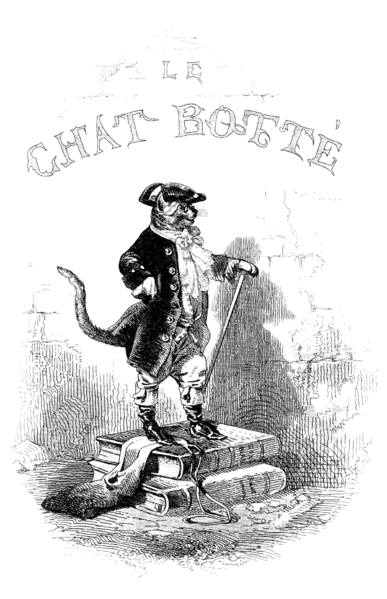
Master Cat

Okay, so I’ll confess having gone to see Puss in Boots yesterday. The movie had been getting good reviews and I’ll admit to really liking the first Shrek movie. The second Shrek movie, with Puss’s debut, was not bad. After that something changed. Anyway, it looks to be an intense week ahead, and I needed a little mindless release. Often on this blog, I mention horror movies and how fear ties into the concept of religion. Since working at Routledge—a publisher noted for its many books on religion and film—I’ve taken a renewed interest in finding the religious imagery in many different genres of movies. This is something I regularly undertook as a religion major in college and beyond, but it is an area of renewed interest in my mature years. So it was off to the theater.

One aspect of Puss in Boots, however, proved a distraction to me. The character of Humpty Dumpty scrambled in my mind with the same off-color image of the egg man in Jasper Fforde’s The Big Over Easy, a book I read this summer and blogged about earlier. In both stories, the egg was not what he seemed to be. A foodstuff with a decidedly darker side. In both stories, however, Humpty Dumpty was somehow vindicated, more a victim than a perpetrator of crime. It is not always easy to be a good egg. In Puss in Boots, however, this is where the religious imagery came in. The fractured fairytale storyline has Puss and Humpty (and Kitty Softpaws) growing a giant beanstalk and stealing the golden goose’s gosling. This is part of a twisted effort at revenge by Humpty; a kind of egg’s Benedict Arnold moment. Well, this is a children’s movie, so nobody is really bad. Humpty repents and sacrifices his own life to save the town. When he falls to his death, a golden egg is revealed inside. Mother Goose flies the golden Humpty up to the castle in the sky, disappearing in a blaze of heavenly sunlight. Life after death, the eternal reward. Heaven, Hollywood style.

Movies often serve as a source for and reflection of social values. Thus watchdog groups keep a close eye on what the silver screen reveals. Puss in Boots passes the test on highlighting the redemption theme. Although he is still a wanted criminal by the end, Puss (as well as Humpty) achieves redemption by making good on all the wrongs he committed against society. Almost sermonizing at points, the movie is another example of how mainstream media ends up on the side of traditional values. A deeper truth, however, may lurk beneath the celluloid. The true hero here is the Spanish Puss rather than the Angelo Humpty (and decidedly red-necked Jack and Jill). The religion it underwrites is, naturally, the civil religion expected by American audiences. Just maybe there is an awareness of social justice here as well.

The original


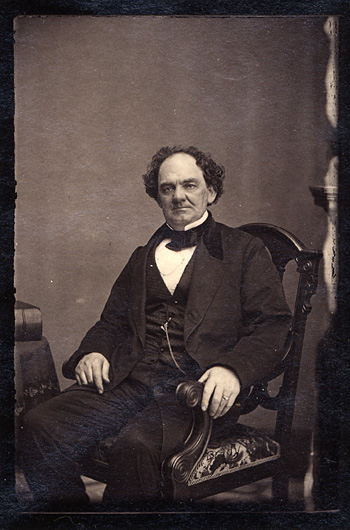
P. T. Mammon

Phineas Taylor Barnum is frequently treated as a figure of cynicism personified. As the founder of what would eventually become the Ringling Brothers, Barnum and Bailey Circus, P. T. was a noted hoaxer and scam artist. He capitalized on the fact that people will pay to see anything they are gullible enough to believe. Unfortunately, many human beings were exploited for their unusual characteristics, but he was also known as a philanthropist with an eye for reform. Most people don’t realize that Barnum’s early career involved being a salesman for the Sears’ Pictorial Illustrations of the Bible. From Bible salesman to huckster extraordinaire. The great American success story.

In what I see as a related article on Religion Dispatches, St. Paul’s Cathedral, London, has taken legal action to move Occupy London protestors from its property. As religions go, it is difficult to conceive of a more established, conformist church than the C of E. (Well, maybe the Roman Catholic Church could vie.) St. Paul’s Cathedral actually charges an admission fee (not a cheap one either), perhaps cashing in on Mary Poppins; Feed the Bishops, I believe it’s called. The reason that the Cathedral is seeking to remove the undesirables (the cathedral is next door to the London Stock Exchange) is that they interference in business. Hard to charge admission to people who can’t come in. It’s not so much to save souls as it is to horde pounds. Problem is, the message of ancient Christianity more closely matches that of the Occupy movement than it does the Church of England. Barnum knew the selling power of religion. So do bishops and countless priests. How long do you suppose the clergy would remain if Christianity went back to the “tent making” model of the first century? I suspect there would be quite a few more prelates at Occupy London.

Somehow money and religion have become all tangled together. Not that I would begrudge any clergy of a fair salary—I’ve been on the receiving end of not receiving adequate pay myself, and I wish it on no one. When money, however, is the sine qua non of the religious establishment, where has compassion gone? One would like to think that clergy would be among the first to stand in solidarity with those protesting unfair business practices. But ah, the church is very establishment-oriented. Not just the C of E, either. Most churches have fallen into the comfortable zone of supporting the system and teaching their adherents that this is all in the divine plan. A kind of cosmic quid pro quo. According to the Gospel writers Jesus chased the money-changers out of the temple. Phineas Taylor knew that giving people what they wanted often trumped the honest truth. “The noblest art is that of making others happy,” he once stated. Somewhere along the line, the admission price shifted from the circus to the cathedral. There is one born every minute, indeed.


Jew Want Some Jesus with That?

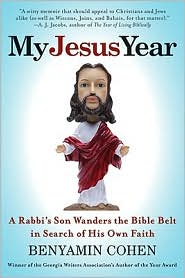
There’s been a trend in the last few years of journalists following a religious lifestyle not their own to learn something of another faith. This often leads to whimsical—occasionally funny—books that generally sell well. I appreciate the effort of those who try to open their minds to other belief systems, but the truly funny thing about religions is that they are very difficult to study objectively. There is a universe of difference between studying the papacy and being a Pope (I am only guessing here). This aspect of the religious explorer came through quite clearly in Benyamin Cohen’s My Jesus Year. Cohen, an Orthodox Jew, without compromising his faith, spent a year of Sundays attending various churches with two goals in mind: to learn more about Christianity and to appreciate his own Judaism more. The result is, for someone raised in the Christian tradition, a little disorienting.

We seldom tell children about other religions since such information would imply that religion is a choice, a marketplace. We prefer to tell our children that our brand is the right one—the only right one—because that is what we believe. By the time most children encounter those of other faiths, the indoctrination of their childhood has congealed. Many Christians will send their children to Christian daycare, often followed by parochial schools. Where would they expect to meet their first Muslim? Unfortunately, it is often on the battlefield. By protecting our children from the dangers of foreign faiths, we endanger everyone involved. So, reading a book written by a Jew, I felt a little strange—as if maybe Christianity wasn’t the majority faith after all. Given the wide diversity of Christianities Cohen cites, this is not so strange after all. Am I more like the evangelical Ultimate Christian Wrestling crowd or the Roman Catholic doing crossword puzzles during mass? Or none of the above?

Cohen notes that evangelical pastors (or laypersons, Christian or not) will sometimes share their secrets of success with those of other religions. Tellingly, he quotes Bernie Marcus, co-founder of Home Depot, explaining to rabbis how they might drum up more excitement: “You’re in the marketing business; you’re selling a product. You’re selling religion. It happens to be something that’s good for people. But you can’t get to them to sell them the religion because you’re in the marketing business and you don’t realize you’re in the marketing business.” Is that what it really comes down to? Religion is frequently described as a marketplace; it is the only paradigm available for the true capitalist. We’ve seen it take over higher education, and now those who give advice to religious leaders are the captains of industry. We have become victims of our own success. There was a time when religion stood outside the ordinary, but now it can be packaged and marketed and sold. An excellent exercise on your way to the store, however, is to stand back and listen to the other customers. If you are lucky, one of them will be Benyamin Cohen.


Bonfire of Vanity

“Remember, remember the fifth of November, the gunpowder, treason and plot…” V for Vendetta is movie that gets me every time. It is not that I want to see venerated buildings destroyed, but I do want change. Very badly. When visiting Occupy Wall Street last week, I saw protestors wearing Guy Fawkes masks, made popular by the movie V for Vendetta. Verily, I had to smile. We may remember the Gunpowder Plot and how the victorious forces of the monarchy stopped Guy Fawkes just in time, but how often do we remind ourselves that the story revolves around religious liberty? Finding their religion outlawed, Guy Fawkes and his co-conspirators tried, in a very unorthodox way, to make a very valid point: conscience cannot be legislated. Indeed, in the movie, the political powers claim that it is “Godlessness” that has led to the villainy, the decline of society. In fact, however, it is that the vices of the rich and powerful have turned them against their voiceless commoners; vanity has led to this dystopic future.

Once more we find ourselves at vespers on Bonfire Night with wealth firmly in place, political, religious, and economic powers secure. And many cold, hungry, and without a vestige of hope. I’m not sure there is a solution to this problem, but if religion has taught any lesson of value at all, it is that we must try. We must venture to make the situation better. Even those who wallow in the status quo want growth and development, albeit for themselves, claiming it only a venial sin. If the human race is not to go extinct, ossified before its computer screens, iPhones, and televisions, we must use our voices. We must stand, and it is vital that we stand together.

“An idea can change the world,” V tells Evey near the beginning of the film. Once the leaders of the government take military control, the freedom of expression is soon vanquished. Books are not to be found, visual art is considered dangerous. Questioning those in power is the very stuff of treason. In my short time I have seen us coming dangerously close to that mentality and calling it visionary. When people are afraid they will close in around the virile leadership of guns and violence. But fear may be vanquished in another way. When we recognize that we are part of something greater, when we relinquish what is “rightfully” ours to help others, when we join in that great collective called humanity, fear itself will vanish. It is not just vaunted Wall Street that must be occupied. No buildings have to vacillate and fall. We must Occupy our Minds, for rage as they might, the wealthy and powerful cannot control a venerated idea. “Remember, remember, the fifth of November…”

Villain or visionary?


The Fires of Bureaucratic Porn

My hopeless naivety must show through on this blog from time to time. I mean, I once walked into a Fossil store expecting to find impressions of dead animals instead of trendy accessories. Maybe it is because I grew up in a small town, without cable, with a regular regimen of church attendance and associated activities. Being working class often means taking things at face value. You learn pretty quickly that you don’t have much control over the things around you—someone else signs the checks, and if you don’t do what they say, the checks don’t get signed. I grew up in a refinery town doing lots of dirty jobs. “Excuse me sir, but do you have any trilobites?” There’s one born every minute. Well, more frequently than that, actually.

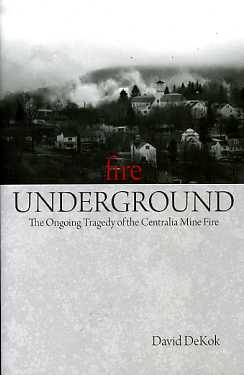
Thus it was with a certain wonder that I first learned about another small, Pennsylvania town with an unearthly problem. David DeKok’s Fire Underground: The Ongoing Tragedy of the Centralia Mine Fire is an unsensationalized ride through the reality of bureaucratic lack of heart and the weighing of peoples’ lives in the scales of cost effectiveness. The Centralia mine fire began the year I was born (1962). It still burns today and has enough fuel, some reports suggest, to last for a thousand years. This is a hellish millennium. Accounts of elderly citizens awaking in the middle of the night with carbon monoxide clouds in their basements, ground temperatures hot enough to melt blacktop, bore-hole readings of over 800 degrees. Under what’s left of the town of Centralia, the heart of the fire is hotter than the surface of the planet Mercury. What DeKok provides is a step-by-step analysis of political side-stepping. Realizing how expensive it had become to fight this fire underground, state officials were repeatedly caught with their skirts over their heads, claiming that they were wearing full-body armor underneath. During the height of the crisis, in the Reagan and Thornburg years, cutbacks in vital services left the working people of this town in an impossible predicament. Those in positions of power would not even change their vacation plans to try to save a thousand lives. When the smoke clears, after a millennium, if there’s anyone left to write histories, we will see where unchecked greed and ambition lead. It is the only hope we have. The book reads like porn for bureaucrats.

In my hometown we worried about refinery fires when I was growing up. As a child I saw such a fire from a distance; it looked like an entire hillside (a mountain in my naive eyes) was aflame. My brothers and I went outside to gather ashes as large as dinner plates that were floating through the sky, falling like demonic snow. (We doubtless would have kept them, alongside our fossils, had my mother not sensibly put down her foot.) Later, when we drove out that way, we saw the great steel vats that held 260,000 gallons of petroleum products bent and folded over like the hem of God’s great robe in the temple. Over forty years later the image is still vivid in my mind. Those who’ve lived with fire know the danger better than plutocratic oligarchs who view human lives in terms of the bottom line. One truth of physics may come to our aid, eventually; heat does rise. Whether it will ever reach the level of those in power, however, will only be answered when I find that trilobite I’m seeking amid the expensive watches and wallets of the Fossil crowd. I’ll find one too, before the Centralia mine fire burns itself out.


Zombie Jesus

It must still be October. Despite a snowstorm before Halloween (one of nature’s trick-or-treats), all the signs are still there. My daughter showed me a Venn diagram yesterday, during a whole-day marathon of putting plastic around our drafty old windows, showing the intersection of three “monster” traits: resurrected from the dead, local townspeople fear and revere him, and convert as many mindless followers as possible. The creatures that inhabit this eerie universe are Dracula, Frankenstein, Zombie, and, where all three intersect, Jesus Christ. Obviously this was just for a laugh, but interestingly, one of the traits of Penn Jillette’s book, God, No!, is his rather frequent reference to Jesus as a zombie. Then I clicked over to Religion Dispatches, and the lead story is headlined, “Praying to the Zombie Jesus.” Ours is a world of mindless, quick connections where the compelling idea of resurrection has lost its appeal. Despite our religious culture—or perhaps because of it—we have come to see Christianity as just one more peddler of a wonderful, disturbing idea.

As regular readers of this blog know, I find the abuse of religious ideals inexcusable. Using one’s faith to beat another down is just plain wrong. Nevertheless, to focus on the folkloristic aspect of resurrection (or perhaps it is a metaphor) is to miss what drew the very earliest followers to Jesus. Before the idea of rising from the dead came a message that people should love each other and treat one another with respect and dignity. By the end of the first century of the common era, or perhaps as early as Paul, that idea grew to be a quasi-magical resurrection from the dead. No longer were women counted as equals among the followers of Jesus, and no longer were wealthy compelled to give it all up. Paul’s faith looked to a future world, beyond death, and was willing to consider this world, well, to be polite, crap. The reasons for this transformation are legion: the persecution that Christianity was undergoing, the failure of an apocalypse to take place, the disenfranchisement of the believers. They needed something to look forward to.

Zombies are likely a passing fad. When we start seeing books of zombie Christmas carols, zombie haikus, and zombie apocalypse survivors’ guides, we seem to be reaching the peak of the plateau. The zombie is mindless, rapacious, and entirely selfish. It will not go away. It is the perfect denizen of October. When I stare into those uncomprehending eyes, and see the disturbing lack of compassion and the desire to consume human brains, I start to make connections of my own. Analysts often describe zombies as the ghoul of the common folk. But all these characteristics taken together suggest that perhaps the month in which to expect zombies is November. Surviving another snowpocalypse, earthquake, and hurricane, the human spirit is difficult to dominate. And yet, when the polls open up in the darker season of the year, zombies will rise. The plastic on my windows does nothing to stop these chills.

Borrowed from a friend's site


Conversation with Solomon

“The rights and interests of the laboring man will be protected and cared for, not by labor agitators, but by the Christian men to whom God in his infinite wisdom has given control of the property interests of the country,” wrote George Baer of the Philadelphia and Reading Coal and Iron Company. In 1902. Along with Melville I’ve been thinking about old Ecclesiastes and his gloomy prognostications. The writer of this neglected book of the Bible claimed that nothing was new under the sun; what is has been before. I read the quote above in David DeKok’s Fire Underground (on which more later). I thought of Occupy Wall Street and the supposed great wisdom of the “Christian men” that God “himself” has appointed to towers of wealth for our benefit. As long as we keep our mouths shut and our hind-quarters out of Zuccotti Park. The data, Old Solomon, I must admit, are depressing. The staggering wealth of the top one percent is beyond unconscionable. Solomon? Are you still listening? After all, as one of the Lord’s chosen, Solomon was also a king. In his day, according to the book of Kings, silver was as common as the dust in the streets. Is that rain, or just drool from the towers of power?

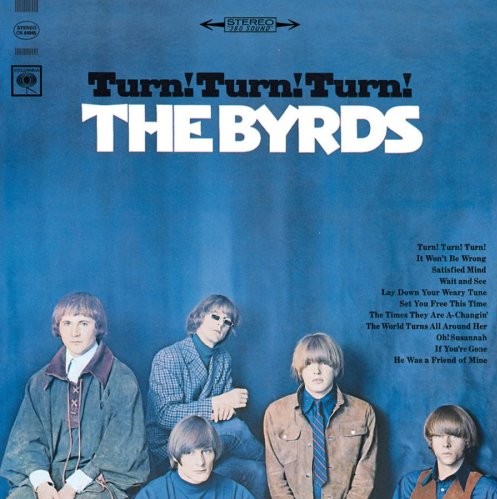
Old Ecclesiastes said the more that things change, the more they stay the same. He also inspired the Byrds’ “Turn, Turn, Turn.” As a society we have become reluctant to turn. Where did all that wealth go, Solomon? Did it not go to the temple and the palace? Seems there was a Religious Right even back then. As soon as Solomon died the common folk revolted. The chosen people split into two kingdoms that were never again reunited. Turn, turn, turn. The Christian men to whom God has given control have abandoned their posts. They’ve taken the cash and shared with their friends. Yes, America has kings. When the disparity is so great no other name applies.

“Cast your bread upon the waters,” Old Ecclesiastes says, “and it will come back to you in time of want.” I doubt that Solomon was ever unemployed. After working for “the Christian men” for over a decade, I was cast out on the waters, never to return. My stint of unemployment wavered in and out for six years. And I am one of the lucky ones. In that time I don’t recall feeling any wealth trickling down. I sure spent a lot getting the requisite degrees for a job that never materialized. So I sit down to read Ecclesiastes. Those who are addicted to wealth and power simply never took the words of the old sage to heart. We can excuse them, I suppose, since most clergy ignore him as well. When in need of some honesty, it is nice to know there’s a book in the Bible that is unafraid to utter the truth.


Great Gaps Be

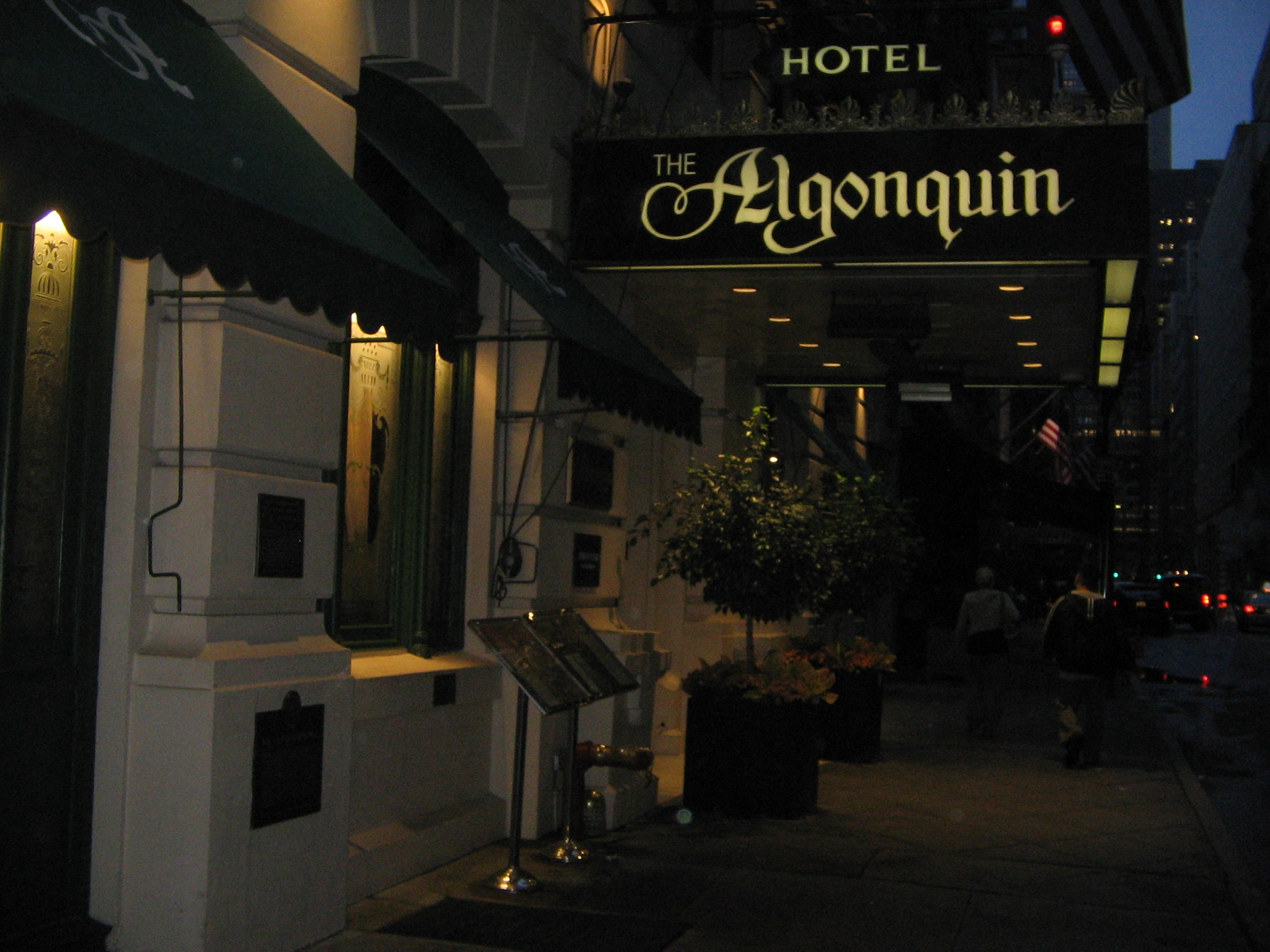
Before hanging out on my bookshelf, and countless others like it, F. Scott Fitzgerald and Dorothy Parker and their friends (including Harpo Marx) gathered at the Algonquin Hotel. Apparently without effort they forged a living at a trade to which I idly apply myself each day before dawn. They wrote the America of their era. There are those who say Parker haunts the Algonquin, but in truth her words, like those of her companions, are her legacy. Some of us dream of making a life out of words, but this is not much valued in our society where even concepts must have salability in order to be deemed worth the time. If it had not developed independently millennia ago, religion could never have emerged in a capitalist society. Certainly there are religions that barely qualify for the non-profit status they claim, but the founders of religions in antiquity were believers in idea, sacred words, invaluable concepts.

No society pours much money into what it truly values. Religions were never designed to be money-making ventures. Those of us who work in the book trade know that authors would write even if they never got paid a penny (and many of them don’t). Art, like religion, is an expression of the depths of human need. In a Wall Street society, however, those who don’t manufacture something, or get rich from those who do, are merely taking up space. We measure the success of a person by the chattels they own, not the linear feet of bookshelves they can fill. But when we need to find a human touch, a book is a far better companion than a checkbook.

When I walk past the fashionable Algonquin just as the sun is beginning to penetrate the dark valleys of Manhattan, I sense that two worlds are attempting to coexist here simultaneously. One is a world of separation and power. The other is a world where Harpo Marx sits at your table. F. Scott Fitzgerald gave us the Jazz Age, defining the brief interlude when the world wasn’t at war, defining with words that just about every high school kid will eventually read. Fitzgerald was never good with money, and even The Great Gatsby was not an immediate success. The walls of privilege are locked with stout doors indeed. Such a situation calls for the unparalleled wit of Dorothy Parker, but for some scenarios the last word properly belongs to Harpo Marx.


Had my Phill

One of the pleasures of the editorial occupation is traveling to campuses to meet potential authors. Having no excuse not to go to Philadelphia, I jumped on a train this morning to spend the day on the campuses of the University of Pennsylvania and Temple University. I’d been to both campuses before, but they are a study in contrasts. Penn is Ivy League, of course, and the students appear confident and self-assured. Temple is a large, public university situated in a neighborhood that doesn’t exactly inspire the same confidence. The students appear happy enough, but of a rather different ethnic blend. I pondered these differences while waiting for a taxi. I hadn’t realized that PHL Taxi stands for “Prefer Hanging Loose”—after three calls and no vehicle, I had to call another company. To try to save Routledge a few pennies, I had opted for the Days Inn in north Philadelphia. A friend told me over lunch that this part of the city is probably not the safest.

In the taxi we drove through neighborhoods that politicians like to pretend do not exist. The sheer degradation of the buildings, sidewalks, and people was sad. The most common type of building, next to houses (many semi-demolished), is churches. Many of the churches bear their names in Spanish; most have heavy metal chain doors emblazoned with crosses. It seems that maybe Van Helsing would go to church in a place like this. The kind of place where a dead body does not astonish, and the people on the street corners look remarkably cheerful, given the circumstances. The Days Inn is in a more open and commercial area, and I don’t think anyone has actually been murdered in this particular room. On Temple’s campus I saw many signs for Occupy Philly.

Those who think everything is just fine with the ultra-wealthy in their heaven while we expect human beings to live like this are worse than naïve. Those who are privileged look on Occupy Philly with a sense of academic curiosity. Those who live next to poverty, hard up against it, see Occupy Philly as a mandate. We can’t keep pretending that everything is okay. If God has a plan for America, why have so many people been left out? People with more churches per block than any affluent neighborhood desires or supports? The movement may be ill-focused and leaderless, but the need is very real. Tomorrow I go back to Temple, back to where the struggle is often life and death and the need is very human. But for this evening, “Now I lay me down to sleep…” I’m sure you know how the rest of it goes.