Space Ads

So, I’ve got enough stuff to worry about down here—the chimney needs some attention, that backyard gate still doesn’t hang right, and Giant keeps on running out of the cereal I buy—to have to turn my attention to space.  I love outer space, although, unlike some people I’ve never been there.  One of the simple pleasures in life is to be outdoors at the lake and watching the night sky where there’s no light interference.  Then I learned about space advertising.  You see, as an editor you get to read about all kinds of topics, and this came up in a proposal one time.  I had no idea that companies had been proposing billboards in space to fly across our nighttime skies.  It’s hard enough to use the internet anymore without hacking your way through a jungle of ads, and now they want to clutter our view of the nighttime sky so there’s no escaping capitalism.

“Space, the final frontier.”  This is a mantra that many of us grew up with in the sixties.  Most of us can’t afford to, and really have no desire to, go into space.  Born down here, we’re content to stay down here.  That doesn’t mean we can’t look at the sky with wonder.  Already you can’t go to the beach or a stadium event without planes flying banners trying to draw your mind back to the commercial world.  Even in remote forests you can find litter stamped with some company’s logo, trying to sell you more.  It’s enough to make you want to get to space to get away from it all.  Now that companies can afford to fly people to space as tourists—this is pretty strictly limited to the top one percent, of course—they feel they have the right to clutter the nighttime skies so that you’ll have that midnight urge to go buy a Tesla.

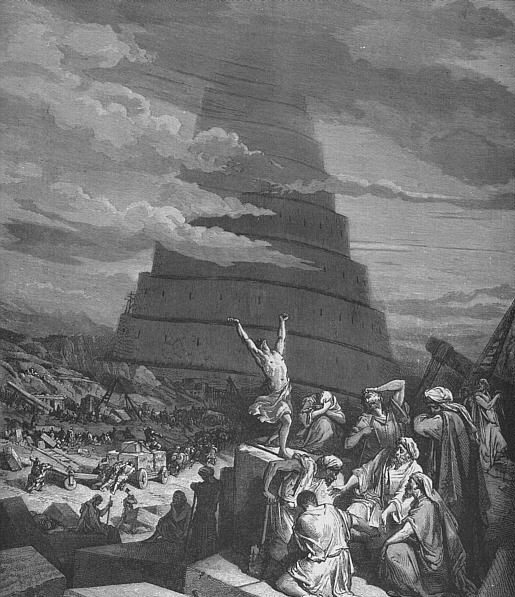
The original space advertising?

At this time of year we look to the nighttime sky in hopes of seeing a special star.  People with too much money cause so many unnecessary problems for the rest of us.  This has been apparent throughout history, but has been brought into sharper focus in the days of late capitalism.  Having too much only makes you want more, it seems.  And since other people have some you need to flash your company in their faces constantly.  From what I’ve read the only reason space advertising hasn’t really taken off is that it costs millions to get your ad up there.  Despite inflation it seems that these kinds of costs always come down.  And yet you can’t even get a contractor to come out and do something about that deck that’s falling apart.  And I do hope that they’ll have my cereal at the store this week.


Yule Tidings

Happy Yule!  One of the things my British colleagues find hard to believe is how Dickensian American employers are about days off around the holidays.  Corporations tend to give one day for Christmas, and you can hear them grumbling, “I suppose you must have the whole day?” even as they give it.  Christmas is, however, a season.  The twelve days begin on the 25th, but Yule starts today.  Yule marks the solstice—the fewest hours (minutes) of daylight occur today.  Tomorrow daylight will start to grow longer, although it will take many days before we begin to notice any difference.  I know this reflects a northern hemisphere bias, but having read about how less time is necessary for work, given technology, I wonder if there might not be a more equitable solution to this hemispheric focus.

What if we regularly gave generous time off around the holidays to recharge our batteries—renew our spirits—for both hemispheres?  What if we gave our southern neighbors the benefit of, say, a week off in June, after the summer solstice?  And what if we joined them as well?  Only the most uninformed believe that Jesus of Nazareth was born on December 25.  The best that those facile with calendars and history  can do is that he was likely born in the spring, so why not split the difference and offer rest and respite in both December and June?  Bean counters who equate every second in front of the screen as adding to the bottom line (a fable as sure as anything the brothers Grimm recorded) might need to be the ones leading the way.  Rest is important.  Time to think about something else.

Yule is an ancient celebration.  We don’t know how far back in history it goes because there are no records of its earliest celebration.  Before computers, before the industrial revolution, it was recognized that little truly productive outdoor work could be done during the winter months.  Obviously we can’t sit around and do nothing all the way til March, but these very short days bridging the end and beginning of what we now recognize as the new year, are custom-made for reflection and renewal.  Why not encourage it?  Perhaps the bean counters could use it to read A Christmas Carol.  Maybe they could set aside their abacuses and reflect on the wonder of the seasons that suggest to us that now is the time to rest and wait for the light to return.  Let’s truly celebrate Yule.


For the Eyes

A Welsh horror film?  Lately Euro-horror has caught my attention.  European sensibilities give horror a distinctive flavor, and The Feast doesn’t pull the usual horror tricks.  And reading the subtitles keeps you on your toes.  It’s more a slow build that manages to be unnerving from the start.  A family of four—parents and two boys in their late teens or early twenties—is hosting a feast.  A local girl, Cadi, is hired to help cater the affair.  The family is really seeking to get a neighbor to allow exploratory mineral drilling on her land.  She refuses, horrified when they mention that they’ll only drill on the rise.  The neighbor, aghast, says they know better because they’ll awaken “her.”  The unnamed her is a goddess who is within the rise and who’s been disturbed by the family’s drilling on the land adjacent to their neighbors’ property.

A number of aspects push this beyond Euro-horror.  The goddess, treated as superstition by the family, introduces religion into the horror.  (Cadi, as it turns out, died on her way to the house and the goddess inhabited her body.)  The remote location and role of the countryside also bring this into the folk horror realm.  Having an underlying ecological message, the film is eco-horror as well.  As such it has a positive message, even as all those at the feast, apart from the uncompromising neighbor, die before the evening is out.  Gods will express their wrath.  Although there’s gore, the concept is intelligent and possessed Cady’s unwillingness to speak throughout much of the film adds to the tension.

Horror films with subtitles sometimes don’t work, but The Feast manages pretty well.  Much of the disturbing atmosphere comes from the house.  A modern construction, built over what had formerly been the family’s farm, stands in stark contrast to the natural world all around.  As is often the case in eco-horror, the land is waiting to take its revenge.  It’s a message appropriate for a time when we fail to live up to our own environmental standards, and consider the checks and balances of nature itself as “superstition.”  Maybe a goddess will not awaken and kill everyone at the dinner party, but the wealthy will not be spared, as the movie prophesies.  We share the planet and the earth allows us to survive.  There’s a sense that we deserve to be reminded that living on a finite planet requires careful stewardship of it all.  If you’re going to throw a feast, at least make sure it’s not at the expense of nature.  Some goddesses are best not aroused.


Dark Academia

Over the weekend I “dropped” a new YouTube video on my channel (you can see it here, or by visiting my “YouTube” page in this website’s menu).  It ended up getting a little flurry of interest (1,800 views in the first three days), prompting a friend to tell me that if you pay attention to what’s hot on the internet, you can actually get attention.  That makes sense.  What’s so hot?  Dark academia.  Of course, my video really moves to dark academia adjacent, to what happens to real people when they try to teach religion and run afoul of “doctrine.”  There’s a real disconnect here because if you earn a good Ph.D. you’ll be taught to question everything.  If you’re a doctrinal believer, you’ll question nothing.

I stopped posting on YouTube a few years back because my cheap camera no longer worked.  It lost about three episodes I shot and, discouraged and too busy with writing projects, I gave it up.  I started again because I realized my phone was capable of recording and I had a holder that would stop it from slipping.  So why not?  Topics aren’t really a problem, but shooting and editing a video take a lot more than the eight minutes that result from it all.  Finding the time to edit, and learning how to edit in iMovie, are tasks in themselves.  And I’m an old dog.  Still, I miss that classroom audience.  I’ve been told that blogging is passé, and podcasts take even longer to record.

Some people make a living vlogging.  In fact, “YouTuber” can be a profession.  Those who succeed are often young.  And let’s be honest, a middle-aged white guy in a book-lined study is a tired trope.  Well, it is, in reality who I am.  A teacher at heart, I now try to imagine a virtual audience.  When I first started doing YouTube videos I had a very difficult time imagining an audience.  I fumbled a lot—I don’t script my videos.  If you’re interested in scripted I’ve got this blog right here.  The bump in interest in my dark academia post doesn’t translate to my other videos about my books or related topics.  Still, those are the things I know best and so it’s easiest to talk about them.  And possibly reinventing yourself.  I guess that’s what I’ve tried to do here.  Sloppily, stumblingly, but nevertheless, I’ve been changing my identity.  My YouTube channel’s not that active, but if there’s interest I can explore further reflections on dark academia.


Gift Books

The New York Times recently ran a story suggesting that books are not only the ideal gift, but that this has been the case for a very long time.  The article points out that treasured Roman Saturnalia gifts included scrolls, or the books of the time.  Books are the gift of knowledge—who wouldn’t want that?  Also, I’ve been reading about the fact that money can be any medium of exchange as long as it’s agreed upon.  Why not books?  Being an American, it’s often amazed me how intellectuals are held in such low esteem in this country.  We pay our teachers poorly, we mock those who read “too much” (as if such a thing were possible), and we dismiss what experts of many subjects tell us because we don’t like to admit others might be smarter than we are.

Reading, like arithmetic, doesn’t come naturally to people.  We evolved to survive and reproduce and our brains have that prime directive.  Along the way, however, we learned to communicate effectively and cooperate on large ventures.  These ambitions required wrapping our brains around things like advanced math and learning to interpret squiggles written by somebody else.  Kids, full of energy and needing to play, don’t want to sit down to learn these things.  At least most don’t.  In some parts of the world those who do take naturally to such things are celebrated.  Teachers are venerated.  Learning is revered.  Ironically, in this country where some of the best higher education is available, we want to belittle those who attain it.  We prefer to play with our guns.

Now that the holiday season is upon us, however, I think of reading.  I keep a list of books I would like to have.  It’s well over a hundred titles long.  In a good year I can read sixty or more tomes.  It’s an engine that requires a lot of fuel.  Although in all likelihood I’ll never be able to retire, I keep my books against that time when I fear I might become bored.  Or that my mind might start to slip.  Reading is mental exercise.  In my current writing project, I’ve been discovering new connections almost daily.  Often in unexpected places in books I learned about only in recent months.  I write these words surrounded by books.  There are more in the attic, and more in the next room.  I may not ever have enough money to retire, but if we ever decide that books should be currency—and even if we don’t—I’m wealthy indeed.


Religion in Its Place

The other day at work I virtually “met” someone else from western Pennsylvania.  It came about in an odd way.  We were both in an online author talk and my colleague put something in the chat about a particular social issue being purely religious for some parts of the country, like his native western Pennsylvania.  I immediately knew what he meant.  For those who think religion is irrelevant, look at the make-up of our government.  Those preachers in rural places wield incredible power.  Their word is law and because of the shortsightedness of our founders, the rural few have amazing sway over the vast majority of the urbanites.  We need each other, of course, but not all have educated themselves on the issues.  When they want to vote they turn to their preachers for the answers.

Interestingly enough, churches lose their tax-exempt status (and thus many can’t afford to survive) if they openly back a political party.  They are required by the law they game to remain party neutral.  Of course, depending on who appointed a federal judge, they are often willing to overlook that particular law.  You get the sense that God favors some commandments over the others anyway.  But back to the homeland—western Pennsylvania is a preacher-dominated part of the country.  That may well have been what set me off on this strange track I follow instead of a career.  We were a church-going family in a church-dominated part of the state.  If you took what you heard on Sunday seriously, we should all be studying religion, down on our knees.

My colleague brought something into focus for me.  The religiously convinced will accept no other evidence.  They’ll refuse vaccines that could save their lives.  They’ll say women and blacks are lesser humans.  They’ll even—since I pay taxes this is okay—vote Republican.  Clergy have been sidelined by much of what’s going on in society.  They are hardly irrelevant, however.  I recently had a minister tell me that if I were to make a formal “questing” status with a denomination I could pick up some preaching cash on weekends.  Without that status, this clergy asked me, “why should anyone listen to you?”  Ah, there’s the rub, you see.  Although I’ve studied religion more than many clergy, and taught those who are now clergy,  I’m not qualified to make it official.  Perhaps it would be different if I were from somewhere else.  


In the Dark

I’ve read several of W. Scott Poole’s books, and each time I read one I want to read another.  Dark Carnivals: Modern Horror and the Origins of American Empire is my most recent.  At first I was a bit reluctant to pick this one up because I misunderstood the “carnivals” of the title.  I don’t find clowns scary and I’m not really a fan of carnivals.  I didn’t make the connection with Ray Bradbury’s early story collection Dark Carnival.  Bradbury?  Well, why didn’t you say so?  But there is serious darkness here.  Poole traces the history of the American empire alongside the truths that horror films reveal.  This isn’t an easy book to read despite Poole’s fluid style and literary gifts.  Historians are uniquely placed to find truths that our country has so carefully hidden in our efforts to make ourselves the international “good guys.”  In unflinching terms, Poole traces the darkness of our acts, domestic and abroad, that have created so many dark carnivals.

The first couple of chapters are nearly impossibly good.  The entire book is insightful, but as is often the case with pop culture I find my experience limited to movies and novels of the horror genre.  There is absolutely fascinating stuff here.  It really begins with Harry Truman, but Poole traces how Ronald Reagan’s presidency was in many ways guided by science fiction authors who projected proudly the idea of America dominating the world.  Even to the point of becoming fascists.  Often confusing movies for reality, Reagan prided himself on being an empire builder who was a boon companion to the rich while keeping the poor exploited and un-empowered.  And it hasn’t just been Republican presidents who’ve done this (although they are clearly the most egregious offenders).  There are many moments of pause and reflection in this book and much of the horror comes from history rather than horror films.

Poole has made a name for himself as an analyst of politics and horror.  Very few “innocent” stories are as guileless as they appear to be.  Empires demand loyalty and must be constantly fed.  And they are extremely hierarchical and oppressive of those beneath the level of influence in their considerable power structures.  Dark Carnivals is a brilliant and disturbing book.  It did, however, take me down an avenue that Poole himself doesn’t explore.  Ray Bradbury was pretty much a Democrat until Reagan.  He wholeheartedly bought into Reagan’s false narrative and became friends with Republican presidents.  The disconnect from the man who wrote such masterpieces critiquing this kind of thinking caused a bit of personal whiplash for me.  His own dark carnival had drawn him onto that insidious merry-go-round.  Even the insightful can be lured by the tempting power of empire.


Kids’ Stuff?

Do you want to be popular with the kids this Christmas?  Do you want to hear the squeals of pure delight that every mom, dad, aunt, or uncle wants when that special present is unwrapped?  Might I suggest a book of theology?  Yes, one of the publishers here at AAR/SBL has a table of Theology for Kids.  Staring at that sign during the long hours on the conference floor, my mind kept wandering back to Richard Dawkins’ comparison of teaching children religion to child abuse.  Indeed, my wife had sent me an article in Rolling Stone a few weeks back that declared an Evangelical childhood was a, to put it politely, a total mind-fornication.  It is something from which those of us raised religious spend all our lives recovering.  Some never escape, while others try to make sense of the world without it.

Publishers of religious bodies make up a substantial part of those present at the annual meeting.  The ones with the biggest, flashiest displays are often buoyed up by evangelical dollars.  Teaching kids to think this way is a core part of keeping the meme alive and those of us who dared question it with our God-given brains are the modern heretics and heathens.  Some years here, various publishers are piously closed on Sunday morning (this is only a three-and-a-half day conference) with signs telling the rest of us that they’re observing the Lord’s day.  America is a strange mix of evangelical and secular, the kind of place where you can purchase theology for kids.  I know I grew up with such things, even though we really couldn’t afford the other children’s classics that I only learned about from having a child of my own.

The canon is important to this self image.  For me, I’ve come to expand mine a bit over the years.  That expanded canon includes unconventional sources of spiritual inspiration, or so my conversations with others leads me to believe.  Theology can, and often does, lead to death sentences for adults.  And sadly, occasionally for children.  It’s difficult to blame adults for trying to ensure their children’s eternal salvation, especially when religion is so terribly difficult to escape even as an adult.  I suppose that’s why I still advocate for learning about religion although it has damaged me personally as well as determined what would pass for my career.  So I stand here awaiting my next appointment and find myself again taken into my past which was full of theology for children.


Monsters in Common

The thing about monsters is once they’re released they go wild.  Antlers is sometimes criticized for cultural appropriation—it takes the wendigo, an American Indian monster, and uses it in an Anglo story.  There’s perhaps some truth to that, but the wendigo is the perfect monster for the social commentary the film makes about the poor.  Those who’ve never been poor can’t really understand, and I can’t blame them for it.  Pointing fingers at symptoms like drug abuse is pretty typical.  It’s not directing the extinguisher at the base of the fire, but at the dancing flames that keep shifting as the base consumes.  In short, I found it a powerful movie, and one that is beautifully filmed.  Yes, it does lift an American Indian monster, but that monster was released long ago.

The wendigo was addressed by Algernon Blackwood in his 1910 story that goes by that name.  It has appeared in other horror venues as well.  Antlers is the first full-fledged horror movie I’ve seen to use it and it builds the story up nicely.  And it does so by tying religion into the narrative.  In brief, Lucas Weaver, a twelve-year old, is protecting his father and younger brother.  After being attacked by a wendigo, his father has become one.  Lucas’ teacher, Julia Meadows, was abused as a child and recognizes it in Lucas.  She become determined to care for him but his father has given over to the spirit of starvation that inhabits him.  

I could’ve used this in Holy Horror because when Julia is searching Lucas’ desk at school she finds, among other things, a Bible.  At one point Lucas’ brother asks if God is dead.  His father has told him that he is.  And when the police are trying to determine what they’re up against, the former sheriff, an American Indian, tells them about the wendigo.  Native beliefs are treated as superstitions, of course.  The wendigo is brought out because of cannibalism.  The use of a native monster and the role of the landscape in the film make this a fine example of folk horror.  And it’s a cautionary tale about the dangers of abandoning the poor.  Those who criticize the film for that have perhaps lost sight of the monster.  Monsters belong to everyone.  The golem, the wendigo, the mummy—these all play a role in someone’s religion and culture.  They also serve to haunt anyone who’s concerned with fairness and justice.  And that’s why we must chase any monster that roams free.


Outside In

Work duties necessitate my attendance at the American Academy of Religion and Society of Biblical Literature annual meeting, starting Friday, in Denver.  Given the state of the pandemic I can’t say that I’m thrilled to be attending, but work is work.  What really prompts this post, however, is the travel arrangements.  The agency I used is based overseas.  They customarily send a fact sheet about the country to which you’re traveling—in this case, my own.  It was fascinating to read how the rest of the world rates the United States.  Overall we receive a pretty good score, but there are a few items of concern.  One is that mass shootings are not uncommon.  The guide laconically states “Due to the wide availability and proliferation of arms across the United States, high-profile shootings occur.”  This is not wrong.

It goes on to note that if you can avoid being shot, crime rates are overall low in the US.  Disease, apart from Covid-19, is well under control.  While organized crime and gang problems are mentioned, it notes that open conflict between states does not exist.  It seems that, despite the rhetoric of certain politicians who like to use hatred to get their way, we do tend to cooperate pretty well.  We have plenty of micro-cultures here, and I know that I’m only comfortable living in a northern one.  I like four distinct seasons, and I don’t mind shoveling snow, but I’m getting away from my guide.  Hurricanes are a risk on the east coast through November and wildfires are possible in the west, also largely through November.  Earthquakes are localized and infrequent.  We live with a heightened risk of terrorism, but our medical care is good.  If expensive.  We have good dental.  

While I didn’t really learn anything about the United States per se, I did learn a little about how others view us.  We are a nation with tremendous resources and great potential.  Our melting pot nature is, I believe, the source of our cooperative strength.  We are still, after two centuries, suffering growing pains because there are some who want things the way they used to be in spite of the incessant, almost daily, changes that take place.  There is no turning back.  After the apple has been eaten you can’t unlearn that knowledge.  The recent elections spoke pretty clearly: we believe in democracy and we support women’s rights.  That’s how we see ourselves.  How the world sees us, however, may be quite a different interpretation.


Who Bites?

Although I use them, I find genres too constraining.  When Parasite first came out in 2019 many people said it was a horror film.  Others called it a thriller.  A comedy.  A drama.  It has elements of all these things.  As the first non-American film to win an Academy Award for best picture, it was an irresistible draw.  When it would come to a streaming service I already pay for, that is.  And having watched it, I still don’t know how I’d classify it.  And if you haven’t seen it, how would I describe it?  The word that keeps coming back to me begins with the same first couple of syllables: a parable.  In case you’re even more out of touch than I am, here’s the skinny on it.

A South Korean film, it’s the story of a poor family (Kim) that, desperate to get out of their circumstances, finds a way to infiltrate a rich family’s (Park) home.  The Kims live in a semi-basement flat prone to bugs and flooding.  The family’s son gets hired as the Park’s substitute English tutor for their daughter.  He recommends his sister (putatively as someone his cousin knows) as an art tutor for the Park’s son.  The poor siblings then arrange to have their father (presented as a stranger) hired as the chauffeur, and finally the mother as the housemaid.  They live in poverty while working for the wealthy.  Then they discover the former housekeeper kept her own family in a secret basement.  The homeowners discover none of this, then a garden party goes all wrong.

Laugh out-loud funny in parts, it’s a poignant film that, for me, explores the plight of the clever poor.  The wealthy have so much that they can easily support a second family without even noticing any financial loss.  The only reason the Parks employ all the Kims, however, is that they don’t realize the Kims are actually a family.  By pretending to be unrelated they’re able to survive.  There’s a lot to say about this movie.  I can see why some people suggest it might be horror—that’s not the usual genre assigned, though.  It has a Jordan Peelesque nature to it.  The social criticism is fairly intense throughout from trying to syphon off a neighbor’s wifi to cheap solutions to kill the bugs in the apartment.  The Parks live in a walled, gated paradise while those down lower simply have to make do.  If you haven’t seen this one, please do.  You’ll be glad you did.  And please, remember to vote.


Life in the Woods

Early influences are often the strongest.  “If you can’t say something nice, don’t say nothing at all.”  Thumper was the dispenser of this particular wisdom, as prompted by his mother, upon noticing how shaky newborn Bambi is on his long legs.  Now I recall having seen Bambi only once, at an age so early that it’s buried in my personal ancient history, but I’ve tried to live by those words ever since.  I don’t like to hurt anyone’s feelings if I can help it.  When I do, I feel awful myself, often for a prolonged period.  Add that to the fact that I read a lot and review the books, in some fashion, here, and I sometimes face a dilemma.  Particularly when it comes to self-published books.  Most of them just aren’t that good.

My wife once asked me whether I was concerned about my own critical reputation by not pointing out the problems in self-published books.  I had to ponder that a bit.  Just when the keystrokes start to point out the issues, Thumper hops into my mind and I think how I wish my own reviewers would be nicer at times.  You see, we’re all the victims of circumstance.  I’ve read self-published books where the author was clearly trying to make a living and honestly believed that s/he could write.  Ham-fisted keyboarding clearly stood behind some of these books and I realized that an editor serves a vital role in the literary ecosystem.  It’s also why I’ve resisted self publishing.  Before Holy Horror, I’d been compiling a book on monsters that I was ready to take to CreateSpace.  I’m glad I didn’t.  Books need editors just as surely as sparks fly upward.

The problem is the review.  I don’t mind saying critical things about books published in the standard way.  I’m still petting Thumper, though, and keeping it nice.  When it comes to self-published material I realize just about every time why the authors really should pursue a different line of work.  Many of us who write books do so while holding down full-time jobs.  Writing productivity suffers, yes.  I could write a lot more books if I didn’t spend nine hours at work most days.  As much as the criticism of editors (or peer reviewers) always stings, the resulting book is better for it.  You have to convince an editor, first off, that a book is worth doing.  If you can’t, perhaps there’s a hint to be taken.  I’ve never read the story behind Bambi to know if Thumper’s line came from Felix Salten or not, but I know the book was published by the prestigious German publisher Ullstein Verlag.  And self-publishing is, in many ways, a life in the woods.

Bambi: Eine Lebensgeschichte aus dem Walde by Salten, Felix

Seasonal Viewing

Any movie that begins with an excommunication ought to be good.  Especially with its list of stars you’d think To the Devil a Daughter might’ve turned out better.  Still, it is a good example of religion and horror mingling together.  I’ve never read any Dennis Wheatley novels, but reputedly he didn’t like this film adaptation of his book.  It certainly has a convoluted plot.  So an excommunicated priest has started a new religion that worships Ashtaroth.  He has to baptize a child, now 18 (three-times-six, don’t you see), with the blood of the demon so that she can become his (Ashtaroth’s) avatar.  This is apparently the eponymous daughter to the Devil.  She was baptized initially by her mother’s blood at her birth.

The girl’s father, who survived her birth—unlike his wife—has decided at the last moment to save his daughter.  He appears to be independently wealthy yet he talks an author of occult books into doing the saving for him.  The girl, it turns out, is a nun in this satanic religious order and is only too willing to do what she can to serve “our Lord.”  The way that all of this plays out is confusing and Byzantine, but it does raise a serious question: what if a child is reared in a bad religion?  (And there are some.)  Who has the right to decide if a religion is good or bad?  Children are easily indoctrinated and not too many question the faith in which they were raised.  Yes, we all think the religion we believe is the right one.  The problem is everyone else thinks the same thing.

One of the things this movie got right is that the “heretics” are portrayed as sincerely believing that their religion is for the improvement of the world.  Calling themselves Children of the Lord, they believe Ashtaroth is good.  And a good lord wants what is best for the world, right?  This is the dilemma of exclusive religions that teach only their own outlook can possibly be the correct one.  Otherwise you have to give adherents a choice and another religion may be more appealing.  Or worse, they may reason out that if you’re given a choice that means your own religion is also merely one of many.  Historically religions have gotten around this by valorizing true believers who never question anything.  To the Devil a Daughter isn’t a great movie.  It’s not even a very good one.  Nevertheless, it raises some questions that lie, of course, in the details.


Small Big World

Serendipity may have been over-used in the eighties, but the idea of finding something by chance that turns out to be really good is real enough.  My wife found The Island at the Center of the World, by Russell Shorto, by chance.  You see, used bookstores are places of serendipity.  This one happened to be in Trumansburg, New York.  Subtitled The Epic Story of Dutch Manhattan and the Forgotten Colony that Shaped America, this is the story of an early European incursion into North America.  These days it’s difficult to feel good about any of that, but overlooking the misery we’ve caused for a moment, the early Dutch settlement was, comparatively, not as detrimental to the American Indians as later colonies were.  The Dutch were mainly interested in trading, and unlike the Puritans who settled to the north, they were tolerant of difference, even religious difference.

Shorto chronicles how the settlement of Manhattan from the beginning was one of diverse peoples having to get along and accept one another.  The Dutch, like the Puritans, had been infected by Calvinism, but they took a more practical view.  People get along better if you don’t force them all to think the same way.  The book suggests that this was impressed on New Amsterdam from the beginning, and it remained when it became New York.  It’s a fascinating story partially because it begins the narrative before the point where we’re generally instructed in school.  Europe was warring, at the time, of course.  But it was a Dutch idea—that peace could be the default state, instead of war—that allowed for real civic progress.  Those scrambling for empires, however, continued to squabble, even as they still do today.

There are plenty of unexpected insights from this book.  The Dutch in many ways molded the die that would become European America.  Having built a successful trading colony in Manhattan, they had to surrender it when the English, after the Cromwell debacle, decided to take it by force.  The people of Manhattan did not want to fight a clearly superior army and lose all that they’d gained by their tolerant way of life.  And so New Amsterdam became New York.  The story is filled with colorful characters and incidents that, if you’re like me, you’ve never heard of.  I’m not one of those people who has to read everything published on New York City.  Working there for many years was sufficient for me.  But still, this is one of those books that I’m glad my wife serendipitously found while looking for nothing in particular in a used bookstore.


Bad Dog!

A few years back, it was, when I saw my first video of a robo-dog.  I don’t mean the cute ones that you might fool yourself into thinking, on an off day, might be a real mammal.  I mean the bare-bones, mean-looking robot kind.  If was, of course, being developed by military contractors.  Then just days ago I saw something truly frightening.  In a video from China, one of these robo-dogs with an assault rifle and a ton of sensors mounted on it, was remotely air dropped by a drone and began policing the area.  Knowing that fleets (I’m not sure that’s the right word) of thousands of drones have been coordinated for entertainment purposes, and aware of how much money and tech militaries have, well, let’s just say nightmares aren’t just for sleeping any more.

Image credit: DARPA, public domain via Wikimedia Commons

Dogs, until they mostly had it selectively bred out of them, are killers by nature.  The wolf has to be a predator to survive in the wild.  As much as we like bipedalism, it has to be admitted that four legs (or more—imagine the robo-centipede, if you dare!) benefit locomotion quite a bit.  You may get a lower angle of view but a boost for speed.  And if you see a robo-dog, especially one with a machine gun for a nose, running is where you’d want to excel.  But we’ve taken our companion—our “best friend”—and made it into yet another engine of fear.  As someone who grew up with an inordinate number of phobias, I really don’t need one more.  Of course, it’s a truism that if a technology comes from the military it will be cause for alarm.

I’m capable of dreaming.  I can dream of peace and cooperation and what we could build if we didn’t have to worry about the aggressive, the greedy, and the narcissist.  Those who never learned to play well with others but who make money easily and spend it to bend the world to their bleak, bleak vision that lacks a happy ending for all but themselves.  I can envision meeting people who are different without the first thought being exploitation—what can I get out of them?—or fear that they wish to harm me.  Humans are endlessly inventive, especially when it comes to ways to harm one another.  If our creativity could be set toward working for the benefit of all, dogs would be for petting and drones would be for seeking out new ways to solve the problems that beset us all.  Instead we make them into new nightmares.