Pure Fear

At work we have the opportunity to say a little about ourselves on a shared document for our teams.  This is a fairly new thing, so people I’ve worked with for years have no reason to look at it.  A couple of new hires, however, have noted that I watch horror movies and this has led to some budding friendships.  Since we’re all remote workers it’s mostly a matter of a line or two in an email about whether I’ve seen this or that film.  One of those recommended was the Hulu original Pure.  It’s actually pretty good.  The idea is a bunch of teenage girls are brought to a retreat center for a purity ball with their fathers.  This kind of thing can get very creepy very fast, given the incestuous overtones for such a thing.  Not only is it a religious event, it’s based on the story of Lilith.
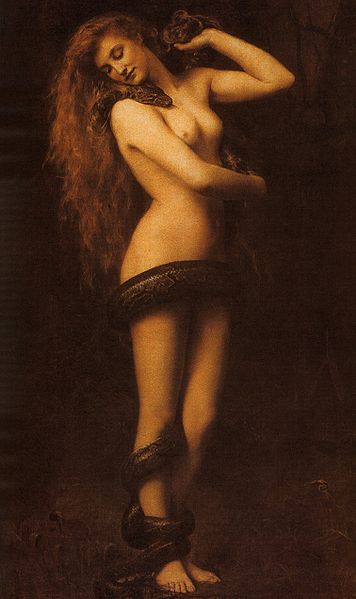
Collier’s Lilith

The pastor preaches his first sermon about Lilith, but the girls from cabin 4 sneak out at night to meet some guys.  (Their presence is explained at the end of the movie.)  That night the girls summon Lilith, whom the minister’s daughter says is a demon.  The summoning works.  Lilith begins to interfere with services as the girls are tempted by the guys who are hanging around.  At the end, Lilith “possesses” Shay (the lead girl) and frees them from being controlled by the men in their lives.  The message is a refreshing one, and Lilith ends of being, well, somewhat as Shay puts it, “One man’s demon is another’s angel.”  

Religion and horror make a good couple.  I’ve never seen a movie that features the story of Lilith before.  The thing is, she’s not the scary part of the movie.  The religious believers, the fathers who try to control their daughters rather than giving them support after listening to them, are.  Parenting is tough, no doubt about that.  None of us are born into life with all the answers.  We quite often find ourselves not knowing for sure what we should do.  I couldn’t imagine being a parent claiming to have the solutions for all problems.  I’m a guy who watches horror for a form of therapy!  What I do think, however, is that we can try to be reasonable, loyal, and supportive.  I learn as much from being a parent as I teach.  The same was true of being a professor.  Humility, along with a willingness to continue learning your entire life is the only way that makes sense to me.  Although not a major studio production, this was one of the scariest movies I’d seen in a long time.

Namely Coincidences

One of my very first posts on this blog was about how I am not the Steve Wiggins who is a gospel singer.  There I mused on the coincidence that we share fore and surnames, as well as an interest in religion.  He is far more prominent than I am.  I don’t sing.  Since that time the most prominent Steve Wiggins on Google is the one who shot a police officer in Tennessee.  We don’t even share the same name, technically.  My given name is Steve, not Steven.  The branch of Wiggins I come from, however, is from the south.  Stephen F. Wiggins, even further removed in the name-spelling department, was CEO at Oxford Health Plans.  Now, I work for a publisher that shares one of those three words, and it’s the one that’s most specific.  Are Steve Wigginses drawn to the same places?  Another Steve Wiggins, just a couple years older than me, lived in Russellville, Arkansas.  I grew up in Rouseville, Pennsylvania.  Coincidence?

Our sense of individualism is, it seems, socially conditioned.  If we try to imagine life in earlier human social structures, such as hunter-gatherer society, it looks as though people tended to function more as a collective organism.  The benefit of the group was the deciding factor, rather than what an individual wanted.  No doubt this was a more harsh environment for those who liked to think for themselves, even though evolution had given us that capacity.  Biology, however, seems to have species survival as its goal.  Individuals die while the organism lives on.  In modern society we consider individualism as one of the highest aims.

Our names individualize us.  I sometimes think of countries like China that have a combination of very large populations and a tradition of short names.  With limited numbers of possibilities repeats in names becomes inevitable.  It’s a prominent aspect of our western society that we want name recognition.  We want to feel special.  Unique.  We work against evolution, but evolution has vastly more time than we do.  Perhaps we’ve gone too far with our individualism.  I hope we don’t have to step back as far as The Matrix, but maybe a movement in the direction of the social good over individual wants would be the right thing to do.  Our psychology makes us want to feel special.  Our biology wants us to play nicely together.  Who, in the end, wins out?  It could make a world of difference.


At Home Abroad

You would’ve thought it was obsolete.  You see, we have the power to make it end, although the price is very high.  As a Cold War kid, I thought that the next war would be nuclear.  I’d been more or less resigned to that fate by the time I entered high school.  When it didn’t happen I thought maybe mutually assured destruction (right, Dr. Strangelove?) would end war.  Of course it didn’t.  Propagandized as just causes, America intervened in Korea, Vietnam, Afghanistan, and a vague country called “Terror.”  Nukes stayed out of it as we used more old fashioned and nasty ways of killing people.  Now Russia, bristling with nuclear capability, is using that threat to keep others out of its war of aggression against Ukraine.  Still backed by Trump, Putin is killing women and children and threatening to end the world if anyone tries to stop him.

During this war time, several multiple shootings have taken place here in America.  Grocery stores and elementary schools become graveyards even as Americans bray for more guns.  Russia need not invade; we will take care of killing each other, thank you.  Although the pandemic has driven many people to the edge we had this problem long before Covid came along.  Of course, one of the industries to profit from the disease has been the firearm wing.  Nobody feels safe and so they buy more guns, creating a deadly feedback loop.  No other “developed” nation on earth has this level of private gun violence.  The Bible in one hand and the automatic rifle in the other has always proven a deadly combination.

Many of us embrace multiculturalism.  There’s no reason we can’t all get along, accepting others for who they are.  A nationalistic backlash has unravelled this dream.  Violence, domestically generated, if not internationally shipped, has become our hallmark.  There are solutions and they aren’t that difficult to achieve.  Those who bully their way to elected office have already shown their true colors.  Life is cheap when personal aggrandizement is at stake.  Guns do have their fascination.  The sense of power in holding one is palpable.  What if, however, we laid aside our dreams of power for those of the common good?  We want to kill others for being born in a different geographical locality than us.  To think of it selfishly, supply chains and inflation have demonstrated how much we need those from all over the world in order to thrive.  Dreams of power, it seems, quickly become nightmares.


Worth Reaching For

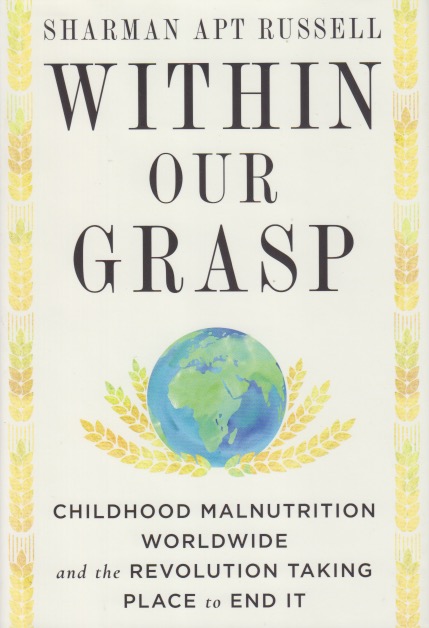
At a recent meeting with a community-building group, the question was raised: what causes can we focus on without triggering the extreme divisiveness that seems to characterize post-Trump America?  There are plenty of things that used to be non-partisan, but that list is growing smaller all the time.  One thing I think we can all agree on is that childhood starvation is a great evil.  Sharman Apt Russell has written an important, and ultimately hopeful book about it: Within Our Grasp: Childhood Malnutrition Worldwide and the Revolution Taking Place to End It.  This is a wide-ranging book with a general orientation toward Africa and a somewhat more specific emphasis on Malawi.  Not limited to that nation, it also addresses childhood nutrition in countries such as India and Vietnam and Brazil.

Russell points out the many developments taking place through the selfless efforts of mostly doctors who’ve seen the effects of malnutrition first-hand.  These individuals aren’t content to let things take care of themselves—their names and organizations are in this book, if you are able to help—and have worked on producing solutions.  One is ready-to-use therapeutic foods (RUTF).  These are inexpensive, fortified compounds that can be distributed to severely malnourished children and very effectively prevent stunting and starvation.  Russell points out that efforts have been made to make such products profitable, otherwise even companies that have some vestiges of social consciousness tend to stay away.  There has to be a way of making money or shareholders just won’t like it, no matter how many children are saved.  Alas, we live in a capitalist world!

A standout, for me, is how much such efforts rely on Non-Governmental Organizations (NGOs).  Governments are often too busy concentrating on power.  We see this world-wide.  Although this book was written before the Russian invasion of Ukraine, one of the things Russell points out is that war is one of the primary causes of childhood malnutrition.   The Putins of the world initiate wars for their own selfish reasons and condemn children to death.  It’s the NGOs that step in and try to make the world a place of a little less suffering.  When I worked in Manhattan this was written on the skyline.  Buildings dedicated to helping were small brick structures huddled next to corporate profit-making giants.  Guess which is dedicated to making the world a better place?  This is a hard book to read at times, but it is ultimately hopeful.  Progress is being made, but we can do more.  And one way to do so is to spread word about Within Our Grasp


Haunting History

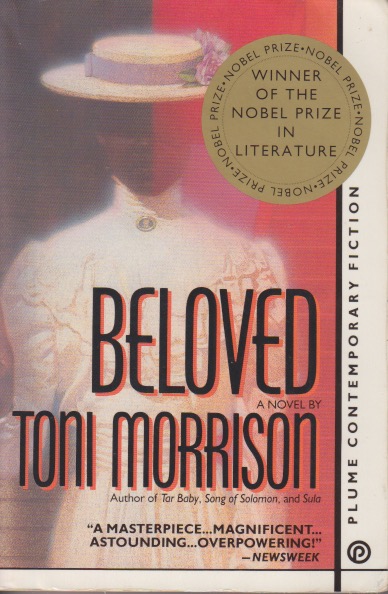
It’s difficult to do without feeling guilty, even if you personally had nothing to do with it.  It does seem that “Whites” have to take the initiative to dismantle systemic racism before any kind of fairness can settle on the world.  Toni Morrison is a great example of why that’s so important.  Beloved is perhaps her best-known work.  Although it involves a ghost it’s not so much a ghost story as it is a haunted story.  Black experience has been one of enforced poverty, after the emancipation proclamation—much like the American Indian experience.  Morrison represents this in a non-accusatory way, but she indicates in her story how the pain and mistreatment persists.  Her work is more important now than ever.  White supremacists are controlling the narrative in much of the country although they are the minority.  They need to read this book.

There will be spoilers here, if you’re even later coming to Beloved than I am.  Sethe was a slave.  The novel is set just after manumission, but she escaped before that.  She had four children and when she was sexually assaulted she realized this could happen to her children and she decided to spare them that fate.  Although she was stopped before she could kill all four, her first daughter, Beloved, was her victim.  This story is about what happens when Beloved returns to live with Sethe and her remaining daughter.  It is a haunting story.  No “boos” or jump startles, it sets up a sad atmosphere of a woman falling apart because of guilt.  Guilt for an event that would’ve never happened if she’d been treated like a human being.

Apart from the schoolteacher and his cohort, the whites in the story are kindly to Sethe.  Her “owner” was a slaveholder who gave his “possessions” respect.  She was saved from hanging after the death of Beloved by a local white man who understood what slavery might do to a person’s mind.  Even so, these kind people think of Blacks as servants rather than as people in their own right.  It’s difficult to read books like this.  That’s one of the reasons that it’s important to do so.  There is a lot to analyze here, much to reflect over.  If we put books like this on reading lists instead of banning them, it would help to bring understanding and sympathy rather than hatred and fear.  The future only improves when we admit our past errors and move to heal the scars we continue to inflict.


Blood Money

The overdose crisis is very real and very sad.  Even so I couldn’t help being stopped and shocked by how economics was brought into it in a recent New York Times article.  Lab-made drugs are cheaper, so dealers pass on the savings to users.  Does anyone else see the problem here?  Isn’t the real drug capitalism?  Or take the Republican acceptance of violence as a legitimate political tool, also highlighted in a recent Times article.  Their blind followers think it’s about saving unborn babies but anyone who’s studied politics knows it’s about the money.  If you can distract the electorate with an emotional issue you can pick their pocket at the same time.  Capitalism smiles on the wealthy.  And only on the wealthy.

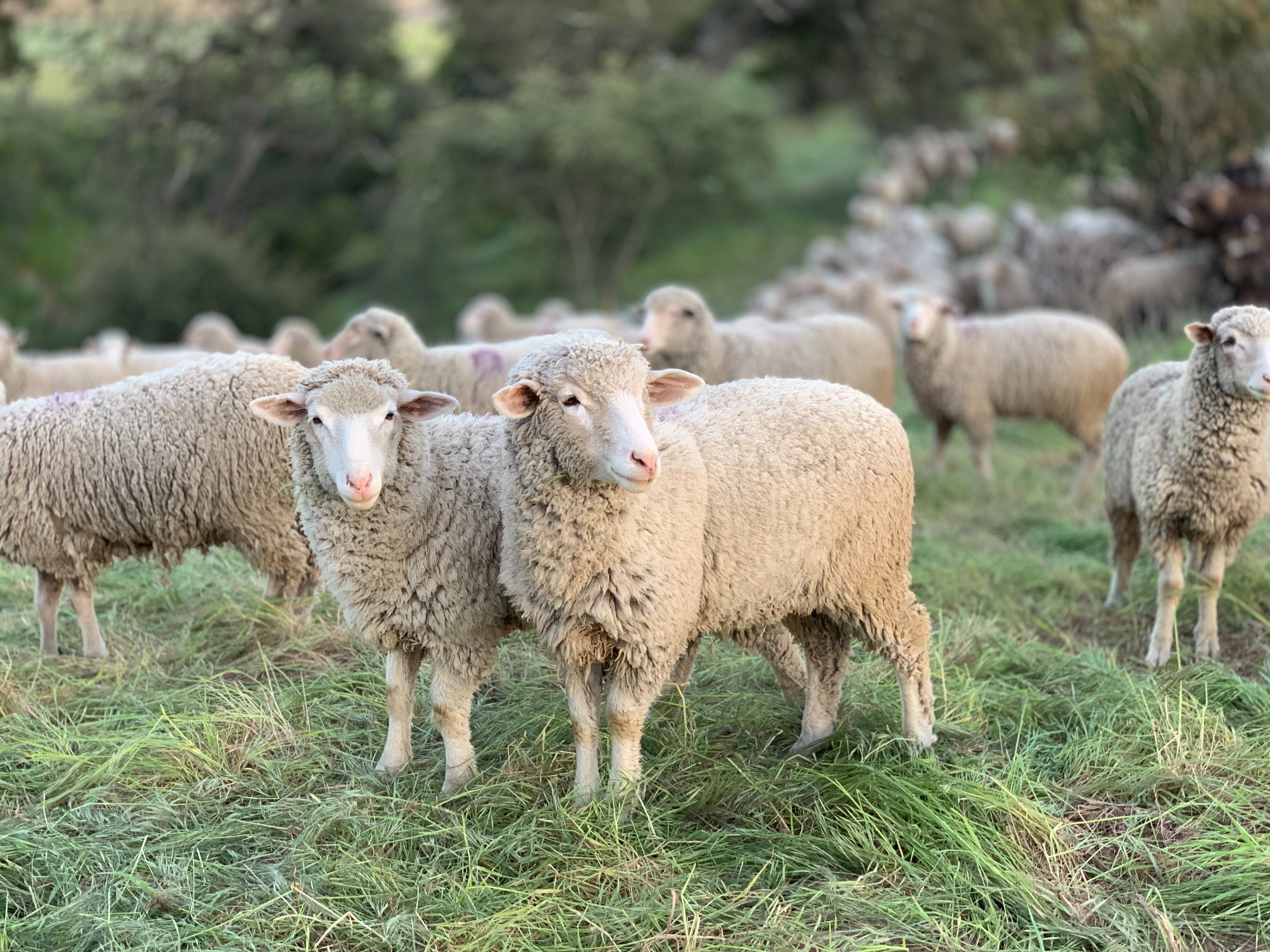
I’m not naive enough to suppose we can do without the dismal science, but the more I learn of economics, the more dismal the dismal science becomes.  I was recently reading about the ranching industry in early American expansion and the amount of power concentrated in those who raise animals for slaughter would make the most bloodthirsty of gods smile.  Indeed, Europeans coming to a new country wanted to make it in the image of their lives back home (they were largely successful).  Especially those who raised specially bred varieties of sheep, goats, and cattle.  Since grazers and browsers require a lot of land, the American west appealed to them.  Although big beef and big dairy produce more environmental problems than most big industry does, we let economics make the decisions.  And in economics the big and the selfish always win.

Photo by Tanner Yould on Unsplash

A bit of wisdom comes from the musical 1776 where John Dickinson explains in “Cool, Cool, Considerate Men” that the common person will always vote for those who preserve the (near impossibility) of becoming rich, the myth of capitalism.  The average person lives each day not worrying that they will be struck by lightning.  Those who are often believe it isn’t likely and remain out in a storm.  What are the chances of a poor person actually becoming rich?  In this economic system?  Don’t go outside in a lightning storm.  Americans have been taught to retch at the word socialism despite the fact that it works extremely well in most of Europe.  Instead we proliferate guns and drugs on the free market model and wonder what could possibly go wrong.  Yes, there really is an elephant in the room.  And we’re burying far too many people because of it.


Free Research

I’ve lost track of how many times it’s happened, but it has been relatively few.  Someone I don’t know will approach me and ask me to post about something on my blog.  Sometimes they’ll even send me a book to highlight.  Perhaps not the most effective way to build a library, I’ll admit.  And some of the books haven’t been great.  I admire them nonetheless.  It takes great effort to write a book.  And not a small amount of faith, too.  Many books—perhaps most—never get published.  A great many are self-published.  (Those who work in publishing can be a stuck-up lot sometimes.)  Even those professionally published can use a push from time to time.  On this blog I’ve actively resisted the urge to make it about one thing.  Why?  Is life just one thing?

In a recent conversation I laid out for someone new what had been my research agenda as a young professor.  It had a direction still reflected in some of the categories you’ll find on the right column of this blog.  After writing on Asherah, I was going to give similar treatment to the other ancient goddesses attested at Ugarit.  This was perhaps ambitious for an academic waif at Nashotah House, but it was well underway.  My book on Shapshu was making good progress when the market (that dragon to every St. George) led friends to suggest turning biblical, which led to Weathering the Psalms.  A new research agenda—explore the weather terminology (the meteorotheology) of other biblical books—arose.  There were storms, after all, becalmed over lakes.  Horror entered in the jobless period and beyond.

And social justice.  I’m not a thrice-failed minister for nothing!  In fact, a recent freebie was a book on social justice.  I have a colleague as interested in monsters as me.  This particular scholar had decided to focus on the cause of the poor.  Even economists are starting to say the unequal distribution of wealth is hurting us.  While the rich fly to space on personally owned rockets, the rest of us have trouble filling up at the service station, even if we have jobs.  So it is that this blog is eclectic.  A friend told me early on that it would be more popular if I just stuck to one topic.  That’s probably true, but my mind can’t settle down like that.  And when people send me things to talk about, I’m happy to do so, if it fits somewhere in my mind.


Tweets from Heaven

What do the ultra-rich know about morals?  I read recently that now that Elon Musk has purchased Twitter for billions and billions of dollars, that he’s going to allow Trump back on because it’s “morally wrong” to prevent him.  Heaven help us when the plutocrats start dictating morals.  One of the odd things about my strange career is that I was an undecided major in college.  I settled eventually on religion, but my transcript shows a restless mind.  One subject that I came back to time and again was ethics.  I want to know what is right.  Shutting up a deranged narcissist who wants to run the country only to enhance his image of himself seems a moral no-brainer.  The case was different before he was elected the first time.  Now we know.  Now we have a responsibility.

Those who can afford to buy the moon shouldn’t make declarations on what is moral.  The church, however, has largely become irrelevant.  “It’s easier for a camel to pass through the eye of a needle,” a famous moralist, whose name is unfortunately forgotten, once said.  The moral compass of the uberwealthy is irrevocably squewed by a massive loadstone known as personal wealth.  Indeed, our very laws are made by the wealthy to protect the interests of the wealthy.  They do this by courting biblicists who seem to have forgotten—what is his name again?  You know, the one who seemed to have a problem with the rich?

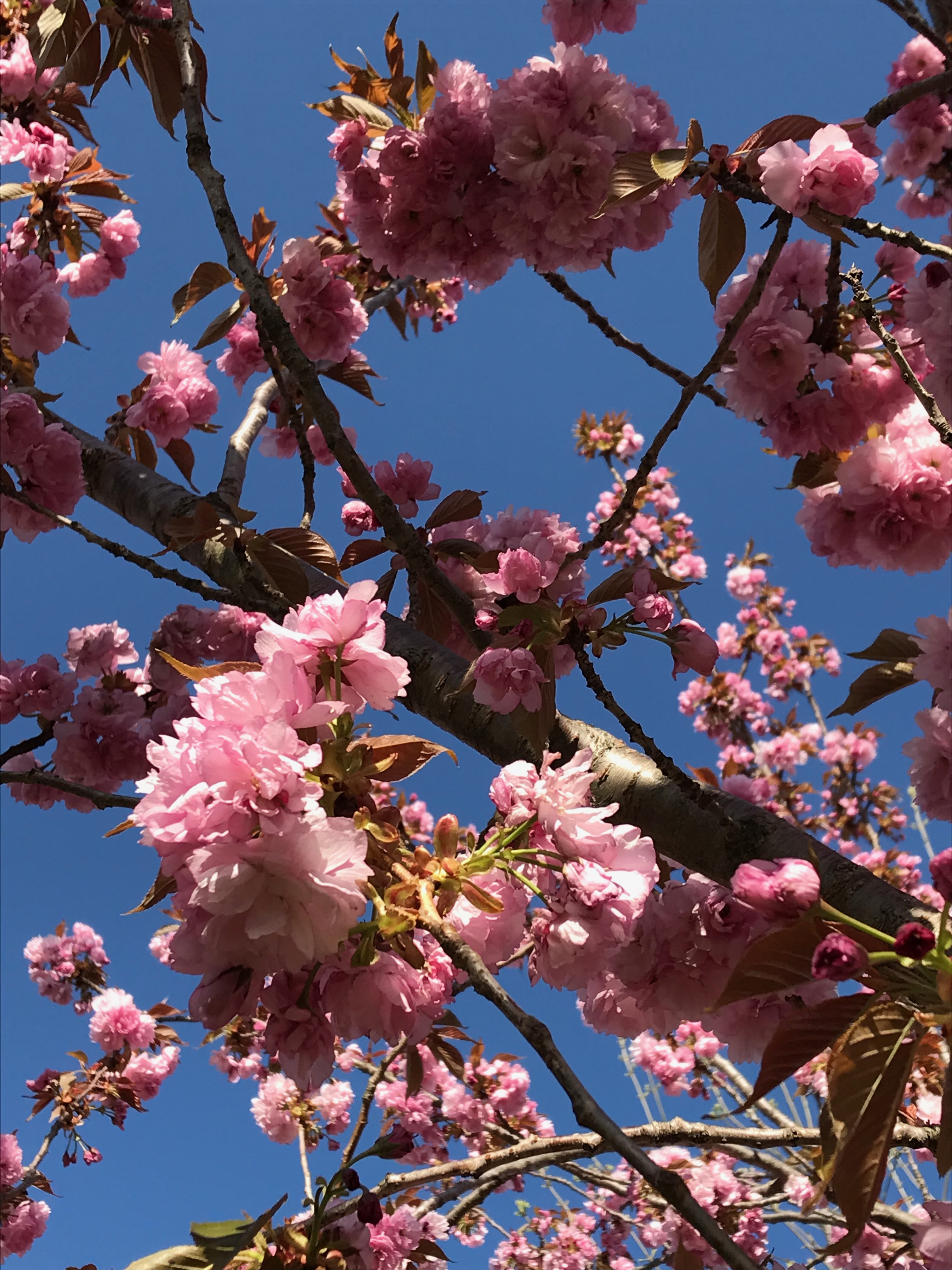
Photo by Sharon McCutcheon on Unsplash

Morality has somehow become confused with concerns about other people’s genitalia.  We don’t ask what the wealthy do with theirs—it’s pretty clear what one tweeting resident of Mar-a-Lago has done with his.  Ironically Protestants broke away from the Catholic Church largely because of the sale of indulgences.  The idea that the rich could buy their way out of sins rankled sixteenth-century moralists into saying sola scriptura.  But now they have lost even their solaScriptura, for its part, is unequivocal about one thing—the problem of the rich.  The poor aren’t the problem.  In this new gospel, however, victims are blamed while the powerful rightly rule all.  The divine right of riches.  The wealthy, so misunderstood; the poor are the way they are because they’re lazy.  There’s no systemic cause for anyone not to have as much money as he wants (and it seems they’re generally he’s).  And they have a right to say whatever they want because their word comes down from heaven, echoing out from their private space rockets to the stars.


Fight for Mom

The spring holidays come think and fast.  Depending on when you start spring we’ve got Valentine’s Day followed a month later by St. Pat’s.  On it’s roving schedule Easter hops along, with its precursor Mardi Gras.  There’s Earth Day, May Day, and Mother’s Day.  One thing they all have in common, apart from being holidays, is they’re not worthy enough to be days off work.  You have to wait for Memorial Day for that.  Today, in any case, is Mother’s Day.  We stop to think, as if we shouldn’t every day, about our mothers.  Women are pretty poorly represented in the holiday scheme, unless you’re Catholic (and even those aren’t days off).  Mother’s Day always comes on a Sunday so employers are eternally thankful.  A holiday with no consequences.  But should it be?

We’re only just beginning, after being “civilized” for five thousand years, to give women their due.  Only just beginning because capitalist systems are built on male fantasies of growing rich without the female humane element.  It’s not a system friendly to mothers unless we find a way to make people spend money.  Women remind us to look for cooperation and not just competition.  Working together we can make things better for everyone.  Men, left to their own devices, go to war.  Men take what they want and women act as our conscience.  Mothers sacrifice to keep us safe and alive.  Their self-denial resonates better with the Christianity suborned by men into a money-making venture.

It’s Mother’s Day.  It’s a day to put aside our acquisitive, war-like tendencies and think of someone else.  It’s a day to imagine what it might be like if we made a habit of good behaviors.  It’s like those grades they used to give in school for “deportment.”  It wasn’t all just about how well we learned our facts.  Mothers teach us what it means to set aside our own wants for the needs of another person.  Without that the human race simply wouldn’t survive.  Instead of politically stacked courts taking away women’s rights, today we recognize that without women none of us would be here.  The human experiment only succeeds when women are recognized for all that they contribute to life.  To civilization.  To society.  We may not have commodified it, so why not listen to our mothers’ wisdom?  Why not make it every day instead of just the second Sunday of May?  Don’t forget to thank your mother today.  Better yet, fight for her rights.


Boone to Some

Folk heroes sometimes put us in compromising positions.  We appreciate their importance for where we are and yet we recognize that where we are came at a tremendous cost for those who lived here first.  Still, I was somewhat surprised to learn that Daniel Boone was born right here in Pennsylvania.  Like most people my age, I learned of Boone primarily through the television series that aired in the 1960s.  In other words, I learned the commercial Boone.  In reality he was a fascinating individual who preferred outdoors living to the comforts of home.  His prominence meant that he would meet and know such figures as George Washington and Thomas Jefferson.  He was largely responsible for US westward expansion, leading the first Europeans into the territory of Kentucky.  His association with the south is so pronounced that I was surprised to learn he was born in a homestead, that is today, less than an hour north of Philadelphia.

Of course, the land settled by the Boone family was stolen from American Indians.  The story might be somewhat easier to appreciate if we treated Indians better today, but our culture still insists on repressing them.  Racism runs deep, it seems.  Boone himself seems mainly to have gotten along with the Indians he knew.  The fact is his story is exciting to hear.  He was an able negotiator and both Indians and other settlers respected his position.  When tales of his adventures were written down he became famous, if not wealthy.  What seems to have really struck those who heard his story is that he continued his outdoor existence into his eighties.  At an age when many have become frail, he continued to spend months of the year living outdoors in the wilderness.

Being there where he was born felt like a revelation.  Of course the docent was a gifted storyteller, and she told his story with humor and an obvious pride in the man who’s responsible for her living.  I reflected how television once again had shaped my childhood.  Fess Parker’s portrayal of Boone was among the most popular prime-time shows of the mid-sixties to 1970.  I had no idea that I was consuming pop culture in such quantities as I watched it, along with other staples such as Dark Shadows, Gilligan’s Island, Scooby-Doo, and the Brady Bunch.  Some people worry that the rising generation “learns” its narratives from the internet, but my generation learned them from television.  Daniel Boone would have, and indeed did, learned from the outdoors.


Shopping Screed

Capitalism is insidious.  Those of us with modest incomes—and I’m quite aware that many, many people are poor—are constantly being bombarded with new schemes to get us to pay a little each time for something that used to be free.  Look, I realize the economy was hit by the pandemic.  We’re all paying for it.  Still, even basic stores you’ve used your whole life now want you to sign up for schemes that will only cost you a dollar each time and which never really pay anything back.  The one that’s got me thinking about this is a drug store.  Like it’s a surprise that you’ve decided to buy something at a drug store.  They get you to sign something you vaguely understand as you’re trying to rush out the door with your prescription and then they send you daily emails telling you how great it’s going to be.

And surveys—the endless surveys!  They sound more neurotic than I actually am.  Did we do this right, and could we have done it better?  It’ll only take a quarter hour of your time.  Each time you stop in.  And please do that daily.  The last time I did one of these surveys for the promise of a prize worth $90, I ordered their version of a fit-bit as my prize.  I’m curious how many steps I take in a day and no, I don’t carry my phone with me everywhere.  The “prize” arrived late and when I charged it up and turned it on (it came with no instructions readable in my native language) it worked for a total of literally 3 seconds before the screen died a pixelated death.  Now that same company wants me to answer surveys weekly and pay an extra dollar each time I come in.  It’s enough to make me want to use the other drug store, but they’ll probably do the same.

The thing is it’s not just pharmacies.  All the stores are doing it.  You shopped here once?  Look what else we’ve got!  Some of us shop for what we need.  We live on a budget.  If you’re going to start charging me for the privilege of shopping at your establishment I’ll have to start going somewhere else.  The items on offer for promotional plans are things I just don’t buy. If you want me to spend more, then reframe your economics and pay me more.   And I don’t have money to just give away.  Have you even taken a look at your last heating bill (thanks Mr. Putin)?  I’ll come to the store again as long as it’s free to shop there and it has something that I actually need.

Photo by Bruno Kelzer on Unsplash

Words and Belief

Why do we care so little for the poor?   Part of the answer is surely the misguided idea of meritocracy—if you merit good you will be successful.  This kind of thinking emerges from the wrong end of a bull.  There may be poor people who are lazy but the vast majority of the poor are those for whom our systems make it impossible to thrive.  It’s very easy to put them out of mind as long as we can keep them out of sight and just let our prejudices do the thinking for us.  The poor are the victims of capitalism.  Loud voices proclaim them to be a drain on the system, despite the fact that many of them work—some multiple jobs—and remain unable to keep up.  Capitalism is kind only to the wealthy.

The Rev. Dr. William Barber is one of the organizers of the Poor People’s Campaign.  The full name is the Poor People’s Campaign: A National Call for Moral Revival.  The initial part is taken from an initiative that Martin Luther King, Jr. started before his assassination.  He was shifting towards a movement meant to address the entrenched unfairness deep in American society.  These nearly six decades on, we are just as deeply entrenched.  Barber is doing amazing work, organizing, speaking, and advocating.  He’s trying to give a voice to the people.  I do wonder, however, if using the word “Revival” doesn’t work against the goals of the movement.

Certain words have been poisoned by their abuse among various religious groups.  Especially among the young.  The word “revival” may fall into that category, calling to mind, as it may, repressed people working up to an emotional fever under the banner of Hellfire and brimstone.  Believing a bit too literally a message that was contained in a book viewed magically.  Names can be important.  Many of the younger generation are put off even by the word “church” since so much hypocrisy (something the Republican party has openly embraced) has come to light over recent decades.  I fully agree that we need a moral revival, we need people to wake up and demand that our government promote the justice it claims to seek.  I do wonder if religion, as previously packaged, has the credibility to do it.  No matter how we take on the task, it’s clear that the poor have been abandoned by the system, through no fault of their own.  And some in the church have begun to find their voice in the Poor People’s Campaign.

Photo by Katt Yukawa on Unsplash

Wasting Waste

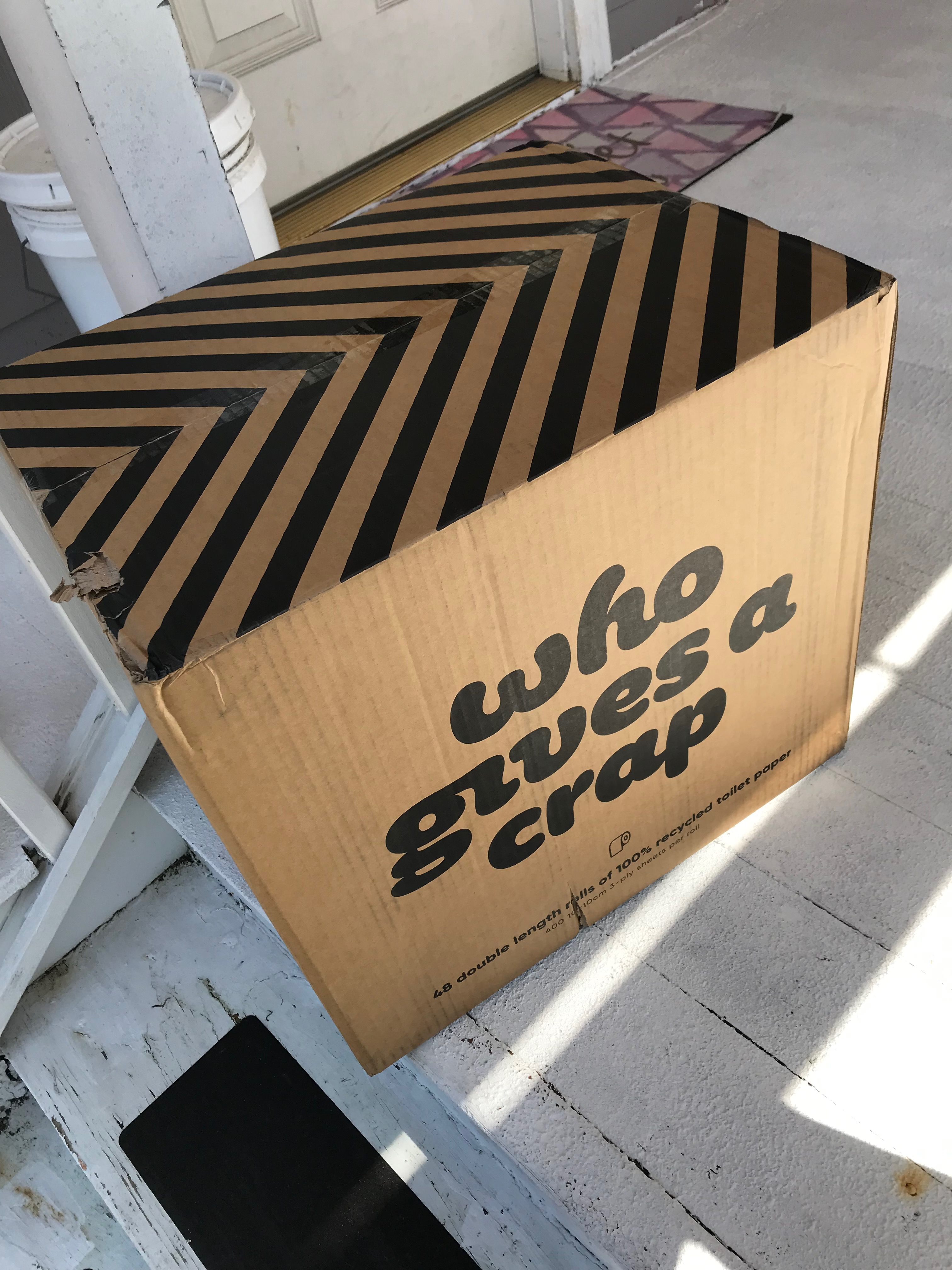
So I’m thinking about toilet paper.  Just two years ago it was a scarce commodity.  If you could find a four-pack you were blessed.  Supply-chains aren’t the boon that economists tell us they are.  Well, now it seems the shelves are well-stocked.  We’re ready for the next major crisis.  So why are my thoughts in the gutter again?  It started with Earth Day.  I was on a website that was advertising for environmentally friendly products.  We try to live as lightly as we can—we compost, we have ordered a heat-pump dryer, we don’t eat meat—but toilet paper is a big waste.  Besides, the name “Who Gives a Crap?” is eye-catching.  Recycled toilet paper, a little less expensive than bamboo, makes sense.

You see, we’ve used Scott for years.  This started back when we lived at Nashotah House and didn’t have to pay rent or utilities.  We used to buy it recycled back in Wisconsin.  Somehow that’d translated in my head to believing that all Scott is recycled, even though they no longer advertise it.  No, I was wrong.  And it’s not just Scott.  Every day 27,000 trees are cut down to make toilet paper.  That’s a lot of trees.  To break a chain it’s best to concentrate on one link.  Recycled toilet paper seems a no-brainer.  I thought we were already doing that.  Hopefully there’s no supply chain breakdowns when another crisis rolls around.  One of the problems with living in a culture disposed to dispose of things is that we end up in a mess like we’ve got now.

The thing about saving the planet is taking small steps.  Our capitalist system works against environmentalism because the former is based on consumption.  And consumption is handled on a matter of scale—the more you can sell the cheaper the unit cost.  Environmentally friendly lifestyles cost a bit more than other lifestyles.  I’ve always looked at this as a moral issue.  We’re not really high-earning people but we can afford a bit extra to try to save the world’s resources.  We can’t quite afford bamboo toilet paper just yet, but we can work our way in that direction.  Saving the planet is the long game.  Up until the 1960s we blithely lived as if we could go on forever wasting and throwing away.  Now we know there are islands made of plastic in the Pacific and our ice caps are melting.  If you decide you’d like to take the plunge—toilet paper gets thrown away, by definition—here’s a link for a discount on your first order.  Let’s let the trees grow.


Normal Paranormal

One of my favorite televisions shows of all time is The X-Files.  I didn’t watch it when it originally aired, but eventually got a hankering to see it on DVD.  There are many reasons to like it, including its originality and the dynamics between Mulder and Scully and the sense that governments really do hide things.  As I rewatch episodes I see how much religion plays into it as well.  This post is actually not about the X-Files proper, but about a place in Bethlehem I recently discovered.  I’m not a preachy vegan, but I do like to support the establishments who make such lifestyles as mine much easier.  It was thus that I discovered Paranormal Pizza in Bethlehem.  I wondered about the name, figuring that it was paranormal that you could have non-dairy, non-meat pizza at all.

To celebrate Earth Day we decided to check it out.  The menu has a set of fixed items, each named after an X-Files character.  I was glad to see that I’m not alone in my appreciation of the show.  The pizza’s very good, and I’m sure the college-age crowd that was there would agree with me.  I did wonder how many of them knew the X-Files.  Is it still a thing?  Maybe recent government disclosures have brought it back into the public eye.  Hey, I’m a Bible editor, about as far from the public eye as you can possibly get.  Vegan pizza on Earth Day, however, just felt right.

Foodiness seems to be trending.  A great many options are available in the land of plenty.  Still, I know that vegetarians and vegans in developing countries exist, and many of them for similar reasons to me.  They know animals think and feel.  We promote the myth that they don’t so that we don’t have to feel guilty about exploiting them.  It seems to me that many of our world-wide problems would start to vanish if we realized we can evolve out of being predators.  Cashews and almonds can become cheese.  Soy beans and wheat can become meat.  And peanuts are about the best food ever, in any form.  Then there’s the natural fruits and veg.  Industrial animal farming is perhaps the largest polluter of our planet.  Yesterday was Earth Day.  I was eating a pizza made from wheat, tomatoes, and cashews.  These ingredients might seem a bit unusual.  Paranormal, even.  But that’s precisely the point.  I won’t be waiting until the next Earth Day to go back for more.


Love Your Mother

It’s not exactly a birthday, for we don’t know when exactly she was born.  We choose April 22 to think of our mother—the mother of us all.  For many of us concerned about the environment, not only is today Earth Day, but April has become Earth Month.  To me one of the saddest aspects of our environmental crisis is that certain sects of Christianity are largely responsible for it.  Religion working against the betterment of humankind.  So it was in the beginning, is now, and hopefully we won’t have to finish the triad.  Granted, religions help us to keep our mind on spiritual matters.  The problem is when such things become dogma and the real needs of real people are ignored so that a fervently desired fantasy can be lived out by destroying our planet.

In response there are what have been called “deep green” religions.  It’s difficult to gain a critical mass, however, when many of those who think deeply about the environment have left religion out of the equation.  It seems to me that we’ve got to make peace with our evolved tendencies toward religion in order to have any meaningful discussion about this.  Meanwhile global warming continues.  It does so with the blessing of a kind of Christianity that sees this world as expendable and exploitable based on an idiosyncratic reading of Genesis.  Even though all the evidence points in the opposite direction, we have networks (here’s looking at you, Fox), owned by billionaires who know you can sway Christianity simply by kissing your hand to the moon.

It’s my hope that this Earth Day we might start to think about how to integrate some deep green theology into the kind that sees no room for green in the red, white, and blue.  The self-convinced have no desire for conversation about this and those already certain that religion is nothing but superstition tend to agree.  Since antiquity, however, the wise have realized that progress comes from the middle ground.  Politicians, in their own self-interest, have stoked the fires of division and hatred, knowing that they get reelected that way.  Mother Earth, I suspect, is rolling her eyes.  She will survive even if we succumb to our own mythologies.  We need to learn to talk to one another.  We need to accept that we evolved to be religious.  We need to look for middle ground while there’s still dry ground on which to stand.  It’s not exactly a birthday, but it is a holiday that should be taken seriously. It’s only right to love your mother.

From NASA’s photo library