Words and Belief

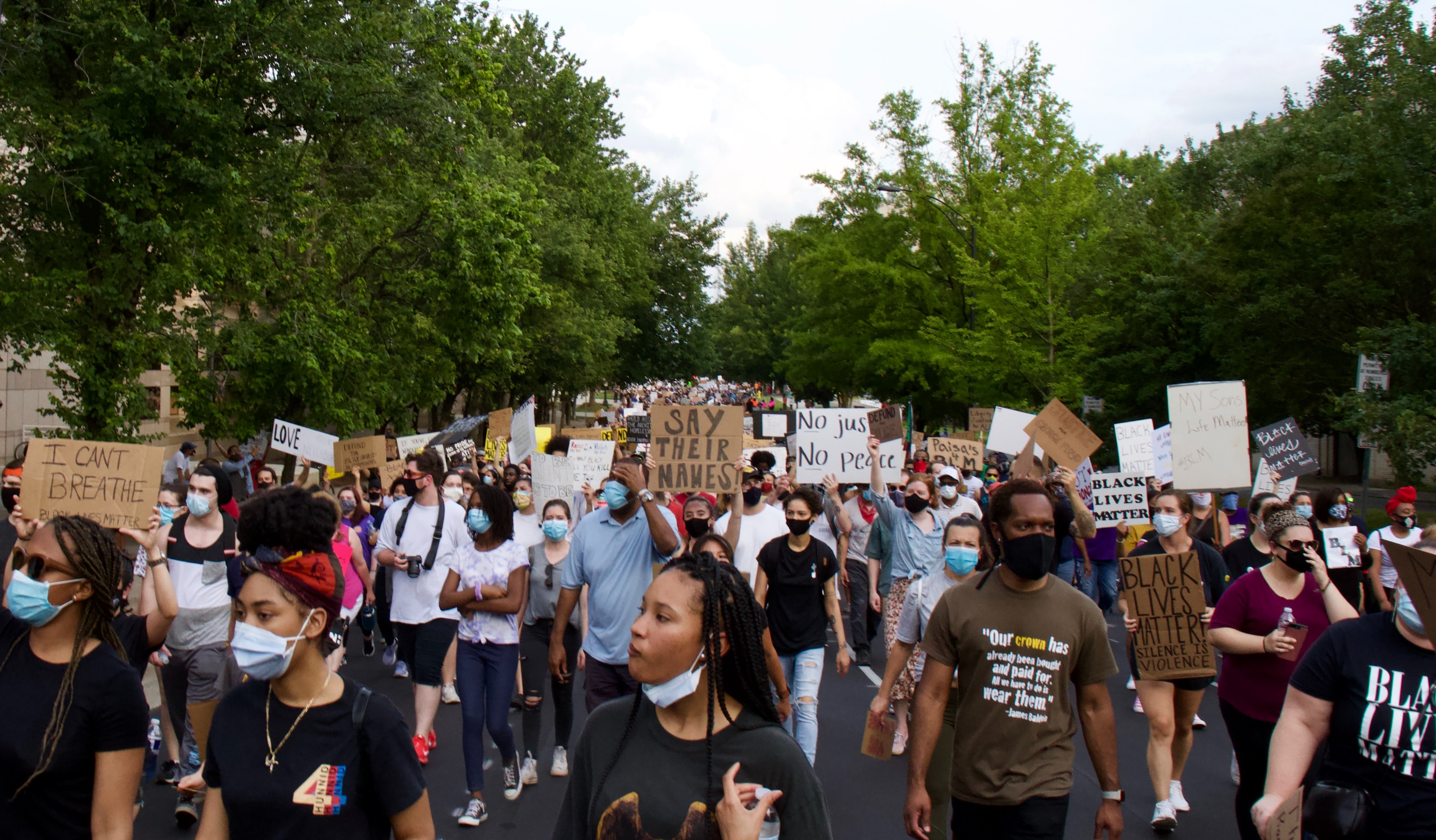
Why do we care so little for the poor?   Part of the answer is surely the misguided idea of meritocracy—if you merit good you will be successful.  This kind of thinking emerges from the wrong end of a bull.  There may be poor people who are lazy but the vast majority of the poor are those for whom our systems make it impossible to thrive.  It’s very easy to put them out of mind as long as we can keep them out of sight and just let our prejudices do the thinking for us.  The poor are the victims of capitalism.  Loud voices proclaim them to be a drain on the system, despite the fact that many of them work—some multiple jobs—and remain unable to keep up.  Capitalism is kind only to the wealthy.

The Rev. Dr. William Barber is one of the organizers of the Poor People’s Campaign.  The full name is the Poor People’s Campaign: A National Call for Moral Revival.  The initial part is taken from an initiative that Martin Luther King, Jr. started before his assassination.  He was shifting towards a movement meant to address the entrenched unfairness deep in American society.  These nearly six decades on, we are just as deeply entrenched.  Barber is doing amazing work, organizing, speaking, and advocating.  He’s trying to give a voice to the people.  I do wonder, however, if using the word “Revival” doesn’t work against the goals of the movement.

Certain words have been poisoned by their abuse among various religious groups.  Especially among the young.  The word “revival” may fall into that category, calling to mind, as it may, repressed people working up to an emotional fever under the banner of Hellfire and brimstone.  Believing a bit too literally a message that was contained in a book viewed magically.  Names can be important.  Many of the younger generation are put off even by the word “church” since so much hypocrisy (something the Republican party has openly embraced) has come to light over recent decades.  I fully agree that we need a moral revival, we need people to wake up and demand that our government promote the justice it claims to seek.  I do wonder if religion, as previously packaged, has the credibility to do it.  No matter how we take on the task, it’s clear that the poor have been abandoned by the system, through no fault of their own.  And some in the church have begun to find their voice in the Poor People’s Campaign.

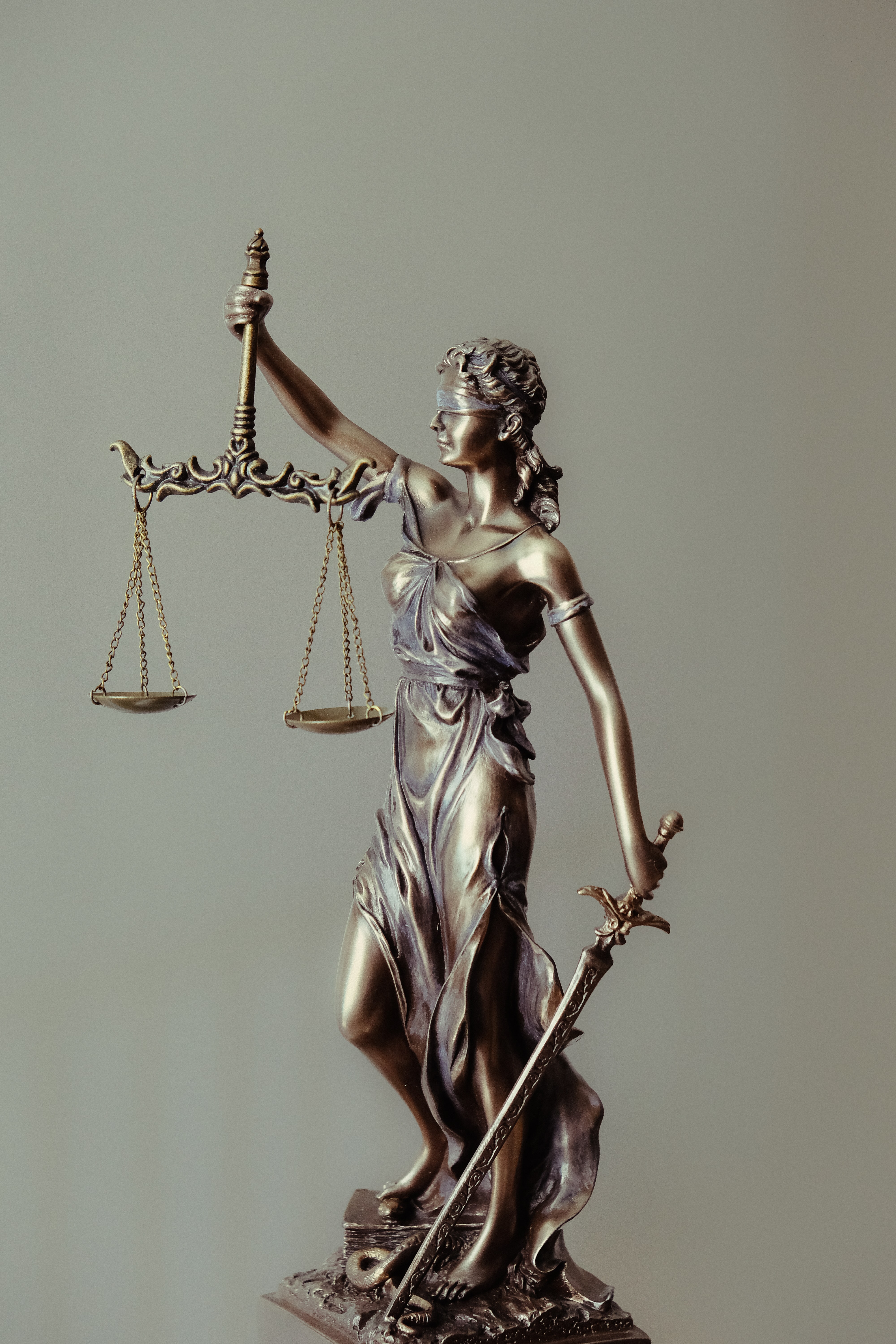
Photo by Katt Yukawa on Unsplash

Wasting Waste

So I’m thinking about toilet paper.  Just two years ago it was a scarce commodity.  If you could find a four-pack you were blessed.  Supply-chains aren’t the boon that economists tell us they are.  Well, now it seems the shelves are well-stocked.  We’re ready for the next major crisis.  So why are my thoughts in the gutter again?  It started with Earth Day.  I was on a website that was advertising for environmentally friendly products.  We try to live as lightly as we can—we compost, we have ordered a heat-pump dryer, we don’t eat meat—but toilet paper is a big waste.  Besides, the name “Who Gives a Crap?” is eye-catching.  Recycled toilet paper, a little less expensive than bamboo, makes sense.

You see, we’ve used Scott for years.  This started back when we lived at Nashotah House and didn’t have to pay rent or utilities.  We used to buy it recycled back in Wisconsin.  Somehow that’d translated in my head to believing that all Scott is recycled, even though they no longer advertise it.  No, I was wrong.  And it’s not just Scott.  Every day 27,000 trees are cut down to make toilet paper.  That’s a lot of trees.  To break a chain it’s best to concentrate on one link.  Recycled toilet paper seems a no-brainer.  I thought we were already doing that.  Hopefully there’s no supply chain breakdowns when another crisis rolls around.  One of the problems with living in a culture disposed to dispose of things is that we end up in a mess like we’ve got now.

The thing about saving the planet is taking small steps.  Our capitalist system works against environmentalism because the former is based on consumption.  And consumption is handled on a matter of scale—the more you can sell the cheaper the unit cost.  Environmentally friendly lifestyles cost a bit more than other lifestyles.  I’ve always looked at this as a moral issue.  We’re not really high-earning people but we can afford a bit extra to try to save the world’s resources.  We can’t quite afford bamboo toilet paper just yet, but we can work our way in that direction.  Saving the planet is the long game.  Up until the 1960s we blithely lived as if we could go on forever wasting and throwing away.  Now we know there are islands made of plastic in the Pacific and our ice caps are melting.  If you decide you’d like to take the plunge—toilet paper gets thrown away, by definition—here’s a link for a discount on your first order.  Let’s let the trees grow.


Normal Paranormal

One of my favorite televisions shows of all time is The X-Files.  I didn’t watch it when it originally aired, but eventually got a hankering to see it on DVD.  There are many reasons to like it, including its originality and the dynamics between Mulder and Scully and the sense that governments really do hide things.  As I rewatch episodes I see how much religion plays into it as well.  This post is actually not about the X-Files proper, but about a place in Bethlehem I recently discovered.  I’m not a preachy vegan, but I do like to support the establishments who make such lifestyles as mine much easier.  It was thus that I discovered Paranormal Pizza in Bethlehem.  I wondered about the name, figuring that it was paranormal that you could have non-dairy, non-meat pizza at all.

To celebrate Earth Day we decided to check it out.  The menu has a set of fixed items, each named after an X-Files character.  I was glad to see that I’m not alone in my appreciation of the show.  The pizza’s very good, and I’m sure the college-age crowd that was there would agree with me.  I did wonder how many of them knew the X-Files.  Is it still a thing?  Maybe recent government disclosures have brought it back into the public eye.  Hey, I’m a Bible editor, about as far from the public eye as you can possibly get.  Vegan pizza on Earth Day, however, just felt right.

Foodiness seems to be trending.  A great many options are available in the land of plenty.  Still, I know that vegetarians and vegans in developing countries exist, and many of them for similar reasons to me.  They know animals think and feel.  We promote the myth that they don’t so that we don’t have to feel guilty about exploiting them.  It seems to me that many of our world-wide problems would start to vanish if we realized we can evolve out of being predators.  Cashews and almonds can become cheese.  Soy beans and wheat can become meat.  And peanuts are about the best food ever, in any form.  Then there’s the natural fruits and veg.  Industrial animal farming is perhaps the largest polluter of our planet.  Yesterday was Earth Day.  I was eating a pizza made from wheat, tomatoes, and cashews.  These ingredients might seem a bit unusual.  Paranormal, even.  But that’s precisely the point.  I won’t be waiting until the next Earth Day to go back for more.


Love Your Mother

It’s not exactly a birthday, for we don’t know when exactly she was born.  We choose April 22 to think of our mother—the mother of us all.  For many of us concerned about the environment, not only is today Earth Day, but April has become Earth Month.  To me one of the saddest aspects of our environmental crisis is that certain sects of Christianity are largely responsible for it.  Religion working against the betterment of humankind.  So it was in the beginning, is now, and hopefully we won’t have to finish the triad.  Granted, religions help us to keep our mind on spiritual matters.  The problem is when such things become dogma and the real needs of real people are ignored so that a fervently desired fantasy can be lived out by destroying our planet.

In response there are what have been called “deep green” religions.  It’s difficult to gain a critical mass, however, when many of those who think deeply about the environment have left religion out of the equation.  It seems to me that we’ve got to make peace with our evolved tendencies toward religion in order to have any meaningful discussion about this.  Meanwhile global warming continues.  It does so with the blessing of a kind of Christianity that sees this world as expendable and exploitable based on an idiosyncratic reading of Genesis.  Even though all the evidence points in the opposite direction, we have networks (here’s looking at you, Fox), owned by billionaires who know you can sway Christianity simply by kissing your hand to the moon.

It’s my hope that this Earth Day we might start to think about how to integrate some deep green theology into the kind that sees no room for green in the red, white, and blue.  The self-convinced have no desire for conversation about this and those already certain that religion is nothing but superstition tend to agree.  Since antiquity, however, the wise have realized that progress comes from the middle ground.  Politicians, in their own self-interest, have stoked the fires of division and hatred, knowing that they get reelected that way.  Mother Earth, I suspect, is rolling her eyes.  She will survive even if we succumb to our own mythologies.  We need to learn to talk to one another.  We need to accept that we evolved to be religious.  We need to look for middle ground while there’s still dry ground on which to stand.  It’s not exactly a birthday, but it is a holiday that should be taken seriously. It’s only right to love your mother.

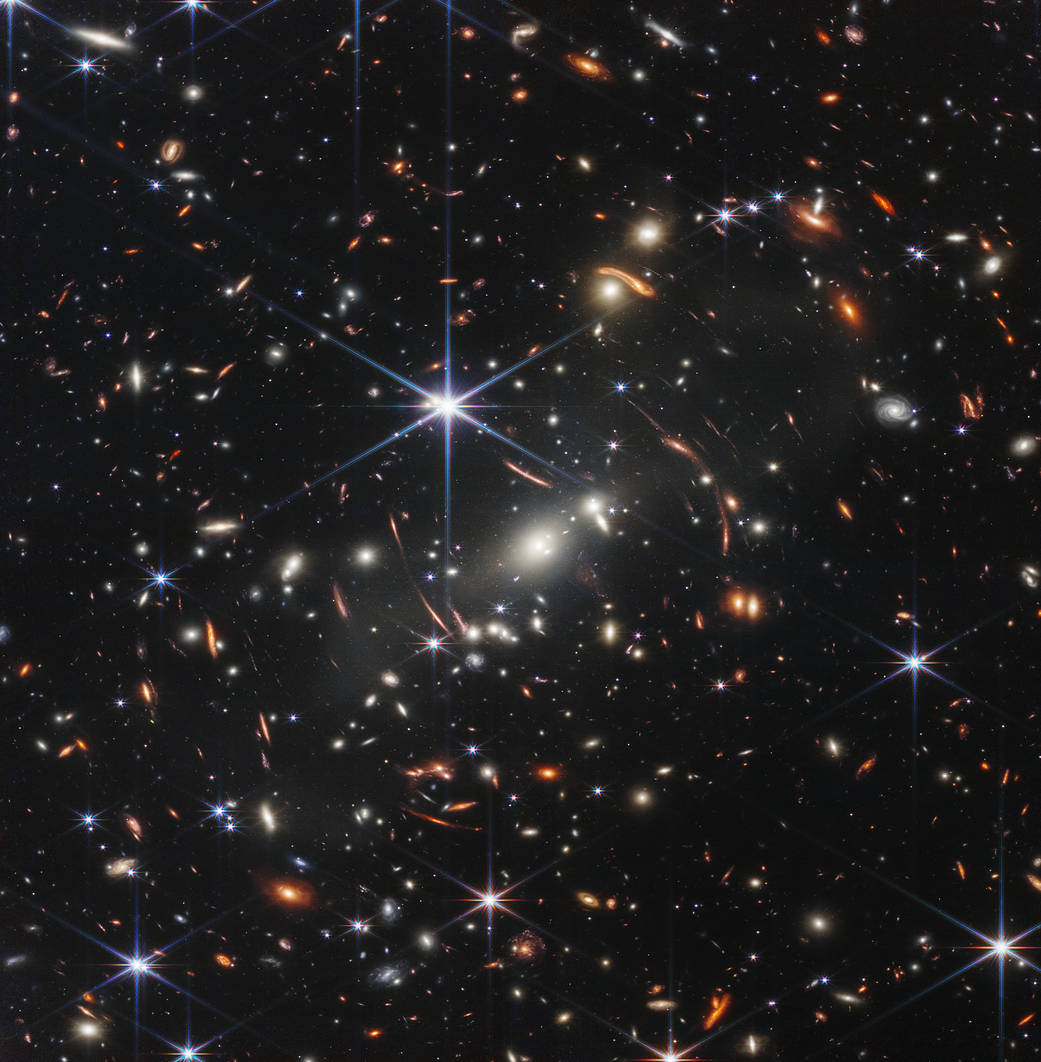
From NASA’s photo library

Tax Season

And it came to pass in those days, that there went out a decree from the Internal Revenue Service that all the world should be taxed.  (And this taxing was first made when Penn was governor of Pennsylvania.) And all went to be taxed, every one into his own city. And Steve also went up from Galilee, out of the city of Nazareth, into Northampton, unto the city of David, which is called Bethlehem; (because he was of the county and district of Northampton:) To be taxed with Kay his beloved wife, being great with patience.  Well, not exactly biblical (with apologies to Luke), but this came to me upon having to go to Bethlehem to collect our tax documents from our accountant.  There’s something biblical about living in the Lehigh Valley.

Photo by Olga DeLawrence on Unsplash

I don’t complain about having to pay taxes.  I only wish far less of the money went to pay congressional salaries.  And far less to the military.  Otherwise, I realize that in order for infrastructure to be up-kept, for the many services that make life possible for so many people, those of us who earn enough—even if not exactly flush—owe something to the system.  I’m saddened that the very wealthiest feel they’ve earned the privilege of not paying taxes. Modern-day Herods, I think, ready to kill babies in order to maintain personal power.  Still, those of us who pay participate in the most basic kind of charity.  So we make our annual trip to Bethlehem.

These days many people feel that if they don’t like other people they shouldn’t cooperate with them at all.  Even finding out that a certain Trump has been defrauding the very government which he purported to lead, and has been doing so for many years, doesn’t dissuade some of them.  I think our accountant, who looks gaunt and who doesn’t overcharge, could fairly claim a bit of back taxes that might be due.  Community is an endangered concept.  It’s a place where people support one another, and perhaps even care about others.  When I logon to Nextdoor.com I’m distressed to see the trolling and inappropriate emojis that show up.  The internet makes us all think we’re clever, ready with the snappy comeback.  Even to a recent story about a dead homeless man found in a park.  We need each other.  Society can’t move ahead if everyone keeps everything to themselves.  So it was we drove our rusty, four-cylinder donkey even unto Bethlehem.


Future Ministry

I’ve been on the Green Committee at work almost since I started the job.  Occasionally for Earth Day we’ll have a book discussion.  Usually it revolves around nonfiction books that my press publishes.  This year they selected Kim Stanley Robinson’s The Ministry for the Future.  It’s an environmentalism tale of what global warming may well be like and the political machinations it might take (and the millions of deaths along the way) before we stop burning carbon.  It’s a long and detailed and political story.  Robinson is known as an intellectual science fiction writer and there are sci-fi elements to the book, but its style is realist and its outlook, while ultimately hopeful, is staid.  Even when humans start to move in the right direction.  It’s also a very long book.

Reading it got me to thinking again of a somewhat bewildering truth: environmentalism books tend not to sell overly well and sustained reading, even by supporters, is difficult.  Many of us know that we’re beyond the tipping point for environmental disaster.  The Trump years assured us that it is coming.  One of the elements Robinson makes clear is just how politically entrenched it is.  Perhaps that’s one of the reasons for the despair.  The vast majority of people in the world want a more environmentally conscious government, but plutocracy tends to bring narcissists to the top and the needs of all others are less important.  In Robinson’s version of the story, targeted violence is the only thing that works.  Near the end of the story an interesting idea is raised: the Ministry of the Future (which is a government ministry, not the church kind) concludes a new religion is needed.

The masses of people, you see, are followers.  Religious leaders reinforce the idea that God told their founders—and by extension their followers—the only truth.  Their jobs (and ministries are jobs) include reinforcing those ideas to people who’ve been raised or converted to that particular brand of religion.  A number of New Religious Movements, and even a couple of prescient ancient religions, have been purposely constructed.  The trick is to get followers to accept that the religion is legitimate.  Most western religions around today have been based on the idea that humans can do whatever they want with the planet—even destroy it to force God to return.  I kind of like Robinson’s idea better.  Perhaps that’s why religions form around movies like Avatar.  Not a bad thought, when your job has you reading a sci-fi novel.  A religion saving the earth feels like a novel idea.


Thinking, Critically

A woman—I don’t know her name—photobombed a Russian newscast with a sign telling the Russian people that they’re being lied to.  Detained by police, her whereabouts are unknown.  I admire that woman.  She may pay with her life  in her effort to encourage what is dear to every teacher everywhere: critical thinking.  Many of the world’s problems are the result of the dearth of critical thinking.  There’s no other way to explain the election of Trump and his main squeeze Vlad.  Thick as thieves, the saying goes.  I recently gave a talk to a small group about publishing.  One of the points I was making is that critical thinking is essential in getting to the truth.  Compare sources, use reason, and never trust a snake-oil salesman.

People vote with their feelings rather than with their rational faculties.  Trump openly admires Hitler, as Putin does Stalin.  These should be signs of warning to those who think critically.  The Second World War wasn’t even a century ago and we’ve apparently forgotten all the lessons it should’ve taught us.  In high school we were shown examples of propaganda and told how to avoid it. Now we see it and can’t recognize it at all. Critical thinking is often frowned upon in modern society.  Being comfortable with the status quo is perhaps valued higher than social justice and the necessary work to get us to where it might happen.  It’s easier to hate than to think.  It’s easier to follow than to question what you’re following.  Education teaches us survival skills, and among them are the ability to think through a situation.  Authoritarianism is seldom—I’m tempted to say “never”—the way to a good result.

Perhaps the saddest irony of all is that those who run outlets like Fox News (and its Russian equivalents) are thinking critically of ways to get followers not to.  Realizing that critical thinking will lead to a more fair and equitable world, they decide to keep their positions of privilege by discouraging their followers from engaging with the basic comparison of sources and weighing of facts.  Instead, promoting “alternative facts” and emotionally outraged rhetoric, they are able to stir up crowds to try to take over the government.  Conspiracy theories are easier to believe if you don’t know how to check facts for yourself.  And the internet has made us all experts on everything.  Russia’s narrative about the war is far from the reality on the ground.  Objective observers have seen what is really happening.  One heroic woman in Russia said enough is enough.  In all likelihood nobody in the world will ever see her again.


In War’s Domain

Good for absolutely nothing, to borrow the wisdom of Edwin Starr, war has again marred Europe.  We could see it coming from afar because people keep electing autocrats and strong men always want to fight one another.  There should be international laws banning their election, but instead innocent people die because one man has to prove he’s bigger than another.  The evils of the Trump years will be with us for decades.  There’s nothing Christian about waging war.  Seems that some folks have forgotten their Sunday School.  Wasn’t the selfless, self-sacrificing carpenter from Nazareth known as the “prince of peace?”  Of course, Ukraine became Christian long before Russia did.  What deep-seated insecurity such “world leaders” have!

While not wanting to be drawn into open conflict yet again, the world has pretty much all sided with Ukraine.  It has the misfortune of being nestled next to a weary nation with a dictator who despises the west.  Who pulls down his pants and shows off his missiles when anyone starts to open their mouth.  Who isolates himself and his people in the name of self-aggrandizement.  We came close to that over here.  So close that it still makes me shiver.  We feel for the people of Ukraine.  They did nothing to provoke attack, and they probably knew other world leaders would keep their distance.  Putin, like Stalin, wants a USSR.  An empire to put the evil west in check.  Hadn’t we left that kind of thinking behind?  Hadn’t we grown up after World War Two?  Strong men learn nothing from history.  They look at it and see only a mirror reflecting only themselves.

Hitler annexed Poland.  Russia, which has more land than it knows what to do with, doesn’t need Ukraine to be part of it.  The good people of Russia are protesting, just like the women brave enough to march on Washington to protest the fascism America embraced for four years.  I’ve put off writing about this because it’s so difficult to do without dissolving into tears.  Beware of either bare-chested or chest-thumping politicians worldwide!  It’s time to end the era of the alpha male.  We need mothers to nurse us back to health.  They call it “Mother Russia” but what mother acts this way?  The women aren’t impressed, Vlad—they’re in the streets bravely protesting.  It’s International Women’s Day.  Let’s honor women. It’s time to let the women lead.  It’s time to put war behind us forever.

Photo by Jenna Norman on Unsplash

Routine Interruptions

Ironically, having just written about routines, we experienced a power outage with a wind storm.  Sitting home of an evening, the lights in every occupied room began to flicker.  We grabbed flashlights, suspecting what would come next.  The power outage led to a temporary loss of the internet, the god of this age.  Routine was interrupted.  This brought to mind just how fragile all this is.  As supply-chain issues have demonstrated, everything has to work just right for our society to operate at expected standards.  And an internet outage leads to an interruption of routines.  Whenever this happens, it reminds me of how complex our lives have become.  And how unfair.  There are people across the world who struggle with daily necessities such as clean water, safe homes, and reliable sources of power.  And a wind storm in eastern Pennsylvania doesn’t mean that the company’s power in another state is out.  Does this mean I take a vacation day?

As this winter winds down I again lament the loss of snow days.  They were local holidays, of course, and based on the unpredictability of nature.  Our power outage, followed by internet outage, was a personal kind of snow day.  Nobody wanted it and we all planned to work today.  Other than the outage, we’re fine.  Just like a snow day.  There’s a feeling of helplessness to it.  To fix the internet we rely on someone who knows how to do such technical wizardry.  Anyone can stuff a rag in a hole in the window, but to replace the glass it takes an expert.  How do you contact them when the internet’s out?  (Of course, everything’s back on in time for work.)

No doubt, many aspects of our lives are better.  We can pay our bills without using a stamp.  We can look up basic information online.  Even attend religious services virtually.  (Who doesn’t want to linger in their pajamas on a Sunday morning?)  Yet, for all of this to happen our power must be on and steady.  Our internet connectivity must be strong.  We have to be able to connect to work so that we can be paid so that we can keep the power on.  It seems an odd way to spend our time.  Obviously, if you’re reading this they—that mysterious they—have got things working again.  The power is on so that I can type this, and the internet is connected so that I can post it.  And yet I don’t feel any more secure.  And I know I’m one of those who has it easy.


A Little Fuzzy

Animals don’t obey the law.  As I observed just a few days ago on this blog, they don’t recognize indoors or outdoors.  And they certainly don’t respect private property.  Conflicts are sure to arise.  Mary Roach turns her impressive writing skills to address this, and related issues in Fuzz: When Nature Breaks the Law.  I’ve read an academic book on this subject as well, and I have to say that one wasn’t as much fun.  Roach has a way of bringing the humor out of even potentially trying subjects such as how do we scare carrion birds away from human corpses?  How do we eliminate pests that we’ve accidentally introduced?  (Think of rabbits in Oceania.)  How do we stop birds from getting sucked into jet engines?

Although the book handles these with a light touch, as with most of Roach’s work, it also raises some serious issues.  Solutions to introduced species can involve poisoning that also kills native species it’s designed to protect.  Genetic engineering may have (likely will have) unforeseen effects.  What is a dominating species to do?  We have laws about ownership, after all, and we expect them to be obeyed.  Squirrels, for example, won’t care that you just had to have a sink replaced at great expense.  They’ll gnaw their way in anyway, creating a new crisis right on top of the old one.  Deer cross highways, their brains not yet evolved enough to interpret what a car is—they’ve only been around for just over a century.  (The cars, not the deer.)  They sometimes cross runways too.  (The deer.)  We like animals well enough in the wild— in fact we long to see them.  When they get into our space, however, our rules don’t apply.

As long ago as the Bible, and perhaps before, the question arose of punishing animals.  If your ox gores someone what should you do with it?  I’m not sure Homo sapiens are the best species to be making such decisions.  We’ve shown colossal poor judgment (think of Trump and try to disagree).  We’re actively destroying our own environment, the terrestrial equivalent of defecating in our own fishbowl.  What gives us the right to punish other creatures who are more in tune with what nature tells them to do?  Perhaps the biggest takeaway from all of this is that we may try to make the rules, but the rest of the planet responds to what we might call a higher power.  I’m glad that writers like Mary Roach can show the fun side of it all.


Love on a Monday

I hope you may find love on a Monday.  I have a feeling that if we took Valentine’s Day more seriously the world would be a better place.  Capitalism, however, abhors interruptions (unless you buy lots of stuff) so many of us are at work this Monday.  I was recently reading how the full, unbroken eight hours’ sleep is a product of the industrial revolution.  I’d never thought of that before.  Everyone is different, of course, but it is natural for our species to wake in the night and be up for an hour or two and then to fall back asleep.  That, of course, interferes with the nine-to-five (925) that capitalism holds so dear.  In response, humans have altered their natural sleep patterns to conform.  The results are predictable: a line at the coffee machine every day at the office.

When I raised this with a friend, I was reminded that much of our life-style has been determined by the industrial revolution.  Certainly the concept of the weekend was.  And the constant feeling of never having enough time to, well, exist.  I awake when my body tells me it’s slept enough.  Generally that’s around 3:00 a.m.  I begin work early because Protestants have this work ethic going, but then I always get sleepy around 8:00 a.m.  Napping on the job is essentially the same as being a communist, so like many others I struggle through the rest of the day, not quite as efficient as I was for the first couple of hours.  In many cultures a nap is built into the after lunch slump.  Intravenous coffee is preferred by capitalists everywhere.

What if love catches you on a Monday?  Is it a sick day?  A vacation day?  A personal day?  Or all of the above?  It’s an opportunity to be human, but less than a true capitalist.  Someone could be making money off your time!  And whoever heard of more than ten paid holidays in a year?  I’m not complaining.  I love weekends and the scattering of holidays I receive, I really do.  Still, I miss the spontaneity of life.  The flight from a predator.  The shutting of the eyes when tired.  The celebration of love when it’s found.  A Faustian bargain was made when Christianity wed capitalism.  We’re encouraged to buy valentines for our sweeties, but show up to work and be there bright and early again the next morning.  May you nevertheless find love on your Monday.


Ignoring or Ignorance?

As someone whose career has always been about the Bible, I’ve noticed that many intelligent people are naive.  They seem to believe that since they’ve outgrown the need for religion that it doesn’t exist among the majority.  I guess that’s another way of saying their thinking tends toward elitist.  The vast majority of people in the world are religious.  Among the elites, since about the sixties, there’s been the fervent belief that religion will die out in the face of science.  That hasn’t happened, of course, and it’s not likely to.  In the meanwhile, the idea persists and replicates itself and religion is ignored until people fly jets into towers or elect Trump or commit some other extremely catastrophic act.  There’s then usually a flare up of interest that dies down when the danger is past.

I wasn’t very socially aware in the sixties.  I was quite religious, though.  The religious, although always in the majority, constantly talked about being under threat of extinction.  There was, even then, a paranoia about being discounted.  Some of the elites realized that by pretending to be religious themselves they could make use of those numbers.  In other words there are forces, not from any divine source, keeping the interest in religion high.  Only the naive ignore it.  That’s one of the reasons it distresses me to see institutions of higher education cutting religion programs.  It plays into the worst sort of elitism to ignore the vast majority of the human population.  Meanwhile, subjects that bring in cash thrive.

Should we look away?

Growing up in an uneducated environment may have been a hidden blessing.  It can sometimes instill a lifelong desire to learn, even if your outlook is discounted.  I’ve always believed in education, and when it wasn’t, or isn’t, available I tend to self medicate by reading.  Reading about religion is always a learning experience.  There’s something profoundly human about it.  Acknowledging that something greater than ourselves is out there, whether you want to face it as divine or natural, seems wise to me.  I think we all know it’s there.  How we choose to respond to it, however, differs widely.  We’ve had glimpses of what the universe would be like if humans were the most puissant beings out there.  The results, based on the headlines, aren’t terribly encouraging.  I see these things and say something, but it’s ever so easy to ignore someone whose career has always been about the Bible.


Banning Ideas

It’s been in the news lately that some communities, in keeping with the current fascist trends, are starting to ban books.  One of the plays in the Nazi book was to burn them, followed soon after by destroying the people who read them.  Ideas are, by their very nature, dangerous things.  Trying to destroy them by banning books, however, doesn’t work.  The kinds of books being banned are predictable: those that portray races as equal, those that offer understanding and acceptance of those differently gendered or oriented, and books that show the white man caught with his pants down (metaphorically, although in actual life this happens quite often literally as well).  Books premised on lies are just fine, but as soon as we get to ideas that make us think, well, we ban and burn.

Book banning is normally presented as protecting the children.  Something any attentive parent knows is that children understand a lot more than we think they do.  I suspect they realize that books are prohibited because they contain the truth.  Nobody bans a book of “harmless” fantasy—books where white men have all the answers and solve all the problems.  And when they lose their tempers they start wars, which, of course, the white guys always win.  Such stories, based as they are on basic untruths, are fantasy indeed.  Our slow move into the new millennium from the growing awareness of the sixties, has shown us the necessity of looking deeper.  Expanding beyond the stories white men tell to comfort themselves.  Those invested in this narrative are very reluctant, of course, to let it go.

The more we move into the new millennium the more determined we seem to repeat the last one.  That one had a pandemic near the beginning and wars and white men only on the front pages.  The younger generation, thankfully, by and large doesn’t share these poison biases.  They were read to as children.  Teachers and other heroes didn’t ban books, but encouraged reading them.  Local communities are making a concerted effort to break down learning and then we wonder why the United States has the highest infection rates in the world.  If only there were some way to figure out why that might be!  Reading books with uncomfortable truths might be a good start.  Ideas that can’t stand up to logical challenges may not be the best ones for building a society.   Read a book rather than banning it, and see if we all might learn something.


Others’ Weeping

I was first introduced, consciously at least, to la llorona via the movie, The Curse of la Llorona.  The film is part of The Conjuring universe, but just barely.  It was clear from the movie that the weeping woman (la llorona) wasn’t invented for the film.  I’ve never lived in, or even spent much time in, the southwest.  Even less in Latin American countries.  In my rather strange career path, the best source of such things to penetrate my own experience tended to be my students.  (Those who think professors do all the teaching have the equation backward.)  Since becoming more isolated as an editor, my interactions are often someone approaching me with an idea mostly formed, often fully formed, and few of them have to do with ghosts or folklore.  That’s why I found Domino Renee Perez’s book There Was a Woman: La Llorona from Folklore to Popular Culture such a treasure.

As an Anglo reader endowed of white privilege, it’s important to read books where I’m clearly the outsider.  Being a kind of historian, I was curious about the origins of the tale.  As a person living in the modern world I was also interested by its reception history.  This book contains many, many examples of the latter.  It will demand that the outsider reader accept unfamiliar names and cultural conventions.  It will, in some ways, force you to stand “south of the border” and face the suffering our nation has caused and continues to cause in the name of white supremacy and its adjunct, capitalism.  There are other ways to be in this world, but when money gets involved all bets are off.

There’s much to discuss in a packed book like this, but one aspect, near the end, caught my attention.  Briefly, if you don’t know the story, la llorona is a woman betrayed by her husband.  She drowns their two children and is condemned to wander the riverbanks for eternity crying as she searches for them.  Interestingly Perez makes the connection with Rachel in the Bible.  I’ve read the Good Book many times and yet I seem to have missed Matthew’s use of Jeremiah’s interpretation of Rachel’s story.  Joseph was kidnapped and sold to slavery by his brothers but Genesis focuses on the grief of Jacob.  Rachel doesn’t live to be reunited with her lost son like Jacob does.  Perez makes the point that the stories are quite different, but it showed me once again how much I have yet to learn.  We need to pay attention to those who experience life differently.


Connection

I’ve met a few famous people in my time.  Meat Loaf wasn’t one of them.  In fact, the only real rock concert I’ve ever attended was Alice Cooper, back in the first part of the millennium.  Still, the good folks over at WikiTree like to let you know your degrees of separation from the famous.  With the news of Meat Loaf’s passing recently the connections emphasized were rockers, and I ended up being some twenty degrees separated from Michael Aday.  Every time this happens I wonder why our world doesn’t take better account of how closely related we all are.  Fear is a powerful emotion and fear of strangers runs deep.  Even babes in arms often object to being held by those with unfamiliar faces.  We could benefit quite a bit, it seems, by learning to get comfortable with fear.

Looking at the political mess in the United States it seems pretty clear to me that its main fuel source is fear.  It’s been decades now since I first learned that politicians are well aware of how fear makes people behave at the polls.  This fear is carefully crafted and exploited to try to get the election results desired.  If we could learn to master our fears just think of how things would improve!  Instead, those who have something personal to gain use fear to attain it.  Not that there aren’t real reasons for concern.  Facts such as global warming are real and deserve our immediate attention.  To address them we have to work together.  Instead, many chose to use fear for personal gain, and we let them.

For me personally, engaging with horror is a means of handling fear.  Like most people I don’t want to be afraid.  At the same time I’m fascinated by it.  I can’t scroll past a web page listing scariest books.  I try to go through tallies of the scariest movies made.  In doing so I’ve found that many of my phobias (and there are many) have dulled a bit.  Perhaps that comes with age, but then I’ve read that fear tends to increase with age.  Why not get it out of the way when we’re younger?  What has all of this got to do with Meat Loaf?  I suppose it’s the kind of gothic quality of his songs with Jim Steinman that drew me in.  The songs are all stories and the gothic was among the earliest influences of what would become horror.  Now my fear is nobody will be able to fill that need.  Perhaps the answer is connection.