Maudren Saint

Saint Maud is one of those movies that requires some thought.  (And I’ve been giving it plenty.)   It follows a brief time in the life of Maud, a hospice nurse who becomes obsessed with saving the soul of one of her patients.  Maud has direct experiences of God, like Teresa of Ávila but the film doesn’t make it clear, until the very end, if she suffers delusions.  After the traumatic loss of a patient at the beginning of the film she becomes a devout Catholic and when she feels she isn’t succeeding in her mission she punishes herself by using medieval-level means.  She hears God talking to her and what he (yes, he’s male) demands makes the viewer wonder if she’s found the correct spiritual entity.  Moody, edgy, and theological, Saint Maud is another example of how horror and religion work together.

It’s one of those movies that, when you finish it you start looking around for someone to talk to about it.  Of course, I watched it alone, wearing headphones, so I had dialogue with my own imagination.  One of the founding principles of cinema was the realization that viewers liked to discuss what they’d just experienced.  The other horror fans I know tend to be academics far removed from here.  I don’t know any of them well enough to pick up the phone, or call up on  Zoom, and say “Hey, let’s talk about Saint Maud.”  The thing is, I understand some of the doubts and motivations of Maud.  It’s always that way when religious interactions are with an invisible, petulantly silent deity.  Kind of like watching horror movies alone.

Horror has proven to be a kind of therapy for me.  The stresses of life are many and unrelenting.  Watching someone even worse off can help, as long as it’s fiction.  The world we’ve created is a very unfair place.  Many people suffer so that a few can enjoy more than they deserve.  Their lifestyle is protected by lawmakers that they buy while others suffer.  I’d just spend a day hearing about such injustices, and then paying hefty bills, and it seemed that some weekend horror was just what the doctor ordered.  I’ll probably watch Saint Maud again once I’ve had time to recover, and to think about the implications of the story.  Horror and religion have a viable partnership.  Such films occasionally become blockbusters, but sometimes they’re smaller affairs waiting to haunt us on weekends after hearing about the sad state of the Frankenstein world we’ve all created together.


H. P. Luca

Disney has a lot of cash lying around, which means they can buy things.  One of those acquisitions, some years ago, was Pixar.  In my mind Pixar is now Disney, but in fact it does have a different aesthetic.  One of Pixar’s recurring themes is acceptance of those who are different.  Luca is Disney with a touch of Lovecraft.  This Pixar animation feature is about sea monsters acclimating to human culture, only they turn back into sea monsters when they get wet.  Kind of a combination between The Little Mermaid and Splash.  Even the Italian village in which Luca and his friend Alberto show up looks like the Imboca of Stuart Gordon’s Dagon (yes, I know Imboca is in Spain and I also know it’s fictional).  The villagers are, predictably, terrified of sea monsters since they earn their living from the sea.

In Luca once sea monsters come onto land they become human.  In fact, their culture below the surface is pretty much like human culture above.  The Lovecraftian element comes in the sea “monsters” (those in Luca are generally cute) coming to live among humans.  Lovecraft was, somewhat infamously, a racist.  While there’s no excusing that, there’s also no question that his fear of “the other” often develops the creepy atmosphere for which he became posthumously famous.  Cthulhu and many of the other great old gods dwell beneath the sea.  Human interactions with them generally lead to the humans becoming insane because of the implications.  Here Pixar adds its own twist—maybe humans are insane already.  What we permit in our societies is often less than humane.  At least with Lovecraft we could blame monsters.

Monsters are a reflection of humanity.  We take what we least like about ourselves and project it onto often fictional creatures that dwell beyond the bounds of human habitation.  We fear those who are different.  In more current thinking, that means humans should be accepting of other humans who don’t conform.  Those who think different, or, more especially, those who look different.  Sea monsters, at least hominid ones, hold great symbolic value.  They live in a world we barely know and to which we have little access.  Their lives under the great pressure of all that water must be very different from ours.  It’s only when we get beyond seeing them as monsters that we grow as humans.  If you follow the Creature of the Black Lagoon series to the end you see this playing out in black and white.  Sea monsters have much to teach us.


In the Name of

I recently heard someone who’s obsessed with honorifics opine that we should never mention Martin Luther King Jr. without his full titles.  I think I understand the reason, but I was reminded of my wife’s experience in Edinburgh.  Being Americans we assumed that “Doctor” was the preferred title of academics.  While tying up a letter for one of the higher ups in the medical school, she saw he’d signed himself “Mr. Gordon.”  She corrected this to “Dr. Gordon.”  When she gave it to him to sign he lamented that she’d demoted him.  The highest honorific, beyond the exalted “Professor,” was the humble “Mister.”  I’ve never forgotten that story.  University folk are all about titles.

I made the mistake of addressing my advisor as “Doctor” when we first met.  “Professor,” he corrected me.  In the British system, at least at the time, a department had only one “Professor,” the rest being “Lecturer” or “Senior Lecturer” or “Reader.”  The latter three were all addressed as “Doctor.”  The Professor alone had that singular title.  As my wife discovered, on beyond Professor lay Mister.  I’m a pretty informal guy.  When I was teaching I did insist that students call me “Doctor,” in part because I was young (I finished my doctorate at 29), and I’m small in stature.  And soft-spoken.  So that students didn’t take to calling me “son”—some at the seminary were old enough to have been my father—I kept the boundaries clear.  If I ever get a teaching post again I’ll insist students call me by my first name.

This day is about Martin Luther King, Jr.  He was a remarkable man who accomplished amazing things in the horribly racist America in which he was raised.  Unfortunately Trump has ushered in a renewed era of racism and our Black brothers and sisters find themselves still having to fight for fair treatment.  This reflects badly on the white man, as it should.  Still, to rely on titles is to play the white man’s game.  We honor each other more deeply, it seems to me, when we recognize that titles are, by their very nature, means of asserting superiority.  We offer our personal names to those closest to us, to those who humanize us rather than seeing us as an office.  Honor is important.  Titles can lead to better jobs (but not necessarily).  They can lead to higher pay (but not always).  We honor Martin Luther King, Jr. today by recognizing his great accomplishments and by realizing we all still have much work to do before we all really have names.


The Nature of Epiphany

Last year on January 6 we had an epiphany.  Many of us thought, I suspect, that since the angry mob wanted to kill Republicans and Democrats both that their actions would be condemned unilaterally.  Instead we learned that the Republican Party said, “Boys will be boys.”  And of course boys like to kill things.  A year later the GOP has stalwartly refused to condemn the attempt of a violent takeover of the government by a legitimately defeated candidate.  If the other party tried this they’d be calling “treason.”  We had an epiphany of a double-standard masquerading as evangelical Christianity.  Now, instead of thinking of today as the Christian epiphany, well, wait a minute.  Maybe that’s the epiphany we had—understanding what Christianity can become.

One of the tenets of democracy includes the freedom of religion.  Studying ancient religion can be quite revealing.  For one thing, we get a better idea of what religion was.  Few ancient authorities were concerned about what individuals actually believed.  Religion was largely what the powerful and influential did to placate gods who were easily bribed by sacrifice and praise.  The role of the average person was to be taxed to support this, and the monarchy.  I’ve been watching how, since the 1970s, the United States has been going that route.  We’ve always been a religious nation (“Christian” is much more debatable), but Richard Nixon’s ploy to swing evangelicals to the Republican Party worked.  Those not blinded by ideology will know that evangelicals tended to be staunchly Democrat.  Through the ensuing decades we watched Republican presidents giving our tax money to religious organizations they supported.  Why not throw another lamb on the altar while you’re at it?

The sacrificial system, you see, supported the temple staff.  Somebody had to eat all that meat!  Even in the Bible it was recognized that God didn’t exactly consume it the way a human being would.  Then last year on Epiphany, the party that’s supported just this kind of thing tried to throw all but Trump—yes, even Pence—onto their sacrificial pyre.  A year later we see those very senators saying, “well, it might be useful to have such people in reserve, just in case.”  Early Christians believed that you could tell another believer by their actions.  In that they weren’t wrong.  And those who are able and eager to kill in order to get their way have revealed, by their actions, their true beliefs.  It was, and still is, an epiphany indeed.


Energized

I grew up in Pennsylvania, but there’s a lot I don’t know about the commonwealth.  (I do know that it’s a commonwealth rather than a state.)  My parents weren’t educated—neither one finished high school—so I didn’t have a lot to go on at home.  I recently learned that it is the second largest energy producing state in this somewhat tenuous union.  Texas is, of course, first.  I suspect this is because the Keystone State is old.  Not because it was one of the original thirteen colonies (which it was), but because the Appalachians around here are ancient and abundant in coal, oil, and natural gas.  And speaking of natural gas, the state houses of congress are dominated by Republicans.  The state motto should probably be “Burn, baby, burn.”  Given the number of Republicans, it is also one of the most corrupt states.

Even in the rural parts where I grew up, it was clear that energy was a huge part of our history.  The petroleum industry began in Pennsylvania.  Col. Edwin Drake’s well at Titusville is still producing.  The oil fields here are shallow (speaking of the GOP), however, and the interest shifted to Texas where, well, everything’s bigger.  Growing up, refineries were a familiar sight.  One of my vivid childhood memories is witnessing a refinery fire.  I was too young to really understand.  My brothers and I were outside playing when it started to snow in the summer.  It wasn’t really snow, it was hot ashes falling from the sky from a refinery fire about five miles away.  We later drove out to see the huge vats melted like wax, charred and rusted under what had been an industrial paint facade.  Petroleum companies are like that.

My second hometown of Rouseville lived under constant threat of a refinery fire.  The small town of about 800 was completely dominated by a Pennzoil refinery that took up much of the valley.  We trembled whenever the refinery sirens went off.  My life may have been shortened by breathing in all those toxic fumes.  Big petroleum comes with massive costs.  We know that alternative sources of energy are available, but we have very rich people who stand to lose some of their vast fortunes if we move away from fossil fuels.  There’s much about Pennsylvania that I don’t know.  I’ve lived here longer than in any other state.  And I, for one, would like to see this fascinating commonwealth work for the betterment of the world it inhabits instead of rewarding the bad behavior of the wealthy.


Carton Thoughts

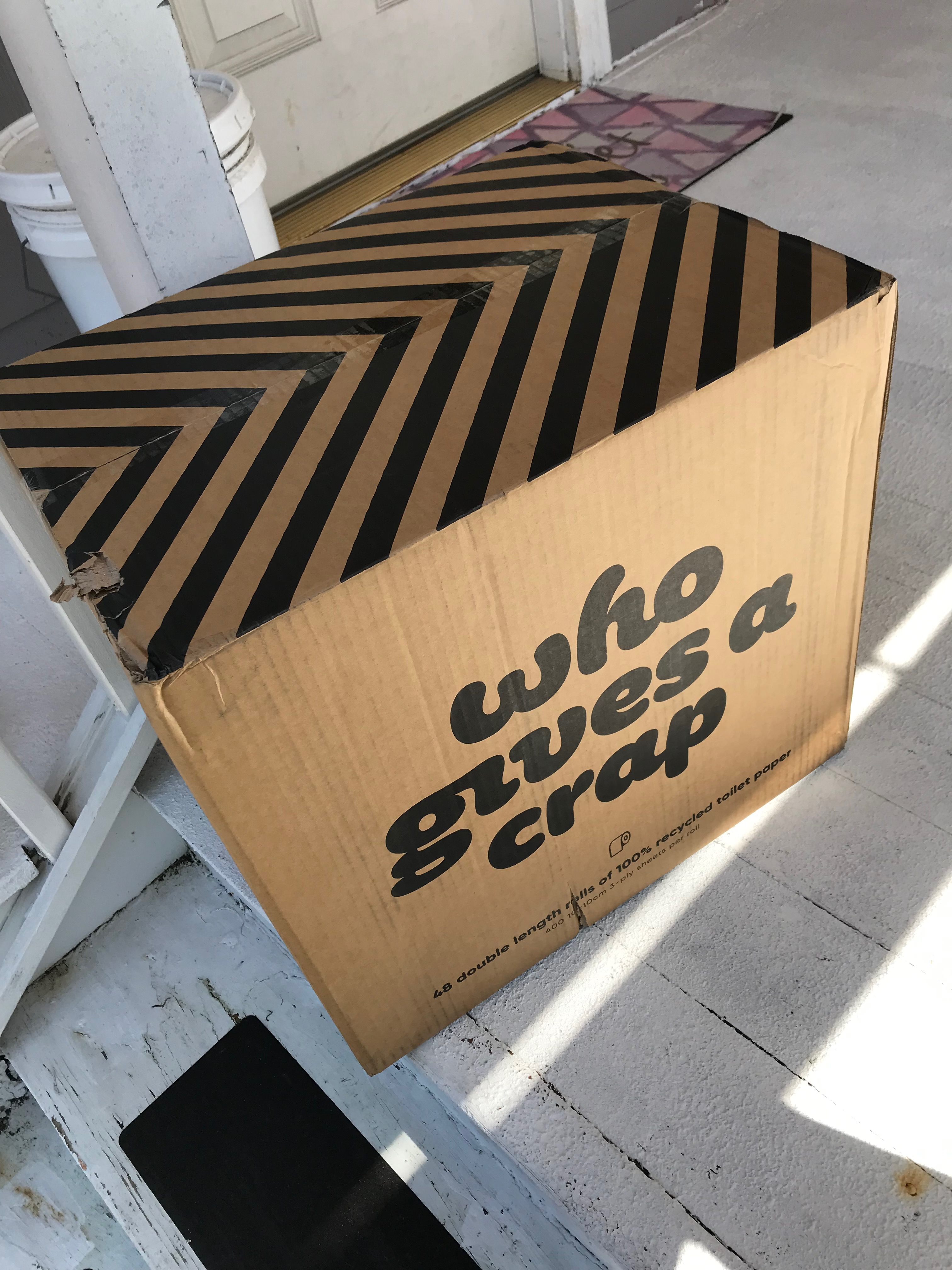
Did you know they’re recyclable?  Milk cartons, that is.  In our vegan efforts we switched to non-dairy milk years ago.  Unfortunately the plant-based milk industry doesn’t use gallon containers, so we buy the 2 quart (sometimes smaller) paper cartons.  Our community has a pretty good recycling program, but it doesn’t include cartons.  They are perfectly recyclable, however.  I’m saving them up to mail to the places Carton Council lists.  We can reduce waste, if we have a will to do so.  I know people who live in states with no recycling programs.  These states tend to lean red.  The world, however, doesn’t belong to anyone.  We need to learn to pick up after ourselves.  Take a look at the Carton Council webpage.  Sign their petition.

A large part of the problem is that we’ve allowed ourselves to be convinced that happiness involves consuming.  Our entire capitalist system is based on consumption.  We over-package what we consume, comestible or not.  There’s the ubiquitous plastic wrap, the box, the inner lining.  Often you can’t find the item you need in a local store so it has to be shipped.  All that wrapping.  All that waste.  One of the things environmentalists know well is that people quickly lose enthusiasm for saving their only planet.  The topic is depressing and overwhelming.  We’ve been living like there’s no tomorrow for at least half a century now.  Small steps can help, however.  Paying to ship recyclables afield isn’t the perfect solution, but it feels better to be doing something.

Economics is called the dismal science for a reason.  At the root of it, it seems, is that we’ve valued money above humanity.  And our environment.  One thing that Christianity got right, before it was sold, is that we should think of others.  Capitalism sees others in terms of assets or liabilities.  If our actions harm others—including the unborn that evangelicals are so concerned for—shouldn’t we be doing something about it instead of sitting around waiting for a miracle?  Some containers simply can’t be recycled.  Some devices can’t be made without rare earth metals.  Some jobs requite on-site workers and the travel they expend.  Not all goods are found where they’re needed.  But we can stop wasting perfectly good recyclable materials.  Clothes returned to online retailers often end up in the trash.  Why can’t what is sold also be given away if returned?  At least the needy could keep warm.  Maybe it’s possible to make that dismal old science smile by taking care of the resources we have.


What’s New?

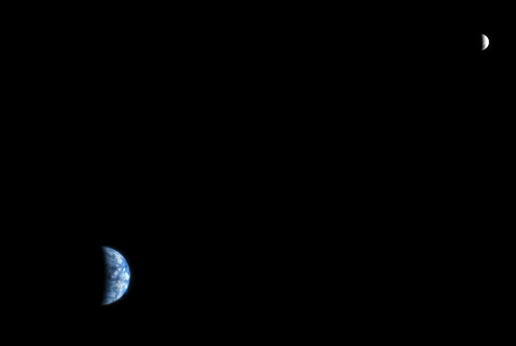
Now that 2021’s behind us, what will we make of the year ahead?  New Year has generally been a time of reflection.  I don’t put a lot of stock into it because years are just random markers pointing out when we’ve been around the sun once again.  They’re good for organizing things, but does a year have any particular significance?  Many people talk as if 2020 and 2021 were cursed.  I tend to think of the Black Death and the influenza of a century ago and realize that if you’re reading this, we made it through.  Not personally perhaps, but our ancestors did.  The Covid-19 pandemic wrenched us unwillingly from our comfort zones, but isn’t that part of life?  Were things good before?  Was it kind or humane to have Trump in the White House?  Was (is) the death-grip of capitalism on the western world cause for celebration?

Yes, we had to travel less.  Our ancestors—for some of us that may be as recent as our grandparents—would likely have considered our travel excessive.  Why do we always want to be somewhere that we’re not?  What makes a home a home?  What can we do, moving forward, to make that more appealing?  The past two years have changed a number of things, some decidedly for the worse, but some for the better.  I keep reminding myself that our outlook is terribly short.  The planet has hosted life for billions of years.  Some plants live for millennia.  We see only our lifetimes and use them to decide what’s normal.  I’m never quite sure what normal is.

I do know that it’s considered a new year now, for those who celebrate the new start on January 1.  Other cultures have other dates to mark this time.  We call it 2022 based on likely incorrect information about when Jesus of Nazareth was born.  Our Muslim friends mark the years via Muhammad.  Others find yet other markers important to their cultures.  Is any of this normal?  It is normal to be so terribly polarized as a nation, with supporters of one candidate hating those who support another?  Is it normal to complain because we’re surviving through a pandemic, because our conveniences have changed?  I suppose it’s normal to want things back the way they were.  Some of us are ambivalent about this whole internet thing.  There was value in knowing how to fold a paper map.  There will, however, be value in the time allotted before us.  2022 may be just a number, but as we reflect perhaps we should think of how to improve where we find ourselves.

From NASA’s photo library

A Haunting Story

The last book I finished in 2021 didn’t quite make it under the wire for my year-end blog post.  It was the second Stephen Graham Jones novel I read in the year.  I guess I’ve been reading a lot of American Indian books lately.  The Only Good Indians is a horror story and more.  There’s reconciliation.  There’s tradition.  There’s hope.  As part of the privileged “white” class, I’m always a little afraid that writers from oppressed cultures will take it out on me.  It may’ve happened here, but if so it was done in a way that I didn’t feel the sting.  This is a story of friendship, mistakes made, and a monster who has a righteous cause.  There’s a lot going on here.

One of the persistent cultural fears of the unwoke, I suspect, is that there’ll be payback if all things were to become equal.  Perhaps on the scale of karma that’s true, but in reality the people that’ve been oppressed simply want the oppression to stop.  To be recognized and acknowledged as being human.  As if that decision is up to white folk to make.  This novel simply deals with American Indian life as it’s lived.  The characters all pretty much live in poverty but they lack the greed so many white protagonists have.  They’re happy if they have a few hundred dollars, or even a few twenties.  Life is more than playing the capitalist game.  It really all comes down to relationships.  And family.

Stephen Graham Jones writes with a deft hand.  He offers some humor amid scenes of violence and loss.  He speaks plainly and without pretense.  And there are parts of this novel that are genuinely scary.  Since I had no idea how it might end, I wasn’t even sure even while I was on the last page.  

The best monsters are those that teach us to be better human beings.  Quite often they teach us that the truly monstrous ones are those who look and act like people usually look and act.  We take the natural world, assuming it’s ours.  We think our small problems are those of the entire world.  Monsters help to fix our perceptions.  Without them we carry on as if it’s business as usual.  This is a good novel to read in the midst of a pandemic.  There’s hope here that we’ll come out of the crisis better than we went in.  Perhaps scarred and changed for good.  In every sense of the word.


Love Letter

One of the more insidious things about religions is their claim to exclusivity.  The belief than any religion is the “only true religion” is bound to run up against the fact that there are many religions in the world, most of them sincerely believed.  We have much to learn from religions outside the one (if any) we were raised in.  I’ve known about Thich Nhat Hanh for quite a few years now.  One of his books was published (perhaps republished) by Routledge.  As their religion editor I was familiar with it, but as he was not “my author” (that’s the way publishing works), I didn’t contact him.  One of the most famous Buddhist religious teachers, Thich Nhat Hahn strives to transcend religion, which seems like a noble goal.  His Zen approach is simple and important.

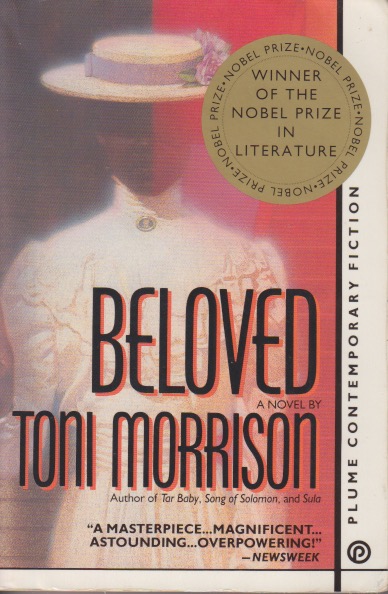
This book’s title, Love Letter to the Earth, indicates what it is.  A reflection on environmental sensibility, it includes literal love letters to the planet.  Arguably it is probably a book best read in small batches with time to contemplate between each reading.  Although some aspects are clearly Buddhist, there are also noticeably Christian elements as well.  Christian spiritual leaders, such as Thomas Merton, knew there was no inherent conflict between Christianity and Buddhism.  Thich Nhat Hanh is also remarkably prolific, having written over 150 books.  World religious leaders need to take a lesson here concerning speaking out about environmental justice.  Certainly there are those who will disagree with aspects of his theology, as reasonable and important as it is.  The message is larger than that.

This book is based on the truth that we are all made of this universe and we contain within ourselves that universe.  The earth is our mother, understood by Nhat Hahn in an almost, if not literally, literal way.  While this isn’t news it is nevertheless profound.  When religions are used as excuses to attack the earth they cease to be true in any sense.  Those who don’t buy that perverted outlook are being condemned by those who do.  The earth is our home and it is our responsibility to preserve it not only for our own sake, but that of all creatures.  Thich Nhat Hanh does without being judgmental.  He instead calls for a religion that takes other religions as part of a non-conflictual belief system.  Religion starts wars.  Wars, of course, come at great cost to the planet, quite apart from the human suffering.  There is much wisdom in this slim book which would benefit many to read.


Salvation by the Book

I’ve never been to Iceland.  Part of me says that if I ever get to go I’d want it to be on Christmas Eve.  Ah, the light would be in short supply, no doubt, and it would be cold.  But the draw of Jolabokaflod is strong.  Jolabokaflod isn’t a difficult word to figure out, if you’re familiar with Indo-European languages. “Jol” (maybe the “a” is included) looks a lot like Yule.  “Bok” is English book missing an “o” (again, maybe the “a” is part of it).  And “flod,” likewise with another “o” becomes “flood.”  The Yule Book Flood.  The tradition is to give books on Christmas Eve and spend the long hours of darkness reading.  Iceland has the reputation for being a very literate culture.  I’ve read a number of books (in translation) by Icelandic authors.  If there’s ever to be peace on earth and goodwill to all, it will be through books.

If you observe Christmas, today is that great time of anticipation, Christmas Eve.  Churches, whether virtual or in person, will be humming places this day.  Last-minute shoppers will be out and frantic.  Some will be insisting we keep Christ in Christmas while others will be dreaming of sugarplums and fairies.  Some will be tracking Santa on NORAD.  In Iceland they’ll be exchanging books.  Politicians will continue their calculated plotting but I dearly wish they’d spend the day reading instead.  Perhaps there would be fewer tanks at the Ukraine border if those in Moscow would curl up with a good book.  Check the progress of their Goodreads challenge.  Open up the flood-gates and let the books pour in.

There are those who believe this world should be consumed by God’s awful fire, and that right soon.  But God, as I understand it, is a writer of books.  Perhaps the divine plan is different than so many suppose.  Even the angels sang about peace on earth in one of those books.  You never know what’s going to be under the tree, but in our house books are always a certainty.  The words that describe this season—joy, peace, goodwill—can come in a few ounces of paper, ink, and glue.  And if God’s own book tells us to love one another, who are we to argue on Christmas Eve?  And if it’s true today won’t it be true also tomorrow and every other day beyond that?  Iceland has grown out of its warlike past.  And today they’re exchanging books.  Perhaps there’s a lesson there for all of us.


At Last, Yule

It all depends on how you look at it.  Today is either the longest night or the beginning of the return of the light.  It’s the winter solstice, that time that has been considered haunted for centuries, when the spirit world is once again close to the “material world.”  Slowly, incrementally the light will increase from this point on.  It will take a couple months for the effect to be really noticeable, and the weather here in the northern hemisphere will trail a bit behind and grow colder as the sky starts to lighten up a little.  This juxtaposition likely led to the germanic festival of Yule, which has become conflated with Christmas.  Carols tell us of Yule logs at Christmas and some cultures call Christmas itself Yule.

If you consider this day there are again two ways to ponder—appreciating the dark for its own benefits or looking for the return of light.  No doubt, lights are everywhere.  My town has the central part lit with holiday lights and just this weekend Bethlehem had hundreds of luminaria lining the sidewalks, encouraging the return of light.  Yule, it seems to me, catches people at their best.  Christmas isn’t quite here yet and people are still kindly disposed to others, coming out to see the lights and feeling carefree, assured that light will return but making the most of life before it becomes humdrum again.  We put out our lights, perhaps a little afraid of all this darkness, but at the same time trying to appreciate the restfulness of long nights.  Darkness isn’t evil, even if it works that way as a metaphor.

Learning from the dark is under appreciated.  As a species we rely heavily on the benefits of sight.  It’s natural to be a little afraid when we can’t see.  Still, the dark has its own regenerative value.  Our bodies actually benefit from being in the dark a few hours each day.  Our minds can benefit from the rest.  I always think back to the days before electricity allowed us to chase away the night.  How much more intensely the night would’ve been felt.  Even with our artificial lights nothing can compare with the light scatter of our own skies as the sun’s powerful lumens flood our hemisphere.  Yule seems the appropriate time to think about the contrast, but not conflict between light and dark.  The idea that opposites must fight doesn’t really help us in this world of many contrasts.  Isn’t it better to ponder how we might learn from the dark?


Masking Identity

Who am I, really?  Identity has been on my mind quite a bit during this pandemic.  With millions dying I suppose it’s important that “the officials” know who we are.  At the same time I don’t feel comfortable taking my mask off in front of strangers.  It’s kind of like a facial striptease that puts you at risk for some communicable disease.  Because I had to fly for Thanksgiving this year I got to put my Real ID to the test.  I removed my mask for the photo—at the DMV, of all places—so there was risk involved to prove that I am who I’ve always been.  When I went to get a Pennsylvania license three years ago, the system remembered me from when I got my permit and asked if I still lived in the county where that had occurred.  They seem to know a lot about me.

At the airport the TSA guy told me to take off my mask.  He had to confirm that I was the same person my Real ID stated I was.  I wish our government would tell me who I am.  And of course my passport decided to expire also during this pandemic.  I went to a local pharmacy to get my passport photo taken.  (I know you can do this at home, but you need a printer that handles photo paper.)  Then you can send the application in by mail.  How do they know it’s really me in the photo?  I had an uncanny experience many years ago when a visiting team from the Association of Theological Schools (ATS) visited Nashotah House for an accreditation visit.  One of the inspectors looked very like me.  I think we both noticed the resemblance immediately.  It was like we were twins.  Later I found his photo on the school website and asked my pre-literate daughter who it was.  She said “Daddy.”

Who is that masked man?

So I’m standing here with my mask off in a store for confirmation that I am who I claim to be.  I wonder if this other guy’s photo were sent in would they know the difference?  In fact I’ve had the experience I suspect many people have had of being mistaken for someone else.  Helping a friend move to Kentucky after college, I had several people in a small town I’d never visited before identify me as Joe’s son.  I looked just like him.  Of course, that was way before the pandemic when our faces were public property.  Now I just wish I could put my mask back on so that I could feel a little less naked.


Human Agency

Goodreads Choice Awards elected John Green’s The Anthropocene Reviewed as the Best Nonfiction for 2021.  It’s easy to see why.  Green has long been known both as an internet personality and as a fiction author.  His fiction tends to fall into the Young Adult category, but I’ve read a couple of them as an adult and found them compelling.  Green has an uncompromising way of writing about difficult topics and evoking what it was like to be young.  His main fan base is probably much younger than me, but I always enjoyed his fiction, so why not non?  To understand the context of The Anthropocene Reviewed, it’s important to realize that it is a podcast.  Some of the segments have been written up into a five-star rating system that has been done with quite a bit of humor and some very real tears.  That’s the book version.

For me personally, reading this book was quite a bit like walking the mental paths already in my own mind.  Although we’ve led very different lives, John Green and I share many of the same anxieties, the same love of writing, and similar theological backgrounds.  I don’t know him, of course, but I get the sense that we both still wonder what we want to be when we grow up.  The selection of topics in this book represent Green’s interests well.  Topics are researched and fascinating stories emerge.  It takes quite an author to make me keep reading when sports are invoked.  Some of the topics are sentimental and some of those must be so.  In fact, some of the topics he addresses are things I’ve blogged about.  Some of them even use similar phrases to describe our experiences.

The book is subtitled Essays on a Human-Centered Planet.  From Green’s point of view, this human-centricity isn’t always a good thing.  He nevertheless never loses sight of the fact that humans are fascinating creatures.  Fascinating and disturbing.  We destroy our own environment and each other.  Yet we’re capable of such incredible feats and loving and caring.  Green wrestles with his own neurodiversity here.  He doesn’t shy away from the difficulties that mental illness can present.  He’s also an example of one of us who succeeds despite this liability.  Indeed, our neurodiversity is one of those unacknowledged things that make us so very human.  We expect a world to obey the laws of logic, which it stalwartly refuses to do.  When we notice this we can either cry fowl or we can think about it and invite others to do so.  Read this book and think.


Christmas Classic

While it’s a story I know well, I’d never read the book.  I suppose I tend to think of Christmas when it’s already hard upon me, or perhaps I’m just making excuses.  After all these decades I’ve finally read Charles Dickens’ A Christmas Carol.  The story is so well known there’s no point in laying out the action here.  A filmic version of this has been part of our family tradition for many years now and sometimes it’s difficult not to think the cinematic version has somehow got it right while the book might’ve somehow missed something.  I’m generally disposed to read the book before watching the movie, but I believe I saw this as a young person and we had no Dickens in the house.  Besides, who could miss the endless parodies?

It’s a ghost story, yes, but it’s primarily about redemption.  It’s difficult for me to watch (or read) without getting a bit misty about the eyes.  Our world, especially during the Trump years, seemed a hard and heartless place.  Winter all the time while somehow being Hell also.  It will take many years—perhaps I won’t live to see it—before people unlearn the bad habits they saw being modeled each and every day of those four long, long years.  Every year as I watched the movie I thought, “I wonder if 45 has ever seen this?”  Always the answer came back in a resounding “Humbug.”  A miser who cares only for himself doesn’t change as easily as Scrooge.  So the world had to suffer, and so it will suffer yet a good long time.

The thing about redemption is that it can’t be privatized.  It’s on free offer to anyone who desires it.  While A Christmas Carol may not be Dickens’ best work, it nevertheless bears a message well worth the repetition.  Perhaps there aren’t ghosts enough in the world.  We need to learn to listen.  Were it not for the haunting Scrooge never would have changed.  The sad part is that there are people actually of his ilk.  I hold out hope for redemption to all of them.  I’ve known too many people who seem to care only for themselves.  I need to remind myself that they may not have the reinforcement of this tale every year.  The world could perhaps be better if that were the case.  Dickens clearly had fun as a writer.  Sometimes it seems to get in the way.  But if it makes one’s heart light in December, what can the harm be in that?


Great Resignation

Although many people my age are retired, I’m looking at a couple more decades of work at least.  A large part of this is because I specialized in a field I didn’t realize was dying.  I suspect clergy in the eighties, when I had to decide on majors and education choices, thought the declines in church attendance were a blip—a statistical anomaly until things went back to the way they “usually were.”  I majored in religion as an undergrad and then went on to seminary and finally to a doctoral program, all along that trajectory.  At every step of the way I was assured there would be jobs.  I’m seeing now that religionists don’t always look ahead.  It’s important to look back, but society begs to differ.

The reason this comes to mind, apart from being part of my daily reality, is an article a minister sent me.  The piece by Melissa Florer-Bixler  in Sojourners is titled “Why Pastors Are Joining the Great Resignation.”  It explores a number of reasons around pay and working conditions that ministers are quitting.  My thought, unscientific but logical, is that many of them are realizing society has moved away from the standard church model.  They recognize that the insistent biblicism that led to a past of Americans being in church under threat of Hell has diminished.  “Worship,” as it is generally done, no longer speaks to people.  I’ve experienced a great many worship styles and venues.  (I still attend them, but I’m a creature of habit as well as obligated by profession.)  When the realities of the world sink in you start to see the old model of praising an angry God because he demands it just doesn’t make sense.  People like Trump get elected anyway, so what’s the point?

Many pastors are underpaid.  Unless you run a mega-church budgets are tight and the need of people is great.  Much of the effort of the congregation I attend is directed to social justice causes.  There are so many.  So very many.  People are in need and the pat answers of call to worship, opening hymn, and sermon just aren’t doing it for them.  Congregants need pastoral care, as do people unchurched.  I’ve been through seminary and a professor in one long enough to know that few really get the idea of how to inspire by their words.  These are folks looking for a living who don’t fit into the capitalist model.  So there’s a decline.  As I read the piece I wondered what jobs they were switching to.  If my experience is anything to go by, the options are limited.