Energized

I grew up in Pennsylvania, but there’s a lot I don’t know about the commonwealth.  (I do know that it’s a commonwealth rather than a state.)  My parents weren’t educated—neither one finished high school—so I didn’t have a lot to go on at home.  I recently learned that it is the second largest energy producing state in this somewhat tenuous union.  Texas is, of course, first.  I suspect this is because the Keystone State is old.  Not because it was one of the original thirteen colonies (which it was), but because the Appalachians around here are ancient and abundant in coal, oil, and natural gas.  And speaking of natural gas, the state houses of congress are dominated by Republicans.  The state motto should probably be “Burn, baby, burn.”  Given the number of Republicans, it is also one of the most corrupt states.

Even in the rural parts where I grew up, it was clear that energy was a huge part of our history.  The petroleum industry began in Pennsylvania.  Col. Edwin Drake’s well at Titusville is still producing.  The oil fields here are shallow (speaking of the GOP), however, and the interest shifted to Texas where, well, everything’s bigger.  Growing up, refineries were a familiar sight.  One of my vivid childhood memories is witnessing a refinery fire.  I was too young to really understand.  My brothers and I were outside playing when it started to snow in the summer.  It wasn’t really snow, it was hot ashes falling from the sky from a refinery fire about five miles away.  We later drove out to see the huge vats melted like wax, charred and rusted under what had been an industrial paint facade.  Petroleum companies are like that.

My second hometown of Rouseville lived under constant threat of a refinery fire.  The small town of about 800 was completely dominated by a Pennzoil refinery that took up much of the valley.  We trembled whenever the refinery sirens went off.  My life may have been shortened by breathing in all those toxic fumes.  Big petroleum comes with massive costs.  We know that alternative sources of energy are available, but we have very rich people who stand to lose some of their vast fortunes if we move away from fossil fuels.  There’s much about Pennsylvania that I don’t know.  I’ve lived here longer than in any other state.  And I, for one, would like to see this fascinating commonwealth work for the betterment of the world it inhabits instead of rewarding the bad behavior of the wealthy.
Carton Thoughts

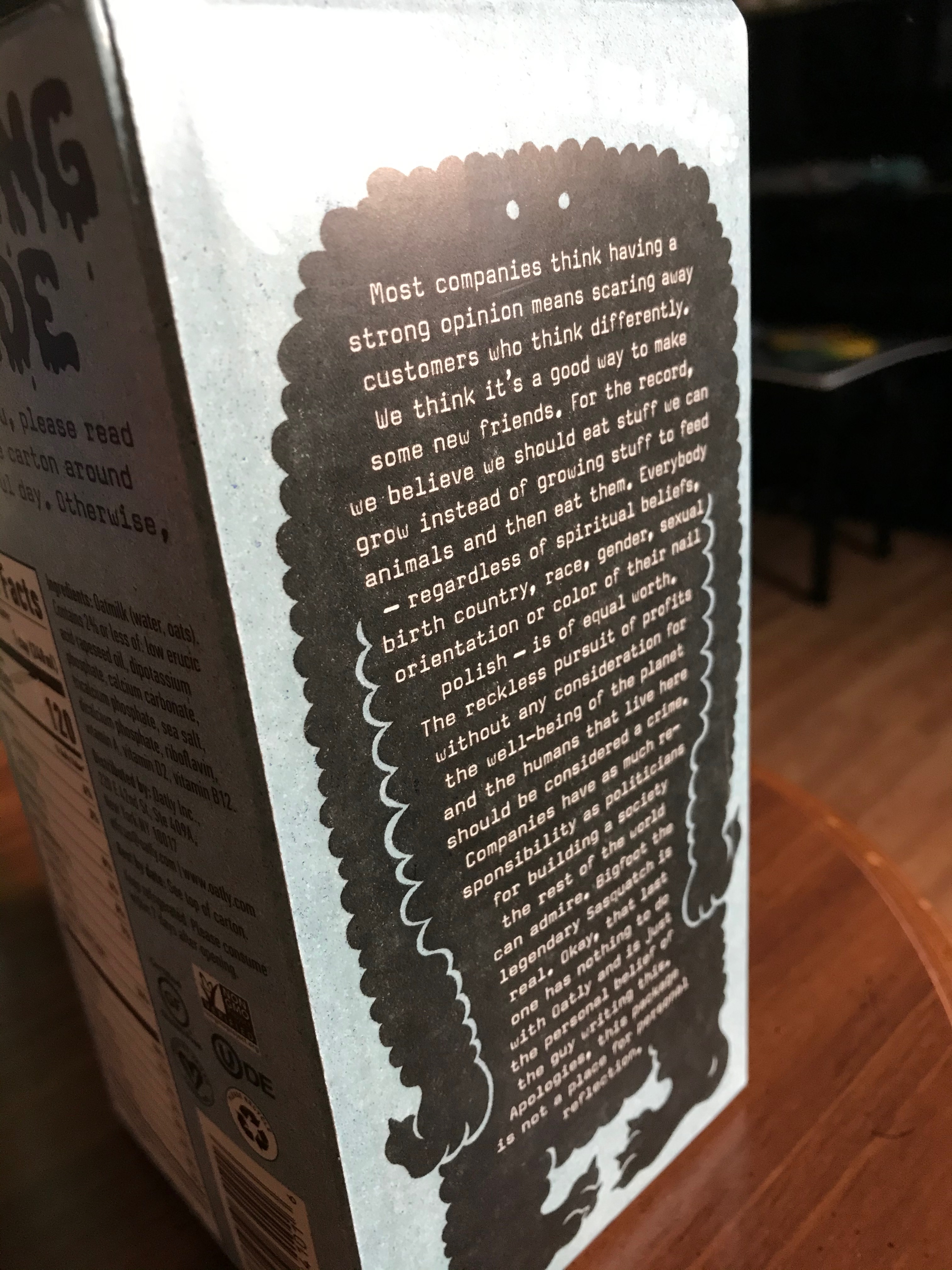
Did you know they’re recyclable?  Milk cartons, that is.  In our vegan efforts we switched to non-dairy milk years ago.  Unfortunately the plant-based milk industry doesn’t use gallon containers, so we buy the 2 quart (sometimes smaller) paper cartons.  Our community has a pretty good recycling program, but it doesn’t include cartons.  They are perfectly recyclable, however.  I’m saving them up to mail to the places Carton Council lists.  We can reduce waste, if we have a will to do so.  I know people who live in states with no recycling programs.  These states tend to lean red.  The world, however, doesn’t belong to anyone.  We need to learn to pick up after ourselves.  Take a look at the Carton Council webpage.  Sign their petition.

A large part of the problem is that we’ve allowed ourselves to be convinced that happiness involves consuming.  Our entire capitalist system is based on consumption.  We over-package what we consume, comestible or not.  There’s the ubiquitous plastic wrap, the box, the inner lining.  Often you can’t find the item you need in a local store so it has to be shipped.  All that wrapping.  All that waste.  One of the things environmentalists know well is that people quickly lose enthusiasm for saving their only planet.  The topic is depressing and overwhelming.  We’ve been living like there’s no tomorrow for at least half a century now.  Small steps can help, however.  Paying to ship recyclables afield isn’t the perfect solution, but it feels better to be doing something.

Economics is called the dismal science for a reason.  At the root of it, it seems, is that we’ve valued money above humanity.  And our environment.  One thing that Christianity got right, before it was sold, is that we should think of others.  Capitalism sees others in terms of assets or liabilities.  If our actions harm others—including the unborn that evangelicals are so concerned for—shouldn’t we be doing something about it instead of sitting around waiting for a miracle?  Some containers simply can’t be recycled.  Some devices can’t be made without rare earth metals.  Some jobs requite on-site workers and the travel they expend.  Not all goods are found where they’re needed.  But we can stop wasting perfectly good recyclable materials.  Clothes returned to online retailers often end up in the trash.  Why can’t what is sold also be given away if returned?  At least the needy could keep warm.  Maybe it’s possible to make that dismal old science smile by taking care of the resources we have.


What’s New?

Now that 2021’s behind us, what will we make of the year ahead?  New Year has generally been a time of reflection.  I don’t put a lot of stock into it because years are just random markers pointing out when we’ve been around the sun once again.  They’re good for organizing things, but does a year have any particular significance?  Many people talk as if 2020 and 2021 were cursed.  I tend to think of the Black Death and the influenza of a century ago and realize that if you’re reading this, we made it through.  Not personally perhaps, but our ancestors did.  The Covid-19 pandemic wrenched us unwillingly from our comfort zones, but isn’t that part of life?  Were things good before?  Was it kind or humane to have Trump in the White House?  Was (is) the death-grip of capitalism on the western world cause for celebration?

Yes, we had to travel less.  Our ancestors—for some of us that may be as recent as our grandparents—would likely have considered our travel excessive.  Why do we always want to be somewhere that we’re not?  What makes a home a home?  What can we do, moving forward, to make that more appealing?  The past two years have changed a number of things, some decidedly for the worse, but some for the better.  I keep reminding myself that our outlook is terribly short.  The planet has hosted life for billions of years.  Some plants live for millennia.  We see only our lifetimes and use them to decide what’s normal.  I’m never quite sure what normal is.

I do know that it’s considered a new year now, for those who celebrate the new start on January 1.  Other cultures have other dates to mark this time.  We call it 2022 based on likely incorrect information about when Jesus of Nazareth was born.  Our Muslim friends mark the years via Muhammad.  Others find yet other markers important to their cultures.  Is any of this normal?  It is normal to be so terribly polarized as a nation, with supporters of one candidate hating those who support another?  Is it normal to complain because we’re surviving through a pandemic, because our conveniences have changed?  I suppose it’s normal to want things back the way they were.  Some of us are ambivalent about this whole internet thing.  There was value in knowing how to fold a paper map.  There will, however, be value in the time allotted before us.  2022 may be just a number, but as we reflect perhaps we should think of how to improve where we find ourselves.

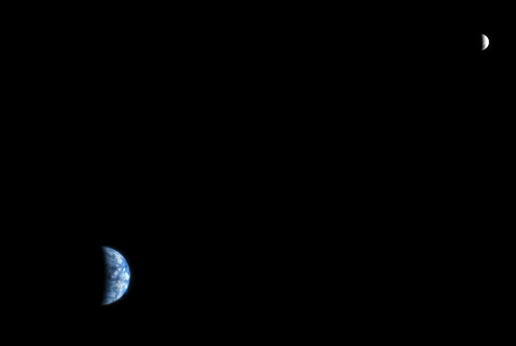
From NASA’s photo library

A Haunting Story

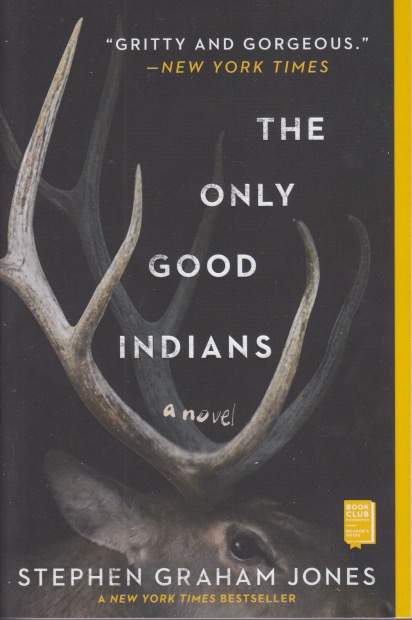
The last book I finished in 2021 didn’t quite make it under the wire for my year-end blog post.  It was the second Stephen Graham Jones novel I read in the year.  I guess I’ve been reading a lot of American Indian books lately.  The Only Good Indians is a horror story and more.  There’s reconciliation.  There’s tradition.  There’s hope.  As part of the privileged “white” class, I’m always a little afraid that writers from oppressed cultures will take it out on me.  It may’ve happened here, but if so it was done in a way that I didn’t feel the sting.  This is a story of friendship, mistakes made, and a monster who has a righteous cause.  There’s a lot going on here.

One of the persistent cultural fears of the unwoke, I suspect, is that there’ll be payback if all things were to become equal.  Perhaps on the scale of karma that’s true, but in reality the people that’ve been oppressed simply want the oppression to stop.  To be recognized and acknowledged as being human.  As if that decision is up to white folk to make.  This novel simply deals with American Indian life as it’s lived.  The characters all pretty much live in poverty but they lack the greed so many white protagonists have.  They’re happy if they have a few hundred dollars, or even a few twenties.  Life is more than playing the capitalist game.  It really all comes down to relationships.  And family.

Stephen Graham Jones writes with a deft hand.  He offers some humor amid scenes of violence and loss.  He speaks plainly and without pretense.  And there are parts of this novel that are genuinely scary.  Since I had no idea how it might end, I wasn’t even sure even while I was on the last page.  

The best monsters are those that teach us to be better human beings.  Quite often they teach us that the truly monstrous ones are those who look and act like people usually look and act.  We take the natural world, assuming it’s ours.  We think our small problems are those of the entire world.  Monsters help to fix our perceptions.  Without them we carry on as if it’s business as usual.  This is a good novel to read in the midst of a pandemic.  There’s hope here that we’ll come out of the crisis better than we went in.  Perhaps scarred and changed for good.  In every sense of the word.


Love Letter

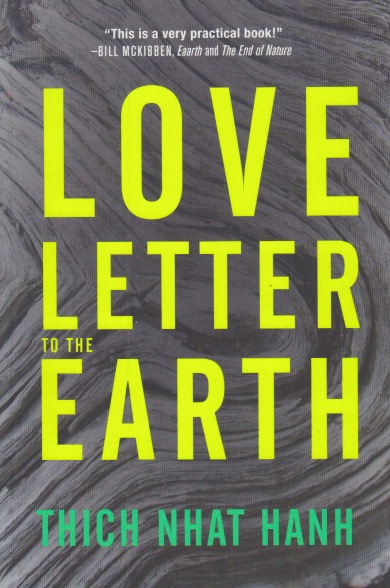
One of the more insidious things about religions is their claim to exclusivity.  The belief than any religion is the “only true religion” is bound to run up against the fact that there are many religions in the world, most of them sincerely believed.  We have much to learn from religions outside the one (if any) we were raised in.  I’ve known about Thich Nhat Hanh for quite a few years now.  One of his books was published (perhaps republished) by Routledge.  As their religion editor I was familiar with it, but as he was not “my author” (that’s the way publishing works), I didn’t contact him.  One of the most famous Buddhist religious teachers, Thich Nhat Hahn strives to transcend religion, which seems like a noble goal.  His Zen approach is simple and important.

This book’s title, Love Letter to the Earth, indicates what it is.  A reflection on environmental sensibility, it includes literal love letters to the planet.  Arguably it is probably a book best read in small batches with time to contemplate between each reading.  Although some aspects are clearly Buddhist, there are also noticeably Christian elements as well.  Christian spiritual leaders, such as Thomas Merton, knew there was no inherent conflict between Christianity and Buddhism.  Thich Nhat Hanh is also remarkably prolific, having written over 150 books.  World religious leaders need to take a lesson here concerning speaking out about environmental justice.  Certainly there are those who will disagree with aspects of his theology, as reasonable and important as it is.  The message is larger than that.

This book is based on the truth that we are all made of this universe and we contain within ourselves that universe.  The earth is our mother, understood by Nhat Hahn in an almost, if not literally, literal way.  While this isn’t news it is nevertheless profound.  When religions are used as excuses to attack the earth they cease to be true in any sense.  Those who don’t buy that perverted outlook are being condemned by those who do.  The earth is our home and it is our responsibility to preserve it not only for our own sake, but that of all creatures.  Thich Nhat Hanh does without being judgmental.  He instead calls for a religion that takes other religions as part of a non-conflictual belief system.  Religion starts wars.  Wars, of course, come at great cost to the planet, quite apart from the human suffering.  There is much wisdom in this slim book which would benefit many to read.


Salvation by the Book

I’ve never been to Iceland.  Part of me says that if I ever get to go I’d want it to be on Christmas Eve.  Ah, the light would be in short supply, no doubt, and it would be cold.  But the draw of Jolabokaflod is strong.  Jolabokaflod isn’t a difficult word to figure out, if you’re familiar with Indo-European languages. “Jol” (maybe the “a” is included) looks a lot like Yule.  “Bok” is English book missing an “o” (again, maybe the “a” is part of it).  And “flod,” likewise with another “o” becomes “flood.”  The Yule Book Flood.  The tradition is to give books on Christmas Eve and spend the long hours of darkness reading.  Iceland has the reputation for being a very literate culture.  I’ve read a number of books (in translation) by Icelandic authors.  If there’s ever to be peace on earth and goodwill to all, it will be through books.

If you observe Christmas, today is that great time of anticipation, Christmas Eve.  Churches, whether virtual or in person, will be humming places this day.  Last-minute shoppers will be out and frantic.  Some will be insisting we keep Christ in Christmas while others will be dreaming of sugarplums and fairies.  Some will be tracking Santa on NORAD.  In Iceland they’ll be exchanging books.  Politicians will continue their calculated plotting but I dearly wish they’d spend the day reading instead.  Perhaps there would be fewer tanks at the Ukraine border if those in Moscow would curl up with a good book.  Check the progress of their Goodreads challenge.  Open up the flood-gates and let the books pour in.

There are those who believe this world should be consumed by God’s awful fire, and that right soon.  But God, as I understand it, is a writer of books.  Perhaps the divine plan is different than so many suppose.  Even the angels sang about peace on earth in one of those books.  You never know what’s going to be under the tree, but in our house books are always a certainty.  The words that describe this season—joy, peace, goodwill—can come in a few ounces of paper, ink, and glue.  And if God’s own book tells us to love one another, who are we to argue on Christmas Eve?  And if it’s true today won’t it be true also tomorrow and every other day beyond that?  Iceland has grown out of its warlike past.  And today they’re exchanging books.  Perhaps there’s a lesson there for all of us.


At Last, Yule

It all depends on how you look at it.  Today is either the longest night or the beginning of the return of the light.  It’s the winter solstice, that time that has been considered haunted for centuries, when the spirit world is once again close to the “material world.”  Slowly, incrementally the light will increase from this point on.  It will take a couple months for the effect to be really noticeable, and the weather here in the northern hemisphere will trail a bit behind and grow colder as the sky starts to lighten up a little.  This juxtaposition likely led to the germanic festival of Yule, which has become conflated with Christmas.  Carols tell us of Yule logs at Christmas and some cultures call Christmas itself Yule.

If you consider this day there are again two ways to ponder—appreciating the dark for its own benefits or looking for the return of light.  No doubt, lights are everywhere.  My town has the central part lit with holiday lights and just this weekend Bethlehem had hundreds of luminaria lining the sidewalks, encouraging the return of light.  Yule, it seems to me, catches people at their best.  Christmas isn’t quite here yet and people are still kindly disposed to others, coming out to see the lights and feeling carefree, assured that light will return but making the most of life before it becomes humdrum again.  We put out our lights, perhaps a little afraid of all this darkness, but at the same time trying to appreciate the restfulness of long nights.  Darkness isn’t evil, even if it works that way as a metaphor.

Learning from the dark is under appreciated.  As a species we rely heavily on the benefits of sight.  It’s natural to be a little afraid when we can’t see.  Still, the dark has its own regenerative value.  Our bodies actually benefit from being in the dark a few hours each day.  Our minds can benefit from the rest.  I always think back to the days before electricity allowed us to chase away the night.  How much more intensely the night would’ve been felt.  Even with our artificial lights nothing can compare with the light scatter of our own skies as the sun’s powerful lumens flood our hemisphere.  Yule seems the appropriate time to think about the contrast, but not conflict between light and dark.  The idea that opposites must fight doesn’t really help us in this world of many contrasts.  Isn’t it better to ponder how we might learn from the dark?


Masking Identity

Who am I, really?  Identity has been on my mind quite a bit during this pandemic.  With millions dying I suppose it’s important that “the officials” know who we are.  At the same time I don’t feel comfortable taking my mask off in front of strangers.  It’s kind of like a facial striptease that puts you at risk for some communicable disease.  Because I had to fly for Thanksgiving this year I got to put my Real ID to the test.  I removed my mask for the photo—at the DMV, of all places—so there was risk involved to prove that I am who I’ve always been.  When I went to get a Pennsylvania license three years ago, the system remembered me from when I got my permit and asked if I still lived in the county where that had occurred.  They seem to know a lot about me.

At the airport the TSA guy told me to take off my mask.  He had to confirm that I was the same person my Real ID stated I was.  I wish our government would tell me who I am.  And of course my passport decided to expire also during this pandemic.  I went to a local pharmacy to get my passport photo taken.  (I know you can do this at home, but you need a printer that handles photo paper.)  Then you can send the application in by mail.  How do they know it’s really me in the photo?  I had an uncanny experience many years ago when a visiting team from the Association of Theological Schools (ATS) visited Nashotah House for an accreditation visit.  One of the inspectors looked very like me.  I think we both noticed the resemblance immediately.  It was like we were twins.  Later I found his photo on the school website and asked my pre-literate daughter who it was.  She said “Daddy.”

Who is that masked man?

So I’m standing here with my mask off in a store for confirmation that I am who I claim to be.  I wonder if this other guy’s photo were sent in would they know the difference?  In fact I’ve had the experience I suspect many people have had of being mistaken for someone else.  Helping a friend move to Kentucky after college, I had several people in a small town I’d never visited before identify me as Joe’s son.  I looked just like him.  Of course, that was way before the pandemic when our faces were public property.  Now I just wish I could put my mask back on so that I could feel a little less naked.


Human Agency

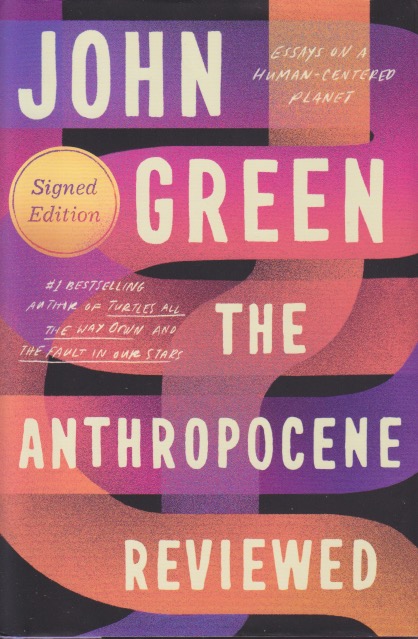
Goodreads Choice Awards elected John Green’s The Anthropocene Reviewed as the Best Nonfiction for 2021.  It’s easy to see why.  Green has long been known both as an internet personality and as a fiction author.  His fiction tends to fall into the Young Adult category, but I’ve read a couple of them as an adult and found them compelling.  Green has an uncompromising way of writing about difficult topics and evoking what it was like to be young.  His main fan base is probably much younger than me, but I always enjoyed his fiction, so why not non?  To understand the context of The Anthropocene Reviewed, it’s important to realize that it is a podcast.  Some of the segments have been written up into a five-star rating system that has been done with quite a bit of humor and some very real tears.  That’s the book version.

For me personally, reading this book was quite a bit like walking the mental paths already in my own mind.  Although we’ve led very different lives, John Green and I share many of the same anxieties, the same love of writing, and similar theological backgrounds.  I don’t know him, of course, but I get the sense that we both still wonder what we want to be when we grow up.  The selection of topics in this book represent Green’s interests well.  Topics are researched and fascinating stories emerge.  It takes quite an author to make me keep reading when sports are invoked.  Some of the topics are sentimental and some of those must be so.  In fact, some of the topics he addresses are things I’ve blogged about.  Some of them even use similar phrases to describe our experiences.

The book is subtitled Essays on a Human-Centered Planet.  From Green’s point of view, this human-centricity isn’t always a good thing.  He nevertheless never loses sight of the fact that humans are fascinating creatures.  Fascinating and disturbing.  We destroy our own environment and each other.  Yet we’re capable of such incredible feats and loving and caring.  Green wrestles with his own neurodiversity here.  He doesn’t shy away from the difficulties that mental illness can present.  He’s also an example of one of us who succeeds despite this liability.  Indeed, our neurodiversity is one of those unacknowledged things that make us so very human.  We expect a world to obey the laws of logic, which it stalwartly refuses to do.  When we notice this we can either cry fowl or we can think about it and invite others to do so.  Read this book and think.


Christmas Classic

While it’s a story I know well, I’d never read the book.  I suppose I tend to think of Christmas when it’s already hard upon me, or perhaps I’m just making excuses.  After all these decades I’ve finally read Charles Dickens’ A Christmas Carol.  The story is so well known there’s no point in laying out the action here.  A filmic version of this has been part of our family tradition for many years now and sometimes it’s difficult not to think the cinematic version has somehow got it right while the book might’ve somehow missed something.  I’m generally disposed to read the book before watching the movie, but I believe I saw this as a young person and we had no Dickens in the house.  Besides, who could miss the endless parodies?

It’s a ghost story, yes, but it’s primarily about redemption.  It’s difficult for me to watch (or read) without getting a bit misty about the eyes.  Our world, especially during the Trump years, seemed a hard and heartless place.  Winter all the time while somehow being Hell also.  It will take many years—perhaps I won’t live to see it—before people unlearn the bad habits they saw being modeled each and every day of those four long, long years.  Every year as I watched the movie I thought, “I wonder if 45 has ever seen this?”  Always the answer came back in a resounding “Humbug.”  A miser who cares only for himself doesn’t change as easily as Scrooge.  So the world had to suffer, and so it will suffer yet a good long time.

The thing about redemption is that it can’t be privatized.  It’s on free offer to anyone who desires it.  While A Christmas Carol may not be Dickens’ best work, it nevertheless bears a message well worth the repetition.  Perhaps there aren’t ghosts enough in the world.  We need to learn to listen.  Were it not for the haunting Scrooge never would have changed.  The sad part is that there are people actually of his ilk.  I hold out hope for redemption to all of them.  I’ve known too many people who seem to care only for themselves.  I need to remind myself that they may not have the reinforcement of this tale every year.  The world could perhaps be better if that were the case.  Dickens clearly had fun as a writer.  Sometimes it seems to get in the way.  But if it makes one’s heart light in December, what can the harm be in that?


Great Resignation

Although many people my age are retired, I’m looking at a couple more decades of work at least.  A large part of this is because I specialized in a field I didn’t realize was dying.  I suspect clergy in the eighties, when I had to decide on majors and education choices, thought the declines in church attendance were a blip—a statistical anomaly until things went back to the way they “usually were.”  I majored in religion as an undergrad and then went on to seminary and finally to a doctoral program, all along that trajectory.  At every step of the way I was assured there would be jobs.  I’m seeing now that religionists don’t always look ahead.  It’s important to look back, but society begs to differ.

The reason this comes to mind, apart from being part of my daily reality, is an article a minister sent me.  The piece by Melissa Florer-Bixler  in Sojourners is titled “Why Pastors Are Joining the Great Resignation.”  It explores a number of reasons around pay and working conditions that ministers are quitting.  My thought, unscientific but logical, is that many of them are realizing society has moved away from the standard church model.  They recognize that the insistent biblicism that led to a past of Americans being in church under threat of Hell has diminished.  “Worship,” as it is generally done, no longer speaks to people.  I’ve experienced a great many worship styles and venues.  (I still attend them, but I’m a creature of habit as well as obligated by profession.)  When the realities of the world sink in you start to see the old model of praising an angry God because he demands it just doesn’t make sense.  People like Trump get elected anyway, so what’s the point?

Many pastors are underpaid.  Unless you run a mega-church budgets are tight and the need of people is great.  Much of the effort of the congregation I attend is directed to social justice causes.  There are so many.  So very many.  People are in need and the pat answers of call to worship, opening hymn, and sermon just aren’t doing it for them.  Congregants need pastoral care, as do people unchurched.  I’ve been through seminary and a professor in one long enough to know that few really get the idea of how to inspire by their words.  These are folks looking for a living who don’t fit into the capitalist model.  So there’s a decline.  As I read the piece I wondered what jobs they were switching to.  If my experience is anything to go by, the options are limited.


Sects and Violence

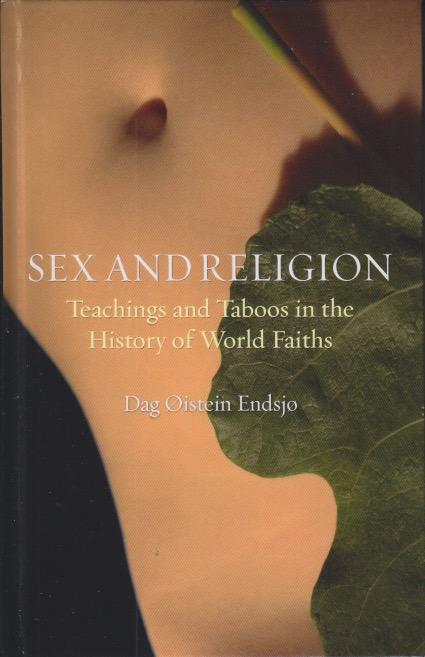
Important books often suffer because of poor distribution.  There are really only five publishers in English (“the big five”) that can reliably get their books into commercial bookstores.  I was reminded of this when reading the very important book Sex and Religion: Teachings and Taboos in the History of World Faiths, by Dag Øistein Endsjø.  The book is virtually unknown here in the States for a number of reasons.  It was originally written in Norwegian.  The author isn’t a household name.  The publisher who bought English rights is British.  It’s not comfortably priced.  None of this, however, gainsays its importance.  This book has much to teach us about hypocrisy and how religions codify prejudices, and, despite rhetoric, still value women less than they value men.  Religion is intimately connected to sex.  As I’ve written before, no religion ignores it completely.

Endsjø offers here a reasoned, logical, and religiously expert analysis of several aspects of human (and to a degree, animal) sexuality.  Contrary to much monotheistic teaching, sex is often treated as a good thing—within limits—in world religions.  Of course, that allows monotheists to step in and claim all others are pagans and debased, a tactic as old as the Good Book itself.  Religions’ real enemy, it seems, is education.  We should be open to compare what others believe—the wisdom their elders have passed down, just like the disciples.  And we should be honest about the fact that we change the rules to suit our situation.  One of the starkest examples of this Endsjø points out is that the Bible is much more stridently against divorce (which evangelicals now freely use) than homosexuality.  But guess which is the political issue?

Religions change, no matter what any true believer says.  We adapt to all kinds of new situations and new information, except when it comes to sexual behaviors we don’t like.  Even though most religions prohibit murder, the punishment for sexual offenses is frequently more stringent.  In other words, as Endsjø points out, religions care less for human life than for their own sexual prejudices.  The fact is just about all monotheistic religions have a male god and favor males over  the other half of the human race.  It even seems likely that Muslim over-reactions to homosexuality arose from copying evangelical Christians in the west.  This is an important book and if religious leaders of all stripes read and comprehend it, we would find ourselves in a much more human, and humane, world.


Old and New

Annual holiday traditions show just how deeply ritual is established in our behavior.  As the holiday season rolls around we find our familiar customs to be fun and comforting.  I’m not much of a commercialist; for me the end-of-year celebrations are mostly about rest and peace, still a family tradition since settling in the Lehigh Valley is the Christkindlmarkt.  Bethlehem, founded on Christmas Eve by Moravians, has attempted to live up to its namesake and celebrate the season well.  It’s become an established family tradition to visit the Christkindlmarkt and we wander the tents with artisanal goods, some Christmas-themed, and others more just gift-ideas.  We seldom buy much.  It’s the spirit of the holidays that seems to come through and we need something to help us get through winter.

Each year things are a little different.  Many of the mainstays are similar, however, with the same vendors with the same merchandise.  What has changed in the past year is really us.  We’re not the only ones who make an annual tradition of this and we’re not the only ones who see the same scarves, sweaters, pillows, and pottery.  And ornaments—lots of ornaments.  We see new things because we’re different from our selves who’ve wandered through here before.  Hopefully we’re better selves.  Each time I do this I find myself growing more and more reflective.  A celebration of peace and love to all seems to hold, for the most part.  There are lots of people—too many for my comfort at this stage of the pandemic, but we’re wearing masks and hopefully most of these people are vaccinated—peace and love for all.

The end of the year has long been a season of festivities.  Even ancient peoples, especially in temperate regions, longed for the return of warmth and light.  In response to the long hours of darkness around the solstice they instituted holidays.  Times for us to get together and work a little less and relax a little more, recharging our spiritual batteries.  Yule with its Christmas trees and logs, served to bring the message of light into the darkness.  The twinkling of holiday lights is a festive sight, bringing back childhood memories of gifts, special foods, and time off from school.  I’m a different person than the one who’s written a blog post about Christkindlmarkt in the past.  If you’ve read such posts you’re a different person now too.  We all hope that the present person is a better one than the previous as we enter this season of joy and kindness.


Justice Hungry

Social justice is very important to me.  At the same time I realize I’m just a single individual, and a small one at that.  I have a little group of internet friends (rather strangely called “followers”) but what I do and write has barely an impact with so much wrong in the world.  I suspect most people fall into this same dilemma.  A recent thread on the local Nextdoor app, for instance, reminded me how much people care for strangers in difficult times.  I side with Batman here—people are generally good.  Most of us are easily led, however.  And as we were taught in kindergarten, just one bad person spoils it for everyone.  So we find ourselves in a world disastrously off kilter and with nobody able to fix the problem.  Problems.  There are so many that it’s overwhelming.

Democracy seems like a good idea.  The problem is that the system is easily gamed by autocrats.  World news shows us the Hitler’s playbook is alive and well, even, if not especially, among “Christian” nations.  Jesus had no political power.  As soon as his followers gained it, the message of their master faded.  Today it’s unrecognizable.  “Bible believing” Christians who violate every principle in the Good Book to retain power is hardly something the carpenter from Nazareth would’ve advocated, or even, I venture, comprehended.  Bullies with only their own interests in mind take up the reins of state and convoluted laws allow them to do so.  The selfish win.

Photo by Sarah Ardin on Unsplash

I have great admiration for the people I know who work for social justice incessantly.  The kind of people you tremble to see coming because you know you can never measure up to their level of commitment.  Needed change, however, comes in small steps.  People are fearful and don’t welcome overnight paradigm shifts.  I admire social justice warriors even as I admire hose who throw themselves in front of buses or trains to save others.  I find myself watching their heroic action while calculating the best way to help, overthinking the problem.  I’ve marched in a number of protests, and it felt good.  I’ve not been able to free myself from capitalism long enough to really make a difference, I fear.  An idealist, conceivably, but not, I hope, an unawoken one.  So I struggle for justice and contribute what I can to right causes.  At the same time I’m compelled to acknowledge and thank those who do it so much better than I ever will.


True Value

It’s a funny idea, net worth.  (Who says Capitalism isn’t a religion?)  We decide what people are worth by what corporate executives and small-minded economics determine what they will be paid.  We seem to think entitled, essentially worthless, inheritors of ancestral money are of more value than the workers who actually fuel the economy.  Economics is called the “dismal science” for more than one reason.  This system can’t help but to make individuals question their self worth, which, according to Capitalism, is different from net worth.  (Net requires taking the cost of goods into account, and is less than the list worth.)  And you must never tell anyone your net worth.  Why do we still hold to this system that future historians will see as just as archaic and cruel as feudalism?

Photo by Sharon McCutcheon on Unsplash

Nashotah House could hardly have claimed to be competitive with salaries.  Still, to those hired the title “professor” indicated you were a cut above many other professions.  Certainly above most clergy, the future cohort of which you were teaching.  Even so, it took a dozen years in publishing for me to reach the salary level at which I was asked to leave said seminary.  Net worth?  I tend to think of it as idol worship.  Many well-meaning colleagues congratulate me on my LinkedIn work anniversary.  None ask “How are you doing there?”  None wonder “Have you yet caught up with your net income of 2005?”  We’re all too busy bowing at the altar of the Stock Exchange.

People are worth far more than money.  For some, money, and only money (which is a symbol only), is worth having.  Some run for president on that very platform.  Holding up a Bible they’re careful that it doesn’t fall open to the place where it says love of money is the root of evil.  There is no such thing as evil in the religion of Capitalism.  Except Communism.  Interestingly enough, the New Testament advocates for a form of communism, but Acts is easily overlooked on the way to Leviticus.  I tend to stop about half-way between, at that comfortably uncomfortable book of Ecclesiastes.  It’s there that we read that all is vanity.  Money is merely a symbol of what we value.  Looking at what those who’ve devoted their lives to it have done with it, net worth sends me back to the cynical old preacher wondering about the meaning of it all.  It seems an appropriate place for the musings of a mere editor aware that his colleagues are valued much more by this “Christian” society.  I think the “net” in net worth should be cast much further.