Moral Bankruptcy

Last Thursday, apart from being the day after the plumber came, Tropical Storm Ida dumped on us, and the first day of September, the New York Times headlines were disturbing.  I don’t have time to read many news stories in depth, but I glance at the headlines to inject just enough worry into my day.  After discussing the flooding, Afghanistan, and a few other stories a particular quote caught my eye and kicked my gut: “Kevin McCarthy, the House Republican leader, threatened to retaliate against technology companies that comply with the inquiry into the Capitol attack.”  This was a bit much after reading how much suffering is going on in the world.  Republicans threatening retaliation to keep the truth hidden in plain sight.  Is there any term for this but moral bankruptcy?

I simply can’t understand how any moral Republican can hold their head up proud.  I grew up Republican.  I was conservative most of my way through college.  I would never have stood up for a politician of either party that said “I’ll get you back if you tell the truth.”  Lies are the most insidious of acts.  How can you ever believe someone after they establish a reputation of being untruthful?  How can you believe he actually does support your cause?  How can you believe anything he says?  Not only that, but threatening his own fellow Americans for wanting to find out what his party supported on January 6.  There’s a reason the day is known as Epiphany—“the manifestation.”  When truth becomes clear.

A political party that has nothing to offer but lies and violence has become an organ of organized crime.  Perhaps our legislators should be given a dictionary open to the entry titled “perjury.”  We now have Republicans who lie under oath to become Supreme Court justices.  Who try to start rebellions with mobs ready to murder their colleagues and who then sit back and claim the rectitude of God Almighty when it’s over.  What have we come to here?  People were drowning in basement apartments and people were suffering loss of power and damaged homes.  Republicans meanwhile were working up threats of retaliation against people for simply trying to get at the truth.  The plumber did the job he said he would.  Those who projected and tracked Ida told the truth to try to save lives and property.  In the sewers of Washington, however, those loyal to the party vowed to keep their secrets safe. 


Friendly Food

The rain felt like relief after the most recent heat wave.  We’d long planned to attend the Easton VegFest regardless.  Summer is the season for street festivals and it’s always a strange kind of affirmation to find one dedicated to vegans.  And to see so many people at it.  The cities of the Lehigh Valley have quite a few animal-friendly options for eating, and although the VegFest isn’t huge it’s a good place to find others who realize that our food choices matter.  So it was that we came upon the booth for NoPigNeva.  Now, if you’ve ever tried to shop for vegan food—I know there must be a few of you out there—you know how catch-as-catch-can it is.  Around here lots of grocery stores carry vegan items, but what you’re looking for may not be there.  Even WholeFoods in Allentown has a limited selection.

NoPigNeva is a supply company run by black women.  It supports worthy causes.  And it makes finding what you’re looking for essentially one-stop.  I’m no businessman, but I do wonder why, when they keep selling out of vegan stock, stores don’t get their orders refilled right away.  It’s almost as if we don’t want to believe people will buy it.  Vegan food has come a long way even in just the last five years.  I know that when I became a vegetarian almost two decades ago now I felt there was no way to get enough to eat as a vegan.  Options seemed so limited.  That’s no longer the case.  I’m guessing the success of the Impossible Whopper caught everyone (except consumers) by surprise.  Even now, if you order one (hold the mayo, please) you’re pretty much guaranteed it won’t have been sitting on the warming shelf.

There’s big money in the food industry.  I’m not a foodie, although it’s become fashionable to be one.  I do, however, think about whether my food is causing harm.  There is, I realize, no way not to impact the environment or other living creatures when eating.  Lessening that impact, however, and supporting historically oppressed groups feels good.  There is a morality to mastication.  Most animals, it seems, have evolved a fear of being eaten.  Perhaps we’re only starting to understand that breaking chains might have to begin with us.  Any industry (big agriculture) that tries to make it illegal to see where your food comes from is hardly to be trusted.  I trust more those willing to come to a street fair on a rainy Saturday afternoon to show that there is a better way.


Moral Compass

Where have all the morals gone?  Well, not exactly song-worthy, but it is a question I think about a lot.  You see, I work in publishing.  Publishing, above all, is a business.  People make their livelihood at it, and so they have to find a market that pays.  Money and morals don’t mix well.  A recent New York Times story pointed out that the political polarization that’s tearing America apart is reflected in bestsellers.  Political nonfiction bestsellers have topped the charts since Trump was unfortunately elected.  Books both pro and con have flooded the market.  What’s this got to do with morals?  Well, I believe publishing should be in the business of educating.  If you’re going to publish nonfiction, it should be material that doesn’t cause more problems than it helps solve.

When I look at a book, after checking the title and author, I next look at the publisher.  Some publishers are conservative, and that’s fine.  That’s what they do.  Most, however, consist of highly educated professionals who realize the severe, and continuing damage that Trump caused.  These publishers, however, will produce pro-Trump books if the numbers look good.  There’s gold in them thar hills!  I often have these scruples working for an academic press.  Some ideas are clearly distorted.  I’m no elitist—I’m still pretty much working-class all the way down to the bones—but education reveals when something very bad (fascism) is happening.  Others see it too.  Still, the temptation of all those dollars… it’s a real pressure, almost like being at the bottom of the ocean.  There’s money pressing on us and we want it.

The gray lady story bothered me.  Instead of publishers looking out their windows and seeing the political grand canyon of this nation, they see profits.  This is business, after all.  Just business.  Is there any such thing?  Morality informs the way you live, the choices you make.  Do I promote education, reflection, and sound reasoning or do I promote a very real 2024 threat of a man who leads by refusing to lead?  After elected Trump immediately began campaigning for his next term, loving the rallies, the cheers, the adulation.  Who doesn’t want to be worshiped?  But is that what we want to see three Novembers from now?  I remember the shock the morning after election day 2016 in New York City.  I see the damage four years of environmental degradation caused just when the effects of global warming were becoming obvious.  I see women demeaned.  I see voting rights quashed.  And now I look at the bestseller list and wonder where the morals have gone.


Still Too Close

Parody is sometimes the best way to deal with a crisis situation.  As soon as I learned that Alexandra Petri had come out with a new book I was eager to read it.  Her last book, which I reviewed here some years ago, was such a delight—sharp and funny—that I fell in love with her writing.  Although she works for the Washington Post, I don’t regularly read newspapers (no time, if I want to read books) and therefore I don’t get regular doses.  Nothing is Wrong and Here Is Why is clearly a book written in a time of national crisis.  Yes, it’s funny, but the wound of the Trump years is still too raw to be able to laugh much about it.  Too many of his followers still don’t realize they were (are) being played and want him back.  It’s scary.

The first, and longest, section of the book are essays about the absolute ridiculousness of life under Trump.  It was a difficult and dangerous time for thinking people and although Petri excels as a satirical writer, the freshness of the terror—look at the Taliban and see if they are laughing—is just a little too intense.  Petri makes a great case for giving female leadership a try.  Any candidate, no matter which party, needs to know how the game is played.  And they must care about other people.  A pathological narcissist has no business being president of anything, let alone a democracy.  If you’re not familiar with satirical writing you’ll misunderstand just about everything Petri writes.

Once she gets beyond the section about Trump (shudder), the essays start to pick up some topics that it’s possible to laugh about.  Some of them are quite funny.  Although I enjoyed the book—when I started to put it down to get ready for work each morning I found myself saying, “I’ll read just one more.”  And three or four essays later I’d find myself rushing upstairs nearly late.  If it hadn’t been for the national tragedy called Trump, Petri’s second book might’ve been funny from the start.  Parody can be a defense mechanism.  At times things are just too painful to bear and those of us who write find ourselves doing our best to keep the mood light while society crumbles around us.  When things are ridiculous laughter is really what we need most.  We’re lucky to have Petri to provide it.  Here is why—she can bring a smile, or at least a smirk, even in a crisis.


Afghanistan

As much of the world watches in dismay, the Taliban have taken over Afghanistan.  Most religious rule ends up being harmful to women, it seems.  We have centuries of male-run Catholicism showing how both witch hunts and heretic murder became common in Europe.  Do we expect any better now that religious extremists have taken over a nation next door to Iran?  The mix of politics and religion has generally not been favorable and unfortunately if the Republican Party could have its way we would see a similar thing here in the United States.  An ill-executed coup d’état on January 6 of just this year led to the epiphany that the Republican jurists would protect those who tried to overthrow the US constitution in the name of religion.  And we know how they feel about women’s rights.  We should look at Afghanistan and tremble.

It seems difficult to believe that less than a century ago we went to war to defend democracy.  Senators alive to witnesses the privations of war are now recklessly trying to remake America in the image of a fascist state.  Instead of looking at Afghanistan as a mirror, the only thing they can see is this is a Muslim nation.  Christians would surely never try to take over a capital by force.  They turn a blind eye to our own insurrection, not yet nearly a year old.  Ironically the book they claim to follow contains a often quoted but more often ignored statement: “He that is without sin among you, let him first cast a stone…”   It’s no accident that their intended victim was a woman.

Religious politics can be maintained by force of arms or legal maneuvering. Both are evil.  The result is the same either way: women and thinking people suffer while the self-righteous rule.  Even such basic assumptions as protecting their own people from a horrible disease by the simple expedient of a free vaccine has been politicized for purposes of keeping in power.  When the moderates in their own party speak up they are shouted down.  How different is this than the shouts of triumph heard in Kabul?  The alternative—government that allows the freedom to believe what you will as long as all people are treated fairly—has been made out to be a sin.  The god worshipped both by Republicans and the Taliban has little sympathy for humanity.  He, and most certainly he is male, is all about power.  We watch in dismay.

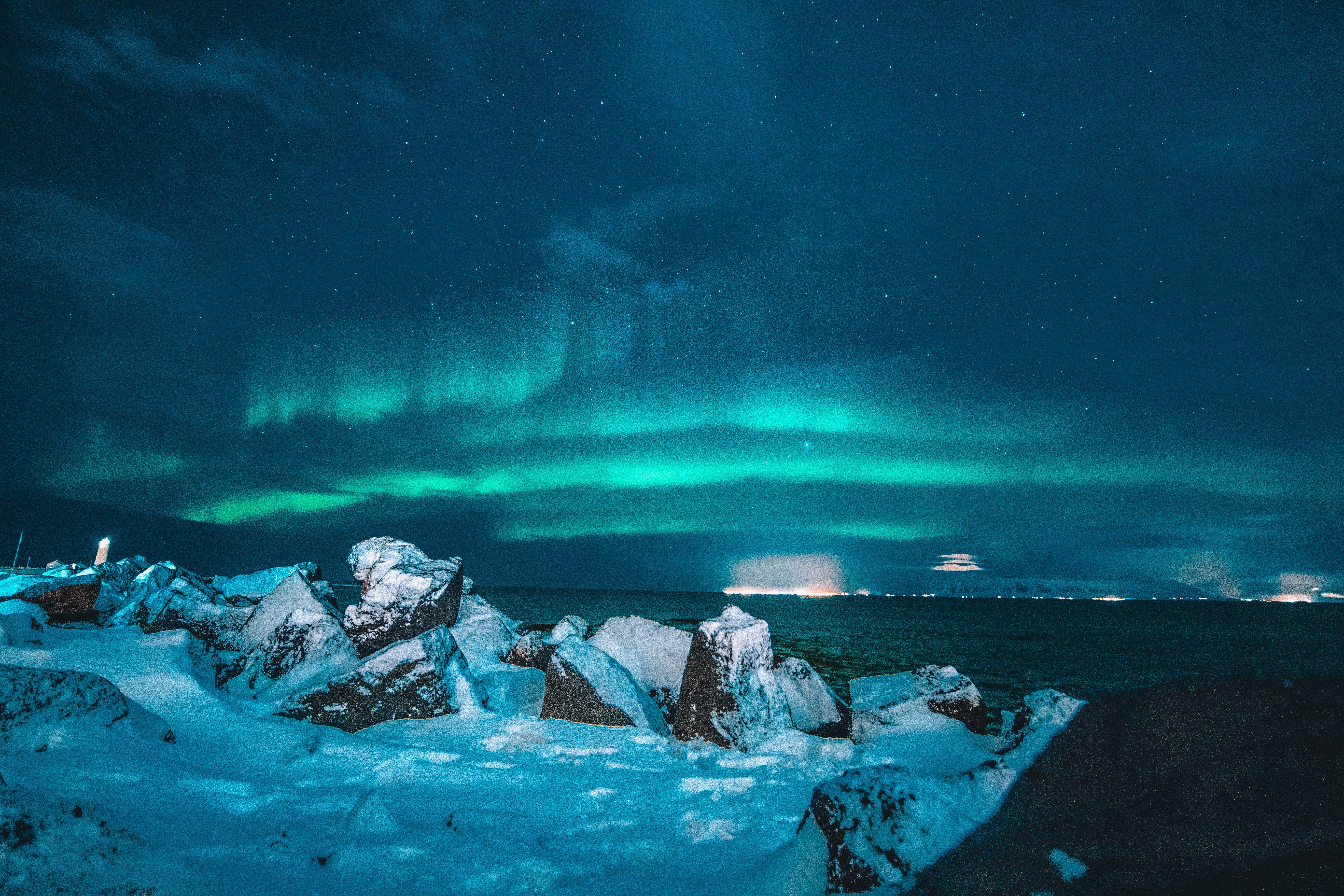
Photo by Joel Heard on Unsplash

Just Like Us

Jordan Peele has been noted for his intellectual, black horror films.  His work is good at making clear that African-American experience is different than white experience in America.  That was especially on view in Get Out, a haunting treatment of being “the other.”  His more recent Us, two years old already, takes a somewhat different angle but still comes to a similar point.  Since the movie has a notorious twist ending that I’d rather not spoil for anyone slower than I am, I’ll try to focus on the film’s use of Jeremiah 11:11—“Therefore thus saith the Lord, Behold, I will bring evil upon them, which they shall not be able to escape; and though they shall cry unto me, I will not hearken unto them.”  This message of the prophet was a warning that Jerusalem would fall to the Babylonians, but clearly it has wider applications.

It’s safe to say, I suppose, that the movie is about substitute people.  Each person has a doppelgänger that shares her or his soul, but is a puppet—it’s not too far to stretch to say “slave”—that must do whatever it is we have it do.  When those doubles, or shadows, arise and organize, things start to get real scary real fast.  Although the metaphors run deep, the biblical citation comes near the start of the movie, setting the tone of what follows.  This is divine judgment for the mistreatment of others.  While it isn’t ostensibly about race, at least not obviously so, the story follows the black Wilson family as the uprising begins.

Jeremiah’s message, although delivered to a specific situation at a particular time in history, could well apply whenever one people threatens another.  Like most prophecy, it’s less about prediction than it is about changing behavior.  Jeremiah presents a good warning tone because he was a prophet who loved his people but also saw that they had to fall in order to be redeemed.  His is a strong message for a country at a crossroads.  Peele has a lot going on in this movie and I suspect more than one viewing will be necessary to pick up on some of the points.  Not all parables have a single message.  Not all prophets are heeded in their time.  Jeremiah 11:11 provides context, and it rewards the biblically literate who know the context it which it originally applied.  Fitting it into the world of black horror is an example of how prophecy continues to be relevant.


Fear of the Other

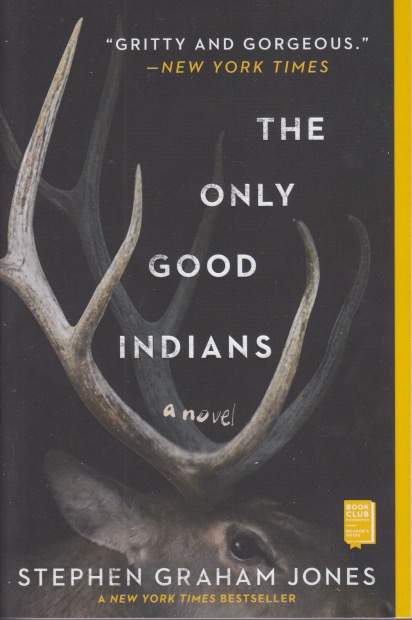
Two things: I’ve been reading about and materials by American Indians lately, and I learned about Stephen Graham Jones through a video of him reading one of his stories.  I was immediately hooked.  It seems to me that those of us who’ve gone through trauma—either personally or ethnically—are disproportionately represented among those who like horror.  I’m not suggesting a simple equation, but simply noticing a trend.  Jones has been winning awards as a horror writer and I was anxious to get started.  Night of the Mannequins didn’t disappoint.  Jones is a member of the Blackfeet nation and, according to the author bio, a real slasher fan.  This story isn’t really a slasher but it is an exploration of what happens when an idea takes over someone’s life.

More about growing up in Texas than being First Nations, it follows a group of teens who find an abandoned mannequin and a practical joke that goes terribly wrong.  It’s a story will a real feel for what it means to grow up beneath the middle class.  The realities for those who do are somehow quite different than from those who can take some measure of financial security for granted.  It also makes a good setting for horror stories as the protagonist tries to figure out what’s going on without the aid of authorities and adults.  It makes for a compelling read.  Jones’ no-nonsense style draws you in and it doesn’t let you go.

The book is fairly recent and I don’t want to give too much away.  I do often think about how a writer’s personal experience leads to the books s/he writes.  The horror genre is wide-ranging and can be deep and intelligent.  Despite its brief extent, there’s a lot of depth here.  The straightforward writing style gives the book verisimilitude.  You could see this actually happening.  Monsters, after all, are frequently in our minds.  That doesn’t make them any less real.  Mannequins tend to inhabit the uncanny valley—they’re human and yet, at the same time they’re not.  There are aspects of growing up in “white” culture that must suggest the same to those who’ve been and who continue to be, oppressed by that culture.  There is a real fear to being controlled by others whose intentions, it must be clear by now, are to make themselves rich.  The world is a richer place, however, for having books by Stephen Graham Jones in it.  I’ll be coming back for more.


Strange Reading

What more can you say about the Bible?  A lot’s been said already.  So much, in fact, that nobody can read all of it in a lifetime.  That realization started to come to me as I was trying to find everything that had been written about Asherah—who’s mentioned in the Bible—to write my dissertation.  I didn’t find everything, but I found a good deal of it.  Enough, in any case, to write my cautionary words about the subject.  Kristin Swenson’s A Most Peculiar Book brings the insights of a fellow traveler to the fore.  In a serious yet lighthearted way, she points out, as the subtitle says, The Inherent Strangeness of the Bible.  In other words, it’s not what most people—especially those who speak the loudest about it—think that it might be.

There are many angles from which to approach the Good Book.  One size most definitely doesn’t fit all.  A book like this would benefit from being read by those who take the Bible literally, but one of the problems is that literalists have no motivation to read such a book.  Indeed, their trusted leaders actively warn against it.  Such treatments are dangerous at best, and are possibly demonic.  One of my professors once put it well: fundamentalism isn’t a theological position, it’s a psychological problem.  In any other area of life those exact same literalists will apply reason and logic.  When it comes to their beliefs, however, refusal to engage with the tools that make their lives otherwise successful becomes an eleventh commandment.

Swenson points out things that will likely be old news to biblical scholars.  Having been through all this in a way ourselves, we remember what it was like to become “woke.”   To those raised as literalists, this is no small ask.  It stabs at the heart of everything you’re raised to believe.  The fear is that there’ll be nothing on the other side, at best, Hell at worst.  These are very real fears.  They may never completely leave, no matter how long you’ve been awake or how much rational coffee you’ve drained.  Such fears deserve a sympathetic hearing.  Without it I’m not sure any progress can be made.  Strip below posturing and bravado and you’ll find fear.  I do hope A Most Peculiar Book will find its way to such folks.  Swenson shows there is life after biblical studies and her book has some fun facts for those unfamiliar with the book about which there’s somehow never enough to say.


Evolving beyond Fear

Live Science recently reported on a story that may shed light on human evolutionary behavior.  While my conclusions are speculative, they make sense, given the circumstances.  Titled “Albino chimp baby murdered by its elders days after rare sighting,” the story by Nicoletta Lanese describes how an albino chimp caused a fear reaction among its community shortly after it was born.  A few days later it was killed by the chimps.  Scientists must be careful not to attribute human motive to such attacks, and so they note that this particular community has a tendency toward infanticide, but that doesn’t explain the initial fear reaction.  An individual who was “different” appeared and the response was one of deadly violence.  We’re far from understanding human motivations, let alone those of animals, but it’s difficult not to see this as typical human behavior.

Photo credit: Afrika Expeditionary Force, via Wikimedia Commons

Just because a behavior has evolved doesn’t mean it’s inevitable.  We evolved out of our need for tree dwelling in order to open new potential habitats—an experiment that proved wildly successful.  Can we not evolve out of fear of those who are different?  That seems to be the idea behind recent diversity and inclusion initiatives.  There are those who still resist them, but examine their beliefs and you’ll soon find fear of those who differ.  This atavistic tendency is remarkably close to the chimp behavior in killing an albino.  If we are to remain civilized, we must name such fear for what it is and grow beyond it.  Conservatism is often based in fear.  Fear of change is natural enough, but had our ancestors given in to it we’d still be in the trees.

We need to admit that the lives of those different matter. How long will we allow difference be a reason to fear other human beings?  The story on Live Science is difficult to read.  The chimp behavior is so typically human that we can feel sympathy for the murdered infant and his mother.  Fear, if left unattended, can bring us to this.  The antidote is education.  The more we learn the better we can cope with fear, which is, after all, a natural and necessary response to an evolved world.  Our fear of being prey has caused us to drive extinct most of our natural predators.  The world is hardly a better place for it.  Might not weighing fears and thinking through reasonable solutions be a better coping technique?  Fear can revert a human back into an animal state.  Or it can drive us toward improvement.


Weather rules

One of the observations that prompted me to write Weathering the Psalms concerned the disruptive nature of storms.  Power outages was pretty common in that part of southeast Wisconsin where we were living at the time.  Downed trees could block rural access—more limited than the alternate routes of cities—for hours.  There was clearly a sense of being at the mercy of nature and it was disruptive to the human schedules and lives we’ve constructed.  The tornado warning we had a couple of days ago reminded me of that aspect.  While radar saves lives by giving advanced warning, it also makes it difficult to concentrate on work when you’re told to take shelter.  As far as I’m aware HR doesn’t have a tornado policy.

Having lived in the Midwest for a decade and a half, I came to be aware of the difference between a tornado watch and a tornado warning.  While my phone was showing a watch, another family member’s was showing a warning.  My evening plans were replaced by standing at the window looking west.  The worst of the storm passed us but as long as the weather was threatening there was little else we could do.  Eventually all devices agreed that this was a warning and we should take shelter.  The storm eventually passed, leaving my tightly packed plans for the day in tatters, even though our actual house was fine.  That’s the nature of the weather that makes it so interesting.  As much as we like to think we’re on top of it, we’re really all potential victims.

Weather is more powerful than humans.  We have to change our plans according to its whims.  And climate change is making it more extreme.  Even with the evidence all around us deniers still try to block legislation that takes steps to preserving our planet.  Those who wish to destroy it for theological reasons don’t stop to think that doing so is about as selfish as you can get—something that the Bible really doesn’t promote at all.  One thing about the weather: although it is very different from place to place, we’re all in it together.  It can be very disruptive, yes.  It reminds us that we and our human plans are temporary.  When we’ve managed to do ourselves in, or have abandoned this planet to find a more hospitable one we can ruin, the weather will remain.  Majestic storms will come and go, whether or not there’s anyone here to see and appreciate them.


Building Trust

Photo by Marek Piwnicki on Unsplash

Perhaps the most insidious aspect of the Trump presidency was the four years of eroding trust.  People, it seems to me, no longer trust each other.  I’ve noticed it most since the reign of a pathological liar.  It’s kind of like a nation of children of alcoholic parents—trust is a real struggle.  I regularly deal with academics.  Now, critical thinking tends to make a person skeptical, at least to a degree, but it seems to me people would trust a very old, highly regarded institution.  Lately I’ve noticed that trust eroding in various ways, and that puzzles me.  If we can’t trust those who’ve done the heavy lifting of keeping a solid reputation for centuries, well, who can you trust?  It’s a real dilemma.  Maybe it’s because we had four years of equating “my opinion at the moment” with “facts.”  The damage will take many years to repair.

The basic way that civilization works is with trust.  We tend not to pay our money for something unless we believe it’s worth what we’re spending.  Skepticism, in appropriate measure, is a good thing.  So is trust.  One way that I often see this is in the hiring of contract managers.  Yes, there is such a thing!  Many younger academics now hire companies to make sure the publishing contracts they sign aren’t cheating them.  When I was in academia you simply went by the reputation of a publisher.  Everyone knew who had a good reputation because of, well, their reputation.  What a publisher represented was well known and respected for what it was.  Perhaps I’m mistaking the desire for personal advantage for lack of trust.

Companies sometimes engage in trust-building exercises.  Getting beyond someone’s politics to the person beneath seems to be a dying art.  Deep divisions are difficult to achieve when people trust one another.  Consider the anti-vaxxers who are now feeding the delta-variation of Covid-19.  They’ve been taught not to trust the scientists and officials who offer a way to ending this pandemic.  For free.  They even don’t believe the post-presidential interview with Trump where he encouraged (far too late) his followers to get vaccinated.  Trust has to be built slowly.  Over centuries sometimes.  One man’s selfishness tore down the modicum of trust that had been slowly growing since the 1860s.  Now uninformed skeptics think critical race theory is some kind of plot.  Trust isn’t a bad thing.  It is the only way to move forward.  Trust me on this.


Thy Sting

“It’s hard to imagine a more alarming sign of a society’s well-being than an inability to keep its citizens alive.”  This quote is from the New York Times’ The Morning team yesterday.  Life expectancy in the US has been dropping.  Not coincidentally, the article notes, so has the wealth disparity in the country been rising.  And guess whose lives are shorter.  Isn’t it often the same people who vote for those whose wealth keeps them (the candidate) alive longer, and in luxury?  This story struck me as poignant.  Have we lost our national will to live?  We see politicians who give no mind to what the people want getting themselves elected to further their own means.  People know they’re not being cared for.  That they’re being lied to.  Perhaps it’s working its way into our national mortality rates.

I think quite a bit about mortality.  Death is a natural part of life and we seem to have bought into the capitalistic idea that more is always better.  The debates in ethics classes were always about such issues of quantity versus quality.  Is a good life better, even if it’s shorter?  Improving the lot of others increases, we hope, the number of good lives.  Not everyone wants to be rich.  Part of the problem with our current system is that we’re narrowing it down to one way of existing—the way of earning more money.  Those occupations suffused with meaning are disappearing because they’re not profitable.  Does the will to keep on living grow when money is substituted for meaning?

Books on “the good life” sell well.  Whether it’s stoicism, Buddhism, or feel-good Christianity, people want to read the answers.  In a capitalistic system only so many can be rich.  They accumulate power to themselves and many have nothing beyond this for which to strive.  How many classes are available for finding meaning in life?  As universities continue their march towards the status of business schools, the philosophy and religion departments struggle.  They don’t bring in money, but they do, I suspect, discuss the systems that give meaning to people.  That could instill the will to press on.  The article makes the point that although Covid-19 has led to a good part of the decline, it isn’t the only factor involved.  We’re all so busy that we don’t have time to think about it and yet, finding a reason to continue to improve might give us what we need.  Maybe slowing down a little and pondering things would help.

Carlos Schwabe, Death of the Undertaker; Wikimedia Commons

Freedom of Religion

One of the highly touted liberties in the United States is freedom of religion.  It’s easy to believe this is true when you can walk down any “Church Street” in many mid-size towns and go shopping for a theology that fits your outlook.  What remains hidden here, however, is that the freedom is largely restricted to the “Judeo-Christian” tradition.  (Yes, I know “Judeo-Christian is a disputed category, but it classifies several belief systems that share a basis in the Bible.)  For religions that don’t necessarily agree with the premises of the biblical religions the story is quite different.  That’s because, at least in part, our culture is based on the Bible and its limited worldview.  Colonists, convinced by centuries of Christian hegemony, had assumed the rightness of the Christian outlook.  The indigenous religions they encountered were, from their point of view, heathen.

The word “heathen” covers basically the same territory as “pagan.”  Both mean a religion outside Christianity (and, grudgingly, Judaism).  I’ve recently read that the etymology of heathen goes back to those who live in the heath, or country dwellers.  Although this etymology is uncertain, it does make a great deal of sense.  Christianity became an urban religion fairly early on.  Not only that, it shook hands with empire and became the basis for capitalism.  So much so that the two are now teased apart only with great difficulty.  This also means that indigenous religions have never really had a place at the table.  Especially when they challenged the dictates of the capitalistic outlook.

American Indian religion is closely tied to the land.  As Vine Deloria made abundantly clear in God Is Red, any religion committed to ideas outside those of Christianity will lose when the two come into contact.  One of the reasons is that secular science is based on a Christian worldview.  Indians believe in sacred land.  Since “objective” science is based on the Christian doctrines of creation, there can be no holy land apart from “the holy land.”  At its very root the basic ideas of other religions are dismissed and therefore treated as if they aren’t religions at all.  The Supreme Court continues to make decisions that violate the free practice of Indian religion.  The recent fiasco with the Trump administration should show just how dangerous such thinking is.  Like it or not, religious liberty means you have (for the time being) the right to be the brand of Christian you wish.  Beyond that freedom has a very different meaning.


Mapping the Apocalypse

“Is this the end of the world?”  The question came up often early in the pandemic.  The end.  It’s so logical that just about every religion addresses it.  It bookends “the beginning” with the symmetry that we so covet that it’s almost impossible to think the world won’t end.  Even astronomers tell us the sun will betray us, eventually becoming a red giant and consuming our home planet.  Apart from being the greatest equalizer, however, religious speculation places the end way, way before then.  A friend sent me an article in National Geographic by Greg Miller titled “These 15th-Century Maps Show How the Apocalypse Will Go Down.”  It describes literal maps of the eschaton, and guess what?  It was right around the corner back then too.

Maps to the end of the world have been around for a long time.  With a bizarre Schadenfreude, many Christian groups eagerly anticipate the end of all this.  I grew up with charts and maps telling just how it was going to happen.  Like all of you, I’ve lived through many ends of the world.  These folks must be the strangestly optimistic bunch on the planet—when it fails to come on schedule they pencil in another date, preferably in their own lifetime.  They want to see it.  It will, after all, prove that they were right and the rest of the world was wrong.  Who wouldn’t want that kind of validation?  The apocalypse has been around since long before the fifteenth century.  It started in the New Testament, if not before.

This eagerness to end the world would be considered pathological were it not religious.  We’ve been about the closest we’ve been to a human-made apocalypse under Trump.  Make no mistake, some Christians were banking on it when they cast their ballots.  We tend to overlook this destructive way of thinking because some biblical literalists (and they don’t all agree, just put a premillennialist together in a room with a postmillennialist and watch what happens) claim that it’s what the Good Book says.  The rest of society, disinclined to look it up for themselves, accept that roadmaps to the end of the world exist in the Bible.  They don’t, but that doesn’t prevent everyone from fifteenth-century monks to present-day televangelists declaring when it will be.  That there is an end is taken for granted.  The astronomers look at their watches and sigh that we’ve got a couple billion years left, at least.  No, the pandemic wasn’t the end of the world although many Christians were hoping it just might be.


How You Feel

Image credit: NASA, public domain via Wikimedia Commons

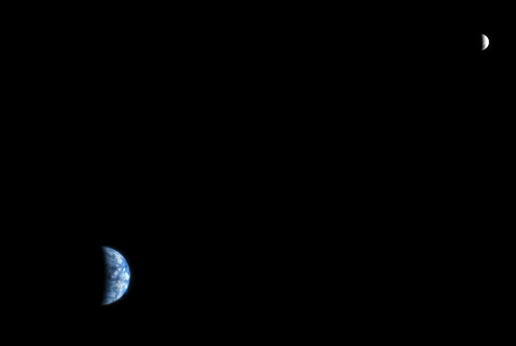
Have you ever had someone tell you how you should feel?  This always feels like an odd thing on the receiving end.  Each of us is born, learns from our experiences, and confronts emotions.  Many people believe that they might improve others’ lives if only others would feel the way they think they should.  Interestingly, and simultaneously, at work and in social settings we’re being told to honor diversity.  We are to respect the feelings of others, no matter how uncomfortable they make us feel.  Who is the guardian of others’ feelings?  Emotions are tricky to figure out.  We can clearly see them at work in animals—the age-old flight or fight response, for example, is based on fear.  Still, based on their own experience and temperament, one animal will run while another in the same circumstances will attack.

Emotions don’t come with an instruction manual.  For a not insignificant outlay of resources you may hire a professional to help you work through them.  Or you might learn to trust your emotions.  They evolved for a reason.  Telling someone else how to feel invalidates their experience.  If they feel frustrated, or lonely, or angry, aren’t those legitimate human responses when neither fight or flight works?  Human societies create great complexities.  Some of us like things the way they were.  Many of us currently alive are only a generation away from people who grew up with horses clopping down the street and now all of life is virtually virtual.  How does that make you feel?  How do you even assess what the right feeling might be?

Advice givers mean well.  Perhaps your emotional state causes them discomfort.  If only you would cope the way that they cope then we could all go home happy.  The lament, however, is a time-honored means of expressing frustration when things just aren’t going your way.  We like to believe that good people prosper and that things work out for them in the end.  We like to believe lots of things.  We also have plenty of feelings about them.  Invalidating others’ experience may make us feel better about ourselves.  After all, we have just given valuable advice to someone who hasn’t experienced the situation like we have.  Being a parent may be the best way of learning to empathize and help another human being deal with the always tricky realm of emotion.  The important thing is to let others know that, no matter what somebody else says, only they know how they are feeling.