Women and Mothers

This is our first Mother’s Day with a female Vice President.  After four years of a female-groping administration, it feels like we’ve made a turn in the right direction.  Ironically, it’s often religions that keep women oppressed, even while women are often more faithful to them.  Religions like to claim to have the answers, and for the monotheistic traditions an origin myth with Eve—the first mother—as the first picker of forbidden fruit, has suggested one answer that has held women down for centuries.  Taking origin stories too literally can cause so much suffering in the world that we’re confronted with the question of their morality.  Religions are for people.  If they exclude half the human race we need to pause to ask if we got something wrong.  It’s Mother’s Day, always on a Sunday.  It’s a chance to think about such things.

Many churches will have sermons honoring mothers today.  Will they work for the wellbeing of women for the remaining 364 days of the year?  Our society, purely on the basis of biology, routinely puts women at risk and underplays the need to help them when that happens.  I’ve seen this firsthand.  We’re finally starting to get some female representation in Congress, yet less than a quarter of the seats are held by women.  Isn’t government supposed to represent its constituents?  Why has half of humanity had to struggle for so long to be treated as equal?  Mother’s Day cannot be a salve to ease our consciences about mistreating women for the rest of the year.  Equity should not be a goal, it should be reality.

We’ll be thinking about our mothers today.  Still under a pandemic, we’ll be Zooming them or calling them.  Those fortunate enough to live close may even get to see them in person.  These mothers sacrificed a lot to take on that role.  Our society could not continue without them.  We’re starting to come to the realization, I hope, that it is male-devised forms of government and business that are the problem.  They protect the wealth and power of a few.  They jealously guard against letting men offer the true justice of equity.  Some religions have begun to address the obvious injustice they have largely originated.  The story of the Garden of Eden was meant to teach a lesson.  That lesson has been abused for centuries as a way of making women seem somehow less than men.  It’s Mother’s Day.  Let’s see if we can’t learn to read more deeply and apply what we have learned.

Welcome the Stranger

Welcome, sibling! Have you ever contributed to a genealogy online?  I know not everyone’s into their ancestry, but there’s enough of the treasure-hunt to it, and enough mystery to keep you turning the pages.  Some time ago—it was when I was a professor, because I actually had some leisure time—I posted a bit on WikiTree.  WikiTree is a free communal effort to map the world of relationships.  Just about every week there’s a newsletter emailed around, offering how many degrees of separation you are from someone famous.  Often this is tied into the news cycle, so recently Prince Philip was among those measured.  Then Carrie Fisher.  Without fail, over the past several weeks, the family member through whom I’m connected to the famous is a great uncle.  The same great uncle.

I usually lose interest when the relationship starts to get to siblings and spouses.  There are webs everywhere.  Still, this intrigued me.  I’d never knowingly heard of this great uncle (and certainly never met him) but he was under 20 degrees of separation from several famous people.  It made me consider how you never can tell what relationships might lead to connections.  My direct ancestors, as far as I know, were all humble, work-a-day sorts.  One branch of the family had an engineer a couple generations removed, but for the most part they were farmers, laborers, truck drivers, and such.  The web of human relationships includes everyone, of course.  At some point in our family trees, we share a common ancestor, be they Neanderthal or Cro-Magnon (or a blending of the two).  When we harm or hate another person we’re harming or hurting a sibling, distant or close.

Getting along with everyone may be too much for which to hope, but at least tolerating seems worth stretching for.  I once found a long-lost cousin.  This was accompanied by a wonderful feeling of having found a family I didn’t even know.  Genealogy made that particular reunion possible.  Before that I might have passed this cousin as a stranger on the street.  It made me stop and think.  Is that stranger actually someone related?  Traveling back to the areas my ancestors lived I occasionally glimpse a face that could be a distant uncle or aunt.  My mental calculus kicks in, but there’s really no way to know just how close they might be.  Now, if I were my unknown great uncle chances might be somewhat better that I’m only a degree or two removed.  Even so, I should try to treat the stranger as though that were the case.

We’re all interconnected.


Dark and Light

I perhaps have nothing new to say about Ursula K. Le Guin’s The Left Hand of Darkness.  It was published before I was ten, and although I grew up reading science fiction I really didn’t read any of Le Guin’s work until this year.  It wasn’t intentional—in a small town you read what you can get your hands on, and cover art designed to attract young boys often worked on me.  Now having read it, I’m left in a reflective mood.  Everyone, of course, comments on the gender aspect of the novel.  I guess I’ll be forgiven for doing so as well.  After all, it is the most striking feature of the story.  As we know from our lives on earth, gender affects pretty much everything about our lives.  The biological imperative is strong.  It’s no less strong in Left Hand of Darkness, but it is different.

In case you’re like me and haven’t read it (until now), it’s not a spoiler to indicate that it is the story of a male envoy to a planet where the people (and only large mammals) are genderless until once a month they enter “kemmering” when one becomes temporarily male and another temporarily female.  The genders aren’t fixed, but fluid.  Since the kemmering stage comes only once a month, during that time it become an urgent need among those experiencing it.  The novel isn’t about only that, of course, but it is the noteworthy feature that relates to the religion and daily life of the inhabitants of the planet Winter.

It might seem that this idea of shifting genders is itself science fiction, but it is not.  There are species on earth that change change gender, bringing into question the statement taken for universal that “male and female he made them.”  While gender seems to be evolution’s solution of choice for reproduction, that’s not universal either.  In other words, nature provides us with multiple ways in which plants, animals, and things in-between, can continue their existence on this planet.  The writers of the Bible weren’t great observers of nature, nor were they scientifically minded.  At a glance it looks like animals all conform to the model presented by Genesis.  In reality, the world is much more complex than that.  Religions aren’t always as comfortable with complexity as writers of science fiction tend to be.  Left Hand of Darkness is fine world-building and provocative at that.  This may be nothing new, but it is worth pondering again.


Lessons from Mars

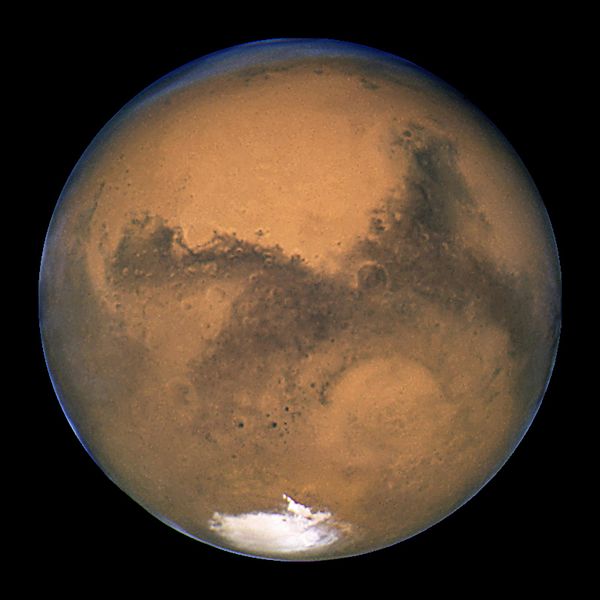
It’s a parable.  This week, on a planet weeks away, earthlings achieved heavier than air flight.  Considering that we flew for the first time on our own planet only 118 years ago (within feasible limits of a very successful human lifetime), the achievement is remarkable.  What I found most fascinating about the live stream provided by NASA, however, was the human element in the control room.  Not only did all the engineers look young enough to have been my children, I was cheered almost to tears to see several women among them.  We’ve come a long way.  And I don’t mean just to get to Mars.  There’s a lot of work yet to be done on the planet on which we evolved, but it does me good to see scientists recognizing the contributions women make to progress.

While many cultures worldwide still consider women the property of men, that scene showed that with women in leadership roles we can achieve remarkable things.  Only with the priorities of diversifying the workplace could we realize a dream that began long before Kitty Hawk.  People of all genders and all ethnicities have much to offer our growing sense of accomplishment.  Mars is millions of miles away.  Perseverance and Ingenuity are being controlled across this godlike distance by a group of humans that consists not just of angry white men who want to rule this world.  Although the palpable  excitement in the room was for what was happening far away, my spirits were buoyed by what was happening here.

Our biology defines us, but it becomes a sin when it confines us.  We are capable of more.  We’ve flown on another planet, and yet we still need to learn that on this planet all people deserve fair and equitable treatment.  It boggles my mind that on that reddish speck I can see on a clear night, a speck so small that my pinkie held at arm’s length can obliterate it, we have landed a car-sized rover and a helicopter.  The math involved staggers this old mind, but the imagination inspires it.  We come to moments like these when women and men of various backgrounds come together and dream.  Double-masked and socially distant, young people have shown us a world far beyond what angry white men could even imagine.  Watching the video of a helicopter taking off, hovering, and landing on another planet, looking at the people in the room, I realize there is a parable here.


Well Grounded

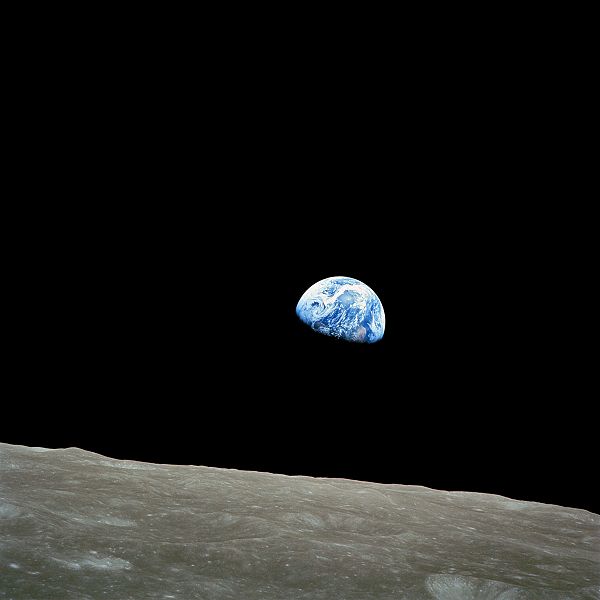
Earth Day feels like it’s actually Earth Day for the first time in four years.  Many of those with more common sense than gullibility know that we have only one planet.  Even as we have achieved flight on Mars, any hope of going elsewhere (and some of us would rather not) is many years away.  Earth is our home and we can live on our planet without destroying it.  Other animals also change the environment, of course.  The problem arises when one species becomes unchecked and begins changing things for their benefit only.  Or what they perceive as their benefit only.  Life evolved on this planet deeply integrated.  The more we study nature the more we see how interconnected it is.  Thinking ourselves special, we’ve placed a wall between humankind and everything else.  It’s an artificial wall.

If you read about nature you’ll be amazed.  Trees, perhaps the true heroes of this planet, make our life possible.  They couldn’t exist without the fungi that partner with their roots in a symbiotic relationship.  If there had been no trees our ancestors would’ve been easy prey to larger predators and would likely not have survived.  Large industrial corporations destroy trees as if they’re a nuisance.  They are our life.  Even as governments with “strong men” leaders destroy the forests in “their” countries, we are losing the very biodiversity that makes life possible on this planet.  There’s room for humans to get along here without destroying the environment that supports our very life.

One of the hidden motives in this scenario is a strange development within Christianity.  A literalism that would’ve shocked even old Augustine developed around the turn of the last century.  That literalism was used by corporations that saw the earth as a resource to be exploited and claimed that we, unlike animals, owned the planet.  If you own a home would you destroy it just because you could?  What good would it do?  No, this Earth Day let’s take the time to consider our religion and its implications sensibly.  The Bible does not advocate destroying what God created.  It may have been written too early to comprehend evolution, but that was never a problem for early theologians.  When fused with capitalism, however, this religion provided everything greedy businesses needed to exploit the planet for its own purposes—the god Mammon.  Just this week we flew our first flight on an inhospitable planet far away.  Today let’s think of how we might protect the only home we have under our feet. 


Herd Not Heard

When mass shootings become commonplace, you might think bipartisan efforts would be made to stem the violence.  If so, you misunderstand how little the pro-life party actually values life.  By pumping its adherents full of fear, they use the hand not waving a gun to pocket donations from the NRA.  Human life is only valuable to get yourself elected.  It’s difficult to remember days when I didn’t awake to hear of someone with more guns than restraint opening fire in a public place.  Mental illness, it seems to me, is fairly widespread.  It’s no deterrent, however, to purchasing military-grade weapons and using them when the stress levels get too high.  Meanwhile lives of those—whether fellow gun owners or not—are lost.  And Republicans argue that nothing should change.  You’d think the insurrection might’ve changed their view.

How does one go to bed secure knowing the next day they may be reading about another mass shooting?  Sure, the perpetrator will be caught, if not already dead, and families will be bereaved but we know our rights!  Funny how even the Bill of Rights can be prooftexted by those who do the same with the Good Book.  What is so hard to understand about “Thou shalt not kill”?  Coveting, however, and adultery, seem alive and negotiable, to gather by their support of 45.  Such selective reading generally turns deadly and constituencies become mere statistics.  What seems to be missing is a basic sense of social justice.  A social justice that applies to all.

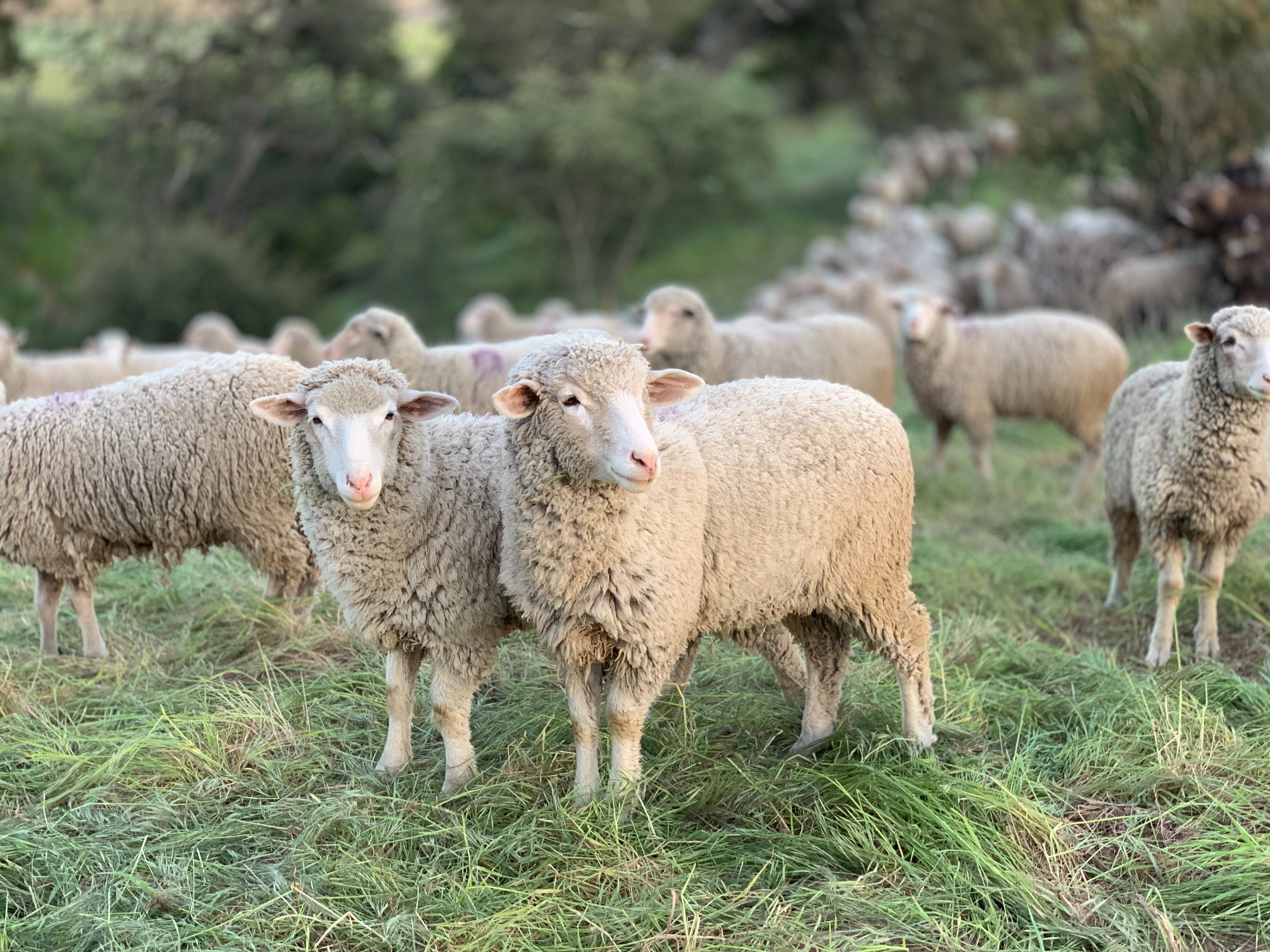
The idea of wanting a country only for white men and their subservient wives is a relic that simply refuses to acknowledge that societies change.  We’ll never reach perfection, but that’s no excuse to stop trying.  Firearm regulation might be a rational place to start.  While party politics will get in the way of this the pools of blood will grow only deeper.  What seems to be missing is the acknowledgement that these are people we are losing to assuage one party’s ambitions.  Wouldn’t prioritizing education and providing mental health services be better?  Ah, but it might stop some of the wealthy from pocketing yet more money from those who are lined up against the wall.  Of course, you can be in the majority and still be gerrymandered into silence.  When the Gun Ownership Party begins saying aloud that it can’t win elections fairly, and makes noises about beginning to cull the herd, we should all be getting a little nervous.


One, two, three

The danger of statistics is that they turn an individual into a number.  A few days ago an article in the New York Times addressed the rare blood clots that some women develop after receiving the Johnson and Johnson covid vaccine.  The response of the cited physicians was telling.  Many praised the decision to halt use of the J&J vaccine immediately.  Others, however, point to the numbers.  If a vaccine is halted many more could be exposed to and contract Covid-19.  It is better, they aver, to take the statically smaller risk and use the vaccine.  While I understand the logic here, I do wonder if the side effects occurring primarily in women has anything to do with the reasoning.  Why not save this vaccine for the men instead?

This raises once again the specter of consciousness.  Statistically the odds are small that a woman will develop a clot.  What if you are the woman who does?  This dilemma always bothered me while camping in the woods.  Statistically black bear attacks are rare.  How does that help you if your tent is one that looks like a candy wrapper to a bear of little brain?  You become a statistic instead of a living, breathing, feeling, blogging person.  Statistics.  There’s a reason some of us identify with the humanities, I guess.  I can imagine what it would be like to have your doctor say to you, “Sorry, this is rare, but look at the bright side—you now become a statistic!”

Photo credit: HB, via Wikimedia commons

The fact is we’re all statistics to strangers anyway, the government above all.  We are vote-bearing numbers to be gerrymandered and prevented from voting.  Beyond that we’re merely annoying.  This pandemic has introduced Stalin’s accounting with a vengeance.  542,000 is a big number.  Unless you know one or more of them personally.  Then the statistics seem to melt.  Life is full of risk, of course.  We’ve barricaded ourselves in our homes for over a year now, eating things that are likely more dangerous for us than a rare complication.  The virus, and perhaps some vaccines, are among various killers on the loose.  Nobody can declare with any certainty the correct course of action.  Actually doing something about the virus when it was first a known threat would’ve helped, of course.  We find ourselves on the brink, it seems, of getting Trump’s disease under control.  Would that we all could do so, without having to worry about lying down to be counted.


Cherry Trees

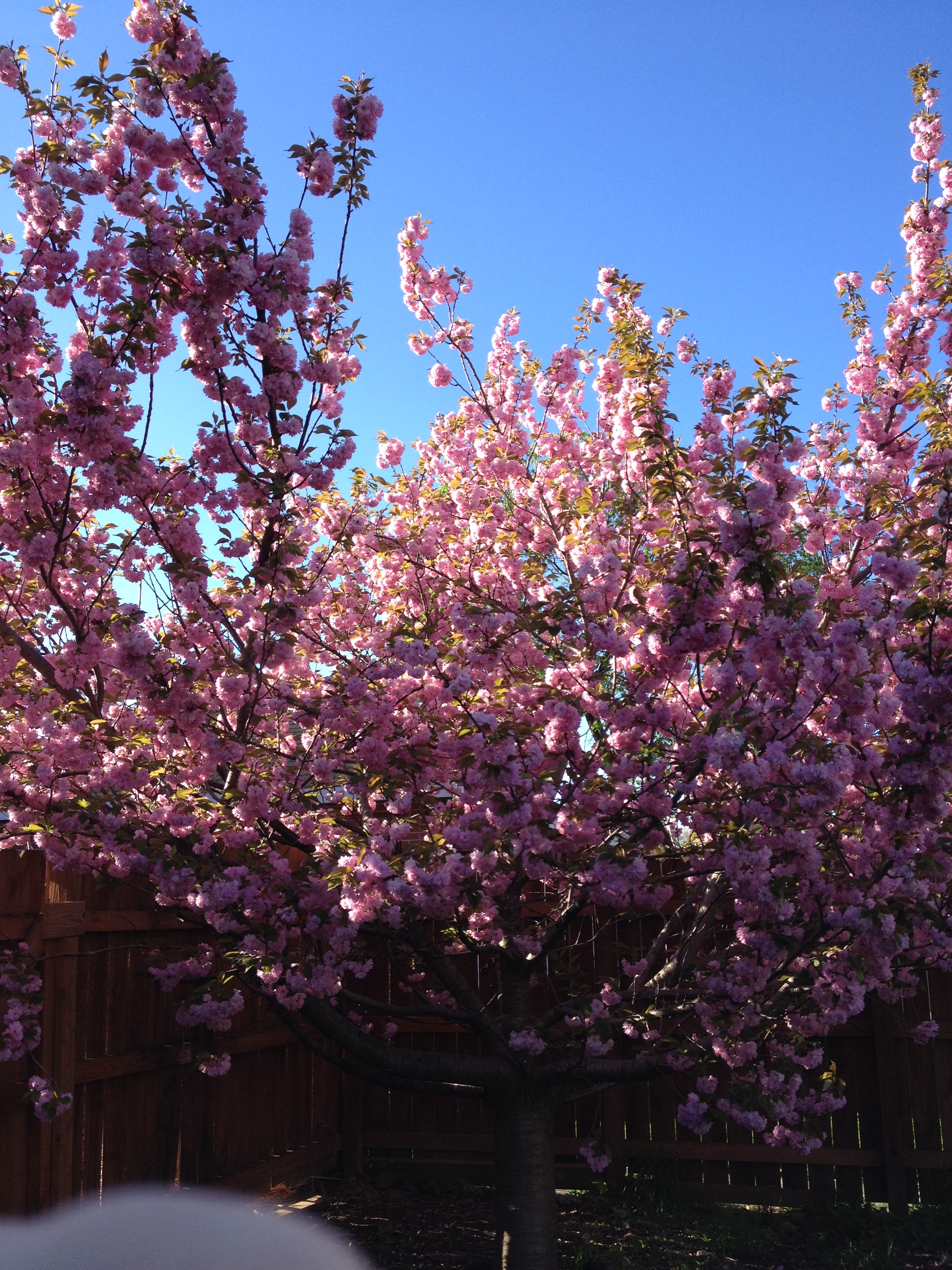
Today is the predicted peak blooming of Washington’s famous cherry blossoms.  Although the trees were a gift from the mayor of Tokyo (before the United States bombed two Japanese cities into oblivion) they perhaps reinforce the myth of a boy George Washington chopping down a cherry tree.  I’m sure you know the story: Georgie cut down the tree and when his aristocratic father asked about it, knowing that he’d get in trouble, our founding father nevertheless confessed.  The incident never happened, as historians have long assured us, but it is part of American lore.  And perhaps a key to understanding American gullibility.  We like things that make us look great.  If a story shows that we’ve been honest even well before independence from Britain, well, we must be honest now.

Perhaps this is why so many people believed Trump, a president with a well-established and fully documented lifetime of lies.  The biggest one being, of course, that he cares about anyone other than himself.  Not content to accept facts, such as a closely monitored and fairly lost election, he espoused lies that are still causing shudders through the nation.  I, like many Americans, live in a “purple” town.  A few doors down from our house is that of a rabid Trump supporter.  Just two days ago I had to walk to the drug store about half a mile from here.  I walked past this house that had hung huge Trump banners right on the siding, in addition to one phallically jutting out from a flag bracket.  Now the house has huge American flags upside down.  Such things never happened, I’m pretty sure, when Bush lost to Clinton.  Or ever before.

Nobody with the ability to read can doubt Trump’s actual record of deceit and lies.  It is fairly well documented that he ran for president to help his business and promote his image rather than out of any concern for any other human being.  After sentencing over half-a-million Americans to death with Covid (about which he simply couldn’t be bothered to do anything), his followers (who numbered high among the victims) still clung to the lies.  Today the cherry trees, it is said, are blooming in Washington.  I believe it because I can check the facts and see if it’s so.  When I do I know that I’ll be thinking of George Washington and his fictional cherry tree.  I know it never happened.  Instead, I’ll focus on the beauty right before my eyes.


Story Over

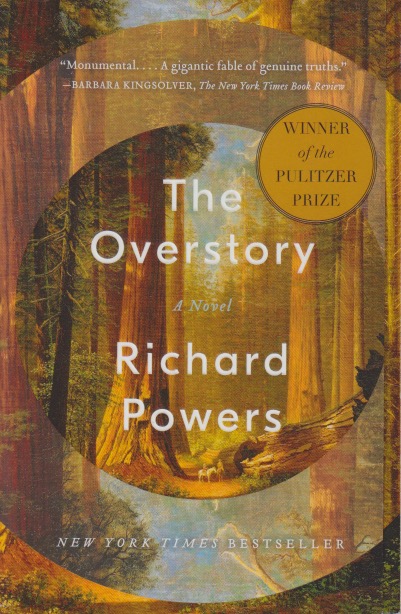
Despite my penchant for speculative fiction I tend to read a lot of what’s usually categorized as literary fiction.  These tales don’t fit into any genre and are often colored with realism.  More than one person had recommend Richard Powers’ The Overstory, not least the Pulitzer Prize committee.  In the style of novels these days it’s pretty long and that meant I had to build up the courage (and time) to get to it.  I support the environment.  I have a great respect for trees and try to support conservation any way I can.  The Overstory is, however, a bleak vision of what we’re doing to the planet and to other living beings.  It certainly helps to have read Peter Wohlleben’s The Hidden Life of Trees first.  It helps to know the main premise of the novel is based on non-fiction.  There may be spoilers below.

The first part of the book, Roots, introduces us to the various characters—most of whom will interact in the remaining pages.  Most of them are marked by tragedy in their lives and come to realize the longevity of trees has a perspective that can make sense of what, to our lifespans, seems inexplicable.  Several, but not all, of them end up in a conservation group trying to defend old growth redwoods from the insatiable greed of lumber companies and politicians.  The novel ends happily for none of them.  Trees, however, have the ability to outlive us.  While we cause real damage, they have the ability to regenerate, but in ways that none of us will live to see.  Trees see beyond the short, tragic lives we lead, into what may be a more hopeful future.

The other sections of the book, Trunk, Crown, and Seeds, follow events chronologically as the people age.  Some notable deaths among the group have a great impact on the small coterie of those protecting trees.  An unfeeling state and the corporate nature of laws are clearly on display.  They serve the will of those who can’t, or won’t, think differently about the world and our place in it.  Although the novel doesn’t ever cite the source, one of the eco-heroes finds a verse from Job to be of tremendous consolation: “For there is hope of a tree, if it be cut down, that it will sprout again, and that the tender branch thereof will not cease.”  I was glad to see the connection made, but the book left me emotionally exhausted.  With speculative fiction at least you can escape the real problems of this world for awhile.


Seussical Thoughts

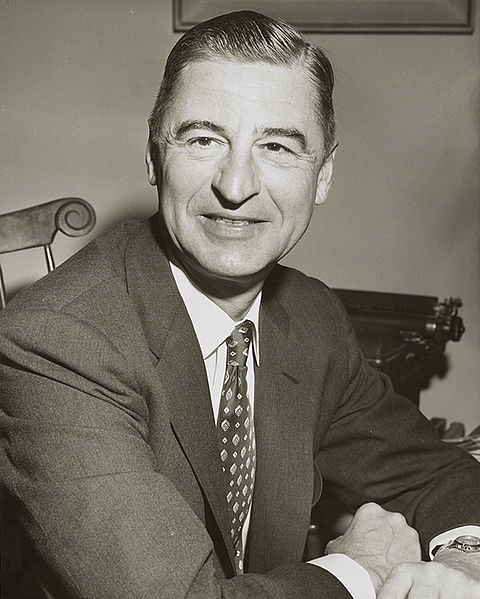
It seems that Dr. Seuss has fallen on hard times.  His estate is pulling six of his books from production because of hurtful race representations.  This has, of course, sparked the debate between period pieces and the clearly necessary reeducation that has to take place regarding race itself.  I don’t have a solution here, but children raised on these books are among those who realize the dangers of racial stereotypes.  In fact, even those of us who try to keep a weather eye on our own thinking process can at times get caught in the trap of thinking that “white” is “normal” and everyone else is a “variation.”  The truth is we are all variants and political power, with its not-so-subtle adjunct money, have embedded racist thinking throughout our society.

Photo credit:
Photo credit: Al Ravenna, via Wikimedia Commons

Theodore Geisel was a broad-minded individual.  His works often advocate for inclusion.  He was also a product of his time, even as we are.  The struggle to do right in the midst of a corrupt world is constant.  None of us, I fear, have risen to perfection.  The roots of racist thinking run deep and they re-sprout if just a fragment of a rhizome left behind.  We should all know by now that slavery was evil and that a system that devalued other humans for money was clearly wrong.  We should know that government policies that keep American Indians repressed and do so secretly are unethical.  We should know that people from Asia have as much right to opportunity as those whose ancestry lies in Europe.  Why is this so hard to learn?  Why do we still have to fight to dismantle systemic racism in this “land of the free”?

Dr. Seuss has taught generations of kids that “a person’s a person” and that persons deserve fair treatment.  He did it in the language and idiom of his own era.  Those making the decisions for his estate are not trying to destroy his legacy.  They are, however, asking us to look forward and to try to figure out where we go from here.  Half a century ago we knew that civil rights were the only fair way to live.  We’ve experienced globalization since then and we’ve been made better for having done so.  Yet we are mired in preconceptions that can only damage our collective sense of justice, often falling along party lines.  Dr. Seuss taught us well—shouldn’t we implement what we’ve learned?


Who Says Suez?

“Where was Moses when the lights went out?”  That’s one of the few sayings I remember from my grandmother.  She lived with us when I was a child and she’d say that when someone came in too late to help with something.  I always thought it a strange expression since Moses didn’t do miracles on demand, but I still remember it—kind of a miracle in its own right.  The expression came back to me when hearing about the MV Ever Given in the Suez Canal.  This massive cargo ship, buffeted by high winds, has choked the canal that links the Red Sea to the Mediterranean for days.  This shortcut means ships don’t have to round Africa to get to European and American ports.  While the problems of this one ship play out, over 150 others are waiting to pass through and goods could be delayed for weeks around the world.  I’m glad we have toilet paper.

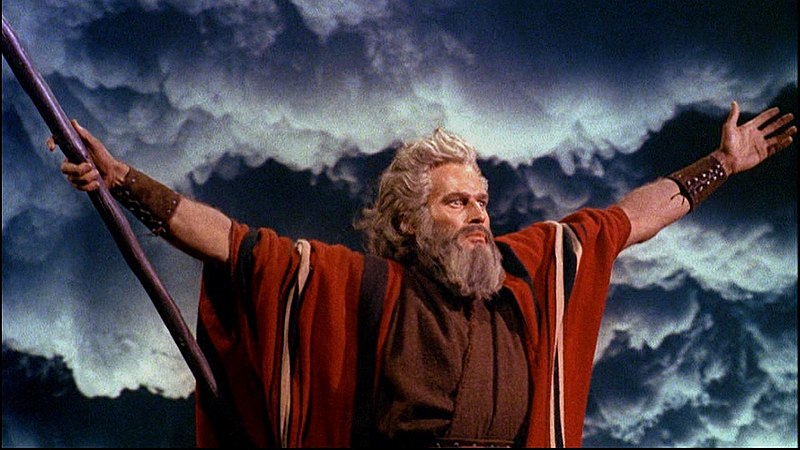
Image credit: Ten Commandments trailer, via Wikimedia Commons.

Now Moses was known for have a role in the dividing of the Red Sea.  Of course, the name of the body of water is debated.  The Good Book actually says “Reed Sea” and nobody’s really sure where that is.  Besides, the miracle isn’t really credited to Moses.  God did the deed through, well, a strong wind.  If the waters could be divided perhaps present-day crews could figure out how to free the ship.  Photos of a bulldozer that looks like a Tonka next to the colossal freighter give an idea of the scale of the problem.  People building things so large that they can’t control them.  And the forces of nature seem happy to remind us that we’re not in control, right, Moses?

And everything, we assume, will go smoothly if left to its own devices.  How often do we really worry about the Suez Canal?  Or large ships, for that matter?  Theses things should go just as clockwork, we suppose.  Until our order from Amazon is inexplicably delayed.  The pandemic, Post Office troubles, and unexpected bad weather have caused major shipping delays around here over the past several months, and now we have no Moses when we need him.  According to Exodus, God lives right next door on the Sinai peninsula.  That’s where Moses first met him.  If we had a true prophet these days (let the reader apply wisdom here) there would be no concerns for something as simple as a wedged ship.  But we can’t even find Moses when the lights go out. 


Holy or un?

It’s either brave or stupid.  Maybe both.  Writing about a movie you haven’t watched, I mean.  Multiple people (do I have a reputation, or what?) have pointed out to me that Good Friday (for some) is the release date for The Unholy.  Since Good Friday’s a week away I guess we’re getting an early start this year.  The Unholy is a new horror movie and although I try not to watch trailers before seeing a movie—too many of them show too much in advance—I already have a sense of what it’s about.  This post isn’t really about the movie, however.  It’s about the bigger issue.  The concern many have is that it’s being released on Good Friday.  One thing I’ve learned is that to get attention you have to shock people, no, Donald?  Getting noticed is difficult and outrage generally works.

Friday, for many, is movie night.  Good Friday is, for some Christians, a day for church.  I’ve yet to have an employer (other than Nashotah House) that recognized it as a special day at all.  Easter always falls on Sunday so there’s no need to give time off work, at least in this capitalist, Christian culture.  But if you try to release a horror movie that day, people notice.  Mel Gibson knew that crucifixion could make the basis of a horror film, and people noticed.  Sitting over here in the backwaters just outside academe, I took to horror as a means of keeping my book writing active.  One reason was that horror gets people’s attention.  (It also helps if your books are reasonably priced.)

As a young man I used to spend a good deal of Good Friday in church.  Since I was serious about school I’m thinking we probably had the day off in my district.  Attending a Christian college, followed by seminary, I suspect these also paid attention to the liturgical year.  Then in the real world I learned the truth—it’s just another day.  A day for going to work and increasing the profits for whatever company may have hired you.  When the day’s over you’ll be inclined to relax, and perhaps watch a movie.  Right now going to a theater opens the possibility for horror itself so I won’t be there on opening night for The Unholy, but I think there was some savvy thinking going on, in any case.  And it may just be that the movie was titled specifically to fit the occasion.


Clearly Conspiracy

What an odd place to find ourselves in.  Some evangelical Christians, who used to be guardians of decency and moral human behavior, now have to have their clergy explain to them why Trump wasn’t the messiah he’d been touted as for the last four years.  A piece in the Los Angeles Times recently described the struggles of one such minister with his congregation that had fully bought into the conspiracy theories Trump promulgated in order to mask his own lack of care for his country and its citizens.  Conspiracy theories have become big business in academia with faculty from many departments exploring them.  I haven’t seen much in the way of religion departments participating in the discussion, but I think they should.  Why?  Religions are all about getting people to believe and act in prescribed ways.

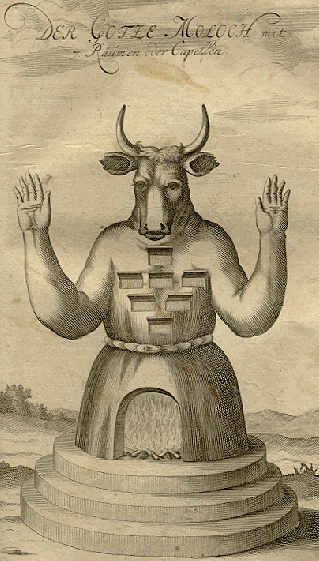
Image credit: Johann Lund, Wikimedia Commons

Not that religions alone can explain this.  Psychologists and sociologists must have some important insights as well.  I used to tell my students that not all religions are about beliefs.  Some have to do with behaviors—acting in a certain way, regardless of belief, is to be part of it.  Certainly that explains part of the membership in the cult of Trump.  Many who follow it must know in their consciences that a man who defrauds the government he “governs,” who actively womanizes, and who displays overt racism can’t be the ideal evangelical.  Ah, but the conspiracy theories explain it!  Pay no attention to the man behind the curtain, right?  You can sure get away with a lot that way.

Religions have a lot to teach us about both strange behaviors and strange actions.  Many years ago someone pointed out to me as I was enumerating what I considered odd beliefs of a New Religious Movement just how odd Christianity looks from the outside.  When I stopped to think about it, this made sense.  The unconventional aspects of the faith had become naturalized because I’d been taught all my life that they were true—unlike all other religious beliefs.  Not only that, but I had been taught that accepting them without question was the only way to avoid Hell.  Over the years the strangeness became normal.  Trump and his conspiracy theories had their way smoothed by an evangelical narrative of unquestioning belief instead of an examined faith.  Now many ministers, awaking sober, are having to try to convince their flocks that they’d accepted lies for truths.  It’s an uphill battle, unfortunately.  Religions, after all, have been about getting followers to believe without questioning, or, apparently, considering the source.


Taxing Thoughts

Tax season has come with a new fear this year.  We had to visit our accountant’s small office to sign things.  We managed to get last year’s taxes filed before the pandemic became evident.  This year I spent weeks worrying about the upcoming appointment.  Sitting in a room with a man I both respect and fear.  Our government loves its paperwork, and although you can file electronically you still have to pay any amounts owed (on the state or local level) with actual paperwork.  That paperwork has to be signed.  To do so you need to meet an actual person who has some inkling of how this all works.  Ironically, the technology exists for taxes to be done automatically by the government.  Groups like Intuit, the owners of TurboTax, lobby the government not to make it easier.  Intuit would lose its income stream.

I don’t mind paying taxes.  I did chafe a bit the past four years, knowing I was supporting an evil government, but overall I understand that we all need to contribute in order for things to continue to run (somewhat) smoothly.  The thing that frightens me is being in a room with someone who might’ve been earlier talking with someone who had a dread disease.  Last week marked the one-year breaking point.  My wife and I agree that March 12 was the day the news turned utterly ominous.  Although the Trump administration knew about the disease, it had decided simply to ignore it.  Now, with more than half-a-million Americans dead, we’re still paying our taxes to try to undo the damage that one man did.

The more immediate problem is how to survive getting those tax papers signed.  Ironically, I can oversee the acquisition, editing, production, and sale of a physical book without ever having to touch a piece of paper.  It’s a marvel, really.  In fact, many of the books I acquire I don’t see until months after they’re published.  For taxes, however, we still need to send the physical paper in.  The alternative is TurboTax.  They add on so many fees that we ended up paying them as much as an actual accountant last time we did our own taxes.  I’m happy to pay a human being to do them, and I even like our accountant.  It’s just that it doesn’t feel safe to go inside somebody else’s space right now.  It’s a little too cold and wet to stand outside and sign the papers with trembling fingers.  Perhaps next year we’ll be able to do our part without fear.


Getting into SHAPE

The British Academy, in cooperation with a publisher or two, has taken the initiative to promote SHAPE. Social Sciences, Humanities, and the Arts for People and the Economy (SHAPE) may never match the steam of STEM, but the idea is an important one.  Science, Technology, Engineering, and Mathematics have driven society (and the job market) for many years now.  It’s sometimes easy to forget that we’re human beings and we act irrationally from time to time.  (Consider the last four years in these Untied States.)  Higher education was founded on the premises that the Humanities wouldn’t get studied on their own.  Business keeps us too busy.  Either that, or the egos of rulers lead us into war after war.  What gets left behind is the study of what makes us who we are.  The liberal arts college, learning for learning’s sake, has fallen on hard times.  What’s the profit in it?

SHAPE suggests a society suffers if it doesn’t promote social sciences—the so-call “soft sciences” that state humanity the proper study of humans—the humanities, and the arts.  The acronym itself contains a lesson “for people and the economy.”  The dismal science does, in some sense drive the initiative since we live in a world where tech does most of the work we used to.  We’re left with the non-paying business of being human.  Caring for an aging population where people live longer but aren’t given jobs that pay well enough to retire.  Looking in the mirror to see that the economy’s fruits go unfairly to those who already have too much.  The rest of us, are left to survive as, well, humans do.  Why not celebrate—and better yet, value—what people do?  Or humans for humans’ sake?

I’ve long felt that the priorities of capitalism are badly skewed.  The value of gold is artificial, one assigned by human beings and their love of shiny metals.  Our entire society is set up to, as we’re told, pursue wealth.  There is far more to life.  We humans, we love to create.  We love to socialize.  We love to help one another out.  These aren’t paid activities.  They don’t have to be commodified.  The one who goes home with the most stuff isn’t always the winner, especially when the majority of humans are left without enough.  It’s too early to tell if SHAPE will catch on, but I applaud the effort.  It is time we stopped exchanging the warmth of being human for the coldness of numbers and calculation.