Holy or un?

It’s either brave or stupid.  Maybe both.  Writing about a movie you haven’t watched, I mean.  Multiple people (do I have a reputation, or what?) have pointed out to me that Good Friday (for some) is the release date for The Unholy.  Since Good Friday’s a week away I guess we’re getting an early start this year.  The Unholy is a new horror movie and although I try not to watch trailers before seeing a movie—too many of them show too much in advance—I already have a sense of what it’s about.  This post isn’t really about the movie, however.  It’s about the bigger issue.  The concern many have is that it’s being released on Good Friday.  One thing I’ve learned is that to get attention you have to shock people, no, Donald?  Getting noticed is difficult and outrage generally works.

Friday, for many, is movie night.  Good Friday is, for some Christians, a day for church.  I’ve yet to have an employer (other than Nashotah House) that recognized it as a special day at all.  Easter always falls on Sunday so there’s no need to give time off work, at least in this capitalist, Christian culture.  But if you try to release a horror movie that day, people notice.  Mel Gibson knew that crucifixion could make the basis of a horror film, and people noticed.  Sitting over here in the backwaters just outside academe, I took to horror as a means of keeping my book writing active.  One reason was that horror gets people’s attention.  (It also helps if your books are reasonably priced.)

As a young man I used to spend a good deal of Good Friday in church.  Since I was serious about school I’m thinking we probably had the day off in my district.  Attending a Christian college, followed by seminary, I suspect these also paid attention to the liturgical year.  Then in the real world I learned the truth—it’s just another day.  A day for going to work and increasing the profits for whatever company may have hired you.  When the day’s over you’ll be inclined to relax, and perhaps watch a movie.  Right now going to a theater opens the possibility for horror itself so I won’t be there on opening night for The Unholy, but I think there was some savvy thinking going on, in any case.  And it may just be that the movie was titled specifically to fit the occasion.


Clearly Conspiracy

What an odd place to find ourselves in.  Some evangelical Christians, who used to be guardians of decency and moral human behavior, now have to have their clergy explain to them why Trump wasn’t the messiah he’d been touted as for the last four years.  A piece in the Los Angeles Times recently described the struggles of one such minister with his congregation that had fully bought into the conspiracy theories Trump promulgated in order to mask his own lack of care for his country and its citizens.  Conspiracy theories have become big business in academia with faculty from many departments exploring them.  I haven’t seen much in the way of religion departments participating in the discussion, but I think they should.  Why?  Religions are all about getting people to believe and act in prescribed ways.

Image credit: Johann Lund, Wikimedia Commons

Not that religions alone can explain this.  Psychologists and sociologists must have some important insights as well.  I used to tell my students that not all religions are about beliefs.  Some have to do with behaviors—acting in a certain way, regardless of belief, is to be part of it.  Certainly that explains part of the membership in the cult of Trump.  Many who follow it must know in their consciences that a man who defrauds the government he “governs,” who actively womanizes, and who displays overt racism can’t be the ideal evangelical.  Ah, but the conspiracy theories explain it!  Pay no attention to the man behind the curtain, right?  You can sure get away with a lot that way.

Religions have a lot to teach us about both strange behaviors and strange actions.  Many years ago someone pointed out to me as I was enumerating what I considered odd beliefs of a New Religious Movement just how odd Christianity looks from the outside.  When I stopped to think about it, this made sense.  The unconventional aspects of the faith had become naturalized because I’d been taught all my life that they were true—unlike all other religious beliefs.  Not only that, but I had been taught that accepting them without question was the only way to avoid Hell.  Over the years the strangeness became normal.  Trump and his conspiracy theories had their way smoothed by an evangelical narrative of unquestioning belief instead of an examined faith.  Now many ministers, awaking sober, are having to try to convince their flocks that they’d accepted lies for truths.  It’s an uphill battle, unfortunately.  Religions, after all, have been about getting followers to believe without questioning, or, apparently, considering the source.


Taxing Thoughts

Tax season has come with a new fear this year.  We had to visit our accountant’s small office to sign things.  We managed to get last year’s taxes filed before the pandemic became evident.  This year I spent weeks worrying about the upcoming appointment.  Sitting in a room with a man I both respect and fear.  Our government loves its paperwork, and although you can file electronically you still have to pay any amounts owed (on the state or local level) with actual paperwork.  That paperwork has to be signed.  To do so you need to meet an actual person who has some inkling of how this all works.  Ironically, the technology exists for taxes to be done automatically by the government.  Groups like Intuit, the owners of TurboTax, lobby the government not to make it easier.  Intuit would lose its income stream.

I don’t mind paying taxes.  I did chafe a bit the past four years, knowing I was supporting an evil government, but overall I understand that we all need to contribute in order for things to continue to run (somewhat) smoothly.  The thing that frightens me is being in a room with someone who might’ve been earlier talking with someone who had a dread disease.  Last week marked the one-year breaking point.  My wife and I agree that March 12 was the day the news turned utterly ominous.  Although the Trump administration knew about the disease, it had decided simply to ignore it.  Now, with more than half-a-million Americans dead, we’re still paying our taxes to try to undo the damage that one man did.

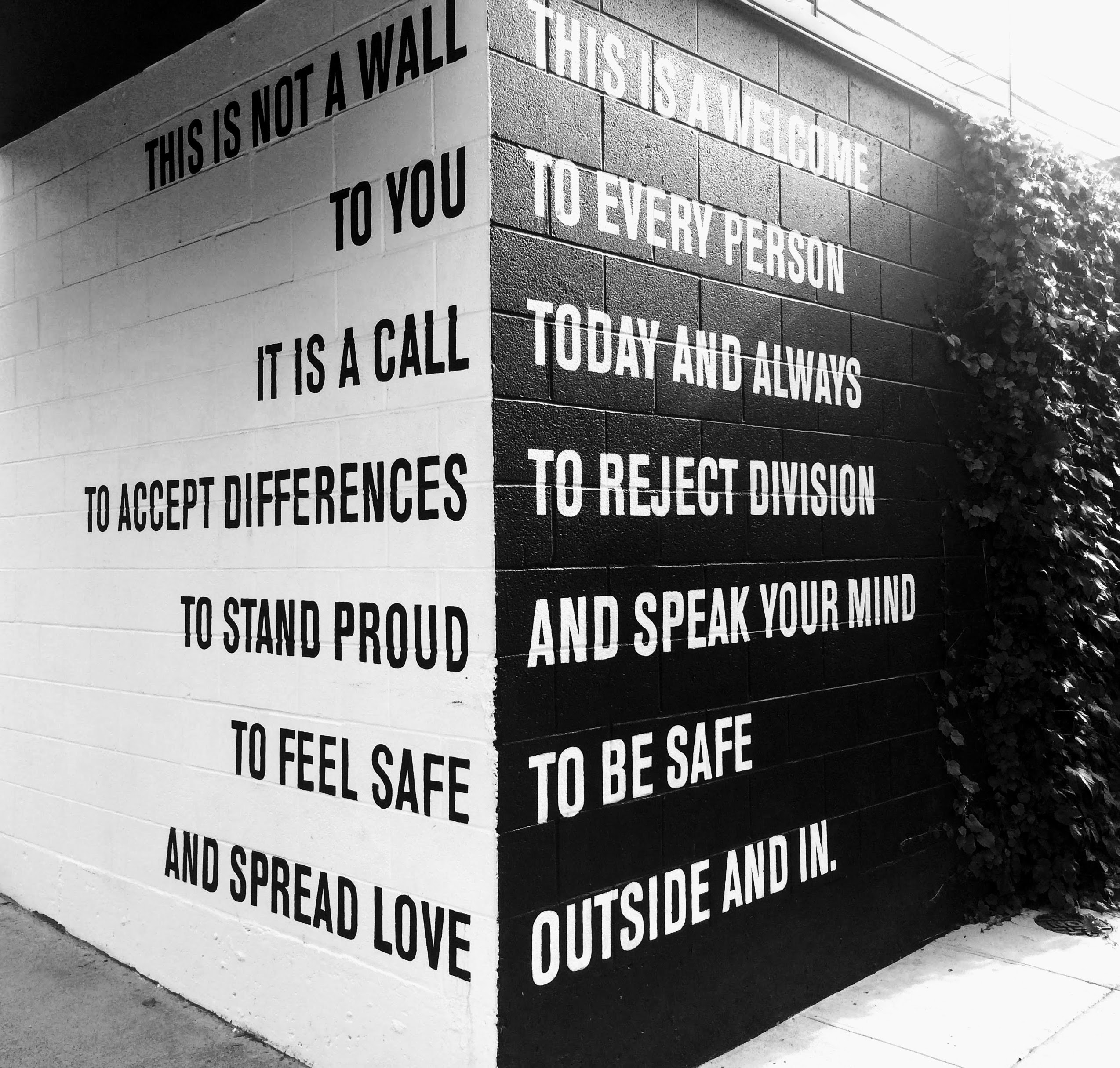
The more immediate problem is how to survive getting those tax papers signed.  Ironically, I can oversee the acquisition, editing, production, and sale of a physical book without ever having to touch a piece of paper.  It’s a marvel, really.  In fact, many of the books I acquire I don’t see until months after they’re published.  For taxes, however, we still need to send the physical paper in.  The alternative is TurboTax.  They add on so many fees that we ended up paying them as much as an actual accountant last time we did our own taxes.  I’m happy to pay a human being to do them, and I even like our accountant.  It’s just that it doesn’t feel safe to go inside somebody else’s space right now.  It’s a little too cold and wet to stand outside and sign the papers with trembling fingers.  Perhaps next year we’ll be able to do our part without fear.


Getting into SHAPE

The British Academy, in cooperation with a publisher or two, has taken the initiative to promote SHAPE. Social Sciences, Humanities, and the Arts for People and the Economy (SHAPE) may never match the steam of STEM, but the idea is an important one.  Science, Technology, Engineering, and Mathematics have driven society (and the job market) for many years now.  It’s sometimes easy to forget that we’re human beings and we act irrationally from time to time.  (Consider the last four years in these Untied States.)  Higher education was founded on the premises that the Humanities wouldn’t get studied on their own.  Business keeps us too busy.  Either that, or the egos of rulers lead us into war after war.  What gets left behind is the study of what makes us who we are.  The liberal arts college, learning for learning’s sake, has fallen on hard times.  What’s the profit in it?

SHAPE suggests a society suffers if it doesn’t promote social sciences—the so-call “soft sciences” that state humanity the proper study of humans—the humanities, and the arts.  The acronym itself contains a lesson “for people and the economy.”  The dismal science does, in some sense drive the initiative since we live in a world where tech does most of the work we used to.  We’re left with the non-paying business of being human.  Caring for an aging population where people live longer but aren’t given jobs that pay well enough to retire.  Looking in the mirror to see that the economy’s fruits go unfairly to those who already have too much.  The rest of us, are left to survive as, well, humans do.  Why not celebrate—and better yet, value—what people do?  Or humans for humans’ sake?

I’ve long felt that the priorities of capitalism are badly skewed.  The value of gold is artificial, one assigned by human beings and their love of shiny metals.  Our entire society is set up to, as we’re told, pursue wealth.  There is far more to life.  We humans, we love to create.  We love to socialize.  We love to help one another out.  These aren’t paid activities.  They don’t have to be commodified.  The one who goes home with the most stuff isn’t always the winner, especially when the majority of humans are left without enough.  It’s too early to tell if SHAPE will catch on, but I applaud the effort.  It is time we stopped exchanging the warmth of being human for the coldness of numbers and calculation.


International Women’s Day 2021

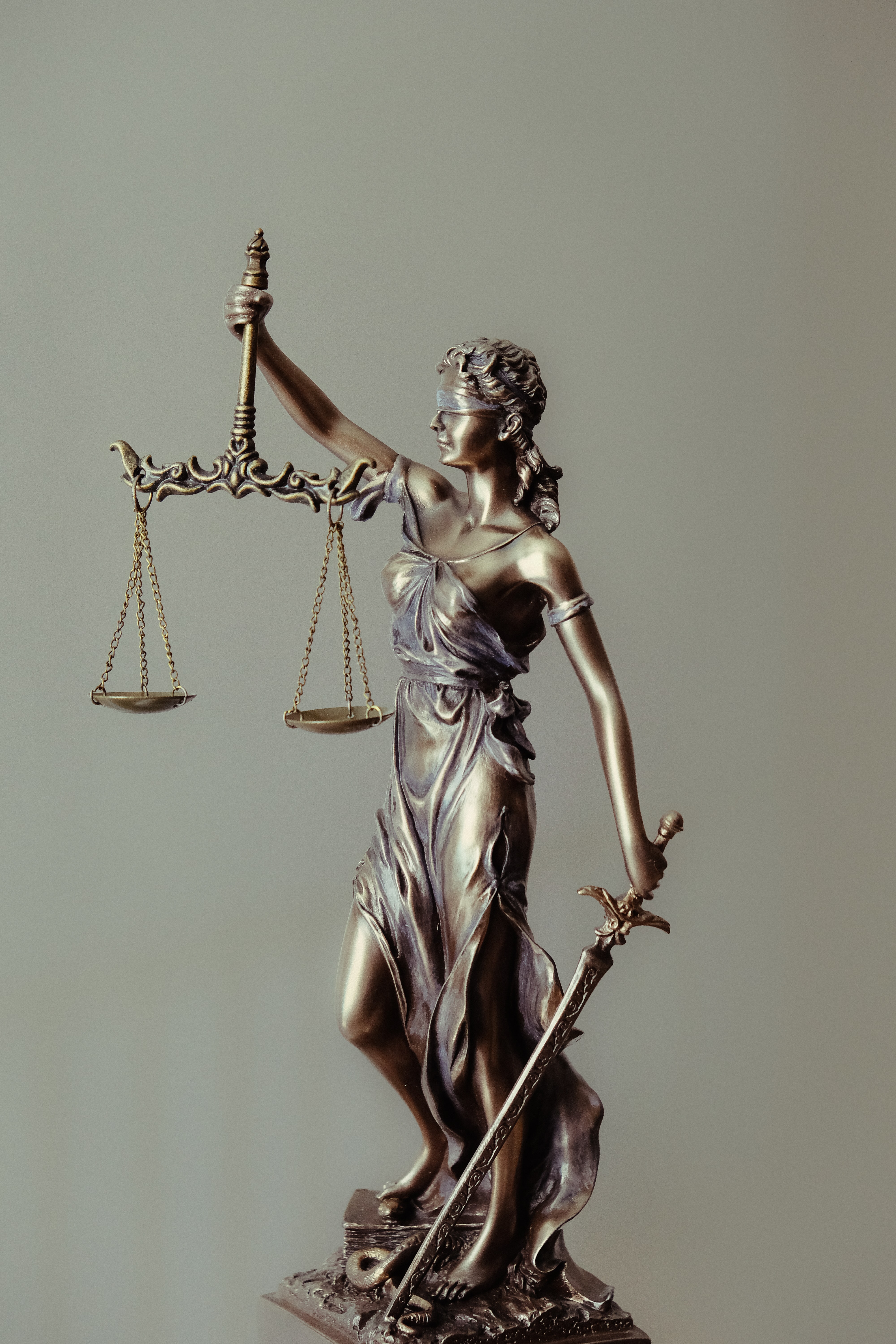
Changing one’s way of thinking is difficult.  So difficult that we generally don’t try it unless we’re compelled to do so.  One such compulsion is education.  Cultures that have embraced education are those that have led to great advances.  In this context it’s more than a little surprising that women’s rights are still held to be less important than those of men.  More education is required, it seems.  Today is International Women’s Day.  Of course it’s not a day off work because capitalism is all about men’s need for endless acquisition.  At least we can pause and consider for a few moments that life itself wouldn’t be possible without women, and justice, nearly worldwide, is represented in feminine form.  What can we do to make the world open its eyes to the obvious?

I read a lot about religion.  While I post here about the books I read, they are really only the tip of an iceberg.  My job largely consists of reading.  One of the themes that constantly runs through my own personal continuing education is that religion has indelibly changed our ways of thinking.  Even strident atheists today announce their stridency from a context formed by religion.  I’ve pointed out on this blog numerous times where even scientific thinking is mired in a wider context that has been constructed by religious thought.  One of those larger contexts is the subordinate role of women.  It is likely no coincidence that matriarchal cultures developed where there wasn’t a religion devised by men to impose a patriarchal governance on the world.  It’s so obvious once you learn to see it.  We need to be educated.

Women, it is obvious from an unbiased point of view, are equal to men.  As we educate ourselves further about gender and how religion has informed its perception, we come to realize that even binary assumptions—either male or female—are premature.  Underlying it all is humanity.  Human lives.  Those of men are no more important than those of women, or of those between.  Religions often like to make sharp distinctions.  Those distinctions are more abstract than reality.  The world is made up of real people and roughly half of them are female.  Today is set aside to recognize and celebrate that fact.  To recognize the contributions women have always made to society and civilization.  Let’s take the opportunity to educate ourselves, and  let’s be conscious of the fact that women are just as valuable as men and their foibles.  More than that, let’s put this truth into practice.


Not the Band

One of my favorite weekend treats involves black-eyed peas.  With a father from South Carolina, some of my earliest memories involve soul food.  As a present-day vegan, I eat a lot of beans.  That’s why I was disappointed to learn that Goya’s CEO, Robert Unanue, continues to be a big Trump supporter.  Shame on you, Goya!  Lest you get the wrong idea, we generally buy the store brand beans.  Of all the legumes, however, it seems the humble black-eyed pea is difficult to get right.  The generic brands always end up with the bottom part of the can being a kind of beige sludge where the beans have broken down and lost, as it were, their individuality.  The dish I make (one of my own invention, also featuring grits and hot sauce) requires that the beans maintain their integrity—take note, Goya!  Said brand seems to be the one that understands this aspect of canning beans.

For many years I avoided Bush beans for fear that they might be enriching the other *ahem* Bushes.  Right now, however, I’d rather have W run for a third term than the specter of Goya-supported Trump.  When did legumes become politicized?  Why can’t I sit down to a peaceful Saturday morning breakfast without a hideous four-year nightmare coming to mind?  The perils of being vegan!  In any case, I recently tried Bush black-eyed peas.  They weren’t as good as Goya, but I think I need to make the switch.  I’ve never had my somewhat simple culinary tastes disrupted by a president before.  Generic would be fine, but why, o why can’t they get the black-eyed pea right?

Image credit: Jud McCranie, via Wikimedia Commons

Perhaps somewhat oddly, I really like beans.  There are about 400 varieties and each has its own personality from sassy edamame to staid kidney beans.  I’ve even reconciled myself to the childhood nightmare of the lima bean (alien, without a hint of lime).  Now, I’m no foodie.  I eat to live rather than the other way around.  Whatever I do, however, I search my conscience.  Raised evangelical I know no way around it.  My conscience is the main reason for becoming vegan—I can’t support animal cruelty, especially for an industry that is the largest environmental polluter in the world.  So when I’m standing in front of the bean shelf, thinking ahead to Saturday’s breakfast, I’m struck with qualms.  I stare at the black-eyed peas and they stare back at me.  It’s a kind of test of the wills.  I see the Goya and decide to try something better for the world.  


J-Horror

J-Horror better move over.  There’s a new kid on the block.

For many years those of us strange fans of horror have used “J-Horror” as shorthand for Japanese Horror.  With two highly successful films (eventually series) of the mid-nineties (Ju-On and Ringu) the Japanese contribution stormed back into American consciousness.  Those of us who grew up on Godzilla knew that J-Horror had been around for decades already, but these new movies were distinctly creepy.  So much so that English-language versions were remade for both original films (The Grudge and The Ring, respectively—rather like Let the Right One In and Let Me In).  So far, so good.  So why does J-Horror need to move over?

At least three separate friends have pointed me to another emerging J-Horror trend: Jewish horror movies.  These used to be rare.  With cases of early antisemitic themes in horror, and the real life horror of the Holocaust, this is certainly understandable.  “Christian” producers or directors delving into Jewish themes would seem to be in bad taste.  Still, some notable Jewish-themed horror has begun to emerge.  (I addressed one such film in my recent Horror Homeroom piece.)  The Possession (discussed in both of my most recent books) centers around the need for a Jewish exorcist in the case of a dybbuk problem.  For more information, you know where to look!  It seemed to me that the dybbuk box contents were reminiscent of the Holocaust, but that may not have been intentional.

I recently wrote a post about The Golem.  This is a recent Israeli movie that builds on the traditional Jewish monster.  Although set before the Holocaust, the fact that there’s a pogrom in the film shows that the concept is not far off.  The movie that people have recently been pointing me toward is The Vigil.  I’ve not had an opportunity to see it yet, but the press it’s received suggests it too will be another classic based on lived experience in Judaism.  I’m not sure if Jewish horror will eventually rival the numbers of Japanese horror films, but the offerings thus far have been noteworthy.  Horror often addresses the problem of human suffering.  With all the oppressions in “white” society, it’s no wonder that, along with Black horror, Jewish horror is beginning to garner attention.  Although it’s clearly not to everyone’s taste, horror is often a genre with a conscience.  It becomes a screen on which we can see our worst behaviors projected.  And if we’re wise, we’ll take steps to make such suffering become merely an unfortunate memory.


Women’s History

March is Women’s History Month.  My reading of actual history as of late has focused on the ancient Celts, so I confess to falling behind on modern women’s history.  Nevertheless, I came across an often forgotten piece in an unexpected way.  For quite some time I’ve wanted to read some work of Charlotte Perkins Gilman.  Her story “The Yellow Wallpaper” is known as a gothic classic.  Since a short story isn’t enough to make up an entire book, publishers have arranged different combinations of her tales into thin books that can be sold as a unit.  I purchased the Dover Thrift Editions’ version of The Yellow Wallpaper and Other Stories.  It was there that I learned Gilman was an early feminist who seems to have become unsung in more recent times.  Her fiction, at least as reflected in this particular edition, demonstrates the truth of the assertion.

Most of the tales in this little book require only a few minutes to read.  Although written around the turn of the nineteenth century, her stories anticipated many modern developments for women.  Her protagonists see the inequalities between the genders and work to overcome them.  They prove themselves successful at business and setting up their own houses.  There’s a gentleness to these stories that suggests quiet confidence may eventually wear down the often inflated male ego.  I found myself captivated even after finishing “The Yellow Wallpaper” itself.  Gilman isn’t judgmental, but she does note how unfairly the system operates.  She also offers solutions.

In this month of women’s history, it seems appropriate to rediscover one of the female writers who personally worked for women’s rights and expressed herself so fluently in fiction.  Her “If I Were a Man,” although clearly a period piece, takes a woman into her husband’s body.  She walks in his shoes, literally, and sees what “the world of men” is like.  This leads to both understanding and, above all, learning.  This would seem to be the very heart of history.  We read to learn both from what we did correctly to what we did wrong.  We have done so terribly much wrong.  The historical oppression of women is one of the greatest examples of our inability to catch up with our own ideals of justice and fairness.  There were historical reasons for this, yes, but we have moved beyond those times.  If only we’d act like it.  Although my reading doesn’t always keep in sync with the seasons, discovering Charlotte Perkins Gilman at this point in time was somehow more appropriate than anticipated.


Come People and Consider

“Thou, O king, sawest, and behold a great image. This great image, whose brightness was excellent, stood before thee; and the form thereof was terrible.  This image’s head was of fine gold, his breast and his arms of silver, his belly and his thighs of brass, his legs of iron, his feet part of iron and part of clay.”  So Daniel answered the megalomanic king Nebuchadnezzar, according to chapter 2.  This is some Scripture that CPAC has chosen to ignore, or at least not bothered to read to the end.  In truth I was always bothered when Daniel said “Thou art this head of gold”—which seems to be more brass-kissery, if you get my drift, than prophecy.  But dear CPAC, the statue of Nebuchadnezzar crumbles when the kingdom of God arrives, unable to stand on its feet of clay and iron.

Image in public domain, courtesy Wikimedia Commons

I’m not one to tout Daniel as prophecy, but seldom have we seen such things come true so literally.  If we turn to the other testament, in a somewhat politically incorrect aphorism a personage of the gospel of Matthew quoth, “they be blind leaders of the blind. And if the blind lead the blind, both shall fall into the ditch.”  Funnily, those who claim to support a “Christian” America have failed to read even the surface of the Good Book.  Without the Bible what is fundamentalism?  That image in Daniel 2 is considered an idol.  After all, when the Trump of antiquity built a statue all were required to fall down before and worship it.  Those who didn’t were thrown into the fiery furnace.

The Conservative Political Action Conference has sent shivers down the collective spine of our nation.  Even as it was going on I was standing in the rain signing petitions for local Democratic candidates because going inside meant being potentially infected by the Republican disease known as Covid-19.  Apparently half-a-million dead is never enough for those who believe in a social darwinism although they claim to base their lives on the book that says all this took a mere seven days.  Although Daniel gained great fame and wealth by telling the king what he wanted to hear, during a party a few short chapters later he saw a hand writing on the wall.  “And this is the writing that was written, Mene, Mene, Tekel, Upharsin.”  And although given a third of Belshazzar’s kingdom that very night it was all lost to Darius.  “Who hath ears to hear, let him hear.”


Politically Incorrect

We’ve been dwelling so long in the materialist worldview that we’ve come to doubt evil.  Oh, we still use the word, but we don’t really believe it manifests itself in any real way.  I wonder, however, about it’s association with power.  Lord Acton’s adage is appropriately apt, but when the word “corrupt” enters in one has to wonder about whether evil is lurking.  I’m thinking about these things because some friends were recently telling me about “political” machinations of the Republican Party right here in Pennsylvania.  Initiatives that rank and file Republicans object to as being unfair, but are trying to be ramrodded through because they will keep one party in power forever.  Trump, a man with a staggering number of lawsuits against him before he even received the “grand old” party’s nomination, made it acceptable to bring blatant cheating into the political arena.

Credit: Elkanah Tisdale (1771-1835), via Wikimedia Commons

A recent story in the New York Times discussed how the Republican Party has been focusing on winning despite what the people want.  Its own people.  In other words, a planned destruction of democracy.  A hostile takeover bid for the nation.  Here in Pennsylvania, those who understand the legislation say, a variety of bills and propositions are being put forward—particularly gerrymandering—to ensure that the losers of the popular vote will nevertheless win.  We’ve seen this on the national level when the electoral college has elected a couple of Republican presidents who’ve clearly lost the popular vote.  It never elects Democrats that way—they win both popular and electoral votes when they win.  The fact that Republicans are actively trying to make it harder to vote so they can maintain minority(!) rule would be ironic if it weren’t so, well, evil.

I remember my first civics course (which most Republicans, it seems, never took) in middle school.  I remember my teacher—who was a smart man—saying that voters never elect someone who will hurt their financial interests.  This was before Reagan was elected and every Republican president since has favored the rich over their own poor and working class supporters.  I’m not a political scientist.  I find politics boring and I resent having to try to have to learn an entire new discipline just to keep living in the country where I was born.  We would find, I expect, widespread agreement that taking a country by force of arms is evil.  Taking it by shady lawmaking that is the very definition of corruption, apparently, is not.  The Trump administration took corruption to new heights, right in the eye of the public.  Could a Democrat make such a showing in an election after stating outright on television that Republicans can only win by cheating?   And when he lost fairly and squarely to try to overturn that result and still be the favored candidate for a party that’s lost its moral bearings?  We put the word “evil” to bed a little too soon, I fear.


Plants Will Lead

The world just keeps getting weirder.  Although I very much appreciate—“believe in,” if you will—science, sometimes the technology aspect of STEM leaves me scratching my primate cranium.  What’s got the fingers going this morning is spinach.  Not just any spinach.  According to a story on Euronews, “Scientists Have Taught Spinach to Send Emails.”  There are not a few Homo sapiens, it seems, who might learn something from our leafy greens.  The tech comes, not surprisingly, from MIT.   When spinach roots detect certain compounds left by landmines in the soil, it triggers sensors that send an email alert to a human being who’s probably eaten some of their (the spinach’s) very family members.  I’m not denying that this is very impressive, but it raises once again that troubling question of consciousness and our botanical cousins.

Some people live to eat.  I’m one of those who falls into the other category—those who eat to live.  In my life I’ve gone from being a picky omnivore to being a somewhat adventurous omnivore to vegetarian to vegan.  I’m not sure how much more restricted I can make my diet if I leave out plants.  I’ve watched those time-lapse videos of trees moving.  They move even more slowly than I do when my back’s acting up, but they really do move.  If they had legs and speeded up a bit we’d call it walking.  Studies into plant consciousness are finding new evidence that our brainless greens are remarkably intelligent.  Perhaps some could have made a better president than 45.  I wonder if spinach can tweet?

People can be endlessly inventive.  Our thirst for information is never quenched.  Universities are among those rare places where ideas can be pursued and it can be considered work.  While I don’t think everyone necessarily needs to go on to higher education, I can see the benefits it would have for a culture.  Indeed, would we have armed mobs trying to take over because of a fact-based election loss?  I wonder if the spinach would take place in “stopping the steal.”  Hopefully it would fact-check more than those who simply follow the leader.  Consciousness and education can work together for a powerful good.  I’m not sure why Popeye’s favorite was chosen for this experiment, but it does seem to show that we can all get along if we really want to.  Maybe then we could meet in the salad aisle rather than out in the field looking for explosives.


The Land

It’s always a pleasure to find an author from whom you want to read more.  It was my wife who told me about Ernestine Hayes’ The Tao of Raven.  We were both so taken by the book that we turned to Hayes’ prior Blonde Indian: An Alaska Native Memoir.  Learning how badly the United States has treated the indigenous population of this continent is one thing.  Learning how badly we still treat them is quite another.  For all of that Hayes writes a memoir that is reflective and perhaps sad, but seldom angry.  The stories told in Tao of Raven start here—we meet the characters who will be further developed in the next installment and become even more curious about them.  The reader wants to reach out and help.  To tell the government, “enough!”

The indigenous peoples of North America (and likely South too, for that is a realm requiring further learning) feel, and have always felt, a close connection to the land.  Europeans see land as a resource for exploitation, not for living in harmony with.  We came, we took, we destroyed.  As if that weren’t bad enough, we left the original inhabitant trapped in grinding poverty, shoving them into places we wouldn’t see.  Until we discovered something we wanted on that land, and then we shoved them again.  The impetus to do this was, unfortunately, Christianity.  I doubt it’s the religion Jesus had in mind, but then he lost control of it millennia ago.  Believing in one’s divine mandate is a sure way of making unwarranted claims on what belongs to someone else.  Remember “thou shalt not steal”?

Hayes’ reflective style is an honor to read.  Feeling a part of a place is a rare privilege.  Born into a mobile society enamored of technology, the modern American has difficulty feeling too attached to any one place.  Of course, many people stay close to where they were born, but to become a “professional” you have to leave.  Blonde Indian is about returning home.  The land knows us.  Many of us don’t know it back.  It’s just a place to set our feet temporarily until a better opportunity comes along elsewhere.  Being tied to no land we lose something of our souls.  Our connection with nature.  With the planet itself.  Hayes is a gifted writer with a story that must be heard.  Wisdom comes through on every page.  We would do well to pay attention.


Leadership

After four years it finally feels safe again.  We can celebrate Presidents’ Day, although now and forever with some trepidation.  Even as Republicans still protect the insurrectionist Trump, democracy has survived his tenure of horror.  Many Americans don’t realize just how close to Nazi Germany we came.  There are many who hold party above the good of the nation, something our founders, one of whom we celebrate today, feared.  The outdated safeguards of democracy, such as the electoral college, have been used more than once to “elect” presidents the American people did not want.  One guess as to which party this has only favored.  Democracy, we’re now being told, is fragile.  It shouldn’t be.  Only the designs of a party scheming for personal enrichment makes it so.

Today we can at least take a breather and be glad that we no longer have a bigoted, sexist, classist, racist incumbent.  We have a female Vice President of color.  We are on the long, slow road to recovery.  The senate, clearly recognizing Trump’s danger to the nation, voted to acquit him because Republicans fear not being reelected if they stand up to him.  Our democracy’s not out of the woods, even this Presidents’ Day.  Until the GOP learns to grow a backbone we’ll be in constant danger of collapsing.  Anyone with back trouble knows how it can stop you in your tracks.  Of course, once you’ve made a deal with the Devil, there’s no getting out of it.  Most Republicans could benefit from just a touch of folk wisdom.

When one party sides with armed thugs who’d have happily killed them if they’d been found just a little over a month ago, our grounds for celebrating today remain on thin ice.  The GOP, which has no moral compass left, has decided that bullies and armed bandits are the way of the future they’d like to see.  Although Trump lost both popular elections they’d still vote for him a third time and support him again if he incited another insurrection.  It’s Presidents’ Day but we’re still on the edge of a precipice.  When a political party refuses to learn from its mistakes, and indeed, tries to build upon them, our celebration of democracy must, by definition, be subdued.  We do have grounds for hope.  Efforts to get the coronavirus under control are starting to take effect.  We have a sane human being in the Oval Office.  Until the GOP disavows evil, however, we’ll continue to live in fear.


Meanness

There’s often a meanness to literalist religions.  A sense that if they can keep their particular interpretation of God’s will, then anybody can.  No compassion.  No forgiveness.  Considering the base messages of nearly all those religions that harbor fundamentalists, that attitude is quite surprising.  Indeed, it ceases to be religion at all and becomes merely a facade of one.  The recovery of the body of Khaled al-Asaad is what brought this to mind.  Back in 2015 al-Asaad, an 82-year old archaeologist, was beheaded by the extremist Islamic State group in Syria.  Al-Asaad had spent his life excavating and attempting to understand the site of Palmyra.  The Islamic State was determined to destroy what they considered “idols” or offensive images.  When the octogenarian refused to tell them where they could find further antiquities to destroy, they beheaded him.

This isn’t finger-pointing at Islam.  Islam is a highly moral religion that values peace.  What it has in common with Christianity, apart from some shared history and theology, is that it fosters extremists.  Extremism may be fueled by religion but it’s not religious.  The adherents are often mean, hard-line individuals who have trouble distinguishing the shades of gray that make up so much of life.  As a result of the Islamic State movement, many antiquities that had survived for thousands of years were destroyed forever.  There were heroes like Khaled al-Asaad (we might even call them saints) who tried to protect these irreplaceable artifacts.  Religion has no feud with the past.  In fact, religions consciously build on their pasts.  Continuity is important to them.

Extremism of this kind is a fairly new blending of religion and politics.  As recently as the sixties it was felt that religion and politics should be compartmentalized.  Kept separate.  When the Republican Party realized in the seventies that evangelicals could be made into a voting bloc, religion became politicized.  This happened elsewhere around the world.  “True believers”—the very term suggests the rest of us believers aren’t true—tasting political power, realized they could use their meanness to make the rest of the world in their own unforgiving image.  We’ve been living with the consequences ever since.  Even now Republican lawmakers fear reprisals of Trump supporters if they dare accept the truth.  In other words, extremist religion has pitched its battle against the truth itself.  That would be ironic if it weren’t so terrifying.  No religion that I know has meanness among its central tenets.  It takes literalism to make it one.


Christian Nationalisms

Ongoing analysis of the Capitol Riots continues as footage of the event is scrutinized.  Although the press is puzzled, those who study religion—underfunded and ignored in the academy—aren’t really surprised.  A recent story from the Associated Press explores how Christian Nationalism, one of the most dangerous forces in the United States, played a large role in the event.  Christian Nationalism is one example of what I call weaponized religion.  As someone who’s spent over four decades studying religion minutely, it’s pretty clear when religion begins to slip its moorings and is becoming radicalized.  Generally it begins when adherents refuse to hear any views but their own.  They believe their version of their religion is the only “one, true faith” and this gives them the mandate to attack any who believe differently.  In the case of Christianity it’s very difficult to see what any of this has to do with a carpenter from Nazareth.

Indeed, evangelical Christians themselves are exploring what is now being called “Republican Jesus.”  This Jesus isn’t the one from the Good Book.  Far from it.  No humble shepherd saying “turn the other cheek” fits this image.  Long ago I read Stephen Prothero’s American Jesus.  In it he analyzed how the American appropriation of the Jewish rabbi became a muscular, masculine fighter.  Not the kind of guy who’d let Roman authorities nail him to a cross.  And certainly not a softie who would favor outcasts, women, and children over the rich and powerful.  This image of Jesus, who draws a hard line on certain trigger issues, is as patently false as any reconstruction can be.  And yet it drives unruly mobs into the halls of power.  Universities, meanwhile, cut religion departments.

Photo credit: David Shankbone, via Wikimedia Commons

I don’t pretend to be a prophet, but this issue isn’t going away.  Our culture has long harbored the myth of America as the “new Israel.”  The leaders of Christian Nationalism are organized and they have a clear agenda to take over the country.  Like other serious issues that don’t have to do with making money, it’s simply overlooked as irrelevant.  When the mainstream media gets a glimpse at what’s been going on in such groups, it always seems surprised.  The kind of elitism that divorces itself from the everyday simply can’t be informed of what’s actually happening.  Religion is a very powerful driving force.  It motivates many far more than money does.  We see it plainly when it becomes weaponized.  By then, however, it could be too late.