Selection, Natural or Not

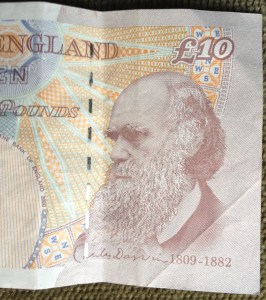
Darwin is extinct, it seems.  At least in the UK.  Perhaps I ought to explain.  I do not travel to England often, and I’m not always good about changing cash before I go.  Usury doesn’t sit well with me, and someone taking a cut just because I have to travel (usury actually doesn’t sting so much when you make a trip by choice) seems unethical.  When I discovered I was required in Oxford, my wife suggested I take some cash.  I went to the attic and rummaged through papers from a trip sometime within the last decade (my passport is still good, so it had to have been in this time frame), and found some ten-pound notes with Darwin on them.  They didn’t smell bad to me, so I said “I’ll just take these.”

I suspect that, like most people, I keep a pocketful of change as a souvenir when I travel to foreign shores.  So I had a few bank notes that hadn’t seemed worth changing back at the time.  Bread cast upon the waters, and all.  I had to make a small purchase in Oxford and the clerk said, oh so politely, “That’s old money, I’m afraid I can’t accept it.”  Interesting.  I had no idea money had a sell-by date.  She said “The bank will change it for you.”  Banks handle all kinds of money.  I walked to the nearest bank and the polite young man (all the bank tellers carry tablets here, like iPads at the Apple Store) told me that banks don’t do that service unless you’re an account holder.  “The good news,” he said, “is that the post office will do it for you, and it’s less than 300 metres from here.”  I was up to a 300 meter walk, so I went.  The British post office isn’t just a place to mail letters, I knew from living here years ago.  The woman at the counter frowned.  “I don’t know why banks send people here,” she said.  “We can’t exchange pounds for pounds.  I can change it into dollars for you.”  Of course, there was a charge to do so, just as there was a charge to change the notes from dollars to pounds in the first place.

Sadly I handed Darwin over and received American faces in turn.  Such is natural selection.  Ironically, just a few days ago I was at a farmer’s market (in the United States).  The man next to me received a silver note in change—he commented that these bills are somewhat more valuable than a standard Washington.  They are still accepted however, as legal tender.  In fact the last time I went to a US bank to turn in change, the bank officer looked at some very eroded coins and said, “As long as I can verify it’s US currency I can accept it.”  I still find occasional old coins in circulation.  Updating currency and then charging for having old money seems like it ought to count as usury.  But then, perhaps my ethics are simply outdated. 

Whose Bus? Omnibus!

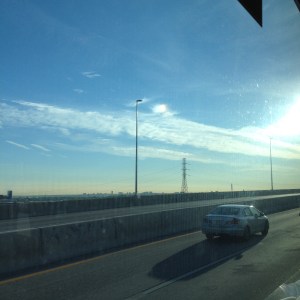
The long-distant commute is an extended social experiment.  Although some of the people on the bus know each other—from overheard conversations while in line it’s clear that many of these commuters go to New York daily—they want to sit alone.  The idea behind a bus, short for omnibus (Latin, “for all”), is essential equality.  When I commuted daily from central New Jersey, I was a passenger from the originating city on the route.  By the time New Jersey Transit buses got to New York it was rare for a seat to be empty.  Now I take TransBridge, a bus line that operates out of Bethlehem.  The buses are much nicer, but I’m no longer from the originating town.  By the time the bus arrives at 4:30 a.m., it’s already half-full.  (Half-empty if you’re an optimist.)  That’s not a problem, of course, but the way people claim territory is.

Typically those who get on at the initial stop sit in the aisle seat, place their bag in the window seat, and do their best to fall asleep before reaching my stop, which is only 15 minutes away.  When you go to get on, in other words, there are almost no seats and the happy, dreaming commuter knows you don’t want to wake him or her to get them to move their bag and let you in.  Like most people I’d like to have two seats to myself—who wouldn’t?  But the fact is the bus will be full and these people who do this every day should know that.  But still they try to block others out.  As a social experiment, it is worth some consideration.  If you put your bag in the aisle seat it’s easier to accommodate the person who’ll inevitably sit next to you.  But this is Trump’s America—everyone for himself.

I’m a fairly quiet person, and I don’t want to disturb anyone’s slumber.  Many people not only sprawl out like they’re in bed at home, but they wear dark glasses and headphones so that you have to nudge them to get their attention.  Then they act as if you’ve insulted them.  Or they’re doing you a favor by letting you sit in “their” seat.  I suspect the fact is that none of us wants to have to go so far to work.  And I know that sitting next to a stranger can be less than ideal.  When I buy my ticket, however, I know that I’m opting for an omnibus, and those who do so should be clear on the concept before handing over their money.  Or maybe I’m just dreaming.


On Target

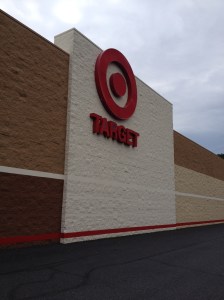
Time, especially weekend time, is a non-renewable resource.  Since I barely have enough time as it is, I do my best not to squander it.  Yesterday we had to visit our local Target—we don’t buy at WalMart because there’s an ethics even to shopping these days.  When we got inside it was obvious that a lot of people had the same idea.  I’d never seen Target so crowded, and I’ve been in one on a Christmas Eve.  We had only a small basket of purchases, so before long we headed for the checkout and saw an enormous line.  Not being afraid of tech, we went toward the self-checkout and found that line long as well.  Long and not moving.

Soon it became clear that all the registers were down.  Store employees were handing out free bottled water and snacks, like airports used to do with cancelled flights.  We were in for a good long wait.  When we finally reached the register, which had started to come back online, the manager was helping those trying self-checkout.  Since the system was still not really functioning, you could check out one item at a time—after several tries, each time requiring the manager to enter his pass-code—and pay for it and restart the process for the next item.  We asked about the outage.  He said it was global, all Target stores were down.  “You’ll have a story to tell,” he said.  My mind was actually going toward technology and its limitations.  How much we rely on it.  Without tech this blog would not be.  A lot of famous people would be unknown.  How would we find our way from point A to point B?  Or look up a phone number?

The internet is beguiling in its ubiquity.  We use it almost constantly and it’s always there for us.  So we’ve come to believe.  In addition to spreading the tissue of lies that is the Trump administration’s agenda of using post-truth as a means of power, it must be supported by a whole host of experts—those 45 routinely dismisses as irrelevant.  Clouds were gathering outside, and I had a lawn yet to mow before the day was out.  Indeed, my wife and I had intended this to be a quick trip because weekends and sunshine are a rare mix.  As we bagged our six items and thanked the manager, we could see the line still snaking the length of the store.  Had we more time we might’ve come back another day.  Instead, we had briefly fallen victim to something that an old-time punch register might’ve solved.  And a time when the pace of life itself was just a bit slower.


Taking and Giving

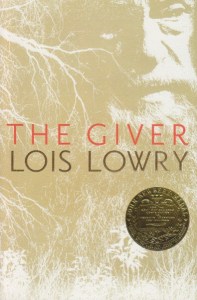
Dystopias are among my favorite kinds of literature.  Things tend to go wrong in human society, and although we’ve made great progress over the past couple of centuries, in many ways we’ve set ourselves back.  Dystopias are searching, thoughtful ways of addressing that slippage and they warn us of what me might become.  (Especially if Republicans remain in power.)  Lois Lowry’s The Giver is young adult literature, but I’ve been curious about it for some time.  Set in an undefined time and place, a highly structured society exists where things seldom go wrong.  There are no animals and people take pills to eliminate “stirrings” so that sex won’t complicate relationships.  Families are constructed by algorithm and children are assigned from a pool so they will match expectations.  In order to continue this bland lifestyle, memories have to be repressed in the person of the Receiver—the keeper of communal memories.

At first things seem pleasant enough.  Life, however, lacks color and music.  It lacks emotional engagement.  Those who, in real life, idealize the 1950s as before the madness of the sixties began, have trouble conceiving of how societies go wrong.  The dilemma is that no society is perfect and as time goes on we look for improvements.  For a very long time in American history, for example, nobody had bosses.  The majority of people were independent farmers.  They prospered by luck and hard work, but they worked for no one but themselves.  Now we mostly work for bosses who have bosses who have bosses in some kind of endless regression of power.  Our ability to change things is quite limited, even in professional positions.  Is this better than the uncertainty of farming?  With all the rain this year it might seem so.  Of such things dystopias are made.

The Giver follows a protagonist, Jonas, who when he becomes twelve is assigned to become the new Receiver.  As he gains memories of how things used to be, he’s fascinated.  Learning his society’s darkest secret, however, spurs him to try to make a change.  A lot of questions remain at the end.  (The novel is part of a series, as most young adult fiction tends to be, but it can be read as a stand-alone story.)  Those of us who’ve been around the block a time or two might be able to guess where this is going, but for younger readers to be introduced into the way of human problem solving this is a gloves-off approach.  Those accustomed to dystopias will find themselves in familiar territory.  As will those who live under Republican regimes.


Let It Lie

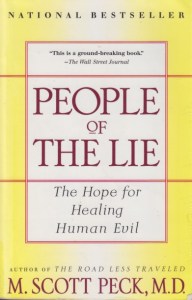
At the grave risk of over-simplifying, the list is brief: destructive scapegoating behavior, intolerance of criticism, concern with public image, and deviousness.  These characteristics, back in 1983 (note well the next year), were widely considered the description of evil.  Now look at the White House.  What do you see?  I know that I’m reading into the current situation, but how can one not?  I have never read anything by M. Scott Peck before.  Growing up I saw The Road Less Traveled on many, many bookshelves of friends and clergy.  I recently picked up Peck’s People of the Lie because, along with Malachi Martin’s Hostage to the Devil, it convinced many in my generation that demons actually exist.  At the time, still pretty much a Fundamentalist, I didn’t require any convincing.  Reading Peck’s People, however, in the era of Trump is a frightening thing.  And not just for the politics.

I always find books by psychologists and psychiatrists difficult to read.  I admit to having had a less-than-ideal childhood, and although self-healing is possible such books make me think I should spend my free time in therapy rather than writing.  In any case, People of the Lie is difficult in another respect as well—the labeling of evil.  Peck advocated for the scientific study of evil.  Good and evil, however, have generally been considered values rather than facts.  Science studies the latter while religion and philosophy deal with the former.  Not that lines in the sand are intended to be permanent.  Still, what one person calls evil may not be what others call evil.  Peck focuses primarily on narcissism and laziness as sources of evil.  He may very well be right, especially with the narcissism aspect, but some of the patients he described certainly didn’t seem evil to me.

Many aspects of this book could be discussed on a blog like this.  No doubt many of them will be, in sublimated form, in future posts.  Books, however, are part of the context in which they’re read.  In Peck’s day, the great political evil still fresh in many minds was the Vietnam War.  Today’s world, however, is one where Vietnam, Watergate, and even to a great extent the tragi-comedy of the W administration have all been eclipsed.  The cult of personality headed by one of the most obviously narcissistic individuals this nation has produced makes what Peck labeled “evil” seem perfectly normal.  And those who have the authority to do something about it either sit idly by, or worse, use it for their own means.  Roads less traveled indeed.


Targeted by Technology

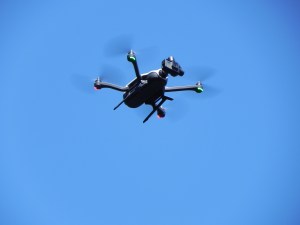
We get along in life, I believe, by routinely ignoring the rather constant dangers that surround us.  Oh, we’ve taken care of the larger faunal predators, but we’ve replaced them with ourselves.  Our success as a species leads us to places we might not be comfortable being.  I was recently exposed to the documentary National Bird.  It’s about drones.  Not the friendly ones from Amazon that we hear will soon be delivering books to our doorstep, but the military grade kind.  I first became aware of how pervasive the military use of drones is while reading Wired for War (on which I posted here some years back).  The difference between that academic knowledge and watching the documentary is the human element.  Drones are assassination machines with high explosives and they are subject to no regulation.

Many of us feel, occasionally, some level of discomfort with how much information “they” have on us.  We don’t even know who “they” are or what they want.  Using the internet, we give them our information.  Caving to our desire for instant communication, we carry around smart phones that know where we are constantly.  Martin Luther once said you couldn’t stop birds from flying over your head, but you can prevent them from making a nest in your hair.  It’s becoming harder to shoo them away.  The nest is well established.  Our houses are easily found on Google maps, and drones can keep constant watch, like weaponized guardian angels.  Only they’re not our guardians.  As National Bird makes clear, drones kill civilians.  Women and children.  The conversations of the operators reveal how much they’ve bought into the jingoism of the “war on terror.”  The film also deals with the human cost of those who operate drones.

Technology stands to make life better, for some.  Watching people who have very little, who live in what would be considered poverty in this part of the world, being bombed by people remotely, is disturbing.  The operators, trained as if they’re playing a game, kill and then have to deal with it.  The use of tech to try to sanitize brutality was dealt with decades ago on a particularly famous episode of Star Trek appropriately called “A Taste of Armageddon.”  Rather than try to resolve conflict we, like those of Eminiar 7, readily accept it if it’s kept at a distance.  Only drones aren’t science fiction.  We’ve been using them for over a decade now, and we prefer not to think about it.  This isn’t an option, unfortunately, for those who’ve been targeted by technology.  The predators are still out there after all.


Tyranny of Plants

Notwithstanding what I wrote yesterday, there is a tyranny of plants.  Specifically those which make up lawns—in my case, mostly weeds.  A friend recently reminded me that weed is just a name for a misplaced plant, and I confess that I’m fine with weeds but neighbors may not be so open-minded.  Non-conformity is still a virulent stigma.  If an observer from outer space were to observe us during the spring and summer, they might well conclude that we were in the service of our yards.  The irony here is that yard care is perhaps the ultimate sign of success.  You have really made it if you can keep it neat and trim.  And you’ve excelled beyond that if you can pay someone else to do it for you with their tractor full of buzzing implements.

Because I’m concerned about fuel consumption, we purchased a reel mower when we bought our house.  I never mowed the lawn as a child.  First we rented, and when a stepfather came into the picture he didn’t let the kids mow.  (It wasn’t to be kind—it was a control thing.  If he saw a snake he’d race across the yard to dismember it.  More than once I’d be out playing only to find snake suey, with flies.)  College at Grove City involved carefully manicured lawns done by others, and after grad school we lived on campus at Nashotah House where the students cut the grass.  From there it was back to renting.  In other words, I never had the opportunity to learn how to mow lawns.  My lines aren’t straight, and I’m tempted to sneak out at night, when the grass is high, and leave crop circles at which the neighbors might wonder.  I don’t like being a slave to plants.

The reel mower is like pushing the grim reaper in a baby carriage.  Or at least it must seem so from the perspective of the grass and weeds I call my lawn.  The suddenness with which constant lawn care becomes a major concern has tightened my focus on the fealty we owe to ground cover.  We’ve had a break from the rain for a couple days and after work I find myself pushing that mower like a deadly thurible, releasing the scent of newly shorn grass.  Our particular town retains the right to fine those who let the grass get too long.  As I go along cutting back both grass and weeds indiscriminately, I wonder at the biblical nature of even this.


World Environment Day

Do you like where you’re living?  Planet earth, I mean.  Today is World Environment Day.  It’s not enough of a holiday to score time off of work, but it is well worth observing nevertheless.  More than that, it’s vital.  Other holidays tend to be the decaying remains of religiously appointed observances or sops thrown to the Cerberus of patriotism, but World Environment Day impacts every one of us, all of the time.  Whether sleeping, waking, working, or playing, it’s in the context of the one planet we have.  Even those in space have to check in here to survive.  We might try to make World Environment Day an international holiday, but I’m sure we could never all agree to it.  Business would collapse if everyone took the same day off, all at the same time.  Instead we’re left to dream.

I recently watched The Lego Movie.  Although released in 2014 it perfectly anticipated 45 with “President Business.”  Overlooking for a moment that Legos represent big business, the film underscored the problem: the only thing hard enough to cut a diamond is another diamond.  And the only way to fight business is with business.  Perhaps there aren’t enough people to envision what life could be like without the constant stress of having to make more money.  It’s a sickness, really.  But it’s a pathology we worship.  There are some abysses, it seems, into which nobody dares peer.  Who doesn’t want to be in charge?  And those in charge care nothing for Mother Earth.

We have spent the past two-plus years watching helplessly as the Republican Party has done its level best to lay waste the planet.  Rolling back and abolishing environmental initiatives deemed detrimental to “business,” these are folks who need to feel what it’s like to lose a job or two and have to reinvent themselves.  Not that long ago, most of the humans on this planet lived on farms or supported those who did.  Daily in touch with the planet in a literal way that those who mow with industrial, sit-down lawn helicopters can never be—how can you be in touch when your feet never even meet the ground?—they knew that paying attention to the planet is crucial.  But that’ll have to wait.  It’s a work day, after all.  And a Wednesday, no less.  In the middle of the week-long worship at the altar of Mammon.  Still, I urge you to take a moment or two today to consider how to save the only planet we’ve got.  It’s worth celebrating.


Trees and Cities

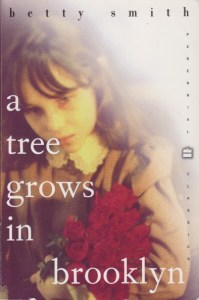
Some years ago I decided I’d read A Tree Grows in Brooklyn.  I had no idea what it was about, but I’d heard cultural references to it over the years.  So I decided to read it.  Then I saw how thick it was.  I confess I shouldn’t do this, but when I sign up for reading challenges, I want to make sure I can finish them.  Books tipping the scales at over 400 pages make me nervous.  Although I work with books, I’m a slow reader, and I panicked when I saw the size of Betty Smith’s ouvre.  All of which is to say that I’ve finally done it.  I’m glad I did, although, as someone who grew up in quite humble circumstances, with an alcoholic father, some of the story hit pretty close to home.

What really stood out, however, was how women and girls were treated in the early part of the last century.  They couldn’t vote.  Full-time work was often difficult for them to find, and when they did it didn’t pay well.  Francie Nolan, however, overcomes this because she’s smart, driven, and literate.  Her reading ultimately rescues her family after her father dies prematurely.  I’m certain there are other messages in this novel.  Other lessons to be learned.  Reading is nevertheless a great takeaway from any book.  As a symbol of its time, Francie learns to read from the Bible and Shakespeare.  These days that combination can get you into trouble.

Perhaps the most disturbing part of the book, for someone who writes instinctively, is that Francie gives up her writing in a deal with God.  When her mother goes into labor and Francie fears she’ll die, she makes a bargain that, strangely, she doesn’t seem to regret too much at the end of the story.  Some of us find writing as natural as breathing or eating.  I can forget to do both when I’m thoroughly into the zone.  I can’t image having that taken from me.  Smith notes that as she reflects on her unholy deal with the Holy One, that she now better understands God.  Indeed, in a kind of Kierkegaardian moment about halfway through she declares she no longer believes in God at all.  Her teacher doesn’t understand her writing.  Ah, but that’s a familiar dilemma to those of us who dare to attempt this craft.  For its size, the book was a fairly smooth read.  It took several weeks, but I learned about myself as a writer, and that makes it worth it.


Fear of Religions

There’s a narrative of fear in Christianity that seems to have been absent at the beginning.  This is evident when driving the highways of America where you’ll see billboards (which are meant for selling things) advertising the truth of a kind of biblical Fundamentalism.  On my recent trip across Pennsylvania this fear stood out in some rather obvious ways.  And it doesn’t reflect the Christianity reflected in the Good Book.  Stop and think about it: although the persecution of early believers was probably never as widespread as the usual narrative says it was, the writings we have describe facing persecution with joy.  Believing that they would be delivered, the oppressed welcomed the opportunity to prove their faith.  The Chick tracts I read as a child, however, focused intently on how scary the future persecution would be.  Fear, not joy, was the motivation for belief.

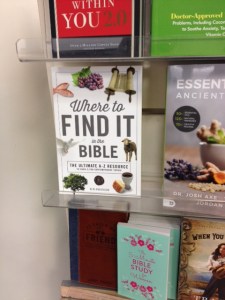
As we stopped in a turnpike rest area, we noticed a kiosk of Christian books amid snacks both salty and sweet.  The only other reading material available had to do with tourist attractions and finding directions.  It was, upon retrospect, odd.  Pondering this I recalled the narrative I heard repeatedly in my youth—a time was coming when it would be illegal to be Christian.  There would be persecution and the only proper response was a faith borne of fear.  This was not a religion of love thy neighbor.  No, this was a religion of armed survival based not on turning the other cheek, but on asserting itself with a show of firepower.  This kind of weaponized evangelicalism has taken over the narrative of Christianity.  Paul of Tarsus, knowing he would likely be executed, wrote of his joy from prison.  In the land of plenty we tremble.

The more cynical side of my experience suggests that politicians—who have learned that fear gets them elected—found in this form of Christianity a convenient set of sheep without a shepherd.  There’s fear in these billboards.  Fear that another religion may take over.  Or that secularism may make cherished beliefs illegal.  This isn’t cause for celebration, as the sermon on the mount proclaims it should be, but rather a call to arms.  In this country we have more than enough.  Among those left out, however, this fear grows just as rapidly as among those who fear they may lose the abundance they have.  They try to convert the weary traveler whose eye is drawn to the billboard.  And even those who stop for a drink of cold water which, the Bible suggests, should be freely given.


Mere Humanities

Categories, while necessary, can be troubling things.  One place to see this clearly is in academia, which is itself a category.  In the long history of deciding what counts as a legitimate job (you can make a living now being a YouTuber!) somewhere in the Middle Ages, based on the idea of the monastery, the university arose.  This required some justification—people are to be paid for researching topics and teaching others to do the same?  Not quite back-breaking labor, but it can lead to lumbago nevertheless.  Topics had to be worthy to permit this excused absence.  Law and theology were the earliest majors available.  Hobbes’ two swords.  Church and state.  This makes sense since monasteries were all about obeying rules and obeying God.  Theology was the queen of the sciences.

Perhaps unbelievable in today’s world, it was thought that other topics than theology—called humanities so as to distinguish them from divine discussions—should be added to the curriculum.  These were topics that the educated were expected to have mastered, and they included things like history and, yes, mathematics.  In the early days the building blocks of science (such as math) were considered humanities.  Theology wasn’t.  The Reformation complicated things because now there were lots of theologies.  And this thing called the Enlightenment was suggesting that they were all just a bit naive.  Still, universities grew up around theological training grounds, including places like Harvard, Princeton, and Yale.  Slowly, however, theology began losing relevance and became more and more a humanities subject.  Call it a strange form of incarnation.

By the time I became aware of theological study, it was firmly, and deeply a humanities subject.  Often called “religious studies,” other academics often considered it a throw-away major, but if you dug deep enough you found yourself learning dead languages that even a scientist couldn’t comprehend.  When I began attending a Christian liberal arts college, it was clear the engineers and others of what would come to be called STEM topics were given preferences.  Science, Technology, Engineering, and yes, Math.  Some of the subjects that had started out as mere humanities, now received the praise (and cash) while theology—religious studies—had become a purely dispensable humanities topic.  These days humanities majors are dropping like theologians, and going to university means preparing for either business or science-based careers.  Subjects in which you make more mere money.  And one of the founding subjects of this entire enterprise will earn you a starting salary position at Walmart.  And that’s a category worth avoiding at any cost.

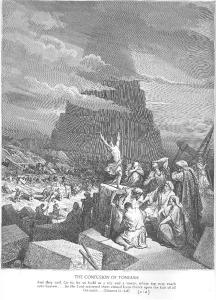
Photo credit: Ben Schumin, Wikimedia Commons


Thunder Towers

It sounded like brontide.  The Martin Tower, the tallest in the Lehigh Valley and once corporate center for Bethlehem Steel came down yesterday morning.  Completed only in 1972, the following decade saw the collapse of the steel industry, and the building has sat vacant a dozen years.  Now it’s gone.  The reasons the building could no longer stand are many and I won’t try to explain them as if I understood.  The fall of the tower, however, put me in mind of human folly and the belief that corporate profits will only ever grow.  Capitalism is built on a set of myths that the wealthy truly believe—I suspect many others do too, otherwise the system couldn’t possibly last.  Adam Smith may have been right academically, but in reality humans are greedy, venal, and shortsighted.   At least those who “rise to the top” are.

We didn’t move to the Valley for the steel.  Having settled in New Jersey just about when the Martin Tower was abandoned, like many other displaced academics I was looking for a job.  There were cities in the Midwest—we weren’t far from Milwaukee or Madison—but there was no work.  If you’re “overeducated” your best bet is to settle near a huge metropolitan area, as closely as you can afford to.  Then hang out your shingle.  Capitalism, however, has made New Jersey affordable only for the excessively wealthy.  Besides, I was born within the imaginary lines that we call the Commonwealth of Pennsylvania.  In fact, when I got my license transferred last year the computer asked me if I still lived in Venango County, where I was born.

I didn’t see the tower come down.  It’s not visible from my house, but it was always right there when I drove to Lowes to pick up some necessary hardware to survive in this area.  (Weed-whacker and lawnmower—reel variety.)  My mythology of towers always takes me back to Babel.  In the biblical worldview towers were a sign of arrogance.  God seemed to think they were trying to invade divine turf, and so he made it so we could no longer understand one another.  There hasn’t been a moment’s peace since.  We build towers tall to show what we can do.  We don’t really need an angry deity to come down and confuse our language any more.  We’ve got capitalists and their excess money to lead the way.  The sound of thunder roared and I divined just where such leadership will guide us.


Mother of Stone

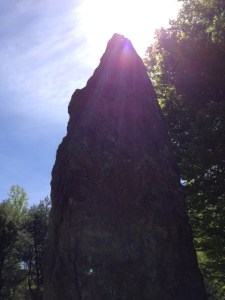
One thing we all have in common is mothers.  Whether it’s the mysteries of biology or something more spiritual than that, the connection lasts forever.  The thought occurred to me yesterday as we visited Columcille, one of those places that reflects a vision for a piece of land that transforms the ordinary into sacred.  Columcille Megalith Park is inspired by the standing stones of Celtic lands.  Open to the public for a suggested donation, the park consists of a stone circle and several menhirs (megaliths) arranged along paths through the woods.  Recognized by the Nature Conservancy as a sacred space and outdoor sanctuary, it draws thousands of visitors of all faiths with both recreational and religious rationales.  Throughout the park we found evidence of spiritual interaction with nature left on or near the stones.  But what has this to do with mothers?

One of the areas in the park is the Sacred Women’s Site.  As we lingered there yesterday, I reflected on the sacred nature of all women, and mothers.  That’s not to suggest that motherhood is for all women, but rather that our society has been slow to catch up with the idea that women show us the way.  Men have “had charge” for millennia now and look at where we are; cooperative ventures and peacekeeping efforts crumble as world leaders encourage the resurgence of exceptionalism.  We’d rather have an inveterate liar lead the nation than a politically able woman.  Britain wants to pick up its marbles and let the European Union disintegrate.  We seem to have forgotten that just a century ago a world war ended.  We need sacred spaces like Columcille.  We need to remember the sacred women.

One takeaway from our brief visit was that although there was also a grove for sacred men, that of the women was more peaceful.  The idea of standing stones making a site sacred goes back at least to the Bible.  Stone circles are found from ancient Israel to the far-flung Orkney Islands of Scotland.  Standing among them, whether modern like Columcille or ancient like the Ring of Brodgar, or yes, the more famous Stonehenge, there is a sense of sacred purpose.  Miles from Stonehenge stands Avebury, a town built around another stone circle.  There the megaliths were divided between female and male stones, with both required to make the ring complete.  Such places require a tremendous amount of work.  When they’re constructed, however, they give us places to think of mothers and the mystery of life.


Dandy Lions

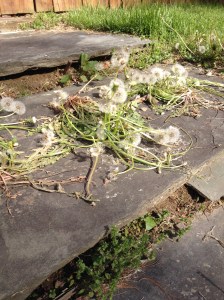
O great—just what I need right now.  I knew lawn care would soon become a necessary avocation after buying a house, but this I did not expect.  Over the weekend I found myself pulling up dandelions that were growing out of cracks in the front steps.  Since we compost, I laid them out on a slab, figuring when they dried out I could make them into more soil.  (From which more dandelions will grow, I know, but still it just feels right.)  I came back a day later to find that the dandelions had returned to the vertical position.  Zombie dandelions!  They apparently couldn’t stay dead.  Now, I’ve been writing about demons for the past several months and I’d forgotten about zombies.  Well, I did post about resurrection on Easter, but my short-lived digression left me unprepared for this.

Really, the persistence of life is a sign of hope.  Perhaps dead zones, such as morality in Washington DC, will someday come back to life.  There’s hope for a tree, Job tells us, even if cut down.  These dandelions were a message for me.  Don’t give up.  Prior to religion being hijacked by theology it was a system intended to make life better for people.  Human beings were more important than heretical thoughts.  You help those who need it, regardless of what they believe.  Or don’t believe.  That was the point behind resurrection, I suspect—we can rise above all this dirt in which we find ourselves.  There’s a nobility to it.  Then again, fear trumps hope just about every time.  The dandelions are rising and we have no hope of outnumbering them.  

The ancients feared the dead coming back.  It’s a primal phobia.  All those things we buried with tears we hoped would stay the way we left them.  Life, as Malcolm says, will find a way.  Politicians, it seems, will find a way around it.  Call it executive privilege or whatever you will, the end result is the same.  The yellow-headed fuzzies will threaten you even when uprooted and left to dry in the sun.  Now, our lawn isn’t pretty.  Grasses of different varieties contend with weeds I’ve never seen before for scarce resources.  I’ve never minded dandelions.  They don’t ask much, only they now seem to be demanding the right to come back from the compost.  And if we let that happen, all hope is lost.


No Animals Harmed

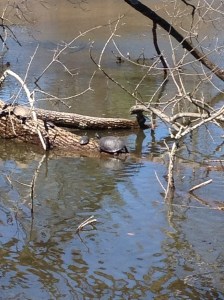
Out for a walk after work the other day, I spied a black cat.  Not the superstitious sort, I didn’t let this deter me from continuing on.  Then I noticed that it was a mere three or four feet from a ground hog that was just as large as, if not larger than, the cat was.  They were staring at each other, weighing their options.  The ground hog didn’t appear too concerned.  Then a rabbit hopped up, on the other side of the cat.  A perfect syzygy of fauna that remained still for a moment in a tableau of nature.  About the same time as the cat noticed  the rabbit, the rabbit noticed it back and quickly hopped away.  The cat crouched and slunk after the bunny and the woodchuck ambled off at its own pace.

Not only was this conjunction an odd combination of three species of mammal—four if you count me—but it was such a conscious interaction that I had to think of it as almost human.  Three very different individuals, probably all with eating on their minds, had to assess how to interact, wordlessly.  As far as I could tell the drama ended amicably.  The cat looked well fed, in any case, and the rabbit far outdistanced it from the start.  Chuck was unconcerned.  Although the hard line still exists in science, drawn between ourselves and our fellow animals, I’m convinced that they have a share of consciousness.  We’re told that they’re mere “machines” following instinct.  These three “machines” along the trail were sure acting like they were thinking.

What are they thinking?

As the situation played out, no violence ensued.  Three individuals out enjoying the spring happened to find themselves in a scenario that called for negotiation.  The cat, like Republicans, felt compelled toward aggression, I should imagine.  It had a choice: take on a larger, more worthy foe, or turn its attention to the weaker, more vulnerable prey.  Naturally, it turned toward the weaker of the two.  There were differing agendas at play here, and with a dose of consciousness added in, these critters behaved so like human beings that I felt compelled to share it.   The ground hog and rabbit looked on the situation with some wariness.  They thought about it, and each took the prudent route to safety, for the time being.  Nature, it seems, will find its balance if we let it.  And we, if we would acknowledge it, still have something to learn from nature.