Kids These Days

I couldn’t have been an easy kid to raise. As a teen, while other kids were experimenting with drugs and sex, I started an unexpected habit. I can’t remember why or how it happened. I was the son of a professional drunk and a high school dropout. (Step dad worked in a sewage plant, so that likely wasn’t it either.) Somehow I’d discovered classical music. It wasn’t through records we had at home. If the artist didn’t have Cash or Twitty in their name you were probably tuned into the wrong station, buddy. Since this was before the internet it must’ve been something I heard on television. On Saturdays I’d beg to go to the Oil City Public Library where you could borrow LPs. I’d check out five at a time, and listen to them with headphones on at home. The general opinion in my neighborhood was that this was snob music and other people didn’t want to hear it.

One of the pieces I discovered was Tchaikovsky’s 1812 Overture, (officially The Year 1812). This particular recording began with a chorus singing the Russian hymn, in English (hey, I was just learning!). Although I loved the bombastic ending (what boy wouldn’t?) I was haunted by that hymn. I paid no attention to the conductor—I couldn’t tell a Stravinsky from a Stokowski—so I memorized the albums I liked by their cover art. As a teen I had no idea things would ever change and that one day I’d be downloading music instead of carefully, lovingly pulling it out of a colorful sleeve, breathing in the experience.

Russia’s been on a lot of people’s minds lately. I have a great deal of respect for the Russian people. There’s a stolidity and pathos there that is rarely captured in any national music. I longed to hear that recording again. It took the better part of a day searching the internet to find it—I could walk right up to it in the Oil City Public Library four decades ago and put my hand on it. Those days are gone. When I finally located it on YouTube (Eugene Ormandy, Philadelphia Orchestra, in case you’re interested) I couldn’t stop listening. Not only did it take me back to my fractured childhood, it also made me feel a deep connection for a nation that probably looks at my own with great and earned distrust. We all need to learn to look at ourselves from the outside. That hymn! Listen to the words. I could imagine myself being oppressed by people I didn’t know and who had no reason to hate me. Unto our land bring peace. Amen.



Bearing Light

Jeffrey Burton Russell knows a devil of a lot about the Devil. I’ve just finished the third of his five books on the subject, Lucifer: The Devil in the Middle Ages, and I certainly learned a thing or two. As someone who considers himself an historian of religion, being exposed to a concept over several volumes has a way of making me feel humble. The theme of this series, at least so far, is that the Devil is a conceptual way of dealing with evil in the world. In the days of polytheism a single source of evil wasn’t needed, but no matter how you slice it, monotheism implicates God in the fact of evil in the world. The Devil is one way to try to lift some of that burden from the divine shoulders.

Lucifer is an interesting installment because ideas of the diabolical really took off in the Middle Ages. Russell’s previous volume, Satan, became heavily theological and there’s a bit of that here as well. While there’s no doubt some average people in the Dark Ages tried to figure out where Devil came from, the officials sponsored by the church were those whose ideas were written down and preserved. Those ideas, unsurprisingly, were theological and complex. Scholasticism, which began in the Middle Ages, launched what was to become known as systematic theology in the modern era. Among the many topics with which it concerned itself was the Devil, and evil. Ranks of angels, both fallen and un, peopled the atmosphere. Galileo’s perspective would eventually change this cosmology by making it both simpler and more complex at the same time. Lucifer, however, still survives.

One of the stranger developments of the Devil in this time period is as a form of light relief. The idea of plays (which had been around since classical times) also took off in the Medieval Period. In these plays Lucifer and his demons often took on a comical cast. Even when the tone was serious (and what morality play isn’t?) the Devil could be used for laughs. An incredibly rich mythology had been adopted by the church at the time—think Star Wars with more religious characters—that assured the laity that Satan’s doom was sure. Besides, we like to make fun of the things we fear. Think Washington, DC. Now that I’m halfway through Russell’s oeuvre on the subject, I’m curious where his next volume will go. No matter how much you think you might understand evil, as we’re daily finding out, there’s always so much more to learn.


Hypocrisy, Defined

Things look pretty Stormy in DC. I suspect my Republican background is showing when I say I don’t condemn sex workers. If they’re not exploited and they like what they do, hey, a job’s a job. The evidence, of course is that Trump had an affair with Stormy Daniels when his wife was recovering from the birth of their son. And hush money was paid right before the election. This is public knowledge. What I find interesting are the responses that Republic congressmen have been giving journalists. In a recent story in the Washington Post, various congressional leaders of the GOP were asked if Obama had been caught in such a situation would they have pursued impeachment. “Of course,” they answered. When asked why this didn’t apply to Trump, they simply shrugged. There’s a word for that.

Hypocrisy may seem like an old-fashioned notion these days. Indeed, when I was growing up I frequently heard it from Fundamentalist pulpits. It was considered, along with lying, to be about one of the worst sins possible. Now Fundamentalists are lined up behind Trump (who’s lined up behind Stormy apparently) and saying all of this is just fine. The Lord’s will is being done. Moderate Evangelicals are scrambling to find a new label for themselves, for their vaunted title has been taken by a party that will condone anything as long as rich white men benefit. Cheat on your wife while she recovering from giving birth? That’s the new Fundamentalist way! Congressmen, it seems, don’t want people to look too closely into such things. My, there’ve been a spate of recent retirements lately, haven’t there?

I grew up and grew away from Fundamentalism. Although it seems counterintuitive, this sharped my moral sense considerably. Poll after poll shows that actual morality, according to Fundie standards, is more often lived by liberals than conservatives. Divorce rates are lower, for example, and we tend not to own guns. So, even when the skies over the Potomac are growing stormy, the elected officials of God’s Own Party smirk and say, “Doesn’t the Bible command you ‘Love thy neighbor’?” They take it literally, of course. And it’s just fine that the leader of the free world exploits women. Many of these same people gathered to condemn Bill Clinton for loving his neighbor in the blue dress. Hypocrisy was a bad thing back then. “I did not have sex with that woman,” became a mark of national shame. Now presidents brag of grabbing women by their private parts and the Republican Party claps its hands and says, “Hypocrisy? Never heard of it.” Does it look like another storm to you?


Signs of the Times

America’s phallic affair with guns should give us pause to wonder what the true motivation is. My wife sent me an NPR story on the World Peace and Unification Sanctuary in Newfoundland, Pennsylvania. Congregants gathered carrying AR-15s, saying that the Bible’s rod of iron was really a semi-automatic. Did I say it was a phallic affair? According to the story by Scott Neuman, some of the faithful had substituted the crown of thorns for a crown of bullets. Literally. That man dying on the cross because of government overreach, I suspect, wishes he had his hands free so he could rub his eyes. He’s hanging here dying with the title prince of peace only to have grenade grannies praising his name with high explosives. This is what passes for Christianity these days.

Photo credit: Isabelle Grosjean ZA, Wikipedia

Sensible evangelicals have been in full retreat since November 2016. Stripped of their label by extremists who somehow mistake the lamb of God for Rambo, they no longer have a name of their own. Like worms on the sidewalk in the rain, there’s nowhere left to go. The same is true of rank and file Republicans. They wonder what has become of the (God help us!) party of Nixon. Watergate seems like a mere indiscretion compared to this. I’m sorry, were you waiting for Armageddon? Don’t worry, those who move the hands of the doomsday clock have shifted it closer to midnight than it’s ever been before. You’ll have your end times soon enough.

Among the ironies witnessed by the crucified one from his vantage point high on the cross is that it was his zealous followers who started all this. Religious experts tell us that all world religions depart significantly from the teachings of their founders within one generation. If you’ve read Paul’s letters you know this to be true. I grew up as a Fundamentalist. Even though for my career I specialized in the Hebrew Bible, my upbringing was focused on the red letter words of the other testament. Over and over and over again I read them. Think of others before yourself. Turn the other cheek. Walk the extra mile. Give away everything you own. The ones I don’t recall internalizing were: arm yourself with deadly force. Give your grannie an assault rifle. If someone slaps you on the cheek, blow him away. It is more blessed to destroy than to forgive. We sit beneath a giant clock with a commander in chief with an itchy nuclear button finger. Even a clock can be a crucifix, if you look at it in a certain way.


Odd One Out

The older I get, the more I realize I’m the one that’s weird. Go ahead and say it, “You’re just now figuring this out?!” This epiphany came to me on a stiff breeze. To understand you have to get the idea of commuting on New Jersey Transit. Although twice in one week my route was blessed with a brand new bus, the general operating procedure is to use the oldest, least reliable buses on my route. It is one of the longest routes the company runs into New York City, which means that it is one of the most expensive. You’d think they’d use their best buses, but then you’d be thinking like me. Breakdowns aren’t as frequent as they had been for a while, but other discomforts are fairly common. Just this past week, for instance the heat was stuck on high. Add about 50 bodies to an enclosed, overheated space, and well, let your imagination go.

Now interstate buses aren’t like the school species. The windows don’t open. There are, however, two escape hatches in the ceiling. When I got on board I noticed immediately that it was a sauna bus. The last time this happened (and yes, this wasn’t a unique situation in my experience) passengers opened the escape hatches to create a breeze. Problem was, it was winter this time. The day was struggling to reach 40 degrees outside. As we hit the highway the wind was blowing full against those in my row and I learned what wind chill really can be. There wasn’t much traffic, so the bus was tooling along at about 65. I could feel my left eye beginning to freeze up. My book pages were flapping wildly in my blue-tipped fingers. The personal nor’easter cut right through my winter coat. In my row we were lined up like eskimos, all bundled up. There were no free seats to which we might move. I couldn’t reach the hatch to close it. Nobody said anything.

Here’s where the weirdness comes in. As I child I was raised being taught that true believers think of others first. Other people may not see it, but I consciously try very hard in subtle ways to make sure others get what they need before me. I’m learning not everyone necessarily thinks that way. If I had a degree in fluid dynamics I might be able to describe airflow on a speeding bus. Instead, let me put it this way: the guy who opened the hatch was sitting in the row in front of it, out of harm’s way. The icy blast didn’t hit him, but it did everyone behind him. Passengers tend to think of themselves first. I’m sure I do, too. Just trying to get home after a trying day of work is, well, trying. It’s just that some folks try not to do things that cause others pneumonia, no matter how warm they feel. But then, I’m the odd one, I know.


Experimental Truth

Only the truly naive suppose that the government doesn’t lie. I just miss the days when they lied for what could be construed as good reasons. Now you can tell if the president’s lying simply by observing if he’s talking. In nostalgia for the days of defensible lies, and also my own youth, I picked up The Philadelphia Experiment by William L. Moore and Charles Berlitz. Before you roll your eyes too much, please bear with me. I was aware of this book when it first came out, but I never read it. My brother did and his interest has stayed with me all these decades until I finally got around to a bit of guilty pleasure reading myself. In case you don’t know the story, it goes like this:

In 1943 the U.S. Navy was experimenting with invisibility. At or near a naval yard around Philadelphia, the U. S. S. Eldridge was subjected to intense electro-magnetic fields that made it vanish. It showed up moments later in Chesapeake Bay, and then reappeared in Philadelphia. The crew aboard the ship went mad, although the experiment had been successful. Now, of course the story was denied, and still is, by the military. Moore and Berlitz track down enough clues in this book to make the event plausible. Nothing can be proven, and according to physics, this kind of thing can’t happen. Reading the account is a spot of fun amid the daily lies spewing from Pennsylvania Avenue.

There is a personal element involved in this story as well. One of the characters (at least one) uses a pseudonym. (Although the event was decades earlier than the book was written, the military has a long memory.) The pseudonym stuck out because it was Reno Franklin. The name was gleaned from a road sign from Oil City, where I went to high school. It gives the mileage to Reno, and then, Franklin (the town where I was born). Seeing my little town in a book that was a bestseller in it’s day was a strange kind of validation. Did the Eldridge really disappear one fine day in 1943? Most of us will never know. In the name of national security the truth, if there is anything actually to hide, has been classified. But that’s where guilty pleasures come in. Books like this, although they can’t be considered unvarnished truth, are enjoyable to read and vanish into a haze of a world where the Nazis ruled on the other side of the Atlantic, not over here.


Great Communicators

Perhaps you’ve encountered it too. You’re in a major city. You’re in a hurry. The person in front of you is plodding along, staring at the device in his or her hand and you can’t get around him or her. You’re being held up by technology. I just want to get to the Port Authority before my bus leaves. The late Jonathan Z. Smith called cell phones “an absolute abomination.” I wouldn’t go quite that far—my bus pass, after all, is on my phone, and I’ve been saved from embarrassing conversations on the desk phone in my cubicle by being able to walk away and find a quiet corner in a corridor where I can talk freely—but I do see his point. While technology has had many benefits, in real life it can slow you down.

A news source I recently read said that heavy smart phone users are more prone to psychological problems than, say, those people who live raw in the bush of southern Africa. Phones isolate as well as connect. Instead of asking somebody for directions, you can turn to your monotoned electronic friend and find out. What you lose is the nuance of human communication. On my first interview in New York City—I was still living in Wisconsin at the time—I was disoriented. Which way was Fifth Avenue? I asked a stranger on the street and learned something in the process. New Yorkers weren’t the rude people I’d been told to expect. In fact, I quite frequently see strangers asking others for directions. I’ve never seen someone refuse to help in those circumstances. Although I’m in a hurry if someone asks me “which direction is Penn Station?” I’ll stop and try to help. It’s a people thing.

One of the distorting lenses of a large city is the acceleration of time. Many of us depend on public transit in its many forms, and none of it is terribly reliable. Being late through no fault of your own is part of the territory in a city like New York. It’s become harder to stay on time because of smartphones, however. A few years back I saw it with the Pokémon Go release. Groups of phoners wandering around, slowing the flow of foot traffic on sidewalks that are somehow never wide enough. If only I could communicate with people! How does one do that when they’re riveted to the device in their hand? I wouldn’t say they’re an absolute abomination, but I agree with the dear departed Smith that there are hidden costs to being so connected that we can’t talk to one another. I would say more, but I think my phone’s ringing.

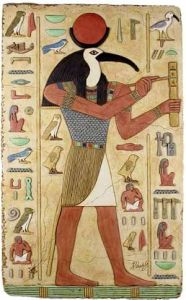
Even Thoth can’t help walking and texting.


Teaching Peace

Teachers, preferably unarmed, are some of my favorite people. While the travesty of a government muddles along in the District of Columbia I think back on my own education and wonder what went wrong. I’m sure you knew kids who hated school; I certainly knew plenty. For whatever reason they didn’t want to be enclosed in a classroom with everyone else, learning stuff for which they could see no practical application. Reading doesn’t appeal to everyone. Memories of advanced math still send shudders down my spine. And what was the point of gym class if it wasn’t to make those of us who liked reading feel bad at that awkward stage of life when you discover your body isn’t as well-made as that of others your age? Education isn’t perfect, but it’s what we now need more than ever.

There’s no way that everyone will learn to enjoy reading. We aren’t cookie-cutter people. Thinking, as my own mathematical experiences demonstrated, can be very hard work. No one person knows everything. That’s why, at least in my day, after you reached sixth grade you started to have teachers who specialized in subjects. What I didn’t realize as a kid is how hard these modern-day saints have it. Pay scales are low. Hours are long for those dedicated to being good teachers—the brevity of the school day beliefs the amount of work done after hours. Increasingly our educators have to hold down a second job to be able to survive. The least we can do is learn in gratitude.

School shootings are so tragic because many of the victims are those who haven’t had a chance at life yet. We elect uneducated presidents and wonder what could possibly go wrong. Education, if done right, becomes a lifelong journey. The day that passes without learning something new is the day I come home and go to bed depressed. More than simple evolving, life is learning. Teachers are those who set us off on that track. The young, it is true, have more flexibility in learning. There are more options open to you before your thinking gets set in its way. I ran into seminarians who, no matter how much you’d offer, had already made up their minds. No education required. Perhaps what we need to teach at the youngest possible age is that school never ends. The formal classroom experience may cease at grade twelve, the baccalaureate, masters, or doctoral degree, but the learning goes on. And it’s a good thing, not some bizarre punishment. For that teachers, unarmed, are those to whom we should be grateful. If only we’d be willing to invest in them.


Taking My Marbles

Cheaters, we were told as children, never prosper. It turns out that this chestnut never grew into a tree. Cheaters become Republican congressional leaders instead. What’s bugging me today is gerrymandering. The idea that you can change the rules even as the game’s in play is, well, cheating. We all learned how that felt when we were kids with our marbles, or cards, or pick-up-sticks. Nobody liked to be called a cheater. Now it seems to be the best path to the White House. And the standard-issue Republicans are fine with it. Me, I dream of a country where the people are free and fair. Where the rules that were established centuries before you were born can’t be changed because some lout with a lot of money says he feels the right way about unborn babies. A land where reason is real.

The idea that you can redraw boundaries to consolidate your power is even more insidious than the Electoral College. That’s a game that long ago lost its purpose, but the GOP won’t let it go because it always favors them. Problem is there will never be neutral turf again. Who didn’t have the experience as a kid of playing with someone whose luck had run out and then having them pout, “I’m taking my marbles and going home”? Who hasn’t been on the other end of that scenario? I certainly have. Sometimes it takes years to play out before things start to seem fair again. The point is, most of us grow up and most of us know the rule of law is a good thing.

The rule of law, however, has completely broken down in these Untied States. Any law can be jerry-rigged. All it takes is a mogul with a lot of money and underlings panting for handouts. Plain and simple selfishness. An American classic. There was a time, in living memory, when Watergate would sink a President. Now highly public extra-marital affairs are fine. Bill Clinton was impeached for a, well, I know the rules so I won’t say. Giving secrets to the Russians? A mere trifle. Top government posts for your family? Of course, go ahead. Using high government office to enrich you personally by gerrymandering which countries you’ll exclude from these hallowed shores? What’s wrong with that? Every step of the way the GOP wallows its filthy, cheating face in the dirt. And it wants to change the rules so it can stay this way for all time. Me, well, at least I can still dream, even if I lose all my marbles in this crooked game. It’s the American way.


Russian Along

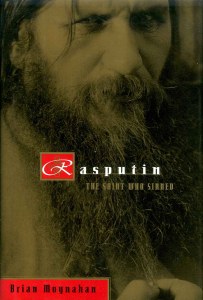
Living at Nashotah House—if you haven’t been, trust me—makes one curious about Rasputin. While on the faculty there, his name was used as a common slur. When Brian Moynahan’s Rasputin: The Saint Who Sinned came out in 1997 my wife and I bought it and read it together. Two decades on the details had become fuzzy and, having read about Aimee Semple McPherson and her faith healing reminded me of the famous Russian scallawag. For all his personal faults, Rasputin did seem to have genuine healing abilities. He was more shaman than orthodox, to be sure, and Siberia was the home of shamanism as well as Rasputin. For those who don’t know the story, in pre-Revolution Russia Grigory Rasputin rose from a Siberian peasant family to the most trusted advisor to the Empress of Russia, Alexandra Romanov. Her weak-willed husband, Nicholas, also gave credence to the mystic, despite the latter’s well known drunkenness and womanizing.

The fascinating aspect of Moynahan’s treatment is that it brings out the saintly side of this figure who’s grown such a notorious reputation. That’s not to whitewash his extreme lifestyle, but it is to acknowledge that he was far more complex than many critics make him out to be. He seems to have been sincere in his faith, and perhaps a little mentally imbalanced. He was kind to the poor, and charitable. He wasn’t a bigot, a sin quite common in his day. He was a working class mystic who took advantage of being inebriated with power. His influence over Alexandra was so strong that he could appoint Prime Ministers even in the midst of a world war. This is a fascinating personality.

Reading the book at this point in history, however, proved strangely unsettling. Many of us wonder how a rational, fairly educated and prosperous nation could tolerate the buffoons who inhabit Washington, DC. Daily we see insanity—with no exaggeration—on the level of the throes Tsarist Russia, or even of Rome under Caligula. Instead of taking steps to right the course, the Russian, excuse me, I mean Republican, Party does any and everything in its power to keep the illusion of normalcy alive. Even while foreign ministers of his own party tell the European powers to ignore their own president, American Rasputins just can’t survive without their daily power fix. The sad thing about that last sentence is that after writing it I felt as if I were somehow being unfair to Rasputin. And I lived at Nashotah House long enough to know what I’m talking about.


Panthers and Prophets

Prophetic is a word I seldom use for movies. Prophetic, by the way, doesn’t mean predicting the future. Prophecy was about establishing rightness on the earth. Dress it up with God or dress it down to a girl being shot for wanting an education, prophecy is a necessary ingredient in being human. Black Panther is a prophetic movie. I don’t keep up with comic books, and many regions of the Marvel Universe are unexplored by me. I have no idea if the comics bear the strong message of social justice that this film does, but I left the theater blown away. If those who have the power could only be interested in good rather than personal gain, what a world we could have.

The message of not making race, but humanity, central is one that we have yet to learn. It is so basic, so simple that a child understands it. Somehow world leaders don’t. Any secret advantage is kept in order to make things better for ourselves. To make us feel more secure. To put us in the place of making decisions for others. In Black Panther even the enemy isn’t evil. Humanity is it’s own enemy. We sometimes forget that we have it within our ability to make life fair and equitable. We can share what we have and end jealousy. The Gospel of Adam Smith, however, has supplanted that of Jesus Christ. Just ask the one-percent. The one percent who haven’t most assuredly seen this movie.

I had no idea what to expect when I walked into that theater, but it was nothing short of an epiphany. As it has been from ancient times, one can always tell when they’ve been in the company of a prophet. We’ve come to dislike prophets because they make us uncomfortable. They possess something we can’t have. Integrity. The dignity of the conviction of what anyone can see is rightness. Such things can’t simply be taken, crammed onto a boat, and sold. Prophets bear the burden of speaking the truth. Black Panther may be unlike most prophets in that it is reaching a huge audience. And rightfully so. It is the antidote to the poison that’s surging through the veins of this country for far too long. Even those who will dismiss it simply as another fantasy—it’s a superhero movie—need to see this vision of what a world can be. It’s not very often that a prophetic movie appears, but the days of prophecy, it seems, aren’t over yet.


Heavens Above

When things get bad down here we start to turn our eyes to the heavens. A couple of news stories in the past few weeks have encouraged such star gazing. We’ve read about Curiosity’s long look back over five years on Mars, and the possible discovery of planets billions of light years away. The thing about other planets is that we still haven’t learned how to live on our own without ruining it. Endless thoughtless “development” doesn’t make major religions rethink their declarations on birth control even as we destroy our arable land to make way for more shopping malls. People may starve to death but you can always count on the survivors shopping. Those who collect the money at the end always look so strangely familiar. Have I seen your portrait on some currency or other?

Curiosity has been five years on our most similar neighbor. Having long outlived its life expectancy, it seems to be a harbinger with an important message to tell us, if we were willing to listen. Mars is a beautiful wasteland. Some look at it and think it could become another earth. A little on the chilly side, perhaps, but nothing you can’t fix with fossil fuels and shopping venues. Who needs to go outdoors anyway? Amazon can deliver it right to your airlock. We can hurl disco balls into orbit and still pass legislation that strips basic human needs from large swaths of the population. Space, they say, is the final frontier.

At the same time we’re discovering our universe is chock full of planets. So much to acquire! Of course, with each new planetary discovery we have to think that maybe there’s life out there somewhere. Since Homo sapiens are the measure of all things—if you don’t believe that you haven’t been listening to the White House—we are entitled to exploit anything we can reach. It’s called capitalism, stupid! The assumption is that anything can be owned. And if flying saucers are buzzing around our military jets like metallic mosquitoes we say they can’t be from out there because the universe is for our exploitation, not for sharing. “Now I know,” Victor cries “what it’s like to be—“ as thunder covers that last bit. There are billions of galaxies out there, made up of billions of stars. Many of them have their own planets. Some surely have intelligent life. And we wonder why aliens don’t land on the White House lawn. Appropriately named, Curiosity sits on Mars and stares backward in wonder.


Always Have with You

The place wasn’t meant for a family of six. Properly speaking, it was a one-bedroom house, or hovel. The attic, from which we could see the sky through the roof, was divided into two rooms, with no doors. You had to pull down the stairs in order to climb up there and that trapdoor had to be kept closed in the daytime. The house was heated by a single, oversized gas stove that sat in the middle of the living room—no ducts, vents, or radiators here. The bathroom had only a sink and a toilet. No tub. No shower. The only window that opened was the kitchen window, and before we moved in my mother insisted that my step-father pull out the nails that held the vinyl blinds permanently closed over the windows that would never open. The only reason we weren’t called “white trash” is that we lived above the Mason-Dixon line.

Reading Nancy Isenberg’s White Trash: The 400-Year Untold History of Class in America was, therefore, a little bit uncomfortable. First of all, bullies who care only for the wealthy are nothing new in American politics. Second of all, it reminded me of how, when I was found without a job, no college or university wanted to hire a guy with no connections, despite the Ph.D. That’s business as usual in these United States. What I have realized is that in this nation of self-made individuals, those allowed to make it often start from a class higher than my own. I was a first generation college student, and once my step-father gave in to the pressure to put a proper bathtub in his house, I’d come home to find carp swimming in it. White trash and ivory towers clash, don’t you know.

The saddest part of this book is that nothing has changed. Four centuries on and we still treat the poor with contempt. We love rags to riches stories because they’re so rare. The vast majority of the poor have a very hard existence. Even though, according to government statistics, we were considered a poverty-level family, we had it better than many. True, there were too many cars in the driveway, all of them used—very used, and the house was bulldozed as unfit for habitation immediately after we moved out, but many have it far worse. This book opens some old wounds, but it should be required reading for all politicians. Not that it would make much of a difference, though. The suffering of the poor is just far too easy to ignore as long as there is money to be made off of anyone less fortunate than yourself. That’s the American way. It always has been.


Lent Presidents

Surely it’s appropriate that President’s Day falls in Lent this year. We as a nation, if we are wise, will repent of the horror we’ve elected upon ourselves. Those ashes on our foreheads remind us that sins come on a national scale as well as an individual. Any nation touting supremacy is in need of Lent, even if it’s founder’s day. Especially if it’s founder’s day. It’s difficult to believe that either George Washington or Abraham Lincoln would’ve truly thought the United States better than other nations. Having a secure and free place to live wasn’t an exercise in supremacy, but in the belief that people should be able to govern themselves. An Easter, if you will, of beliefs.

Symbolism is a major part of any religious holiday. The eggs, rabbits, and butterflies of Easter all represent something just as the burnt palms from last year’s Palm Sunday do. George Washington never chopped down the cherry tree—that was a story made up many years later. It was, however, a symbol to represent a truth. To represent a president who couldn’t bring himself to lie. The fact-checking statistics show that the current incumbent of Washington’s chair lies over five times a day. Listen closely here, for this is symbolism—yes, he did chop down the cherry tree. Where do you think those ashes on your forehead have come from?

An administration where supremacy is daily in the news is surely a sign of trouble. This President’s Day a national S.O.S. goes out, but to whom can supremacists call for help? They are already the greatest in their own minds. Supremacy was the hubris of Rome that eventually ensured its fall. The belief that the Roman male was the most supreme human template possible—far above women, slaves, and foreigners—was held until the day the Vandals and Visigoths came to the door. Preoccupied with its own greatness, it was an empire unable to see the symbolism clearly on display all around it. By that point it had become a “Christian nation”—a state with God’s own blessing on its white males and their entitlements. The insanity borne of excessive pride was no stranger to the seat of the emperor. Less than fourteen-hundred years later a new government would form. It’s leader so full of integrity and dignity that the common person believed he couldn’t cut down a cherry tree without telling the truth. And this year his birthday falls in Lent.


Weaponized Ignorance

Blissful ignorance. Yesterday I knew nothing of the Parkland school shooting until I went out to get the paper for my wife, just as I was leaving for the bus. My peace has been shattered ever since glancing at the headlines. How any rational being can’t see the horror we’ve created by allowing gun lobbyists to buy the Republican Party I simply don’t know. Yes, I’m afraid. Yes, I’ve thought that maybe buying a gun would make me feel safer. Then I realize the insanity fear breeds. We could, as a society, address this fear. We don’t, however, because there’s far too much money to be made by it. We become weak-kneed whenever we think of that money flowing any direction rather than into our personal coffers. Insanity? A small price to pay.

The priorities of this nation are so messed up that Bedlam looks downright civilized in comparison. Even as we’re trying to come to terms with this 18th mass shooting of 2018, Republicans are attempting to balloon an already obscenely bloated military budget. Where do these weapons of personal destruction come from, if not the military technology? We want so badly to kill the enemy, and the castoffs end up in the hands of a troubled public. A traditional firearm to protect one’s home may not be unreasonable, but an assault rifle is. It crosses the line between fear and hatred. With a White House incumbent who ran on a ticket of hate, we’re reaping the whirlwind which we’ve sown.

Fear, many don’t realize, is a gift. It preserves us from danger in many circumstances. When it rules our lives, however, it becomes a neurosis. A psychosis even. Politicians may act stupid, but they know well that fear-mongering wins elections. Study after study has shown it to be true. This is a science they don’t doubt. The ease with which guns are available to what is clearly a deeply divided and very frightened public is like a piñata full of hand grenades. This is a scenario with no winners except those who accept the power the fearful eagerly give them. This is the danger of a thoughtless government driven only by personal gain and lucre. Those faithful to the call of destruction are, ironically, often evangelicals awaiting the end times. Agents of chaos bring those giant hands ever closer to midnight. The sweep of the clock moves ever forward, and if they’re anticipating Armageddon there’s no need to wait. It’s already here.