The New Neighbors

Apartment dwellers often ponder new neighbors. If anything gives the lie to being in control of your own destiny, renting your domicile does. Still using the old, aristocratic terms landlord or landlady, we know that we are under someone else’s authority. “As long as you’re under my roof,” my bully of a step-father liked to huff, “you’ll obey my rules.” When you rent, you can’t choose your neighbors. Those who own the property have final say. If they play the stereo too loud (“game” is probably the modern equivalent, but I was born before Pong even came alone) and won’t listen to your plea for a more monastic setting, you throw yourself on the mercy of your lord or lady. We got new neighbors this week. Not just us, but the whole galaxy. Seven new earth-like planets—surely ruled by Trump-like dictators—have been discovered. Let’s hope they’re early to bed, early to rise types.

During the Bush administration I often fantasized about the aliens landing on the White House lawn. I thought, with a president so obviously lacking intelligence, what would our new neighbors think of us? Would they complain to the landlord? You’d think that after that long trip across cold, vast interstellar space they’d maybe have the right to expect to find the brightest and the best in charge, right? Mission accomplished. The sign says so right there. Or to put it in a modern key, “Earth first, Earth first.” If they’ve got their intergalactic television on, I hope it’s switched to a different channel.
15207890820_d855b341e3_z

Contact, the novel by Carl Sagan, suggested the first contact from the aliens would be of Adolf Hitler. Among the first poisoned radiation this planet flung off into space was the fascist propaganda of 1930s Germany. Earthlings, not yet tempered by the Trump brand, were shocked. Surely this is a sign of hostility! Unless, of course, you control both the legislative and executive branches. Then you can just decide not to show up at the town hall and tell everyone you’ve got more important things to do. So, what will our new neighbors think? Do they just want the bodies of their compatriots from Roswell back, or is it a more serious discussion to be held behind closed doors? After all, African slaves were merely chattels in a negotiation between a more powerful culture and unhuman indigenous dullards with nothing better to do. On the spaceship back to their extraterrestrial slave mines, I do hope they have the common decency to keep the music down to a reasonable level.

Devil of a Time

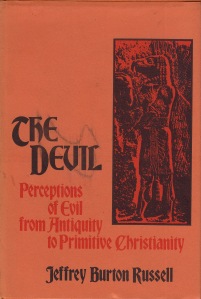
thedevilOne might be excused for thinking so much about the Devil these days. Displays of lies and evil intentions are on pretty obvious display at the highest levels. Indeed, the current political situation has me reassessing my skepticism about the Antichrist. One of the truly well thought out books on the subject is Jeffrey Burton Russell’s classic, The Devil: Perceptions of Evil from Antiquity to Primitive Christianity. The first in a series of books Russell wrote on the topic, The Devil opens with evil. Noting that the Devil defies easy definition, Russell begins rather disturbingly with literary descriptions of acts that can only be described as evil. This allows him to point out that real life events often surpass those that authors can get us to read, intimating that something is seriously wrong with the world.

Having noted that, the emergence of the Devil is not an easy one to trace. Evil has been recognized in many cultures and it has been explained in many ways. Some have personified it, but even that took a long and circuitous route to the dark lord we know today. Bits of Greek philosophy and Zoroastrian cosmology combine with an emerging monotheism among the Israelites and their kin until eventually we have an embodiment of evil appearing. Even so, the Bible has no clear image of who “the Devil” is. This took further developments beyond the New Testament and the image that eventually won out, so to speak, borrowed heavily from classical mythology. Eventually Old Scratch emerges in a recognizable form.

Belief in the Devil still runs high in American culture. I suspect it will run even more so in months to come. At the end of Russell’s well researched study, the Devil comes down to the blatant disregard for the suffering of others. One might think of the mocking of the disabled or the favoring of the wealthy over the poor. Evil may be known by many names but it is easily recognized by those not caught up in its worship. This became clear in the biblical quotations sprinkled throughout the book. “Woe unto them that call evil good, and good evil,” for example. Or “when an ungodly man curses Satan, he curses his own soul.” Mirrors may serve multiple purposes. The vain look into them and see only beauty. Those who believe in the Devil can’t help but know who it is that stares back.


Ash Monday

I was traveling abroad with a friend. We’d just arrived back in the United States and were making our way through customs. Since he was from another country we were separated. The border agent told me I couldn’t come back into the country unless I demonstrated that I was a racist. Only racists were permitted. He began to pressure me, even offering to help. Should I comply? I awoke in a panic. As someone who suffered frequent childhood nightmares, this was something new. In the past it was merely a monster chasing me, or my alcoholic father. Now I’m having nightmares about the government of my own country. And here it is, Presidents’ Day. Like U2’s early “New Year’s Day” or Bruce Springsteen’s “Independence Day,” there’s a decidedly poignant tone to this holiday. Looking towards DC I see nothing to celebrate. I see a government putting the mock in democracy.

This Presidents’ Day, I have a modest suggestion. It could fix democracy. When an election (I’m thinking Brexit as well as 11/9) squeaks out a victory because people don’t vote or don’t understand the issues, a true democracy would then hold a follow-up, “what I really want” vote. If we insist on keeping such arcane tools as the Electoral College in place, this is the only way for democracy to actually work. It wouldn’t be necessary in the case of a candidate winning both the electoral and popular vote. When that happens it’s pretty clear someone won. When the two are divided, however, that’s also a clear signal. Only unthinking automatons would declare that a landslide defeat is actually a win, based purely on political casuistry. Is there an ethicist in the house?

dscn6820

This Presidents’ Day feels more like Ash Wednesday to me. Ash Wednesday is for public mourning. It is a realization and confession that we have sinned. We wear ashes to make it conspicuous. This year no ashes are required. Perhaps we should wear black bands on our arms. I would, only arm bands seem to have a way of becoming bright red and appropriating ancient religious symbols. We have sinned, and we have sinned boldly. The miasma of Foggy Bottom is as clear a condemnation as is devoutly to be wished. When I start waking up in a panic, in a body-sock of sweat, my childhood monsters have become real. It’s Presidents’ Day 2017.


Know Your Monsters

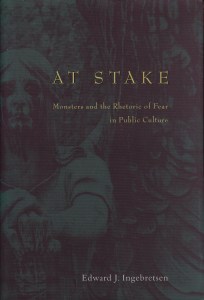
at-stakeEdward J. Ingebretsen is one of the most intelligent analysts of monsters about. That may seem like a small order, but it’s not—many people write about monsters, and Ingebretsen is one to whom attention is owed. At Stake: Monsters and the Rhetoric of Fear in Popular Culture is not an easy book to read. Narratively sophisticated, it takes on some issues we’d rather not have addressed. One of the great myths about monsters is that they’re all for fun. The current understanding of monsters gives the lie to that worn adage. Monsters tell us something extremely troubling about ourselves and we don’t like to have someone pointing it out. When hearing that some of the monsters considered are Jeffrey Dahmer and Susan Smith, the prospective reader might wrongly assume why. The monster may not be whom one expects. Indeed, Bill Clinton makes his way into the discussion, as do Andrew Cunanan, O. J. Simpson, and Matthew Shepard. Be not quick to judge, however; you must pay attention.

As most writers on monsters recognize, religion often fuels them. Without belief monsters have no power to scare. We’ve probably all seen horror films that underscore this point. If a creature is unbelievable it loses its ability to be frightening. The movie invariably ends up in the B category and is appropriated for laughs or for an example of how not to make a film. Ingebretsen knows that to understand monsters we must understand ourselves. We too often allow unspoken prejudices (which are sometimes nevertheless shouted aloud) to inform our opinions of what is deviant or evil. Just look to Washington and see if you can disagree. The more we tease these monsters apart, the less they conform to expectations.

As implicated by his title, a great deal is at stake in coming to grips with monsters. They aren’t just for childhood Saturday afternoons anymore. It may be that they are one of the healthiest means for dealing with the steady stream of fear flowing from the District of Columbia. Without our metaphors, we are lost. Those set on destroying monsters have no concept of just how terribly helpful they are. You can’t be sure who the beast is, they are so very protean. They will, however, get you through some dark nights. Not without scars, but wiser, if a touch more melancholy, in dawn’s cold light. Take monsters seriously. It’s the only way to survive them.


Made of Clay

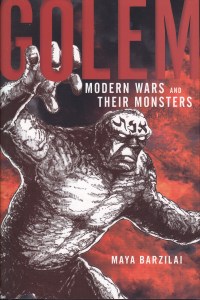
golemInvestigating a new field, at least on an academic level, involves a little disorientation. Part of this derives from the fact that academics didn’t use to write about monsters. Another part of it, however, is that those who do such writing have been doing so while my attention was elsewhere. It’s not easy to learn dead languages reasonably well. I didn’t pay much mind to the golem, being as it is, a “modern” monster. Probably responding to early modern pogroms, the golem was considered a defender of persecuted Jews. He was, however, a mindless defender. Made of animated clay, the golem was brought to life by magic and could only be killed in the same kind. Maya Barzilai has written a masterful account of how this monster relates to war. Golem: Modern Wars and Their Monsters explores how modern golem stories (and there are many) tend to relate to situations of conflict.

I had read about the golem before, and had trouble locating many academic resources on the creature. Barzilai demonstrates how much there is to ponder. It seemed, prior to reading her book, that the golem was mostly obscure, but it turns out that many writers, artists, and filmmakers have appropriated the clay giant over the years. Those who trace the history of comic books suggest that Superman was originally a kind of golem figure. I hadn’t realized that the golem had his own short-lived comic book series. When a people are persecuted repeatedly, having a secret weapon may not seem a bad thing. But the golem is difficult to control. It rampages. It can kill the innocent. Barzilai raises the question of whether a people with an unstoppable weapon are ever justified in using violence.

That question hangs pregnantly over the present day. The rich white men that run this country feel that they’ve been oppressed. Not willing to admit that it’s morally reprehensible to treat women as objects (they’re “hosts,” we’re told), blacks as inferiors, or hispanics as illegal, they bluster away about family values that aren’t consistent with anything other than threatening those who are “different” into submission. And yes, the Jews are among those these white men scorn. I wonder where the golems have gone. It could be that, like those of us self-identified as pacifists, that those who know how to make golems simply can’t justify violence. Barzilai didn’t intend for this in her book, I’m sure. Still, each new era brings new perspectives to these monsters made of clay.


Animal Ways

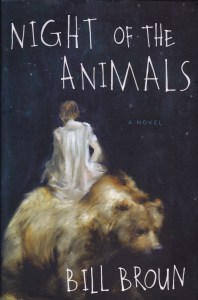
nightofanimalsNoah’s Ark has a way of showing up in many literary forms. Familiar to many from Genesis, it actually predates the Good Book by hundreds of years. On the backside, it keeps recurring in literature as diverse as Neal Stephenson’s Snow Crash, Jonathan Carroll’s The Ghost in Love, and Margaret Atwood’s MaddAddam trilogy. It also shows up in Bill Broun’s debut novel Night of the Animals. Set in a future that’s becoming present faster than Broun likely anticipated, the story revolves around an addict who hears animal voices. The story stubbornly refuses to let you get any grip on a slippery reality, so the reader’s left guessing even at the end. In the 2050s Britain is under a fascist regime that seeks to keep the wealthy happy and everyone else servile. (Keep reminding yourself this was written before 11/9.)

Cuthbert, the protagonist, believes the animals—most of which are extinct in the wild—are calling him to release them from the London zoo. As an addict his perception of reality is constantly in question. His sense of mission, however, is not. One of the stranger elements in the tale (and that’s saying something!) is the revival of Heaven’s Gate. This cult, instead of wiping itself out, has gone international. The approach of a comet sets the Neuters (as they’re called) on a mission to wipe out earth’s remaining animals. Many of them are in the London zoo, which brings Heaven’s Gate into direct conflict with Cuthbert, who is busy trying to release as many talking animals as possible. London literally becomes a zoo and Heaven’s Gate openly attempts a coup.

All of this sounds wild and fantasy-prone, but like 1984, fiction sometimes peers deeper into reality than science. Is it science fiction? It’s set in the future, but it’s difficult to say. What has all this to do with Noah’s Ark? The novel itself draws the parallel—the zoo that preserves the last of their kind is, by default, an ark. The Ark. Floating on a world-ocean of irrational turmoil where might (read wealth) makes right after all. Religious imagery interlards the story. Cuthbert becomes St. Cuthbert. His possible granddaughter (the reader is never sure) manifests as the Christ of the Otters. There’s even a kind of Second Coming. This is a novel that feels like altered reality. That illusion is given the lie when you close the book and turn on the news.


Hidden History

the_official_poster_for_the_film_hidden_figures_2016

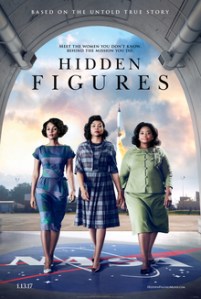
History involves perspective. We sometimes forget that. I was alive when human beings first reached the moon, so maybe I’m a bit blasé about what a great technological accomplishment that was. Down here on earth we were still having trouble with the human rights thing—still are, incredibly. Working in my own silo I hadn’t heard of Hidden Figures and wouldn’t have gone to see it if my wife hadn’t suggested it. It’s hard to be reminded of the world into which I was born and how terribly backward it was. For all my conservative upbringing we were never racists. Of the two African American guys I remember attending my elementary school, I was proud to call both of them friends. I could see no reason not to think of them as friends. We lived in the same town and had the same basic needs. I had no idea the struggles they really faced.

Although offering social commentary, gently coating it with humor, Hidden Figures follows the story of three mathematicians who made America’s participation in the space race possible. Moreover, they were all women. African American women. Brilliant, but unequal under the law. I was glad for the darkened theater as I couldn’t keep my eyes dry thinking of the terrible backward step we’ve taken since November. This nation has never been fair to African Americans and police statistics bear that out. Given equal opportunity, I can’t help but think of what me might accomplish. How this nation could support a bigot for the highest office in the land I can’t compute. It sets the clock back before I was born. We wouldn’t be where we are not without shining examples of humanity like Barack Obama.

We are fighting for the future. Over the past few weeks every few days I’ve been attending marches, rallies, and political meetings. I’ve been signing petitions until my clicking finger is numb. I wish there were more that I could do. The blatant racist, sexist maneuvers by Mitch McConnell should stand out as a mark of shame on all who claim the name American. Silencing Elizabeth Warren from reading a letter by Coretta Scott King regarding Jeff Sessions. When our children’s children look back on this age they will rightly wonder how people who’ve been privileged all their lives could turn their backs on progress in the name of racial insecurity. And how Mr. McConnell could’ve had the appallingly bad taste to do so during Black History Month. History involves perspective.


Theoretically Speaking

lit-theory-vsiI’ve been brushing up on my literary theory. All writing tends to get classified as fact or fiction, and we don’t stop to think, generally, about what “literature” is. Those of us who write fiction and non know that a well-placed hyperbole might throw us from one camp into the other. Such is the power of rhetoric. So it was that I found myself reading Jonathan Culler’s Literary Theory: A Very Short Introduction. Witty and insightful, Culler acknowledges the elephant in the room for many of us—theory, in a literary context, is often impenetrable. I’ve often wondered what one had to do to be considered a theorist, and this little book actually addresses that. Nobody has time to read all the theorists, though, and come up with their own creative things to say. Chose your poison.

The Bible, of course, is literature. That’s one reason I was reading Culler. I found one of his assertions immediately applicable: people in nineteenth-century England saw literature as a unifying principle. The British Empire encompassed the world, and to make diverse peoples a part of it, literature might be used, they thought, to do the trick. Culler suggests that it might have been a substitute for religion, which, he notes, was no longer holding society together. This gave me pause. Religion—at least official religion—began as social glue. The earliest recorded religions were state sponsored and served to cast the monarch in the role of the special appointee of the gods. There’s no arguing with that, right? Elaborate, expensive temples were erected. Financed by tax-payers’ dollars. This worked fine since priests declared the rule of the king as sanctioned by the gods. Nations warring against each other were thought of as rival gods fighting.

When science began to take the universe literally, religion lost its stickiness. How do you hold a society together when the gods no longer exist? You see, scientists didn’t think out the whole picture in advance. Scientists, like most academics, work in silos (that’s a metaphor). The discovery of a scientific truth can dissolve a social epoxy quite efficiently. Recognizing the slippage in the British Empire, theorists (I suppose that’s who noted such things) considered literature the great uniting force of a diverse people. We’re kind of facing that same dilemma today as literature is becoming, for many, as irrelevant as religion was a century-and-a-half ago. At the same time, people don’t understand science well enough to assess it for themselves. What are we supposed to do? Is there a theorist in the house?


By Any Other Name

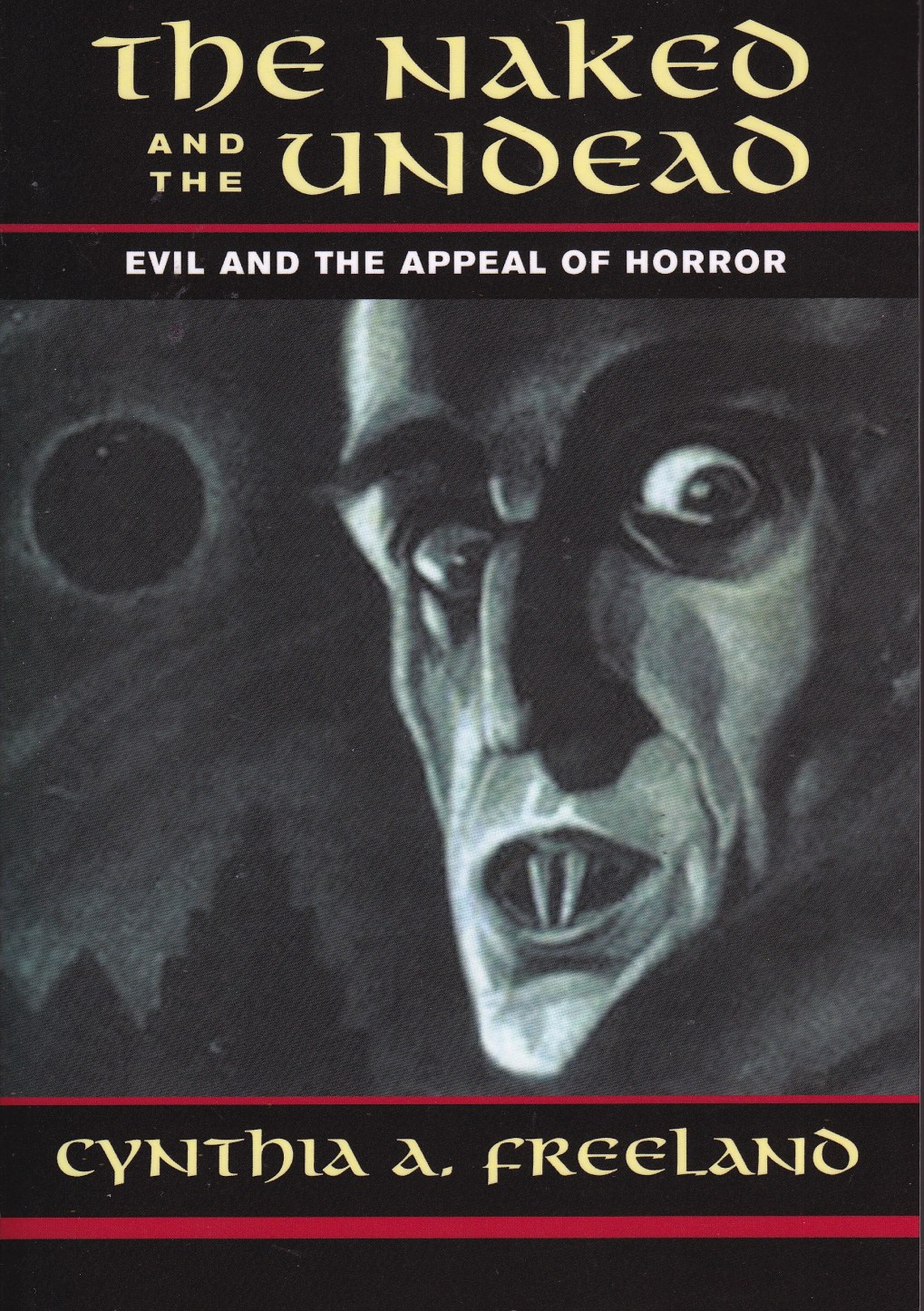
nakedundeadGood and evil. Well, mostly evil, actually. No, I’m not talking about Washington, DC, but about horror movies. Cynthia A. Freeland’s The Naked and the Undead: Evil and the Appeal of Horror is a study that brings a cognitivist approach to the dual themes of feminism and how horror presents evil. It’s not as simple as it sounds. Like many philosophers Freeland is aware that topics are seldom as straightforward as they appear. Feminists have approached horror films before, and other analysts have addressed the aspects of evil that the genre presents, but bringing them together into one place casts light on the subject from different angles. Freeland begins this process by dividing her material into three main sections: mad scientists and monstrous mothers (which allows for the Frankenstein angle), from vampires to slashers, and sublime spectacles of disaster. Already the reader can tell she’s a real fan.


One of the simplistic views of horror is that these kinds of movies—particularly slashers—are misogynistic by their very nature. Feminists, including Freeland, question that assumption. Horror is a genre with a decidedly checkered history. Some films do feature mostly female victims to male monsters. Not all do, however, and even those that do may be saying something other than the obvious. Looking for the locus of evil in these movies provides a lens that focuses the meaning somewhere other than the surface. This is one of the benefits of philosophy—probing questions may be asked and unexpected answers may result. Along the way you can have a lot of fun, too. Especially if you watch horror movies.

A large part of the criticism probably arises from the fact that film making was, for much of its earliest history, run by males. That’s not to say women couldn’t do the same thing men were doing, but the opportunities simply weren’t there. Most film makers, I expect, have trouble getting out of their heads to think about how someone of a different gender might perceive this kind of movie. Fear, we are told, is “coded” feminine. It seemed natural to such film makers to put the female in peril since both women and men would respond to it. Since then it has become clear that fear isn’t coded for gender. Indeed, one of the hallmarks of modern horror is that we all have cause to be afraid. Fear is no respecter of gender. Freeland’s analysis, now getting on in years, correctly looked ahead in many respects. Especially concerning the ongoing presence of evil.


Cheap Faith

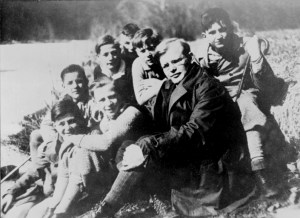
“If I see a madman driving a car into a group of innocent bystanders, then I can’t, as a Christian, simply wait for the catastrophe and then comfort the wounded and bury the dead. I must try to wrestle the steering wheel out of the hands of the driver.” Many of my conservative Christian friends may be surprised to learn that these are the words of Dietrich Bonhoeffer. Evangelical hero and firm believer in costly discipleship, Bonhoeffer lived, and died, during the Nazi takeover of Germany. A promising young theologian, he escaped Germany to come teach at Union Seminary in New York City. Increasingly disturbed by what was taking place back home, he forsook safety and returned to Germany to try to wrench the hands of Hitler from the steering wheel. Bonhoeffer didn’t write empty words.

The above quote comes from a letter he wrote to his sister-in-law Emmi. Bonhoeffer’s book, The Cost of Discipleship, well deserves its status as a classic. In it Bonhoeffer declares that a cheap faith is not a faith worth believing in. The Prosperity Gospel would have made him ill. You see, Bonhoeffer believed that the religion preached by Jesus didn’t allow for shirkers. Those who get rich and claim God helped them to it. There’s a reason some people say Mammon is a demon. This was in the days when Christianity still had a conscience. When leaders of religious movements weren’t afraid to speak out against accommodating with evil when that was the more comfortable course to take. And his wasn’t empty rhetoric.

Bonhoeffer was arrested back in his native land. Sent to Buchenwald and then to Flossenbürg, he was hanged on April 9, 1945. He was 39 years old. Two weeks later the Allies liberated the camp. Bonhoeffer knew evil when he saw it. Now, some seventy years later our vision has become blurred. We live in a country that declares itself “Christian” but, unlike any religion Jesus taught, declares itself to be first. “America first,” we’re told. Flipping through the pages of the Gospels my eyes fall on a forgotten verse. “The first shall be last,” it reads, “and the last shall be first.” Scholars argue over the authentic words of Jesus, to be sure. What we do know is that he too was executed by his government before he reached 40. And they killed him for the radical message that what God requires is loving your neighbor as yourself.

Photo source: Bundesarchiv, Bild 183-R0211-316 / CC-BY-SA 3.0, Wikimedia Commons

Photo source: Bundesarchiv, Bild 183-R0211-316 / CC-BY-SA 3.0, Wikimedia Commons


The Big Chill

It’s cold. It may not be Alaska, or even Wisconsin, but I can’t feel my fingers and the temperature hasn’t risen above freezing all day. New Jersey doesn’t get the incredible chills we used to experience in Wisconsin, but I’ve been outside going on two hours and I really need some warmth. And it’s not just me. At least a couple hundred of us are out here and it’s not for the Super Bowl. It’s for justice. We’re rallying at the beautiful courthouse of Somerset County, in solidarity with our Muslim Americans, protesting the latest actions of our own government. Some of the people here are old enough to remember Hitler. Others are young enough that they have to be held. We are from countries all over the world. We are saying “No!” to the evil that is coming out of Washington.

img_3191

Those who voted for Trump out of a sense of fiscal conservatism were sorely misguided. This was a hostile takeover of what used to be a democracy by people who rely daily on alternative facts. Who make up massacres that never happened. Who claim that their personal billions have made them victims. Who believe that men have a God-given right to determine what women can do with their bodies. Who state that men who aren’t attracted to women or women to men are somehow deviant. Who openly mock the disabled. Who resist Black Lives Matter. Who can’t tell you one of the five pillars of Islam but can tell you that they’re all wrong. A government that’s over the people, despite the people, and against the people. Self-serving, self-enriching, and self-satisfied. A government where party has become more important than the welfare of the nation. A government that lost the popular vote by nearly three million, and those were only the ones who bothered to get out to vote. A government that lays its hand on the Bible and lies. That prays for itself, not for the good of its people.

That’s why I’m out here in the cold. I’m standing in a crowd that, like those who gather at airports, courthouses, and city streets, is saying “Enough!” The abuse of power is taking advantage of what you can “legally” claim without regard for the will of those you represent. Representative government fails when it fails to represent the people. We don’t want to be out here freezing our fingers, noses, and toes. We’d rather be comfortable and warm at home. As chilly as it may be in New Jersey tonight, it’s colder in the heart of this country and unless we the people do something, Hell itself is in real danger of freezing over.


Jericho

Those who think walls actually keep people out have never ridden the train through North Philadelphia. Or into Newark. I have to admit that I’ve always found rail-side graffiti aesthetically pleasing. Some of these vandals are real artists on a scale that is truly impressive. Speeding trains are, of course, dangerous. And in urban areas they are fenced off to keep people out. Thing is, walls don’t work. Riding to Washington DC for the Women’s March a couple weekends ago, I was watching the graffiti on the way into Philly. Vast, colorful, and with a flair for design, it makes the usual visual fare for railway riders much more interesting. Buildings, we know, have facades to be public facing. If you go around to the back of the strip mall, things look a lot more spartan indeed. I’ve spent my fair share of time in employee break rooms. Executive washrooms they’re not.

The thing about facades is that they’re fake. Like in those old westerns where we see them jutting up higher than the actual roof of the store or saloon, making them look bigger than they really are. Or even a small town boy who works in Manhattan can see it. Walk down the avenues of Midtown and the glitz is never-ending. Once you get to the minor cross-streets you see the service entrances and smelly trash bags stacked in the alleys. Would you want to enter that store if you knew what was coming out the back? We prefer our self-deception. We prefer to call our lies alternative facts. We can sleep better at night that way, knowing that our heads of state are so so brutally honest. Just don’t wander behind the cameraman. Things aren’t what they seem.

img_3171

To get to New York City from where I live, you have to change trains in Newark. The graffiti along the way is intense. Long ago I noticed a signal hidden in the noise. “Paint the Revolution” it reads. Or read. I don’t know if it’s still there. Graffiti’s often the bare truth. The thing is, it’s difficult to photograph. Trains move fast and phones focus slowly. Things look blurry and those in power can tell us the words of hoi polloi are ugly and defacement of property. Have they ever walked behind the building to where the workers come out? It’s easy to find. If you smell the piles of garbage you’re getting close. Executive washrooms they’re not. But the back door is far more honest than any facade.


Celestial Politics

Two things about my childhood: I grew up religious, and I grew up learning you didn’t talk about religion or politics. Now I see that that combination leads to tremendous potential for abuse. Many conservative Christians believe that their faith only ever endorses a Republican candidate, no matter how bad. This is a strange idea and it goes back to some strange people. If I can talk about it.

We live in a cult of celebrity. This is nothing new. People have always admired the individual who could get him or herself noticed. As early as the epic of Gilgamesh, the guy willing to show his bad self managed to capture the public imagination. We’re still reading his story some five millennia later. Of all places this tendency to treat a human being as authoritative should be considered strange is evangelical Christianity. This religion grew out of a largely Calvinistic backdrop where no individual could be assumed to be good. Indeed, total depravity was part of the theological environment. Mix in this stern outlook with the revivalism of the two “great awakenings” and an uncanny alchemy takes place. People, who used to be bad, now found enthusiasm in religion. The first real superstar in the United States was George Whitefield, a preacher. He had a massive following and was, in every sense of the word, a celebrity. This culture became the social substrata of the new nation. Open to all religions, yes, but mostly belonging to this one.

Once American religion became based on popularity, singular figures emerged as defenders of this faith. “Trusted” leaders and authors. Not all of them home-grown either. Names like C. S. Lewis, Dietrich Bonhoeffer, and Francis Schaeffer—not to mention Billy Graham—grew to a status they never had in their lifetimes. Well, Schaeffer and Graham came to be evangelical gurus in their own rights and Graham remains among the living, but Lewis and Bonhoeffer were really adopted by conservatives only after their deaths. The interesting point here is that Lewis and Bonhoeffer often wrote things that directly challenge the easy evangelicalism that accepts them as celebrities. The problem is, we don’t talk about religion any more. We use it for voting, and for feeling good about ourselves. Superior, even. It seems strange to think that Calvinism had some safeguards built in that have been knocked down for the sake of the polls. I can’t imagine John Calvin casting a vote for Donald Trump. But then again, Calvin became a celebrity in his own lifetime, so I might be wrong about that.

calvinjohn


O Brother

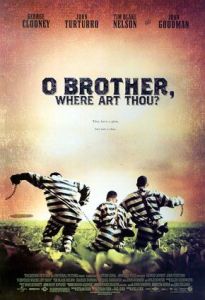
o_brother_where_art_thou_ver1When teaching mythology at Montclair State University, I had students watch O Brother, Where Art Thou? Based on Homer’s Odyssey, the movie follows a trio of convicts during a election campaign through depression-ridden Mississippi. The populist candidate, Homer Stokes, runs his campaign with a little person (but as a true Republican, he can call him a derogatory name and nobody blinks). Both Stokes and “the little man” are members of the Ku Klux Klan and even Mississippi of the 1930s won’t have that. How things have changed!

The movie comes to mind because of Friday’s march on Washington of women in favor of anti-abortion legislation. Look for the numbers to grow as the White House inaugurates comments about it. A few thousands gathered after last weekend’s 1.2 million—yes, a million more than expected—Women’s March on Washington. I respect these folks’ right to protest, of course. They might’ve done well to watch O Brother before heading out the door, however. The incumbent in Mississippi is Pappy O’Daniel. His clueless campaign managers have no ideas how to counter the populist Stokes. Junior O’Daniel suggests they could get an even shorter “midget.” Pappy, as if speaking to Friday’s marchers says, “Wouldn’t we look like a bunch of Johnny-come-latelies, bragging on our own midget, doesn’t matter how stumpy.” With apologies for the insensitive terms, size does matter. The First March had world participation of nearly 5 million. And that’s just those who were free that day.

I’ve been drawing quite a bit of wisdom from cinema lately. Maybe because it is often in harmony with vox populi. If it weren’t the industry wouldn’t be thriving. I think of O Brother and how the south in the 1930s makes us look regressive today. The good, Christian folks of Mississippi wouldn’t have a racist for their governor. When they saw what he really stood for, they voted for the lesser of two evils. Today we have a president that would’ve had a hard time being elected in that past. The tide has shifted to a more selfish and shortsighted instant gratification without benefit of education. “And our women, let’s not forget those ladies, y’all. Looking to us for protection! From darkies, from Jews, from papists, and from all those smart-ass folks say we come descended from monkeys!” Homer Stokes preaches in the light of a burning cross. Instead of booing him out of the town hall, we’ve asked him to lead the free world.


The First Weak

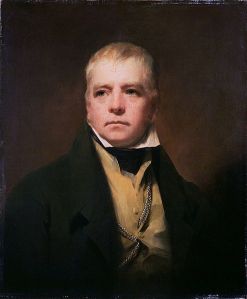
“Oh, what a tangled web we weave. When first we practise to deceive!” I always thought this couplet came from Shakespeare, but in fact it’s from Sir Walter Scott’s poem “Marmion.” The quote has been in my head all this first week of the new administration as alternative facts, lies, and statistics have flooded out of the White House. Along with gag orders slapped onto federal agencies. I’ve worked for people who rely on gag orders. This obvious lack of transparency signals loud and proud that they have facts to hide. Then they will feed the public alternative facts and later claim they never did. Mission accomplished. Sir Walter Scott may not have been William Shakespeare, but he sure got that web analogy right. At times like this we need our writers. Of course, Trump bragged in pre-inauguration interviews that he didn’t like to read.

Since last weekend sales of George Orwell’s 1984 have spiked. From the first words out of Sean Spicer’s mouth (or any words out of the mouth of Kellyanne Conway}, many of us knew the only thing Orwell got wrong was the date. Frankly I’m surprised the government hasn’t tried to ban 1984 yet. It was required reading when I was in high school and that date was still in the future. The press—what still exists of it anyway—passed along stories that Trump had ordered photos of the inauguration day crowds hung in the White House in his first week. Such pressing matters of state! The photos had the wrong date on them. Facts are cheap. This should be good for the economy. You can get them in any flavor you like—true facts, false facts, alternative facts, statistics. Arachne has returned to her loom.

Although “Marmion” wasn’t written by Shakespeare, I can still say it was because I need a segue to Harold Hecuba. Hecuba was a Hollywood producer who accidentally landed on Gilligan’s Island. After he insulted Ginger the castaways put on a performance of Hamlet to showcase her acting skills. Hecuba, the unelected president of the island, awoke during rehearsal and, like other narcissists we know, took over. He says that Shakespeare was a hack and that if he were alive he’d have him working on a complete rewrite. Of course, he doesn’t know what Hamlet’s about. Or “Marmion.” Actors only mouth the words. They make us believe what is not true. We’re in for a period when we’re going to rely on the authors for the true story. I suggest we all start with 1984.

William Shakespeare

William Shakespeare