Eleventh Commandment

Those who know me are sometimes surprised to learn that one of my favorite quick meals is grits and black-eyed peas. For a northerner that’s a bit strange, perhaps, but my father was from South Carolina and my mother often cooked “soul food” at home. Over the years I’ve experimented with ways of preparing this simple lunch, and I’ve found that with a little cheese and a bit of hot sauce, this makes a filling and tasty dish. A few weeks back I posted on Burning Bush hot sauce. I saw it on a tourist trip to Whole Foods. I was very pleased and quite surprised when the president and chief sauceror of Burning Bush emailed me, thanking me for my post. He even kindly sent me a bottle of Burning Bush hot sauce to try. Well, this was a chilly weekend up here in Jersey, so I splashed some Burning Bush on my grits and had my own kind of down-home religious experience. It sure beats the usual tabasco that, like my father, I usually shake over my grits.

I’m sharing this personal religious experience with you to encourage you to have a religious experience. Try some Burning Bush for yourself. If you look back at my post Mind Your Manna, you’ll find a comment from said president and chief sauceror giving readers of this blog an exclusive discount on web orders. Check out that post for the discount code. Also take a little time to browse around www.burningbushhotsauce.com. Burning Bush is kosher and it doesn’t just spice up grits. My favorite part about it is that it isn’t the product of a large corporation. Being one of the little guys, I prefer to help out others like myself. The one percent already have far more than enough.

Burning Bush

As I’ve confessed before, I’m not really a foodie. Still, sometimes something simple like a new flavor can improve your life. As a matter of fact, when the Burning Bush came to my door on Friday, I planned the coming week’s meals around the fact that I now had something new to try in the kitchen. I suspect I shall be very holy by the end of the week. Just like the Bible, the story of Burning Bush starts in a garden. The best things in life generally do. I’d rather support David than Goliath. Why skimping on the flavor end of things? Why not have a religious experience while you eat? Let Nestle, Unilever, General Mills, and Kellogg hobnob with each other. Remember, when it comes to hot sauce, every drop counts. Why not give Burning Bush a try? And just for reading this blog you get an exclusive discount.

Secular Family Values

Fear of social disruption runs deep. Things may not be perfect, but people would rather keep things the way they’re used to them being rather than to face radical change. This is natural enough. During the dark days of the Cold War, when nuclear annihilation constantly hung over our heads, atheism was a mark of the Soviet threat. “Godless communism.” Intellectually, however, a kind of atheism was already part of American society as well, although few people talked of it. With our national history of encouraging Bible reading and prayer in public schools, our self-presentation was of the faithful. Those who hold to “old time religion.” In fact, many had moved on, but those of us growing up in small towns or rural settings had no way of knowing that. Life before the internet was primitive in that way.

A recent Op-Ed in the Los Angeles Times asks “How secular family values stack up.” In this age of Nones many are worried that the social fabric has already begun to unweave and that our ethical clothes have become threadbare and see-through. The statistics, however, don’t really bear that up. Written by Phil Zuckerman, it is no surprise that the piece takes a positive view of a faith-free value system. The fact is, the social disruption that has been widely hyped, especially by Neo-Con pundits, has simply not occurred because of secularism. As Zuckerman points out, the largely secular European society has handled ethical situations admirably well. Even in the United States, non-believers in jail populations are an astonishingly small demographic, and divorce rates run lower than those who report being more religious. Those who don’t believe tend to be more empathetic and to have closer family ties than many religious families do.

Tolerance of those with different outlooks is important. In a nation that was at one time considered a melting pot, such difference of opinion is only to be expected. In practical terms, people in the United States knew nothing of Buddhism or Hinduism until late in the nineteenth century. Other religions were simply outside of the experience of most. And those who lived in different religious traditions were also moral. Biologists who study the development of moral sentiments find that apes, certainly not religious by any standard, are often inclined toward positive social values (although clearly not always so—there are dangers in extremism). It is time that we overcame our distrust of those who, for whatever reason, cannot believe. Being human is sufficiently religious to make us concerned about our fellow person. It is only the drive and insatiable hunger, ironically, of godly capitalism that leads to unfeeling disregard of human need.

FullSizeRender-2


Hurricane Joaquin

The name Herostratus is deservedly obscure. In fact, I shouldn’t even be mentioning him here. His use as an object lesson, however, seems apt in a country fascinated by firearms and fame. Herostratus was an arsonist of the fourth century B.C.E. who destroyed the Temple of Artemis in Ephesus, one of the Seven Wonders of the Ancient World. He perpetrated this crime so that he would become famous, and he is representative of those who want fame at any cost. So it was that on Thursday a gunman, who shall remain nameless here, shot and killed nine people at Umpqua Community College in Oregon before being killed by police. This individual, upon investigation, had been fascinated by how obscure people gain immediate fame by killing innocents. After a summer of what seemed like endless, pointless shootings, we now have nine more graves of students to mourn, and as a nation we still lovingly stroke our guns.

Society is a dangerous combination of a cult of celebrity and violence. Most of us live our lives in utter obscurity, not being noticed. For many that is the way they want it, but for some it is a pathology. Guns are so easy to find. Police discovered seven firearms in this man’s apartment, in addition to the six he took to campus. Doing the math confirms the madness of a nation that makes guns so very accessible. Even the insane may buy. All it takes is money. The Temple of Artemis was one of the most magnificent structures of all time. It even gets mentioned, in an indirect way, in the Bible. Although it had been rebuilt, the idea had already fermented, without firearms, that fame could be had for infamy. In antiquity the perpetrator’s name was outlawed. Now anyone can find out who he is.

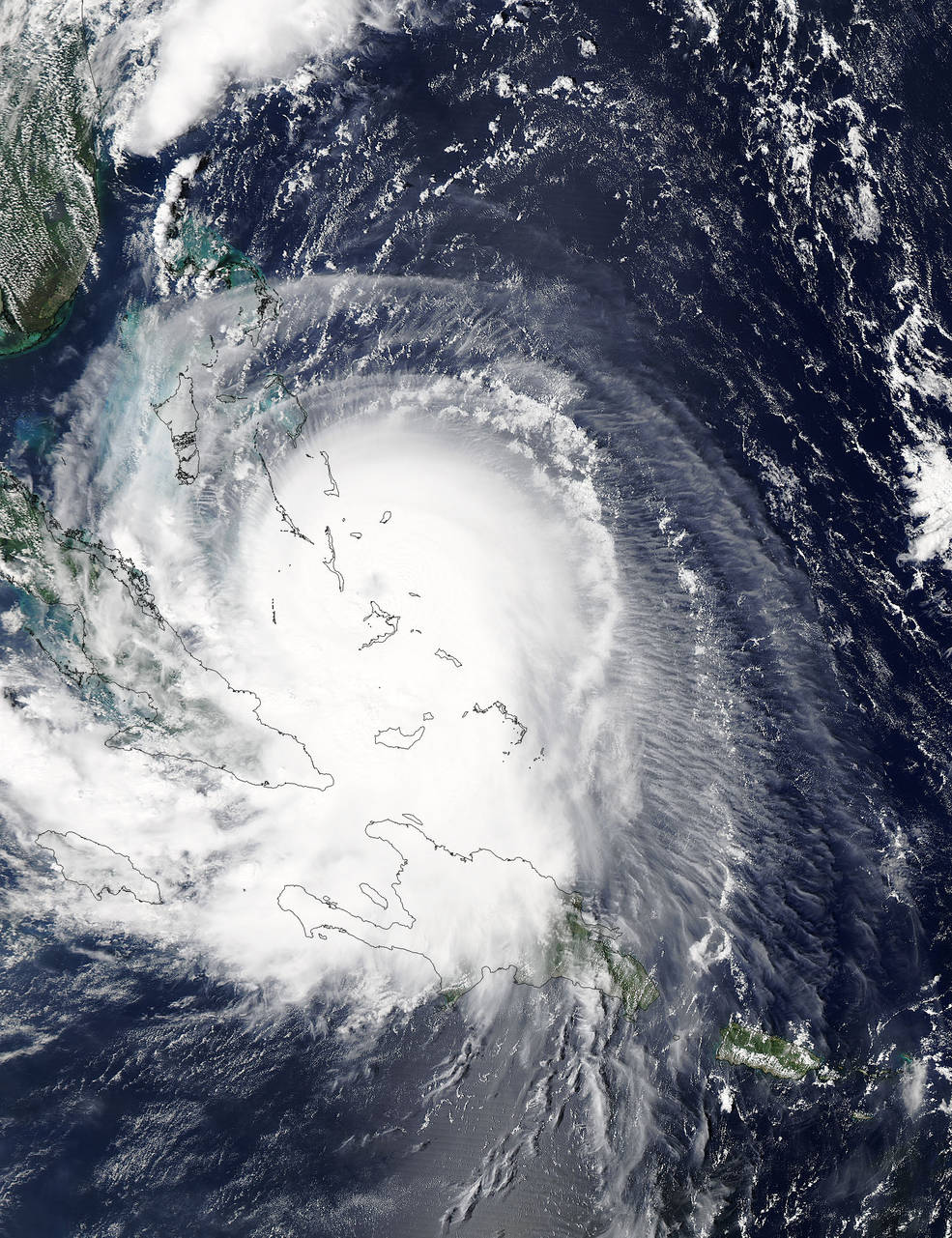
No shooting is without tragedy. Those that take place on college campuses and high schools are especially tragic because education is the only way to move forward from barbarism. Those who went to class on Thursday were improving their minds. Education makes the world a better place. They were, however, eliminated by a nameless man with easy access to weapons and a wish for fame. Perhaps American Idol and American Gladiator should offer a venue for those who wish to slaughter each other in public. It could be sponsored by the NRA. It was the ancient world, after all, that also gave us bread and circuses. Although the hurricane may be veering away, we have already been hit by tragedy, only this one was of our own making.

joaquin.a2015274.1755.1km


Forbidden Love

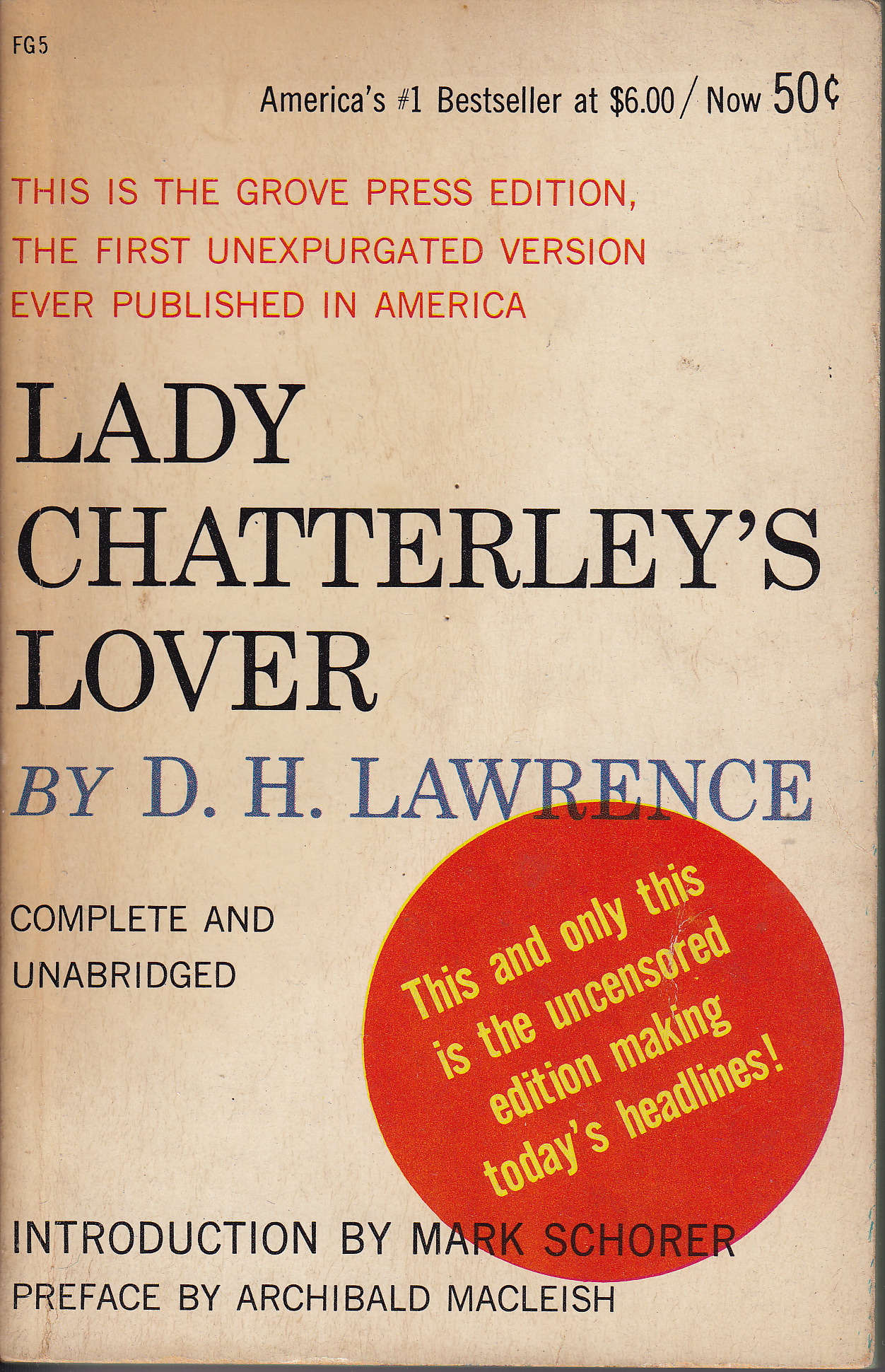
LadyChatterleyBanned Book Week is upon us. In that time of year when we begin to think of spooky, scary things, the prohibition of literature naturally comes to mind. Every year I try to read a banned or challenged book for the occasion. This year I went to perhaps the jugular vein of banned books, Lady Chatterley’s Lover, by D. H. Lawrence. Now, I’m not a romance reader, but I was curious about this sexually explicit novel that had been banned to the point of being outlawed and was now considered a classic. Lawrence’s last novel, it tells the tale of a woman escaping a loveless marriage with the help of lover below her social class. The steamy bits are tame by today’s standards, but Lawrence does use several words that are still rarely heard in the media due to their offensiveness. From my perspective the story was a bit too drawn out, and the fawning wasfs a bit over the top. What struck me even more, however, was the fact that this novel was largely about social justice. Not that Lawrence was an activist, but his concern for the poor and discarded of the industrial revolution is quite clear throughout the novel. The privileged having affairs within their class is acceptable. The scandal is that a titled lady falls for a common gamekeeper.

I haven’t read Fifty Shades of Grey, a franchise that has made even romance writers jealous. From the criticisms I hear, however, the concern is less the sex than it is the lack of literary value. I’m sure Fifty Shades of Grey is a banned book in some location. Still, the deeper concern for humanity that runs through Lady Chatterley’s Lover is part of its appeal. Several times I put the book down thinking, “this isn’t just surface stuff.” It is, baldly put, the search for redemption. Sir Clifford is an invalid who wants to control others. In an era when men laid claim to control of women’s sexuality this was no small demand. He also sees his coal miners as pieces in a larger game that is, it turns out, only to his own benefit.

Although the book ends with the lovers parted, and hoping for reunion, Lawrence’s final words turn toward economic oppression. Mellors (the gamekeeper) writes, “If you could only tell them that living and spending isn’t the same thing!… If only they were educated to live instead of earn and spend…” He defines Mammon as “wanting money and hating life.” No doubt, the book was a vehicle for Lawrence’s desire to see writing about sex to be part of literature and not pornography. Still, there is something deeper here. The story is more than carnality, although carnality is what brought it to fame. It is a banned book that proclaims liberty that, despite the license of contemporary society, is not really as free as it might seem. As banned book week unfolds, it is a moral obligation, I believe, to read those books that have threatened settled mindsets and raised the ire of censors. In so doing, we learn what it is to be human.


Rutgers Presbyterian

It is indeed an honor to be invited to address a church group on topics that matter. While I didn’t directly address global warming in my book, it was in my mind as I wrote it. Early in my teaching career, I wasn’t sure how to cinch up the gap between the lexicography I was attempting and the real world issue that it should address. The seminar portion of yesterday’s program focused on topics associated with the weather, and I was gratified to hear that many of those present felt that a profound weather event had made an emotional impact upon them. Weather has a way of reminding us that we’re small and that forces beyond our control still exist. I’d forgotten how nice it is to while away a few hours with intelligent people who think about the world we all inhabit. I only wish I could have recorded all the wisdom I heard. We tend to think if someone’s not speaking to us from a major media outlet they’re not worth listening to. I am glad to be reminded that this is not so.

IMG_2515

During our discussion of global warming, the question arose as to what we could call “climate change” to make it appropriately terrifying. Various suggestions were made such as poisoning the sky, suffocating the earth, and old-fashioned, and to-the-point air pollution. We are a species that seems bent on its own destruction. The atmosphere is so incredibly large, but, as our host reminded us, so very thin. Life is supported only in what might be considered, in his words, a thousand-story tower. Beyond that, life runs out. We need to take the limited nature of this small envelope of gas surrounding us seriously.

I’ve come to realize that my fascination with the weather largely derives from looking at the sky. Such an activity is so basically human and so profound, that we simply overlook it most of the time. The sky is superior to us. It was, for most of human history, far out of reach. We have stretched our hands up to the realm of the gods and smeared it with our industrial filth. Many of those present, although not Catholic, applauded the Pope’s insistence that the world must be view holistically and that we must stop polluting our home. Pollution used to be an ugly word, but we have been taught to change our language to add ambiguity. “Climate change” is so neutral, with no one to blame. But it’s not at all accurate when it comes to the real costs. We’ve already impacted the weather for a millennium into the future at least. And I, for one, left our session optimistic that intelligent people cared enough to spend a beautiful Saturday afternoon discussing it.


Pontificating

I’ve been in a few New York crowds, but this one seemed on its best behavior. I was in the city later than usual since I’m giving a talk today at a friend’s church in the Upper West Side. My wife came to meet me and, knowing the Pope was going to be saying mass at Madison Square Garden shortly after her train arrived at Penn Station (for out-of-towners, Madison Square Garden sits atop Penn Station) we decided to meet at Herald Square and avoid the other kinds of masses. I walked to the square from work and realized my mistake—34th Street was barricaded and there were crowds already beginning to form. The Pope had a procession through Central Park, but I neglected to check on the remainder of his route. My wife arrived and, taken in by the rush of the moment, decided to stay and see what we could see. We were literally one person back from the road. The police kept saying that they couldn’t confirm he was going to come this way, but the helicopters hovering overhead seemed to tell a different story.

The crowd was so well behaved. No pushing or shoving, and even loud talking was mostly absent. It was, believe it or not, kind of reverent. Sure there were people with placards suggesting that one should get right with Jesus, and the occasional pedestrian saying, and I quote, “Why is there so much people here? The Pope? You’ve got to be kidding—can’t we cross the street?” By and large, however, there was good will. One of my coworkers had emailed during the day saying she’d gone by Saint Patrick’s the night before, but couldn’t see him. The crowd, she commented, was kind spirited. Perhaps that’s what having a kind-spirited Pope will do. After we’d stood for nearly an hour, I was beginning to wonder if the motorcade had taken another route—7th Avenue was closed as well. Then the cheering began.

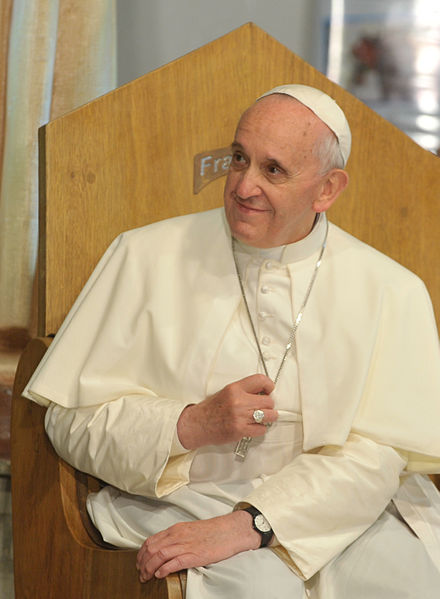
Pope Francis rode by, the window down, waving at the crowd. My glimpse was only a fragment of a second, but it was clearly him. I’d met an Archbishop of Canterbury or two in my time, but here I was, no more than thirty feet from the Pontiff, if only for a second to two. And it was all pretty much by accident. Life surprises us that way sometimes. Reading his words about climate change to the leaders of the world, I can’t help but think we’ve needed a leader like this man for a long time. He’s as human as the rest of us, and he knows that we have only one world and in that one world are millions of people in need. And global warming will hit them first and hardest. And the God of the evangelicals who say the planet is ours to destroy is not the God he recognizes. He’s just one man, but he is able to bring the largest city in the country to a halt, even if just for a second or two. This could be saying something important for those who have ears.

IMG_2488


The Boy on the Bus

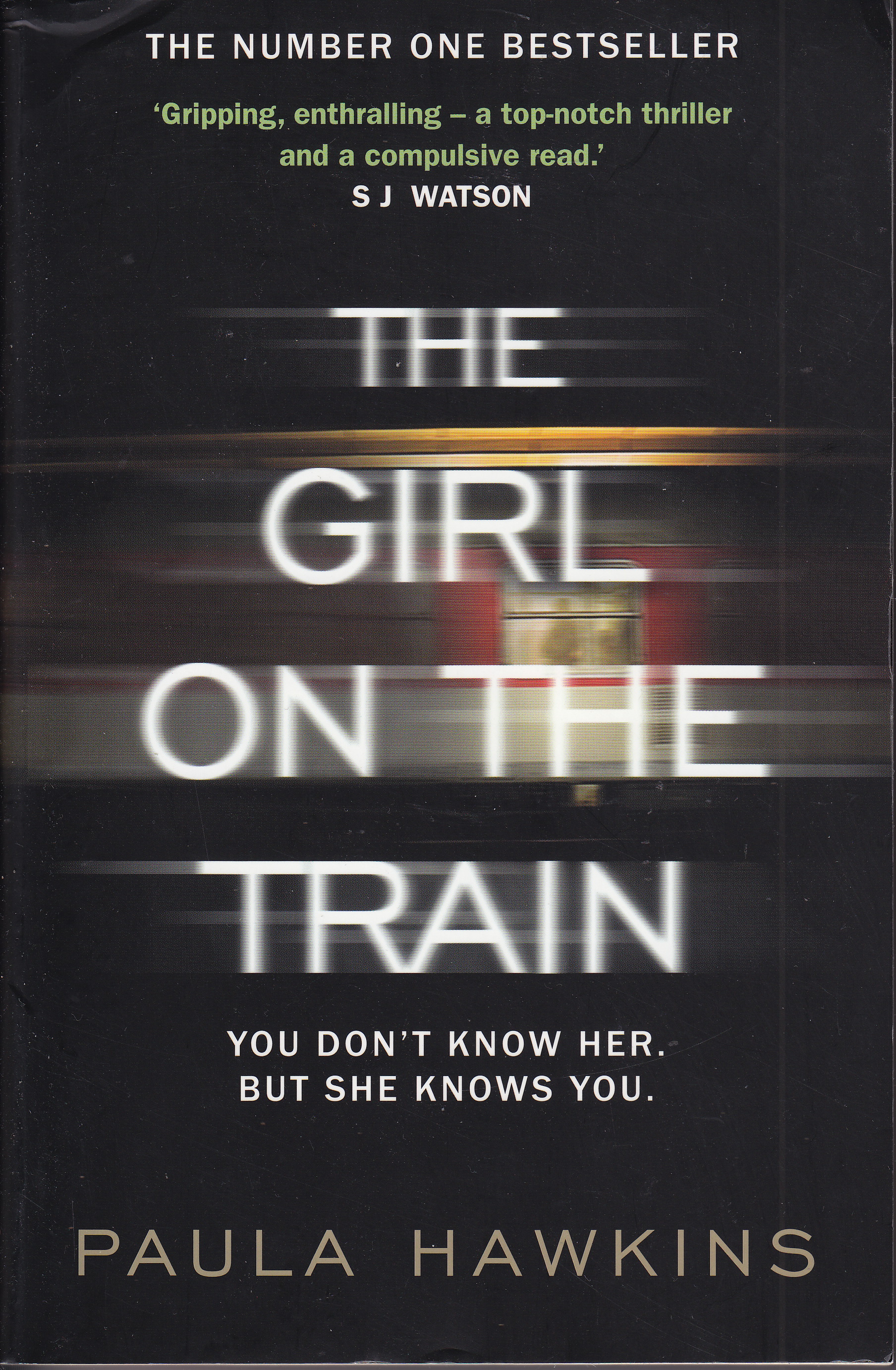
GirlOnTrainCommuting by bus isn’t the most efficient way to do research. While mostly I read non-fiction related to my research interests, monographs are difficult because of the concentration required and the constant interruptions of the road. Journal articles are, still, jealously protected by university libraries so that you can’t access them without an account. So once in a great while I read a novel on the bus to forget it all. I’d heard people talking—literally—about Paula Hawkins’ The Girl on the Train. It is a story about a commuter, and my wife was kind enough to give me a copy for my birthday, so I recently climbed on board to read it. The problem with reading fiction on the commute is that it is difficult to clear your head to negotiate the streets of the city when you’re done. You’re in an imaginary world for a while after you put the book in your bag. The nice thing is you can’t wait to get back on the bus to read some more. It makes commuting bearable. Almost pleasant. Especially when the protagonist’s commute is worse than yours.

I won’t throw any spoilers into this post, but I think it’s fair to say that the story involves trying to find a murderer. It is also a story about adultery. In fact, without adultery there would be no story. I seldom turn to novelists for a course in morality, but The Girl on the Train does have an underlying message that rings true: honesty is crucial for a civil society. The small cast of characters in Hawkins’ book have difficulty being honest with others and with themselves. This makes for a gripping ride, of course, but I couldn’t help thinking throughout that if people were honest the situation would never have occurred. Of course, then there would be no story. And I would’ve had to read something else on my commute.

My reading over the past few years has intimated that something about civilization has put a tremendous strain on people. Whether it is the constant pressure to increase productivity while time off is being stolen by ease of access (cell phones work in the middle of the woods. You can get your email while on a plane), we are never really offline. Our relationships, once the defining factor of who we are, have now become diversions from the time off work. Morality has reverted to what you can get away with. I can recommend The Girl on the Train for those struggling with a long commute. Once in a while I’d look up, surprised to find how fast the trip had gone. It might also give the reader pause to consider the larger implications. Honesty is an undersold virtue. Without it, this civilization we’ve built, and continue to build, cannot long last.


Pope-ulation

My brother, who art near Philadelphia, recently told me that the City of Brotherly Love began towing cars from the no park zone a week before the Pope’s anticipated arrival. There are those apocalyptic concerns for the commute into New York City this week as well. Papal visits are always big news, but Pope Francis has captured the hearts of many, Catholic, Protestant, and non-Christian alike, because of his obvious and sincere care for people. Mercy, kindness, sympathy, and empathy have long been overlooked in many organized religions, and to have the head of the largest Christian body in the world emphasizing just those things has been a breath of well, spirit. As our world has turned increasingly towards materialism fueled by a rationalism that says this physical world is all there is, a hunger has been growing. People need to be assured that there is some meaning in being people.

Photo credit: Tomaz Silva/ABr

Photo credit: Tomaz Silva/ABr

Theological purity is all fine and good, but it is only, literally academic. We send our clergy to seminaries to teach them to understand the rational part of faith. Many laity may not realize that a Master of Divinity is a three-year degree because it has to allow time for spiritual development. I was unlike most seminarians, having majored in religious studies. Coming into ministry from all areas of life—science, medicine, politics, business—many seminarians aren’t accustomed to taking school time to get in touch with their souls. It is a foreign concept in a world where we’re daily told we have no souls. Pope Francis is a pontiff with a soul. And the world has noticed.

We need those to whom we can look up. We need heroes not only of the action movie variety, but those of more human dimensions as well. Two of the most populous cities in the country are preparing for a kind of epiphany. America has long been a country of laissez faire ethics. Leave it alone and it will all take care of itself. We can all see through that. The northeast coast is bracing for a different kind of hurricane this season. It will mean traffic headaches, for sure, and no doubt many will be chagrined at all the fuss. Still, I have a difficult time seeing this as anything other than a hopeful sign. Perhaps we have a need for religious heroes still, after all.


Anabaptist Higher Education

There’s strength in numbers. This is a biblical concept as well as a folk saying (although it is worded differently in the Good Book). The power of conviction grows in a group, and that’s a reason that governments fear mobs, particularly angry ones. As biblical fundamentalism began to develop at the turn of the last century, those who opposed modernity found like-minded believers and gathered themselves together to stand on the same side of multiple causes. Not only fundamentalists, but all different religious outlooks—evangelical groups especially. The more “mainstream” and liberal groups, lacking the conviction of feeling like they’ve been left behind as society moves ahead, have felt less need to organize together. This is something the Democratic Party has felt ever since the Religious Right wed the Republican Party. It is an interesting dynamic. Banding together makes you feel like you’re not alone. So it was that the Council for Christian Colleges and Universities was founded. Higher education, which began in the church, had gone directions that made evangelical groups uncomfortable, so their institutions formed a coalition.

A story in the current Christian Century two Anabaptist member schools have caused waves of protest because they have decided that it is permissible to hire same-sex married faculty. Eastern Mennonite University and Goshen College, sponsored by groups known for their primitivism, have surprised the CCCU with their surprisingly open stance. When is the last time the Mennonites made the news? In response, according to the Century, Union University, an evangelical school in Tennessee, has threatened to withdraw from the Council if this infringement is permitted. This is a perfect example of the dilemma faced by those who support higher education, but hold it to evangelical standards.

Homosexuality, over the past few decades, has become recognized as a basic form of human sexuality. As the stigma has begun to evaporate in the light of scientific, psychological, and sociological studies, the consensus has begun to shift in the wider world. With the Supreme Court decision in June (the first decision autosuggested as one Googles “supreme court”) rightfully following the evidence, any government barriers to same-sex marriages was pulled out from under the evangelical camp, and thus the CCCU. Eastern Mennonite University and Goshen College have decided this presents no problem to their educational mission. Some members of the CCCU, it seems, disagree. The Century blurb asks if this is the beginning of the end of the Council. Probably not. Prejudice finds any hidden corner or recess that it can in which to hide and grow, like any fungus. Groups that identify by what they hate are loath to change, no matter how bright the sunshine. Rain encourages the mushrooms into the open, but the sunlight afterwards creates rainbows.

IMG_2363


Galileo’s Tool

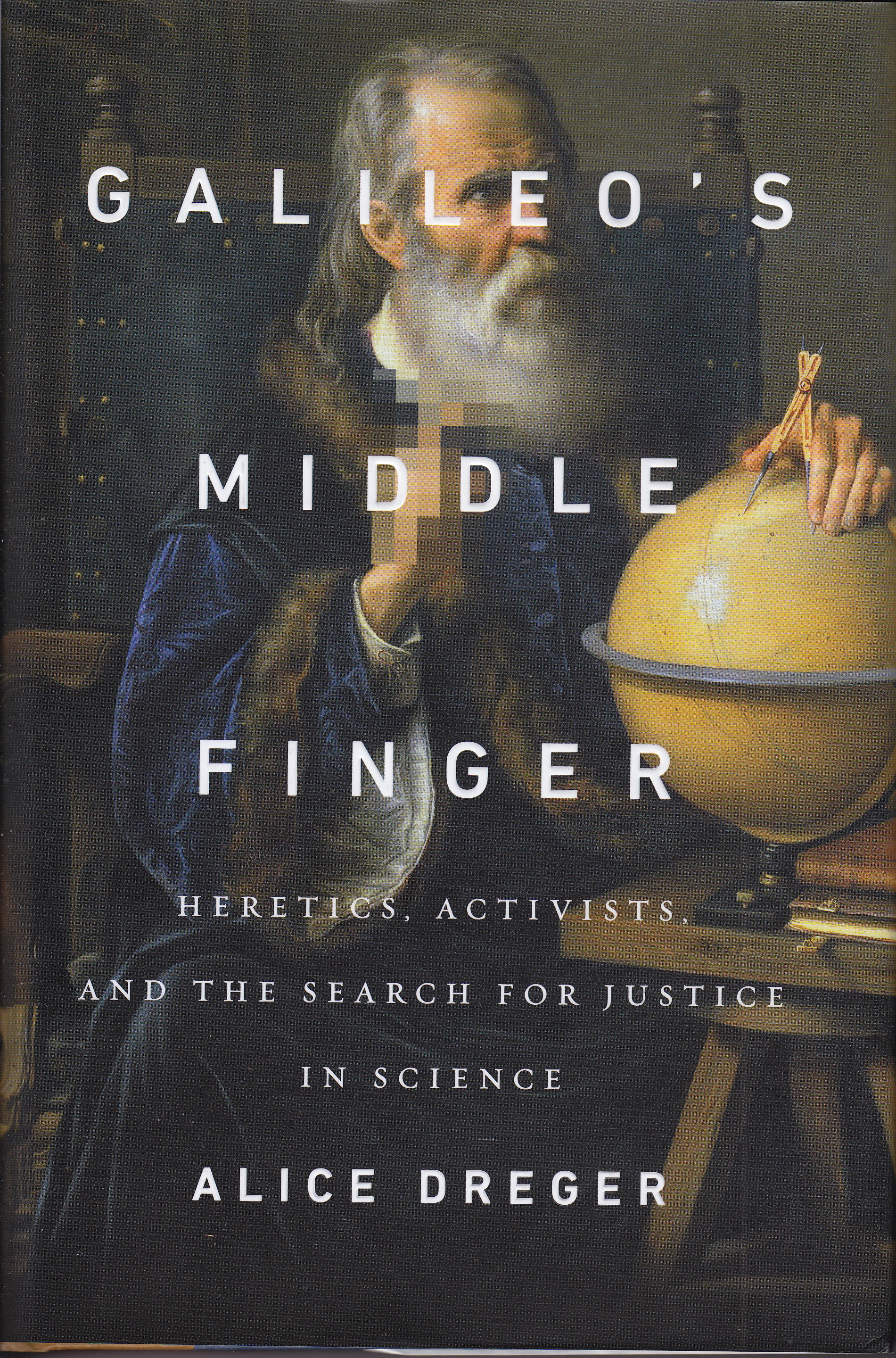
GalileoMiddleEarly in my academic career I got into trouble not because a Harvard professor hadn’t adequately checked his data, but because I had pointed out that a Harvard professor hadn’t adequately checked his data. You see, I was a naive realist. I believed academics were objective, factual sorts who looked for the truth no matter how uncomfortable it was. My honesty didn’t earn me many friends, and I still can’t mention this professor by name because I have seen grown men melt into tears at his name, due to their overwhelming loyalty. By contrast, a fellow Edinburgh student once told me that he disagreed with our mutual dissertation adviser, “on principle.” As the old saying goes, nullius in verba, take nobody’s word for it. Reading Alice Dreger’s Galileo’s Middle Finger: Heretics, Activists, and the Search for Justice in Science drove home a number of important points, one of the most memorable being that academics take real risks when they won’t fudge the facts to fit the establishment’s expectations.

Although this autobiographically revealing book is about as honest as a writer can be, it deals largely with issues of social justice in the context of those who “don’t fit.” Intersex individuals, especially, are treated before they can give consent and live their lives based on other people’s expectations of what their gender “should be.” Like most people I was raised thinking there were only two genders. Science has consistently demonstrated that “gender” is a construct that occurs along a continuum. Some species change gender in their lives. Some have such complicated reproductive techniques that far more than two genders are postulated to make sense of it all. And yet, when it comes to humans, we suppose that we’re either female or male. And religions consistently claim that any sex outside those parameters is evil. We are so naive.

Dreger focuses her attention much more widely in this important book. She shows how universities, constantly becoming more corporate, often don’t support research that challenges their investments, or “branding.” She demonstrates first-hand the character-assassination that academic snipers use so well on those who follow the evidence. She is living proof that education and activism should go together. Intricate and with bizarre loops and twists thrown in, her account of what some people will do to silence others, and get it peer reviewed, saddens me. I’ve always believed that education is the surest way to solve social ills. Education, however, is increasingly being purchased by special-interest groups that protect the establishment. The establishment may no longer be the church, but we need another Galileo, and soon.


Biblical Violence

756px-Winchester_House_910px

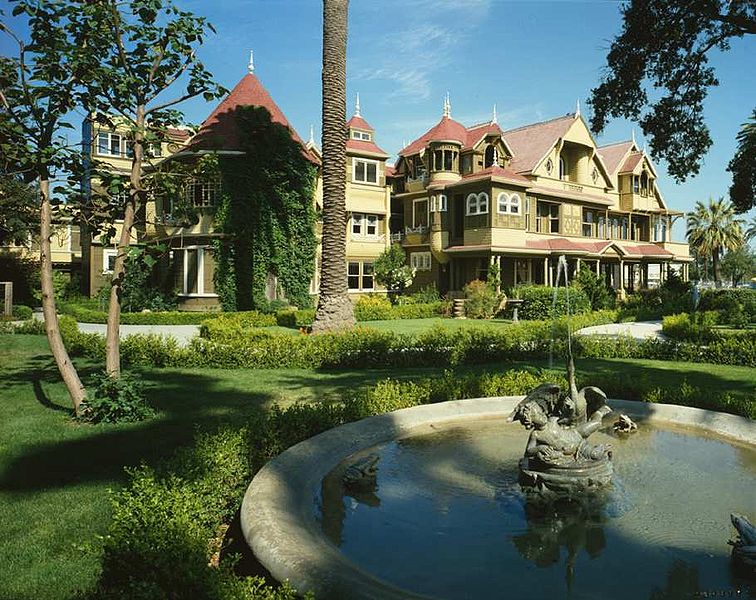
Sarah L. Winchester, it is said, was a haunted woman. The widow of William Winchester, she was heir to the tremendous amount of money brought in by sales of the renowned Winchester rifles. Fearing the haunting of all those killed by the weapons, she built what has now become a tourist attraction—an unfinished mansion that was intended to prevent those ghosts from living with her. With the spate of recent multiple shootings, we might wonder how many other gun manufacturers are living haunted nights in their comfortable homes. A recent petition has been circulating to stop Spike’s Tactical from producing The Crusader assault rifle. Predictably, the sales have been so overwhelming that the religious rifle is on backorder.

The Crusader, as the photos reveal, is emblazoned with Psalm 144.1 “Blessed be the Lord my Rock, who trains my hands for war, my fingers for battle.” It also features a Crusader’s cross and trigger setting labeled, Peace, War, and God Wills It. Blasphemy in carbon fiber. I suppose I’m hopelessly naive, not being aware that guns could be purchased online, but the overwhelming demand is nevertheless disheartening. It used to be that the Christians were the good guys. You certainly didn’t have to worry about them shooting you. That was the job of the heathen. So many multiple shootings took place this summer than I couldn’t keep track of them all. I live in a world where guns play no role and I wonder if everyone wouldn’t be happier if we didn’t lay down our arms and learn how to get along.

Of course, the Bible is a book where violence against enemies is permitted, and, in places, even encouraged. Society has repeatedly declared that there is no need for experts trained in how to interpret the Bible, and this is what happens. Psalm 144 is a poem for deliverance from enemies. Historical criticism would likely place the piece as written during a time of war. The era in which the majority of the Bible was written was anything but peaceful. Those parts of the Good Book that are particularly extolled are often those that suggest that the answer to war is peace and that setting aside your own will for the well-being of others is something we should all be doing a bit more often. But we cannot deny that “Peace, War, and God Wills It” aren’t part of the violent worldview we also encounter in sacred writ. I wonder what Mrs. Winchester would have had to say about such mixing of the Bible with guns.


The Day After

I don’t mean to be insensitive. Sometimes I get so busy that I don’t even look at the date for days at a time. This can’t be good, but I was surprised when the anniversary of 9/11 caught me completely unawares this year. That’s the kind of summer it’s been. Not acknowledging 9/11 to New Yorkers is like making ethnic jokes—it’s inherently offensive. The City is always subdued on this date of infamy. Coming the same week as Labor Day this year, I think my timing was just off. In my family, September was always the month of birthdays. My present to my brother of the 12th was late in 2001. I wanted to find something old. Something solid. Something time-honored. I wanted a sense of stability to return to a chaotic world. Being an inveterate fossil collector, I went to a local rock shop and bought him a fossilized cepholapod shell. It wasn’t much, but it was a message and a metaphor.

Today, being a birthday and a day after, feels a little like an apology to me. At the time of 9/11 I knew a few colleagues teaching in New York, but in 2001 I’d not really known the city. I’d visited a few times. I was still employed, although my personal career trauma was, unknown to me, already underway. And looking at the state of the world some fourteen years later, I wonder how much better things are. We haven’t suddenly improved, and as a nation we seem more deeply divided than ever. Candidates who resemble their caractitures more than actual people frighten me. The rhetoric is a sermon of doom. Have we all forgotten how that morning felt?

Television reception was poor, or it may have been the tears falling from my eyes as I watched, at the safe distance of Wisconsin. We’d just sent our daughter off on the school bus and now wanted her back home. I called my brother in Pittsburgh in a panic. The news had said a plane had crashed in southern Pennsylvania somewhere. It seemed the the possibilities of horror were endless that day. And yet. I awoke yesterday fretting over work. My mourning routine was harried and frantic. I didn’t even know what day it was. I glanced a paper headline on the way to work and realized that I’d overslept a tragedy. Some scars never heal. Those wounds cut by religion are the deepest. So we find ourselves on the nexus of a tragedy, a birthday, and a new year. How we respond is entirely up to us.

Time2Remember


School Bible

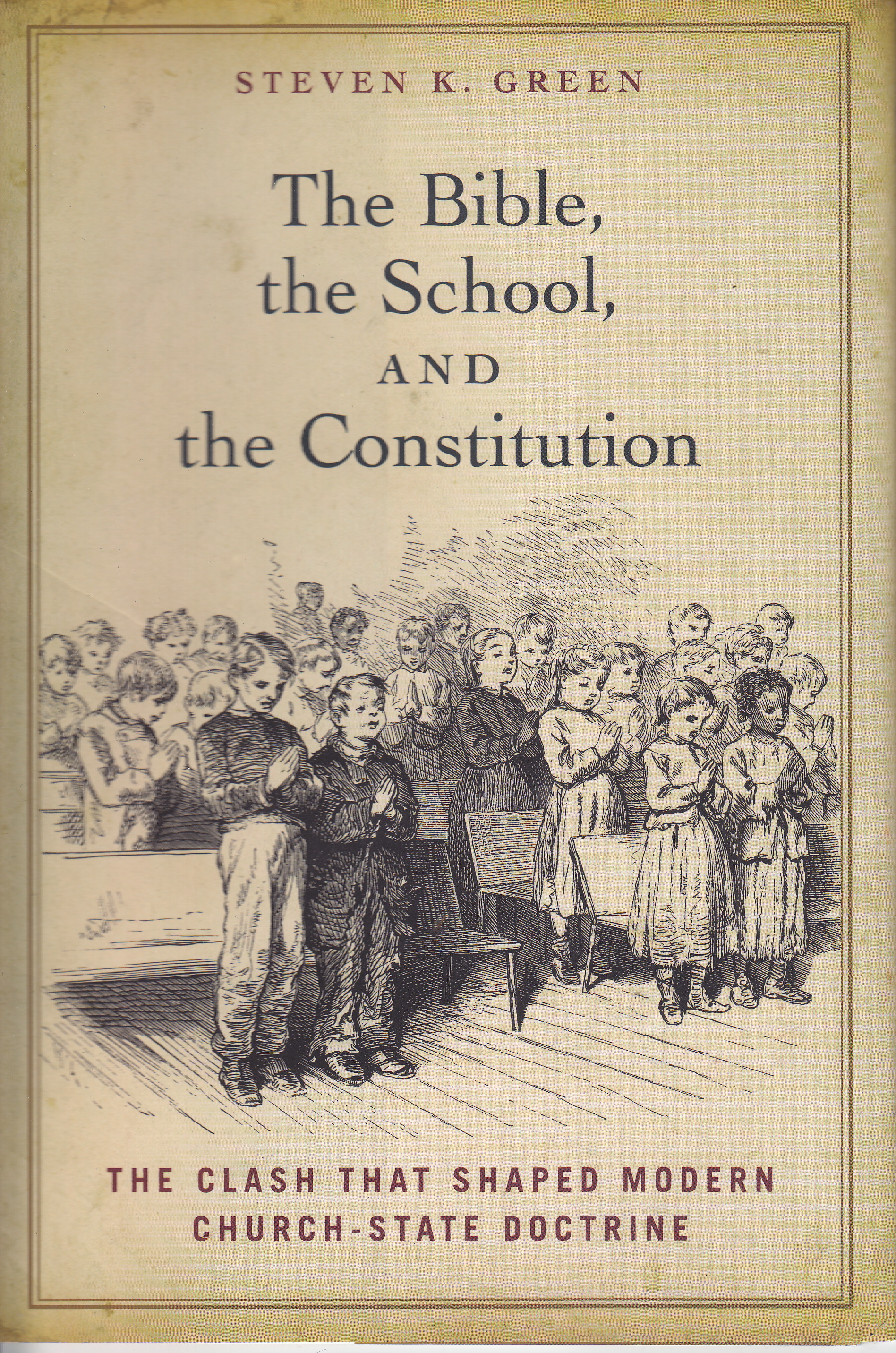
BibleSchoolConstittnAs a very young scholarlet, I recall the horror expressed when some form of prayer was expelled from public schools. It had to have been in the late ’60’s. Maybe early ’70’s. The nation, it seemed, was headed for Hades in a hurry. Little did I know that this was part of a long, drawn-out—tired, even—battle. Steven K. Green’s The Bible, the School, and the Constitution: The Clash that Shaped Modern Church-State Doctrine gives pretty close to the full story. Bible reading in public schools was foundational, in the beginning. In the early days of public education, the Bible was ubiquitous. It was considered non-sectarian since practically everyone was a Protestant. When the religious mix of the country began to diversify in the mid-1800’s, a new dynamic emerged. People got upset. There were riots. People were killed. Legislation was proposed that would explicitly add God—Jesus even—to the Constitution. Who knew?

Green’s study takes a close look at the various cases that arose around the time of the Civil War regarding the Bible in school. Protestants, it seems, didn’t appreciate that Bible reading, in the King James Version, without comment, violated Roman Catholic policy. The first to challenge Bible reading in public schools were Christians. Secularists only joined the fray later. I’m oversimplifying, of course. Some Catholics wanted equal time, the reading of the Douay Bible instead of King James. Others wanted Catholic schools to receive state funding. Nobody was really aware of other religions such as Hinduism or Buddhism. It was a country of limited religious imagination. Various groups tried in various ways to get God—their God only—into schools as the default deity. And so the fun continued.

For me, it was eye-opening to realize that all of this isn’t new. The legislation, since long before my grandparents were born, has been heading in the direction that led to the aggrieved tears in my youth. Green points out, however, that the conflict has never been completely resolved. School vouchers and a long spate of evangelical presidents have had their impact on our children. The Hades that we feared has only come with the weaponizing of our culture, largely by those who want Bible reading back in the schools. The thing we fear finds us through the thing we love. Ironically the issue never seems to be education. God or guns—it’s the power that we want. The early debates revolved around morality. How could kids be moral without Bible reading? How the definition of morality has changed. We, as a nation, still can’t figure out religious freedom or how to let kids be kids.


Hello, I’m Not In

I recently received two “out of office” replies to my own “out of office” message. Being a fan of futility in all forms, this struck me as a great paradigm for the modern age. Email has made vacation superfluous, of course. I was actually out of town moving my daughter back to college, so email was not high on my list of priorities. When I’ve tried to leave work without putting on a message explaining that I’m not there (I tend to respond to emails quickly for an editor, so I’m told) I’ve been politely informed that it is rude not to let people know you’re away. Or computers. My non-message prompted a non-messages from other vacationers’ email accounts, and when I returned, I had to read them as well as the original email that had received my impersonal reply. Both had sent their replies, despite their out of office messages. This is indeed a brave new world.

It is a world where human interaction is optional, at best. Our industry grinds away making devices and services that people will buy with electronic money sent over a network that no one really controls. And we think nothing of it. Business has blinded us to how meaningless humanity has become. Business runs for business’s sake. Even so, we’re asked to check our email when we’re on vacation, in case something important comes up. I used to think vacation was important. It is the sop we’re thrown for working jobs that lack the visceral appeal of growing our own food and relying upon ourselves. Thoreau on the web.

Benjamin_D._Maxham_-_Henry_David_Thoreau_-_Restored

Science fiction is the great predictor of where we might go. Most of it is completely fiction, or course, but some manages to catch glimpses of the truth. Skynet, or even the Matrix or Hal, have sent messages to us. Machines that think are devices we don’t understand. We haven’t even defined consciousness to a level that satisfies anyone. We know it because we feel it. Oh, I’m not really an alarmist about all that. I do wonder, however, where we are headed when technology races ahead while the humanities are disparaged. All those who emulate Spock seem to have forgotten that his appeal is that he’s half human. We build our aliens to specification. And they now pass polite greetings when they speed past each other on the cyber-highway with no laws.


Without Precedent

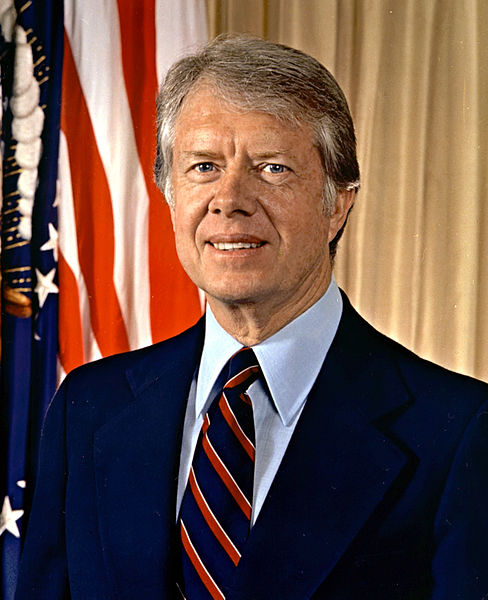
Leonard Pitts Jr. is a national treasure. So many of his Op-Eds make such unwavering good sense that it is difficult to believe he’s not a household name. His recent piece in the Miami Herald concerning Jimmy Carter’s announcement that he has cancer is a case in point. Many reporters would be quick to point to the tragedy since, although the Carter administration is generally undervalued, nobody would ever say that Carter is less than a true gentleman. Pitts, however, takes us deeper. He looks at this understated announcement in terms of faith. Faith, as he points out, in a world where it has taken on an unsavory, if not downright evil, flavor. We do indeed hear about faith that moves mountains, but it is with the power of fully fueled passenger jets. We hear about the faith that builds mega-churches while the homeless and hungry sleep in the city streets. Pitts is quite right, our faith requires a shot in the arm.

JimmyCarterPortrait2

I sometimes wonder how we have come so far down what seems to be obviously the wrong road. Our religion has become a charade and it is used for people to get what they really want rather than to make the world a better place. I always thought true religion was putting others before yourself. Nothing like working in Manhattan to show you how totally off-base such sentiments might be. Jesus can sell books, but his teaching is definitely passé. Yesterday. Old-school (but not in the good way). We have faith in money because immortality, or at least the antidote for mortality, is readily for sale. There’s one born every second. This, we are told, is what gives life meaning.

Of the presidents who’ve retired, we generally hear very little. They sequester themselves and write their memoirs to gain even more money for themselves. Carter has been known to be out there building houses for the poor, living what presidents all say they believe when they ask us to cast our votes in their direction. I’ve always been proud that the first president I ever voted for was Carter. Of course, it was in the beginning of those recent Dark Ages known as the Reagan Administration, and I had voted for the underdog. My faith in the political system has been severely challenged since then. I have seen stolen elections treated as legitimate by those who can’t possibly do too much for themselves. And I remembered my first lowly vote given for a man who, perhaps more than any other, showed Americans their misplaced faith after he had been denied a second term in office. Although Pitts doesn’t say it, I can see it in his pen: the first shall be last, and the last shall be first.