Something Lost

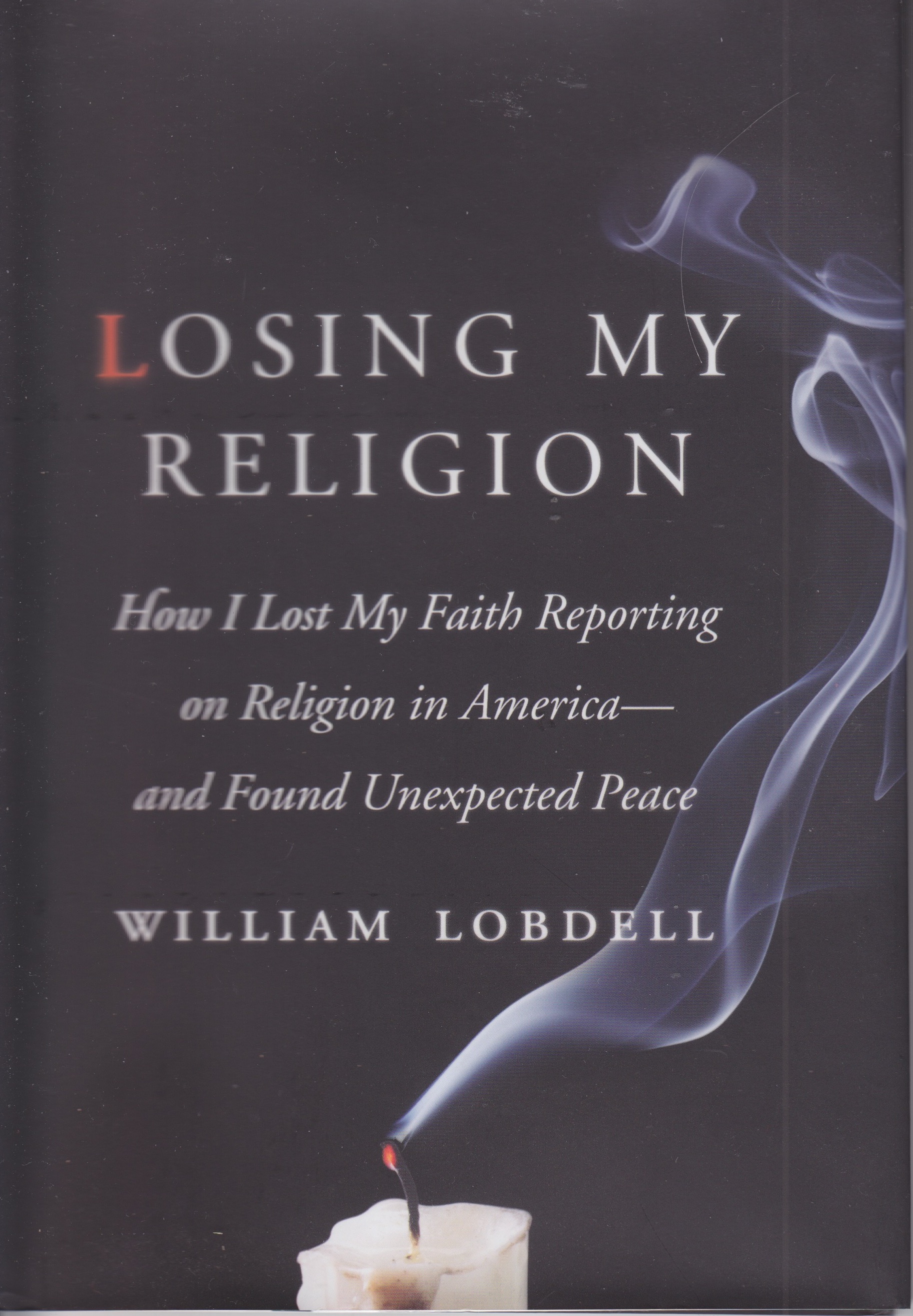
LosingMyReligion“Losing my religion,” I learned some time ago, means “going crazy” in some regions. It was that REM song that made me look it up. Losing My Religion, by William Lobdell, is much more literal. Having a hunger for spiritual memoirs, even if they end up with non-belief, has become an avocation for me. Growing up religious and having paid a pretty steep price for it throughout my career, I feel a bit like I’ve just risen from the analyst’s couch after a particularly helpful session. Here are people baring their innermost selves, trying to make sense out of a world that doesn’t add up. So it was for Lobdell. Since he was a religion reporter for the Los Angeles Times, his is the compelling story of a specialist who’s seen through the veil. His honesty is disarming. When I read such memoirs the question in the back of my mind is always, “what did it?” What pushed a believer over the edge?

By far the majority of these confessions I’ve read are those of women. Since religions have historically treated women poorly, it stands to reason that they might have second thoughts about what they’re being saved from. Lobdell, on the other hand, narrates what brought him to Christianity in the first place, and what forced him to conclude that it was wrong. Going the well-worn path from evangelical to mainstream Protestant to Catholic, he was seeking greater depth at each stage. Then theodicy. Theodicy is a god-killer. No matter how we frame it, there is no acceptable reason for good people to suffer needlessly. Out primate brains simply reject it. That’s not to say that for some faith can’t overcome such persistent doubts. It’s always a struggle, however, and, as Lobdell points out, not everyone is capable of believing what their mind tells them makes no sense.

One thing that stands out from all the spiritual memoirs I’ve read is how religion has such a difficult time explaining suffering. I suppose here’s where eastern religions generally have a stronger starting point. By acknowledging that life is suffering, they ask what we can do about it. Western religions, which often extol the good life, run into problems when theodicy hits. It’s almost as if the concepts can’t keep up with the realities of day-to-day life. Religions are often part of the culture you inherit, being born where and when you are. They also reflect belief structures from the age in which they emerged and those structures evolve over time. Today’s Christianity shares ancient concepts with the first century, but also modern sensibilities about psychology, culture, and philosophy. It can be a difficult mix, not least because it’s artificial and synthetic. As Lobdell notes, he isn’t alone in all this. It is, I might suggest, one of the reasons that studying religion is so important, even for those who do not believe.


Buying the Kingdom

Who doesn’t admire the presidential wannabe who can take a personal hit without flinching? We are, after all, a nation of tough-minded individualists who think they know quite a lot about God and the way the universe works. So Donald Trump has been, according to Steve Benen on MSNBC, been saying the Bible is his favorite book. As Benen notes, when asked to point to some specifics, the ultra-rich contender prevaricates, recently saying that of the Testaments, he liked both equally. I wonder which verses are really his favorites? I’m guessing Proverbs 11.28 must be among them: “He that trusteth in his riches shall fall; but the righteous shall flourish as a branch.” Or 28.22, “He that hasteth to be rich hath an evil eye, and considereth not that poverty shall come upon him.” Or maybe Ecclesiastes 10.6, “Folly is set in great dignity, and the rich sit in low place.” It could be that the New Testament has a slight edge over the Old. “Then said Jesus unto his disciples, Verily I say unto you, That a rich man shall hardly enter into the kingdom of heaven,” (Matthew 19.23) must be right up there. Or Luke 6.24, “But woe unto you that are rich! for ye have received your consolation.” Maybe James 5.1, “Go to now, ye rich men, weep and howl for your miseries that shall come upon you.”

Actually, a near constant vexation to those who try to take the Bible seriously is it’s refusal to take one position on wealth. Written by many people over hundreds of years, it is clear no single viewpoint emerges. Wealth is considered both a blessing and a curse. One thing, however, that the Bible refuses to countenance is the presence of great wealth while poverty still exists. Those who have riches are expected to make sure everyone has enough before enjoying their surplus. Who among the one percent, no matter how much they claim to give away, can ever honestly claim the Bible as their favorite book? There are places where the rich are let off easy, but they are few. Wealth corrupts, and those who have riches in great abundance don’t come off looking good. Still, you can’t be a presidential candidate without the Bible. And money.

I can think of no better use of the Bible as an iconic book than Trump’s claims to valuing it as his favorite, if private, book. This is a Bible containing no words. It is a hollow leather shell that can be used to buy votes—spiritual currency of the highest market value. When is the last time someone could be a non-religious candidate for the highest office in the land? If you can buy your way into the White House, you can surely buy it into Heaven as well. Every god has his price. If I were a rich man running for the presidency, I’d put my money in needles. If I were a literalist, I’d have one cast so large that I could easily walk through. This would be my best chance to inherit every possible kingdom through the use of money.

IMG_0322


Dog in a Manger

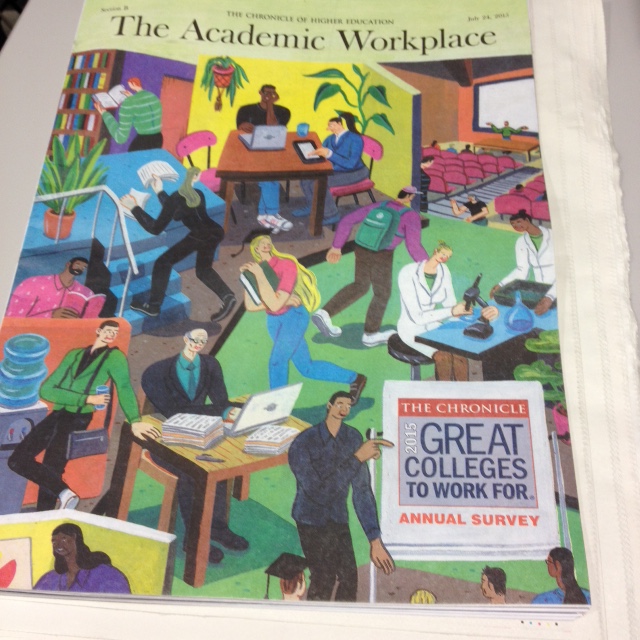
I’m easily amused. I suppose I never outgrew that sophomoric fascination with the little things that seem like big jokes. The other day, for instance, I was given a copy of the Chronicle of Higher Education to read. The supplement featured Great Colleges to Work For; what are we supposed to do with that? None of them have jobs, so why advertise? It’s so funny when those who have a great thing going advertise it, even though there’s nothing to it beyond bragging rights. Those of us who’ve tried repeatedly to get into higher education (and I even succeeded for nearly two decades, in some measure) would love to take a job at even the worst college to work for, but they’re not hiring either. Nobody is. So why does the Chronicle want to remind us that the fruit will always be just out of reach, and that the water will be just too low to sip—even if we’re bathing in it?

IMG_2417

The frustration that settles in when the laughter dies off is because everyone I know agrees that I should be teaching. Colleagues, tenured and not, former students, friends. “Why aren’t you a professor?” they say. Many of my best friends are. Full professors. Sabbaticals. Grants. Time that’s not spent on the bus or in the office. Perks of every sort. Ask them. Or ask the Chronicle. I can’t reach the grapes, but they’re probably sour anyway. I mean, I can’t help it that I spend hours on faculty webpages and see those who made the cut not writing the books I have like jets in a holding pattern over Newark. How can the get written when time is he one thing I haven’t got? (Oh, and money too, but you don’t need so much of that to write.) Any one of those Great Colleges to Work For appear on the advertisement pages? Anyone hiring a warmed over religion professor who reads a hundred books a year? Nah!

Just joshin’ ya. I poke fun at higher education like you can only tease a lover. I’m into exercises of nihilism as much as the next prof. Didn’t old Ecclesiastes say it centuries ago: learning is a zero-sum game? So the academic vehicle that doesn’t boost the number of jobs offered will continue to tell us where we should work, if there were any jobs. Perhaps professors of privilege demand more than I think. Just give me a classroom and a syllabus to teach her by. I’ve done so in very primitive conditions at a college that make no marks on the “Best of” scale. Real world experience, however, doesn’t count. We’re only telling you what you can’t have anyway. Isn’t that better than where you work now?


Interstices

College move-in weekend can be a stressful time. In our particular case it means crossing a couple of state lines and staying in a hotel. Well, I suppose we technically might manage to load, drive, unload, and drive in a day but that seems awfully abrupt. You need time to shop for those supplies that might have run out, wait for roommates to arrive, and spend the last quality time together before facing an empty nest for four months. So we find ourselves in a hotel. It’s the one closest to the university, but it is also the host to some kind of event that draws a lot of people but fails to make internet event calendars. We usually stay at this hotel, and they even emailed us at the start of summer to make reservations early. The clientele this weekend is a cross-section of town and gown. It’s a mixed group. In the hall I see other students about, but there are those here who’ve come for non-academic entertainment, whatever that might be.

The barking started about 6 p.m. I grew up with dogs and most members of my family still have dogs. In fact, evidence points to the dog—the wolf at the time—being the first of the domesticated animals. Before agriculturalists rounded up sheep and goats and cattle, the dog accompanied the hunter-gatherer and both engaged in a win-win scenario. The successful hunt of a large animal left food for both humans and their best friend. Ironically for dog-owning anti-evolutionists, dogs are among the most selectively bred of animals. Looking at a pug, or a maltingese, it’s difficult to conjure up images of the wolf pack. The dog next door, obviously lonely and abandoned, was the small, yippy sort with a high-pitched, insistent bark. It was clear there was more than one in there. And, of course, hotel doors are about the least soundproofed surfaces on the planet. It was like Fifi and company was in the room with us. When I turned in about 10, the barking was still going on, and the front desk said they were trying to locate the guests registered for that room.

What's that shining?

What’s that shining?

I grew up with dogs, and I understand the attachment. I do, however, sometimes wonder about the courtesy of others. Some actions impact other people in direct ways, and sometimes we just don’t think of the consequences. I don’t just mean dogs. Lying awake, listening to distraught pets, I thought of the point of higher education. It is an “industry” in which I have a strong investment. The point of it all is to make our life together on this planet better for everyone. There will always be those who can’t travel without their dogs. There will always be those who have to venture far from home to get the education they want. Can’t there be affordable hotels with doors to dampen the noise just a little bit? Or maybe some of us a just over-sensitive at times like this. Maybe it’s time for me to go back to school to try to figure it all out.


Monumental Time

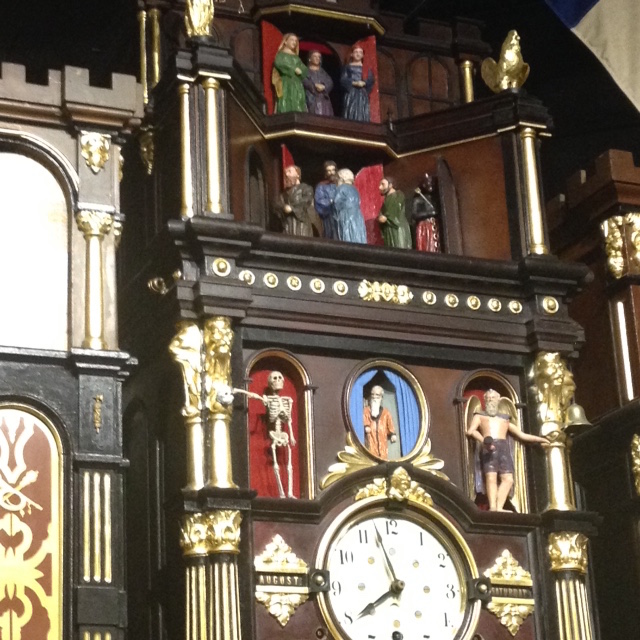
One of my nieces works on the 10,000-year clock (aka Clock of the Long Now). I’ve written about the project before—the object is to build a clock that will run a myriad of years. For comparison, 10,000 years ago we were only beginning to tamper with this concept we call civilization. Clocks have been my muse this week. Monumental clocks have long fascinated people. The Engle Clock, in the National Watch and Clock Museum, was completed about 1878. In those days, these large clocks (it literally weighs half a ton) toured the country as technological marvels—something that fails to impress, I suppose, in an iWatch age. Nevertheless, this is a clock with all the whistles and bells—literally. Figures come marching out at various fractions of the hour, culminating with a skeletal death chiming the end of each sixty minutes. The figures are both secular and sacred, a mix that the people of the days just after the Civil War no doubt appreciated.

IMG_2464

At the top of the clock, at quarter to the hour, Jesus appears. Doors above him open and the “three Marys,” including, of course, his mother, come out. Meanwhile the twelve disciples process in front of their Lord, each respectfully turning toward him. The devil appears, shifting from window to window, and one disciple does not turn to greet Jesus. This is Peter who instead turns his back, and immediately, to borrow a Gospel trope, the cock above their heads crows. Finally, as the apostolic procession winds down, the Devil appears last in line. It is all quite elaborate. The clock took Stephen Engle two decades to build—time he would never recover. The religious message, I suspect, was taken much more seriously then than it is now. After all, the clock is a museum piece.

Throughout the museum, references to Christianity abound. Not only Galileo, but many Medieval time-watchers saw God literally in the face of time. Clocks were embossed with religious figures. Hours were kept to remind the faithful to pray. The time, as the New Testament insists, was short. Ironically, we still build monumental clocks. Some are based on the 9-billionth of a second vibration period of cesium, while others are made to last ten millennia. We have secularized time. Now its purpose is mainly to tell us when to go to work. When to wake up to go to work. And when we might eventually leave work. I might enjoy building clocks myself. The fact is, however, I don’t have that kind of time.


More Blessed to Give

Religions, we are told, are in violent opposition. There’s no denying that sometimes it’s true. It is a sad commentary on belief structures when one way of looking at the world only finds validation in the destruction of other perspectives. Despite all that, religions can, and do, reach beyond their parochial interest to assist others. Recently I mentioned a story in The Christian Century of an Islamic effort to raise funds to rebuild vandalized black churches in the US south. The idea of Muslims helping Christians reestablish their, by nature, heterodox teaching is, I believe, newsworthy. The most recent issue of The Christian Century has a story of a Jewish group in Israel raising funds to help repair a damaged church in the Holy Land. These two stories have made me wonder why we so seldom hear of Christian groups raising funds to help rebuild mosques or synagogues. Surely it must happen, but we, who rely on the mainstream media, so rarely read of Christians helping others that it becomes a surprise when they do. Is this reality or just what we’re taught to see?

Please don’t misunderstand—I’m not suggesting that Christians don’t help others. Indeed, one of the founding principles of the Christian movement was the care of others, be they pagan or orthodox. Still, in my own life I’ve experienced the heartless, cold treatment doled out by “conservative” groups who believe that maintaining their idiosyncratic view is the highest possible mark of faith. Well beyond reaching out a hand to those in need. Far and above the care of fellow human beings. This distortion of any kind of historical Christianity has become what the mainstream media presents as normal. Meanwhile, millions still attend church every week, trying, in some measure, to make the world a better place.

Carnegie-1903

This isn’t the same, all politics aside, as supporting Israel as a nation. Many Fundamentalist groups do. In fact, they insist that our national budget include aid for Israel. Not because they particularly care about the Jews. In some viewpoints, the end of the world cannot come without Israel regaining a status that some read into obscure Gospel passages and the book of Revelation. This is not the same as donating to rebuild a torched synagogue. It is worlds away from restoring a vandalized mosque. It is naive to suppose that there is one normative Christianity. Historians inform us that such a monolithic entity never has existed. Temples, synagogues, churches, mosques—these are all expressions of the deepest of human longings to find and be in communion with that which is beyond the everyday. Any religion can become radicalized. All, however, also have the potential to look beyond themselves. When they do it is newsworthy indeed.


Being Sheepish

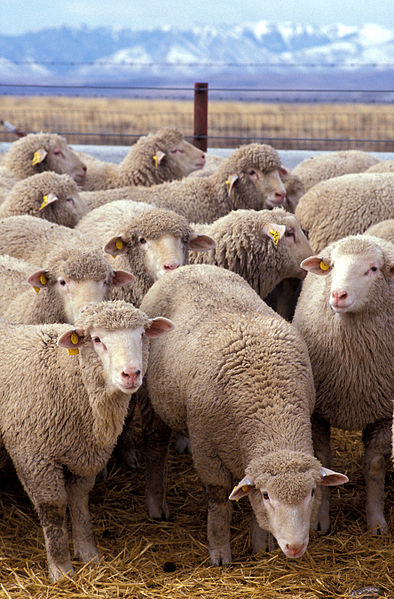
Being among the animals at the fair, you begin to notice things that are foreign to those of us with exposure only to the house-pet variety of fellow creatures. Up close, for example, sheep are bigger than you might think they are. Since they’re domesticated and wooly, I tend to think of them as little—maybe knee-high—and in need of constant attention. The truth gives the lie to such false constructs. It was in the course of seeing sheep that I found out about Shrek. Shrek the sheep, now unfortunately deceased, has his own Wikipedia page. This was a single-minded ungulate who decided that the ’70’s lifestyle wasn’t truly over. The New Zealander took off from his heard, to avoid shearing, so the story goes, and hid in a cave for six years. With echoes of Odysseus, the ruminant survived just fine without human help and grew a serious coat of wool. When finally discovered and, of course, sheared, he gave enough wool to make suits for twenty men. Shrek had to be euthanized four years ago.

The story might have ended there. Shrek, however, fueled the imagination of several Christian writers who saw all kinds of parables in the lifestyle of this prodigal sheep. After all, in the pastoral culture of first-century Palestine, sheep suggested themselves as the fodder for the original set of Christian parables. Sheep wander, get lost, and get saved. They need someone to look after them. A good shepherd, preferably. In fact, sheep tales go further back in time, even to the Hebrew Bible. Perceptive prophets noticed how similar we are to our distant, quadruped cousins. It would be very odd, in hindsight, if nobody had picked up on the story. The mental picture is simply too appropriate.

394px-Flock_of_sheep

Metaphors, some have argued, are what make us human. We can see ourselves projected into just about any part of nature, and looking at nature, we can spy ourselves. Parables, by their definition, are never literal. We have to peer into them and find truths that gainsay the obvious. If we’re honest, we’d have to admit to being very much like Shrek. Who doesn’t want to run away and hide from what “the man” instructs us to do, against our own will? Yes, sheep have wills. Like any sentient creature, they have a sense of what they want and the best way to survive. With our fancy neocortex, we’ve domesticated sheep and bred many of their natural tendencies out of them forever. Still, I’m heartened to learn of Shrek the sheep. The lesson I draw from his story may not be the same as many Christian websites, but it will be no less true, I should think, for being such.


Charity

On occasion someone will comment, either here or on my other popular writings, that I lack the objectivity of a journalist. This should be no surprise, really, since I’m in fact not a journalist and what I’m writing here is opinion—an extended op ed—if you will—from someone that society has decided should have no official voice. Who listens to an editor? They don’t make content, they improve others’ work. News, however, often leads to good commentary. A recent blurb in The Christian Century caught my eye. A group of Muslims, led by a student in Chicago, raised almost $50,000 to help rebuild black churches that had been destroyed in the south. A journalist, I’m guessing, might not find much of a story here. To me this show of goodwill speaks volumes.

In the news were hear about Muslims as terrorists and fanatics. How often do we hear that charitable giving is one of the five pillars of Islam? Many Muslims are charitable to those outside their faith community. In this case, they donated money to rebuilt houses of worship for a rival religion. There’s little to hate or despise here, so it really isn’t news. People are disposed, in general, to help one another. Indeed, biologists have long noted that we are a cooperative species. A friend recently pointed out that we are dissuaded from helping others more out of a fear of being sued. Money, as most religions realize, is antithetical to true belief. Most religions begin as an effort to make life better for people. When they become corporate, as with all things corporate, they turn inwardly and focus on how to improve things for themselves. There are still many, however, who understand the point behind religious traditions. It’s not really all about God. The ones who need our help are our fellow humans.

782px-Карло_Боссоли._Татарская_школа_для_детей

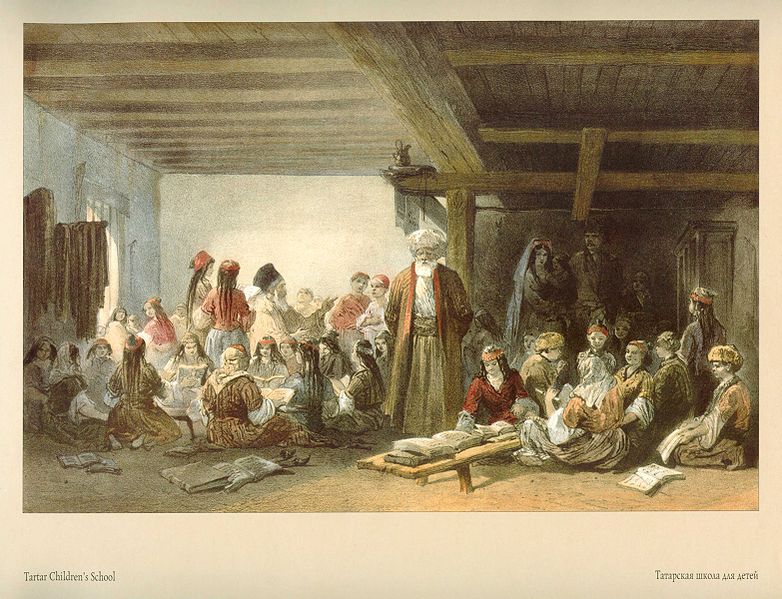
Faatima Knight, according to the story, spearheaded the effort to raise money. She is a student at Chicago Theological Seminary. A Muslim studying in a Christian school, helping oppressed Christian people. The media, it seems to me, could do with a few courses in ethics. Is it ethically responsible to caricature religions as ignorant and spiteful? For all we know Christians fall into only one of two types: those who follow Pope Francis and those who want to teach your children that we didn’t evolve from monkeys. The good deeds done by those motivated by the teachings of their founders are quietly passed by. Yet they are among the loudest deeds people do. I have to wonder if most Christians would rally around an effort to rebuild a mosque destroyed by hate. I think I know the answer, but then, I’m only a guy whose opinion doesn’t really matter.


All’s Fair

The county fair is an institution that tastes like a real slice of Americana. My family’s been involved with our 4-H Fair for several years now. Long days sitting under tents in the August heat, showcasing to young people that a good time can be had without the usual kinds of diversions that lead to regrets and tattered dreams. For many kids the fair will be as close as they ever get to a cow, goat, or chicken. For the less rurally inclined, there are pets like cats, dogs, and small animals. For others there are model trains, rockets, and airplanes. Increasingly robots and more current forms of art such as steampunk and film-making are appearing. In short, there’s pretty much something for everybody there. I know that my entire family has benefited from the experience. I didn’t know about 4-H as a child, so this has been a pleasant awakening for me.

IMG_2408 copy

As I wondered the fairgrounds, something that I suppose I’ve noticed before hit me with a new clarity. The Arts and Sciences tents are right next to one another, and these represent the classic forms of liberal arts education. Yes, the Gideons and Right-to-Lifers are here, but they’re over in the commercial tent. They’re selling something. Education—true education—is free. Those who grow up on farms can learn an awful lot about science by watching animals. The more formal schooling, however, asks for deeper engagement. Creative writing helps to explore ideas that simply don’t flow in conversation. Photography forces you to look at something from someone else’s point of view. Science teaches close observation and practical extrapolation. This is like a little university set up in a grassy field with a very affordable tuition.

The old hiker’s mantra goes “take nothing but pictures, leave nothing but footprints.” This year there was a real emphasis on footprints. The kinds of footprints that many clubs chose, however, were carbon. Many adults have grown up in a culture of consumption and disposal. Our young are now trying to demonstrate for us the errors of our ways. Sure, there are resources to last for centuries yet, but they will not last forever. Who are we to suppose it is our right to take what we please and leave the mess for our young to clean up? A day at the fair always renews my sense of hope. These are all volunteers here, giving up the latter part of their summer to try to make the world a better place. Perhaps the ethics should come up from the young, rather than descending from generations that have put their own wants ahead of those who might truly make a difference.


Credo

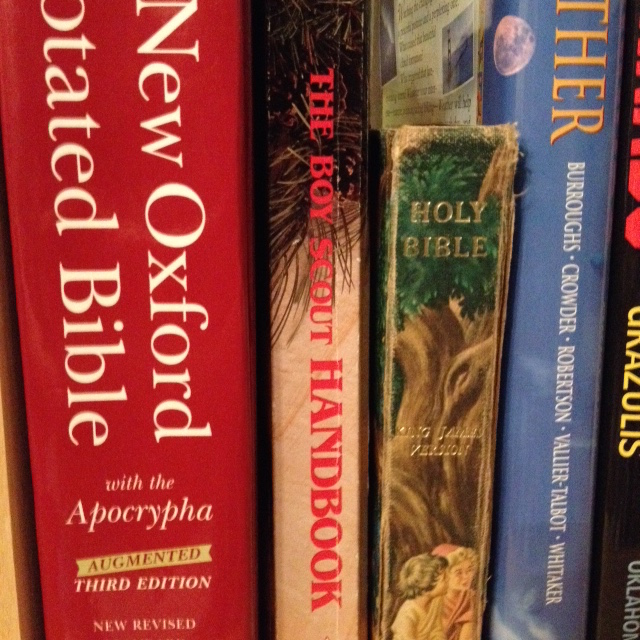
One of my seminary professors, who shall remain nameless, averred in class that Christianity in the first centuries was popular because it was exclusive. Like a country club. If just anybody can get in, why would you want to join? I’ve come to disagree with said professor’s analysis, but I have to admit there are cases where the idea does apply. Country clubs, for example. Organizations that intend to improve society, however, have it in their best interest to have doors as wide open as possible. Otherwise it’s a kind of hypocrisy. If Christianity wanted to make a better world, it soon realized, all takers should be welcome. That paradigm broke down fairly quickly, but at the beginning, I have the sense that all were welcome. So I was pleased to hear that the Boy Scouts have dropped their ban on gay troop leaders. Making a group that sets out to do a good deed a day exclusive heterosexual seems awfully backward. After all, gay leaders are nothing new. Why try to be exclusive?

Of course, the Scouts continue to disallow atheists. This is a fairly common, if medieval, marker of personal integrity. The Elks, last I heard, had few entrance requirements. One of the few stipulations, however, is that you have to believe in God. I don’t know how that plays out for Hindu Elks. Perhaps the more the merrier. Somehow, I doubt it. Exclusive belief entry requirements are a way of weeding out questions before they’re raised. Sheltering those inside from baleful influence among hoi polloi. We are better because we are different. Granted, these organizations go back to a time when theism, of sorts, was virtually a given in American society. Times have changed. Boy Scouts, it seems, are dragged into the future kicking and screaming.

I’ve always been impressed, by contrast, with the Girl Scouts’ openness. No creedal requirements are in place. Atheist girls, Buddhist girls, girls who climb on rocks, any girls are allowed to join. The last three presidents (including Obama) have been Boy Scouts. Two prior presidents have been as well. You might think the organization could meet its pedigree requirements with ease. In my view, they might look to the girls to take a cue on how to make the world a better place. When I was growing up, I knew no atheists. I remember attending a funeral of a family friend who hadn’t been a church goer, and that was pretty traumatic. As an adult I know many atheists and I trust them as much, if not more than, some of the religious I know. Would they be able to lead Boy Scout troops well? I have a suggestion—why not ask the Girl Scouts and find out?

IMG_2405


Excavating Religion

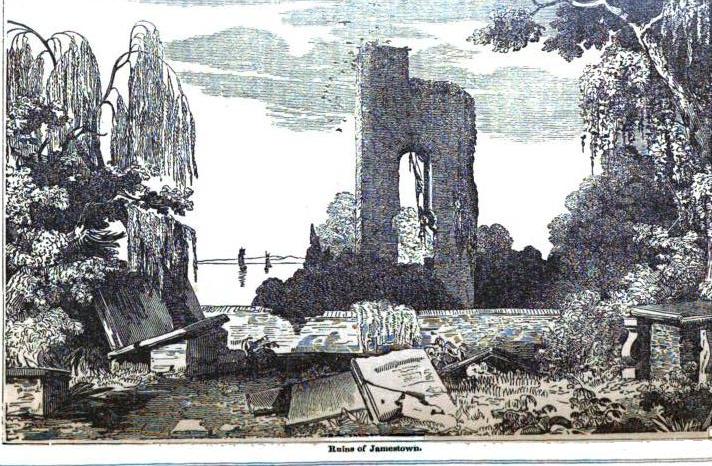
Jamestown, Virginia has the distinction of being the first British American colony to have survived. I’ve only been to Jamestown once, and that was about two or three years before the site was scheduled to celebrate its four-hundredth anniversary. William Shakespeare was still alive back in the home country. The King James Bible was not yet available. It was a gray day when we drove to the site and there were no other people around. Without a guide there was not much really to see—just a sense of being in touch with history by standing where the first English would eventually remake the land in their own image. Even the pilgrims tried to reach Virginia, but missed and landed in Massachusetts instead. Jamestown, however, lays a claim no other site can make.

A recent BBC article describes four graves lately found at the site. Located in the church, those buried were men of status. One of them was Reverend Robert Hunt, a clergyman of the Church of England and the first Anglican minister in North America. Interestingly, the BBC story points out, the Church of England was only half a century old at the time. Having spent many years among the Episcopalians at Nashotah House, I learned a great deal of the church’s history. The fact that the Episcopalians made it to America so shortly after their establishment is something I never heard emphasized. Concerned that the Catholic Church, under Spain, was collecting so much territory, the C of E wanted to stake a claim in the New World early on. Partially because of their persistence, we speak English even today. Church and empire were hand-in-glove in those days, and both the church in Spain and in England were state sponsored. Having God on your side can be pretty handy when you want to claim something that really doesn’t belong to you.

The reverend was buried west, facing the people he served, and, according to the article, this helped initially identify him as clergy. The church, in the service of the government, supported the conquest of new lands. The implicit belief that God was on the side of the strong has never really gone away. Mega-churches measure their spiritual assets in terms of fiscal influence. There are those today who believe that the Almighty wants the righteous to be rich, of course, at the cost of the wicked. Jamestown may have, at least partially, set the tone for a new nation that wanted to take more land than it needed. Land that others had occupied, and indeed, still lived upon. Only with the backing of a deity could such claims be made. The biggest god, after all, wins the day. Jamestown tells us more than we might suppose about what we’ve become as a nation. The early years are often the most formative of all.

Jamestown_Virginia_ruin


Time and Again

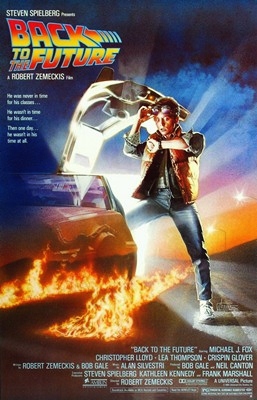
One score and ten years ago, I graduated from college. I also enrolled in seminary and worked in a United Methodist summer camp. I bought my own car and worked as a bag boy in a grocery store. I also met my future wife. Last night we watched Back to the Future, the sleeper hit and highest grossing film of 1985. There’s been a bit of buzz about it because, discounting the sequels, Doc Brown wants to travel thirty years into the future, yes, 2015, which seemed impossibly far off back then. I have to think his envisioned 2015 was more advanced than what we’ve actually managed. Technology, instead of sending us to Jupiter like Arthur C. Clarke imagined, has instead focused on the incredibly tiny. We now do finally have Dick Tracy wrist-phones with real-time images, but we’re still pretty much earth-bound and our rockets are aimed at other people rather than outer space. Instead of fighting aliens with lasers, we’re shooting fellow humans while at church, synagogue, or mosque. Instead of presidential candidates who want to see how far we can go, we’ve got a stagnant pool of people who want to turn the clock back to, well, 1955.

Back_to_the_Future

Don’t get me wrong—this is a fascinating time to be alive. Just yesterday I sat down to recollect the number of computers we’ve purchased as a family and what each could and couldn’t do. Our first couldn’t connect to the internet since no such thing existed. Our first laptop—which we still have—weights as much as a current desktop and has a black-and-white screen. Now we walk around with the internet in our pockets, never really disconnected from a web in which, I’m sure, lurks a huge spider. But back in 1985 you could make quite a few, as it turns out, false assumptions. Church attendance was healthy and would always continue so. We had space shuttles and were looking to walk on other planets. Rock had matured into a provocative mix of selfishness and social protest. Despite the president of those years, things seemed to be improving.

In Back to the Future, Marty McFly returns to the same Hill Valley he left. A fictional town, I noticed last night, that had a seedy downtown square with adult themed stores and movies. The 1955 square had bullies and manure trucks, but a cleanness that was only on the surface. When Marty’s DeLorean reappears in the square in 1985, he crashes it into a Church of Christ. Although this detail had escaped me before, now it strikes me as somewhat prophetic. Thirty years into the future and, like Marty, we are backing out of the church into an age of nones. Our nones not only refer to our religiously unaffiliated, however. We have nones who’ve lost faith in our government, our economy, and our worldview. Instead of going to Jupiter, we stare at our palms. And like Doc Brown, we look back thirty years with nostalgia and wonder at how wrong we are when we believe in the status quo.


A Writer’s Life

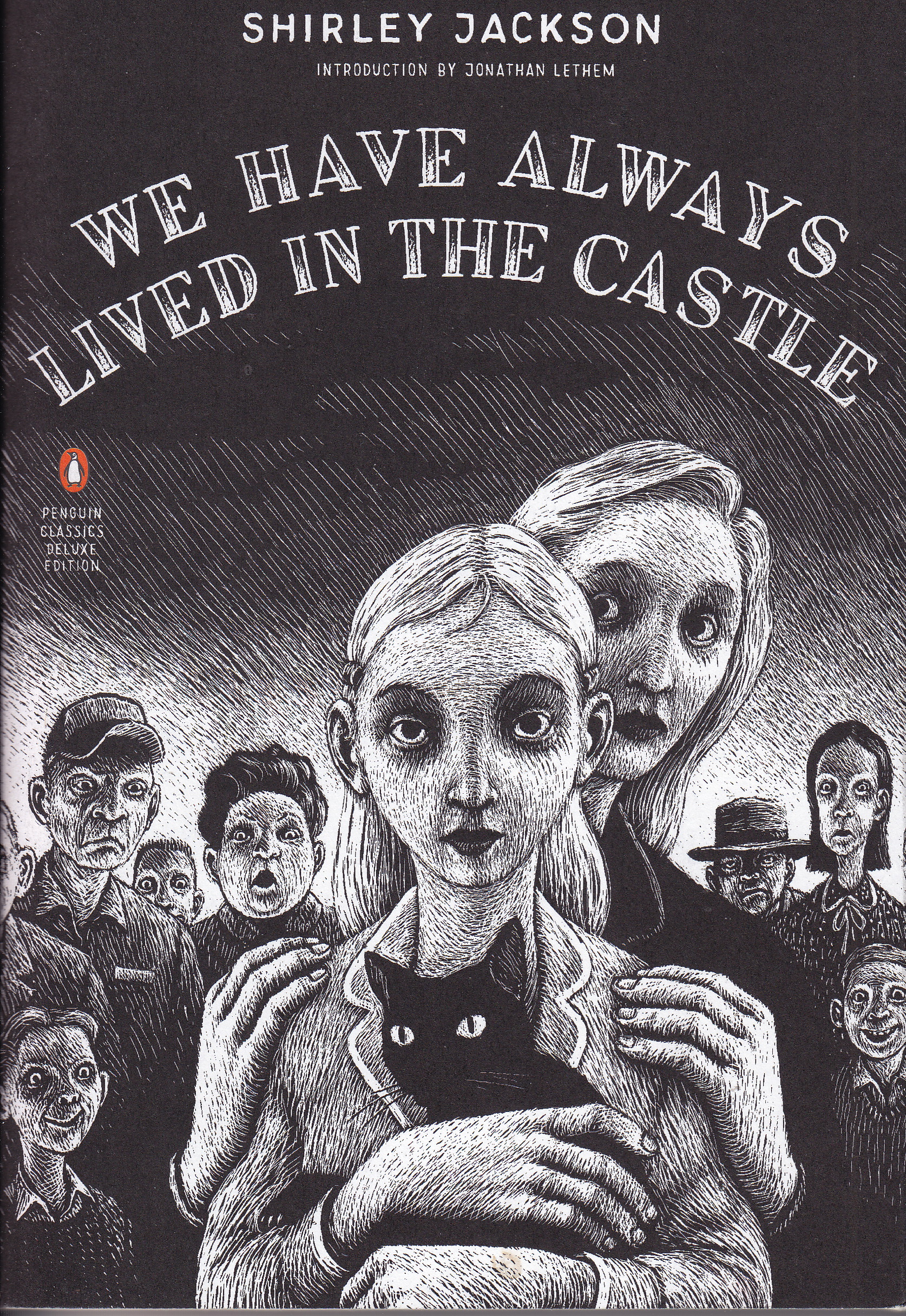
WeHaveAlwaysLivedSometimes, an experienced editor once told me, the author’s life is just as important as the book she’s written. I can’t pretend to know much about Shirley Jackson, beyond that she wrote compelling fiction and that her name is barely recognized today. Best known for her short story “The Lottery” and her novel The Haunting of Hill House, she didn’t match the output of more prolific writers and therefore, in a world driven by capitalism, didn’t receive much notice. Her work is difficult to classify. Not exactly horror, it is nevertheless unsettling by implication. There’s something wrong beneath the surface. Jackson apparently suffered neuroses for much of her adult life, and her ability to translate angst into literature has gathered her a following among fans of ghost stories. I just finished reading her last novel, We Have Always Lived in the Castle, a funny, quirky, and serious story about two young women who live alone and who, one suspects, are thought to be witches by the local population.

This little novel is difficult to lay aside for long. The characters of Constance and Merricat are too compelling to leave alone for any length of time. The fact that they are pariahs makes the reader want to ensure that they are safe as they remain carefully inside the home they’ve always known. Even though you know one of them murdered her family, you want them to be happy and secure, perhaps because the whole town is against them. I wouldn’t presume to say what Jackson meant by this story, but to me it seems a clear description of xenophobia by a woman who felt she was never accepted. Women being persecuted in New England always brings witch trials to mind. Although we don’t know why one of the girls killed her family, it is easy for the mind to fill in the blanks.

Although Jackson died prematurely, her work has influenced novelists such as Stephen King and Neil Gaiman. Uncompromising in her outlook, she allows her characters access to those strange places of the human mind where many of us wander from time to time. Merricat, for example, practices that sympathetic magic that we all, if we’re honest, admit that we attempt every now and again. Hoping in magic doesn’t make one a witch any more than prayer makes one a priest. We Have Always Lived in the Castle, although as old as I am, reflects a world in which reality can’t be pinned down. Assumptions are made and challenged. Protectors turn out to be exploiters, and the only ghosts are very human characters hated by the community in which they live. Still this is an uncanny tale, haunted by a reality that women still face in even the most progressive countries. Listening to their voices, even if from beyond the grave, may demonstrate just how much a writer’s life might mean.


Martian Ethics

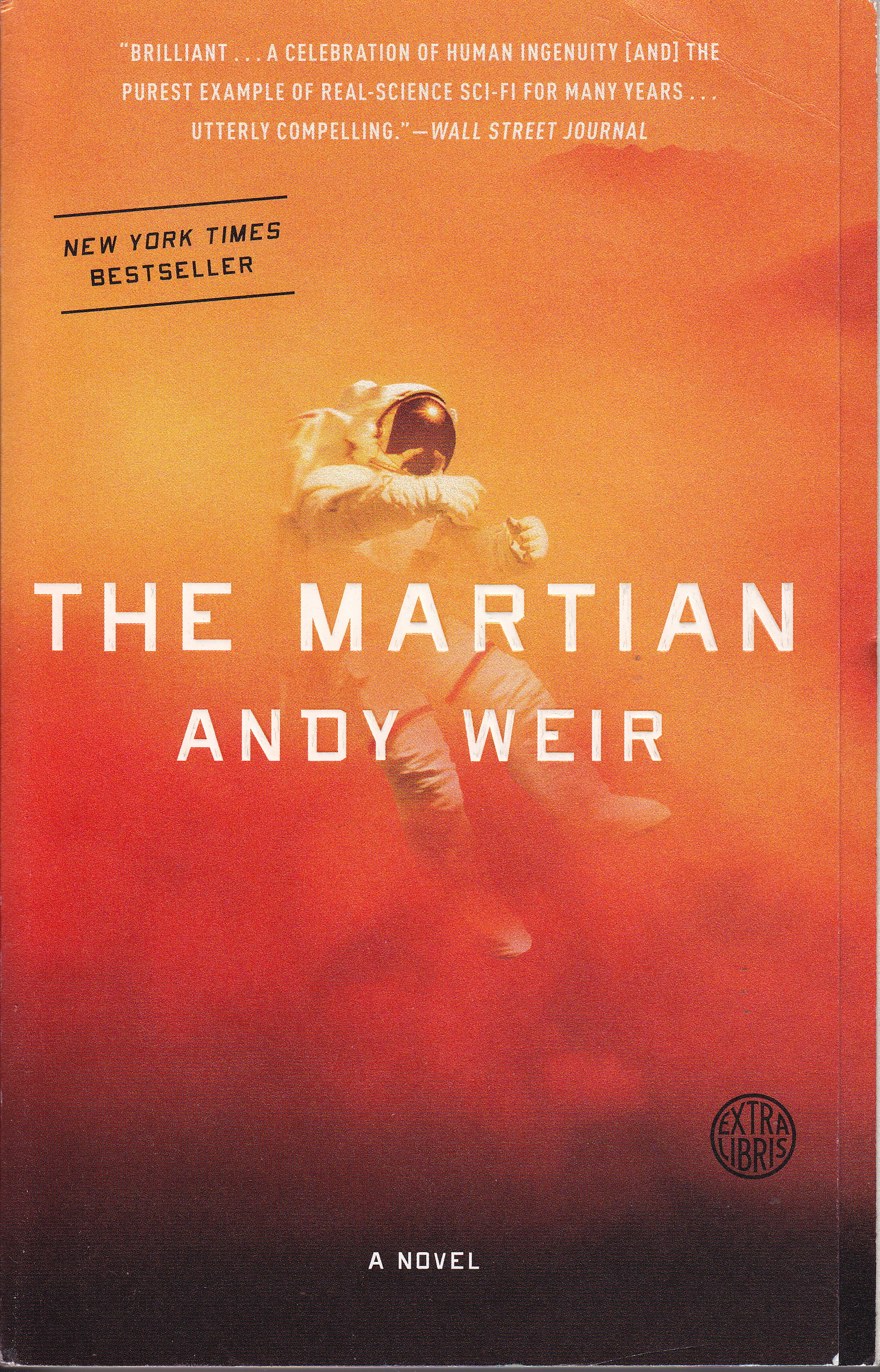
MartianIf you need a boot of optimism, look to Mars. Or, more specifically, read Andy Weir’s The Martian. Not that it’s the greatest literature ever produced, but it is a story brimming with humanity. Mark Watney is accidentally stranded on Mars. His crew-mates, in the midst of their multi-month-long return journey, adjust their course to go back for him. Naturally, nothing goes as planned. Although much of the story is far beyond the believability scale, Weir has the technical background to make it all sound plausible. As an engineer, Watney fixes most problems with an optimism that would leave many humanities specialists weeping in the dust. Time after time a potentially fatal situation develops that is solved by technological ingenuity. Relying on his will to survive, and good humor, the protagonist makes a remarkable journey across the surface of the Red Planet to a potential means of escape. I shouldn’t throw too many spoilers into this post since the book is fairly new. I will say it left me feeling good about being human.

Part of being human is thinking about larger issues. Often, throughout the book, Watney wonders about belief in God. Not enough to make it a main theme, but enough to merit mention on this blog. In a somewhat humorous moment, one of the mission controllers says that he’s Hindu, so he believes in lots of gods. In contrast, Watney, alone on Mars, has a vastly different perspective. Without divine intervention, or even any aliens, he finds a way to persevere when the Fates (or the author) have stacked the odds against him. Mark Watney believes in himself, and he believes in human goodness.

The decision of his crew-mates to return for him is one of potential self-sacrifice. There are no guarantees that they’ll survive. Nevertheless, there’s no second thoughts. When they learn Watney is alive, they decide to go back, no matter what might happen to them. The story awoke a strange optimism in me. Although people are capable of horrendous acts against each other and the planet, I do believe that we are basically good. The bad ones make it into the news. We could all be better, I’m guessing. Still, we will help others when we can, even if all we get from it is the good feeling that we’ve done the right thing. Unfortunately, the only people, it seems, that don’t have the best interests of others at heart are our politicians. Watching the posturing before the primaries I do have to wonder if one wouldn’t stand a better chance abandoned on Mars than in the land of the free. This may be one of the times, it seems, that trusting in human goodness might well be equated to a prayer.


The Reign of Rain

I’m on vacation for a week. My job is such that taking vacation is becoming a rare commodity, what with precious few allotted days and move-in, move-out schedules of a collegiate child, and so on. And also company policy about keeping employees in the office between Christmas and New Year. Anyway, now that I’m here I should be kicking back and enjoying the beautiful lake and getting out to do the things inmates of the city seldom do. It has, however, rained every day that I’ve been here. Not all-day rains, of course, but just enough that plans have to be interrupted or changed at the last minute. I end up sitting in the cabin playing Solitaire when I should be out getting some fresh air. So it goes.
Ironically, I am staying in the drought-stricken west. The western United States, I learned when researching for Weathering the Psalms, has been ensconced in a decades’ long drought. In fact, prior to my family trip here it hadn’t rained in quite a while. Our arrival with the clouds was, after all, mere coincidence. Still, it’s hard not to take the weather personally. I know that the weather is larger than any one person’s needs or desires. I also know that water is a commodity even rarer than vacation days, largely because of our misuse of the limited supply that we have. California’s plight has been in the news. We have large cities in water-challenged environments and people treat water like there’s no end to its abundance while the opposite is the case. Just thinking about it makes me thirsty.
There are many things a person can go without, some of which feel absolutely essential at the time. Many vacations, I know, are extravagant. Fancy hotels, high-priced entertainment, exotic locations. Work can feel so crushing that vacation my become the one island of sanity in the midst of a hostile ocean of obligation. For me, vacation is time with family in a stripped-down, natural setting. Of course, we do indulge in some of the comforts of home, but having nothing in view outside the window beyond that which nature dictates is a transcendent experience. From where I sit, I can see nothing of human artifice. I do see clouds, however. I know that more rain is on the way. And I know that it is a gift, complain as we might, of the highest magnitude.