Unconventional Resurrection

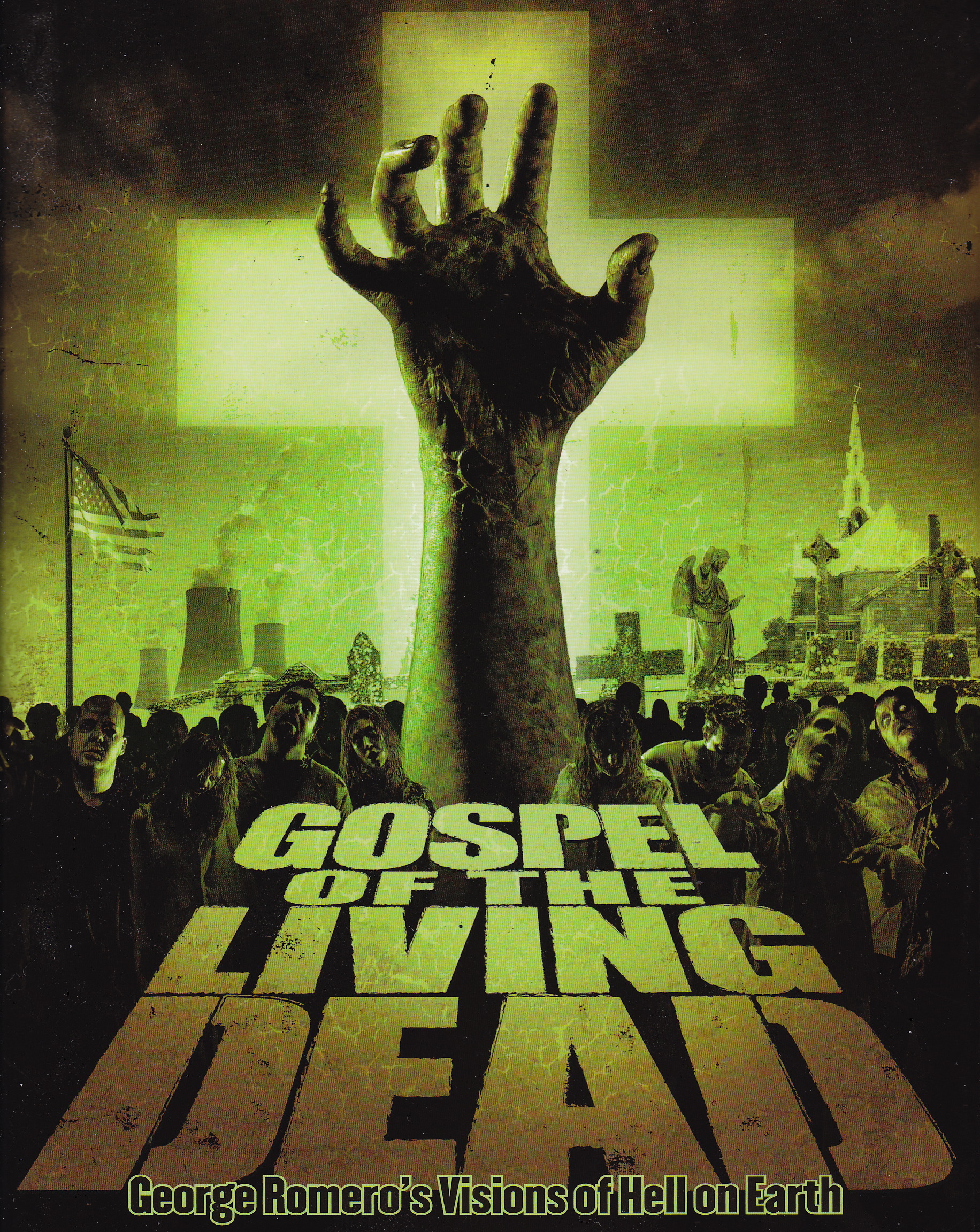
GospelLivingDeadWith talk of resurrection in the air, it seems natural to turn to zombies. In this internet age the monster of choice seems to change from day to day, but since the turn of the millennium zombies have been a contender for popular favorites. In a world where many of us feel zombified by our work, this is no surprise. Late capitalist power structures drain the life, leaving only the shell. In a situation where zombies appear so frequently, it is difficult to keep current. I bought Kim Paffenroth’s Gospel of the Living Dead shortly after it was published. Subtitled George Romero’s Visions of Hell on Earth, it saves itself from too my obsolescence by taking the narrative from Romero’s movies, and one remake, thus leaving room for the many other zombie movies to come and go. While it does make reference to 28 Days Later and Shaun of the Dead, most of the discussion stays pretty close to Romero, taking the reader through his quaternity of movies in the genre.

Roughly paralleling Romero’s oeuvre with Dante’s Inferno, Paffenroth treats the movies theologically. Not surprisingly, sin and ethics play a large part in his analysis. The undead, after all, are not un-spiritual. As I read along, however, I often thought how a western Pennsylvania connection gives some insight into what Romero is trying to do. Perhaps we are in danger of over-reading without the context (what biblical scholars call isogesis, but which post-modernists call simply reading). For example, some of the place names are given a theological significance in Gospel of the Living Dead that some of us who grew up in the area recognize as just another town. This always comes home to me when watching Night of the Living Dead. The posse out to hunt zombies always reminds me of people I knew in high school. After all, the first day of buck season was a local holiday.

Still, I have trouble seeing Romero agreeing with the dialogue revolving around sin. Yes, his first two movies were as much social criticism as they were horror. The Vietnam War and consumerism were true evils to be cast in parables and shown to the public. Zombies were prophets. Paffenroth suggests that zombies will never become mainstream commodities, but time has shown that even zombies can be bought out. World War Z was a Hollywood extravaganza. The Walking Dead is hardly the domain of outcasts and pariahs. Romero’s monsters were, alas, not more powerful than capitalism. Even zombies can be purchased. Zombies and vampires can indeed earn money, and resurrection itself comes with a price.

Rorrim

It was an object of wonder. Handed to me as a child, the Bible inspired a kind of awe reserved for the big events of a young life. Here were the very words of God, in King James English, for me to read, mark, and inwardly digest. Well, at least read. And read I did, as only the fear of Hell is able to motivate an impressionable psyche. When a parish minister saw the trajectory of my life, he suggested exploring the ministry. More Bible reading ensued. With only Halley’s Bible Handbook as a guide, interpretation was largely a matter of what the minister said, and the kind of primitive reason that resides in a teenager’s head. I made it through college as a religion major without ever hearing about Mesopotamia’s influence on the Bible. Once I did hear, in seminary, it was clear to me that to get to the truth, you had to go back beyond the first page. Mesopotamia was only part of the story. The Bible was a book compiled in a region where other religions shared concepts, deities, and stories with the Israelites. While unique in some respects, it turns out the Bible wasn’t as unique as I’d been led to believe.

Mesopotamia, vying with Egypt, was the true cradle of the civilization that gave rise to who we are in the western world. Perhaps in the eastern hemisphere as well. The great cities of Sumer, and later Babylonia and Assyria, yielded cuneiform tablets and other artifacts that insisted we widen our view of antiquity. The heirs of this tradition developed Judaism, Christianity, and Islam. All three monotheistic religions have bred sects that despise this ancient past with its uncomfortable truths, and thus we hear of IS destroying the evidence with abandon. The years of my life spent studying these cultures disappears so quickly under the bulldozer’s blade. For all this, it is IS that is the passing fancy. You can’t destroy the truth. You can damage it, however, to the detriment of everyone.

IMG_0188

Political regimes, and not just in the Middle East, operate with an unbecoming arrogance when they believe in their own self-righteousness. Were it not for those who wondered what these wedges on clay meant, we might still have to reckon (more seriously than we already have to do) with those who insist that it’s the Bible way or the highway. Unfortunately, it often takes disasters such as this wanton destruction of the past to wake the media from its lethargy concerning the cultures that gave our religions birth. There’s so much more to distract. The world can’t make up its mind about the color of a dress, and meanwhile those backed with a justification of true belief destroy that which can never be replaced. Given the rhetoric of political leaders even here, I suspect that our past is no longer safe, no matter where we house the artifacts bearing witness to the truth.


The Art of Religion

RastaIf you take a train along the Raritan Valley Line en route to New York City, you will see many of the less highly regarded sights of New Jersey. The properties along the rails are often industrial and neglected. Graffiti abounds. On one particular concrete underpass is a truly monumental graffito reading “Paint the Revolution.” Since I can’t afford to take the train on a regular basis, seeing that prophetic line is a rare occasion for me, and it always casts me in a reflective mood. No doubt injustice has become deeply entrenched in our society where politicians are synonymous with distrust and wealth is carefully corralled by a passing insignificant number of individuals. These thoughts recurred as I was reading about Rasta, the religion that developed in 1930s Jamaica, and is now found throughout the world.

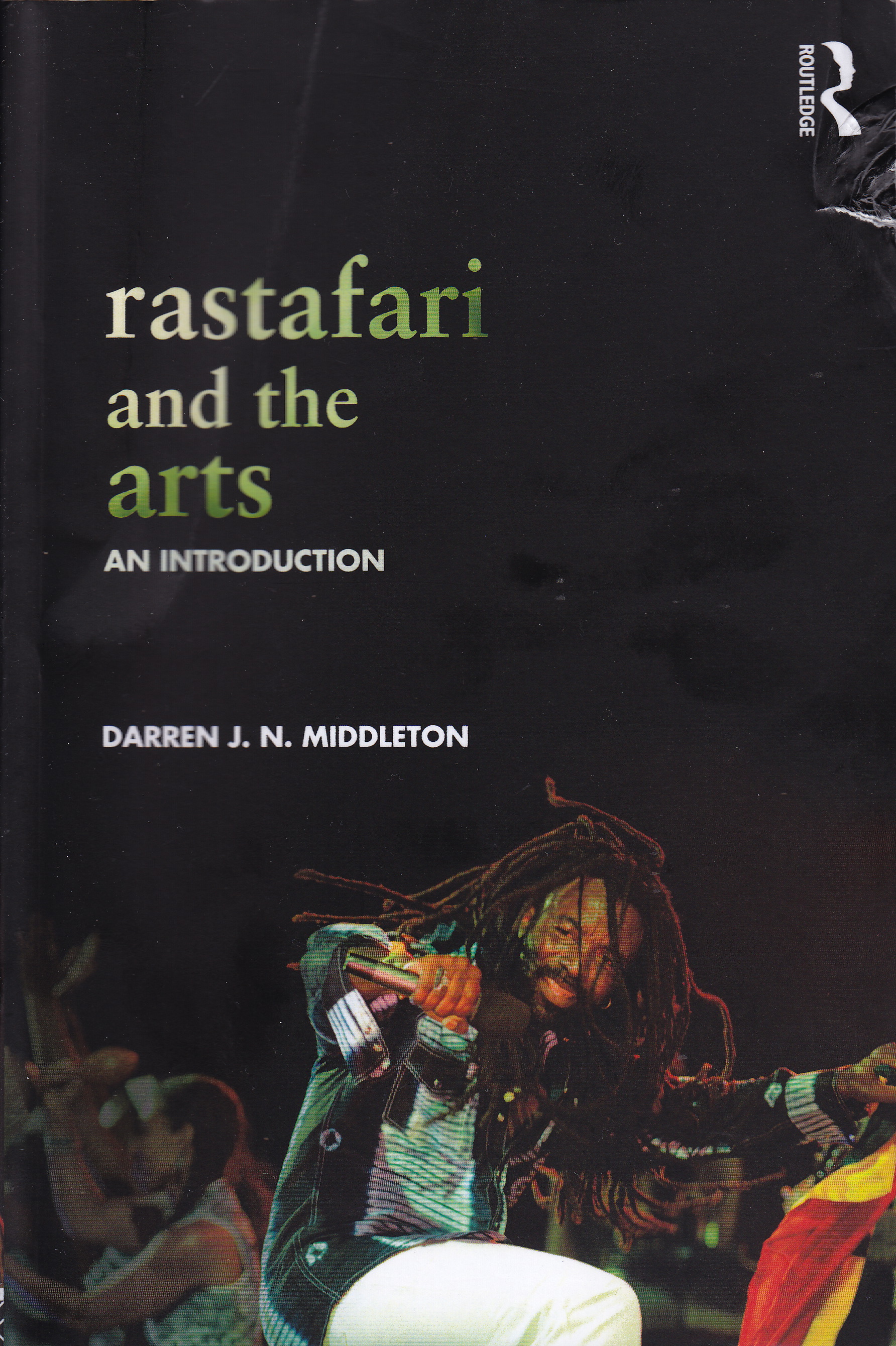
Perhaps the most rewarding aspect of being an editor is exposure to new ideas. Of course, anyone can achieve this by reading, but as a person whose job is to find new books, an editor often has to go beyond passive, to active reading. So it was that, while at Routledge, I came to Darren N. J. Middleton’s Rastafari and the Arts. I immediately fell for it. I’d read about Rasta before, but Middleton’s use of art as a means of exploring the religion was captivating. Now that his book is out, I reacquainted myself with what drew me to the project in the first place. Admittedly, a large part of the draw is the fascination with Rasta itself. While some, perhaps many, would claim that it’s not a religion, Middleton demonstrates pretty clearly that it is, or that it at least has all the hallmarks of one. Moreover, it is a religion profoundly based on the concept of social justice, something that many religions possess in diminishing quantities.

The African diaspora led to the development of several new religions as African thought was forced into a mode of accepting Christianity. Among those many new religions, Rasta stands out for its association with a particular musical style, reggae. Of course reggae can be secular, but one of the many insightful observations of Rastafari and the Arts is that the global spread of Rasta often begins as music travels. While reggae is generally identified by its musical style, it is also noted for having a heavy dose of social consciousness. People who’ve been oppressed, no matter what their race, often express their victimhood in their arts. Not particularly numerous, and certainly not politically powerful, Rasta has been painting its own revolution. That revolution is associated with peace and love, and, in a way almost unique among belief systems, its music.


Animal Form

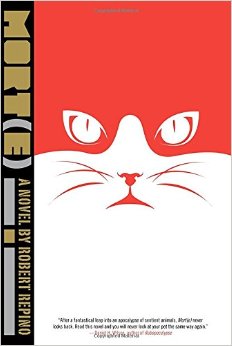
Mort(e)The fear of insects is fairly common among people. It is difficult, however, not to appreciate the “hive mind” and how insects in colonies work for the betterment of all, often at the expense of the individual. Now imagine that the hive mind resents what humans have done to insects over the millennia. And suppose that their massive mind allows them to develop a hormone that transforms animals into partial humans with consciousness and, for the most part, workable hands. Then you’ve got the premise of Mort(e) by Robert Repino. A debut novel about a cat (Mort(e)) and his desire to find a friend in the fog of war that follows the transformation of animals into people, the story is as compelling as it is creative. Add in a strong dose of religious concepts (Mort(e) is considered a messiah among the battered human population, and he has a prophet) and you’ve got a captivating story perfect for comment on this blog.

While not all novels I read have a religious element, a surprising number do. And this isn’t because I pick stories with religious themes. It is because religion pervades the human outlook on life. Repino’s novel, however, does go beyond a casual mention of religion. It turns out to be central to the plot in a way that, were I to describe it here, would constitute a spoiler, and since I want to encourage reading of Mort(e), I don’t want to reveal too much. Suffice it to say, without religion a large part of the story would be missing. No matter whether you believe religion is good or bad, you’ll find plenty to think about here.

These days I read novels liberally mixed in with non-fiction reading. Sometimes I’m disappointed after I spent a few hours on a book and find it to lack substance. (Sure, I do read as a guilty pleasure from time to time, but here I mean the kinds of books you invest in.) Mort(e) is a substantial story. The world in which the protagonist operates can be described as apocalyptic, and end-of-the-world scenarios have a way of raising questions about what we believe. The time spent reading Mort(e) is a good return on investment. And once it has been out there long enough, I’ll want to return to that plot spoiler to investigate it further. It’s that kind of book.


Losing My Religion (Excuse)

I’ve always appreciated New Jersey inventiveness. This is a state where lottery winners register with the social security numbers of dead people to avoid taxes. Politicians and honest folk both seem to resort to inventive means of getting around the system. A recent article in the New Jersey Star-Ledger brought this home. An uproar has developed, it seems, over a more stringent regulation concerning religious exemptions for vaccines. If the bill passes, parents and guardians opting out of vaccines for their children will have to state their religion and the cause for the objection. Many have been suggesting this is government of the worst kind, because, well, it wasn’t really a religious reason that they used the religion waiver. Have you met my dead relative? He recently won the lottery.

A timeless problem that arises from a situation such as this is the issue of defining religion. We’re not really sure what it is, other than a reason for not preventing disease. Experts disagree about the essential components of religion. Since the concept of God is up for grabs, doing what pleases said deity (or not, depending on whether a religion has a deity) would seem to be part of it. Most religions, whatever they are, suggest honesty is a virtue. And honestly, most religions have no trouble with vaccines. The paper even had a helpful chart of religions, even indicating that Christian Scientists and Jehovah’s Witnesses have no issues, really, with vaccines. Clearly some churches do. One suspects other may have had such regulations, but they eventually died off.

Since we can’t bother to define religion, it becomes a most convenient excuse for just about any kind of deviant behavior. Many religions exist; more than most people even suspect. Sects of Christianity alone number around 40,000, and that’s leaving aside all other religious traditions and their many splinter groups. Truly held religion, as the media often underscores, can lead to extreme behaviors. The only way to come to grips with this is to try to understand what religion actually is. The most logical locus for such study would be universities. Many of them are run by states. States that are afraid of breeching that wall of separation. Even in the cause of public health. In my opinion, funding the study of religion could be a real shot in the arm. But then, so could winning the lottery.

800px-Typhoid_inoculation2


Hallowed Be Thy Income

IMG_1924

Some time ago, I was invited to attend a “best practices” session where the language was businessese. As I suffered through statements about how everything can be quantified as numbers and how emotions should be left at the door but creativity should flourish, I began to wonder when I’d become so cynical. I mean, the presenter really believed this–it was clear from his eyes. He’d been so indoctrinated that he really believed selflessness was letting somebody else have their way when they’re your supervisor. Then it hit me. It was so obvious that I felt silly for not seeing it sooner. Corporate culture is a religion. The business world has its own specialized vocabulary, belief system, deity (Mammon), prophets, and ethics code. Those who believe it pass their teachings on to the next generation with the zeal of converts. It gives their lives meaning and purpose. It even has its own origin myth, going back to Adam Smith. All the elements are there.

A point that I come back to repeatedly on this blog is that a solid definition of religion does not exist. I once had a boss who told me there was no such thing as “religious studies.” Too many universities also believe that. When we see terror all around committed in the name of religion and our response is to decide the business curriculum is far more worth saving, I believe we’ve just decided on our religious preferences. Reward and punishment. The price of non-conformity is high. Ironically, our motivational speaker indicated that we shouldn’t be just like everyone else. Only, just don’t be too different.

I couldn’t help but to think back to an episode of Ruby Wax. While living in the UK some friends had a television license and we watched an episode or two. Ruby Wax is an ex-patriot comedian. On one episode she followed a vacuum cleaner salesman for an upscale vacuum manufacturer. Her path took her to a motivational convention which was—there’s no other way to describe this—an emotional religious ceremony. Although their god (Mammon) may not suck, his prophet (the vacuum) most surely did. At the time I saw the episode I thought it was simply entertainment, something at which to laugh. I’ve been to enough business seminars now to find that I’m a heretic in this faith. I may not know much, but I do know selflessness when I see it. And it is a trait that takes a lifetime to master and those who have belong to a different line of work altogether.


In Praise of Eve

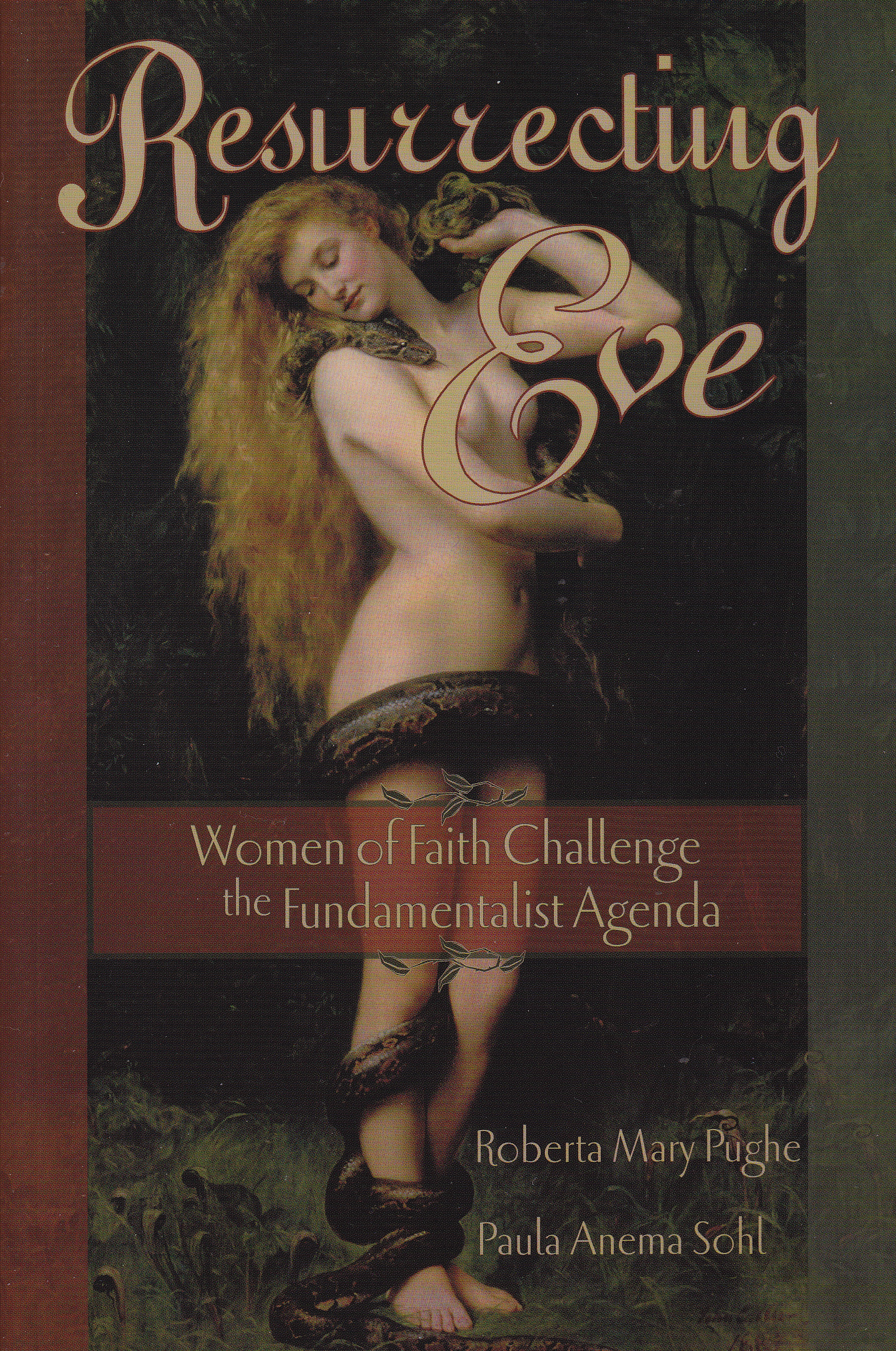
Resurrecting EveI once told some colleagues that reading even basic children’s books as Dick and Jane or The Cat in the Hat was a different experience for girls than it was for boys. Although Dr. Seuss was far more enlightened than much of the standard children’s literature from the era, there’s no doubt that the Cat is an active male, as are Things 1 and 2. The human girl (and her brother) are somewhat more passive, and thus the raring, rollicking action is mostly male. I try to stop frequently and notice how the message is still broadcast too widely that gender stereotypes contain the truth. Back when the American Academy of Religion and the Society of Biblical Literature met in San Francisco, a west-coast publisher, White Cloud Press, showed up. One of their books, Resurrecting Eve: Women of Faith Challenge the Fundamentalist Agenda, seemed appropriate for someone who’d been at Nashotah House as long as I had. Written by a psychologist and a pastor, Roberta Mary Pughe and Paula Anema Sohl, it raises many points that, while not new, again reminded me that men have to take responsibility to learn how women experience the culture that masculinity continues to dominate.

Reading stories of women who’ve suffered at the hands of a hyper-masculine fundamentalist Christianity, it is difficult not to cringe. Young girls molested by ministers in a culture where no one’s voice trumps that of the preacher, have no chance of justice. The mere thought of the few who’ve managed to build the courage to speak out suggests that far more choose to suffer in silence. The abuse isn’t always sexual. Damage to the esteem is rather a specialization of literalist groups, but males get off comparatively easy. Women and girls are provided with a unfair framework from the beginning and they often spend their entire lives conforming to it. These stories, even with the new age-ish kind of framing the book gives, must be told. More importantly, they must be heard.

In a world where our technology is so advanced as to make a Wright brother’s head spin, we still refuse to admit the equality of women. The United States comes nowhere near the top of democracies that have a significant portion of women in government positions of power. We like to think we’re advanced, but we still keep half of our people back from their true potential. We sent a satellite out of our own solar system before a woman president was ever elected. We call ourselves civilized. Of course, Pughe and Sohl are mainly concerned with fundamentalist Christianity. When we look at the demographics of government officials, however, the picture in this regard is not encouraging. Fundamentalism won’t be changed by scholars, for they are easily ignored. It will be changed by everyday men who pick up a book, perhaps because of the seductive painting of a woman on the cover, and realize that there’s far more at stake than cheap thrills and Sports Illustrated swimsuit issues. Treating women equally is merely the first step in becoming truly human.


Alas, Babylon!

Religions tend to be backward looking. That’s not intended to be a universal, nor a condemnation. Few would want to admit that their religion is new, especially in this scientific era. We tend to believe the truth is old. But not too old. In the monotheistic traditions, real religion started with Abraham, or more properly, Abram. Beyond that we were all pagans. One of the sad stories brought to my attention this past week involves the IS (you know it’s bad when we have to use acronyms) decided to destroy Nimrud, one of the ancient Mesopotamian cities that has helped us understand whence we’ve come. In an era of political and social correctness, we’ve decided that the right to keep artifacts rests with those who’s heritage it reflects. The future, however, is just as unstable as the past. As someone who has spent many years trying to understand the material remains of our pre-Judeo-Christian heritage, it is a tragedy of the first degree to have unthinking guardians destroy what can’t be replaced because they represent “idols.”

In my Ancient Near Eastern Religions class, I used to begin by asking students what the difference was between an idol and a god. At first it seems that idols are images, and, by definition, offensive to the religion that names them “idols.” Then, as we probed deeper, it would become clear that all religions use images of some description, and that likenesses of deities were considered to be gods in sophisticated ways. Those who built the pyramids and the great walls of Babylon were not simpletons. Their images, many of them powerful still today, were psychological expressions, often backed with theological finesse. Even Protestants accuse Catholics of idolatry, and they worship the same deity.

It would be a mistake, however, to blame religion for such wanton destruction. All religions breed extremists. Extremists, like those who believe science can explain everything, are simply drawing their reasoning out to its ultimate conclusion. That’s not to condone their actions, but to try to comprehend them. All religious groups have those who slip past the bounds of conventionality into the realm where an all-consuming zeal requires excessive action to be noticed. Human beings are complex that way. A pagan philosophy of ancient Greece held that all things in moderation was the ideal. Religions with a concept of Hell, however, breed excessive ideologies. As a child I would have done anything to avoid Hell. In fact, with the little power that children are accorded, I conscientiously did what I could. When I wasn’t distracted by the other attractions life seemed to offer. If, perhaps, we considered that socio-economic justice would go a long way toward engendering a kind of contentment, we might find less extremists in the world. No matter what we do, however, we will not find ourselves in a world without religion.

DSCN1835


Geneva Conventions

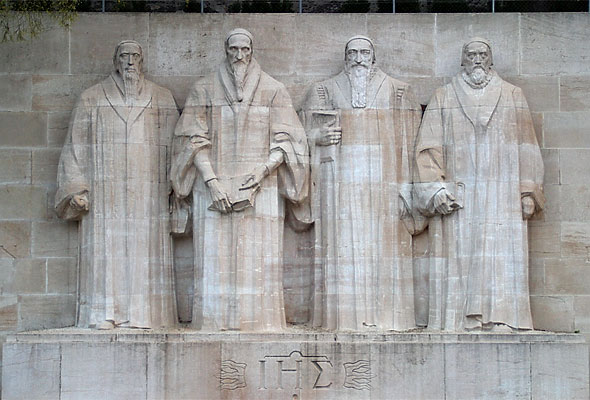
As an alumnus of Grove City College, I generally don’t have the chance to consider other colleges as unreasonably conservative. College taught me, after all, that education involves thinking things through, and that, of all things, doctrine is one of the many human constructs that wilts under close examination. Both religious and political doctrine fall under this rubric. So when an article in the Chronicle of Higher Education fingered Grove City’s near neighbor, Geneva College, I was both relieved and not really surprised. Grove City was strict, but Geneva, located down the road in Beaver Falls, was even more Reformed. Tales at the Grove said that even off-campus dancing was an infringement of the student code there, and that even a legal sip of beer with dinner, off campus, could get you expelled. You know how students talk. In any case, both cut from Presbyterian fabric, Grove City and Geneva Colleges hold out against the world and its multiple evils. So why did humble Geneva merit notice in the exalted Chronicle?

Geneva College recently sued for exemption of the contraception-coverage mandate of the Affordable Care Act. You see, in many conservative religious traditions pre-marital sex is not only from the Devil, it practically never happens among true Christians. If it doesn’t happen, why should you be forced to pay for its treatment? Denial runs profoundly through these conservative colleges. While at Grove City, in a first-floor dorm room, my roomie and I were awakened one night by a group of pretty obviously drunken frat boys from the third floor. Cursing loudly, one of them rammed his fist through our window, showering the floor with glass before stomping loudly up the stairs. When I went to the housing office the next morning, they wondered about my story. Students at Grove City, drunk? It simply did not happen. In all likelihood, I’d broken the window and made up the story so I wouldn’t have to pay. I pointed out that campus security had noted the glass was inside the room and my roommate and I were both there at the time. Reluctantly, while still withholding judgment about the drunken part, I was believed.

Conservative Christian colleges often face the specter of reality. College kids were killed driving drunk. Girls, gasp!, did get pregnant and did not always decide to keep the baby. Real world issues declared anathema by a magisterium with its hands firmly over its eyes. No matter one’s view of morality, singling women out for punishment of sexual sins is just plain unfair. The issue here is health care, not the consequences of a decision made in the heat of passion. How often the anonymous male gets to scamper off, his health fully covered. The co-ed, however, is treated like Eve holding a newly bitten apple. Students attend Christian colleges for a wide variety of reasons, and the education, apart from the theology, can actually be excellent. It is the ethical obligation of the schools to cover all the human needs of emerging adults, not just those based on a morality still mired in the Middle Ages.

Time for a Reformation?  Photo credit: Roland Zumbühl, Wikimedia Commons

Time for a Reformation? Photo credit: Roland Zumbühl, Wikimedia Commons


Hot Pants

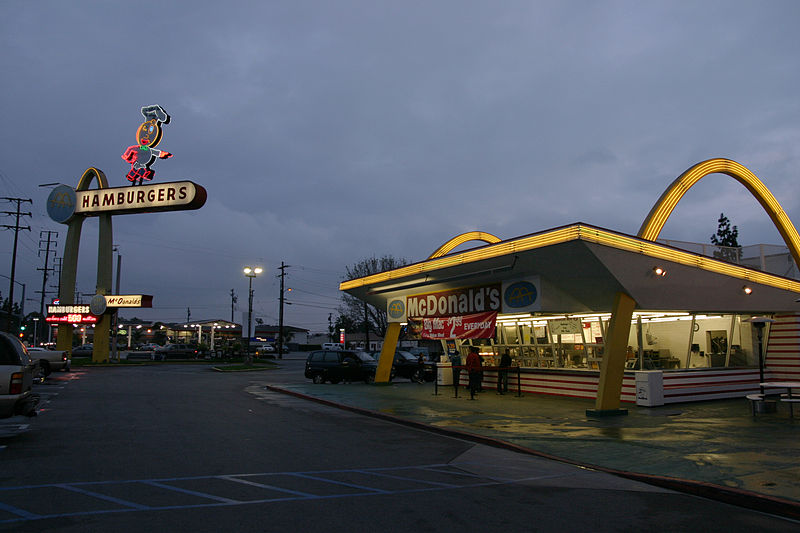
Over a decade ago now, the populace was buzzing about Stella Liebeck’s suit against McDonald’s. You may remember the case. Liebeck was handed very hot coffee through a drive-up window in one of those flimsy cups, and suffered second-degree burns when it spilled in her lap. The incident spawned a documentary movie and even a New York Times retro report a couple of years ago. No doubt the injury was serious enough to cause medical treatment including skin grafts, and McDonald’s does, as we all know, process its customers just like it processes everything; you can’t serve over 100 billion burgers and be the world’s second largest private employer without process. Food injuries in a world of business feeding can be serious. “Eating out” is a way of life for many and when people eat out they take their religion with them. That’s why Hiram Jimenez’s case is so interesting.

According to the New Jersey Star-Ledger, Jimenez decided to bow in prayer over a plate of sizzling steak fajitas at Appleby’s. For those who’ve never witnessed fajitas being served, they are an attention-demanding dish, served loudly steaming and popping with smoke rising up forever and heads being turned. I suspect that’s part of the appeal. According to the paper, Jimenez bowed over his food and the grease popped, burning his face, causing him to knock the plate of food onto his lap. None of the burns left scars, and a Superior Court here in New Jersey found the restaurant not negligent as the danger was “open and obvious.” What makes this story so interesting is not the injury but the cause behind it. Food being hot is somewhat universal. Praying in restaurants, however, is an evangelical cultural practice.

Growing up with evangelical friends, I learned to pray in restaurants. (My family was of rather humble circumstances and we didn’t eat at restaurants.) Partly it was in actual thankfulness, but clearly it was partly also in show. We were witnessing by invoking our gustatory gratitude. For being literalists, we didn’t take Jesus’ injunction to go into the closet and shut the door before praying too seriously. The culture around public prayer involves bowing. The bow is a mammalian display of submission. Thy will be done. In the biblical world being thrown into a blazing furnace for public displays of faith didn’t lead to lawsuits. Everyone knows infernos are hot. I can’t help but wonder whether a martyr complex is at play here. A praying customer is doing what his religion demands and gets burned for it. Yeah, I know what that feels like. And, I suspect, so do countless others who find no hearing in courts at all.

Photo credit: Bryan Hong (Brybry26), Wikipedia Commons

Photo credit: Bryan Hong (Brybry26), Wikipedia Commons


Wag the Tail

Among the most respected of intellectual endeavors is political science. Analysts who read and reason beyond national borders, finding implications in countries many of us have never heard of, they can be an intimidating lot. Experts in economy and psychology, they tell us what the big picture looks like—why we do what we do. And almost universally they disdain religion. We’re talking politics here, why don’t you go sit at the kid’s table? Religion is the stuff and nonsense of make-believe. What politics is about is who has the biggest bombs and bank accounts. Those who impact the world in real ways. And yet.

I would never claim to be up-to-date on current events. I don’t have time to read newspapers and if my friends didn’t send me pertinent articles now and again I might still believe that social justice is more important than the color of an anonymous dress. When no less than an authority than the New York Times speaks, however, I do have to pause a minute or two to consider the implications. Frank Bruni has recently been writing on the Opinion Pages about those ultimate strange bedfellows, religion and politics. I may have got the order wrong, but that’s for political scientists to determine.

Many people don’t consider that religion can be, in some respects, scientifically analyzed. As a deeply divided nation, one factor that even political scientists should note is that yes, religion does count. No matter how naively conceived, people vote with their faith behind that polling curtain. The Republican Party realized this in the 1980s. If you take just one or two religious issues and make them the platform on which you stand, you can garner a disproportionate amount of the conservative evangelical vote. A new study from the Public Religion Research Institute, according to Bruni, demonstrates just how disproportionate the outcome can be. Surveys may not be precise, but less than 20 percent of Americans are white evangelical Protestants. Yet their issues are the ones that make or break elections.

Life has a way of making one cynical. I grew up a white evangelical Protestant. Although my viewpoint has evolved with my education, I can’t shake two of those qualifiers even if I want to. I read political scientists dismissing religion as a bogus topic, mere twaddle to fill the daub of inert minds walled in by primitive thinking. And I read the occasional news story that demonstrates that the facts don’t fit the premise. Do we need to understand religion? Absolutely not, I’m told. But in the end, even the analysts of the political beast will have to realize that tails wag dogs just as surely as raising hackles will make any mammal appear larger than it really is.

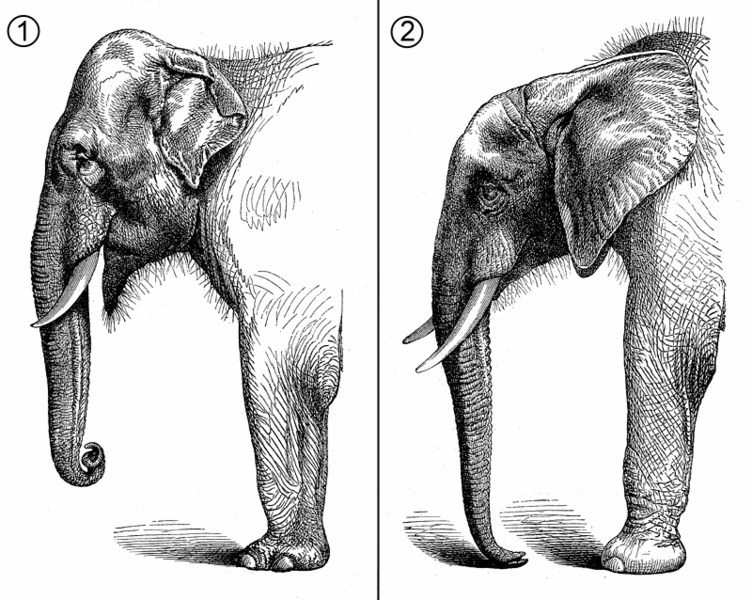
Not a tail to be seen...

Not a tail to be seen…


British Libraries

Quintessentially intellectual, the mental image of the British goes, they are often the sophisticated, educated, literate, worldly individuals. I know I’m stereotyping, but play along a minute. Perhaps Americans and other colonials feel a sublimated respect for the nations that gave us our start, and even today the major academic publishers are British companies. Think about it. So when we ponder the United Kingdom, we conjure images of the pinnacle of urbane, cultured, society. Perhaps this is one reason that I decided to study in Edinburgh. One of my memories of being in that fantastic city is going to a library book sale. I’d never seen inoffensive old ladies throwing such hard elbows before. The hunger for books was palpable. So it is with dismay that I read John Harris’s Guardian piece, “In a country like Britain, obsessed with the now, libraries are a political battleground.” (Did I mention that Brits are also loquacious?) The article, however, has a disturbingly American feel to it. We live in the now, not in the past. Libraries (and museums) are the repositories of thousands of years of human wisdom and achievement. Who needs them?

Harris is concerned with the trend of libraries discarding books. After all, publishing is an industry, and if industry is anything it is about producing more. More books are now being published than have ever been since our human ancestors crawled from the primordial soup. Some are purely electronic, but as survey after survey shows, the majority of readers still appreciate a book in the hand. One might say that a book in the hand is worth two in the Kindle. But libraries, desperate for both funding and space, are resorting to throwing out books. They will be replaced with books, and who will miss them? I can’t help but think of Ray Bradbury. Do authors’ souls perish when their books are destroyed? Where will we go to find out, if our libraries have weeded their gardens too thoroughly? My biggest obstacle to continuing research as an independent scholar is the lack of a good university library. I agree with Harris, without our past, our now is but a passing fancy. When tomorrow becomes today, will we wake up and realize what we have discarded? Will we have to start from the beginning again?

Over the weekend I went to a local Barnes and Noble. I’ve never been a fan, but now that Borders is gone, B&N is the only show in town. (I visit the independent shops far more frequently, but this is winter and I don’t want to venture far.) I read about a newly released novel, still in hardback, and wanted to see if they had it. Amid the toys, videos, and puzzles, I stumbled upon a rack of books. New releases. The shelf of hardcovers wasn’t very large, so I stepped around back thinking there might be more. How naive I am. The store was nevertheless crowded. Those checking out weren’t buying books. The book bags, almost apologetically, bore quotes about how books change the world. I look down. I’ve got a puzzle in one hand and a game in the other. The world has only so much space. With what we choose to fill it says volumes about who we are. Our only hope is that our now contains those who, at least in the future, will live to read.

DSCN5025


Theological Fiends

SuchADarkThingVampires are among the most theological of monsters. Not that I’m a theologian, but I sometimes read those who are. Although zombies and vampires rival one another for the ascendent monster of the moment, I’ve always had a soft spot for the vampire, conceptually. The actual idea of drinking blood has always distressed my vegetarian sensibilities, but there is a deep intrigue about the character who constantly takes and never gives. And sees in the dark. And is practically immortal, unless violently killed. All of these aspects, and more, have theological undertones. M. Jess Peacock’s Such A Dark Thing: Theology of the Vampire Narrative in Popular Culture deals with such ideas and more. A self-admitted fan of all things vampiric, Peacock finds unexpected angles to the undead metaphor that make for connections between Christianity and the cultural vampire. He explores Otto’s understanding of the holy and how vampires fit aspects of it, the importance of blood, theodicy, and sin, as well as religious iconography and why crosses work against vampires (when they do). Most fascinating, however, is how vampires effect social change.

Since I often write about monsters, and specifically vampires, on this blog, it should be no surprise that I should read such a book. The question of why vampires have such staying power in our society is one that many have pondered. Peacock, by tying the vampire into deep theological needs (and we’ve been taught for many decades that theological needs are unrealistic fantasies themselves) has perhaps found a reason why. Just because we deny a need doesn’t mean it isn’t real. Think of all those Medieval monks denying sexuality. Biology, no matter how transcendent our focus, has a way of reminding us that we have needs. Vampires are, if anything, very forthright about their requirements. You have blood, they need blood. They will take it any way they can. And this leads to its own kind of ethic where, in some movies and stories, we, the victims, end up rooting for the vampire.

The social justice aspect of Peacock’s study is the one I found most compelling. We live in an era in which financial vampires openly and selfishly drain the blood of any victims they may find. What they do is done in daylight and no crucifix is large enough, no stake is strong enough, to stop them. We sit in our theater seats and watch as the economy rises and falls with the wealthy and their willingness to invest (or not) in the very economy that made them rich. Elections are won now by money supplied by corporations. Yes, the presidency can be, and is, purchased. Most politicians don’t know the price of a loaf of bread. Christianity, in any case, understands bread and blood to be analogues. The two are complementary, and represent the totality of human need. The vampire, as Peacock notes, can symbolize the difficulties of social justice. They may have their fangs deeply embedded in our necks, but at some level we have come to love our vampires. Even when they give us nothing in return.


Whack-A-Prof

My Ph.D. was conferred in 1992. Not by design, I’ve held several jobs since then. One thing I’ve noticed over and over is that supervisors enjoy knocking down the egghead. If you don’t know me you’ll have to take my word for the fact that I’m quiet, not self-promoting, and actually uncertain about many things most people seem to take for granted. Even in the classroom I never used my education to appear superior to students—education is about all of us learning together. At least ideally. I do know some people flaunt their doctorates. A friend told me of customers pulling into the gas station and insisting on being addressed as doctor. (It might help to know that in New Jersey you are not allowed to pump your own gas.) My friend wryly noted, then they don’t even fill the tank. I had my own similar experience working in a camera shop in a Boston suburb. A patron had “Ph.D.” printed on her checks after her name. Company policy was that the signature had to match the printed name exactly, including title. This particular customer, proud to have Ph.D. flashed before your eyes refused to sign it after her name. When the police had to be called, as per company policy, many of us stared sheepishly at our feet as she signed the cursed three initials and declared she would from then on take her custom elsewhere.

Some of us pursue advanced degrees because we have no talent for anything else. I’m a born teacher, and I have always found the classroom the most congenial environment in which to be. I have had several bosses, however, who seem to think that knocking the Ph.D. down shows just how clever they are. I don’t claim to be smart. I never have. I am a hard worker, I read a lot, and I try to make sense of what I read. Some of the smartest people I know have the least formal education. It’s rare that I don’t assume the janitor knows more than I do about any given topic. (Well, maybe Asherah is a place where I can claim some specialist knowledge.) Otherwise, I take your word for it.

Our culture, however, enjoys putting those in higher education in their place. I hear the conversations behind closed doors. While I don’t claim to know very much—in fact, the longer I’m alive the less I claim to know—I do know that America doesn’t value its educators. It’s not just the professorate. Teachers, those to whom we entrust the very future, have been perennial scapegoats for society’s ills. We don’t pay them well, and many of them have to take second jobs in the summer to make ends meet. I guess we showed them! Who’s the smart one now? I can’t claim to know much, but it seems to me that education is one of the pure goods in society. We can’t make progress without learning. Gifted teachers should be esteemed—not pampered, but appreciated. Of course, I can feel better about myself if I show that I know more than you do. The only cure for that, I suggest, is more education.

Photo credit: Anna Frodesiak

Photo credit: Anna Frodesiak


A Night at Culture

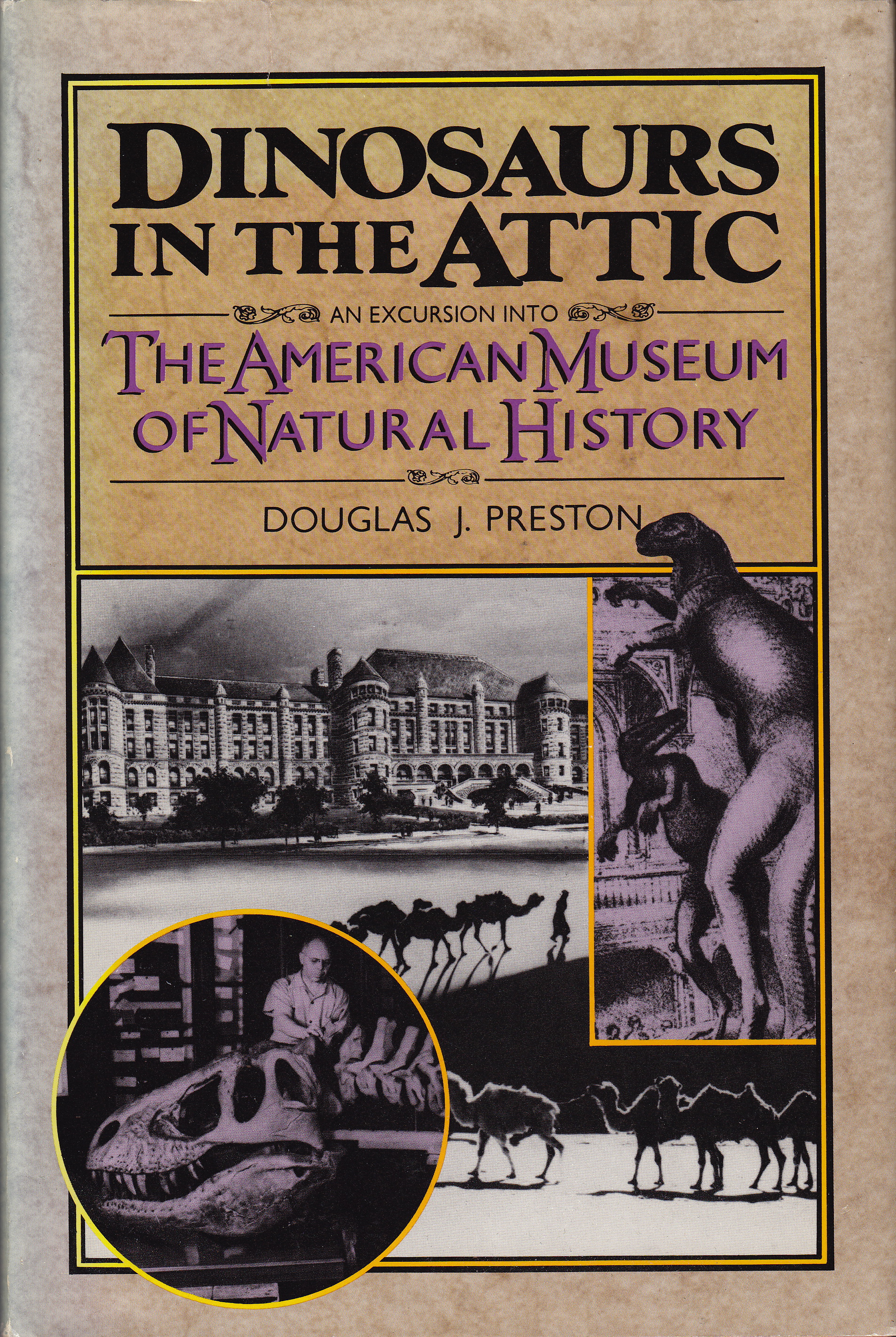
AmericanMuseumOne of the undisputed benefits of living in the greater New York City metropolitan area is the potential for culture. I know that culture exists everywhere, and that is precisely one of the points behind Douglas J. Preston’s Dinosaurs in the Attic. I picked this up at a used book sale because of my love of dinosaurs, but the subtitle provides more of a description: An Excursion into the American Museum of Natural History. Just when the first Night at the Museum movie came out, the American Museum of Natural History offered a program of nights to sleep in the museum, geared toward children. A generous family member bought us tickets and we got to sleep in the oceanarium under the giant whale dangling from the ceiling. We were allowed to explore galleries by flashlight, including the most famous collection of dinosaurs in the world. Who wouldn’t want to read about the backstory of such a museum after such an event?

As might be expected, with roots in the late nineteenth century, it was a different world in which this museum was conceived and built. Rare animals were shot to be part of exhibits, artifacts were acquired and shipped across national borders, and even world-class bird collections were bought to help an indiscrete baron avoid the humiliation of having an affair revealed by a blackmailer. Still, the religious element was clear. One of the founders for the museum, Albert Bickmore, went off in search of artifacts with his Bible tucked under his arm. Exotic places and peoples were still allowed to be called exotic, and the museum eventually became famous enough to star in a movie.

What struck me the most about this fascinating story, however, is when Preston points out that the most fragile, and valuable possession of the museum are the myths. Early ethnographers visited peoples that, even then it was already too clear would become extinct (culturally), and recorded their religious stories. This, and not the thundering Tyrannosaurus Rex, was the true purpose of the museum. Museums are about people. What we discover, what we make, and how we impact our planet. Myths, religious stories, are some of the most unique and delicate pieces of information that we can leave behind. Even materialists have beliefs. We all believe in something. Although nobody goes to a Night at the Museum to read dusty old stories, it is a source of comfort that they are there. Many of the cultures have indeed died out. Were it not for the foresight of those who could see where globalization would eventually lead, they would have been forever lost. And a world without myth is not a world worth living in.