Lazarus, Come Forth

The red-cast face staring down from the giant LCD billboard this side of the Lincoln Tunnel has my attention. Having become an unwitting fan of horror movies, the genre was clear from the creepy, black-eyed gaze that found me even in mass transit. The Lazarus Effect, it said. I stored the information away knowing that it would be a movie I’d have to rent and watch alone—I don’t know many other true fans, and I don’t like going to a theater by myself. Then I started thinking about Lazarus. The man raised from the dead, according to the Gospels. When I was a child I always confused this Lazarus with the one from the parable of the rich man and Lazarus. I’d never known anybody with that name, and to find it twice in the same book must imply, at some level, that they were the same guy, right? I mean, they’re both dead. So my juvenile thinking went. In the parable Lazarus, whose wounds are licked by dogs, is taken into the comfort of heaven when he dies. The rich man, it turns out, isn’t so lucky.

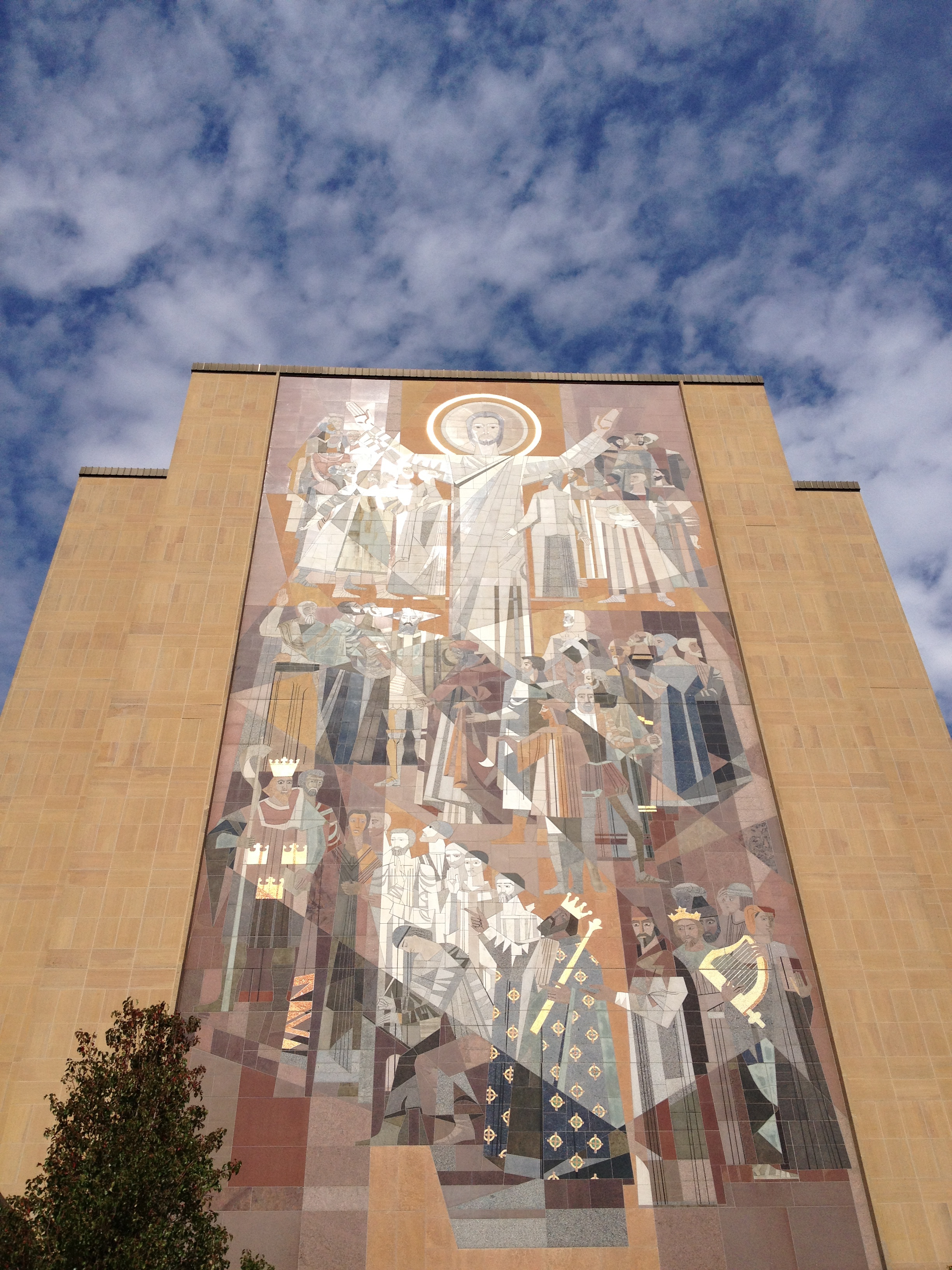
769px-Bonnat01

This was a bitter cold day. Dressed like I was headed to McMurdo Station rather than central Midtown, I tried to keep my head down as the wind howled through the channels constructed by excess wealth. I am always distressed to see the homeless out and about on such days. I’ve got on more layers than an onion on steroids, and I’m still chilled through. What must it be like to face such weather threadbare? There, on Madison Avenue I saw a dog being taken for a walk. He had on a warm sweater and fancy purple slippers to keep his canine feet from touching the cold ground. That dog was better dressed against the cold than some of the people I’d passed. I thought of the dog licking the sores of Lazarus. “Father Abraham, have mercy on me,” the rich man cried.

“Son, remember that thou in thy lifetime receivedst thy good things, and likewise Lazarus evil things: but now he is comforted, and thou art tormented.” The words are almost as harsh as this wind. We’ve become a society that will spend more readily on our pets than on our compatriots. Dogs, at least the breed I saw on the street, have evolved to grow thick coats. I’ve seen pictures of huskies running across the snow like their wolfen ancestors. Indeed, the wolves, where we’ve not hunted them to extinction, still manage in the winter. But then, there’s the Lazarus Effect. I’m feeling guilty thinking about putting out the money to rent it, several months down the road. There’s a real life Lazarus who could use any spare change right now. And the well-heeled dogs, I’m sure, would be made to turn up their noses from even getting near enough to lick his wounds.
Four Gods’ Sake

AmericasFourGodsStatistically speaking, most people don’t like statistics. I’m one of those. Numbers can do funny things to a person’s perception of things, nevertheless, I appreciate those who can work with them and make sense of them. When I saw the title America’s Four Gods, my disappointment engine kicked in. Is this book going to be about numbers? It was written by a couple of sociologists after all (and even a couple is a number). I’ve read enough of Christopher Bader’s work, however, to trust him. Paul Froese should be the same. Subtitled What We Say about God & What That Says about Us is an appropriate introduction to the book. Based on the Baylor Religion Survey, this study looks at what one of the most religions nations on earth believes about God. Since God is a key political player these days, that’s not a bad idea. Their conclusions are well worth noting.

Froese and Bader find that belief in God is highly idiosyncratic. It is likely the case that, similar to sacerdotal snowflakes, no two ideas about God are precisely the same. Categories, however, help to analyze things, and America’s Four Gods does just that, suggesting four main images of God that have very different characteristics. The Authoritative God we all know well. This is Jonathan Edwards’s deity that dangles spiders above the fire—active and angry in the world. The Benevolent God is also active, but more avuncular and kind. The Critical God is not very active, but is still annoyed with us. The Distant God tends to be kindly, but is rather remote. Using these four kinds of God, Froese and Bader examine what people believe about all kinds of issues, from war to social reform to adultery. When Americans say “God bless America” they mean very different things.

When it comes time to troop to the poles, we listen to what our candidates say about the Almighty. It is a virtual certainty that an atheist is unelectable in these religious states, so we want to hear what the candidates have to say about God. What they say and what their listeners hear, however, are clearly different things. Still, religious conviction is one of the most important variables when it comes to selection a President, Governor (at least in some states), or congress-person. Some candidates, with God off the plate, have nothing left to commend them at all. So it is in one of the wealthiest, most powerful nations in the world. A basic truth that we choose to ignore decides our fate for us. Mired in a Gulf War? Who you gonna call? Chances are we all know the answer to that. Chances are equally as high that we all mean something different by it.


Incitatus Redux

What more is there to say about God and politics? Far too much, I fear. In a Sunday Review in the New York Times, Frank Bruni lays out a catalogue of what, in a rational universe, would be considered violations of the United States constitution by politicians who insist their (conservative) Christianity is the faith of the nation. This is, however, one of the philosophical conundrums of religious freedom. Religious believers are free to use their faith to try to change the system from within. And the fact that the media is telling us that religion has become irrelevant doesn’t help. Who should be afraid of what’s irrelevant? Can irrelevant substances harm you? Can irrelevant bullets kill you? Why, yes, they can! And so being told repeatedly by the media that religion is something we can safely lock into a box marked “Medievalisms Outdated” we step out the door to see politicians using a religion poorly understood to gain power. A recipe for an apocalypse, it sounds like to me.

Academics too readily fall prey to the media hype. University presidents and deans suppose that religion really is dead and shouldn’t be studied. Who’s going to help us through the morass of the upcoming election if people who understand religion are made indigent and put out on the streets? Good luck to the rest of society! We must, if we are to survive, understand religion. Its death, following shortly on that of God, was proclaimed early last century. And yet it’s showing no signs of dying. In fact, it’s just waking up. Who are we going to ask? Scientists? Accountants? Economists? What will you really learn about our laws being God’s laws in the minds of the wealthy and powerful? Don’t ask me—I’ve only spent some thirty-five years studying religion. What do I know?

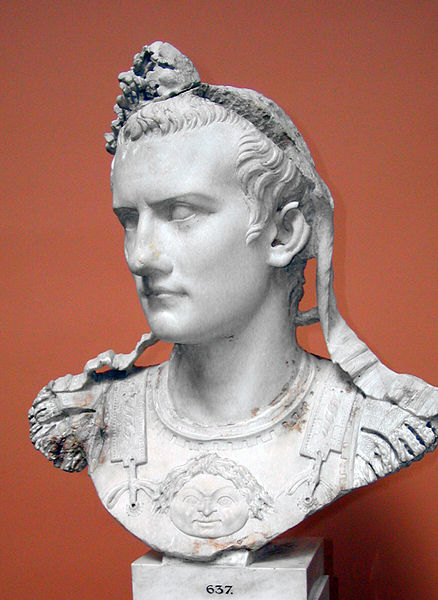
I sometimes wonder what it must’ve been like to live in Rome as Alaric was whetting his sword among his Visigothic horde. Insane—literally insane—emperors wielded unchallenged power and lived lives of opulence amid the slaves and poor. Religion was front and center on the agenda, of course, because emperors were gods. You don’t have to listen too deeply to hear the same message even today. Those who proclaim God as the justification for their political ambitions know that God is the ultimate malleable deity. In fact, God can even be in the Oval Office. Lead can line your aqueducts and your horse can be made a senator. Lord knows an ass can be. And all the while let’s shut down the voices of those who’ve looked at religion, beginning in the Stone Age and up to now. If we want to grab power it’s vital that we keep it from public view that self-deification is as old as kingship and in a post-religious world, we have only to pretend.

Photo credit: Louis le Grand, Wikimedia Commons

Photo credit: Louis le Grand, Wikimedia Commons


Biblical Script

The popular perception of the Bible generally does not match the actual contents very well. Like most books, the Bible has its highlights: Creation, Flood, David and Goliath, Jonah, Daniel and the lion’s den, Jesus, the Apocalypse. Between all the fascinating narrative, however, come the instructions. More instructions, in point of fact, than most people would care for. Nevertheless, over the centuries the Bible has acquired an aura in western civilization. It has become what some colleagues call an “iconic book.” It is this aspect of the Bible that stands out most clearly in the Fox series Sleepy Hollow. I wrote a post about Sleepy Hollow as I began to watch the first season on DVD. The headless horseman is an agent of the Apocalypse, and clergy and witches play a prominent role in the story. I wondered if the role of the Bible would diminish once the audience was drawn into the conceit of the four horsemen thundering out of Revelation into Sleepy Hollow. Just the opposite, in fact, occurred.

Sleepy_Hollow_-_Title_Card

As the series unfolds, the Bible is drawn more and more into the story. Demons and detectives both want to get their hands on it. Not to read the Ten Commandments or the Sermon on the Mount, but because the Bible contains esoteric information. Those “in the know” can unlock its secrets and thereby save society. Ironically, this is a subtextual version of the biblical metanarrative. It is all about (from the Christian perspective) salvation. The means, however, are quite different. Jesus is not really part of the Sleepy Hollow story. The Bible belongs to George Washington, cryptically bringing politics into the story. The text is not secure; there are extra verses in Washington’s Bible, just as there are many excised bits in Thomas Jefferson’s. Washington leaves instructions for saving his fledgling nation from the evils that roamed its shores during the Revolution. Or is that Revelation?

Right up to the cliff-hanger ending of season one, the Bible comes back time and again, focusing the viewer on its magical qualities. It is a book of secrets and mysteries. Meanwhile in the real world, biblical studies positions are being slashed from universities as if the horseman’s axe were anything but fictional. We don’t want to know about the real Bible. Politicians, real ones, use it as their own sword to force their personal faith agendas onto the electorate, but we generally do not even understand what the Bible really is. We’ll fund economics, that dismal science, and business, and maybe even actual science. The humanities, however, the stuff that makes us human, we will gladly call luxuries and deny them fiscal security. So the Bible grows in stature even as it diminishes in stature. Those who don’t know the factual Bible can easily be swayed by the fictional one. Are those hoofbeats I hear in the distance?


Life Everlasting

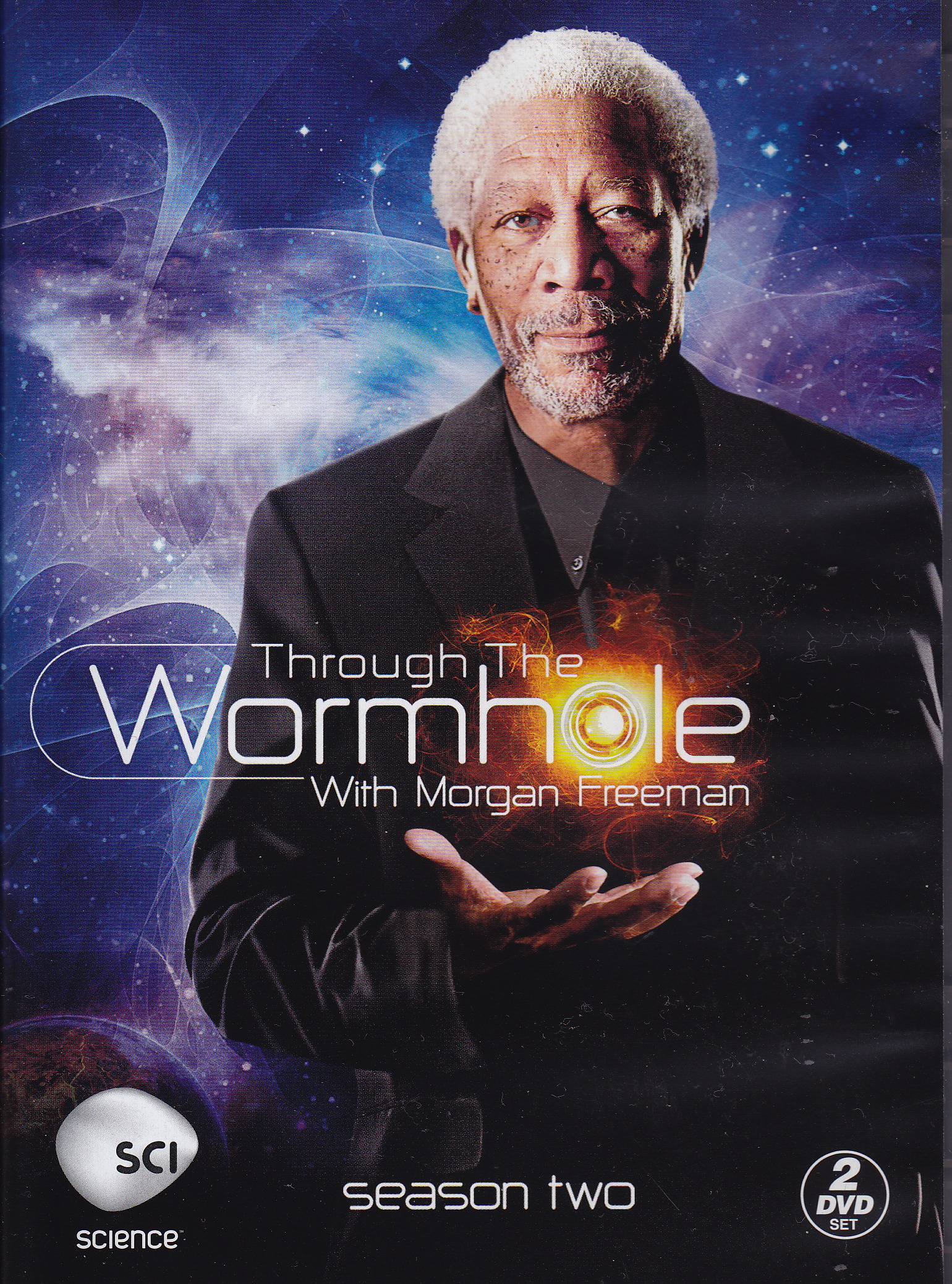
ThruTheWormholeThrough the Wormhole is one of those series that keeps me coming back. I’m currently working my way through the second season because it is a show that I take in small doses. The episodes require thought (and often, more importantly, time—something of which I have too little). Watching the installment “Can We Live Forever?” I was astonished by the optimism of the writers and interviewees. Among a cross-section of scientists, at least, there is the belief that we can, and will, dramatically expand human life. To biblical proportions. And that life won’t be a decrepit, declining feebleness. Instead, we can be, to quote one of the scientists, quoting Bob Dylan, “forever young.” Well, maybe not forever, but you get the picture. Of course, God came up quite a bit in this episode. Immortality is the stuff of divinity. The life-force, which much of science denies exists, is strong. No matter how weak or old, we don’t really want to give it up.

Of course, death is the price of life. We live on a finite planet with dwindling resources. If we don’t die, we run out of space for the next generation. Some have postulated that we need to colonize other worlds—just the thing that got Europeans in trouble in the first place—in order to make room. Room for us. The dominant species. No doubt, we are “programmed” to age and die. As far as we know, all animals are. Even plants. That is to say, life as we know it ends in death. If it doesn’t, can it truly be called life? I would be fascinated to live for a long while and see what we can make of this world. Not the greatest fan of technology, still, I’m impressed how far we’ve come in the brief time I’ve spent on this planet. And I do wonder where we’ll end up. In my mind, however, there always is an end. Even to this infinite universe, about the heat-death of which I’ve often read. What gives us the right to live longer than nature dictates?

It is, surely, a matter of degree. These glasses perched on my nose certainly have prolonged my life beyond what nature would dictate. The vitamin pills I swallow, the fabrics that keep me warm while wicking away perspiration, the things physicians can stop in their germy tracks. We already prolong life. Nevertheless, the century mark has always been symbolically our final goal and sign post that it’s time to hand things over. Thus it was in the beginning. The Bible makes clear that, although the antediluvians lived centuries rather than decades, this was never intended as the lot of the majority. No, we were born to die. We live through our children. The thought of eternity is scary. Especially when we think of how humans are. Those who can afford to live the longest are likely those who least deserve to do so. Do we want to live forever with the plutocrats in charge? Perhaps there’s a reason that we all take that final bow. Still, I can never listen to “Forever Young” without getting misty eyed and imagining the possibilities.


Public Knowledge

Sometimes the media gets it wrong. If one were to believe in the tales of industry prognosticators, our libraries would be closing, we’d all own Kindles, MOOCs would have replaced expensive college courses, and New York City should still be shoveling out from the worst blizzard since the Ice Age. We thrive on extremism. Although I don’t regularly read the newspaper (who has time?), the internet makes news memes available just as they happen and I feel somehow cheated if I have to wait more than an hour for trenchant analysis of an event I’ve just witnessed. Still, the publishers haven’t all shut their doors yet, colleges are managing to stay afloat, and libraries can be happening places. This became clear to me when I recently attended an event in the quaintly named Old Bridge Public Library. It was a Saturday, the time of the week when the gripping fingers of employers feel their weakest. Although I saw no evidence of an old bridge anywhere, I made my way through the traffic to the library where I met with a surprise—the place was crowded!

IMG_1901

For those of you not fortunate enough to live in New Jersey, Old Bridge is probably best considered a satellite of New Brunswick, home of Rutger’s University stadium. (I think there may be a university associated with it too.) That is to say, it is an urban area, and any antique structures to convey one across the water have long devolved to only nomenclature. Like anything in north-central New Jersey, it’s not far from New York City. When I arrived for my event, the parking lot was already full. It was not because of the event, either. Less than 20 showed up for that. When I went inside I found the library a veritable hive of activity. And it wasn’t just lonely, homeless people trying to get out of the cold. Families with kids, people with their grandparents, even other middle-aged adults like myself, all found their way to this island in the sea of a municipal complex not walkable from anywhere. I left encouraged.

Yes, the world of books and education is changing. Publishers feel stress, but that stress mostly has to do with predicting the best form to provide for content. Self-publishing has become a phenomenon, but many know that the self-published book has a difficult life in front of it. Libraries, however, are not the graveyards we’ve been told that they are. We need repositories of information that isn’t on the internet. And more importantly, we need places where, although the librarian shushing us may be iconic, we can get together with like-minded individuals and truly educate ourselves. I do sometimes tremble when I think of the future. The values I acquired as a young person seem, at times, on the verge of extinction. I learned that when this seems to weigh too heavily on my mind, I need to head to the nearest public library and support the old bridge to knowledge.


Addam’s Evve

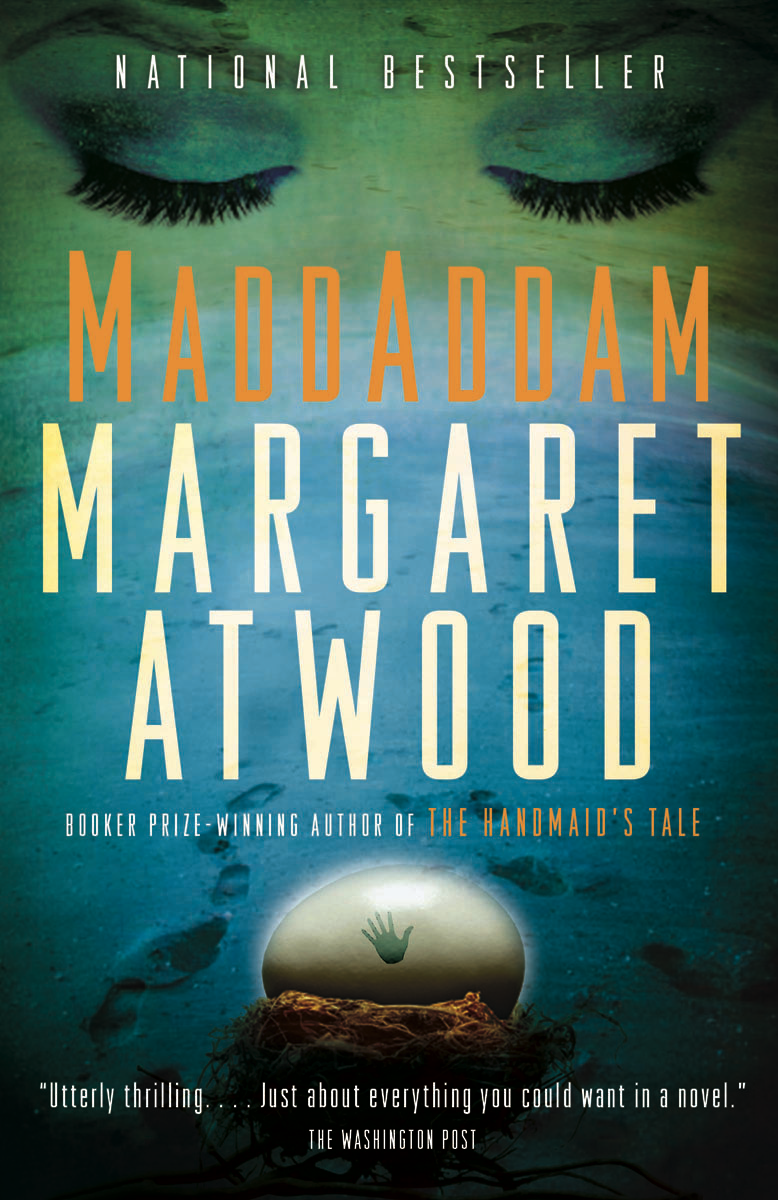
MaddAddamDystopias can be optimistic. I just finished reading Margaret Atwood’s MaddAddam, and came away from it strangely at peace. The third of its eponymous trilogy, the story takes place in a future that is simply a continuation of where we are at the moment. Things have gotten pretty bad—most of humanity has been wiped out, genetic engineering has taken dreadful liberties with creatures human and non, and corporations have fulfilled their dreams and have taken over at last. The few good people left are tormented by those society has made into sociopaths. Global warming has proven the naysayers false, and yet, despite all this, there is room for hope. Tying together the various strands from the previous two books, Oryx and Crake, and The Year of the Flood, MaddAddam is probably the most eco-conscious trilogy on the planet.

Apart from the many obvious biblical allusions (I often wonder what it must be like to miss so much, for want of familiarity with holy writ), the book also introduces a fully functional faux church. Atwood can be at her best when taking on the charlatans of piety. Cynical and calculating, “the Rev,” father of two of the ensemble cast, is everything a televangelist is, and more. Indulging in all that he denies his flock, even Elmer Gantry would have trouble keeping up. The Church of PetrOleum represents the most damaging of industries in a world already suffering the consequences of the greenhouse effect. Corporations make it rich while the Rev takes out his personal issues on his wives and children. Instead of being on the side of paradise, the church introduces chaos.

Through the gloomy scenario she’s foreseen, Atwood is able to see glimmers of a future that has possibilities. The protagonists are the members of a commune of a green religion, earth-centered and bearing a resemblance to both Wicca and monastic Christianity. That spiritual tradition, an offshoot of more established churches, is seen as dangerous by the corporations. And with good reason. Despite what televangelists tell us, spiritual truth is not on the side of big business. Jesus was no trickle-down economist. Reagan was no messiah. Corporate greed leads to blocking laws to clean up our world. We do not have control over what geneticists are doing, and, in fact, most of us have no idea what we’re eating or wearing any longer. Or what it is they’re packaging our food in. We are the consumers. Taught always to consume more. And the more that we are told to consume is the very planet that gave us life. My hat is off to Atwood, who still seems some possible cause for hope.


Under Who?

Who is God anyway? The question occurred to me as I read about the current Superior Court decision in New Jersey that “under God” in the Pledge of Allegiance remains constitutional. The American Humanist Association had sued to have the offending prepositional phrase removed, based on first amendment rights to religious freedom. I’ve always found the whole indoctrination of swearing to a flag somewhat provincial and perhaps even damaging to the unity of humankind. Nations, after all, are about keeping things for ourselves, something that the God of the Bible seems to find naughty. During the Cold War, waged against the “godless Communists,” the questionable phrase was added in 1954, only after we’d secured nuclear weapons. Does any nation that has the bomb have the right to declare divine sanction? I guess so, on second thought.

IMG_0962In his decision Judge David Bauman said that God, in this context, is not about religion, but about the state’s history. Granted, one of the New Jersey delegates to sign the constitution was a clergyman, and president of Princeton College. The same Princeton that became the home of the man who would open physics enough to let us begin a nuclear reaction. But I’m getting ahead of my story. This concept of God being an arcane aspect of history as opposed to a present and active force motivating people’s lives is a curious one. In order to keep the deity, he (and the historical God is male) must be demoted to an historical relic. If that is true of divinity, what does it say about the concept of nationhood itself? Have we come to admit that it is all a fiction to keep status quo ante?

Humanist and atheist groups have argued for years that public school (which no government takes that seriously) should not be a forum for religious indoctrination. Some religious groups (such as Creationists) clearly see such schools as a mission field ripe for proselytizing young minds. Such was clearly the case in 1954. Today we see the Russian Orthodox Church becoming a supporter of the government in Russia, where godlessness might be more a factor on the ground than on paper. In the United States we have a culture that provides lip-service to the almighty while the true god is secreted away in the shrines of bank vaults and expense accounts. It is really about a way of life, after all. Should we keep or remove “under God” from a pledge to personal gain? It is all a matter of how you define “God.”


High and Dry

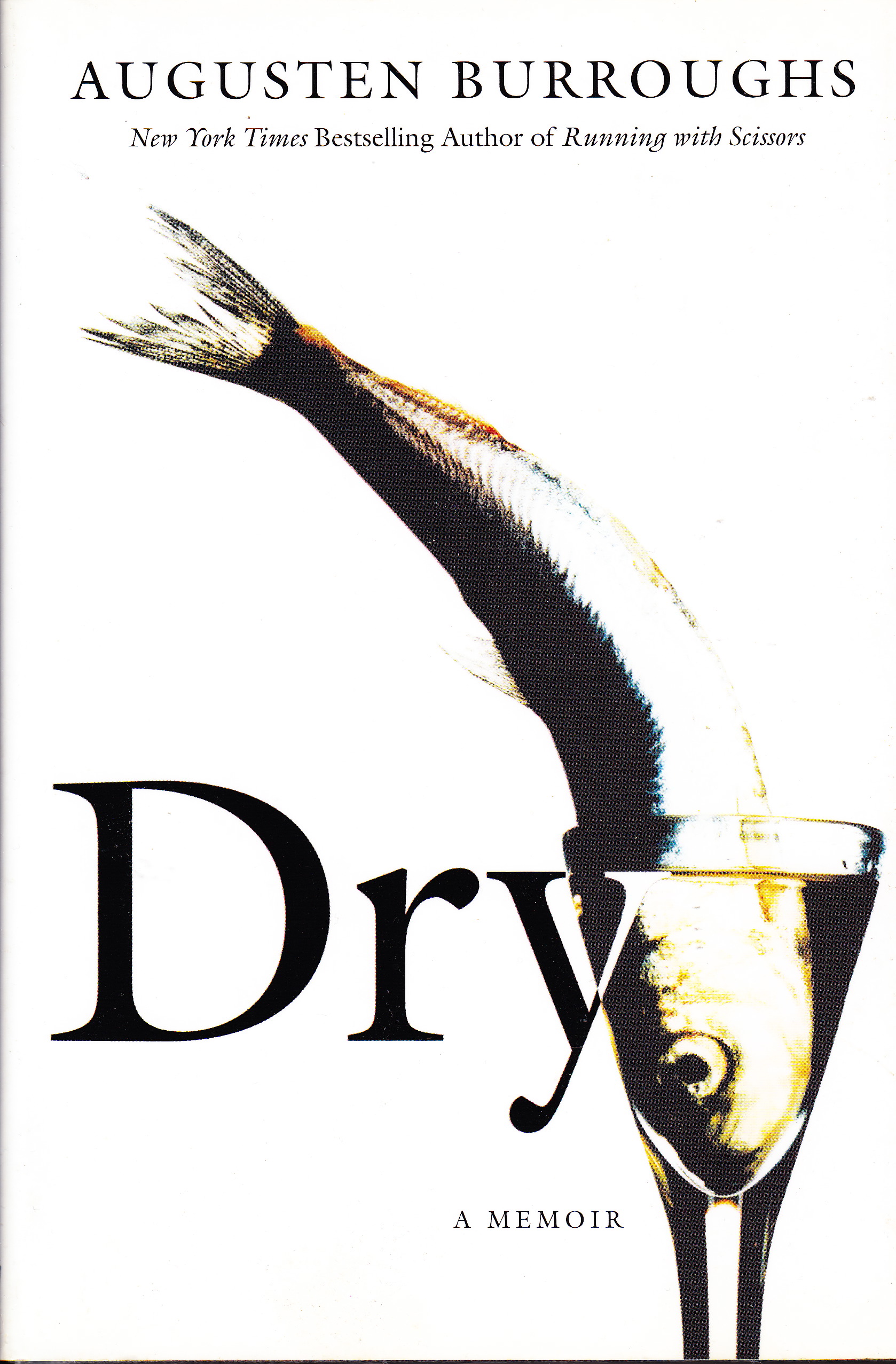
DryAlthough I frequently, and unapologetically, express my opinions on this blog, I try not to reveal too much about myself.  The books we read, however, are formative for who we are.  Anyone looking over the hundreds of books on which I’ve posted over the last few years will have a reasonable idea about my inner life.  One aspect I don’t often discuss is the fact that I grew up in an alcoholic household.  It is difficult for me to discuss and I tend not to read about such things because it is too much like therapy and I end up feeling pretty lousy afterwards.  Nevertheless, a friend who is a recovering alcoholic gave me a copy of Augusten Burroughs’s memoir Dry a few years back.  Guilt at not having ever read it caught up with me and so I decided to make an honest friend of myself.  Despite the very clever language and some laugh-out-loud moments, it was hard for me to read.  Time flew by as I had the book open, but too much turmoil attended it.
 
Once I attended an Al-Anon session.  This was a seminary assignment; we were to observe and take notes and write up a report for a sociology of religion class.  Instead, I found myself participating.  I know recovering alcoholics who dislike Al-Anon—it is an organization for families of alcoholics—because it can be judgmental.  The fact is, however, that those who are part of an alcoholic family do suffer.  I didn’t go back to Al-Anon, and I religiously avoid self-help books.  I do know, nevertheless, that my outlook was profoundly shaped by my youngest years and the insecurity that dogs me every day of my life has its origins then.  I also thought about how memoirs of alcoholics can become bestsellers.  The jacket blurbs say how funny they are. I don’t hear so much about memoirs of those who were collateral victims.  Don’t get me wrong—I’m not blaming alcoholics.  Alcoholism is a disease. It may be treatable, but it is tragic for those afflicted with it. That doesn’t diminish the impact of having to live with it when you’re too young to have a choice.
 
When I was in college an erstwhile friend took me to see Arthur.  Dudley Moore was rocking the critics with his performance.  I smiled through my horror.  There was nothing here to laugh at.  So a book like Dry makes me feel…? Conflicted.  What do I understand now that I haven’t before?  I read about how even prestigious colleges are increasingly renowned for their parties, lurching about under their laurels.  Some will experience it as a temporary fling and will move on. Some will never graduate.  What can be done?  We can listen.  I suppose that’s why my friend gave me the book in the first place.  I need to put aside my pain and fear. I need to listen.


Sporting Chance

IMG_0997

I didn’t watch the SuperBowl last weekend. In fact, I haven’t had television service for over two decades now. I don’t really miss it too much since I don’t have time to watch TV (the commuting life leaves time only for sleeping and working, except on weekends). Still, for special events, I think, it might be nice to see things live. (My wife raises this point every time the Olympics roll around. I seem to recall them being every four years, but now it seems they’re seasonal, and about twice as frequent. Could it be that advertising revenues are really that important? Maybe I missed that, not having television…) Even when I have managed, over the last couple of decades, to pull the SuperBowl onto a fuzzy, snowy screen, it was for one major reason—the commercials. I wonder what that says about a society? I now spend precious weekend time watching commercials on YouTube, sometimes having to watch a commercial for the privilege of watching a commercial. The substance without the fluff of the actual entertainment.

So it was that I saw the Mophie commercial about the apocalypse (here’s the link, in case you’re as entertainment-challenged as I am). So as the world comes to an end, the weather goes even more wonky than we’ve already made it go, Fortean fish fall from the sky, dogs walk their owners and priests steal plasma television sets. Then the punchline, God’s cell phone dies and the end of the world ends. It isn’t the shock of seeing an African-American God—Morgan Freeman led the way there with Bruce Almighty—but rather the technique, the divine delivery, if you will, that is the shock. Not even God is anything without his cell. (I wonder when we’ll see a Latino woman as God? Dogma came close, but not quite.) Is the smartphone really not the deity here?

God, it seems, has become a null concept. I don’t mean because of different racial or gender presentations, but I do mean that the concept itself is completely up for grabs. God, according to Anselm of Canterbury, is that being greater than which nothing can be conceived. In fact, God seems to be that which people worship, more of a Tillichian ultimate concern. A wired world should, in theory, be a world headed toward peace and equality. If we know what’s going on everywhere, shouldn’t we be doing our best to ensure that it is fair and just? The truth of the matter gives the lie to such optimistic musings. I would hate to confess just how much my phone bill is every month. Even without the “triple play” (no television) it is the biggest expense after college tuition and rent. And it goes on, in saecula saeculorum. When I pull out my smartphone, I gaze upon the face of the Almighty. And perhaps that’s a good thing, because how else would I entertain myself without television?


Duck Overboard!

Moby-DuckI remember the moment precisely.  I was in Santa Barbara, California on a campus visit for Routledge.  I stopped into the university bookstore to see which of our/their books were being used.  From the cover of one of popular books in the general reading shelf stared a friendly yellow duck.  My thoughts went, as they often do, to my daughter back home.  The cover copy explained that this was the true tale of a bunch of “rubber” ducks lost at sea and the captivating story of how they ended up in diverse places.  I bought it for my daughter since rubber duckies had been a kind of childhood theme, and when I saw it on her shelf recently I also grew curious again.  I’ve always been fascinated by the sea, even applying for jobs at the Maine Maritime Academy just to be near the water (and in Maine). 
 
Of course I’m referring to Moby-Duck by Donovan Hohn.  It wasn’t really as cute and cuddly a book as I thought it might be—that duck on the cover sure looks happy—but it was far more important.  As Hohn explains, he was a teacher captivated by the story of a cargo container holding plastic (not rubber) bath toys falling into the Pacific Ocean on a crossing from Asia.  The ducks (and frogs, turtles, and beavers) spread out as far as Alaska and points south on the west coast of the US, and some perhaps made it back east.  Some were even reported in Maine (but Hohn came to doubt they are the right ones).  So he set off on several ocean voyages to follow the trail of the toys.  He has left us a moving and thoughtful memoir of the journey, and also much more.
 
The oceans are incredibly polluted.  As Hohn points out at several points, entire cargo containers—sometimes several at a time—tumbling into the ocean and being left behind is not uncommon.  Add to that the trash, particularly the plastic, that otherwise makes its way into the ocean, in some places forming islands of garbage so large that they can be spotted by satellites, and I begin to grow truly alarmed.  Hohn learns about plastics and how toxic they might be, as well as how thoughtlessly they are hurled into the oceans.  Not written as an environmental manifesto, Moby-Duck—literate, witty, and very human—nevertheless narrates how a father came to see the world through the eyes of parenthood.  And some of what he finds is truly frightening.  My takeaway?  Little things matter.  Immensely.  That, and we need to clean up our act before it’s too late.  No bath will wash away the stains we’re still in the process of creating.


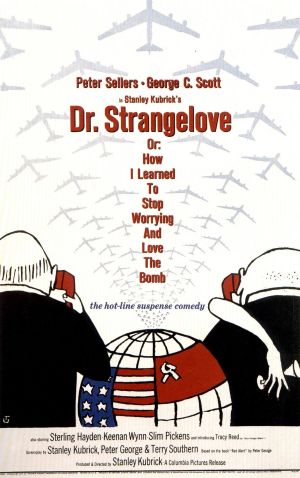
Dr._Strangelove_poster

In honor of the fifty-year anniversary of the release of Dr. Strangelove this past week, my wife and I sat down to rewatch the movie this weekend. Psychologically, as Kubrick found out, dark humor was the only way to deal with the sense of doom that pervaded the world into which those of my generation were born. Nuclear weapons had been developed and the Cold War was in full swing. Somehow, even in small-town America, I didn’t find Communism to seem so awful. After all, I grew up reading the Bible and it sounded quite a bit—at least in theory—like the arrangement the apostles had made in the book of Acts. The idea of private property, the very spine and muscular system of capitalism, was considered a sure way to lead to God’s kingdom not being established on earth. Nevertheless, that is the way, as the phrase goes, that the money went. And Communism threatened the right of one percent to horde all the money, so we were ready to annihilate all human life for it. Talk about taking your marbles and going home! No child should grow up knowing the meaning of the phrase “mutually assured destruction.”

Dr. Strangelove has held up well for the half-century since its release. Despite the thawing of the Cold War, the big chill isn’t over yet. And humor still seems the only way to keep sanity and deal with the state of the world. There are still many General Turgidsons out there (some of whom have held very high government offices, and this is no joke). There are at least, as far as we know, fewer General Rippers. So we hope. As the bomber crew nears its target, Major Kong goes over the contents of the government issued survival kit, among which is a comically small Russian Phrase Book and Bible combined. Kubrick, a master of satire, has the godlessness of Communism thrown time and again across the lips of the hawks. It is better to kill everyone than to allow the godless to rule. Even the Bible, however, shares space with the Russian phrasebook, making us wonder whether it is a tool of conversion or an admission of inevitability. Still the bomber, piloted by a Texan, flies on.

Perhaps the biggest moral dilemma we face is our ability to destroy hope. Capitalism promises opportunity to all. Like many who grew up poor, however, I have found lies hidden in plain sight. It is not easy to move ahead if you choose to mire yourself in debt to get an education. In fact, if you lose a job in higher education you can easily find yourself adrift for a decade or more, not earning any retirement money and being frequenly sought out by your local universities as an adjunct instructor. In fact, at many points your career might look like the end of the world. So it is that I take great comfort in settling down to watch Dr. Strangelove again. At least it is an honest movie, and that hasn’t changed in the past half-century. And I think I may have been wrong about how few General Rippers there really are.


What If?

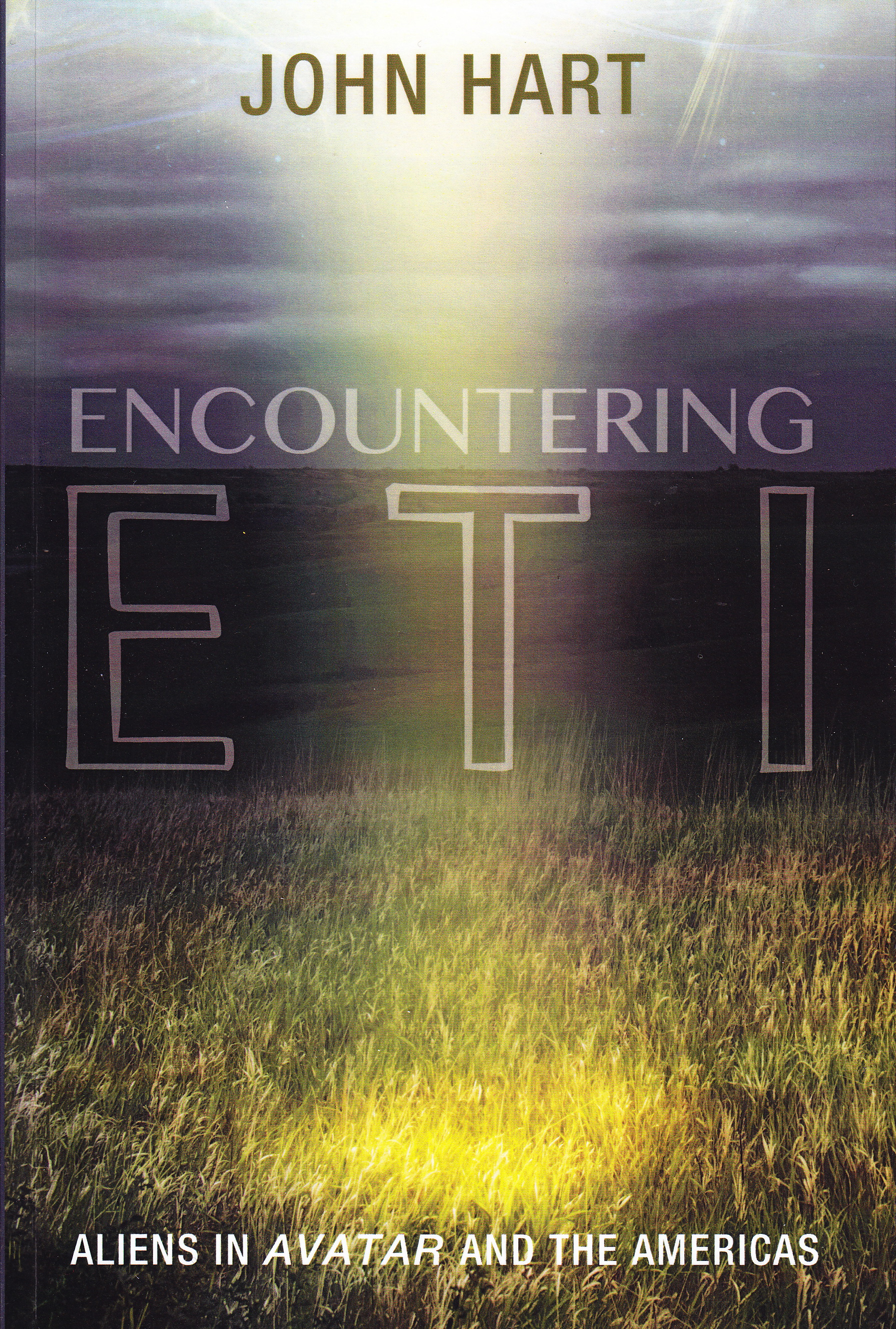
EncounteringETIA game that parenting books used to recommend was called “What if?”. It was an imagination game played by parents with their children to teach them about “stranger danger” in a way that wasn’t too scary. We naturally, it seems, fear the other. “What if?” kept coming to me as I read John Hart’s book Encountering ETI. ETI is a bit more precise than the more familiar ET, whom everyone knows, is an extra-terrestrial. The I stands for intelligence. What happens, in order words, when we meet extra-terrestrial intelligence? I very much admire academics such as Hart who are willing to ask what is such a necessary question. The point of the book is much more an ethical than a speculative one since human history has pretty much documented what happens when the Discovery Doctrine is applied. Natives (or TI, terrestrial intelligence, if you will) at the hands of newcomers with the Discovery Doctrine, are soon wiped out. History has repeated the story far too many times. Scientists such as Stephen Hawking even apply that to us, saying that if ETI arrives we will be exterminated. Hart takes a much more balanced look at the question.

Part of the problem is that we, as a society, have been taught to laugh at those who’ve seen UFOs. UFO stands for Unidentified Flying Object, and many people can’t identify what they see in the sky. But we all really know what I’m talking about. Those who’ve seen what may be non-terrestrial flying machines are automatically classed with the mentally unstable and ridiculed into silence. Thus it has been since the 1950s, despite foreign (!) governments and their militaries admitting that yes, we see things and we don’t know what they are. France, Argentina, and Russia, for example, have opened the files to some extent. The point that Hart makes is well taken—if we ridicule so automatically, will we be prepared when they arrive? Shouldn’t we be thinking about this now that scientists are discovering there are likely billions of planets in the Goldilocks Zone (capable of supporting life)? Ah, but it is so hard to let go of racial superiority! Homo sapiens sapiens are pretty impressed with themselves. As if nothing better could be conceived. Perhaps this is original sin.

Hart, whose book is subtitled Aliens in Avatar and the Americas, takes the possibility of visitation at face value. I’m sure it has impacted his career somewhat. The wise choice, it seems to me, is to take seriously what is almost a dead certainty—we are not the only life in the universe. Ironically, the idea that we are is largely based on the Bible. Genesis makes a pretty clear statement that we are God’s best idea. We’ve largely dropped God from the picture, so we, as humans, now occupy the top rung. And when we find humans different from ourselves we ask how we might exploit them to our advantage. (Here’s where Avatar comes in.) Hart’s book, as readable as it is affordable, is one that any thinker should take seriously. It is a book of ethics, writ large. Universal ethics, one might say. The aliens may not land in our lifetime, but chances are pretty good that they’re out there somewhere. It might be best to take some time to clean up the house before guests arrive.


Holy Trilogy

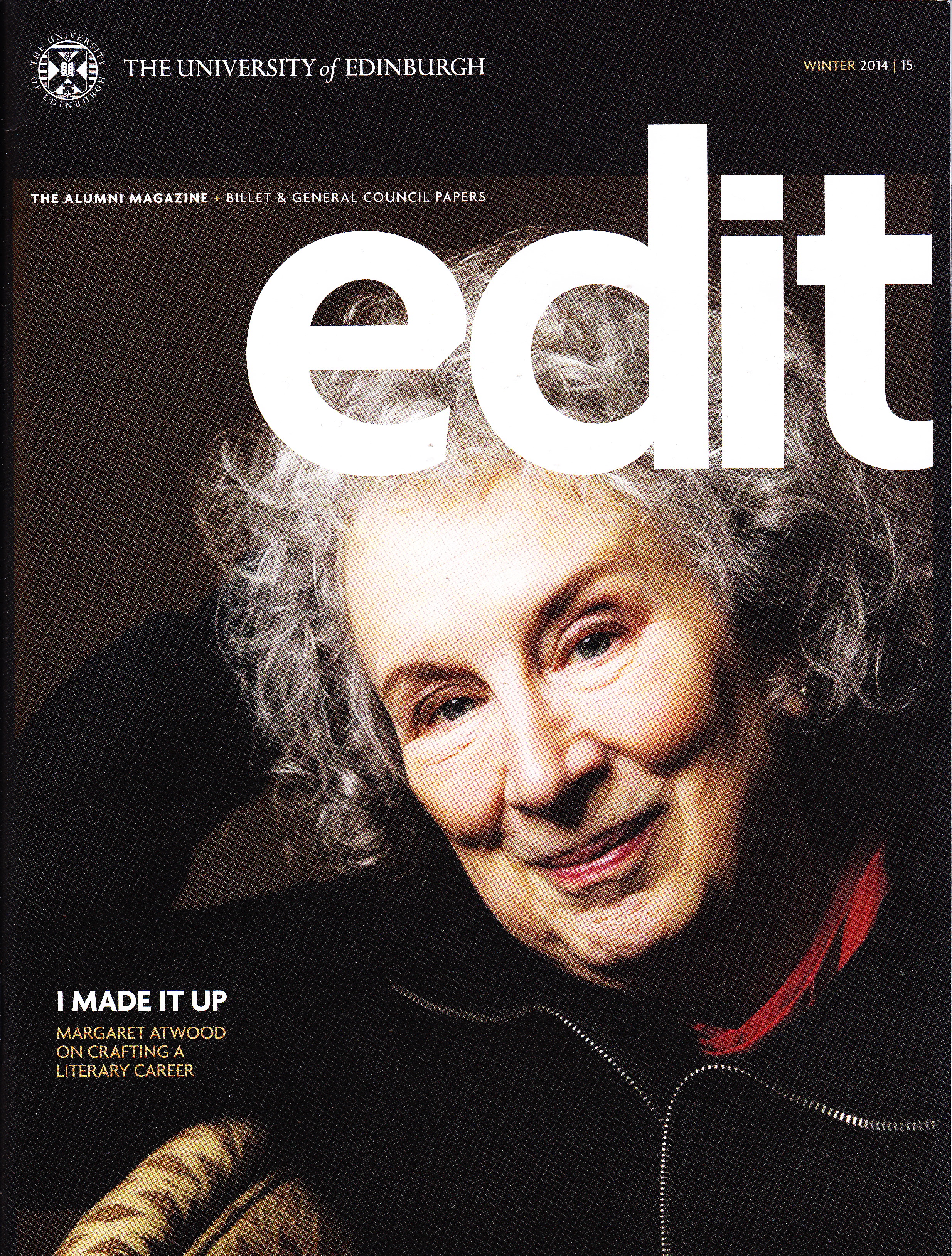
AtwoodAlumni magazines, thinly disguised appeals for money that they are, seldom merit much time. This doesn’t stop me, in any case, from sending notices of my new publications or blog, since I, like most fellow alumni, have never been cited as notable. One of the thousands who graduated and amounted to nothing. Once in a great while, however, I feel a slight twinge of pride when one of my three mothers does something of which I’m particularly proud. Most often this is Edinburgh University, although once in a while Boston University also catches my attention. A recent copy of Edit—an alumni mag that began some time after I graduated, American-style—has a familiar face on the cover. Well, not familiar in that I know her, but familiar in that I’ve read several of her books and feel like I know her. Margaret Atwood was given an honorary degree by my old school, and I am pleased to be a, albeit lesser, co-alum.

Over the holidays I picked up a copy of MaddAddam, the third and long-awaited conclusion of the trilogy of the same name. As my regular readers know, I have a soft spot for dystopias. In spite of attempts by many writers to paint a brighter future, it seems that given how far we’ve let things go, collapse before reform feels inevitable. The apathy I find when we read about the vastly disproportionate disparity between haves and have-nots, and the surging of deep, animalistic, primate, rage at injustice doesn’t seem to me a healthy mix. Atwood, although I can’t yet speak for MaddAddam, envisions collapse before florescence. The same may be declared about A Handmaid’s Tale. Complacency, it seems to me, is the real enemy.

And universities continue to send me alumni magazines that instead of inspiring me, rub my face in my own mediocrity. I spent thousands of dollars and thousands of hours on my education and I am paid less than most janitors at most colleges. Not that I was ever in it for the money. I did, however, envision a hopeful future where I’d be teaching, perhaps at a small college somewhere, writing my thoughts in books rather than blogs, and having a modest impact on the world for good. Instead, I have found myself living in a dystopia. As I roll over and see that 3 in first position on my bedside clock on a table with the legs broken off, I know it is time to face the cold of a drafty apartment so I can await the bus to pay for another day’s privilege. My comfort is that Margaret Atwood made an impression on Edinburgh University, and will soon be making another impression on me.


PTSD

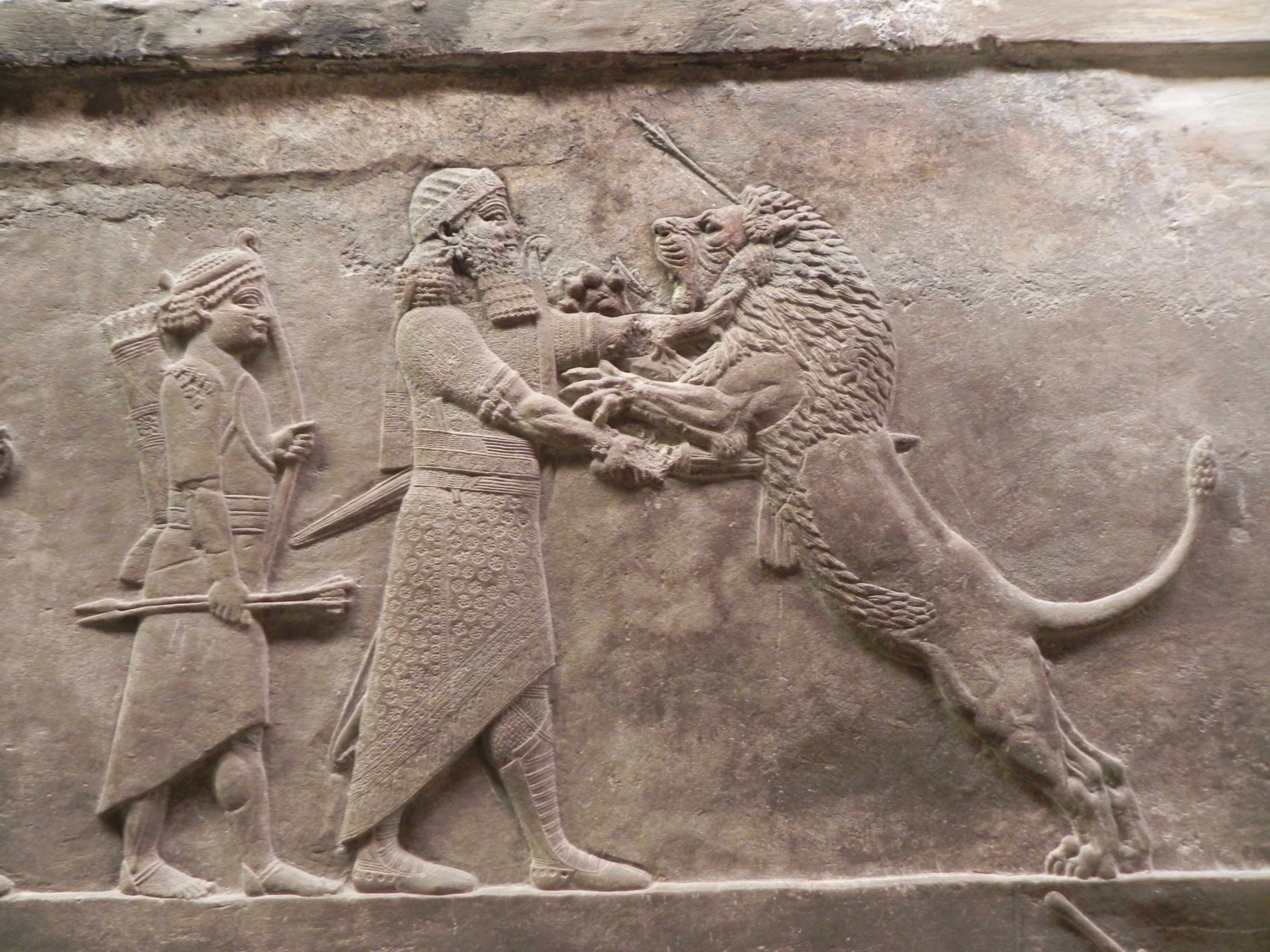
In a recent post on BBC Health, James Gallagher discusses ancient Assyria. What can ancient Assyria have to say about modern health, beyond the occasional liver model used in haruspicy? Post-Traumatic Stress Disorder, of course. As Gallagher notes in his article, PTSD was diagnosed after the Vietnam War. That doesn’t mean it wasn’t in existence long before then. In fact, it stands to reason that if people experience it now, they likely experienced it during traumatic events then. War is among the most horrific and tragic activities in which humanity engages. Men, in the days of Assyria, sent to kill other men in the hundreds, and thousands, could not have walked away from the battlefield unchanged. There are those who seem not to suffer, but the majority of us know that, no matter how just the cause, it is simply wrong to kill others. On a massive scale it can only be worse.

Trauma

Trauma

Multiple stresses, I would contend, go undiagnosed. I have known those who’ve experienced significant loss—a job, for example, in an economy that makes future prospects dim—who begin showing the same kinds of symptoms. They are, of course, not diagnosed with PTSD, but are simply told to either buck up or go see a shrink. “Pull up your socks,” as they say in the UK. I wonder, though, if it is that simple. People throughout history have been capable of inflicting great stress on one another. Sometimes it becomes so normal that we don’t even recognize it. The forcing of loss and resultant terror of future deprivation is a daily affair. The civilization we’ve been is so complex almost to demand this kind of horror. We may not be sent to the battlefield to kill others, but we are daily faced with situations that cause us great pain, often for prolonged periods. And we wonder why people aren’t satisfied.

Please don’t misunderstand me. I have no doubt that the level of stress faced by those who survive war is severe. I don’t make light of it. Being a pacifist, I do believe there is a solution to war that involves education instead of fighting, but I don’t in any way suggest that those who suffer aren’t suffering in reality. They are. Sometimes they can no longer function in society. We institutionalize, cut funds, then send them out on the streets. This is nothing new. As Gallagher points out, soldiers in antiquity weren’t professionals. All healthy men, apart from the one-percenters of the day, served in armies on a rotating basis. One thing, however, has not changed over the millennia. War today remains as unnecessary as it was then. If we could turn our attention to improving the lot of the 99 lost sheep, the one already found might, to its surprise, be much better off if all were accorded ample care.