Ships Ahoy

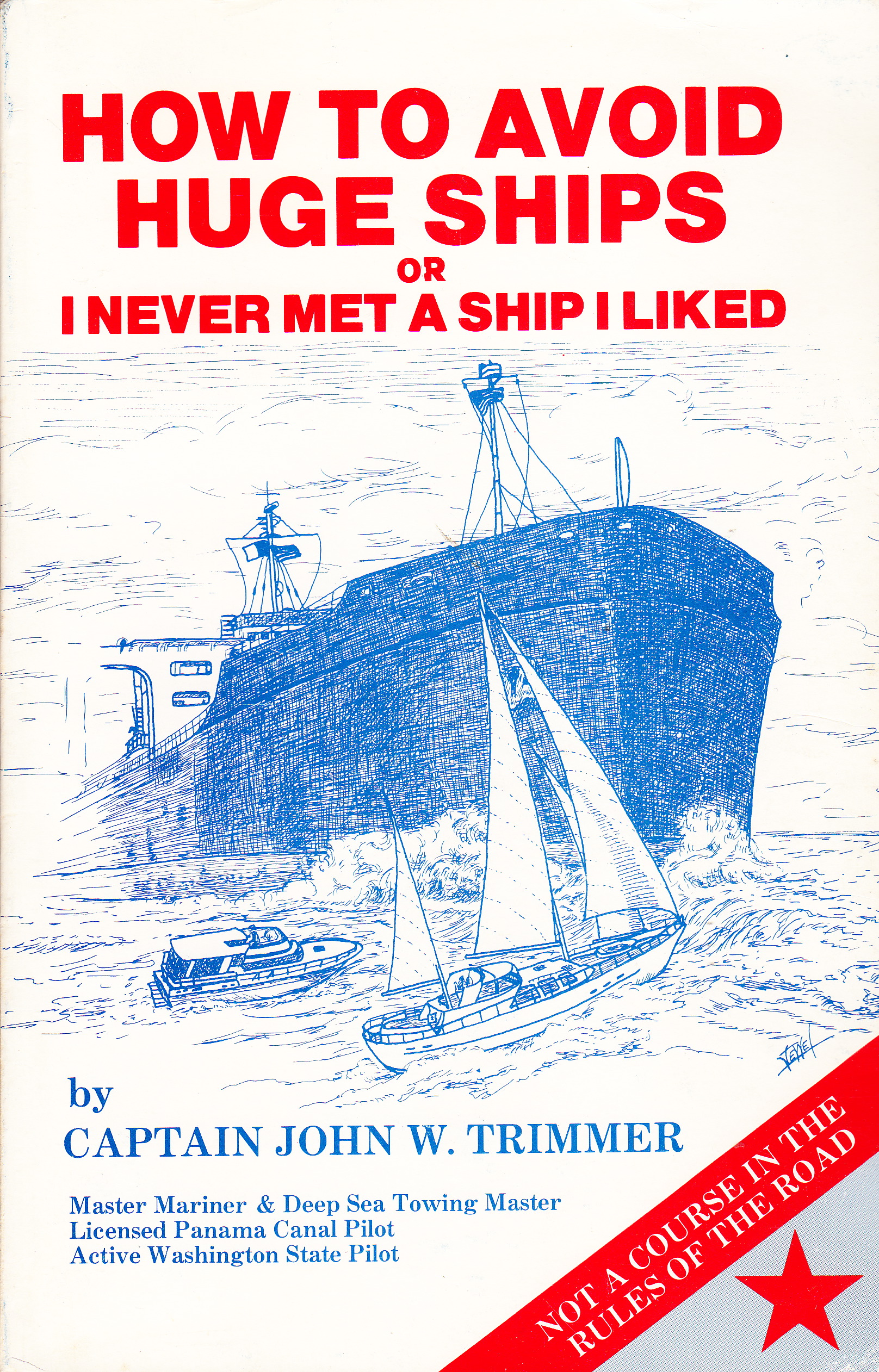
Huge ShipsI’m always on the lookout for a good metaphor. Some time ago a humorous list of improbable book titles was circulating the internet. One of those books was How to Avoid Huge Ships, by Captain John W. Trimmer. Privately published, it surely made its author little money, and it quickly became one of those books with hilarious, bogus reviews on Amazon. My family, knowing my predilection for seafaring (at least in imagination) and my love of irony, found an overpriced, used copy for my birthday. I was glad to have it, but wasn’t sure I’d ever read it. I don’t own a boat, and my efforts to live on the coast have always been thwarted. But then, I’m always on the lookout for a good metaphor.

How to Avoid Huge Ships, subtitled I Never Met a Ship I Liked, is one of the most parsimonious books I’ve ever read. Trimmer, a veteran of many years at sea, writes with paternal concern for those who have no apparent sense of reason. Large ships, as most of us with a modicum of physics realize, can’t stop or turn quickly. Yet, in this spellbinding little book, Trimmer reports, and even provides photographic evidence that smaller, private boats often deliberately cut across the bow of these fast-moving juggernauts. As he points out, no license is required to drive a boat, and most small boat pilots have no training. Accidents and fatalities occur. People destroy exorbitantly priced yachts by not moving out of the way of what can truly be called a monster. And like an impatient father, he’s somewhat weary of it. The style is so unpretentious that it might redeem self-publishing in an era when common sense doesn’t interest commercial book houses.

Aware of his own literary limitations, Trimmer bemoans not having an exalted final chapter of great wisdom. He’d already won me over, however, with the simplicity of his sermon. Get out of the way of massive ships. It is a gospel for those with ears to hear. He even points out that the non-seafaring Israelites had respect for ship pilots (citing Ezekiel on Tyre, with decided hints of Melville, intentional or not). I’m not likely to be on a ship soon, but I have survived a horrific hovercraft trip across the English Channel that forever taught me the true respect for the sea. And I know, if I ever find myself again upon the waves, I will consider myself fortunate for having read this wonderful little book.


Just Justice

494px-Martin_Luther_King_Jr_NYWTS

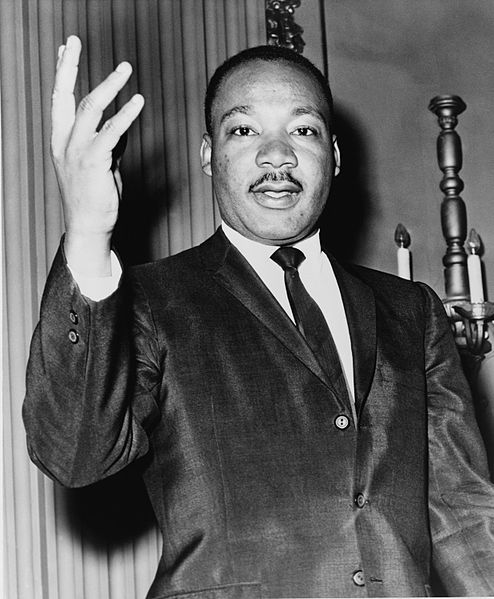
It was not intentionally because it was Martin Luther King Junior’s alma mater that I chose to attend Boston University School of Theology. King’s legacy there was certainly a perk, but I had found the seminary engaging because it had a rare combination, at least in my limited experience, of academic rigor and a strong sense of social justice. Too often, it seems, academic enterprises become dispassionate and social justice becomes one of those squishy human element sorts of things that really can’t be quantified. We pursue knowledge without really thinking if its impact will be positive or not. At least fair or not. Fairness is a concept rooted in belief, and, as studies of primates show us, it is very deeply embedded in us. What has it to do with academic achievement?

This Martin Luther King day, I’m concerned about how difficult social justice is to find, even in those places where we expect it to reside. Taking second place to doctrine in many churches, social justice is more of an uncomfortable requirement than a true passion. This winter I’ve noticed more and more homeless on the streets. Our “economy” seems to dictate that many have to be losers so that few can be big winners. Instead of helping them out, I see authority figures come along to shoo them out of the way before those who have jobs have to come that way. We don’t want to be reminded that we might lose everything as well. Affluent society requires victims, and we can be very academic about it.

I have to admit to relegating holidays to that mere Monday off work. The relentless wheels of capitalism ever turn, and only with reluctance do our companies grudgingly give us ten days spread throughout the year to recuperate. The next slated holiday comes in May. Will there be social justice by then? With the eventual warming of the air by that season, will we simply blend those without homes into the less well-dressed and pretend that we have achieved a fair society after all? What do we really celebrate today? Is it just another morning to sleep in, or is there something more to it? A dream that won’t be extinguished until fairness is established? Seems like a worthy idea, at least in theory. But until then you’ll find us at our desks, working to keep the system strong. And hopefully, we won’t forget to dream.


Divergency

DivergentSelf-denial, no matter what its motivation, is a religious ideal. In its more extreme forms it becomes martyrdom, but most religions agree on the value of taking less for yourself so that others might have more. This has been running through my head since seeing the movie Divergent. I read and posted on the book some time ago, but having recently seen the movie—a fairly faithful adaptation to the novel—I was forcefully reminded that this is a dystopian parable. In the future, society is divided into different factions, based on a person’s predisposition. This is done to keep the peace, and the factions seem to get along until suspicion grows about the group called Abnegation. The Abnegation faction is moved by pity and compassion for others. They are the consummate self-deniers, not thinking of themselves to the point of limiting time they can spend looking in a mirror. Others are the focus. Naturally, those who see the utter selflessness of others wonder what they’re really up to. Suspicion grows that this group is after wealth, in the form of food, secretly stockpiling it for themselves. Nobody would give up for themselves so that others can have more.

As I watched the movie I thought about religious groups that preach self-denial. Granted, I’m only one person, but growing up that was the message I continually heard loud and clear in the teachings of Jesus, according to the Gospels. Deny yourself so that others might have more. The deeper I became involved with the church, however, the rarer I found such behavior. By the time I reached college, I still hadn’t figured out that religion had become an industry, like any other. A service industry, to be sure, but it still had CEOs and treasurers and, increasingly, political power. The political seduction of religion already had a history by the time I became aware of it, but I still believed that self-denial was at the core of true religion. Perhaps the factions I heard whispering around me were right. Perhaps there was something more driving all this.

In Divergent, the belief in selflessness leads to self-sacrifice. In many feel-good movies, this leads to an expected resurrection. Here the future is bleak, and the dead remain dead. There is a kind of resurrection as the Dauntless faction comes out of its stupor, but the movie leaves the viewer wondering if there is a future after all. Is there a place in the world for those who legitimately want everyone to share? I think that every time I find myself driving. Behind the wheel, selfish maneuvers that lead to little, if any, ultimate gain seem to be deeply embedded in those who want to get there first. Abnegation, it seems, is a danger on the road. Driving, it seems to me, is a real test of someone’s religious convictions. Perhaps it is that one has to realize that the vehicle in front of you contains another human soul. Or perhaps it is that the fragmentation of society has already gone too far and those who don’t take for themselves are not emulated, but consumed.


Charlie Hebdo

With the tragic news coming out of Paris, a predictable set of recriminations are about to begin. Because of the actions of some extremists, “religion” will be labeled a danger to civilization and the sad loss of life at Charlie Hebdo will be chalked up to secular martyrs in the cause of reason. The reality, however, is not so simple. Fundamentalism, as one of my influential teachers used to say, is not a theological position—it is a psychological problem. Indeed, religion does not cause Fundamentalists to become violent, it is rather that religion is used as an excuse by Fundamentalists to act out their aberrations. The religious impulse, no matter how rational we become, will never go away. Those who fear that civilization will collapse might do well to reflect on the fact that religion is one of the earliest defining characteristics of civilization. It is a formalized expression of a deeply felt need, widely shared.

At times it feels as if we’re caught on a possessed merry-go-round. We weaponize our world without stabilizing economies or opportunities. (I know I’m oversimplifying here.) People turn to religion for consolation. Religions give some people the strength to deal with their difficulties. Others will use their religion to justify their hatred and fear. Weapons are nearly as easily found as sacred scriptures. One, however, is much easier to use than the other. Twelve people lie dead for trying to make the world laugh. Three others are surely feeling justified by the extremity of their faith. There is truth in the concept of weeping clowns.

Carlos Schwabe, Death of the Undertaker

Carlos Schwabe, Death of the Undertaker

Ironically, in a world where pundits and experts refuse to give any credence to religious beliefs, and do not support the study of religion and its offshoots, multiple times each year we find the press asking why this happens. I’m not suggesting that those of us who study religion have an answer, but I am suggesting that we might have some insight. Instead of the knee-jerk reaction of claiming that “religion” has claimed more victims, we need to realize that criminals have claimed victims, both human and abstract. The shooting at Charlie Hebdo is a sad reminder that simple answers are seldom correct ones. My plea has, however, never been complex: supply education, not assault rifles. That’s something in which we can believe.


Harpy New Year

A grueling early morning commute is seldom enhanced by complaining. I suspect most of us would rather not be here, crowded next to strangers on a barely adequate bus, going to jobs we may or may not find fulfilling. We put up with it, I think, because the ways of making a living have been effaced for those of the late boomer generation, but we’re a practical lot. Besides, it is a new year—why not start things off optimistically? Hanging around the Port Authority Bus Terminal as much as I do, you hear things. Our regular dispatcher and some drivers can be heard, sotto voce, saying that nobody wants to take my regular route. It’s a long route in heavy traffic, and I have the greatest respect and sympathy for the drivers. These are women and men with more fortitude than Job. Most of the time. I wonder why no one cares for an express run with so few stops?

The first day back after the holidays, however, the first commute of the new year: One of the regulars missed the bus and had to drive to a stop further along the route and berated the driver for being early. Given that some of us had been standing in the cold and were thankful for relief a few minutes ahead of schedule, and also for the opportunity to get to work a little early, the complaint seemed self-serving. Besides, this customer has made us all late for work before by complaining until a driver, like an exasperated parent, pulls the bus over. And once she starts complaining, she can’t stop. When a second customer joined in, I thought to myself, “Happy New Year.” Things were starting out well.

Yesterday, for the second morning commute of the year, our usual complainer noticed an unclaimed bag at the beginning of the route and, seeing something, said something. The driver radioed it in. Halfway to the city, she pulled the bus over, announcing she’d been instructed to wait for someone to come get the bag. We didn’t know, until he arrived, that he was from the bomb squad. Still, this didn’t stop the complaining sisters from starting on the driver again. When the bomb squad arrived, they looked on with interest as someone’s gym bag was opened with nothing more threatening than smelly socks inside. Then they started griping again. At that point I realized that New Year is indeed a religious holiday. Each new day is an unopened present. And some people will complain, even when left with an unexpected gift.

IMG_0542


Commandments by Committee

Something about the holiday season seems to bring out atheistic activism, or at least media interest in atheism. Now that we’re safely in 2015, I suspect things will quiet down a bit until the next major religious holiday comes along. Ironically, since I was a child I’ve heard about how secular Christmas, in particular, has become. Reactions to this have led to “Christmas wars” that give the lie to sleeping in heavenly peace. In any case, back in December CNN ran a story on the atheist ten commandments. This was just before the holidays, but just after the release of Exodus: Gods and Kings, so it was a story sure to capture human interest. The atheist commandments were chosen by a committee, and, of course, have no binding value. Many of them are more precepts than commandments since, it seems, you need a deity to command all of humanity. Nevertheless, the number 7 commandment has a very biblical sound: “Treat others as you would want them to treat you, and can reasonably expect them to want to be treated.”

More interesting than the list, in my way of thinking, is the form of delivery. The ten commandment format is an obviously religious one. Atheists have long tried to make the case that non-belief is not the same as immorality, and there can be little doubt that this is correct. One need not believe in order to be a good person. Yet, the force of the symbolic ten commandments comes from a divine mandate. Committees, as efficient as they may be, don’t have the same kind of authority. You can hear it now—“Why should I listen to you? Who are you to tell me what to do?” With God there is always the threat of eternal damnation or the sending of plagues. Commandments by committee appeal to reason.

The ten commandments—here I mean the traditional ones—haven’t fared especially well among the faithful. Survey after survey shows many people don’t know all ten well enough to cite them. Some, such as the one against coveting, are hard to demonstrate or prove one way or the other. Honoring parents, in some extreme cases, seems sinful in itself. What doesn’t count as a graven image? So my question is, who has the authority in a post-Christian world to give commandments? The religious certainly won’t take advice from atheists, and religious leaders disagree among themselves about what the deity demands. No committee, it seems, can capture the true essence of divine demands. Perhaps it is a matter of boiling the ten down to one (similar to number 7 cited above) and getting our leaders to truly believe this before imposing it on all.

480px-Rembrandt_-_Moses_with_the_Ten_Commandments_-_Google_Art_Project


Biggest Buy

It isn’t really that much of a specialty item. You see, we live in an older apartment and three-pronged outlets were mostly reserved for kitchens the last time the place received any kind of upgrade. I’m not sure which century that was, but here in the twenty-first, we have lots of electrical toys, and of course, they come with grounding plugs. We needed an outlet for a device, but the nearest plug was yards away. Well, it seems that extension cords are now fire hazards, so you need to use a power-strip. Your typical power strip, as I came to learn, has a six-foot cord. (Although I said “yards,” I meant more than a couple.) So I drove to Best Buy. I can’t remember the last time I was in one. These “buy it large,” “consume excessively” kinds of stores aren’t really my style. I never believed the consumer myth, but I figured these large appliances must require surge protectors or power strips, right? And surely not all houses have conveniently located plugs.

Photo credit: Myke 2020, Wikipedia Commons

Photo credit: Myke 2020, Wikipedia Commons

I am neither a large man nor a fetching woman, but it became clear that I was practically invisible in the store. Trying to get the attention of anyone on the blue-shirted staff was impossible. Even walking right up to someone with purpose wasn’t enough. I did notice, however, that the blue shirts were fairly adept at helping the female clientele. Eventually I found the surge protectors, etc., in their aisle—up to eight feet in length. I tried for another 20 minutes to find help, but the kind of help I need, apparently, doesn’t come in bulk. Maybe on a couch. I went home and within minutes found what I needed on Amazon. I would have it in two days.

Bulk buying, in my humble opinion, is an ethical issue. I’ve stopped going to Home Depot, and even Staples and Barnes and Noble are final resorts. What I’m looking for can’t be found in such places. Besides, nobody wants to stop and direct a bearded, perpetually confused-looking guy. We live in a culture where worth is measured in comestibles and durable goods purchased in bulk. Those with the most buying power are the gods. I can’t even drive by Costco without a substantial delay on a Saturday morning. I don’t need very much to get by. Still, come to think of it, I could use a power source that is conveniently located. And perhaps, some day, a culture more interested in quality than quantity.


2015

New Year’s Day seemed to me, as a child, an odd choice for a holiday. We’d just had Christmas a week before. Of course, at the time I did not realize that the date of New Year’s was a symbolic one for the Christian calendar, and the celebration seemed no more significant than getting to stay up until midnight. The systematic changing of the years felt just like the regular progression of numbers, and what was there to celebrate about that? Of course, time cures even itself, and I came to see New Year’s as a time of new beginnings. Resolutions never sat well with me, since improvements, I’ve always believed, should be implemented as soon as the problem is noticed. Waiting until the dead of winter hardly seemed like an inspiration to get things done. Unless the resolution was to get more sleep. Still, we can all use new beginnings.

Photo credit: chensiyuan, Wikipedia Commons

Photo credit: chensiyuan, Wikipedia Commons

New Year’s, however, has taken on a more somber tone of late. As an adult, I often brood over the past year, and it seems that just when hope may be on the horizon, we find new ways to make the situation worse. Much of it comes down to politicians and the economy, two things that no resolutions ever seem to fix. Although I didn’t see the point of it all as a child, I did look to the future with optimism. It has gotten so bad now that science fiction writers have to make a case for trying to have a positive outlook. Dystopias are popular, I believe, because they are believable. Given the performance of politicians and church leaders (with the obvious and large exception of Pope Francis) we’ve seen little to suggest that our institutions have the will or the means to improve our lot. Even the Pope has made enemies by being a nice guy.

Already we’ve begun to hear that some apocalyptic groups have targeted 2015 as the year the world will end. We’re just getting over 2012. I think what is most disturbing is the sameness of it all. Another year means the continuation of a job that keeps food on the table, at least it is to be hoped. Beyond that, we will have more antics to watch that, were they not so fraught with consequences, might be thought funny. I haven’t lost my capacity to dream. Those who think me a pessimist don’t know me very well. Dreams are, however, futures that we have to take into our own hands. We can’t spend 2015 waiting for politicians and corporations to suddenly change for the better. In what sense is “business as usual” ever new?


Pope for the Planet

According to The Guardian, Pope Francis is about to weigh in on the faux question of global warming. Faux because there really is no question—we know it is happening. Some high ranking Catholic politicians, no doubt, will not be amused. Apart from the fact that Francis has proven himself a true saint from the moment he got out of the gate—distancing himself from European pontiffs far more interested in church politics than what really matters—he has brought a sensibility borne of knowing how people really live and what is really important. Global warming is real, and the science behind the assertions is unquestioned. Interested parties (such as big oil) have hired their spin doctors to confuse the voting public, casting doubt on one of the few certainties we have. Politicians, whose funding comes from business interests, of course choose what to believe. How anyone can be so shortsighted, or selfish, as to saw off the very branch on which they stand I can’t comprehend. Past popes were too busy trying to keep ladies out of the exclusive gentlemen’s club to worry about those who feel the brunt of global warming.

Photo credit: Chief Yeoman Alphonso Braggs, US-Nav, Wikipedia Commons

Photo credit: Chief Yeoman Alphonso Braggs, US-Navy, Wikipedia Commons

Of course, it will catch up with all of us eventually. I’m not much of a swimmer, and I’m worried. Hurricane Sandy (a superstorm only in the sense that it hit the affluent) showed us just how near sea level Manhattan is. One gets the sense that the fastest growing cities being in Texas is no coincidence. As long as it doesn’t impact me personally, what’s the worry? Some entire island nations stand at threat, but perhaps they should’ve considered that before they moved to an island. Here’s the news flash—all land is island. We need each other, and the lowlands are as important as the highlands.

Organized religions of all kinds have been under fire for years. As science began to explain more and more, religions had to explain their own existence. Many turned internal—not in the spiritual sense, but in the aspect of clarifying the precise points of what makes them right (i.e., different from everyone else). In the United States the small town without five or six different steeples was the exception rather than the rule. Meanwhile, the emissions continued. And continue. At least we know we’re right. At last there is a pontiff who is a realist. A priest who understands that church is all about caring for people—those in the lowlands as well as those in the highlands. Of course, politicians know how to turn off the religion when it gets inconvenient. As long as I get mine, all is right with the world.


Lords a’Leaping

As I’m writing a not insubstantial check for the rent, as I do every 25th, I am participating in a Christmas ritual. Having grown up with trees, presents, cookies, and a general warm glow about the holiday where you got things for free and didn’t have to do any work (home or otherwise), it is hard to believe that this kind of Christmas is a modern invention. Some years ago I wrote an unpublished book about the holidays. In researching it, I learned that Christmas was only gradually accepted as a day of celebration. For many it was too popish, and for others it was too frivolous. It was the day when tenants paid their rent to their landlords—and here is the tradition in which I’m participating—for landlords who don’t make money from their tenants are no lords at all. Indeed, this commercial transaction gives the lie to the common lament that Christmas has become commercial. It has been commercial for a very long time.

Some suggest that Charles Dickens—who wrote not just A Christmas Carol, but several stories about Christmas—is largely responsible for our sentimental image of the holiday. Individual traditions of the day go back to Medieval or earlier times, but the conglomeration of events that occur around December 25 come from many sources. Human beings, entrepreneurial by nature, recognize the economy of bringing various disruptions to the flow of money onto a single day. Indeed, the day after Christmas is often a day to rival the holiday itself, with people returning items and purchasing more. Soon enough Epiphany will ring in austerity. In watching for economic recovery, Christmas is a mere indicator of financial health. There need be nothing more to it.

A capital Christmas

A capital Christmas

As I was sitting in my windowless cubicle this week, receiving little email from academics (who are the main business partners for publishers) already out on a semester break, my thoughts turned toward the deeper meaning of the holiday. Business is business. Meetings with recurring set dates popped up for Christmas reminding me of events that, one senses, are only reluctantly cancelled. The true entrepreneur can’t wait to get back to the office. I’m busy looking deeper. The trappings may be modern, but the idea of celebrating in the darkest time of year is very ancient. We are hoping for something better. We are looking for a new start. Christian or not, anyone looking over the sprawl that we’ve made of everyday life can appreciate the symbol of a baby on the day the rent is due.


Moral Animals

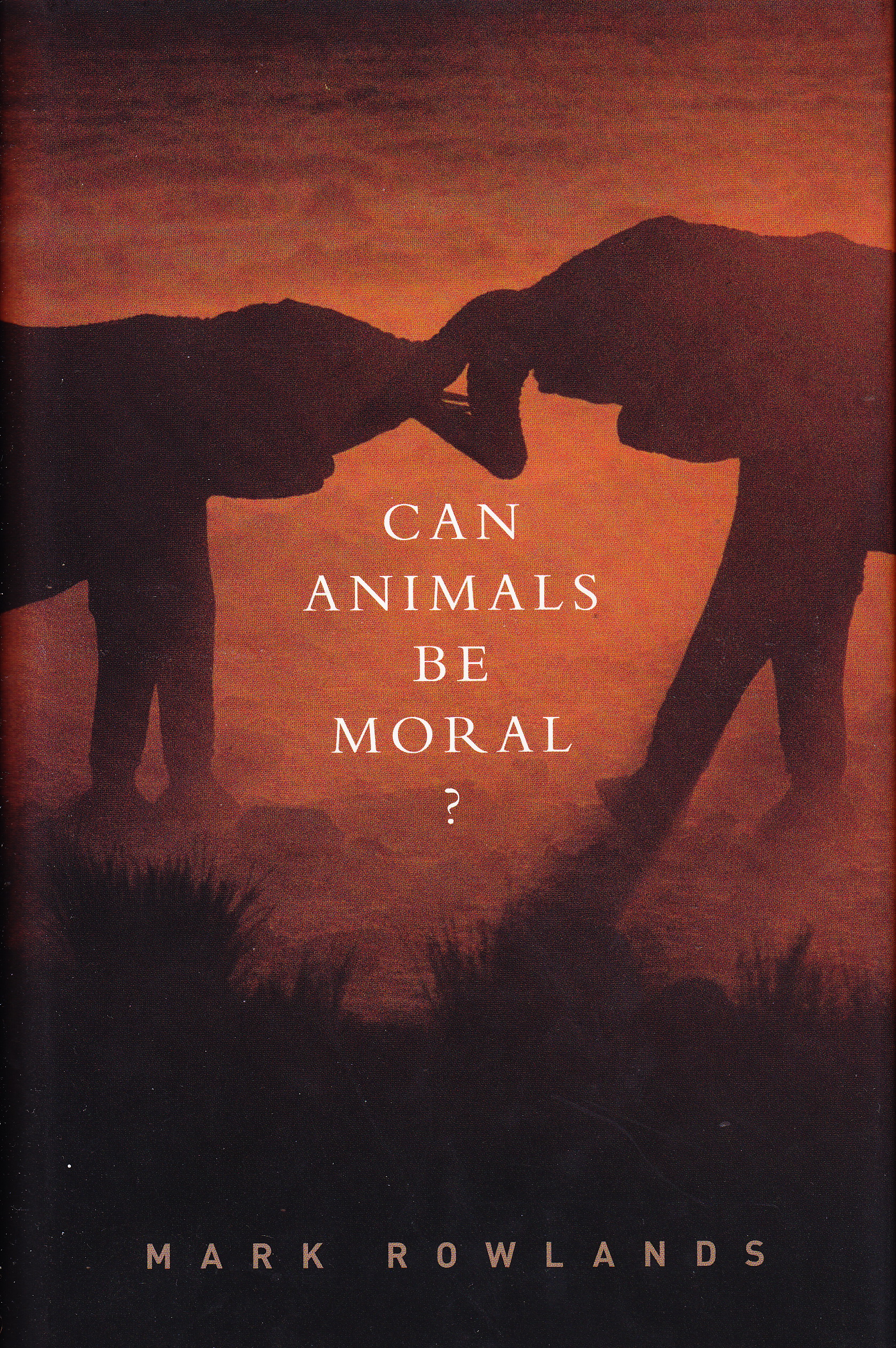
CanAnimalsBeMoralFor all of my life that I can remember, I have felt an affinity with animals. Even when I was relentlessly taught that evolution was wrong—Satanic even—I still held onto the idea that animals are more like us than they are different. I know this is partially the great sin of anthropomorphism (although I secretly doubt it is a mortal sin), but when I’ve interacted with animals, or watched them interact with each other, they’ve convinced me that they’re thinking. Since, however, we are the very top of the food-chain, we can’t allow such things. That’s why I turn to philosophy. Perhaps public transit isn’t the best place to appreciate fully a book of philosophy, but it’s the only time I have. Those who think categorically and with such rigid logic surely must have something to say on the issue of our fellow creatures. Mark Rowlands’s Can Animals Be Moral? is one of those books that might not be best read on a bus. I found myself constantly wanting to draw diagrams to visualize the course of his thought as we hit another pothole, or an angry bird killed a green pig in the next seat over.

While the animal stories that make such an engaging case are not a major part of Rowlands’s book, they nevertheless, for many of us lesser thinkers, seal the deal. When an animal acts in a way that shows its own lack of self-interest (how un-human!) we should sit up and pay attention. The question of morality, however, is thorny. Philosophers of ethics and religious analysts of the same seldom come near one another in their conclusions. We don’t know why we think morally, but it is clear we often do. It is obvious that it isn’t solely because of religion, although religion sometimes has a hand in it. It is, at the end of the day, a matter of feeling what is right. I feel that it is right to treat animals as thinking, feeling creatures. But are they moral?

Rowlands shows that some of the implications of animal morality can be serious. It was not that long ago that some animals were put on trial for the harm they’d putatively caused. Some were executed. (I wonder if they were eaten afterward?) If we attribute morality to animals, can they be blamed for their actions? Here is where the brilliance of Rowlands’s carefully argued book comes out—animals can be moral subjects without being moral agents. That is to say, they can act morally, but they can’t reason it out. I’m sure that I’m not saying this right, but the basic idea still appeals to me. Reading his final chapter on how moral Martians might view the naked apes of this planet gave me the chills. When we take ourselves off the top of the food-chain, the view becomes very sobering indeed. Would we want to be treated by Martians the way we treat animals on our own planet? Morality lies at the answer to that hypothetical question.


Overcoming Justice

In college a friend I’ve lost track of (and I have, of most of them) turned me on to Irish protest music. I do have some fairly direct Irish heritage, although I didn’t know it at the time, still the righteous anger tied to memorable tunes made a strong impression. Music can move you in that way. In a recent New Jersey Star-Ledger article on protest songs, Lisa Leff raises the poignant question of where the protest songs have gone. In the aftermath of the travesty of justice in both the Michael Brown and Eric Garner cases, we find ourselves musically mute. As I sat in the theater awaiting Exodus, the preview of Selma brought tears to my eyes. Martin Luther King Junior knew the power of peaceful protest. “We Shall Overcome” featured in the trailer. Would there be an exodus after all of this at all? We used to voice our discontent. Now we click on to the next page, oblivious.

Bloody_Sunday-Alabama_police_attack

Justice has become a myth for many. Please understand, I’m professionally bound not to use “myth” in a pejorative way. No, justice has become a myth. Fear is powerful, and power is fearful. Juries are supposed to be impartial. Who is really not afraid? Why don’t we sing in the dark instead of drawing our weapons and firing? Why don’t we believe “I can’t breathe” is a statement made in earnest? Why don’t we insist on the “for all” part of the pledge? After all, even some recent presidents not known for their sense of social justice have pointed out that these court decisions are puzzling. I wonder where I put those old Irish protest-song records?

Anything you say can and will be used against you. I don’t know what to say. We have lost the ability to experience justifiable outrage. We see powerful lobbies continue to arm the mentally unstable while one percent hordes the wealth that could be used to help fund the solutions. If you walk past Trump Tower you’ll see that visitors are not welcome in one of the highest buildings in the city. We have forgotten how to sing. These most recent cases of Brown and Garner are only the most recent cases. Violence in the name of law has gone on for too long. I’m afraid when I rush past the fatigues in the Port Authority on my way to work. But I am a white man. Do they know that I used to listen to Irish protest music? I wonder where I put those records. Wait a minute, there’s something new in the iTunes store.


And With Thy Spirit

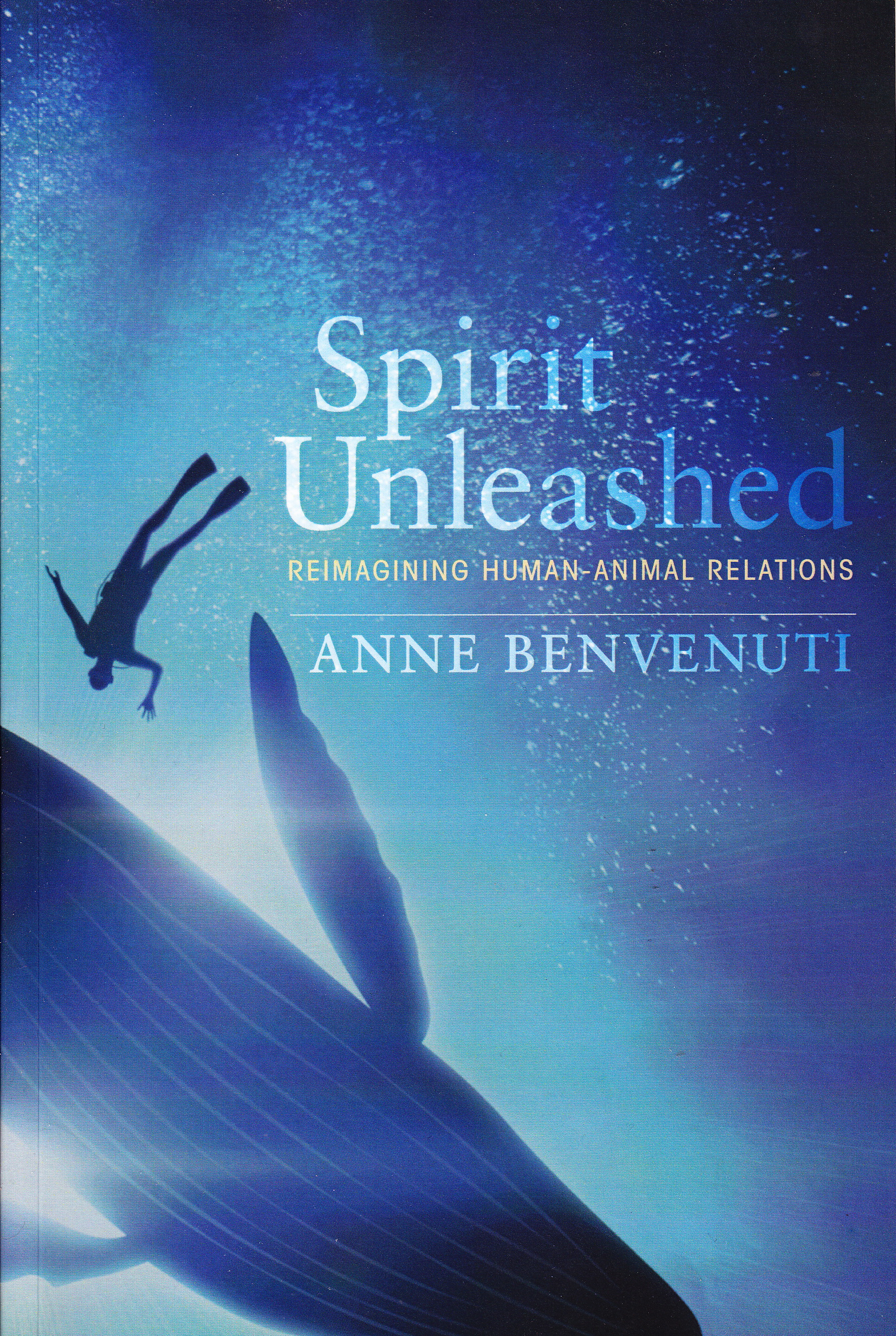
BenvenutiI grew up with pets. In a house with three boys, an aging mother, and no husband, my mother seemed to know instinctively that animals were a way to engage children. She herself had grown up with animals, although not really from a farming family. Living with animals leads to conclusions scientists fear to make. That’s one reason I find Anne Benvenuti’s Spirit Unleashed: Reimagining Human-Animal Relations so important. Not only do animals remind us of who we are, they are who we are. Benvenuti has the scientific credentials to make her case, although, I have to admit, her anecdotes of interactions with animals were my favorite part of the book. We may be told that animals don’t think or feel. Nature, however, proves that wrong for anyone who actually pays attention to animals. Unfortunately, humans are often the bullies of the planet just because our animal brains developed the way they did and our thumbs migrated to a position where we could easily manipulate objects. It’s time to bring animals up to the table with us.

For years I have suggested to my students that animal behavior has the rudiments of what we call religion. I’ve always felt like a voice calling in the wilderness here since both proponents of and opponents to religion think it is uniquely human. Again, the evidence suggests otherwise, but human knowledge often comes at the cost of evidence. It is refreshing to read a book—perhaps the first I ever have—that makes this idea plausible. The “spirit” of Benvenuti’s title is literal, in a sense. She argues forcefully that animals have souls and with this I would agree. The main problem is that we can’t quantify souls and therefore we don’t really know what they are. We know one, however, when we feel one. I’m not sure they’re much different than minds, or maybe they’re the feeling side of the thinking mind. Whatever they are, we are not the only animals to have them.

I’m convinced that one of the reasons we don’t like to admit animal souls (or animal religion) is that such belief ratchets up accountability. Stockyards start to become detainment camps for innocently condemned creatures. If we dare address the moral issue, we have to ask what gives us the right. To kill for food is natural (although I’m happily vegetarian) but to keep animals in miserable conditions their entire lives and then heartlessly kill them and process them as if they were mere objects is immoral. As Benvenuti notes, even farmers who spend time with their animals know they have personalities. Spirit Unleashed is a book full of wonder and awe. Not so much at human superiority, but rather at how much animals really are like us. How they communicate with us if we’ll listen. And how we all have, even if we can’t define the word, souls.


Behind the Exodus

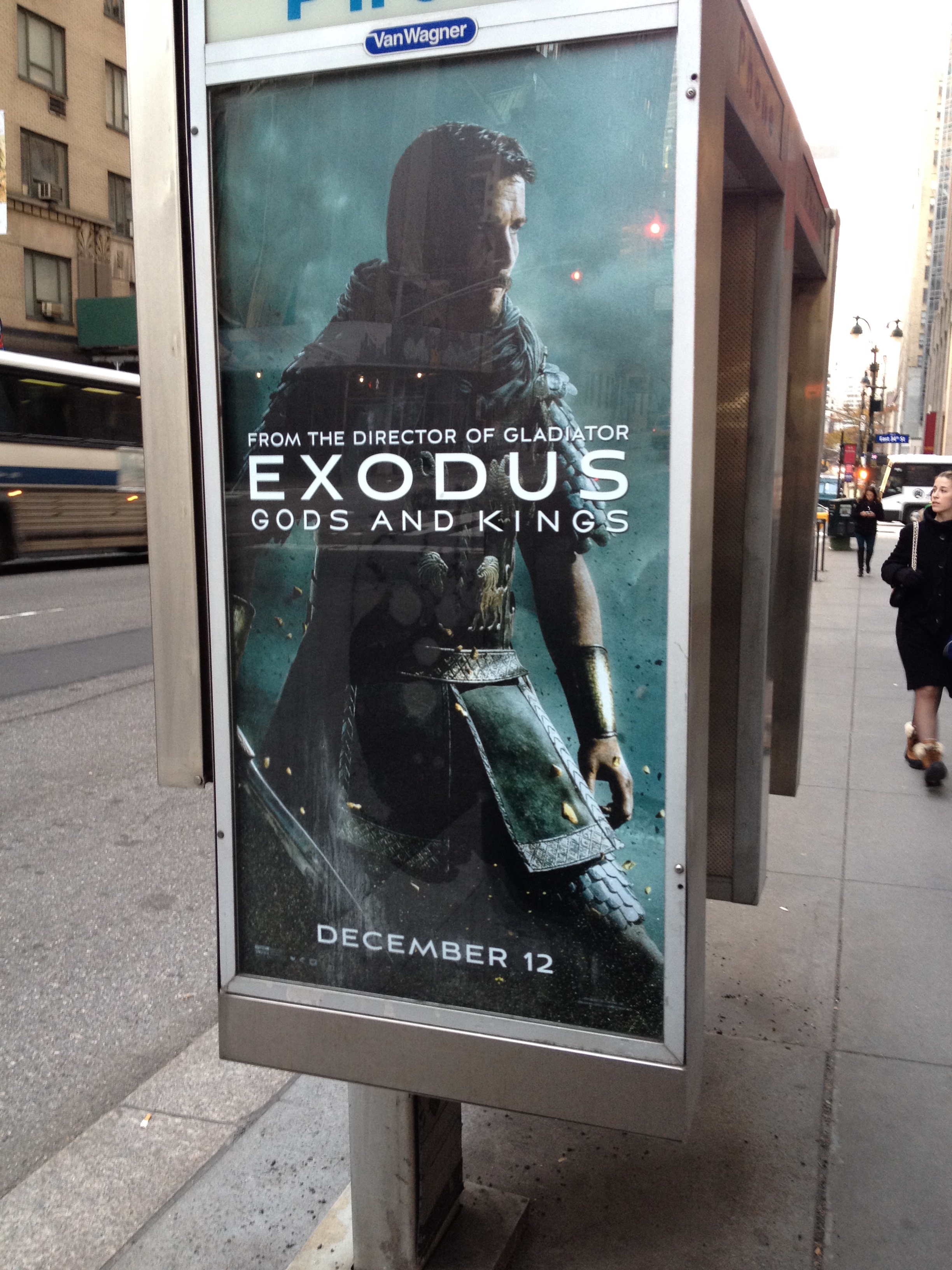
Over this past week two of my friends/colleagues were quoted in major media outlets about Exodus: Gods and Kings. Being merely a blogger with nearly two decades of teaching Hebrew Bible means, naturally, that I have nothing valuable to say. Nevertheless, I would meekly venture to make my own observations and cast them out there into the world-wide web and see what happens. I haven’t seen the movie since it only opens tomorrow. I already know it is only loosely based on the Bible. Still, I wonder at the talking heads who constantly declare the Bible to be irrelevant to a throughly modern world. Okay, so I realize that this is about money, but Manhattan is often seen to be one of the more sophisticated cultural landmarks in the country. This summer I couldn’t walk more than a book or two without being inundated with Noah posters. Now I am finding the same with Exodus paraphernalia. If we try to put the Bible away, it seems, it will come to find us.

IMG_1843

The Bible, relevant or not, is full of great baseline stories. Even in a secular society we can see the appeal of Noah and his menagerie to young children who are so fascinated with animals. We decorate youngsters’ sleepwear and toys with elephants and lions and giraffes (interestingly not mentioning that these are primarily African animals) aboard an ark with an unfailingly cheerful Noah. Now we have another classic—the great liberation story (also set in Africa) of a people held in bondage being released by divine command. We are a post-Christian society, according to the pundits, so who this divine one is remains an open question. The idea that one people is kept oppressed by another people, however, is presented as unequivocally wrong. Moses rides out on a horse, weapons in hand. Are we not focusing on the larger point yet?

IMG_1848

This latest love affair with the Bible as a source of great cinematography will not last forever. It will surely ebb away until only a few old blog posts might remain to remind us there was a time when Holy Writ inspired screen writers and directors. Nevertheless, the Bible bides its time. Back in the days when I used to teach Hebrew Bible Hollywood didn’t do too much to help out. Students had to slog through pages of picture-less Bibles to get the gist of the what God had in mind. The results may not be the same from those comfy seats in movie theaters, but a future generation will come to see Charlton Heston as a white man who loved guns being overcome by a newer generation of producers and directors who know there is a larger story here. Of course, I’m only a blogger with no credentials. Still I know what I see on the streets of the city.


Entitlement

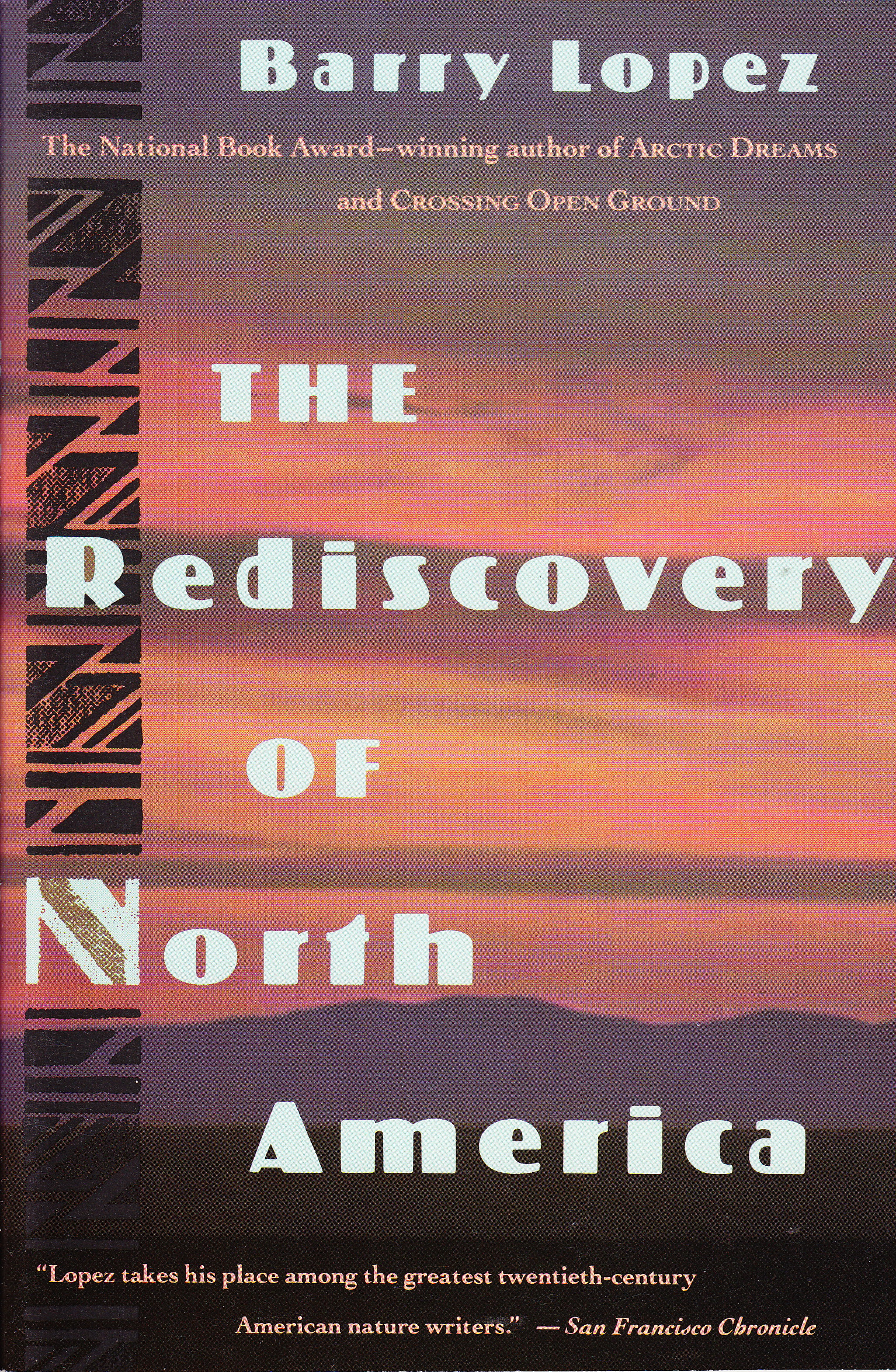
LopezNorthAmericaAs winter begins to settle in, I recall reading Barry Lopez’s masterful Arctic Dreams many years ago. That book left such an impression that when I saw his The Rediscovery of North America—a very small book—I thought it was worth the asking price. Lopez is one of those nature writers who can transport the reader into the world he observes. This brief volume, however, takes the reader to a very different kind of world—the world of European interaction with North America. As children we (and I speak for myself, or perhaps my generation) were still taught that Columbus was a kind of hero. He ventured into the unknown and discovered an entire new world. That world became the everyday place we inhabit with our comforts and our toys. Things only got better from there. Of course, I learned to distrust this view by the time I was an undergraduate, and my perspective has turned a bit more serious since then. These events, viewed from the perspective of the Native Americans, have a completely opposed outlook. Lopez tries to capture a sense of how to rectify these wrongs in his Thomas D. Clark lectures that make the basis for this book.

Greed, no doubt, drove the early explorers of the new world. And a sense of entitlement that has not diminished with the passing centuries. While it is not as simple as tracing this sense of ownership back to Genesis, clearly the Bible plays some role in it. Religions that teach their adherents that they have the sole truth will inevitably lead to entitlement. Monotheism, as I’ve noted before, possesses the tendency to make absolute claims. One God, one Church, one Truth. And non-believers become expendable. To the Catholic Spaniards setting out for the new world (or actually, old world, but tripping up on the new along the way), as Lopez points out, were driven by lust for gold. And spices. And fornication. Things that, if one took it seriously, would be decried by the church as vices. Still, taking advantage of the gullible and helpless is a time-honored practice among many religious bodies, and we know that genocide ensues.

Somehow history has taught us that some genocides are worse than others. Those inflicted on native populations, perhaps because they weren’t always intentional (in the case of diseases) are sometimes still given a silent assent. Yet, as Lopez makes clear, the intention to murder was there already. The conquistadors had already decided that the natives did not deserve the same rights as the God-blessed new arrivals. What saddens me—and I think Lopez too—is that this same sense of entitlement, instead of tempering with time, has continued to increase. Tea Parties and American Values often include removing those who disagree. Inconvenient indigenous populations that aren’t mentioned in the Bible except as Canaanite stand-ins. And should we care to make right what was perpetrated, perhaps we ought to consider rediscovering North America.