And With Thy Spirit

BenvenutiI grew up with pets. In a house with three boys, an aging mother, and no husband, my mother seemed to know instinctively that animals were a way to engage children. She herself had grown up with animals, although not really from a farming family. Living with animals leads to conclusions scientists fear to make. That’s one reason I find Anne Benvenuti’s Spirit Unleashed: Reimagining Human-Animal Relations so important. Not only do animals remind us of who we are, they are who we are. Benvenuti has the scientific credentials to make her case, although, I have to admit, her anecdotes of interactions with animals were my favorite part of the book. We may be told that animals don’t think or feel. Nature, however, proves that wrong for anyone who actually pays attention to animals. Unfortunately, humans are often the bullies of the planet just because our animal brains developed the way they did and our thumbs migrated to a position where we could easily manipulate objects. It’s time to bring animals up to the table with us.

For years I have suggested to my students that animal behavior has the rudiments of what we call religion. I’ve always felt like a voice calling in the wilderness here since both proponents of and opponents to religion think it is uniquely human. Again, the evidence suggests otherwise, but human knowledge often comes at the cost of evidence. It is refreshing to read a book—perhaps the first I ever have—that makes this idea plausible. The “spirit” of Benvenuti’s title is literal, in a sense. She argues forcefully that animals have souls and with this I would agree. The main problem is that we can’t quantify souls and therefore we don’t really know what they are. We know one, however, when we feel one. I’m not sure they’re much different than minds, or maybe they’re the feeling side of the thinking mind. Whatever they are, we are not the only animals to have them.

I’m convinced that one of the reasons we don’t like to admit animal souls (or animal religion) is that such belief ratchets up accountability. Stockyards start to become detainment camps for innocently condemned creatures. If we dare address the moral issue, we have to ask what gives us the right. To kill for food is natural (although I’m happily vegetarian) but to keep animals in miserable conditions their entire lives and then heartlessly kill them and process them as if they were mere objects is immoral. As Benvenuti notes, even farmers who spend time with their animals know they have personalities. Spirit Unleashed is a book full of wonder and awe. Not so much at human superiority, but rather at how much animals really are like us. How they communicate with us if we’ll listen. And how we all have, even if we can’t define the word, souls.


Behind the Exodus

Over this past week two of my friends/colleagues were quoted in major media outlets about Exodus: Gods and Kings. Being merely a blogger with nearly two decades of teaching Hebrew Bible means, naturally, that I have nothing valuable to say. Nevertheless, I would meekly venture to make my own observations and cast them out there into the world-wide web and see what happens. I haven’t seen the movie since it only opens tomorrow. I already know it is only loosely based on the Bible. Still, I wonder at the talking heads who constantly declare the Bible to be irrelevant to a throughly modern world. Okay, so I realize that this is about money, but Manhattan is often seen to be one of the more sophisticated cultural landmarks in the country. This summer I couldn’t walk more than a book or two without being inundated with Noah posters. Now I am finding the same with Exodus paraphernalia. If we try to put the Bible away, it seems, it will come to find us.

IMG_1843

The Bible, relevant or not, is full of great baseline stories. Even in a secular society we can see the appeal of Noah and his menagerie to young children who are so fascinated with animals. We decorate youngsters’ sleepwear and toys with elephants and lions and giraffes (interestingly not mentioning that these are primarily African animals) aboard an ark with an unfailingly cheerful Noah. Now we have another classic—the great liberation story (also set in Africa) of a people held in bondage being released by divine command. We are a post-Christian society, according to the pundits, so who this divine one is remains an open question. The idea that one people is kept oppressed by another people, however, is presented as unequivocally wrong. Moses rides out on a horse, weapons in hand. Are we not focusing on the larger point yet?

IMG_1848

This latest love affair with the Bible as a source of great cinematography will not last forever. It will surely ebb away until only a few old blog posts might remain to remind us there was a time when Holy Writ inspired screen writers and directors. Nevertheless, the Bible bides its time. Back in the days when I used to teach Hebrew Bible Hollywood didn’t do too much to help out. Students had to slog through pages of picture-less Bibles to get the gist of the what God had in mind. The results may not be the same from those comfy seats in movie theaters, but a future generation will come to see Charlton Heston as a white man who loved guns being overcome by a newer generation of producers and directors who know there is a larger story here. Of course, I’m only a blogger with no credentials. Still I know what I see on the streets of the city.


Entitlement

LopezNorthAmericaAs winter begins to settle in, I recall reading Barry Lopez’s masterful Arctic Dreams many years ago. That book left such an impression that when I saw his The Rediscovery of North America—a very small book—I thought it was worth the asking price. Lopez is one of those nature writers who can transport the reader into the world he observes. This brief volume, however, takes the reader to a very different kind of world—the world of European interaction with North America. As children we (and I speak for myself, or perhaps my generation) were still taught that Columbus was a kind of hero. He ventured into the unknown and discovered an entire new world. That world became the everyday place we inhabit with our comforts and our toys. Things only got better from there. Of course, I learned to distrust this view by the time I was an undergraduate, and my perspective has turned a bit more serious since then. These events, viewed from the perspective of the Native Americans, have a completely opposed outlook. Lopez tries to capture a sense of how to rectify these wrongs in his Thomas D. Clark lectures that make the basis for this book.

Greed, no doubt, drove the early explorers of the new world. And a sense of entitlement that has not diminished with the passing centuries. While it is not as simple as tracing this sense of ownership back to Genesis, clearly the Bible plays some role in it. Religions that teach their adherents that they have the sole truth will inevitably lead to entitlement. Monotheism, as I’ve noted before, possesses the tendency to make absolute claims. One God, one Church, one Truth. And non-believers become expendable. To the Catholic Spaniards setting out for the new world (or actually, old world, but tripping up on the new along the way), as Lopez points out, were driven by lust for gold. And spices. And fornication. Things that, if one took it seriously, would be decried by the church as vices. Still, taking advantage of the gullible and helpless is a time-honored practice among many religious bodies, and we know that genocide ensues.

Somehow history has taught us that some genocides are worse than others. Those inflicted on native populations, perhaps because they weren’t always intentional (in the case of diseases) are sometimes still given a silent assent. Yet, as Lopez makes clear, the intention to murder was there already. The conquistadors had already decided that the natives did not deserve the same rights as the God-blessed new arrivals. What saddens me—and I think Lopez too—is that this same sense of entitlement, instead of tempering with time, has continued to increase. Tea Parties and American Values often include removing those who disagree. Inconvenient indigenous populations that aren’t mentioned in the Bible except as Canaanite stand-ins. And should we care to make right what was perpetrated, perhaps we ought to consider rediscovering North America.


Manitous

ManitousOne of the yearly autumnal rituals we’ve established is the watching of Escanaba in da Moonlight. It is a silly, crude, and profound movie that revolves around Native American lore—namely, the creature known as the bearwalk. Despite the high level of interest in monsters on the internet, the bearwalk continues to be elusive. Robert C. Wilson wrote a novel, Crooked Tree, about this Ojibwa legend, but academics have seldom explored it. The few resources I found pointed me to the wendigo. Wendigos are frightening spirits of the forest, sometimes presented as skinwalkers, or shape-shifters, who prey on unwary human beings. Some writers call them werewolves, but this isn’t exactly correct. Frustrated at finding no solid information, I picked up a copy of Basil Johnston’s The Manitous: The Spiritual World of the Ojibway. Johnston, who is Anishinaabe, writes to preserve the heritage of his people.

Manitous don’t have a direct equivalent in English. Some have been inclined to designate them as gods or spirits, but they inhabit that strange realm that overlaps with humans as well. The Ojibwa viewed the world as more animate than western science allows. People were part of this larger universe, but were not the sole end of intelligent life. The tales in this book map out an unseen territory where manitous may be found in lakes and streams, in the hearts of trees, in the early prototypes of humankind, and yes, in the wendigo. The wendigo (also spelled windigo or weendigo) is a representation of excessive acquisitiveness. They often begin life as humans, but become cannibals. As they eat other people their hunger grows, along with their bodies, and they cannot be satisfied. The more they eat the more their hunger remains. They are, therefore, extremely destructive, roaming the woods seeking human victims.

Throughout The Manitous, Johnston gives little in the way of editorial comment. One of his stories is a parable for the coming of Europeans and their subsequent treatment of Native Americans, but most of the tales are of the natural world. The wendigo occupies the last chapter of his book. Before putting the matter to rest, however, Johnston makes a poignant and valid point. Although the Ojibwa no longer believe in a literal wendigo, the treatment of the earth by corporations has taken its place. Always hungry, excessively greedy for more to be taken from the earth, industrialists have made the wendigo look as if it were an amateur slaughterer. Living lightly on the land, the Native Americans tried to take only what they needed. Europeans, on the other hand, created new things in order to keep the hunger going. And those who constantly create new needs grow wealthier and wealthier. Instead of naming this inherently destructive system the wendigo, we call it progress and happily invite it to live among us.


Christmas Lights and Machine Guns

“Silent night,” the old hymn goes. “Holy night.” In a gray dawn after a weary, early-morning New Jersey Transit ride to Midtown, I climb off the bus to find the Port Authority Bus Terminal decorated for Christmas. I could say the holidays, since the dangling LED lights are white and non-suggestive of anything too Christian. There are, however, wreaths with red bows adorning the pillars. Beneath them walk men in fatigues with machine guns. I think I’m getting mixed messages here. Later today they’ll announce that there will be no indictment in the homicide of Eric Garner, just a few days after a similar decision concerning Michael Brown’s shooting. There will be protests here in New York, and there will be armed militia when I rush by this evening for an even longer ride home. It’s Christmas time in the City.

IMG_1841

Staten Island may be a long way from Ferguson, Missouri, but both are far, too far from liberty and justice for all. Fear of the other is deep in the human psyche, but for generations we’ve been trying to educate our young that prejudging a person by their race is wrong. We don’t live what we say. Although my hometown was largely white, I had African-American friends growing up. Nothing suggested to me that they were more likely to break the law than any of the other kids I knew. In fact, the bullies I encountered were all white. To our small town, in my young eyes, race didn’t seem to mean too much. We were generally working-class people trying to get by. Prejudice was a word I never heard. Of course, I don’t know the full life of my African-American friends. Perhaps they too received threats and taunts. I hope not, but it seems there’s been more rain than snow this Christmas season.

We live in a constant state of threat. If it’s not racial unrest at home, it’s distrust of the Arab abroad. Always our response is the same—attack and subdue. Show superior force. Some of my fellow commuters look pretty frazzled to me. That night a fight nearly broke out on the bus with a couple of passengers arguing about the territoriality of the narrow seats. I’m looking at the nice Christmas lights brightening the prematurely dark sky as we trundle through the various neighborhoods where the bus makes its stops. This is a racially mixed neighborhood if the people regularly getting off here are any indication of the demographics. It seems so peaceful. The machine guns enforcing civility are far behind. Sleep in heavenly peace. Sleep in heavenly peace.


Underrepresented

Underrepresented groups, I am told, are eagerly sought by academic institutions. The white male establishment has begun to develop a conscience, it seems. If I appear more credulous than an academic should be, it’s because I grew up poor. While I have no doubts that the entrenched power structures need to change, in an unguarded moment I wonder about the obvious overlooked financial demographic. What of the poor? I’m told by my friends with academic posts that universities are eager to find authentic poor folk—working class people who’ve worked they’re way up. To me, as one such person, this is another academic myth. Even a “white” man can struggle. If you’re born into an uneducated, blue-collar, paycheck-to-paycheck family, getting ahead is often sublimated survival. Those who’ve had me in class may not believe that I grew up with red-neck family values. Duck Dynasty? Well, in my case it was more a case of Deer Destruction, but I lived in a small, industrial, rust-belt town on the edge of the woods. From middle school on I worked to buy my own clothes for school which, I could always tell, were bargain rack compared to other kids who’s parents struggled less. In times of stress (and they are many) I find myself slipping back toward my blue-collar days and wondering just what is wrong with privileged America.

shtgn

I don’ t pretend to have grown up in abject poverty. My wife, from a middle class family, was, however, a victim of culture shock when she first visited the house I grew up in. (I still end sentences with prepositions from time to time.) And that was after the improvements. College was my choice and was paid for by my own work since parental contributions hovered somewhere around the zero line. Along the way I learned to act like others. I even became Episcopalian and most of my “peers” had no idea I didn’t really fit in. I say all this not for pity, but because of a deep conviction that the poor are the hidden demographic. We, as a society, need people to take away our garbage and plow the snow from our streets and dig our ditches. We don’t really want them educated since, well, they would be overqualified. Disgruntled. Our institutions may say they want to hire them, but they lie. The poor make the affluent uncomfortable even as they make them comfortable.

In my campus experience (which, all told, comes to over 25 years) I always found talking to the grounds or maintenance staff more comfortable than the academic staff. I understood where they were coming from. Even now as I wonder how I’m going to afford to get the car fixed, I recall conversations around the more practical matters of life with which I grew up: how to make sure poorly insulated pipes don’t freeze up in winter. Eating venison, or coming home to find carp that a neighbor caught swimming sluggishly in the bathtub were not unknown. While I didn’t go to bed hungry, the food available made me wonder what was in front of me in some fancy restaurants in San Diego. If academe is serious about understanding the poor, they’re going to have to start listening to them. And when they form a department of red-neck studies, they’ll hire someone from an established academic family with an Ivy League degree to lead it. I’ve always been more credulous than I should be.


Texodus

I’m not sure what Patheos is, but it has been on my web-radar (or is it “ping”?) for some time now. They host bloggers with a more substantial platform than mine, and often have a number of comments that must require a full-time coterie of first responders. As a working class blogger, however, I siphon off their success to spin my own ideas a little further. All of this is preface to the fact that a recent article by Michael Stone on Patheos comments on Texas’s approval of textbooks where Moses inspired “the American system of democracy.” We are all used to Texas shenanigans by now, but making laws with the ultimate lawmaker just as a movie is being released that portrays Moses as a warrior is apt in a way that Rick Perry’s stomping grounds may not truly appreciate. The need to validate outdated laws with a largely mythical biblical figure is telling. Revisionist history depends on the version of history that is more compelling at the moment, and I find Moses charging the Egyptian army on horseback eerily appropriate.

Textbooks are insidious. They are society’s first crack at young, and naturally open, minds. As we socialize the rising generations to support that with which we’ve always felt comfortable—not wanting to jeopardize our ease in our advancing age—it becomes important to provide the appropriate propaganda. As I speak with fellow scholars (if I may be so bold) I frequently hear them decrying textbooks. By their nature they are a leveling off of what naturally comes in mounds—heaps, even. They are a tool used to keep everything even in a world of rough knowledge. They are insidious in that they are hard to override. Those of us who’ve taught in college know how difficult credibility is when “the book says” is the standard line of recourse. If it was published by Pearson corporation, it must be true.

Revisionist history.

Revisionist history.

Of course, we venerate the published word. Today the Bible, I suspect, were it newly composed, would have difficulty finding a publisher. Since it was written a couple thousand years ago, however, it retains all the trappings of hoary wisdom that is required to make the elders comfortable. Even scholars of the Bible have, as a matter of course, questioned Moses’ role in the story for centuries. As early as the Middle Ages some sages were asking how Moses knew to write his own death scene. Even so, the vast majority took the word literally, and now that we’ve defined ourselves as a “Christian nation,” or at least the southern half of a Christian nation, we can use the Bible as a textbook. What could be more natural? On the big screen I anticipate Christian Bale charging the Egyptians on horseback. In the Pentateuch I read of Moses hiding behind Aaron’s eloquence. One is biblical, but is it believable? If it comes to a contest of force between the two, I’ll go with Ridley Scott every time.


Welcoming the Stranger

Profiling is alive and well. In our post-9/11 state, we are even more suspicious than those who are different than we were before. After the Ferguson decision, profiling once again led to unrest. If we didn’t do it so much, cases like this wouldn’t be necessary. If we didn’t shoot first and ask questions later, how much more would we understand? It happens, unfortunately, at all levels. I have no desire to trivialize the tragedy that continues to unfold over race relations, but divisions of those perceived potentially to cause trouble occur at even smaller, less significant levels. We tell ourselves that it is possible to gauge a person’s potential for violence based on a number of factors which happen to fall along lines of gender and race. Your typical airport screening is an example.

As my readers know, I object to the millimeter wave scanners in use in many airports. In general, I object to being treated as a criminal when I have been a pacifist since high school. (And likely before.) I am treated like a law-abiding citizen everywhere except the airport. Flying home from San Diego, I noticed that at check-in men traveling alone were separated out and sent through the scanner. The side on which I had to pull off my shoes and belt and coat, empty my laptop from my bag, and stand on the chilly floor awaiting an opt-out, was very masculine indeed. The woman in front of me, who looked far more frazzled than I did, was sent to the metal detector, along with her stroller. No threat there. Being male, however, is always a threat. Two priests stood before me in line. They didn’t go for the pat-down.

Potential terrorists, all.

Potential terrorists, all.

On the plane, many passengers began to talk about the American Academy of Religion and Society of Biblical Literature meeting. After all, about half the passengers had just come from the conference. For me, I was ready for some quiet. Some time to center myself after playing the extrovert and talking to people I don’t know for four long days. As debates about religion broke out on the Boeing 737, I began to understand why religious folk are often profiled as potential threats. Their convictions, public and firmly held, are more likely to remain constant in the face of contrary evidence than are most opinions. I wonder if airport security couldn’t save us all some time, money, and embarrassment. Couldn’t they just ask passengers to declare their faith? Of course, we’d need to find some other employment for government officials whose duties involving feeling strangers with latex gloves before wishing them a pleasant trip. While high above the planet riots are breaking out down below because we distrust those who are different.


Flight of Fantasy

Today marks the end of the AAR/SBL Annual Meeting. As the last attendees who have stayed through to the final half-day make their way through the dreaded Tuesday-slots for papers and wander the exhibit halls in search of last-minute bargains, I wonder what impact we will have made in San Diego. Many of my conversations this year included lamenting over the state of higher education, particularly in the study of religion. Religion, which led to the very concept of higher education, is now perceived mostly as little more than a somewhat unsophisticated intrusion into the cold, hard reality of business. And educating future entrepreneurs is, make no mistake about it, business. Wither the institutions go, publishers will follow. The life of the mind is a perk that we no longer can afford. And yet, as colleague after colleague attests, this is what students really find fascinating. Perhaps even important.

As we get ready to head back to the airport, I reflect how it is so much like being a passenger on a plane. We’ve purchased tickets to get us near where we want to be, but we aren’t directing this jet. The pilot, isolated from us by an unsurpassable barrier, will, we trust, get us to the designated airport. That, however, is not really where we want to go. We won’t happily loiter there. Impatiently we’ll await our baggage at the carousel so that we can wend our way back to our homes. Where is the business end in that? Isn’t it, however, what we live for? And what of the San Diego we’ve left behind? How many people will say that their lives will have been improved by having the lion’s share of religion scholars in their neighborhood for a long weekend? Will the number of homeless have decreased? Will they have found jobs?

While those of us “not from around here” ride elevators more nicely appointed that some people’s houses, the televisions meant to prevent us from growing bored from the twentieth floor to the first, show how the other half lives. It’s sunny and nearing eighty today and Buffalo has snow higher than our heads. Reporters flock to the snow-locked city and wonder at nature’s extremes. It doesn’t seem to play along with our business plans. There must be some way to make some money out of this. But I have an unconventional theory. Maybe I’ve watched Bruce Almighty too many times, but I wonder if all those prayers made by children for a snow day may have been stored up in, what scripture assures us, is a great divine warehouse awaiting release. Perhaps the doors of that storehouse have been thrown open to remind us that sometimes the business of living is simply the wonder of watching it snow. No matter how inconvenient it might be. And lives will have changed for the better.

IMG_1825


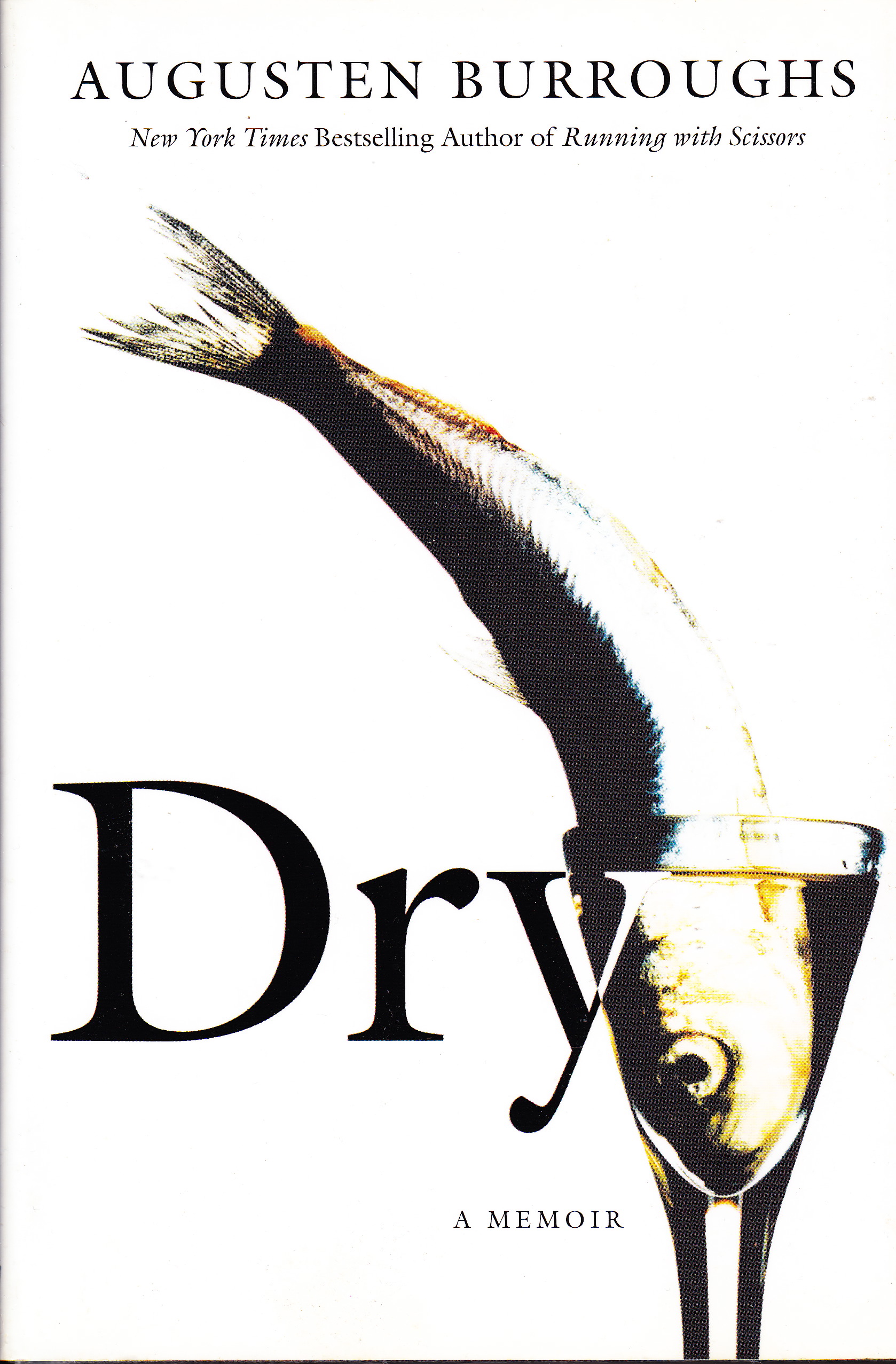
Dry Nation

The American Academy of Religion and Society of Biblical Literature annual meeting is a big thing. It draws a myriad (literally) of scholars together every year and invades a fair sized city that may or may not be a religious haven. San Diego feels like a pretty Catholic city to me. My cab driver from the airport was a Muslim, but many of the churches and place names around here reveal a natural comfort with Catholicism. My first night in town, on my own and somewhat weary from awaking at 3:30 on the other coast to get ready to catch my flight, I wandered through the Gaslamp District looking for some authentic Mexican food. It is surprisingly tricky to find, although I’m only twenty miles from Tijuana. Along the way I passed a bar that had a welcome AAR/SBL poster in its window. Now here was a vender that recognized their client!

IMG_1814

Many of those outside the profession assume such conferences as this are like higher education Sunday schools. Undoubtedly, there are those who wish they were. For some, perhaps, the annual meeting allows for the indulgence of personal peccadillos far from watching administrative eyes. Others are more sanguine about it all. Religion scholars are just as human as the next guy. As I looked at this bar window, I reflected on how Christianity (in particular) came to regard alcohol as an evil. Wine and beer were known from ancient times, and even the New Testament has Jesus presented as an imbiber. Temperance, however, grew out of American Fundamentalism that seemed to have forgotten its scriptural roots. I remember learning, as a child, that the wine Jesus drank was really only grape juice with a little kick. Who wants an inebriated God running around the Middle East?

Still, I realize that drinking has its consequences. As the child of an alcoholic, I know the damage that this can do. On the other hand, I know many religions view “controlled substances” as gateways to alternate realities. Other planes of existence. There are even cases where Native Americans have been arrested for using their traditional ceremonial substances in a nation not quite Christian, not quite not Christian. Even on my way to the Gaslamp District, I was saddened to see so many homeless about the city. I knew that as evening fell and the scholars arrived, the bar would come alive. And I knew that when the rain came, some would get wet while others stayed nice and dry.


Revisiting Jericho

I don’t get out from the office much. As those who commute to New York City will readily tell you, there is a constant anxiety about getting to and from the city that keeps you in the office (cubicle) as long as possible. Just yesterday my bus broke down on halfway there. I seldom take lunch away from my desk, and even more rarely get out to see what’s actually in Manhattan. Besides work. Earlier this week I wrote a post about the Berlin Wall. Wanting a picture that wasn’t somebody else’s work, I decided to visit the famous slab of the wall in Paley Park. Like many parks in Midtown, this is a mere pocket in the shadow of a high-rise, but a large slab of the Berlin Wall had been there for years, drawing tour guides and history buffs alike. It is only 19 blocks from my office. I’m a fast walker, and I made it all the way catching only three red lights. Since the anniversary of the wall’s Jericho moment had been twenty-five years and a day before, I expected crowds. Instead, no Berlin Wall was to be found. Businessmen smoking away their lives and lunch hours, but no oppressive wall. I double-checked my location. Triple-checked, with GPS. Then I walked 19 blocks back.

Photo credit: Gaurav1146, WikiMedia Commons

Photo credit: Gaurav1146, WikiMedia Commons

Visiting the comments on one of the wall’s websites, I saw that it had been, perhaps unintentionally symbolically, removed. After standing in this pocket park for nearly a quarter of a century, the slab had been absconded mere weeks before the anniversary when I, and given the number of cameras I saw, not I alone, had gone to see and to reflect. Where does one put the Berlin Wall? There was another piece, I read, at the United Nations gardens. You only had to pay 18 dollars to get in. Although it is close to my old office at Routledge, it is a lengthy walk from where I now find myself. Once I arrived home I searched for answers. The wall had been removed for restoration. A wall that had been sufficient to divide a city, scrawled with graffiti, apparently, required restoration. On the long walk back, I considered my similarly ill-fated trip a couple years back to find the closed Gotham Book Mart. Like the wall, have I become useless history?

My Germanic ancestors came to America nearly two centuries ago, and although I never knew that side of the family well, I suspect it was for economic, not religious reasons. It is sometimes easy to think, given all the rhetoric, that Europeans came here to be part of a Christian free-for-all. No doubt, some did. Many others, however, had more mundane motivation. A strong Protestant work ethic that somehow seems genetic, and a belief that somewhere else is better, will help you get along. So I’m told. So the tale goes in the book of Joshua. Israelites, wanting to cross the water to a new home, blowing their trumpets and raising a shout. Yes, the Berlin Wall did come down. Like the fallen wall of Jericho, it’s nowhere to be seen.


Christian Computing

Science and religion are often portrayed as fighting like dogs and cats. Both claim superiority and a comprehensive worldview that should make sense of everything. With reality television probing deep into the lives of rural folk who still hold to the old ways, it is easy to think that religion is awkward and backward and an embarrassment to the technologically sophisticated. In electrons we trust. As with most simplistic views, however, this dichotomy is overly dramatized. I recently found a flier for Computers for Christ. I didn’t have time to read it carefully, but the space-age font immediately told me that this was vintage 70s or 80s, back when computers were still so new that most of us had never seen an actual exemplar and we had to guess what the future might hold. Would these things catch on or not? A little closer reading revealed the date of 1982, back when I was a college freshman. I had, by that point in my life, never knowingly glimpsed a computer.

IMG_1644

Sitting here with a computer on my lap, and another in my pocket, I wondered what ever happened to Computers for Christ with its space-age crosses and early embracement of technology. I didn’t find anything that really matches it with a half-hearted web search, but it did make me realize that some enterprising Evangelicals had latched onto computers long before I ever did. I recall making a pact with a couple of friends my senior year in college that we’d never give in and use computers. Since I can’t find them online, my guess is that they kept their end of the deal. As usual, I caved. By 1985 computers had found their way even to Grove City College. A strange thing called a “server” allowed people to access it via multiple “terminals.” The computer science professor wore a large cross around his neck. I would go on to seminary and graduate with a second degree not ever having used such a device.

Dogs and cats are both mammals, and neither regularly preys upon the other for food. Although Computers for Christ may no longer exist, the internet has been fully exploited by some of the religious. Jesus was an early meme. I remember when “the winking Jesus” was all the rage since an image on screen was actually animated! The savior virtually moved an eyelid! Now we can find Jesus doing everything from walking on water to riding on dinosaurs. The son of God has adapted to life on the web quite well, and often with a sense of humor. There are those who would argue that this is a travesty of true faith. There are others who would argue that it is a silly use of serious technology. I grew up with both dogs and cats and learned that when domesticated together they seldom fight. As I file away this aging paper, I wonder how the world might change if people behaved so sensibly.


Parable of Jericho

It had been there my entire life. I hadn’t really noticed it, but it was a powerful symbol—not in the way that it was intended to be. Given the Teutonic nature of many of my musings, it probably occasions little surprise that much of my ancestry is German. I first heard about the Berlin Wall in German class in junior high school. It was a wall to ensure inequality. Then, while studying in Edinburgh, my wife and I came across a friend from Germany. He was standing outside a window, staring in at a television showing the Berlin Wall coming down. Younger than me, he couldn’t believe that this obstacle that seemed so permanent was finally, and suddenly gone. The next summer when we visited him in Germany, he took us to the former border between east and west. Bridges eerily stopped half-way across rivers. Sudden changes in affluence and outlook once you drove across an invisible line that separated us from them. It was all so surreal.

Photo credit: George Louis, Wikimedia Commons

Photo credit: George Louis, Wikimedia Commons

This week heralds the quarter-century mark on the fall of one of the starkest symbols of the Cold War. People hating people. And as the wall in Berlin came down, walls were about to be erected in other states around the world. Not-so-Great walls intended to keep them from getting to us. We stubbornly refuse to learn from history. Those who have have little patience with those who have not. The borders are all only in our minds. Even as the wealthy elites within our system refuse to admit that crime largely comes from unequal distribution of resources, our own nation looks at others and makes the same tacit refusal to acknowledge the obvious. If wealth is so good, why not share it?

Of course, you can buy a piece of the Berlin Wall. Anything from a fist-sized chunk to several tons. The websites say that the wall is of limited quantity. Buy your piece before it’s all gone. I’m afraid their fears are misplaced. The wall pieces may not come from Berlin, but there will always be pieces available, some day, from the West Bank Barrier, or the Peace Walls of Belfast, or the Green Line in Cyprus, or Operation-Hold-the-Line in the Lone Star State. There are many walls that eventually must tumble. Ironically the prophets of the biblical world declare that every hill will be brought down and every valley lifted up to ease the way back home. Of course, once you arrive at home you naturally lock the door to keep the other out. And now, a quarter century after the embarrassment of Berlin faltered, we continue to erect new follies rather than trying to learn to get along.


Let It Be

CultOfTheVirginMaryWhy do people pray to Mary? The question is a complex one and answers range from a desire to find some feminine compassion in an angry masculine god to the distinctly Freudian. Michael P. Carroll, in The Cult of the Virgin Mary: Psychological Origins, falls into the latter category. Yes, the book was written in the 1980s, but even then Oedipal complexes and penis envy were deeply suspect. Still, at various points along the way Carroll had me scratching my head and muttering “there may be something to this.” For a few pages, anyway. The problem begins much further back than Mary. To start with, we can’t all agree on what religion is. From there we move to the stage where ancient religions had as many goddesses as gods—even the divine don’t like to be lonely. The heads of most pantheons were male, which likely matched most earthly political systems. Powerful females still existed, at least in mythical realms. Monotheism effectively put an end to that, but before too terribly long, Mary emerged and eventually became almost a goddess.

Indeed, early on in his book Carroll discusses how Mary differs from the goddesses of antiquity, drawing parallels with only Cybele. Mary is the virgin mother completely dissociated from sexuality. Deeper study would reveal some mistakes in Carroll’s reasoning—there were virgin mother goddesses, such as Anat, who might in some ways fill in the gaps. Indeed, arguing for the uniqueness of Mary is kind of a goddesses-of-the-gaps theology. The more we learn the less unique any deity becomes. Still, looking to the psyche to explain Mary is a logical step. Tracing Marian devotion to the ineffective-father family, where a machoism hides a longing for the protective mother, Carroll offers us a Freudian feast of options here. Still, in the light of developments in psychology over the past quarter century, his premise is a bit dated.

We simply don’t know why Mary became such a strong devotional interest in a religion with a masculine Trinity. It would seem that women might be the motive force behind it. Given that half of Christendom was displaced, by default, from the male savior, why would Mary not emerge as the mother all people crave and whom, women know, often soften the harsh decrees of martial law? Delving into the apparitions of Mary from Our Lady of Guadalupe to Fatima and Medjugorje, Carroll finds illusions and hallucinations based on strong females behind each one. Rational inquiry into the deeply spiritual. This, however, remains the proximate cause only. What is really seen can’t be known, except to the seer. And it seems that seers tend to find, amid a religion with an omnipotent man at the top, that it is the mother who appears in times of need. Unless, of course, it is a matter of healthcare where, as government shows, father knows best.


Guy Fawkes

“Remember, remember the fifth of November,” so begins the poem that haunts my every autumn with V for Vendetta. As a colonial, I never really peered too deeply into the Gunpowder Plot. We were all told that Guy Fawkes was the bad guy and that he got his in the end. Recently I delved a bit deeper and learned that this was a religious conflict. Part of a conspiracy to restore a Catholic monarch to the throne of England, Fawkes was captured as he guarded the actual gunpowder of said plot, and the rest, as they say, evolved into V. The iconic Guy Fawkes mask, sometimes sported by members of Occupy Wall Street and other protest movements, has moved away from its Catholic roots and on into the realm of wider social justice. We know that blowing up our enemies is not a viable solution (we too remember, remember the eleventh of September), but the metaphorical destruction of oppressive systems may be the only way to vindicate the demands of social justice.

Dystopias have been heavily on my mind lately. Looking across the socio-political landscape I see many concerned people with no power to displace the impacted one-percenters. Politicians court money, and sociological studies show that young people don’t bother to vote and have no interest in entering politics because it is so widely known that it is a corrupt and inefficient system. While laws are easily enacted to protect extreme wealth, social security finds itself on the block as seniors are increasing in poverty almost as fast as they are increasing in numbers. In my own life I have experienced being cut off from retirement plans because I wasn’t “vested,” which I translate as “saving money for those at the top.” Still, we blithely press on, wondering if V really exists at all. We don’t need to seek out dystopias. They will discover us.

November is that graying period between the colorful burst of vindictive playfulness that is Halloween to the long night of the solstice. During this time we will vote in vain and await a better future that never seems to come. We, like V, have been an experiment of the state over the freedoms of the individual. The market, we’re told, has recovered. The average citizen has not. Every year as the evenings grow longer and the winds begin to howl, I come back to V for Vendetta and hope against hope that corruption will meet the fate of Guy Fawkes. Ironically, few turn to religious organizations any more in the never-ending search for social justice. The trenches in which many denominations have chosen to die are those of sexuality and male dominance. Meanwhile, women and men both are aging, and the very structures we put in place to ensure they could rest after lives of hard work are being eroded. Behind every mask, it seems, hides the face of a politician.

Photo credit: Vincent Diamante, Wikimedia Commons

Photo credit: Vincent Diamante, Wikimedia Commons