What Would Ostara Say?

Easter is an uneven holiday.  In Britain it leads to days off work.  In the US, which prides itself on being religious, it’s business as usual.  Nobody closes for any days surrounding the holiest day of the Christian year.  That irony has always struck me about this season.  Of course, going to college there were breaks in the spring, and at a Christian school, special observances for sacred times.  In seminary it goes without saying.  In my case, working on a doctorate in the UK (an activity with few true breaks), we experienced the British sense of holidays surrounding Easter.  At Nashotah House you simply couldn’t miss it.  In fact, the Triduum was a contest of endurance with late night services and hours and hours in chapel.  Once I was forced into secular life, the shift was blinding.

Capitalism rolls right over Easter without even slowing down.  Who brakes for a Sunday holiday?  I am a believer in significant days.  I write about holiday horror, and holidays in general, because I’m certain of their importance.  The relentless pursuit of gain that is the American way is wearying.  Most everyone I know who isn’t retired is just plain tired.  Tired all the time.  We’re given few pauses and fed many worries.  So much so that resurrection from the dead can feel like something scary indeed.  Will work in the afterlife be as unrelenting as it is in this one?  All of this becomes especially evident to me on years like this one where Easter creeps up on me.  Not a fixed day in the calendar, sometimes you don’t even look up until you’re practically on top of it.

I remember in high school spending practically all day on Good Friday in church.  When working at Ritz Camera (after seminary, trying to stay ahead of student loan payments), managers looked at you funny if you asked for it off.  You see, I need spiritual time to recover from the onslaught of work.  Easter, however, is just another Sunday.  Watched on Zoom, with maybe special music.  If you’re able to be there in person there may be lilies with their distinctive Pascal scent.  Then the next day it’s back to work as usual.  Thinking about Easter always make me think about hearts being where the treasure is located.  When we take treasure too literally, it leads to too much work.  My mind, I fear, is that of a professor, with built in spring break.  And semester breaks.  Not exactly holidays, but unstructured time to catch up on work.  Holy days.


Squeaky Clean?

A New York Times story, apart from the expected misunderstanding of actual Evangelicals, made me sad.  The article points out that, especially since 2016, “Evangelicals” have taken to soft-core porn, cussing, drinking, and premarital sex.  In other words, Trump has given them license to behave like secular folks while still claiming the name “Evangelical.”  Why should this make me sad?  I lament the loss of place for those who grew up, like me, striving for clean living.  It’s an image—a mirage—rather than a reality, of course.  But still, if conviction holds, you can get pretty close to the ideal.  That vision of life has been occluded by a guy who runs for President because he cares only for himself.  Jesus, on the other hand, was all about caring for others.  Going as far as, if the Gospels are to be believed, sacrificing his own life.

Like fiscal conservatives, such legitimate Evangelicals now have no public voice.  One of only two political parties has become identified with an individual rather than ideals—what used to be called a platform.  I have Republican friends.  I grew up identifying as a Republican.  I also grew up as an Evangelical.  I studiously avoided things like bad language, sex, tobacco, and alcohol.  Even at Evangelical Grove City College I was a bit of an outlier for how seriously I took all these things.  Of course, studying history can be dangerous, particularly for ideologues.  Still, “clean living” had its own virtues.  Those who continue to try to live that way are swimming into a rip tide, it seems.  For some Trump seems like the Second Coming, sans the white horse.  And this, above all, is sad.

There are those who claim, often loudly, that religion is bad.  I agree that when a religion tries to force others to obey its standards it can quickly become evil.  Still, the baby should be left behind when the bathwater’s discarded.  Religion has led to much good in the world.  Hospitals, charities, and yes, “clean living.”  These things, along with retirement homes and affordable apartments for low-earners in their autumn years, are necessary to pick up the slack that the government leaves.  It is cause for sadness that the clean living camp has succumbed to Trump-style hypocrisy.  Heck, religion gave us the word “hypocrisy.”  The standards of classical Evangelicalism are often impossibly high.  If we look at current Evangelical leaders we find many, many skeletons in a house with many closets.  And a wagging finger warning the young, “Do as I say, not as I do.”


Showing Gratitude

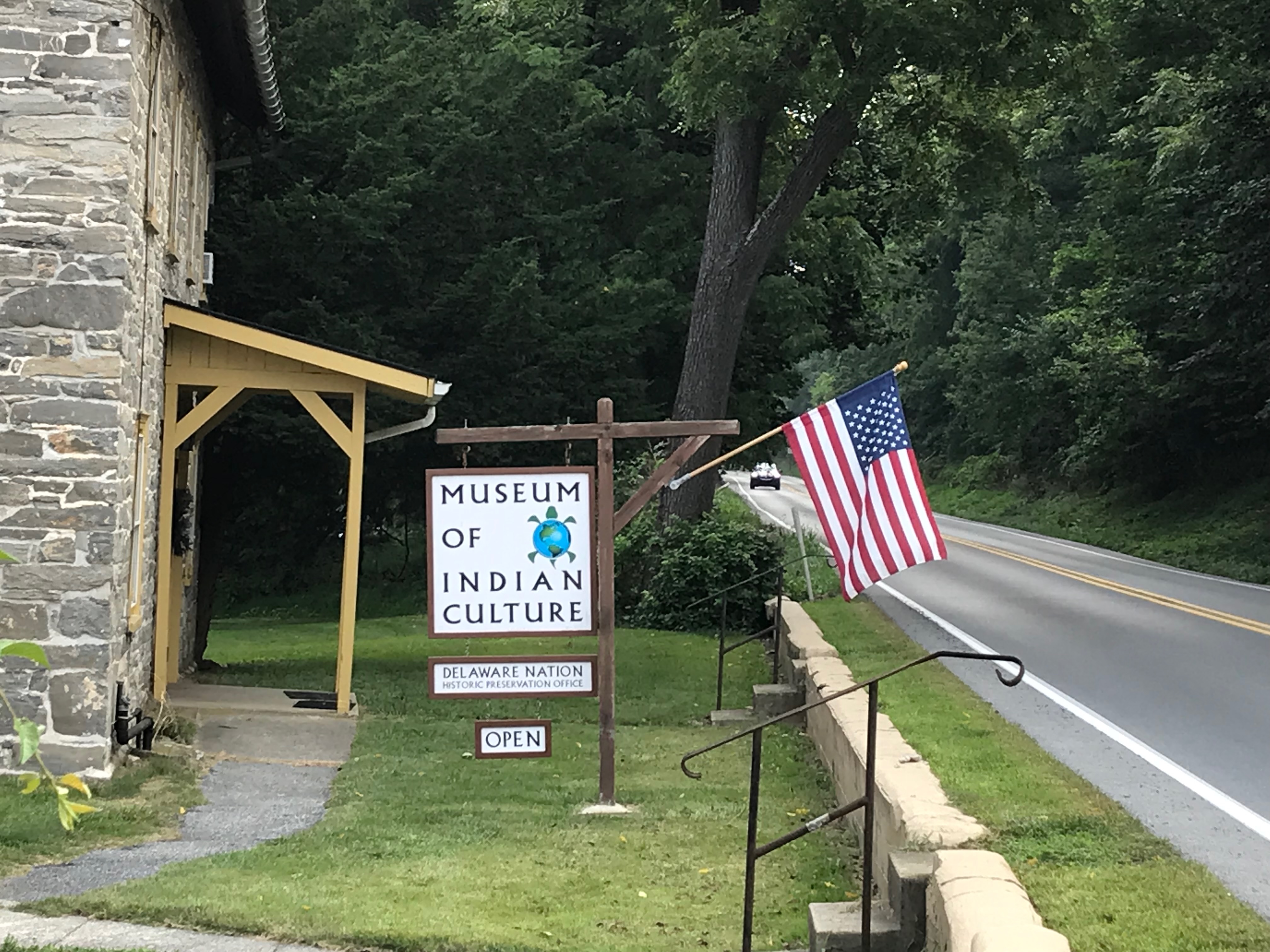
Stealing is something that we all, except some capitalists, know is wrong.  I think quite a lot about the land that was stolen to make America possible and I know that simply giving it back isn’t an option.  Nevertheless, I do believe that we should listen, and listen attentively to those who’ve been here longer than Europeans.  Robin Wall Kimmerer’s Braiding Sweetgrass is an important reflection of this dilemma.  Kimmerer is Potawatomi and she’s also a professor of Environmental Biology.  The book is a series of essays that focus mostly on plants and what we can learn from them.  It also brings in indigenous teaching, contrasting the outlook of gratitude against that of greed.  By turns sad, funny, and profound, Braiding Sweetgrass contains a message that is vital to counter climate change.  To correct our attitude before it’s too late.

There’s so much in this book that it’s difficult to know what to touch on in this brief notice.  Throughout, Kimmerer notes that the First Nations viewed life as a gift.  The earth is constantly giving and the native way was to be thankful and to accept the responsibility of being given a gift.  Seeing how the European attitude was “take until there’s no more to take,” she points out that taking what you need and leaving for others is a way out of our current dilemma.  She does this, most strikingly, by the story of the windigo.  The windigo has become popular among monster fans as a consuming beast, but Kimmerer shows how the story has a profound point.  If all you do is consume you become a monster.  You stop a windigo by showing gratitude.

Perhaps the most striking thing, to me, was how Kimmerer describes her own experience becoming a scientist.  How standard academics refused to believe they had anything to learn from Native American outlooks, especially when borne by a woman.  How she was told she couldn’t be a scientist, not with that outlook.  And how she learned the European way but didn’t give up her native understanding.  How she brings two worlds together and does so with a sense of urgency and hope.  Things have gone too far simply to turn back the calendar and say that our ancestors had it all wrong, but it’s not too late to learn from those who lived for millennia on this land and were untainted by ideas of private ownership.  Those who knew how to live sustainably with nature.  Those who knew, and still know, how to defeat monsters.


Not a Peep

Time changes everything.  Peeping Tom, which has been on my list for some years, was castigated when it was released in 1960.  Now it’s considered a classic.  Indeed, it’s frequently discussed in books analyzing horror films, and it had a bit of influence on Alfred Hitchcock.  Films like this must be watched as period pieces, of course, but there’s so much psychology here to unpack that I wonder if it’s used in mental health courses.  Mark Lewis is a loner who inherited a spacious London house from his father.  He lets out the downstairs rooms but keeps to himself upstairs.  One of the reasons is that he realizes that he’s mentally unstable.  He’s a serial killer, in fact.  His young downstairs neighbor takes a shine to him and he reveals, via film, that his father tormented him as a child to film his fear reactions.

As an adult, Mark works in the film industry.  He also kills women while filming them to capture their fear reactions—taking his father’s work a step further.  Although shy, he is charming enough to others.  When he sees a fear reaction, however, he feels compelled to murder.  The neighbor downstairs doesn’t suspect him, but her ocularly challenged mother does.  Thinking back over it, many moments reminded me of a racier version of Hitch.  Racy because Mark picks up money on the side by taking boudoir photographs that the local news shop sells to certain customers.  This is a creepy film and perhaps the creepiest scene is where a local girl, well underage, comes into the news shop to buy a candy bar just after the owner sells an older man a pornography book.  We don’t like to admit that such things could happen.

There is so much going on in this movie that it’s clear, at least to me, why it has garnered such acclaim.  I spent the first twenty minutes or so wondering whether I should really be watching, but as I stayed with it I couldn’t look away (which is one of the very self-reflective issues that the film addresses).  The analyses I’ve read never really went into detail regarding the plot, so there were plenty of places where I wondered what would happen next.  The pacing is more in keeping with the turn of the sixties, but the mind work seems ahead of its time.  Some call it a precursor to slashers, but it doesn’t linger on the actual bloodshed (which is minimal, considering).  It does take its time to make you think while you watch.  And somehow it makes viewers complicit, it feels, with what they’ve seen.


Time Flees

I can’t speak for all early risers, of course, but for me the absolute worst thing about this useless tradition of switching to Daylight Saving Time is the loss of morning light.  I’m in favor of keeping DST all the time, as the US Senate has voted to do.  The only reason this is still an issue is to give the House yet something else to fight about.  How dysfunctional are we, really?  This one’s a no brainer!  Look, I start work early every day.  I jog before work because I’m too tired afterward.  In late February to early March I can get out and back before seven.  (In the summer before six!)  Then DST happens.  I’m plunged into another month of waiting until seven to be able to jog.  DST is just one of those ridiculous things we just keep doing because we don’t have the will to change it.  We’d rather fight.

I’ve been thinking a lot about time lately.  How we think of it, how we divide it.  We sometimes lose sight of the larger picture.  If relativity is right, the stars we see at night are, many of them, long gone.  We’re seeing light trudging through the near vacuum of space, or maybe dark matter, and thinking how we’ve got to get to our meeting on time.  How we need to be at work from 9-2-5.  How somebody with money owns that portion of our time.  There’s a reason that DST starts on a weekend.  Time.  We can’t grasp it but we can waste it.  What are we waiting for?  Some of us are seeking the truth.  Even so we know that Morpheus was right—time is always against us.  It’s a limited commodity, but even that language cheapens it.

Those of us of a philosophical bent allow ourselves time to ponder such things.  We call time a dimension, but what does that really mean?  Theoretically it can be traveled along in either direction (again, pending relativity) but we only experience it in one.  So what do we do?  We interrupt its flow because during a war during the last century it was deemed that industry could be more productive if it were light an hour later.  Maybe we should just all agree to shift our perception of time ahead by an hour permanently.  That’s forward thinking.  And who knows, it might just save us all a lot of time.


Work for Good

You learn a lot as a primary caregiver.  Since dealing with a family cancer diagnosis last year I joined a local support network for caregivers.  Three things I’ve learned: healthcare is very uneven, we ended up in a good facility, and finding a social worker on your own is very difficult.  I see lots of messages on the support boards from people in poor facilities that can’t find the help they need.  I know what social workers do—I had several friends who majored in social work in college—but in this age of all the information in the world at your fingertips, just try to find a social worker!  I was trying to find a website to suggest to a person on my board who didn’t know where to turn.  Searches bring up links to places trying to sell you their services to find a social worker.  Are we really that callous?  

People tend not to try to find a social worker unless they really need one.  Many people, I suspect, wait until they feel pretty desperate.  This is not when you need some salesperson trying to sell you something.  Medical care can be very expensive—devastatingly so—and there are professionals out there who specialize in helping you get through such things.  Why are they so difficult to find?  I tried government sites that seem more interested in telling you how to become a social worker than how to find one.  If we’re in such a state that we don’t have enough social workers why don’t we pay them more?  Here’s a hint, most politicians could stand a salary cut.  My college friends all said they knew it didn’t pay well, but social work was a way to help people. Saints still walk among us.

We have the means to help everyone.  What we lack is the will.  We continue to let capitalism and the hope of individual wealth run our economy.  Economy means nothing without people.  And we have many people who are willing to receive less personally to help others get by.  Why do we have to hide them behind a pay wall?  What does that say about us?  We’ve been fortunate.  Our medical facility immediately put us in touch with a social worker.  If, however, you end up where healthcare choices are limited, or don’t know how to find a social worker on your own, the internet’s not a great resource, unless you want to pay someone to help you find help.  What have we become?


Love Life

I suppose that it’s good to keep Valentine’s Day mostly private, but there was some wisdom to how it was practiced in school when I was growing up.  In primary school the rule was that everyone had to give everyone else a valentine card.  You couldn’t just give them to the people you liked.  Valentines Day was a day of equity, and, as children understand it, love.  Love for everyone, not just those of your nation or ethnicity.  Kids of any gender received cards from kids of any other gender.  The point was, love one another.  Looking at the way that hatred has become the new normal with right-wing politicians leading the way, Valentines Day has become a much-needed symbol.  We should be loving those who are different.  Instead we go to the polls and elect extremists who start wars and who brag, even before votes are cast, of the damage they intend to do in their next term.  Where’s the love?

I confess to being an idealist, but I do wonder why love is so difficult to achieve.  Are we so much the victims of tribalism that we can’t see there’s enough to go around?  We live in a world where, were it properly administered, we could see to it that most people, if not all, would have their basic needs met.  Where love could be our highest motivating factor.  Instead, we want the love of only those we love and everyone else can fend for themselves.  And whatever facsimile of love we can muster ends at an artificial line we call a national border.  Those on the other side are our enemies and we want to take what they have.  Is this a sane way to spend Valentines Day?

The irony of all this is that those who perpetuate this divide and conquer mentality were raised in religions founded by leaders who insisted on love.  Love your neighbors.  And, more radically, love your enemies.  What if Valentine’s Day were more than just a time for romantic dinners and little treats, and those things which are best kept private?  What if it were a day when we all tried to love that kid who’s always picking on you?  Or who looks different?  That kid that doesn’t seem to have any friends?  Childhood taught us that everyone’s shoebox got a card today.  We may have been too young to understand some aspects of love, but one thing we got right.  Everyone deserves ours.  Why not try love?


Not All Vampires

Early film research owes great debt to YouTube.  Many historic and significant films cannot be purchased or watched anywhere else.  Even in this uber-greedy late capitalist era, few (if any) are willing to sell that for which many would pay.  This is brought on by my learning about Alice Ida Antoinette Guy-Blaché, also known as Alice Guy.  Guy was the first female film director.  She left a substantial body of work and is credited with being the maker of the first narrative-based film in history.  If you’ve not heard of her, you’re not alone.  Even during her lifetime she wondered why she was never recognized for her cinematographic achievements, incredible though they were.  She filmed one of the first adaptations of an Edgar Allan Poe story known, The Pit and the Pendulum (1913).  This one is partially lost—many early films are.

I wanted to see her 1915 film, The Vampire.  Given the date, you will have correctly guessed that it’s a silent movie.  It still survives and the only place it can apparently be found is on YouTube.  Before you run off and watch it, be aware that it’s not about a literal vampire, but rather “a woman of the vampire type.”  The current term is “vamp.”  The movie, which takes a feminist approach, is framed around Rudyard Kipling’s poem, “The Vampire.”  It runs for about an hour, which was pushing the envelope in those early days of cinema.  It tells the story of a happy, wealthy family broken apart by a “vamp.”  The husband receives a government appointment in Europe and his wife and daughter can’t follow for a month.  On the way over by ship, the vampire seduces him, after compelling her current love to shoot himself.  This isn’t a comedy.

The film doesn’t end happily—the statesman, aging prematurely, just can’t break the vampire’s hold on him.  Still, friends and family urge his wife to wait for him because divorce is wrong.  The film lingers on the suffering of the wife and on how much his young daughter misses her father.  The film quality is quite good for the time, although the YouTube version has been digitally restored.  So this isn’t a horror film, but watching it is a tribute to a woman who influenced filmmaking and then was summarily forgotten, largely because of her gender.  Alice Guy was the first woman to run her own movie studio.  Sadly, her husband left her and their children just three years after The Vampire.  Shortly after that Guy’s filmmaking career was over.  Fortunately for history, Guy has been rediscovered and has been receiving credit for her pioneering work.  Although The Vampire was about a dangerous woman, the reality is, and was, that patriarchy continues to ruin women’s lives.


Life Learning

One thing a recovering academic must learn is that the vast majority of people don’t really care what drives the academy.  They aren’t too worried about larger issues as systemic racism, or various groups’ feelings of unequal treatment.  In fact, most people are just looking to get by, keeping depression and hopelessness at bay.  There are few avenues to break out of the middle class, and even fewer to move up from the lower.  And going to school hasn’t been presented to most people as an opportunity, but as a chore that must be done until work can be secured and they can pursue surviving on their own.  This truth comes to me time and again when I’m reminded that deep thinking doesn’t sell books (not unless you’ve already established a reputation) and that if you try to bring the concerns of the academy to the public, they’ll look the other way.

The real trick, it seems to me, is educating people without them knowing they’re being taught.  People don’t like being talked down to.  Understandably.  When I listen to people without college educations, I learn a ton.  This is my matrix as well—it’s where I grew up.  Higher education changes the way you think, but it shouldn’t prevent you from communicating with those who are the vast majority of people in the world.  Anything can seem to be normal when it happens long enough, even living in ivory towers and discussing things almost nobody else cares about.  You see, I’m a realist.  And I still have a lot to learn.

When I write my books, my style is accessible but my topics are academic.  It has taken me years to realize this simple fact.  Anyone can read my books from Holy Horror on and understand them, but why would they want to?  The questions raised are those of the academy, and those in the academy know you by your specialization (ancient West Asian religions, historically declined, thank you).  A glance at how my Academia.edu page is viewed tells the story.  Nobody who visits there is interested in horror films or this blog.  They want the resource that can’t be renewed—my work on ancient history of religions.  I’ve moved to horror because I find lots of very intelligent people here.  Like those with whom I grew up, they are generally ignored by the academy.  They are also very accepting of outsiders.  You have to unlearn being an academic.  And it might just lead somewhere productive.


Truthful Fiction

Octavia E. Butler is a name I’ve known for some time.  Various people, most of whom I don’t know, had recommended her books, particularly Parable of the Talents.  It turns out to have been one of the scariest novels I’ve ever read.  It’s not horror—it’s science fiction.  It’s scary because it’s just too plausible.  The first inkling I had that something was amiss was when I read how Andrew Steele Jarret ran for president to “make America great again.”  Jarret pretends to be Christian to get the vote and America suffers terribly when he’s elected.  I flipped back to the copyright page.  1998.  I read on anyway.  It’s not too often you find a sci-fi book about someone starting a religion.  And named after a biblical story, as well.  I was doing fine until Jarret’s supporters destroyed Olamina’s peaceful community and enslaved the survivors.

It’s all just too plausible.  Of course, there’s a lot going on here.  Butler was an African-American whose ancestors had been slaves.  The religions presented in the book are a bit too black-and-white, but the followers of Christian America behave like many followers of Trump.  Butler saw this two decades before it happened.  The slavery part of the book was difficult to read.  There was so much pathos here, so much deep memory.  Although Olamina is a flawed character, she is a visionary with the best interest of the human race at heart.  This dystopia is perhaps a little too close to reality.  Those who recommend the book say that it’s hopeful, so I kept on reading.  And yes, there is a hopeful ending.  Getting to it left me floored.

Religion defines us.  In the growing materialism—false, as anyone who feels deeply knows—the idea that a story could be built around religion seems unlikely.  Butler has done that, and done it in spades.  I was surprised to learn that she’d studied at the Clarion Workshop, not far from where I grew up.  Being from an uneducated family I never heard of the Workshop until I was an adult.  And besides, it left Clarion, Pennsylvania for Michigan before I even got to high school.  Still, it gives me a sense of connection with a woman who saw more than many did.  Although Parable of the Sower is earlier, I’m not sure that I have it in me to pick it up.  At least not right away.  I’m still trembling a bit from Butler’s second parable.


Salem Away

I can’t help but think the term “witch hunt” has been cheapened in recent years as a prominent, wealthy white man has been claiming to be the victim of one.  Nevertheless, America was actually home to an infamous witch hunt some centuries ago.  I’ve read a few books about it and there are many more yet to be read.  The thing Emerson W. Baker’s A Storm of Witchcraft has going for it is the broader context he gives the events.  Not only the events but the town of Salem also.  Older than Boston, and a major city in its day, Salem had more history than the trials for which it is famous.  Baker does a nice job of describing the ambivalence that residents have felt, and still feel, towards its past.  Tragic, yes, but fascinating also.

I fell in love with Boston the first time I set foot in it.  I made quite a few trips to Salem during my years there, drawn in by the history.  So much isn’t recoverable.  One of the aspects that comes clearly through Baker’s treatment is just how much of a Puritan problem witches were.   And not just witches.  Puritans didn’t care for those who differed from them.  Quakers could be just as bad as Devil worshippers.  And the tragedy of Salem illustrates that the Puritans didn’t much care for one another either.  Religion gets that way when it’s weaponized.  Baker points out the many pressures of what was essentially a frontier town on the coast.  War with American Indians was still a reality.  And Salem wouldn’t be innocent of the slave trade some decades later.  But it all seems to keep coming back to 1692.  And the death of the innocent.

Baker also points out how Cotton Mather covered his own tracks, justifying what he knew was wrong in order to keep privilege in its place.  We tend to think of that as a modern trait, but clearly clergy were well aware of it back in the early days of this nation.  Religions always do have a difficult time admitting it when they make mistakes.  I think they’d find that people can be pretty forgiving, though, especially since they often advocate forgiveness themselves.  This book is a thought-provoking treatment of Salem.  The events that took place there have shaped this county in unexpected ways.  They made the case, centuries ago, for tolerance of those who are different.  It’s a lesson we still have trouble learning.


Movies, Paused

Technology breaks the world into bits.  It’s not just pixels, or 1s and 0s, it’s culture.  And we let it happen.  I was thinking this when I should’ve been watching a movie.  I don’t have much time for films, nor do I have money to see everything in a theater.  Or even to pay on a streaming service so that I can watch without commercials.  So like any zombie, I just let it happen.  Recently I was watching a movie—it’s here on this blog someplace—that was uncommonly unified by mood.  Edgar Allan Poe was of the opinion, and I think he was right, that short stories should be brief enough to finish in a single sitting.  Poe opined that such a reading allowed for the continuation of a mood set by the writer.  He was a master at doing this himself.  Breaking up movies with commercials reminds us of his wisdom.

Photo by Ramon Kagie on Unsplash

So I was watching a film where the dread builds up slowly.  The shadows, the music, the unspooling plot—try this new toothpaste!  Here’s a silly television show that you can watch on our network!  What was the mood I was in?  It was shattered by people pushing stuff I’ll never buy.  (I’ve got sensitive teeth, Mr. Commercial, and my dentist has recommended a brand that keeps me from gnawing my tongue off.  And that television show, Ms. Commercial, has no appeal to me.  I won’t watch it.)  Back to the mood you were trying to enjoy.  This isn’t anything new, of course.  I grew up watching Saturday afternoon monster movies and they were constantly interrupted by commercials.  You have to endure the sermon if you want the fun of coffee hour.  But still, but still…

Yes, I know the rules.  Subscribe to a service (I use two) and you can watch what we’ve got.  Only some of it will be interrupted by commercials.  Companies as large as ours didn’t get this way by accident, you know.  We had to show the average person what market research indicates they want—whiter teeth, more entertainment.  Forget what you’re watching at the moment.  Isn’t that mood just a little intense?  Don’t you need a little break just about now?  I don’t know how you see these posts, but I pay extra not to have advertising on my website.  I do hope that’s the case, if you see it from a device other than mine.  Besides


Revisiting the Zone

Like many people in the early eighties, I heard about the terrifying accident that killed Vic Morrow, Myca Dinh Le, and Renee Shin-Yi Chen during the filming of Twilight Zone: The Movie.  Because of that I steered away from ever seeing it.  I grew up loving The Twilight Zone, and I was probably enough of a self-assured critic at twenty to suppose the movie would never have been as good as the original series had been.  Still, it didn’t leave my consciousness.  Not entirely.  There have been a couple of television reboots of the series—most recently by Jordan Peele—and it seems that those of the present day still see the cultural value in the original.  Peele’s relaunch, although short-lived, brought the movie back to mind and I finally decided to watch it when I learned that one of the segments was based on “Nightmare at 20,000 Feet,” given my recent gremlin kick.

I knew the film was an anthology and those are always dicey.  I also knew I’d be watching an actor in his final role—the scene in which he and the children actually died was not used in the movie, of course.  I didn’t realize how many stars were in the cast, and I didn’t even know what the other three episodes were.  Critics (paid and un) have opined that the episodes increase in appeal as the movie progresses, and the opening segment has been hailed as one of the scariest introductions among films.  So some forty years after it released I watched it.  I actually found it to be largely in the spirit of Rod Serling.  I don’t know what he would’ve thought of the movie, but it seems to have continued his message.  The first segment, the one in which Morrow starred, wasn’t based on a single original Twilight Zone episode as the other three were.  A few “Easter eggs” exist for fans, such as Burgess Meredith narrating and Helen Foley saying she’s headed to Willoughby on the remake of “It’s a Good Life.”  No doubt, “It’s a Good Life” and “Nightmare at 20,000 Feet” are among the most famous of the episodes in the series.

Part of me is surprised that the film was released at all.  Deaths have occurred, of course, in the making of other movies.  Some in which millions of dollars had already been invested.  Still, watching a final performance like this has a haunted quality to it.  At times it seems that acting can be a dangerous profession.  And certain movies may always be difficult to watch because of it. But should we expect anything different from this Twilight Zone in which we live?


A Year of Hope

The older I get the more I appreciate New Year’s Day as a holiday.  Part of the reason is that, although I saw no hint of religion in it as a child, I have come to realize that holidays are for reflecting.  As a self-critical individual, I don’t wait for any date to make resolutions, preferring to do that in real time as soon as I learn about my bad behavior.  Still, although it’s a somewhat artificial marker, January 1 is a time of hope.  It seems that since 2016 years have been something of a slump.  Trump certainly has something to do with it, but Covid has become a monster in its own right and it’s hard to know when we might be able to get back to feeling comfortable in large gatherings of people.  Even as an introvert I miss that from time to time.  Still, optimism comes out with the start of a new year.  Who doesn’t like new things?

Technology has made us hyper-aware of bad things happening elsewhere.  This evolution of a hive mind has caught us unaware, it seems.  We do have a desire to improve (with some exceptions, such as politicians only in it for themselves) and that focus makes our next steps optimistic.  What greater hope can there be that an entire year stretching out in front of us, yet to be written?  There’s the old saw about a blank sheet being a source of fear, but why not do our best to write our own futures on it?  Put our good intentions into the mix to try to balance out the negativity that some others seem intent on dragging the rest of us through.  New Year’s can become almost religious in that way.  We consciously reject the bad that has grown on us throughout the previous twelve months.  We can do better.  We can be smarter.  We only need to believe.

I know that I keep hoping every year that HR will see the wisdom of allocating holidays.  We work more efficiently now, and people smarter than the rest of us suggest that we should not be stressing ourselves so much over things like work.  My own outlook is that days given off work for reflection are increasingly important.  Capitalism with its worship of mammon is, hopefully, entering its late stages.  I can see a future that’s better than what we’ve managed so far.  Let’s hope the wisdom exists to make 2024 a year of avoiding disaster.  A year of hope.


Not Tomorrow

Two of the sweetest words I know are, in the context of a vacation, “not tomorrow.”  They’re especially sweet after you’ve had a couple days off and you start feeling anxious that time is running out, only to realize that although work will start again soon it’s “not tomorrow.”  You have another day when you can stay in your pajamas, read, watch movies, or, if you’re a certain personality type, write.  Or play games, put a puzzle together, visit friends.  Whatever it is you do to find meaning in life outside work.  Outside academia I’ve never worked for a company that gave more than one day itself for the Christmas holiday.  (Two, if you count New Year’s Day, but that’s technically on next year’s meager holiday tally sheet.)

Each year I cash in vacation days so that I can feel “not tomorrow” more than a day or two in a row.  One of the more depressing recollections I remember is climbing onto an empty bus well before sunrise to commute to an otherwise empty office my first December working for Routledge since I hadn’t accrued enough vacation to take the week off.  I’ve worked for two British companies and it doesn’t help knowing our colleagues in the UK automatically have that week off.  Colonials, however, have far fewer holidays, and if that means trooping to the office for form’s sake, so be it.  Very few people answer their emails between Christmas and New Year’s.  Her majesty’s realm thrived for my presence, I’m sure.

The pandemic has taught us that many, if not most, workers are self-motivated when not confined to an office.  We also know that the United States has the lowest life span among developed nations, and my guess is that one contributing factor is that we don’t have enough “not tomorrows” until it becomes literally true.  Life is a gift, and spending it doing the things we value is something we tend to deny ourselves in the hopes that someday we might retire.  Many companies have begun to cap the number of vacation days you can accrue at numbers so low that the year looks like a desert from January through late November.  It’s that stretch of “tomorrow is a work day” punctuated by weekends so vapid that they vanish by the time errands you can’t do during the week are done.  Why have we done this to ourselves?  For me personally, I only have two more regular work days off.  I’m beginning to feel anxious about it.  Then I tell myself that, for today at least, although I have to start work again soon, it’s not tomorrow.