Are You Being Served?

Weary from a long day at work, I stepped off the bus last night to find the street to my house barricaded. That’s seldom a good sign. From the looks of the sludgy stains along the street, it was pretty clear that we were dealing with a water-main break. Sure enough, at home, no water. As I pondered making supper, washing dishes, and brushing my teeth—all that I usually have time for before going to bed—I wondered how I’d do any of them without water. As humans do, I managed. This morning I awoke to find the faucets still empty and considered the prospect of going to work with no shower, when a natural kind of grumpiness settled over me. We expect water. We take it for granted. For much of the world, however, lack of clean water is one of the largest problems faced. Showing up for work in a modern city with dirty hair hardly seems like a major issue when children are dying of diseases due to lack of potable water. Water is a justice issue.

Some experts have been positing that the next great war (as if there’s anything such as a great war) will not be over oil, but water. Politics aside, we know that western involvement in Middle Eastern conflicts comes down to petroleum. They have what we want. Better make some friends. But water is even more basic than oil. Scientists have discovered many odd creatures in extreme environments on this planet, and all share this quality: life can’t go on without water. Even the amazing tardigrade, able to survive a decade without water, will eventually die without it. People can barely make it a day or two. We have the technology to make clean water possible for many. Instead we wonder what’s taking them so long with the repairs this time, and my gosh, it’s time to go to work and I can’t even brush my teeth. It’s a sliding scale of fairness. The ethics of economy.

I can’t put it off any longer. I’m going to need to head for the bus stop and await my fate. I live less than fifty miles from the ocean. All oceans are interconnected, covering a full three-fourths of our planet. With water we can’t drink. We emit our gases and melt our ice caps—some of the largest natural reservoirs of fresh water on the planet—thinking only of the joyous prospect of an overflowing bank account. What will we do, however, when we awake in the morning to find the water still off? Will we think of our fellow humans dying at this very moment for lack of life’s most basic necessity? Will we rush out to petition our leaders to ensure that safe water is provided to those without? Will we even remember this tomorrow? I know that like your average other guy I’ll find myself grumbling over the fact that I don’t have coffee, and it will seem that my petty world is suffering its own little apocalypse. And justice hasn’t been served.

Photo credit: Tiago Fioreze, Wiki Commons

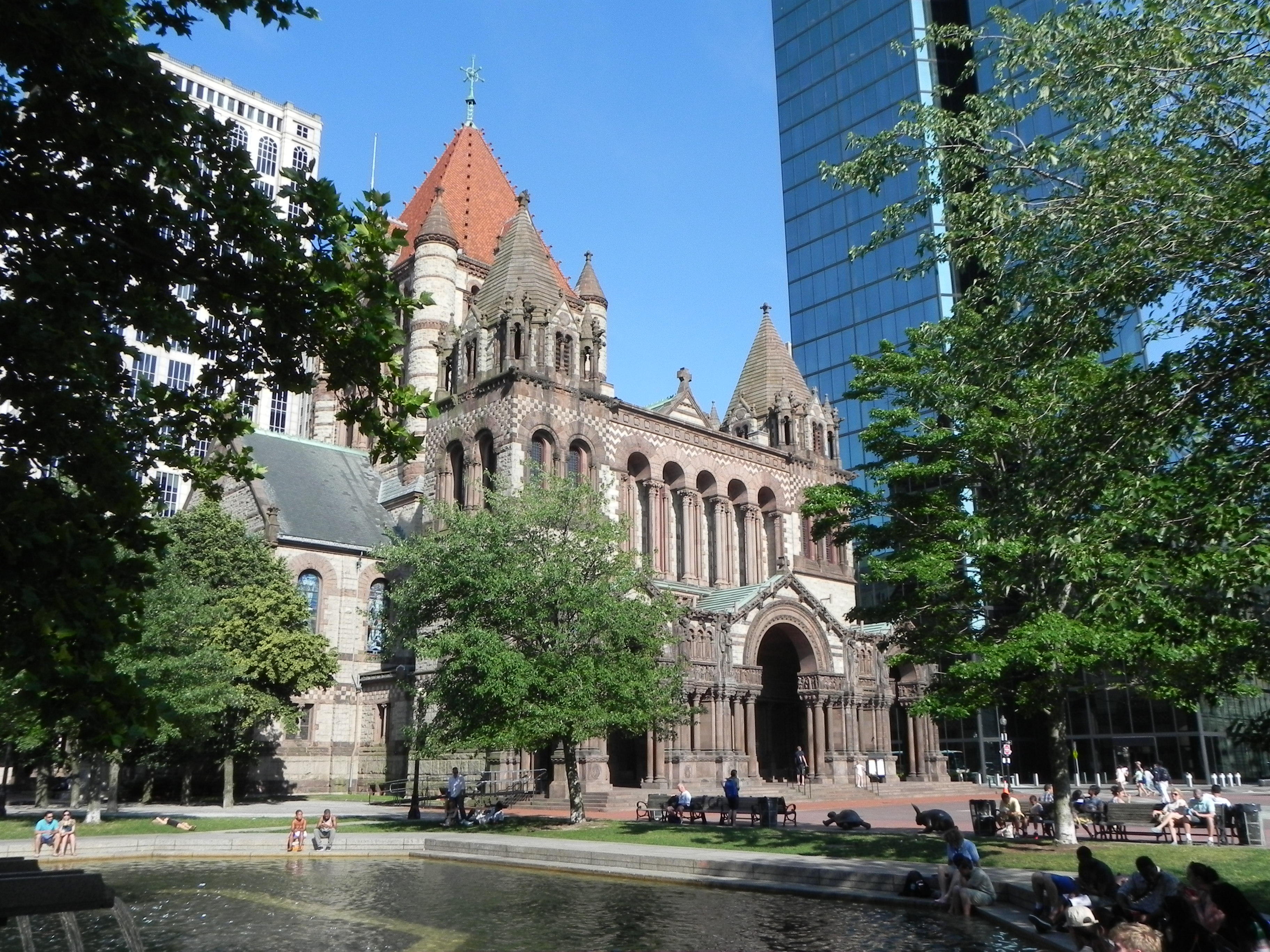
Photo credit: Tiago Fioreze, Wiki Commons


Soldiers of Forfeiture

Somebody, perhaps a robot, reads my blog. I can’t imagine what keeps this feeble enterprise going sometimes, since continued growth of readership has been elusive for several years now. Still, I get requests to post information on my daily soapbox, sometimes for issues of which I’ve never heard. Civil Forfeiture is one of those issues. I’ve only ever been stopped for driving too fast once. I’m not a speeder by nature, and it was an oversight in one of those slowdown zones between a highway and town. I had no idea, however, that civil forfeiture might happen without any conviction or charge. See the infographic below from one of my readers at arrestrecords.com.

Social justice is perhaps the leading motif in my existence. I was attracted to the life of the clergy out of a profound sense that life is unfair. As if it’s not bad enough that nature posts us each at unequal starting places, human society joins in the game by contributing rules that are inherently unfair. Healthcare in the United States, for example, has been unequally distributed. I had figured this out even as a child when my family doctor walked into the examination room with a lit cigarette dangling from his lips, asking why I was having trouble breathing. I didn’t know what chronic bronchitis was in those days, but thankfully I grew out of it. In any case, laws for fair treatment of all citizens should underlie any just society. Not just healthcare, but basic, constitutional rights.

Having been reared in a small community where arrest was not rare—most of the time certainly deserved—I was woefully ignorant about what a person was free to do. I still am, I guess. I go to work each day hoping that I don’t infringe on any unknown law that stands to make this land a nest of freedom. Having arrived in Boston with a migraine after driving all my worldly possessions from Pennsylvania back in 1985, I parked in Winthrop, outside my apartment, with the right wheels to the curb, just like every other car on the block. I stumbled inside and fell into my unmade bed. My first morning as a Massachusetts resident, I awoke to find a parking ticket on my windshield. I went to the police station to explain what happened only to have the receptionist say, like a line from Gilligan’s Island, “Ignorance of the law is no excuse.” I can think of no better excuse. Is a law degree necessary for fair treatment? Whom did I harm by parking with the rest of the residents? At least I didn’t face civil forfeiture. If I had, all they would’ve found would’ve been a few boxes of books and enough clothes to get me through the week—all my possession fit inside my VW Beetle in those days. What more does a person really need?

Civil Forfeiture, an infographic from ArrestRecords.com


5 Ways to Protect Women from Exploitation

Please enjoy this guest post by Daphne Holmes:

Women’s roles in society vary from region to region, with some states exhibiting greater equality than others. In the United States, for example, shifts continue to alter women’s place within social and work culture, so American society appears to be moving in a positive direction for many women. Unfortunately, women’s rights and social justice are not always promoted elsewhere, so realizing their potential is an upward struggle for most women worldwide.
Protecting women from exploitation is a moral imperative that sets progressive societies apart from others that do not share a commitment to equal treatment for all members. The following approaches help women’s causes by addressing some of the unique issues they face and supporting a fundamental guarantee of equality.

Remove Systematic Injustice

In order to protect all members of society from exploitation, social structures must be in place to accommodate each group equally, regardless of race, color, gender or creed. Government, for example, must reflect a stance that protects women equally, supporting laws that facilitate their advancement and punish those standing in their way.
A culture of respect instills and perpetuates the correct values, so adopting tolerance for diversity is an essential first-step for raising women’s profile in society. Patriarchal societies, on the other hand, leave the door open to exploitation, because women are deemed insignificant, and their right to excel is not guaranteed.

Ensure Essential Needs

Surviving as a woman in a culture that does not acknowledge equal rights can mean diminished access to basic elements of survival. To elevate women’s position in society and protect them from exploitation, fundamental needs like food, health care services, water and shelter must be available to furnish the cornerstones of personal development.

Educate and Enlighten

In many cases, ignorance and outdated thinking are behind exploitation, so education is a powerful tool for protecting victims. The benefits of education are seen in two distinct ways. General knowledge about women’s causes and education about the difficulties they face are enlightening to members of backward societies, opening their eyes to an entirely different standard of equality. And women’s education is also an important feature of equal societies, furnishing vital information that helps women rise-up from oppression. With inroads in both areas, exploitation can be seen for what it is; increasing the likelihood women will escape its ill effects.

Stop Sexualizing Women

For specific progress to occur, general changes must be made to the way women are characterized. Movies and other media, for example, sexualize women with graphic imagery and unflattering portrayals that diminish the progress women make in real life. Valuing women for reasons other than their appearance and sexuality increases their mobility within society. By recognizing their achievements and potential, women enjoy greater opportunity for advancement and suffer less at the hands of exploitation.

Increase Accountability

Women face a number of forms of exploitation worldwide, including sexual trafficking, labor mistreatment and other abuses. Unfortunately, cultural imperatives and other influences prevent most abusers from being held accountable for exploiting women. For lasting reforms to take-hold, consistent punishments must be applied to offenses against women, establishing consequences that curb abuses. And demand must also be slowed, in order to remove the incentives for trafficking and sexual exploitation. Stiff penalties for abusers and access to justice are key features of a system committed to protecting women.

Protecting women from exploitation starts within a culture of respect, acknowledging women’s valuable place in society. Through education and programs supporting women’s rights, even regions slowed by backward thinking and outdated social structure can make positive strides protecting women’s rights. And by changing views and values about women, and enforcing penalties against exploitation, society contributes to constructive outcomes, rather than turning a blind eye to harmful practices.

Author:
Daphne Holmes contributed this guest post. She is a writer from www.ArrestRecords.com and you can reach her at daphneholmes9@gmail.com.


To the Swift

Despite its generally secular reputation, one of the great charms of New England is its churches. I was forcefully reminded of this during my recent trip to Boston. Each city along the way boasts impressive churches that might be glimpsed even from the highway, and although there are now many taller buildings it is possible to imagine the days when the steeples stood over all. Boston’s historic churches remain stunning symbols of the power Christianity once held in this city. We first climbed off the T at Arlington in the shadow of the great stone Arlington Church. On the Esplanade the looming steeple of the Church of the Advent violently reminded me of the deep mysticism that drew me to the Episcopal Church even while I was a Methodist seminary student. Park Street Church, King’s Chapel, The Old North Church, the Old South Church, and finally Trinity Church in Copley Square invited us to gander and ponder. Almost like fossils, these churches remind us of the history of what made the city, or the nation, what it is.

Trinity Church lies nestled at the base of the John Hancock Tower, Boston’s tallest building. A blue glass Brobdingnagian, this prophet of capitalism represents the highest possible aspirations of our race, so we are led to believe. The material triumph over the spiritual. And yet the tourists stop to photograph the stunning church. It is on the street level, down here among us mere mortals. Upon closer examination, I noticed the statue of the tortoise and the hare in the plaza of Copley Square, the holy terrapin racing toward the sanctuary, it appears from my angle. It seems that I have unexpectedly received a kind of epiphany.

Look closely.

Look closely.

I first came to Boston many years ago as a spiritual seeker. In the intervening years during which I was attempting to find out what that might mean in a life that was intellectually honest, many bronze sculptures appeared in this city. The one commemorating Robert McCloskey’s Make Way for Ducklings, installed after I completed my studies at Boston University, would not have caught my pre-parental attention, as I had never read the book. Now you have to stand in line even to snap a picture. The work of local artist Nancy Schön, both “Make Way for Duckings” and “The Tortoise and the Hare” are part of Boston’s continual evolution of character. Officially, we are told, the turtle and rabbit are representative of the Boston marathoners who trudge the final feet past this church toward the finish line. To me, this sculpture suggests something more as the hare dawdles and the tortoise breaks toward the church. It may be a marathon, indeed, but the race, I remind myself, is not always about being swift.


Fish Fridays

There’s an old myth among Protestants that on Fridays Catholics eat fish because fish are sinless animals. As far as I’ve been able to determine, this is pure fabrication on the part of curious outsiders. Still, it has grown a mythology of its own. Some say that the non-pecuniary piscines are that way because they, naturally, survived the flood. I’ve often wondered how that impacted the fresh-water varieties of fish, or if they evolved after the fact. In any case, the story, it seems, has grown with the telling. Fish on Fridays has nothing to do with the fish and everything to do with the people. And so does standing in line.

DSCN4792The New England Aquarium is, ironically, one of the big draws on a rainy day in Boston. I’ve stood in longer lines before, but after a late night of truncated fireworks and waiting an hour for a T train home after being thoroughly soaked, it is a test of endurance to stand for over an hour-and-a-half in rain encouraged by Hurricane Arthur. To see fish. To find sinlessness. The ocean, it always seems to me, is one of the places where human greed has not yet been fully realized (not that we haven’t tried) but in which we’ve dipped our polluting fingers time and again. Still, fish are fascinating. Watching them make lazy circles around the 200,000-gallon giant ocean tank, the many ways that creatures have evolved to swim enchants me like a kid. Of course, the real draw, for many, is the penguins. Psychologists have explored the human fascination with anthropomorphized animals. Penguins in their “formal attire,” clumsily totter about on two legs and occasionally display very human behavior. At feeding time some are polite, waiting their turn, while others are aggressive and pushy. If someone is too greedy, the bird next in line will push him or her off the rock into the water, where the offender has to come back to the group, having lost his or her place. Where does sin enter this picture?

Seeing fish on Friday has me wondering why we declare some animal behavior sinful and other animal behavior saintly. Wandering the four stories of this aquarium crowded with others seeking to avoid the rain is often like looking into a mirror. Do these animals realize they are trapped? Although the sea lions and seals seem happy and enthusiastic, and the penguins just bored, it is difficult to read the face of a fish. So after a long day standing, my family heads back into the rain, hoping to make it to some restaurant before this rain beats our weary umbrellas into utter submission. There’s almost no traffic today, but one driver speeds through the puddles down the great coastal highway 1, completely soaking those waiting to cross to drier climes. The wall of water coming at us would’ve made Cecil B. DeMille envious. It’s a holiday and I can’t figure what the hurry is as my second and last pair of shoes grows waterlogged from this selfish gesture only to get through the light. I’m pretty certain I’ve discovered where sin is, however, and it is definitely just outside the aquarium.


It’s My Body

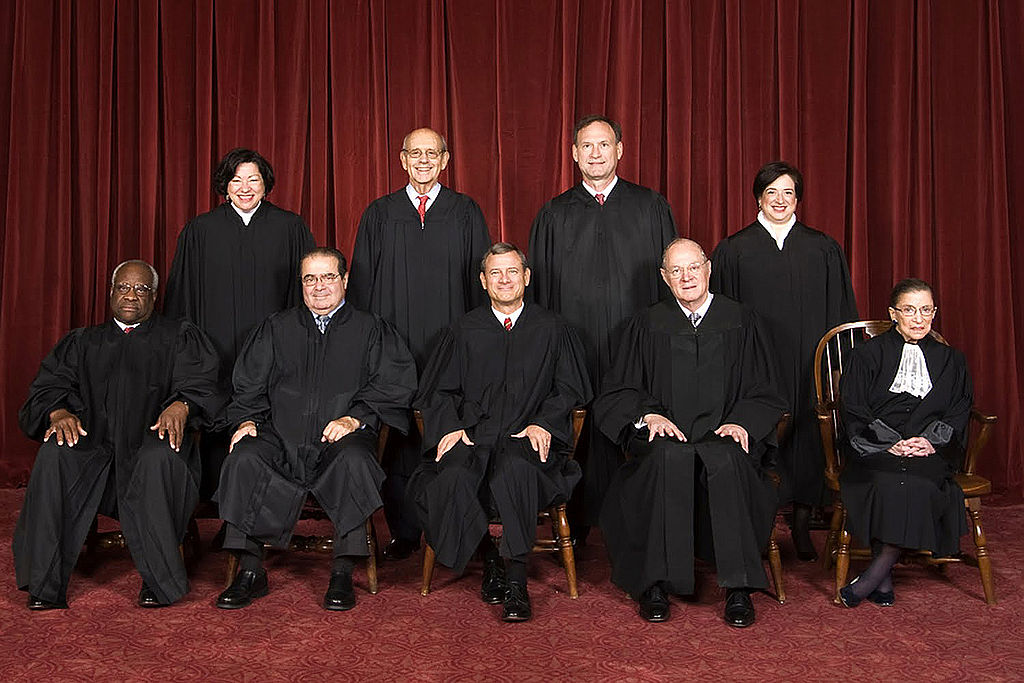
Those who believe mythology is dead have to look no further than the Supreme Court. Amid pictures of women protesting religious freedom to be told what to do with their bodies, the Court decided that employers may withhold rights to birth control under the rubric of religious belief. The ones who raise the issue, however, biologically never carried a baby to term. One gender making decisions for the other. We all know that the official stance of Roman Catholicism, closely followed by radical Evangelicalism, is that God intended sex only for procreation. Those women who find themselves on the receiving end of unwanted conception are helpless in the eyes of the law, depending on who their employer is. Blind justice indeed. Obamacare is intended to help level the playing field. Too few people have any real control over what medical treatment they can afford. I know more than one fixed-income person who suffers chronic pains due to lack of adequate treatment. I also know people who have used the system for plastic surgery before a trip to the beach. It seems that your employer now has the right to decide—but only if you’re a woman, and only if it involves what might be euphemistically called your “private parts”—what care you deserve.

Legislating morality, we religion majors debated even when I was back in college, cannot be effectively executed. If you presume there is a God, then enforced obedience is no obedience at all. Even conservative undergraduates could see that. Now our “Supreme” Court, with its male majority, has followed the lead of closely held corporations (doublespeak for certain patriarchal, Evangelically based companies) and declared that half the humans in America don’t deserve the same health care as the other half. The reason? Closely held companies don’t want women to have access to birth control. Our courts strike a blow against freedom and justice for private religious interests.

Within days of one Christian denomination declaring that gay marriage will be—should be— sanctioned, our own judiciary sides with the right of upper management in private corporations to discriminate based on gender. At least the owners of Hobby Lobby and Conestoga can sleep better at night knowing that they’ve prevented women from having their basic rights upheld. And metaphorically crawling into bed with closely held corporations are a male majority of supreme court justices who believe one man’s religion (yes, man’s) has the right to overturn the freedom of his employees. With the blessings of a male God. A situation like this prevailed, it seems to me, until 1863, also with the backing of scripture. Only in those days the argument was, I believe, that God is clearly Caucasian.

Looks balanced...

Looks balanced…


Kingdom Come

Bible in HistoryPopular media tells us the Bible is irrelevant. As someone who has struggled for years to find a non-sacerdotal job in that area of specialization, it’s not difficult to believe popular media is right. Despite all the rationales on all the religion department websites out there, there is little that you can do with your degree. It was refreshing, therefore, to read The Bible in History: How the Texts Have Shaped the Times, by David W. Kling. While not exactly what I expected it to be, Kling’s book did explore several specific pericopes (pericopae sounds too pretentious) with an eye toward showing how a single verse from the Bible could change western history. The examples go from the early monastic movement up to debates about women’s ordination that are, unbelievably, still on-going. The social movements he traces demonstrate that the Bible has been, and continues to be, more than just a book.

At several points through this volume I stopped to consider the implications. From an outsider’s point of view many of these debates must seem almost infantile. They would have no teeth at all if not for the belief that the salvation of humanity rode on their correct interpretation. Often—too often—the results were the torture and oppression of others, for the sake of the Gospel. If we’ve got this right, then we need to prove it through might. A mighty fortress is our God. So the Psalms seem to say.

Few people stop to consider just how deeply engrained in our culture the Bible is. The idea, on the surface, is almost like a fairy tale: once upon a time, God said… And yet, some of the most intelligent people the world has known have staked their very reputations on this claim. As a postscript to Kling, we can still see the Bible’s influence on politics—and therefore society—over a decade later. We still debate whether homosexuals can legally love one another. The biblical basis of this debate is thin, but it is a bulwark even today. We argue about stem cells, and although from the biblical worldview such things are mythical; yet that same Bible gives people the material with which to argue, eh, Jeremiah? And where is that female president we should’ve elected long ago? Any ideas, Paul? No matter how we may discount it, the Bible is, and will continue to be, a most influential book. Too bad we as a society don’t care to learn about it from specialists. Not when it’s so irrelevant.


June Bugs

On my way to work yesterday, I came upon an overturned June bug clawing at the air, trying to regain its feet.  I’m always in a hurry getting to or from work, but I decided to stop, offering the insect a leaf to grip, and turning it back over.  I knew, as I spied birds flying overhead, that its chances weren’t good.  In the course of nature, insects are radically overproduced because so many get eaten.  In my apartment they can even be a source of sudden terror when they find their way inside.  I knew the June bug was probably nearing the end of its short time on the earth, but as I held out that leaf to it, I knew that in the act of struggling we were one.  That sounds terribly Buddhist of me, I know.  Insects and humans share, on the most basic level, the desire to survive.  Who likes to feel vulnerable—soft, unprotected underbelly exposed to the air?  Defenseless and helpless?  Certainly not this poor beetle.

Photo credit: Patrick Coin, Wikimedia Commons

Photo credit: Patrick Coin, Wikimedia Commons

Stepping off the bus in New York City, I began my daily power walk to work.  The bus had arrived a few minutes late, and my anxiety level about clocking in works as if it’s on steroids.  I have to buzz past the interesting things happening in the city, the people who merit a second look, the architecture that has an unexpected amount of detail, only to be lost in the overwhelming number of buildings.  Big buildings as numerous as bugs on a summer morning.  Then I saw a box pulled up on a low sill outside some swank bank.  I often need boxes at work, and I can’t help stopping to appreciate how this unbroken expanse of paperboard would be useful.  Then I noticed the feet sticking out the end.  There was life in this box, not so different from the beetle I’d stopped to help an hour and a half ago, in its exoskeleton, grasping for some kind of salvation.

I arrived at work agitated. I had been able to help the beetle, but what could I do for the sleeping human being in his box? I had no money in my pocket, and even a twenty would stay the exposed, raw human on the city street for no more than a few hours. To care for a person takes commitment, long-term willingness to make sure that those who fall on their backs are set again on their feet, given the resources, the opportunities they need to get along in a world where those circling above are far more dangerous than the birds in my neighborhood. I looked at my calendar. June is nearly over. The June bugs will soon disappear. And yet I couldn’t erase the image from my mind. How much relief seemed to show on that inexpressive June bug face when it could finally crawl away from the center of the sidewalk. Something was terribly wrong here. And a man was sleeping in a box just two blocks away. In the act of struggling we are one.


Mores the Merrier

The Presbyterian Church (USA) and I go back a long way now. Not that I’ve ever been a member, but one of their institutions gladly accepted four years of my tuition money and tolerated my presence on campus during that same time. I arrived at college a fundamentalist, but, as a religion major who thought through what was presented in class, I soon discovered that literalism was as wrong as sin. This past week the Presbyterian Church (USA) voted to allow gay marriages. Talking to someone I still know in my native, conservative western Pennsylvania, I learned that disgruntled heterosexuals I’ve known since I was a child are now denomination shopping because of the change. Ironically, this includes divorced individuals and others who can’t seem to get the hang of this heterosexual relationship thing. Marriage may not work for straights, but we sure don’t want the gays to have a chance at it.

Gay marriage, of course, is only the tip of the iceberg upon which modern Christianity is bearing down. And not just Christianity. Any ancient religion that finds itself surviving in a world that has completely changed since its founding has trouble remaining relevant. This issues of peasants in Palestine under imperial Roman rule are very different from a high-tech, service-industry, desk-job society. One could argue that people never change, but I suspect that society gives the lie to that. Some issues are perennial—we still haven’t figured out how to make sure the poor have enough. We will walk out of church, however, when we see affluent people of the same gender walking down the aisle together. With priorities arranged this way, is it any wonder that the mainline churches have difficulties retaining members? For some, the church has become a place to feel comfortable with their prejudices rather than to try to figure out what a first-century religion means in a twenty-first-century world.

I applaud the Presbyterian Church (USA) for its decision. It will certainly cost the denomination numbers. It is, however, a move to try to introduce justice back onto the agenda. One does wonder whether it was predestined. Far be it from me to speak for a first-century carpenter, but I suspect that a church founder who stressed repeatedly that love, not judgment, was the way to become one of his followers might be a bit sad at the political turn this has all taken. We know, from all that biology tells us, that sex has far more importance to humans than reproduction. It has a pair-bonding social function without which many couples would split up. This seems true regardless of the gender combination involved. Why not acknowledge this fact as truth and get on with the important business of negotiating the twenty-first century? Of course, we will have to find some other way to justify our prejudices.

IMG_1087


Elmer Gantry

ElmerGantryIn recent years a renewed interest has arisen concerning how powerful entities are perceived by others. Academics are asking how the United States is seen by other nations. Corporations are trying to improve their public images because, well, let’s face it, it effects the bottom line. The same thing applies, but with a difficult kind of finessing, to churches. Part of the difficulty is that churches declare that they have the truth. Backing down from this in the face of public opinion more or less scuttles any claims being made. Thus I’d been curious about Elmer Gantry for some time. Sinclair Lewis’s novel of the self-absorbed, arrogant clergyman who believes in no god other than his own desires, is considered a modern classic. Written during the height of the follies of the Scopes Monkey Trial and Prohibition, as the Fundamentalist movement was just getting started, Lewis used dark satire to try to put the self-righteous in their place. I’d known the name Elmer Gantry from many other media references, so I figured it was time to see who he was.

Going into the novel I had few preconceived notions. Gantry, I knew, would be a hypocrite from the start, but beyond that, cultural references don’t give many hints. Although Lewis’s well-known wit shines through from time to time, on a whole the novel is a distressing read. I suppose it’s the mark of a great writer that you can despise a character so, but really, Elmer is led on his path, indeed, encouraged, by those who know him and whose only zeal is conversion for conversion’s sake. A womanizing, athletic, hard-drinking student, Gantry is where many young men want to be. The campus ministries, however, keep after him until he realizes what all clergy know at some level—there is power in being able to manipulate people by religion. As portrayed by Lewis, Gantry does try, once or twice, really to believe. His cynical and selfish nature, however, are too difficult for him to overcome and he therefore employs them in all his relationships as he climbs the corporate, ecclesiastical ladder.

There is really no triumphalism here, with the society discovering and ousting the charlatan. Indeed, as the book ends, the Reverend Doctor Elmer Gantry dodges a serious threat to his career only to be appointed to one of the most influential churches in New York, poised to go on to even greater things. Trying to find the blame in the novel, however, is not a simple task. Gantry is all too easily led. He follows his base desires deftly and confidently. He knows a mark when he sees one. Throughout his ministerial life, however, he is encouraged and prodded onward to success. Most ministers, in my experience, are burdened with conscience. I’m sure a few slip through with their own agendas, but the working clergy are nothing like the protagonist to this tale. Lewis focuses on the worst offenders. Those who are in it for the power, should they read Elmer Gantry, would find a model who is, like many in the era of early psychology and sociology, too easily excused because of circumstance. More than that, however, they might learn how they look to a larger society for which the church has become a mere historical curiosity. Elmer Gantry is by no means the worst type of figure we can imagine in a secular society.


What You Pay for

Over four to one. It’s a sad statistic. A friend sent me a story in Slate exposing, once again, the (some would say) criminal inequality of university administration to the “talent.” Turning our eyes to Canada, the piece by Rebecca Schuman narrates how when administrator Indira Samarasekera of the University of Alberta announced that she was leaving, her position was applied for by four faculty members of Dalhousie University as a group. Intended as a pointed joke, the faculty members, led by Kathleen Cawsey, noted that if all four were hired the salary of Samarasekera would cover all of their salaries with a substantial raise. Universities continue to insist that administrators should pull down corporate salaries for what, to the eyes of everyone else, is a job with no point. Long before even a Dean had been born, faculty taught because that’s what they do. As perennial overachievers they require very little managing to do their jobs. The more corporate universities have become the more pronounced faculty abuses of they system have grown. Coincidence?

In my current ancillary job to the calling of my life (the classroom), I spend a lot of time on college, university, and seminary websites. One of the interesting dynamics I’ve noticed over the last few years is that when you want to find faculty (the only ones likely to write a truly academic book) you have to wade past tabs announcing trustees, administrators, and other dead weight. Almost as if institutions of higher education find the subject experts to be an embarrassing afterthought. When we send our children off to take the SATs and have them sign up for honors courses and college-placement classes in high school, we’re probably not thinking about what trustees they will be emulating or administrators they will be ignoring. There was a time when people associated universities with the faculty talent they could draw. And the subsequent benefit to paying students.

How the times have changed...

How the times have changed…

Samarasekera’s $400,000 salary will be, undoubtedly, claimed by another faceless administrator. Universities across the United States and Canada will help to recoup their costs by hiring more adjunct faculty and slashing permanent positions. And parents will weep all the way to the bank’s loan officer. Our children are being taught “business ethics” in real time. Tuition will go endlessly up to make sure we can afford the best paid deans of this or that, and the most comfortably paid coaches whether or not their teams win or lose, because, we all know in advance who the losers are. One thing is for certain, they will not be the administrators or coaches. They will, however, be the ones paying to sit in the classroom.


Global Warning

“Sticks and stones,” the childhood wisdom goes, “may break my bones, but words will never harm me.” We were taught that little mantra as a response to being teased by bullies. But words can and do hurt. They can even be lethal. Although I’ve come to realize that specific words are inherently neither good nor bad, I’m still a little shy around some of them. The website known, euphemistically, as “IFL Science!” contains an f-bomb that sometimes makes me wary—what’s wrong with just regularly loving science? In any case, perhaps this adverbial use of the most versatile swear word is intended to make the website a bit of racy fun. The posts are often very good. So it was that I recently read a story about “Friends of Science.” This group, it seems, is paying good money to convince the scientifically illiterate that global warming is natural, caused by the sun and not emissions, and so we should just chill. IFL Science! points out that the group, however, receives money from petroleum companies. Sticks and stones.

450x436_q75

On my way to work this week, I noticed how many of the ads in ebullient, affluent Midtown Manhattan reflect dark shows and movies. It’s summertime, when we expect bright colors and sunny weather. Has it, perhaps, been too sunny? The best selling non-fiction book over the past few weeks has been on economic inequality and how it will lead to a good, old-fashioned primate crash. Going ape-crap on the bullies. Our species doesn’t tolerate radical unfairness for long. Those who suck money from under the ground may not fracking care about the rest of us, but they sure pull in the big money. Big enough to buy the truth. Our emissions, they seem to say, don’t stink. And that weird weather you’ve been noticing for the past decade or so? That’s normal. Words will never harm me.

Global warming is a reality.

Oligarchy comes in many forms, the most insidious of which is the benign overlord. The implied subtext is “if I am smart enough to make all this money, I must surely be smart enough to decide what’s best for everyone.” Call it the gold standard of hypocrisy. In an increasingly secular society where the rewards of heaven devolve to what we can grab on earth, this might even be called a kind of theology. We all know that public policy and federal laws can be purchased, if we call it lobbying. Or election fund donations. The truth it seems, is up for sale. Call it Friends of Science—the name says it all. And if we’re tempted to add our own epithets, it might pay to ask what harm can words really do?


Two Roads Divergent

DivergentOne of the most hopeful signs for culture is the quality of young adult fiction on the market. Since I’m now in the book industry, Publisher’s Weekly is required reading. I always take a look over the fiction lists as well as the non, and over the past several months a couple of “teen fiction” books have been near the top for regular bestseller lists as well as for demographic-specific ones. (That is, adults seem to be reading them too.) One of those books is Divergent by Veronica Roth. While movie tie-ins certainly don’t hurt, as many of us opine, it is difficult to do justice to a complex story on screen. Divergent is one of those books that stays with you after you’ve closed the cover, and that suggests to me that something deeply meaningful is going on. What about dystopias is so compelling?

I’m not indulging in any spoilers to say that Divergent is a dystopia. Set at an indeterminate time in the future, civilization still exists—at least in Chicago—as society has fallen into five factions: Dauntless, Erudite, Candor, Amity, and Abnegation. Each group has its own beliefs as to why civilization collapsed, based on philosophical dispositions. Abnegation, the self-deniers, are the leaders of government. And clearly, the idea of Abnegation is a form of quasi-monastic Christianity. In fact, among the factions, Abnegation is the only one that seems to mention God. The other groups, stressing bravery, intellect, honesty, and peacefulness, don’t really have much need for the divine. To deny oneself, however, requires a powerful motivation. Even the protagonist’s name, Beatrice, is taken from its favored status among early Christians. I know little of Veronica Roth, but I have to wonder whether Dante is in the background here.

In the acknowledgements to the novel, Roth first gives thanks to God. As a high school convert to Bible-based Christianity, I suppose that’s only natural for a writer who is, at the moment, only twenty-five. Writers for young adults often have their religion close to the skin. Stephanie Meyer’s Mormonism translates into moral vampires. Orson Scott Card provides Ender Wiggin with values from the same faith tradition. People are, despite the logical implications, inherently religious. That doesn’t prevent Divergent from being a page-turner. Full of action and personal development, the first book of Roth’s trilogy bristles with self-sacrifice and belief in something better to come. Even if it’s a world we have to make ourselves. And like most human enterprises, it comes out as a well-meaning dystopia that underscores the value of reading for us all.


Saints and Serpents

Santa Barbara feels like paradise.  To a guy who grew up under the gray clouds and sometimes cruel winters of the northeast, the sun-washed placidity of the California coast feels almost surreal.  I’d never witnessed a flight of pelicans before, or visited a university campus that felt more like a spa.  Nothing introduces trouble into paradise like guns.  As we are beginning to try to make sense of yet another mass shooting involving college-aged kids, the somber-faced newscasters talk about how difficult it is to handle mental illness as they fret over seven more coffins that should never have been necessary.  It’s the right of Americans to own guns.  It’s the heritage of many to experience mental illness.  Elliot Rodger only had three guns and over 400 rounds of ammunition in his car.  Where’s Charlton Heston when we need a little comfort now?


America’s love affair with firearms is too protracted and entrenched simply to turn back the clock.  Guns are functional devices, but their deterrent force seems effectively only on those who don’t own them.  We’ve opened Pandora’s box and shook the last bit of hope out of it.  College is the stage of growing up where we learn about what life has to offer.  Choosing majors, meeting potential mates, gaining a measure of freedom.  Freedom.  Those who own guns don’t seem to appreciate how unbalanced this makes the rest of us feel.  When I walk behind someone smoking on the city streets, I can’t help but think that I’m doing nothing to foul the smoker’s air.  If only I had a gun.


One of the most poignant scenes in the Ellis Island museum is where the potential immigrants are being tested for mental illness.  As a hopeful paradise, we seemed to say, we don’t want to invite any problems ashore.  Mental illness is not the fault of the sufferer.  Making guns available to those who suffer depression and rage is madness.  And despite the rhetoric, the only one with gun in hand who ever seems to stop the rampage is the killer himself, by turning his own on the victim and perpetrator.


IMG_0149

Standing on a beach in Santa Barbara, you are looking out over five thousand miles of placid, unbroken, blue water.  The sky and the ocean seem to blend together.  A scoop of pelicans flies overhead, becoming lost in the sun.  And there is a serpent wrapped around a tree somewhere nearby.  There always is.


The Price of Flags

As a child, Memorial Day signaled the start of summer. Most of the time it announced that the obligations of school were nearly over and that was sufficient cause to celebrate. It was not until well into adulthood that I realized the holiday commemorated those who’d died in the armed services. I’d noticed the flags in cemeteries, of course, and we often visited the graves of civilian ancestors buried close enough to reach. The message did not penetrate my head, however, that all of those little flags should be telling me something. I grew up not knowing my father, but I did know he was a veteran. When all his children gathered for a (mostly) impromptu picnic yesterday, for the first time in well over thirty years, I realized how much of a mystery he was to me. At his funeral the flag on his coffin was presented to my older brother as part of military tradition, although he had died in peacetime, and pretty much isolated from all his progeny. It is a somber thought even now, although it was eleven years ago.

I have been a pacifist since my youngest days. Sure, I played with toy guns and G. I. Joe, but that was the culture of kids growing up during the Vietnam War. Only vaguely did we realize the actual horrors that were happening daily thousands of miles away. In my mind there was no reason to go to war. In Sunday School we were taught to settle our differences nicely, even if it meant that you had to be cheated or take less for yourself. This always seemed the central tenet of Christianity to me, and I wondered why the most conservative of Christian presidents seemed the most hawkish, the most ready to sacrifice the fathers, sons, brothers, and now mothers, sisters, and daughters of others for so little. The number of flags even in that little country graveyard where my grandparents were buried haunt me.

We still have members of the armed forces over seas. The military budget of one of the most prosperous nations on the planet is astronomical. We can now kill with drones so that we don’t even have to see the carnage we create. When did the lives of young adults become small change? I know it’s idealistic of me, and probably terribly naive, but I still can’t make sense of our cultural perception of how cheap human life can be. Maybe I’m just a little overly sentimental about a father I never really knew. But looking over my siblings, I see that he produced some nice, generous, and peace-loving children over half a century ago. And while we have our picnics and enjoy a rare day off of work or school, thousands of silent flags will be flapping in cemeteries all across this country reminding us that better ways exist to resolve our differences. If only we could take a holiday from war and violence we might see fewer flags and even more holidays.

Photo credit: Remember.

Photo credit: Remember.