Data Protection

I learned to type on an actual typewriter.  For many—likely the majority—of those my age or older, that was the case.  Schools in the seventies, perhaps anticipating the computer revolution, emphasized that both boys and girls should learn typing. At least my school did.  Those were the heady days of electric typewriters that smacked the paper with a satisfying thwack at the slightest touch on the keys.  In circumstances whose details I simply can’t remember, my mother bought me an old, manual typewriter at a garage sale or something.  One thing is certain—it didn’t cost much.  It worked, however, and I typed away writing stories and plays and even attempted letters to editors.  I’d been writing long before that, of course.  Some of my early fiction was in pencil on school tablet paper and I think I still might have a few survivors from that era in the attic.

The image of the noisy newsroom full of clacking typewriters still conveys a kind of power.  Writers in those days, if they were prominent enough, could bang away at the keyboard, jerk the results out, put them in an envelope and be assured of publication.  Everything seems more difficult these days.  Computers have made writers of so many people that it’s difficult to get noticed.  More important, however, is the fact that print preserved data.  Newspaper was cheap, so perhaps the newsroom isn’t the best example.  Kept dry and in climate-controlled environments such as libraries, books keep a very long time.  Longer than the life of the author, or so it is hoped.
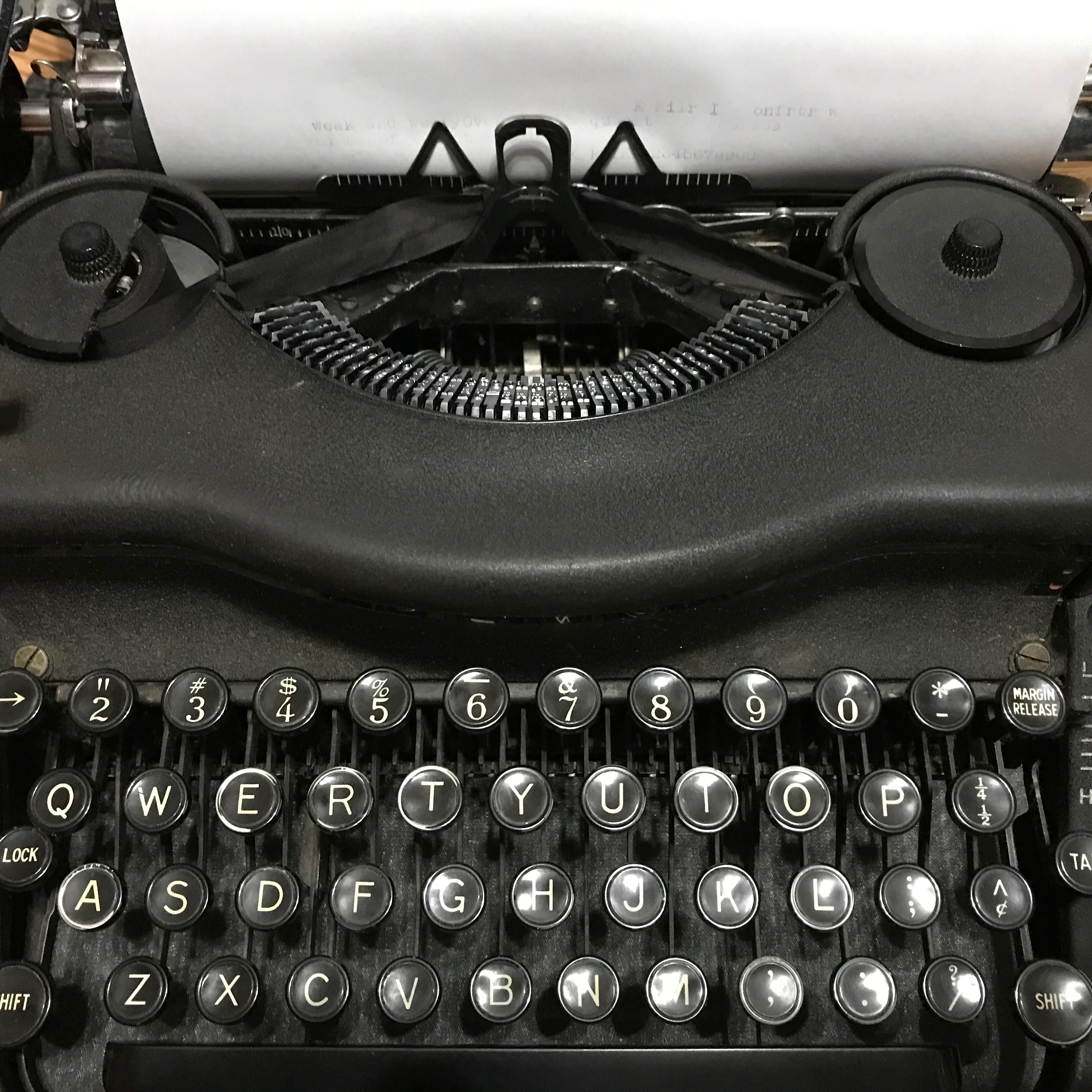
Data backup is now a constant concern.  A couple years back, an unfortunate bump on my own terabyte drive led to a quite expensive data recovery bill with some information lost forever.  Throughout the process I kept thinking, if all of this were printed out at least I’d be able to access it.  So true.  The vinyl market demonstrates that not everyone is willing to put up with the artificiality of electronic media.  Those who promote it tend to shy away from discussing its fragility.  Even now when I have a story published I print it out so that if the data becomes corrupted it can at least be retyped.  My most recent double-backup took an entire Saturday to accomplish.  Who knows what memory-intensive software lies behind each keystroke?  I look at the humble typewriter and tell myself that certain plateaus were perhaps more stable than the majestic mountains with their landslides and crevasses.  And I always found that clacking noise soothing, as ideas were preserved in solid form.

Shatner’s Space

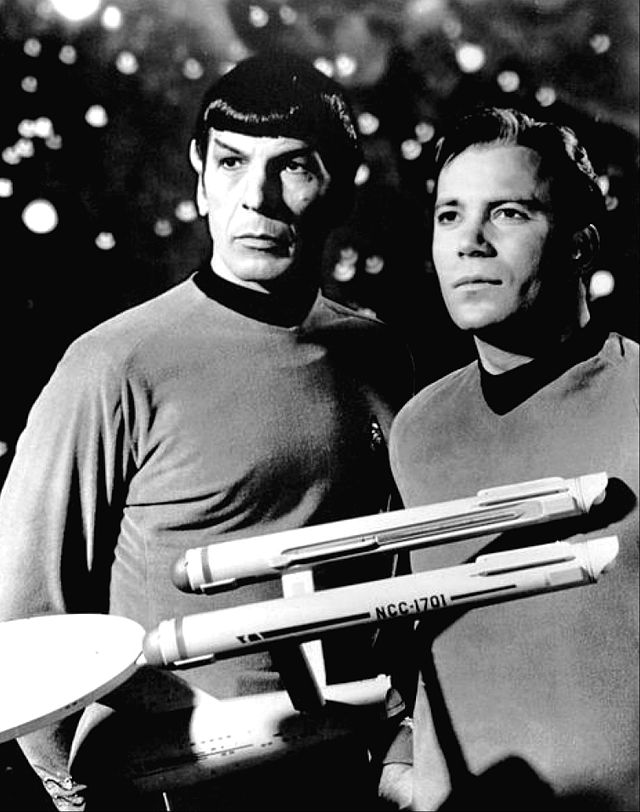
We constantly underestimate the power of fiction.  It’s difficult to break into getting fiction published.  It wasn’t always that way.  When the pulps were still a thing often it took a thimble of talent and a handful of persistence.  Publishers were looking for content and those with typewriters were clacking away as fast as they could.  Ding!  Carriage return.  These days it’s harder.  This came to mind in thinking about William Shatner’s trip to space and his subsequent reaction.  As several news outlets said in anticipation of Shatner’s new book, the experience made him feel profoundly sad and not a little cold.  So much empty space and we still haven’t figured out how to travel fast enough to reach our nearest neighbors.  We don’t even know if we’ll like them when we meet them.

Others, in defense of space exploration, were quick to counter Shatner.  He’s not a real astronaut, after all, having spent nine decades earth-bound.  Or so they said.  But I think I understand, as a fellow land-lubber, where he’s coming from.  We’ve only really got one chance on this planet, being the only creatures evolved enough to type, to capture our thoughts—our essence—in words that can be preserved.  And wildlife statistics are showing an alarming decrease in other animals since the 1970s.  If we’re all that’s left and we can do no better than to elect fascists, well, stand me with Captain Kirk.  We look to the skies and see, well, empty space.  And besides, we need to get home because it’s supper time.

Image credit: NBC Television, public domain via Wikimedia Commons

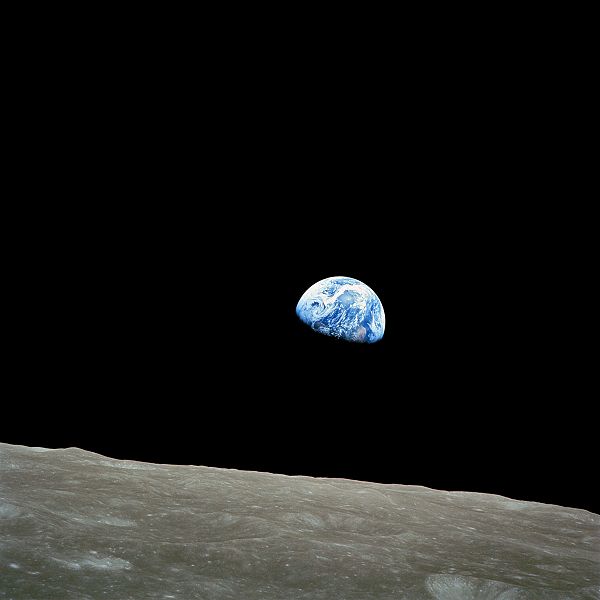
The reason Shatner got a free ride to space was, of course, fiction.  Star Trek captured the imagination of my generation and those with actual science ability started to put that kind of future together.  Today we can talk to computers and they still mishear us, often with laughable results.  But if writers of fiction hadn’t been available the show would never have succeeded and what would a Canadian actor have had to do?  Maybe a crime drama or two?  And even those require writers.  It seems to me that we should be encouraging fiction writers with talent.  Believe me, I’ve read plenty who really haven’t got it (often in the self-published aisle) but I know firsthand how difficult it is to get fiction noticed.  It’s like, to borrow an image, being blasted off into a dark, cold, empty space and looking at the blue orb below and wanting to be home for supper.


Former Education

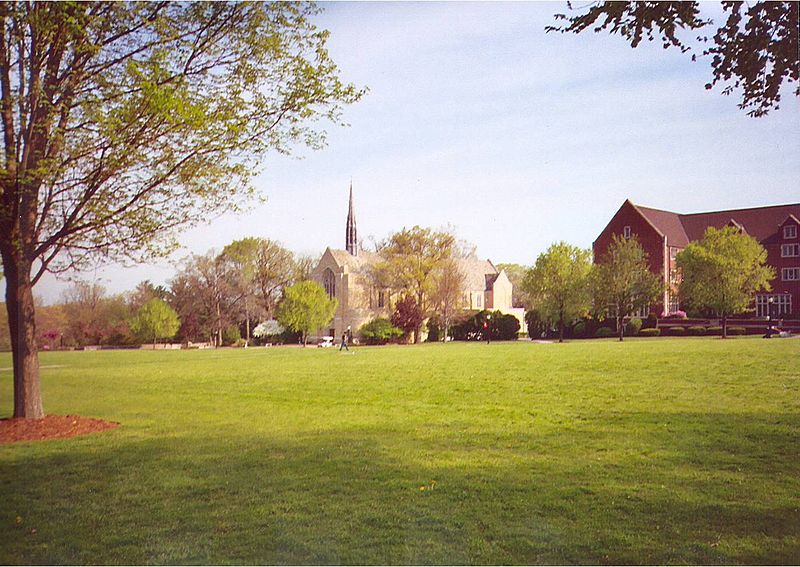
Like most people I don’t have time to sit around thinking much about college.  Once in a while you’re forced into it, however.  This time it was by an NPR article.  I attended Grove City College for a few reasons: it was a Christian school close to home, it wasn’t expensive, and, perhaps most of all, I knew campus because the Western Pennsylvania Conference of the United Methodist Church held its annual conference there.  I’d been several times during high school.  It didn’t hurt that I was a Fundamentalist at the time.  Grove City was a college of the Presbyterian Church and I loved having debates about predestination with professors who actually believed in it.  At the same time, I was encouraged to think things through, which liberal arts colleges are known for promoting. Is it now “conservative arts?”

Photo credit: The enlightenment at English Wikipedia

The NPR story my wife sent me was about how Critical Race Theory is disputed at my alma mater (sic).  I noticed in the article that Grove City is no longer affiliated with the Presbyterian Church.  It’s become much more right wing than that.  At the same time they ask me for money on a regular basis.  What made them think they had to go hard right?  Are they still educating students or are they indoctrinating them?  It reminded me of a sermon I heard at yet another conservative school I was associated with: Nashotah House Episcopal Seminary (or at least it was then).  The priest made an entire sermon about how it was right to be conservative, as if no matter what the issues there was some creed to get behind in staying behind.  As if virtue exists in never admitting you were wrong.

I suspect that my failure to attain a full-time academic position at a reputable school was because of what looks like a conservative outlook, despite the evidence of this blog.  Yes, I grew up Fundamentalist—you grow up the way you were raised.  Hopefully, however, you start thinking after that.  And experiencing.  And yes, using critical thought.  There comes a time when “because I told you so” just doesn’t cut it anymore.  For many of us that’s when we go to college.  If it’s a good one you’ll be encouraged to debate with your professors.  Not one of them has all the answers, I can assure you.  Education is, by its very nature, progressive.  We learn and we continue to learn.  We don’t stand still and say the 1950s was when God reigned on earth.  It wasn’t.  And it wasn’t any time before that either.  Now we know that Critical Race Theory should be taught.  We know Black Lives Matter.  What I personally don’t know is what became of a college that was once conservative, but at the same time, believed in education.


Eclecticism

Eclectic.  An eclectic approach is experiential.  I don’t mean to be obscure here, but I was once an academic.  Let me try to spell this out a little more clearly.  You’re reading along in your academic study—perhaps it was assigned to you for a class, or perhaps you have unusual interests, or maybe you want a deeper treatment than you find in Barnes and Noble or on the internet.  In any case, what you’ll often find is academics like to glom onto a theoretician that they follow.  Applying Derrida to this, Lacan to that, and Bakhtin to the other.  In doing so they establish their mastery over complex theory, and earn their ticket into the academy.  You, the poor, curious reader, are left wading through explanations of the theory when what you really want is the content—the actual subject of the book.

My own work has been rightly accused of lacking theory.  Or, more precisely, not following a consistent theory.  It’s eclectic.  That’s because I believe in an experiential approach to research.  I trust my own experience.  Your experience is different, I know.  Trust it.  We learn things through experience.  Perhaps others were raised by parents who read and thought deeply and introduced their children to Deleuze (and perhaps Guattari as well), but most of us weren’t.  And some of us came to trust both raw logic and intense feeling.  We call it instinct in animals, but in people we expect more.  What’s wrong with being eclectic?  It seems to make sense.  If Foucault had it right, shouldn’t it be obvious to all of us?

What’s always amused me about this is that such theoreticians—and I don’t know how you become one without basing your work on your own experience—come and go like fashions.  Ricoeur was the big name a few years back and now I haven’t seen anybody writing about him for a couple of decades, at least in the fields I’m reading.  I tend to read primary material and think as deeply as I can on it.  Yes, I read others who write on the topic and sometimes I’m even quite taken by someone else’s approach.  Still, my experience tends, alas, toward the Baconian—an embarrassment for a vegan, I suppose—that of gathering information and seeing what makes sense of it.  I read the theoreticians from time-to-time and then I read those not classically considered experts.  We’re all in this knowledge game together.  Even Lévi-Strauss and his school.


The Daily Show

Long ago—over a dozen years now—I decided this blog would receive daily updates.  Some of the more successful blogs out there receive multiple daily updates, but I’m just one guy, and a working stiff at that.  When you do something every day a couple of contradictory things happen: one, you get better at it (if you’re a Gladwellian, it may take almost three decades, but the principle holds), and two, the quality varies.  I’ve long noticed this about daily ventures.  (I’ve also lately begun to realize that even daily shows take time out to refresh.)  I used to stay up to watch David Letterman (that seems impossible to believe in my current time warp).  When he was good he was very good, but when he wasn’t it was painful to watch.  You can’t be “on” every single day.  Emotions are funny that way.

Over the past year or so I’ve taken to occasionally binging on “Good Mythical Morning”—a YouTube daily show starring Rhett and Link.  These North Carolinians are inherently likable.  They’re a couple of guys who, in many ways, refuse to grow up.  They’re smart, and often funny.  And extremely popular.  Their channel has approaching 18 million subscribers.  They have off days, as do we all.  Sometimes I wake up feeling so contrary in the morning that I’m not sure I’m the same person who crawled into that bed only hours before.  Some days I don’t feel like writing a blog post.  On other days I feel like writing several.  What perhaps stands out to regular readers, if only one or two, is that some days you’re off.  So tragically human.  So wonderfully human.

I’ve often wondered if this is just a condition of life.  Pets, for example, have off days too.  I suppose the difference is that those committed to a daily show have put themselves out there so others can see them.  On one of those aptitude tests I took in high school the results suggested I should’ve been an entertainer.  Instead I took a religious and scholarly approach to things.  Maybe because I’m a middle child I always felt that nobody really paid attention to me.  So here I am, a baker’s dozen years out from writing daily on religion, ancient West Asian topics, books, and horror.  And sometimes current events, when I  feel like it.  If you’re taking the daily show route, you need to be aware that, despite the ennui, not every day will be the same.  Even someone as successful as Letterman knew that.


Headlines

I see many headlines in a day.  One from Book Riot caught my attention with its linked story on BoingBoing.  This particular story is poignant and points to the ridiculous polarization politicians are stoking to play for our votes.  (I swear, politicians should be made into their own country so they can ruin their own lives without affecting the rest of us.)  This headline deals with the remarkable person George Dawson.  The son of a farmer, and descendant of slaves, Dawson made a living as a laborer in Texas.  His life was probably no more noteworthy than those of many other working-class individuals, but Dawson had a story to tell.  Illiterate, he learned to read at the age of 98—let that sink in.  At two years shy of a century he decided to improve his life.  He subsequently wrote a memoir, Life Is So Good.  So far, so good.

For reading, not banning!

His story was so inspirational that the Carroll Independent School District named a middle school for him.  He became a adult “poster child” for literacy.  Now, here’s where the headline comes in.  The very school that is named after him is trying to ban his book.  As part of the reactionary Republican response to race relations, politicians—local and national—are trying to rewrite American history so the white guy is always right.  Always good.  Always Christian.  Always moral.  It doesn’t matter how many times he cheats on his wife and his taxes, he is the paragon of virtue and respectability.  To suggest that he promoted slavery and treated Black people as property and beat and lynched and left them in poverty, well, that’s just too powerful of a pill to swallow.

Banned Book Week begins this month, on the 18th.  Every year I try to read a banned or challenged book in honor of the occasion.  Censorship has been on the playlist of fascists from the beginning.  Propaganda works.  All you need to do is use emotional appeal to short-circuit the rational faculties and then laugh all the way to the bank.  Slavery?  What’s slavery?  Do you mean to suggest that white men used slaves?  Poppycock.  We have always been as upright with the same moral rectitude as the Donald.  And the Ronald.  And all white men who stand under the big R.  Pay no attention to the Black man who learned to read at an age when most of us are dead.  Is that such a big deal?  What need do you have to read when Fox News can provide all the (mis)information you need?


The Invasion

So I’m sitting here thinking it would be great if Liz Cheney were to run for president.  Then I think, have things really got so bad that Dick Cheney’s daughter would be an improvement for the Republican party?  At least she believes in democracy.  And something has to break this trumpstipation that seems to have plugged up the GOP.  You don’t want to stand behind a constipated elephant.  I look at the hero worship spawned by a man who’s been known for lying his entire life and wonder where our critical thinking failed.  People far smarter than me have been writing about how democracies die, and this seems to be the case, all because a guy ran six years ago to give his personal business a boost and has been showing us the extreme distortions money causes ever since.

It’s sad really.  Once in a while I think about how Eisenhower was a Republican.  He was a smart man and he clearly had the best interest of America at heart.  Nixon not so much.  Some politicians are motivated by ego rather than the good of others.  I stopped being Republican when Reagan got the nomination.  Maybe it was at Watergate, but I was really too young to grasp what was going on then.  Of course, that was before politics became a real life soap opera.  As the GOP became less G with each passing president, the party seems to have lost its fortitude.  Young people are progressive so we take measures to prevent them from voting.  When Blacks vote we find ways of tossing out their ballots.  Minority rule rules.

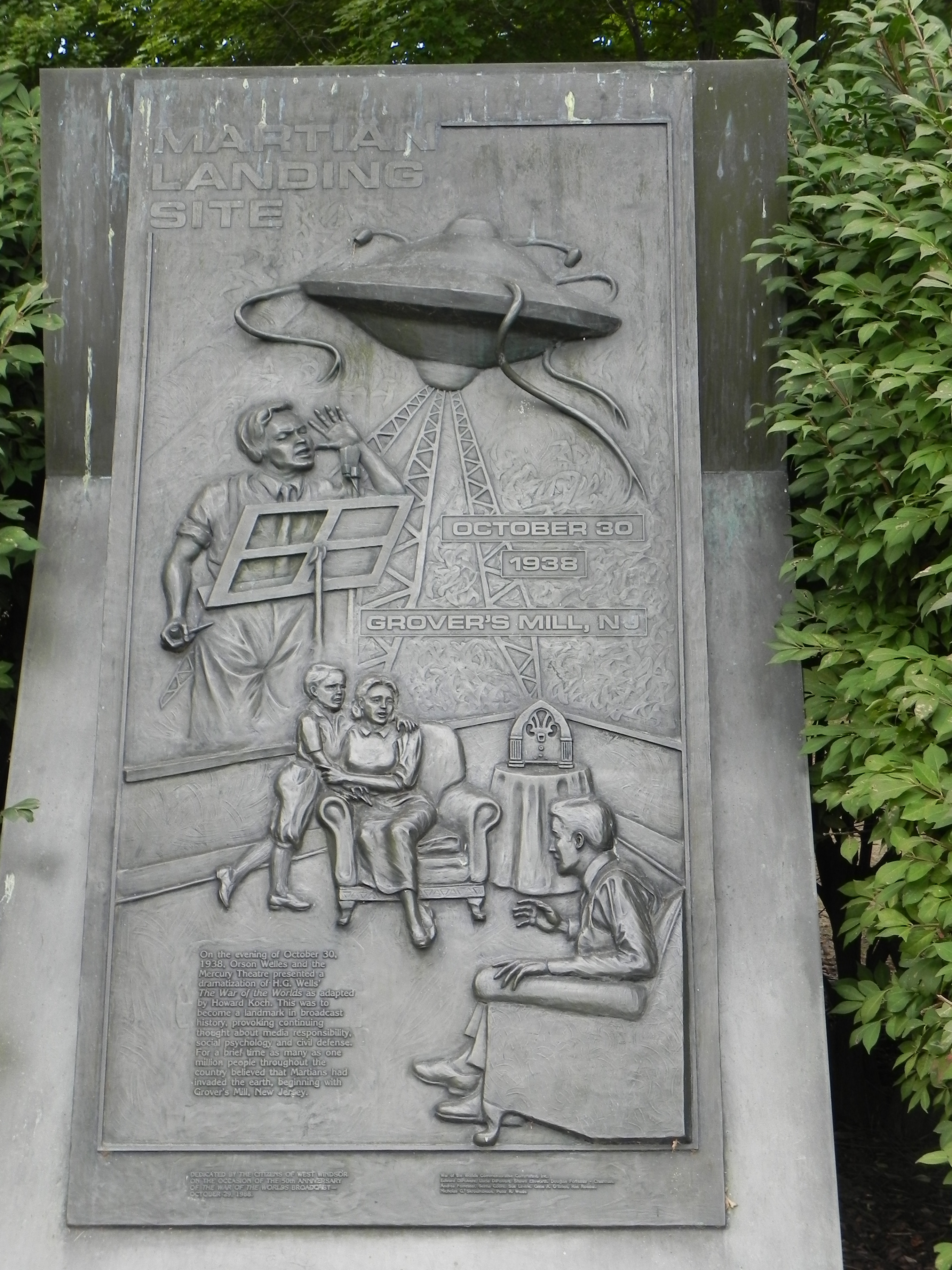
Cheney was ousted from her own party for stating the obvious.  Trump is a sore loser.  Not only that, he’s willing to take the entire country down with him rather than admit he was ever wrong.  Stealing government secrets is just another day in office in Margo-la-la land.  I sit here and scratch my head.  It used to be that no matter which party ran things they at least believed they were doing things for the sake of the country, not for the sake of the country club.  All that’s changed in our new plutocracy.  I’m no politician, but I am a guy who tries to make sense of the world.  I see a country of people who go so riled up when they thought Martians were invading not even a century ago.  An event so important that there’s a plaque in Downer’s Grove.  And when a real invasion takes place we now side with the Martians.


Burdens

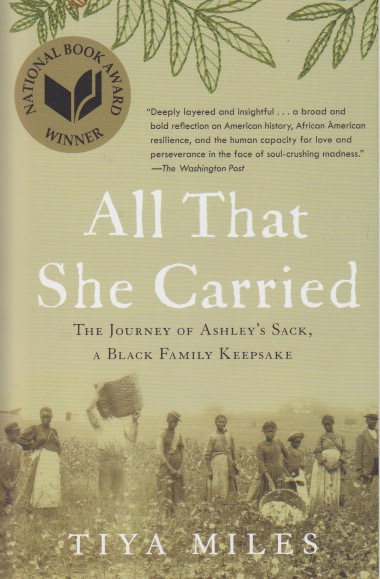
Listening is very important.  Sometimes there’s nothing really to say but “I hear you.”  This kept occurring to me during All That She Carried: The Journey of Ashley’s Sack, A Black Family Keepsake.  Tiya Miles is a history professor, and she helpfully includes an afterword telling how she came upon the topic for this book.  Ashley’s sack is just that, a sack.  On it, the owner, a female descendent of enslaved African-Americans, stitched a short inscription about the history of the sack, how her grandmother had given it to her mother when the latter was a child under ten, sold away from her mother in South Carolina.  This isn’t an easy book to read.  I have difficulty being faced with what “religious” “white” folks did to Blacks and justified themselves that people can be bought and sold.  Listen, I told myself, just listen.

Those who would deny that any of this ever happened need to learn to listen.  In order to capitalize on the resources this country offered, our ancestors engaged in morally reprehensible acts.  And the cruelty didn’t end with the shipping and the selling.  The treatment of unfree Black people itself was a crime, and their white captors knew full well what they were doing.  Preventing their slaves from having nice things while they themselves lived in luxury.  Beating, raping, and murdering when they didn’t get their way.  Selling their own offspring born of slaves to make a profit.  All the while claiming to be good Christians.  It’s often this part that I have trouble understanding.  Even a literalistic reading gives no license for treating other human beings this way.  Only money does that.

The style of history in this book isn’t that to which many of us are accustomed.  At the point of raising mental critiques I repeated, “You must learn to listen.”  Those who have made the rules showed themselves to be corrupt, and they must be willing to consider alternative ways of telling a story.  Miles makes the point that the history of unfree Blacks was largely erased, leaving the possibilities for histories and heritages slim; if the regular rules are themselves oppressive then it may be time to listen to those of others.  It seems impossible in the age of the world-wide web and all that it implies that we live on a planet where people repeatedly deny their sins while clutching their Bibles in their fists.  We need to learn to listen.


The Magic of Cairns

They’re one of those things, my daughter explained, that people do that make them so likable.  She was talking about building cairns.  Cairns are piles of stones, but not exactly the kind a farmer might make at the edge of a rocky field.  Cairns are intentionally built.  And they have been for millennia.  The thing is, while people could choose to knock them over, instead most people add to them.  When we’re out hiking we add rocks to cairns, and we’ve started our own from time to time.  I first became conscious of them in Scotland.  While out with some friends we spied a carefully stacked pile of rocks—I think it was at some remote location on the northern Scottish coast—and they told of of the tradition of adding to them.

While recounting this, I also recall seeing a pile of rocks—it wasn’t called a cairn at the time—at Walden Pond.  Some friends from seminary and I went to visit Thoreau’s famous site and although his cabin hadn’t survived, other pilgrims had started a rock pile.  It was, if I correctly recall, conical because the stones weren’t flat.  Most cairns involve the flat kinds of rocks that break off of bedding planes.  They are fairly easily stackable and they quite often tumble due to the forces of nature.  I recall building or adding to cairns in Ithaca, near Ithaca Falls.  Such cairns would be fortunate to survive the harsh winter and torrents of the spring thaw.  And yet still we build them.

While on the red trail at Bushkill Falls, where picking and taking items is forbidden, we found cairns.  There were isolated stacks along the river, dotted here and there.  Then, at about the halfway point we came across a field of cairns.  Alongside the trail, cairn builders had obviously seen the beauty of repeated patterns.  Other hikers were snapping pictures there as well.  It was clear that this was a joint venture that had spanned years of cooperating with strangers.  Nobody asks your race or gender or orientation when you add to a cairn.  In fact, those who start them are unknown and leave them for other strangers to carry on the work.  This is frequently the case with human ventures, but when they involve money we become very specific about who might be considered a proper owner.  Stones are common, and although useful are generally not valuable.  Make them into a stack and they become a symbol.  And that symbol can be a guidepost for future travelers, left in the spirit of cooperation of those we don’t know.


First Images

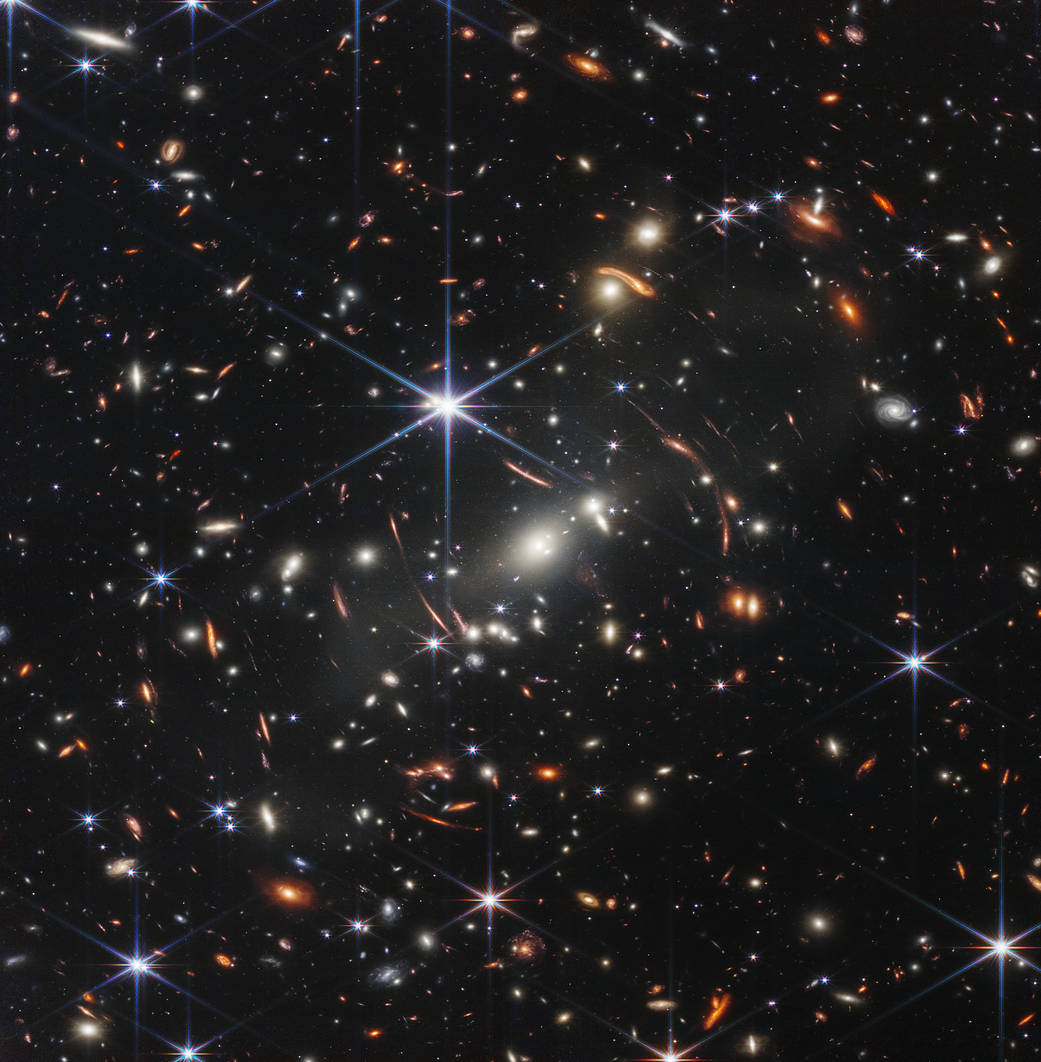
I awoke to an image from the James Webb Space Telescope.  Looking at the universe at it was 4.6 billion years ago is a humble and terrifying experience.  Our universe is so incredibly vast and we are tiny.  As we on this planet bicker and kill and destroy, out there something truly wondrous looms.  Those tiny pinpricks of galaxies.  Our own galaxy so massive that we can’t comprehend it.  Our own midsize star large enough to hold more than a million earths.  Our own planet big enough that no human being can see it all in a lifetime.  What in the world are we fighting for?  This image is just a patch of sky about the size of a grain of sand held at arm’s length.  How many grains of sand would it take to fill the visible sky?

Many people argue that such things are a waste of money.  Yes, there are very real, human-created problems right here on earth.  The siren call of space, however, has the potential to save us.  If we look into that immense universe just out there and realize that we are part of something larger than ourselves, we can stop fighting and hating and electioneering.  Keep looking up instead.  Costs, after all, are relative.  Our entire economic system is arbitrary.  We decide what’s valuable and what’s not.  We make rules that allow individual human beings to control the lives of countless others based on nothing more than agreed-upon principles.  Food could be freely distributed.  Medicine could be given to the sick.  What’s required is perspective.  If looking at the universe doesn’t provide perspective, what can?

I often wonder about life in those distant galaxies.  Given the sheer numbers it’s practically impossible that life evolved only here.  We’re told that teleological thinking is wishful and naive, but looking at the way life behaves I have to wonder if that’s true.  Life may be seeking goals.  If it is, than intelligence may be among them.  We’ve got billions of years and billions of lightyears to work with.  And when I look at the headlines I find those of the James Webb Space Telescope to be the most hopeful of all.  Galaxies are all about possibilities.  Stars being born where the outcomes may be better than one gender assuming it’s better than another.  Or that the “right to bear arms” means  stockpiling assault rifles to kill others in a fit of pique.  No, this money’s not wasted if only people might listen and pay attention to the stars.


Closed System?

Photo credit: NASA, public domain

Nothing is wasted.  Not in nature.  Maybe that’s the true economy of life.  We humans come in and make our habitat in our own image and then start throwing things away.  I’m no great fan of yard work.   I would just as soon let nature take its course, but if it did I’d soon have no place to live.  Trees find their way into the cracks in the foundation and those flaccid white roots we see dangling from the ends of weeds can insinuate themselves into tiny places and slowly expand.  Buildings left without maintenance soon begin to crumble.  I’m reminded of this every time I visit Bethlehem Steel.  Weather, plants, even the occasional raven, slowly tear down what human hubris has built.  And it doesn’t stop there.

We set up a composting area for all those weeds, yes.  A place where we could make our own soil.  After three years it was pretty full and when I went to cut back the ever-growing trees and vines, I learned the bees had claimed our pile for their own.  Not happy to see me poking around their home—not happy at all—they began to hover aggressively.  I got the message.  Nothing is wasted, not even compost.  

Our species is in love with petroleum products.  We can’t live without plastic.  Looking at all the plastic litter around is evidence enough of this one-sided affair.  Our plastics cause so many problems.  They do break down, but never go away.  They get eaten.  Undigestible, they can slowly poison animals.  Whatever isn’t recycled becomes part of us.  Nothing is wasted.

Yard work monopolizes my weekends from May through October.  This year it started in April.  I had to mow the lawn in November.  Really only four months to make it through without the endless cycle of birth, growth, death.  Those who are worried that nature won’t recover from our foolish species haven’t paid close attention.  Even as we live here the seeds find every crevice and life, life is irrepressible!  Scientists try to tell us life is unique to this planet, but looking at its tenacity, how can that possibly be the case?  The tardigrade can survive extreme dehydration, very high pressure, very low pressure, radiation, air deprivation, and starvation.  It seems like the perfect space traveller.  We try to make the world in our own image.  We like to think our version of the world is the one to endure.  Nothing is wasted.  Nothing short of human hubris.


Solstice Thoughts

At the equator, the difference is nil.  The longest day and the shortest day don’t deviate from the standard day length.  The further you move from the equator, the more dramatic the effect is.  Here in the northern hemisphere this is our longest day, the solstice.  Historically, particularly in countries to the northern edge of the northern hemisphere, this is a holiday.  Midsummer marked the days of sun and growth.  Light is abundant—too abundant to sleep well in the furthest reaches.   Being visually oriented creatures, we enjoy the surfeit of light.  Light has long been a symbol of the divine for, I suppose, just that reason.  It makes us feel secure and safe.  We can see what’s going on around us.

In Antarctica, today is the shortest day of the year.  Indeed, around now there is seldom any light at all.  On the exact same day there are literally polar opposites on this planet.  The summer here is winter there.  It’s the first day of winter in the global south.  Their understanding of this day is completely different.  Of course, once you reach the shortest day, things can only improve.  The climb to summer lasts half a year, only to have the decline immediately begin again.  The difference is as subtle as it is inexorable.  For those of us who wake before the sun, it’s already obvious that sunrise is coming later than it did last week.  The earliest sunrise was the fourteenth.  Sunset will come later and later for the next few days, to compensate for the lost morning light, but overall there will be less and less until we are the winter half of the world.

There are many lessons to learn here.  In a world where the longest and shortest days are the same day—solstices depend on where you live—we don’t fight over it.  This despite the fact that light is our most precious commodity.  We simply accept that we celebrate light when we have it, and await its coming when we don’t.  Other resources we fight over.  Potable water.  Petroleum products.  Arable land.  Silently, radiantly, light shows us the way.  There’s an inevitability here.  Through long experience on the earth we simply accept it.  The other option is to fight over what we can’t control, which is futility defined.  There are lessons to learn from the longest day.  And if it’s your shortest day, you know that all will be forgiven at the next equinox.


Thanking Teachers

Those who know me personally are often surprised to hear that my high school gym teacher was one of the most influential people in my life.  It is true.  He, and a handful of others I can still remember by name, set me on the path of knowing that I should be a teacher.  It is a very important profession, habitually underpaid.  To hold the future in your hands is a responsibility like no other.  I complained, like all kids do, about having to go to school.  Once there, however, I was fascinated by the learning.  I still am.  I think of those women and men who really wanted to mold young minds.  Who knew they’d never be paid as well as their peers, but who had a message worth preserving.

I suppose I’m thinking about them because I recently watched Dead Poets Society again.  It’s a poignant thing to do since Robin Williams’ death, but the movie makes a powerful statement about teachers.  Knowledge, once planted, grows.  I don’t name people on this blog unless they say I can, and although I’ve connected with a few high school teachers through Facebook, I don’t bother them in retirement.  I can say, though, that one English teacher, my German teacher, a couple history teachers, a math teacher, and my gym teacher made significant impacts.  The math teacher, of course, helped me realize that my thinking process veers in quite a different direction from equations and proofs.  Ironically, now I tend to think that way and often think I could’ve done it, but I needed several years for the ideas to settle into place.

Thinking of them by name may not be a daily occurrence, but in my actions I live out what they taught.  I’m not sure what leads a young person to pursue a teaching career, but clearly some of them have gifts that make them influential in lives long after the classroom relationship ends.  The young mind is receptive in the way that a more experienced one tends not to be.  Even as we reach our teens the natural confidence of youth seems to take over for many.  We might still, however, listen to those with more experience.  Teachers, under-paid and often having to take summer jobs to makes ends meet, are almost as influential as peers.  The twenty years of my life from the age five on were under the sway of teachers.  Time set aside for learning.  It wasn’t nearly long enough.


Paper not Paper

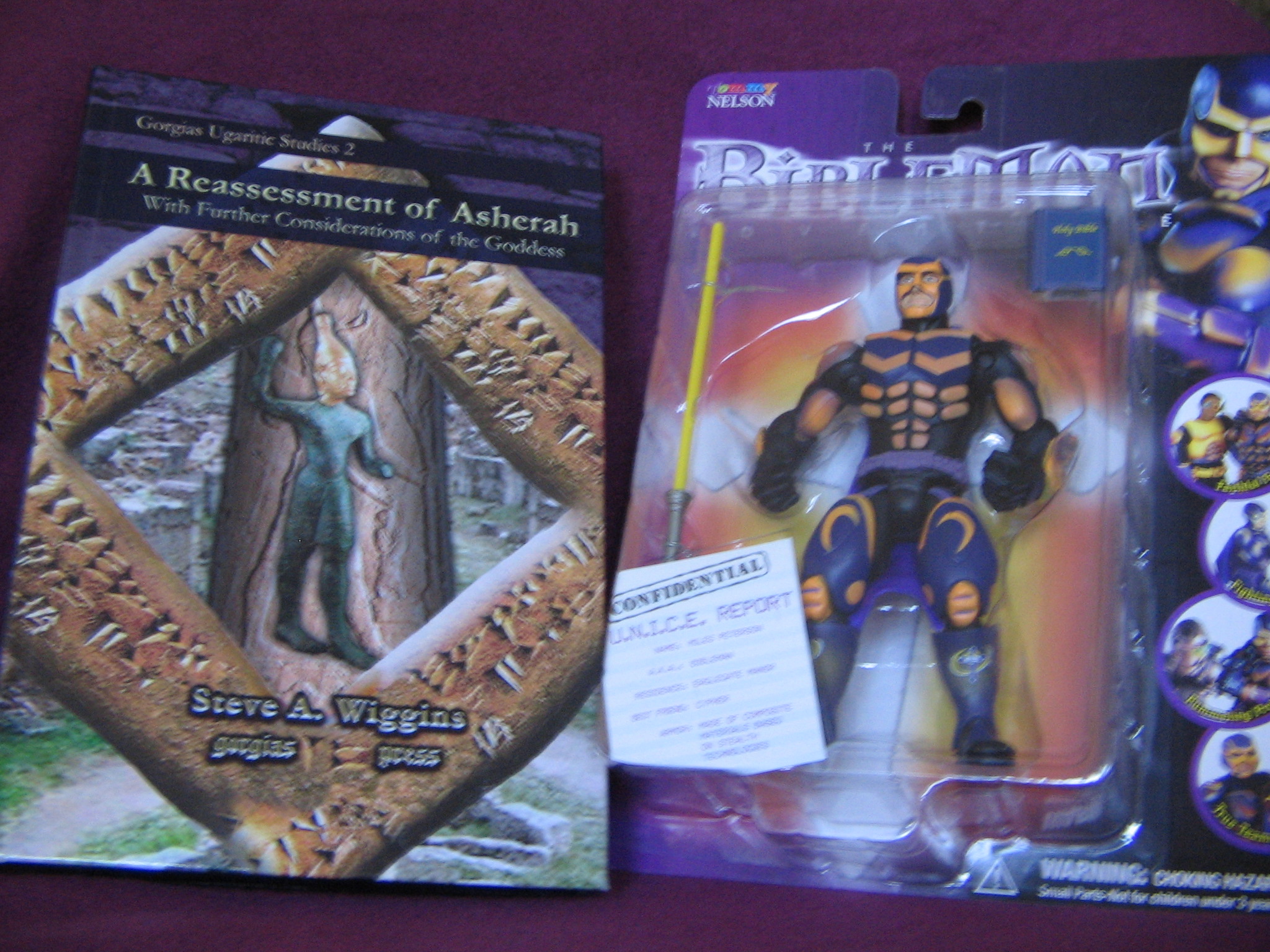
I’m sure other people have this problem.  I read hardback books with the dust jacket off.  Lest anyone accuse me of being consistent, my wife reminds me that I debated the opposite side early in our marriage.  I guess I’m complex.  In any case, the problem I face is with things pretending to be what they’re not.  This particular book is “cloth-bound.”  I own quite a few cloth-bound volumes, but this one is so slick that I keep dropping it.  It slips right through my fingers.  The reason this happens is because “cloth-bound” seldom means “cloth”-bound.  Modern binderies offer a textured paper covering that looks like cloth but it’s not.  In other words, although this book is not a paperback, it has, in fact, a paper back.  This is more than just semantics.

When looking for a house one of my non-negotiables was that it couldn’t have vinyl siding.  Vinyl siding pretends to be wooden cladding, and I require authenticity.  I don’t want a substance saying it’s something that it’s not.  You see, I grew up in a plain-speaking, blue-collar environment.  The last time I visited my mother’s trailer to get something from her former neighbor who’d moved in, it was summer.  I stepped out of the car and although I’d said maybe less than two sentences to this man in our meetings over the years his first words to me were “What are you all dressed up for?”  A bespectacled, white-bearded veteran, he was wearing a tank-top tee-shirt.  I had on a button-down that had been recently laundered.  I loved his authentic approach.  It was hot out, so why was I “dressed up”?

Book-binding actually has a fascinating history.  Books were originally sold as sheaves of paper in a “book block.”  In the early days booksellers often did the binding themselves, or customers would buy a book block and take it to a bindery of their choice.  That’s why there’s no uniformity in old book covers.  Eventually, however, mechanization allowed for books to be bound before being shipped to book sellers.  Early binding tended to be leather, which is why many Bibles are still sold that way.  I found all of this out from reading various books.  Which ones they were have slipped my mind.  Probably they were bound in paper, pretending to be cloth.  Cloth binding is more expensive than paper-pretending-to-be-cloth binding.  That’s why publishers use it.  The same applies to vinyl siding, I suspect.  Only with human beings does pretend authenticity become more expensive.  


Companies

Perhaps you’ve seen them too.  Big companies that express what they do purely in platitudes that apparently impress business types.  I’ve looked at some of their websites and after considerable poking around I can’t conjure even a ghost of an idea of what they do.  Love ‘em or hate ‘em, we all know what companies like Exxon, Random House, or even Planned Parenthood offer.  They have a function—a product or service that you can recognize.  Some of these vague large corporations seem to exist simply to exist.  And get paid for it.  It reminds me of that episode of The Simpsons where Lisa asks a corporate executive woman what her company produces and she answers “Synergy.”  We see these “centers of excellence” popping up here and there.  Excellence in what?  Excellence is a quality, not a commodity.  Or maybe I think too small.

Someone I know recently changed jobs and I looked up the company she’d switched to.  It obviously had money for a slick website and an office in Manhattan.  The list of industries it supports as clients was wide and impressive.  But what does this company actually do?  They spew platitudes.  Corporate climbers apparently like this lingo.  You’ll never catch me citing “best practices.”  Are they trying to imply that the rest of us use worst practices?  Do they mean a better way of doing things?  Why not say what you mean?  I like to play with words.  It doesn’t pay very well, but I’m wondering if I’m perhaps missing an opportunity here.

We could form a company that spins out new corporate phrases to make business sorts sound intellectual.  We wouldn’t actually need to do anything except attend company meetings about our company and throw out a few phrases likely to become trendy.  Maybe hire a publicist to get those phrases going.  Surely some company has the money to spend on that.  Those of us who actually do peddle words for a living have trouble getting big corporate money.  Publishing is a low profit-margin business.  But a company that makes you sound intelligent?  Priceless.  Growing up there seemed to be only a few standard jobs.  Of course, I lived in a small town where the options were indeed limited.  Each of them, however, had a defined role.  You knew what the job entailed.  This new company, which will have a vague name, will be in keeping with the times.  Who’s with me?  Just be sure to bring your checkbook.