Sleeping and Watching

The older I get, the more flexible my idea of reality becomes.  I’m starting to notice things that may have been happening for decades, but the reflection of age throws into sharper focus.  I’ve mentioned before that a good night’s sleep casts the day in a different light.  Such nights are sometimes hard to come by and unrelenting capitalism doesn’t offer enough “sick days” to sit out the bad ones.  But it’s not only that.  I watch a lot of movies.  Since I’ve been writing books on movies that only makes sense.  Still, I’ve begun to notice how movies stay with you after the credits roll.  Sometimes they remain the whole day until a night’s reboot comes.  This can also happen with reading, but on a slower, and most likely more profound level.

In high school, reading existentialist plays (sometimes in German), I learned to remind myself that watching a play (or movie) is observing an illusion.  Now I’m beginning to question whether that’s entirely true or not.  What enters our minds becomes part of us.  Think of the vast majority of human lives throughout history.  People living out their lives by farming and/or hunting.  Spending every day on the many tasks it takes to stay alive.  No reading.  No watching.  Their daily lives constructed their reality.  How many of us could grow our own food or build adequate shelter?  And God help us if we need a doctor.  Our lives require many other people to ensure we keep on going.  Most of them people we don’t know.  People whose realities are different than mine.

My career trajectory misfired fairly early on, and my reality has been years of trying to make sense of what happened.  From the first days of hurt and confusion I began to cope by watching movies.  For ninety minutes, at least, I escaped reality.  Or did I?  Was I enhancing reality?  What of my existentialist outlook?  Perhaps I was doing what existentialists do best—creating my own meaning.  So if I get out of the wrong side of bed, and the day feels like it really isn’t welcoming me this time around, I await the reboot.  Or when I have a few moments to sit down and watch a movie, I get up from my chair with an alternative reality surrounding me.  Perhaps I have learned something by sleeping and watching.  Maybe I have learned that reality is more flexible than I’ve been inclined to believe.  Maybe somehow this all does make sense.  Or not.


In Public

Mere days after my dentist appointment I had occasion to be back in the waiting room.  Of course I had a book with me.  Then my attention was caught by either a patient or someone waiting for a patient.  This man had not one, but two books with him.  He was poring over one of them, which was an older hardcover, like an academic.  Since I’d just posted about seeing nobody reading books, I felt I needed to publish a kind of, well, not exactly retraction, but reflection.  The sight of this man, about my age, was profoundly hopeful.  I have no idea who he was and waiting rooms are not generally where I choose to introduce myself.  I do sometimes weigh, however, the demerits of interrupting someone reading with the merits of meeting another reader.  We reading sorts can be private people, although reading in public marks us.

The book I happened to have had a bright, trade cover.  His were more somber and academic.  How could I, whose reading looked facile (it was not, but it looked like it might be) approach someone perhaps awaiting a root canal, who had some serious reading to do?  Two hardcovers bespeak serious business.  This made me reflect on another occasion in Easton.  Again, I was waiting for someone and it was summer so I sat outside on a curb, at the traffic circle, reading a book.  It was actually Toni Morrison’s Beloved.  Evening was falling.  A couple of coeds, or they seemed to eyes from my age, stopped and asked what I was reading.  I explained, and, unaccountably, they seemed never to have heard of Morrison, but were interested.  It was a teaching moment.

Back to the dentist office.  Had I missed out on the opportunity for a free lecture?  If this man were a professor, he’d likely have talked gladly about his work.  One thing I learned from being a professor myself is that people rarely ask about your work.  Yes, colleagues in the same field do, but even at Nashotah House with its small faculty, nobody seemed interested in the research of their colleagues.  As academic dean I even tried to institute a faculty seminar where we could read a paper and discuss it.  I was the only one who ever volunteered to do it.  In retrospect, it might’ve been a lost opportunity, that waiting room visit.  I’ve attended many medical appointments in my life, and finding a fellow reader at one of them was a bit of a silent gift.  I was glad to have been proven wrong.


In Praise of Paper

There’s an old saying that the tech industry might consider.  “If it ain’t broke, don’t fix it.”  I’m thinking books.  I work in an industry that’s running after ebooks, sometimes at the expense of actual books.  You know what I mean—the kind printed on paper.  With a cover.  An object.  What techies don’t seem to understand is that something happens to you when you’re reading a book.  It changes you.  Curled up in a chair with a half-pound of bound paper in front of you, you become absorbed.  Chair, person, paper.  All one.  And you’re taken somewhere else.  I’m not saying that reading online isn’t valuable.  Clearly it is.  The experience, however, isn’t the same.  Industry moguls express surprise at vinyl’s return.  They shouldn’t.  It wasn’t broke either.

After reading a meaningful book I’ll carry it around with me for days like Linus’ security blanket.  Its mere presence reminds me that something profound happened to me while I was spending time with that tome.  Especially meaningful books I hesitate to shelve away with the others.  No, I want them to hand to remind me.  To bring back, at a glance, the fascination they engendered.  Let’s call it enchantment.  Capitalism removed enchantment from the world.  In the heat of materialism’s fervor, it made all alternatives irrelevant.  That’s what’s driving the ebook craze.  Hey, I’m fine if you like to read on a piece of plastic, but please leave the option of paper for those who prefer to truly get lost.

I spend most of my waking hours (and all of my sleeping ones) surrounded by books.  When my eye falls on one that I really enjoyed, I take a nanosecond pause to appreciate it.  We all have to decide how we’ll spend our time on this weary old planet.  A good deal of it will be work, and if we’re lucky it will be doing something we enjoy.  Otherwise we have roughly five hours of waking time five days a week to squeeze in the necessary and the enjoyable.  Some will go out and party with friends, others will stay home and read a book.  Many will use devices to fill the time outside the office, whether alone or with friends.  I tend to be in the book crowd.  I’m not embarrassed by that.  Books have been good to me.  Very good.  They say reading is fundamental.  I would add that reading a real book is life itself.


Not Content

I write books.  When I want to “create content” I do it on this blog.  (And a few other internet sites.)  These aren’t the same thing.  I find it distressing that publishers are trying to drive us to ebooks where content can easily be changed, as opposed to print books.  The shelves of this room are lined with books and the technology doesn’t exist to come in and change “data” without my knowing it.  Facts are secure in print, right Ilimilku?  I’m not looking forward to a Star Wars future where there’s no paper.  I was born in the last century and, perhaps, I’ll die there too.   You see, when you write a book you have a project in mind that has an endpoint.   It may change and shift as you write, but you know what a book is and that’s what you produce.  It gets shelved and you move on to other things.  (At least I do.)

Content is something different and the creative process behind it also differs.  If I find something wrong after the fact, I go into my past posts and change it.  I’m not afraid of admitting I’m wrong.  The point of this blog is to share ideas with the world, not to write a book.  (Although, I confess that I would not say “no” if someone in publishing wanted a selection of worthwhile posts for a book… just saying.)  It amazes me how publishers have pretty much gone after the money and have forgotten what the creative process is like.  Of course, they’re having to figure out how this whole internet with free content plays into it too.  But still, my book writing uses a different fold in my gray matter than my blog writing does.  All of it feels pretty different from writing fiction too.

These things together adds up to a writing life.  I have a ton of “not for publication” writing.  This is something different again.  I suspect it will never be read by anybody, moldering away on some old hard drive after some AI-induced apocalypse.  I write it for of the same reason, I suspect, that people used to spray-paint “Kilroy was here” on things.  The book of Job, it seems to me, was the preservation of words that someone simply had to write.  We know the framing story is folklore.  But those who have words to carve with iron on lead, or engrave on a stone to last forever.  It’s more, I hope, than just “creating content.”


Doing Without

I’m a creature of habit.  Although I’m no internet junkie (I still read books made of paper), I’ve come to rely on it for how I start my day.  I get up early and do my writing and reading before work.  I generally check my email first thing, and that’s where something went wrong.  No internet.  We’ve been going through one of those popular heat waves, and a band of thunderstorms (tried to check on their progress so I could see if it’s okay to open the windows, but wait—I need the internet to do that) had rolled through three hours ago, at about midnight.  Maybe they’d knocked out power?  The phone was out too so I had to call our provider on my cell.  The robovoice cheerily told me there was a service outage and that for updates I could check their website.  Hmmm.

I can read and write without the internet.  I’m on Facebook for, literally, less than two minutes a day.  I stop long enough to post my blog entry and check my notices.  I hit what used to be Twitter a few times a day, but since people tend to communicate (if they do) via email, that’s how the day begins.  This morning I had no internet and I wondered how tech giants would live without it.  I’m no fan of AI.  I use technology and I believe it has many good points, but mistaking it for human—or thinking that human brains are biological computers—flies in the face of all the evidence.  Our brains evolved to help our biological bodies survive.  And more.  The older I get the more I’m certain that there’s a soul tucked in there somewhere too.  Call it a mind, a psyche, a spirit, a personality, or consciousness itself, it’s there.  And it’s not a computer.

Our brains rely on emotion as well as rationality.  How we feel affects our reality.  Our perspective can change a bad situation into a good one.  So I’m sitting here in my study, sweating since, well, heat wave.  It was storming just a few hours ago and I can’t check the radar to see if the system has cleared out or not.  What to do?  Open the windows.  I’ll feel better at any rate.  And in case the coffee hasn’t kicked in yet, “open the windows” is a metaphor as well as a literal act on my part.  And I don’t think AI gets metaphors.  At least not without being told directly.  And they call it “intelligence.”

Photo by Chris Barbalis on Unsplash

Sudden Monoliths

Okay, so I’ve been captivated by the monoliths.  You know, the ones that even make the New York Times.  These artistic pieces show up, unexpectedly, and unexplainedly, around the world.  The trend began in 2020 in Utah, as far as anybody knows.  These shiny pillars are excellently meme-worthy and are darlings of the internet.  And their history goes back before 2020.  Even before Stanley Kubrick.  You see, most news stories point out that Kubrick’s 2001: A Space Odyssey—one of the most influential movies ever made—established the idea of monoliths as being alien beacons (a favorite kind of beacon).   People instantly know what a monolith symbolizes.  Or at least they think they do.  But monoliths have so, so much more to offer.

Perhaps the most famous monoliths in the world are found at Stonehenge.  Mysterious and beautiful, this monolithic ring has captured the imagination for generations.  When my wife and I lived in Scotland, we made a point of seeing as many stone circles as we could.  Way up in the Orkney Islands the Ring of Brodgar was probably the most impressive of them, owing to, in large part, its remoteness.  Standing next to these tall monoliths makes you realize how small people are but also what they can achieve when they cooperate.  While the UK may be better known for its monolith circles, even older ones appear elsewhere.  Rujm el-Hiri, for example, in Israel.  Although not a circle, the monolithic pillars at Göbekli Tepe should be rewriting history books.  Why the monolith?

Freudians would point to Tuto Fela in Ethiopia or other phallic architecture, but my mind tends toward Rapa Nui, or Easter Island.  The human being tends to stand taller than wide.  Evolutionary biologists tell us that was to help us see over the tall grass of the savannah.  (And if you doubt grass gets that tall, visit my yard sometime in the summer.)  These monuments seem to symbolize more that the procreative architecture of male human anatomy.  They seem to point to our ability to see over the obstacles in our way.  They seem to say, when people are divided against each other the plains remain barren.  When they decide to work together, Stonehenge emerges.  I don’t know the motivations of these modern artists.  I do admire their ability to put these monoliths into remote locations without leaving evidence of how they did it.  I really appreciate those creatures that stand tall and have a spirit of cooperation, even if others just don’t see the point.


Or Plastic

I’m no fan of plastic.  When looking for a house a non-negotiable with me was vinyl siding—nope.  In our neighborhood several houses have plastic fences pretending to be wood. I dislike materials pretending to be something else.  I was dead-set against such a thing, but our house came with a lot of neglected outdoor woodwork.  The fence was wood and had been stained, probably just before we moved in.  Then the carpenter bees arrived.  Local pest control will spray for them, but they come back each summer and unless we have the pest store on speed-dial the bees will find new things to damage.  See, the problem isn’t just the bees.  Woodpeckers, which as a kid always seemed exotic to me, love carpenter bee larvae.  I’ve watched a downy woodpecker hoping along the fence, knocking until it finds one, and then hopping a few feet further to repeat the process for another.  (If you’ve ever watched a woodpecker at work you’d not doubt animal intelligence.)

My wife and I talked it over.  The fence was in poor repair to begin with (another thing our house inspector missed).  I finally came around to seeing why plastic might be the best solution in our case.  Not for me, but for resale value.  The former owners had a thing for untreated outdoor wood.  They’d built a new back porch, but didn’t paint or stain it.  When the carpenter bees noticed, I painted it.  I couldn’t reach the ceiling, though, being short of stature.  Well, this year the carpenter bees have gone for the ceiling.  And the downy woodpeckers have followed them.  Now, when I hear knocking, I have to run downstairs to the back door to frighten off downy.  I will buy a paint sprayer to paint the ceiling, but the bees have had a head start this summer.

So I was in my office and I heard a tapping, as of a woodpecker gently rapping.  I ran downstairs and threw wide the door.  To my surprise, nobody was on the porch.  I went back to work.  Soon again I heard a tapping somewhat louder than before.  I followed my ears to the front door.  Yes, the tapping was from out front but daylight there, nothing more.  I stepped to the edge of the porch.  More tapping.  I leaned over the railing and looked down.  A rare, and large, pileated woodpecker was going at the fence post.  I was about as startled as she was.  My wife was out on an errand and when she returned home she found selfsame woodpecker working elsewhere on the fence.  I’ve learned my lesson.  While wood looks nice, and is natural, it will soon be paper thin if we don’t do something.  It’s a big fence.  And the only option to paper is, unfortunately, plastic.


Mustard Monster

Speaking of mustard seeds, as a child something troubled my literalist brain.  Mark 4.31, “It is like a grain of mustard seed, which, when it is sown in the earth, is less than all the seeds that be in the earth…” According to subsequent translations after the KJV “less than all” reads, “the smallest.”  Of course, in Elizabethan English that’s what “less than all” denotes.  Since these words came from Jesus, and since the Bible was factually true on every point, I wondered how this error had crept in.  The mustard seed, I knew as a child, wasn’t the smallest seed.  Not by a long shot.  I knew, for example, that poppy seeds were smaller.  Why had Jesus said the mustard seed was the smallest when it wasn’t?  I was too young for the casuistry called exegesis, so a small crisis of faith emerged.

Pardon the resolution: I don’t have a macro lens any more. Mustard (left) meets chia seed (right).

The mustard seed has other roles in the gospels as well.  I still frequently recite “If ye have faith as a grain of mustard seed, ye shall say unto this mountain, Remove hence to yonder place; and it shall remove; and nothing shall be impossible unto you” (Matthew 17.20).  All of this made me curious as to the history of mustard.  While in Wisconsin we used to visit the Mustard Museum in Mount Horeb.  It’s now the National Mustard Museum and is in Middleton.  It seems that mustard, in its familiar paste form, was developed in China centuries before Jesus.  And people had been using mustard seeds as a spice long before that.  Jesus, like earlier prophets, used nature to make a point.  The problem wasn’t Jesus, it was literalism.  

Jesus also said “For as Jonas was three days and three nights in the whale’s belly; so shall the Son of man be three days and three nights in the heart of the earth” (KJV) in Matthew 12.40.  Modern translations of “sea monster”—for the Hebrew says it was a fish—forced me to dust off my Greek New Testament.  So Jesus said “in the belly of Cetus.”  Cetus was mythical sea monster, not unlike the mythical Leviathan God describes in Job 40.  Good thing I couldn’t read Greek or Hebrew as a kid!  Well, it seems we’ve gone from mustard to monsters.  If you’re familiar with the history of this blog, that shouldn’t surprise you too much.  I wonder what literalists believe about the Loch Ness Monster?  But don’t get me started on that or we’ll be here all day.


Passing Words

I’ve never counted, but it must be dozens.  Maybe a hundred.  And they have very high memory requirements.  Especially for a guy who can’t recall why he walked into a room half the time.  I’m talking passwords.  The commandments go like this:

You can’t use the same password for more than one system/platform/device/account

You can’t tell anyone your password (duh!)

You can’t write it down

You can’t send your password to someone electronically (duh!)

You must logoff your device when it’s unattended

You will be held responsible for anything done under your login

The word of the Lord.

Now, how much more ageist can you get?  I’ve never counted the number of passwords I’ve had to generate for work alone but I can’t remember much without writing things down.  Even the chores after work.  I hear that there are “keychains” you can get that remember your passwords for you.  I suspect you need a password to access your passwords.  Replicate the commandments above.

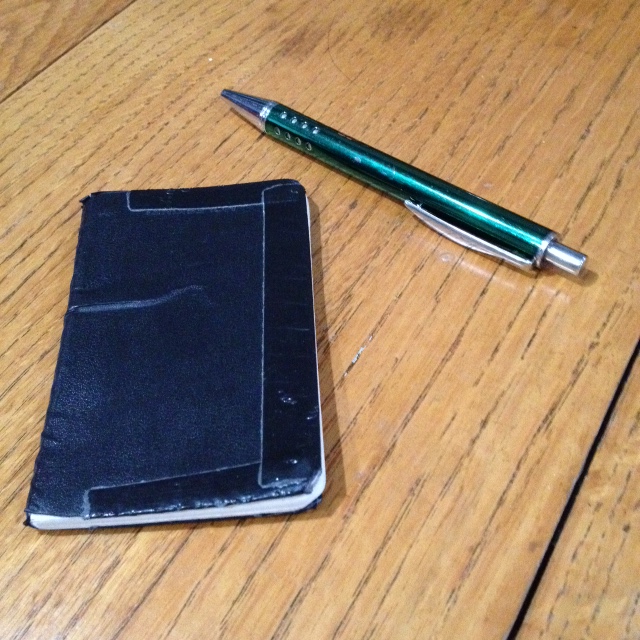
I know internet security is serious business.  My objection is that you’re not supposed to write any of this down.  I carry a notebook around with me (it has no passwords, so please don’t try to steal it) to keep track of everything from doctors’ orders to how to call the plumber if there’s a leak.  I can’t remember all that stuff.  Some of it is personal information, but with everything you’re expected to keep in memory these days—at the same time we’re unleashing AI on the world—is madness.

A friend pointed out that AI books are written without authors.  If I remember correctly, my response was “AI has great potential, but let’s leave the humanities to humans.”  I hope I’m remembering that correctly, because I thought it clever at the time. I wish I’d written it down.  Those who make the rules about passwords aren’t as close to their expiration date as I am.  My grandmother was born before heavier-than-air flight took place and died after we’d landed on the moon.  Guys my age regale their kids (and some, their grandkids) by telling them telephones used to be attached to walls and you could walk away from technology at will.  Now it follows you.  Listens to you even when you’re not talking to it—our car frequently interjects itself into our conversations.  At least she isn’t asking for a password while I’m driving.  I couldn’t write it down.  Our love affair with technology is also driving.  More often than we suppose.  It’s driving me too… driving me crazy.


Personal History

Being an historian by disposition has its own rewards.  I relate to the chronicling monks of the Middle Ages and their eagerness to record things.  On a much smaller scale, I try to keep track of what has passed in my own small life.  As we all know, most days consist of a stunning sameness, particularly if you work 9-2-5.  Although your soul is evolving, capitalism’s cookie-cutter ensures a kind of ennui that vacation time, and travel in particular, breaks.  Travel is expensive, however.  A luxury item.  It’s also an education.  My wife and I began our life together overseas, living three years in Scotland.  We traveled as much as grad students could afford.  Gainfully employed in the United States, we made regular summer trips to Idaho, and often shorter trips closer to home in Wisconsin.

We repurposed an old, spiral bound, three-subject notebook to record our adventures.  It spanned twenty-two years.  When we moved to our house in 2018, this notebook was lost.  (A similar thing happened with an Historic Scotland booklet where we’d inscribed all the dates of properties visited.  It vanished somewhere in central Illinois in 1992.)  Recently, looking for an empty three-ring binder for my wife to use, I unexpectedly came across our old three-subject notebook.  The relief—maybe even ecstasy—it released was something only an historian could appreciate.  Here were the dates, times, and places that I thought had been lost from my life.  In that morass of years after Nashotah House my mind had gone into a kind of twilight of half-remembered forays to bring light to this harsh 9-2-5 world.  I carried the notebook around with me for days, not wanting to lose sight of it.

Those of us who write need to record things.  I’ve never been able to afford to be a world traveler.  The company’s dime sent me to the United Kingdom a few times, but overseas after Scotland has been more a reverie than a reality.  But now, at least, I could remember our domestic trips.  The notebook included ventures I’d forgotten.  You see, when you get back from a trip you have to begin the 9-2-5 the very next day, particularly if your company isn’t fond of holidays.  (This explains why I write so much about them.)  Pleasant memories get lost in the mundane cookie-cutter problems of everyday life.  And yet I could now face them with that rare joy known to historians.  I had a notebook next to me, ready for transcribing.  It was going to be a good day.


Stalking the Stalker

You had to’ve seen this coming.  The Night Stalker introduced how Carl Kolchak, hard-nosed reporter, became a believer in the supernatural.  This highly-rated television film led to a sequel, The Night Strangler, which appeared the following year.  It also did well.  Ditching a third script by Richard Matheson, ABC decided on a series, Kolchak: The Night Stalker.  The subtitle was probably considered a necessary reminder that the movies had done very well.  It also transferred the stalker epithet onto Kolchak.  But I’m getting ahead of myself.  The Night Strangler shifts the action to Seattle where an elixir-of-youth-drinking monster is murdering young women to keep himself alive.  Once again the police and government officials cover up what’s really going on, for fear of losing tourist dollars.  There is a bit of social commentary here.


This movie reminded me of an In Search of… episode on Comte de Saint Germain, who, as a child, I assumed was a Catholic saint.  Saint Germain (just his assumed name) was an alchemist who claimed to be half a millennium old.  He seems to be, guessing from the number of books that treat him as an actual saint, just as popular now as he was in the seventies.  At least among a certain crowd.  And it was in the seventies that this movie was released.  Saint Germain’s enduring popularity all but assures no academic will touch him.  No matter, we have Kolchak to fill in the details.  And Richard Matheson was a smart man.  The Night Strangler does have a few pacing problems, but it certainly is a film worth seeing, even though it exists in that shadowy world of telinema (the combined forms of television and cinema).

Kolchak succeeds by believing in where the facts point, although the conclusions are supernatural.  In fact, watching The Night Stalker I couldn’t help but think of those who claim to have staked the Highgate Vampire.  That’s some strong conviction.  Indeed, the will to believe is more powerful than most people would like to admit.  Our minds contribute to our reality, but we insist that minds = brains, despite our inability to define consciousness.  That’s why I liked shows like In Search of…  As a teenager I couldn’t get enough of it.  I purchased all the accompanying Alan Landsburg books with my hard-earned summer income, skimping, as always, on the school clothes that I had to buy for myself.  Funny, it seems that my mindset hasn’t changed that much since the days of my youth.  Or maybe a sign of maturity is recognizing you were closer to the truth than you realized, back when you started the quest.


Mystic Thoughts

Those who know me primarily from my writings on horror are perhaps whiplashed when I muse about spiritual matters.  I don’t mean just religion, but spirituality—the two are quite different.  If life had unfolded differently I would likely have ended up as a mystic.  The problem is “rational mystic” is an oxymoron in most minds.  Either you’re one or you’re the other.  To become a proper mystic, in any case, you can’t be bothered with such things as secular work.  Mysticism—direct encounters with the divine—requires development and practice.  You can’t always control when a trance or vision might hit you.  What if it comes during a meeting?  Say your performance and development review at work?  You see the problem.

I seriously considered becoming a monastic as a young man but I had a problem.  I was a Protestant.  Protestantism was based on the idea that Catholic practices, such as monasticism, were wrong by default.  Miracles don’t happen—haven’t done since New Testament times—and God is a biblical literalist.  Why spend valuable church funds, then, on establishing monasteries?  Still, mystical experiences happened to me.  (You’ll have to get to know me personally to find out more about that.)  I talked to my (Protestant) professors.  “You don’t want to become a mystic,” I was told.  “They always have trouble with the church.”  Eventually I became an Episcopalian, a tradition that was more open to mysticism.  It became clear in 2005, however, that the Episcopal Church wanted nothing more to do with me.  Besides, I’m a family man.

Monasteries for married folk is an idea whose time has come.  Monasticism is based on the idea that you need to isolate yourself from the world’s distractions to grow spiritually.  To me, as I noted recently regarding sacraments, the “distraction” of marriage isn’t the problem.  It’s the constant need to earn money.  More and more money.  Monasteries became wealthy because other people were glad to pay money so that someone else could do the spiritual heavy lifting for them.  You can get into Heaven on borrowed virtue.  (Even Protestants believe that.  If you doubt it, get a degree or two in theology and you’ll see.)  So why not provide monasteries for those poor souls that just don’t fit into the capitalistic ideal?  I have the vision that such places would become havens for artists of all stripes.  And that, with the goodwill of society, locations where your needs were met for an exchange of goods—building good spiritual karma for a world where most people are content with trying to get rich—might just work.  It’s an idea whose time has come.  Who’s with me?

Photo by Luís Feliciano on Unsplash

Have It All

You can’t have it all.  I know, I know.  People are all the time saying, “I want it all.”  But you can’t have it.  This is where my Buddhist side kicks in, I guess.  It’s the constant desire that makes people unhappy.  And you don’t have to take my word for it.  About having it all, I mean.  The Catholic Church backs me up on this.  There are seven sacraments.  If you follow the rules most strictly, no one can receive all seven.  Holy orders and marriage, at least for much of church history, have been mutually exclusive.  As Paul was rattling on about spiritual gifts in one of his letters, he makes the point that nobody gets them all.  And you don’t even get to choose.  

Humans are acquisitive.  It’s probably an evolved trait.  Think of squirrels hoarding more acorns than they can ever eat.  (By the way, squirrels are the real heroes when it comes to planting trees, and they don’t even mean to do it.  It just comes naturally.)   Life gives us what we need for as long as we have time on this earth.  If you’re reading this you’re living proof.  We fear for the future, however.  What if tomorrow something I need goes away?  I’ve lost jobs and I know the desperation that immediately sets in.  So we want to store up more than we need.  But those sacraments.  Those spiritual gifts.  They remind us of something important.  Something a carpenter from Galilee once said.  It’s essentially the same as therapists have told me: be in the moment.  You have what you need right now.  As a coda: tomorrow will take care of itself.

Those of us who can’t stand incompletion (don’t show me a series of books with one missing!  Please don’t.) suffer from this quite a lot.  Here’s where we need to nod to Siddhartha again and take a deep breath.  Center yourself.  When I was a seminarian discovering Roman Catholicism for the first time, really, and that mostly through the Episcopal Church, I wondered about the sacraments and why, if they were things we should strive for, we couldn’t have them all.  By seminary I was pretty sure I wanted the matrimony route.  As my wife can attest, however, I still crave a monastic existence from time to time.  Torn between two sacraments and I’m not even a Catholic.  I guess I’ve known all along that you can’t have it all.  Those who try for it, if they’re lucky, end up under the Bodhi tree.

Photo by Mattia Faloretti on Unsplash

Politicking

It was weird seeing my face on a 27 x 40 poster.  When I went to give my campaign speech I was wearing dress clothes that I’d bought at Goodwill.  My “campaign manager” said I did a great job, being witty and somehow confident.  I didn’t win.  Still, my stint in politics was not yet over.  The next year one of the presidential candidates asked me to be his campaign manager.  I took on the job with gusto, and, claiming no credit, I would note that he won.  So where was all of this politicking going on?  At the United Methodist Church Conference Youth Council.  I ran for council secretary one year, and lost.  I kept the poster with my face on it for a few years but the ink faded and the paper was cheap, and besides, I’ve never considered myself much to look at.

Thinking about the resources allocations (I didn’t pay for the poster—couldn’t have if I’d wanted to), I have to wonder about the priorities of the church.  Of course, it was only much later, after I’d gained significant seminary experience myself, that I realized just how political a job “ministry” is.  Yes, I had students while I taught in seminary, already strategizing on how to become bishop.  It was a political game.  Such games are no fun without power.  And money is power.  So maybe the Western Pennsylvania Conference was funding some learning experiences on the impressionable minds of the young.  It just took me a few extra years to catch on.  (Some things never change.)

I dislike politics.  Even now I wouldn’t feel compelled to do anything beyond voting my conscience were it not the clear and obvious danger that we’re in, courtesy of what used to be a conservative political party.  Any party that can’t keep a demagogue from receiving its nomination has embraced fascism and that’s a perilous road to travel as Germany and Italy discovered about a century ago.  My dislike of ecclesiastical politics certainly played a large role in my decision not to pursue ordination.  I’ve been a church insider, and what happens at board meetings?  Politics.  The person in the pew often doesn’t realize just how political religion is.  I learned Robert’s Rules of Order from church meetings.  My nomination to elected office in the organization led nowhere.  I was left wondering if there’s anywhere left that politics don’t apply.  The print on the poster faded.  The very last time I unrolled it, it was completely blank.


Tech Warning

My moon roof is open.  That’s what the late-night alert says.  Thing is, I don’t have a moon roof.  Maybe I should go out to the garage and check, just to be sure.  You see, these new cars, which are as much computer as they are a means of conveyance, are subject to glitches just like the computers at work always seem to be.  And if this is true of a massive and lucrative company like Toyota, how can the rest of us really trust what our devices tell us?  After all, mainly they exist to sell us more stuff.  So whenever we take the Prius out, after it’s put away I get some kind of warning on my phone.  Nearly every single time.  If somebody’s been sitting in the back seat—or even if a bag was resting there—I’m cheerfully reminded to check the back seat once I get into the house.  I appreciate its concern and when I grow even more forgetful I may need it.  But that moon roof…

I use and appreciate technology.  I believe in the science behind it.  It makes life simpler, in some ways.  Much more complex in others.  I confess that I miss paper maps.  Do you remember the thrill of driving into an unknown city and having to figure out how to get to an address with no GPS?  Now that seems like an adventure movie.  Our cars practically—sometimes literally—drive themselves.  I’m no motor-head, not by a long shot.  I do remember my first car that didn’t have power steering or power brakes.  It had a stick-shift and you had to wrassle it at times.  Show it who was in charge.  With technology we’ve all become the serfs.  It breaks down and you have to take it to an expert.  Not quite the same as changing a tire.

I worry about the larger implications of this.  As a writer I worry that my largest output is only electronic.  Publishers don’t seem to realize that those of us who write do it as a way of surviving death.  We have something to say and we want it etched in stone.  Or at least printed on paper.  Tucked away in some Library of Congress stacks in the hopes that it will remain there for good.  I often think of dystopias.  The stories unfold and ancient documents—our documents—are found.  But unless they get the grid up and running, and have Silicon Valley to help them, our electronic words are gone.  It’s as if you left the moon roof open, even though you don’t have one.