Holy X

It took several years, but we finally closed the X-Files.  It was shortly after we bought the house, I believe, when we decided to watch the series the whole way through.  This was prompted by my wife giving me season eleven as a present, and I was wondering if I’d lost track of the thread.  We recently finished the last episode of the last season, with the movies interjected into the correct locations.  It was an impressive franchise.  I didn’t watch The X-Files when it originally aired.  We didn’t watch TV in those days (Nashotah House didn’t have cable and reception was awful), but another reason was that I was unmercifully teased for being interested in such things as a kid, and now it was trendy.  Once I got started, though, I was hooked.

Copyright: FOX; fair use screen capture

A few things struck me this time through, but one of the bluntest instruments to hit me was just how profoundly religion was interlaced with the series.  Many episodes involve religion directly, and others address faith and belief, even if outside the confines of established religion.  Since I tend to pause to reflect, I come a bit late to the table most of the time.  If I’d been on the ball, and if I’d begun writing books on horror sooner, I might’ve found a project in the religion of the X-Files.  As it is, several books have been written analyzing the series.  Maybe that’s where I’ll turn next.

You see, the original projected end for the series was season seven in 2000.  The mythology was wrapped up, and David Duchovny was leaving the show, which was, in essence, the story of Fox Mulder.  Two more seasons were ordered, however, with Fox on the run.  Things again were wrapped up in season nine.  Season ten came to air in 2016 and we watched it in real time, with primitive streaming.  In 2018, however, moving ended up being chaotic, and any watching would have to wait.  It seems pretty clear that, even with endless resurrections of the Smoking Man—Mulder’s Darth Vader—that the crisis of the world’s end (on which season ten ended) had finally been resolved.  That season, however, was eerily prescient regarding the pandemic.  Season eleven was a strong pushback against the Trump presidency with its “fake news” and constantly shifting facts.  Many of the episodes note how dangerous this is.  At the end it seems that the miraculous son, dead and resurrected, immaculately conceived, survives, as do the father and, if it’s not reading too much into it, a holy spirit.

Influential Horror

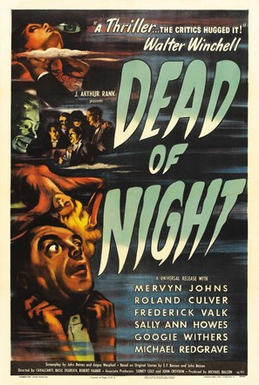
Media has a tremendous effect on society.  We all know that, and every four years elections prove it time and again.  Like an infinite loop or Mobius strip.  The Brits knew this well.  During the Second World War (which we seem eager to repeat), it was against the law to produce horror films in the UK.  Such things can demoralize, don’t you know, old chap?  The first British film to claim horror’s reopening was Dead of Night, released in 1945.  Germany had surrendered in May and Dead of Night, like a breath being held, was released in September.  Although hardly scary by today’s standards, it was an enormously influential film.  It’s an anthology with a framing story that ties all the pieces together.

Walter Craig is an architect called to visit a farmhouse that requires renovation.  Upon arriving, although he’s never been before, all the people at the house are familiar to him from a recurring nightmare he has and vaguely remembers.  He feels that something bad will happen since his dream seems to be a premonition.  Meanwhile, each of the guests tell their own uncanny stories.  Since this is horror, we know that the nightmare will exact its due.  Craig ends up murdering one of the guests before waking in bed.  It was his nightmare.  He receives a call to come to a farmhouse that requires renovation.  When he arrives it reminds him that the nightmare is about to play out in real life.

The movie influenced many others.  The most famous segment—a ventriloquist that goes mad when his dummy takes over—was fuel for many haunted doll stories.  One of the tales was based on a real-life murder than had taken place in Britain in 1860.  As I learned from Wikipedia, however, the most stunning effect the movie had was on cosmology.  You may remember from science class that a debate about the origin of the universe was fought between two models: the Big Bang theory and the Steady State theory.  What they don’t teach in science class is that Fred Hoyle developed the Steady State theory based on this movie of the recurring loop of a nightmare that the dreamer is helpless to escape.  I’ve been saying for years that horror is due a lot more respect than it’s given.  These movies, as an integral part of the media, do have a very real effect on the world around them.  Dead of Night is a good example of that.  And it’s still a bloody good film, after all these years.


Wonderful Impossibility

I used to tell my students that a semester break without reading a book that challenged your assumptions was wasted.  I tried to lead by example, but jobs are such fragile things.  Since I have no semester breaks I try to read books that push the limits more frequently.  I’d heard about Carlos Eire’s They Flew before the author had settled on a publisher.  (I don’t know him personally, but would be glad to.)  In case the title doesn’t do enough heavy lifting, the subtitle A History of the Impossible might help.  Yes, we’re stepping into the world of the post-secular here.  It’s a wonderful place.  Although much of the book deals with early modern cases of levitation, the study ranges wider than that.  Written by a respected historian, this is a very important book.  For many reasons.

I am glad to see Yale University Press joining with Chicago and some noted others (Rowman and Littlefield, for instance) in challenging a paradigm that is no longer upheld by science.  I can hear the howling already, but if you read carefully, with an open mind (which is required by science) you’ll quite possibly learn something here.  Our minds do influence our reality.  We haven’t figured out how because secularism ends the discussion with scorn.  That was true of the study of UFOs as well, until the U. S. Navy said, “Nope.  They’re real.”  (It only took about seven decades, so don’t expect instant results.)  We cut off our possibilities when we mock things out of habit.  I remember the Turok comic where one character said to another (give me a break—this has been five decades and I can’t recall all the names) “Fools scoff at what they don’t understand.”  Truer words have never been penned.

The impossible happens when scientists aren’t there to witness it.  It sometimes happens when they are.  Doubt that?  Read about the Pauli Effect.  Or call it gremlins, the choice is yours.  It’s real in either case.  Academics are often among the last, with the exception of Trump supporters, to see what’s been staring them in the face all along.  I’ll say more about this book on Goodreads, but let me float a hope here.  I want to go back to that indefinite article in Eire’s subtitle.  This is A History of the Impossible.  May more follow.  Others, such as Jeff Kripal, have been doing similar work for many years now.  We can ignore it, or scoff at it.  But I think that character in Turok got it right, even if I can’t remember his name.


Technologies of Hope

Having an immediate family member with cancer means that you look for hope everywhere.  Those who’ve brushed up against this family of diseases hopefully know that support groups abound.  Given my schedule, I don’t get out much on workday evenings, but we recently attended a survivors’ event hosted by the Andy Derr Foundation (donations accepted).  Two prominent local oncologists spoke and their tone was hopeful—always hopeful.  What really struck me was how much cancer treatment has progressed even just in the last five years.  The “cure for cancer” does not yet exist, but many technologies of hope do.  I sat there awestruck.  There are women and men spending their lives working to treat what used to be nearly always a fatal condition.  It was inspiring.

On the way home I was musing about how much we could advance in human health care if we had the budget of the military.  A vlogger we follow, John Green, happens to be a bestselling fiction author.  He is now writing a nonfiction book on tuberculosis.  This disease, for the most part, is completely treatable.  His efforts have led to lowering the cost of supplies to treat it for cash-poor countries.  I suspect he knows the same thing.  Our government decides which priorities it will fund.  Our fear—let’s be honest about this—funnels billions and billions to military budgets.  (And you wonder why I watch horror movies?)   I’m a dreamer, I confess.  But what if, world-wide, we put our money into medical budgets?  Can you even begin to imagine where we’d be by now?

I know most medical personnel are paid quite well.  My family member’s cancer medication costs more than she makes in a year, per single dose.  The technologies of hope those doctors were describing would be phenomenally expensive.  If only as a nation we had trillions of dollars at our disposal.  If only.  None of this, of course, should overshadow the tremendous work being done by nonprofits like the Andy Derr Foundation.  Channeling hundreds of thousands of dollars into research and treatment, they are making a difference.  Those beautiful survivors there that night are proof of the lives they’re helping save.  We have the ability to do amazing things.  If we support, and love one another, we can overcome a scourge that many, many families will experience, if they haven’t already.  Good work is being done.  And the good will behind it is cause for great hope.


Morte d’Author

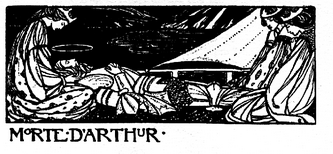
I recently learned of Roland Barthes’ essay, “The Death of the Author.”  Originally written in French, Wikipedia warns it’s not to be confused with Le Morte d’Arthur.  Or is it?  Barthes’ idea is that to truly appreciate a piece of literature you must dissociate it from its author.  I’m of conflicted feelings about this.  To truly understand an author you should read everything they’ve written.  Perhaps that’s a task best left up to biographers and historians.  I have trouble, especially when an author’s name is well known, and perhaps the very reason I purchased a book, of leaving the author out of the equation.  On the other hand, sometimes I’ll read literature merely for the experience, and the author is often someone I know nothing about.  If the book moves me, however, the first thing I start to research is the author.

Said author may not give the ultimate meaning to the story, but I believe it’s a more subtle  interaction than “La mort de l’auteur” might suggest.  It’s not unusual to enter into parasocial  relationships with an author.  In fact, I suspect it’s quite common.  After reading a Neil Gaiman novel I sometimes think we’d recognize each other across a crowded room.  Compelling writing will do that to you.  And from a writer’s perspective, what you write does contain part of you.  Captured in literary form.  As much as—no, more than a photograph does.  An author does not determine the final meaning of what s/he writes, but they mean something by writing it in the first place.

When writing fiction I often find myself exploring themes that require other stories I’ve written to give them fuller texture.  Perhaps this is why finding publishers is so difficult.  I’ve had people tell me that they understand my nonfiction better after they get to know me.  There’s a natural progression here, in this age of endemic loneliness: a story, blog post, or book catches your attention.  You want to know more and what do you do?  Await the death of the author or reach out to the writer?  I’ve done both, and I generally find that reaching out to an author can be satisfying.  It depends, of course.  Some don’t like to be disturbed by those they don’t know, their parasocial paramours.  Of course, there is a way to get to know an author, even remotely.  Read what they write.  It won’t give you the whole story, of course, but the more of their work you read the better you’ll get to know them.  Thus I’m conflicted about “La mort de l’auteur.”

Image credit: Florence Harrison, public domain via Wikimedia Commons

Eclipse 2024

Eclipses.  They’re fully explainable.  Or are they?  Yesterday’s solar eclipse, with totality within driving distance of many Americans, led to an inexplicable need to see it.  April, we’re told, is the cruelest month and upstate New York is known for its “ever-changing skies.”  I admit I was skeptical.  Together with some friends we arranged to meet near the umbra, in Penn Yan, and to drive from there to totality up on Lake Ontario.  As is typical in New York, the day started out fair, with a few high clouds.  It was chilly, but this is April.  Our destination: Fair Haven Beach State Park.  The location was nice; we arrived early and found a good spot.  The clouds, however, were willful and wanted to remind us, like last week’s earthquake, that we’re not really in charge here.

As the day went on—totality for us was 3:20 p.m.—more and more people came into the park.  To its credit, with what must be a limited state budget, it absorbed many eclipse seekers without any trouble.  By 3:00 the cloud cover was heavy-ish.  Our friends had heard a sponsored eclipse speaker, however.  Totality was nothing like even 99%.  This would be of a different magnitude, even with clouds.  I remember three previous eclipses.  One in school with the pin-hole method where you really don’t see anything, one in Wisconsin after teaching one morning at Nashotah House, and the 2017 which I saw in midtown Manhattan.  None of this prepared me for totality.  Around 3:18 it started to look dusky.  We could catch glimpses (but no photos) of the crescent sun.  Within seconds it was completely dark.  It was another of those transcendent earthly things, like the earthquake three days earlier.

Perhaps I’m getting old enough to realize that you can’t really describe such feelings.  Maybe I’m getting sensible enough to understand such things are called ineffable for a reason.  All the planning, worrying, anticipating, was for this moment.  Yes, there were clouds overhead, but the park was full of cheering people.  They too had come here for something extraordinary and to my surprise I found tears in my own eyes.  I captured no photos of stunning clarity, but I had experienced something I’d heard about since childhood but had only glimpsed in the most crude of facsimiles before.  We were able to experience a kind of rebirth that comes only after night.  Conditions weren’t ideal, but are they ever?  And an encounter with the numinous always comes on its own terms.

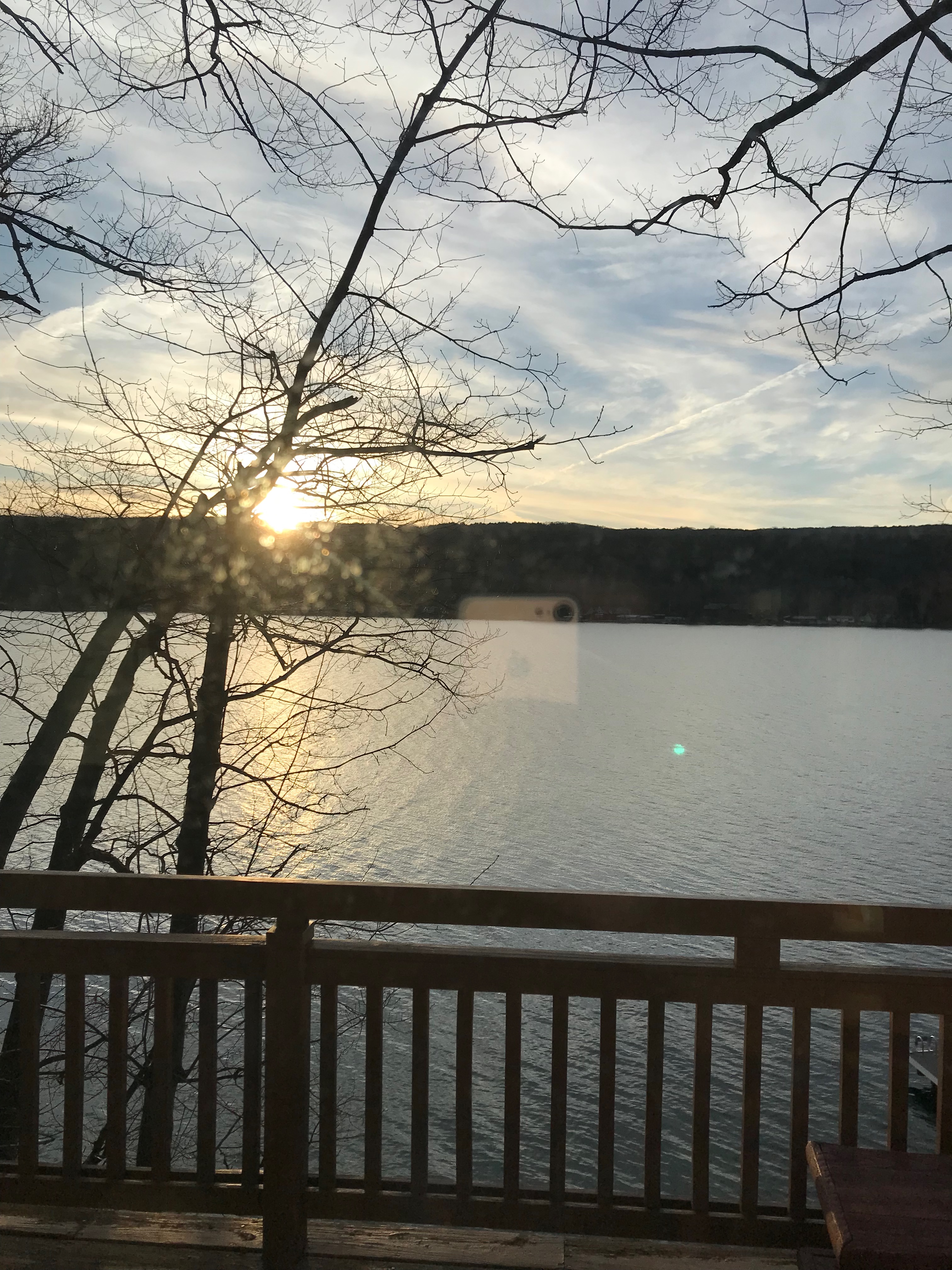
The sun, hours before being eclipsed

More Omens

Brushing up on my eschatology, I watched The Omen again.  The original, that is.  One of the underrated aspects of cinema is that people learn their theology from it.  Movies tend to be more memorable than sermons.  It is opined among some that The Omen is responsible for the prevalence of dispensationalism among many Americans.  I’d put a bit of a finer point on it in that The Late Great Planet Earth was being raptured off the shelves all the way through the seventies (I personally bought two copies) and it caused a feedback loop with The Omen.  Many mainstream ministers, without benefit of a Fundamentalist upbringing, were caught unawares, I expect.  Scholars of religion have noted how several aspects of the narrative—the character of “the Antichrist,” the rapture, indeed, the Apocalypse—have been read back into the Bible by credulous believers.

What I found interesting in this viewing is the debt owed to The Exorcist.  Of the two there’s no doubt as to which is the superior film.  The name Damien in The Omen, I read somewhere once upon a time, was taken from Fr. Damien Karras.  During the late seventies and early eighties, unruly boys were routinely called “Damien” by frustrated camp counselors and others.  Apart from this nod, if true, is the fact that the abruptly introduced character Karl/Carl Bugenhagen is an archaeologist exorcist.  (He’s the guy who gives Robert Thorn the knives, if you haven’t seen it for a while.)  The scene shot in Jerusalem (said to be Megiddo) underscores that Fr. Merrin is also being channeled here.  I suspect that the film was getting a bit long in the tooth and some explanatory material on Bugenhagen was left out.

It has also been suggested that the number 666 entered popular culture because of The Omen.  I would temper that a bit with the fact that a lot of people were reading Hal Lindsey’s new apocalypse as well and the two of them got the job done.  There’s no doubt that after the film the evil number took off in a direction that would’ve left John of Patmos scratching his head.  This brings me back to the point that belief is influenced—sometimes constructed—by movies.  The Omen was a huge success at the time, despite the fact that many critics (also not raised Fundie) thought the premise was silly.  Most people aren’t film critics.  The Bible can be pretty impenetrable as well.  Preachers may not be inspiring.  Movies, however, wrap it up neatly and tell you what to believe.  Perhaps it’s some kind of sign.


Squeaky Clean?

A New York Times story, apart from the expected misunderstanding of actual Evangelicals, made me sad.  The article points out that, especially since 2016, “Evangelicals” have taken to soft-core porn, cussing, drinking, and premarital sex.  In other words, Trump has given them license to behave like secular folks while still claiming the name “Evangelical.”  Why should this make me sad?  I lament the loss of place for those who grew up, like me, striving for clean living.  It’s an image—a mirage—rather than a reality, of course.  But still, if conviction holds, you can get pretty close to the ideal.  That vision of life has been occluded by a guy who runs for President because he cares only for himself.  Jesus, on the other hand, was all about caring for others.  Going as far as, if the Gospels are to be believed, sacrificing his own life.

Like fiscal conservatives, such legitimate Evangelicals now have no public voice.  One of only two political parties has become identified with an individual rather than ideals—what used to be called a platform.  I have Republican friends.  I grew up identifying as a Republican.  I also grew up as an Evangelical.  I studiously avoided things like bad language, sex, tobacco, and alcohol.  Even at Evangelical Grove City College I was a bit of an outlier for how seriously I took all these things.  Of course, studying history can be dangerous, particularly for ideologues.  Still, “clean living” had its own virtues.  Those who continue to try to live that way are swimming into a rip tide, it seems.  For some Trump seems like the Second Coming, sans the white horse.  And this, above all, is sad.

There are those who claim, often loudly, that religion is bad.  I agree that when a religion tries to force others to obey its standards it can quickly become evil.  Still, the baby should be left behind when the bathwater’s discarded.  Religion has led to much good in the world.  Hospitals, charities, and yes, “clean living.”  These things, along with retirement homes and affordable apartments for low-earners in their autumn years, are necessary to pick up the slack that the government leaves.  It is cause for sadness that the clean living camp has succumbed to Trump-style hypocrisy.  Heck, religion gave us the word “hypocrisy.”  The standards of classical Evangelicalism are often impossibly high.  If we look at current Evangelical leaders we find many, many skeletons in a house with many closets.  And a wagging finger warning the young, “Do as I say, not as I do.”


As We Know It

The end of the world, as we know it, is really more recent than we think.  Yes, Christians of a certain stripe have been looking for the second coming since the first leaving, but that detailed map of how we’re living in the end times, courtesy Hal Lindsey, is a new thing.  Here are the fast facts.

First and second centuries, Common Era: early Christians tended to think Jesus would “be right back.”  When that didn’t happen they began to look in the Bible for reasons why and started to develop theologies to cover the bases.

Late Antiquity to the Middle Ages: settled in for the long haul, theologians developed eschatology.  Although that sounds like a disease, it’s actually a system for thinking about how the end of the world will come down.  There were conflicting theories.  The two main flavors were premillennialism and amillennialism.

Early Modernism: Protestants came along and searched the Bible for minute clues to make into a system.  In response, postmillennialism became a thing.  Now there were three options.  Various phases were discussed: tribulation, resurrection of the dead, and the already-met millennium.

1820s: William Miller, a Baptist minister, began number-crunching and figured the end of the world would take place by 1843.  His followers, “the Millerites,” continued on after what was called “the Great Disappointment.” 

1830s: John Nelson Darby, a Plymouth Brethren leader, came up with Dispensationalism, a scheme that divides history into eras, or “dispensations.”  He thought we were living near the end of that scheme about 200 years ago.  The idea of “the rapture” was added to the other phases.

1917: Cyrus I. Scofield, published the Scofield Reference Bible.  A man with little formal education (and a “colorful” background), he applied Darby’s dispensations in his Bible, giving the United States a road map to the end times.

1970: Hal Lindsey, a seminary educated evangelical, published The Late, Great Planet Earth.  It became the best selling book (classified as nonfiction) for the entire decade.  New ideas, such as “the Rapture” and “the Antichrist” began to be read back into the Bible.  The book was made into a movie.

1976: David Seltzer, a Jewish screenwriter, penned The Omen.  The movie made use of Lindsey’s adaptation of Scofield’s adaptation of Darby’s ideas.  The wider public, seeing it on the big screen, believed it was about to happen.

2000: the world still didn’t end, either with a second coming or Y2K, as many predicted.  Round numbers will do that to people.  It didn’t stop predictions of the end of the world.

2012: the Mayan calendar gave out.  A movie was made.  People believed. Apocalypse averted.

2024: you fill in the blanks.

Image credit: Albrecht Dürer

Hellish Fears

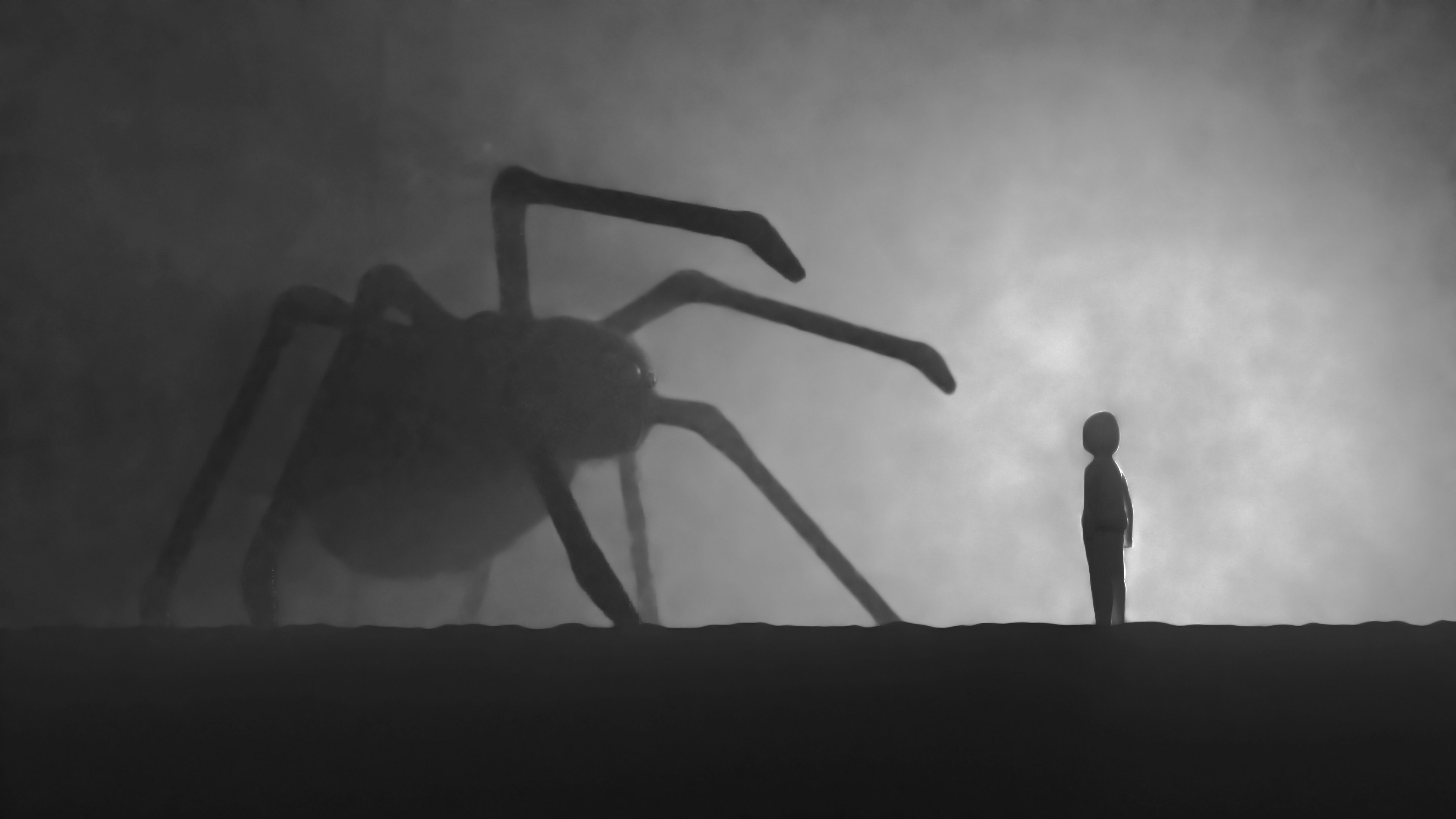
Aporripsophobia, the fear of rejection, and the fear of punishment (mastigophobia, or as I prefer, “spankophobia”) are closely related.  They define me.  Much of this comes from the fear of Hell, which I internalized early in life, along with the Calvinistic theology that backed it.  Some have thought that I’m “thin skinned” or afraid of criticism.  That’s not quite it.  I’m afraid of what criticism implies—I did something wrong and therefore may be punished for it.  What brings this on, all of a sudden?  Well, as I was getting ready to jog the other day a police car stopped in front of our house on a routine traffic violation.  My immediate thought was that I had done something wrong.  They were here for me, not the guy whose car they were attending.  Then this brought back that time in Boston.

I moved to Boston on my own, with all I had in a VW Beetle (old style).   I know now that the headache I had after that long drive was a migraine.  (I’ve had maybe a half-dozen in my lifetime, and they’re unmistakable.)  I parked the car, stumbled into my new apartment and went to bed.  The next morning I had a ticket for parking with the left tires to the curb (against the law in Boston).  I didn’t know it was illegal.  Even with a migraine I would’ve not parked that way had I known.  The receptionist at the police station actually said to me “Ignorance of the law is no excuse.”  That terrified me.  I thought it was only something Gilligan said.  If you don’t know all the laws how can you possibly avoid punishment?  And isn’t punishment rejection?

Some think I always have to be right.  They may not know the underlying cause—being wrong is to be subject to punishment.  And punishment leads to Hell.  When I was in Kindergarten the first time, I was held back partially because I was four but partially because I colored the triangle in the left corner purple instead of yellow, opposite to the verbal instructions.  It was because I don’t know my right from my left—I still don’t.  To me that first ever school correction was seared forever into my gray matter.  I’d done something wrong.  I was held back in school.  More likely than not, I was going to Hell.  I’ve known people to suggest, as does Richard Dawkins, that raising a child in a religion is child abuse.  I understand parents’ motivation, however.  You don’t want your child to go to Hell.  If they end up living in it all their lives I guess it’s a small price to pay.

Photo by Vadim Bogulov on Unsplash

Which Witch Where?

I like to think of myself as a kind critic.  I’ve been on the pointy end enough to know how it feels when those who don’t like my work are unkind.  I’ll try to find a nice way of saying Witches of Amityville, or Witches of Amityville Academy, must’ve been shot on a very modest budget.  It must’ve been written by someone who’s still working hard to master the craft.  And the actors are continuing to improve as the director gets better at that role.  Why did I watch it?  Amazon Prime gives it four stars.  The incongruity of Amityville and witches suggested it might be a bad movie, and in that regard it did not disappoint.  So what’s going on here?

There’s a witch academy in Amityville.  Although all the cars have steering wheels on the right, everyone speaks with American accents, apart from a couple of characters.  The interior shots, however, are also pretty British for the most part.  There does seem to be some awareness that Amityville is in the new world.  In any case, said academy is run by an evil coven that is seeking to release the demon Botis.  To do so they have to sacrifice college-age women (and no, it’s not that kind of movie).  One of their intended sacrifices escapes and is found by three white witch sisters who also live in Amityville.  They decide to train this young woman who, as it turns out, is a very powerful witch.  Problem is, the director of the academy can’t release the demon without sacrificing this particular victim.  So she kidnaps her back.  The three good witches burst on the scene, actually more like just walk on, and prevent the sacrifice.  The bad witch kills herself and releases the demon, but the young witch is so powerful that she destroys him.  In the end the witches must go to Salem.

What’s not to like?  Some of us, day by day, year by year, work to improve our writing skills.  We write stories that incorporate whatever ability we’ve managed to scrape together.  And we struggle to find publishers.  I like bad movies because they are a great place to find hope.  The world’s a big place.  Even the entertainment industry is large enough to absorb movies produced by Amazon, Hulu, and Netflix, among others, including the big studios.  They’ve got to be looking for content, right?  Those of us who channel our creativity towards writing, and who keep trying to get it published, have a chance, don’t we?  What’s the harm in believing in the power of magic?


Balance

Spring came early this year.  I’m not talking about Punxsutawney Phil, but rather the fact that a leap year shifts the vernal equinox a day forward.  According to experts, spring begins today.  In The Wicker Man (it’s about oh so much more than the movie!) I discuss the seasonal holidays of the Celts.  The vernal equinox was surely known, but the beginning of spring was understood to be Imbolc, around February 2.  Since their summer began on May Day (thus the eponymous Wicker Man), the equinox was halfway through spring.  Modern paganism traces the equinox celebrations back to Ostara.  The day takes its name from the germanic goddess Ēostre, who also gave her name to Easter.  The holidays were intertwined, just as Christmas was entangled with Yule.

I find the equinoxes and solstices times for a spiritual pause.  Sure, there’s the simple astronomical fact of equality of light and dark, but there’s also something more.  Something that feels cosmic and that helps direct our destiny.  From now on there will be more light than dark.  But only for six months.  Even with Daylight Saving Time, our capture of light is of limited duration.  It makes sense to make use of the light while we have it.  Of course, those of us who rise early end up falling asleep before dark, but even so it’s starting to get lighter in the mornings again.  The equinox is a time for reflection.  And like most times for reflection, business doesn’t recognize it as a holiday.  Who ever heard of a holiday on a Tuesday?

The thing about spiritual messages is that they often come to you rather than the other way around.  At certain times, however, conditions are just right for something to break through.  It does require some listening, however.  So today, as nature holds everything in balance, try to take an unrushed moment to ponder.  For some of us it may come before the fury of work tears through our peaceful meditations, while for others it may come with the calm that five o’clock brings.  However we find it, this is a special time because this day is unusual.  It is a time of balance.  We all know how rare such things are in life in a topsy-turvy world.  The earliest flowers are already blooming around here, suggesting that as light increases so will hope greet us, if we watch for it.  The world is full of wonder, and an equinox is a time to look for it.


Time Flees

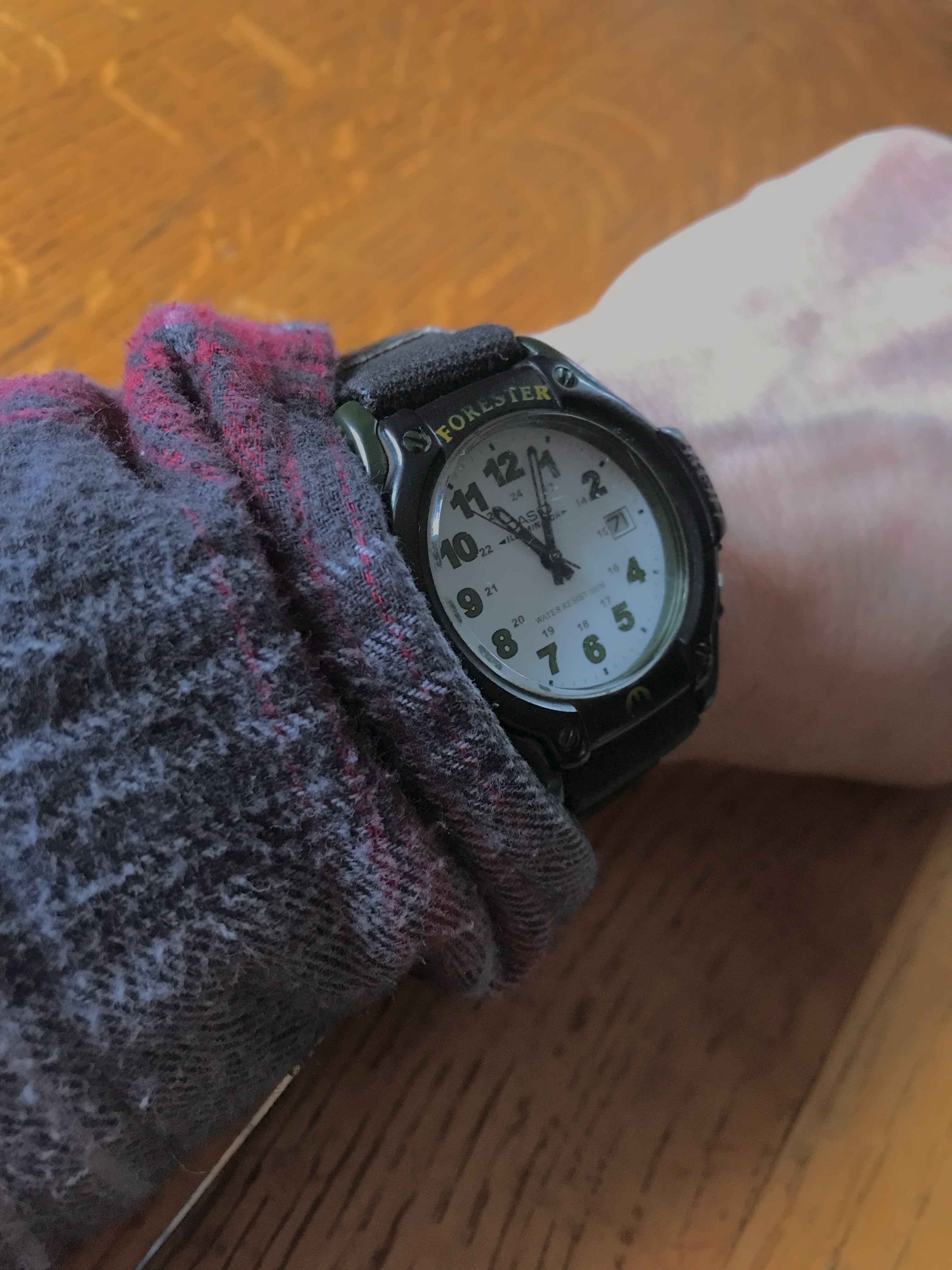
I can’t speak for all early risers, of course, but for me the absolute worst thing about this useless tradition of switching to Daylight Saving Time is the loss of morning light.  I’m in favor of keeping DST all the time, as the US Senate has voted to do.  The only reason this is still an issue is to give the House yet something else to fight about.  How dysfunctional are we, really?  This one’s a no brainer!  Look, I start work early every day.  I jog before work because I’m too tired afterward.  In late February to early March I can get out and back before seven.  (In the summer before six!)  Then DST happens.  I’m plunged into another month of waiting until seven to be able to jog.  DST is just one of those ridiculous things we just keep doing because we don’t have the will to change it.  We’d rather fight.

I’ve been thinking a lot about time lately.  How we think of it, how we divide it.  We sometimes lose sight of the larger picture.  If relativity is right, the stars we see at night are, many of them, long gone.  We’re seeing light trudging through the near vacuum of space, or maybe dark matter, and thinking how we’ve got to get to our meeting on time.  How we need to be at work from 9-2-5.  How somebody with money owns that portion of our time.  There’s a reason that DST starts on a weekend.  Time.  We can’t grasp it but we can waste it.  What are we waiting for?  Some of us are seeking the truth.  Even so we know that Morpheus was right—time is always against us.  It’s a limited commodity, but even that language cheapens it.

Those of us of a philosophical bent allow ourselves time to ponder such things.  We call time a dimension, but what does that really mean?  Theoretically it can be traveled along in either direction (again, pending relativity) but we only experience it in one.  So what do we do?  We interrupt its flow because during a war during the last century it was deemed that industry could be more productive if it were light an hour later.  Maybe we should just all agree to shift our perception of time ahead by an hour permanently.  That’s forward thinking.  And who knows, it might just save us all a lot of time.


Boo-Boo

After an unfortunate encounter with a paper-cutter in which one of my thumbs didn’t fare so well, I sought a bandage.  This led me on a reverie since the bandage I found was in a box that I’d brought home from my mother’s apartment.  Mom was a practical woman and I’m sure she would’ve approved, although the item was selected in a moment of grief that still hasn’t completely dissipated.  As my wife was binding my wound the thought recurred that my mother wouldn’t be needing these physical assuagements any longer.  Like all of us, if cut she bled.  She’s beyond that now.  A person’s affects linger and contain pieces of their memories.  This particular box was plastic and therefore reusable—which is precisely what Mom did.  She taught me how to bandage myself and I’ve used that knowledge many times over the decades.  It’s something I don’t need YouTube to figure out.  Time is a gift.

When writing about recent times, I recently learned new vocabulary regarding decades.  For example, the first two decades when I was culturally aware were the seventies and eighties.  Together they’re known as the xennial period, named, presumably, after “generation X.”  (I’m a very late boomer, as well as a late bloomer.)  I found that fascinating.  Then I was reading something that made reference to the “noughties.”  This delightful word is the British term for “aughts” or “aughties”—the years between ’00 and ’09 of any given century.  We hear plenty about the “twenties,” “thirties,” and so on, so I became curious about the correct term for the second decade of a century.  Either “tens” or “teens” is acceptable, but it seems that in formal writing this should be transcribed by numbers. I guess teen ages are always difficult.

Our divisions of time demonstrate our preoccupation with both mortality and round numbers.  More and more people are living the entire way through a century, from aughties through nineties.  For most of us, however, we can, if things go well, use our birth decade as a rough guide.  I’m not likely to make it through the fifties, but it isn’t impossible.  If I do I guess I’ll need to upgrade my WordPress account because my daily posts will have used up my allotted memory by then.  In the meantime, I do need to buy some new bandages for the time in between.  When I do I’ll put them in a simple plastic box, and I will remember the gift of time I shared with my mother.


Using Brains

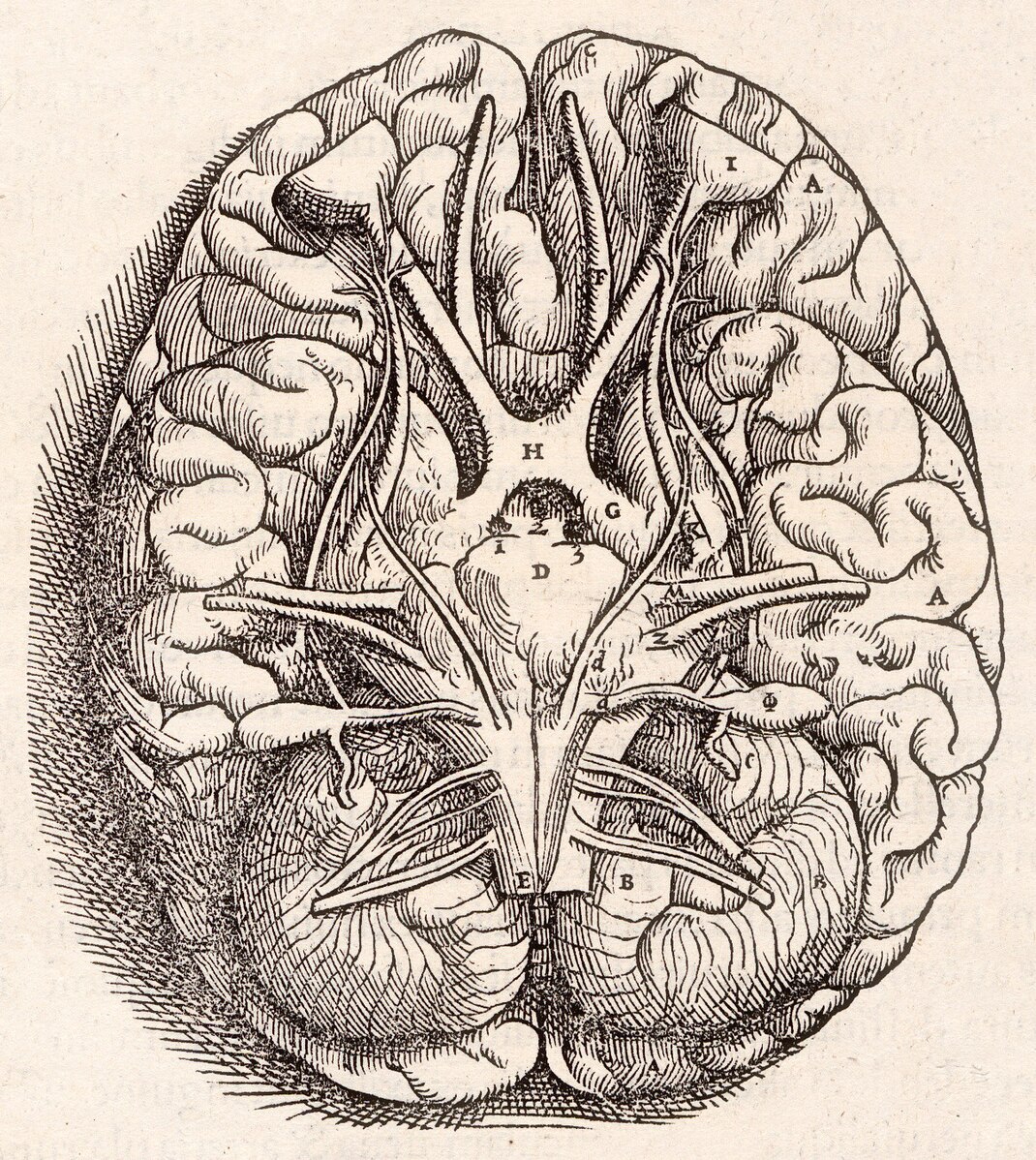
I’m old enough to know better.  Here’s a thought.  I recently saw a headline that suggested human brains filter out things like ESP because brains evolved to help us survive.  No matter what you believe about ESP, the idea got me to thinking.  We often act as if our brains are able to determine the Truth (that capital is intentional).  At the same time we don’t understand what consciousness is.  We know that other animals have brains and that the evolution of said organ is to help individuals survive to reproduce.  Some animal species end their existence at that point, but others linger on to wonder.  And I’m wondering if our brains are filters.  Stick with me here: we know that there are stimuli that we can’t perceive that other brains can.  For example, it seems that migrating birds can perceive magnetic fields.  Even if they can’t there are magnetic fields that we perceive only through their effects on objects.  Our brains have no direct access.

Image credit: Andreas Vesalius‘ Fabrica, showing the Base Of The Brain, by user Ancheta Wis

Here’s where it gets spooky.  If our brains filter out things that may hamper us in survival, what if they overzealously teach us not to perceive things that actually exist?  We’re somewhat limited by our “five” senses, no doubt.  We get along okay.  But what of those people who see things that others don’t?  We tend to medicate them or lock them away, but what if their brains have learned how to shut off part of the filter?  Having written a book about demons, naturally they come to mind as a test case.  Or, if you prefer, ghosts.  We tell our children these things aren’t real.  Trust the filter.  Get on with life in “the real world,” right, Cypher?

I didn’t have time to read the article, but I’d experienced a perspective shift.  If our brains are all about gathering information (and in part they clearly are), that’s one thing.  If they are actively filtering things out, well, that’s quite another.  We laud the imagination of children until they become “old enough to know better.”  Do we teach them to shut out what they can actually see, or sense, in order to accept the inevitable, material, adult world?  This idea has startling implications.  As we plunge ahead inventing AI to do our thinking for us, perhaps we’ve left something even more fundamental behind.  Have we lost interest in the Truth?  We may not be able to access it directly, but I wonder if we’re taught to give up without even trying.