American Revolution

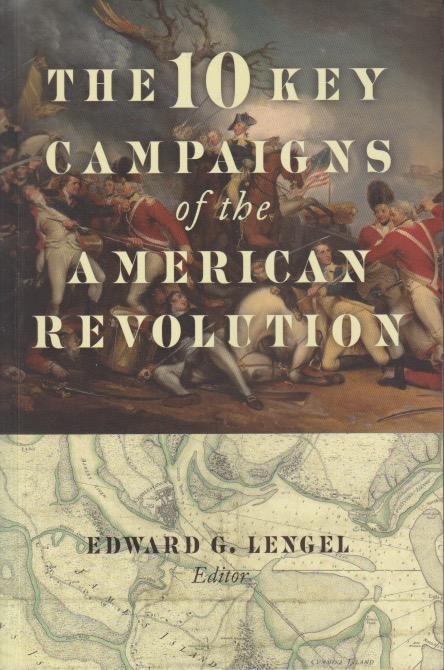
In these days when America seems to be a nation purely for purposes of stoking Trump’s ego, and the Supreme Court agrees that’s our purpose, many of us are looking for some sense of balance.  I think that was behind, at least subtly, our family trip to Valley Forge this summer.  It was there that we purchased The 10 Key Campaigns of the American Revolution, edited by Edward G. L’Engel.  Now, I’m no fan of reading about wars; I’ve always believed that “rational” beings could come up with better ways of resolving differences.  Some guys like to fight, I know.  And in the case of American liberty we had a king who only wanted to use America for his personal glory.  Wait.  What?  In any case, I would not likely read a book about war, but I feel I need to find some connection to the country that existed before 2016.

My wife and I read this book together.  It is an edited collection, which means that the chapters are uneven.  Some military historians like to get down to the details whereas I prefer a wider sweep.  Nevertheless, as a whole the book gives a pretty good sweep of what happened during those revolutionary years.  Starting with Lexington and Concord, prior to the Declaration of Independence, and moving through the campaign to take Quebec, the loss of New York City, the battles of Trenton and Princeton, Ticonderoga and Saratoga, Philadelphia, Monmouth, the battles in and around Charleston, and finally, Yorktown, the essays give an idea of the breadth of the fighting.  The authors also make the point that this was a civil war, the first of at least two in this country.

Americans have, until the internet, learned to get along with those who are very different.  Now we hang out in clusters of those like us and hate everyone else.  That’s one of the reasons why, living many years in New Jersey, that we unplugged and got out to see these sites.  I visited Lexington when I lived in Boston, and we visited the scene of the battles at Princeton and Monmouth, as well as Washington’s Crossing, when we were in Jersey.  We’ve been to New York City and Philadelphia, of course, but these cities have changed much, showing what can happen when people cooperate instead of being divided against each other.  The same is true of Charleston, which we visited a couple years back.  Although not my favorite book of this year, strangely this one gave me hope.  Maybe America can overcome this present crisis as well.


Eve of Winter

“You must live like a monk!”  These were the words of one of my bosses.  I really couldn’t deny it.  I try to lead a quiet life of reading and writing and I do try to avoid extravagances.  My contemplative life suits me.  Every now and again, however, busy stretches come and distort my perspective.  Thinking back over this autumn on the eve of December, that season has been one of those times.  So much so that I haven’t been able to watch much horror, which is one of my usual seasonal avocations.  I suppose it started when a scammer emptied out our bank account in early September.  That entire month is a blur of fear, depression, and anxiety.  Those emotions have settled down, but the trauma and financial loss have remained.  

Toward the end of the month, my daughter moved.  Thankfully not too far away, but parents often feel the need to help when their only child is not yet well established in a new area.  October grew so busy that we had no time to decorate for Halloween.  We did manage to carve some pumpkins, but the weekends—the only time anything for real life actually gets done—were all eaten up and I entered November with that crowded head space that accompanies a monk lost in the secular world.  Looking back, I finished fewer books than usual and I’ve already mentioned about the movies.  This year I was pretty sure I’d be attending the American Academy of Religion and Society of Biblical Literature annual meeting in November.  I had missed the past two years, not really mourning the loss, but preparing for the trip occupied part of October.  Halloween came and went, taking the first weekend of November with it.

In November we had guests come and the second weekend disappeared.  The next weekend I had to get into high gear for my trip to Boston.  That was when I had the flu shot that wiped out a weekend.  I awoke groggily on Monday realizing that Friday I’d be on Amtrak’s Northeast Regional.  I’d never been to Metropark before and the conference itself ate up the fourth weekend in November.  After that, we turned around and spent Thanksgiving with some longtime friends in New Jersey.  Then we learned a Pennsylvania friend had spent the holiday alone and decided to make a celebration for them yesterday.  So here I find myself on the eve of winter with a fall that somehow disappeared.  Busy spells can be refreshing, even for the monkish.  But tomorrow is back to work as usual as December sets in.


Thanksgiving Reentry

One of the facets of attending AAR/SBL that I’d forgotten is how international attendees marvel at American Thanksgiving.  While it is far too focused on food for my liking, it is nevertheless an oddity among late capitalism’s sops.  I’m slowly becoming acclimated to the 9-2-5 environment I so desperately wanted to avoid in my career, but I’ve noticed that, at least in my case, the three publishers for which I’ve worked have this in common.  What is “this”?  The only four-day weekend in the entire year is Thanksgiving.  Probably that stems back to the fact that it falls on a Thursday and employers probably don’t want bloated, food-comatose employees trying to keep awake on Friday, and failing.  Perhaps there’s also the kinder motivation in realizing that by this point people have been working hard for many months and the US has comparatively few paid holidays.

I’m thankful for being home after the conference.  My trip to Boston underscored how much of a hermit I’ve become.  Afraid of crowds because of Covid, and not having ready cash as a result of being scammed, staying home has become a comfortable idea.  Being with others, I was glad to find, provided stimulation.  There are colleagues, both in publishing and in academia, that I look forward to seeing.  I’ve been slow to admit, I suppose, that my ouster from the latter is indeed permanent.  It’s wonderful to see friends who remember me when.  Looking back, I was very naive, even as a professor.  And I see many who, pardon my saying so, still are.  Unless you’ve been in the business world where a four-day weekend is a big deal, living in the ivory tower shelters you from much.

So I’m still in the “reentry phase” of conference recovery.  Although I was thankful to have been able to travel to Boston by train, getting home on a rainy night with heavy New Jersey traffic was a test of endurance.  In my hermit’s life I drink a lot of water and even rehydrating after shorting myself for five days takes an effort.  I’m thankful for the opportunity to have been in New England again.  And for friends on both ends of the trip who appear to welcome me for what I am.  What I’ve become.  Even though sleeping in a luxury hotel where the thermostat isn’t kept quite as chilly as we can afford to keep it at home, I’m thankful to sleep once again in my own bed knowing that there is a wider world out there and I can still function in it.


That Was Quick

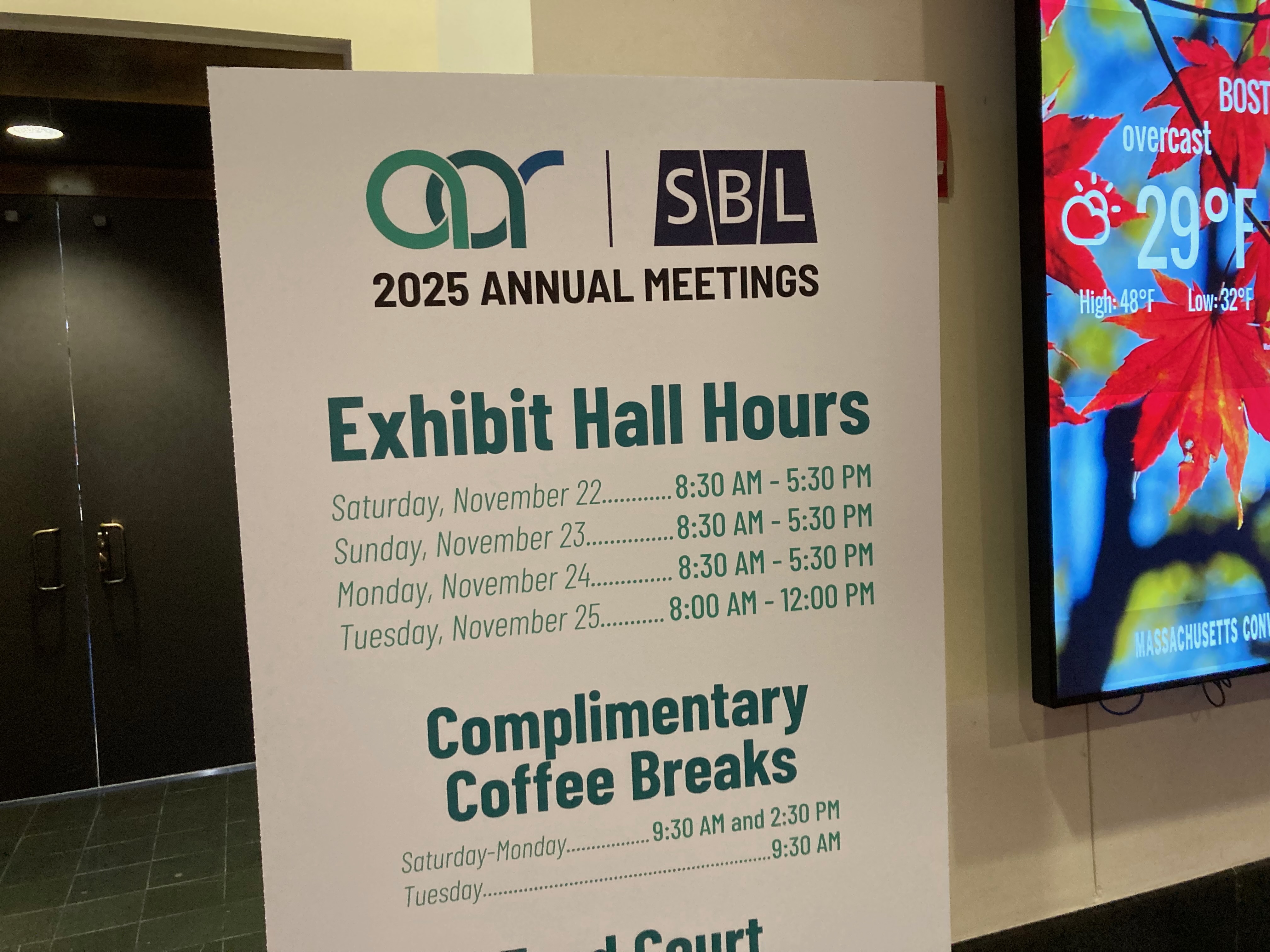
It happened when I wasn’t looking.  If you’re a regular reader you’ll know that I’ve been in Boston since Friday for the AAR/SBL Annual Meeting.  This is a work event for me and I’m pretty much in meetings from 8:30 (or earlier) to 5:30 (or later) each day.  I always come home with “conference voice”—I can barely speak until Thanksgiving.  In any case, while I was distracted in Boston this blog slipped past a milestone.  At some point over the weekend I surpassed a million hits.  Given how rare large numbers are in my life, this is kind of a big deal for me.  I know websites that get attention and critical acclaim hit the million mark within months, or even weeks.  Still, at the ripe old age of sixteen, I’ll take it.  And I’m very grateful to any and all of you who’ve taken a moment to read my musings over the years.

During the conference I was talking to a friend who’s become a celebrity on TikTok.  I also spoke to another friend who’s become a more traditional media darling.  They both outshine me by orders of magnitude.  Attending events like this is always an humbling experience.  I’ve managed to hang around since 1991, with a few gaps, and although it’s always a grind to get ready and get myself out the door, I always walk away amazed at how much so many people have achieved.  Mine is not the only story of a first-generation college student finding a place in the professional world, even if it may not be exactly the place I’d hoped for.  I’m in good company.  I do suspect that most of my readers are not people from this venue.  If I’m wrong, please feel free to comment to let me know.

Mostly since being here I’ve been musing over Edgar Allan Poe and worrying about the traffic I’m sure to encounter once I get off the train and have to drive home during rush hour in New Jersey.  But I’ve also been listening to the stories of friends and colleagues.  They may think they’re pitching me their latest book, but what I’m hearing is their story.  That’s perhaps the most wonderful thing about conferences.  Being distracted enough not to notice when good news creeps upon you.  I know blogs are old fashioned and generally considered outdated.  That describes me as well.  But it warms my heart that so many viewers have stopped by.  My profound thanks to you all!


Boston’s Poe

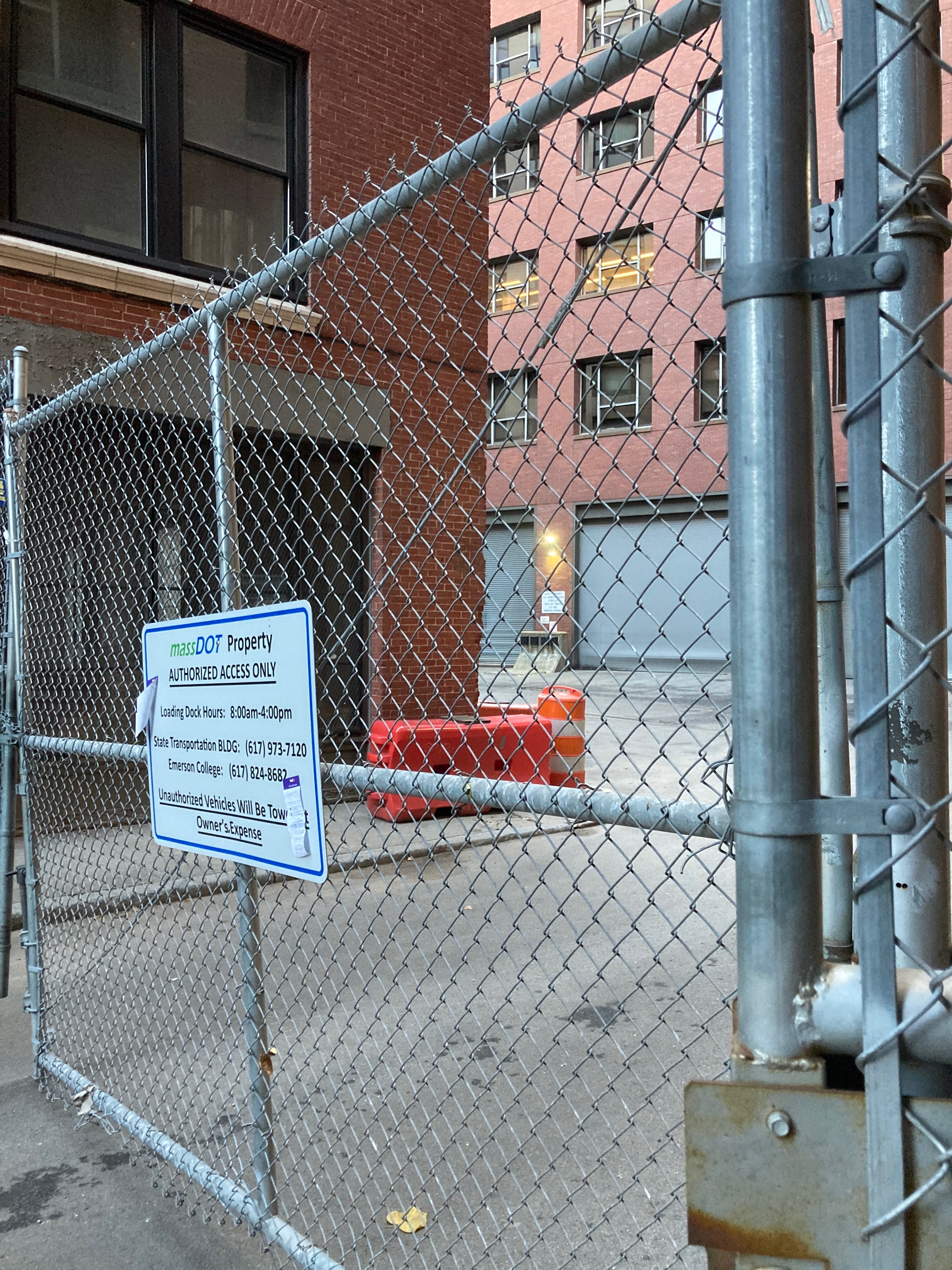
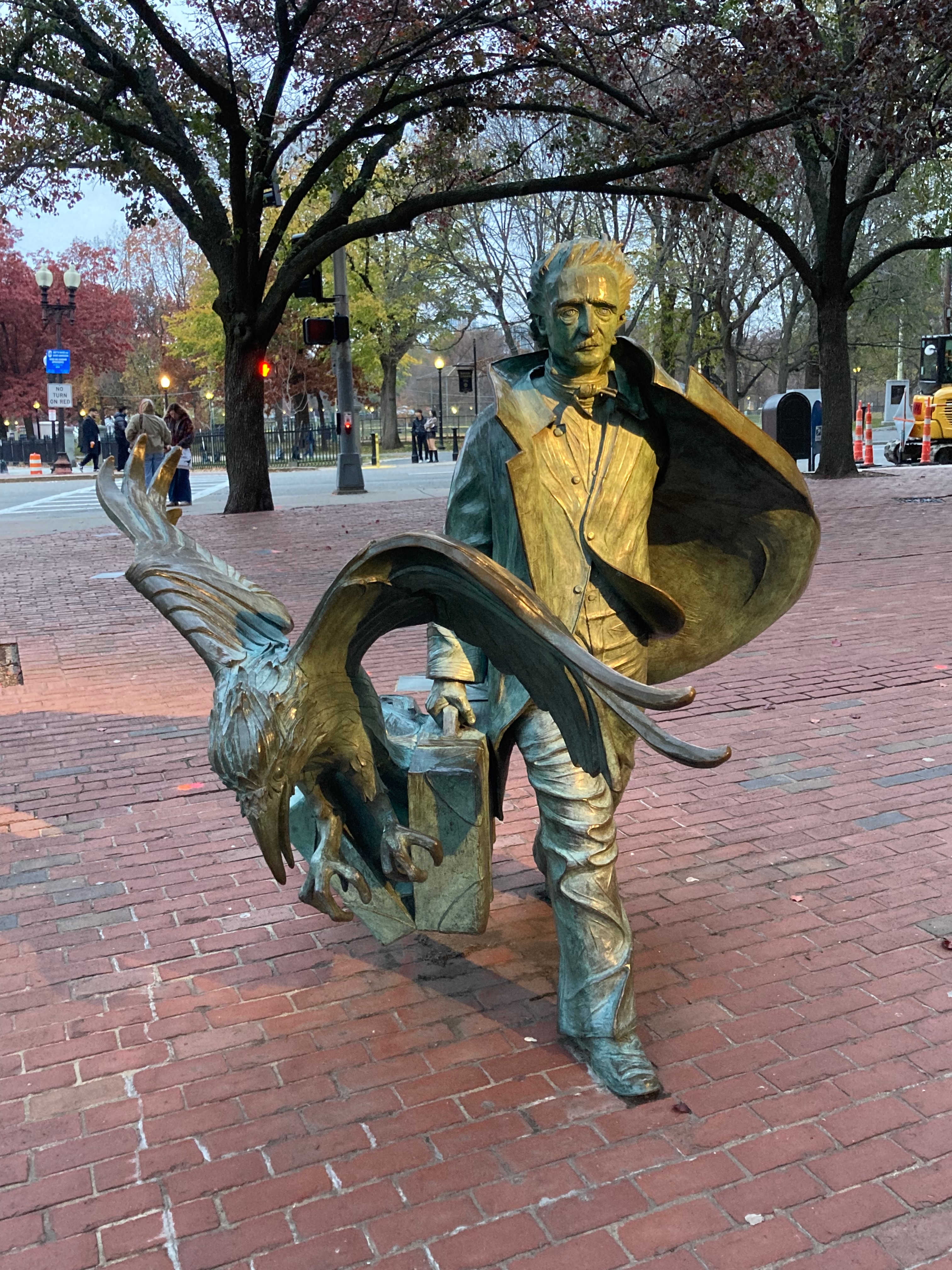
Among my parasocial relationships, the strangest are those with people long dead.  Poe is among them, and, I suspect, this is probably a common thing.  As I age and find it difficult to muster the energy to attend large meetings with lots of people, the one factor that excited me about this year’s AAR/SBL, apart from being in New England again, was meeting Poe.  Now, I know that “Poe Returning to Boston” isn’t actually Poe himself.  But I do believe that places retain something of the essence of what happens in them.  Poe was born in Boston, on Carver Street.  The building itself was demolished some time ago.  I set out to see the site yesterday morning before the conference began, only to find that it is now fenced off, having been acquired by MassDOT.  As I stood there, wondering, fearing, it occurred to me just how much of a role pilgrimages play in our lives.

I’ve written about my SBL experiences before on this blog—look at my November posts for many of the years I’ve been doing this—but Boston is by far the most personal.  Part of it is certainly the fact that I lived here for about three years, but Poe is definitely part of it too.  As I went to do an uncrowded photo essay of Stefanie Rocknak’s statue, although it was quite early on a Sunday morning, and also quite chilly, I wasn’t the only one there.  A couple came along to pose with Poe.  When I took my initial photo (on my Saturday morning post) I had to await a different couple consorting with Poe.  I know this isn’t Poe, but it has come to represent his presence is my favorite city.  The mingling of emotions was strong.  

The sign designating this as Edgar Allan Poe Square is faded and weather-beaten.  I can imagine that local politicians have headier issues with which to wrestle, beyond replacing an aging sign for aging tourists.  And having read J. W. Ocker’s Poe-Land, I know there’s a bust of Poe in the Public Library now.  I walk by it each morning and evening, but the conference schedule keeps me out.  Poe himself was no great fan of Boston but this is where the world first met him.  I know that I should get my head in the game of academic conferencing, but I’m a little distracted by the presence of a friend I never met.  And breathing the rarified air of New England.


Old School

How often do hotels refurbish or do they all look the same?  I met someone in the lobby of a hotel in which I had stayed, okay, 26 years ago.  Nothing about it looked the slightest bit familiar .  Look, I grew up poor and only remember one hotel from before college (we never stayed in them)—the one I remember was a place we stayed on a family trip to Washington DC.  Ironically, I had a stuffed elephant toy with me on that trip.  With the career upgrade to professional and conference attendance, stays at hotels became more common, although they’re still somewhat infrequent.  Conference organizers entice with luxury hotels in major cities.  Some remain in memory.  Most don’t.

I know hotels pay a lot to decorate and brand, yet the places of the monied seem anodyne.  This hotel could be just about anywhere and will eventually blend into that haze of places somehow very alike that cost many hundreds of dollars to stay.  I might’ve stayed here before.  Maybe not.  This lobby doesn’t look familiar but the street outside does.  When I stayed here in 1999 [check] my wife and daughter were able to come.  Not being an editor, we’d been to the New England Aquarium that day and my daughter wanted a seahorse rubber ball as a souvenir.  On the way to this hotel she dropped it and it bounced into Tremont Street.  In a poor object lesson, I ran after it.  I wasn’t hit by a car, but my doing so traumatized my daughter enough that she still won’t talk about it as an adult.  That’s how I know we stayed here before.

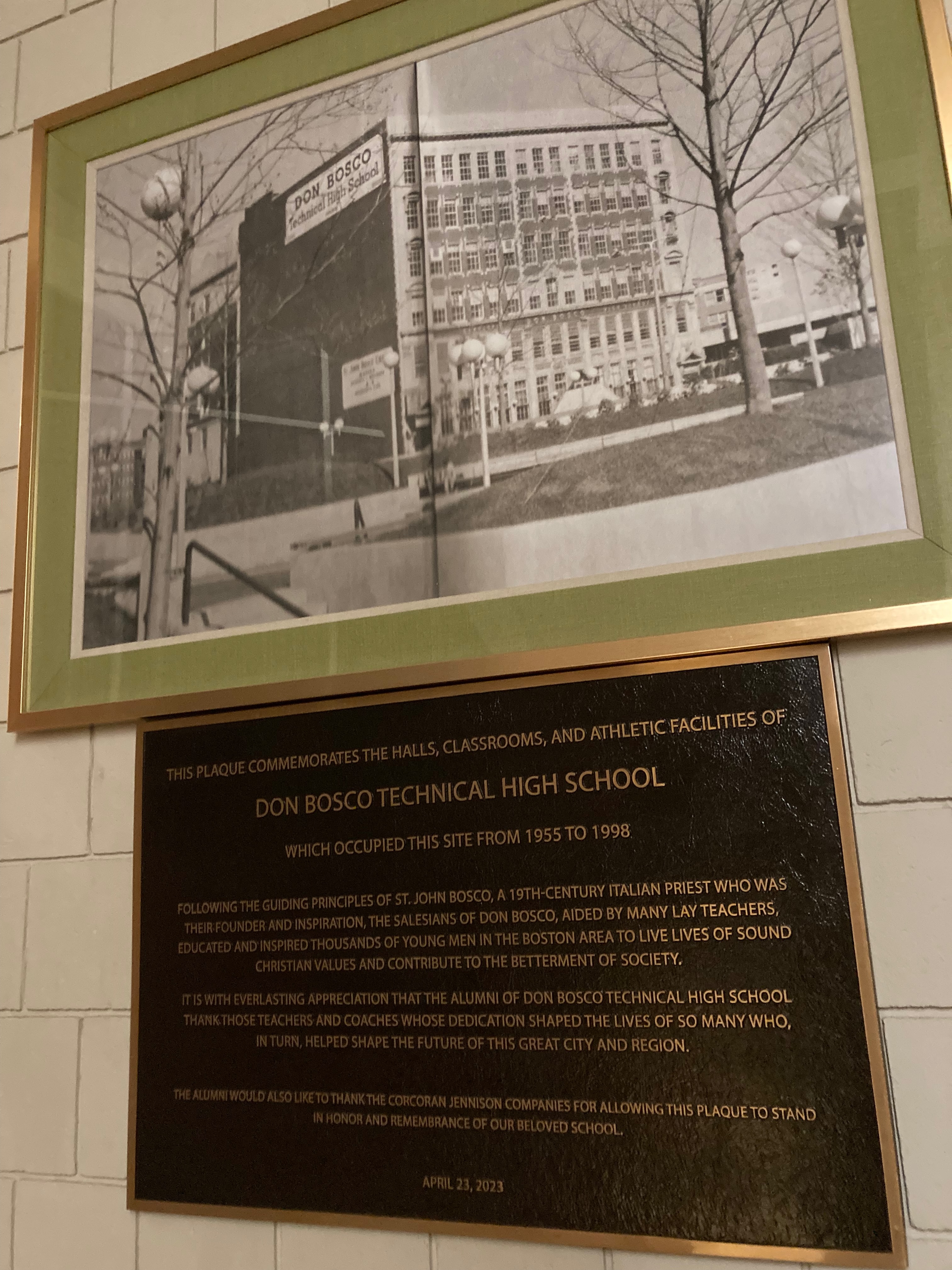
When I visited Boston for work I 2012, I stayed in a hotel I remember but whose name I do not.  It’s never been a conference hotel or I’d choose it.  It was a bit run down, but it had character.  I don’t even know if it’s still there.  Cities change.  Some parts of Boston are unrecognizable since I lived here.  Even the hotel in which I’m staying (which is nice enough, except for the loud music that suddenly starts at 2 a.m.) used to be a school.  I suppose that’s appropriate for a hotel used as an educational conference venue.  Generations of young people were once educated where I’m trying to sleep as the room shakes with someone else’s rock beat.  I may remember this hotel as a place where sleep fled, or I may find it fading into that space where all conference hotels merge even as a poignant thought arises that nothing ever remains the same.


Revisiting

It’s funny returning to a city you once felt you knew well.  Cities are constantly evolving creatures and even though I got around Boston as a student and then as an employee of Ritz Camera, there were places I simply never found.  There was no internet in those days so we relied a lot on word of mouth.  If others weren’t talking about it, I’d never hear.  I first realized Boston had a Chinatown when attending my first AAR/SBL here.  That was in the day when you had to mail or fax hotel registrations in, if I recall, and I do remember staying up to midnight to try to get first choice after that.  Ironically, this year I again ended up in that neighborhood, south of the modestly-sized Chinatown.  I really didn’t mind, though, since the hotel isn’t too far from Edgar Allan Poe.

I first learned about “Poe Returning to Boston” from my daughter.  She saw it while visiting Boston with a friend.  I learned more about it by reading J. W. Ocker’s Poe-Land.  When I lived here, from 1985 through 1988, I knew of no public markers of Poe’s presence.  None of the more prominent ones were here then.  On a trip to Boston for Routledge I sought out the Poe birthplace plaque—the actual house had been torn down—and found it.  It’s still here as I saw last night.  But the place that was formerly marked only by a painted electrical box now has a statue.  Poe, preceded by his raven, walks across the area named for him with a suitcase in hand.  Behind him, pages from his manuscripts lie on the ground.

It’s long been known that Boston and Poe had an ambivalent relationship.  Poe was born here and lived here for a time, but never felt that the city accepted him.  He lived in New York City, Philadelphia, and Baltimore for some time, but mostly considered Richmond, Virginia home.  That’s where the Allans lived and where his mother is buried.  Poe himself famously and mysteriously died in Baltimore.  He had some measure of fame at the time but still lived in poverty.  The feeling seems to be that Poe would’ve liked to have liked Boston—it has been my favorite major US city ever since I first moved here four decades ago.  Now, of course, I only get back on occasion, mostly when AAR/SBL comes to town.  Although Poe wasn’t here the last time I was, I always find something new when I return.


Boston Bound

Honestly, I’ve reached a stage where travel seems quite a burden.  I’m a creature of habit and I haven’t had to interrupt that habit for three years now.  I missed the last two years of the AAR/SBL conference due to a variety of issues.  I’m pleased that this meeting is in Boston, a city of which I have fond memories.  Still, getting there from here isn’t as easy as you might think.  It’s simple enough to catch a direct train from New York or Philadelphia, but I don’t live in either.  To be there in time for my meetings later today I have to catch a fairly early train.  That’s not a problem; I’m an early riser.  To get to a station where a car might safely be left for four nights is a bit more difficult.  It involves an hour’s drive no matter where you end up going.  I’ve driven in Philly enough to know that I don’t like driving in Philly.

Although Allentown is the third largest city in the state, there is no train service from it to the Amtrak lines that lead up and down the coast.  So I’ll be driving a while.  Once on the train at least I won’t have to worry about traffic.  At least for a few days.  In Boston I wasn’t able to get into one of the close hotels.  In warmer months that wouldn’t be much of an issue, but November in Massachusetts can be chilly.  I remember that from living there.  There are shuttles from my hotel to the conference center, but I like walking Boston.  It brings back memories.  Beantown is one of those places that many people fall in love with and want to stay after they get there.  Although I lingered three years that didn’t seem enough.

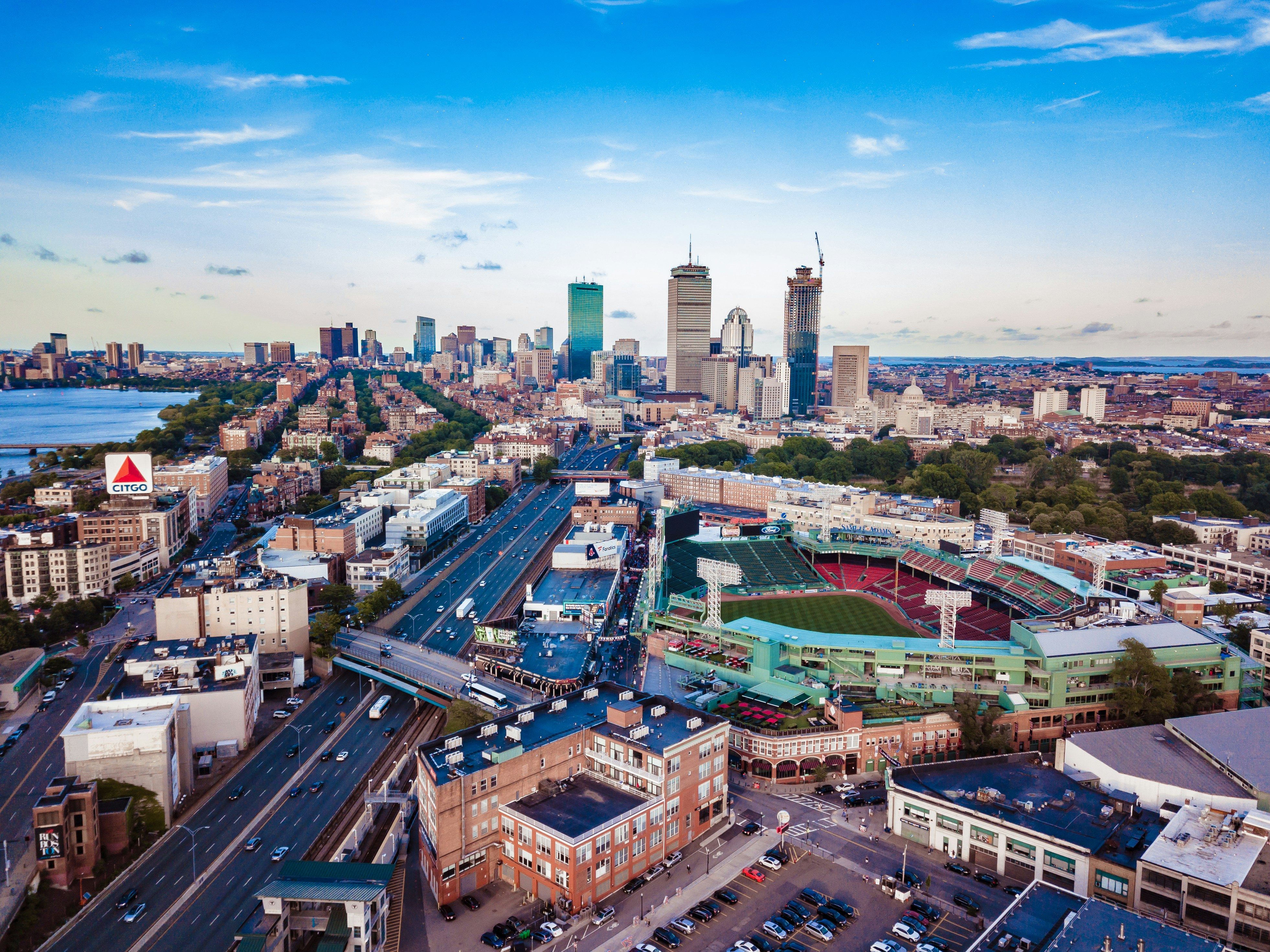
Photo by todd kent on Unsplash

I was a young man when I moved to Boston.  Looking back, I knew so very little.  Almost as little as I know now.  For this conference, I’ve stayed in this same distant hotel in the past.  It’s in a part of town I’d never explored as a student.  It isn’t far, however, from Edgar Allan Poe Square.  I’m hoping the weather allows for some photographic opportunities around there.  The conference itself, in my more familiar Back Bay, is work.  Not much time to relax and see the sights.  Still, I know that once I get there I’ll again feel the old attraction.  It happens every time I go.  Even it means a drive and a train ride into late November.


Sleeping Below

I’m not sure how I missed What Sleeps Beneath.  I suppose it’s a matter of being time-starved in a world with so many websites.  That, and I’m only now starting to get integrated into the horror community.  A comment on this blog brought What Sleeps Beneath to my awareness.  A horror review site—they feature both books and movies—it’s based in that epicenter of weird (at least in my experience) of Pittsburgh.  I lived in the city for a couple of summers and grew up between it and Erie.  And, of course, Pittsburgh is George Romero territory, the birthplace of the modern zombie.  I often reflect on it.  Growing up in a small town north of there, I was fascinated by large cities.  When I was in high school, Pittsburgh was the 16th largest city in the country, now it’s down in the 200s somewhere.  That’s what happens when a big industry packs its bags.

In any case, I haven’t been able to keep up with all the horror websites.  Again, it’s a matter of time. One reason is reasonable precaution.  I believe in vaccines.  I hate being sick in any way, and I’m of an age that I’d probably have been long dead without the many sticks I’ve had in my life.  However, time is precious and I’ve lost two weekends this year just to vaccine recovery.  Keenly aware that I no longer have all the time in the world—this dawns on you with a kind of horror fierceness as you read obituaries of friends who seemed so much better adjusted than you—the loss of a weekend is a kind of major deficit.  It’s sort of a sloppy reboot.  You enter a weekend with anticipation of how much you can get accomplished without the 9-2-5, but instead you have a day or two as groggy as your computer is when you first turn it on.

I say all this because I’d been planning to explore What Sleeps Beneath then I lost this past weekend to recovery.  Pittsburgh, like most places, has an identity to it.  And like most places that identity evolves over time.  Tomorrow I head to Boston, a city I used to know, for the American Academy of Religion and Society of Biblical Literature conference.  I’ll also be visiting, I hope, the Poe Returning to Boston statue in Edgar Allan Poe Square.  What with Boston making a belated overture to Poe and Pittsburgh embracing its zombies, maybe horror is starting to become mainstream after all.  Now I just need to get the time to explore What Sleeps Beneath.


Visiting Poe

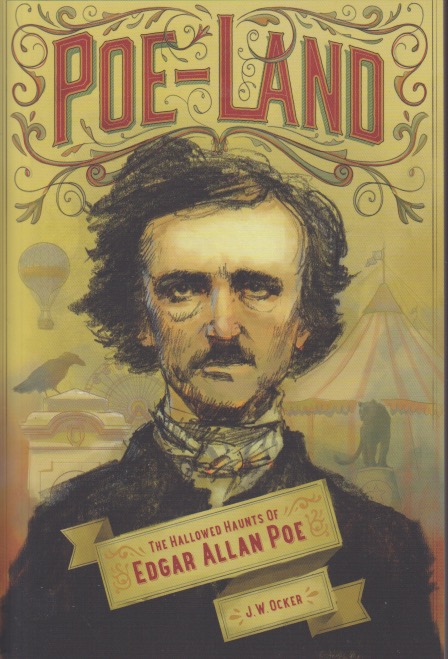
J. W. Ocker’s Poe-Land is a book I read too late.  That’s not to denigrate its status as the best book I’ve read this year—no, not at all.  It’s just that, unaware of Ocker’s book, I’d visited many of the Poe sites in America without the advantage of the full story.  Since my daughter also appreciates Poe, we’d gone to the Poe house in Philadelphia and the Free Library where Dickens’ stuff raven lives (sort of).  We’d gone to see Poe’s grave in Baltimore and his reputed dorm room at the University of Virginia while she was on college campus tours.  We attended the Poe exhibit at the Morgan Library in Manhattan.  We’d even gone to Fort Moultrie in South Carolina, stopping at the Poe Tavern on a family reunion trip to Charleston.  On my own, I’d sought out Poe’s birthplace on a business trip to Boston.  (The plaque was not there when I lived in the city.). Poe-Land is Ocker’s travel log of an intentional visit to all of these places.  (I should mention that we also went to Richmond to see the southern family but I arrived with a migraine and we had to put off the tourist stuff for another trip.  And I was distracted by Lovecraft on my two trips to Providence.)

To a Poe fan, and I can count myself as no other, this book is itself a treasure trove.  Ocker took a year to visit the Poe sites, north to south and even to England.  He writes about what he found and the people he met.  These people are likely my tribe, but I tend to work alone and know people primarily virtually.  I’ve tried to get museum people to let me behind locked doors, but I don’t have the clout.  (When I was a professor I had a bit more pull.)  I enjoyed every page of Poe-Land.  It was a book I didn’t want to rush through since it made me smile knowing that for reading time the next day I’d still have more to go.  And I learned a ton about Poe.

I’ve read several books about Poe, of course.  As an ignorant kid, I bought a used copy, in five volumes, of his collected works and biography.  I bought it at Goodwill and treasured it.  Until as an ignorant (and poor) college student, I resold it along with many of my childhood reading treasures.  I read biographies in the school library.  And I’ve read (and bought for good) some as an adult.  I even mention Poe in most of my books, including Sleepy Hollow as American Myth, because he’s part of my story too.  Poe-Land was easily my favorite book of 2025.  Now I want to read more about Poe.  But in the end I face a dilemma.  Do I read more about Poe, or do I go back for another of J. W. Ocker’s books?


Migration

Since the American Academy of Religion and Society of Biblical Literature annual meeting (AAR/SBL) is coming up soon, I got to thinking about my experience of the event.  I went to some memorable meetings and missed a few for various reasons.  I’m at the point where I don’t really crave attending anymore, but when I should go, I do.  My first experience was in 1991, in Kansas City.  I flew back from Edinburgh for that one.  It was the last time it met in Kansas City.  It was obvious, however, that this would become an annual pilgrimage for me if I ever landed in academia.  My first couple of years teaching were part-time with a full-time load of courses but Nashotah House had some faculty development funds to help pay my way.  My wife would go and we’d stay with friends whenever possible.  It became an academic addiction.

I skipped the year my daughter was born, but when AAR/SBL met in New Orleans we drove down from Wisconsin.  In 1998 I attended the infamous meeting at Disney in Orlando.  Then in 2000 we met in Opryland in Nashville.  This was an experimental phase, I’m guessing, but themed locations weren’t popular with serious scholars and soon we were back to major cities without theme-park vibes.  Having lost my toehold in academia, I missed the 2005 meeting in Philadelphia, but was back for the Washington meeting, representing Gorgias Press.  The three-year separation that started in 2008 I missed, except for the first lonely year in Boston.  I was back for San Francisco in 2011, working for Routledge.  Two years later I was in Baltimore, staying off site, with my current employer. I drove down for that one.

In 2018 I missed the Denver meeting because of a snowstorm panic in Newark, after sleeping the night on the airport floor.  Then the pandemic kept me away for a couple of years, but one of those was virtual anyway.  The last one I attended was 2022 in Denver.  This year I’m scheduled to be in Boston.  Even when my career has slipped off the academic rails, this meeting has been a rather constant touch-stone for November.  Now that I no longer give papers—the last one was on Sleepy Hollow in Atlanta, I believe, ten years ago—the spark has gone out of it for me.  I am glad to be heading back to Boston, however, on somebody else’s dime.  I’ve got some Poe sights to see in my off hours there.  And some 33 years of history to recollect.


October’s Poetry

October is a beautiful, melancholy time of year.  Edgar Allan Poe died on October 7.  Two years ago today, my mother died.  This was brought home to me forcefully yesterday.  A colleague had invited me to address her class at Princeton Theological Seminary about Weathering the Psalms.  I had vacation days that have to be used up or lost, so I took the day off.  My wife and I drove to Princeton, a town we know well.  When we lived in Somerville, about 15 miles north of there, we’d visit Princeton not infrequently.  I wasn’t really familiar with the seminary grounds, however.  My colleague informed me that her class, on the Princeton Farminary (where a program in ecology and theology is housed) would be meeting in a barn so I should dress appropriately for the weather.  A cold front had come through, so I went for the tweed and turtleneck combo.

So we set off on a beautiful drive along the Delaware.  The leaves aren’t at peak yet, but there was plenty of fall color as we navigated our way toward Frenchtown, where there is a bridge across the river.  The GPS also told us this was the way to go.  On River Road, still in Pennsylvania, a flagman refused to let us on the bridge, although the signs did not say it was closed.  He impassively waved us on.  The GPS insisted we “return to the route.”  We soon found out why.  The next crossing is seven miles further down, along winding roads with a 25 mph speed limit.  The drive was beautiful, but suddenly I was going to be late for my appointment.  The new route added 45 minutes to the estimated travel time.  After uttering some choice words about unplanned bridge closures on a road where there are only a very few ways to emulate Washington’s crossing, we eventually arrived.

The weather beautiful, if a little chilly, the class decided to meet outdoors.  I hadn’t forgotten how much I love teaching.  It was brought back to me with force.  With the trees reminding us that winter is not far off, and the students eagerly asking questions, I felt at home for the first time in many years.  It was a temporary shelter, I knew, but it was a kind of personal homecoming.  Carefully avoiding the Frenchtown bridge, we drove north, crossing to River Road at Milford.  If the GPS had known that to go forward you sometimes need to go backward, it would’ve sent us to Milford that morning.  We arrived home tired but glowing from a day out of the ordinary.  As I put my tweed away that evening I found a pencil from the the funeral home where I last saw my mother in the pocket.  It had been the last time I’d worn this jacket, two years before.  October is a beautiful, melancholy time of year. 


Name Your State

My grandfather’s name was Homer.  I’ve often wondered about that since he was from a long line of uneducated farmers.  Since he was born in Bath, New York, and since I’ve poked around upstate for genealogical purposes, I noticed that there were several place names derived from the classics, including Homer.  I suspect that’s where his name came from.  His ancestors had biblical names.  This got me to wondering about the many upstate classics town names of Utica, Syracuse, Ithaca, Corfu, Palmyra, and more.  A little (very little) research led me to Robert Harpur.  Harpur was a one-time clerk in the New York State Surveyor General’s office, and he assigned names to several towns, using classical sources.  I haven’t found a comprehensive list, but all of this makes me homesick for upstate, a place I’ve never lived.

My Homer

My mother’s paternal line had deep roots in New York state.  Nobody in the family went to college, although my grandfather did take a couple of courses at Cornell to qualify as a country teacher.  Then, many years later, my daughter moved to Ithaca.  We spent many fine weekends there and would’ve moved there had we been able to afford it.  It was a kind of homecoming.  But the connections have a way of wending their way around, as they often do.  Robert Harpur settled in Binghamton, New York.  Harpur College, now Binghamton University, State University of New York, was named after him.  Not aware of any of this, my daughter attended Binghamton University.  (There was even a picture of me on their website for a while, a photo snapped by someone as I sat in the financial aid office one parents’ weekend, begging for more money.)  I have no way of proving this, but it seems that Harpur’s interest in the classics may have led to my grandfather’s unusual Christian name.

Here’s where it gets interesting.  Homer had a sister named Helen.  Of Troy?  (There’s also a Troy, New York.)  Perhaps a family name?  My records don’t really answer that for me.  And they had a brother named Ira.  Ira is a biblical name, but it also may be a variant of the name Hera, the wife of Zeus.  This had nothing to do with my writing my dissertation on Asherah, who is perhaps the namesake of Hera, or at least it has been proposed.  I doubt my ancestors would’ve named a son after a Greek goddess (the family was of Teutonic origins).  Or maybe great-grandpa Adam was more educated than he let on and had read the Iliad?  If only I could afford to get back to Ithaca I might just go on an odyssey of my own.


Scientific Monsters

The rule is simple.  If you buy something in the gift shop, you can get into A Nightmare in New Hope for free.  So I naturally gravitated towards the books.  I picked up Meg Hafdahl and Kelly Florence’s The Science of Monsters: The Truth about Zombies, Witches, Werewolves, Vampires, and Other Legendary Creatures.  I noticed that the authors weren’t scientists, so I wasn’t expecting anything hard core.  In fact, I mostly wanted it for fun.  And also, I’m fascinated by anyone who can manage to get published by a trade press, the kind that publish books for under twenty bucks.  (Lest you think that’s a random amount, I’ve been invited to events where I was told $22—the then price of Weathering the Psalms, my least expensive book—was too much for most of the audience.)  The science in this particular book is akin to the science of various ghost hunters—the use of science as a framework, but not really being actual science.

Still, it’s a fun read.  Divided into ten sections of three chapters each, it covers a range of horror movies and asks various questions about aspects of “could it happen?”  Of course, in the sections featuring serial killers, we already know the answer.  Sometimes the authors shift to the “why” question when something obviously does happen in real life.  Now, I bought this book as a horror consumer and I have to say that it made me feel a sense of accomplishment that of the thirty chapters I’d seen all but one of the featured films.  The one I haven’t seen is Cujo, but I’ve read the book.  What I’ve noticed about other horror aficionados is that seldom have we all seen all the same movies.  Since the advent of VHS and watching movies at home, and the various technologies that came after, those of us with an appetite can be starved for choice.

While I wouldn’t turn to this book for any actual science, I did get a few ideas for horror stories from reading it.  One of them I’ve been working on since the chapter on The Tingler.  Both for fiction and non, I often think about publishers and how to break into that below twenty market.  This book is classified, in its BISAC code (the topic on the back of a book that tells you its genre) as science.  The publisher doesn’t publish in pop culture, which is what horror movies are.  There must be a science to getting publishers to buy into a good book idea like this.  Maybe there’s a science to it.


Bible and Horror

Having written Holy Horror, I keep an eye out for Bibles in horror contexts.  In the context of A Nightmare in New Hope there was the torso and head of Fr. Alameida from Stigmata.  In his hands he clutches a Bible.  Of course, if you’ve seen Stigmata you’ll know that Alameida is already dead at this point, having been so from the start of the film.  Those visiting a horror museum are likely completely nonplussed by seeing a Bible there.  Much of the horror genre builds on religious themes.  Witness The Nun.  The original costume for her is standing over in the corner right there.  If I had enough time (i.e., if I were in an academic post again) I would be spending my time trying to figure out this connection.  I’ve written about religion and horror in four books, in several articles on Horror Homeroom, and in too many blog posts to remember.  There is a connection that only professors have the luxury of thinking time to explore.

A couple hours later at Vampa, Vampire Paranormal Museum, Bibles were again in evidence.  Indeed, in profusion.  Vampire hunters, it seems, never wanted to be without the Good Book.  Many of the vampire hunting chests (entire chests!) included a Bible.  As noted in a previous post, Michael Jackson owned a vampire hunting kit for a while, until the Jehovah’s Witnesses convinced him he shouldn’t.  In one of nature’s ironies, in the mail when we got back from the museum was a handwritten letter to me from the local JW Kingdom Hall.  Religion and horror.  Vampa also owns a rarity, an exorcism chair.  Things get a bit muddy here since the chair dates from the nineteenth century but exorcism as we know it largely derives from the movie, The Exorcist.  And that takes us back to New Hope.

My interest was primarily in artifacts from actual movies.  The Exorcist head of Regan McNeil in Nightmare in New Hope was, I believe he said, a cast.  A horror museum without at least a passing reference to The Exorcist would feel strangely incomplete.  And then there’s Maxxxine.  The entire X trilogy is framed around religion that leads to horror, over a couple of generations.  There’s a connection here and I haven’t found a convincing explanation for it yet.  It’s one of the many books that I’m working on at the moment.  But time is limited.  And Fr. Alameida’s presence in this room, holding tight to his Bible, reminds us that the topic bears exploration.