Who’s Bigger?

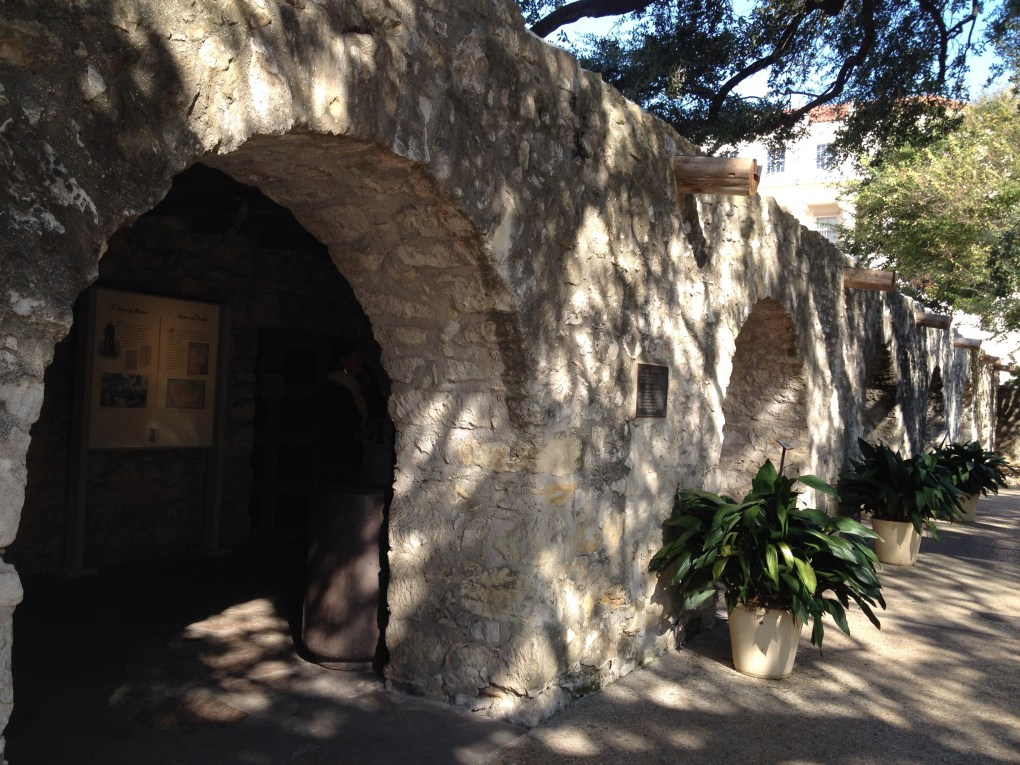
Sometimes we have to work so very hard for unity. On the day before the conference proper began, I decided to take in some of the sites. In San Antonio this means the River Walk and the Alamo. I was awake early, as usual, and since the Alamo doesn’t open its doors until 9 a.m., I took the River Walk first. Seeing the gift shops selling countdown to Obama’s last day novelties, I had to shudder. It may be a sad day when you have to look to the Alamo for consolation. What looked like a rainy morning became a sunny day and the Alamo was crowded by the time I arrived. Last time I was here I stopped in the church, and I think that was it. I decided to look in the Long Barrack room, noting the sign that read “Please remember this is a place of reflection and respect.” No photos. No food. Just respectful thoughts. I stepped inside.
 

img_3055

There can be no disguising that this site was host to a bloody battle some time ago. As I looked at the period rifles and the caliber of the musket balls graded up to cannon balls, I reflected how we’ve invented ways to hurl bigger and bigger pieces of hateful stone and metal at each other, faster and faster. A few thousand died near here, perhaps some in this very room. A couple of guys walked up and one said to the other in his beautiful Texan accent, “There’s some beautiful weapons here.” I could almost hear the tears in his voice. His companion agreed. “They’re bigger than what I carry,” he prayed. People had died here in the past, and it seemed that perhaps the best we could look forward to was more deaths in the future. Reflection and respect.

There’s no point in visiting a place like the Alamo without a sense of the history that made this place what it is. It is not a shrine to glorified warfare. It is a mission, an abandoned church, that became out of necessity a place of self-defense. I just can’t shake the thought that so many people died here, but the point of visiting seems to be celebrating a nation where you can wear your weapons proudly. It is a supreme irony that this particular November the conference I attend happened to have long ago locked in this particular venue this particular year. I could very much use a place of reflection and respect. Instead, I’m thinking of how so terribly hard it is to work for unity in what seem to be the increasingly Untied States.
Remember the Alamo

I’ve never started a fight. I’m actually a very conciliatory type, willing to be wronged in order to avoid an unnecessary confrontation. This election has made me feel a little pugilistic, however. The sheer size of Trump’s loss based on the popular vote makes me hope I’m not alone in this. I find myself in San Antonio at the moment. The American Academy of Religion and Society of Biblical Literature annual meeting, which rolls around the weekend before Thanksgiving, has been a regular aspect of my career since 1991. My hotel room overlooks the Alamo, and the implications—indeed, the irony—are not lost on me. I don’t know a great deal of Texas history, but what kid grows up without hearing about Davy Crockett, who died a few yards from where I lay down my head?

img_3034

I’ve known many Texans in my life. Many of them have been, and continue to be, perfectly reasonable people. Good and loyal friends. Lots of people like to live here. Indeed, the population of the state has swelled over the past quarter century. I’ve also encountered Texans (particularly at Nashotah House) who acted like the enemy at the Alamo wasn’t Mexico, but the other states. In the light of last week’s election I’m reminded of the words of one of the Mexican officers, after Santa Anna declare the battle a light one. Reportedly another officer quipped, “with another such victory as this, we’ll go to the devil.” Voices from the other side of the wall. Maybe it’s the lack of sleep from getting in so late, but I’m looking at the Alamo and Pink Floyd’s The Wall is going through my head. The lesson of the Alamo is that although you may lose the battle you can still win the war.

This is my second visit to San Antonio. Last time I was here, for the same conference, one of my doctoral advisors was over from Edinburgh, and we walked through the Alamo together. Today we are lamenting Brexit and Trump together. By slim margins the alt-right has learned to game the system. The problem seems to be apathy. It’s clear that we’re going to have to fight from now on just to get a little social justice around here. Strange words coming from the fingers of a lifelong pacifist, but you’d think that the work of Martin Luther King, Jr. and Susan B. Anthony might have had more lasting effects. Perhaps it truly is time to remember the Alamo.


Giving Trees

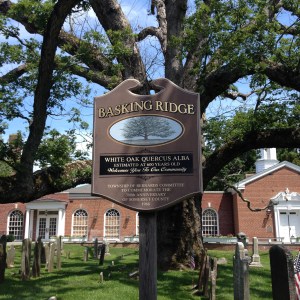
They’re not exactly worshipping the tree, but the Basking Ridge Presbyterian Church is holding a memorial service for the old oak tree. I’ve written about the Basking Ridge oak before. I learned about it only in January, and I visited it this summer. Some say it’s the oldest tree in the state, while others make that claim for the Great Swamp oak, which isn’t too far away. The climate change we’ve introduced, as well as natural aging, appear to have doomed the tree. It had leaves this summer, but not in the profusion that signals health to botanists. The decision has been made to take the tree down before any massive branches fall and cause injury or damage. In the light of these sad developments, holding a service seems perfectly natural. The tree is older than the church over which it presides, after all. It’s even older than John Calvin who started the Presbyterian tradition.

img_2878

My first book was on Asherah, the goddess often associated with trees by scholars. As those who’ve read my book will know, I’m a bit skeptical, on the basis of the actual evidence, that Asherah was a “tree goddess,” but it is also clear that trees are ancient objects of veneration. From the human perspective, they can live a very long time. There is a bristlecone pine in this country that dates back to before Noah’s flood (something the creationists conveniently ignore). With that much life-force, which, we’re told, is really a fiction, these trees deserve special respect. After all, they were in the neighborhood long before we got here. Still, the Basking Ridge oak has been artificially preserved before. It’s been on life support for years. Concrete was poured to support the massive trunk, and many ponderous branches are shored up by support rods. We respect our elders.

Maybe it’s not tree worship. Maybe it’s worship beside a tree instead of worship of a tree. Prepositions can make all of the difference. Nevertheless, it’s an occasion to stop and consider our place on the planet. The fear many of us feel regarding this week’s election is a mere second in arboreal memory. The independence of this country came after the oak had been here centuries already. It may not be tree worship, but we should respect the memories of such a tree. A country young and optimistic rather than old and jaded. Maybe this tree knows a secret that it’s willing to bequeath to those of us whose lives are but a few leafing seasons in length. Good-bye, Basking Ridge Oak. It was a pleasure to meet you.


Before and After

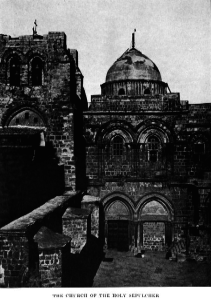
Fresh from seminary with a head full of historical-critical theory competing against my immortal soul, I was lost in the Church of the Holy Sepulcher. I’d learned enough in class and in my own reading to know that the association of Jesus’ burial here only dates back to the fourth century. And also that the identification was made by a politician—Helena was the mother of Constantine—and not a archaeologist, or even a theologian (God help us!). The location was, in other words, hearsay. Three hundred years is a long time to keep track of where something happened. I sit on a bus trundling through Weehawken every day and ponder that we don’t really know where Alexander Hamilton was shot. Such are the ravages of time. I was young and, presciently didn’t know if I’d ever return to Israel, so I wanted to make sure at the time. It was holy confusion. Finally an elderly Coptic monk beaconed me into his edicule to touch the stone. He gave me a cheap rosary and asked for a donation.

churchoftheholysepulcher1885

The scene returned to me when a friend sent me a story about the “discovery” of the actual chamber behind the build-up. The report by Fiona MacDonald in Science Alert briefly tells the background to the location and describes the hurried excavation. Still, we have no idea if, as Indiana Jones might say, “They’re digging in the wrong place.” Tradition has nevertheless hallowed the spot. For seventeen-hundred years some people have suggested this is where it all happened, and where many of the liturgical churches agree. Some Protestant groups, attuned to the Bible a bit more than tradition, have suggested The Garden Tomb is the correct location. The years ago when an academic future seemed in store, I stopped by there too, just in case. There were no crowds.

An enormous amount of effort was poured into building and maintaining the Church of the Holy Sepulcher. Crowded with tourists and various orders of clergy, I wondered how anyone might find such an experience spiritual. Territories are marked out between the various denominations seeking legitimacy in stone. Who wouldn’t want to own the spot where it actually happened? Wouldn’t that be the ultimate truth claim? So more money is being spent. More digging is taking place. Science, some believe, might come to the rescue of religion. From my experience, brief though it was, trying to make sense of the Holy Sepulcher, I have my doubts. But what do I know? I’m not even sure if Copts use rosaries.


Reveries of the Fall

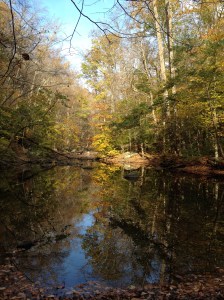
Just a quarter of an hour, studies show, of time in the woods can reduce stress. I suspect that if those fifteen minutes are spent running from a bear the opposite might result, but in general time in nature is an incredible solace. The weather hasn’t been particularly cooperative for October walks in the woods around here, but yesterday my wife and I managed to spend some time, along with many others, in Hacklebarney State Park, one of New Jersey’s gems. Living in the most densely populated state, to gather from the number of hikers we saw, encourages time in the woods. It was good to be reminded of the compelling scent of autumn leaves, the wonder of seeing their colors in the daylight when daily commutes begin and end in the dark. When work days are spent in the grayness of the city. Being out with nature, to borrow words from the Good Book, restoreth our souls.

img_2989

I suppose there’s nothing really logical about it. We’ve built civilization to protect ourselves from nature. Solid walls to keep predators out. Heat, running water, and electricity so that we can surf the internet without ever going outdoors. Permanent settlement always within reach of cell phone service and work email, we are the scions of civilization. Being unplugged just for an hour or two—even fifteen minutes—can feel like salvation. If that fifteen minutes is spent among rocks, trees, and the peculiar light that reflects off a lazy river. The internet will always wait, won’t it? Thoughts of work can be suspended until Monday, can’t they?

Hiking among the other expatriates of civilization in what used to be the Garden State contrasts so sharply with the image we project to the world. The Chris Christies and Donald Trumps who bluster that nature is there to be exploited. They may not say so with words, but lifestyles speak so much louder than syllables. Gaining wealth requires putting one’s own agenda first. We’re out here picking our way carefully over a rocky path. We have to stop frequently to let others go by the other way, or to let those faster than us pass by. But we’re all out here for the same reason. It’s a beautiful autumn day and spending it indoors feels wrong. I know that even getting online now feels like my time is being demanded by a million distractions. Unplugging, walking at a moderate pace, feeling the cool air and breathing the aroma of fall deeply into tired lungs, I can feel the stress draining away. If only for a day.


Finding Your Way

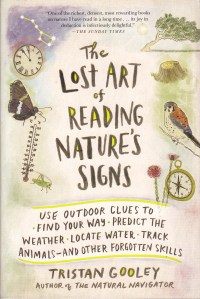
lost-artOnce while visiting the house of a friend, we took a walk in the woods. It was an area I didn’t know and after a few minutes it became clear that we were lost. There can be nearly no other feeling more frightening for a child. We wandered in the trees shouting for help for what seemed far longer than the maybe twenty minutes or so that my friend was disoriented. The message was clear: never go somewhere unless you know how to get where you’re going. I’ve been lost a few times since then and the gut-twisting fear is the same. Where am I? The Lost Art of Reading Nature’s Signs, by Tristan Gooley, is an amazing book for anyone who’s had that experience. We are residents of earth and we should know how to find our way around the place. Instead, most of us live in urban environments and never spend a lot of time outdoors learning that nature provides many, many clues to finding your way. You just have to know what to look for. I found myself wishing I could memorize large sections of this tome, assuring myself I’d never be lost again.

There is an irony about reading such a book during the commute to Manhattan. Apart from his small chapter on navigating in cities, Gooley spends most of his time offering advice on spotting hints in nature. I can’t believe the behavior of the mice, rats, pigeons, and cockroaches I’ve seen in the city is any less neurotic than that of the people. In nature trees, plants, land forms, weather, fungi, and the stars can all be used to guide a person home. There is a touch of quaint Britishness to the book, but the tips included quite often branch out to specifics in the United States, or even elsewhere. What all of this means is that in its own language the earth makes sense. We need to learn this language. Although Gooley doesn’t say it here, when we destroy our environment we’re increasing our ability to get lost.

One of the more interesting sections of the book used churches as a means of orienting oneself in unfamiliar country or a town. Church architecture, at least initially, followed a regular logic with an eastern orientation and opinions about the sacredness of the ground on the north-south axis as well. Knowing this holy geography, along with the ability to read lichens growing on the outside and finding the clues on tombstones, you can often find your way. There’s some poignancy here. There was a time when churches, synagogues, and mosques were natural means of showing people their cardinal points. We’ve come to rely on our devices to show us the way, and it’s a little early to know if that’s been a mistake. And if it weren’t for work today, I’d be outdoors, taking a walk and trying to learn to find my way through nature.


Enter the Labyrinth

Trying not to think too much about Children of the Corn, I visited a corn maze over the weekend. This particular autumnal activity highlights just how much detail a human mind can pick out in a mass of sameness. You can tell if you’ve been to this particular juncture before—that oddly shaped leaf, or that peculiar stone, or that specific ear with the missing teeth will give you the clues. This particular maze, however, also uses printed clues. Before you enter the labyrinth, you may choose your species of guidance. There were 4-H clues, Girl Scout clues, history clues, and more. One of my companions handed me the scriptural clues. Although it may have been an obvious connection, I thought about it in terms of salvation. A corn maze is not unlike life in the real world; confusion, false leads, and aimless wandering. Having a guide—in my case, knowing the Bible—will lead you out.

corn-maze

Of course, the point of a corn maze is the fun of getting lost. This particular farm had eight acres dedicated to fall fun, and our party did get hopelessly mired in one location and had to ask for help from the corn cop who wanders like a friendly minotaur, or maybe a personal Daedalus or helpful Ariadne, directing those who’ve lost their way. The idea is that once you enter the maze, you look for numbered clues at various junctures—only a few crossroads have them—and answer the question for instructions about which way to go next. Even with the Bible in hand, or in head, we managed to lose our way. Baptized by a sudden cloudburst, we sought shelter in an open field. The only way ahead was to press on.

Those who’ve been with this blog for any length of time know that it is intentionally kind of a labyrinth, often using metaphor. In the case of the literal corn maze and its clues, minimal biblical knowledge was required to figure out the correct way to turn. The trick was even after getting all the hints, there was still some distance to go. Wet, confused, and having only our wits to go on, by trial and error we made it through. Our instructions—for we each had a different set of questions—only got us so far. My biblical guide was damp and see-through with the soaking we received. Metaphors were falling as fast as the rain. After all, the point of a corn maze is that you don’t get your money’s worth unless you get well and truly lost.


Reflecting Ourselves

There once was an old man from New Hampshire. No, this isn’t a limerick. He was famous enough to get his face on the state quarter, back when they were doing that state quarter thing. Then he fell. The Old Man of the Mountain was no more. We like to see ourselves in stone. On a trip with my wife and a couple of friends in my post-grad days in Edinburgh, we were driving around the Isle of Skye. The largest of the Inner Hebrides, the island has a mysterious natural beauty. One of the most famous monuments on Skye is the Old Man of Storr. Postcards always show it to be a rock pillar jutting up by itself at the base of a mountain. As we approached the old man from the north, I got the joke. My friends still dispute it, but if you look at the mountain crest above the pillar, it forms a perfect profile of an old man’s face. Then what is the rock pillar? It’s just the right distance from the old man’s face to be, well, you get the picture. I’m convinced that those from Skye laugh at all the tourists taking a picture of the old man’s naughty parts.

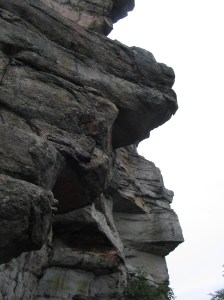
The technical term, as I’ve discussed before, for seeing that which isn’t really there is pareidolia. Some people call it matrixing. Our brains, wired to see other people, often see them where they don’t exist. The Old Man of the Mountain formed a passable human face before the rock face collapsed in 2003. This past week I read an article in the Washington Post of the collapse of Duckbill, a rock formation in Oregon’s Cape Kiwanda State Natural Area. Like many cases of pareidolia, this rock pillar was only seen as a duck by those whose brains make the connection. People like to go see that sort of thing. It makes us feel less alone.

Do you see it?

Do you see it?

The article by Cleve R. Wootson Jr., however, points out that Duckbill didn’t jump. He was pushed. A group of eight guys, caught on video, rocked the pillar until it toppled. This is why we can’t have nice things. The deliberate destruction of monuments is a crime, and the culprits are being sought. Make Way for Ducklings, the Robert McCloskey children’s classic, was cast in bronze in Boston’s Public Garden. In 2009 vandals stole one of the ducklings, which was quickly replaced. It’s difficult to understand the mentality of those who wish to destroy our duckbilled friends. Yes, Duckbill was only rock. No, I never had the chance to see it. As long as the Old Man of Storr lies recumbent in the Scottish highlands, however, we will have grounds to wonder.


Hi Ho, Hi Ho

I’ve been writing about reading. No surprises there, I suppose. My wife recently introduced me to BookRiot, and I wish I had more time to spend there. A recent post by Aisling Twomey describes how reading on her Tube commute helps keep her sane. Here is a good case of convergent evolution—I came to the same conclusion after about a week of what turns out to be about three hours a day commuting to New York City. We didn’t move to my current location to work in Manhattan. My job was in nearby Piscataway. It was only when a headhunter found me a job at Routledge that I began the daily trip. The problem is I get terribly car sick. To this day I can’t read in a car. Some days I can’t read on the bus either. Gradually, however, I trained myself to do it, and the results have been worth it. Ms. Twomey has read over fifty books this year on her London commute. I suspect my commute is a bit longer since I’ve read a few more than that. Still, we tilt against the same windmill, so we need to appreciate the dedication it takes.

I was talking to someone the other day who was complaining about cell phones. She said, “I used to read a lot. I worked in a book store. It was great.” Her cell, she said, gave her a stiff neck from constantly looking down. And a sore thumb from swiping and texting. And yet, she lamented, she just couldn’t stop. Books may well be a vice. I’m as bad as any addict. I have no idea how many books I’ve read in my life: the number is in the thousands rather than the hundreds, I know. And even the books I regret, I don’t really regret. Reading is a coping mechanism.

img_0670

One of the things that the traditional ancient religions all have in common is books. Not all of them treat sacred texts the same way, but they all have some form of sacred writing. There was an implicit sense, I believe, from the first stylus on clay, that something truly special was going on here. Holy, even. Writing is one of the great joys of life. Reading is another. Both are sacred professions. In a way it seems a shame to have to be forced into a commute in order to find time to read books. Still, the constant flow of new material has a life-saving quality to it. I can’t imagine spending fifteen concentrated hours a week texting. I don’t know that many people to text. The ones I do know I know through their books. And they’re very good company on a long ride.


Lingering Memories

Visiting northwest Pennsylvania always makes me think of oil. I suppose the fact that I attended high school in Oil City has something to do with the fact. Many people suppose that the oil industry began in Texas, but Pennzoil and Quaker State have earlier roots back to the days when people flooded to Oil City and Titusville to get rich from the petroleum underground. I grew up in a refinery town that is becoming a ghost town, like Pithole City and Petroleum Centre before it. And when I returned home to New Jersey I wanted to find my Oil City book. Yes, there is a book. I first saw it in junior high school and I coveted it. Hardbound and large format, it was a book about my town. I had no idea where to get one, however. There were no bookstores in Oil City, or nearby Franklin. Any further afield than that and nobody cared.

I used to work as a janitor in my junior high school. It was my summer job for several years. One day our task was to haul out the garbage bins. I saw my opportunity. The library was discarding several copies of the book. They were in the trash. I dumpster-dived for the first (but not last) time in my life. I had the prized book. It had been locally printed. There is no publisher listed. It bears no ISBN. Nothing like a book to validate where you’re from. You see, I’ve always wanted to write a history of the area where I grew up. No major publisher would touch it—it can’t possibly sell enough books to cover its costs. It would be a labor of love.

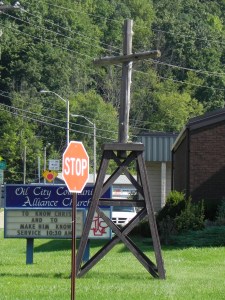
Not that I’m a fan of Big Oil. Quite the opposite, in fact. I don’t appreciate their proprietary arrogance toward ownership of the planet. Of their pollution of the world to gain more money for themselves. I support alternate energy. But still. This is where I’m from. Not that anybody’s making much money off of oil there these days. The shallow wells ran dry long ago. The local oil companies were bought out by larger corporations but they kept the local names. Once in a while I pull out my old, salvaged Oil City book and scan the pages with wonder. Many of these towns wouldn’t be here if it weren’t for the prehistoric sludge that flowed under the rocks and stones. It’s easy to believe that the town would stay the same forever. Heading out of Oil City there is a church. A crude cross stands atop a truncated oil derrick. I stare at it and the irony is only half complete.

dscn6574


Day Labor

It’s difficult to believe in Labor Day. Don’t get me wrong—I’m glad for the day off. It’s just that I don’t think people really believe in the idea any more. It’s hard to take professed goodwill for workers seriously in a plutocracy. Especially when money’s a fiction. When pay was in coin, although abstracted, you were literally handed something of value for your work. Now technicalities and loopholes and utter abstractions make some—including would be and actual politicians—wealthy. These are all tricks on paper, affirmed by accountants, and we watch like the audience of a magic show as the improbable is made out to be actual fact. And these who hold this imaginary wealth control the lion’s share of the waking hours of the rest of us. We’re given Labor Day off with a pat on the head and we’re told to go enjoy ourselves before summer is up and we really have to get back down to work.

DSCN5084

Many of us—I know because I can see the cars—use the holiday to travel. It’s not really so much a day of rest as it is a day of trying to get back home so we can be to work bright and early tomorrow. Since it’s the last break before Thanksgiving you’d better enjoy it. If there were really money in that pay envelope—not even real envelopes are used any more—it might be easier to buy the illusion. Like Amazon I take a small cut of the transactions between employer and debts I owe just to live near where I work, which isn’t really so near but as close as I can afford. At least today I can not go into the office. I can spend the day getting home instead.

I often wonder why we’ve let ourselves be fooled by a system that will only ever allow the very few to truly find financial independence. Like lemmings we run right after them, thinking that just beyond that cliff true prosperity lies. A chicken in every pot. A car in every garage. Right now all those cars are actually out on the road—I can see them—and they’re not really paid for because they cost too much to buy outright. Most of us need them to get us to and from work. Or to and from vacation. Summer’s winding down. Hurricanes are already spinning away in the Atlantic. I’ve grateful for the day off. I really am. I only wish I could believe that it meant something deeper about human nature.


Becoming the Past

Back home for a flying visit over the final dregs of the summer, I find myself in a hotel in my hometown. It’s an odd place to be. As I’ve often remarked to those who know me, I remember living in three houses in this area and all three have been torn down. Looking over the vacant lot where my elementary school once stood, I have a feeling of being erased. Just up the hill from my hotel is a blank space, like when a molar has been removed, where my junior high school once stood. Even the seedy shops I remember from childhood are gone, an entire block of buildings torn down. Wal-Mart opened up just a couple miles away outside of town, and all small businesses got down on their knees and prayed before dying. Being from somewhere is more than just a matter of going away. It’s also coming back.

IMG_2930

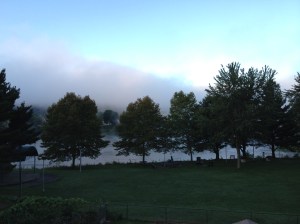
Standing outside in the misty morning sipping my coffee, I watch the river flow. There’s a fog rising over the Allegheny this morning and it makes this place look mysteriously beautiful. I think back to New Jersey, where I was at this time the day before, and how I can’t step outside without seeing other people. I go jogging at 4:30 in the morning sometimes. I’m never alone. On this balcony over the river I see no one. That person down by the river is really just a statue. Maybe I am too. What is left of a person when their hometown disappears? My fascination with ghost towns is catching up with me. Once someone said they thought I disliked small towns from the way I talked. Quite the opposite, the statue whispers. Quite the opposite.

If it weren’t for the people I know, would I ever come back here, I wonder. The warm coffee through the styrofoam cup reminds me of Judas. Even he knew how to kiss. This town, shrinking with age, gave me life. When I stamp the streets of Manhattan on my way to work, I know I’m a different man than I was back in this town. I would’ve found it difficult not to want to help anyone in need, back then. This homeless guy’s been sleeping in the same spot all week while millionaire wannabes look the other way. There’s a mist on the water this morning. The Allegheny flows on to the Ohio, and the Ohio on to the Mississippi. Down into the gulf that’s part of the ocean than encompasses us all.


Of the Night

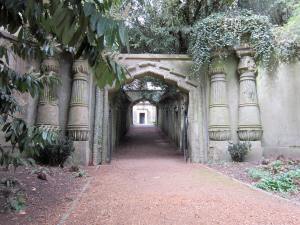
August isn’t too early to start thinking about vampires. The nights are already noticeably longer than they were in June and some leaves are just beginning to change on the trees. I’m thinking of vampires because one of my readers sent me a link to some investigative reporting about the “Highgate Vampire.” I’ve posted about this before, but the brief story, if you don’t have time to browse through my “monster” category, is that beginning in the 1970s a group of people came to believe a vampire haunted London’s Highgate Cemetery. This led to the publication of written accounts of the hunt for the undead. On a trip to London in 2012 I visited the Highgate Cemetery as my host for the trip lived quite close by. Apart from being the resting place of many famous people, the cemetery is moody and Gothic and it’s easy to see how, in days when it was neglected, it could’ve spawned such tales. Thing is, we know vampires don’t exist. So we’re told.

IMG_0061

Back to the story. My reader pointed me to the website Vamped, and now I’m afraid my limited time has just grown more limited. More specifically, there is a story by Erin Chapman entitled “5 Reasons Why a Wampyr Didn’t Walk in Highgate Cemetery.” The article investigates claims made in Sean Manchester’s book on the subject (reviewed elsewhere on this blog), demonstrating that his locations, photographs, and narrative don’t add up. The piece on Vamped shows a meticulous level of detail, comparing notes and photos in a way some of us simply don’t have time to do. Now I’ll sleep more securely on my next visit to London. I hope. The conclusions are disputed.

At this point some may be asking why an educated, rational adult is even addressing such questions. Why worry about something that isn’t even real? This brings to mind the realm of religion. Archetypes, whether they have an objective existence or not, are part of our consciousness. Supernatural beings of many varieties inhabit our heads, no matter how much garlic or holy water we happen to have lying around. Ignoring them can lead to problems. Do I think there is/was a vampire in Highgate Cemetery? I don’t think so. Do some other people sincerely believe it? I have to think yes. No matter which religion people follow, there will be entities that other people don’t believe. That doesn’t mean that they should be ignored. The Highgate Vampire isn’t real for most people, but it is for others. And just in case, I’ll keep a bit of garlic around as the nights begin to grow longer.


Flying with Strangers

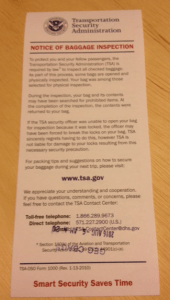
TSAThe world is safe now. It’s okay—you can unlock your doors and windows at last. I have the proof right before me. Two weeks ago I was out of town. To get to my final destination I had to fly. I travel light. Seeing families at the airport with stacks of suitcases, I often wonder what people find necessary to take with them. It depends on the destination, I suppose. If you’re skiing you’ll need different gear than if you’re snorkeling. Or spelunking. In my bag there’s just the same old togs I wear at home. Never a clothes horse, I seldom update my wardrobe. I’m not into extreme sports, and for hiking, well, I can wear what I’m wearing right now. One thing is universal, I suspect. Underwear. We all have tucked away in our bag somewhere that necessary item of human social politeness. That’s why the world is safe, you see. I have in front of me a slip of paper informing me that the Transportation Security Administration has looked at my underwear and declared it safe. Go ahead and fly the friendly skies. Just make sure your underwear is clean.

Long ago I learned that if I fly alone I will be singled out for added security checks. I’m a bearded man. A non-conformist. My beard isn’t one of those consisting of trendy hipster stubble either. Just a regular beard. No fuss, no muss. My life is far too busy for me to spend extra time scraping off hair that will only grow back. I have enough pointless tasks as it is. But once you’ve seen the TSA agents looking you in the face and pointing you to the extra-search line time and again, you start to notice patterns. Especially since nearly every TSA agent in Newark parks in the same airport lot as I do and rides the same shuttle in. Sometimes there are so many of them that they ask if I’m lost. No, just looking for a restroom so that I can check my underwear before you do.

The truly ironic part—and I appreciate irony so I know that there’s no way that an agent can know this—is that I’ve been a life-long pacifist. The draft was reinstituted when I was just the right age to sign up. I was a conscientious objector. One of my uncles was too, during the Second World War. The very title of the conflict should’ve made the need for more objectors obvious. I wouldn’t knowingly hurt another person. Or animal. I step over worms after it rains and will yield to an ant on the sidewalk. Still, you’d better check my suitcase just to be sure. To me, it seems the world might benefit from teaching more people to respect those who are different. Bearded men and those whose skin tone differs are not evil. We just don’t have the time to get to know them before we throw their bag onto the conveyor belt.


Paradise Lost

Reentry is never easy. I’ve just been on a vacation in the woods of the northwest and yesterday marked, via eight hours of air travel and airport waiting, my trip home. Tomorrow work begins again and I hope for the ability to adjust quickly into some kind of routine. Humans are creatures of ritual. We may call it religious or secular, but we draw comfort from knowing what to expect. Vacation disrupts with its mandate to relax and be among loved ones, and with its low level of demands. It can be time to think clearly instead of being harried and harassed and hurried all the time. Today I have to remember how this is done. How east coast time works. What the bus schedule is and how to enslave myself to it once more. I think of how being in a cabin in the woods felt like a restoration of my soul. In fact, it can feel quite a bit like a religious experience.

Silence, for one thing. In a world of constantly competing noises it’s easily forgotten what a commodity quiet can be. The silence of the woods is restorative. Although it was occasionally abused in my days at Nashotah House, quiet was often enforced as spiritual discipline. Nature, in a way that’s hard to appreciate so near to New York City, can be supremely tranquil during the night. Darkness as deep as the silence reminds us what night was meant to be. No priest needs to direct meditations since the soul is already attuned to the divine in such situations. Awaking to the chatter of a red squirrel rather than the rumble of a bus can remind one of what is truly important. When we value our vacation over our vocation there is a message hidden in plain sight.

Today I glance ahead to an unbroken string of work days and the premature end of summer. The hot days can be uncomfortable and that rush of everyone toward the water can lead to endless crowds and congestion. Still, I empathize with those seeking a break from the routine. We are all souls seeking respite from days programmed by others so that the Trumps of the world can reap the rewards of other’s labors. Bleary-eyed from the time change of three zones’ difference, I’ll go to work tomorrow with twigs in my hair, sand in my shoes, and a kind of private paradise in my head. I’ll soon be cured of that as the secular routine takes hold once again.

IMG_2891