Nature Watching

Whenever I travel in the northwest, I keep an eye open for what one colleague calls “charismatic megafauna.” You know, the big animals that are so rare to see that they develop a charming, if imaginary, persona. Not that I’ve ever seen much of it here. It’s rarity is part of the charm. My usual hope is to see a moose—something that happens every three or four years. Black bears are even rarer. Grizzly bears, which still inhabit this area, and mountain lions I’ve never seen. I know they’re there, but their agenda is not to be seen. My first full day here I was sitting outside working on an academic paper. My time off work is rare, and when I get a moment, even in the wilderness, I try hard not to waste it. I had the feeling of being watched. Not the creepy kind of feeling, but the kind where you think an animal might be keeping a wary eye on you.

I looked over the top of my book. Several yards distant I could see a head bobbing up and down. Then I noticed a black patch on a nearby lodgepole pine. It took a few seconds for the red head to register. A mated pair of pileated woodpeckers. Not exactly huge, but they are large birds. And since they are the personality behind Woody Woodpecker, well, I guess you can call that charismatic. Charismatic enough for me to put down my Ugaritic mythology and go inside to fetch a camera. Of course they were gone by the time I’d returned. I decided to take a walk down the track in a vain hope of finding them again. Once in a while charismatic megafauna cooperate. There they were, one going after ants on the ground, the other perched above pecking wood.

Most of our large fauna we’ve driven to near extinction. Humans can’t stand not to be the biggest thing around. The megafauna remain, however, hidden though they may be. An online site for this area posted a photo of a cougar snapped last summer. I’m not sure when the last time a grizzly might’ve wandered down from Canada, but since last November I’m not sure why they’d even bother. Even the moose seem coy. Animals don’t do what we want them to do. Those that we can’t domesticate follow their own agendas and calendars we can’t hope to comprehend. As they flap away I can swear these woodpeckers are laughing at me.

Photographic Evidence

All photographs are lies. That moment preserved, formerly on celluloid but now with electrons, is gone for good as soon as the shutter is snapped. The camera doesn’t see as the eye sees. I was reminded of this during a mountain thunderstorm. I awoke early, coated with jet lag and the residue of my regular early morning schedule. It was still dark, but the reddish sunlight soon wrestled through a valley fed by a creek across the lake. The color was impressive, but my camera washed it out to a diluted Creamsicle orange. In reality the clouds were roiling overhead and lightning was streaking through a thunderhead like synapses firing violently in a massive brain. Thunder in the mountains can’t be photographed. Nor can it be forgot.

My work used to require quite a bit of travel. Before I would visit a campus I would spend some time on faculty pages, trying to put faces together with names. Impressed with how young these professors were, I’d knock on doors armed with foreknowledge of who might greet me. I wondered who these older people were when the door actually opened. It’s disconcerting to see someone age before your eyes. I would think back to the photographs online that had assured me this person would be much younger. The picture was a fossil. A moment frozen in time. The very next second after the photo capture that smiling face had changed. The best that we can hope for is a gross approximation.

Perceptions of reality, as all religions teach us, contain a healthy dose of illusion. While it contains ethereal beauty, this vision I’ve captured in my lens is only part of the picture. There is something deeper, more meaningful behind it. Photographs enhance memory. In the days before Photoshop they could be submitted as proof of an occurrence. They are a form of art. Whatever else they may be, they are also lies. Lies need not be of evil intent. Religions try to explain what some privileged individual realized was the truth. These who found a way of looking behind the photograph. The streaking lightning outside evades the slowness of my finger on the button. The thunder rolling and re-echoing through these valleys will remain in my head long after the sound waves cease to reverberate. Reality is more than it seems. Even my experience of this mountain thunderstorm is that of a single individual seeking enlightenment. Elsewhere others are up early, observing it too. What they experience may be something very different from me indeed. I have a photograph to prove it.


Devonian Dreams

Toothbrush and dental pick in hand, I go at it. Not that I’m a professional, mind you, but curiosity drives me to this. You see, this crinoid before me is at least 358 million years old and anything that can make me feel young deserves all the attention I can give it. Crinoids are also know as “sea lilies,” but they aren’t plants. They’re actually echinoderms, and the fossils I’ve found in the past have only been cross-sections of their “stems,” a stone circle, as it were. This one has tendrils visible, and I can’t believe that it was a chance find on one of my recent walks through Ithaca’s gorges. I’m dreaming Devonian dreams, and I want to brush away the plaque of the eons and see what I’ve actually found.

Fossils are a kind of eternal life. The creature that died to leave this impression lives on as a monument in stone. It reminds me of my unfortunately brief stint as an archaeological volunteer. Scraping away dirt to reveal a piece of pottery that hadn’t been touched by human hands for 3,000 years. Of course, that’s merely a second ago when you’re talking about something pre-Carboniferous. The dinosaurs won’t even show up for another 100-million years. And I think I have to wait too long for the bus. Time, as they say, is relative. Did this medusaized creature before me realize just how terribly long it would take for enlightenment to arrive? And how so very swiftly it could fall one foolish November night? Careful, this fossil’s fragile.

I grew up among the Devonian substrate in western Pennsylvania. The Bible on my shelf told me to disregard the evidence before my eyes. Some clever true believer had declared Noah’s flood the culprit, never bothering to explain how freshwater fish showed up after the deluge. Those we tried to keep in our aquarium never seemed to handle the slightest disturbance of their salinity. The ages of the literalist are by definition short-sighted. 6,000 years seems hardly enough time to account for any sedimentary stone, let alone that riddled with fossils. I’m hunched over my bit of slate, dental pick hovering nervously over what will never come again. The Bible behind me says it’s an illusion. You may be right, Mr. Scofield. You may never have evolved. But as my fingers glance a creature dead before even the crocodile’s grin I have to declare that I have.


Big Shoes

Belief in the supernatural seems to be alive here in the northwest. At least if the culture at Sea-Tac Airport is anything to go by. I’d noticed, last year, that a sasquatch graces a restaurant in the N terminal, where jets from Newark tend to land. This year we had a bit of a layover, so we strolled through the C concourse. There I found sasquatch approved salmon in the somewhat anomalous Hudson News. Then, as I sat in one of the stylish, Seattle seats, a young woman came up next to us and sat down wearing a Sasquatch Volleyball shirt. I’m past the age when I can get away with innocently asking young ladies if I can take a photo of their shirts, so you’ll just have to use your imagination for the latter. The point is, bigfoot has been mainstreamed.

When I was growing up you got pretty mercilessly teased if you expressed any interest in such things. Now that I’ve got a respectable career others can get away with what captured my imagination as a young man. I’ve never thought of myself as being ahead of the curve. Or really ahead of anything, for that matter. Still, I trust my instincts. Maybe religion will come back into vogue some day. Or maybe it will simply be called something else. A tainted name is difficult to live down. The supernatural—or paranormal—often shares conceptual territory with religion, and although the pews aren’t getting any fuller, the number of those looking for some kind of meaning in the unusual seems to be holding steady. Physics can take us only so far in understanding what it is to be human.

Times change. Yesterday’s jokes are today’s orthodoxies. Those who spend a great deal of time peering back into history won’t be surprised by this. What is true today is true for today. New facts will be discovered and if we lived long enough we’d find that the future world will believe quite differently than we do. Not that the truth is relative. It is, however, temporary. Massive religious wars have been fought over trying to keep truths timeless. The sad irony is that the truths had already changed by the time such wars had been waged. The more rational we become, it seems, the more we open the door for the supernatural. I won’t presume to be one declaring such truth. That would take more weight than I have to offer. And anyone making such a claim would have some awfully big shoes to fill.


Of Fancy

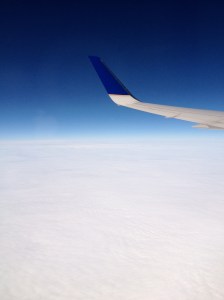
Later today—at this time of morning the use of the word “day” feels ironic—I’ll be on a plane heading out of civilization. Well, to be more precise I’ll be flying to a place from which I can drive out of civilization. Airports only serve cities, after all. Until we get individual drone service to remote locations I guess we’re stuck with jets and their inconveniences. I have to admit I’m more nervous than usual about this. I’ve been reading the stories about airline thugs who, like terrorists, beat and drag passengers off the plane. I try to take extra care to choose an undesirable location on the jet—next to the restroom, for example, or really near an engine—so that an airline employee would rather wait for the next flight than to sit here. I remember when flying used to be fun.

One year I’d lingered a little too long with my girlfriend and I had to rush to Logan Airport to catch my flight to Pittsburgh for the holidays. Arriving maybe half an hour before my scheduled flight, like a pre-murderous O. J. Simpson I ran through the concourse with nary a TSA agent in sight. To the what I am now sure was annoyance of the other passengers, I arrived at the gate just as the door was closing. With a sigh they let me board. I tried to ignore the angry stares of those already seated and belted. We all made it to Pittsburgh, however, in time to celebrate with our families. Now flying means adding at least two hours to your travel time so that you can get through security that makes you feel no more secure. I’m frisked and prodded and made to feel guilty for doing nothing more than wanting to get away from civilization for a while. We call it civilization anyway.

The wait in the airport is the hard thing. They’ll offer wifi, but you’ll have to pay for it. I’ve trained myself to read on the bus, but when you’re awaiting the announcement of your flight when you’ll have to line up just like at the Port Authority, it’s difficult to concentrate on your book. You don’t want to be lost in another world when they call your zone. There are, after all, airline employees hovering, seeking empty seats. I remind myself at the end of this ordeal a lack of civilization awaits. This is why we do it, and there’s a reason we call it getting away. Time to end this flight of fancy and head toward an actual flight that will be anything but fancy.


Literary License

Whenever I orient myself to a new place, I tend to do so by the writers who’ve lived there. As a family we used to take “literary trips” to visit locations associated with famous writers. While in the Midwest it was often Laura Ingalls Wilder, and once, Mark Twain. Here in the east there has been considerable diversity. Several locations associated with Edgar Allan Poe have informed our travel plans. H. P. Lovecraft (although, to be honest, we always had other reasons to be in Providence) naturally followed on from Poe. We visited the property of Edna St Vincent Millay in Austerlitz, New York, and later in the same trip Sleepy Hollow, to find the haunts of Washington Irving. Famous writers can be found in just about any major city and many small towns. Now that Ithaca is in our regular orbit, I’ve begun to consider the implications.

Carl Sagan is probably the most well-known of the city’s past celebrities. His premature death added an almost Gothic element to his fame. Certainly among the sphere of his fellow academics known for fiction is Vladimir Nabokov. An entomologist by trade, Nabokov turned to writing and teaching. His lasting renown in this field was for the novel he tried to burn before it was published, Lolita. Before I knew Ithaca would be in my future, and indeed, before I knew that Nabokov was either a former resident or an entomologist, I read the novel. It’s a challenging book. Humbert Humbert is as flawed a protagonist as one might find, and any character guilty of child molestation is difficult to read even in the protection of fiction. Perhaps that’s why the novel won such acclaim. The experience of men and women who read it, I suspect, is very different. It’s a novel of moral urgency.

In perhaps a more innocent time, E. B. White attended Cornell. Apart from The Elements of Style, his book-length oeuvre was mostly in the realm of literature for children. This brings the the focus back to youth. Our childhoods—whether we acquiesce to what fate seems to demand or challenge our lot hoping to improve it—make us who we are. As the years increase in number the memories become more fiction and less fact, they nevertheless remain the touchstone for anchoring our understanding of self. Some of us constantly measure ourselves against the future we clawed for as a child, like those pencil marks on the doorpost showing our physical progress. Having been unable to afford the luxuries of travel when I was young, I add a notch to my literary belt every time I travel to Ithaca, knowing full well that only the slimmest of minorities could find my very obscure hometown on a map. If I remember correctly.


Heresy Collection

Geology isn’t a great avocation for those of us with an unsettled existence. Having grown up with a fondness for fossils—maybe because they were so transgressive—my initial collection was tossed out because of a family move. Rocks are too heavy to take with you. I made the mistake of thinking, back in my Nashotah House days, that I was settled enough to let my rock-hounding sensibilities loose. Not that fossils were common, but Wisconsin has some great geological formations and I joined the Wisconsin Geological Society and even dragged my family along on some field trips. By the time Nashotah informed me my talents were no longer required, I’d amassed a few boxes that I was embarrassed to admit to the movers that, yes, contained rocks. New Jersey also has some great locations for rock-hounding, but my sense of being subjected to sudden, geologic career shifts has kept me from picking up nearly as many stones as I’d like to bring home.

The Museum of the Earth, here in Ithaca, is a dangerous place for someone like me to visit. I thought I had my fossil-collecting habit under control. The gorges in this region are famous for their fossils. Wandering through the museum, reflecting, as it does, the immense stretch of prehistoric time, it was obvious how arrogant humans are for assuming “control” of the planet. We’re so terribly late as to be classified as invaders on this planet. The world got by just fine billions of years without us. Perhaps that’s why I experienced transgressive fossils so captivating as a child. Ironically I found them in the creek bed right behind the Fundamentalist church we attended and where we were taught that evolution never occurred. I was fascinated by what I’d now call the juxtaposition of evidence and faith. We never questioned the reality of fossils. It was their interpretation that was the problem.

You can hold in your hand the most solid evidence that life evolved and call it heresy. Those delicate impressions of creatures dead for millions of years argue eloquently against Genesis and its mere 600 decades of world history. For me the fossils always won. On trips home from the seminary I would gather more fossils to add to the growing museum of time I’d been amassing in my basement. Then a Fundamentalist administration took the same approach as my exasperated mother trying to pack to move. Jettison the fossils. They’re heavy and they kind of make us uncomfortable anyway. Maybe the idea of too much time is something the biblically constrained simply can’t face. And when I see a fossil right there on the surface in one of Ithaca’s many gorges, perhaps I need to learn simply to let it lie.


Classical Education

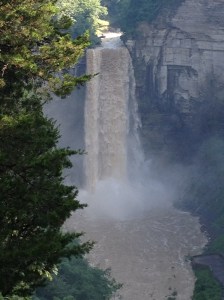
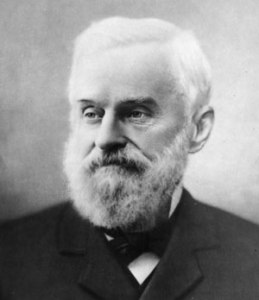
Andrew Dickson White famously wanted Cornell University, unlike what would become known as the other Ivy League schools, to be non-sectarian. Most Ivy League universities were founded as seminaries or with the strong influence of churches. On farmland gifted by Ezra Cornell, in Ithaca, New York, the school became one of the first truly secular world-class universities. As I approached Ithaca over the weekend, my wife told me that the town had once been briefly known by the name of Sodom because the remote location’s reputed notoriety for sabbath breaking, horse racing, and profanity. It is now considered one of the most enlightened towns in the country. Famous for its waterfalls and gorges, one of the cascades is still rejects the biblical slur with the sobriquet “Lucifer Falls.”

Many place names—indeed, much of American culture in general—reflect(s) the Bible. Ours is a culture in denial of just how formative religion has been for who we are. Because of our willful blindness on this point we sometimes run the risk of being entrapped by our heritage. Despite how much we’ve educated ourselves we still see what we want to see. Our religious heritage is often considered an embarrassing family secret rather than the path by which we came to be a civil society. Religion is so frequently portrayed as an evil force that it’s easy to forget just how much we owe it for our evolution. Even education itself had a religious motivation since teaching students to read was often done with the intent that they should read the Bible.

Like nearby Binghamton, Ithaca has a statue dedicated to Martin Luther King, Jr. It bears a biblical quotation from Amos without embarrassment. Ithaca today is a livable, socially conscious community. Recycling is strongly encouraged while cars are not. Hardly a hotbed of immorality, it is one of the great examples of an American college town. Ideas are welcome here. Befitting its classical heritage of education, the city is named after the island ruled by Odysseus, according to Homer. Indeed, Ulysses lies just down the road. Homer (and yet another town in the area bears that name) presented Odysseus as among the smartest of the Greek kings. Like most classical Greeks, Odysseus was only too conscious of how the gods could interfere with one’s life. Instead of denying the obvious, however, religion was recognized as a necessary source of culture. Not that it always has to be taken too seriously. Maybe it shouldn’t be completely ignored either.


A Kind of Contact

I find myself in Ithaca, New York. Places have a resonance with people, and this is one of those places I feel like I belong. The feeling may not be mutual, but that makes it no less real. At least on my part. Dominated by the presence of Cornell University, this town of waterfalls and free spirits represents everything I value. Education, creativity, and an easy familiarity with nature all have a place here. And Carl Sagan. No doubt astrophysics is far more sexy than religious studies. I didn’t watch Cosmos when it aired, but I knew of Sagan as its driving force. Before being daunted by the math, I had considered astronomy as a career; Denied tenure at Harvard, Sagan came to be associated with Cornell, to Ithaca’s enduring benefit. His house above Ithaca Falls is still pointed out by the locals.

Star status for academics, so I’m informed, is a mixed blessing. Accusations of being a popularizer are flung somewhat liberally at those who know how to explain things to non-specialists. Part of the ivory tower mystique is to remain inaccessible and impenetrable. Teaching, at the same time, is expected to open lost worlds to the curious. Sagan, like Bill Nye—another Cornell star—wasn’t afraid to take his knowledge to the streets. And such receptive streets there are in Ithaca. It’s a place a child of the sixties can feel at home. Looking for fossils in the many gorges, I’m reminded that the old and new are not so different in a universe billions of years old.

The sense of place, while scientifically dubious, is nevertheless real. Part of my ancestral heritage lies in upstate New York. My grandfather, while not a college man, took a couple of courses at what was then Cornell College to launch his teaching career. Following in grand-dad’s footsteps, my own teaching career (which, however, never included Cornell) didn’t last long. Yet somehow we both ended up passing through Ithaca. People on the street. Waiting to be enlightened by stars that shine brighter than my own. Life is a series of places. All, it turns out, are temporary. Rod Serling once said, ”Everyone has to have a hometown, Binghamton’s mine.” He left the nearby town, but he has remained there ever since. Places are that way. I’m in Ithaca right now, but the stark reality of New Jersey awaits at the end of the day.


Incident at the Wailing Wall

While reading about Jerusalem lately, I recalled my first visit to the Wailing Wall. The Wailing Wall is the only standing part left of the temple that Herod the Great refurbished on the site of the temple originally built during Solomon’s reign, destroyed by the Babylonians, and rebuilt under the Persians. This was called the “Second Temple” because the first had been razed and although Herod had basically rebuilt it, the second one had never been destroyed (that would happen a few decades down the road). Today the Wailing Wall, the western wall of that magnificent temple, is a sacred site to Jews, and to not a few Christians. My visit took place in 1987. I was volunteering on a dig at Tel Dor, and on a free weekend I’d taken the bus to Jerusalem with some friends to look around.

It was late Friday afternoon. I was on my first trip overseas, and, like most fresh-eyed youngsters, photo-documenting as much as I could. I raised my camera. A guard walked up to me. “No pictures on the Sabbath,” he said. He had a machine gun and I didn’t, so there was no arguing the point. Besides, I had just finished the roll. (Does anyone out there remember film cameras?) I stepped into the shade of an alcove to change the roll. A couple of Hasidic men stopped me. “No photos on the Sabbath,” they warned. I assured them I was just changing my film. It was clear, however, that no more pics would be snapped. I rejoined my party and took out a notebook—at least I could jot down a few impressions. Another guard approached, “No writing on the Sabbath,” he said.

This episode has stayed with me over the years. With Trump’s international tour, I’m reminded that I’ve always striven to avoid the “ugly American” syndrome. I respect the local rules. The incident at the Wailing Wall, however, was a case of religious rules, wasn’t it? Does the enforced rest of the Sabbath apply to Protestants? Indeed, I’d been warned that if I didn’t catch a bus before sundown I’d never make it to Jerusalem on a Friday evening at all. Conflicting theocracies have led to more than their share of international sorrow. Why not take the high road and simply absorb what is going on around me? There’s a profound wisdom in that. Travel should inform our worldview. Those who encounter walls should stop and consider all they might mean to all who will eventually face them.


Ode to Hubris

One-hundred-five years ago today, one of modernity’s great achievements sank alone in the icy waters of the chilled North Atlantic. While the ultimate cause of Titanic’s demise may have been an iceberg, the proximate cause was surely much more common. Human arrogance, we’re reminded daily, never learns its lesson. Despite what elected officials tell us, arrogance at the top will always lead according to its surfeit of self-confidence. After all, there are no icebergs this far south so late in the year. It seems that we’ll never forget Titanic and the hundreds of needless deaths, but somehow we’re not very good at transferring the lesson to other media. Let me give just a small example.

Yesterday I was in New York City. My family came during the day to celebrate my wife’s birthday. One of the benefits of New Jersey Transit is that after 7 p.m. on a Friday, a monthly bus pass also works on the train. I can meet up with my family after work and we can ride home in comfort instead of taking the bus, such as I usually do. We didn’t know that at 3:30 that afternoon a train had broken down in one of the limited number of tunnels under the Hudson. (Governor Chris Christie had famously stopped work on another set of tunnels to ease the commute.) About twelve-hundred passengers sat for an amazing three hours with no lights, air conditioning, or announcements. No trains could make it into New York’s Penn Station. When we arrived, oblivious, just before 7 p.m. there were people pouring out of the station. Coats and clothing were strewn all over the steps, as if the homeless had been raptured. The police told my wife and daughter not to go down. A few minutes later they said, “Definitely no shots were fired.” When we got to the platform all the monitors read about half-past five. Discarded clothing was everywhere. It was only when we finally got on a train that we learned that in the anxious terminal where crowds were restless, Amtrak police had tazed a man. People thought shots had been fired, and panicked. The video taken by those in the station shows people running, dropping clothes, luggage, and shoes in their haste to flee. Just after this, we’d arrived.

Titanic, it seems to me, is about building something so massive that it can’t be controlled. Human arrogance is like that. This week we heard about United Airlines security beating up a passenger to make room for company employees who needed to be on an oversold flight. Just a couple weeks back another New Jersey Transit train derailed in Penn Station, disrupting for days the insane commute some of us undertake daily. Who’s the captain of this ship? Oh. But we don’t have to worry. There are no icebergs this far south this late in the year.


Ready, Ames,

Ames, Iowa is famous for many things. Not only is it where my wife grew up and where we were married, but it’s also the home city of Howard Bannister from What’s Up Doc? and it served as the staging ground for the crew of Twister, which includes some scenes shot in the area. Probably its greatest claim to fame, apart from the sadly defunct Do-Biz Cookies, is being the location of Iowa State University. Often I lingered near campus during family visits, wistfully hoping that someday someone in the religion department would welcome me among the faculty. My academic curse, however, is a powerful one. And that brings me (finally!) to the topic of this post—the haunted history of ISU.

Even the first president had a biblical name.

The website onlyinyourstate (we’re evolving out of the need for a spacebar) has a whimsical story about the hauntings on ISU’s main campus. The story isn’t scary at all, but it does raise that interesting specter of the ghosts of higher education. I’ve read a few of Elizabeth Tucker’s books about haunted campuses (Tucker teaches at another family school, Binghamton University) and, having spent a good deal of my life in academia, I’ve heard many tales first-hand. The very institutions that repeatedly bash our heads with facts can’t escape their own spooky pasts. Even conservative Christian Grove City College had its share of hauntings that we all knew about. You know, the Ketler ghost, and the spirit of the basketball player who broke through a glass door and bled to death right there on campus? Every campus I’ve known has had its baleful wraiths.

Sometimes I wonder if such stories aren’t a natural reaction to having the wonder excised from the world as we mature. Most of us can make it through high school somehow believing in the real possibilities that the world might offer, only to graduate from college to a 9-to-5 existence robbed of any supernatural splendor at all. Is it any wonder coeds see ghosts? Just the other day I read that a tree trimmer with a high school education in Iowa makes a much higher salary than I do with a Ph.D. working in New York City. Maybe that’s why I enjoy the movie Ghostbusters so much. When the reality of higher education and its politics and cruelty become clear escapism can be your best friend. And if you find yourself in Ames, you might want to avoid Friley, just in case.


Can I Get a

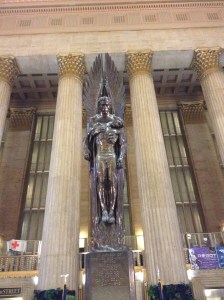
Public restrooms have always made me uncomfortable. This has nothing to do with North Carolina. It’s more an issue of being raised to be ashamed of bodily functions and then trying to shift, as it were, in mid-stream. Coming back from the Women’s March on Washington (we have to keep talking about this to give us momentum to move forward) we had an hour layover in Philadelphia. I can’t walk into Philadelphia’s 30th Street Station without thinking of Witness. Indeed, they were announcing the train to Lancaster on our layover. Then I realized coffee before a somewhat long train ride isn’t a great idea. As I headed to the men’s room I remembered what happened there in 1985. After all, with Trump in charge all kinds of carnage can be expected.

img_3158

Witness has a redemptive message. And maybe it’s a parable too. Anabaptists, such as the Amish, take their Bible seriously. Not being conformed to the world, but separating out from it is a kind of Protestant monasticism. Even those who can’t understand their lifestyle choices (so Republican in so many ways) admire their industry and care (so unlike Republicans in so many ways). The problem is, we can’t separate ourselves from the world any longer. We’re all Samuel staring out of that toilet stall. We have seen the truth and we feel vulnerable and violated and unsure of where to turn. When someone’s hurt they reach out to others for help. The others are the world. A community may be self-sufficient, but it shares the planet with aggressive others. You can never truly be alone.

The lifestyle of the mean and corrupt erupts into the calm, peaceful, and contemplative life of those who want to live simply and unmolested. Some mentalities—particularly capitalist ones—see the non-aggressive as chattels. Women, children, men who don’t fight, any minority—these can be exploited for one’s own grandiosity. We’ve seen that already in the regressive and repressive policies an illegally elected president has already started to enact. John Book is not going to come save us this time. We need to take the initiative to protect the way of life we simply wish to lead, without interfering with those who sadly believe money really means something. You and I, my readers, are witnesses. And like witnesses we have the responsibility to make certain that the world knows the truth of what we’ve seen.


Reading Lesson

“The President” responded to the Women’s March on Washington by tweeting that he was “under the impression that we just had an election!” Perhaps if “the president” read more he would understand that instead of looking in a mirror you need to look out the window once in a while. The Electoral College is even more outdated than the Republican Party and has only stood in place so long because our elected officials lack the energy to dismantle it. Like Daylight Saving Time. A loss by nearly 3 million votes is not a win in anybody’s book. I would suggest that Mr. Trump and his party learn to read. In strings of more than just 140 characters. Those who read know that Russia hacked our election. Voters can speak with their feet as well as with their fingers. We can see the Republican Party for what it’s truly become. Those accustomed to a lifestyle of theft sometimes don’t realize that others have seen their fingers in the cookie jar.

dscn6861

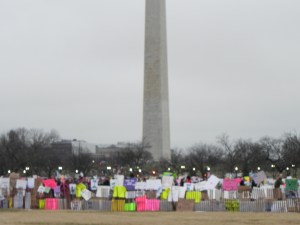
As one of the many marchers I would say if you want a mandate, look out your window. George Washington, if I recall my history correctly, did not try to put his will over on an unwilling country. Indeed, most of us believe he had too much integrity than to try to hide behind something like an Electoral College to reinforce his tenuous grasp on the reins of power. It’s our constitutional right, Grand Old Party. We can protest. Legally. We will protest. Continually. We will not let you suffer under the delusion that you won anything. Your party gamed the system and any “president” who reads would say “I can see now that I misunderstood.” Backing down is not cowardice. Listening to others is not weakness. Being “president” means having to ignore your cronies once in a while. Vox populi, for those who know how to read, means “the voice of the people.” Democracy is upheld by the consent of the governed, not electoral casuistry.

Those who rely on crooked systems to claim a mandate need to learn to read. Reading requires thought. Concentration. And the will to repair rather than to dismantle. Try ignoring the handlers once in a while. Was the “president” not at the inauguration? Did post-truth press secretaries hide the photos? Please look away from the mirror. Governing with the consent of the governed is hard work. It’s not about brokering deals and looking for one’s own best angle. It’s not about “me first.” As long as any disabled child, any woman who’s been sexually assaulted or discriminated against, and any African American can be told that his or her life doesn’t matter the job will be never ending. The accountability just started this weekend. Read and learn. We are the people.


On the Ground 2

dscn6785

Don’t believe the lies. Your government is lying to you already on day 1. I watched in disbelief as Trump’s press secretary for the White House, Sean Spicer, told bald-face lies the very first day of Trump’s reign of terror. I was in Washington, DC. My niece attended the inauguration. My extended family attended the Women’s March on Washington the next day. Spicer, clearly comfortable with untruth, lied through his teeth mere minutes after I myself stood outside the White House, saying that Trump’s inauguration was the best attended in history, far outstripping the paltry women’s march. Pure, unadulterated lies from the White House. My niece, and many others, noted how poorly attended the inauguration was. The evidence was in the white plastic matting, unbesmirched by mud on Saturday morning. The federal government disallowed the use of the Mall for the Women’s March. The unused matting was very clearly white the next morning. Around 8:30 on Saturday morning I saw for myself.

img_3152

The Women’s March may have been the most significant event of my life. I was part of something much bigger than myself. Along with thousands of others, I stood for three hours while celebrities including Scarlett Johansson, Michael Moore, and Madonna, appeared on stage to cheering crowds. There was barely room to stand. We marched past the Washington Monument to the White House. A US Security guard told us there were an estimated 1.2 million people there, making this one of the largest marches on Washington in history. Just inside that white-washed tomb Spicer was lying his face off. He castigated the press for telling lies. Wake up, my fellow Americans. On day one our new government has shown that it intends to lie and smirk its way through every attempt at honesty. My eyes did not deceive me. I was there, on the ground.

dscn6816

I work in Manhattan. New York City is a community of some 8 million people. I’ve never in my life been in a crowd as large as yesterday’s in Washington. The Women’s March was peaceful and perhaps the largest protest in our nation’s history. Protests in over 600 cities around the world joined it. An administration of the people, by the people, and for the people would acknowledge that. The smug, implacable—and I use this word sparingly—evil administration that insists on lying to its citizens is already spinning a false narrative. I was there, on the ground. This March may have been the best use of time in my life. Beware, Americans, your government will regularly be lying to you until future notice.

dscn6842