On the Ground

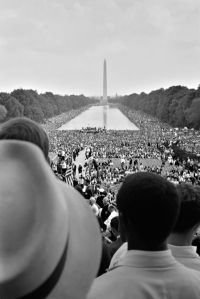
Washington, DC has always struck me as an artificial city. The neoclassical architecture is just a bit pompous and rolling into town on a train is kind of like stepping onto a movie set. Or, I’m told, into Los Vegas. Regulations about the heights of buildings make it unlike other large communities, and the Washington Monument has taken on a new phallic significance as of this weekend. I don’t come here seeking salvation. Indeed, I only came to register my dissatisfaction. I’m not alone. “Pussy hats” outnumber red caps by a long shot. It’s time to stand up and be counted. Stepping out of Union Station the first thing we saw was a Black Lives Matter protest. It’s peaceful, but forceful. Those selling Trump merchandise look like it’s a slow day. The inauguration is less than three hours from now.

Washington has some personal resonance with me. My grandmother—herself a second generation American—was born here. She wouldn’t have shared my political views, I’m pretty sure, but I believe in fair treatment for all. Even those who haven’t asked for it. The last time I was here it was for a conference. The atmosphere was more congenial then, but I’m liking the number of protesters I’m seeing here today. Woman carrying signs, wearing pink hats, talking to people they don’t even know. We’re all in this together and it sure feels better to know you’re not alone. We come upon a protest march. Police are herding the crowd away with an impressive array of black. A small crowd gathers to watch. I hear what sound like explosions. Welcome to the land of the need, the home of the rave. I’m not here to make trouble. The electoral college started it.

dscn6747

What you saw on the news last night isn’t what was taking place here on the ground. The protests here in DC have been going on all day. Even as I was getting ready for bed protesters had blocked the street on the way to Trump’s oversized balls even as the television anchors were spreading a narrative of glitz and glam, ignoring the tempest just outside. Determined to normalize Trump as if the elections of incompetents were everyday business is these states, the smiling anchors didn’t comment on the completely empty stands of the inaugural parade that were so painfully obvious. I’ve never seen so much riot gear in my life. This, they tell me, is democracy. I’m here to march peacefully, in solidarity. Marches in 60 countries and seven continents—the first ever Presidential protest in Antarctica has been announced. To see you only have to open your eyes. I’m in DC and I’m glad to be in the company of others who haven’t yet given up on our country.
Elephants and Snakes

I try to be a good son. As good as you can when living a few hundred miles from home. I call my Mom every week and when the mood’s right, we reminisce. During a recent conversation I was recollecting my first trip to Washington, DC. My grandmother, who lived with us, had been born there and wanted to see it again before she died. I don’t remember much about the trip. I would have been maybe 5 or 6, possibly 7. The Washington Monument I remember because I was terrified of heights and didn’t want to go up. The sharpest memory, however, involves the motel.

We didn’t have much money and very, very rarely stayed at motels. In fact, this is the only time I remember it happening before I went to college. It was one of those cheap places where you park right outside the door to your room. In the morning, bright and sunny as only childhood mornings can be, I remember racing around the oval, gravel drive with my brothers. We had our favorite stuffed animals with us. Mine, ironically, was an elephant. I remember that elephant well. I remember running with him under my arm and laughing and having one of the most carefree moments of my entire life. Now I think of elephants in Washington, DC and the magic is gone. We never had much money when I was growing up, but my other favorite stuffed animal was a long, black snake. It was as long as I was tall and I loved the fact that snake and my name began with the same letter. I loved him so much that his eyes came off and my mother sewed large purple buttons in their place. At that time I had no concept of how apt the symbolism might be.

400px-march_on_washington_edit

The snake and the elephant are two of the most feared creatures on land. (There is a bit of symbolism here, so please don’t be too literal.) In the biblical world the serpent can stand for good but more often it represents temptation, danger, and treachery. I loved that snake as much as I feared its real-life counterparts. And now I find myself headed to DC again. I’ll shortly be on the train to join the Women’s March, my first official protest. I don’t know that I’ll have internet access the next couple of days (I hear Washington’s a swamp) so I may not post again until the work week starts. This time I’m not taking either elephant or snake. They exist already in abundance in our nation’s capital.


Samaritans, Good and Otherwise

It’s the coldest day of the winter so far. I’m noticing this because I’m standing on the shoulder of the New Jersey Turnpike counting the NJ Transit buses that are flying by at highway speed. It’s been a morning of irony so far, which explains why I’m standing out here instead of sitting inside the broken down, but still warm bus right next to me. I felt the cold while waiting at quarter to six for my bus to show up. Thankfully on time. It’s very empty this morning; I’m maybe the fourth passenger. Somewhere along Route 22, miles later, the bus gives a distress cry. Ironically, the engine is hot. The temperature outside is in the single digits. Also ironically, the radio on our bus isn’t working, so the driver has to call dispatch on his smart phone. Meanwhile, the engine cools down enough for him to try it again. We’re fine until we pass exit 15 on the Turnpike.

While I try to think of others before myself, I sit near the front of the bus—the first or second row. That way when it’s time to get off I don’t have to wait for dozens of people to wake up, stretch, and slowly shamble into the aisle. (If you think that’s an exaggeration, you don’t commute by NJ Transit.) “The first shall be last,” the Good Book says, and I believe it. I lost count of how many of the company’s buses have zoomed past, but when one finally stops, I’m person number 8 off the bus. The Good Samaritan driver stops me outside his bus. “Sorry, no more seats. No more standing room.” No room in the inn. My driver urges the long line behind me to get back on the bus, where it’s warm, to wait. I was first, now I’m last. That’s why I’m standing out here in the cold. As I approach the bus I see all the first several rows are filled by those first back on the disabled bus. They will be the first to be offered a ride by the next driver along this road to Jericho.

winter

The guy behind me, now in front of me, comes to the same conclusion and waits outside too. At least we both have beards. I’m thinking of Jesus’ words about the end of the world. “Pray it won’t come in winter.” Out here, all prayers are frozen. At least thirty NJ Transit buses buzz by creating their own wind chill before another stops. I want to be first because I paid more for my ticket than those who sat further back on my bus. In fact, I could rent a small apartment in many places in the country for what I pay a year for a bus pass. I wonder if that’s what it means that the first shall be last. Or maybe my brain’s just frozen, since it’s the coldest day of the winter so far.


United or Untied?

Beliefs can be most problematic things. I’ve spent the better part of the last five days in one of the reddest of “Red States.” People in Texas were unfailingly friendly and kind. They seem genuinely interested in helping me although I’m pretty stereotypically a “blue stater” (the beard, the tweed, the glasses—there’s no mistaking it). They help me when I’m lost. They look out for my well-being. But I’ve been conditioned to think poorly of my neighbors. My father was a high school-educated working man from South Carolina. I grew up poor in Pennsylvania. This man taking my check ticket is amiable and solicitous. He doesn’t ask me what I believe.

Sometimes the Founding Fathers got it wrong. The Electoral College has created Red and Blue States. God created people. I want to think that those who are from elsewhere are different. Predatory. Out to get me. In reality what matters is that you and I are beside each other right now, and we’re perfectly happy to be so. We are people. I don’t know what you believe. You don’t know what I believe. It really doesn’t matter unless you believe you should harm me or I should harm you. (I don’t.) This isn’t normalizing the devastating administration constructed brick-and-mortar on hate. There are legitimate foes to face. Me? I’m on the side of the people. All the people. Female people. “Foreign” people. People who love those who are biologically similar or different or anywhere in-between. I can’t believe that our government has tried to drive such a deep wedge between us. From Camelot to Asphodel in one lifetime.

img_3087

Our deeply divided country is in need of healers, regardless of belief. From everything I’ve heard there is no health in the incoming administration. Business has long been the enemy of people—long before Adam Smith formulated its name those who have, without intervention, take advantage of those who have not. Its no coincidence that those wounded in service of their country are given purple hearts. Not red hearts. Not blue hearts. I’m here among people who wish me well, and who, although they’ve disagreed about politics in the past, have never allowed an election stereotype them so badly. We need to end the Electoral College and its unholy progeny of red and blue and swing states. Let people be people who unite against the real enemy—the one that’s trying to tear us apart. That’s something I truly believe no matter how problematic it might be.


History and Its Discontents

img_3081

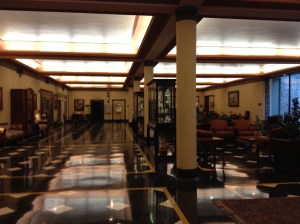
I’m standing in the lobby of the Menger Hotel. Before history becomes too falsified to recognize, I want to soak up the fact that Theodore Roosevelt organized his Rough Riders in this very hotel, and that O Henry stayed here. There were other notables too: Ulysses S. Grant and Robert E. Lee among them. Southern and Northern supporters, Republicans and Democrats, writers and fighters. Once our country was big enough for everyone. I have a feeling that narrative history will be rewritten. I don’t think they make them like Teddy Roosevelt any more. A rich man who actually did care for the poor. There was a day when such things could be said without a wink and a nod. Before “In God We Trust” was inscribed on paper money, confusing forever deity and dollar. I breathe deeply. History weighs heavily upon me here.

Those of us who study ancient religions can’t help looking backwards. There is a consolation in it. Before progress also becomes a myth, I can stand here and gaze back into days when those who were presidents actually read. Theodore Roosevelt wrote books. He believed that the rich had serious social obligations. He had no words of complaint when his nephew Franklin Delano decided to join the Democratic party to become the president who saw this nation through the Great Depression. Today we stand on the cusp of an even greater depression. Or the Great Oppression. At least the incoming administration won’t need to stay in drafty old hotels. They’ll just built tasteless modern ones and say that they’ve always been there. Post-truth is the only truth now.

“The Gift of the Magi” tells the story of a doomed trade. A couple each sacrifices something they value to give the other a gift that they cannot use due to that very sacrifice. It’s kind of like electing a president out of spite. Like cutting off your hair when your Christmas present will be expensive brushes. Like believing that having money equates to intelligence. I hope there’s still something of Teddy Roosevelt left in this hotel. A sense of greatness that didn’t need a red cap to make itself appear as a lover of people. Roosevelt didn’t flinch from insults. He delivered a campaign speech after having been shot by a would-be assassin, bullet still lodged in his chest. He wasn’t a perfect man, but he believed sincerely in the obligations of the wealthy. I want to inhale that history before all of this becomes just another piece of fiction for an administration that doesn’t believe reading to be fundamental any more.


Foundation Myths

Foundation myths are some of my favorite myths. If you’ve got to believe in something, it may as well be something fun, right? Usually before I travel to a place I do some research on it. For some reason November of this year has proven to be under a kind of shadow and I wasn’t thinking clearly in the run-up to this year’s AAR/SBL meeting in San Antonio. I’d traveled here once before, and when I raise that occasion with anyone the automatic response, like so many automatic sprinklers, is “that was the year it rained.” This may be the year of the flood, but at least the skies have been dry. I decided to make up for my lack of knowledge by taking in the markers along the River Walk. There’s quite a lot about saints and the founding of this city. I learned that it was named for Saint Anthony of Padua. The site of the first mass, in 1691 (just a year before hell broke loose in Salem) is marked with a granite slab along the green river with its endless supply of ducks.

We’re fond of naming cities after saints. San Francisco, Saint Louis, Saint Paul, San Diego, Saint Petersburg. Perhaps we’ll soon be adding Leningrad to that list. I suppose we like to compare our communities to our better angels. We’re all trying to be good, after all, aren’t we? With all these saints looking over us these ought to be very kind cities indeed. We have yet to name a major city after Jesus, but that doesn’t stop the saintly communities from trying to cash in on the big name.

img_3051

Conversion has become a somewhat problematic concept. In current doublespeak we would all be better off if we were the same. If what I’m hearing is correct that means Caucasian, male, pseudo-Protestant, and rich. Well, we don’t want too many to be rich—it’s hard to feel special if too many join the country club. Our saints are those that know how to shuffle the money and make it all look above board. Meanwhile we can sell our Jesus tee-shirts and have those admittedly Catholic saints stand guard over our walls and bless our rifles and condos. It’s pleasant to live in the new promised land. Too bad the good Lord made some kind of error the first time around, but to forgive is divine, after all. I think we can afford to be magnanimous when we’ve got the saints on our side. Myths are so much fun to believe.


Who’s Bigger?

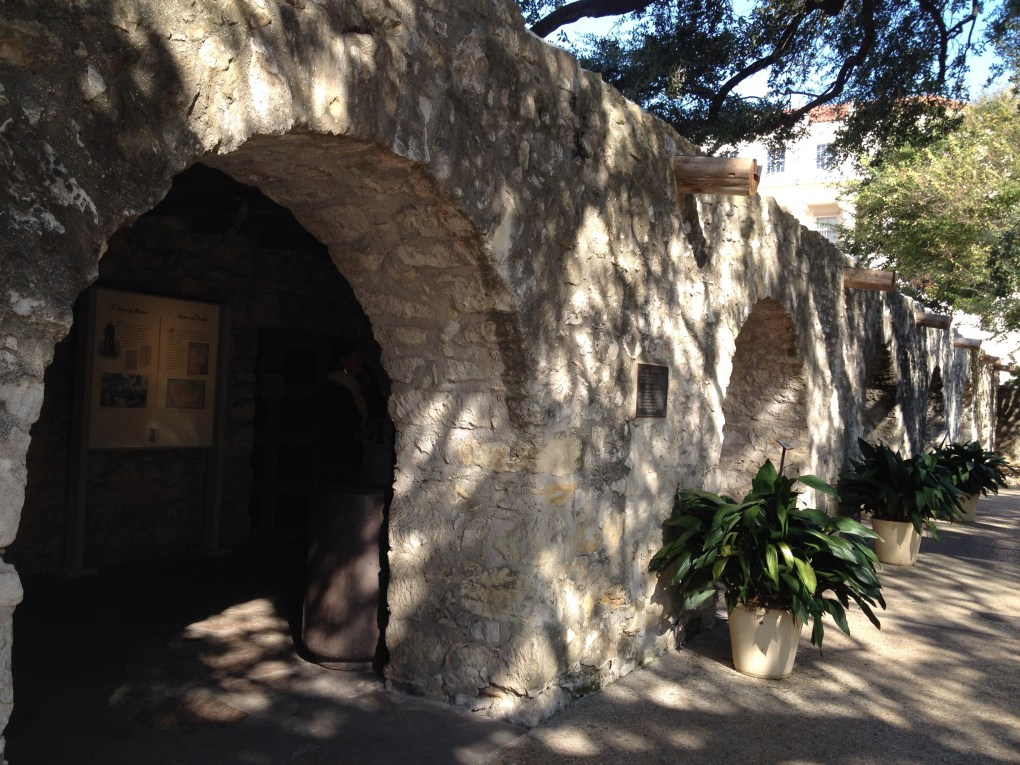
Sometimes we have to work so very hard for unity. On the day before the conference proper began, I decided to take in some of the sites. In San Antonio this means the River Walk and the Alamo. I was awake early, as usual, and since the Alamo doesn’t open its doors until 9 a.m., I took the River Walk first. Seeing the gift shops selling countdown to Obama’s last day novelties, I had to shudder. It may be a sad day when you have to look to the Alamo for consolation. What looked like a rainy morning became a sunny day and the Alamo was crowded by the time I arrived. Last time I was here I stopped in the church, and I think that was it. I decided to look in the Long Barrack room, noting the sign that read “Please remember this is a place of reflection and respect.” No photos. No food. Just respectful thoughts. I stepped inside.


img_3055

There can be no disguising that this site was host to a bloody battle some time ago. As I looked at the period rifles and the caliber of the musket balls graded up to cannon balls, I reflected how we’ve invented ways to hurl bigger and bigger pieces of hateful stone and metal at each other, faster and faster. A few thousand died near here, perhaps some in this very room. A couple of guys walked up and one said to the other in his beautiful Texan accent, “There’s some beautiful weapons here.” I could almost hear the tears in his voice. His companion agreed. “They’re bigger than what I carry,” he prayed. People had died here in the past, and it seemed that perhaps the best we could look forward to was more deaths in the future. Reflection and respect.

There’s no point in visiting a place like the Alamo without a sense of the history that made this place what it is. It is not a shrine to glorified warfare. It is a mission, an abandoned church, that became out of necessity a place of self-defense. I just can’t shake the thought that so many people died here, but the point of visiting seems to be celebrating a nation where you can wear your weapons proudly. It is a supreme irony that this particular November the conference I attend happened to have long ago locked in this particular venue this particular year. I could very much use a place of reflection and respect. Instead, I’m thinking of how so terribly hard it is to work for unity in what seem to be the increasingly Untied States.


Remember the Alamo

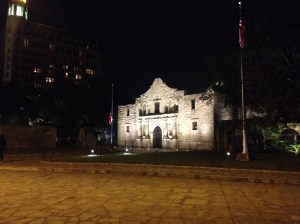
I’ve never started a fight. I’m actually a very conciliatory type, willing to be wronged in order to avoid an unnecessary confrontation. This election has made me feel a little pugilistic, however. The sheer size of Trump’s loss based on the popular vote makes me hope I’m not alone in this. I find myself in San Antonio at the moment. The American Academy of Religion and Society of Biblical Literature annual meeting, which rolls around the weekend before Thanksgiving, has been a regular aspect of my career since 1991. My hotel room overlooks the Alamo, and the implications—indeed, the irony—are not lost on me. I don’t know a great deal of Texas history, but what kid grows up without hearing about Davy Crockett, who died a few yards from where I lay down my head?

img_3034

I’ve known many Texans in my life. Many of them have been, and continue to be, perfectly reasonable people. Good and loyal friends. Lots of people like to live here. Indeed, the population of the state has swelled over the past quarter century. I’ve also encountered Texans (particularly at Nashotah House) who acted like the enemy at the Alamo wasn’t Mexico, but the other states. In the light of last week’s election I’m reminded of the words of one of the Mexican officers, after Santa Anna declare the battle a light one. Reportedly another officer quipped, “with another such victory as this, we’ll go to the devil.” Voices from the other side of the wall. Maybe it’s the lack of sleep from getting in so late, but I’m looking at the Alamo and Pink Floyd’s The Wall is going through my head. The lesson of the Alamo is that although you may lose the battle you can still win the war.

This is my second visit to San Antonio. Last time I was here, for the same conference, one of my doctoral advisors was over from Edinburgh, and we walked through the Alamo together. Today we are lamenting Brexit and Trump together. By slim margins the alt-right has learned to game the system. The problem seems to be apathy. It’s clear that we’re going to have to fight from now on just to get a little social justice around here. Strange words coming from the fingers of a lifelong pacifist, but you’d think that the work of Martin Luther King, Jr. and Susan B. Anthony might have had more lasting effects. Perhaps it truly is time to remember the Alamo.


Giving Trees

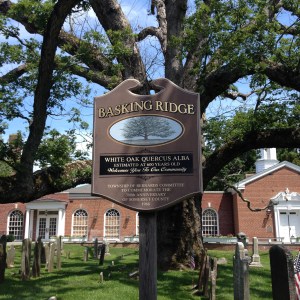
They’re not exactly worshipping the tree, but the Basking Ridge Presbyterian Church is holding a memorial service for the old oak tree. I’ve written about the Basking Ridge oak before. I learned about it only in January, and I visited it this summer. Some say it’s the oldest tree in the state, while others make that claim for the Great Swamp oak, which isn’t too far away. The climate change we’ve introduced, as well as natural aging, appear to have doomed the tree. It had leaves this summer, but not in the profusion that signals health to botanists. The decision has been made to take the tree down before any massive branches fall and cause injury or damage. In the light of these sad developments, holding a service seems perfectly natural. The tree is older than the church over which it presides, after all. It’s even older than John Calvin who started the Presbyterian tradition.

img_2878

My first book was on Asherah, the goddess often associated with trees by scholars. As those who’ve read my book will know, I’m a bit skeptical, on the basis of the actual evidence, that Asherah was a “tree goddess,” but it is also clear that trees are ancient objects of veneration. From the human perspective, they can live a very long time. There is a bristlecone pine in this country that dates back to before Noah’s flood (something the creationists conveniently ignore). With that much life-force, which, we’re told, is really a fiction, these trees deserve special respect. After all, they were in the neighborhood long before we got here. Still, the Basking Ridge oak has been artificially preserved before. It’s been on life support for years. Concrete was poured to support the massive trunk, and many ponderous branches are shored up by support rods. We respect our elders.

Maybe it’s not tree worship. Maybe it’s worship beside a tree instead of worship of a tree. Prepositions can make all of the difference. Nevertheless, it’s an occasion to stop and consider our place on the planet. The fear many of us feel regarding this week’s election is a mere second in arboreal memory. The independence of this country came after the oak had been here centuries already. It may not be tree worship, but we should respect the memories of such a tree. A country young and optimistic rather than old and jaded. Maybe this tree knows a secret that it’s willing to bequeath to those of us whose lives are but a few leafing seasons in length. Good-bye, Basking Ridge Oak. It was a pleasure to meet you.


Before and After

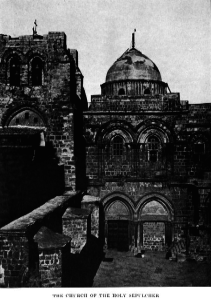
Fresh from seminary with a head full of historical-critical theory competing against my immortal soul, I was lost in the Church of the Holy Sepulcher. I’d learned enough in class and in my own reading to know that the association of Jesus’ burial here only dates back to the fourth century. And also that the identification was made by a politician—Helena was the mother of Constantine—and not a archaeologist, or even a theologian (God help us!). The location was, in other words, hearsay. Three hundred years is a long time to keep track of where something happened. I sit on a bus trundling through Weehawken every day and ponder that we don’t really know where Alexander Hamilton was shot. Such are the ravages of time. I was young and, presciently didn’t know if I’d ever return to Israel, so I wanted to make sure at the time. It was holy confusion. Finally an elderly Coptic monk beaconed me into his edicule to touch the stone. He gave me a cheap rosary and asked for a donation.

churchoftheholysepulcher1885

The scene returned to me when a friend sent me a story about the “discovery” of the actual chamber behind the build-up. The report by Fiona MacDonald in Science Alert briefly tells the background to the location and describes the hurried excavation. Still, we have no idea if, as Indiana Jones might say, “They’re digging in the wrong place.” Tradition has nevertheless hallowed the spot. For seventeen-hundred years some people have suggested this is where it all happened, and where many of the liturgical churches agree. Some Protestant groups, attuned to the Bible a bit more than tradition, have suggested The Garden Tomb is the correct location. The years ago when an academic future seemed in store, I stopped by there too, just in case. There were no crowds.

An enormous amount of effort was poured into building and maintaining the Church of the Holy Sepulcher. Crowded with tourists and various orders of clergy, I wondered how anyone might find such an experience spiritual. Territories are marked out between the various denominations seeking legitimacy in stone. Who wouldn’t want to own the spot where it actually happened? Wouldn’t that be the ultimate truth claim? So more money is being spent. More digging is taking place. Science, some believe, might come to the rescue of religion. From my experience, brief though it was, trying to make sense of the Holy Sepulcher, I have my doubts. But what do I know? I’m not even sure if Copts use rosaries.


Reveries of the Fall

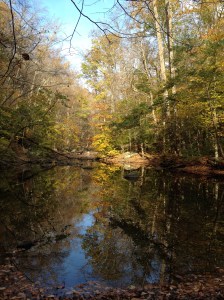
Just a quarter of an hour, studies show, of time in the woods can reduce stress. I suspect that if those fifteen minutes are spent running from a bear the opposite might result, but in general time in nature is an incredible solace. The weather hasn’t been particularly cooperative for October walks in the woods around here, but yesterday my wife and I managed to spend some time, along with many others, in Hacklebarney State Park, one of New Jersey’s gems. Living in the most densely populated state, to gather from the number of hikers we saw, encourages time in the woods. It was good to be reminded of the compelling scent of autumn leaves, the wonder of seeing their colors in the daylight when daily commutes begin and end in the dark. When work days are spent in the grayness of the city. Being out with nature, to borrow words from the Good Book, restoreth our souls.

img_2989

I suppose there’s nothing really logical about it. We’ve built civilization to protect ourselves from nature. Solid walls to keep predators out. Heat, running water, and electricity so that we can surf the internet without ever going outdoors. Permanent settlement always within reach of cell phone service and work email, we are the scions of civilization. Being unplugged just for an hour or two—even fifteen minutes—can feel like salvation. If that fifteen minutes is spent among rocks, trees, and the peculiar light that reflects off a lazy river. The internet will always wait, won’t it? Thoughts of work can be suspended until Monday, can’t they?

Hiking among the other expatriates of civilization in what used to be the Garden State contrasts so sharply with the image we project to the world. The Chris Christies and Donald Trumps who bluster that nature is there to be exploited. They may not say so with words, but lifestyles speak so much louder than syllables. Gaining wealth requires putting one’s own agenda first. We’re out here picking our way carefully over a rocky path. We have to stop frequently to let others go by the other way, or to let those faster than us pass by. But we’re all out here for the same reason. It’s a beautiful autumn day and spending it indoors feels wrong. I know that even getting online now feels like my time is being demanded by a million distractions. Unplugging, walking at a moderate pace, feeling the cool air and breathing the aroma of fall deeply into tired lungs, I can feel the stress draining away. If only for a day.


Finding Your Way

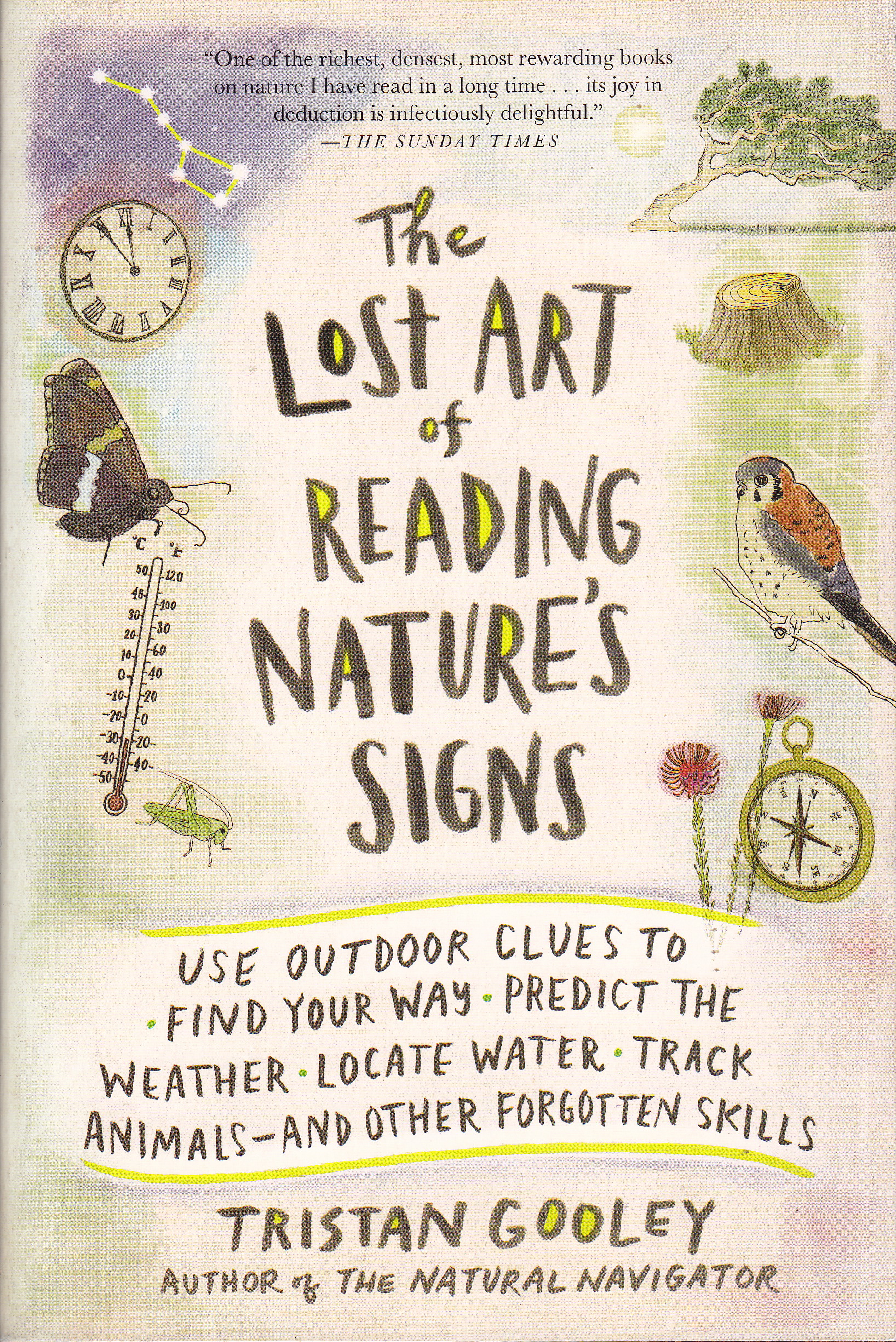
Once while visiting the house of a friend, we took a walk in the woods. It was an area I didn’t know and after a few minutes it became clear that we were lost. There can be nearly no other feeling more frightening for a child. We wandered in the trees shouting for help for what seemed far longer than the maybe twenty minutes or so that my friend was disoriented. The message was clear: never go somewhere unless you know how to get where you’re going. I’ve been lost a few times since then and the gut-twisting fear is the same. Where am I? The Lost Art of Reading Nature’s Signs, by Tristan Gooley, is an amazing book for anyone who’s had that experience. We are residents of earth and we should know how to find our way around the place. Instead, most of us live in urban environments and never spend a lot of time outdoors learning that nature provides many, many clues to finding your way. You just have to know what to look for. I found myself wishing I could memorize large sections of this tome, assuring myself I’d never be lost again.

There is an irony about reading such a book during the commute to Manhattan. Apart from his small chapter on navigating in cities, Gooley spends most of his time offering advice on spotting hints in nature. I can’t believe the behavior of the mice, rats, pigeons, and cockroaches I’ve seen in the city is any less neurotic than that of the people. In nature trees, plants, land forms, weather, fungi, and the stars can all be used to guide a person home. There is a touch of quaint Britishness to the book, but the tips included quite often branch out to specifics in the United States, or even elsewhere. What all of this means is that in its own language the earth makes sense. We need to learn this language. Although Gooley doesn’t say it here, when we destroy our environment we’re increasing our ability to get lost.

One of the more interesting sections of the book used churches as a means of orienting oneself in unfamiliar country or a town. Church architecture, at least initially, followed a regular logic with an eastern orientation and opinions about the sacredness of the ground on the north-south axis as well. Knowing this holy geography, along with the ability to read lichens growing on the outside and finding the clues on tombstones, you can often find your way. There’s some poignancy here. There was a time when churches, synagogues, and mosques were natural means of showing people their cardinal points. We’ve come to rely on our devices to show us the way, and it’s a little early to know if that’s been a mistake. And if it weren’t for work today, I’d be outdoors, taking a walk and trying to learn to find my way through nature.


Enter the Labyrinth

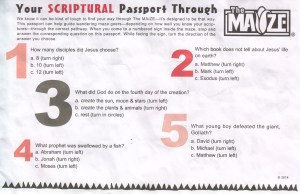
Trying not to think too much about Children of the Corn, I visited a corn maze over the weekend. This particular autumnal activity highlights just how much detail a human mind can pick out in a mass of sameness. You can tell if you’ve been to this particular juncture before—that oddly shaped leaf, or that peculiar stone, or that specific ear with the missing teeth will give you the clues. This particular maze, however, also uses printed clues. Before you enter the labyrinth, you may choose your species of guidance. There were 4-H clues, Girl Scout clues, history clues, and more. One of my companions handed me the scriptural clues. Although it may have been an obvious connection, I thought about it in terms of salvation. A corn maze is not unlike life in the real world; confusion, false leads, and aimless wandering. Having a guide—in my case, knowing the Bible—will lead you out.

corn-maze

Of course, the point of a corn maze is the fun of getting lost. This particular farm had eight acres dedicated to fall fun, and our party did get hopelessly mired in one location and had to ask for help from the corn cop who wanders like a friendly minotaur, or maybe a personal Daedalus or helpful Ariadne, directing those who’ve lost their way. The idea is that once you enter the maze, you look for numbered clues at various junctures—only a few crossroads have them—and answer the question for instructions about which way to go next. Even with the Bible in hand, or in head, we managed to lose our way. Baptized by a sudden cloudburst, we sought shelter in an open field. The only way ahead was to press on.

Those who’ve been with this blog for any length of time know that it is intentionally kind of a labyrinth, often using metaphor. In the case of the literal corn maze and its clues, minimal biblical knowledge was required to figure out the correct way to turn. The trick was even after getting all the hints, there was still some distance to go. Wet, confused, and having only our wits to go on, by trial and error we made it through. Our instructions—for we each had a different set of questions—only got us so far. My biblical guide was damp and see-through with the soaking we received. Metaphors were falling as fast as the rain. After all, the point of a corn maze is that you don’t get your money’s worth unless you get well and truly lost.


Reflecting Ourselves

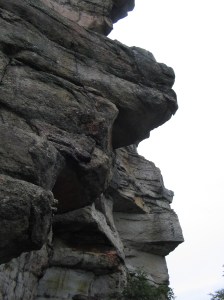
There once was an old man from New Hampshire. No, this isn’t a limerick. He was famous enough to get his face on the state quarter, back when they were doing that state quarter thing. Then he fell. The Old Man of the Mountain was no more. We like to see ourselves in stone. On a trip with my wife and a couple of friends in my post-grad days in Edinburgh, we were driving around the Isle of Skye. The largest of the Inner Hebrides, the island has a mysterious natural beauty. One of the most famous monuments on Skye is the Old Man of Storr. Postcards always show it to be a rock pillar jutting up by itself at the base of a mountain. As we approached the old man from the north, I got the joke. My friends still dispute it, but if you look at the mountain crest above the pillar, it forms a perfect profile of an old man’s face. Then what is the rock pillar? It’s just the right distance from the old man’s face to be, well, you get the picture. I’m convinced that those from Skye laugh at all the tourists taking a picture of the old man’s naughty parts.

The technical term, as I’ve discussed before, for seeing that which isn’t really there is pareidolia. Some people call it matrixing. Our brains, wired to see other people, often see them where they don’t exist. The Old Man of the Mountain formed a passable human face before the rock face collapsed in 2003. This past week I read an article in the Washington Post of the collapse of Duckbill, a rock formation in Oregon’s Cape Kiwanda State Natural Area. Like many cases of pareidolia, this rock pillar was only seen as a duck by those whose brains make the connection. People like to go see that sort of thing. It makes us feel less alone.

Do you see it?

Do you see it?

The article by Cleve R. Wootson Jr., however, points out that Duckbill didn’t jump. He was pushed. A group of eight guys, caught on video, rocked the pillar until it toppled. This is why we can’t have nice things. The deliberate destruction of monuments is a crime, and the culprits are being sought. Make Way for Ducklings, the Robert McCloskey children’s classic, was cast in bronze in Boston’s Public Garden. In 2009 vandals stole one of the ducklings, which was quickly replaced. It’s difficult to understand the mentality of those who wish to destroy our duckbilled friends. Yes, Duckbill was only rock. No, I never had the chance to see it. As long as the Old Man of Storr lies recumbent in the Scottish highlands, however, we will have grounds to wonder.


Hi Ho, Hi Ho

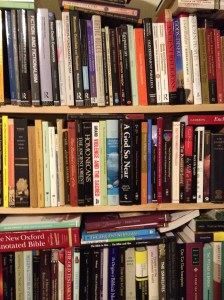
I’ve been writing about reading. No surprises there, I suppose. My wife recently introduced me to BookRiot, and I wish I had more time to spend there. A recent post by Aisling Twomey describes how reading on her Tube commute helps keep her sane. Here is a good case of convergent evolution—I came to the same conclusion after about a week of what turns out to be about three hours a day commuting to New York City. We didn’t move to my current location to work in Manhattan. My job was in nearby Piscataway. It was only when a headhunter found me a job at Routledge that I began the daily trip. The problem is I get terribly car sick. To this day I can’t read in a car. Some days I can’t read on the bus either. Gradually, however, I trained myself to do it, and the results have been worth it. Ms. Twomey has read over fifty books this year on her London commute. I suspect my commute is a bit longer since I’ve read a few more than that. Still, we tilt against the same windmill, so we need to appreciate the dedication it takes.

I was talking to someone the other day who was complaining about cell phones. She said, “I used to read a lot. I worked in a book store. It was great.” Her cell, she said, gave her a stiff neck from constantly looking down. And a sore thumb from swiping and texting. And yet, she lamented, she just couldn’t stop. Books may well be a vice. I’m as bad as any addict. I have no idea how many books I’ve read in my life: the number is in the thousands rather than the hundreds, I know. And even the books I regret, I don’t really regret. Reading is a coping mechanism.

img_0670

One of the things that the traditional ancient religions all have in common is books. Not all of them treat sacred texts the same way, but they all have some form of sacred writing. There was an implicit sense, I believe, from the first stylus on clay, that something truly special was going on here. Holy, even. Writing is one of the great joys of life. Reading is another. Both are sacred professions. In a way it seems a shame to have to be forced into a commute in order to find time to read books. Still, the constant flow of new material has a life-saving quality to it. I can’t imagine spending fifteen concentrated hours a week texting. I don’t know that many people to text. The ones I do know I know through their books. And they’re very good company on a long ride.