
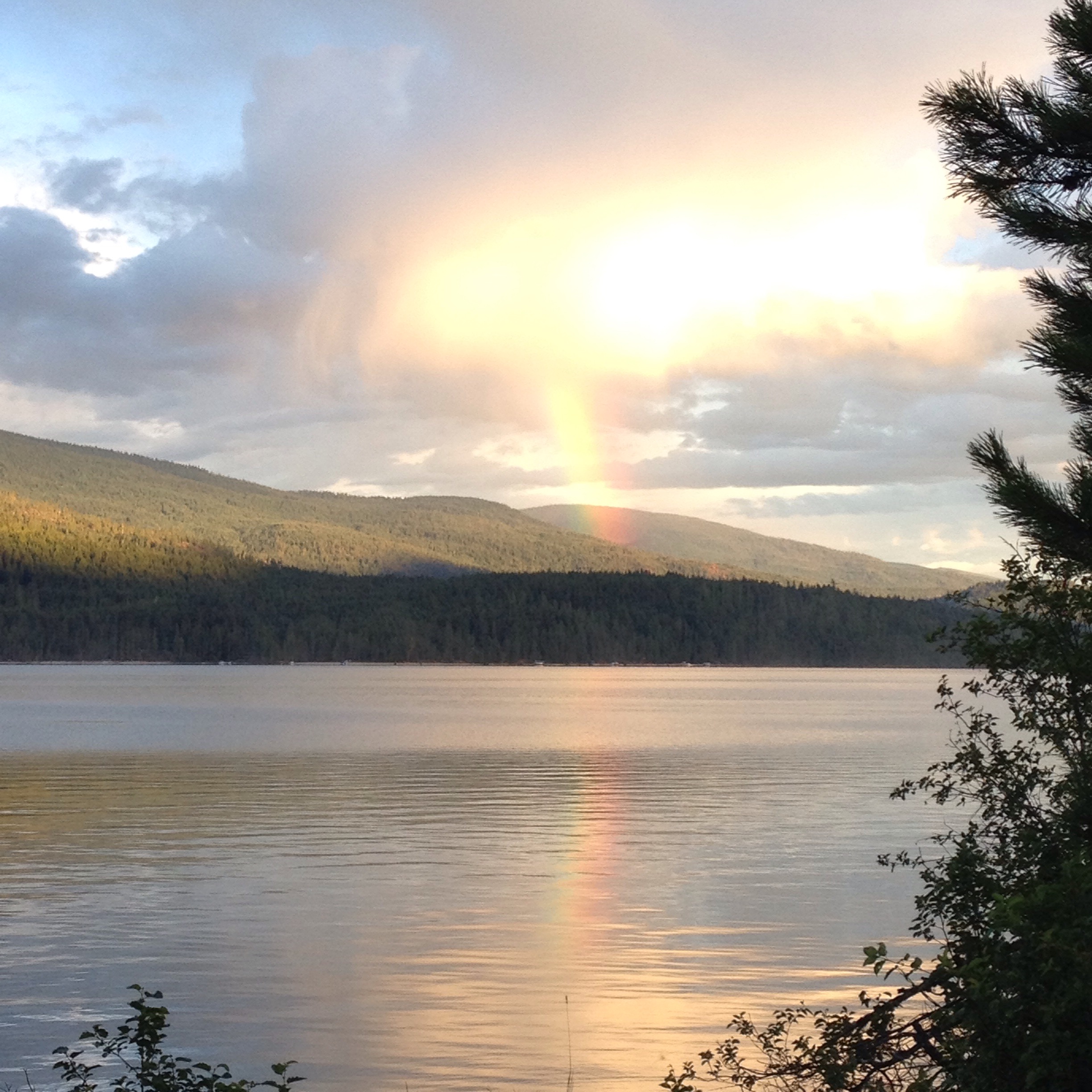
I’m on vacation for a week. My job is such that taking vacation is becoming a rare commodity, what with precious few allotted days and move-in, move-out schedules of a collegiate child, and so on. And also company policy about keeping employees in the office between Christmas and New Year. Anyway, now that I’m here I should be kicking back and enjoying the beautiful lake and getting out to do the things inmates of the city seldom do. It has, however, rained every day that I’ve been here. Not all-day rains, of course, but just enough that plans have to be interrupted or changed at the last minute. I end up sitting in the cabin playing Solitaire when I should be out getting some fresh air. So it goes.
Ironically, I am staying in the drought-stricken west. The western United States, I learned when researching for Weathering the Psalms, has been ensconced in a decades’ long drought. In fact, prior to my family trip here it hadn’t rained in quite a while. Our arrival with the clouds was, after all, mere coincidence. Still, it’s hard not to take the weather personally. I know that the weather is larger than any one person’s needs or desires. I also know that water is a commodity even rarer than vacation days, largely because of our misuse of the limited supply that we have. California’s plight has been in the news. We have large cities in water-challenged environments and people treat water like there’s no end to its abundance while the opposite is the case. Just thinking about it makes me thirsty.
There are many things a person can go without, some of which feel absolutely essential at the time. Many vacations, I know, are extravagant. Fancy hotels, high-priced entertainment, exotic locations. Work can feel so crushing that vacation my become the one island of sanity in the midst of a hostile ocean of obligation. For me, vacation is time with family in a stripped-down, natural setting. Of course, we do indulge in some of the comforts of home, but having nothing in view outside the window beyond that which nature dictates is a transcendent experience. From where I sit, I can see nothing of human artifice. I do see clouds, however. I know that more rain is on the way. And I know that it is a gift, complain as we might, of the highest magnitude.
Ancient Tech
I feel like scraping Roman numerals on the wall of my cave with a sharp rock. One for each day I have to spend without my laptop. I’ve been working on this blog, born in this very cabin in which I sit, for six years now. With some exceptions, I’ve posted something new (and, I hope, thoughtful) every day. Even holidays and weekends. Most of those posts have been written on the deceased laptop that’s sitting in my carryon, electronic carrion. This has caused me to stop and consider that the most lasting words—the ones we all quote or at least recognize—tend to come from a far older form of communication technology: the pen and paper. Of course, there are older technologies yet. The Sumerians figured out that clay of the right consistency keeps marks made by a pointed reed pressed into it while it was still damp. Cuneiform writing lasted for millennia as the most advanced technology humanity had devised. The results, however, were bulky, heavy, and fragile. Few could learn the technique. It was an elite skill.
Nobody quotes the Sumerians anymore. Well, maybe the occasional quip from Gilgamesh will work its way to memory, but not much else readily does. The Bible, perhaps the most quoted book of all time, at least in western culture, wasn’t written on clay. By the time the earliest books of the Bible came along, scrolls had been developed. Probably suggesting itself from the way that papyrus naturally rolled up, this early form of paper—indeed, the word “papyrus” gives us our word “paper”—could be marked up with styluses or brushes and ink. Prepared animal skills, or parchment, sometimes called vellum, could also be used, but they were expensive. Pens at this period were sharpened objects dipped into ink, but the most famous words, well, penned by humankind were passed down in that medium. Copied, recopied, memorized. Electricity hadn’t even been discovered yet.

Printing presses and their children—typewriters and the consequent qwerty—have led the way since they were invented. Until, however, the 1980s at least, professors would accept only the old fashioned manuscript for papers. Indeed, the medium had given its name to the end result. We still write academic papers, although they are more often published and read electronically. So here I find myself in a cabin on a beautiful lake, surrounded by nature, worried about a communication device that can speak with the stars. There may not be workable clay here—the soil is far too sandy and I don’t have the patience to look up how to make clay on my phone—but there is paper. Pens are scattered everywhere. I am at home in the matrix that has given us the great ideas of humankind.
Musical Magic

In-flight magazines aren’t a place I turn for inspiration. Having been raised in poverty, I’ve never found the jet-set interests to be at all engaging. I can’t turn my brain off, however, even when on vacation. Still, I hate to miss anything and I know I’ve got plenty of time in the air ahead of me. I was flying Alaska Air, so the in-flight magazine possessed a native exoticism. This particular issue focused on music. Music reveals a tremendous amount about the interior life, it seems to me. Some people live their lives to a constant soundtrack, while others listen to music seldom. Music, like religion, has the capacity to stir profound pleasure centers in the brain and, if I might be so bold, where your music is, there your heart is also.
One of the music festivals highlighted in the magazine was Voodoo Music and Art Experience in New Orleans. Right across the page was Sasquatch! Music Festival in Washington state. This unusual juxtaposition caught my eye. New Orleans, in the popular imagination, at least, has an association with the “exotic,” hybrid religions of the Caribbean. Voodoo is particularly feared by those who believe that somehow the supernatural can break into this mundane realm. Magic, although difficult to define, persists even in Richard Dawkins’ neatly ordered world. What better way to celebrate it other than music? There’s a homespun charm to it. Magic, despite the best efforts of many, won’t go away.
Since I was flying to the Pacific Northwest, the Sasquatch! Festival demanded my attention. Sasquatch, while disputed, has become the gentle giant frequently connected with magic. The stigma associated with believing in a New World ape has been eroding slowly, although it’s still on the list of “woo” factors for many. Like Voodoo, Bigfoot is an American concept that keeps a belief in magic alive. Well, we were in the air by now, and many had their earbuds in, passing the time with their own soundtracks. For me, music is often looking out the window while making no demands on that probable harmony the rational know as magic.
Skewed Perspective
Mysterium tremendum is the term often applied to numinous experiences. The sense of being in the presence of something both terrifying and compelling. Used to describe theophanies and divine encounters, it can also apply to entirely natural phenomena. As a child I visited Niagara Falls since I had relatives in the region. I would watch the Maid of the Mist with a fascination bordering on paralyzing fear. The boats seemed so small compared to the roaring falls. Surely serious danger was involved. Stories of passengers returning soaked and wind swept from the thundering cataracts only added to the mystery. We were poor, however, and couldn’t afford the thrill.
Many years later I returned with my own child. It was time to make an impression. We boarded the boat and came so close to the Falls that the draw of the numinous was overwhelming. Naked power. This water, were we not safely on a boat, would obliterate us, snuffing our lives with no more effort than it takes to fall from a cliff. A mere human could stand none of it. I was simultaneously humbled and invigorated. This was like touching a source of ineffable vitality. This was no mere boat ride. I was in the presence of something undefined. Distilled force deadly and blessed.
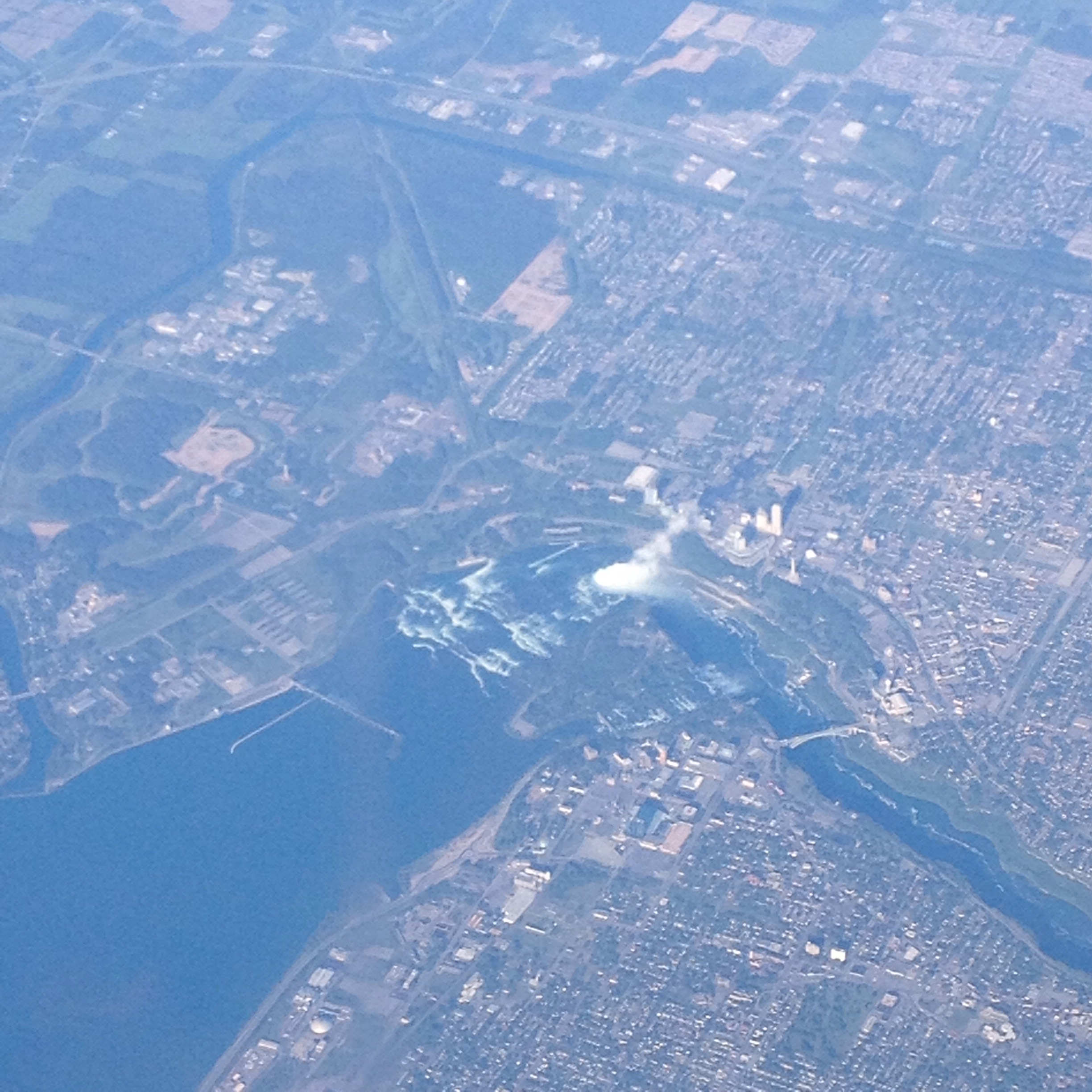
On my flight across the country yesterday, we flew over the Great Lakes. Between Erie and Ontario, we spied Niagara Falls. Navigating by air is usually a matter of inspired guesswork with me, but this was unmistakable. A large river near two Great Lakes, and a large misty curtain of spray, visible even from this altitude. Any remaining doubt was dispelled by the captain’s announcement . Here was one of the wonders of the natural world, tiny and silent from a gods’ eye view. Perspective, it occurred to me, made all the difference. Standing on the rim of that watery canyon, although the river is dammed and reduced, encompasses a sense of awe. Riding the Maid of the Mist close enough to be baptized in this unruly Jordan even more so. From above it was but one among many tiny features of a miniature landscape that had been conquered by an unnatural technology. Which was really real?
For the Sake of Fighting
Different opinions can be used for discussion or destruction. In the formal context of government, the declaration of war is—or should be—an option of last resort. Increasingly language of belligerence is status quo ante when religion is the topic. “Culture Wars” is a thinly veiled reference to the profound disagreement between social conservatism, associated with Evangelical Christianity, and progressive policies, often affiliated with nones and mainline Christian traditions that don’t wish to be left behind. For years, decades, no one side can declare victory, for example, in the debate over whether America was founded as a Christian nation. Two news stories I saw this past week addressed just that question. Fox News ran a story about a Baptist Church in Shelby, North Carolina, that has decided to fly the Christian flag over the stars and bars until, well, I guess the Second Coming. Protesting the legalization of gay marriage, the congregation wants the message, aided by Fox News, to spread that in at least this corner of the country, God comes first.
The other story, on CNN, asks the question directly: “Was American Founded as a Christian Nation?” With five professors answering the question there’s bound to be differing opinions but all agree that this isn’t a simple yes or no answer. The even larger question, it seems, is how can the founders’ religious orientations help us to avoid cultural wars? Isn’t the fact that we’re still searching historical documentation over two centuries later an answer in itself? Maybe they didn’t tell us directly because it was none of our business. Washington, Franklin, and Jefferson are quoted on both sides of the debate. Their cultural context was Christian, but as all the five scholars agree, the question didn’t become a live one until the nineteenth century. Seems that we got along a century without knowing.
The “Culture Wars” may have been there, of course, but the need for a term only arose in the late 1980’s and early ’90’s. The divide had been simmering since the end of the ’50’s, however. Leave it to Beaver versus Star Trek: the Next Generation. The media has never been shy about telling us what to think. Difference of opinion is as natural as a pre-frontal cortex. Peaceful coexistence, however, doesn’t sell newspaper or commercial airtime or space. We want the thrill of danger, the chance to declare that, unlike the adversary, we are clearly in the right. Maybe if we changed the metaphor the rhetoric might catch up. In the meanwhile, battle comes to mind. Ironically, the Bible is a place that suggests peaceful solutions to many disagreements, but neither side thinks to look there for guidance.
Law of Rule
Anyone who believes in the rule of law has never been on a broken down NYC commuter bus. There’s a rare kind of tension among the early morning commuter crowd. To put this in context I should say that I awake at 4 a.m. to catch the first us through town, five days a week. I’m usually somewhere between four and six on the passenger count, but if lots of people need to be in New York before sun-up, I may be as far down as 10. I select my seat with care. I tend to sit two seats behind the driver. I prefer the right-hand side of the bus, but there’s a regular who sits there and, I’m given to understand, she’s been doing this for over a decade. So I sit left. It’s never a good portent when I end up having to go four or more rows back. You see, the buses usually unload in a fairly orderly way, the front rows get out first, and each row takes its turn. Since too early is never early enough to be at work, I sit near the front because in the back you can lose precious minutes waiting for those who are sleeping to rouse themselves enough to find their feet and stumble off. If it sounds like I’m overthinking this, it’s because I’ve been awake since before four and how you start your day sets the tone. Where’d I put my coffee? Arriving at the office frantic and sweating isn’t the best way to impress anyone.
There’s a kind of comfort at being at the end of the line of service. Of course, the commute home means you’re on the bus longer than people who can afford to live closer to the City. First on, last off. Although I easily fall prey to motion sickness, I have taught myself to read on the bus. An hour in and two hours out are goodly amounts of time to really get into a book. I hate to waste time.
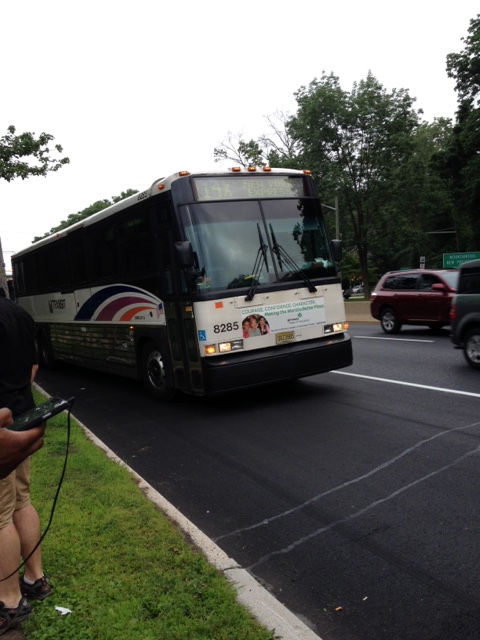
You can smell a bus breaking down. I always hope the driver doesn’t catch a whiff, because s/he’ll call the control center and lawyers will dictate that the bus be stopped. By definition, you’ll be late to work that day. So when I smelled something burning, I hoped I was the only one. Luck has never been my strong suit. The driver pulled over and announced, in a soft voice, that we’d have to wait for the next bus. That means I could’ve slept in for ten more minutes.
The next bus is an “express”—that is local compared to my bus. The driver said, “Just stay in your seats, and I’ll call you.” Of course, people started to get off to form a line, despite the captain’s words. In a universal display of self-importance, those who just got on immediately hurry to get off first. They’ll be first in line to get seats on the next bus. Those who obey the driver are penalized. When it became clear that I could hear crickets chirping on the bus, I decided to put away my book and join the line. After quite a wait, the local came. That would get us to the City in time for work tomorrow. Several minutes later the express came. Those at the back of the line behind me hurried over. By the time I’d gotten there, still trying to honor the most ancient of queuing honor codes—the line—all the seats were taken. Those in the front of the line, now the back, headed over to take first place again, since they had expected the rescue bus to pull in front of our smoking wreck instead of behind, where it did. They weren’t shy about elbowing their unrighteous way to the front when the next bus came. I’d been on the abandoned bus since before 6 a.m. I made the third bus. The guy in my row on the adopted bus tried hard not to make room for a new passenger next to him. I was headed to New York where, I know, all the rules are off.
High Places, NJ
The “high place,” in the Hebrew Bible, was a source of constant vexation to the “orthodox.” Scholars have long puzzled over what was meant by the term, the assumption early on being that they were geographically the highest points around. Although that interpretation no longer holds the sway that it once did, the concept of the high place has remained. I suspect that’s because there’s something mystical about being at the highest point around. July 3 was a rare holiday for everyone in the family, so this year we headed to High Point State Park. High Point is the geographical highest point in the state of New Jersey, up near the New York border. It’s not as high as the mountains you might see in the western part of the country, but at the top there is a panorama that gives unbroken visibility in 360 degrees. Except for the tower.
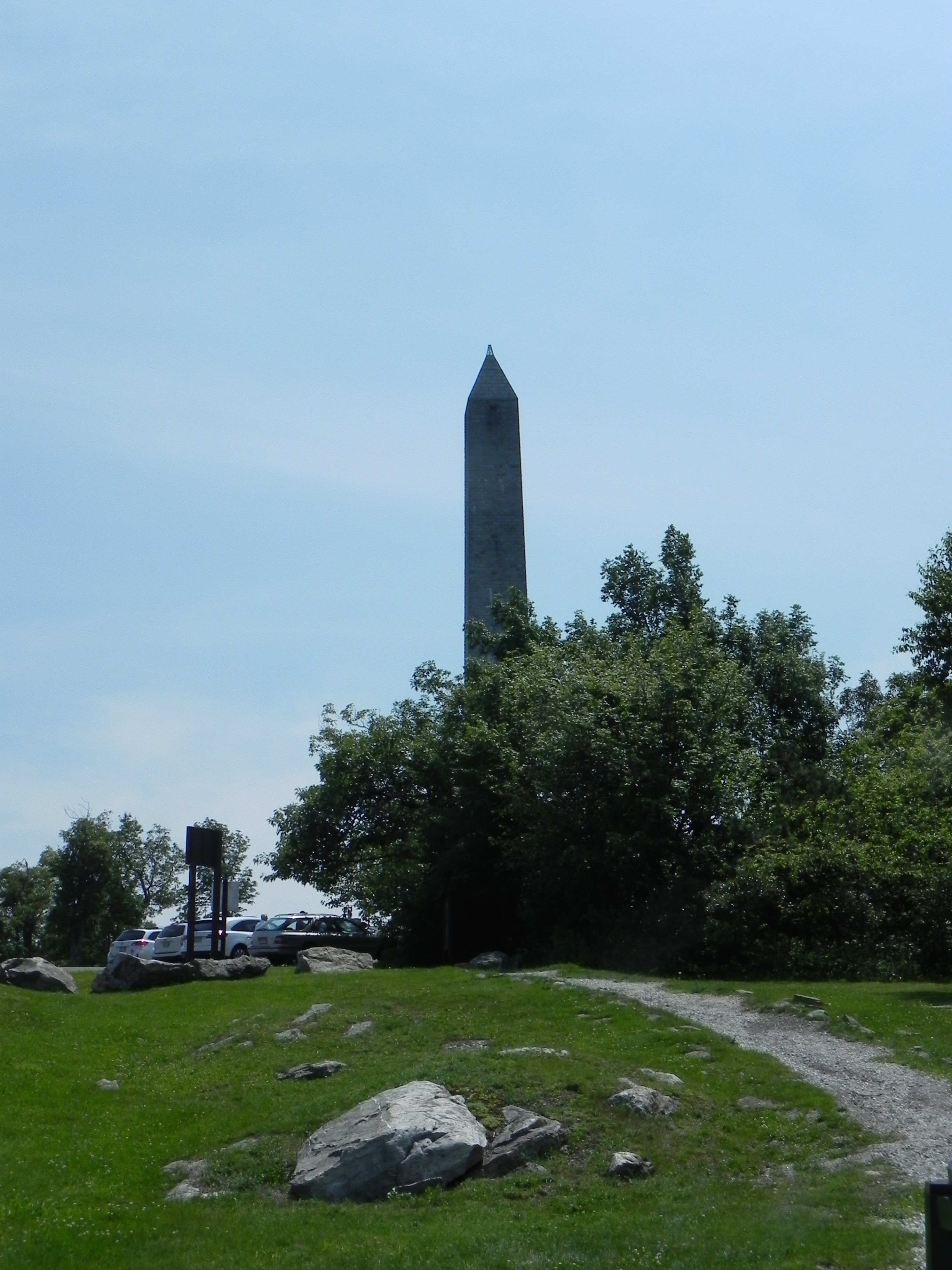
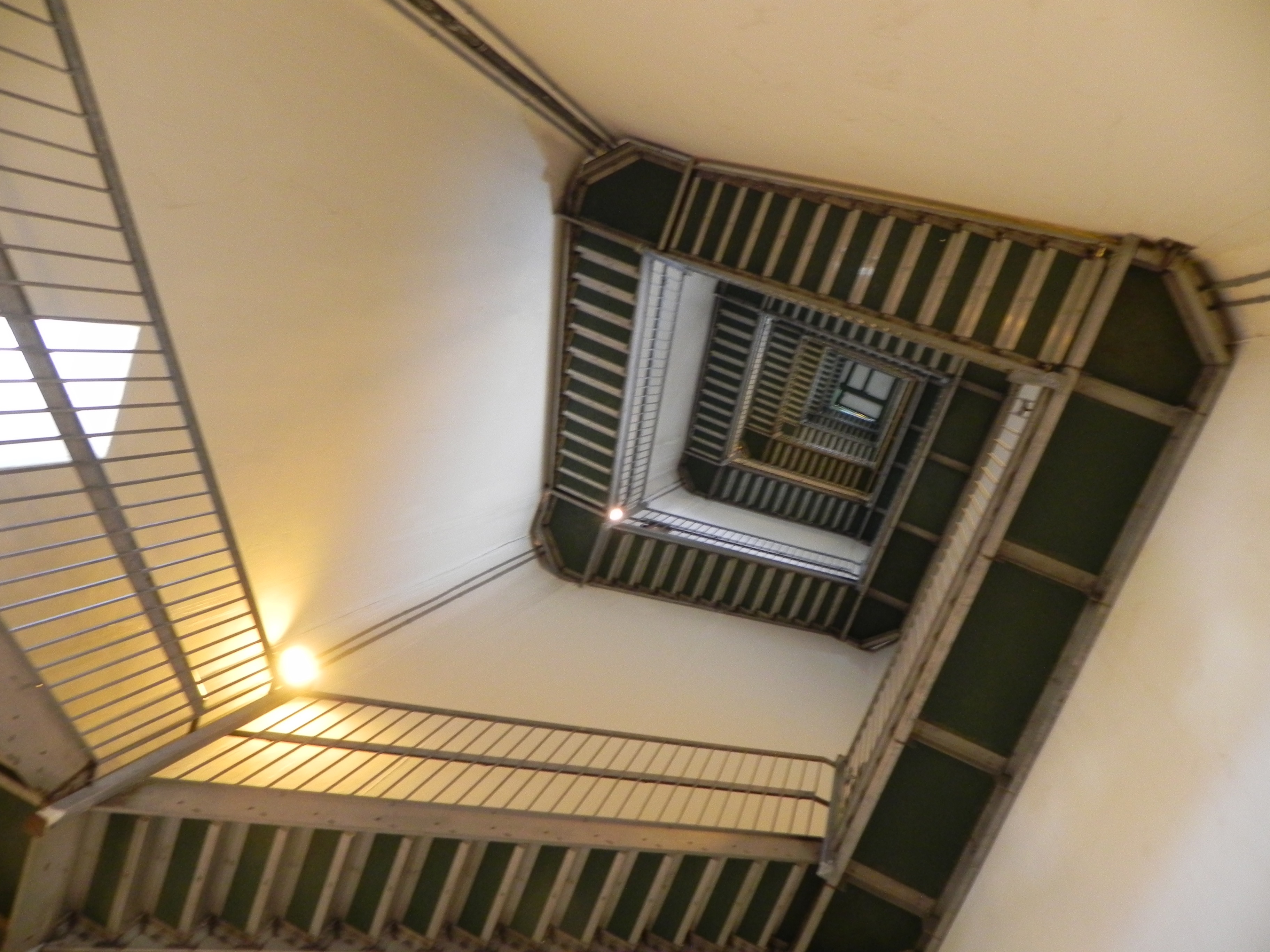
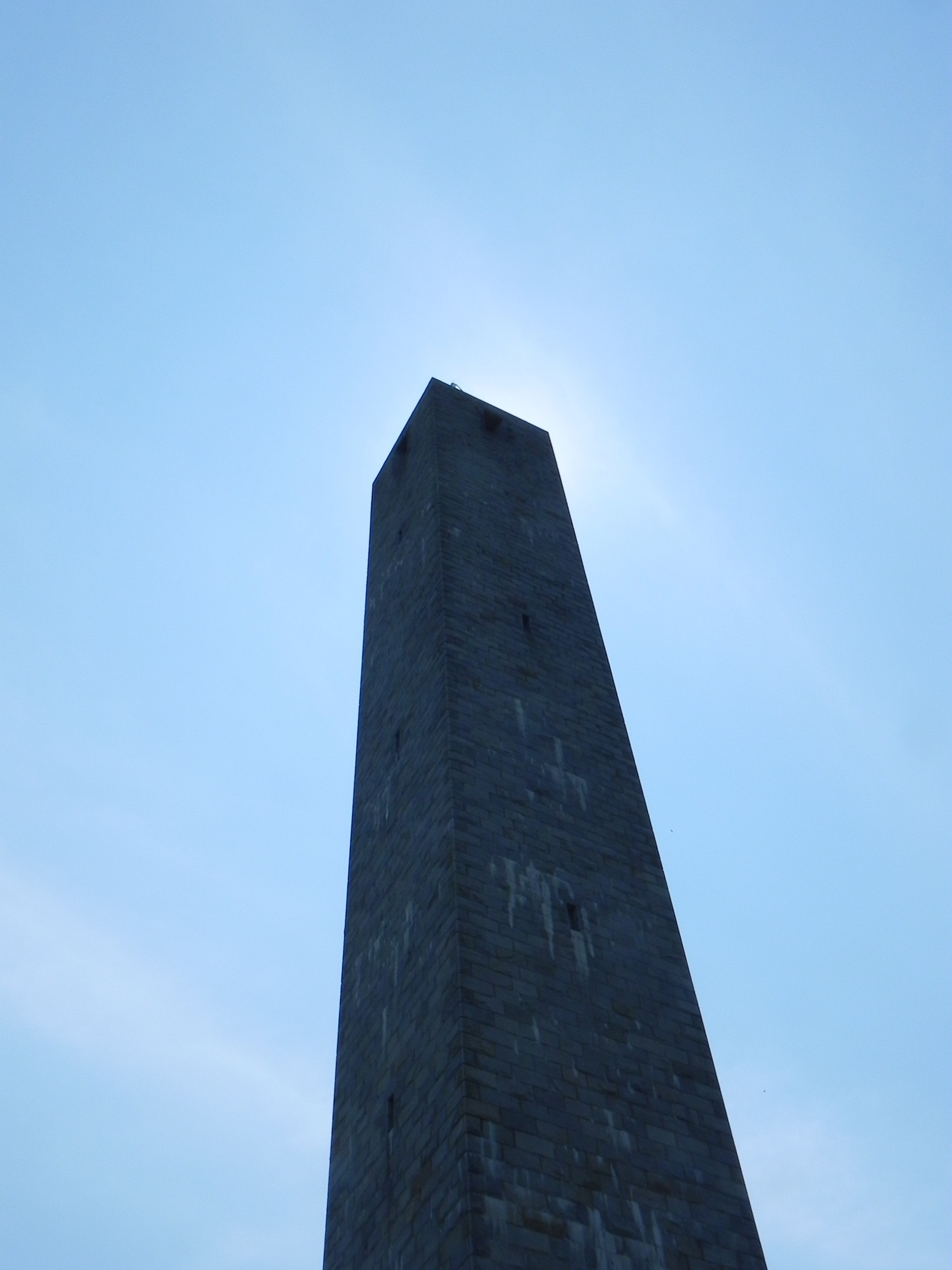
Towers are just as biblical as high places. They are very human and always contain at least a small element of hubris. Nature may have said thus far and no further, but we can go higher. And those of us with the inexorable will to climb, must go up. The view from the top isn’t very good since the windows are steamy and the mildew makes you a little leery of getting too close, but the climb is intensive, even for those used to stairs. Nevertheless, a kind of light-headed giddiness attends standing at a point higher than which you cannot go. I pulled out my altimeter to discover we were 1690 feet above sea level. In New Jersey you can’t get any higher. Were there angels up here? How close to Heaven were we? Towers are irresistible as the mythical builders of mythical Babel knew. And although we couldn’t see Manhattan from here, I knew that just across the river taller towers stand.
One World Trade Center stands at a symbolic 1776 feet, higher than we were at the moment. It was, after all, the requisite holiday to celebrate independence that brought us here in the first place. The vistas that we could see, however, were relatively undeveloped, a rarity for the state of New Jersey. If we had the time, we might have been able to get out into nature itself instead of these structures that humans build to mask the fact of our own limitations. Maybe that’s what high places were all about in the first place. Every day I walk past the Empire State Building on my way to work. I can see it if I find an office with windows. Over my head up here, on the very top of New Jersey, I see a bird soaring. I think of Melville, and Ahab, and Manhattan. Slowly I begin my walk down to lower places.
The Land of Who?
“Parochial” is a name we small-town types dread. Growing up with television, which gave us a magical view into New York and California, as well as other cosmopolitan locales, we could easily feel the accusations of being small-minded and unsophisticated. Although I never wanted to move to the New York City area, I did decide to get away to Boston, then Europe, to be educated. I didn’t want anyone accusing me of being an intellectually challenged rustic, just because of where I happen to have been born. People around my home town, however, aren’t as closed minded as portrayed. Well, not always. You see, apart from conferences where some institution or corporation foots the bills for hotels, I tend to stay in more reasonably priced places when I travel. Even on the road I can’t sleep in, so I find myself chomping at the bit for the breakfast area to open in the morning. Sometimes I’m the first one there.
On a visit to my hometown in the not too distant past, I happened into a breakfast conversation in media res. A local back in town for a holiday weekend was vociferating his views in stentorian tones that could be heard down the hall. The television in the breakfast room, as always, was on. Apparently a story had been shown that teed this old-timer off. His daddy had been a local policeman and he just couldn’t understand why blacks were rioting about unfair treatment at the hands of the police. I cringed as I filled my coffee cup. “They ought to be gassing them and reading their rights later,” he lamented. An older couple, also returning to the area from their home in Baltimore, seemed to agree. I tried to find a corner out of earshot. Unsuccessfully. I could barely hold in my indignation. We were all Caucasian here—what did any of us know of racial profiling, deep-seated prejudice, or being prisoner in our own country? “Why don’t they just stay home?” he said. Home, ironically, of the free.

I could see that he was elderly and afraid. The media—likely Fox news—had instilled a kind of terror in him that could only be assuaged by reliance on force. The world his daddy knew. I was also reared here. It was pretty much a white town, but some of my best friends growing up were the few African-American kids in my school. My small-town mother taught me not to judge anyone by the color of their skin. The hotel I’m staying in is run by an Indian family. The local stores now reveal a healthier mix than that in which I grew up. I wanted to tell this fellow parochial patron that we need not be afraid if we only seek justice. The region in which I grew up has become more homogenized, and I believe we’re all healthier for it. Until, however, civil rights are truly rights for all, we need to stand with those who’ve been clearly wronged, even if at personal cost. That’s something I learned growing up in this small town.
Peak Oil
Having no control over where we’re born, people nevertheless often feel a connection with their native region. My family had no roots in western Pennsylvania, and the consensus on why we ended up here focuses around jobs. My grandparents settled here because of a job. While working here on a job my father, from the south, met my mother. My brothers and I all consider ourselves Pennsylvanians. One of the places we liked to visit as children was Drake Well. We knew that the oil industry began in western Pennsylvania, and we knew that famous people like George Washington had traveled through the region during the various wars of the nation’s early years. The towns where I grew up are not exactly affluent, and one of them seems in danger of becoming a ghost town. Drake Well, however, the birthplace of commercial oil, still draws visitors from the region and from around the country. On a recent visit to the site, I was interested to see how religion interplayed with petroleum in Victorian Era western Pennsylvania.
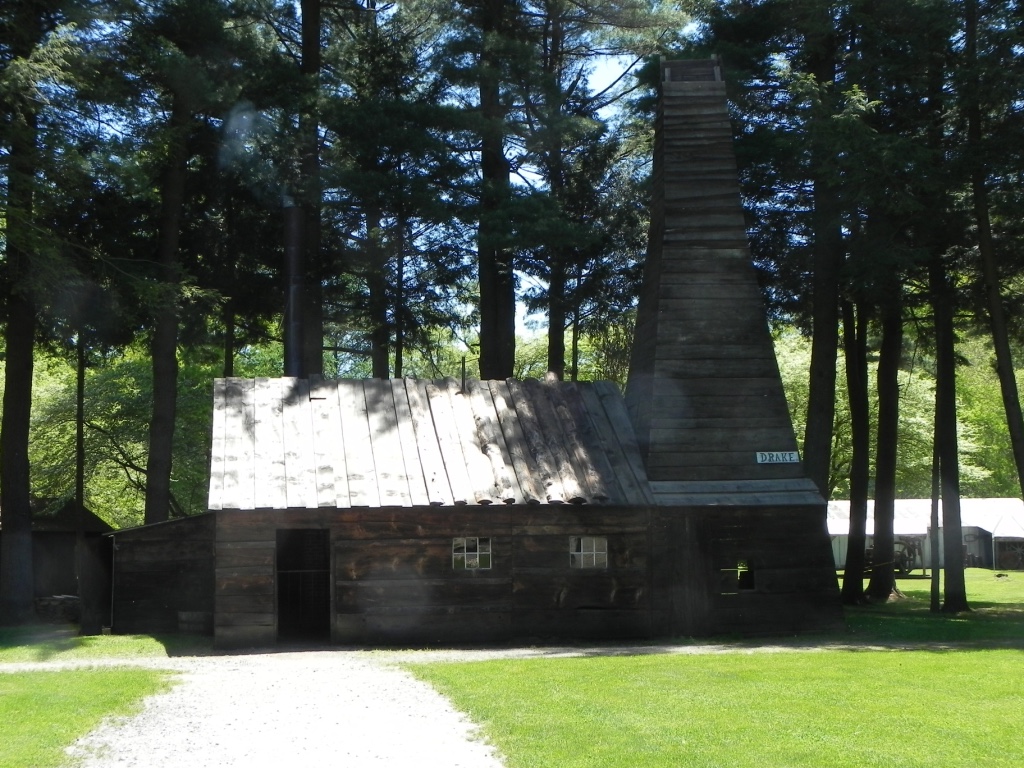
Among the displays was one showing the various means used to find oil. In the days before geological surveys, finding something hidden underground required more than just technical knowledge. More precisely, it often utilized different forms of technology—some scientific, some not. Dowsing was popular, and spirits were consulted. Access to the supernatural world was not uncommon. The oil industry really took off during the same era that spiritualism began to become popular. Religion and science co-existed in a way that is difficult to imagine today. Indeed, Drake Well was established in 1859, the same year Darwin’s Origin of Species was published. The means used to reach the oil were, however, unabashedly scientific and technical. Nitroglycerin fatalities were just another fact of life.
Looking over the triumphal displays about fracking, it became clear that in the realm of petroleum production the spirit has made way for a technology with unknown consequences. The museum at Drake Well is pretty straightforward that other energy forms pose a threat to an industry that was, and currently remains, massive. We have technologies that can utilize cleaner forms of energy, but powerful oil interests have maintained the focus on more and more invasive ways to keep things going the way they are, pulling in more profits while the limited supply lasts. We know petroleum will run out. We’ve deeply integrated it into our way of life and instead of looking ahead to the next step, we’ve been reaching back to pad our fat pockets. Gone are the dowsers and spiritualists and in have charged the corporate executives. And in western Pennsylvania, the towns where the industry began struggle to stay alive as thinking that allowed for spirits has acquiesced to that which has loyalty to Mammon alone.
Finding a Vein
Travel broadens the mind. I always find that it’s a form of education. Sometimes what I learn is disturbing. While driving across Pennsylvania on I-80 recently, I had a chance to study some contrasts. I’ve made this trip many times, but this particular journey revealed two Amish farmers out plowing their fields behind teams of horses. It’s easy to romanticize this view—there is a majesty about it. Once, while driving back to Wisconsin from an interview at Luther College, I saw an Amish farmer and his team in the rain, the horses’ breath could be seen billowing out, but the farmer, implacable in his conviction of what had to be done, stood rigidly behind them, keeping the animals at their task. When you don’t eat if the crops don’t grow, a new kind of urgency is added to this picture. All around us on the highway hi-tech vehicles whizzed, and, gathering from the behavior of the drivers, I couldn’t help but wonder if any of them were very happy.
Then we sped past a billboard. It was facing the opposite direction from our travel, but the words went something like this: “The wind dies, the sun sets, but coal lasts forever.” In much of Pennsylvania, with its spine of Appalachian Mountains, coal is abundant. Growing up some of the highways we drove had exposed coal seams in the road cuts. It’s pretty much everywhere. Coal, however, is a dirty, non-renewable, polluting source of energy that exacts a severe cost on the planet through mining. No doubt it is abundant, but the amount is certainly finite and it makes the world less inhabitable when we use it. The wind blows where it wills. The sun rises on the righteous and wicked alike. Coal is decay left from the life forms that helped ensure that we’d show up here. One of those circle of death kinds of things.
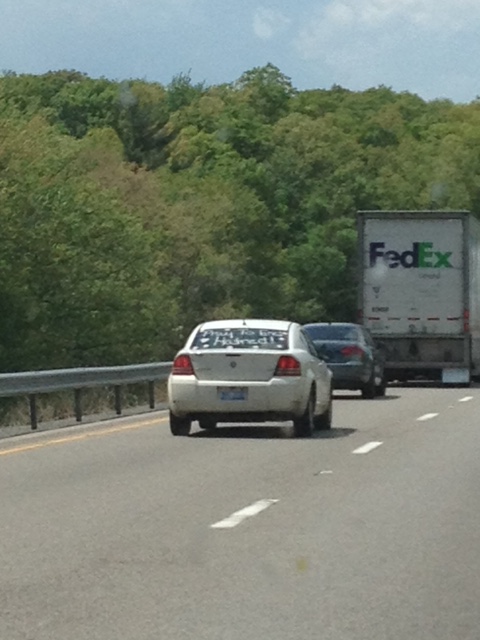
Then a car went by with a communique in paint on its back window. “Pray to end hatred” it read. This is a sentiment with which I could surely live. I recalled driving this same interstate many years ago when I was old enough to read but not enough to comprehend. The pylons of the overpasses on 80 frequently have spray-painted messages reading “Trust Jesus.” Some of them are still visible at highway speeds, faded though they are. The elements seem to have left a negative of the original work of what is technically vandalism. I think back to the Amish farmer. He’s watching, I’m sure, the never-ending flow of sinful vehicles on a highway as he plows. He’s been raised to trust Jesus and to believe in the old way of doing things. I’m behind the wheel praying that the hatred I see played out in these metal coffins will stay far from me until I can exit to some quieter backroads where the pace of life is more to my liking. And I wonder if that sunset I see is influenced by the coal that we’re burning and hoping the wind will simply blow it away.
Bus Fare
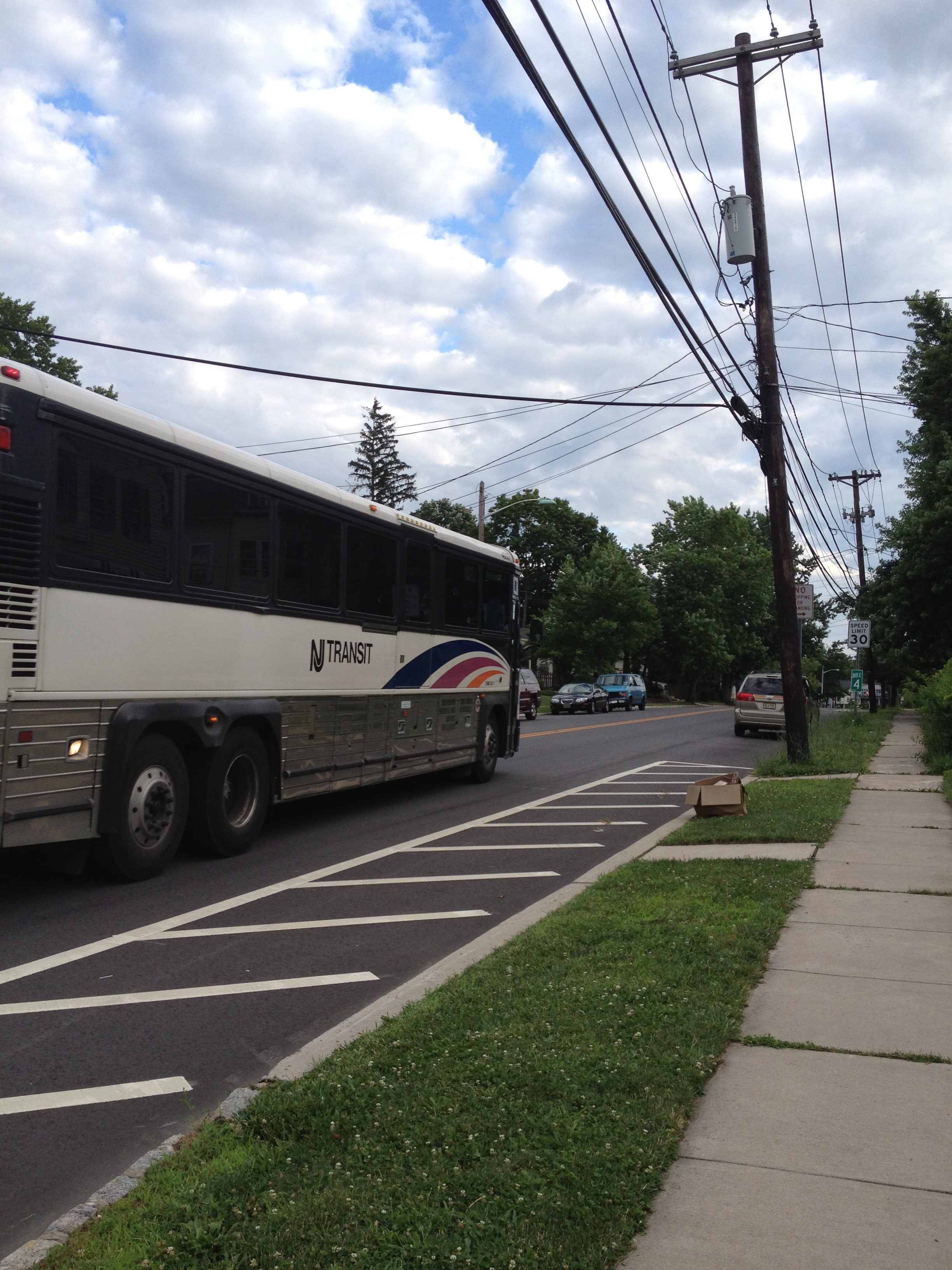
The two things most likely to kill you on the streets of Midtown Manhattan are taxi cabs and city buses. Crossing the Fifth Avenue can be a dangerous game of chicken, even if the light’s in your favor. Over the past few weeks I’ve been noticing a lot of religious-themed advertising on the buses of this secular haven. A while back it was Killing Jesus—I suspect this must’ve been around Easter time. The movie based on the bestseller appeared with images of the savior tattooed over aluminum and glass. This week I noticed buses advertising A.D. “The Bible continues,” they claim. Don’t take that as career advice, however. With these thoughts in my head, it seems quite a coincidence that my wife would forward me a Huffington Post story entitled, “Anti-Muslim ‘Killing Jews Is Worship’ Ads Set To Go Up On NYC Buses, Subways.” New York City is a Judeo-Christian sort of town, I guess.
Of course, the text is deeper than that. I’d never heard of the American Freedom Defense Initiative (AFDI) before. According to Huff, it’s classified as a hate group directed at Muslims, and, in an ironic twist, designated public forums are not permitted to block adds. I’m just a layman, but I hope an educated one. Still, when I see public space as a battlefield for religious triumphalism, I wonder why the paid add space (what is the side of a bus, if not wasted advertising space?) is not restricted by any rules. I do not condone any kind of hate crime, and that should, I believe, include copy that intends to replicate hate. If human history has taught us nothing else, we’d be fools not to see that hate begets hate, and never love. The way out of a hateful situation is never to instill further hatred.
I spend a good deal of every week inside a bus. Sometimes as I try to read by the light of day, which has finally reappeared during my commute, the illumination is blocked by advertisements plastered over the windows of my expensive, public chariot. I sometimes peer out through the dots, unable to read what I’m advertising, and wonder what those on the other side see. Who am I shilling for? Perhaps this is a question the AFDI should put to itself—what if they were the ones on this bus. How will the person on the street look at them? With overflowing love or with reciprocal hate? The bus I ride is not really a choice I make. I like to think, however, that the destination for which we all hope would be for a more loving world.
You ad here
Honest to Good
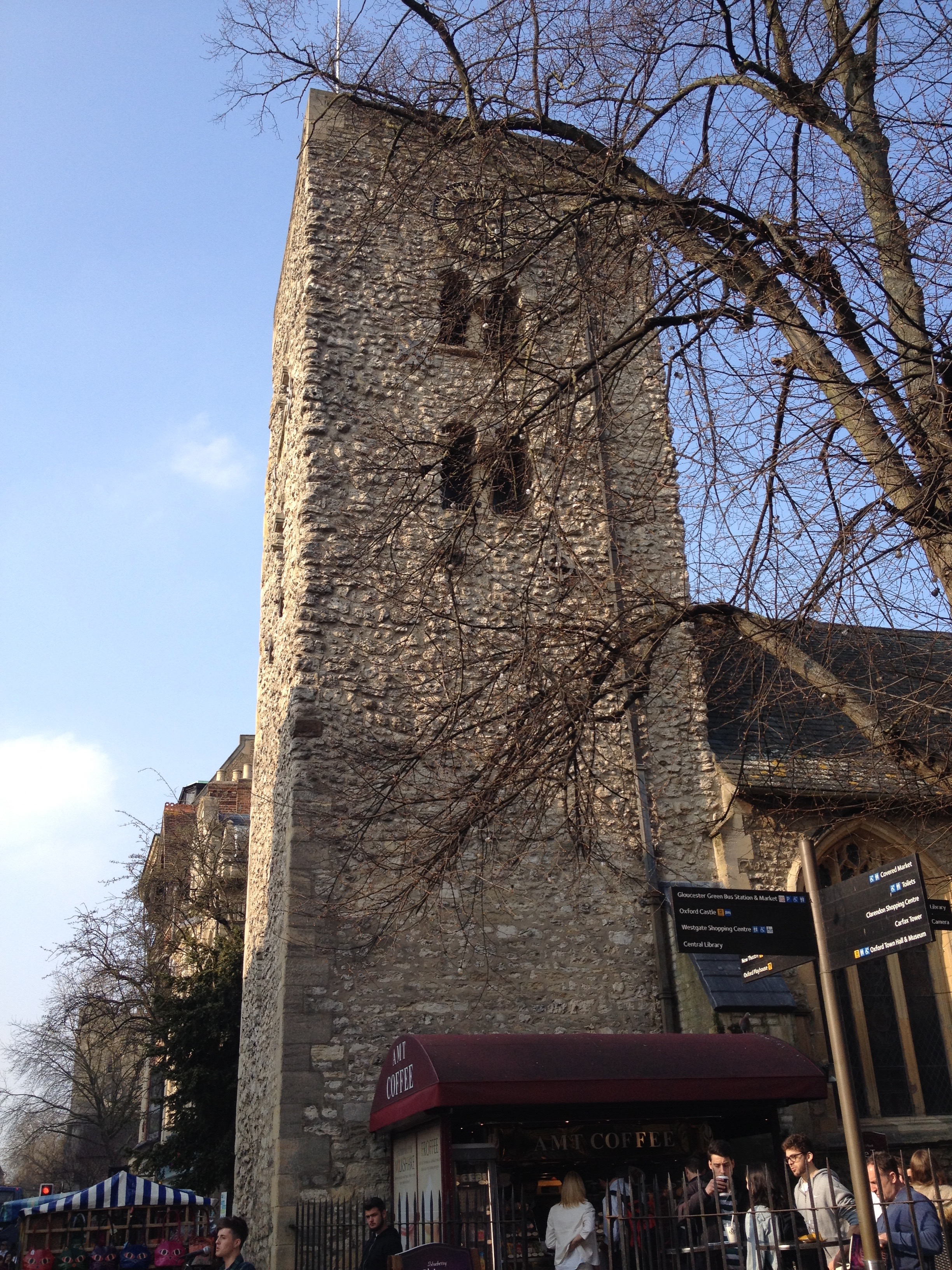
The oldest standing building in Oxford is the Saxon era church tower of St. Michael at the North Gate. Dating from around 1040, it still stands, providing shade to the various buskers who are hoping to earn a bit of cash from their musical talents below. Although there are some modern buildings that harsh the historical sense of the city, you get the impression that the British revere their tradition. A recent article in The Guardian notes that the United Kingdom, seat of the Anglican Church worldwide, is among the least religious countries in the world. Depending on one’s perspective, that is either very good or very bad news. Several analyses exist as to why it is so. The country has gone from an empire on which the sun never set to a strong, yet diminished country. The two World Wars took an enormous toll on the island nation. The population tends to be well educated. They adore their royals, although the monarchy is largely for show. There is a disconnect between the fiction and the fact of life in such a place.
Britain may be leading the direction toward which secular societies will inevitably follow. Still, the survey cited in the article indicates that two-thirds of the world population sees itself as very religious. Surprising and flummoxing atheist advocacy groups everywhere, the young tend to be more religious than the old. Religious belief shows no sign of dying out. It was predicted decades ago that it would be dead by now. We were supposed to have a moon base in 1999, of course, and I’m still waiting to see if we manage the Sea Lab in the next five years. History has a way of disappointing us. Perhaps the silent skies through it all make it difficult to think there’s any direction coming from above. Left to our own devices, what do we see?
The UK hardly qualifies as a hedonistic state. There are social problems, to be sure, but it maintains a fairly safe, cultured atmosphere throughout. Tradition can be fiction and can still be meaningful. We don’t see angry atheists trying to bulldoze an ancient, if phallic, church tower. We don’t see angry crowds taking sledge hammers to the British Museum. The people on public transit are unfailingly polite, and I’ve not been treated like an object as I commonly am on my daily commute to Manhattan. Religion, it seems, is not the motive for civilized behavior. Nor does religion appear to detract from it. Has the holy grail been discovered after all?
Almost Purgatory
Although it is difficult to tell from 32,000 feet, I think I might have flown over Purgatory on my way home from the UK. The two days I was in Oxford were uncharacteristically sunny and warm. Although it was cloudy around London when we lifted off, the skies cleared by the time we hit the Irish Sea and once Ireland came into view I kept a close watch for what I hoped might be Lough Derg, the site of what was once deemed to be Purgatory. Our flight path took us over the right region, but the maps in the back of the in-flight magazine are never detailed enough for navigation, and the lake itself is not large enough to appear on any but the most detailed charts. Still, I think I might have seen it. If this was Purgatory and I was overhead, I guess I must’ve been in Heaven for a while.
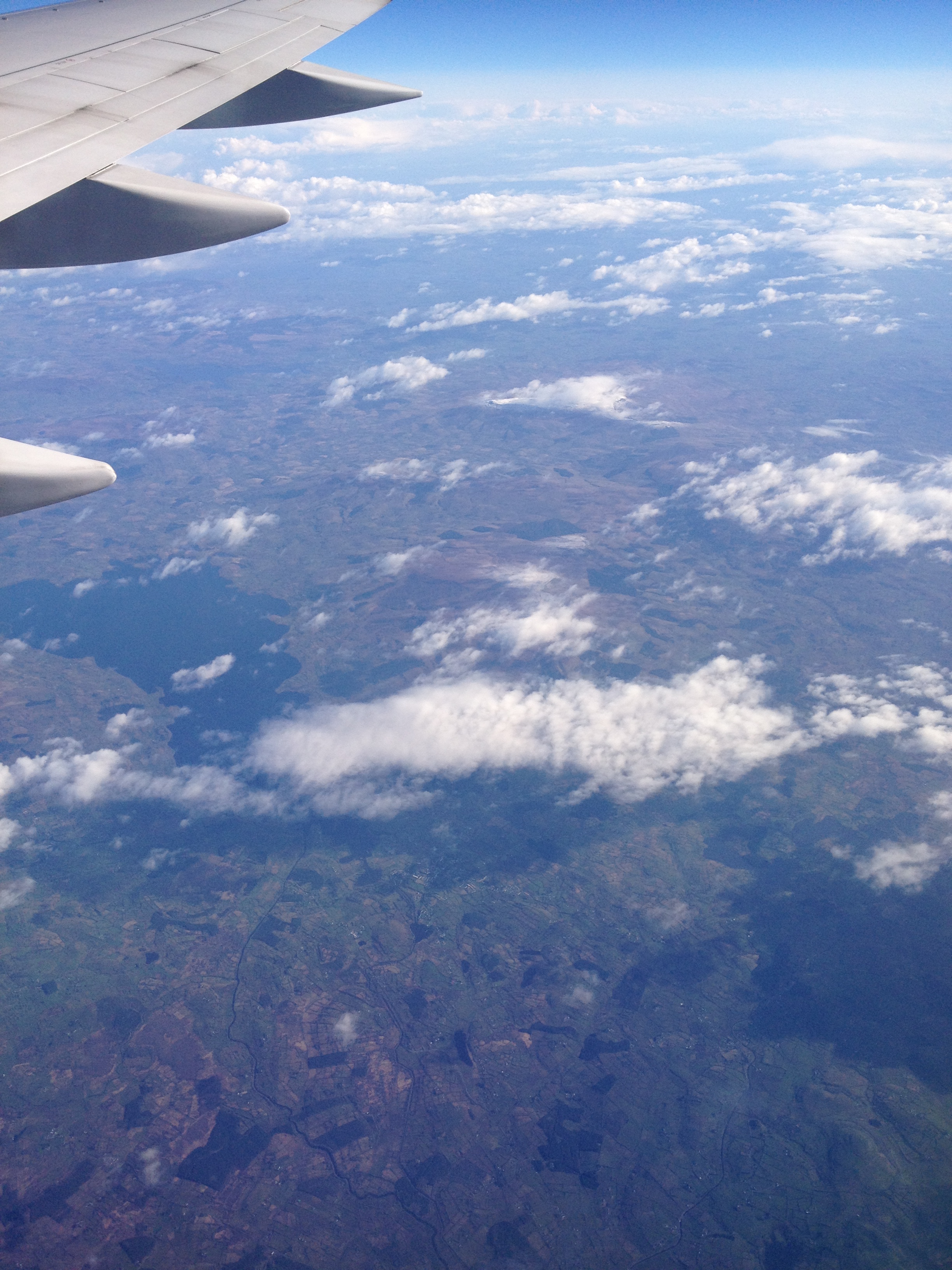
Symbolism began to kick in, despite the lack of sleep. Our view of the earth today corresponds in a rough way to that of the ancients. For sure, we are more sophisticated, as we suppose, but there remains a lake of fire beneath our feet and the heavens above our heads. The area in between, according to medieval thought, was Purgatory. It’s the place where we live. Believing in the intensely mythological development of a rich afterlife that borrowed elements from the Greeks, Zoroastrians, and Egyptians is hardly something anyone could undertake seriously in the modern world, but the trials we undergo here and now somehow make Purgatory believable as a symbol. When I think of the troubles over the past few weeks alone I can take some solace in a symbolism designed to help us avoid Hell.
As on my trip from New York, I watched hundreds of miles of ice floes, icebergs from the air. I’m not sure if this is unusual—I don’t fly overseas very often, and sometimes it is dark and I can’t see the water below. Of climate change, however, I am absolutely certain. We have undertaken to bring about Hell on earth because of industrial greed. I can’t help but compare how companies continued to promote smoking heavily even after they knew it was killing people. Lucre can make monsters out of ordinary humans. Was that Purgatory I saw back there, over the Emerald Isle? I may never know, but down here on the ground the warming trend continues. Perhaps the ancients knew more than we think they did.
Strange Days
The flight from London to New York is eight hours. Although I always travel with books, sometimes the selection made before the actual reality of time on a plane turns out to be too academic. I read academic books on my daily commute from New Jersey to New York and back, but these trips are not so drawn out as the long flight across the Atlantic. Since my flight was departing Terminal 2 at Heathrow, I had trouble finding a bookstore. There are stores that sell books, but having been to Blackwell’s the day before, the selection was not inspiring. I wandered to the magazine section. Magazines can be good travel fodder since they don’t demand the rigors of a monograph, and glossy pictures always add to the appeal. But what to buy?
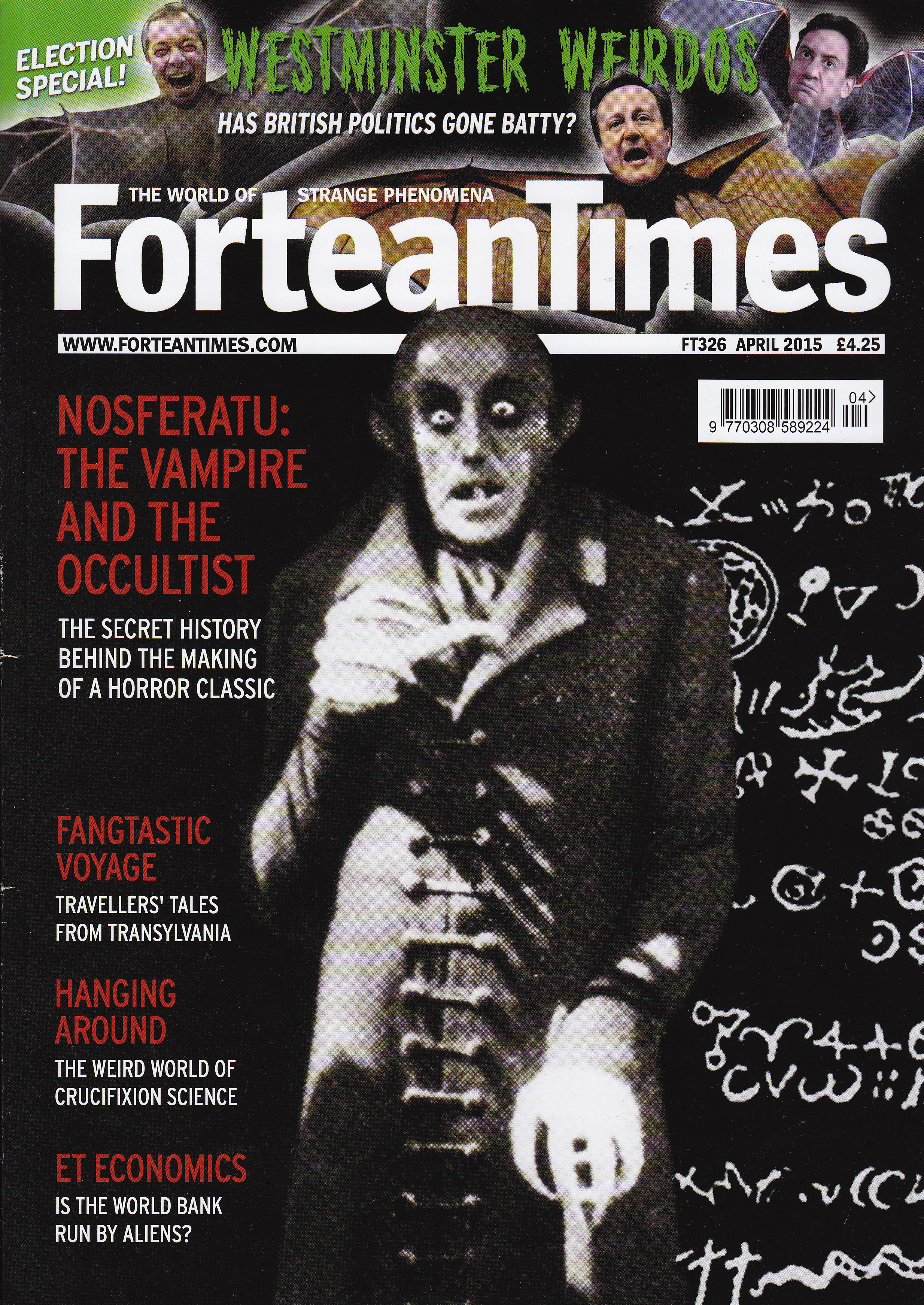 Looking over the covers, I found one featuring vampires. It turned out to be the Fortean Times, but since I had a row to myself on the plane, I couldn’t see the harm in having a magazine about strange phenomena. I’d never actually read an issue of the Fortean Times before, although I had a general idea of what to expect. While it may seem odd, there is a pretty solid connection between the paranormal and religion. I’ve noticed this for years. Reading through the Fortean Times, it was clear that others have made the connection as well. Many of the articles, including the ones on vampires, touched on obvious religious themes and motifs. This was so much the case that I began to wonder if any kind of solid wall can be erected between the two.
Religion, broadly conceived, tends to be concerned with the non-material world. Its claims tend to defy empirical verification, and its subject matter is often at odds with science (at least in the mainstream). The paranormal is open to scientific investigation in that it tends to be based on secular claims. Like religion, however, it tends to dwell in the non-material realm. After all, vampires coming back from the dead is hardly a phenomenon that is readily recorded with any instrument beyond a Hollywood movie camera. Still, most religions are hostile to the paranormal, and investigators of the paranormal may be unconnected to religion. Both, however, are an engaging recipe for a long flight. Especially if nobody is sitting in the row next to you.
Colorful Gods
On my last day in Oxford I had enough free time to visit the Ashmolean Museum. The Ashmolean is the earliest public museum in the country, and, although it isn’t nearly the size of the British Museum, it has its share of very important artifacts. While there I came upon the exhibit called “Gods in Colour.” The display was inspired by the fact that ancient Roman statues—and likely those of other ancient cultures as well—were often painted. The elements have worn away much of the decoration, but traces of various chemicals have indicated what hues were likely used to paint these public icons of divinity. We tend to think of classical society as all white marble and stoic formality, but the reality was likely much more colorful. Many god and goddess statues from ancient West Asia also have traces of paint, although in general they were smaller in the various kingdoms of the Levant than the empires of Egypt and Mesopotamia (the latter of which is sadly falling victim to modern day iconoclasts). The Romans weren’t the only ones to see in color.
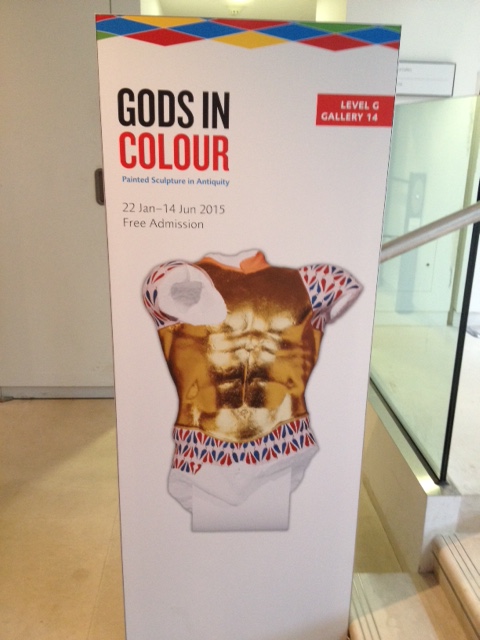
Seeing these representations of gods in color reminded me of my first exposure to liturgical Christianity. Having been raised in a Fundamentalist tradition, we certainly didn’t have images about (although one of our churches had a pastoral fresco on one wall). The United Methodist Church, in which I spent my teens and early twenties, had adapted the liturgy of its Anglican parent church, but not the iconographic tradition. When I first saw churches with painted crucifixes and states of Mary, I was taken aback at how powerful they could be. Like most ancients, I realized that these weren’t the gods themselves, but they still conveyed much of what the liturgy was communicating through words and music. One priest explained them as crutches for those who needed help to imagine the divine.
Having seen what images can do, I object to the use of the word “idol.” People are visual animals. We rely heavily on our sense of sight, and our religious sensibilities tell us to look for the gods our minds tell us must be invisible. It is difficult to focus on that which we cannot see. Today we have images both in the natural color of their medium and resplendent with color. We spend hours before the computer screen with its endless array of pixels of all colors. We still think of our gods in full array of saturated hues. In ancient times they tended to be made of stone, but we tend to use another form of silicon, apparently, to get the same effect.
 Steve A. Wiggins
