Finding a Vein

Travel broadens the mind. I always find that it’s a form of education. Sometimes what I learn is disturbing. While driving across Pennsylvania on I-80 recently, I had a chance to study some contrasts. I’ve made this trip many times, but this particular journey revealed two Amish farmers out plowing their fields behind teams of horses. It’s easy to romanticize this view—there is a majesty about it. Once, while driving back to Wisconsin from an interview at Luther College, I saw an Amish farmer and his team in the rain, the horses’ breath could be seen billowing out, but the farmer, implacable in his conviction of what had to be done, stood rigidly behind them, keeping the animals at their task. When you don’t eat if the crops don’t grow, a new kind of urgency is added to this picture. All around us on the highway hi-tech vehicles whizzed, and, gathering from the behavior of the drivers, I couldn’t help but wonder if any of them were very happy.

Then we sped past a billboard. It was facing the opposite direction from our travel, but the words went something like this: “The wind dies, the sun sets, but coal lasts forever.” In much of Pennsylvania, with its spine of Appalachian Mountains, coal is abundant. Growing up some of the highways we drove had exposed coal seams in the road cuts. It’s pretty much everywhere. Coal, however, is a dirty, non-renewable, polluting source of energy that exacts a severe cost on the planet through mining. No doubt it is abundant, but the amount is certainly finite and it makes the world less inhabitable when we use it. The wind blows where it wills. The sun rises on the righteous and wicked alike. Coal is decay left from the life forms that helped ensure that we’d show up here. One of those circle of death kinds of things.

IMG_2176

Then a car went by with a communique in paint on its back window. “Pray to end hatred” it read. This is a sentiment with which I could surely live. I recalled driving this same interstate many years ago when I was old enough to read but not enough to comprehend. The pylons of the overpasses on 80 frequently have spray-painted messages reading “Trust Jesus.” Some of them are still visible at highway speeds, faded though they are. The elements seem to have left a negative of the original work of what is technically vandalism. I think back to the Amish farmer. He’s watching, I’m sure, the never-ending flow of sinful vehicles on a highway as he plows. He’s been raised to trust Jesus and to believe in the old way of doing things. I’m behind the wheel praying that the hatred I see played out in these metal coffins will stay far from me until I can exit to some quieter backroads where the pace of life is more to my liking. And I wonder if that sunset I see is influenced by the coal that we’re burning and hoping the wind will simply blow it away.
Bus Fare

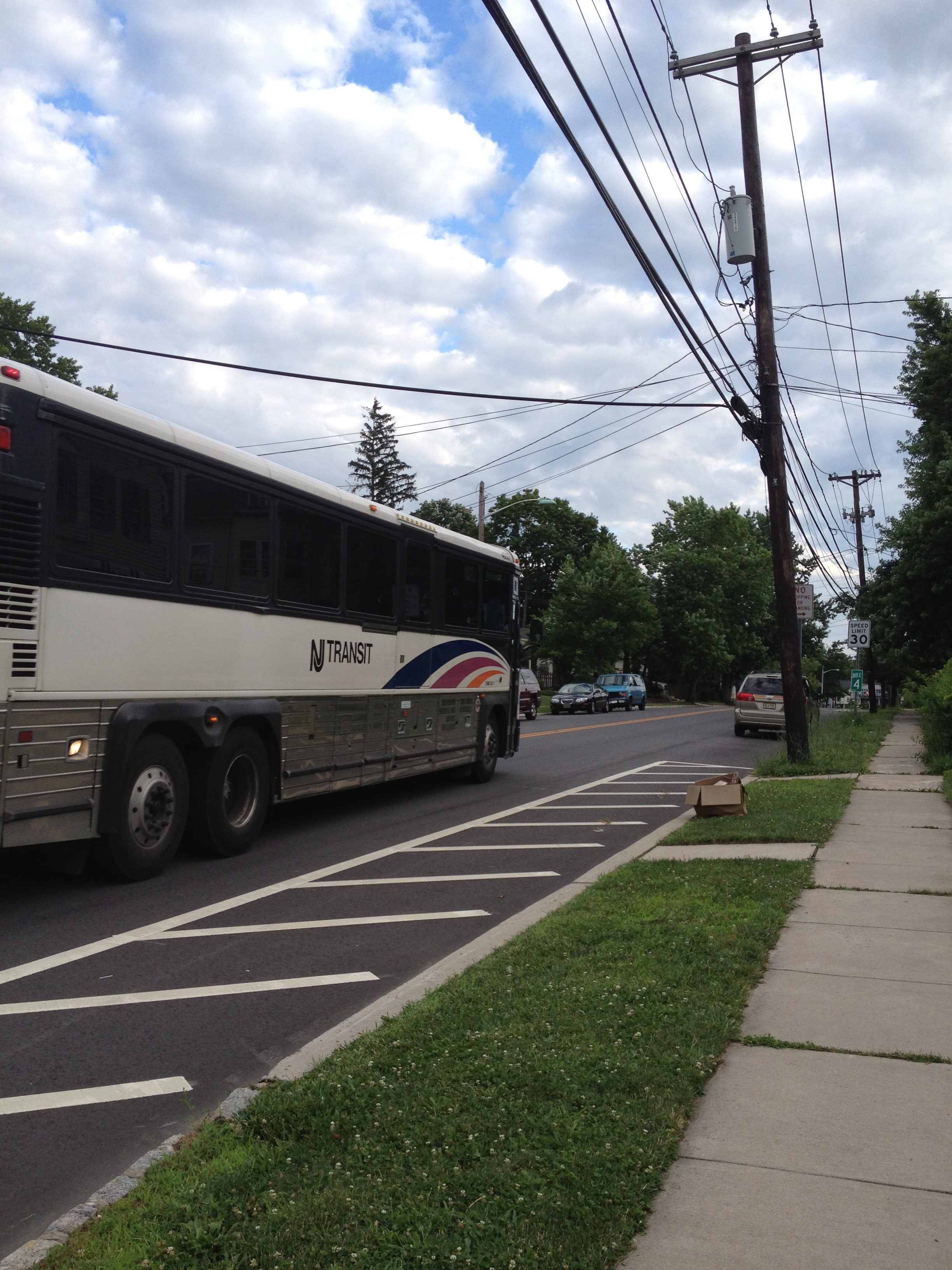
The two things most likely to kill you on the streets of Midtown Manhattan are taxi cabs and city buses. Crossing the Fifth Avenue can be a dangerous game of chicken, even if the light’s in your favor. Over the past few weeks I’ve been noticing a lot of religious-themed advertising on the buses of this secular haven. A while back it was Killing Jesus—I suspect this must’ve been around Easter time. The movie based on the bestseller appeared with images of the savior tattooed over aluminum and glass. This week I noticed buses advertising A.D. “The Bible continues,” they claim. Don’t take that as career advice, however. With these thoughts in my head, it seems quite a coincidence that my wife would forward me a Huffington Post story entitled, “Anti-Muslim ‘Killing Jews Is Worship’ Ads Set To Go Up On NYC Buses, Subways.” New York City is a Judeo-Christian sort of town, I guess.

Of course, the text is deeper than that. I’d never heard of the American Freedom Defense Initiative (AFDI) before. According to Huff, it’s classified as a hate group directed at Muslims, and, in an ironic twist, designated public forums are not permitted to block adds. I’m just a layman, but I hope an educated one. Still, when I see public space as a battlefield for religious triumphalism, I wonder why the paid add space (what is the side of a bus, if not wasted advertising space?) is not restricted by any rules. I do not condone any kind of hate crime, and that should, I believe, include copy that intends to replicate hate. If human history has taught us nothing else, we’d be fools not to see that hate begets hate, and never love. The way out of a hateful situation is never to instill further hatred.

I spend a good deal of every week inside a bus. Sometimes as I try to read by the light of day, which has finally reappeared during my commute, the illumination is blocked by advertisements plastered over the windows of my expensive, public chariot. I sometimes peer out through the dots, unable to read what I’m advertising, and wonder what those on the other side see. Who am I shilling for? Perhaps this is a question the AFDI should put to itself—what if they were the ones on this bus. How will the person on the street look at them? With overflowing love or with reciprocal hate? The bus I ride is not really a choice I make. I like to think, however, that the destination for which we all hope would be for a more loving world.

You ad here

You ad here


Honest to Good

IMG_2029_2

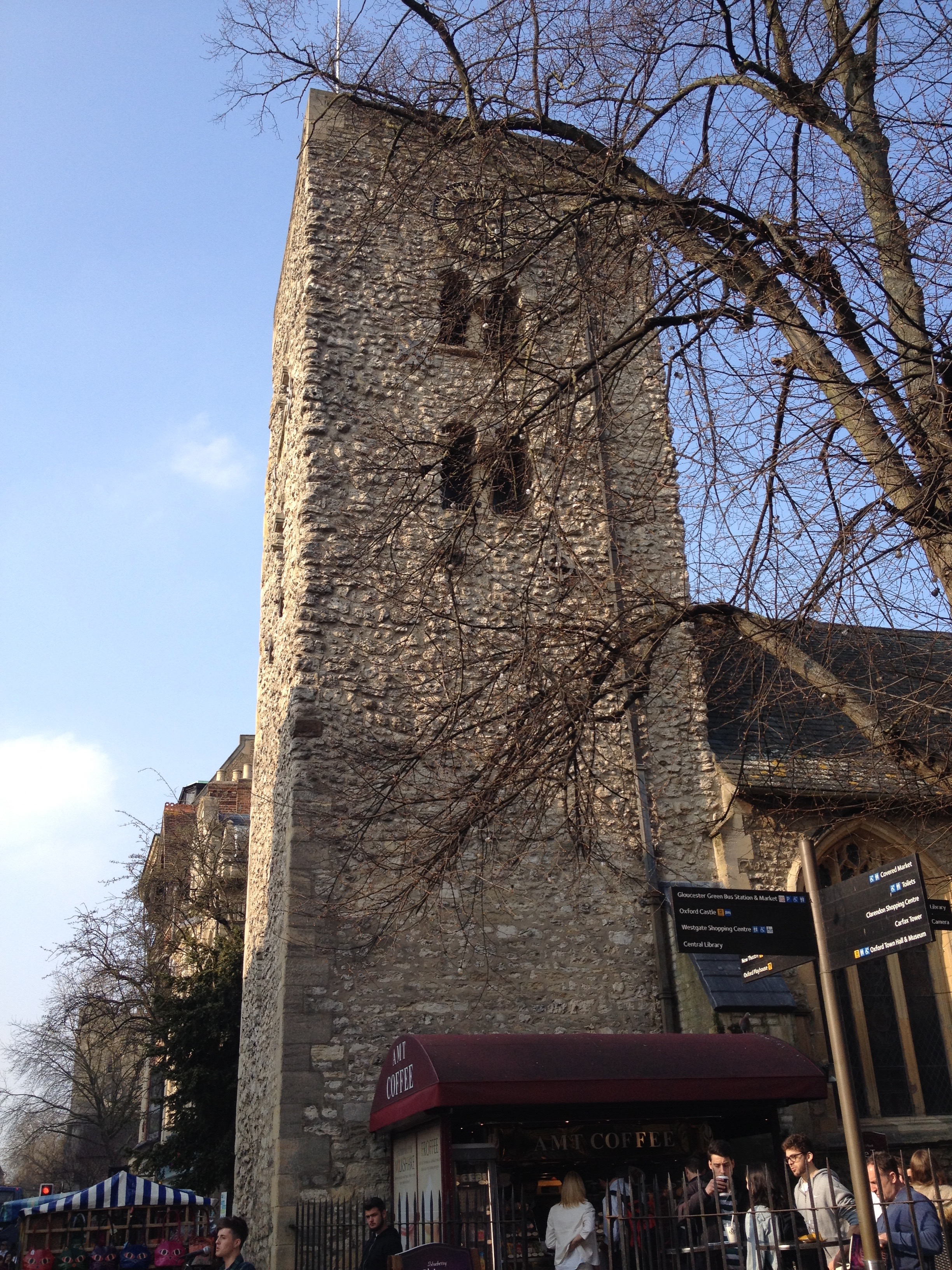
The oldest standing building in Oxford is the Saxon era church tower of St. Michael at the North Gate. Dating from around 1040, it still stands, providing shade to the various buskers who are hoping to earn a bit of cash from their musical talents below. Although there are some modern buildings that harsh the historical sense of the city, you get the impression that the British revere their tradition. A recent article in The Guardian notes that the United Kingdom, seat of the Anglican Church worldwide, is among the least religious countries in the world. Depending on one’s perspective, that is either very good or very bad news. Several analyses exist as to why it is so. The country has gone from an empire on which the sun never set to a strong, yet diminished country. The two World Wars took an enormous toll on the island nation. The population tends to be well educated. They adore their royals, although the monarchy is largely for show. There is a disconnect between the fiction and the fact of life in such a place.

Britain may be leading the direction toward which secular societies will inevitably follow. Still, the survey cited in the article indicates that two-thirds of the world population sees itself as very religious. Surprising and flummoxing atheist advocacy groups everywhere, the young tend to be more religious than the old. Religious belief shows no sign of dying out. It was predicted decades ago that it would be dead by now. We were supposed to have a moon base in 1999, of course, and I’m still waiting to see if we manage the Sea Lab in the next five years. History has a way of disappointing us. Perhaps the silent skies through it all make it difficult to think there’s any direction coming from above. Left to our own devices, what do we see?

The UK hardly qualifies as a hedonistic state. There are social problems, to be sure, but it maintains a fairly safe, cultured atmosphere throughout. Tradition can be fiction and can still be meaningful. We don’t see angry atheists trying to bulldoze an ancient, if phallic, church tower. We don’t see angry crowds taking sledge hammers to the British Museum. The people on public transit are unfailingly polite, and I’ve not been treated like an object as I commonly am on my daily commute to Manhattan. Religion, it seems, is not the motive for civilized behavior. Nor does religion appear to detract from it. Has the holy grail been discovered after all?


Almost Purgatory

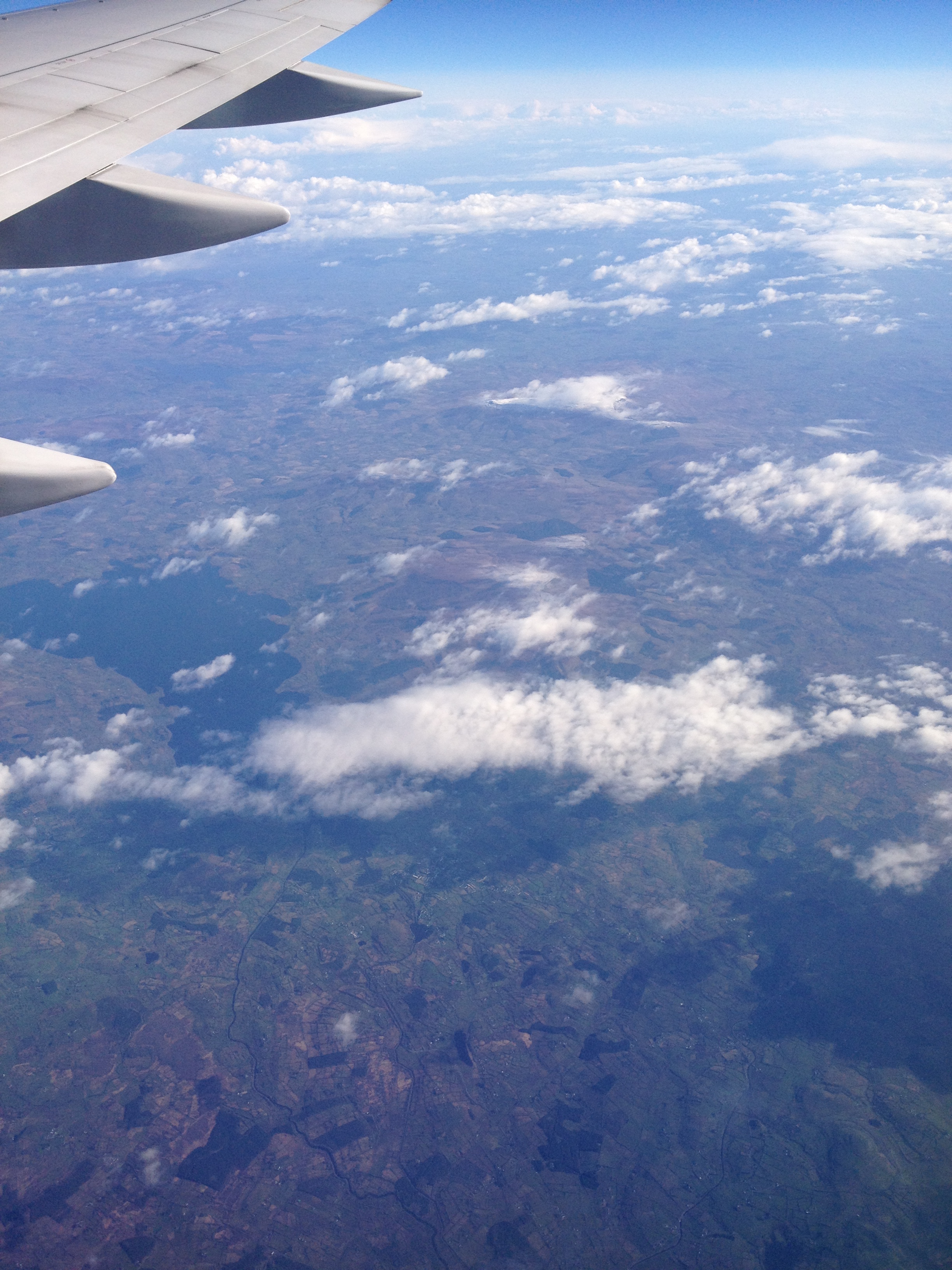
Although it is difficult to tell from 32,000 feet, I think I might have flown over Purgatory on my way home from the UK. The two days I was in Oxford were uncharacteristically sunny and warm. Although it was cloudy around London when we lifted off, the skies cleared by the time we hit the Irish Sea and once Ireland came into view I kept a close watch for what I hoped might be Lough Derg, the site of what was once deemed to be Purgatory. Our flight path took us over the right region, but the maps in the back of the in-flight magazine are never detailed enough for navigation, and the lake itself is not large enough to appear on any but the most detailed charts. Still, I think I might have seen it. If this was Purgatory and I was overhead, I guess I must’ve been in Heaven for a while.

IMG_2129

Symbolism began to kick in, despite the lack of sleep. Our view of the earth today corresponds in a rough way to that of the ancients. For sure, we are more sophisticated, as we suppose, but there remains a lake of fire beneath our feet and the heavens above our heads. The area in between, according to medieval thought, was Purgatory. It’s the place where we live. Believing in the intensely mythological development of a rich afterlife that borrowed elements from the Greeks, Zoroastrians, and Egyptians is hardly something anyone could undertake seriously in the modern world, but the trials we undergo here and now somehow make Purgatory believable as a symbol. When I think of the troubles over the past few weeks alone I can take some solace in a symbolism designed to help us avoid Hell.

As on my trip from New York, I watched hundreds of miles of ice floes, icebergs from the air. I’m not sure if this is unusual—I don’t fly overseas very often, and sometimes it is dark and I can’t see the water below. Of climate change, however, I am absolutely certain. We have undertaken to bring about Hell on earth because of industrial greed. I can’t help but compare how companies continued to promote smoking heavily even after they knew it was killing people. Lucre can make monsters out of ordinary humans. Was that Purgatory I saw back there, over the Emerald Isle? I may never know, but down here on the ground the warming trend continues. Perhaps the ancients knew more than we think they did.


Strange Days

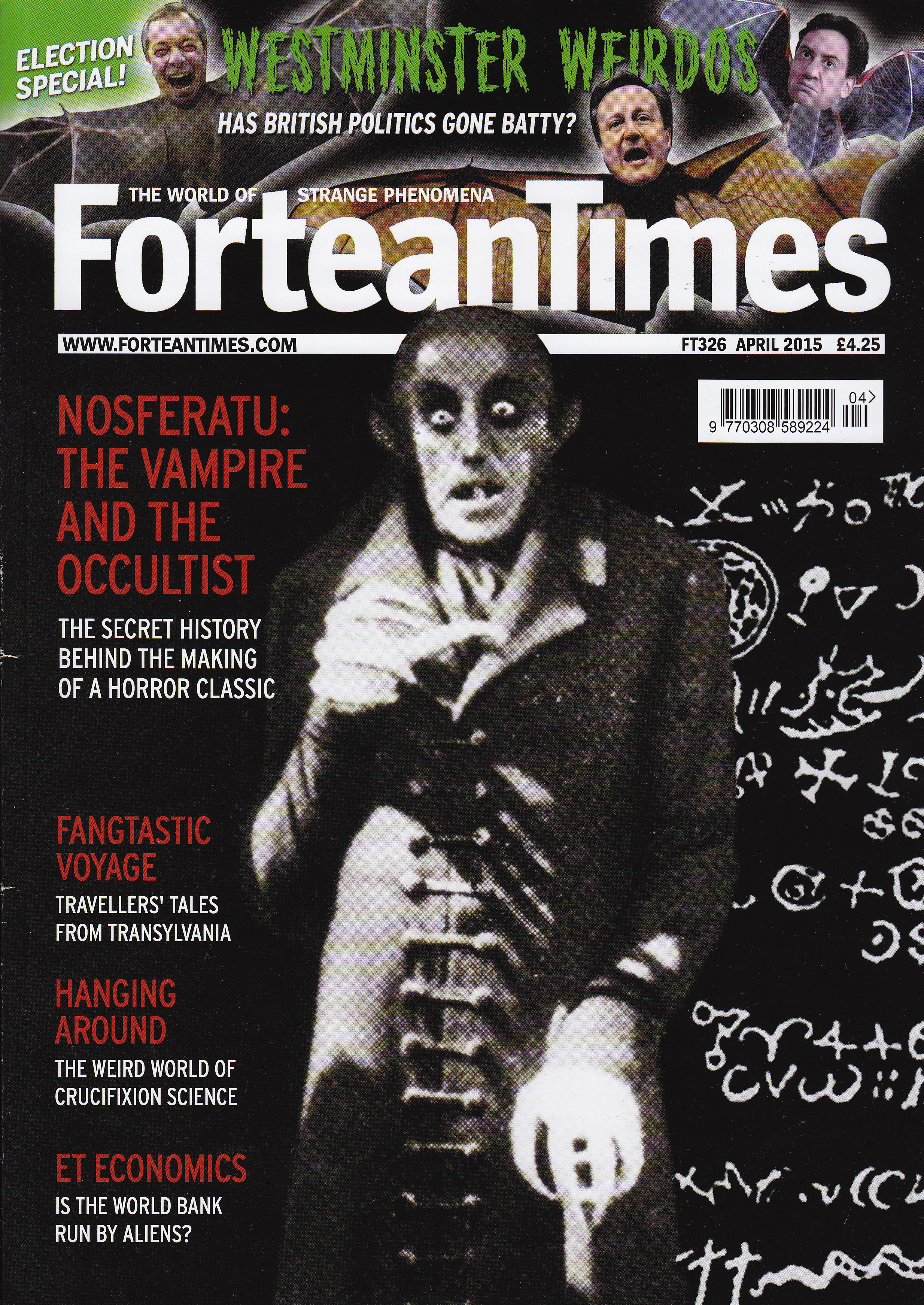
The flight from London to New York is eight hours. Although I always travel with books, sometimes the selection made before the actual reality of time on a plane turns out to be too academic. I read academic books on my daily commute from New Jersey to New York and back, but these trips are not so drawn out as the long flight across the Atlantic. Since my flight was departing Terminal 2 at Heathrow, I had trouble finding a bookstore. There are stores that sell books, but having been to Blackwell’s the day before, the selection was not inspiring. I wandered to the magazine section. Magazines can be good travel fodder since they don’t demand the rigors of a monograph, and glossy pictures always add to the appeal. But what to buy?

ForteanTimesLooking over the covers, I found one featuring vampires. It turned out to be the Fortean Times, but since I had a row to myself on the plane, I couldn’t see the harm in having a magazine about strange phenomena. I’d never actually read an issue of the Fortean Times before, although I had a general idea of what to expect. While it may seem odd, there is a pretty solid connection between the paranormal and religion. I’ve noticed this for years. Reading through the Fortean Times, it was clear that others have made the connection as well. Many of the articles, including the ones on vampires, touched on obvious religious themes and motifs. This was so much the case that I began to wonder if any kind of solid wall can be erected between the two.

Religion, broadly conceived, tends to be concerned with the non-material world. Its claims tend to defy empirical verification, and its subject matter is often at odds with science (at least in the mainstream). The paranormal is open to scientific investigation in that it tends to be based on secular claims. Like religion, however, it tends to dwell in the non-material realm. After all, vampires coming back from the dead is hardly a phenomenon that is readily recorded with any instrument beyond a Hollywood movie camera. Still, most religions are hostile to the paranormal, and investigators of the paranormal may be unconnected to religion. Both, however, are an engaging recipe for a long flight. Especially if nobody is sitting in the row next to you.


Colorful Gods

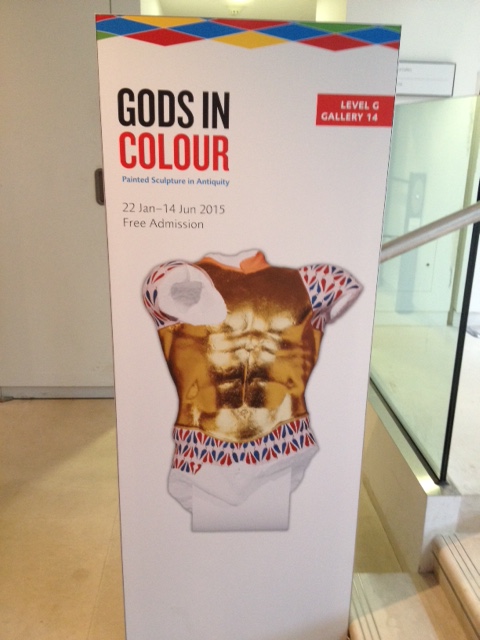
On my last day in Oxford I had enough free time to visit the Ashmolean Museum. The Ashmolean is the earliest public museum in the country, and, although it isn’t nearly the size of the British Museum, it has its share of very important artifacts. While there I came upon the exhibit called “Gods in Colour.” The display was inspired by the fact that ancient Roman statues—and likely those of other ancient cultures as well—were often painted. The elements have worn away much of the decoration, but traces of various chemicals have indicated what hues were likely used to paint these public icons of divinity. We tend to think of classical society as all white marble and stoic formality, but the reality was likely much more colorful. Many god and goddess statues from ancient West Asia also have traces of paint, although in general they were smaller in the various kingdoms of the Levant than the empires of Egypt and Mesopotamia (the latter of which is sadly falling victim to modern day iconoclasts). The Romans weren’t the only ones to see in color.

IMG_2082

Seeing these representations of gods in color reminded me of my first exposure to liturgical Christianity. Having been raised in a Fundamentalist tradition, we certainly didn’t have images about (although one of our churches had a pastoral fresco on one wall). The United Methodist Church, in which I spent my teens and early twenties, had adapted the liturgy of its Anglican parent church, but not the iconographic tradition. When I first saw churches with painted crucifixes and states of Mary, I was taken aback at how powerful they could be. Like most ancients, I realized that these weren’t the gods themselves, but they still conveyed much of what the liturgy was communicating through words and music. One priest explained them as crutches for those who needed help to imagine the divine.

Having seen what images can do, I object to the use of the word “idol.” People are visual animals. We rely heavily on our sense of sight, and our religious sensibilities tell us to look for the gods our minds tell us must be invisible. It is difficult to focus on that which we cannot see. Today we have images both in the natural color of their medium and resplendent with color. We spend hours before the computer screen with its endless array of pixels of all colors. We still think of our gods in full array of saturated hues. In ancient times they tended to be made of stone, but we tend to use another form of silicon, apparently, to get the same effect.


Oxford Haunts

IMG_2007

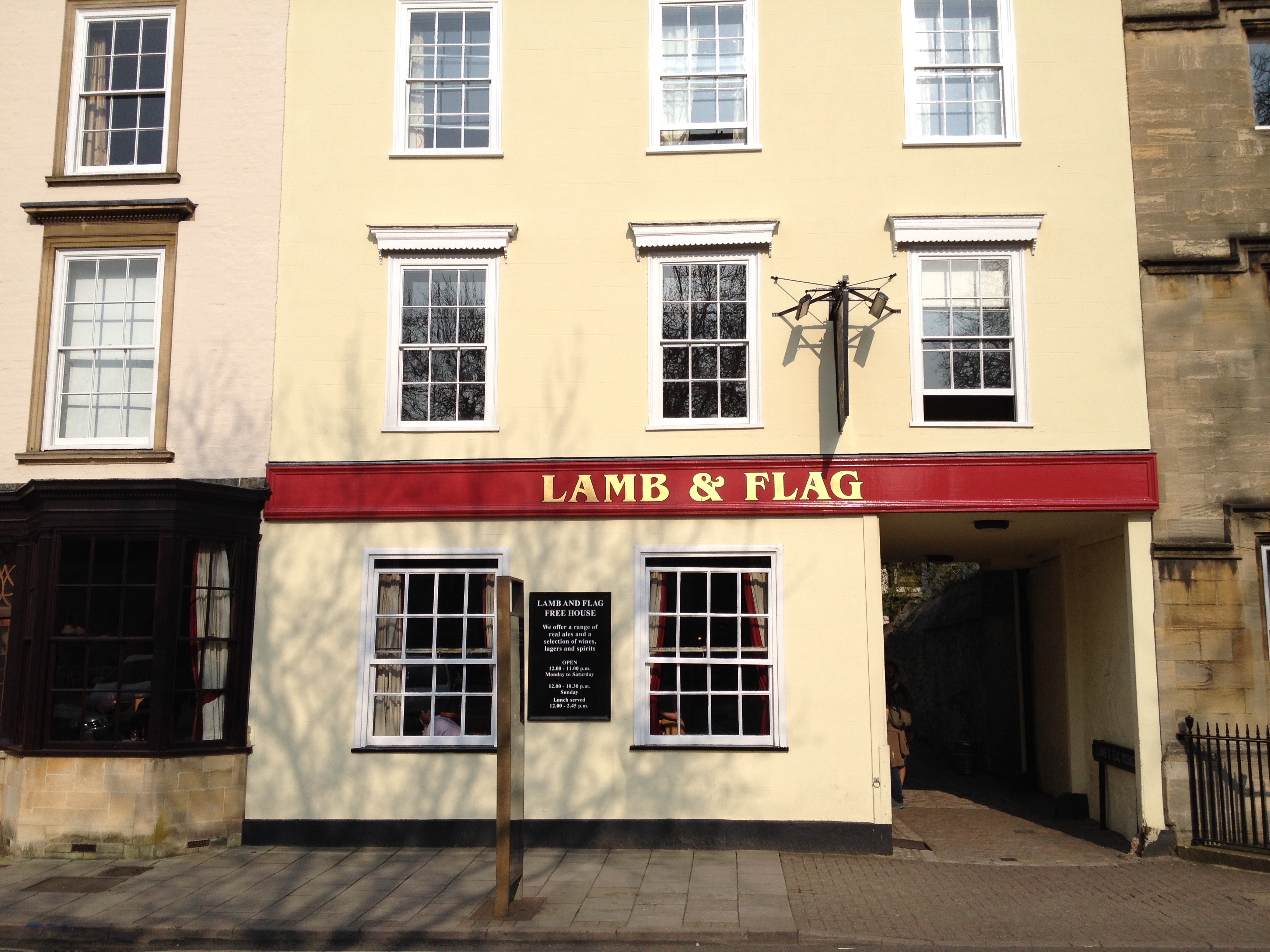
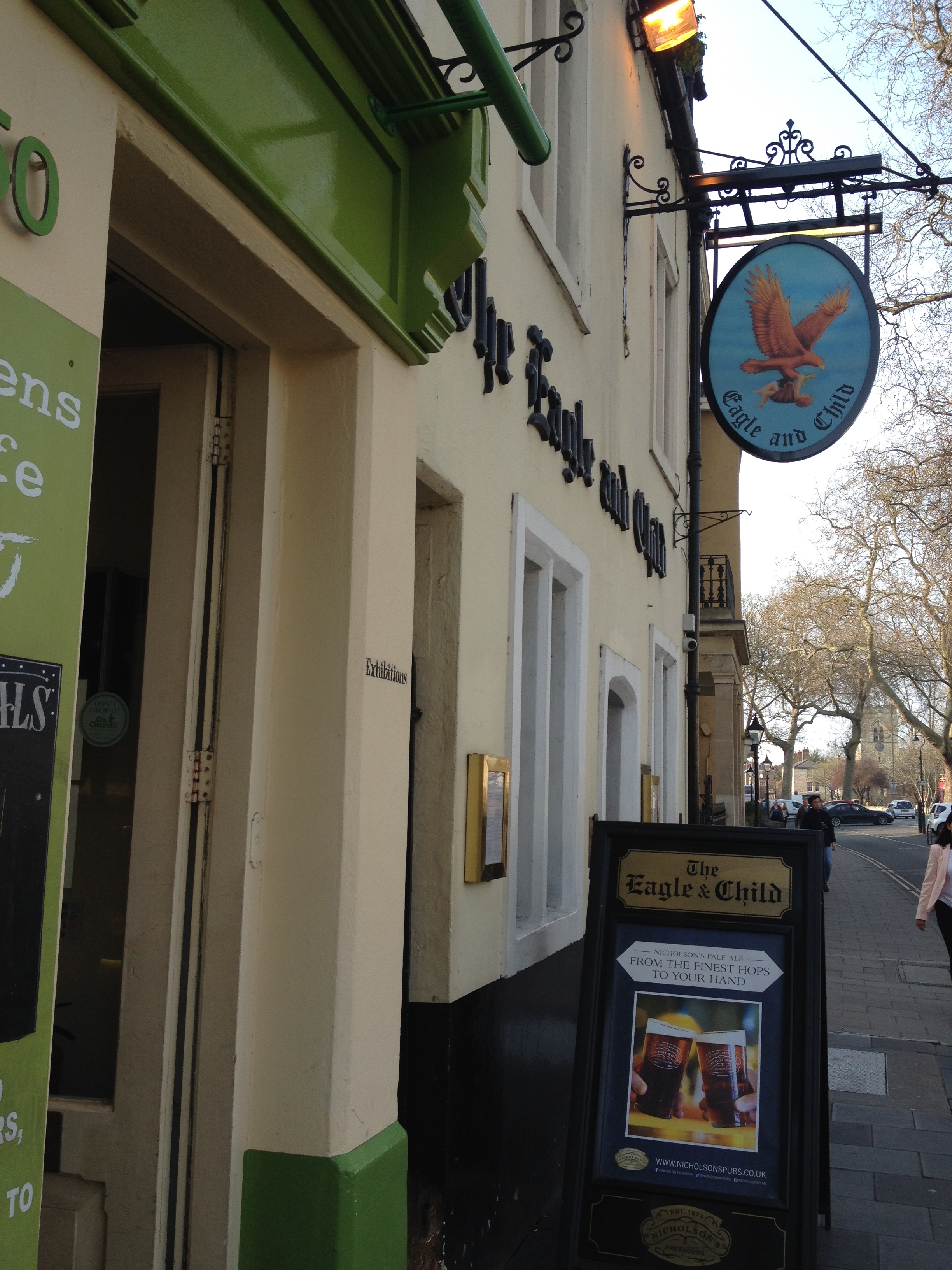
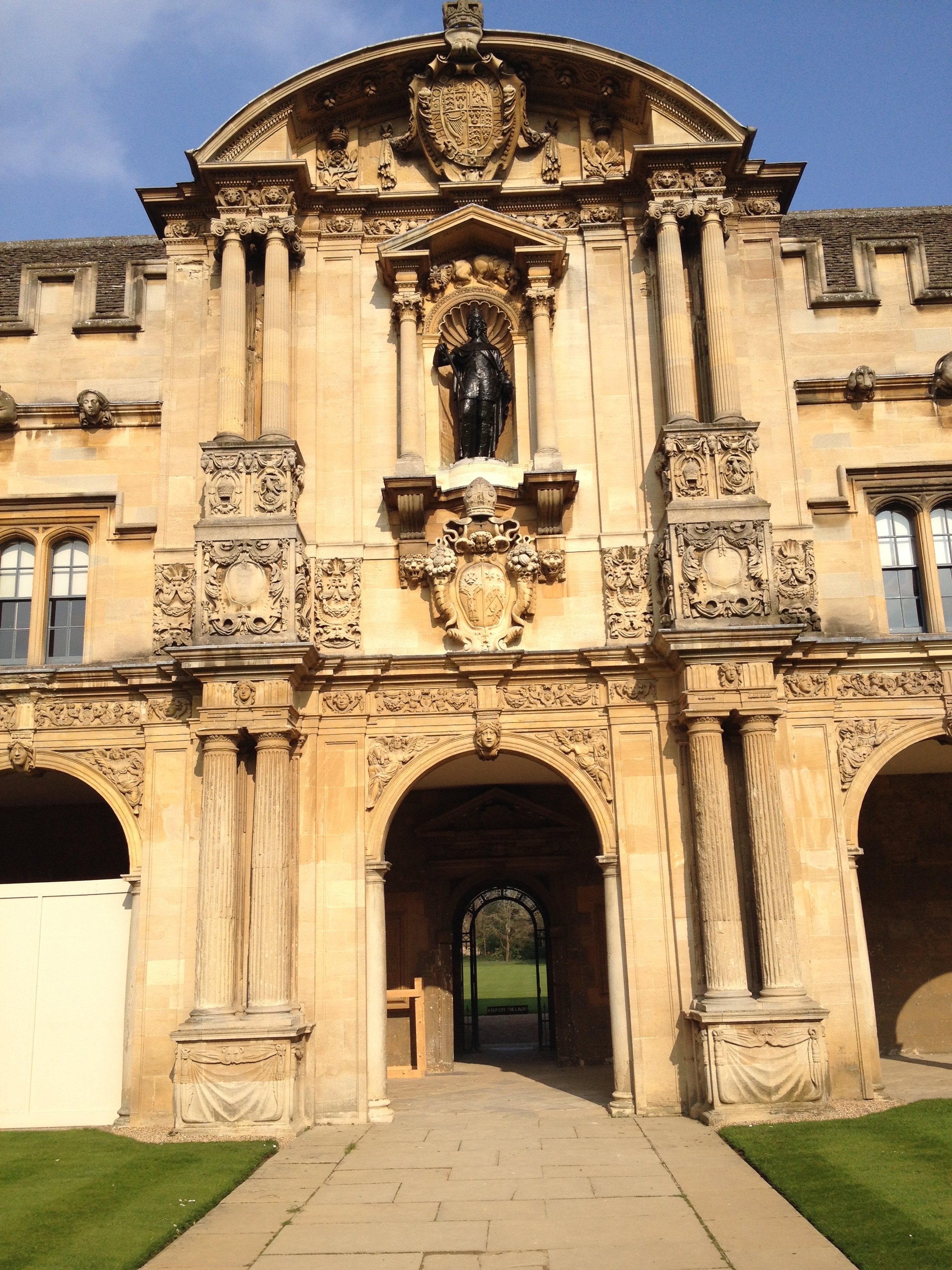
When I travel, when I have time to plan, I like to visit the haunts of literary figures. It would be difficult to think of two more influential (or abbreviation-ridden) English writers than J. R. R. Tolkien and C. S. Lewis. Both Oxford men, they liked to drink, I believe, at the Lamb and Flag. I stopped by to see, but just in case it was actually the Eagle and Child, I back-tracked to see it as well. Post-war Oxford was a place for an academic to write, and C. S. Lewis has influenced an entire generation of evangelical fans who overlook his penchant for drinking, and J. R. R. Tolkien seems to have invented the perfect fodder for CGI animators. Perhaps there was something in the air. Although no less of a literary talent, it may be less common to hear Thomas Hardy’s name. He is rumored to have written Jude the Obscure, appropriately, mostly in this pub. Good to know there’s someone else so obscure, by definition. It’s hard not to feel scholarly in Oxford.

IMG_2038

I have to confess, I dressed the part. I wore my Harris Tweed jacket and my Edinburgh school tie. It was a beautiful spring day, the like of which were extremely rare in Scotland some two decades ago. Not knowing that my business trip would offer the opportunities to explore the city a little, I hadn’t done much homework. A colleague suggested I stop into St. John’s College to look at the gardens. They’re only open from 1 to 5, and I timed it right to get there shortly before closing. Students wandering out in jeans, staring at their smartphones, could have been students at any number of universities I’ve known. The setting was, however, quite beautiful. There seems to be evidence that they don’t walk on the lawn. Tradition is treated with considerable respect here. Although, upon closer look, graffiti does make an appearance now and again.

IMG_2010

As I was stepping out the door of St. John’s, a family from eastern Asia was coming in. It was near closing time. The father asked me if this was Oxford University. I explained that it was part of Oxford University, but that the university was quite large and was all around the town. As he pressed me for more information, I wondered why he was asking an American who’d only been to Oxford once before about the place; I hadn’t done my homework, after all. Then it occurred to me. I was dressed rather like a prototypical professor. The tweed, the beard, the glasses, the consistently confused look on my face—I’d been mistaken for an university professor. I stepped outside and looked around. In a different time, perhaps it would have been true. And maybe Tolkien and Lewis would have lifted a warm pint in a cold pub and we all might have learned something.


Paper Oxford

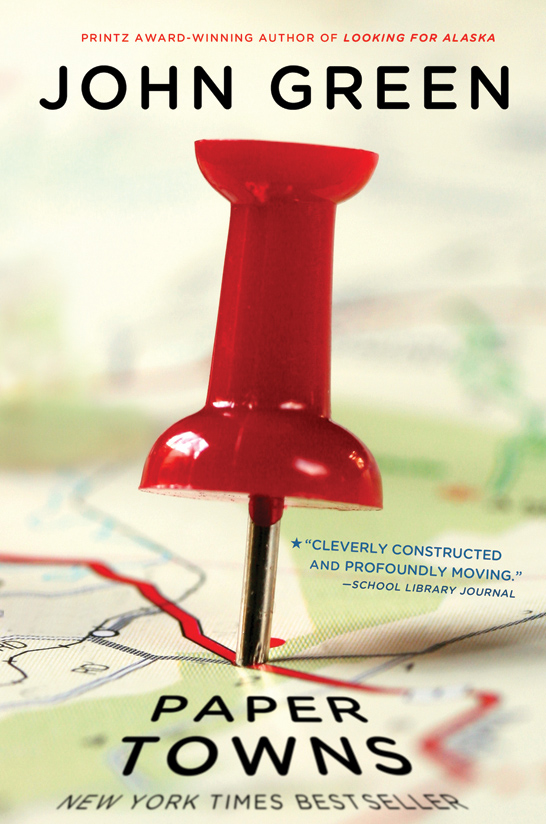
PaperTownsIt looks like a brilliant blue morning here in Oxford, yet my body is telling me that it’s the middle of the night. And that’s saying something, since I normally get up around 3:30 anyway. Routine is kind of a religious thing. In fact, it seems to be the root of ritualistic behavior. The passing of time is a matter that affects us all in some way. Jet lag is one of those ways. I’ve got an important meeting to attend in an hour—that’s why I’ve come all this way—and yet my mind will be telling me I should be elsewhere. Perhaps back over the north Atlantic, looking down at icebergs from the air, wondering if climate change is really that far advanced. Are there any polar caps left at all? Didn’t the Titanic hit an iceberg at this time of year, and wasn’t it a great surprise? At least on a ship you don’t get jet lag. There’s nothing like travel to shake you out of the ordinary.

I suppose that’s part of the draw to John Green’s Paper Towns, which I read on the flight over. Although it’s young adult literature, Green has a way of capturing what it was like to be a teen on the cusp of adulthood, and the need to become who we are meant to be. It is a story of leaving home, and of living on the edge. Once a friend said to me that he couldn’t understand someone wanting to leave the place they grew up. I, on the other hand, was only too eager to leave a verbally abusive situation in an industrial town that was slowly dying with no prospects for the young. Needless to say, Paper Towns resonated with me. I can’t remember the last time I read a novel in a single sitting. Although I’ve been an adult for decades, I can still remember the feeling of being young, of falling in love, and wondering what this was all about. High above the north Atlantic, I was sure I still hadn’t figured it out.

There’s nothing religious about Paper Towns. The characters in it assume God to exist, as most Americans do. We make a lot of assumptions. My body is assuming it’s only two in the morning. My clock is telling me that it’s seven. Time is relative, but only one of those placeholders will determine if I am late to work in this place I find myself waking up. I remember being young, and although Oxford has its usual charm, I also know what it feels like to have to leave. The clock tells me that I have to go. The novel in my head tells me the same thing. I’m not sure what time it is. For the moment my paper town is Oxford, and it seems very real indeed.


United We Fly

IMG_0563

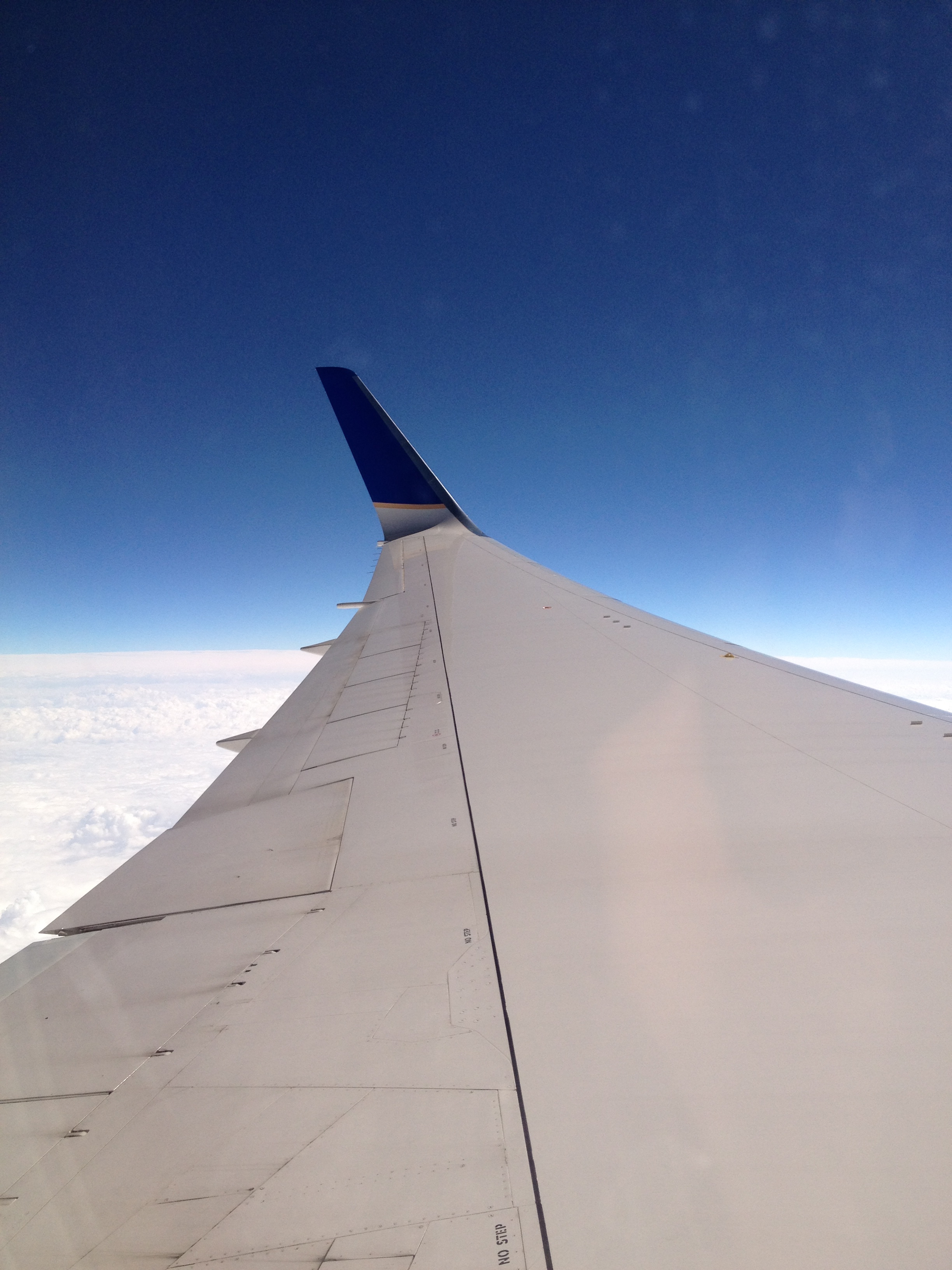
I’m on a flight from New York to London. This wasn’t a trip I particularly wanted to take (what business trip ever is?). I don’t like flying, and changing time zones takes days off my life. Bowing to the inevitable, I dutifully checked in yesterday. However, that didn’t go quite as planned. I’m flying United. I generally take United since they offer many destinations out of Newark, and who wants to cross Manhattan to get to JFK or Laguardia? I’ve actually become rather fond of United’s snack boxes. Since I’m so 1990s, I decided to check in on their website. Two or three pages in, they stopped me and suggested I should use my cell phone. This is much preferred, I’m told. Well, I do have a cell phone, but I’m not sure if I’ll be able to access it in the UK. Still, this is the way things are done these days. I had United’s app on my phone from a previous flight, so I happily typed in my confirmation number, to fly the friendly skies. Since this is an international flight, I have to scan in my passport. That’s a bit worrisome, but the app says to do it and who can argue with an app? Click. My passport is being encrypted and verified. I’m free to go. Then the message pops up. I can’t check in.

I’m old enough to know how to use a landline. I called United. The agent was very friendly, just like the skies, but clearly couldn’t comprehend the complexity of my issue. One, I couldn’t check in. Two, my passport had been sent to somebody, but who was it? United? Some foreign government? James Bond? I didn’t mean to make the guy nervous, but this is my passport we’re talking about! He said he would transfer me to tech support. The call was transferred. The cheery female robot asked me if I wanted a $100 Wal-Mart card. I should press one. I don’t support Wal-Mart so I didn’t press one. She cheerfully insisted. I resisted. She came back on and said that I could press any button for a Wal-Mart card. When I didn’t comply, she hung up on me. I called United again.

This time the agent assured me I would have a human response at tech support. I heard the two tones connecting me with a guy who sounded surprised to hear a voice from the outside world. It was like he was speaking from a dank basement somewhere. He had no idea where my passport scan went either. He suggested deleting the app and then downloading it again. Start the process over. Reboot, as it were. I know the reboot drill, but I was worried about my passport scan. Where had it gone? If his solution worked, at least one problem would be solved. I could check in and reserve my place on the flight (ironically, buying a ticket isn’t enough to do that). I confirmed the instructions with my light-deprived docent. I asked, in parting, what I should do about my missing passport scan. His advice was the very image of an ouroboros. “You might try calling customer service,” he said. I don’t like flying.


Happy Disruption

IMG_1567

Last night’s full moon shone brightly, announcing the grounding of the date of Easter, obviously associated with Passover. Unless one has a natural sense of the progressions of the lunar calendar, Easter can always seem a matter of guesswork. It fall on the first Sunday after the first full moon after the vernal equinox. It is one the many transitional season holidays. All holidays are intended to be disruptions from the normal flow of time. Of course, business is the natural enemy of holidays, except for Christmas, and, increasingly, Halloween. The usual business calendar eschews disruption, and there are no days off associated with the Passover-Easter complex. A little thing like death and resurrection shouldn’t stand in the way of turning a solid profit. Still, the point of holidays is their disruption of normal time.

My own time faces disruption this week with a business trip to England. Funny how often these seem to be demanded about this time of year. My usual blog posting patterns will surely be disrupted as time zones zip up across the Atlantic. Disruption will become endemic. Disruption without the celebration. Ritual experts tell us that Passover, the basis for Easter, was a development from an even earlier pre-biblical rite. People have always found a way of marking the more obvious transition of seasons, the planned disruption of daily life.

Routine becomes comfortable, no matter how inherently uncomfortable it may be. I awake before 4 a.m. each day with many others whose lives are dictated by bus schedules and economic necessity. No matter how many years I’ve been doing this my body objects to the early hour that draws me from the comfort of sleep. It is a disruption. Now my disruption is about to be disrupted and I’m wondering what is holy about any of this. Time, which always comes in limited quantities, seems best spent with those we wish to celebrate. Our own private holidays. But business and resurrection don’t sit comfortably together. True religion and money are, it seems, inherently at odds. As I pack my bag and turn to the east, I look at my calendar and wonder when the next true holiday will arrive.


No Beef

IMG_1932

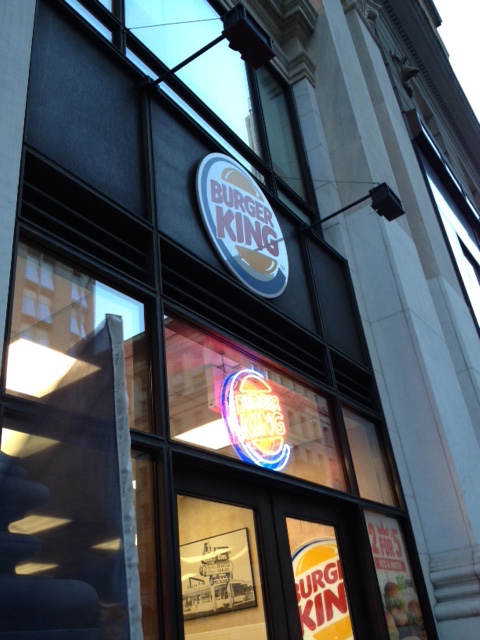
Burger franchises aren’t always the best option for vegetarians. When you’re traveling, however, choices can be slim. My wife and I recently pulled into a Burger King. They do have a veggie burger, although it is clear that those who prepare them seldom eat them. They must be frozen because they inevitably have that tough edge that comes from microwaving them just a little too long. Anyway, we were sitting down to have a bite, or chew, when a group of three gentlemen in the corner booth caught our attention. They were arguing, in a friendly way, over Christianity. Among the topics of conversation was the age of the earth. (Ten thousand years, at the outside.) Overhearing the conversation, I started to get nervous. I noticed the guy at the table next to them glancing curiously their way.

I glanced around. Other people having conversations about mundane things. Perhaps this is what we’re taught to do. Speak of things that have little depth. We are in a public place. We don’t discuss religion or politics here. But then I reconsidered the situation. If I were to join their discussion I’m sure we would have found little in the way of common ground, but I realized that conversations around religion do have depth. These guys, despite the media’s incessant message that religion is for non-intellectuals, were thinking deeply about topics of ultimate concern. When’s the last time I talked with a colleague about what really matters over lunch?

A blurb in a recent Christian Century mentioned Bob Dylan. It suggested that in a recent interview that he’d intimated that if he hadn’t gone into music, he would likely have studied theology. Likewise, I recalled an interview many years ago with Bruce Springsteen that suggested he might have made a good priest. Listening to the lyrics of many of the songs of these two icons will reveal that depth and public religious discourse many not be so rare as this incident in Burger King seemed to suggest. Maybe the words aren’t always direct. Maybe we speak in metaphors and with guarded asides. Maybe we speak with our actions instead of our words. Many of the most profound conversations we have, when viewed in that light, are like those of three men in a Burger King.


Maine Event

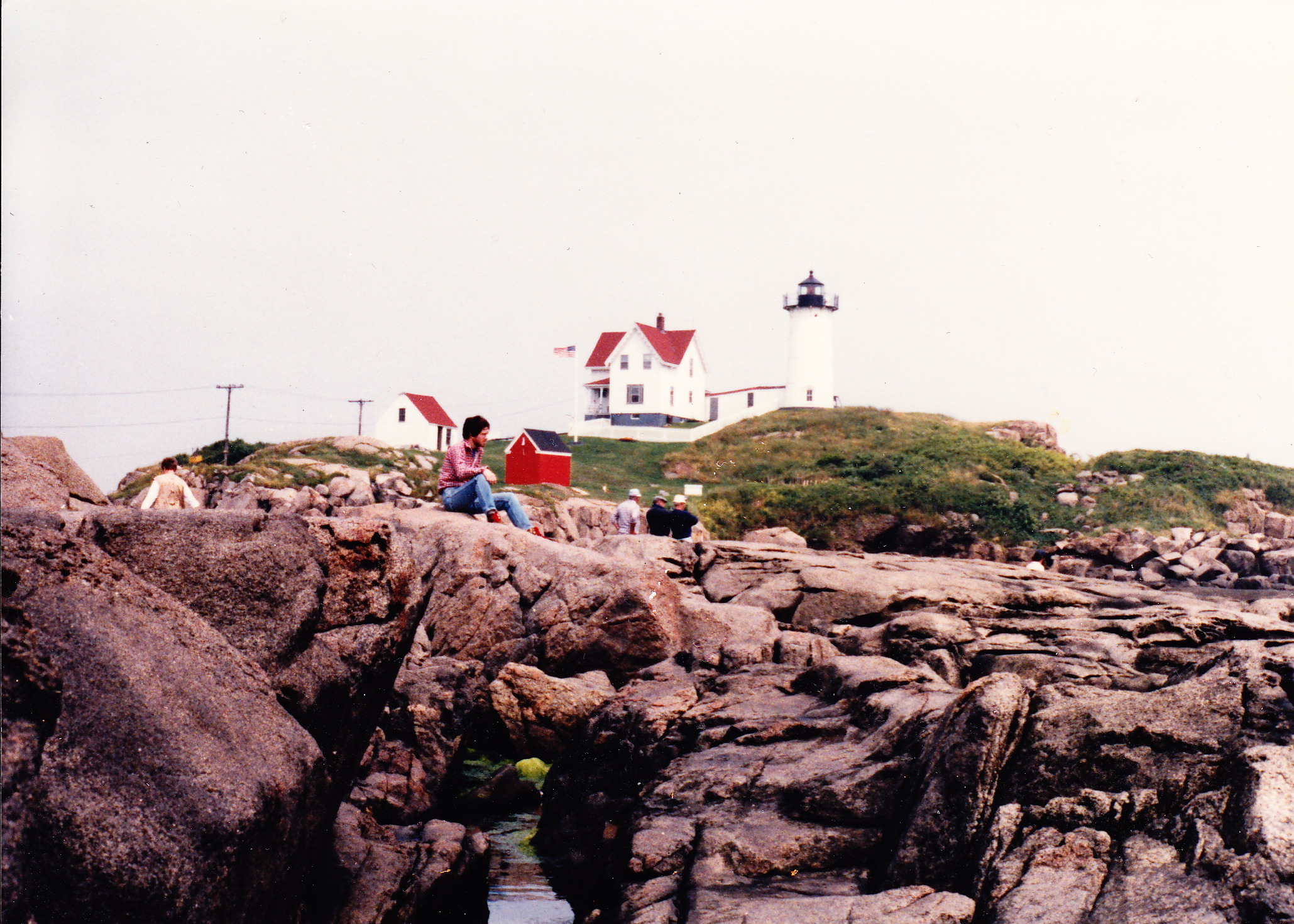
We have no control over where we’re born. Place, however, has a sacred significance. Many people have a sense of where they belong. Life may be a prolonged journey, like that of a salmon, to find one’s way there. While in seminary, one of my professors had the class introduce itself by name and town of birth. This was in Boston, at a school with a highly eclectic student body. I was born in the small town of Franklin, Pennsylvania. Other than having been the setting for an X-Files episode may years later (not filmed there, of course), it was not the kind of place anyone was likely to have heard of. In a class of maybe 50, imagine my surprise when an older gentleman announced he was born in Franklin, Pennsylvania. We was not of my generation, but it turns out, we had origins in common. As the introduction passed further forward, someone about ten years my senior announced, with a glance at the first student, that he was from Franklin as well. By the time it reached me, this seemed more of a synchronicity than a mere coincidence. We were all entering Juniors (the starting year of seminary), all born in the same hospital, and none of us had known the others existed prior to that day.

I was in Boston, however, because of a deep-down conviction that I belonged in New England. More specifically, Maine. After having grown up for about a decade in Franklin, we moved to Rouseville, Pennsylvania when my mother remarried. Apart from the industrial, drug-intensive culture, there was a haunting sense that this was not where I belonged. I began to read voraciously. My literary adventures found my spiritual home: Maine. Vividly I could imagine its rocky coasts and large stretches of northern woodland. I had never been to Maine—had never even seen the ocean at that point—but I knew, without a doubt, that Maine was my spiritual home. While a student in Boston I made several trips to Maine, each one convincing me more that I shouldn’t be leaving when Sunday afternoon rolled around. I should be staying here.

Life has, however, kept me from my beloved Maine. Academic jobs, mythical beasts that they are, are location-specific. You have to follow the jobs (I almost wrote herd there, but there’s nothing close to a herd of such employment). The population of Maine doesn’t support the number of schools that places like Massachusetts, New York, and Pennsylvania do. Even all of these were closed to me. Maine never abandoned my dreams. I moved to Wisconsin, following a job that abandoned me. I moved to New Jersey to take another, which also abandoned me. One of the motifs to which I constantly return is the sacredness of place. A sense that a person belongs somewhere. Out in the ocean, many salmon are captured before they make it to the stream of their birth. I wonder what their thoughts might be as they lie gasping for breath, knowing deep in their piscine souls, that this is not where they were meant to be.

Maine


Welcoming the Stranger

Profiling is alive and well. In our post-9/11 state, we are even more suspicious than those who are different than we were before. After the Ferguson decision, profiling once again led to unrest. If we didn’t do it so much, cases like this wouldn’t be necessary. If we didn’t shoot first and ask questions later, how much more would we understand? It happens, unfortunately, at all levels. I have no desire to trivialize the tragedy that continues to unfold over race relations, but divisions of those perceived potentially to cause trouble occur at even smaller, less significant levels. We tell ourselves that it is possible to gauge a person’s potential for violence based on a number of factors which happen to fall along lines of gender and race. Your typical airport screening is an example.

As my readers know, I object to the millimeter wave scanners in use in many airports. In general, I object to being treated as a criminal when I have been a pacifist since high school. (And likely before.) I am treated like a law-abiding citizen everywhere except the airport. Flying home from San Diego, I noticed that at check-in men traveling alone were separated out and sent through the scanner. The side on which I had to pull off my shoes and belt and coat, empty my laptop from my bag, and stand on the chilly floor awaiting an opt-out, was very masculine indeed. The woman in front of me, who looked far more frazzled than I did, was sent to the metal detector, along with her stroller. No threat there. Being male, however, is always a threat. Two priests stood before me in line. They didn’t go for the pat-down.

Potential terrorists, all.

Potential terrorists, all.

On the plane, many passengers began to talk about the American Academy of Religion and Society of Biblical Literature meeting. After all, about half the passengers had just come from the conference. For me, I was ready for some quiet. Some time to center myself after playing the extrovert and talking to people I don’t know for four long days. As debates about religion broke out on the Boeing 737, I began to understand why religious folk are often profiled as potential threats. Their convictions, public and firmly held, are more likely to remain constant in the face of contrary evidence than are most opinions. I wonder if airport security couldn’t save us all some time, money, and embarrassment. Couldn’t they just ask passengers to declare their faith? Of course, we’d need to find some other employment for government officials whose duties involving feeling strangers with latex gloves before wishing them a pleasant trip. While high above the planet riots are breaking out down below because we distrust those who are different.


Thank You

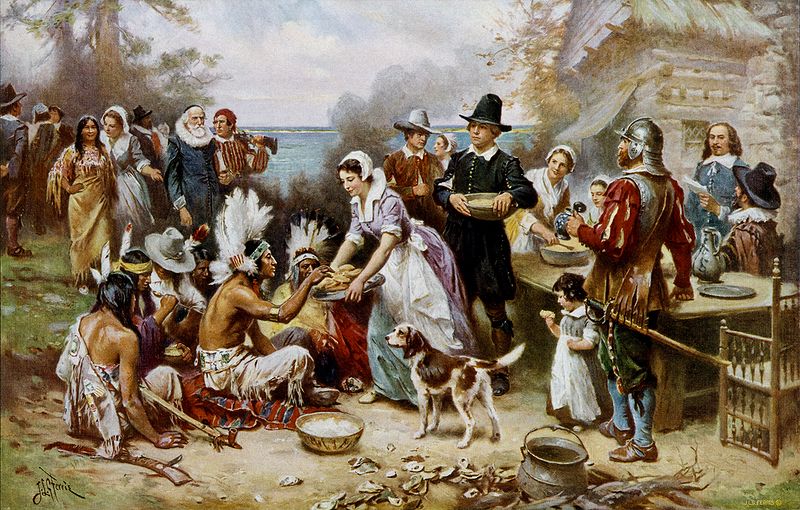
Comments being rare on this blog, I do read them when they come along. Recently I had a reader comment, in the form of a question (as sometimes happens): “Do Native American Indians do ‘Thanksgiving’?” Although I’m fairly certain this was intended as a rhetorical question, I was raised a literalist and couldn’t help trying to formulate an answer. Although I can make no claims to know Native American culture well (I wish I did) it led me to ponder the concept of Thanksgiving. No doubt the idea had at least informal religious beginnings. Even with the early European settlers, a religious diversity was already appearing. Still, although the Native Americans lost pretty much everything, they were still involved, at least according to the early accounts. The great spirit they thanked was not likely conceived of in the way that the god of the pilgrims was, and yet, thankfulness is a natural human response. Writers, often fully aware that their work deserves publication, frequently thank an editor for accepting it. It’s a deeply rooted biological response.

800px-The_First_Thanksgiving_cph.3g04961

For some of us, Thanksgiving is more about having time to recuperate after non-stop work for about ten months. The standard business calendar gives the occasional long weekend, but after New Year’s the only built-in four-day weekend is Thanksgiving. It is that oasis we see in the distance as we crawl through the desert sand. Time to be together with those we love rather than those we’re paid to spend time with. To rest and be thankful.

Among the highlands of Argyll, in western Scotland, is the picturesque Glen Croe. Years ago, driving with friends through the rugged scenery of boulders and heather, the little car struggled with its burden of four passengers. We stopped at a viewpoint known as “Rest and Be Thankful.” The name derives from an inscription left by soldiers building the Drover’s road in 1753, at the highest point in the climb. The Jacobite movement and the Killing Time had instilled considerable religious angst to the Scotland of the previous century and led to the calamity of Culloden less than a decade before the road was laid. These religious differences led to excessive bloodshed throughout a realm supposedly unified by the monarchy. Even though no natives protested displacement, religion led to hatred and mistrust, as it often does. Is not Rest and Be Thankful, however, for everyone, no matter their faith or ethnicity? And in case anyone is wondering, yes, this rhetorical question contains a metaphor to contemplate. Rest and be thankful.


Saint Diego

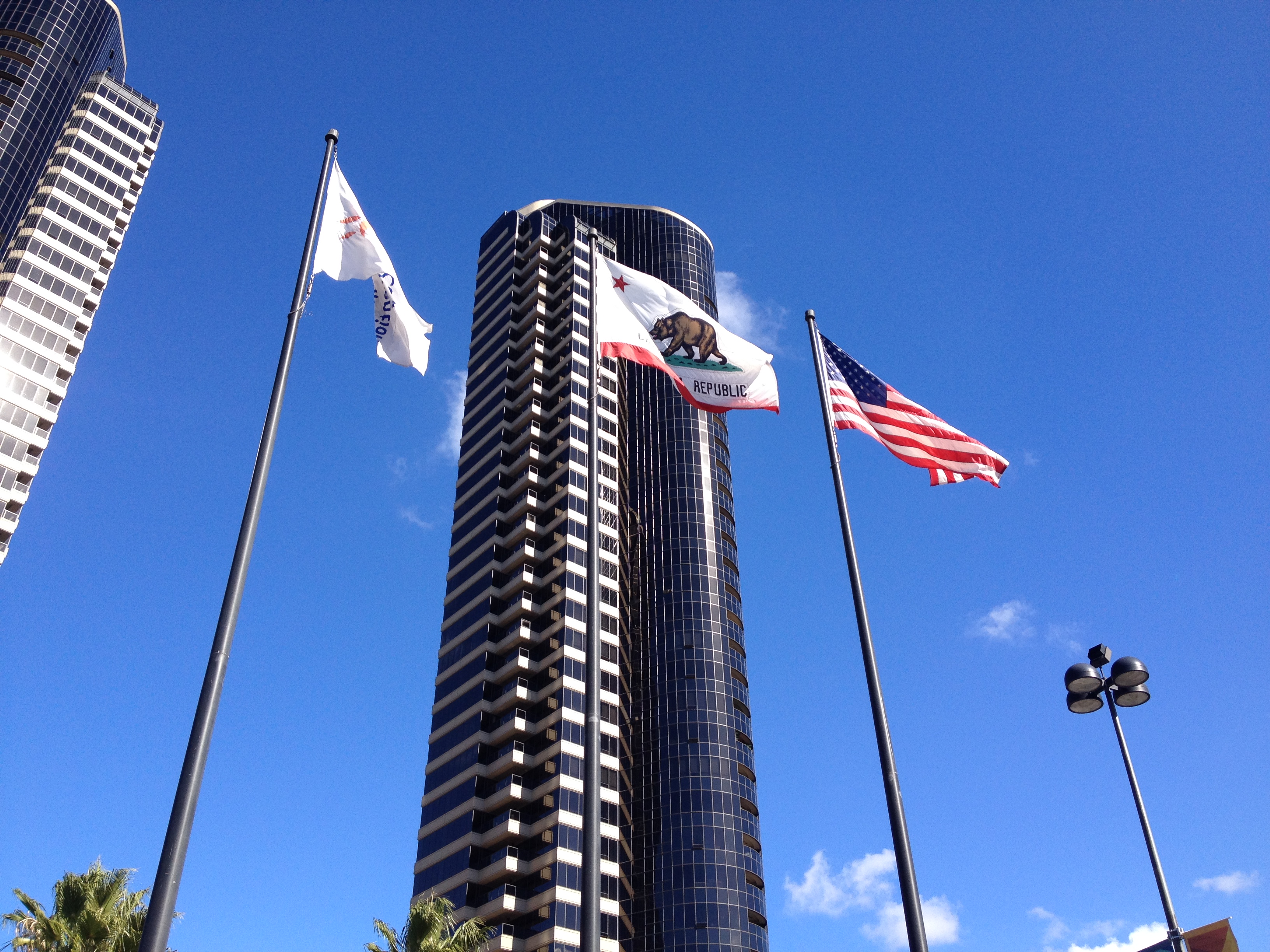
Didacus of Alcalá fortunately, I think we might all agree, was more commonly known as Diego. The city of San Diego is named for him, as his nickname was a diminutive of Santiago, or Saint James, patron saint of Spain. Ironically, the more recent Saint Diego is best known for his visions of St. Mary, or Our Lady of Guadalupe. To keep your saints straight you need a score card sometimes. To go by the names, California must be a most sacred place. 120 miles north is the City of Angels. Then the city on the bay named after Saint Francis. Then Saint Barbara. One of my favorites, however, is San Louis Obispo. Everywhere saints. What of Didacus? Born in Spain, he was a missionary to the Canary Islands. I don’t think he ever visited southern California. The Franciscan mission dedicated to him, however, is what grew into the presently eighth largest city in the United States.

Wandering the streets of the old part of San Diego, you might find evidence that a mission led to this sprawling city. Or perhaps not. Now it is famous for fun in the sun—beaches and clubs and the US Navy. I have to wonder what Didacus would have thought of his namesake. I wouldn’t presume to speak for a saint, but I can’t see him surfing or enjoying perpetual summer. Did he have any idea what he might have been starting by denying himself and helping others? He was known for his curing of the sick, although he himself died of an abscess some five-and-a-half centuries ago this month. Like most ascetics, it seems one thing he highly valued was being left alone to contemplate. Would he have even survived in modern San Diego?

IMG_1818

One of the observations I make quietly, from the sidelines, is how frantic religion scholars seem to be. Frantic to write that book, get that tenure, find that recognition. It is sometimes easy to forget that educating students is a reward in itself. Having attended large conferences like this for nearly a quarter century, I have watched carefully. Saints and sinners both wander these carpeted halls with motivations as widely diverse as those of Didacus and Daedalus. Although there are 10,000 people here, including, briefly, Jimmy Carter, the world will go on tomorrow as if none of this ever happened. The homeless will still sleep in the park across the tracks from this world-class convention center. We’ll send our sick to hospitals instead of to churches. And if it weren’t for this conference in this city, I would never even heard of Didacus of Alcalá.