Horror Therapy

It’s Friday the 13th.  Like Barbra and Johnny I’m driving to rural western Pennsylvania to visit a cemetery.  It must be October.  I’m not a magazine reader (this has probably hampered my development as a writer [I prefer books]), but the October issue of The Christian Century is devoted to religion and horror.  This morning I watched an interview with Jessica Mesman on her article on horror as therapy.  In it she discusses her mother’s death.  Since we have this in common, I was intrigued.  Mesman states that studies substantiate that watching horror functions as therapy for people with PTSD.  It has been suggested to me more than once that my career malfunction at Nashotah House led to PTSD.  It may be no coincidence, then, that I started watching horror after that happened.  When The Incarcerated Christian podcast was still going, I was interviewed three times and the topic was, broadly, how horror acts as therapy.

Until today I’ve had to work daily and then make arrangements for an unplanned trip to celebrate my mother’s life as I could.  I’ve never met Jessica Mesman, but I sense that she would understand what I’m going through.  As I grapple with grief, loss, and relief (my mother was ready to die, but I had been unable to see her for a few years because of the pandemic and other circumstances) what I feel I really need is to watch a horror movie or two.  I have found—and 2023 has been a traumatic year for me—that when I’m feeling overwrought, taking ninety minutes to watch a horror film can get me back on track.  It helps me cope.

None of this is intended as any disrespect for my mother, whom I love deeply.  Although she didn’t read my books, she knew I watched monster movies as a kid.  She occasionally grew annoyed with me when such things made me too clingy—she had two other sons and her own dying mother in our home and she was trying to keep it together with my father gone.  Looking at photos of my young self, I wonder if that early loss of a parent translated to a kind of childhood PTSD.  Once I’d successfully (?) made it to adulthood, Mom told me—“you were the one I worried about; you seemed to have difficulty adjusting.”  I sought therapy in religion.  I’ve dedicated my life to it.  Until it too became a source of grief, horror, and pain.  As I prepare to drive to her funeral, I’m pretty sure that Mom understands.


Simple Arithmetic?

Arithmetic progressions.  They can boggle the mind.  I think I’ve noted before—I’ve been doing this so long that it’s difficult to be sure—that the exponential increase of ancestors is astounding.  We have two parents but by the time we add ten greats to the grandparents we’ve got a crowd larger than the small town I grew up in.  Typical of a child of an alcoholic, I have no idea of what normal is, but I’ve had a rare and precious gift more than once in my life, and that has been finding that I had hidden family.  My father, unable to afford child support, made his way back to his family to survive.  Nobody in my household knew that he’d done that.  In fact, I had no idea he had siblings and I had unknown cousins.  It was a gift to discover that just as I was graduating from high school.  My mother encouraged me to stay in touch with them.  That was the reason behind my recent brief trip to South Carolina.

A few years back I learned that I had a cousin on my mother’s side that nobody in my family knew of.  People drift apart, even in families, and some people have to be rediscovered.  Call it redemption.  That’s what it feels the most like.  This cousin made the effort to travel across the country, in part to see me.  Kinship is like that.  Families feel for each other.  Being long apart can raise questions of motivation.  It’s awkward when, due to circumstances, you can’t see someone for some time.  I have a half-sibling in that boat and have recently re-connected.  I can only say that it feels like being a prodigal coming home.

I suppose that in a perfect world families would have no dysfunctional members, and everybody’d live next to each other in harmony and good will.  Right, Pangloss?  Economic circumstances would never force someone to live near where jobs might be found, and nobody would ever marry someone from another state, let alone half-way across the country.  And marriages sometimes double the arithmetic progressions, sometimes perhaps triple or more.  Families are complex and complicated, in reality.  I’ve seen pain in more eyes, and heard it in more voices than I would care to.  And I have a very difficult time letting such things go.  Charlie Bucket, according to Tim Burton’s version, says that families make you feel better in an imperfect world.  A world in which family reunions take place with individuals not being notified.  A world in which arithmetic progressions are mere fictions. Never in a perfect world like ours.


Down to the Sea in Ships

On the final day of our Charleston odyssey we toured the USS Yorktown, an aircraft carrier dry-docked at Point Pleasant.  One of my uncles served on the Yorktown between the Korean and Vietnam wars and was able to show us around.  What really struck me, as often does with military matters, is just how advanced our engineering is when it comes to war.  The aircraft carrier was invented to meet a belligerent need: to convey aircraft close enough to other nations to support air strikes against “targets” there.  These targets consist of living, breathing human beings, at least in part.  But the technical problems, where I’d rather focus this post, were formidable.  How do you land a plane moving at 200 miles per hour on a moving ship with limited runway?  And how do you do it without tearing the plane apart from the sudden deceleration?

Carriers have steel cables stretched across the landing strip.  A tail hook on the plane, or later jet, would catch a cable, wound several times below deck to increase the ratio of force (as with a pulley), to add enough play to stop a plane without the forward motion tearing it apart.  Five cables stretched across the deck and the ideal was to catch the third one for an optimal landing.  Each landing (which could take place 30 seconds apart) was filmed and analyzed for improvements.  Listening to the technical nature of all this, and knowing that such things had been invented some eighty years ago, made me wonder, yet again, at how creative human beings are.  And made me ponder why so much of our creativity goes toward war machines.  Just think of the problems we could solve if we all worked together!  Instead, Putin covets Ukraine, Trump covets everything, and we fall in line behind them.

I’ve written on such topics before.  I took a self-tour of the USS Midway while in San Diego as part of a business trip back in 2014.  The tech there was perhaps a bit more advanced as this was a nuclear carrier.  Standing on this deck, however, thinking how this one ship costs more than I will earn with a lifetime of education and employment, leaves me a bit reflective.  Those who push for wars are often those on their knees praying for the second coming.  The rest of us, content with the first coming, think how the message of love and peace seems to have been swallowed by a whale.  But this ship is larger than any whale, and, I’m told, much, much more expensive.


Swamp Things

If I have time, before I go on a trip I like to consider what different flora and fauna I might see.  People from southern states traveling north to Pennsylvania would likely not see too much that they can’t see at home, I expect.  South Carolina, however, is far enough south to hold what seem (to me) to be exotic species.  These are things that are probably pretty quotidian here, but to a traveler they really stand out.  My family had hoped to see an alligator, in a safe way, as long as we were here.  That’s why we ended up at the Audubon Swamp Garden on the Magnolia Plantation just outside Charleston.  Although it’s October, it’s still warm here and although it took some time we eventually spotted a fair sized gator sunning itself many yards away.  After seeing the first one you kind of know what to look for and we ended up spotting four more.

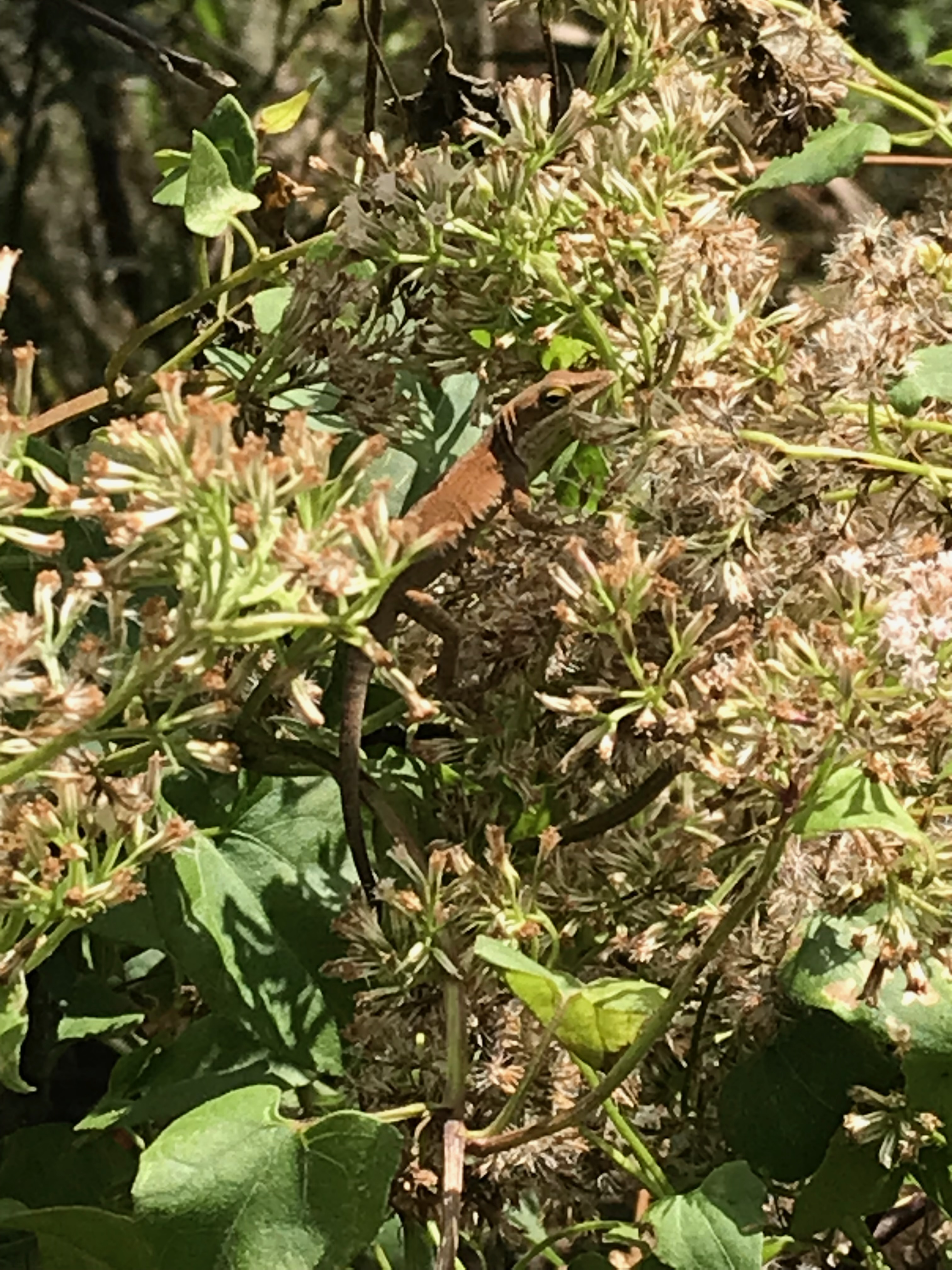
This swamp has a walkway intended to keep visitors safe, so we followed it through the facility.  You have to pass a kind of Jurassic Park entry gate to get in, and it may be best to reflect later that alligators have been around since the dinosaurs.  There were plenty of other animals too.  Our first encounter was a snowy egret.  This was followed shortly by an anole, but my lizard species identification isn’t very developed, I’m afraid.  There were dozens of turtles sunning themselves—several quite large—and a blue tailed skink.  And spiders of apocalyptic size.  My phone camera didn’t zoom in much on the gators, so I’ll put the anole here for you to enjoy.

This iconic swamp was used in the filming of Swamp Thing (I couldn’t resist), and is rumored to have been the inspiration for Shrek’s swamp in that movie.  The most poignant aspect to me, however, was just how much beautiful diversity the world allows if people aren’t constantly trying to improve it.  When a field in my native Pennsylvania is left to its own devices, it will likely become a forest and all the usual suspects will come back.  We do still have elk in some northern counties.  Yes, I suspect if we left swamps run wild mosquitos and other less fun species would also proliferate, but still, there are places that are transcendent for not having been improved upon.  The Audubon Swamp Garden is one such place, although the sunning platforms allow us to see some of the creatures, and with an alligator just a few yards away, I am grateful for this raised walkway.


Poe’s Charleston

The first thing that came to mind, apart from family, when I learned we were coming to Charleston, is Edgar Allan Poe.  I learned about Poe from my brother at a young age and he may be the earliest author I recognized.  Over the years I’ve visited his birthplace memorial in Boston, his college dorm room in Charlottesville, his house in Philadelphia, and his grave in Baltimore.  I did visit Richmond a quarter century ago, but I had a migraine that day and couldn’t think straight.  When I heard “Charleston,” I immediately recalled that Poe had been here.  He was stationed at Fort Moultrie on Sullivan’s Island, not far from where we’re staying.  As in many cities that Poe called home, he’s become a favorite son of Charleston.  I knew we wouldn’t be able to see all the haunts—I don’t think the larger family shares my fascination—but we got a start before the reunion began.

The first stop was the most tenuous.  Rumor has long had it that Annabel Lee, of Poe’s last complete poem, is buried in the cemetery of the Unitarian Church.  The cemetery is renowned for its flora, which are kept largely untrimmed to match original wishes.  It proved an atmospheric place even on a sunny day.  Then it was a trip to Fort Moultrie itself, where Poe would’ve wandered as a young man.  The thick walls and largely subterranean emplacement would’ve been impressive in the days before modern warfare.  In fact, with the large military presence here, war seems an accepted fact of life.  We didn’t have time to find the Edgar Allan Poe Library, but we were honored to eat in his presence at Poe’s Tavern.  This spot makes it into travel books not because Poe ate here, but because its decor is all Poe-themed.

This journey has been a voyage of discovery.  Our first night in Charleston I had probing dreams about my father.  They actually began a couple days before our flight.  Like Poe, my father had a problem with alcohol.  Like Poe, I never really knew him personally.  Although Joseph Campbell’s overblown, I believe he’s right that the hero’s journey is the search for the father.  Critics sometimes complain that they don’t understand my integration of Poe in my nonfiction books on horror films.  My only defense is that something deeply personal is going on.  This odyssey began over half a century ago, in my childhood, and coming here, I knew that I had to meet the man and claim my heritage.


Valuable Time

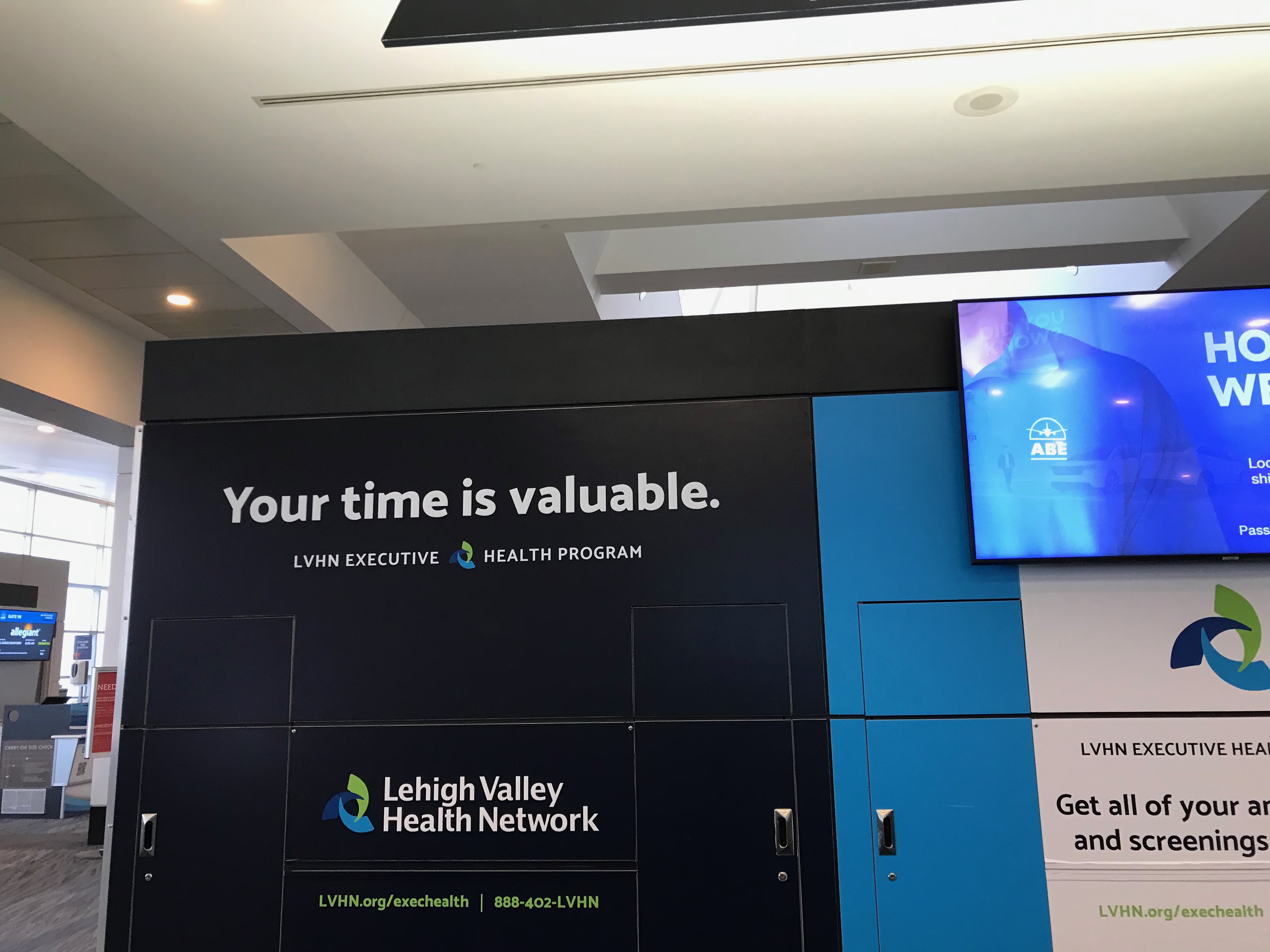
Those who know me are sometimes surprised to learn that I’m half southern, genetically, at least.  My father was a South Carolinian and so I find myself in Charleston, wondering at how I got here.  At least in the short term, it was a long trip.  We left the house at 4 a.m. yesterday and arrived in Charleston some ten hours later.  (The time in the sky was, of course, less than two-and-a-half hours.)  Our initial flight was delayed for two hours, while, in the gate next door another airplane, from the same airline, to the same hub, scheduled an hour-and-a-half later than our flight, left on time.  I sighed as I read the prominent sign ironically reading “Your time is valuable.”  Yes, it is.  And although the ABE (Allentown, Bethlehem, Easton) airport is nice enough, I think I could’ve used a couple more hours abed instead.

It must be quite a logistics nightmare when a plane breaks down.  It’s not like a bunch of spare jets sits in the Lehigh Valley, awaiting the eventuality of some mechanical failure.  Not only do you need a plane, but also a crew that consists of people scheduled to end up in a set location.  In this case they had to fly a jet up from Philadelphia, and then muster a crew to get us on the first leg.  Fortunately, they knew about the delay when we checked in and put us on a later flight to Charleston.  I wonder if our stranded original crew, wherever they were, are still there.

I often think about how long-distance travel follows a chiastic pattern.  You start by walking from your domicile to your car.  You park the car for a larger vehicle that can only land, or dock, in specified locations.  You arrive at such a location, get a car—or you know somebody with one—to take you to your destination where you walk inside.  It’s the in-betweens that take the vast majority of the time.  It’s really amazing that we can do this at all.  I’m in Charleston for a family reunion.  I haven’t been to South Carolina for about two decades—last time was for my father’s funeral.  But this is our vacation for the year.  A chance to see someplace new.  And, given the September we’ve had, to feel a little warmth.  Connecting is important.  Airports help make this possible in the world of the 9-2-5 job that doesn’t, it turns out, offer days off.  Your time is valuable.  It’s worth ten hours of traveling, and then some.


Ravens and Autumn

In need of some diversion, and seeking some way to celebrate the equinox, we made our way to Mount Gretna.  With a population of less than 300 souls, Mount Gretna is remote and an area of natural beauty.  But that’s not why we’re here.  Each year the Mount Gretna Theatre—housed in an open-air playhouse—puts on an Edgar Allan Poe performance in the autumn.  I’m not sure if it’s always titled “Nevermore,” but it is this year.  And it’s a fine evening for an outdoor performance.  The show is a walking tour of seven Poe vignettes.  A guide starts the evening by telling us a murderer is on the loose and Dupin (for Poe invented the detective story genre) warns us to trust no one.  I’m thinking this will be a murder mystery, but the first vignette is adapted from “The Fall of the House of Usher.”  My favorite short story, I smile at the choice.

The next venue—we’re walking around the parameter of the playhouse now—is from “The Masque of the Red Death,” which has taken on new significance with Covid.  These, by the way, are single actor vignettes.  We’re then led to a saucy woman who performs “The Black Cat” with a subtle humor.  As she’s led away, a madman leads us to a corner of the building where he retells “The Telltale Heart,” and you begin to realize just how much Poe wrote about revenge and guilt and murder.  We’re then led to the only two-person vignette for a retelling of “A Cask of Amontillado.”  A haunted young man crying “Lenore” next recites “The Raven,” from which the evening takes its name.  The final vignette is the only unfamiliar one in the lot, based on Poe’s humorous—if politically incorrect—stories, “How to Write a Blackwood Article,” and “A Predicament.” (Set in Edinburgh, no less.)

It’s a beautiful September night in a delightful wooded setting.  The fact that it takes some effort to get here is part of the draw.  The actors clearly enjoy themselves and the stories are told in such a way that it doesn’t matter that we’ve read them all before.  Once back home, I learn that the playhouse is in a borough founded by the Chautauqua Society.  I think how times have changed and that it was quite a world that supported adult education institutes.  Chautauquas are found around at least the rural parts of the country.  Founded by a Methodist minister, Chautauqua was a wholesome competitor to Vaudeville, offering entertainment as well as education.  I feel I’ve been both educated and entertained as we climb back in the car in a Pennsylvania night on the eve of the autumnal equinox.


Here and There

There’s nothing like forgetting to make you remember.  Although we could scarcely afford it, we made many budget trips once we moved to New Jersey from Wisconsin.  As a family we used to keep detailed travel logs and we’d type up the results so that we could remember our trips.  For some reason, drifting about after losing a career, I stopped taking such notes.  Fortunately our digital camera time-stamped the photos.  I spent months organizing them only to have the external hard drive on which they were stored fail.  I’m now getting around to piecing together a bit of a chronology.  “Blog” was originally a portmanteau for “web log,” and since I’ve had no instruction on how it should be done, I mix an actual log with mental musings.  I’ve been doing so daily since 2009. Results may vary.

This blog has helped me keep track of travel, but those hazy days after the Nashotah House incident in 2004 up until blogging in 2009 remain undocumented.  Looking at the time stamps on those photos, it’s clear we traveled quite a bit.  Of course, New Jersey is a somewhat of a feast and it’s within easy reach of quite a few fascinating places.  Even a weekend was enough to explore someplace exotic, relatively local.  We used to make literary road trips on Memorial and Labor Day weekends.  Sometimes even later into the season.  Somewhere in that fog we made road trips to Maine, Connecticut, and upstate New York.  And although I grumble about technology sometimes, were it not for those digital timestamps the dates would be lost forever.  Of course, if we’d kept up our travel notebook…

As an historian, looking back comes naturally enough.  Gorgias Press downsized in 2009 and for a couple of years I made a living as an adjunct professor.  Even so, we managed a few trips (some of them mentioned on this blog).  Things must’ve been less expensive then.  Or else having a mortgage changes your perspective (the roofers are coming yet again this summer).  And the pandemic kept us at home for three years.  Whatever the cause, the urge to stretch wings and see new places remains.  Of course, it’s important to recollect where you’ve been.  In the meantime, I’m trying to piece together what happened those first few years in New Jersey.  That’s the historian’s task—putting together the events of the past from bits of evidence.  It’s pretty clear why historians get excited when they have diaries or notebooks from which to work.  We are, after all, the historians of our own lives.


Sleepy and Hollow

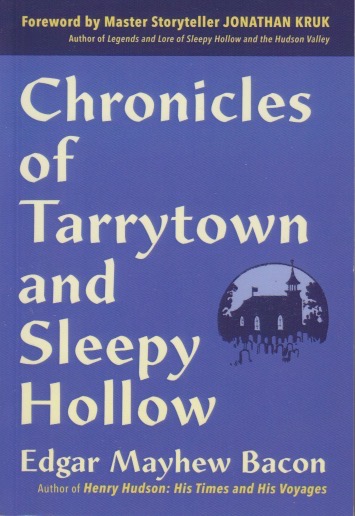
There’s a kind of charm to Chronicles.  I don’t mean the biblical book, but rather Chronicles of Tarrytown and Sleepy Hollow, a book published in the 1890s by Edgar Mayhew Bacon.  A somewhat poorly organized volume, you get the sense that Bacon had more curiosity than literary ability, but that didn’t prevent him from leaving a valuable record.  What’s more, other accessible books like it tend not to exist or be easily found.  There’s definitely a reason to write so that the average person can read your work.  I didn’t spring for an original edition on this one, as much as I love old books.  Nevertheless, the material’s still old and that’s what counts.  At least to someone with an historian’s point of view.

What really caught my attention here was Bacon himself.  Who was he?  His book was from that era of “you should believe me because I wrote a book about it,” but modern critics want to see credentials.  Although search engines are often good, if you’re looking for information on an obscure author (such as yours truly) they’re going to try to sell you something first.  Books, in the case of those of us who write.  If you scroll down far enough you’ll learn that Bacon was born in the Bahamas in 1855.  He wrote, it seems, five books.  He doesn’t have a Wikipedia page and I looked him up because (in addition to basic curiosity) he at times appears to be a bit of a curmudgeon.  He was only about 42 when this book was published, however, but writes like a long-time resident, slightly jaded.

Bacon was mostly a place writer.  His non-fiction books focus on places he lived or knew.  His educational history isn’t easily discovered, and again, the modern reader wants a degree (preferably three)  to show that one can be a proper historian.  He lived in an age, however, where gumption to write and complete a book likely meant finding a publisher.  The internet has changed that, probably forever (or at least as far as we can see).  It’s a buyer’s market for publishers.  But still, Chronicles of Tarrytown was brought back into print and was made available again, in an affordable paperback.  It contains some second-person history, closer to the events than we currently are, and a few legends as well.  It can’t be relied upon for history as we know it, but it can still offer a bit of charm for those curious about yesteryear.


Sailing Away

Out on the open water on a sailboat large enough to be categorized as a sloop.  We’re on the Hudson River learning about both sailing and the environment.  I’m here with a a Girl Scout troop, otherwise I wouldn’t have known about the sloop Clearwater at all.  The origins of the Clearwater go back to Pete Seeger, who, apart from being a famous folk artist, was also an environmentalist.  Based in Beacon, New York, the Clearwater is used in educational programs and it represents the only time I’ve been on an actual sailing ship.  Call me Ishmael.  Or not.  You see, I was there as a volunteer.  Specifically, a driver.  My daughter’s troop had scheduled the trip and I was afforded free passage as chauffeur.  I’d pretty much tucked this away into old memory banks until recent reading brought it to the surface.

Photo by by Anthony Pepitone; under the Creative Commons Attribution 3.0 Unported license, via Wikimedia Commons

I support environmental causes in the ways a guy in my position can.  We compost in our back yard.  We recycle anything that we can figure out how to.  We throw away one thirteen-gallon garbage bag every two weeks, and that’s sometimes half-empty.  Being vegan helps.  We don’t have a lot of money to give away, but lifestyle is the biggest way to try to help the planet.  So I’m out here soaking up my Melville vibes on a river wide enough to be a lake.  The Hudson, like all rivers, is worth saving.  I used to cross under it daily through the Lincoln Tunnel, trying not to think of all that water flowing above my head.  There was a reason I read on that long commute.

This blog, I guess, has become a repository for much of my past.  I’m grateful to you indulgent readers who find any of this interesting.  Still, I find human connections to places fascinating.  While I’ve never considered the Hudson home, some of my early relatives likely did (more likely Hessians than Dutch, but I’m told we fought on the right side during the Revolutionary War).  When I’ve had the opportunity to gaze out over the river without being in a rush, I’ve always felt a sense of belonging.  An artwork I made from artifacts I gathered awaiting our turn to board the Clearwater now hangs in our front hall.  Suddenly those twenty-something years feel like so long ago.  Even so, the Hudson suggests something homey to me.  Maybe it’s time to hire out a sloop again, go out on the river, and dream about belonging.


Denver Memories

It may be a strange thing to say (or write, as the case may be) but I was kind of hoping to spend some extra time at the Denver Airport.  When I traveled to Denver for a conference last year, I arrived to a workload (attending AAR/SBL as an editor is all work, not play).  I had no time to hang around the airport.  I knew, however, as a recent New York Times piece states, that the airport has a reputation for the paranormal.  While the Times article focuses on Luis Jimenez’s sculpture “Mustang” to start, it quickly moves on to “conspiracy theories.”  And the parts of the airport passengers never see.  The place has a reputation for being weird.  During construction in recent years, the usually anodyne partitions that block construction from the view of passengers, housed images of aliens, bolstering rumors that Denver, and its airport, have some connection with our extraterrestrial neighbors.

The Times story points out alien graffiti in parts of the Denver Airport where travelers can’t go.  And it also points out that although the fiery red eyes of “Mustang” are to represent Jimenez’s father’s start in the neon business, they give the giant horse a demonic aspect.  The artist died working on the sculpture.  A piece fell during construction, severing an artery.  But the conspiracy theories began earlier.  The southwest has a reputation of being the home of the shapeshifting reptilians that have made it onto mainstream television.  Is it any wonder that Trump stands a possibility of getting the nomination while yet more crimes are actively stacked on his record?

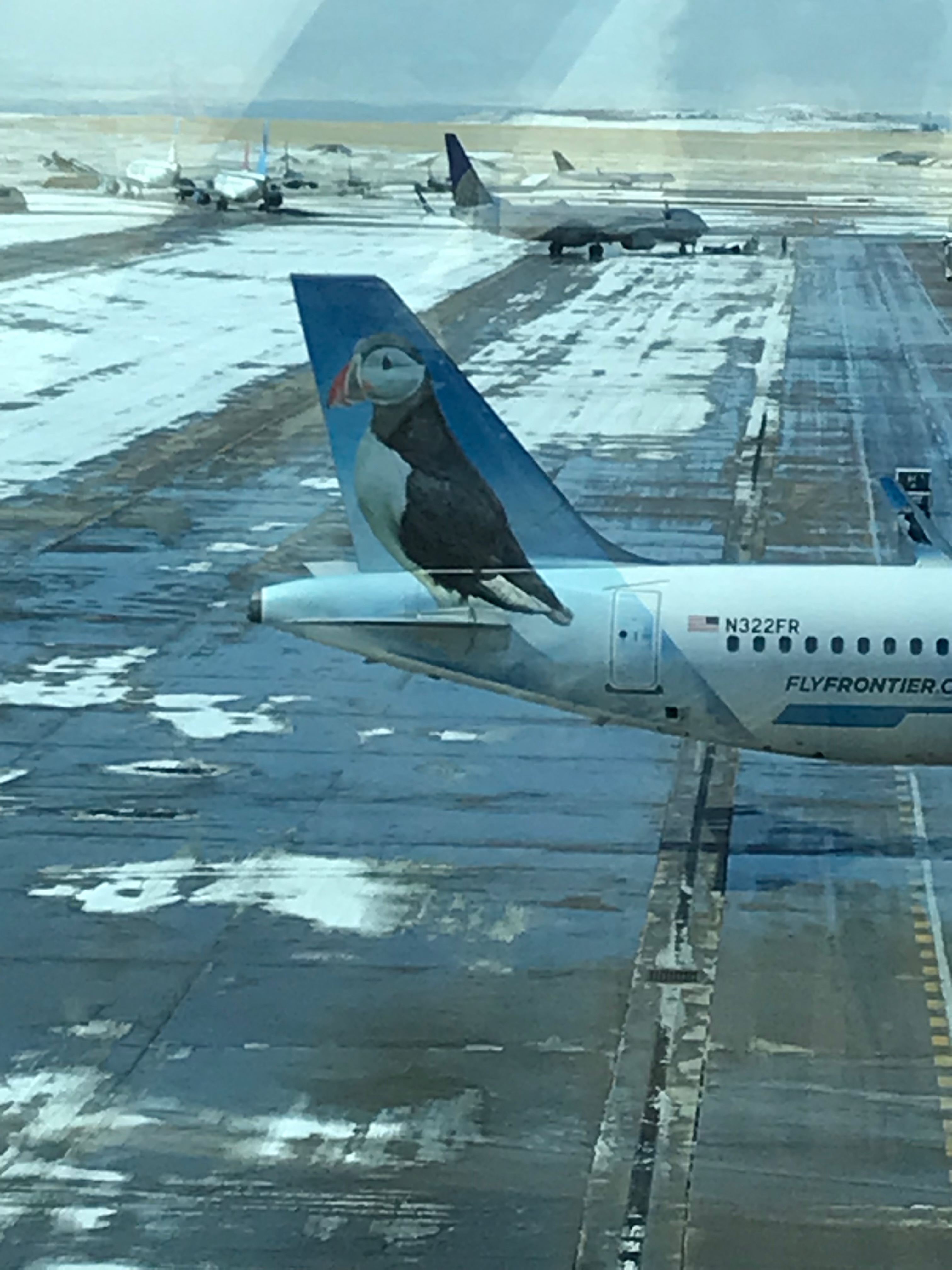
Of course, I was in Denver to work.  I claimed my bag and got a taxi on a snowy southwestern morning.  While there I worked, of course.  It was cold, in any case, back in November, so getting out to see the sights didn’t particularly appeal, especially since it was getting dark by the time the book stalls were closing and I was there alone.  I always want to be on time, and since I’m an early riser, and since Thanksgiving was just a couple days away, I went to the airport three hours before my flight home.  I was thinking I might have some time to do a bit of X-Filing while waiting.  Alas, it was not to be.  The helpful flight attendant put me on an earlier flight and I ended up with a three-hour layover in Chicago.  But I also knew that several “mothman” sightings had taken place at O’Hare over the preceding months.  When you’re a traveler, however, they keep you away from the interesting parts of the airport.


Moments of Happiness

“When happiness shows up, give it a comfortable seat,” Fezziwig says.  I wonder just how much like old Ebenezer Scrooge I am—apart from the abundant money, of course.  This isn’t going where you expect, I promise you!  I don’t come across as a happy person.  I was forced out of my ideal career many years ago by Fundamentalists, and I struggle to keep my writing going.  That old rabbinic adage that you can’t be both wise and happy probably doesn’t help.  So I sit here worrying about the everyday cares and concerns of a sexagenarian (not as sexy as it sounds) and watching horror films to help me cope.  That doesn’t mean, however, that moments of happiness don’t appear.  When they do they shine bright and hot and shed enough light to help me make it to the next beacon that some thoughtful lamplighter has set ablaze.

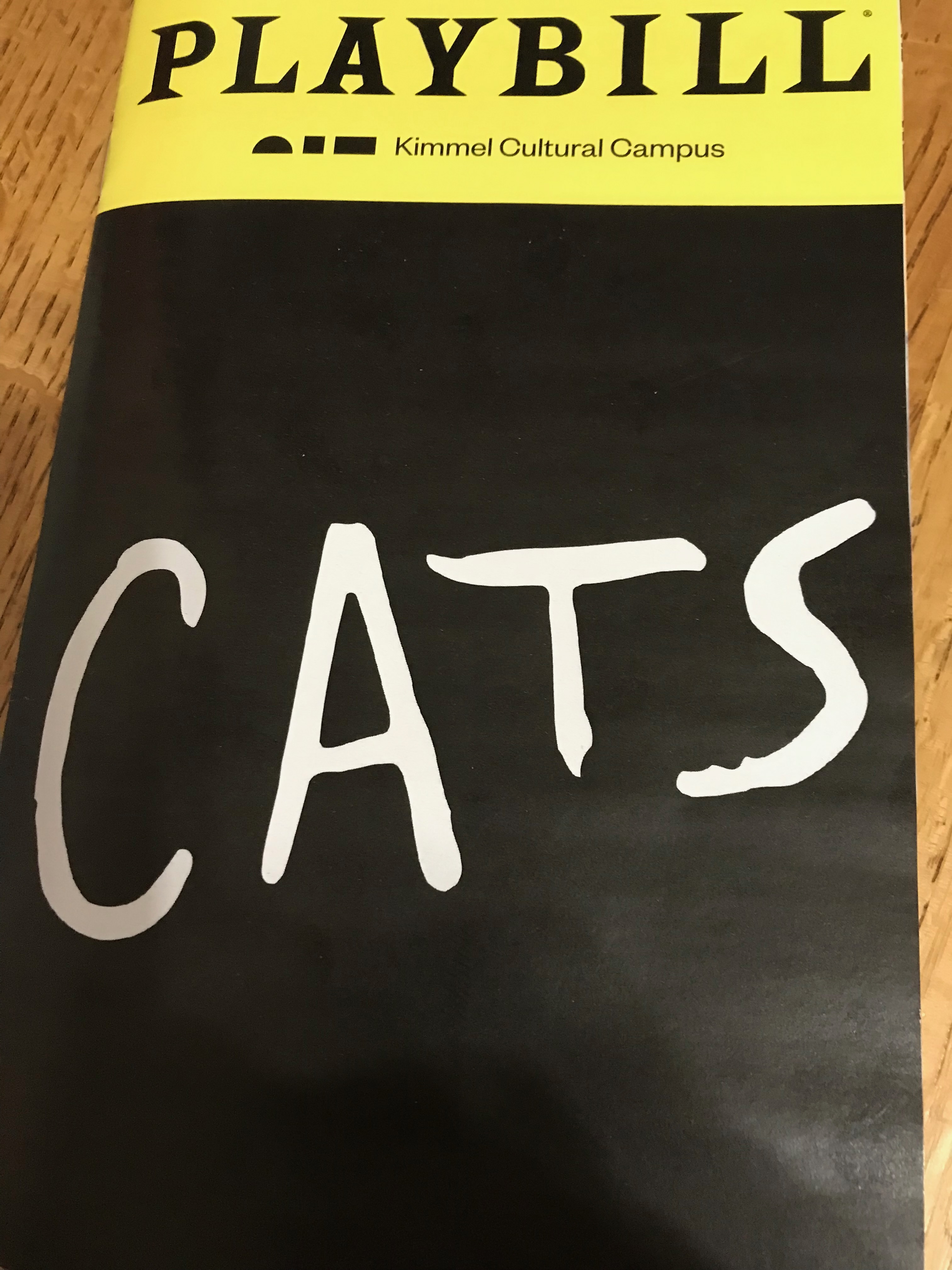
For a birthday gift, we gave a family member a trip to see Cats live in Philadelphia.  Everything about that day comes back to me through rose-tinted lenses.  The worry and stress of driving in Philly—I’ve done it a few times and it’s always nerve-wracking.  Finding the theater, negotiating parking, finding a place to accommodate a vegan, a vegetarian, and an omnivore for lunch.  Locating seats only to discover they’re further back than they looked on the schematic map, and then the lights dim and the music begins and you’re in a different world.  All the worry and fear melt away.  Happiness has appeared and you know she’s sitting right next to you.  Even with evening Philly traffic still looming ahead and a drive when I’m beginning to feel drowsy, I’ve had an experience almost of a religious nature.

It’s no wonder that many early evangelical Christian leaders warned about the theater.  Live performances reach that spiritual place that weekly Sunday services only wish they could.  Of course, it helps that Cats is my favorite show—I’ve seen it live five times over the years.  It’s a show about happiness and finding redemption.  I’ve written before about the religious undertones to the musical, but here I’m thinking about how the day after always has a special glow.  Yes, the quotidian worries are still there.  The attempts to grow wiser and stay solvent.  The difference is that something transcendent—all the more valuable for being rare—has happened.  It has shaken me out of my comfort zone and my daily routine.  And I can’t wait for happiness to come knocking again.


Feeling Disney

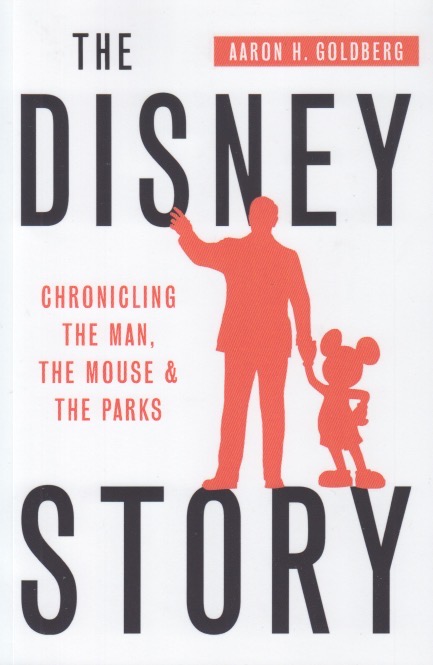
What’s the earliest Disney movie you remember seeing?  If you’re my generation this will’ve likely been in a theater since home recording wasn’t a thing yet.  I suppose it could’ve been on Disney TV, but if it was a new movie you wanted to see it just after it was out.  Mine was The Jungle Book.  Or, at least that’s how I recollect it.  Reading about Ub Iwerks made me curious about Disney so I decided to read Aaron H. Goldberg’s The Disney Story.  The subtitle, Chronicling the Man, the Mouse and the Parks, gives you an idea of what it covers in more detail.  Goldberg’s upfront in letting the reader know that newspapers and period media are his main sources.  The book is arranged chronologically.  It makes for an interesting story but I personally have never been tempted by a Disney theme park—quite a bit of the book discusses these—although there was that one time…

It was back in 1998—what a different world then!  Pre-9/11, pre-Trump, pre-pandemic.  I was still teaching at Nashotah House.  The American Academy of Religion and Society of Biblical Literature held their annual meeting in Orlando, on the Disney campus.  The experience wasn’t a good mix.  Academics and cartoon characters just don’t—wait, maybe they do.  In any case, you had to eat at the Disney estates, although you could sleep in an off-site hotel, that was a considerable shuttle ride away.  And no bars.  I did meet David Noel Freedman there.  It was in a room painted like the inside of a circus tent.  A strange place for a meeting of such gravitas to a still young scholar.

The point is, Walt Disney affects all of our lives.  He was a self-made man, but he had lots of help.  He didn’t live to see Walt Disney World (that’s the one in Florida) open, but he died knowing just about every child in the country recognized his name.  I never considered myself a Disney fan.  Yes, I watched a few of his movies and watched his Sunday evening television show, but I preferred Bugs Bunny and the Warner Brothers’ crowd.  Growing up with television you had your loyalties.  Still, we were well aware of Disney and especially his movies.  We couldn’t afford to see all of them, not by a long shot.  And those we did see were at the drive-in where kids could hide under a blanket in the back seat to economize a bit.  Still, we were infected.  Everyone was.


Seasonal Sights and Sounds

It’s listed as one of the top ten Christmas activities in Pennsylvania.  Koziar’s Christmas Village, located north of Reading and really out in the country, has been in business for 75 years.  Family owned and operated, it’s a walkthrough Christmas lights display.  I’ve been to many drive-through displays over the years, but on Saturday we went to this walk-through.  I wasn’t quite sure what to expect.  In the end, it was like many such attractions—lots of lights and painted plywood cutouts, flocked animals and dioramas with mechanically moving dolls.  What was truly impressive, however, was the number of people there.  Opening daily at 5 p.m., just as it’s getting dark, the sizable parking lot was already filling up at 4:30.  Walking through the display was essentially letting yourself by moved along by the crowds.  There were thousands of people there on Saturday night.

Getting into our car to head home, there were yet miles of cars backed up wanting to get in, and this was at 8:30.  Such sights of Christmas put us in holiday mode.  Seeing so many other people getting into the spirit of things was, in its own way, inspirational.  The next night—this being the weekend before the holiday itself—we attended the Christmas with the Celts concert at the Zollner Arts Center in Bethlehem.  Bethlehem prides itself on being “Christmas City,” founded, as it was, on Christmas Eve by the Moravians.  Christmas with the Celts is an annual show with different line-ups having in common live music, Celtic tunes, and Christmas.  The auditorium was pretty full, so I was glad for our masks.  They didn’t get in the way of the sounds of Christmas and a few stories from Ireland.

The sights and sounds of Christmas are part of what make this time of year so memorable, and something to which we look forward each year, despite the shortness of the days and the coldness of the air.  There’s a hopefulness about the holiday season, an underlying awareness that things need not always be as they are now.  Just two days away, the winter solstice—the holiday of Yule in its own right—marks the slow turning point to longer days.  It means winter is just getting started, but the cold brings with it more and more light in compensation.  Holiday sights and sounds help us through this transition.  And maybe, if things go right, they won’t be just the same as before afterwards, they may be even better.


Haunting Hudson

After Maine, the one place I’ve always wanted to live, but never had the opportunity, or could never afford, is upstate New York.  My ancestors were from the state but I just happen to’ve been born in Pennsylvania.  So it goes.  Perhaps it comes with professionally studying mythology, but one of my longterm interests is folklore.  I’m always fascinated by what people tell of their local setting.  Now when I approach books about the paranormal in a region, such as Cheri Farnsworth’s Haunted Hudson Valley, I know to take most of it with a grain of salt.  People love to tell stories and local people like to talk about where they’re from.  The Hudson Valley has had a long history of strangeness and several tales that reflect that are collected here.

I often think of ghosts.  They generally seem to prefer a single place that’s familiar.  And although you can’t take everything everyone says as gospel, there do seem to be regions beset with them.  I wonder if regions early settled by Europeans are particularly prone to haunting.  It’s difficult to imagine that, at the time with the unquestioned rectitude of church and empire, that they ever stopped to think “Hey, we’re stealing land that belongs to someone else.”  Did that idea ever come back to haunt them?  Perhaps such unspoken guilt leads to ghosts.  Or maybe simply dwelling in a place for a long time leaves plenty of opportunity for ghosts to gather.  And, of course, people do stretch the truth at times and misinterpret things otherwise explained.

No matter the reasons or rationale, these kinds of books are always a guilty pleasure read for me.  I don’t expect the get the truth, the whole truth, and nothing but the truth from them, but I enjoy them nevertheless.  Since I can’t afford to live in the Hudson Valley, the other result of such books—and one of the reasons locals appreciate them—is to make me want to travel to the region and see for myself.  For many years we lived not too far from the Hudson while in New Jersey.  Still, we didn’t make it up that way very often.  It’s a bit more of a hike now, but isn’t a hike worth making when you might see something unusual after you arrive?  My ancestors had settled north of the Hudson Valley and eventually migrated further south.  The end up in Pennsylvania, where I find myself.  But I’m still haunted by upstate New York.