Baal Necessities

Baal has been on my mind lately, despite the limited time I’m able to dedicate to research. You see, Baal and I share a common interest in weather. One of those people whose moods synchronize with the atmosphere, I have always felt what the sky projects. So when a colleague asked me to lecture his class on the Baal Cycle, I felt it was a kind of catharsis after all the gray skies and snow we’ve had this year. Baal, or properly Hadad, was doyen of the skies. In modern perspective it is often difficult to realize that the seasons and climate of ancient Aram were quite distinct from our own. Whatever came from the sky came from Baal.

In the documentation we have on this god, we find him particularly associated with thunder, lightning, and rain. These were more common in the Mediterranean basin than the snows of the higher elevations. It stands to reason, however, that Baal meted out the weather to the denizens of Ugarit, no matter how wet or cold. Even his daughters’ names reflect their meteorological roles. Thunder and lightning may be the most dramatic expressions of divine power, but nothing makes you shiver like a good snow.

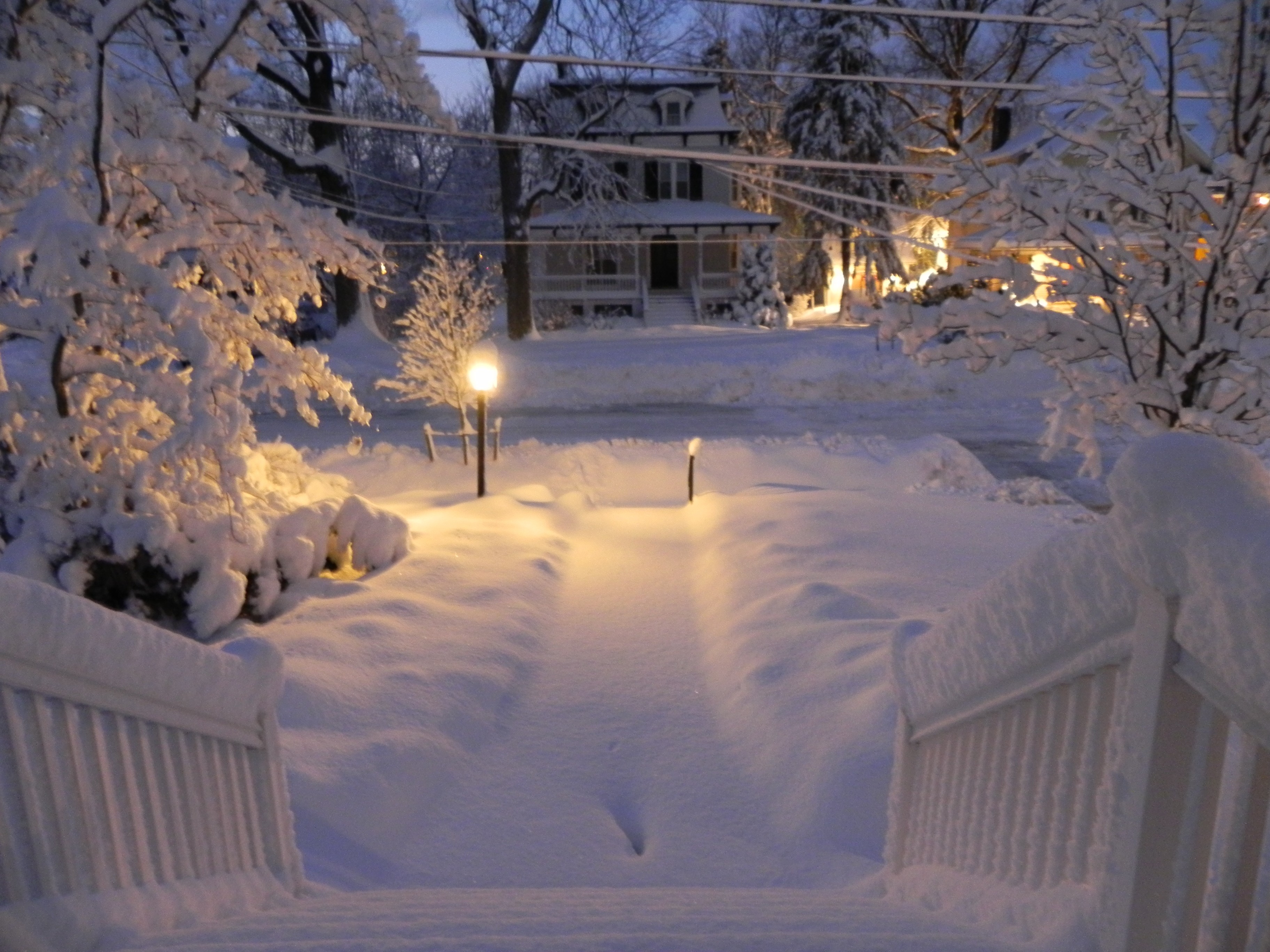
It is difficult not to take the weather personally when my long commute days are permeated with ice and snow. Continuing a pattern initiated last spring semester, my lengthy drive to Montclair has been accompanied by snow each class session I’ve been assigned so far this semester. Even the students have begun to notice. One co-ed asked why it always snows when I’m teaching. Meteorologists may have their naturalistic explanations, but somewhere deep down, I’m afraid that Baal has it in for me. It’s time to go and shovel the front steps again.

A Baal's eye-view


The Triumph of Baal

“Snow weariness” is no strange phenomenon even to those of us who were reared in the legendary snow belt of Lake Erie. Although Buffalo consistently topped our records, months of deep snow burying all the familiar features of our landscape in northwestern Pennsylvania were regular expectations of winter. Snow weariness generally settled in around March when we longed for green pastures and unstill waters. As an adult in generally snow-deprived New Jersey, the weariness sets in much quicker. Attempting to drive on highways with sneophytes is a challenge; before I had my license I had driven in plenty of snow, otherwise I’d have had to hibernate from December through April of each year. Digging out from New Jersey’s third major snow-plop of January, however, the magic seems to have vanished.

Baal was a god who controlled the weather. Some years back I finished a book (still unpublished) on weather terminology in the Psalms. Many psalms are notable for containing archaic imagery and phrasing, leading some scholars to suggest they might have been new, revised “Canaanite” versions of songs originally dedicated to Baal. Perhaps so. The Psalms frequently note the wonder of weather, even occasionally of the snow. Psalm 147 contains the lines:

16 The one giving snow like the wool,
he scatters hoarfrost like the ashes,
17 throwing his rime like crumbs,
before his cold who will stand?

Originally a paean to Baal? Who knows? It’s just that we’re all shivering down here. And Israelites didn’t have to shovel a path to their cars to turn over reluctant engines to get a modicum of warm air circulating before they actually arrived at work.

Once Israel’s monotheism set in, Yahweh took control of the weather, thank you. Even a glance at the Psalms demonstrates the superiority of Israel’s divine weather-maker. From the view down here, however, it looks like maybe Baal has a few tricks still to play. Would Yahweh ever cause a Bible class to be cancelled because of inclement weather?

Dawn in the new snow Baal


Bigger than Manhattan

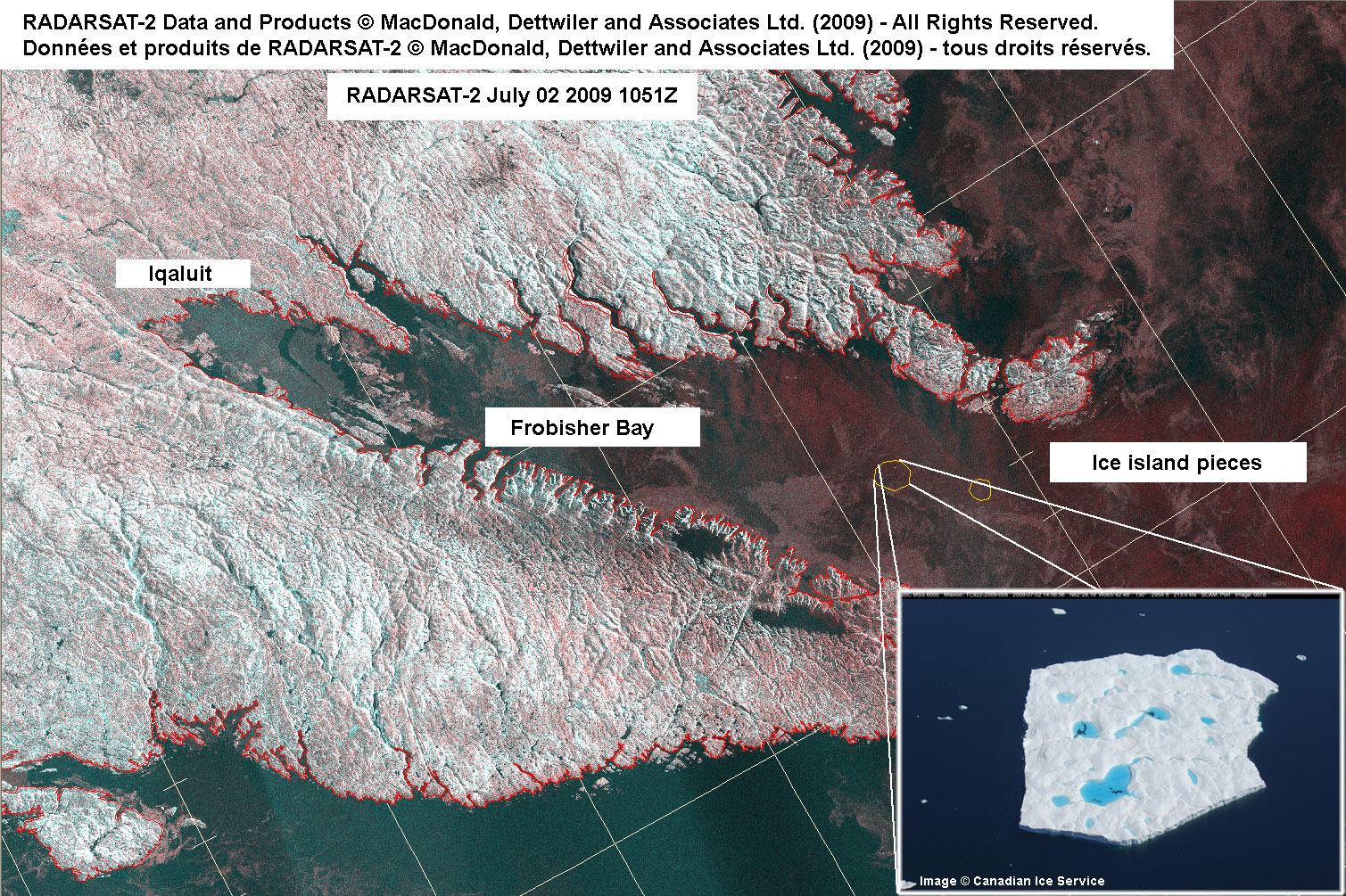
Walking inside with the newspaper this morning, I would have wagered that the word “biblical” would appear on the front page. This would have been a fairly safe bet since the headline of the New Jersey Star-Ledger reads, “Fire, Flood and Now a Massive Iceberg.” The reference is to the Petermann Glacier iceberg from Greenland that will likely threaten human maritime activities in the North Atlantic for some years to come. The massive iceberg, “four Manhattans” in size, is expected to drift down along the Canadian coast, causing potential problems for off-shore oil wells and shipping traffic. Sounds like a job for James Cameron, or maybe Kevin Costner.

The biblical connection comes in paragraph three: “It’s been a summer of near biblical climatic havoc across the planet, with wildfires, heat and smog in Russia and killer floods in Asia.” The more I ponder this curious superlative for disaster (i.e., “biblical”), the odder it grows. The Bible is really home to few epic disasters, most of them centered in the flood, the exodus and wilderness wanderings. Those who favor an apocalypse might throw Revelation in for good measure, but overall the Bible deals mostly with everyday occurrences that seldom find reflections in the media. To convey the idea of grand disaster, however, the Bible remains unrivaled.

While the Petermann ice island may not be the end of life as we know it, it is an appropriate symbol of our times. Our planet is warming; no one denies that. It is through human irresponsibility, it is true, but like all truths, this is controversial. The Bible, that great bastion of western morality, is frequently used to bolster positions that claim God gave the earth to humanity to do with as we please. It might serve the captains of greed and industry well to realize that the world given to Adam and Eve was flat, with a see-through dome overhead, and it was the only habitable space in a very limited universe.


Weather the Psalms

Among the academic detritus cluttering my desktop is a book I wrote while employed at Nashotah House. Not being a native Midwesterner and finding myself where severe thunderstorms are a blasé fact of life for much of the year, I was captivated by and terrified of the weather. At the same time, daily recitation of the Psalms was a major part of our required, twice daily worship. With the thunder louder than I could ever imagine it outside, we’d calmly read the Psalms, at our stately pace, confident that he who rides upon the clouds could protect us, his humble servants. After many years of recitatio continua I noticed the plenitudinous mentions of the weather in the Psalms. After a painstaking five years of reading and rereading the entire Psalter, I had translated every verse with a weather reference and had written commentary on them.

Publishers showed no interest, this despite the enormous success of Sebastian Junger’s The Perfect Storm, and Erik Larson’s Isaac’s Storm (both of which I eagerly read) and the recent release of Twister. One publisher deigned to make comments as to the great problems of my thesis, so I sat down to revise this behemoth of a book. The very day I was called into the Dean’s office and fired was the last time I looked at the material. I had been revising the book that very morning. The one sad aspect of this entire episode is that every colleague to whom I mentioned the book was excited to read it when it came out. There was a real interest, but no publisher willing to take on the project, this side of vanity publishing.

Some days I think I may go back to that dead beast of a project and try to resurrect it. My academic publishing has slowed to a tortoisene pace without full-time institution support or interest (independent scholars are not worth investing in, I have learned), especially under the weight of teaching nearly a dozen classes a year. Nevertheless, the idea seems sound to me. I keep a weather-eye on the academic horizon and I have yet to spot a book like mine anywhere within the publication catalogues. Considering the importance of storm gods in the ancient world, perhaps we’ve simply moved beyond this interest, tucked away in our interior settings. Nevertheless, when a rare thunderstorm comes to New Jersey, I still remember the majesty of the weather and a forgotten book on the Psalms.

Even the NWS recognizes Noah


In the Morning

The arrival of the most recent issue of MAARAV (15.2) was a poignant blend of joy and melancholy. Joy in that my article about the odd Hebrew word galgal was finally published, and melancholy in that this will likely be my last academic article. I began publishing academic pieces back in the early 90’s and kept a steady stream going until being abruptly dismissed from Nashotah House. Research requires a regular, steady employment situation with access to obscure materials and a somewhat predictable teaching load. Since being cast into the outer darkness of the adjuncts’ world, well, it’s awfully dim out here to try to devote the scant free time to in-depth study. Such is the world of academics.

This article was a spin-off of a much larger project – a book that was completely written and rejected by a noteworthy publisher and lies dormant on a hard-drive somewhere – on the weather terminology in the Psalms. Several publishers expressed minimal interest, and this article was an effort to demonstrate how weather language has been sublimated due to faulty methodology. The unusual word galgal likely derives from a root with connotations of circularity. Nineteenth-century travelers in the Levant associated the word with tumbleweeds, and this association has stuck ever since. In my article I sort through the lexical information seeking some kind of consensus in the West Semitic language family for a more solid understanding of this troublesome lexeme. To the unbiased observer, the earlier favored translation of “whirlwind” still holds a considerable amount of evidence.

This particular paper holds an enduring place in my memory. I first read it at the Society of Biblical Literature Annual Meeting in 2001 in Denver. Well, I started to read it. The morning of my paper I’d visited the Denver Museum of Nature and Science to see the famed dinosaur and mineral exhibits. While in the museum I became violently ill and had to take a taxi back to my hotel. When I tried to read the fated paper that afternoon, nausea swept over me and I couldn’t finish it. Somehow, returning to a project that had made me physically ill held little appeal, no matter what its academic merits. The paper sat, forgotten, until I thought to submit it to MAARAV a couple years back. Now it awaits the criticism of others while I move on to other things. I do hope that this humble contribution to Hebrew lexicography might be taken seriously since like Denver’s dinosaurs, it is the last of its kind.


Weather Religion

Byline: Yazoo City, Mississippi. Event: major tornado. Suspects: God. In the face of any tragedy, whether it be killer tornadoes or Christie’s budget, God is always implicated. It is the white god’s burden of monotheism. I am the last person to make light of tornadoes. Many a nightmare and sleepless night in Wisconsin were haunted by the loud, roaring gusts and twisted detritus mangled by apparently willful winds. Erratic fluid dynamics of violently spinning vortices of air are often chalked up to the divine. No less so in Saturday’s tornado outbreak.

An Associate Press article begins, “One prayed to God under a communion table as his church was blown to pieces around him.” The article goes on to note that a ravaged hymnal lay open to the page with “Till the Storm Passes By,” as if there were a divine message inscribed on a chance event of nature. One of the hardest lessons to accept is that nature cares nothing special for our species and that we are offered no guarantees in life. This is one of the reason religion is so powerful: here the faithful find divine-bound guarantees of at least a peaceful afterlife if the present life is torn apart by storms both physical and metaphorical. It is hard to struggle without an assurance of final victory.

I have contended for years that the association of the divine with the weather is intimate and tenacious. The weather has eluded human control well into the space age, nuclear age, and technological revolution. We still can’t stop the rain on Sunday’s picnic or festival. And so we pass the weather on to the CEO in the spiritual chain of command. God controls the weather, while we crouch under rickety communion tables. There is a deeper lesson here, for those willing to sift through the rubble.

Nightmare on Church street


Prosperity Update

I didn’t have the opportunity to write a post yesterday because my PowerPoint file for my class had been deleted. I still don’t know how. I’ve been using varieties of the same computer I have now for about 20 years and I’ve never lost a file before. I discovered this, of course, just before I began packing the car with the sherpa-load of equipment that I need to haul the 50 miles to Montclair with me to teach my class twice a week. The loss of the day’s lecture notes weighed heavily on my mind as I climbed into my car and discovered a problem with the electrical system – the blinker lights on the right wouldn’t shut off. (They finally started to behave normally half-way to the university.) And a blizzard was on the way. At times like this my thoughts turn to my prosperity cross.

I wrote about the cross in a previous post where I indicated that I was going to try a good-faith experiment to see if God really wants me to prosper. The last 17 years haven’t been good financially, so I tried my best to believe, and I have been carrying the cross around with me for a few weeks now. In that time I have had a publication rejected, did not get a full-time job after a very good interview, didn’t win the lottery (I bought a ticket as an experiment although I never play normally), my wife had more hours added to her job with no increase in compensation, my health insurance company politely declined to pay for an expensive dental procedure, and I have yet to be paid for my four weeks of teaching at Montclair. Oh, and two cars very nearly collided with me yesterday (not because of my blinker! One tried to pass me on the left as I was making a left turn into a parking spot in a parking lot, the other passed me on a single-lane entry ramp onto the Garden State Parkway while I was merging at the posted speed limit). I’m beginning to think they sent me a defective artifact.

In my prophecy class we’ve been discussing divination. From ancient times people have attempted to discern the will of the gods through a wide variety of techniques. Watching birds in the sky, smoke from altars, oil on water (haven’t discovered smoke on the water yet), casting lots, reading animal livers, and having significant dreams – any of these might reveal the hidden will of the gods. And ancients carried talismans at times to hedge the odds in their favor. We like to think of ourselves as more sophisticated than that, relying on more updated and civilized ways of influencing the almighty. My pocket cross is one of those modern means to induce divine favor my way. Perhaps I am reporting too soon, since I’ve got a backlog of nearly two decades of financial woes to overcome. In the short term, however, it looks like a real blizzard is on the way.

Secrets of my sucess


View from the Snowpocalypse

With all of the hype and anxiety of the current Nor’easter dumping snow on the East Coast, a guy from northwestern Pennsylvania can’t help but shrug his shoulders. What’s all the fuss about? Growing up in the snow belt of Lake Erie, I was accustomed to forgetting the color of the ground between December and April. School seldom closed with under a foot of snow. And I had to walk a literal mile to catch the bus, but it was uphill only one way.

The truly fascinating aspect of this storm is the creation of biblically charged words to describe it, as if the American vocabulary has run out of appropriate adjectives. “Snowpocalypse” and “snowmageddon” both appeared in this morning’s paper. The late biblical concepts of apocalypse and Armageddon indicate a devastating turn of the era when a new world is ushered in. All I saw out my front door was a bunch of snow. Peaceful, white, and pretty.

Snowmaggedon? Hardly.

I lament the farming of the otherwise underused Bible for images that cheapen the visceral fear and dread that accompanied ancient outlooks. Once while at Nashotah House in Wisconsin, when the temperature plunged to 38 degrees below zero (air temperature, not wind-chill) and the tired snow was being blown about by unforgiving winds, we were required to make the trek to Milwaukee for a day long spiritual retreat. Just about all human institution had shut down, with the sole remaining exception of a church eager to revitalize its aging congregation. As the ice on the window of the bus refroze immediately after being scraped off, I came close to thinking apocalyptic thoughts I admit. The weather, I guess, has always had a divine connection in our primitive minds after all.


Hadad in Copenhagen

Let us talk plainly about the weather. Global warming is a reality, and yet the issue is clouded by religious conservatism. To be precise, it is difficult to determine whether it is really greed or the religious right that stands so firmly behind free-market capitalism that is driving this chariot of the sun. The strange and unholy alliance between religious and political conservatism, however, has become a force daily striving against reality and its proponents want to be on the top of the pile when the whole thing collapses.

I can not speak to the political end of this continuum; I am not a political scientist or economist. As a “religionist,” however, I recognize a deeply disturbing trend that I have followed since my youth. Fundamentalists have consistently taught their young that the “Second Coming” is only minutes, possibly seconds, away. Undaunted by the two-millennium delay in wish-fulfillment, they suppose the words supposedly uttered by Jesus indicate a kind of divine “I’ll be right back” just before pushing off from the Mount of Olives. The signs of the times given in the Bible describe the then current condition, yet modern-day Fundamentalists wish to force the almighty hand, call the bluff of the Texas Hold-‘em expert above. If the general in the sky said wars would come, well, we’ll make wars. If the only way to get his attention is by destroying the planet around us, so be it. Deny global warming for the sake of the religious right, since their world is about to end.

Baal in Copenhagen?

The rest of us might want to stick around for a while. Ancient meteorologists believed that particular gods controlled the weather. At Ugarit Baal, or Hadad, took responsibility for drought and plenty. If there was a problem, they knew just to whom to offer a sacrifice. In our monotheistic western world, we’ve pared the gods down to a single man. Not everyone agrees on his mood or character, but some are convinced that he has his bead trained right on this planet and they want to help from here below. Others believe — o the heresy! — that natural processes control the weather and that we can do something to make our situation better. We might be in a better place if those who believe the gods control the weather were relegated to theology classes rather than political offices.


Sky God Redux

This week’s Time magazine includes the periodic feature of the 50 best inventions of the year. Flipping through the pages looking at techno-gadgets that leave me vacantly spinning in my office chair, I was surprised to see that invention number 49 is the work of our hypothetical sky gods. The undulates asperatus cloud has been receiving high profile attention of late, and now it is seeded on Time’s greatest inventions list! When I last posted on undulates asperatus, it had been written up in Wired. Prior to that I had seen a feature on the cloud in the New Jersey Star-Ledger some months back. Having written a(n unpublished) book on weather terminology in the Bible, I have had my head in the clouds for several years now. To find the humble collections of condensed humidity making the news is a strange but welcome validation of my work.

Undulatus_asperatus

Undulatus asperatus from Wikipedia, by Agathaman

Time resists bringing the divine into the description of the cloud, preferring the more neutral term “ominous” to describe undulates asperatus. After having spent several days under the blanket of a nor’easter here in New Jersey with its impenetrable gray clouds, I can appreciate how ominous thick clouds can be. The more I study ancient religions the more I am convinced that major gods primarily reflect the content of the sky. After all, gods were seldom seen in the fields and cities of antiquity, but the sky holds endless possibilities.

Perhaps some editor somewhere will stumble across my conviction that weather matters in the biblical world and will want to take a look at my book. If not, no worries. I’ll just be looking at the sky.


Sky God

The latest issue of Wired arrived in my mailbox yesterday. Generally the people who write for the magazine frighten me — they are so smart and hip and ahead of the curve, something that a scholar of very ancient stuff hardly even aspires to. When I can understand what they are writing about, however, I am often fascinated. A story that caught my attention is entitled “Sky Wave” by Mike Olson. Around the world people have been noticing a new type of cloud that is being called undulatus asperatus. undulatus1 Here is a Gnu-license photo of one of these clouds; there are more dramatic images, but they are mostly covered by copyright. What immediately caught my attention in the Wired article was the subtitle: “Weather Geeks Are Championing a New Armageddon-Worthy Cloud.” The Bible appears in the sky yet again.

Back when I was doing the research on my (still unpublished) book on weather terminology in the Bible, one of the pitches I used to potential publishers was the upward inclination of religion. Ask any kindergarten-dropout where God is and the fingers inevitably reach skyward. From earliest times people have associated the divine with the sky. Among the Sumerians, keepers of the earliest recorded religion, the deity An, the sky-master, was the most ancient of deities. While the origins of religion will forever remain obscure, it is certain that they have a celestial component.

I have to confess to being in love with the sky. If I didn’t have to earn a living I would spend hours each day staring upward. It is the repository of endless potential and ineffable beauty. Clear skies remind me that no matter how far we might go upward, there will always be more of it ahead of us. Cloudy days provide a palette and a canvas for the imagination. Even the brilliant writers at Wired can be forgiven for a foray into the mythology of the sky. Its power over us is as endless as its very expanse.


Praying for Rain

Stomping the mud of another county fair off my shoes and doing yet another load of laundry with enough dirt on it to begin my own excavation, I ponder the weather. Although we are daily reminded that we have no effective control of the weather, one of the most common prayers I hear uttered is for “good weather.” I could have done with a little less rain and a bit of broken sunshine with a temperature of 78 and humidity of 20 percent, but I didn’t bother to ask for it. Once at Nashotah House we the faculty (and the student body) were asked to pray for good weather for an outdoor liturgy. I was both bemused and alarmed that a high-ranking priest made that request of us in all seriousness. Perhaps the biggest problem is that, as much as we like to deny it, we are like other creatures considering our immediate environments. We lack the big picture.

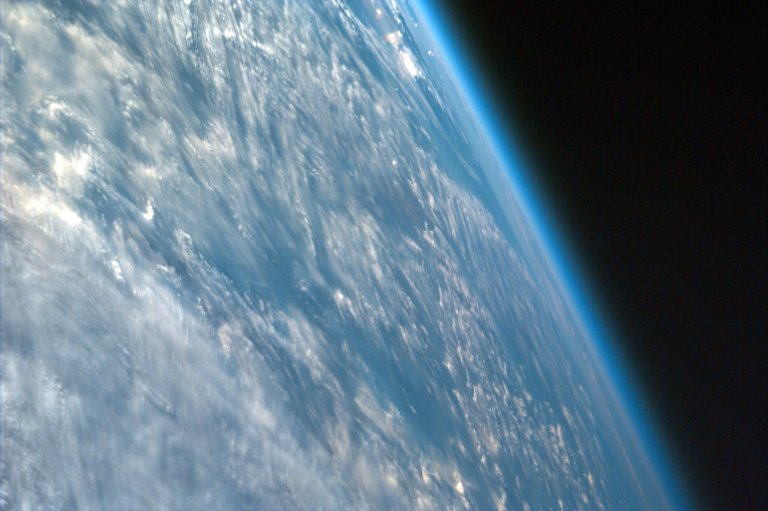
Our neglected atmosphere is the key to life on Earth. So immense that it coats our entire planet with the gases we all need to breathe, as well as some gases that have little apparent function in our particular setting, it is a simple matter to take our atmosphere for granted. And yet the weather affects every aspect of our lives. When we ask the Weatherman for an adjustment in our region, we are requesting a graduate-level course of calculations in fluid dynamics to be undertaken just so we can get the right mix of weather conditions for our picnic or day at the beach. Hackneyed to the point of caricature is the rain dance — that ritual that is expected to end a drought.

In the twenty-first century, people who rely on science to keep them safe from severe weather by predicting hurricanes and tornadoes with accuracy still pray for the weather they want in their little corner of the globe. If watching Jurassic Park taught me anything, it was that a butterfly flapping its wings in China might cause rain in New York. Chaos theory has demonstrated the intricate connections between all components of a complex system. The atmosphere is one of the most complex systems on earth (well, around the earth, actually). Rev. Chuck’s church picnic weather is integrally tied up with typhoons that may be drowning thousands of people in low-lying coastal regions of Asia. And yet we just can’t resist asking for the weather to tip in our favor. In the Bible it worked for Elijah, so why shouldn’t it still work for us?


The Divine Finger

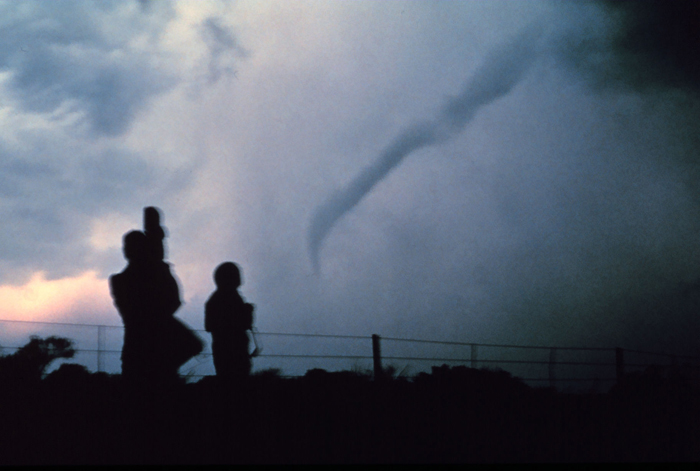
As the thunderstorms break out overhead yet once again, I am naturally reminded of tornadoes. I grew up in a part of the country relatively free from natural disasters. In my little corner of western Pennsylvania we felt secure from the earthquakes, volcanoes, wildfires, mudslides, and hurricanes that seemed to plague other parts of the continent. Then one night a tornado came. I happened to be a few hundred miles from home working a summer job when the cheery newscaster announced that a tornado had swept through my hometown during the severe thunderstorms we’d had the night before. I had always believed our unrelenting hills made us somewhat resistant to the tornadoes that plagued our next-door neighbor Ohio. It was probably then that my fascination with severe weather, especially the tornado, began.

Pulling the divine plug?

Pulling the divine plug?

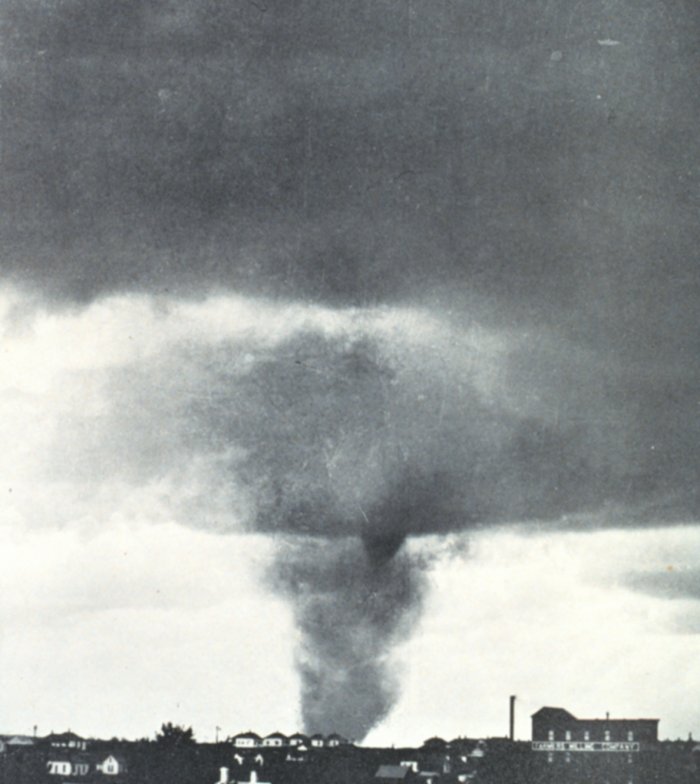
One of the reasons for the entirely understandable fear accompanying tornadoes is that they have all the hallmarks of an ideal divine weapon. In an article soon coming out in Maarav, I argue that an obscure Hebrew word should probably be associated with whirlwinds rather than tumbleweeds. Although violent tornadoes are rare in Israel, the story of Elijah seems to imply that a weighty prophet may be hefted skyward by a whirlwind, and that sounds tornadic to me! There are passages where whirling winds are referenced as harbingers of divine wrath, an association that clings to tornadoes even today. I ended up writing an entire book on weather terminology in the Bible that had been fueled on by this ambiguous fascination. Publishers, it seems, alas, do not share my enthusiasm for the topic.

Classic F-5

Classic F-5

The popular media, however, shows a glimmer of understanding. The second half of the 1990s (when I finished my draft of my book/doorstop) was a bonanza of American storm fascination; Sebastian Junger’s The Perfect Storm (1997) was shortly followed by Erik Larson’s Isaac’s Storm (1999) and both tailed the much-touted movie Twister (1996). Being somewhat of a connoisseur of tornadoes, I was disappointed by Twister, but one scene remained scoured into my memory. A layman asks one of our overly-folksy, lovable storm-chasers what an F-5 tornado (the F-, or Fujita-scale is the measure of a tornado’s intensity based on the level of damage it leaves behind — 5 is the highest number on the scale) would be like. One of our jocular heroes becomes suddenly serious and replies, “The finger of God!” Despite the cornball, this is an accurate explanation of the awe that surrounds a storm as random as a tornado. Adjacent houses can suffer entirely different fates in a tornado, or, in a poignant story I’ve never forgotten, a Wisconsin tornado killed one of a set of young twins in the same house during the storm. Finger of God, indeed. If Moses had lived in Iowa I’m sure he would have made liberal use of the tornado for precisely that image.