Is It That Time Already?

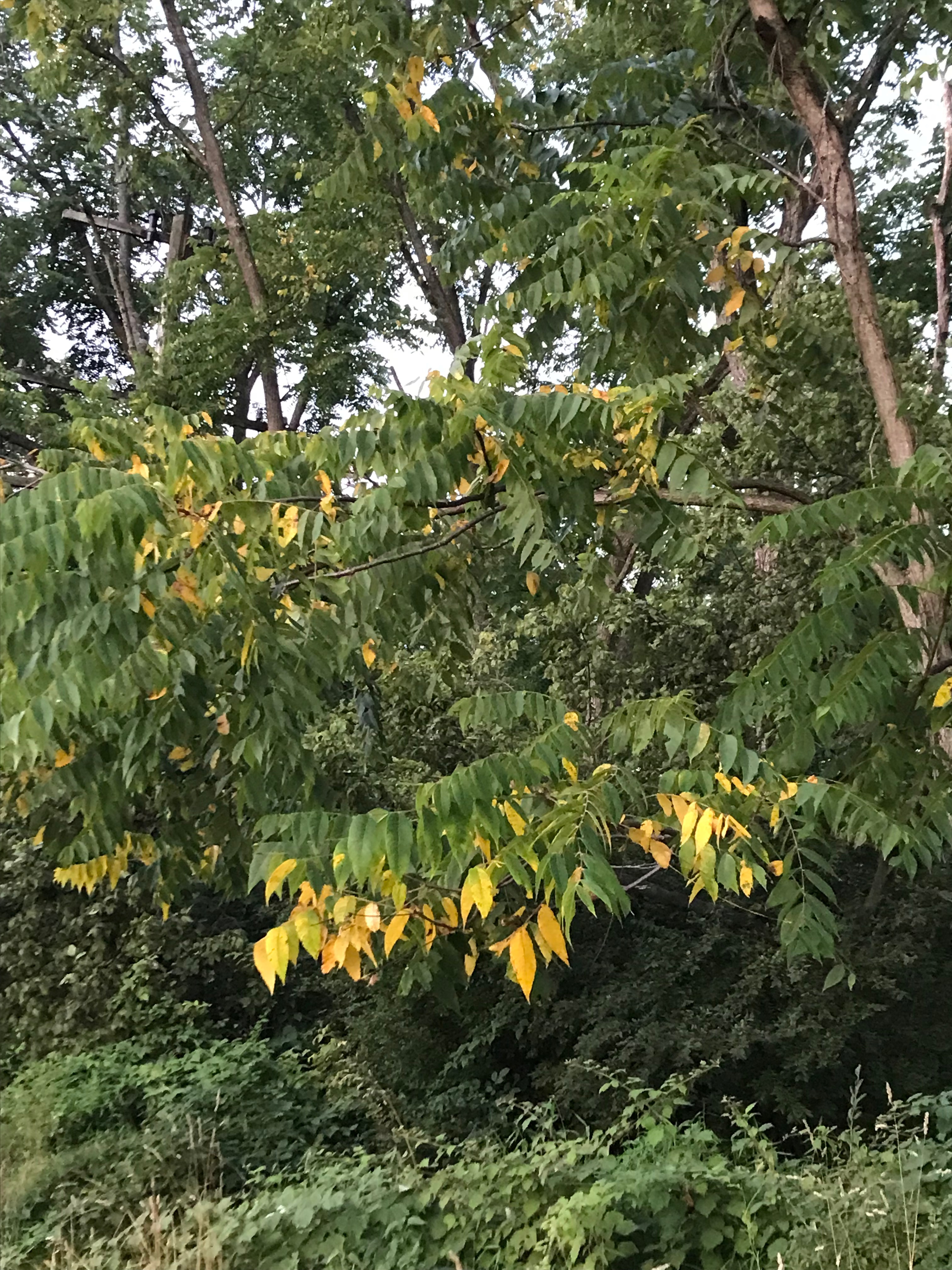
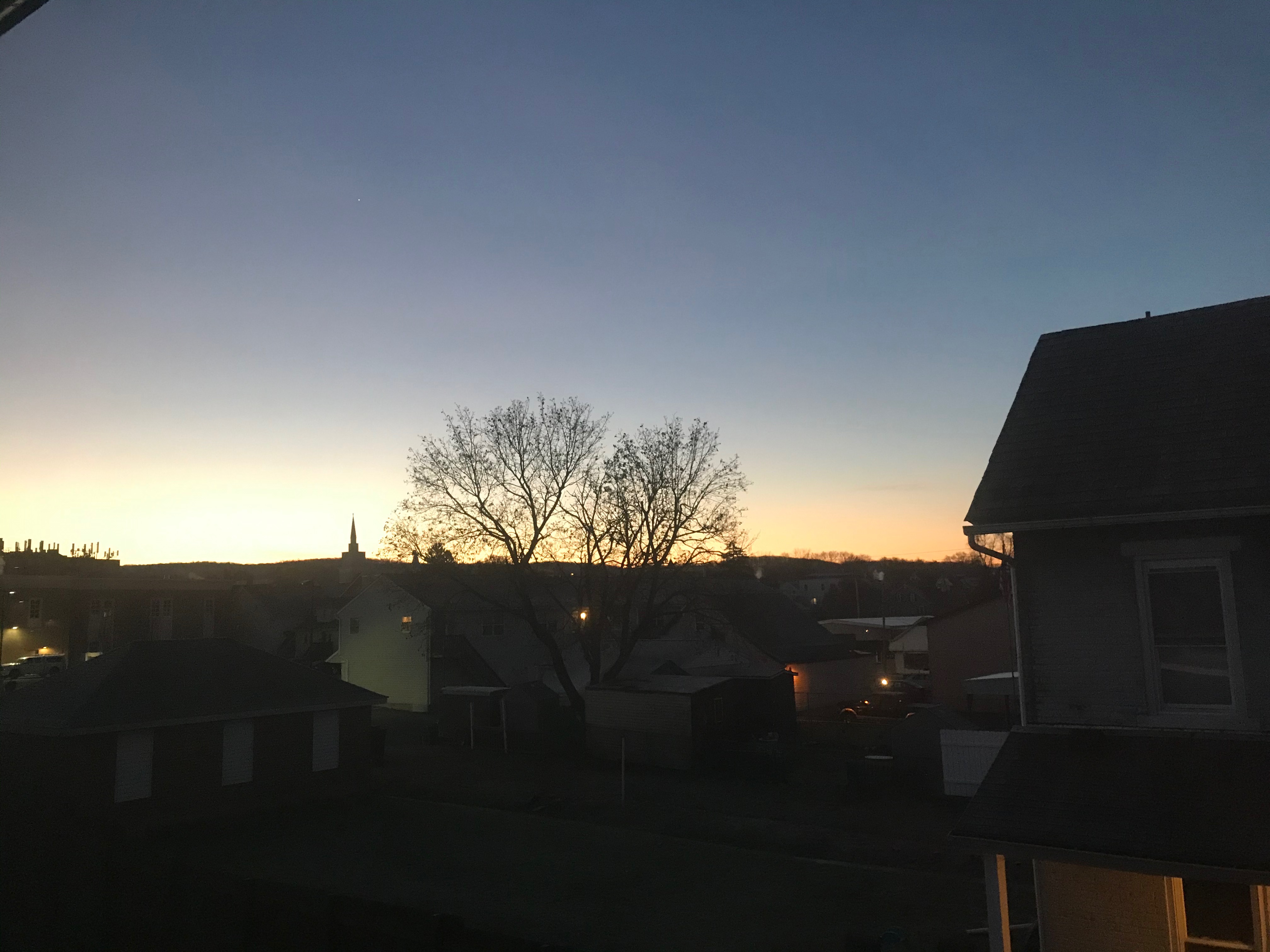
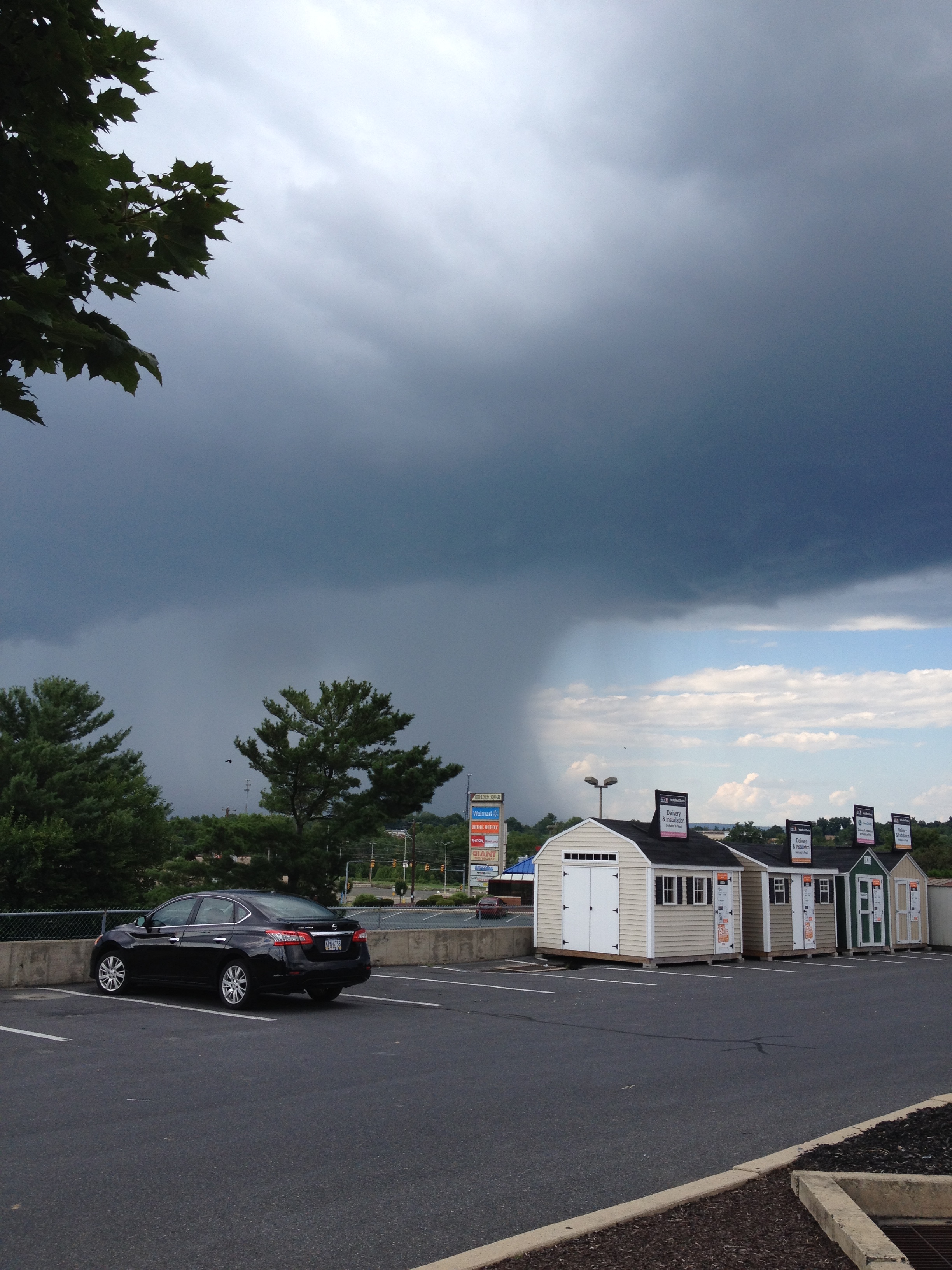
Maybe it’s just me, but August seems to be the new October.  If any of you are experiencing the heat wave that’s (oddly enough) like global warming, my apologies.  Around here—and local is what we all are—nights are cool enough to require blankets after our very hot July.  In fact, I need long sleeves and long pants in the mornings, it’s so chilly.  By mid-afternoon I’m starting to roast, but the grass is brown and that October feeling is in the air.  Or maybe it’s just that I’m awake at odd hours and the perspective from this time of day is somehow prescient.  Who knows?  As I try to sneak a jog in before work I see the walnuts have already gone yellow.  And I wonder.

We idealize the weather of our youth.  That sense of oughtness sets in early.  This is the way the weather should go.  We’ve been pouring greenhouse gasses into the atmosphere, however, for all of my life and before.  The warning signs have been around for decades but somehow liars with false hair convince us that any progress ought to be reversed.  I wonder if he’s been outside lately.  The planet is constantly changing based on the larger picture.  It has been doing this for eons, well before our species evolved.  Thinking it was created for us distorts our thinking.  The real question is whether we’ll be able to adapt.  I can’t say the prognosis is rosy, given how we’re constantly trying to kill those who live just across that mountain range, or that wide river.  We can’t seem to coexist.

I like October.  Still, I can’t help but think of all the things we didn’t get done this summer because it was too hot to be working outside.  Or we couldn’t get contractors to return our calls.  Seasons change as the atmosphere tries to adjust to all the chemicals we cough out.  October and its monsters seem to arrive earlier each year.  I’ve been feeling it for weeks already.  Seasons are really negotiations.  Around here, in this temperate zone, we spend most of the year with the furnace on, taking the edge off cold mornings and trying to keep this drafty house habitable for about six months of the year.  Everything’s constantly in flux and we simply try to adjust.  Not even the sun will last forever.  But for now I see the signs of harvest season beginning, and I feel the change in the air.  And I can sense October just around the corner. So goes August.


Dark v Light

The summer solstice was days away and the earliest sunrise had already passed.  The earliest sunrise and the latest sunset are not on the same day.  To those of us who rise before the sun, it does make a difference.  I’m a morning jogger (when my back allows it).  I prefer to go out before work because otherwise you have to interrupt your day to put on your scuzzies and then come back all sweaty, hoping you didn’t forget about a meeting just after.  The thing is, I start work early and my preferred jogging time is around 5 a.m.  Back in May it’s easy to believe that this timetable is workable.  Then in August, almost like it’s pinned to the first of the month, you realize that it will be much closer to six than five before it’s light enough to see.  So the seasons go.

Even in the midst of a heat wave, you can smell autumn coming.  Yes, I know there will be hot days and uncomfortable nights yet.  But just as surely as Back to School merchandise begins to appear in July (school had been out maybe two weeks by then), fall inexorably follows summer.  Around here it’s been drier than normal.  Stressed trees began shedding leaves in July as if to say, “Alright, we’ll give this a try again next year.”  They are much more obvious about seasonal changes than the rest of us, but we’re all impacted by the always shifting patterns of light and warming, or cooling, mercury.  Seasons remind us of what it means to be mortal beings.  Melancholy isn’t always a bad thing.

Being a morning person, at least in my case, means spending quite a bit of my creative time in the dark.  In fact, back in June it’s like it gets light too soon for me to go jogging right away—I still have things to do first.  I also know it will still be some time before it’s dark when I go to bed.  I have no trouble sleeping in the light.  Our schedules are part of our perceptions of time and light.  We all agree, more of less, that from nine to five we’ll be at our desks, whiling away the most productive hours of sunlight.  I remember commuting to work in the dark only to commute home also in the dark.  Using that time for creativity is important, but so is trying to keep healthy.  Like the great dramatic acts of the solstices and equinoxes, it’s all a matter of balance.


Conflicting Lifestyles

Sleep patterns often don’t fit with work patterns.  The reason I wake up so early is that for years I had to do it to get to Manhattan.  For work.  Since ending the commuting lifestyle four years ago, I haven’t been able to adjust back to normal, whatever that may be.  During a recent heatwave weekend, when it wasn’t really conducive to be doing yard work, I suggested to my wife that we watch The Godfather on Sunday afternoon.  Somehow I thought it was only two hours, but it is actually much closer to three.  Now this Coppola film is considered one of the greatest movies of all time and I have literally wanted to see it since 1972.  There were no VCRs in those days and life has been, well, busy since college days.

It is a powerful movie, even today.  I knew the basic plot and I started to read (I can’t recall if I finished it) the novel in the early seventies.  All I know is that I sat engrossed as the temperatures tempted 100 degrees outside.  Because I awake so early Sunday afternoons are often sleepy times for me, but I don’t nap.  Napping leads to long nights and I awake early no matter what.  The movie doesn’t allow for a lapse of interest.  One of the scenes that had the most impact is when Michael is attending the baptism of his godson and the priest asks him if he renounces Satan intercut with scenes of his hitman killing his rival family bosses.  The religious nature of the violence in the story is perhaps one of its most shocking elements, even today.

That night it was still hot, and all the water that I drank during the day made itself rather urgently felt around 2 a.m.  The trick to the late night bathroom run is to keep your mind shut off.  Although The Godfather ended nearly twelve hours earlier, it crept back into my head, keeping me awake after that.  Of course, I had a full day of work—there are no allowances for aging in this thing of ours called capitalism—ahead.  The thing is, when else do we find three consecutive hours to catch up with a cultural landmark but a Sunday afternoon?  Are you supposed to take a vacation day to do it?  I have no regrets about having watched the movie—it was like an offer I couldn’t refuse.  It’s just the rest of life that, well, simply won’t compromise.


Solstice Thoughts

At the equator, the difference is nil.  The longest day and the shortest day don’t deviate from the standard day length.  The further you move from the equator, the more dramatic the effect is.  Here in the northern hemisphere this is our longest day, the solstice.  Historically, particularly in countries to the northern edge of the northern hemisphere, this is a holiday.  Midsummer marked the days of sun and growth.  Light is abundant—too abundant to sleep well in the furthest reaches.   Being visually oriented creatures, we enjoy the surfeit of light.  Light has long been a symbol of the divine for, I suppose, just that reason.  It makes us feel secure and safe.  We can see what’s going on around us.

In Antarctica, today is the shortest day of the year.  Indeed, around now there is seldom any light at all.  On the exact same day there are literally polar opposites on this planet.  The summer here is winter there.  It’s the first day of winter in the global south.  Their understanding of this day is completely different.  Of course, once you reach the shortest day, things can only improve.  The climb to summer lasts half a year, only to have the decline immediately begin again.  The difference is as subtle as it is inexorable.  For those of us who wake before the sun, it’s already obvious that sunrise is coming later than it did last week.  The earliest sunrise was the fourteenth.  Sunset will come later and later for the next few days, to compensate for the lost morning light, but overall there will be less and less until we are the winter half of the world.

There are many lessons to learn here.  In a world where the longest and shortest days are the same day—solstices depend on where you live—we don’t fight over it.  This despite the fact that light is our most precious commodity.  We simply accept that we celebrate light when we have it, and await its coming when we don’t.  Other resources we fight over.  Potable water.  Petroleum products.  Arable land.  Silently, radiantly, light shows us the way.  There’s an inevitability here.  Through long experience on the earth we simply accept it.  The other option is to fight over what we can’t control, which is futility defined.  There are lessons to learn from the longest day.  And if it’s your shortest day, you know that all will be forgiven at the next equinox.


Heat Wave

Kim Stanley Robinson’s The Ministry for the Future wasn’t my favorite book read the first half of this year, but reading the headlines about India’s heatwave took me back to it.  That’s precisely the way the book starts out—with an intense, deadly heat wave in India.  As a nation lacking infrastructure in relation to the size of its population, and lying near the equator, India is particularly vulnerable to global warming.  We all are.  As the planet heats up and weather becomes more erratic and extreme, food shortages will appear.  At the moment we’re concerned because Covid and Putin-War have driven inflation to incredible highs.  A trip to the grocery store or gas station is like a horror film.  Meanwhile the planet’s heating up and Republicans are pushing for four more years of Trump environmental degradation.  Can we please open a window here?

Global warming has been challenged by many because of their religious conviction that the world ought to end.  Apocalypse is probably the Bible’s most dangerous teaching.  Speaking only for myself, I didn’t know there was an Indian heatwave until headlines took a break from Putin-War and America’s mass shooting crisis.  And oh, India’s sweltering under temperatures over 110 degrees.  People are dying.  Birds are falling from the sky in mid-flight.  We had a couple days in the 90s around here before the end of May.  Those were some uncomfortable times.  Meanwhile in India it was twenty degrees hotter.

The human ability to ignore life-threatening problems we create for ourselves in service of our theology is remarkable.  Even as experts declare religion is no longer important, it’s slowing killing us.  We focus our resources on making money, as if money will do us any good when we’re the lobsters in the pot.  As a species we’re amazingly capable.  Billionaires can afford their own private spaceships—something most nations in the world can’t spare cash to buy—and we have proven ourselves endlessly inventive.  When it comes to the basics—the need to believe, for instance—we turn a blind eye and pretend it’ll just go away.  Religion scorned is a very dangerous thing.  I once heard a talk by a scientist presenting a rosy technological future.  I raised my hand and asked about religious objections and he mused, “I hadn’t even thought about religion.”  His future was progressive and optimistic.  Robinson’s is quite a bit less so, although it ends by suggesting we might manage to pull through, with only millions of deaths.  As Donovan says, “It’s time to ask yourself what you believe.”


Horror Deprivation

Is there such a thing as horror deprivation?  Life has been so busy that I haven’t been able to carve out the time to watch any horror movies for several weeks now.  That steady diet has given me blog topics and a strange kind of personal comfort in this all-too-scary world.  More than that, it is often a coping mechanism.  I sometimes think more people might read this blog if I “rebranded” it as horror-themed, but perhaps there’s a different way to go about it.  Some writers, with enough shares and likes, have their daily observations become part of the national wisdom.  The rest of us, it seems, are simply background noise.  I’ve also been told blogs are passè and that may be the case.  I have trouble keeping up.  I don’t even have time to watch horror!

As with most things in life, I keep a list of movies I need to see.  Like claws such a list continues to grow unless it’s trimmed once in a while.  A movie is a couple-hour commitment and when even weekends are programmed to the last minute it’s difficult to squeeze them in.  I always welcome the more pleasant weather of spring, but so does the yard.  I’ve always thought, like good haunted house owners, that I would let the yard go.  Here in town there are ordinances, though.  It doesn’t look tidy—right now dandelions exceed the tolerated grass length a mere day after mowing.  Like triffids they pop up and won’t go away.  I could be in, watching a movie.  My credibility’s on the line here!

The pandemic, from which horror movies will arise, led many people to having too much time.  Netflix soared.  For whatever reason, it had the opposite effect on me—is this a special effect?—I had even less time than before.  I had to cancel my Netflix account because I had no time to use it.  Horror is a coping technique.  Real horrors spill from the headlines daily.  Sometimes the antidote is in the poison itself.  The way to be less scared is to watch more horror.  We’re still in the pandemic and Putin decides to start a war.  Republicans confess that Trump tried to take over by force and then backtrack.  Global warming continues apace.  There comes a point when the only therapy is to watch something worse unfold, as long as it’s fiction.  It’s Saturday.  It’s raining.  What can one possibly do?


Free Research

I’ve lost track of how many times it’s happened, but it has been relatively few.  Someone I don’t know will approach me and ask me to post about something on my blog.  Sometimes they’ll even send me a book to highlight.  Perhaps not the most effective way to build a library, I’ll admit.  And some of the books haven’t been great.  I admire them nonetheless.  It takes great effort to write a book.  And not a small amount of faith, too.  Many books—perhaps most—never get published.  A great many are self-published.  (Those who work in publishing can be a stuck-up lot sometimes.)  Even those professionally published can use a push from time to time.  On this blog I’ve actively resisted the urge to make it about one thing.  Why?  Is life just one thing?

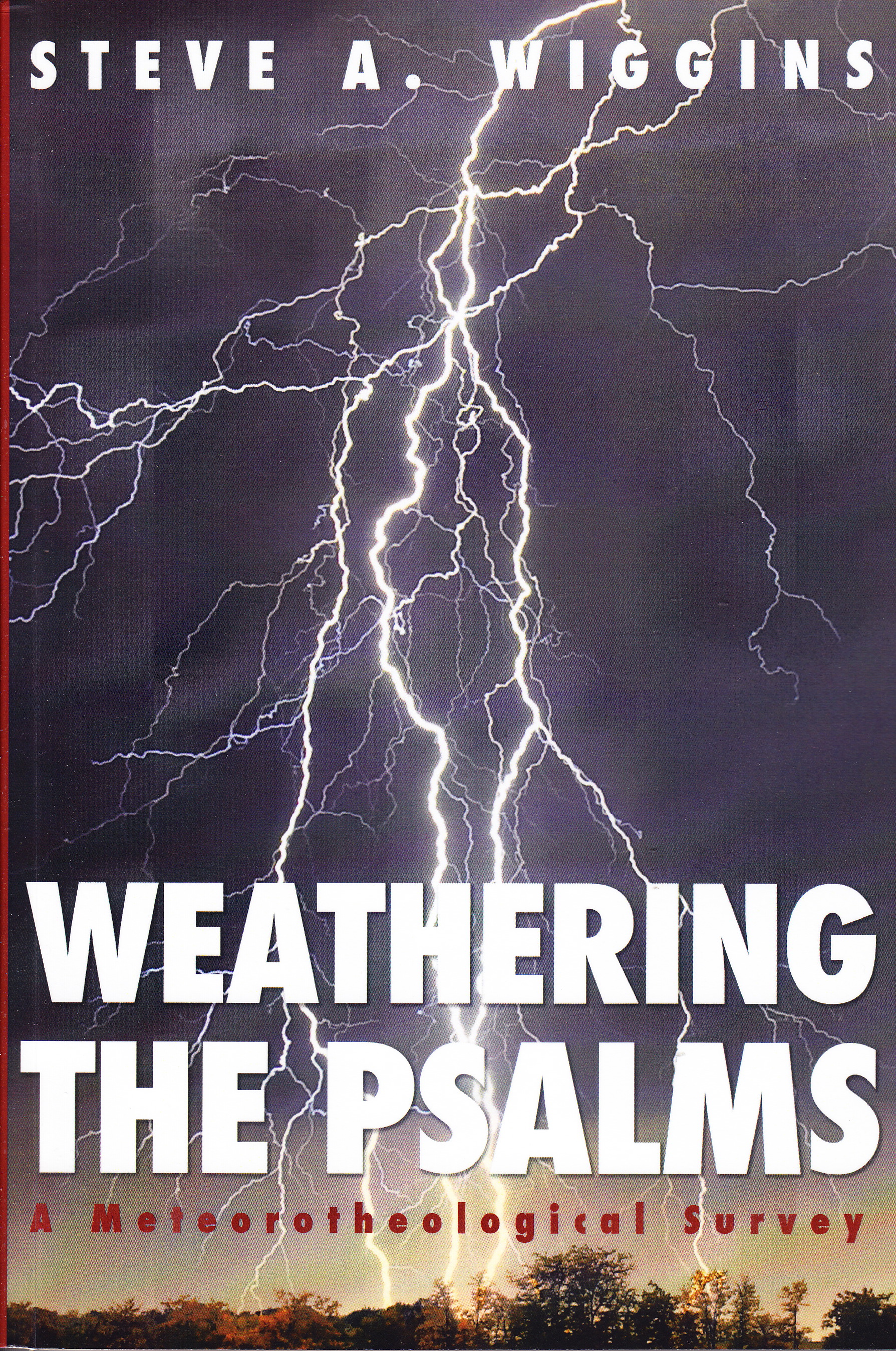
In a recent conversation I laid out for someone new what had been my research agenda as a young professor.  It had a direction still reflected in some of the categories you’ll find on the right column of this blog.  After writing on Asherah, I was going to give similar treatment to the other ancient goddesses attested at Ugarit.  This was perhaps ambitious for an academic waif at Nashotah House, but it was well underway.  My book on Shapshu was making good progress when the market (that dragon to every St. George) led friends to suggest turning biblical, which led to Weathering the Psalms.  A new research agenda—explore the weather terminology (the meteorotheology) of other biblical books—arose.  There were storms, after all, becalmed over lakes.  Horror entered in the jobless period and beyond.

And social justice.  I’m not a thrice-failed minister for nothing!  In fact, a recent freebie was a book on social justice.  I have a colleague as interested in monsters as me.  This particular scholar had decided to focus on the cause of the poor.  Even economists are starting to say the unequal distribution of wealth is hurting us.  While the rich fly to space on personally owned rockets, the rest of us have trouble filling up at the service station, even if we have jobs.  So it is that this blog is eclectic.  A friend told me early on that it would be more popular if I just stuck to one topic.  That’s probably true, but my mind can’t settle down like that.  And when people send me things to talk about, I’m happy to do so, if it fits somewhere in my mind.


Easter Weather

The weather doesn’t always cooperate for holidays.  Easter is, at heart, a celebration of spring—life after death.  Around here this holiday has been accompanied by fits and starts in warmer weather and instead of warmer it’s actually colder again.  Just a week ago there was snow in the air.  Life’s that way; you don’t always know what to expect.  I guess I’m still in hibernation mode.  No matter the season, there never seems to be enough time to sleep.  As a youth I always attended sunrise services on Easter.  These days I regularly rise before the sun, so as long as I’m capable it’s like every day is Easter.  But with work.  Even on what many recognize as Easter—which overlaps with Passover this year—the Orthodox feel we have it too early, what with the Julian calendar still being in effect.  It’s all a matter of how we look at time.

As much as I hate mowing, I admire the exuberance of grass.  It’s ready to welcome the longer days by stretching toward the sun.  Drinking in the plenteous rain.  The dandelions have already begun to spread, opening their yellow eyes to all and sundry passing insects.  Easter is a time to reflect on life returning after winter.  And I can’t help but think of those in the southern hemisphere for which Easter falls in the autumn.  The theology fails to match the seasons as life springs up just as winter is about to set in.  The Christian viewpoint is a northern one, keyed to our seasons.  The weather doesn’t always observe the prevailing theology.

Around here Good Friday was a fine, sunny day.  Like most of the fine, sunny days it was a work day.  Now it’s a chillier Easter, the Saturday between being a mix with some rain.  When I was young—eagerly awaking for sunrise services, which I often had a hand in designing—I marveled at how the weather often seemed to cooperate.  Now as I think back, I remember coming out of Good Friday services into the incongruous sunshine and finding many an Easter still bearing an unseasonal chill.  Weather is, of course, a local and global phenomenon.  One person’s chilly Easter is too hot for someone further away.  And for yet others the onset of autumn.  Globalism has taught us to look further, to think in terms of how others might be experiencing this world.  Easter seems an appropriate time to do just that.


Sexist Instructions

The thing about cars is there’s so much that can go wrong.  And when it does it’s costly to fix it.  Yet, even when working from home, we need them.  We have two, both quite old in car years.  One is approaching twenty.  We bought it new—the first time we’d ever been able to achieve such a feat.  This was one of the new Beetles and it has had never-ending electronic issues.  Warning lights come on that seem to be a malfunction of the warning lights—if you ever wanted an existential situation that’s one right there.  How do you know if there’s something wrong with your engine or is it just something wrong with the warning light?  A worrisome one came on just as winter was settling in and we didn’t need to drive it much before inspection time and we let it sit a little too long.

The battery, naturally, died.  We have an old, seldom used battery jump-starter, which, in the cold of the garage, also died.  We’ve been trying to find time on the weekend when both my wife and I are free (rare) so that I can drive it a ways to try to recharge the battery, but with someone home who can rescue me if I get stuck.  So it was we came to buy a new jump-starter.  These new ones are the size of a cell phone on steroids—much smaller than the old kind.  Ours came from China, I’m guessing, and the instructions are sexist.  They imply that women can use this because it’s easy.  Part of the description reads “It can be used more than 30 times, giving you peace of mind, no matter where you are, if the battery runs out, you can start it without looking for women who are not smart at night in an empty parking lot, such as a college campus or forget you.”  I don’t know about you, but this sounds like the writer had a past he’s trying to deal with.

I was indeed once left stranded because of a dead car battery.  It’s a story I’m saving for my autobiography, if I ever write one, but let me assure you all the people responsible for that abandonment were men.  Men with a car that wouldn’t start while I sat in the middle of nowhere in the dark.  (This was before cell phones.)  I didn’t want to buy a sexist device.  Both men and women have batteries die and I’m always a little scared to jump-start a car.  At least now we can get the Beetle rolling again and drive toward a future where women are rightfully seen as equal to men.  And I hope that instruction writer has found some help, perhaps with therapy.


April Says

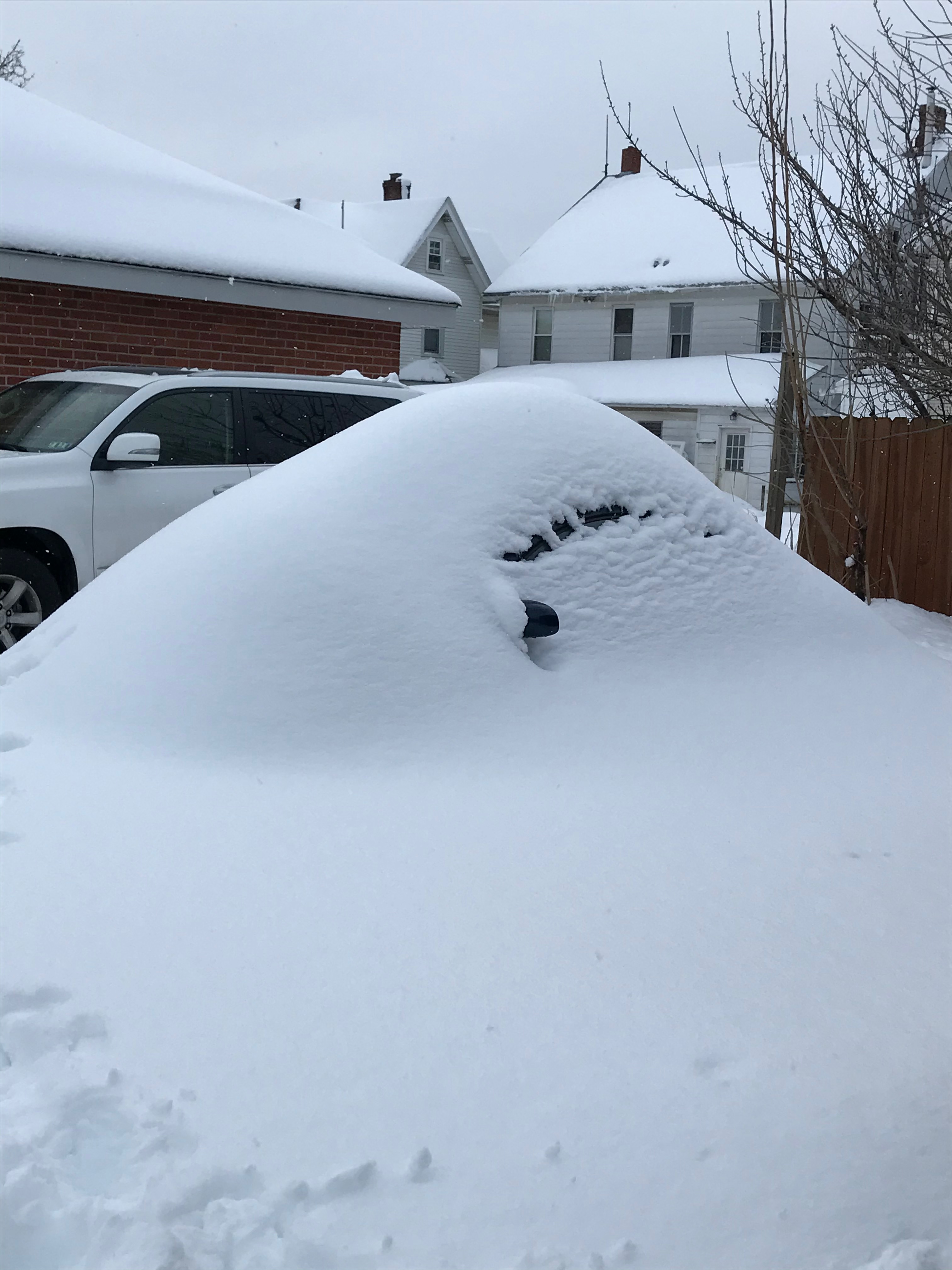
I can honestly say that it wasn’t on my bucket list to mow the lawn while it was snowing.  Friday would’ve been better—sunny and sixty—but I have a 925 and I had a meeting after work I couldn’t get out of.  Saturday it rained all day, which, I know, grass loves.  Sunday was the only opportunity left in the weekend, and with stocking cap and gloves on, I went to mow.  Snow started to fall.  It must be April.  I’ve always believed that “April fools” has an origin in the weather.  I can’t prove it, but it seems just when you think it’s safe to go without a coat, suddenly winter.  Back when we lived in Wisconsin we took a family fun trip to Wisconsin Dells for my wife’s birthday in April.  It snowed.  We rode the famous ducks and then played mini-golf amid squalls.  April fools.

The weather influences many aspects of life.  Why it’s considered a neutral topic I don’t know.  It’s kind of like talking about God.  The only thing we all agree on is that we can’t control it.  Well, we can certainly influence it.  Global warming sets strange weather patterns into motion.  It was in the seventies less than a month ago.  (Which is why grass was unruly just as April began its double-digits.)  Then there’s all the rain.  See what I mean about God?  Divinity and weather were in mind as I worked on Weathering the Psalms.  I still wrestle with how these things relate to each other in the human psyche.  We do tend to think the weather is somehow a judgment or blessing.

My family knows I complain about it religiously.  And mowing isn’t my favorite activity in any weather.  It was late November and I was still mowing.  April (which fools) seems to be a little too soon to be starting that all over again.  Committing at least one day of every weekend until nearly next Christmas to cutting grass.  It’s a long-term commitment.  I suspect those who benefit (monetarily, for we all lose, existentially) from global warming probably don’t mow their own lawns.  They probably have their private jets that don’t need to be jump started because that worrying idiot-light on the dash is on again and they’re afraid to use it.  It’s life in a different key.  Still, we all share the weather.  When it affects crops, or swamps New York City, we’ll all be bound to notice.  Enough grumbling.  It’s time to get the weed-whacker fired up while the icicles start to form.  April fools.


1 April

Image credit: Trocche100, public domain via Wikimedia Commons

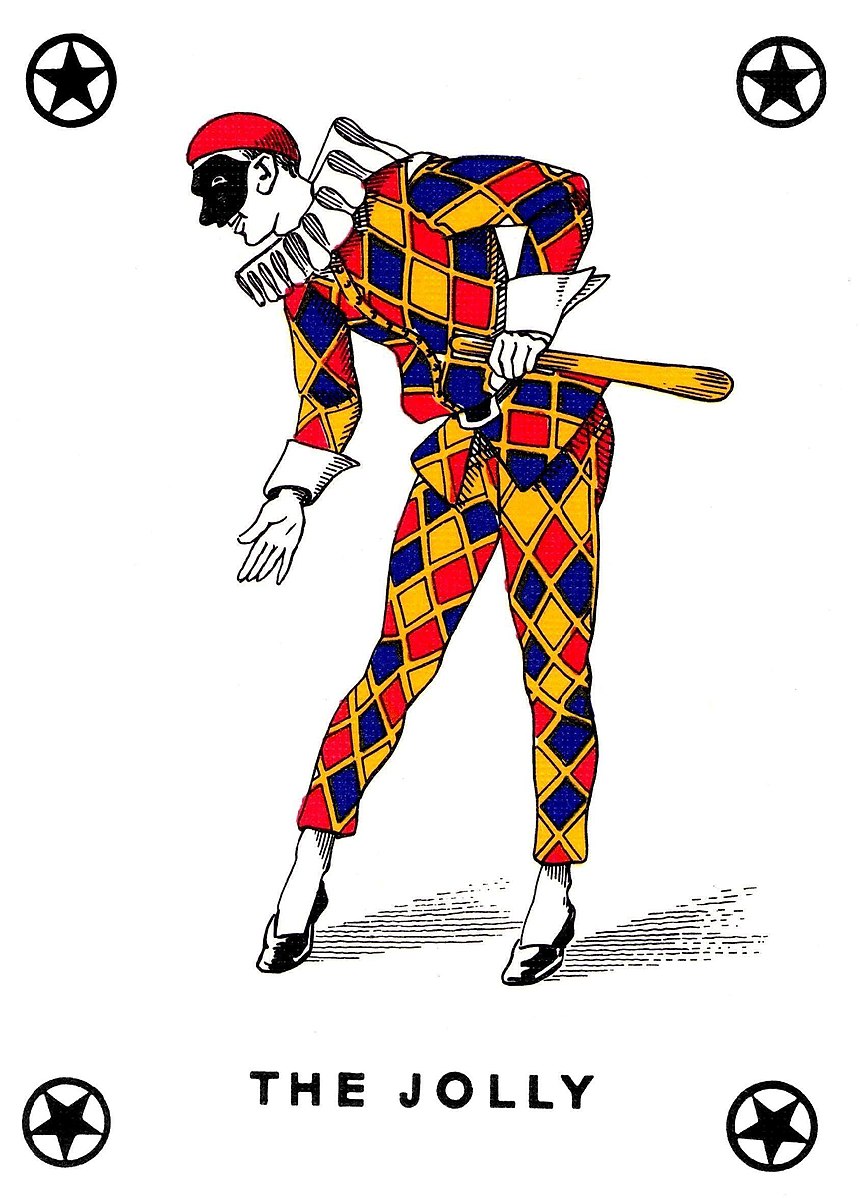
The funny thing is nobody knows how it got started.  In living memory, and indeed back a century or two—even more—people have considered April 1 a day for jokes and fooling.  Perhaps it was a kind of relief after winter was finally beginning to show its tail, or perhaps it was some distortion of Hilaria, the Roman festival of the goddess Cybele.  Some have speculated that it had to do with switching from the Julian to the Gregorian calendar when many were confused as to what the actual date was.  No matter what its origins are, April Fools has stuck.  It has such resonance that even legislation passed on this date is sometimes questioned as to whether it is serious.  Some locations have grand pranks planned and budgeted.

Nobody, as noted, knows how this got started.  One of my personal favorites posits a biblical origin.  Things tend to go back to the Bible in western culture, don’t they?  This idea takes it all the way back to the tenth generation of the human race: Noah’s flood.  Back in the eighteenth century it was suggested that Noah sent out his first dove before the waters abated on April 1 (this, of course, is based on knowing the exact days of creation—something that was of considerable interest in the seventeenth and eighteenth centuries).  Since the dove was sent on a “fool’s errand”—there was no dry land visible—well, April fools!

With rare exceptions this isn’t a day off work.  It’s not a holiday with any religious implications, despite speculations about Noah and his dove.  It’s really a day highlighting uncertainty.  Practical jokes can, of course, be harmful.  There can be those, such as yours truly, who might be slow to catch on.  Indeed, almost always the victim of a “practical joke” doesn’t find him or herself in an appreciative mood.  I’ve always personally thought the reference was to the weather.  Snow isn’t unusual into mid-April in parts of the northern tier.  In fact received wisdom suggests not planting annuals until May arrives.  April’s weather, in other words, fools.  Around here we’ve whiplashed through March with days in the seventies and others the coldest of the winter (or so it seemed).  Now we’re into the first full month of spring.  The early flowers are out (some of which succumbed to the cold of this week’s weather) making fools of us all.  My hope is that none of us take this day’s unknown-origin holiday too seriously.


Going Green

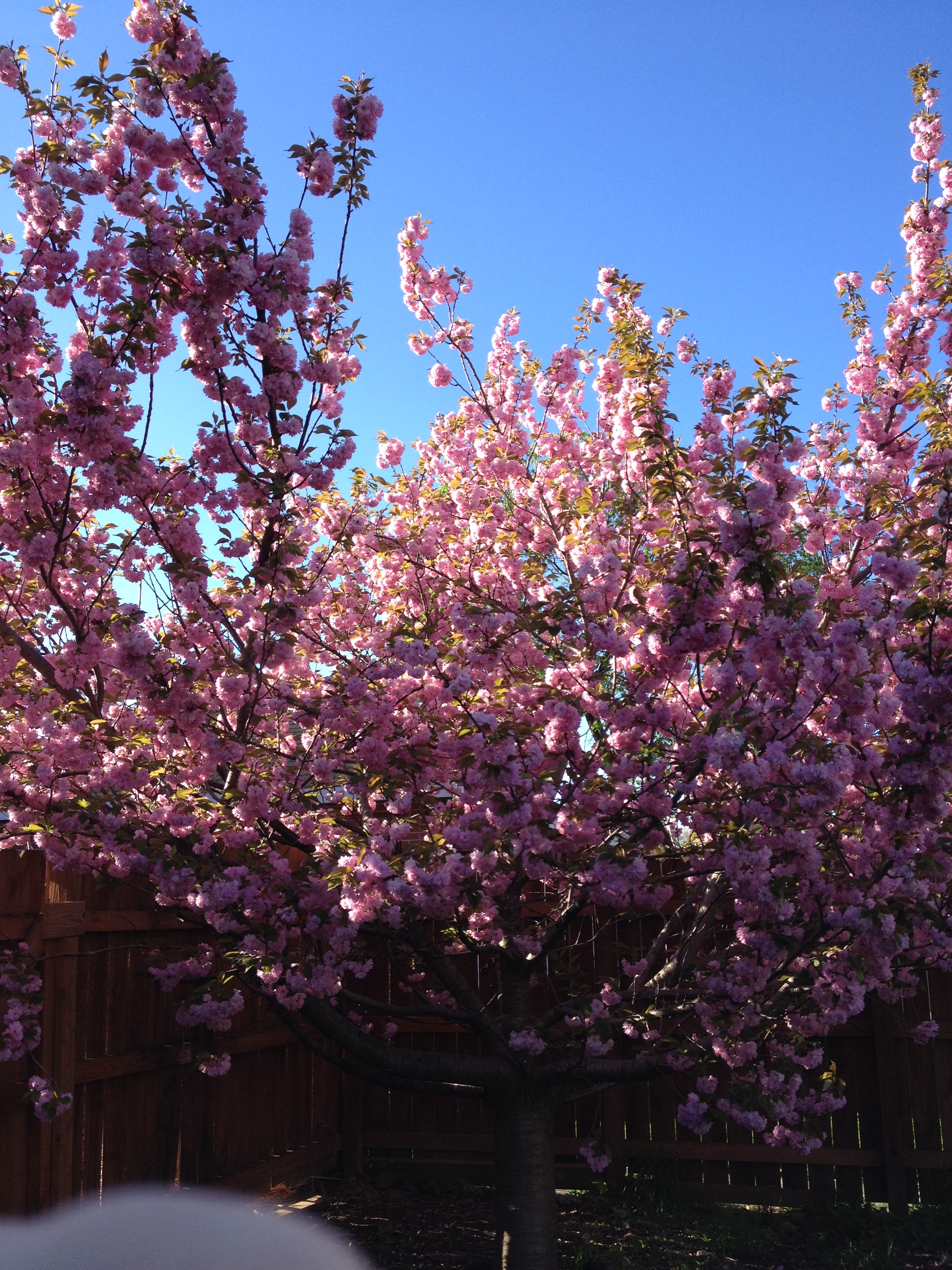
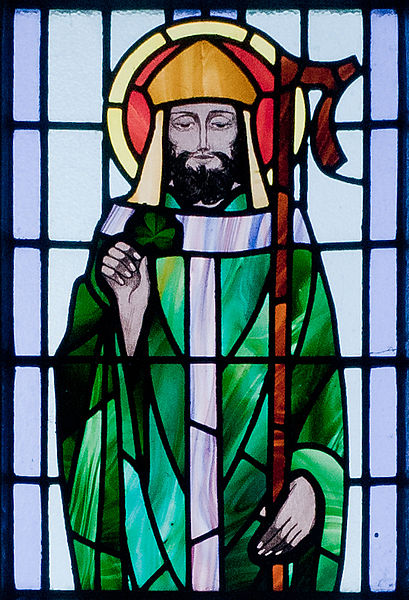
It’s easy to get eager at this point in the year.  A month and a half after Groundhog Day, we’re at St. Patrick’s, and just a few days from the equinox itself.  Around these parts we’ve had some warm weather after last weekend’s bomb cyclone and most of the snow is now gone.  We’re ready for progress.  We’re tired of winter and huddling indoors.  The crocuses are defiantly open although the warning saying in Wisconsin went “three snows on the crocuses.”  St. Patrick’s green is the fecund green of spring.  Although nobody gets them off from work, the seasonal holidays are signs of hope.  It doesn’t matter which season into which we’re transitioning, there’s beauty ahead.  It’s the kind of change many people enjoy.

Look closely at a flower.  (If the crocuses aren’t up yet in your area they will be soon.)  Open and inviting, it offers insects what they need in return for a bit of cross-pollination.  Yesterday I saw my first wasp looking for a place to build a nest on our house, reminding me to be careful opening doors now because no transition is completely smooth.  Spring is hope in season form.  As much as we may appreciate winter with its pristine chill, spring reminds us that food is soon to be available from the bosom of the earth itself.  The songbirds, now back in force, have been eagerly anticipating it.  They are the heralds of transition, the little winged messengers of assurance.

Photo credit: Andreas F. Borchert, Wikicommons

It’s time to step outside and breathe deeply.  The muddy smells of a thawing earth blend with the first fruity hints of buds beginning cautiously to open.  The transition’s not straightforward.  There will be setbacks and chills yet to come.  Nevertheless, the die is cast—St. Pat waves his clover as if to say “This is what lies ahead, as brown becomes green.” Our world tilts as it spins and brings us the delight of seasonal changes.  Saints and birds and flowers must agree on this, even should they differ on the details of what is needful.  It’s a day for celebration, even though it’s a Thursday, a work day with perhaps a respite—after hours of course—to have some fun.  Green is about to reappear.  We wear it today to encourage the timid plants, yes, we need hope.  We look around the world and know that hope is what we really all crave.  


Relinquishing Control

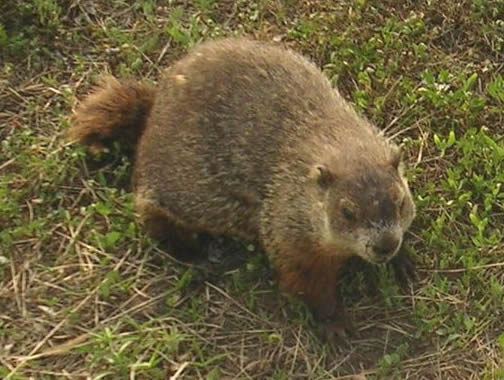
Controlling the weather is a dream as old as humanity itself.  Once when I was fervently praying for a rain-free day as a child, my mother pointed out that other people could be praying for rain.  I realized then that weather was a personalized preference and that, on some level, prayers cancel each other out.  Well, it’s Groundhog Day and we’re all wondering whether those who love winter and want more or those who are ready for spring will prevail.  For this we’ll rely on a woodchuck.  The observation of animals for signs of spring seems to have been a germanic practice, and it could also involve badgers (which I’ve never, ever seen in the wild) or bears as well as groundhogs.  The idea is that the majority are looking forward to spring when they can plant and grow food, hopefully enough to last through the next winter.  And so the cycle goes.

We hear a lot about January as a month of transitions.  It is, but so are they all.  February, both the dead of winter and start of spring, provides variety as we continue the cycle.  I’ve already seen my first robin of the year and I’ve been hearing sporadic bird song.  The mating season, after all, comes around the middle of the month.  According to some renditions of the Celtic calendar, Imbolc, which was yesterday, is the start of spring.  Celebrated with fires to encourage the light and warmth, we know that cold and snow and wind chill still lie ahead.  We are reminded, however, that this wheel is still turning.  Slowly, slowly, but ever turning.

I’m writing this post before Punxsutawney Phil even awakes.  The sky is dark and it’s cold outside.  Like Phil Connors I’m thinking about how we want things to stay the same, but when they do they quickly haunt us.  Time forever moves and all seasons are mere transitions to the next.  In this endless cycle we have to come to appreciate where we are at the moment.  There’s a stark beauty to winter.  A snowy landscape can become a transport of rapture.  We have to heat our houses, however, and pay the bills to do so.  We keep our house cool enough that some days I just don’t have the heart to venture outside at all.  Still, I wouldn’t change it.  These cycles are old friends now.  I’ll glance to the west and wonder what Phil might see, but I’ll be praying that we will never control the weather.


Footprints in the Snow

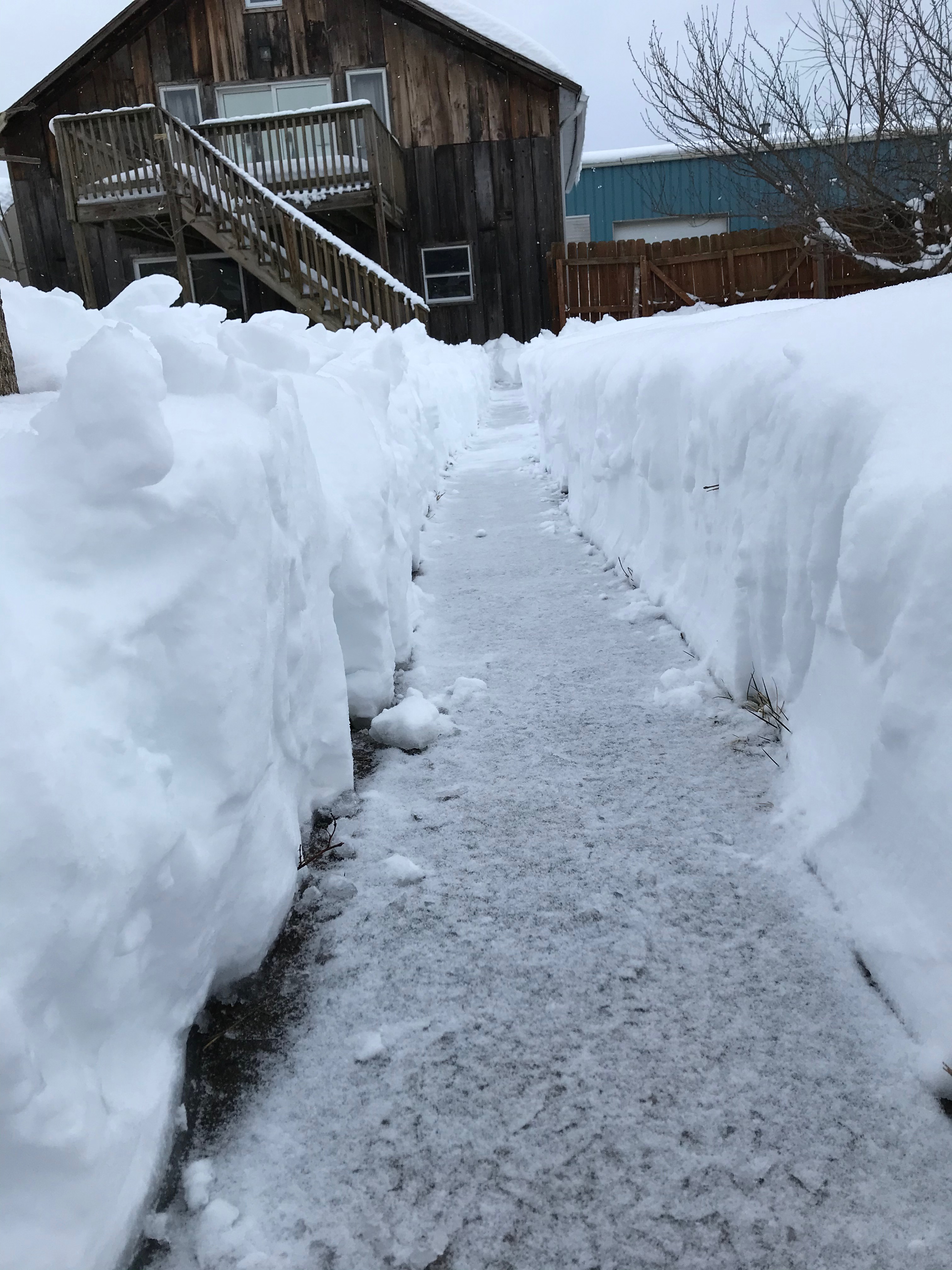
Although my back’s grateful, many of the snowstorms rolling across the country have left just a small bit of snow here so far.  Small bits of snow create their own hazards, however.  A snow covered trail quickly becomes hazardous for jogging, so I walk.  This past week we had a little snow and temperatures low enough to dissuade many of those who normally walk or run the trail.  Those of us with desk jobs really have to make an effort to move.  When I was out I was surprised by a couple of things.  There were no other lunch-time walkers and it was above freezing.  The almost untrodden snow gave under my feet and in the patches where the sun made it through, was actually wet.  I took my usual constitutional and headed back to work.

These short, cold winter days are too treacherous for walking in the dark.  Black ice isn’t a myth unless you can slip and fall on a myth.  The next day it was bitterly cold.  Still, skipping exercise a day is a slippery slope.  I headed back to the trail.  At first my footsteps from the previous day had led to a regular set of tracks where the snow had melted down and the pea gravel had dried out.  Walking was safe here.  As I reached the further, more wooded end of the trail it was quite different.  Sheltered by the trees, my foot prints from the previous day had slightly melted and then refroze, leaving a track of ice that could easily twist an ankle.  I began to think of the concept of following.

We find those whose wisdom compels us.  We hear them in the classroom, the pulpit, or the street corner.  Or we read them in a book.  We might even see them on television or the internet.  They seem to have something we lack, so we follow them.  Their tracks often start out secure enough.  Dry patches in an otherwise slippery covering of snow.  We follow on, thinking we’ve found our way.  Somewhat further down the path, however, the tracks become icy, showing us that even the great leaders have their own hidden secrets.  The places where they too slip and fall.  The wisdom we seek is collective.  No one person has all the answers.  If that were so it should be obvious to us all.  Instead we need to strike out on that nearly unbroken snow to discover for ourselves.


Global Swarming

It’s a veritable horror trope.  The swarm, that is.  We fear being overwhelmed by vast numbers of apparently innocuous insects or arachnids, although they are much smaller than us.  It’s their logistical superiority, and perhaps their utter disregard of personal space.  Summer at Nashotah House was the time of the earwigs.  They came out in such numbers that no room in the house was safe from them.  There was a horror element to pulling your toothbrush out of the holder only to find one hanging onto the place you were about to put your fingers.  Or opening the refrigerator to find that one had crawled into the butter.  Any time you picked something up you might find an earwig under it.  They would crawl up the walls and across the ceiling.  Other places on campus would be overrun with ladybugs or black flies.  It was in the woods, after all.

Most places we’ve lived since then have had their native bug that gets in, often in numbers.  Our current nemesis is the box elder bug.  Although harmless, it is a true bug in every sense of the word.  I’m Buddhist in my desire not to kill and there are too many to catch and take them back outside.  Fortunately they’re pretty localized—they like my study, probably because its southern exposure means it gets sunshine even into December.  We’ve had some cold days but November has been experiencing global warming and the box elder bugs, clueless, wander all over the place.  Most of them are near the end of their life and die after poking around for a few days.  Others are quite frisky.  Some remind me of horror movies from the fifties.

I have one of those desk set Stonehenge models.  I don’t have the space to set it up fully, and the die for the model was obviously done with poorly sculpted clay, so it takes some imagination to think the trilithons resemble those of the actual site.  When I noticed a box elder bug crawling over one, however, it took me back to Tarantula and other such films where the menace wasn’t just a little old bug, but a huge one.  Our monsters these days have shrunk, however, and fear comes in small packages.  Box elder bugs are harmless but annoying.  Of course, they’re still out this year because we’ve warmed the place up for them and even in November they, well, swarm.