Wordle

Each year in late capitalism seems to begin with a new fad.  This has been pronounced with the pandemic (which I almost wrote as “academic”) keeping people indoors.  Last year sea shanties were the rage with many of us finding ourselves humming something about a wellerman during the oddest times.  This year’s initial fad seems to be Wordle.  In case you’ve been living on the dark side of the moon, Wordle is an online game that is best described as Mastermind with five-letter words.  Mastermind, in case you were born after the Republican Party turned evil, is a game where you have six colored pegs that one person sets in a board a sequence of four.  The other player can’t see them, but has to try to replicate the colors in the right sequence.  At each guess the one who selected the sequence gives the guesser the following information: which pegs are the right color and which pegs were the right color in the right place.  (It occurs to me that explaining Mastermind could have been left out and I could’ve just described Wordle.  But what’s the fun in that?)
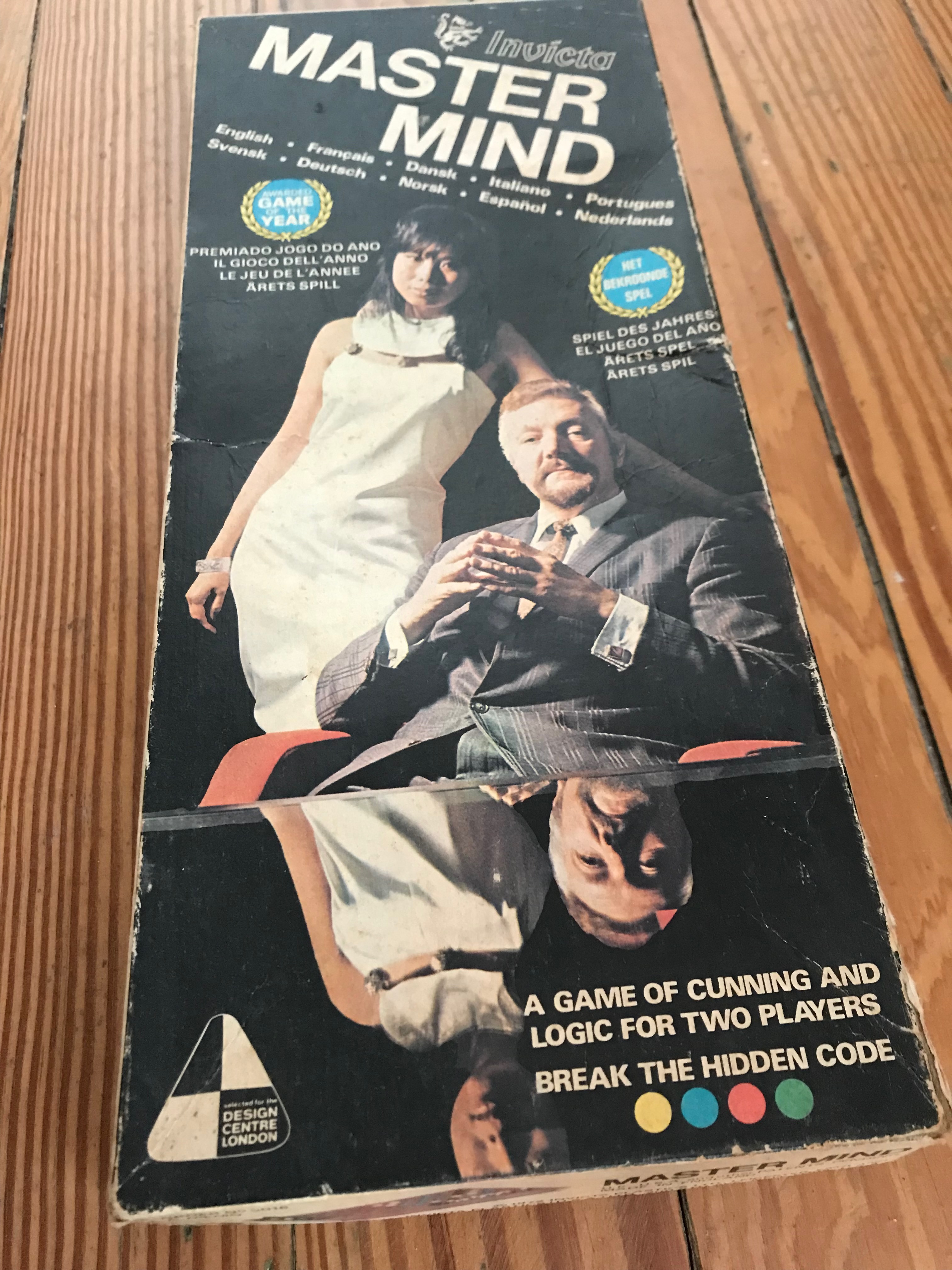
In any case the Wordle player has six chances to guess the right word based on the same clues: the right letter in the wrong place (yellow), or the right letter in the right place (green).  The hook is that you can only get one puzzle per day (otherwise many of us would be starving to death and out of work).  As a kid, I have to say, I could play Mastermind for hours.  I even brought our daughter up on it.  There’s something beguiling about trying to figure out what’s in somebody else’s mind.  There is a dark side to it, however.

I read a lot.  Lately I find that when I’m reading I’m secretly scanning for five-letter words that might be a good initial guess for Wordle.  The ideal word has no repeated letters and at least two vowels.  You need to narrow down the vowels first because every word has to have one of those six letters, since “y” functions as a vowel.  The other day I was thinking “s” has enough lubricant to function as a vowel too, but I digress.  Isn’t that the point of Wordle, though?  To digress?  There’s so much despair in the world with autocrats in power and the planet melting down that we need a little boost.  If only I could let myself read normally again, all might be well with the world.

Underestimated

Under-printing, ironically, can create great demand.  Books are generally under-printed because publishers don’t see much of a market for them.  Back before the days of inexpensive print-on-demand (POD, in the lingo) books may not have even existed as electronic files.  Often a publisher won’t print a book unless it anticipates that it can make back its costs.  If they think it won’t sell that well, they’ll print just enough.  And they might even melt down the typeset plates to reuse them for other books.  I’m not sure if that happened in the case of a book I’ve been looking to consult, but something has made this under-printed book extremely rare.  It’s not on Internet Archive.  WorldCat shows it in only two libraries world-wide, the nearest one over 3,000 miles away.  Its price used (and there seems to be only one copy) is $46,000. I can’t tell you what it is because you might buy it before I can.

For the purposes of my research, this is actually the only book on this particular topic.  (The subject isn’t even that obscure.)  The book is cited everywhere this topic is mentioned, and at least one person on Goodreads has actually seen a copy of it.  I have to conclude that all those who cite it must live within driving distance of one of two libraries worldwide.  For the rest of us the book is simply inaccessible.  As an author this is one of the worst fates imaginable.  Even if some price-gouger is selling a copy for $46,000 the author gains nothing from it.  Royalties are null and void for used book sales.  The only profiteer is the person who happens to have found a rare book (from the 1990s!) and is determined to ensure only the most wealthy will be able to purchase it.

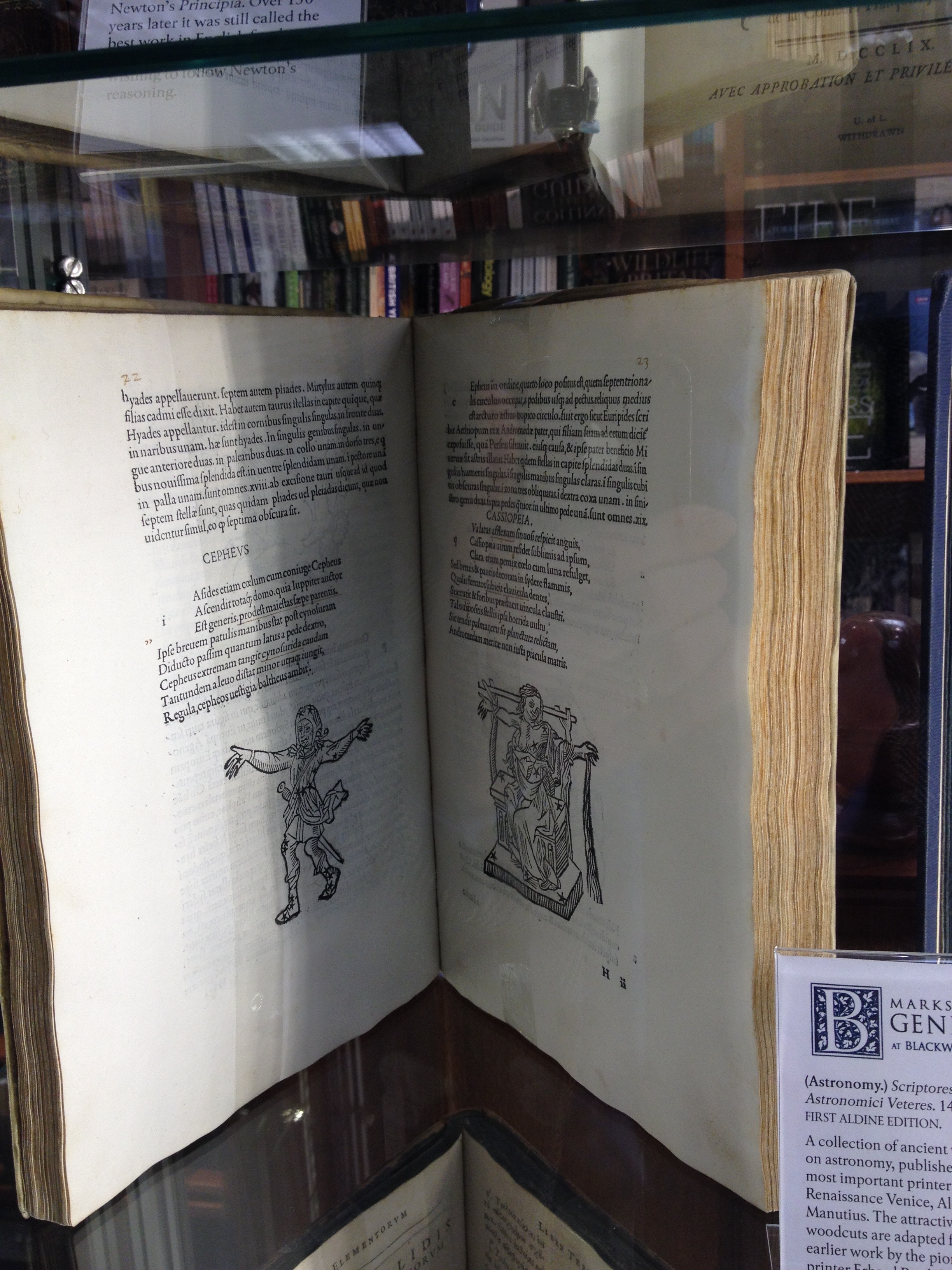
I’ve known people who sell used books online.  Those who want to move books try to undersell the unfortunate under-printed title by pricing a bit lower than the competition.  There is no regulation, however.  You can charge whatever you like.  The funny thing is, if someone eventually forks over $46,000 for this book, and then has it appraised (it is a paperback from the 1990s), its actual worth is probably at most in the hundreds of dollars.  Back when we watched the Antiques Roadshow we always knew that the poor person who brought in a book would be disappointed in the appraisal.  Last time I was in Oxford I saw rare books from the 1400s for sale for far, far less than $46,000.  I only hope that my books, as obscure as they are, are never deemed that expensive.  And I would encourage publishers to print a bit more generously, for the sake of knowledge.


The Archive

Publishers hate it, but I bless its holy name.  The Internet Archive is a major boon for “independent scholars.”  If you’re not familiar with it, the Archive is a repository of scanned books.  It doesn’t contain everything, of course, and some publishers have tried to sue, but it operates like a library.  You set up a free account, and if you just want to look up a reference in a book they have, you can “borrow” it for a while, check your reference, and then return it.  All without leaving your home.  Internet Archive really took off during the pandemic.  You couldn’t get to the library and some of us research as long as we breathe, so here was a solution without breaking the bank.  The bank, ah, there’s the rub.

The reason publishers hate Internet Archive is that it makes content available for free.  Working in publishing, I understand the concern.  Publishers have to make money off their books—they are businesses, after all.  And if somebody scans it and makes it free online, your sales are undermined.  But are they?  Now, I can only speak for people like myself, but if a book is directly relevant to my research I will buy it.  Reading online is a last resort. My library is full of books bought for that reason.  Once in a while, though, my research leads into areas I don’t intend to come back to.  Or I remember reading something in a book long ago, back when I had library access with interlibrary loan, and I can’t afford to buy the book just to look up that reference.  Well, Internet Archive to the rescue.  Publishers don’t often turn their mind to independent scholars since we’re not prestige authors.  Waifs of the academic world.

That’s one reasons I don’t feel bad blogging about Internet Archive.  Most traditional academics pay no attention to my blog.  If I were hired by Harvard that would change overnight.  Those of us who skulk in the shadows of the ivory tower don’t mind getting by with freebies like Internet Archive.  And some part of us, even if we work in publishing, applauds such ventures as SciHub.  I do not suggest visiting SciHub, however, and I’ve never done so myself.  Its software automatically scans your hard drive for content that it can add to its huge repository.  It’s not safe.  The idea stands behind Open Access as well.  Knowledge should be free.  But even publishers have to eat.  And those in ivory towers have everything to gain by keeping their edifices pristine.


Horror Shortly

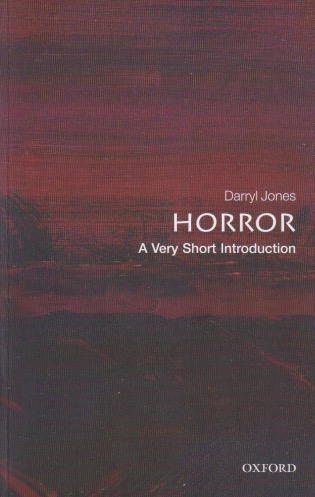
Some short books have an outsized punch.  Especially when dealing with a large topic such as “horror.”  This isn’t just horror movies, which could easily fill such a book, but also literature and other media as well.  Darryl Jones has proven himself on this topic before and this Very Short Introduction is a showcase of what is a fascinating genre.  I’ve read a number of books in this series and this stands out as one that works admirably within extreme limits—they are very short—in making good decisions about representative aspects in what is really a sprawling field of inquiry.  The introduction lays the task out well and I came away from each chapter feeling inspired.  Of course, not all of horror can be covered in less than 150 pages.  Some may find their favorite fear unaddressed, but they’ll learn something nevertheless.

In his first content chapter, Monsters, Jones focuses on vampires and zombies.  These are both forms of cannibals as they’re currently conceived, zombies being relative newcomers to most favored monster status.  His next chapter, on the occult and supernatural, takes on the Devil himself before addressing satanists, demons, and ghosts.  These are, of course, religious monsters.  Although Jones doesn’t dwell on that aspect, the close relationship is nevertheless evident.  For those of us who explore religion and horror this framing proves helpful.  It’s worth pausing here to consider how all of these entities overlap a bit.  As anyone familiar with ghost hunters knows, ghosts and demons may both be found haunted places, and the Devil is the head demon.  Of course, horror is a fiction genre but many people believe in these entities.  That brings religion and horror within the same room.

Body horror occupies the next chapter, and here werewolves come into the picture.  Other aspects of body horror are also discussed, but the painful transformation of the shapeshifter is prime territory.  Horror and the mind brings us to psychological thrillers and the gothic fear of madness.  The topic segues nicely into science, which the next chapter covers.  Not only science itself but the mad scientist.  Finally, the lengthy afterword looks at where horror has gone, and may be going, in the new millennium.  Something that struck me, and which brings this back into religion, is how frequently Darwin and evolution are mentioned.  This concept challenged the human place in the divine hierarchy and led to much of what we think of as horror.  This book is a great resource in a small package.


First Books

It was back in the day when I believed a book was the final word.  Remember those times?  (I have a suspicion that many Republicans really are longing for the days of simple answers: “Smith wrote it in History of Everything so it must be true,” and such.)  You’d read a book assigned in college and assume that since the author wrote a book s/he (but generally he, in my day) must be right.  If college really caught on, however, you’d start comparing sources.  Still, there was that one book that got you started thinking in a new way.  Back in the day when I believed a book was the final word I read J. Alberto Soggin’s Introduction to the Old Testament.  I remember the context well: Harrell Beck’s intro course at Boston University School of Theology.  We were given a list of texts and allowed to pick.  I chose Soggin.

Reading that book I realized for the first time that ancient Israel had borrowed from its even more ancient neighbors.  The fact that I’d attended Grove City College and majored in religion without ever having been introduced to the idea says volumes.  (Some parties, it seems, have always preferred to suppress information.)  I followed it up with Helmer Ringgren’s Israelite Religion.  I was hooked.  If we knew that there were ancient sources, and if we knew their languages and their cultures, why hadn’t it been obvious to the general public?  I started on a doctorate to uncover the truth since I couldn’t find courses on it at seminary.

We didn’t take many books with us to Edinburgh, but Ringgren was one.  By then I’d begun to realize that introductions weren’t really research books.  I spent my years digging deeper and deeper into ancient West Asian culture.  If it’d been possible I’d be there still.  Soggin and Ringgren, I realized by this point, were clearly biblical scholars, and not students of the specialized field that’s still called Ancient Near Eastern studies.  But still, their books had started something.  My copy of Soggin has followed the socks in the dryer, and I now realize the politics of introductory texts (if you believe it’s innocent you may be happier remaining in your bliss).  Still, I owe a debt of gratitude to those scholars who wrote in accessible words aimed at the novice.  Time has passed and nature has begun its own tonsure process, but this fallen monk has learned that many books are the only way of getting to the truth.


Better Things

It’s only a store brand, but still.  Maybe like me you remember opening a box of Raisin Bran and pouring out the first bowl.  And finding only bran.  Maybe a raisin or two.  By the time you munched your way to the bottom of the box you’d get a bonanza in that last bowlful.  It was more fruit than cereal.  Then they somehow figured out how to suspend raisins so that didn’t happen.  My mind hasn’t caught up yet, I guess.  I was down to the last bowl, and I was eagerly anticipating it.  Especially since the day before I’d only had three raisins and it was clear that the end was near.  Then the last bowl.  One raisin.  That’s a lot of bran to start your day, like C. S. Lewis’ always winter but never Christmas in Narnia.

Speaking strictly for myself, I like to save the best for last.  When I receive snacks in my Christmas stocking, I keep my favorites until all the others are gone.  In my personal myth of scarcity I’m quite aware that good things run out.  And they’re not always easily replaced.  Therefore I tend not to buy the things I like best.  This is the kind of psychology that drives economists mad.   As a child I was taught to put others’ needs before my own and that lesson has dovetailed with the running out of good things.  Of such things monasticism was made.  The raisins are now near the top of the box, but the crumbs are still on the bottom.

I often find breakfast to be the most philosophical of meals.  Perhaps it’s because I write my blog posts in the early morning.  Perhaps it’s because others are awake when I eat lunch and supper.  Perhaps it’s because that valuable things are rare.  It’s the nature of what we find most meaningful.  We live in a culture of largeness and acquisition.  What we truly want, however, may be very small indeed.  Ours is a culture of choice and plentifulness.  Raisin Bran is a choice, as is the store brand.  And it’s even possible to open the box at the bottom and return to my old form of expectation.  I doubt I will ever outgrow the idea, however, of trying to save the best for later.  It’s a form of optimism, after all.  And isn’t it best to start the day with the knowledge that better things are coming?


Reconnecting

Not using the internet for 48 hours isn’t the same as not being able to use the internet for that length of time.  Even politicians (who are notoriously slow at figuring out what people need) have started to make noises about this being an essential aspect of life.  Some (many) things you just can’t do without connectivity.  And during a pandemic taking an entire family to an enclosed space with free wifi (still a rarity) for over a full day so that they can get things done is an issue.  All of this has convinced me of the need to purchase a wifi hotspot, in addition to relying on what Astound Broadband (formerly RCN) is able to provide.  (You see, I’m in charge of a Sunday morning program at a local faith community.  I couldn’t even email anyone to let them know I wouldn’t be able to show up on Sunday without using costly data.)  Now that service has been restored, a kind of nervous normality has returned.

This has been a learning experience.  Of course we’ve got books to read.  I have papers, stories, and a next book to write.  None of those, ostensibly, uses the internet.  All of them do, however.  I’ve been conditioned to look things up on the web while I’m writing.  This is true of both fiction and non; a fact needs checking, a reference requires look-up, a thought occurs to you that has to be dealt with before you move on.  There’s an email you forgot to answer.  Etc.  Etc.  The web is our source of news (what’s happening with Ukraine?), our phonebook, our map, our encyclopedia.  Let’s face it—it’s an addiction.  But a necessary one.

Like many things, our government has the capacity to make internet access available, just like they could do our taxes for us and stop the madness of setting back clocks each year from Daylight Saving Time.  They could ensure universal health care.  They’re too busy “defending” a crumbling, pre-internet way of life and enriching themselves to actually enact any of these things.  And somebody would have to figure out what accountants would have to do if taxes weren’t an issue.  I strongly suspect people would still be willing to pay for more than basic internet connectivity.  But to have a basic signal out there that we could tap into without tapping out our data plans would be a real boon.  I found myself glancing at our neighbors’ houses all around and thinking, “They have internet.”  We pay a lot to have it too, but the only company in the Valley can’t guarantee access, especially on a weekend.  What have I learned?  The ascetics were onto something.

Photo by Nicolas Häns on Unsplash

Getting Your Goat

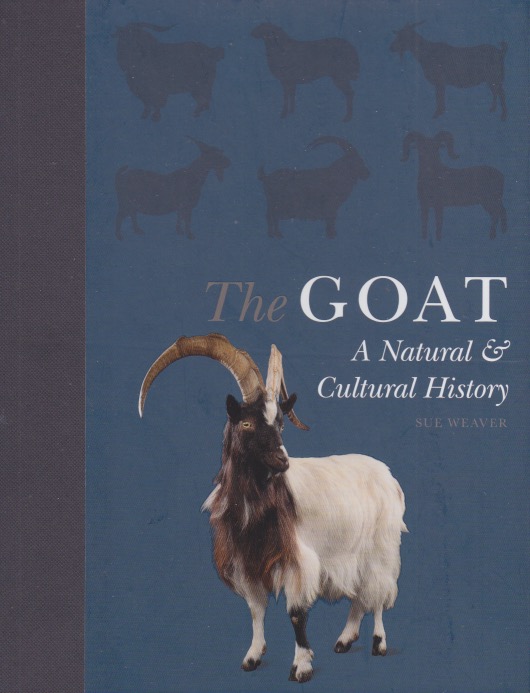
I have to confess to having known very little about goats.  Although one book does not an expert make, I still feel that I know quite a bit more now than when I started Sue Weaver’s masterful The Goat: A Natural and Cultural History.  I can’t convey it all to you here (that’s what the book is for), but I can offer a few highlights.  I do have to say that books that measure animals by the human exploitation of them tend to bother me a bit.  There’s something about reading how they make good pets but then they taste good too.  Especially since one of the takeaways is just how intelligent goats are.  I suspect even smart animals wouldn’t hang around if they knew their owners were licking their chops behind their backs.

Goats were very early among the domesticated species.  People do keep some breeds as pets, kind of like herbivorous dogs.  Goats require stimulation and tend to be playful and curious.  And they put up with humans quite well.  They climb.  You can find goats in trees in some locations since they do like to ascend whatever they can.  I remember seeing goats on the roof of a restaurant in Wisconsin (I can’t remember the name of the place, but I do recall the goats were supposed to be there).  Having not grown up on a farm I’ve never been too close to goats, but this book does make me interested in knowing more.

The book is heavily illustrated and it describes several varieties of goats as well as general goat physiology and behavior.  In fact, it answers that age-old question of how to tell the sheep from the goats.  Behaviorally they’re quite different, with goats being more individually minded and not always acting as a herd.  More individualistic, they nevertheless crave company.  And it is this difference between the sheep and the goats that starts to give the latter a bad name, perhaps because of their willfulness and individuality.  Goats are good followers, but on their own terms.  Sheep apparently don’t think much about it.  They follow any leader.  Historically, and unfortunately still, in some locations, goats have been preferred sacrificial animals.  Indeed, some gods, such as Pan, are portrayed with caprid qualities.  It is the intelligent, it seems, that are often targeted by the gods.  In any case, goats have long had associations with the divine in human minds.  And Weaver’s book parses goats in great detail.


Outernet

Once in a while (ahem), I interject a note of caution regarding technology.  This blog has been part of my daily routine for over a dozen years.  I try to post every day.  When I experience life outside I often think “that would make a good blog post.”  I make notes.  I ruminate.  One of the things I caution about is the fragility of tech.  In order for me to post these thoughts many different components have to work just right.  Not only that, but if I want to pay bills, or, more importantly, work so that I can pay bills, I have to have internet.  Everyone in my family uses it and they do so all day long.  This weekend is the long anticipated Project for Awesome (check it out at projectforawesome.com) sponsored by the Vlogbrothers, John and Hank Green.  If the names are familiar it’s perhaps because I’ve read and commented on their books.  Then the internet went out.

Late on Friday afternoon, of course.  Now we’ve had outages before—most recently after a power outage earlier in the week.  I called what used to be RCN, the only service provider in our area, only to be on the phone for half an hour with a tech.  She talked me through the usual rebooting and system checks.  The router was fine, but the only actual connection to the internet is via wifi mediated by a device called Eero.  There’s no ethernet cable (as if Apple laptops even have ethernet ports any more!), no phone line plug-in (ditto), nothing.  Nothing but Eero.  Apparently Eero had died.  And being a weekend a masked tech can’t be sent until Sunday afternoon.  So Friday night with no Disney Plus and Saturday without the long-anticipated Project for Awesome (you really should check it out).

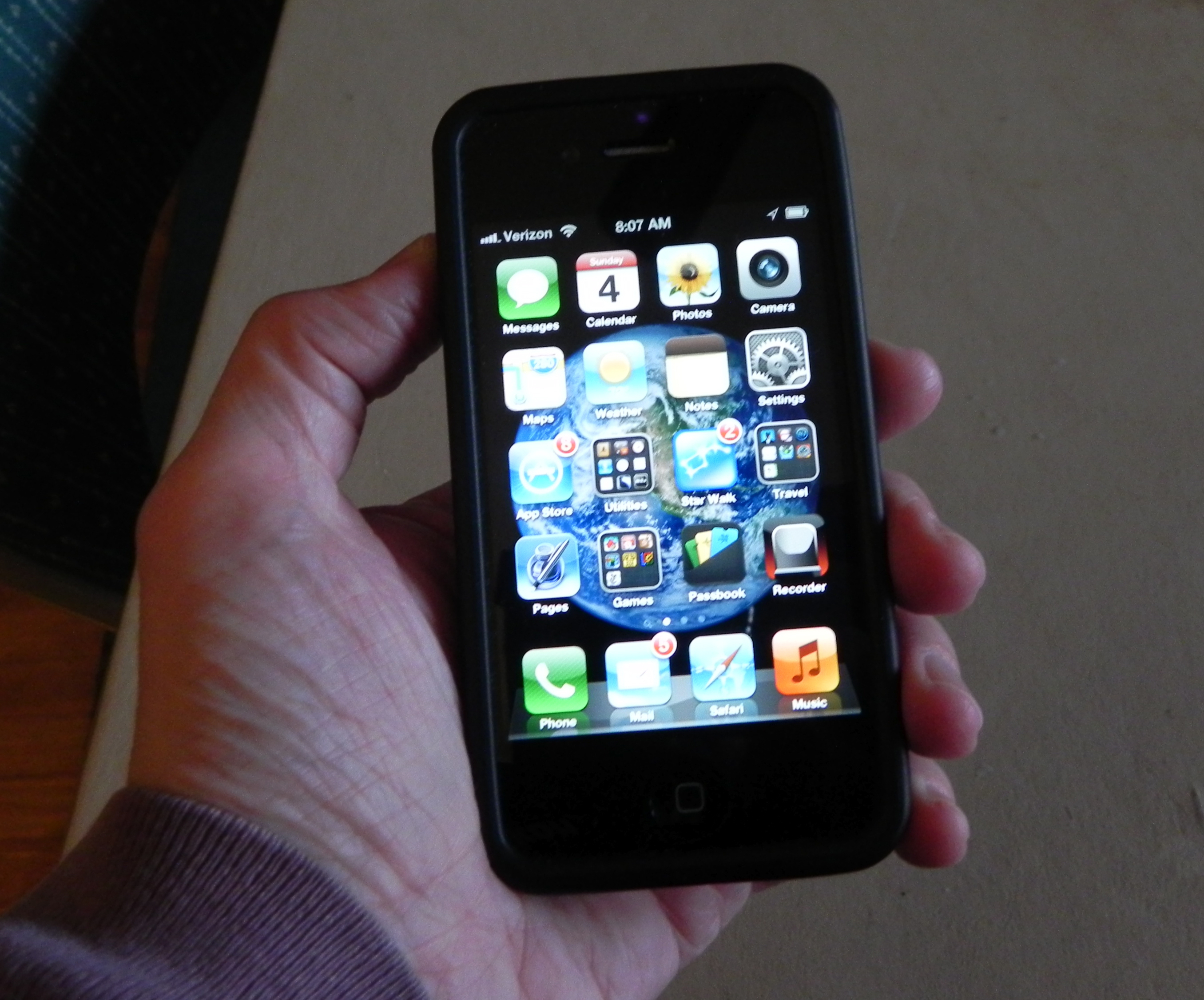
Then my wife noticed her phone could act as a wifi hotspot.  It felt like we were entering a new world of magic.  (And data bills.)  The laptop could covert the G4 that her iPhone could receive into wifi.  It wasn’t ideal, because we have three people who want to use the internet.  With old tech.  All because one component of RCN’s complex system has x’s for eyes.  We had to play Wordle through her phone.  Watch Project for Awesome (it supports charities!) through her phone.  I don’t know, maybe we are even breathing through her phone.  Once in a while I interject a note of caution regarding technology.  This blog post is brought to you by my wife’s phone, acting as an internet hotspot, before anyone else awakes this Saturday morning.

Ancient history!

Healing Borders

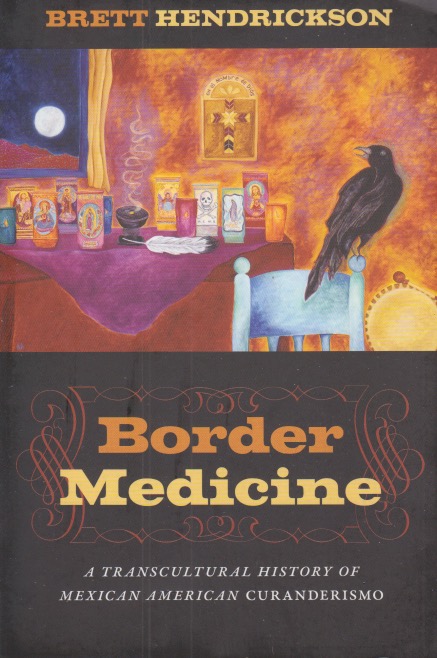
Sometimes you read a book that just gets your head buzzing.  Brett Hendrickson’s Border Medicine: A Transcultural History of Mexican American Curanderismo is one such book.  It brings together so many areas of fascination: healing based on different belief structures than scientific medicine, the role of community in avoiding cultural appropriation, and the cultural blending that takes place at all borders.  The myth of the “pure” has long created problems, particularly in the realm of religion.  Things blend.  They always have.  And this includes belief structures, faiths, religions.  This is most obvious at borders, which makes them very interesting places.  Officially we police them, wanting to keep what is “ours” and keep “them” out.  In reality we are blending with each other and that’s not a bad thing.

In much of educated society, it’s assumed that scientific medicine is the only valid kind.  There are those even among the schooled, however, who pray for the ill.  Curanderismo is a form of folk healing that involves cures that would be rejected out of hand by science.  In a materialist, chemical world, only this can heal that.  Curanderismo looks at things quite differently.  Its practitioners don’t charge an arm and a leg for their work.  They are extremely popular.  And they heal people.  This is part of what makes Hendrickson so wonderful to read—he doesn’t assume up front that this doesn’t work.  Some analysts treat this kind of thing from a perspective of cultural superiority, as if scientific medicine is the only real way to treat illness.  Cultures, however, can heal.

Culture is something we value because it makes us feel secure and comfortable.  We know what to expect.  We speak the language, know the conventions.  (It would help Democrats, I think, to realize that although we’re trying to dismantle xenophobia, it is still very much intact in most of the world.  People follow autocrats because they’re afraid.)  We all live near borders.  Our personal border may be the wall of our apartment or the front door to our house.  It may be the Protestant/Catholic next door (or Buddhist/Atheist/Muslim/Hindu/Agnostic).  It may be the middle class/working class person who lives across the street.  In one town in which I lived it was literally those on the other side of the railroad tracks.  We draw borders for protection, but what Hendrickson shows so clearly is that they can also be places of healing.  


Routine Interruptions

Ironically, having just written about routines, we experienced a power outage with a wind storm.  Sitting home of an evening, the lights in every occupied room began to flicker.  We grabbed flashlights, suspecting what would come next.  The power outage led to a temporary loss of the internet, the god of this age.  Routine was interrupted.  This brought to mind just how fragile all this is.  As supply-chain issues have demonstrated, everything has to work just right for our society to operate at expected standards.  And an internet outage leads to an interruption of routines.  Whenever this happens, it reminds me of how complex our lives have become.  And how unfair.  There are people across the world who struggle with daily necessities such as clean water, safe homes, and reliable sources of power.  And a wind storm in eastern Pennsylvania doesn’t mean that the company’s power in another state is out.  Does this mean I take a vacation day?

As this winter winds down I again lament the loss of snow days.  They were local holidays, of course, and based on the unpredictability of nature.  Our power outage, followed by internet outage, was a personal kind of snow day.  Nobody wanted it and we all planned to work today.  Other than the outage, we’re fine.  Just like a snow day.  There’s a feeling of helplessness to it.  To fix the internet we rely on someone who knows how to do such technical wizardry.  Anyone can stuff a rag in a hole in the window, but to replace the glass it takes an expert.  How do you contact them when the internet’s out?  (Of course, everything’s back on in time for work.)

No doubt, many aspects of our lives are better.  We can pay our bills without using a stamp.  We can look up basic information online.  Even attend religious services virtually.  (Who doesn’t want to linger in their pajamas on a Sunday morning?)  Yet, for all of this to happen our power must be on and steady.  Our internet connectivity must be strong.  We have to be able to connect to work so that we can be paid so that we can keep the power on.  It seems an odd way to spend our time.  Obviously, if you’re reading this they—that mysterious they—have got things working again.  The power is on so that I can type this, and the internet is connected so that I can post it.  And yet I don’t feel any more secure.  And I know I’m one of those who has it easy.


Routine Change

A certain type of mindset thrives in routine.  Perhaps you’ve noticed that these posts appear each day about the same time.  This happens because the routine states that work comes next and it will be largely the same day after day after day.  After work there’s also a pattern until I fall, exhausted, into bed.  Hit repeat.  In the midst of this routine change has crept.  Partly it’s the pandemic, but mostly it’s technology.  And spending habits.  People don’t buy academic books like they used to.  Overall books are booming—so much so that paper shortages aren’t uncommon.  In order to try to keep up with electronic lifestyles, publishers have to integrate the newest technology and to do that everyone has to learn far more tech than technique.  The pace of change is dizzying.

For those who thrive on routine, such rapid-fire alterations make it feel like we need a personal change manager.  “How do I do this now?”  The way we’d done it for years has suddenly shifted and it is only one of many moving parts.  Meanwhile, outside work, other aspects are shifting even as many people still survive without computers at all.  We’re left, those of us tied to routine, in a haze of uncertainty.  It’s like that dream where you’re driving and you can’t slow down but you can’t see out the windshield either.  To make it through we look for routine.  I type this posts on a laptop.  I prefer to write things out by hand, but there’s no time for that any more.  The routine has been broken and the shop that repairs it has gone out of business.

Perhaps this is a malady of those of us who look to the past.  Technological changes used to be measured in centuries, not seconds.  Ancients thought a spout on a jar was a pretty rad invention.  For a hundred years.  Maybe two.  Now if you don’t buy a new iPhone every couple of years you’re hopelessly outmoded.  What was my routine again?  I still awake at the same time and begin each day with writing.  I’ve learned to do it via laptop.  Then it’s to the work laptop where updates seem to be loaded daily and I’m the dog chasing that stick now.  I wonder whose vision we’re following?  Technology’s in charge now.  The rest of us mere humans should be able to get along, as long as we establish a routine of routine change.


Living Right

Horace Liveright had an outsized influence for his somewhat foreshortened years.  Initially a bond trader, he eventually moved into publishing where he founded the Modern Library as well as Boni and Liveright.  The Modern Library still exists, now as an imprint of Random House.  Liveright ceased publishing operations eventually, but the name was revived as an imprint of W. W. Norton.  There have been many publishing Wunderkindern, including Richard L. Simon, co-founder of Simon and Schuster (and father of Carly Simon), and the Scot William Collins whose name still appears in HarperCollins.  While reading about Liveright recently I learned that he also was responsible, in an unexpected way, for the development of the horror film.

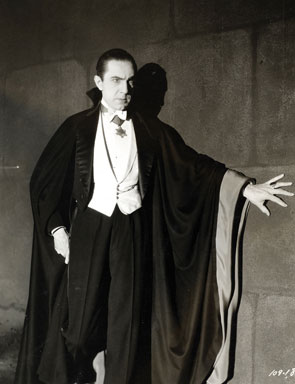
Liveright never worked in the film industry.  He did, however, work as a stage producer in New York in the 1920s.  Among his most successful works was a play titled Dracula.  It starred Bela Lugosi and Edward Van Sloan as Dracula and Abraham Van Helsing, respectively.  The success of the Broadway show caught the attention of Hollywood and Lugosi and Van Sloan were cast in the same roles in Tod Browning’s Dracula, widely considered to be the first horror film, released in 1931.  Van Sloan went on to appear in Frankenstein as well, and Lugosi reprised his Dracula character as well as several other monsters.  It’s possible, perhaps likely, that horror would’ve begun with some other entry into the genre, but as history stands Dracula, based on Liveright’s stage production, started the whole thing.

Unless we work in it, we tend not to think about publishing too much.  We don’t pay attention to the publisher of the book we’re reading, and who lingers over the copyright page?  Giving a thought to these details, however, often adds new stories to the ones between the covers.  A fellow editor is fond of saying that books are as much about the author’s story as they are about the story the author’s telling.  The press, for example, often focuses on the former.  Who is it that wrote this book and why?  The question may be extended further—what publisher took it on and how did they even get into the business of deciding what people will read?  The internet has democratized that quite a bit, of course, and some authors can become their own authorities by knowing how to handle it.  So I’m taking one such opportunity to highlight the work of a sometimes forgotten pioneer who nevertheless began a publishing venture from which we’ve all most likely read.  And he also helped created the horror movie.


Socks and Books

The other day I was thinking about my annotated copy of Friedrich Nietzsche’s Thus Spoke Zarathustra.  I read this in seminary and took notes in the margins.  It was part of my permanent collection.  After a couple of moves from Boston, finding myself in Illinois, I couldn’t find it.  Like socks in a dryer, it had simply vanished.  Socks, of course, sometimes fall out of a sweatshirt or some other garment some time later—a piece of clothing with which they shared the carnival ride of the tumble dry.  The book, however, stayed vanished.  I often wonder where it went.  Prior to Nashotah House, mostly my wife and I kept our books in boxes.  Even now with a house many of them are still in boxes.  But I’ve never knowingly left a book behind when vacating an apartment.  Where is Nietzsche?

Wherever he is, he’s not alone.  This has happened before.  While attending Edinburgh University it seemed like a good idea to get out a bit.  Travel is an excellent form of education.  My wife and I, both interested in history, joined Historic Scotland.  Membership came with a guidebook describing all the properties and we used this as a record of which sites we’d visited and when.  (We used to keep extensive travel diaries, but epic trips are few these days now that we’re no longer academics.)  In any case, when we moved back to the United States, that guidebook was a treasured possession.  Yes, we kept it with the other books but in those days they weren’t so many as they’ve become now.  When we were unpacking things in our apartment in Illinois, we noticed it was missing.

Our flat in Edinburgh was small—really only three rooms.  Nothing was left behind there.  Where, then, did our book go?  Where’s Nietzsche?  What other items have we lost that we haven’t discovered yet?  And where do the socks go when they’re lost in the dryer?  It’s almost enough to make me believe there are little wormholes scattered around our planet, particularly attracted to socks and books.  Well, phones, wallets, and car keys too, I suppose.  The biggest mystery, for me, is the books.  We’ve unpacked nearly all of them now that we have a house.  Those still in boxes have been taken out and returned, no box remains unopened.  Our Historic Scotland guide and Also Sprach Zarathustra aren’t among the books we have.  They’re out there with the many things we treasure and misplace over time.  Perhaps some day we’ll stumble upon that place and be amazed.


Whose Baby?

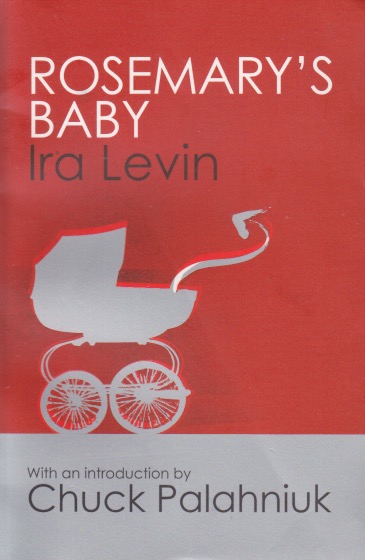
Some books are better known as movies.  I suspect that I, like many, saw the movie Rosemary’s Baby without ever reading the book.  It turns out that they’re very similar.  The book takes the action a few minutes beyond the end of the movie, but otherwise they’re quite close.  Reading a horror novel where you know everything that’s going to happen isn’t exactly the recipe for thrills and chills, but I’m nevertheless glad to have done it.  For a book published as long ago as it was (1967) it still isn’t easily found used.  New copies tend to be just as expensive as new books.  I just wanted to have a read to see if Roman Polanski stayed close to Ira Levin or not.

Levin had a string of successful novels, but Rosemary’s Baby is probably still his best known.  He is quoted as saying he didn’t believe in the Devil and felt guilty that his book (and movie) may have led to many people taking on that belief.  In many ways Polanski’s movie kicked off the age of modern horror, being released the same year as George Romero’s Night of the Living DeadRosemary, however, opened the door to horror with overt religious themes.  It paved the way for The Exorcist and The Omen.  The latter, written by David Seltzer, was another example of a movie based on the Devil by an author who didn’t believe in him.  Personal belief aside, that trinity of movies remade the horror scene and led to one of the strangest cooperations in cinematic history.

In the book versus movie scenario often there’s a clear winner.  On other occasions the movie is so powerfully made that it overshadows its novel.  Rosemary’s Baby, along with The Exorcist, tended to do so.  (The Omen was novelized from the screenplay by the screenwriter.)  I wonder if that might not be because religion pays right into cinematic representation.  The novels, after all, can take several days of reading on a normal workaday schedule.  The film, if well done, transports the viewer there for a couple of hours and leaves you feeling as if you’ve been through, in the case of Rosemary, a traumatic pregnancy.  It so happened that the unholy trinity of religious horror tapped into that rapt storytelling of which celluloid proves so capable a medium.  Still, reading the novel fills in many of the gaps and brings to mind the benefits of the written word.  And this is, like a birth, something to be celebrated.