Mind Your Manna

Foodies have gained a respectable place among the ranks of social critics. Major newspapers and many, many websites tell us how to eat better. Eat healthier, or with more style, or more adventure. Our intricately interconnected world has made obscure ingredients fairly easily found and since we no longer rely on what can grow around here, the enjoyment of food has become a source of quasi-religious meaning for some. What was once a basic biological necessity has become a valued source of culture. We can tell a lot about a person by what they eat.

Like many average people, we shop in the more reasonably priced supermarket near us. We don’t make much money and why pay more for what you can get for less? Over the holiday weekend we bucked the trend and went to Whole Foods as a kind of holiday treat. We had a gift card and we hadn’t been to a Whole Foods since a friend introduced us to the chain in Madison, Wisconsin. We remembered that it was aligned with our ideals: sustainability, simplicity, and the desire to live well. Also, it is very expensive. Like most healthy options in our culture, they’re not really affordable to those of modest means. Still, the store was crowded. To be fair, this is down by Princeton where quite a few well-heeled New Jerseyans reside. The store was welcoming with less crass capitalistic drives to purchase more, but despite its organic feel, it was very much a grocery store like any other. Most familiar brands are missing since what we normally eat is processed to the point of filler, but the hidden foodie in us all appreciates the nutrients nature has co-evolved along with our taste. It seemed like the place for an epiphany.

IMG_2480 copy

Then I spied Burning Bush hot sauce. “Sets the soul afire,” the bottle proclaimed. Quite apart from demonstrating the relevance the Bible still has, this sauce had religious implications. If a hot sauce can hand down commandments, it is a powerful comestible indeed. I have to admit that I’m not a real fan of hot sauces. My taste in foods is pretty simple, if vegetarian. Nevertheless Moses doesn’t stand alone among biblical figures who spice up our food. On a brief layover in Phoenix I spied a whole rack of hot sauce, some bottles suggesting that the heat came from the very nemesis of the burning bush. Hell seems to be another favorite location to be trumpeted by the painful food connoisseur. When we want to claim the extremes, in terms of food, we turn to either Heaven or Hell. William Blake would’ve appreciated this irony. As for me, taking my commandments with mild salsa is just fine. Anything more than this would seem to be a sin.

IMG_2396


Weathering Academia

Come the end of September, I’m scheduled to give a talk at Rutgers Presbyterian Church in New York City. I’m personally very flattered by this because, as it has become clear to me, an academic without a post is mute. I’ve seen colleagues who teach at schools I’ve never heard of consulted by the media—and there is obviously more to it than this—because they have teaching positions. Those of us who used to be professors apparently forgot everything when we take jobs out of necessity. That’s why I’m so flattered. My talk will be on the larger issues behind my book, Weathering the Psalms. I never expected this book to be a bestseller. I knew that it was, in some sense, incomplete. Academic books are the kinds of things you write when you have an academic post. When your day is not programmed with “enter this data, follow up on that book, and when you have time, get other people to write books.” People, of course, with university posts. The rest of us know not whereof we speak.

It’s funny. Back when I was teaching, even if it was only at Nashotah House, I used to be asked to give little talks all the time. It was rare for a year to pass without someone asking me to lead a seminar or share what I’d learned with some august body. That tapered off once I became an adjunct, although a Presbyterian Church in Princeton once invited me to speak because I was teaching at Rutgers (the university). And as I prepare my talk in my free time, I wonder about a society so tied up with name prestige that someone who has something interesting to say is just a crackpot unless a college or university or seminary or think-tank hires them. There are many of us—hundreds, if not thousands—who know as much as our university colleagues about a topic. An individual doesn’t have a name big enough to flash around, so we don’t get asked to share. Keep your hand down and your head down on the desk, please.

IMG_2416

In any case, it has been good for me to come back to the weather and think through some of the larger implications. I’d just had the book declined by a big name academic press when Nashotah House terminated my position. For many years I couldn’t look at the manuscript since it seemed a symbol of my failure. No, the book isn’t everything that it could be, but there is some good information there. The larger implications are actually of some importance here. The weather is studied both by science and by religion. Both understand aspects of it that the other misses. I’m looking forward to exploring this with the good folks of Rutgers Presbyterian who were kind enough to invite a guy with nothing more than a book and an obscure name to come and talk about something that most academic colleagues just don’t notice.


What I Meant to Say

XML. CSS.  Abstracting.  Separating content and meaning.  Sounds kind of scary to me.  As a would-be writer, plodding my way through what used to be the humanities, I’m sometimes frightened when I hear techies talk about where publishing “has to go” to remain “competitive.”  Since technology drives industry these days, we all need to bow before the image with a head of gold.  What you write on the page has to be edited to make it say what you meant it to say.  Then the meaning has to be excised and converted into XML, because that’s the way ebooks like it.  Page numbers are an artifact, and if your device can’t find the phrase you half remember, don’t go looking for an index.  You see, XML files don’t have pages—they’re just an illusion caused by the limited size of paper.  The meaning lies in the stripped, naked, and shivering content.  Or meaning.  Or something.
 
So goes the brave new world of publishing.  We live in the days of inferred information and bowdlerization in inscrutable acrostics.  I’ve actually heard techies say, “we need to teach authors to produce what we need.”  Have you ever seen a dog wag so fast?  Or a tale hold so perfectly still?  What do I mean?  Ask an expert.
 
IMG_2359

The blank page of actual paper used to terrorize many a student.  There are few things so transcendent to me as a new, unused Moleskine.  The very blankness of the pages is like unto the whiteness of Heaven.  This is a place where thoughts can roam free, and I can feel the thoughts coursing from my brain to my fingers as the pen traces paths never before seen.  As this blog attests, my writing does not draw the countless masses.  The vast majority of it written on paper will never be seen by another human being.  Thoughts are captured there, mid-flight.  They’ve never been tamed or tagged or abstracted from their meaning.  In the mind of some, I must suppose, that means they really mean nothing.  When I hold them, however, which I can never do with an XML file, I know that some things are simply too important to convert to what someone else declares they must be.


Hello, I’m Not In

I recently received two “out of office” replies to my own “out of office” message. Being a fan of futility in all forms, this struck me as a great paradigm for the modern age. Email has made vacation superfluous, of course. I was actually out of town moving my daughter back to college, so email was not high on my list of priorities. When I’ve tried to leave work without putting on a message explaining that I’m not there (I tend to respond to emails quickly for an editor, so I’m told) I’ve been politely informed that it is rude not to let people know you’re away. Or computers. My non-message prompted a non-messages from other vacationers’ email accounts, and when I returned, I had to read them as well as the original email that had received my impersonal reply. Both had sent their replies, despite their out of office messages. This is indeed a brave new world.

It is a world where human interaction is optional, at best. Our industry grinds away making devices and services that people will buy with electronic money sent over a network that no one really controls. And we think nothing of it. Business has blinded us to how meaningless humanity has become. Business runs for business’s sake. Even so, we’re asked to check our email when we’re on vacation, in case something important comes up. I used to think vacation was important. It is the sop we’re thrown for working jobs that lack the visceral appeal of growing our own food and relying upon ourselves. Thoreau on the web.

Benjamin_D._Maxham_-_Henry_David_Thoreau_-_Restored

Science fiction is the great predictor of where we might go. Most of it is completely fiction, or course, but some manages to catch glimpses of the truth. Skynet, or even the Matrix or Hal, have sent messages to us. Machines that think are devices we don’t understand. We haven’t even defined consciousness to a level that satisfies anyone. We know it because we feel it. Oh, I’m not really an alarmist about all that. I do wonder, however, where we are headed when technology races ahead while the humanities are disparaged. All those who emulate Spock seem to have forgotten that his appeal is that he’s half human. We build our aliens to specification. And they now pass polite greetings when they speed past each other on the cyber-highway with no laws.


Rainbow Disconnection

The scene can be quite dramatic. A zoom out from a dead or dying Christian martyr as the moving music swells. There’s a sense of poignant heaven in the air as a human being breathes his or her last, lapsing into the hands of an unseen, waiting father. That’s a kind of typical ending to the particular genre of a martyr movie. We’re left feeling sad but somewhat inspired that someone cared so much that they would give up their very life for their belief. I can see the scenes already building as Kim Davis goes to jail for contempt of court. Davis is the Rowan County clerk in Kentucky who refuses to issue marriage licenses to homosexual couples. Although her action violates federal law, she has her conscience for a pillow at night. All she has to do is spend a day in jail before she will become a martyr/cause célèbre for the religious right. I’m sure it’s already started.

Jean-Léon_Gérôme_-_The_Christian_Martyrs'_Last_Prayer_-_Walters_37113

I don’t believe anyone should be made to go against their conscience. I also believe that if you’re an elected official being paid a tax-payer’s salary of $80,000 a year, that you should do your job. I’m sure the case isn’t so simple as all that, but as someone who’s never made anywhere near that much money, I could see myself easily stepping down if asked to do something that I just could not, in good faith, do. Most of us spend our lives compromising a bit here and there when our employment pushes us in directions we feel uncomfortable going. Nobody would consider us spineless for trying to hold onto tenuous jobs in an economy that seems to be endlessly faltering as the wealthy suck up more and more of the free cash. We do what we have to do. Go to confession at the end of the day and live to die another day. The evangelical, however, has a soft spot for martyrs.

Historians tell us that early Christians were probably not killed off as radically as the early records suggest. It seems the numbers might have been exaggerated to make a point. No doubt, many did die, and some in very gruesome ways, but they faced an unspeakable compromise—to deny the creator of the universe and burn in Hell forever. Issuing a license to a couple whose right to marry you question doesn’t seem to fall into the same category. Standing before the great golden throne your defense would easily be, “it was my job. I couldn’t quit because I needed all that money.” If there’s another viable source of income, the argument becomes spurious. I’m sure there are those in Rowan County who feel they’ve got a hero in their jail. The rest of us just get dressed and go to do the job we’re paid to do.


Without Precedent

Leonard Pitts Jr. is a national treasure. So many of his Op-Eds make such unwavering good sense that it is difficult to believe he’s not a household name. His recent piece in the Miami Herald concerning Jimmy Carter’s announcement that he has cancer is a case in point. Many reporters would be quick to point to the tragedy since, although the Carter administration is generally undervalued, nobody would ever say that Carter is less than a true gentleman. Pitts, however, takes us deeper. He looks at this understated announcement in terms of faith. Faith, as he points out, in a world where it has taken on an unsavory, if not downright evil, flavor. We do indeed hear about faith that moves mountains, but it is with the power of fully fueled passenger jets. We hear about the faith that builds mega-churches while the homeless and hungry sleep in the city streets. Pitts is quite right, our faith requires a shot in the arm.

JimmyCarterPortrait2

I sometimes wonder how we have come so far down what seems to be obviously the wrong road. Our religion has become a charade and it is used for people to get what they really want rather than to make the world a better place. I always thought true religion was putting others before yourself. Nothing like working in Manhattan to show you how totally off-base such sentiments might be. Jesus can sell books, but his teaching is definitely passé. Yesterday. Old-school (but not in the good way). We have faith in money because immortality, or at least the antidote for mortality, is readily for sale. There’s one born every second. This, we are told, is what gives life meaning.

Of the presidents who’ve retired, we generally hear very little. They sequester themselves and write their memoirs to gain even more money for themselves. Carter has been known to be out there building houses for the poor, living what presidents all say they believe when they ask us to cast our votes in their direction. I’ve always been proud that the first president I ever voted for was Carter. Of course, it was in the beginning of those recent Dark Ages known as the Reagan Administration, and I had voted for the underdog. My faith in the political system has been severely challenged since then. I have seen stolen elections treated as legitimate by those who can’t possibly do too much for themselves. And I remembered my first lowly vote given for a man who, perhaps more than any other, showed Americans their misplaced faith after he had been denied a second term in office. Although Pitts doesn’t say it, I can see it in his pen: the first shall be last, and the last shall be first.


Something Lost

LosingMyReligion“Losing my religion,” I learned some time ago, means “going crazy” in some regions. It was that REM song that made me look it up. Losing My Religion, by William Lobdell, is much more literal. Having a hunger for spiritual memoirs, even if they end up with non-belief, has become an avocation for me. Growing up religious and having paid a pretty steep price for it throughout my career, I feel a bit like I’ve just risen from the analyst’s couch after a particularly helpful session. Here are people baring their innermost selves, trying to make sense out of a world that doesn’t add up. So it was for Lobdell. Since he was a religion reporter for the Los Angeles Times, his is the compelling story of a specialist who’s seen through the veil. His honesty is disarming. When I read such memoirs the question in the back of my mind is always, “what did it?” What pushed a believer over the edge?

By far the majority of these confessions I’ve read are those of women. Since religions have historically treated women poorly, it stands to reason that they might have second thoughts about what they’re being saved from. Lobdell, on the other hand, narrates what brought him to Christianity in the first place, and what forced him to conclude that it was wrong. Going the well-worn path from evangelical to mainstream Protestant to Catholic, he was seeking greater depth at each stage. Then theodicy. Theodicy is a god-killer. No matter how we frame it, there is no acceptable reason for good people to suffer needlessly. Out primate brains simply reject it. That’s not to say that for some faith can’t overcome such persistent doubts. It’s always a struggle, however, and, as Lobdell points out, not everyone is capable of believing what their mind tells them makes no sense.

One thing that stands out from all the spiritual memoirs I’ve read is how religion has such a difficult time explaining suffering. I suppose here’s where eastern religions generally have a stronger starting point. By acknowledging that life is suffering, they ask what we can do about it. Western religions, which often extol the good life, run into problems when theodicy hits. It’s almost as if the concepts can’t keep up with the realities of day-to-day life. Religions are often part of the culture you inherit, being born where and when you are. They also reflect belief structures from the age in which they emerged and those structures evolve over time. Today’s Christianity shares ancient concepts with the first century, but also modern sensibilities about psychology, culture, and philosophy. It can be a difficult mix, not least because it’s artificial and synthetic. As Lobdell notes, he isn’t alone in all this. It is, I might suggest, one of the reasons that studying religion is so important, even for those who do not believe.


To Whom It May Concern

Everything we do is an investment in the future. Some times it’s intentional, and other times it’s purely accidental. My wife sent me a CNN story about what might be the oldest message in a bottle ever found. It’s difficult to conceive an idea more romantic than the lonely castaway throwing a message in a bottle into the sea, hoping for rescue. The size of the oceans make any such chance qualitatively smaller than the smallest possible needle in the largest possible haystack. The sheer volume of the oceans is among the most mind-boggling quantities on earth. The chances of finding a single bottle in the blue is practically nil. Still, the message in the bottle is an investment in the future. We hope it will be found, despite the odds.

This particular bottle, although of some scientific value, is the least of the romantic kind. George Parker Bidder III, a third-generation scientist, dropped about a thousand bottles into the sea to study deep ocean currents. This was more than a century ago. Those finding the bottles were instructed to send the message back to Bidder, now long dead, so that he might enter the data in his notes. Bidder died in 1954, and one of his bottles was just recently found in Germany. Here is a case of a man writing to himself beyond the grave. Could he ever have imagined that six decades after his death a sample of his work would be found? For those who’ve labored only to be forgotten in their own lifetimes, this is like finding a genie in a bottle. We want to believe our lives have made a difference. For most of us, we go through our daily chores never really sure that any more than a handful of people care, and most of them only care if it is earning something for the company. Others stand on the shore and throw bottles into the sea.

The Bible has positive words to say about casting your bread upon the waters. Indeed, it will come back to you, we’re told, in a time of need. This is a metaphor, of course. It is all about investing in the future. When it comes to money, this doesn’t often work. Some people are fortunate in their investments, but many are not. Bidder wanted to know about deep water currents. This bottle would have told him something about them, but he isn’t here to receive the news. Instead he is being heralded as someone who deserves to be in the Guinness Book of World Records. Maybe not a scientist’s first choice of memorials, but an investment is an investment. More people will read about world records than will ever find a message in a bottle, no matter how metaphorical.

Casting bread on the water, New York style

Casting bread on the water, New York style


Buying the Kingdom

Who doesn’t admire the presidential wannabe who can take a personal hit without flinching? We are, after all, a nation of tough-minded individualists who think they know quite a lot about God and the way the universe works. So Donald Trump has been, according to Steve Benen on MSNBC, been saying the Bible is his favorite book. As Benen notes, when asked to point to some specifics, the ultra-rich contender prevaricates, recently saying that of the Testaments, he liked both equally. I wonder which verses are really his favorites? I’m guessing Proverbs 11.28 must be among them: “He that trusteth in his riches shall fall; but the righteous shall flourish as a branch.” Or 28.22, “He that hasteth to be rich hath an evil eye, and considereth not that poverty shall come upon him.” Or maybe Ecclesiastes 10.6, “Folly is set in great dignity, and the rich sit in low place.” It could be that the New Testament has a slight edge over the Old. “Then said Jesus unto his disciples, Verily I say unto you, That a rich man shall hardly enter into the kingdom of heaven,” (Matthew 19.23) must be right up there. Or Luke 6.24, “But woe unto you that are rich! for ye have received your consolation.” Maybe James 5.1, “Go to now, ye rich men, weep and howl for your miseries that shall come upon you.”

Actually, a near constant vexation to those who try to take the Bible seriously is it’s refusal to take one position on wealth. Written by many people over hundreds of years, it is clear no single viewpoint emerges. Wealth is considered both a blessing and a curse. One thing, however, that the Bible refuses to countenance is the presence of great wealth while poverty still exists. Those who have riches are expected to make sure everyone has enough before enjoying their surplus. Who among the one percent, no matter how much they claim to give away, can ever honestly claim the Bible as their favorite book? There are places where the rich are let off easy, but they are few. Wealth corrupts, and those who have riches in great abundance don’t come off looking good. Still, you can’t be a presidential candidate without the Bible. And money.

I can think of no better use of the Bible as an iconic book than Trump’s claims to valuing it as his favorite, if private, book. This is a Bible containing no words. It is a hollow leather shell that can be used to buy votes—spiritual currency of the highest market value. When is the last time someone could be a non-religious candidate for the highest office in the land? If you can buy your way into the White House, you can surely buy it into Heaven as well. Every god has his price. If I were a rich man running for the presidency, I’d put my money in needles. If I were a literalist, I’d have one cast so large that I could easily walk through. This would be my best chance to inherit every possible kingdom through the use of money.

IMG_0322


Dog in a Manger

I’m easily amused. I suppose I never outgrew that sophomoric fascination with the little things that seem like big jokes. The other day, for instance, I was given a copy of the Chronicle of Higher Education to read. The supplement featured Great Colleges to Work For; what are we supposed to do with that? None of them have jobs, so why advertise? It’s so funny when those who have a great thing going advertise it, even though there’s nothing to it beyond bragging rights. Those of us who’ve tried repeatedly to get into higher education (and I even succeeded for nearly two decades, in some measure) would love to take a job at even the worst college to work for, but they’re not hiring either. Nobody is. So why does the Chronicle want to remind us that the fruit will always be just out of reach, and that the water will be just too low to sip—even if we’re bathing in it?

IMG_2417

The frustration that settles in when the laughter dies off is because everyone I know agrees that I should be teaching. Colleagues, tenured and not, former students, friends. “Why aren’t you a professor?” they say. Many of my best friends are. Full professors. Sabbaticals. Grants. Time that’s not spent on the bus or in the office. Perks of every sort. Ask them. Or ask the Chronicle. I can’t reach the grapes, but they’re probably sour anyway. I mean, I can’t help it that I spend hours on faculty webpages and see those who made the cut not writing the books I have like jets in a holding pattern over Newark. How can the get written when time is he one thing I haven’t got? (Oh, and money too, but you don’t need so much of that to write.) Any one of those Great Colleges to Work For appear on the advertisement pages? Anyone hiring a warmed over religion professor who reads a hundred books a year? Nah!

Just joshin’ ya. I poke fun at higher education like you can only tease a lover. I’m into exercises of nihilism as much as the next prof. Didn’t old Ecclesiastes say it centuries ago: learning is a zero-sum game? So the academic vehicle that doesn’t boost the number of jobs offered will continue to tell us where we should work, if there were any jobs. Perhaps professors of privilege demand more than I think. Just give me a classroom and a syllabus to teach her by. I’ve done so in very primitive conditions at a college that make no marks on the “Best of” scale. Real world experience, however, doesn’t count. We’re only telling you what you can’t have anyway. Isn’t that better than where you work now?


Interstices

College move-in weekend can be a stressful time. In our particular case it means crossing a couple of state lines and staying in a hotel. Well, I suppose we technically might manage to load, drive, unload, and drive in a day but that seems awfully abrupt. You need time to shop for those supplies that might have run out, wait for roommates to arrive, and spend the last quality time together before facing an empty nest for four months. So we find ourselves in a hotel. It’s the one closest to the university, but it is also the host to some kind of event that draws a lot of people but fails to make internet event calendars. We usually stay at this hotel, and they even emailed us at the start of summer to make reservations early. The clientele this weekend is a cross-section of town and gown. It’s a mixed group. In the hall I see other students about, but there are those here who’ve come for non-academic entertainment, whatever that might be.

The barking started about 6 p.m. I grew up with dogs and most members of my family still have dogs. In fact, evidence points to the dog—the wolf at the time—being the first of the domesticated animals. Before agriculturalists rounded up sheep and goats and cattle, the dog accompanied the hunter-gatherer and both engaged in a win-win scenario. The successful hunt of a large animal left food for both humans and their best friend. Ironically for dog-owning anti-evolutionists, dogs are among the most selectively bred of animals. Looking at a pug, or a maltingese, it’s difficult to conjure up images of the wolf pack. The dog next door, obviously lonely and abandoned, was the small, yippy sort with a high-pitched, insistent bark. It was clear there was more than one in there. And, of course, hotel doors are about the least soundproofed surfaces on the planet. It was like Fifi and company was in the room with us. When I turned in about 10, the barking was still going on, and the front desk said they were trying to locate the guests registered for that room.

What's that shining?

What’s that shining?

I grew up with dogs, and I understand the attachment. I do, however, sometimes wonder about the courtesy of others. Some actions impact other people in direct ways, and sometimes we just don’t think of the consequences. I don’t just mean dogs. Lying awake, listening to distraught pets, I thought of the point of higher education. It is an “industry” in which I have a strong investment. The point of it all is to make our life together on this planet better for everyone. There will always be those who can’t travel without their dogs. There will always be those who have to venture far from home to get the education they want. Can’t there be affordable hotels with doors to dampen the noise just a little bit? Or maybe some of us a just over-sensitive at times like this. Maybe it’s time for me to go back to school to try to figure it all out.


The Fall

“Herr, es ist Zeit. Der Sommer war sehr gross,” go the opening words of Rainer Maria Rilke’s 1902 poem, “Herbsttag.” Autumn day. “Lord,” one might feebly translate, “it is time. The summer was very great.” The English words fail to capture the lyricism of the Teutonic original, but these words have been running through my head since about the middle of August when, standing outside before dawn waiting for the bus, some days, I think a jacket might be nice. Just a light jacket. Something to cover the parts of my arms not protected by a tee-shirt. And I realize, although autumn has always been my favorite time of year, it cannot come without a sense of loss. I’m no summer beach fan. Most of the time when I wander to the ocean it has already taken on its gray fall coat. But still, the passing of summer is sad, always sad.

At the National Watch and Clock Museum, we learn that Galileo, often presented as the antagonist of the church. got his idea for the pendulum from watching church lanterns sway from their chains. Time was passing, but it was “God’s time.” The growing season ends, and the harvest is at hand. Our children head reluctantly back to school after too few months of unstructured time. Time when sleep is abundant and the sunshine lasts long into the night. Adulthood robs us, perhaps, of such finery, but I can still appreciate it from a distance. Were I more mature, I might even say it is of greater significance for being further away. I’m a little too young, however, to have forgotten how summer can make me feel. I adore the autumn, but I miss the sun nevertheless.

IMG_2451

Here in that transition between hot, endless days and the chill release of Halloween, I find myself contemplating the religious nature of time. “If I could save time in a bottle,” Jim Croce wrote, and then his plane crashed on take-off. Time is like that. It promises eternity but gives mere seconds. Apart from the beach bums pining for endless summer, those of us enamored of autumn stand still and reflect on the cusp of seasonal change. Perhaps, like the year itself, this is all a cycle. The face looking back at me from the mirror has more gray hair than I remember growing. And yet the clock on the wall continues to tick. Work will always be waiting there on Monday morning, and the sun can reach quite as high in the sky as it did only last month. “Herr,” I sigh, “es ist Zeit.”


Teaching Vampires

VampireLecturesWhat do you get when you cross German literature, psychology, and the undead? The Vampire Lectures, of course. Laurence A. Rickels, one gets the feeling, must be one interesting guy in the classroom. When I was a student the thought that anyone would take vampires seriously enough to offer college credit to study them was, well, a foreign concept. We all know that there’s no such thing as vampires, or werewolves, or Frankenstein’s monsters, or mummies—wait, mummies are real, but just not animated. In the reigning cultural paradigm, if something’s not real, it’s a waste of time. The human psyche, however, disagrees. The fact is there’s an awful lot of mental baggage that the vampire addresses. So much so that the University of California at Santa Barbara can offer a twenty-six lecture course on the topic. The results are what we have in this unusual book.

Rickels has read widely in the literature of the undead. The vampire’s share of the material goes to Bram Stoker’s Dracula, the novel that defined, in many ways, the modern concept of vampires. The lectures do cover earlier and later literary representations, but when movies began to be made, they started with Stoker. One of the most interesting aspects of the lectures is the utter breadth of movies Rickels addresses. Movies that I’d never heard anyone else mention, let alone analyze, are here, alongside the more famous examples. It becomes clear that vampires have been a favorite of film-makers as well as readers. Culturally they are omnipresent. One gets the impression that Rickels might have an inkling of why we have this fascination, although his analysis is often Freudian, he does come back to the concept of mourning. Vampires (who would’ve guessed?) mask our unresolved sense of loss.

The style of The Vampire Lectures reflects the kind of literary criticism that isn’t always easy to follow. The book has more puns per hour than any other academic title I’ve ever read. Perhaps such serious topics as loss, parental relationships, and sexuality require a good dose of humor to make them less overwhelming. Still, the puns show the shifting nature of the ground beneath your feet when you try to take a topic like this seriously. Not surprisingly, Rickels does spent some time reflecting on the religious nature of vampires. There’s no question that monsters trespass on—or maybe even arise from—sacred precincts. They also occupy similar mental spaces. Perhaps it’s no surprise that as the number of nones grows so do the fans of monsterdom. We need an outlet for our surfeit of fear and loss. Come to think of it, perhaps I need to take a class in this as well.


Monumental Time

One of my nieces works on the 10,000-year clock (aka Clock of the Long Now). I’ve written about the project before—the object is to build a clock that will run a myriad of years. For comparison, 10,000 years ago we were only beginning to tamper with this concept we call civilization. Clocks have been my muse this week. Monumental clocks have long fascinated people. The Engle Clock, in the National Watch and Clock Museum, was completed about 1878. In those days, these large clocks (it literally weighs half a ton) toured the country as technological marvels—something that fails to impress, I suppose, in an iWatch age. Nevertheless, this is a clock with all the whistles and bells—literally. Figures come marching out at various fractions of the hour, culminating with a skeletal death chiming the end of each sixty minutes. The figures are both secular and sacred, a mix that the people of the days just after the Civil War no doubt appreciated.

IMG_2464

At the top of the clock, at quarter to the hour, Jesus appears. Doors above him open and the “three Marys,” including, of course, his mother, come out. Meanwhile the twelve disciples process in front of their Lord, each respectfully turning toward him. The devil appears, shifting from window to window, and one disciple does not turn to greet Jesus. This is Peter who instead turns his back, and immediately, to borrow a Gospel trope, the cock above their heads crows. Finally, as the apostolic procession winds down, the Devil appears last in line. It is all quite elaborate. The clock took Stephen Engle two decades to build—time he would never recover. The religious message, I suspect, was taken much more seriously then than it is now. After all, the clock is a museum piece.

Throughout the museum, references to Christianity abound. Not only Galileo, but many Medieval time-watchers saw God literally in the face of time. Clocks were embossed with religious figures. Hours were kept to remind the faithful to pray. The time, as the New Testament insists, was short. Ironically, we still build monumental clocks. Some are based on the 9-billionth of a second vibration period of cesium, while others are made to last ten millennia. We have secularized time. Now its purpose is mainly to tell us when to go to work. When to wake up to go to work. And when we might eventually leave work. I might enjoy building clocks myself. The fact is, however, I don’t have that kind of time.


More Blessed to Give

Religions, we are told, are in violent opposition. There’s no denying that sometimes it’s true. It is a sad commentary on belief structures when one way of looking at the world only finds validation in the destruction of other perspectives. Despite all that, religions can, and do, reach beyond their parochial interest to assist others. Recently I mentioned a story in The Christian Century of an Islamic effort to raise funds to rebuild vandalized black churches in the US south. The idea of Muslims helping Christians reestablish their, by nature, heterodox teaching is, I believe, newsworthy. The most recent issue of The Christian Century has a story of a Jewish group in Israel raising funds to help repair a damaged church in the Holy Land. These two stories have made me wonder why we so seldom hear of Christian groups raising funds to help rebuild mosques or synagogues. Surely it must happen, but we, who rely on the mainstream media, so rarely read of Christians helping others that it becomes a surprise when they do. Is this reality or just what we’re taught to see?

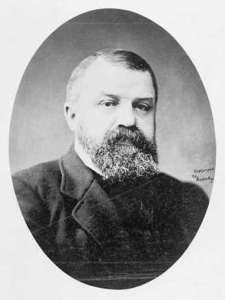
Please don’t misunderstand—I’m not suggesting that Christians don’t help others. Indeed, one of the founding principles of the Christian movement was the care of others, be they pagan or orthodox. Still, in my own life I’ve experienced the heartless, cold treatment doled out by “conservative” groups who believe that maintaining their idiosyncratic view is the highest possible mark of faith. Well beyond reaching out a hand to those in need. Far and above the care of fellow human beings. This distortion of any kind of historical Christianity has become what the mainstream media presents as normal. Meanwhile, millions still attend church every week, trying, in some measure, to make the world a better place.

Carnegie-1903

This isn’t the same, all politics aside, as supporting Israel as a nation. Many Fundamentalist groups do. In fact, they insist that our national budget include aid for Israel. Not because they particularly care about the Jews. In some viewpoints, the end of the world cannot come without Israel regaining a status that some read into obscure Gospel passages and the book of Revelation. This is not the same as donating to rebuild a torched synagogue. It is worlds away from restoring a vandalized mosque. It is naive to suppose that there is one normative Christianity. Historians inform us that such a monolithic entity never has existed. Temples, synagogues, churches, mosques—these are all expressions of the deepest of human longings to find and be in communion with that which is beyond the everyday. Any religion can become radicalized. All, however, also have the potential to look beyond themselves. When they do it is newsworthy indeed.