Huge or Not?

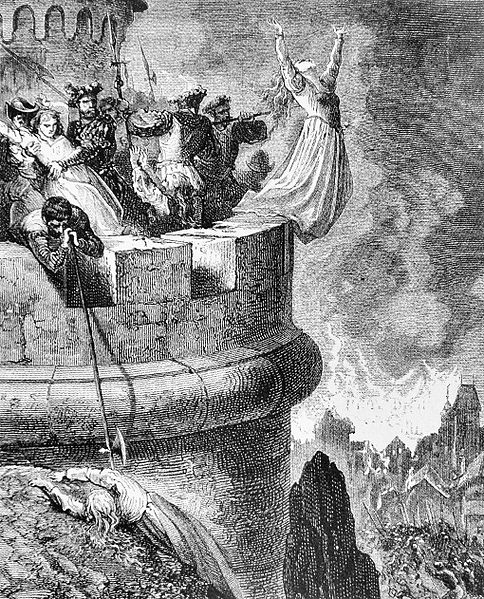
The word “refugee,” I recently learned, was originally coined to refer to the Huguenots. As the Reformation began to take hold in Europe, although mostly associated with Germany and Switzerland, many French believers left Catholicism and became known as Huguenots. Early modernity was a time when religious persecution was rather openly practiced (as it still is in parts of the world) and many Huguenots were forced out of their homeland where Catholicism was the state religion. The word used to describe these unfortunates was “refugee.” For whatever reason, the plight of the Huguenots has never really captured the public imagination the way that many groups of displaced individuals has. We seldom hear of Huguenots any more, but generic refugees are daily in our news.

800px-Print_entitled_Horribles_cruautes_des_Huguenot_en_France_16th_century

While it is hardly a mark of pride or accomplishment to have Christians persecuting Christians as the origin of the term “refugee,” the fact that refugees are becoming more common rather than less so should be worrying. Borders, all of which are artificial, no matter how high we build our walls, lead to closed opportunities. Every once in a while, I ponder the phenomenon that none of us has any control over where we’re born. We might be fortunate enough to find ourselves in an affluent democracy (so I’m told) or equally beyond our control in a repressive totalitarian military state. The ability to see things from another’s point of view is essential to the concept of the refugee. Can we imagine what it is like to be persecuted for religious belief? For being born female in a chauvinistic society? For being poor when money seems to be everywhere for those who know how to extort it? Have we no sympathy for those who find themselves conceived under trying circumstances? If it were me, I’m sure I would think differently about it.

Historically, and by the numbers, the Catholic Church has been by far the most successful form of Christianity that the world has known. Claims to the title of “Christianity” are hotly contested, but the continuity, in some form or other, has hung together for a couple of millennia. In times past, those who differed, such as the Puritans in England and Huguenots in France, were encouraged to leave. The world was plenty big enough. Were the borders of today erected in early modernity, the plight of the Huguenots, like that of many untolerated religious groups, might have been far more dramatic. Largely assimilated today, the Huguenots are not much on most people’s minds and yet refugees still regularly approach the borders beyond which a more humane life awaits. Religious persecution gave the world the word; could its opposite provide the solution?


Washed Out or Burnt Over?

AwashInASeaOfFaithIs America a Christian nation? The answer to that question will no doubt raise ire in some part of the room. People, speaking mostly without data, will assert yes or no, generally based on opinion and sensibility. It is refreshing, then, to read what an historian uncovers by asking the right questions. Jon Butler’s Awash in a Sea of Faith: Christianizing the American People is a book that asks the right questions. On the surface, yes, colonial America was settled by disgruntled Christians from various religious conflicts in Europe. Actions, however, are notoriously louder than words. Butler examines church attendance patterns and affiliations among these early (and later) settlers and finds that they weren’t nearly so Christian as one might think, listening to the rhetoric. Indeed, for people struggling to survive in a new land, religion might well have been the last thing on their minds most of the time. Throughout the book surprising changes of perspective appear. When clear thinking is railroaded by political agendas the issues often become clouded.

A good example of this is Butler’s exploration of the survival of magic and occult traditions. It is not unusual to hear, anecdotally, that the Enlightenment did away with superstitious thinking. In fact, the data point elsewhere. Not only did Americans bring magic and occult practices with them from overseas, they actually continued to develop them in the New World. At times these beliefs substituted for congregational religion. At others, they subsisted alongside it. There was a “sea of faith” here, but it wasn’t always very orthodox. It wasn’t until fairly late in the history of the country that church attendance could be considered the norm. At the same time, many read back into history that “we’ve always been like this.” Not so.

The “myth of the American Christian past” was born out of wishful, and one suspects, political thinking. The country’s founding by Deists led to a fear of Deism—a fairly new phenomenon that descended from that self-same Enlightenment. Still, America could give birth to Spiritualism and a host of new religions. Perhaps it would be more accurate to think of the United States as fertile soil for religions rather than a Christian country. Certainly, by the numbers, Christians have been in the majority since statistics were kept, but, if the anachronism may be pardoned, the “nones” are not a new phenomenon. They were previously just those to be converted. Through much of history, we’ve been a people who didn’t think too much or too deeply about religion. Only when the issue really became politicized did the past become distorted. We have Dr. Butler to thank for providing a clear view into what history actually reveals.


Viking Trail

History is a powerful elixir, capable of transforming sinners to saints with the mere passage of time. Well, calling Vikings saints may be a bit of a stretch, but still, they have become some of the sexy bad boys of the Middle Ages, and with the finding of a Viking horde in Scotland last month, they are in the news once again. Vikings and monks were kind of like medieval dogs and cats. Monasteries, located in lonely regions, often amassed wealth and Vikings, looking for loot and less scrupulous about bloodshed, were eager to take it. The give and take (literally) of this violent lifestyle involving seafaring, battles, and churches, makes for good ancient drama and much of it took place along the coasts of Scotland. Our Scandinavian scourge, however, didn’t stop there. It is well established that the Vikings made it to North America well before Columbus. Those who don’t dismiss the Kensington Rune Stone also claim that the Vikings reached Minnesota long before football ever did. Whatever the reason, we are fascinated with Vikings.

Wikinger

Perhaps they are the ultimate autonomous self-promoters. We all would secretly, at least, enjoy being able to set our own standards so that they favored us and our loved ones. The Vikings represent the flaunting of the rule of law, traveling far to take what they want by force. And, perchance, leaving a bit of treasure behind as well. The Vikings became Christianized and the slave trade (long before the New World caught hold of the idea) was effaced to the point of becoming uneconomical to them. Nobody is certain why, but the Vikings, probably for a variety of causes, ceased to be the terror of the seas. Now the Scandinavians are considered among some of the most literate peoples of the world.

Along with the decline of the Vikings, however, also came the fading of the monastic cultural hegemony. To be sure, there are monks and nuns still today, but the force with which they gripped the medieval imagination began to decline with the Protestant Reformation and the recognition that vast wealth, even if cloaked in poverty, is still vast wealth. Now the finds from both monasteries and Viking sites constitute historical treasure. Information about a world long gone. The underlying idea, however, is never very far from the surface. We may lay claim to post-colonialism, but powerful economies have a way of getting what they want in the way of trade treaties and tariffs in any case. When a Scot finds a Viking these days, it is a cause for celebration as we let bygones be bygones and cut the humanities curricula nevertheless. The Vikings never really disappeared.


Doodle Dandy

Deep in the stacks of the New College library at Edinburgh University, I came upon a book in the open shelves with a date of 1611. Once the staff had been notified, this book, which had simply aged in place over the centuries, was quickly moved to special collections. It is the dilemma of many a writer that books seldom see the light of library reading lamps. This episode came to mind as a friend shared an interesting story about doodles. Historian Erik Kwakkel has one of the most enjoyable jobs in history (seems appropriate). His research takes him to old books, and by “old” I mean handwritten, to look for pen trials—how pens were tried out before serious writing began. A lot may be learned from not just the words, but how they were formed. A different friend I knew was working on the forensic study of the order of stylus strokes in cuneiform writing. It was completely fascinating. With the right tools, you can find out in just what order strokes were made in clay, their depth, and a host of other information such as the right- or left-handedness of the scribe. Writing reveals the writer. In any case, Kwakkel has a great excuse for looking at doodles.

491px-Luise_KritzelzeichnungOne point in this fun story, however, struck a serious note with me. Scribes were, in final copy, expected to be completely anonymous. Their labor was to go unremarked through history. We owe them some of our greatest treasures, and in a bizarre back-formation, modern scholars give these anonymous scriveners names such as “the tremulous hand of Worcester,” in a vain attempt to recover them. In rare instances we are given the names of scribes. Some may have been creators as well. Most will remain forever nameless. Those who love books may be excluded from them by their very love.

There once was a joke that went around that asked “what do you call a writer who actually has a job?” The answer? “An editor.” In the old days, anyway. Now you can earn university degrees in publishing and editors very quickly vanish into the background, like the ninjas of literacy. Like those ancient scribes who, perhaps bored by the rote task of copying out somebody else’s words, left little doodles behind in the margins as their own attempt at immortality. In many ways this blog is my chance to offer a few doodles to the world. I used to be (and still hope to be) a content producer, but now I understand that content has no room for doodles. The serious business of publishing is all about showcasing the author whose ideas are worth spreading. Oh, there’s a subtext here, all right. A palimpsest, one might say. However, like the anonymous doodlers of history, many of us scribble away awaiting future discovery, long after our names are irrecoverable.


North Tarrytown

Ichabod Crane has undergone many incarnations since Washington Irving conjured him. Not very sympathetically described in the original “Legend of Sleepy Hollow,” he was gangly and somewhat clumsy and full of self-importance. The story of which he is forever a part, however, has become iconic of American myth-making. A deep symbolism runs through the story of the headless horseman, and for those who’ve actually been to Tarrytown, the modern incarnation of Sleepy Hollow, there may be a disconnect between the urbanity of a town so near to New York City and a rustic school teacher in a rural setting. Still, there seems to be quite a bit of buzz about the current television series “Sleepy Hollow” that I decided to see for myself what was happening. The conceit of Ichabod Crane reawakening, in a kind of Rip Van Winkle twist, in the present day is engaging. He is now a professor at Oxford University turned patriot to the American cause, which brings him to the point of actually beheading the horseman in the first place. But this literate, witty, and moody retelling involves more than Irving. The Bible is pretty much central to the series, at least as far as I’ve seen.

The headless horseman is none other than Death, the final of the four horsemen of the apocalypse, according to holy writ. Although the characters all refer to the Apocalypse as “Revelations,” something that causes premature baldness in biblical scholars, the program places the town of Sleepy Hollow at the crux of the oncoming end of the world, with the other three horsemen to be summoned along the way (Pestilence or Conquest, War, and Famine, for those who are keeping score). Also, witches, hearkening back to Salem, have a prominent place in the narrative, and the forces of rational law seem to be at their collective wits’ end to make any sense of religion breaking into a secular world. Without the Bible’s final book, Sleepy Hollow would have no legs (as well as no head).

Ichabods_chase_crop

In Tim Burton’s Sleepy Hollow, Ichabod Crane came through as a detective plotting science against superstition. At the end, however, even the most rational had to admit there was more going on than the science of the day could explain. That is part of the appeal of the Sleepy Hollow legend. No matter how strong the light we shed on them may be, our psyches reach out for the immaterial, the ghostly, the supernatural. We like to believe in sacred books and spells to protect from evil. Even the Twilight Zone episode “The Jungle” plays on how in even the most advanced cultures we still build skyscrapers with no thirteenth floor, as if our towers represent an unknown hubris for which we may be held accountable. Irrational? Perhaps. But Sleepy Hollow is not so somnolent these days when the Bible once again takes center stage and hoofbeats are heard once again in the night.


Empire State

Hegemony is a funny word. In studies of antiquity it is commonly found since it denotes the “Leadership or dominance, especially by one country or social group over others,” according to the Oxford English Dictionary. Today it has a vaguely imperialist taint, although it doesn’t necessarily require that one nation actually pillage another’s wealth or resources. The idea that people are, and should be, free is pretty much assumed in developed nations. Or so at least our rhetoric dictates. The word hegemony came to mind, however, as I saw an interview with a corporate leader. He was discussing how his company had budgeted for technology development on an increasing scale, to catch up with current developments, and then leveled the tech expenses off after that so that the business could move into its prime objectives. The reality was vastly different, however. Each year’s budget saw increasing technology costs and it shows no signs of slowing down. Every industry, it seems, will have to keep devoting larger and larger shares of its budget to technology. Hegemony.

It’s not that any one company is solely responsible for our obeisance to technology, so this hegemony has no head. It is the idea of progress gone wild. Last year as I set out for the American Academy of Religion and Society of Biblical Literature annual meeting, a notice popped up on my laptop that a software upgrade was available. Since I file that I required was no longer accessible unless I updated, I clicked through all the agreements and provisos that I can’t understand and began the upgrade. Download and installation time measured in hours rather than minutes and I soon had to interrupt the process to get to the conference. This had consequences that nearly led me to becoming utterly lost in a part of Baltimore I’d been warned to avoid. The gods of technology demand their due. Now, less than a year later, I can’t access certain files unless I upgrade again.

Don’t get me wrong—I’m not a complete Luddite. I enjoy the instant gratification of finding information in seconds through a web search, but I’m not always sure that I can believe what I read. Technology means photos can be manipulated, sounds can be fabricated, facts can be created, all with no basis in reality. I used to have students ask me if such-and-such a fact they’d read online was true. Facts, it appears, are now negotiable. Nobody’s really in charge, it seems. Instead we are lead by the vague idea of progress, a new god with technology as its prophet. Even now I know people who think they never use computers but they drive without realizing their car is full of them, and turn on the television not realizing that the tech is no longer chip-free. Meanwhile those in the technology industry seem to have plenty of extra cash around, while those of us in the humanities ponder whether the ancient hegemonies have really changed at all. Let me look that up on the internet, once this upgrade is through.

600px-Astronaut-EVA


Know It All

Perhaps it’s the fact that I had a career malfunction in the middle of my chosen vocation, or perhaps it’s a natural consequence of earning an advanced degree. Whatever the cause, I am convinced that I know less than I used to know. That’s not the same as not having learned—indeed, it is a consequence of precisely that. You see, my education has led me to believe that things I thought I knew were not, in fact what I knew them to be. We all live with false assumptions—the sun rises and sets, the earth holds still, and that we aren’t made up of particles so tiny as to be invisible and that are mostly empty space. There was a time when I believed that science gave “the truth,” but we now think of science as ever provisional—the best theory to account for the facts at this time. It is open to change. And in fact, we know very little.

A deep irony lurks in the fact that many people treat their religion as the locus of certain knowledge. This is a known fact; Jesus resurrected, Muhammad was a prophet, Maroni spoke to Joseph Smith. When confronted with contrary data, such thinking withdraws into itself claiming all the more loudly that it knows the truth already. Learning should, I think, may one more humble. More circumspect. Of course I think I’m right about things. If I thought I was wrong, I would change to the correct way of thinking. What I know, however, is a different matter. As I set out to learn a new career, I find I know less than I thought I did. I know little and I know less all the time.

As an academic I can’t help but to spend my life trying to gain knowledge. I read voraciously, I try to engage in intellectual exchange with others. If I’m lucky, I learn something. And know that much less. That which I learn teaches me that I know less than I did before. The world is vast. The universe infinite, according to our best understanding at the moment. We travel through it all, picking up information and treating it humbly as we go along. I’m moving toward knowing nothing at all. Perhaps that is the true goal of all of this—to get to the point of knowing nothing. Then we shall be truly educated. Except, of course, for the true believers who already know everything there is to know. Of course we are all mostly empty space. I think.

DSCN4907


Monsters of Science

ScienceOfMonstersMaybe it’s the ebola in the air, or perhaps the gas from all the midterm elections verbiage, but I’ve been on a monster run this October. I just finished Matt Kaplan’s The Science of Monsters: The Origins of the Creatures We Love to Fear. It is a charmingly written book, at parts approaching the finesse of Mary Roach. Beginning with the ancient Greeks (and sometimes stepping back into the world of the Bible or the Mesopotamians) Kaplan examines the major categories of monsters and tries to offer scientific explanations for why people came up with them. It is a keen conceit and it is deftly handled. Noting that animals sometimes got jumbled in the fossilization process, he offers explanations for creatures such as the Chimera, Griffon, and perhaps even the Sphinx. Some of the unlikely episodes are quite fun to visualize as well, as when a snake slithers over a tar pit where a goat got stuck and was eaten by a lion that also got stuck. Beast after hideous beast he brings down to analytical size, sometimes convincing even this old monster lover.

One of the problems, however, is that science often doesn’t comprehend the symbolic nature of mythical thought. Quite apart from sheer creativity—and it does exist!—some of the material in Kaplan’s analysis would have benefited from having a mythographer’s look. For example, demons do not suddenly appear as monsters in the Middle Ages. Kaplan knows this, but that’s where he starts. The ancient Mesopotamians knew of them very, perhaps, too, well. And Lilith isn’t even mentioned when discussing succubi. Still, there’s a great deal of interesting conjecture here, and some scientifically, if not mythographically, viable suggestions on whence vampires and werewolves. As expected, modern sightings of cryptids are simply swept off the table, but I almost shouted aloud when I read that he gave credence to Wade Davis’s work on Haitian zombies.

The larger question here is one of approach. Do monsters lend themselves to scientific explanations at all? The case that elephant/mammoth skulls might suggest a cyclops seems reasonable enough, and the occasional dinosaur bone that represented a giant in ancient times is entirely possible. (Who can tell one femur from another anyway?) But the monster is primarily a creature inhabiting the shadowy realms of religion and psychology. Our fears are seldom directed toward science, although, now that I’ve read his chapter on “The Created” I’m not so sure. Constructing backward toward the unknown is always a dicey proposition, as those of us who’ve studied history of religions know. We may be able to find the genesis of modern monsters, but, admittedly, the fun for most of our scary friends is that they are mysterious. Impervious, as it were, even to science.


Campus Crusade

The Chronicle of Higher Education also chronicles the trials and travails of religion in academia. A recent edition of CHE reported on how California State University withdrew official recognition of InterVarsity Christian Fellowship because its leadership is, by definition and constitution, Christian. The organization contested the decision, and, in this thorny situation, I think, rightly. The disestablishment clause cuts both ways. Government can’t establish a religion, but it can’t prevent one either. InterVarsity, although not exactly to my taste, has been a fixture on campuses for decades. It offers alternatives to pong and related forms of diversion without being pushy about faith. Indeed, it does not insist that participants be Christian, and, in my experience, doesn’t try to convert them. It offers a service that is useful for undergrads and has every right to be on campus, as much as the young republicans do. Can an organization be banned for having Christian leadership? How much can we disestablish before we become oppressors?

I recently had a conversation with a college humanist chaplain. There aren’t many of these, but they are beginning to appear on campuses, offering the services traditionally given by religious organizations. Many people don’t know what to make of this. Not all rationalists, humanists, agnostics, and atheists are enemies of spirituality. We can be both spiritual and human. Some would argue that we have no choice in the matter but to be. Some express it as Christianity. Others as a non-doctrinal recognition that being human means wanting to affirm unions and weep at funerals. Maybe it is more than just chemico-electrical signals across gray matter after all. Colleges and universities should be places to explore. Like it or not, without the influence of the church, and before that the synagogue, the concept of higher education likely would never have developed at all.

How much of the baby do we throw out with the bathwater? Evangelicals cost me my first real job. I had, however, grown up among them. Although not in InterVarsity, I did participate in Christian groups in college. I don’t think it damaged my education. How can a person learn to compare when one of the options is displaced? Will Newman House be permitted to stay? Even government officials can’t agree on exactly what it means to have a religion-free government in a religious, if post-Christian, nation. Why antagonize an organization that is only trying to offer a service? Every time I pull up to a gas pump chances are pretty good that I disagree at a pretty visceral level with the ideology behind the company supplying me my fuel. And yet, here I am, running on empty. Ideologies and services, it seems to me, are very different things. Those that don’t cause harm should be the least of our concerns.

IMG_0066


Gothic American

AmericanGothAmerican Gothic, the painting by Grant Wood, caused me trouble at Routledge. An author wanted to use the image on the cover of his book (we eventually managed it) but the choice was contested at every step. Along the way editors, editorial assistants, and marketers all told me what the painting represented and how it was inappropriate. I’ve learned, however, a few things from the post-modernist movement: nobody can say what an artwork means definitively. So when I read American Gothic: New Interventions in a National Narrative by Robert K. Martin and Eric Savoy, I was ready for a combination of po-mo and the macabre. Like post-modernism, Gothic is a difficult term to define. Indeed, the first set of essays in this collection struggle with definitions. Being literary criticism, the book points out that the novel and Gothic more or less developed together. When people read to be entertained, as early as the eighteenth century, they wanted to read Gothic tales.

Being a life-long fan of Poe, I was pleased to see that he made a good showing in the pieces contained in the book. What makes it appropriate to this blog—other than it being October, a comment that requires no explanation in the northern hemisphere—is a notion I found early in the book. People read horror literature for healing. Anthropologically, the wounded healer is a well-recognized figure. In a world where we expect opposites to go together health comes from disease and healing from being wounded. The gothic is a wounding of the mind to lend it healing. To be sure, many of us who read gothic literature do not relish scenes of violence or hurt. We do, however, find a kind of therapy within such darkness. In the darkness light is best appreciated. Who uses a flashlight outdoors on a sunny day?

As with most books from multiple authors, there’s some unevenness to the contributions here, yet more often than not, I found deep insight throughout its pages. Religion makes occasional appearances. Indeed, the figures of the monk and the debased church are stock images for early gothic literature. The sacred, if we’re honest, is a bit creepy. Having spent many nights in churches on retreats or for hospitality when youth groups couldn’t afford a hotel, I know that fewer places are scarier at night than an unlit, empty sanctuary. The gothic, following culture, has tended to move away from monasteries and churches into the more scientific spaces of the twenty-first century. Nevertheless, ravens and haunted houses still evoke the age-old fears of a coming period of darkness, the Halloween of the soul. And for those who want to know how a post-modern crowd scans the darkness, this book will not disappoint.


Autumn Music

It is an experience as old as humanity itself. At least humanity that started to realize that age, as remote as it may seem, will always eventually catch up with you. This past weekend was Family Weekend at my daughter’s college. Since her school does things up right, there were a variety of events on offer, one of which was an a cappella group concert. A cappella has come a long way since my college days, with students able to use their voices to sound like a band, professionally mixed, and full of energy. Somehow, I don’t recall that much energy from when I was a student. In any case, the inevitable group doing “oldies” took the stage an opened with a song from 1987. Wait. What? Since when was a song of which I remember the first release an oldie? The kids did a great cover, and I suspect in their minds it was really an old song. I was only 25 when it was given to the world. Can I really be an oldie? Outside the leaves on the trees were brilliant, as if on cue for the tuition payers to have their heartstrings wrung. Trees become their most alluring as they are about to die.

Songs, however, have a way of becoming part of you. Back when we were young(er) and idealistic, my wife had thought to study music therapy. Nashotah House, however, decided to change the career trajectories of an entire family in the name of orthodoxy. One of the things she learned in her classwork, prior to being sent back to the work-a-day world, was that patients suffering from dementia can often sing a song from their youth, even if they can’t speak a word. Music gets into our brains in a way that language learning doesn’t, and when we hear that song we are, to borrow a phrase from Bob Dylan (which another of the groups sang), forever young. It is a beautiful wish, endlessly covered and recovered. Watching those kids on stage, I recalled being on the cusp of adulthood myself. Everything seemed possible then. Then a world that others constructed imposed its constraints on me. My hair began to grow gray even as the leaves lit up yellow and scarlet and fire orange.

DSCN4928

Religion is the business of those who are old. Even as a religion major in college I was classed among those old before my time. We think of the hereafter on our deathbeds, not when we’re twenty. For those who teach their children to ponder eternity at a young age, however, that portal is never far from view. My fellow students were looking ahead to careers in all kinds of fields that would make their fortunes and reputations. My modest attempt to bring a younger generation to a more mature outlook faltered at the hands of Fundamentalists, and it was music that helped me through that terrible shock. Little do we think that that song we like so much is marking us indelibly as a child of our age. Time will not relent. We will be the ones, like the trees, showing our signs of age as our children show us where the future lies. And the attitude of that song from 1987 will be, for any who truly listen, forever young.


The Open Sea

498px-Christopher_Columbus“In 1492,” they tell me, “Columbus sailed the ocean blue.” As a feat of science in the age of discovery, there is no doubt that this was an event worth celebrating. Over time, however, the luster has diminished somewhat. Although I can speak only for myself, I often feel that being a male caucasian is a decided liability. It certainly has been in my professional life. Although my ancestors were probably busy grubbing an existence from the soil as Columbus nobly stood on the forecastle, spyglass in hand and India in his heart, we are classed together. Attitudes toward divine destiny were much different then. The European powers that had made the world they discovered in their image could only see this as the will of the Almighty. That’s the liability of omnipotence. What happens is, by definition, God’s will. As technology led from success to success, Columbus set off to shrink his world. And get rich in the process. What’s so wrong with that?

The view among the displaced may be very different. People, if pagan, happened to be living in Canaan before Moses arrived, according to Holy Writ. They were, however, an annoying inconvenience to a God who had it all planned out. And since that torch had been passed to the Christian leaders of Europe, although contested by the Muslim leaders elsewhere, they had to follow their destiny to these sacred shores. Oh, I’m sorry! Were you sitting here? And those who march in the parades do it a bit more self-consciously while the majority of us continue to work in New Amsterdam as if nothing extraordinary had happened. As if a genocide hadn’t led to prosperity. As if, although God has disappeared, this wasn’t manifest destiny after all.

Humans can’t be blamed for being curious. It is part of our nature. I do wonder what will happen when we finally stop fighting one another and land ourselves on another inhabited planet. One where they haven’t achieved the technology that we have. Will we have learned anything from the St. Columbus Day massacre or will we still be guided by our confidence in lenses that can see billions of years into the past, see the havoc we’ve visited upon our own planet and still say, “it is good”? Even on the bridge of the Enterprise there is only one alien standing, and he is wearing earth clothes. Can we be disinterested observers when potential wealth lies below the feet of those we meet? We respect your culture, but hey, what’s that you’re standing on? Mind if we take it? You’re not using it. And once their voices have been silenced, we’ll seek other oceans blue to sail.


The Joy of Tech

In the age of Steampunk, New Jersey is among the world capitals. Indeed, today is the second day that the International Steampunk City will be inhabited in Speedwell, home of the telegraph. For yours truly, Steampunk is an escape. Alternate realities often look better than the pedestrian one we’ve inherited, so we like to look at the world through steamy lenses and imagine how it might have turned out differently. New Jersey, in the spring, also hosts the Steampunk World’s Fair. Perhaps we have more pressures to escape here in the Garden State. Imagination is certainly in no short supply. I attended the International Steampunk City last year and decided that I’d like to be a part of it. Knowing a thing or two about ancient technology, I thought I might share a bit with the Steampunk crowd. What is Steampunk without tech? Some ancient technology, although not very well known, is perhaps of even greater influence than we might imagine.

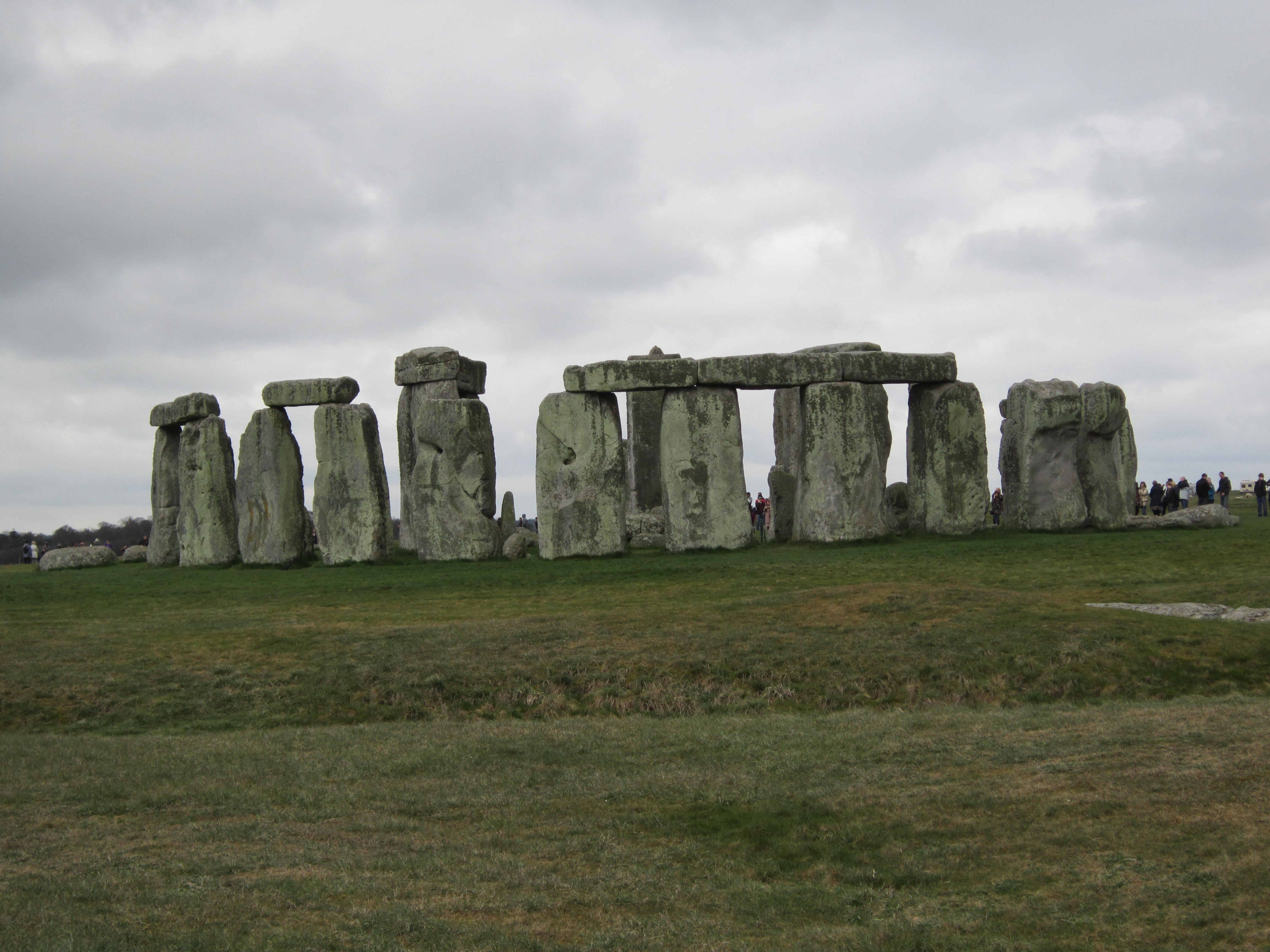
One of the connections that is easily misplaced in this era of purely scientific advance, is that technology was devised in the service of religion. At least in the early days. The greatest architectural achievements came under the aegis of temple building. Domes, arches, and eventually flying buttresses that could hold tons of stone high over your head—these were to please the gods. We can’t imagine Stonehenge as anything other than a capitalist venture these days, a way of drawing in the money. Of course, ancient builders knew of the financial benefits as well; temples were often the equivalent of ancient banks. Still, beneath all the pride of accomplishment there was the belief that the gods were somehow pleased with our innovation. Perhaps we’ve just done away with the convenient myth. Steampunk often has a religious underpinning. Many of the stories I’ve read touch on our ancient mythologies. Only, in fantasy, there are different possible permutations.

We sometimes think that technology is a modern phenomenon. Actually, it is quite ancient, as far as human culture goes. The first “computer” was invented around about the first century. Since it didn’t have an obvious benefit to the control of the masses, however, no technological revolution took place. The steam engine was, in nascent stages, invented also in ancient times. Until we learned, however, that it could be enslaved to make certain industrialists rich, we had no need for it beyond a diverting toy. Technology does not take hold without a deeper purpose. Every now and again I get a little paranoid knowing that I carry a telephone that knows my exact location at all times. As if I were important enough for anyone to care. Then the feeling passes and I open my iBooks app and turn to my latest Steampunk novel. I am a slave. I wonder what innovations there will be at International Steampunk City this year that might change the world. Only the imagination will limit the possibilities.

DSCN4341


Lions Among Men

Facial follicle emasculation, i.e. shaving, has some interesting religious implications. A recent Associated Press story highlighted this when students at Brigham Young University began a protest against the ban on beards at the school. Shaving has a very long pedigree but, as one who doesn’t shave I feel obligated to point out, not as long a pedigree as not shaving. Nobody knows for certain where or when shaving began, but it has been suggested Egyptian priests began the tradition. Others suggest it was an attempt among some early societies to control lice. Homophobic religions, it used to be, promoted beards as signs of masculinity. Alexander the Great, however, noted that beards are easy to pull during battle, although, for those who don’t fight it isn’t such an issue. Of the major monotheistic religions, Christianity is the only one that generally promotes shaving as the norm, and here it is only the practice in the western branch of the religion. Eastern Orthodox churches still retain bearded clergy. It has been suggested that the Roman preoccupation with shaving led to early Christian preferences for this practice, and there may be something to that.

Having an old-growth beard (I last shaved over a quarter of a century ago) I have often found myself in the minority. While beards—mostly highly styled or glorified stubble—are making a bit of a comeback in New York City, they are still not as common as the alternative. In one of my many preprofessional jobs (that of a bag-boy at a Pittsburgh grocery store) I was told I had to shave. “Customers don’t trust a man with facial hair,” my manager told me. Delving into this a bit, I was told that beards mask the facial nuances that an honest man wants to show. What’s a beard trying to hide? Watching what clean-shaven presidents and Wall Street moguls get away with as “honesty,” I think I’ll stick with my beard, thank you.

I'd trust this man.

I’d trust this man.

Evangelical traditions, such as Mormonism, I long ago noticed, wish to control nature. Lawns must be manicured and trees, with their sloppy abundance of leaves, must be few and carefully spaced. Faces should be rid of the hair that Jesus and the disciples were said to wear, and clothes must be neat and tidy at all times. It’s an image thing. Among the evangelical crowd, those with beards keep them neatly trimmed, tamed, and penitent. For me, scraping my face with a cold bit of metal first thing in the morning is about the least civilized thing I can imagine. Spending too much time shaping and toying with DNA’s dictates seems to go against nature. Much of my beard may have gone white, but I have nothing to hide. Neither orthodox nor evangelical, my beard simply represents what it means to be human. Trust me.


De Profundis

IMG_1591In a grocery store last week a friend pointed out how many magazines had pictures of Robin Williams on the cover. Although his suicide two months ago was tragic, I wonder about the message we send to young people (and maybe some older ones as well) about this fixation. As we probe, attempting to understand the sad clown (and they generally all are), are we inadvertently telling our kids that suicide will make you an icon? We often hear accusations that extremist Muslims “brainwash” their youth into thinking that a righteous suicide will lead to glory. Perhaps the glory we perceive is somewhat different here in the post-Christian west than it is in the post-Christian east, yet I wonder what the essential difference really is. Why can’t we see that the cult of celebrity seldom ends well? The worship of the successful does not really grant them eternal life, as much as we may think otherwise.

Call me a curmudgeon—I probably deserve that—but when I overhear office mates in their cubicles or young people on campuses talking about stars I feel not a little like Rip van Winkle. Most of the names I do not recognize, and even showing me a picture doesn’t really help. Of course, I enjoy movies as much as the next dinosaur, but apart from the bargain bin and the occasional indulgence in Amazon Prime I really can’t much afford them anymore. I walk into a bookstore (where they can still be found) and the authors I want to read are not on the shelves. They are gone and all but forgotten. Many of them having left profound ideas in their wake. I guess I could pick up a magazine. Robin Williams looks happy on the cover.

I used to watch some late-night television before my job required waking between three and four a.m. One of the things I quickly noticed is that those stars our society worships had little of substance to say. That’s not to say all actors and media darlings are shallow, but I often wondered why their interviews always seemed to come down to the lowest common denominators. Have we lost our interest in probing beneath the surface? Isn’t there some profundity left to explore? Don’t get me wrong—I find Robin Williams’s death a tragedy. He may have been a deep and philosophical man. Who really knew him? Nevertheless, I wonder if perhaps, if we challenged ourselves a bit more, we might just consider the messages that our media broadcast. After all, they have to turn a profit. Do we really mean what our magazine covers seem to imply?