
 I remember the moment precisely. I was in Santa Barbara, California on a campus visit for Routledge. I stopped into the university bookstore to see which of our/their books were being used. From the cover of one of popular books in the general reading shelf stared a friendly yellow duck. My thoughts went, as they often do, to my daughter back home. The cover copy explained that this was the true tale of a bunch of “rubber” ducks lost at sea and the captivating story of how they ended up in diverse places. I bought it for my daughter since rubber duckies had been a kind of childhood theme, and when I saw it on her shelf recently I also grew curious again. I’ve always been fascinated by the sea, even applying for jobs at the Maine Maritime Academy just to be near the water (and in Maine).
Of course I’m referring to Moby-Duck by Donovan Hohn. It wasn’t really as cute and cuddly a book as I thought it might be—that duck on the cover sure looks happy—but it was far more important. As Hohn explains, he was a teacher captivated by the story of a cargo container holding plastic (not rubber) bath toys falling into the Pacific Ocean on a crossing from Asia. The ducks (and frogs, turtles, and beavers) spread out as far as Alaska and points south on the west coast of the US, and some perhaps made it back east. Some were even reported in Maine (but Hohn came to doubt they are the right ones). So he set off on several ocean voyages to follow the trail of the toys. He has left us a moving and thoughtful memoir of the journey, and also much more.
The oceans are incredibly polluted. As Hohn points out at several points, entire cargo containers—sometimes several at a time—tumbling into the ocean and being left behind is not uncommon. Add to that the trash, particularly the plastic, that otherwise makes its way into the ocean, in some places forming islands of garbage so large that they can be spotted by satellites, and I begin to grow truly alarmed. Hohn learns about plastics and how toxic they might be, as well as how thoughtlessly they are hurled into the oceans. Not written as an environmental manifesto, Moby-Duck—literate, witty, and very human—nevertheless narrates how a father came to see the world through the eyes of parenthood. And some of what he finds is truly frightening. My takeaway? Little things matter. Immensely. That, and we need to clean up our act before it’s too late. No bath will wash away the stains we’re still in the process of creating.
Ancient History
In the white heat of rhetoric, my word processor froze up. I don’t have much time for writing with my commuting schedule, so the full forty-five minutes lost between the typing of a letter “s” that apparently caused the meltdown and being able to access my text was lost in a prayer that my work hadn’t been lost. I remember the days when everyone used Microsoft Word and there was this joke going around about the Devil and Jesus being tested on their computer skills. I can’t remember the joke but I do recall the punchline: “Jesus saves!” So it was in those days that you had to hit “save” every few minutes or your work would be lost. Many laments could be loudly heard of students having lost an entire paper because they’d forgotten their prophylactic “save”s. I found that working on a Mac that such problems weren’t always so bad. But then, system upgrades became more frequent. Two programs that you needed open simultaneously, Word and Internet Explorer (called something else in those days, but I can’t remember what), were a sure recipe for mutually assured destruction. The memory required would freeze even an Apple to its core, and so the systems gurus made improvements and things got better.
Of course, those of us who’ve spend the Gross Domestic Product of a small country on Apple devices have been lulled to complacency. Over the years (since the fiasco of the original iMac) we’ve come to learn that Apple will save our work, and that crashes, while infrequent, will bring our files back onto the screen after recovery. You really don’t need to save since autosave is capable of being the messiah of all computer files. Then the gurus upgraded the system. For the past several months I can’t run a word processor and internet browser simultaneously on my computer without freezing up the system. Imagine my chagrin when, having less than an hour to write, copy, paste, and post my blog entry for the day, my word processor decides that it doesn’t recognize the letter “s.” Of course, Apple long ago stopped being compatible with Microsoft Word. Those of us who used both Macs and Word cheered when the two finally became compatible about a decade ago, but in the battle for computer supremacy, we no longer have that option. My Mac can open Word files and save documents as Word files, but it can’t run Word. Instead it runs word processors that don’t recognize that most rare of characters, the insidious “s.”
So I went to back up my files over the weekend. I keep some files on a memory stick (so called) because they take up a lot of space and I don’t use them that often. The memory stick failed in the middle of a save (doesn’t Jesus save anymore?) and I spent an entire Saturday trying to recover files that were already saved. According to some Christian traditions, once saved, always saved. You can’t be unsaved. After losing an enormous amount of work that equated to many hours of precious weekend time, I’m beginning to have my doubts about my faith. Using Pages, Apple’s version of Word, is sure to lead to a crash. This has been happening since at least September. I get systems upgrades more frequently than calls from telemarketers. I really don’t ask for much. I’ve got about an hour to get my writing done in the morning and I would really, really appreciate it if forty-five minutes of that hour weren’t taken up by Pages trying to recognize the letter “s.” After all, not even Jesus can save without it.

In the beginning was Word…
Thor’s Return
Once as I sat in the office of an Ivy League professor of Greek religion, I asked about the myths of the Classical gods. The professor (who knew that I had taught religion as well, but at more like a Noxious Weed League school) appeared genuinely insulted and told me in no uncertain terms that scholars of religion didn’t take that nonsense seriously. The study of “myths” was left to Classicists, not actual scholars of religion. Is it any wonder, then, that we don’t really have a grasp on what the average person believes? Being a blue-collar scholar, I always took seriously what students told me about their beliefs. It wasn’t really a great surprise, then, when my wife pointed me to a story in The Guardian about a temple to the Nordic gods being built in Iceland. According to the story, the modern adherents of Ásatrúarfélagið (thank you unicode) don’t really believe in a literal Odin or Thor or Frigg, but see them as metaphors to help them face the way life is. A millennium after becoming Christian, some Icelanders are apparently getting back to their roots.
There has always been, to me, a fascination with the Nordic gods. These rough-and-tumble deities inhabited the harsh and snowy regions where daily life was often a struggle to survive against the elements. Frost giants were enemies and nobody really emerges as the winner after Ragnarok. In the Bible Yahweh does sometimes come out swinging, but for the most part he seems a deity content to sit on his throne and issue commands. The Scandinavian gods were characters of action. In some sense they seemed to struggle just like the rest of us do. They are, of course, more powerful and as the movie makes clear, Thor has a charisma that more self-righteous deities appear to lack. Lest anyone be ready to run to their priest at this point, please be aware that this too is a metaphor.
On the other side of the equation there are sure to be critics who argue that building a temple to fake gods in this day and age is obviously a waste of human talent and resources. Such are people with no imagination. Religious belief, metaphor or not, has been part of the human psyche from the very beginning. Elsewhere I have suggested that animals show the same behaviors as what we Homo sapiens would declare rudimentary religion. Rationalism has not provided a reasonable alternative to religious expression. Even a Stoic knows to appreciate art, although beauty provides no essential element to simple survival. Simply put, humans enjoy the finer things of life. Perhaps unappreciated since long sublimated, among those finer things are the old Nordic gods. And their return is a kind of resurrection.
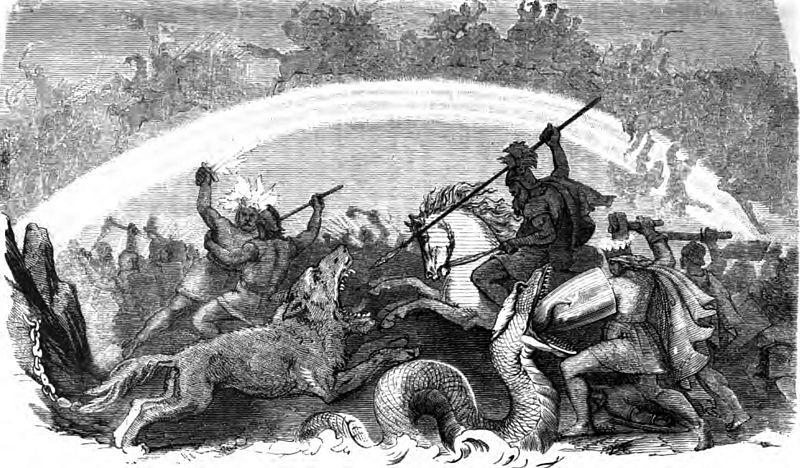
The Battle of the Doomed Gods
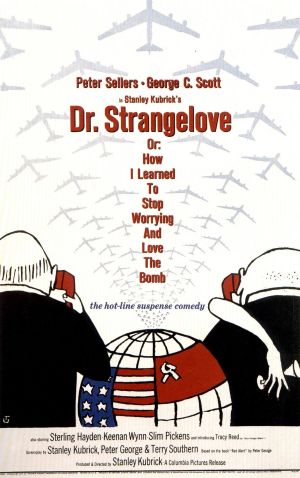
In honor of the fifty-year anniversary of the release of Dr. Strangelove this past week, my wife and I sat down to rewatch the movie this weekend. Psychologically, as Kubrick found out, dark humor was the only way to deal with the sense of doom that pervaded the world into which those of my generation were born. Nuclear weapons had been developed and the Cold War was in full swing. Somehow, even in small-town America, I didn’t find Communism to seem so awful. After all, I grew up reading the Bible and it sounded quite a bit—at least in theory—like the arrangement the apostles had made in the book of Acts. The idea of private property, the very spine and muscular system of capitalism, was considered a sure way to lead to God’s kingdom not being established on earth. Nevertheless, that is the way, as the phrase goes, that the money went. And Communism threatened the right of one percent to horde all the money, so we were ready to annihilate all human life for it. Talk about taking your marbles and going home! No child should grow up knowing the meaning of the phrase “mutually assured destruction.”
Dr. Strangelove has held up well for the half-century since its release. Despite the thawing of the Cold War, the big chill isn’t over yet. And humor still seems the only way to keep sanity and deal with the state of the world. There are still many General Turgidsons out there (some of whom have held very high government offices, and this is no joke). There are at least, as far as we know, fewer General Rippers. So we hope. As the bomber crew nears its target, Major Kong goes over the contents of the government issued survival kit, among which is a comically small Russian Phrase Book and Bible combined. Kubrick, a master of satire, has the godlessness of Communism thrown time and again across the lips of the hawks. It is better to kill everyone than to allow the godless to rule. Even the Bible, however, shares space with the Russian phrasebook, making us wonder whether it is a tool of conversion or an admission of inevitability. Still the bomber, piloted by a Texan, flies on.
Perhaps the biggest moral dilemma we face is our ability to destroy hope. Capitalism promises opportunity to all. Like many who grew up poor, however, I have found lies hidden in plain sight. It is not easy to move ahead if you choose to mire yourself in debt to get an education. In fact, if you lose a job in higher education you can easily find yourself adrift for a decade or more, not earning any retirement money and being frequenly sought out by your local universities as an adjunct instructor. In fact, at many points your career might look like the end of the world. So it is that I take great comfort in settling down to watch Dr. Strangelove again. At least it is an honest movie, and that hasn’t changed in the past half-century. And I think I may have been wrong about how few General Rippers there really are.
Good, Evil, and Normal
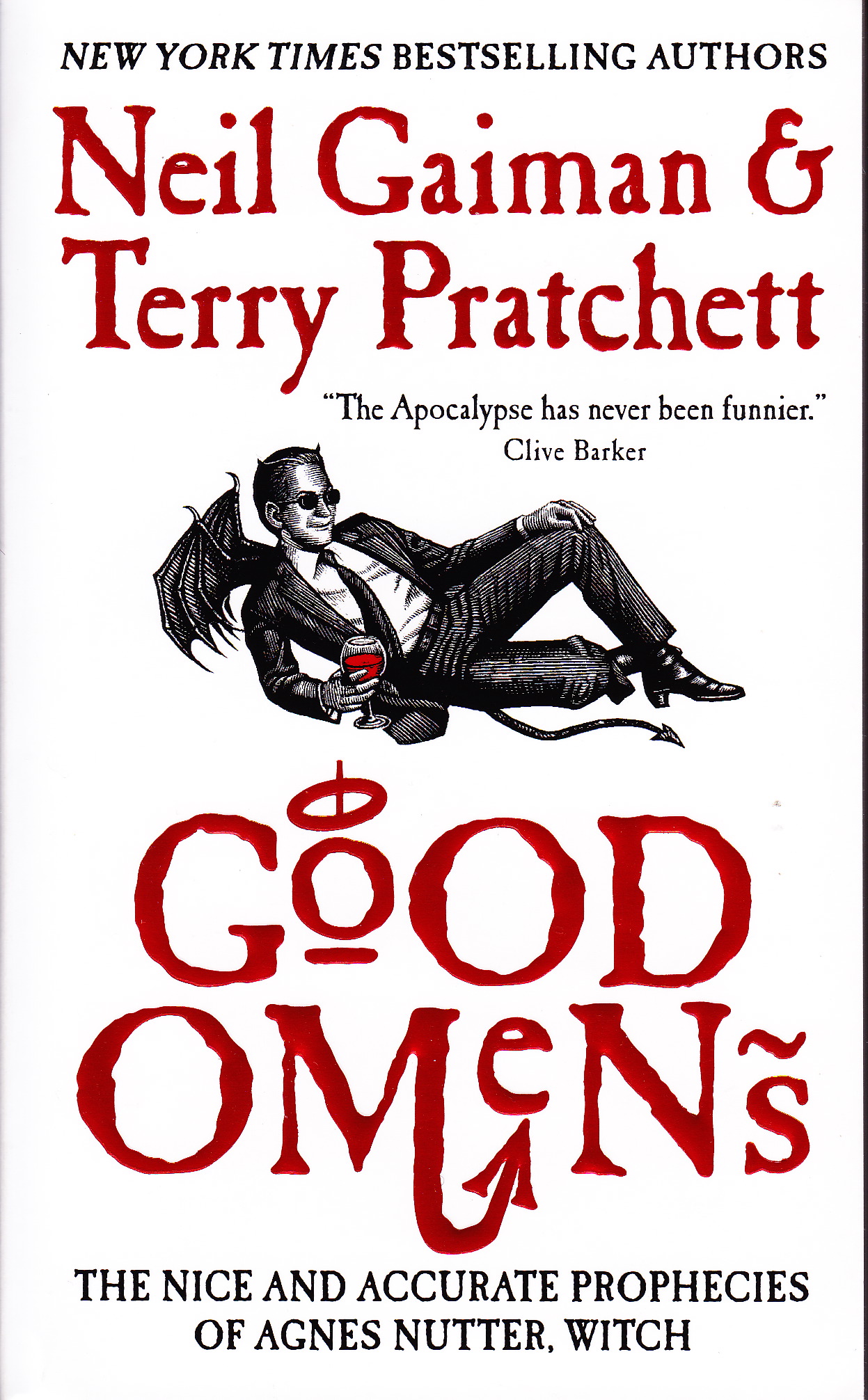 To date I’ve read a fair number of Neil Gaiman novels. One of my students started me out on American Gods and I pursued his others on my own after that. I was a little unsure about Good Omens, however. I guess I’ve always been dubious about the quality of co-written books. Terry Pratchett, an accomplished novelist in his own right, paired up with Gaiman on this one, and it took the wisdom of another student, albeit recently graduated, to assure me that it was worth the effort. Given that it’s about the apocalypse, or perhaps an apocalypse that doesn’t quite take off, there seemed to be no reason not to give it a try. It is, at the end of the day, a charming book with colorful characters and an Antichrist who gets switched at birth and grows up in a normal household and herein lies the tale.
One of the most common religious themes in novels is the end of the world. The four horsemen of the apocalypse are one of the most striking literary tropes of the first century, if not of all time. The real question about the end of the world, it turns out, is—why can’t it be funny? For those who’ve pondered that, Good Omens is the book for you. It actually does help, however, if you’ve read the Bible. It adds to the cumulative effect. Subtitled The Nice and Accurate Prophecies of Agnes Nutter Witch, the book revolves around the certainty of the written word. Prophecy, however, just as in the book, only achieves verisimilitude in retrospect. The prophets didn’t always get it right, even in the Bible. Human choice often causes a breakdown in divine plans. In Good Omens, you’re pretty sure from the beginning that the world won’t end, but you’re not quite sure how it won’t end. The unfolding of the story eventually addresses how a prophecy can fail.
Free will, those who specialize in theology and philosophy will say, is among the more difficult of phenomena to pin down. Some predestinarians would say it’s all an illusion. We are programmed to do what we do. Ironically, some reductionistic materialists would say the same thing. Each of us, however, trudging through out days of toil and play, feels like we’re making our own decisions. True enough, sometimes circumstances decide for us, but if we were given the choice of good or evil, wouldn’t we approach it the way we approach just about everything else? Along the way, the demon Crowley asks a pointed, poignant question: why would God make people inquisitive and then forbid them some obvious, desirable fruit? Isn’t the conclusion foregone? Any writer today would know the outcome before the first sentence was finished. And so, free will is off and running. I hope that the fact that the world doesn’t end won’t be a spoiler for anyone, because I also hope that others will read Good Omens and learn a great deal about how demons can be good, angels can be naughty, and people will always just be people.
White Carrots
Acronyms are useful in a complex world, although they are frequently opaque to outsiders. Taking a new job you’re found constantly swimming in an alphabet soup of abbreviations that can drown you as easily as ABC. Each the church has them. As an undergrad religion major at a Presbyterian school I had to memorize TULIP (Total Depravity, Unconditional Election, Limited Atonement, Irresistible Grace, and Perseverance of the Saints), all of which but the last I had to reject on the grounds of sanity. As aids to memory they can serve as mnemonic devices, or they may simply be frustrating caricatures of reason. In any case, we all know them. In universities departments or divisions are known by acronyms, local businesses and landmarks may be as well. The internet has only speeded the process up, with countless abbreviations, some of which are definitely NSFW.
 So it was that I learned an acronym that is current in the publishing industry. I always thought of the parsnip as a rather curious root vegetable, somewhat like a white carrot. As a child I severely disliked them, but I’ve come to appreciate them, roasted and glazed, as an adult. The word itself is somewhat fun to say: PARSNIP. It is also an acronym of things publishers, particularly those who publish textbooks in English as a second language, have to avoid. PARSNIP stands for, according to the popular explanation, Politics, Alcohol, Religion, Sex, Narcotics, Isms, and Pork. Interestingly to me, at least four of these things have their traditional taboo status because of religions. Clearly Religion is one of those, but restrictions on Alcohol, Sex, and Pork are also based on religious rules. One could argue that Narcotics also fits into that category as well. As I’ve mentioned many times on this blog, religion, substances, and sex are all deeply intertwined.
One of the curious things about this is that our post-Christian society has declared that religion is not worth discussing, or even learning about. We slash religion departments from universities and then wonder why we can’t discuss things like sex and alcohol, without which our society would apparently collapse, freely in other cultures. When I was a child, reading MAD magazine, I quickly learned two things that adults didn’t discuss were religion and politics. The list has grown since that time, but apart from the fact I have no idea which Isms are to be avoided, I see PARSNIP as the white carrot of religious taboos. And politics. In this secular world, we’ve become very politically correct, although we really shouldn’t mention politics in that phrase. Now I’m wondering if maybe I should reevaluate TULIP after all. At least the first part.
What If?
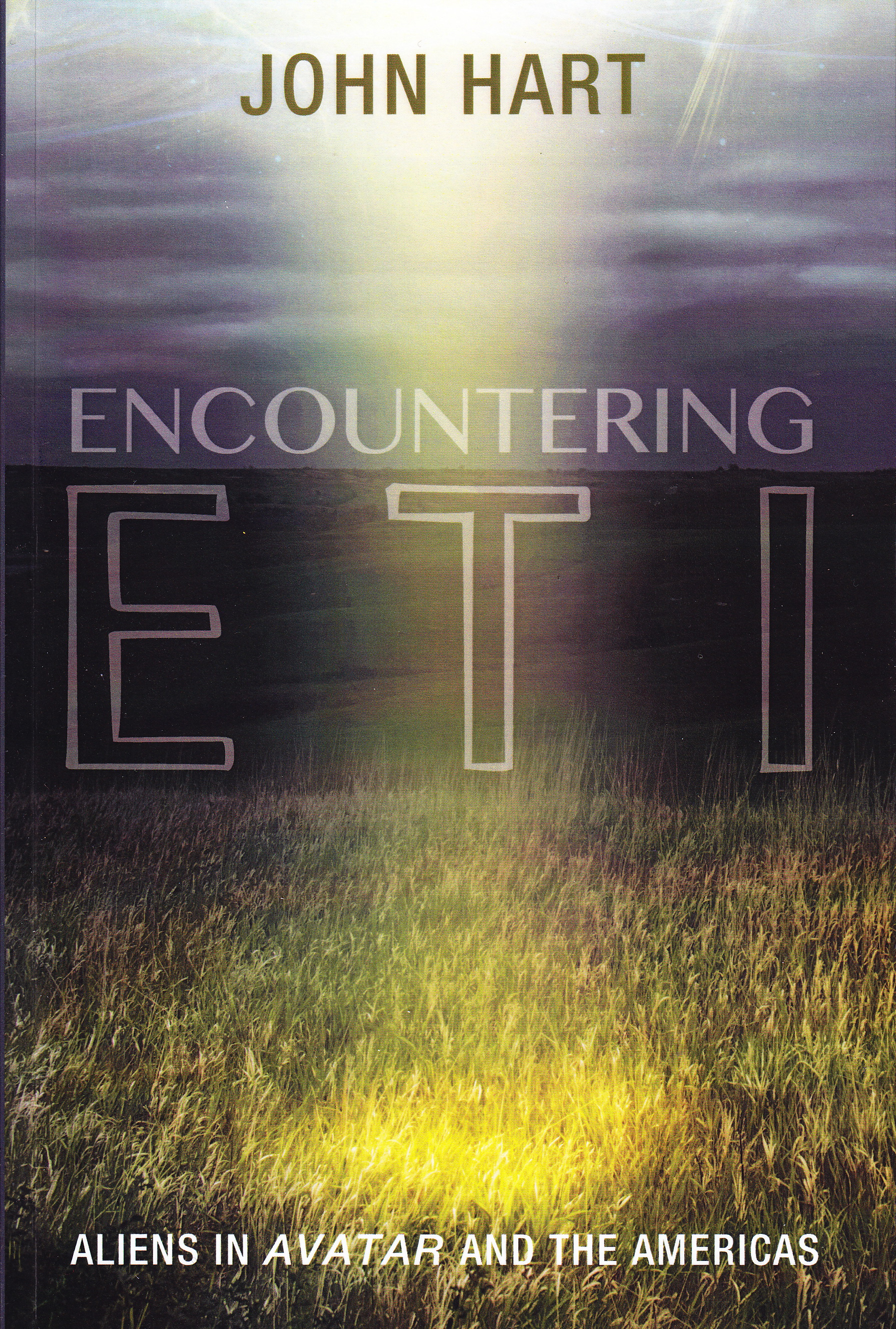 A game that parenting books used to recommend was called “What if?”. It was an imagination game played by parents with their children to teach them about “stranger danger” in a way that wasn’t too scary. We naturally, it seems, fear the other. “What if?” kept coming to me as I read John Hart’s book Encountering ETI. ETI is a bit more precise than the more familiar ET, whom everyone knows, is an extra-terrestrial. The I stands for intelligence. What happens, in order words, when we meet extra-terrestrial intelligence? I very much admire academics such as Hart who are willing to ask what is such a necessary question. The point of the book is much more an ethical than a speculative one since human history has pretty much documented what happens when the Discovery Doctrine is applied. Natives (or TI, terrestrial intelligence, if you will) at the hands of newcomers with the Discovery Doctrine, are soon wiped out. History has repeated the story far too many times. Scientists such as Stephen Hawking even apply that to us, saying that if ETI arrives we will be exterminated. Hart takes a much more balanced look at the question.
Part of the problem is that we, as a society, have been taught to laugh at those who’ve seen UFOs. UFO stands for Unidentified Flying Object, and many people can’t identify what they see in the sky. But we all really know what I’m talking about. Those who’ve seen what may be non-terrestrial flying machines are automatically classed with the mentally unstable and ridiculed into silence. Thus it has been since the 1950s, despite foreign (!) governments and their militaries admitting that yes, we see things and we don’t know what they are. France, Argentina, and Russia, for example, have opened the files to some extent. The point that Hart makes is well taken—if we ridicule so automatically, will we be prepared when they arrive? Shouldn’t we be thinking about this now that scientists are discovering there are likely billions of planets in the Goldilocks Zone (capable of supporting life)? Ah, but it is so hard to let go of racial superiority! Homo sapiens sapiens are pretty impressed with themselves. As if nothing better could be conceived. Perhaps this is original sin.
Hart, whose book is subtitled Aliens in Avatar and the Americas, takes the possibility of visitation at face value. I’m sure it has impacted his career somewhat. The wise choice, it seems to me, is to take seriously what is almost a dead certainty—we are not the only life in the universe. Ironically, the idea that we are is largely based on the Bible. Genesis makes a pretty clear statement that we are God’s best idea. We’ve largely dropped God from the picture, so we, as humans, now occupy the top rung. And when we find humans different from ourselves we ask how we might exploit them to our advantage. (Here’s where Avatar comes in.) Hart’s book, as readable as it is affordable, is one that any thinker should take seriously. It is a book of ethics, writ large. Universal ethics, one might say. The aliens may not land in our lifetime, but chances are pretty good that they’re out there somewhere. It might be best to take some time to clean up the house before guests arrive.
Holy Trilogy
 Alumni magazines, thinly disguised appeals for money that they are, seldom merit much time. This doesn’t stop me, in any case, from sending notices of my new publications or blog, since I, like most fellow alumni, have never been cited as notable. One of the thousands who graduated and amounted to nothing. Once in a great while, however, I feel a slight twinge of pride when one of my three mothers does something of which I’m particularly proud. Most often this is Edinburgh University, although once in a while Boston University also catches my attention. A recent copy of Edit—an alumni mag that began some time after I graduated, American-style—has a familiar face on the cover. Well, not familiar in that I know her, but familiar in that I’ve read several of her books and feel like I know her. Margaret Atwood was given an honorary degree by my old school, and I am pleased to be a, albeit lesser, co-alum.
Over the holidays I picked up a copy of MaddAddam, the third and long-awaited conclusion of the trilogy of the same name. As my regular readers know, I have a soft spot for dystopias. In spite of attempts by many writers to paint a brighter future, it seems that given how far we’ve let things go, collapse before reform feels inevitable. The apathy I find when we read about the vastly disproportionate disparity between haves and have-nots, and the surging of deep, animalistic, primate, rage at injustice doesn’t seem to me a healthy mix. Atwood, although I can’t yet speak for MaddAddam, envisions collapse before florescence. The same may be declared about A Handmaid’s Tale. Complacency, it seems to me, is the real enemy.
And universities continue to send me alumni magazines that instead of inspiring me, rub my face in my own mediocrity. I spent thousands of dollars and thousands of hours on my education and I am paid less than most janitors at most colleges. Not that I was ever in it for the money. I did, however, envision a hopeful future where I’d be teaching, perhaps at a small college somewhere, writing my thoughts in books rather than blogs, and having a modest impact on the world for good. Instead, I have found myself living in a dystopia. As I roll over and see that 3 in first position on my bedside clock on a table with the legs broken off, I know it is time to face the cold of a drafty apartment so I can await the bus to pay for another day’s privilege. My comfort is that Margaret Atwood made an impression on Edinburgh University, and will soon be making another impression on me.
Get Me Jesus on the Line
The letter is the greatest casualty of the internet. I sometimes obsess about how little time people put into their emails, often coming across as gruff or short. I always start mine with a greeting and end them with a closing followed by my name. Of course, I’m from an older generation where communication was initiated with respect. Getting an actual letter is now, however, occasion for great wonder. A friend recently mailed me a couple of fascinating articles from the Prescott Journal, a Wisconsin newspaper. Dated to 1868, the articles actually post-date Nashotah House, but still count as when Wisconsin was rather more pioneer than Pioneer territory. Both articles involve what might be termed “scams” today. Newspapers in the nineteenth century were notorious for sometimes perpetrating hoaxes, and at other times falling victim to them. Still, as the only sources we have for some of these delightful tales, it is difficult to check them out beyond the fact of noting that the amazing stories have been subsequently forgotten.
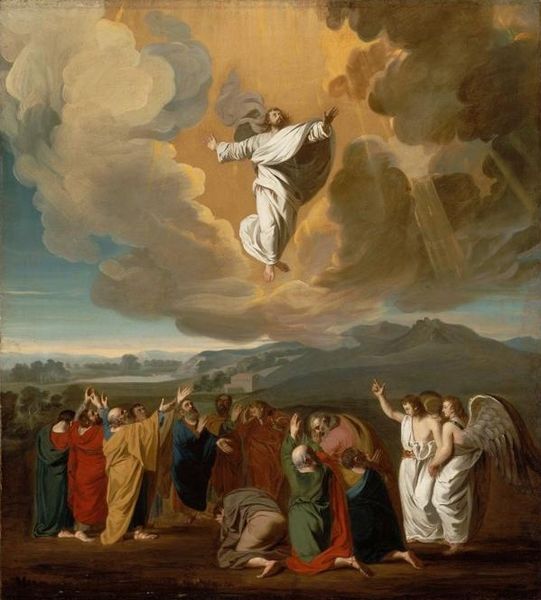
One of the stories was wired in from San Francisco, the article claims. A certain F. Wilson was applying for copyright on a letter he acquired near Iconium, written by Jesus. As my friend noted in her letter, this is perhaps the earliest case of a rock inscribed “turn me over,” promising some kind of reward. Wilson claimed to have found, under a large (implied) rock, a letter written by Jesus. The rock could not be turned, despite reading “Blessed is he that shall turn me over,” even by a group of men. Then, according to folkloristic protocol, a small child turned it unaided. The letter underneath, although written by Jesus, was signed by the angel Gabriel. The letter contained the ten commandments, a note from Jesus answering a missive from King Abrus, an account of Jesus’ miracles, and a description of his person. The story doesn’t tell if the copyright application was successful.
Newspapers were a form of entertainment a couple of centuries ago. Of course, some four decades earlier than this story Joseph Smith had claimed to have found documents to which he was led by the angel Moroni. He published them and, although lynched some 24 years earlier, had nevertheless done pretty well for himself, as his followers would continue to do. Why not cash in on the new religion craze? After all, this was California, and even in the woods of Wisconsin some religious zealots had started an institution that would grow strong enough to displace dreams and livelihoods. What struck me most reading this story was just how little things have changed. Outlandish religious claims are still credulously accepted by the gullible. And the web encompasses the entire world. This story though, must be true, because it came to me in that most magical of forms—an actual letter.
“Don’t forget to look for my letter!”
Star Struck
One of the coveted symbols of approval in my childhood was the star at the top of a paper. I watched in amazement (perhaps because they were so rare) when a teacher would inscribe a star without lifting her pencil from the paper. I thought I had never seen anything so perfectly formed. Of course, in my teenage years under the influence of Jack T. Chick and his ilk, I learned that the five-pointed star, especially in a circle, and more especially upside-down in a circle, was a satanic symbol. My childhood achievements had been, apparently, a demonic blunder. This fear of geometry still persists in America, as a story of a woman in Tennessee fighting to have “pentagrams” removed from school buses shows. The woman, who has received death threats and therefor remains anonymous, took a picture of the offending LEDs and has asked, out of religious fairness, to have the satanic symbols removed from the bus. The news reports are almost as tragi-comic as the complaint.

The pentagram, or pentacle, has a long history, some suggest going back to the Mesopotamians. (Uh-oh! We know how they loved their magic!) In fact, the symbol was benign in religious terms until it was adopted by Christians as symbolic of the “five wounds” (zounds!) of Christ. The symbol could also be used for virtue or other wholesome meanings. The development of Wicca began in earnest only last century, although it has earlier roots. Some late Medieval occultists saw the star as a magic symbol, and the inverted pentagram was first called a symbol of “evil” in the late 1800s. As a newish religion seeking symbols to represent its virtues, Wicca adopted the pentagram and some conservative Christian groups began to argue it was satanic, representing a goat head. (The capital A represents an ox head, so there may be something to this goat. I’m not sure why goats are evil, however.) Wicca, however, is not Satanism, and is certainly not wicked.
Symbols, it is sometimes difficult to remember, have no inherent meaning. Crosses may be seen in some telephone poles and in any architectural feature that requires right angles. The swastika was a sacred symbol among various Indian religions, long before being usurped by the Nazis. And the pentagram was claimed by various religions, including Christianity, long before it was declared dangerous by some Christian groups. There may be a coven in Tennessee seeking to covert children by designing and installing taillights of school buses, but I rather doubt it. School children feel about their buses as I feel about mine on a long commute to work each day. A kind of necessary evil. The truly satanic part, I suspect just about every day, is the commute itself. There must be easier ways to win converts.
Skynet
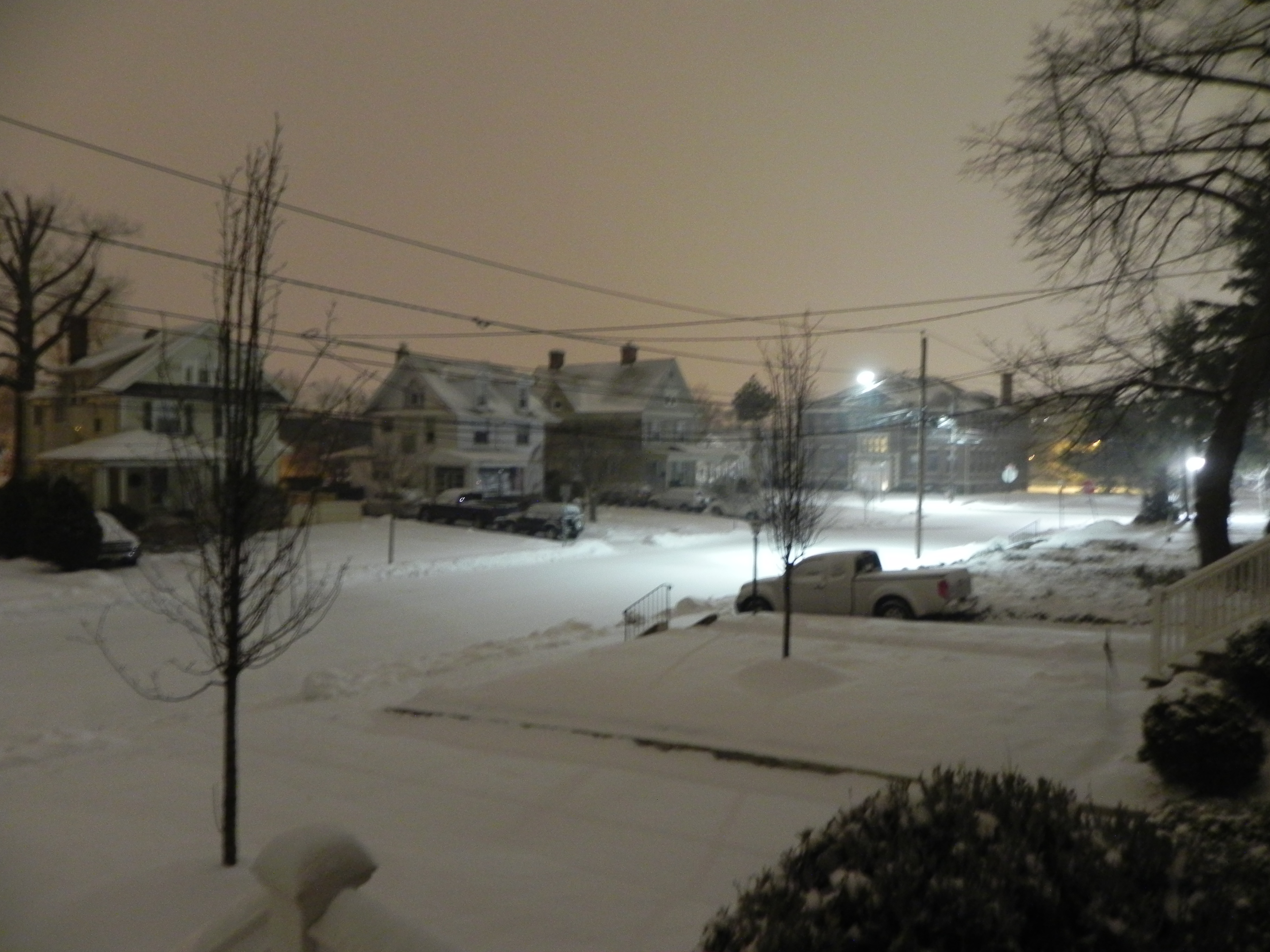
Of cultural innovations, none rivals the internet. Engulfing the world in its wide web, the constant availability of signal has changed everything. In the past five years, civilization has become something that it was not. Take today’s northeast blizzard, for example. Apocalyptic meteorologists (are there any other kind?) are sincerely telling the camera that nothing like this has been seen in recorded history. Meanwhile, my wife’s company sends a Honeywell alert to our phone saying the offices will likely be closed, and please make arrangements to work from home. The snow day is dead. One of the simple joys of life, that delightful naughtiness of playing hooky, is now extinct. Work knows where you are at all times. You are being watched. Sound paranoid? I have known people who had firsthand knowledge of employers following them on Facebook to make sure they didn’t say anything that might make the company look bad. The world is not the same one into which I was born.

I happened upon a web page the other day advertising for an Advanced Assistant Professor in Digital Shakespeare Studies. A poem by any other name we would tweet. So we have become part of this collective mind known as www dot. The internet is aware that it is still snowing, but only in an academic sense, since it’s not going anywhere. The internet has never had a three-and-a-half hour commute home because of an accident on a single highway in New Jersey. Oh, and don’t forget to check your work email when you get home. We may have sometime more for you to do once you’ve clocked out. Maybe I should see what my social network is up to.

LinkedIn, Facebook, Twitter, Google +—they all suggest people that I might know. Someone I might rate, or like. The internet, after all, knows which of its myriad sites I’ve viewed, whom I’ve emailed, and what I’ve purchased. The ads from those companies show up on every website I visit from now on, world without end. ThinkGeek emails me every day. My new best friend. Google + is the more intellectual Facebook, I’m told. Whenever I log on, it tells me with whom I might want to connect. Just now Newt Gingrich showed up in my list. Should I add him to my circles? Or should I just venture out into this blizzard and hope I make it to New York City alive? To me, it seems, the odds are equally good in either case.
Seeing I
One of my few Twitter followers (stawiggins) suggested that I watch Dr. Ken Hayworth on YouTube. Specifically, Part 3: If we can build a brain, what is the future of I?, hosted by Galactic Public Archives. It is well worth 9 minutes of your time. Trying to figure out consciousness has been a major preoccupation of mine for some years. I don’t have the tools of neuroscience, but I do have over half a century of coming to know this “I” that constantly seems to wake up in this same body and experience all its woes and occasional joys. Hayworth suggests that the self is a model projected by our brains to help us make decisions and to plan for the future. In a fascinating thought experiment, he notes that if a duplicate self were made, we (or I) should not object to being executed since there is an exact copy now. Hayworth notes, however, that any individual will object because we are “designed” to think this way about ourselves. Designed, I wonder, by whom? I suspect Hayworth means evolution designed us that way, but evolution is non-teleological, and, I suspect, not really reificatory. Evolution is merely a process.
Perhaps the horns here are only those of a semantic dilemma, but I feel not. Hayworth goes on to discuss how instinct works to continue this illusion of self. I’ve never found instinct a very believable concept. We use it when we want to deny consciousness to animals and very young children. Since they can’t have a concept of “I” they have to have “instinct” to preserve themselves. Logically, to me, this seems to be fudging. What is instinct? Is it really any different than admitting at some micro-level, animals have consciousness? To me it seems that consciousness is one of those “turtles all the way down” kinds of propositions. To be alive is to be conscious at some level. Be careful how far down you dig here.
Hayworth then goes on to what sounds like an almost biblical conclusion. Ethics insists that humans are part of a whole. (A very diseased whole, as the imbalance in society forces us to conclude, but a whole nevertheless.) To kill one is to violate the consciousness of the whole. This concept seems sound, and I would suggest that it might benefit from expansion. Why stop at the human level? We are animals. Animals are conscious. Here we are back at the turtles again. Perhaps we have expended too much energy trying to parse self from soul from mind from consciousness. Perhaps we are all part of a large collective consciousness. If so, we got some very sick units near the top. Any organic being that insists only one percent needs to be kept in perpetual plutocratic indigence while billions of others wonder how long they will survive at this payscale in this economy, or, more realistically, act as slaves to that one percent, is a sick beast indeed. If consciousness is collective, we could all use a massive shrink.
PTSD
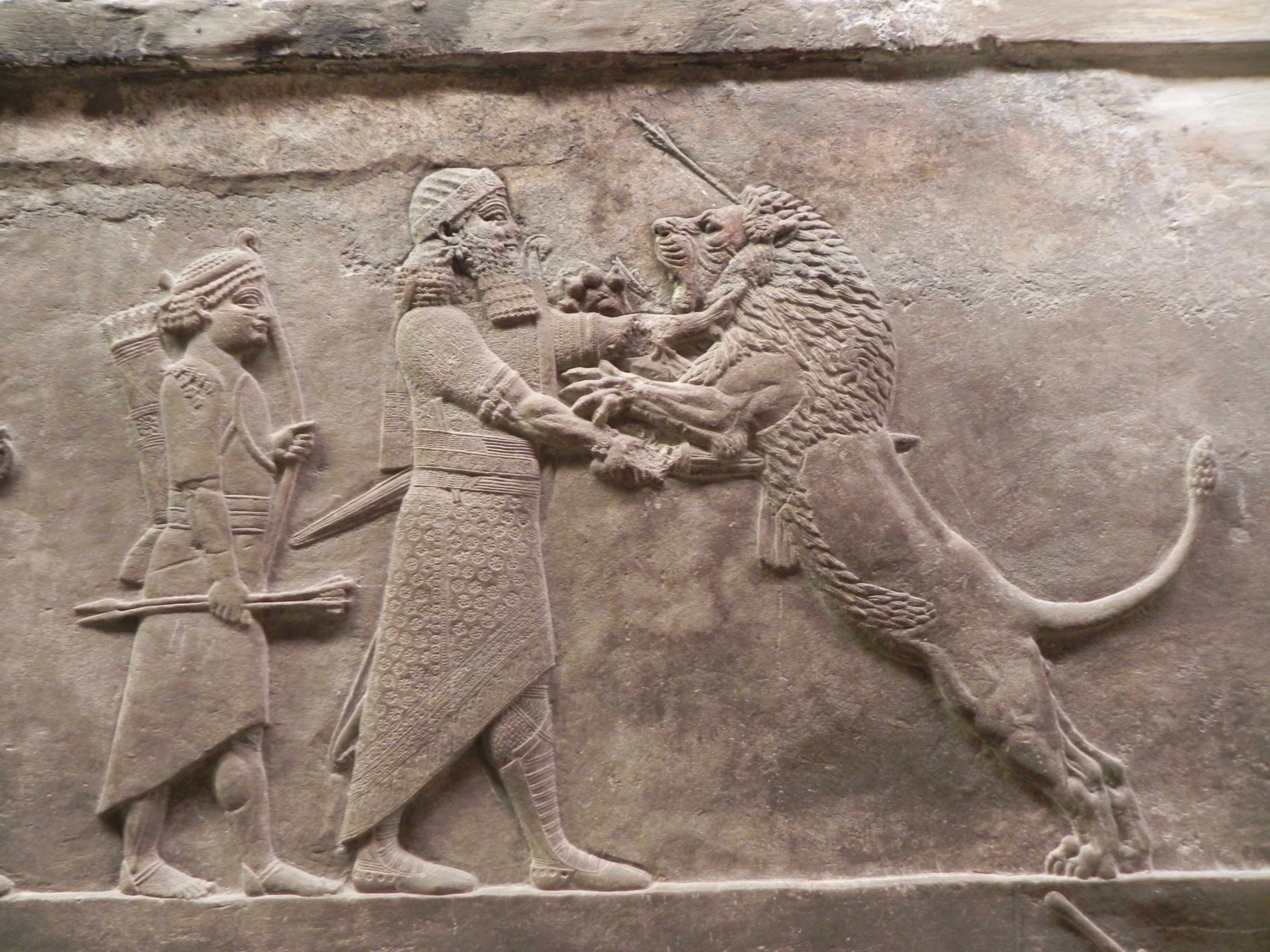
In a recent post on BBC Health, James Gallagher discusses ancient Assyria. What can ancient Assyria have to say about modern health, beyond the occasional liver model used in haruspicy? Post-Traumatic Stress Disorder, of course. As Gallagher notes in his article, PTSD was diagnosed after the Vietnam War. That doesn’t mean it wasn’t in existence long before then. In fact, it stands to reason that if people experience it now, they likely experienced it during traumatic events then. War is among the most horrific and tragic activities in which humanity engages. Men, in the days of Assyria, sent to kill other men in the hundreds, and thousands, could not have walked away from the battlefield unchanged. There are those who seem not to suffer, but the majority of us know that, no matter how just the cause, it is simply wrong to kill others. On a massive scale it can only be worse.
Trauma
Multiple stresses, I would contend, go undiagnosed. I have known those who’ve experienced significant loss—a job, for example, in an economy that makes future prospects dim—who begin showing the same kinds of symptoms. They are, of course, not diagnosed with PTSD, but are simply told to either buck up or go see a shrink. “Pull up your socks,” as they say in the UK. I wonder, though, if it is that simple. People throughout history have been capable of inflicting great stress on one another. Sometimes it becomes so normal that we don’t even recognize it. The forcing of loss and resultant terror of future deprivation is a daily affair. The civilization we’ve been is so complex almost to demand this kind of horror. We may not be sent to the battlefield to kill others, but we are daily faced with situations that cause us great pain, often for prolonged periods. And we wonder why people aren’t satisfied.
Please don’t misunderstand me. I have no doubt that the level of stress faced by those who survive war is severe. I don’t make light of it. Being a pacifist, I do believe there is a solution to war that involves education instead of fighting, but I don’t in any way suggest that those who suffer aren’t suffering in reality. They are. Sometimes they can no longer function in society. We institutionalize, cut funds, then send them out on the streets. This is nothing new. As Gallagher points out, soldiers in antiquity weren’t professionals. All healthy men, apart from the one-percenters of the day, served in armies on a rotating basis. One thing, however, has not changed over the millennia. War today remains as unnecessary as it was then. If we could turn our attention to improving the lot of the 99 lost sheep, the one already found might, to its surprise, be much better off if all were accorded ample care.
Poet Tree
Perspective often determines reality. Among those animals that can potentially live what seems to us a long time, humans measure centuries and millennia, looking for evidence of progress. An article reviewing Rachel Sussman’s The Oldest Living Things in the World, on a recent New York Times page, suggests reassessment might be helpful. When it comes to longevity, plants tend to have the advantage over animals. Although the Times article is only a sampling, here we find fungi and plants that have survived for thousands of years. Sometimes as collectives, sometimes as individuals, trees especially have proven themselves to be particularly vital. I was reminded of this as we recently went through the annual ritual of taking down the Christmas tree. We have, since returning to the United States after my doctoral program, visited tree farms where we select a still-living tree each December. Although they are grown to die, the Christmas tree becomes very poignant as it stands naked, ready to be dragged outside and dumped on the curb. The anticipation, the joy involved in welcoming it as a new member of the household, seems lost in the grayness of January. We have killed and now we abandon.
The Christmas tree is, of course, symbolic. Predating Christian solstice remembrances, the evergreen ironically reminds us that life has not ceased, despite the cold and snow. This particular tree has paid the ultimate price to bring another species joy for a few weeks. Can we so heartlessly throw it away? Of course, the community mulches the trees to give new growth to future generations, so there is a kind of sad resurrection here. Life dwells deeply with trees. Some of those highlighted by Sussman have survived since the Sumerians first learned to write on clay, to this very day. Some have survived even 8,000 years.

Life is tenacious. Our tree by the curb still looks green and healthy to me. It has given life to a holiday season that always seems too brief, with its carefree days and sense of togetherness. We now have another year to survive until we might take a few days and ponder if there is indeed more to life than work. Without moving from its spot, simply being grounded in the earth that brought it forth, a tree can survive millennia as human civilization emerges with its frenetic madness and insistence that there is so much more to do and earn. I do wonder, however, if perhaps our long-lived forest dwelling companions might have some deeper wisdom for us. We can be born, grow old, and die in the shadow of a tree that was planted by generations past, or simply found its own way into the world. And after we’re gone there will be some who will look to trees and find an answer.
Ships Ahoy
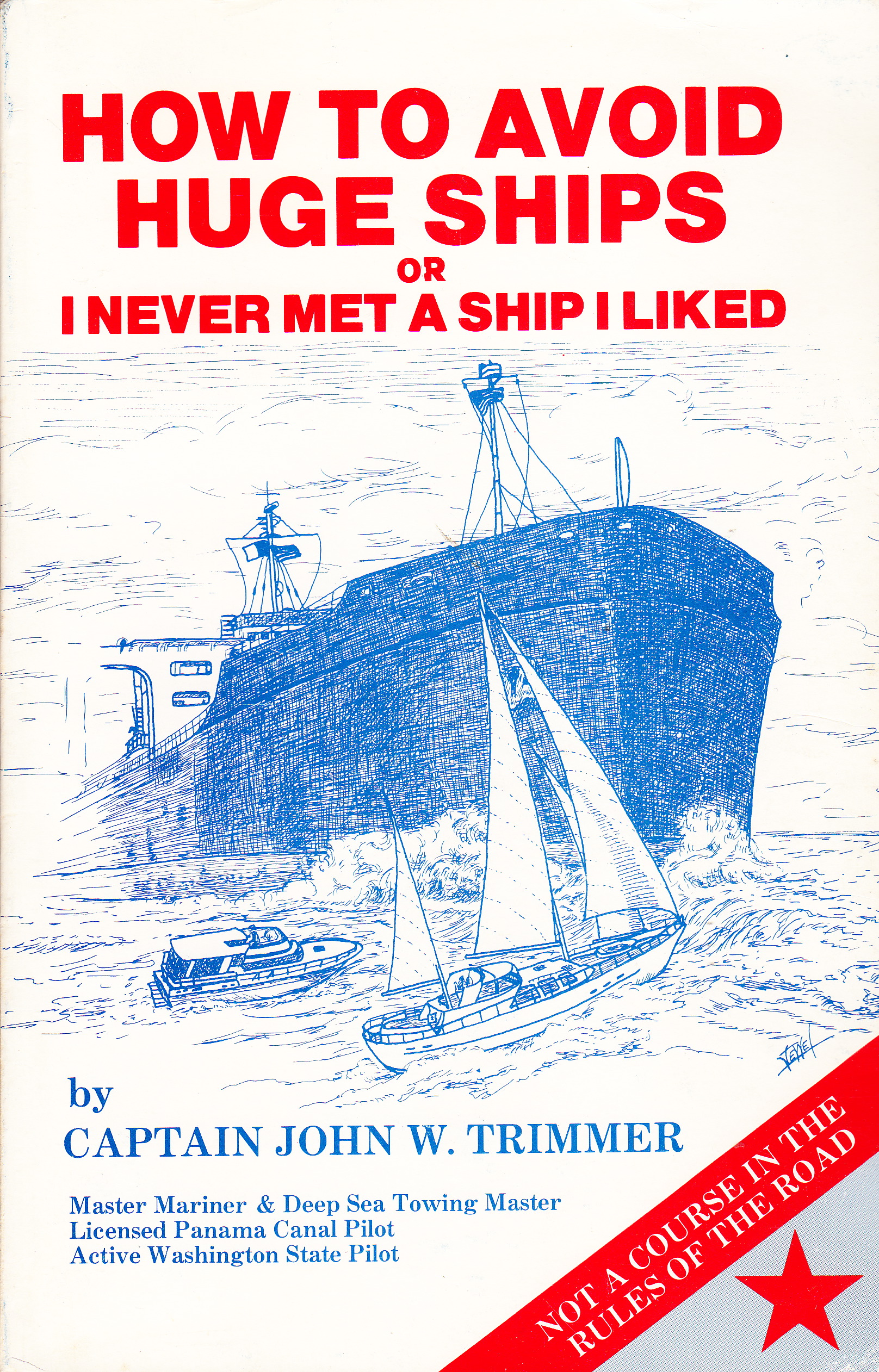 I’m always on the lookout for a good metaphor. Some time ago a humorous list of improbable book titles was circulating the internet. One of those books was How to Avoid Huge Ships, by Captain John W. Trimmer. Privately published, it surely made its author little money, and it quickly became one of those books with hilarious, bogus reviews on Amazon. My family, knowing my predilection for seafaring (at least in imagination) and my love of irony, found an overpriced, used copy for my birthday. I was glad to have it, but wasn’t sure I’d ever read it. I don’t own a boat, and my efforts to live on the coast have always been thwarted. But then, I’m always on the lookout for a good metaphor.
How to Avoid Huge Ships, subtitled I Never Met a Ship I Liked, is one of the most parsimonious books I’ve ever read. Trimmer, a veteran of many years at sea, writes with paternal concern for those who have no apparent sense of reason. Large ships, as most of us with a modicum of physics realize, can’t stop or turn quickly. Yet, in this spellbinding little book, Trimmer reports, and even provides photographic evidence that smaller, private boats often deliberately cut across the bow of these fast-moving juggernauts. As he points out, no license is required to drive a boat, and most small boat pilots have no training. Accidents and fatalities occur. People destroy exorbitantly priced yachts by not moving out of the way of what can truly be called a monster. And like an impatient father, he’s somewhat weary of it. The style is so unpretentious that it might redeem self-publishing in an era when common sense doesn’t interest commercial book houses.
Aware of his own literary limitations, Trimmer bemoans not having an exalted final chapter of great wisdom. He’d already won me over, however, with the simplicity of his sermon. Get out of the way of massive ships. It is a gospel for those with ears to hear. He even points out that the non-seafaring Israelites had respect for ship pilots (citing Ezekiel on Tyre, with decided hints of Melville, intentional or not). I’m not likely to be on a ship soon, but I have survived a horrific hovercraft trip across the English Channel that forever taught me the true respect for the sea. And I know, if I ever find myself again upon the waves, I will consider myself fortunate for having read this wonderful little book.

