Cthulhu’s Revenge

H. P. Lovecraft. Monsters. Aliens. UFOs. Ancient Egyptians. Sumerians. Is there nothing this book doesn’t have? Having read many of H. P. Lovecraft’s stories over the years, I have always been taken by how, as a writer, Lovecraft disappeared from public attention only to spring back in the 1990s. I discovered Lovecraft while doing research on Dagon, the putative “fish god” of the “Philistines.” Every time I typed the name of the deity into Google, I came up with pages and pages of Lovecraft. In my lonely room on a gray Wisconsin campus, I began to read his stories and shiver with fear as I walked across a dark parking lot to my car. Jason Colavito obviously has a great appreciation for Lovecraft as well, and his book The Cult of Alien Gods: H. P. Lovecraft and Extraterrestrial Pop Culture is a fun read for a November night. Colavito suggests that the “ancient astronaut” craze that has informed many a young mind stems back to Lovecraft’s fiction. Cthulhu and his ilk.

I’m not sure that Colavito convinced me that the ideas of ancient aliens began with Lovecraft, but he does an excellent job of exposing the foibles of many theorists who build houses of cards on shifting sand. One of the most interesting connections Colavito makes is that Creationism and Ancient Astronaut-ism are not dissimilar. “Both are, in essence, a concession that science is the ultimate arbiter of truth, and both seek to (mis)use science to give absolute authority to their beliefs” (331-2). This is an aspect of Creationism I hadn’t considered before. In the uncompromising desire for scientific respectability, the only option open is to bend science to the will of religion. This distortion must be carefully executed, convincing the followers that true science has validated a religious ideal. Rhetoric and occluding argumentation must be utilized carefully here. It seems Cthulhu has world domination in his squishy mind again.

Lovecraft famously gave us fantasy worlds where ancient space creatures left their impressions as gods upon a vulnerable humanity. Mysteries of the past—and Colavito doesn’t deny there are mysteries—are so easily explained by dei ex machina, and working with fantasy is so much easier than working with physics. To approach the mysteries with an answer already in hand, however, is to deny science its glory. As a civilization we owe much to a scientific understanding of the universe we inhabit.


Raising Cain

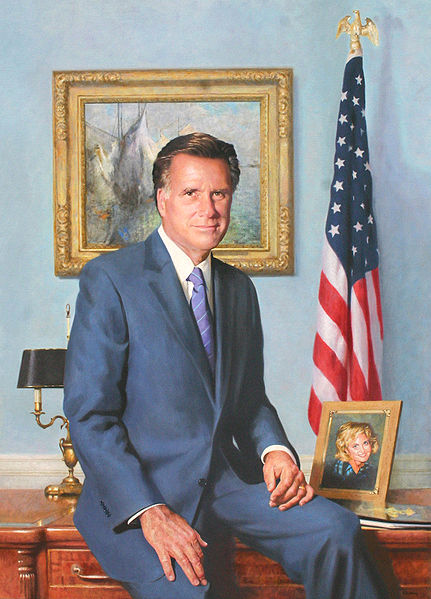
The Bible doesn’t contain many good horserace stories. The early stages of a presidential candidate race, however, are rather like a horserace (I don’t pay much attention to either). Unless one (or more) of the horses get religious. It seems that a candidate can’t cinch a Grand Old Party nomination without laying bets on religion. I’ve no idea how religious Mitt Romney is, but his religion itself forces the issue. Rick Perry wears it on his sleeve and in his pious grin. The keep in the heat, Herman Cain has now pulled out his religious credentials. God told him to run for president. So he says. Since the Bible doesn’t mention any candidates by name, we have to take his word for it. (Although I doubt Cain actually wants to be associated with his biblical namesake.)

God’s been down a bit on the divine luck lately. With all the causes the Big Guy has supported being lost to others (one thinks of the “Gott und Ich” mentality that stretches far back beyond World War One) you’d think that those chosen by God might keep the matter quiet. At least until the results are assured. Once that card has been laid, to shift metaphors, it can’t be trumped by any other. A card laid is a card played. How can a candidate climb higher than God for the next debate? And when one or another of God’s chosen loses—and this is inevitable—it is clear that God is dragged into the mud with the almost chosen candidate.

There has been much talk and debate about the role of religion in government. In a nation as religious as the United States it is purely impractical to keep the two impolite subjects apart. We only want a religious man in the White House. Preferably Protestant, but beyond that any flavor will do. In the 80’s at least one was Tutti Frutti, in a manner of speaking. The actual religious beliefs expressed by our national leaders would certainly lead to raised eyebrows among the truly conservative, if such matters truly mattered.

Back in college, it was considered wise advice never to try to stuff any variety of underwear in order to create an illusion of size—such tactics are bound to end in disappointment. It is lesson that politicians never learn. There will always be some disillusioned followers the morning after, unless, of course, the racehorse analogy is the proper one. And the Bible will back me up on that.

It's all in the reading


Master Cat

Okay, so I’ll confess having gone to see Puss in Boots yesterday. The movie had been getting good reviews and I’ll admit to really liking the first Shrek movie. The second Shrek movie, with Puss’s debut, was not bad. After that something changed. Anyway, it looks to be an intense week ahead, and I needed a little mindless release. Often on this blog, I mention horror movies and how fear ties into the concept of religion. Since working at Routledge—a publisher noted for its many books on religion and film—I’ve taken a renewed interest in finding the religious imagery in many different genres of movies. This is something I regularly undertook as a religion major in college and beyond, but it is an area of renewed interest in my mature years. So it was off to the theater.

One aspect of Puss in Boots, however, proved a distraction to me. The character of Humpty Dumpty scrambled in my mind with the same off-color image of the egg man in Jasper Fforde’s The Big Over Easy, a book I read this summer and blogged about earlier. In both stories, the egg was not what he seemed to be. A foodstuff with a decidedly darker side. In both stories, however, Humpty Dumpty was somehow vindicated, more a victim than a perpetrator of crime. It is not always easy to be a good egg. In Puss in Boots, however, this is where the religious imagery came in. The fractured fairytale storyline has Puss and Humpty (and Kitty Softpaws) growing a giant beanstalk and stealing the golden goose’s gosling. This is part of a twisted effort at revenge by Humpty; a kind of egg’s Benedict Arnold moment. Well, this is a children’s movie, so nobody is really bad. Humpty repents and sacrifices his own life to save the town. When he falls to his death, a golden egg is revealed inside. Mother Goose flies the golden Humpty up to the castle in the sky, disappearing in a blaze of heavenly sunlight. Life after death, the eternal reward. Heaven, Hollywood style.

Movies often serve as a source for and reflection of social values. Thus watchdog groups keep a close eye on what the silver screen reveals. Puss in Boots passes the test on highlighting the redemption theme. Although he is still a wanted criminal by the end, Puss (as well as Humpty) achieves redemption by making good on all the wrongs he committed against society. Almost sermonizing at points, the movie is another example of how mainstream media ends up on the side of traditional values. A deeper truth, however, may lurk beneath the celluloid. The true hero here is the Spanish Puss rather than the Angelo Humpty (and decidedly red-necked Jack and Jill). The religion it underwrites is, naturally, the civil religion expected by American audiences. Just maybe there is an awareness of social justice here as well.

The original


Jesus? No News

Stepping into the Port Authority Terminal in New York City may be the last place I expected to see Jesus. But there he was, at Hudson News, his beneficent face forming a repeating mosaic before the hurried and harried commuters rushing to get to work. U.S. New & World Report’s special issue features Jesus. Obviously. Racking my half-asleep brain, I couldn’t think of any reason for this sudden popular epiphany; it seems out of sync for Christmas and Easter, and no big news discoveries in the archaeological world had been recently announced. Perhaps the editors know the American Academy of Religion and Society of Biblical Literature annual meeting is coming up next week. Getting 10,000 scholars of religion together in one location is enough to make even the most hardened skeptic pray for a miracle. So, what are these “Secrets of Christianity” that call for a special edition?

The sidebar taunts: “New Insights on His Life and Death,” “The Mysterious Virgin Mary” and “Has His Tomb Been Found?” I am curious about what makes Mary mysterious; she is a minor character in the Gospels who rose to a mysterious prominence only with Catholic hagiography. Well, the sidebar does also state that the special edition has “An Excerpt From Pope Benedict’s New Book on Holy Week.” Spoiler alert! Please keep in mind that Holy Week is months away yet. Perhaps it is in response to the overly religious tussle that is going on with Republican presidential candidates. What was once a forbidden topic of discussion is now headline news, and the average person might feel the need to brush up on Christianity 101. Problem is, apart from the Gospels—and their brief is not always historical—we have very little in the way of evidence about Jesus. In the first century he was just another radical rabbi, not likely to have garnered much public notice until after his martyrdom. That means that the smallest nuggets become huge in a world where we simply don’t know.

The cycling and recycling of Jesus into the public consciousness is big business in America. With the frenetic faith claims of political candidates lacing the headlines, it is almost like a high school locker room with each contender claiming to have the bigger God. Cracking open the magazine on my lunch hour confirmed my suspicions—there’s nothing here that scholars haven’t known for years. Problem is, scholars don’t speak on a level that most people can hear. I don’t recall the last time I saw a professor taking a bus or hanging out in a bus terminal. That’s the thing about Jesus, you can always find him hanging out with the common folk. If religious specialists would learn to speak in plain language there wouldn’t be so many “Secrets of Christianity.”


Sacked!

Higher education has made the headlines of the New York Times, page one. Of course, it has nothing to do with education, but with sex and sports and money—a kind of Trinity that has come to embody what truly drives education in the United States. Sports have long been associated with fitness, and fitness has a role to play in mental acuity. Games like those of the ancient Olympiad, however, were not part of the symposium as much as they were a deterrent to warfare. Representatives from towns all over Greece could see where the best martial skills resided (the games were modeled after behaviors of utility on the battlefield) and those who made the best showing were likely not wise to quarrel against. I suspect some vigorous sex followed the heroes of the sports field after the games. They were Greeks, after all, and laurel leaves are fine and good, but not so tangible as a reward.

I’m not a sports fan. I know very little about sports figures and even less about statistics. It was, however, impossible to grow up in Pennsylvania and not know the name of Joe Paterno. He made the news so often that no matter which college you attended he felt like your coach. (I am guessing here.) Even as an undergrad, asked to name one faculty member at Penn State, I would have fumbled. I could tell you the head coach of their football program, however, without having ever watched a game. As a society we decide by our accolades where our values will reside. There can be no question that sports prowess is highly regarded. Those who supposedly teach guys to do it better are like gods. When was the last time academic achievement at a university made front page of the New York Times?

Back in my ill-fated days at Nashotah House, believe it or not, I was on the seminary football team. Our season was one game long; we played the rival, “liberal,” and now disbanded, seminary, Seabury-Western. I was recruited because our student body was so small and I was relatively fit for a faculty member. If I am to be honest, a strange transformation took me over on the field. Those who don’t know me will have to take my word for it that I am a pacifist, a gentle and very shy person. Although the game was flag football, I earned more respect with the one flying tackle I perpetrated than I ever did by my teaching acumen. Where your treasure lies, there will be your heart also. So Paterno has been sacked. Join the club. If there were any cosmic justice we’d next see his god-like face at Occupy Wall Street. Instead, I imagine his consultant and endorsement fees will more than make up for a paltry lost job in higher education. Go Nitanny Loins!


Science of Religion

People do strange things when they are together. Phil Zuckerman’s Invitation to the Sociology of Religion (Routledge, 2003) is an informative whistle-stop tour of how social scientists view religion. Back in college sociology classes involved so many stats that it felt like a math class, so I was pleasantly surprised when I could read this treatment without a calculator or graph paper at hand. Sociology, of course, is all about how people behave in groups. Religion, as commonly defined, is a group phenomenon—people are religious together. Nevertheless, the study of religion from a sociological point of view does raise some uncomfortable issues for many people. Chief among them are the facts that religion is generally determined by where and when you were born and by the social forces surrounding you—it is learned, not revealed. Even religions that teach revelation of their divine origins generally don’t expect individuals to receive the religion by revelation, they receive it by social instruction.

Naturally sociology does not attempt to answer the question of where religion ultimately comes from. Religion, however, is something people do, and, unless one happens to have the correct religion (don’t we all?) then everyone else’s religion is made up. Sociologists would tend to see all religions as being human constructs. Zuckerman’s treatment is pithy and punchy and fun to read. As a college student at a confessionally-affiliated institution, our classes were entitled “Christian Sociology.” That is shorthand for sociology with a pre-decided bias. It was not sociology of religion, but sociology by religion. In many respects, reading Zuckerman’s treatment was affirming much that I had already observed, but having it placed in a scientific framework made a world of sense.

In many universities there a basic misunderstanding still reigns; many administrators do not realize that the study of religion is the study of a social or psychological phenomenon. Zuckerman demonstrates once again just how important this study is. It is no understatement to say that the entire “social contract” of the United States was constructed under heavy Christian influence. Zuckerman’s discussion of sexual mores alone should prove that point. We have the outlook we do because of the incredible force Christianity exerted on the developing religion of the western hemisphere beginning with the Roman Empire. Once those viewpoints have been deeply embedded, many, many generations deep, the chances of getting out for an objective evaluation are slim. That’s why we need our sociologists of religion. If more people were aware of what we know about socially defined religious parameters, the more they’d realize we need to pay much more attention to religion than learned doyens of human behavior often do.


P. T. Mammon

Phineas Taylor Barnum is frequently treated as a figure of cynicism personified. As the founder of what would eventually become the Ringling Brothers, Barnum and Bailey Circus, P. T. was a noted hoaxer and scam artist. He capitalized on the fact that people will pay to see anything they are gullible enough to believe. Unfortunately, many human beings were exploited for their unusual characteristics, but he was also known as a philanthropist with an eye for reform. Most people don’t realize that Barnum’s early career involved being a salesman for the Sears’ Pictorial Illustrations of the Bible. From Bible salesman to huckster extraordinaire. The great American success story.

In what I see as a related article on Religion Dispatches, St. Paul’s Cathedral, London, has taken legal action to move Occupy London protestors from its property. As religions go, it is difficult to conceive of a more established, conformist church than the C of E. (Well, maybe the Roman Catholic Church could vie.) St. Paul’s Cathedral actually charges an admission fee (not a cheap one either), perhaps cashing in on Mary Poppins; Feed the Bishops, I believe it’s called. The reason that the Cathedral is seeking to remove the undesirables (the cathedral is next door to the London Stock Exchange) is that they interference in business. Hard to charge admission to people who can’t come in. It’s not so much to save souls as it is to horde pounds. Problem is, the message of ancient Christianity more closely matches that of the Occupy movement than it does the Church of England. Barnum knew the selling power of religion. So do bishops and countless priests. How long do you suppose the clergy would remain if Christianity went back to the “tent making” model of the first century? I suspect there would be quite a few more prelates at Occupy London.

Somehow money and religion have become all tangled together. Not that I would begrudge any clergy of a fair salary—I’ve been on the receiving end of not receiving adequate pay myself, and I wish it on no one. When money, however, is the sine qua non of the religious establishment, where has compassion gone? One would like to think that clergy would be among the first to stand in solidarity with those protesting unfair business practices. But ah, the church is very establishment-oriented. Not just the C of E, either. Most churches have fallen into the comfortable zone of supporting the system and teaching their adherents that this is all in the divine plan. A kind of cosmic quid pro quo. According to the Gospel writers Jesus chased the money-changers out of the temple. Phineas Taylor knew that giving people what they wanted often trumped the honest truth. “The noblest art is that of making others happy,” he once stated. Somewhere along the line, the admission price shifted from the circus to the cathedral. There is one born every minute, indeed.


Bull Shot

Sitting on an idling bus in the Lincoln Tunnel, I supposed I was too far underground for an epiphany to hit me. Then, on the way to Third Avenue it descended on me. I was passing one of the countless gift shops of Midtown when I saw it—a miniature replica of the Wall Street Charging Bull statue. Golden calves come in all sizes and shapes and when they grow up they may be very aggressive. Deadly even. Movie makers have long recognized the deep symbolism of the golden calf. And not just Cecil B. DeMille. Dogma, perhaps the most notorious of the anti-religion, religious films, centers around Mooby, a cartoon network golden calf, for one of its subplots. Even Bruce Almighty has the eponymous Bruce leaning back against the statue of a golden calf as he enjoys his new success in his new house, empty of all personal satisfaction. The list could go on. And of course, Wall Street.

What is it that makes us believe that gold leads to happiness? We all want it, if we are willing to look into the mirror with any semblance of honesty. Maybe we don’t want to be filthy rich, but who doesn’t really want to just kick up their heels and let their lucre do the work for them? Enter the “Prosperity Gospelers”—God wants it for you. Even if you demure and lower your eyes coyly, wealth will find you. And like that idol on Wall Street, calves grow up to be bulls. The horns of the dilemma are almost too literal. For a fulfilling life, give it all away. Like a misdeed long past, still unatoned, that bull follows you. You can’t escape a charging bull.

The episode of the golden calf in Exodus 32 is one of the more disturbing scenarios in Holy Writ. Moses, alone wreathed in the glory of the Almighty keeps forty days of silence and, tellingly, the clergy construct a golden calf. Probably an image of Yahweh. The next morning, “the people sat down to eat and to drink, and rose up to play.” Until distant Moses returns home. The calf is burned and ground down to dust, the people drink it, and the Levites kill three thousand of their compatriots. Prequel to Jonestown? “For Moses had said, Consecrate yourselves today to the LORD, even every man upon his son, and upon his brother; that he may bestow upon you a blessing this day.” The killing of their neighbors is their ordination. A blessing bestowed upon those who would worship the golden calf. That 7000-pound charging bull will follow you, even into the tunnels and tabernacles. When the golden calf is loose, no one is safe.

Bull comes in all sizes


Jew Want Some Jesus with That?

There’s been a trend in the last few years of journalists following a religious lifestyle not their own to learn something of another faith. This often leads to whimsical—occasionally funny—books that generally sell well. I appreciate the effort of those who try to open their minds to other belief systems, but the truly funny thing about religions is that they are very difficult to study objectively. There is a universe of difference between studying the papacy and being a Pope (I am only guessing here). This aspect of the religious explorer came through quite clearly in Benyamin Cohen’s My Jesus Year. Cohen, an Orthodox Jew, without compromising his faith, spent a year of Sundays attending various churches with two goals in mind: to learn more about Christianity and to appreciate his own Judaism more. The result is, for someone raised in the Christian tradition, a little disorienting.

We seldom tell children about other religions since such information would imply that religion is a choice, a marketplace. We prefer to tell our children that our brand is the right one—the only right one—because that is what we believe. By the time most children encounter those of other faiths, the indoctrination of their childhood has congealed. Many Christians will send their children to Christian daycare, often followed by parochial schools. Where would they expect to meet their first Muslim? Unfortunately, it is often on the battlefield. By protecting our children from the dangers of foreign faiths, we endanger everyone involved. So, reading a book written by a Jew, I felt a little strange—as if maybe Christianity wasn’t the majority faith after all. Given the wide diversity of Christianities Cohen cites, this is not so strange after all. Am I more like the evangelical Ultimate Christian Wrestling crowd or the Roman Catholic doing crossword puzzles during mass? Or none of the above?

Cohen notes that evangelical pastors (or laypersons, Christian or not) will sometimes share their secrets of success with those of other religions. Tellingly, he quotes Bernie Marcus, co-founder of Home Depot, explaining to rabbis how they might drum up more excitement: “You’re in the marketing business; you’re selling a product. You’re selling religion. It happens to be something that’s good for people. But you can’t get to them to sell them the religion because you’re in the marketing business and you don’t realize you’re in the marketing business.” Is that what it really comes down to? Religion is frequently described as a marketplace; it is the only paradigm available for the true capitalist. We’ve seen it take over higher education, and now those who give advice to religious leaders are the captains of industry. We have become victims of our own success. There was a time when religion stood outside the ordinary, but now it can be packaged and marketed and sold. An excellent exercise on your way to the store, however, is to stand back and listen to the other customers. If you are lucky, one of them will be Benyamin Cohen.


Bonfire of Vanity

“Remember, remember the fifth of November, the gunpowder, treason and plot…” V for Vendetta is movie that gets me every time. It is not that I want to see venerated buildings destroyed, but I do want change. Very badly. When visiting Occupy Wall Street last week, I saw protestors wearing Guy Fawkes masks, made popular by the movie V for Vendetta. Verily, I had to smile. We may remember the Gunpowder Plot and how the victorious forces of the monarchy stopped Guy Fawkes just in time, but how often do we remind ourselves that the story revolves around religious liberty? Finding their religion outlawed, Guy Fawkes and his co-conspirators tried, in a very unorthodox way, to make a very valid point: conscience cannot be legislated. Indeed, in the movie, the political powers claim that it is “Godlessness” that has led to the villainy, the decline of society. In fact, however, it is that the vices of the rich and powerful have turned them against their voiceless commoners; vanity has led to this dystopic future.

Once more we find ourselves at vespers on Bonfire Night with wealth firmly in place, political, religious, and economic powers secure. And many cold, hungry, and without a vestige of hope. I’m not sure there is a solution to this problem, but if religion has taught any lesson of value at all, it is that we must try. We must venture to make the situation better. Even those who wallow in the status quo want growth and development, albeit for themselves, claiming it only a venial sin. If the human race is not to go extinct, ossified before its computer screens, iPhones, and televisions, we must use our voices. We must stand, and it is vital that we stand together.

“An idea can change the world,” V tells Evey near the beginning of the film. Once the leaders of the government take military control, the freedom of expression is soon vanquished. Books are not to be found, visual art is considered dangerous. Questioning those in power is the very stuff of treason. In my short time I have seen us coming dangerously close to that mentality and calling it visionary. When people are afraid they will close in around the virile leadership of guns and violence. But fear may be vanquished in another way. When we recognize that we are part of something greater, when we relinquish what is “rightfully” ours to help others, when we join in that great collective called humanity, fear itself will vanish. It is not just vaunted Wall Street that must be occupied. No buildings have to vacillate and fall. We must Occupy our Minds, for rage as they might, the wealthy and powerful cannot control a venerated idea. “Remember, remember, the fifth of November…”

Villain or visionary?


Dead Sea Souls

The Dead Sea Scrolls are coming to Times Square. Times Square is the kind of place where you know your being sworn at, but you’re never really sure in what language. It is a place of the people. So the sacred meets the profane. Mircea Eliade would be scratching his great head with his pipe firmly in hand. The Dead Sea Scrolls are the sexiest of ancient documents. Their story has it all: mystery, intrigue, conspiracy, romance—well, maybe not romance. A chance discovery by dirt-poor Bedouin in a desert, ads being taken out in the Wall Street Journal, clandestine meetings with ancient texts being viewed through a hurricane fence in a forbidden zone. And do those scrolls ever get around! I first saw them (those that are accessible to the public) in Jerusalem. The next time was in the Field Museum in Chicago. Now I’m feeling a bit blasé about the whole thing.

Those of use who’ve spent much time (too much time) with ancient documents relating to the Bible know that the Dead Sea Scrolls require no introduction. The far more interesting (and sexy–yes, literally sexy) Ugaritic tablets still receive slack-jawed stares of unrecognition, despite their importance. Those who read the stories of Baal, Anat, El and Asherah wonder why the “Classics” only begin with Homer. People have been creative with the gods since writing began. The theme of the human race might be summed up as, “if the gods are so powerful, what am I doing in a dump like this?” Fill in the blanks—that’s religion. From the beginning, once we’d come up with gods, we began to wonder why they treat us so. People are on the receiving end and so many things can put gods into a bad mood. It’s your basic dysfunctional family.

No doubt the Dead Sea Scrolls are important. We have learned much about the context of early Christianities from them. They provide the earliest manuscript evidence for the Hebrew Bible. And they’ve got that Dead Sea mystique. When I read the story of their discovery, I understand why crowds will flock into a tight room to stare through the glass at a bit of shriveled parchment that most of them cannot read. It’s like standing next to someone famous and powerful; maybe Moses or King David. Or more famous and powerful, like George W. Bush. I know, that was the last administration. But the Scrolls come from an even earlier one. I just hope somebody will give me a call when they find one that tells what happens when Baal meets Astarte. That will be worth the price of admission! And, who knows? It might even fit in with the spirit of Times Square (pre-Disney, of course.)


The Fires of Bureaucratic Porn

My hopeless naivety must show through on this blog from time to time. I mean, I once walked into a Fossil store expecting to find impressions of dead animals instead of trendy accessories. Maybe it is because I grew up in a small town, without cable, with a regular regimen of church attendance and associated activities. Being working class often means taking things at face value. You learn pretty quickly that you don’t have much control over the things around you—someone else signs the checks, and if you don’t do what they say, the checks don’t get signed. I grew up in a refinery town doing lots of dirty jobs. “Excuse me sir, but do you have any trilobites?” There’s one born every minute. Well, more frequently than that, actually.

Thus it was with a certain wonder that I first learned about another small, Pennsylvania town with an unearthly problem. David DeKok’s Fire Underground: The Ongoing Tragedy of the Centralia Mine Fire is an unsensationalized ride through the reality of bureaucratic lack of heart and the weighing of peoples’ lives in the scales of cost effectiveness. The Centralia mine fire began the year I was born (1962). It still burns today and has enough fuel, some reports suggest, to last for a thousand years. This is a hellish millennium. Accounts of elderly citizens awaking in the middle of the night with carbon monoxide clouds in their basements, ground temperatures hot enough to melt blacktop, bore-hole readings of over 800 degrees. Under what’s left of the town of Centralia, the heart of the fire is hotter than the surface of the planet Mercury. What DeKok provides is a step-by-step analysis of political side-stepping. Realizing how expensive it had become to fight this fire underground, state officials were repeatedly caught with their skirts over their heads, claiming that they were wearing full-body armor underneath. During the height of the crisis, in the Reagan and Thornburg years, cutbacks in vital services left the working people of this town in an impossible predicament. Those in positions of power would not even change their vacation plans to try to save a thousand lives. When the smoke clears, after a millennium, if there’s anyone left to write histories, we will see where unchecked greed and ambition lead. It is the only hope we have. The book reads like porn for bureaucrats.

In my hometown we worried about refinery fires when I was growing up. As a child I saw such a fire from a distance; it looked like an entire hillside (a mountain in my naive eyes) was aflame. My brothers and I went outside to gather ashes as large as dinner plates that were floating through the sky, falling like demonic snow. (We doubtless would have kept them, alongside our fossils, had my mother not sensibly put down her foot.) Later, when we drove out that way, we saw the great steel vats that held 260,000 gallons of petroleum products bent and folded over like the hem of God’s great robe in the temple. Over forty years later the image is still vivid in my mind. Those who’ve lived with fire know the danger better than plutocratic oligarchs who view human lives in terms of the bottom line. One truth of physics may come to our aid, eventually; heat does rise. Whether it will ever reach the level of those in power, however, will only be answered when I find that trilobite I’m seeking amid the expensive watches and wallets of the Fossil crowd. I’ll find one too, before the Centralia mine fire burns itself out.


All Saints

The movies of Guillermo del Toro, despite their success, must be watched with an astutely analytical eye. Although my movie watching runs a few years behind at best, a recent viewing of Pan’s Labyrinth left me feeling a little hollow and very reflective. The gruesome story is well told, and the fantasy world, even at the end, is hardly believable. Like most films that deal with disturbing issues, religious concepts are not far from the surface, or sometimes, the depths. In this case, the distinctly Christian trope of self-sacrifice opens a portal to a mystical world where a God-like father sits on a shining throne. But is it real? We are warned from the very first scene that this will not end well for young Ofelia, that “heaven” is but a fantasy seen through the hopeful eyes of a dying child. Even the faun (“Pan” of the English title) wears horns that suggest to modern minds the slightly diabolical, although he is in the service of the mystical king. I was so conflicted by end that I was glad the next day was a workday.

It is not difficult to notice that the heroes of the film are the female characters. Even the good men are generally ineffectual, but the strength of Ofelia and Mercedes bear the weight of showing any hope at all. Captain Vidal betrays his name of “life giver” time and again unless life is understood as unremitting pain and torture. Even the end of the film is set up as someone having to pay the price; the king demands innocent blood—will it be Ofelia or her baby brother? Of course, the girl must pay the price. In an interesting interpretation of the sacrifice of the only child, the daughter here becomes the savior.

Fantasy often has the power to heal. This is a key aspect that it shares with religion. Scientists have sought in vain a mechanism that would explain the brain’s remarkable ability to heal the body under conditions of belief. At times we’re reduced to name-calling, suggesting that somebody’s got something up their sleeve. After all, could a disreputable character like Rasputin really hold the key to physical wholesomeness (to say nothing of moral rectitude)? And yet, there are those who are made well by the most unlikely means.

The peoples of northern Europe believed that the veil between this world and the next was severely effaced at this time of year. Darkness is more prevalent than light. Pan’s Labyrinth begins and ends in darkness, and even the daylight—when it briefly occurs—is subdued. With Halloween behind us, the most veracious season of the year
lies ahead. Let us hope that this labyrinth contains fantasy.


Twin Towers

The newly opened World Trade Center memorial in Manhattan is truly a solemn place. Staring into the seemingly endless holes into which the water forever pours, one feels the emptiness of loss like a thousand graveyards. Like watching the Titanic sink from a lifeboat. In the chilly late October morning hundreds were huddled about, looking at those reflecting pools with an undefined sadness in their eyes and a sense of frustration in their souls. So much loss. And for what? The American way of life has its towering foibles as well as its nobility. The protesters of Occupy Wall Street are mere blocks away in Zuccotti Park, reminding the nation that we have forgotten the principles of human decency even while we honor the fallen dead. It seems an appropriate epitaph for All Hallows Eve—a peaceful park where hundreds died just blocks from where hundreds camp in the cold. It is not too late to stop this ship from striking the iceberg.

Ground Zero

The symbol of peace, given to us by the Bible, is the olive branch. Actually the olive branch comes from the story of the flood; it is less a sign of peace than it is a sign that some of us have survived the wrath of God. Read into that what you will. The olive branch only comes after all but eight people pay the ultimate sacrifice. It is peace on the terms of a vengeful deity. Near the center of the memorial, one tree stands out. It is not an olive tree. After the devastating attacks of 9/11, workers found a living Calleri pear tree among the rubble. The scorched and battered plant was taken to a nursery where it recovered. It stands now in the midst of the peaceful reflecting pools, bearing not olives, but pears. The tree was saved by human effort, a symbol of peace, survival, and endurance.

A different kind of tower

I spoke with one of the protestors in Occupy Wall Street, and gave him encouragement. I suffered unemployment for long years when the weight of the flood crushed me to my own ocean floor. Loss and more loss. I was moved to tears in the World Trade Center memorial. The decision not to build again on the site where the Twin Towers stood is a symbolic statement to those who believe that evil triumphs in the end. The god of those who destroy others in the name of their faith is the god who destroys innocent and guilty alike in worldwide floods. This is a god who offers people with no knowledge tempting fruit that they are not permitted to eat. Nowhere in the Bible does it state the species of the tree of knowledge. Is there anyone left innocent enough to tell? Artists like to use an apple, an idea based on the similarity between the Latin words for evil and apple. I believe that loss of innocence was the price of maturity, and I believe the tree of knowledge might just have been a Calleri pear.

Peace


Zombie Jesus

It must still be October. Despite a snowstorm before Halloween (one of nature’s trick-or-treats), all the signs are still there. My daughter showed me a Venn diagram yesterday, during a whole-day marathon of putting plastic around our drafty old windows, showing the intersection of three “monster” traits: resurrected from the dead, local townspeople fear and revere him, and convert as many mindless followers as possible. The creatures that inhabit this eerie universe are Dracula, Frankenstein, Zombie, and, where all three intersect, Jesus Christ. Obviously this was just for a laugh, but interestingly, one of the traits of Penn Jillette’s book, God, No!, is his rather frequent reference to Jesus as a zombie. Then I clicked over to Religion Dispatches, and the lead story is headlined, “Praying to the Zombie Jesus.” Ours is a world of mindless, quick connections where the compelling idea of resurrection has lost its appeal. Despite our religious culture—or perhaps because of it—we have come to see Christianity as just one more peddler of a wonderful, disturbing idea.

As regular readers of this blog know, I find the abuse of religious ideals inexcusable. Using one’s faith to beat another down is just plain wrong. Nevertheless, to focus on the folkloristic aspect of resurrection (or perhaps it is a metaphor) is to miss what drew the very earliest followers to Jesus. Before the idea of rising from the dead came a message that people should love each other and treat one another with respect and dignity. By the end of the first century of the common era, or perhaps as early as Paul, that idea grew to be a quasi-magical resurrection from the dead. No longer were women counted as equals among the followers of Jesus, and no longer were wealthy compelled to give it all up. Paul’s faith looked to a future world, beyond death, and was willing to consider this world, well, to be polite, crap. The reasons for this transformation are legion: the persecution that Christianity was undergoing, the failure of an apocalypse to take place, the disenfranchisement of the believers. They needed something to look forward to.

Zombies are likely a passing fad. When we start seeing books of zombie Christmas carols, zombie haikus, and zombie apocalypse survivors’ guides, we seem to be reaching the peak of the plateau. The zombie is mindless, rapacious, and entirely selfish. It will not go away. It is the perfect denizen of October. When I stare into those uncomprehending eyes, and see the disturbing lack of compassion and the desire to consume human brains, I start to make connections of my own. Analysts often describe zombies as the ghoul of the common folk. But all these characteristics taken together suggest that perhaps the month in which to expect zombies is November. Surviving another snowpocalypse, earthquake, and hurricane, the human spirit is difficult to dominate. And yet, when the polls open up in the darker season of the year, zombies will rise. The plastic on my windows does nothing to stop these chills.

Borrowed from a friend's site