Horror Homework

If you write about horror movies, you have to do your homework.  Of course, this means time away from house work (the weeds love all this rain and hot weather) and regular work (which can’t be compromised).  Mario Bava has often been cited as one of the influential horror auteurs, but until this year I’d not knowingly watched any of his films.  So, homework.  I saw a list of movies that made an impact, and one of them was Blood and Black Lace.  It’s horror of the giallo subspecies, never my favorite.  But it was free on a commercial streaming service, so, well that homework’s not going to do itself!  This isn’t generally considered Bava’ best work.  Besides, giallo is murder-mystery and I prefer monsters.  Who wouldn’t?
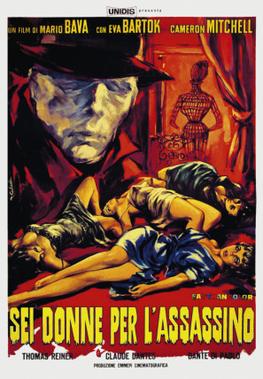
This film, with its lurid colors and stylistic cinematography, does make an impression.  The acting is poor and the script even worse—apparently it didn’t lose anything in translation.  A crooked couple run a fashion salon.  (There will be spoilers, so if you’re sixty years out of date, be warned.)  One of their fashion models is murdered, but when another discovers her diary the body count mounts.  The film lingers over the murders, which, I suppose, is one of the reasons it’s classified as horror.  With the film’s problems, however, at least this far removed, the whole thing begins to look rather silly.  The women have to die because of the first woman’s diary.  The police are singularly ineffectual, not even taking standard kinds of precautions.  Even with a run time of only 88 minutes it felt too long.

Horror in the sixties was still finding its way.  I’ve been watching a number of movies from that era—generally considered a dry spell for American-made horror—and the results have been interesting.  There are some gems tucked in amid the gravel.  What we’ve grown to appreciate in more contemporary horror cinema learned a lot of lessons from these early exemplars.  I could see foreshadowing of Suspiria here.  I’ll need to do more homework to find other direct descendants, though.  Blood and Black Lace suffers from having too few characters you get to know well enough.  The models, who all seem to have some secrets, die off before we get to know them.  Even the criminal pair behind the killings die in the end.  There’s a kind of nihilism to the story, and it’s all done for love of money.  The story could’ve been better, but you have to start somewhere when growing a genre.  And doing homework.


Toothsome Books

A visit to the dentist always entails a certain amount of anxiety.  Will the sins of my mouth have caught up with me?  Are my sleepy nights’ brushings thorough enough?  Is that spot where I declined to have a false molar replace the missing one causing any problems for the teeth above?  That kind of thing.  In any case, I like our dentist.  The town we live in, which is small, has four dentist offices.  The one I selected is run by three women and instead of always getting the same mouth doctor, on a standard visit you meet with the one who has an opening in her schedule.  I like to support women-owned businesses.  But still, the anxiousness.  Something happened on my last visit that may help.  I’ll try to remember it.

Unlike anyone else I’ve ever seen, I always take a book with me for those minutes in the waiting room.  I have so much that I want to read and so little time, so as long as I’m cashing in a sick day, I might as well get some extra reading done.  Since it’s summer, I didn’t have a coat in which to leave my book, so I took it back to the room with me.  They’ve never said anything about me taking up a little of their medical counter with a book, so I figured it was okay.  The hygienist did the x-rays and cleaning, then the dentist stopped in.  I had never seen this particular doctor before, and she began the conversation by asking what the book was about.  Now, as strange as it may sound, I have wondered why nobody ever asks about the book I inevitably have.  I take books to every medical appointment—I’m not a magazine reader—and in all these years no one has asked me.  Until now.

This wasn’t just a polite query either.  She asked whether I thought it was good, and even suggested some similar things I might want to read.  It was, in fact, a literary conversation.  As I walked home (teeth are fine) I pondered how rare this is.  I’ve told people that I write books and the conversation usually dies when I say what they’re about.  Of course, I don’t go around reading copies of my own books.  I already know what they say.  I guess I miss a literate society where people discuss the books they read.  I do it on this blog, and on Goodreads, but engagement is low.  At least next time I won’t be afraid to go to the dentist.


Television

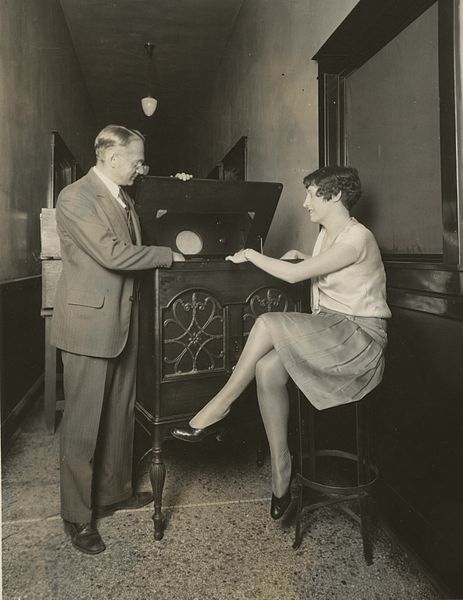
Television has lost its prominence in the internet age.  Those of us entering the “senior” category of life’s grades were raised on television.  I know I watched far too much as a kid.  Now I consider the wasted opportunity to grow minds, and sensibilities, through television.  Mostly I blame the sit-com.  There’s not much learning going on when someone else contrives scenarios to make you laugh on a weekly schedule.  They are beguiling and I watched more than my fair share of them when I was younger.  Now, as an adult, I value the more profound examples of early viewing.  We didn’t watch The Twilight Zone with the devotion of Gilligan’s Island, but those episodes I did see had a profound effect.  The same is true of Dark Shadows.  One thing these shows had in common was that they were quite literate, eschewing the mindless competition.

College led to me no longer watching television regularly.  That hiatus lasted until my wife and I began watching a couple of weeklies after I’d return from Nashotah House.  While at the seminary full-time, television reception was quite poor and we tended toward rented movies on VHS.  By the time we moved to New Jersey television had changed so that you needed some kind of magic box to watch even commercial channels.  We relied on DVDs of shows we wanted to see.  That’s how Lost came into our lives.  Now, however, facing senior issues (health, people dying, wondering if retirement might ever happen) I’ve started to revisit television I missed.  The X-Files is pretty prominent.  Being an historian at heart, I’ve been exploring the inspirations for The X-Files, picking up Kolchak: The Night Stalker, and Twin Peaks.  I have to balance this with time for writing since work still claims the lion’s share of my waking hours.

Photo credit: Smithsonian Institution, via Flickr’s The Commons

I’ve lost track of what’s on the tube.  Now we spend workday evening hours watching intelligent television that we missed back when it aired.  We can’t afford it all, of course.  Dark Shadows, for example, has over 1200 episodes and “complete sets” are pricey.  Lost was either a birthday or Christmas present years ago.  I bought The Twilight Zone over a decade ago for a week that I knew I was going to be home alone.  We accumulated The X-Files over a number of years.  Twin Peaks, since it was only two seasons, wasn’t too expensive.  Kolchak is on Amazon Prime.  Many of these shows are a kind of therapeutic watching for me.  Some might call it escapism, but it runs deeper than that.  It becomes part of who we are.


Expectations

Our minds are our most powerful tools.  Some of us wonder what reality is, and David Robson has written a very important book that the title explains: The Expectation Effect: How Your Mindset Can Change Your World.  Now, before your woo-woo meter goes off, Robson is a science writer and everything in his book is backed by evidence.  The basic idea is this: what we expect to happen often becomes our reality due to the “expectation effect.”  The brain, as Robson describes it, is a prediction machine.  And what it expects often takes place.  In other words, belief matters.  Probably the most famous example of this is the placebo.  We all know that patients treated with placebos often recover just as well as patients given the active ingredient.  That pill the doctor gives will heal them, and so it does.  The brain expects it, and it happens.  Belief.

This book also explores the nocebo response.  This is where you expect something bad, and it happens.  The most extreme examples of this, well documented, are when people are convinced an imaginary threat will kill them and they die of it.  In fact, the book opens with consideration of such an occurrence where a cultural expectation led to otherwise unexplainable deaths among healthy Hmong populations fearing a night demon.  Hysteria grew and so did the deaths.  Robson also explores how hysteria leads to expectations that our brains carry out.  He shows how training our expectations can help good self-fulfilling prophecies take place.  Athletes, for example, can seem to do the impossible.  Why?  Partially training, yes.  But also because of their mindsets.  Their expectations.  Their beliefs.

The implications of this are very broad.  Everything from our health, to how we handle stress, to how food benefits our bodies, to how we age as we expect to.  Robson is quick to point out that this isn’t a book to solve all our problems, but it is a book that demonstrates our minds do make things real.  Or at least they can.  It is filled with fascinating examples, backed with science, showing that even how a doctor or nurse introduces a shot “you’ll feel a bit of a sting” versus “you won’t feel a thing” can make a difference to how our body perceives it.  And our brains can make our worries, or our hopeful expectations, real.  Personally, I believe that there may be even more to this than Robson explores.  But then again, I enjoy a bit of mystery.  I believe in belief.  Regardless, this is a life-changing book and I hope, for your own sake, that you’ll read it.


Deep Woods

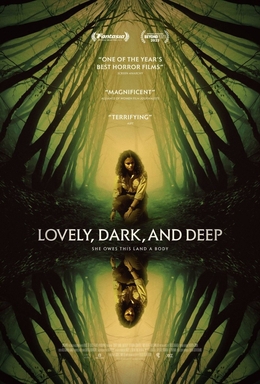
The output of female horror directors tends to be thoughtful.  And there are some legitimately terrifying scenes in Lovely, Dark, and Deep.  Nobody, however, has posted a Wikipedia entry on Teresa Sutherland.  At least not yet.  This movie is obviously aware of David Paulides’ work.  It went by a little quickly, but I think one of his books even made it into the film.  Lovely, Dark, and Deep is set in the fictitious Arvores National Park in California.  (Interestingly, the movie was filmed in Portugal.)  Lennon is a newly hired park ranger with what she thinks is a secret.  Her motivation is to search for her sister, who went missing in the park when they were kids.  If you like movies with flashlights in the forest at night, this is your film.  

Lennon discovers  that she’s not the only one with secrets.  Many people have gone missing in the park and the rangers know about it.  Some entity that they can’t identify requires people to be left behind.  There is a quid pro quo relationship involved.  If one of the taken ones is rescued, a substitute must be left.  Lennon learns that her sister was one of those taken, and once taken a person can’t come back.  They live in a nightmare world while their family and friends have to deal with the loss.  Lennon has trouble accepting this arrangement, but there is nothing to be done about it except pretend you don’t know it’s happening.

The movie gets its teeth from the fact that many people do go missing in National Parks.  And, as Paulides suggests, there is no public register kept.  Some who are found are often inexplicably miles from where they went missing, or their bodies are found in areas already thoroughly searched.  This is obviously a great concept for a horror film.  Sutherland, who wrote as well as directed the movie, has the makings of an art horror auteur.  Lovely, Dark, and Deep hasn’t received a lot of attention yet, but I think it deserves to.  Wilderness horror films have so much potential.  Particularly for people who seldom spend any real time in the forest.  Even those of us who have braved the wilds from time to time can find it frightening.  More than that, this is a movie that makes you think.  For anyone who likes to theologize films, it definitely has the theme of sacrifice running through it.  Deep is appropriately part of the title.


Politics As Usual

What J. D. Vance does on, or to, his couch is his own business.  Sexual preferences between consenting adults, and furniture, is a private matter.  (Vance isn’t the first writer whose publications have come back to bite him.)   Forgive and forget.  And maybe reupholster.  What Vance has done that’s unforgivable is betray the poor.  I read Hillbilly Elegy years ago and was taken by his enumerating the harms visited on the poor by our capitalistic system.  Having grown up poor myself, I found many of those damages in my own self-inventory.  But even just after I read the book I heard whisperings that Vance really didn’t care for the poor, but for himself.  That puts him in the same category as Trump, I suppose.  A team that would only push what makes them personally look good, if elected.  It’s a mockery of democracy that a convicted felon is even permitted to run for president.

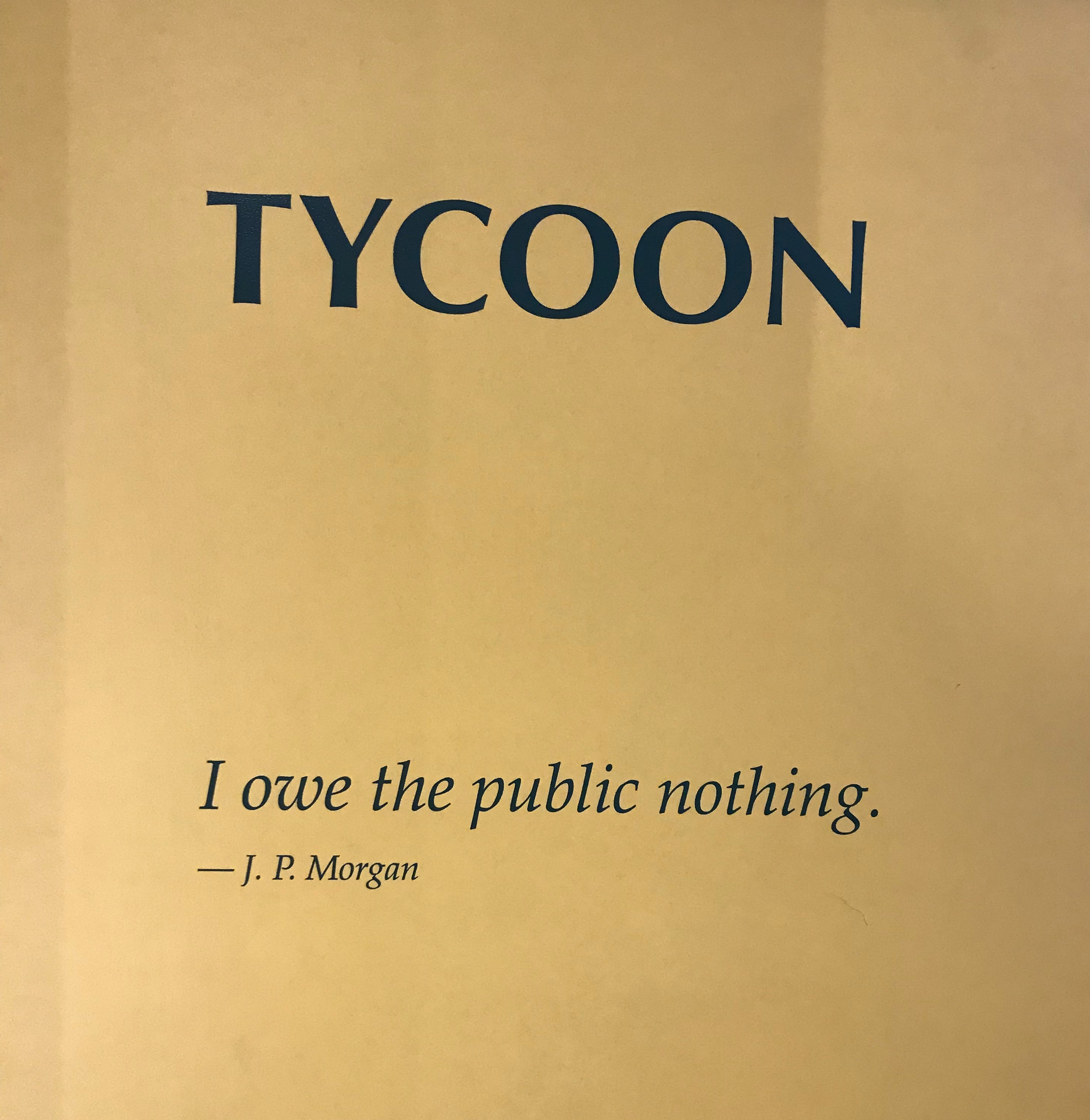
Betrayal of the poor is perhaps the most unconscionable of sins.  To have grown up knowing how difficult life is for many Americans and then to throw them to the wolves for personal aggrandizement is a move worthy of Satan himself.  Indeed, his running mate was born excessively wealthy.  I recently saw a quote from J. P. Morgan: “I owe the public nothing.”  Morgan,  one of the wealthiest men of his era, apparently believed using others to get yourself to the top is fine.  Trump, who sees people as disposable (ask his wives) never had to struggle.  Neither did Morgan.  But Vance, if his book is to be believed, did.  Knowing what it means to grow up that way and then to hitch yourself to the Trump-wagon is, in my opinion, about as low as you can go.  It’s a lack of honesty.

If we’re honest we’ll admit that all people lie.  True, Trump has made eiling (actually telling the truth) a thing.  He basically never eils, so we can assume anything he says is false.  Biden told lies.  Harris told lies.  Vance told lies.  Even though I’m an honest guy, I’ve told lies in my long time on this planet.  Not many, I hope, but I’m human.  Show me a politician who never lies and I’ll show you a liar.  I never thought I’d live to see a major party ticket pair felons, sex criminals, and betrayers together and tell Americans they’ll make the country great again.  The question that won’t let me go, however, is what of the poor?  We know that the rich, left to their own devices, tend toward Morgan’s quip.  Honestly, who will make safety nets for those who are victims of business as usual?


Lobo

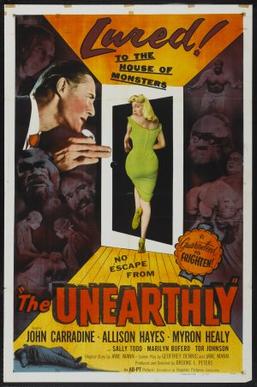
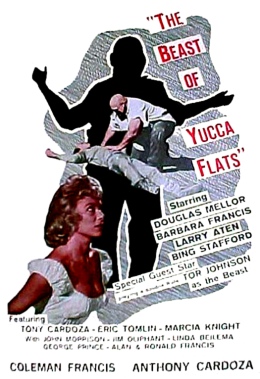
Tor Johnson—actually Karl Erik Tore Johansson—became famous but not rich.  Such was the fate of some early horror actors, including Bela Lugosi.  Johnson hung out, however, with the low-budget crowd, making the most of his size to take on a kind of “enforcer” role.  One of his recurring characters was “Lobo.”  Lobo served mad scientists and had very little of his own brain power.  He often had few, or no lines to learn.  Having watched The Beast of Yucca Flats, in which he starred, I decided to see if The Unearthly was any better.  The production values were certainly higher, but this was an earlier film by a different crew.  It’s more like the standard fare you expect for a late fifties horror show.  It features a mad scientist, and Lobo is, of course, the servant.

Dr. Charles Conway believes he has found the way to eternal life.  It’s attained by transplanting a new gland into a human being.  The problem is, it hasn’t worked so far.  Like a true mad scientist, Conway is convinced that it will work, it’s just a matter of try, try again.  And why advertise for willing subjects when you can have a local crooked doctor send you patients with various personality disorders, and no families, so that you can experiment on them?  With slow-moving Lobo as his only security system, Conway carries on until a sting operation catches him red-handed.  There’s really not much to this story.  It doesn’t have the inspired inanity of an Ed Wood production, but then, it hasn’t really grown a cult following.

My reason for watching was Tor Johnson.  Before I was born he’d attained the status of the model of a best-selling Halloween mask, based on his monster roles.  This seems to indicate that his oeuvre was well known, despite the kinds of movies he was in.  A large man who’d aged out of “professional wrestling,” Johnson had many uncredited movie roles before hooking up with Ed Wood.  He was featured in three of Wood’s films, including the infamous Plan 9 from Outer Space.  He’s part of a crowd surrounding the under-funded, independent filmmakers of an intriguing era before modern horror really came into its own.  The Unearthly, where his famous line “Time for go to bed” is spoken, suffers from banality and has become pretty obscure.  I personally wouldn’t have known to look for it had it not been for the fact that Johnson was in it, dragging it into the “must watch” category.  And that it was a freebie.


Opposites?

Not having the money to subscribe, I limit myself to the daily headlines of Publishers Weekly.  When physically in the office in New York City, it circulated among editors in print form.  I do miss that.  The weekly is a great place to stay informed of what’s going on in the book world.  Interestingly, the headlines—which are often linked together newsletter-style—noted that the annual preview of religion books was on the way.  This was followed by “On the exact opposite side of the publishing spectrum, Orbit has launched its fourth imprint, Run for It, capitalizing on the horror boom.”  So there it was staring me in the face.  Religion and horror are exact opposites.  Now, I can’t expect even experts in publishing to be aware of all the trends, but the religion-horror connection has been alive and growing for a few years now and those of us who publish books in it might dispute the “exact opposite side” designation.

Photo by Thomas Park on Unsplash

Horror and religion are closely related.  Many in the religion camp would want to deny that, but those who know horror know that religion quite often wanders in.  More than that, religion often drives the horror.  They’re not so much exact opposites as they are playmates.  Rather like the Bible depicts God being the chum of Leviathan.  (Who is, after all, a perfectly good monster.)  While my own humble efforts are frequently overlooked, the last four books I’ve written explore different aspects of religion and horror.  This includes my forthcoming Sleepy Hollow book.

Even if you’re not a fan of horror movies, if you pay close attention religion is not the opposite of horror.  We have this mental image of religion as a pure and holy thing in and of itself.  We don’t often stop to think that religions are invented by humans.  Yes, they are often in response to what believers see as divine stimuli, but the way that they are conducted is part of our human ingenuity.  They are considered good because of their emphasis on love and positive virtues.  If you watch enough horror you’ll notice that the menace is often a threat to love.  In other words, horror too emphasizes the value of love.  It’s a perception problem that sees horror as the opposite of religion.  Simplistic categories are often necessary to get through life—that’s why we stereotype.  Those of us who like to stop and think through things can gum up the works.  Even a headline in a magazine we like can lead us to wonder about the deeper implications and the biases they perpetuate.


Yucca

Yucca Flats isn’t the kind of place you’d like to vacation.  Not only is it highly irradiated by nuclear testing, it’s also a place where police shoot at innocent people.  The only salvation seems to be that they’re terrible shots.  Oh yes, and there’s a Russian scientist transformed into a beast by an atomic bomb blast.  As you can tell, I’ve just been to Yucca Flats.  In movie-land, of course.  The Beast of Yucca Flats, yet another candidate for the worst movie of all time, really worked hard to obtain that title.  The movie did make me curious about Coleman Francis, however.  Like Ed Wood, he tried to make his way in the rather unforgiving movie world with tiny budgets and even less native talent.  The number of scenes where guys had their butts to the camera alone raises all kinds of questions.

The numerous contradictions in such a short movie—less than an hour—and the long scenes that add nothing to the plot are signposts that we’ve entered the twilight zone of B movies.  Famously filmed without sound, the incongruous dialogue later added as voiceovers, adds to the surreal atmosphere.  The movie shares Tor Johnson with Ed Wood.  And also, apparently, a sincerity betrayed by lack of ability.  The cult status of movies like this signal hope for those who try to make their own way in a world enamored of big budgets and large crews.  It would help, though, if Francis had a clear story to tell.  He does seem to have Luddite tendencies, and he condemns violence even as he has a sheriff’s deputy literally “shoot first and ask questions later.” 

The movie has a couple of moments of cinematographic finesse.  The moment when Lois Radcliffe approaches the car, shot from the interior, when Hank lays his arm across the door, made me think something better might be coming.  Tor Johnson wasn’t the most gifted actor, but he always seems to have fun with his roles, being cast as a hulking monster.  It’s too bad he doesn’t have a bit more screen time in this, his last movie part.  He kinda makes me want to hunt down some of his other appearances beyond the Ed Wood films I’ve already seen.  There’s a story here, I expect, that really hasn’t been told.  There’s an entire world—a twilight zone—outside Hollywood where producers with no budgets but a passion for making movies plied their trade.  Their efforts, as paltry as the results may be, suggests there’s more to the movie world than it might seem.


Not Content

I write books.  When I want to “create content” I do it on this blog.  (And a few other internet sites.)  These aren’t the same thing.  I find it distressing that publishers are trying to drive us to ebooks where content can easily be changed, as opposed to print books.  The shelves of this room are lined with books and the technology doesn’t exist to come in and change “data” without my knowing it.  Facts are secure in print, right Ilimilku?  I’m not looking forward to a Star Wars future where there’s no paper.  I was born in the last century and, perhaps, I’ll die there too.   You see, when you write a book you have a project in mind that has an endpoint.   It may change and shift as you write, but you know what a book is and that’s what you produce.  It gets shelved and you move on to other things.  (At least I do.)

Content is something different and the creative process behind it also differs.  If I find something wrong after the fact, I go into my past posts and change it.  I’m not afraid of admitting I’m wrong.  The point of this blog is to share ideas with the world, not to write a book.  (Although, I confess that I would not say “no” if someone in publishing wanted a selection of worthwhile posts for a book… just saying.)  It amazes me how publishers have pretty much gone after the money and have forgotten what the creative process is like.  Of course, they’re having to figure out how this whole internet with free content plays into it too.  But still, my book writing uses a different fold in my gray matter than my blog writing does.  All of it feels pretty different from writing fiction too.

These things together adds up to a writing life.  I have a ton of “not for publication” writing.  This is something different again.  I suspect it will never be read by anybody, moldering away on some old hard drive after some AI-induced apocalypse.  I write it for of the same reason, I suspect, that people used to spray-paint “Kilroy was here” on things.  The book of Job, it seems to me, was the preservation of words that someone simply had to write.  We know the framing story is folklore.  But those who have words to carve with iron on lead, or engrave on a stone to last forever.  It’s more, I hope, than just “creating content.”


Singing Darkly

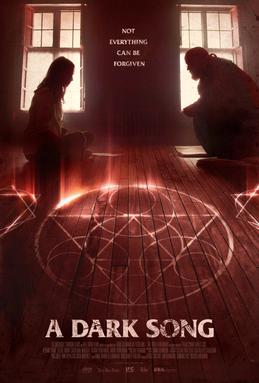
Euro-horror has become one of the more profound sub-genres of film.  I can’t recall who it was that recommended A Dark Song—set in Wales although filmed in Ireland—but it was immediately obvious I was in for a treat.  Dealing with Gnosticism, occult, and demonic manipulation (I wish I had the script!), it takes on the big issues of death, loss, and forgiveness.  The premise begins chillingly enough.  A woman rents an isolated country house for an entire year, paying in advance so there will be no disturbances.  She brings in an accomplished occultist to let her speak to her dead son again.  The two don’t know each other and this ritual will take many months, during which they will not be able to leave the house.  Neither really trusts the other, but Joseph (the occultist) tells Sophia that she must obey everything he says if she wants the ritual to work.  Once they begin they cannot stop until it reaches its conclusion.

Sophia hasn’t revealed the real reason she wants to summon her guardian angel.  She wants revenge on those that used the occult to murder her son.  The truth Sophia kept from Joseph requires them to restart, so he drowns her in the bathtub and then uses CPR to revive her.  As they grow increasingly tense, a fight breaks out where Joseph is accidentally impaled on a kitchen knife.  With only bandages and whiskey to treat the wound, they press on, but Joseph dies leaving the ritual unfinished.  Sophia can’t escape but after being tormented by demons, her guardian angel arrives.  Her request is actually wanting the ability to forgive.

This profound story has many twists along the way, but a scene that I would like to consider is where Joseph tells Sophia “Science describes the least of things… the least of what summat is. Religion, magic… bows to the endless in everything… the mystery.”  The suggestion that science is indeed correct, but limited.  Religion goes beyond science, however, to the world of possibility.  The movie suggests these two worlds intersect.  After Joseph dies Sophia can’t escape that other world until its rules have been met.  And when she does reenter the world of science, what happened in the world of magic has lasting effects on her.  A Dark Song is one of those movies that will haunt you after watching.  The Euro-horror of the last decade or so has been incredibly profound, showing the promise of what horror can be.


Tech Trust

Tech problems are a part of life, of course.  The recent problem at CrowdStrike that grounded airlines and prevented 911 from working and interfered with medical services is a scary thing.  The word “fragility” was used in the New York Times.  Please allow me this jeremiad.  I appreciate technology and what it can do for us.  I really do.  I can usually find a movie to watch online on a day off work.  I can navigate most places without a map (although recently when there was no 4G coverage, I was left lost for a little while).  What’s really scary, to me, is those who claim tech, and only tech, is our future.  I’m a simple guy with simple tastes.  I enjoy reading books and watching movies to stimulate my restless imagination.  Yet I’m constantly being told that I should read on a screen, not on paper.  And that artificial “intelligence” can—or worse—should run things.  What happens when the grid goes down?

Photo by Markus Spiske on Unsplash

I love art glass, but I’ve also broken quite a bit of it over the years because life is rough and tumble.  Some fragility is part of the attraction. For a while, when I was young, I was fascinated by card houses.  Constructing one that used an entire deck was not only a goal, but its own kind of art.  Sometimes the beauty of art inheres in its very fragility. The house of cards took skill, but someone slamming a door, or even walking into the room could bring it all down.  A trembling hand or a drop from a millimeter too high could spell the end of this particular installation.  But nobody died.  No worldwide travel plans were interrupted.  The consequences were minimal.

I don’t dislike computers.  It’s just that I think balance is desirable.  After work, which is pretty much all online these days, I tend to move away from the internet for the rest of the day.  I pick up a book, made of paper.  Sometimes I’ll watch some media, preferably on DVD.  I don’t miss VHS tapes, I assure you—although we still have quite a few of them, some of which contain media that has never been released either on disc or online.  I can’t watch them.  Oh, if I had the time, gumption, and cash I could purchase a player.  I’d have to buy some kind of adapter to connect it to the TV.  Is that a downgrade?  My understanding is that CrowdStrike’s problem was all caused by an upgrade.  I’ve known smaller catastrophes with upgrades, and they seem to come every couple of months now.  What’s to be done?  Maybe we should slow down a little and read a book.


Second Peak

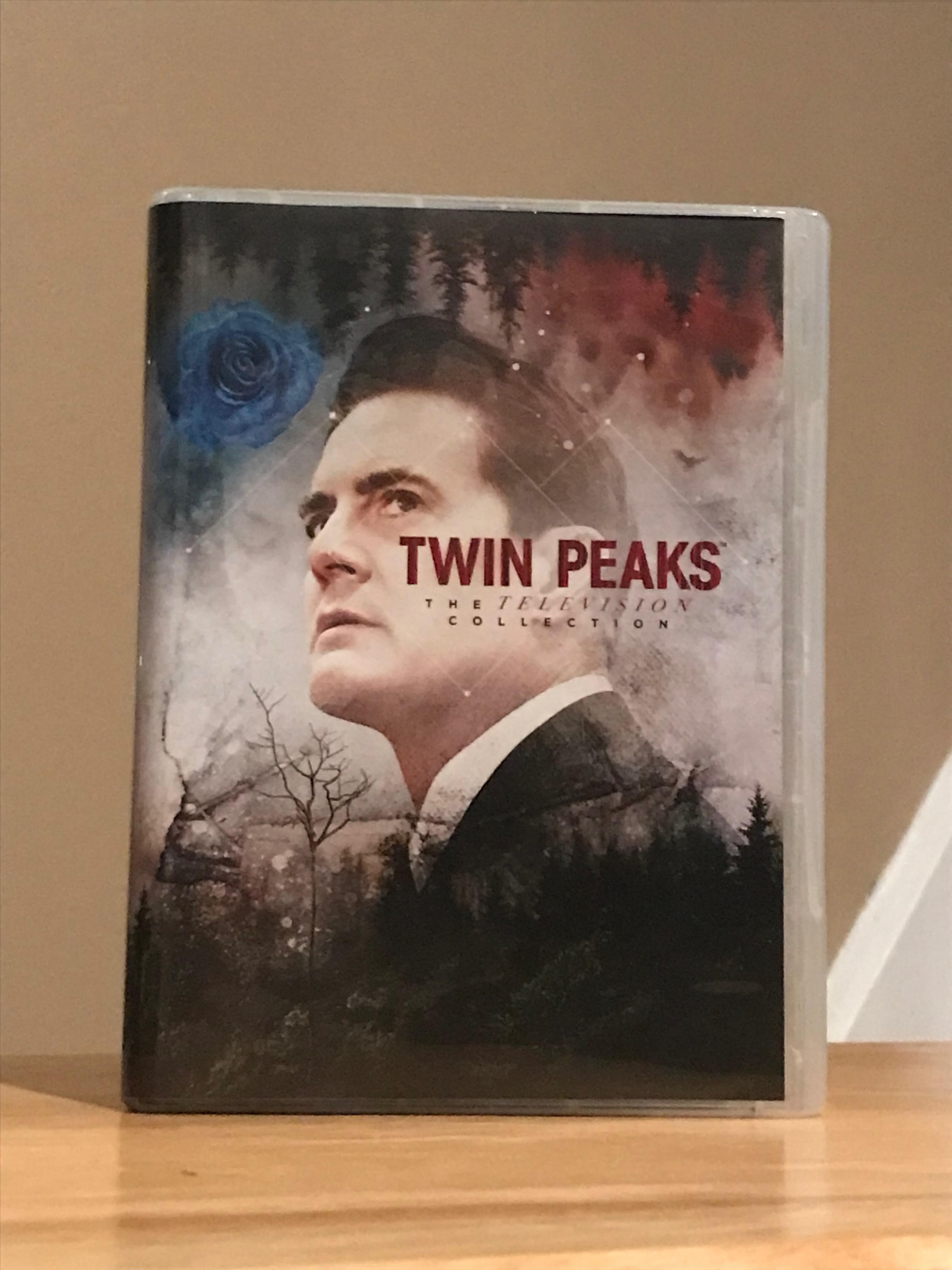
It all started with The X-Files.  You see, we hadn’t watched television since about 1988.  Part of that was practical—we couldn’t afford cable and then when we landed at Nashotah House there was no cable service anyway.  Bouncing from job to job after that, when money was tight, we figured cable was a luxury we weren’t used to anyway.  Then came DVDs.  I should also say that my family heard other people talking about certain shows—some of them quite good—but we hadn’t seen them.  Then we decided to watch The X-Files.  This was followed by Lost.  Then the X-Files again.  On my lonesome I watched Kolchak: The Night Stalker.  But people had talked a lot about Twin Peaks.  Curiosity got the best of me.  We decided to see what it was about.

I knew that Chris Carter had cited various inspirations for The X-FilesKolchak was a major one, but another was Twin Peaks.  It helps to have watched a David Lynch movie or two before jumping into the deep end here, but the first season (it only lasted two) started out like a regular drama.  Like Northern Exposure, it had quirky characters.  Then after a couple episodes paranormal aspects began to appear.  Things were not what they seemed in Washington.  It turned out to be an evil spirit possessing people in the town.  Laura Palmer’s murder was more or less solved.  Dale Cooper, however, had been trapped in the Black Lodge in the cliff-hanging end of the second season.  We then watched Twin Peaks: Fire Walk with Me at the point it settled in the sequence.  Like the aforementioned X-Files, a reboot occurred many years later and the DVD set we had included the renewed season.  Things really get weird there.

It turns out that we had indeed missed some good television during those Nashotah House years and later.  Actually, doctoral years and later—Twin Peaks originally aired when we were living in Edinburgh, so we had a legitimate excuse.  Boomers, particularly late boomers, grew up with television.  As an adult (so I’m told) I can see that television had a big influence on my life, even though I stopped watching in my late twenties.  Do I understand all of what happened in Twin Peaks?  Of course not.  Then again I scratched my head after watching Eraserhead too.  The first of David Lynch’s movies I saw was Dune, which, unfortunately, wasn’t that good.  I’ve come to trust him, however, and I suspect that telinema will lead me to watch more of his films.  And we’ll probably be on the lookout for other television we missed, that, in retrospect, we probably shouldn’t have.


A Touch of Poe

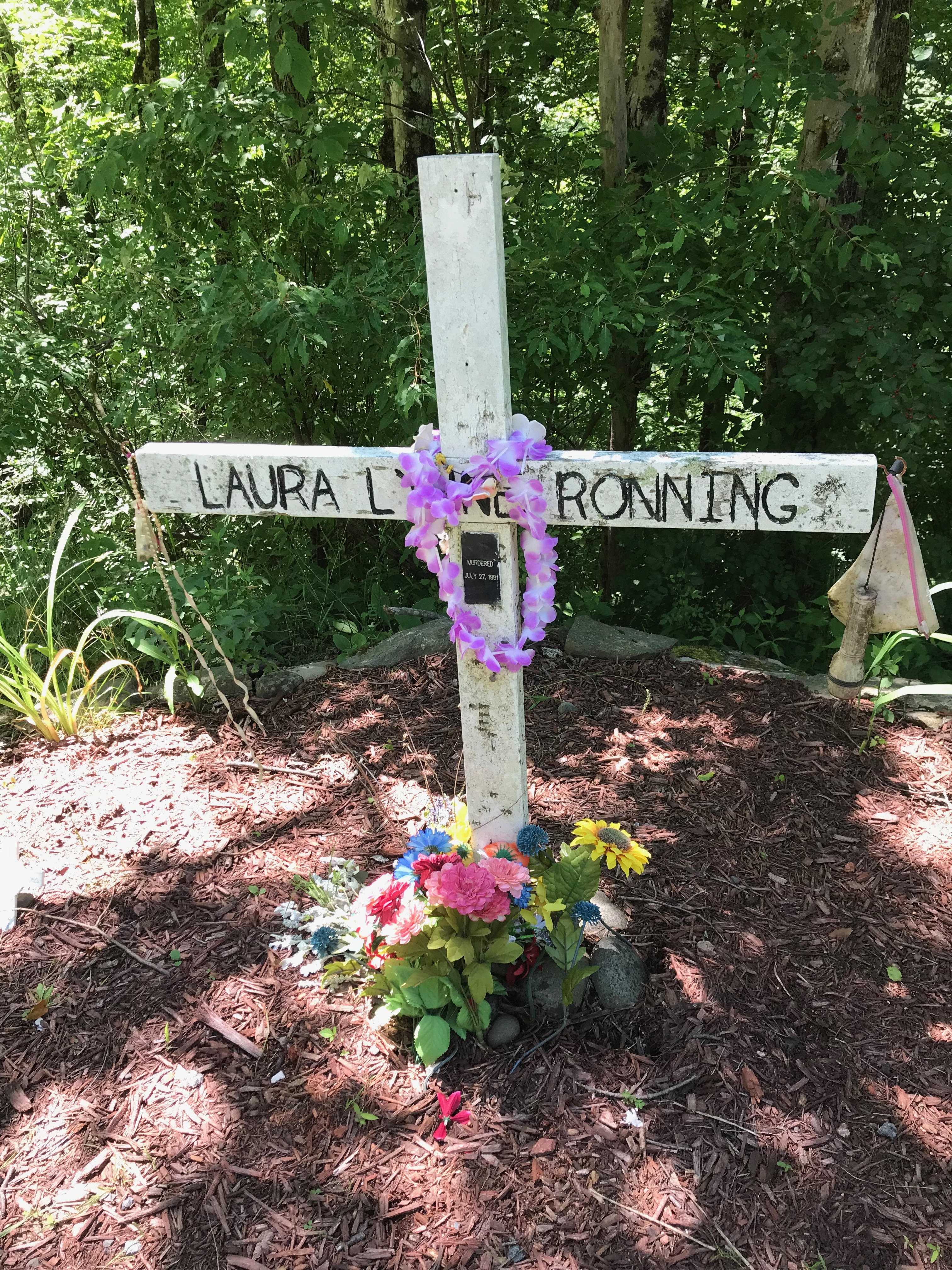
One of the more somber aspects of our staycation in the Poconos occurred on our search for Tanners Falls.  It brought to mind a story by Edgar Allan Poe.  Here’s why:  Tanners Falls is not well signposted.  This is quite a rural area.  We were following our GPS when the signal died right after she said “arrived.”  The problem was there were no signs and although we tried a couple of tick-trails that ended up at a stream, nothing like a cataract was anywhere near.  Finally we realized that a tiny sign reading “Tanners Falls” was posted on a “Road Closed” barricade.  Since to road was actually open to the Falls, my wife brought the car but I wanted the exercise and went by foot. Walking along the way I found a roadside shrine and noted that in addition to the name Laura Lynne Ronning was a small plaque stating “Murdered July 27, 1991.”  Now, there was no signal out here, and I was alone on the road.  And I had no desire to bring my family down so I kept it to myself.

At the hotel (with wifi) I learned that Laura Ronning’s murder was never solved.  She was a counselor at a nearby camp walking to the waterfall on her day off when she was raped and shot and thrown into the woods.  The only suspect was a mentally unstable man (now since deceased) and the evidence was all circumstantial.  He was, unlike some known criminals of high profile, found not guilty.  The Ronning family moved out of the state, not wanting to be where someone could literally get away with murdering an innocent young woman.  This is where Poe came in.  His “The Mystery of Marie Rogêt” is the first detective fiction based on a true case—Poe was often, figuratively, first on the scene.  The murder of Mary Cecilia Rogers, whose body was found in the Hudson, was never solved.  Poe tried his hand at the by then famous unsolved case.

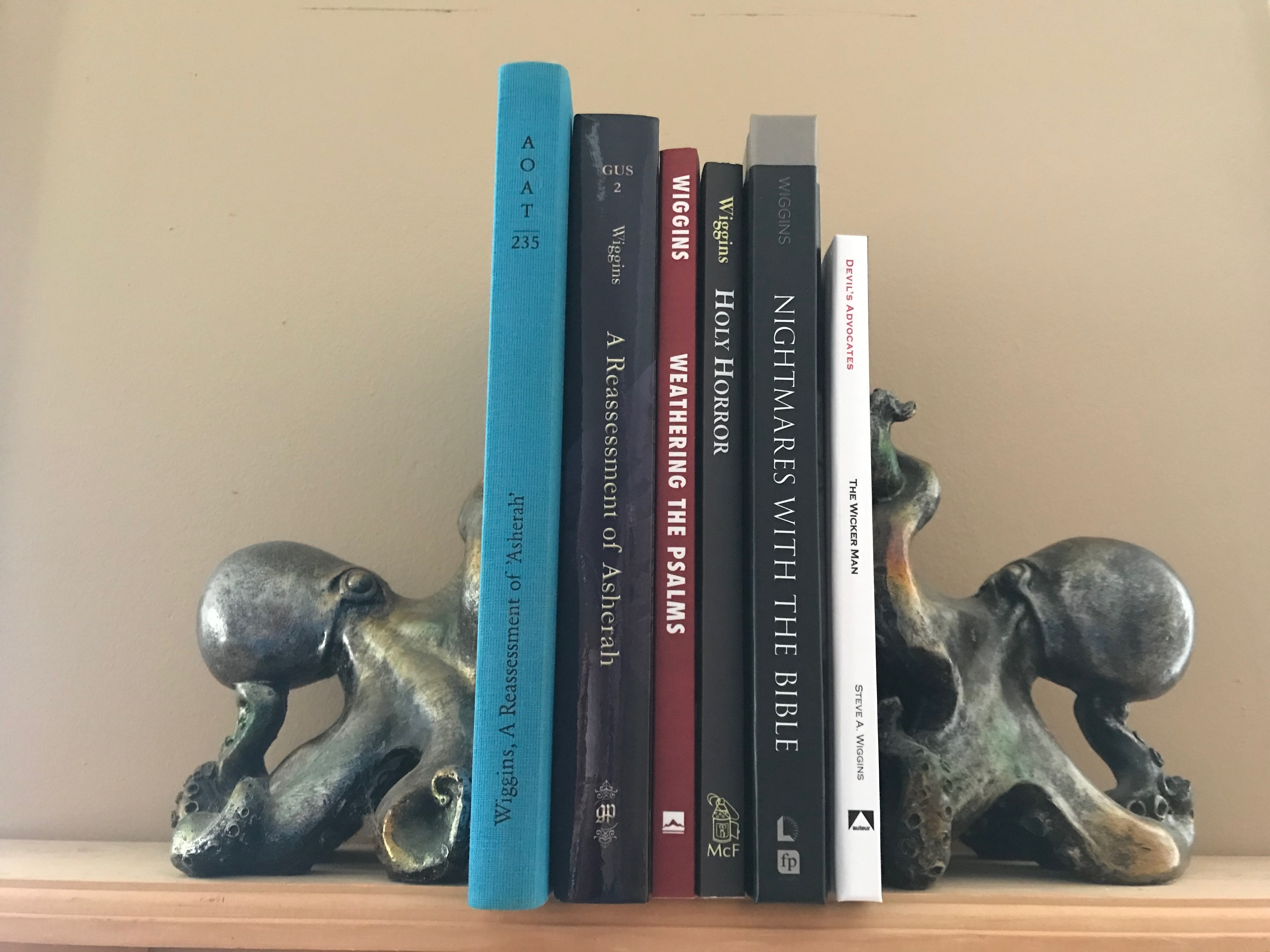
The murder of a young woman was a tragedy that Poe felt deeply, I suspect.  I took some academic flak for including Poe’s observation that the death of a beautiful woman was the most poetic theme in Nightmares with the Bible.  I realize this is a masculinist thing to write, but the fact is that some men feel very protective of women.  I know there’s a psychological name for this, but it isn’t chauvinism.  It is a sense of sadness, for what Goethe tried to express by writing “Girls we love for what they are; young men for what they promise to be.”  On staycations I try to look for literary angles, even when they are, from time to time, sad.


Summerween

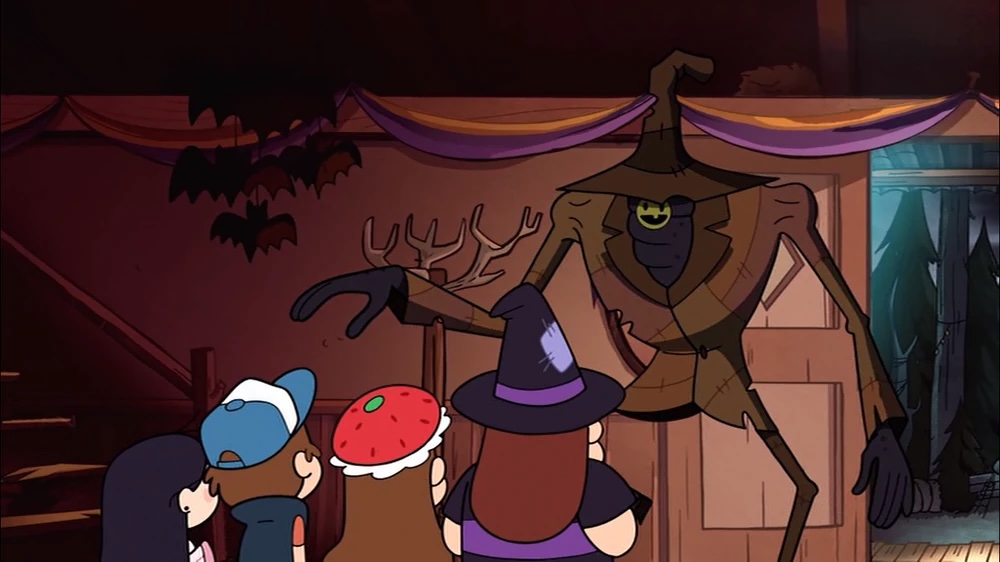
Okay, so why didn’t anybody tell me?  Well, I suppose it’s because few people know me.  But still, I had to find out about Summerween from the New York Times.  Folks, I don’t spend a lot of time online.  I work long days and I read books and mow the lawn.  I just don’t have time.  I wasn’t aware that Summerween was happening.  Interestingly, the idea got started from Gravity Falls, an animated television show based on Twin Peaks and The X-Files.  I actually watched this show because a couple of young friends, who spend a lot of time online, started showing it to me.  I didn’t remember, however, that in one episode the population of Gravity Falls decides to celebrate a second Halloween in the summer.  And now internet influencers (I’m more of an unfluencer) are popularizing the holiday.  

The need for spooky holidays is encouraging to me.  I’ve long been exploring the spirituality of the unexpected, and Summerween has the possibility of contributing to it.  According to the New York Times article there’s no set date for the celebration.  It’s more of a party aesthetic, but, the story notes, Michaels, the arts and crafts chain, has already caught on and is stocking scary summer decorations.  I have long opined (and fifteen years is a lot of daily posting—nearly five-and-a-half thousand of them) that people are afraid.  That’s why they run after unlikely political leaders and seek shelter beneath the wings of the Almighty.  Horror movies, and Halloween, simply bring this out into the open.  And what’s wrong with having a little fun with it along the way?

By the by, if you haven’t checked out Gravity Falls, you don’t know what you’re missing.  It’s a Disney production and it’s aimed at a younger crowd.  That’s one of the disconnects I experience here: Halloween is something younger people love.  At work I can’t count the number of people who’ve said (not to me directly, since few speak to me that way) that Halloween is their favorite holiday.  I guess you wouldn’t expect to find a kindred spirit among old guys who edit biblical studies, of all people.  I venture to guess that any of them would be surprised to learn that someone of my vintage even knows what Gravity Falls or Summerween is.  Well, they’d have been right about the latter, had it not been for an article yesterday in the Gray Lady.  And what a more adult way to find something out might there be?

Copyright: Disney. Summerween trickster, Gravity Falls